
AI

The ownership mess of AI-generated art
November 21, 2022Artificial intelligence (AI) is slowly being adapted into our everyday lives. We see it used for relatively simple things, like the Netflix recommendation engine, digital assistants like Siri and Cortana, and image generators. These generators use programming called “deep learning” — the gist is that the software mimics a biological brain. Its developer gives the AI a set of images to learn patterns from, so if you give it a set of landscape photos, it will eventually recognize what sky and mountains are, and use this knowledge to create entirely new images. While this might sound groundbreaking, the current state…
Continue reading

SFU professor Dr. Mo Chen appointed as a Canada CIFAR AI Chair
February 13, 2021Dr. Mo Chen, an SFU computing science professor, is researching algorithms that program robots to anticipate human reactions. He aims to increase the safe interaction between robots and humans so that robots can independently “respond to dangerous situations” and “co-exist…
Continue reading

SFU professor Dr. Manolis Savva appointed as Tier 2 Canada Research Chair
January 29, 2021Two years after starting as an assistant professor at SFU’s School of Computing Science, Dr. Manolis Savva was selected as a Tier 2 Canada Research Chair in computer graphics. The position increases funding and networking opportunities for his research on…
Continue reading

Virtual reality training to launch for health care workers in BC
October 13, 2020SFU professor at the School of Interactive Arts and Technology (SIAT) Dr. Steve DiPaola is leading an international team of computer scientists, artists, and cognitive scientists to create a COVID-19 Virtual Reality Training program. The project utilizes virtual reality (VR)…
Continue reading

Research Roundup: SFU researchers develop AI tool to better diagnose COVID-19 cases
July 1, 2020SFU Researchers and Providence Health Care (PHC) are using Artificial Intelligence (AI) to better understand how to detect COVID-19 cases. The tool, which is currently under testing in St. Paul’s Hospital, will help clinicians distinguish between COVID-19 pneumonia and non-COVID-19…
Continue reading

World News Beats
November 5, 2018China unveils massive sea bridge Chinese President Xi Jinping opened the longest sea-crossing bridge in the world, connecting Hong Kong and Macau to Zhuhai in southern China. The bridge, spanning over 54 kilometers and featuring an undersea tunnel, took…
Continue reading
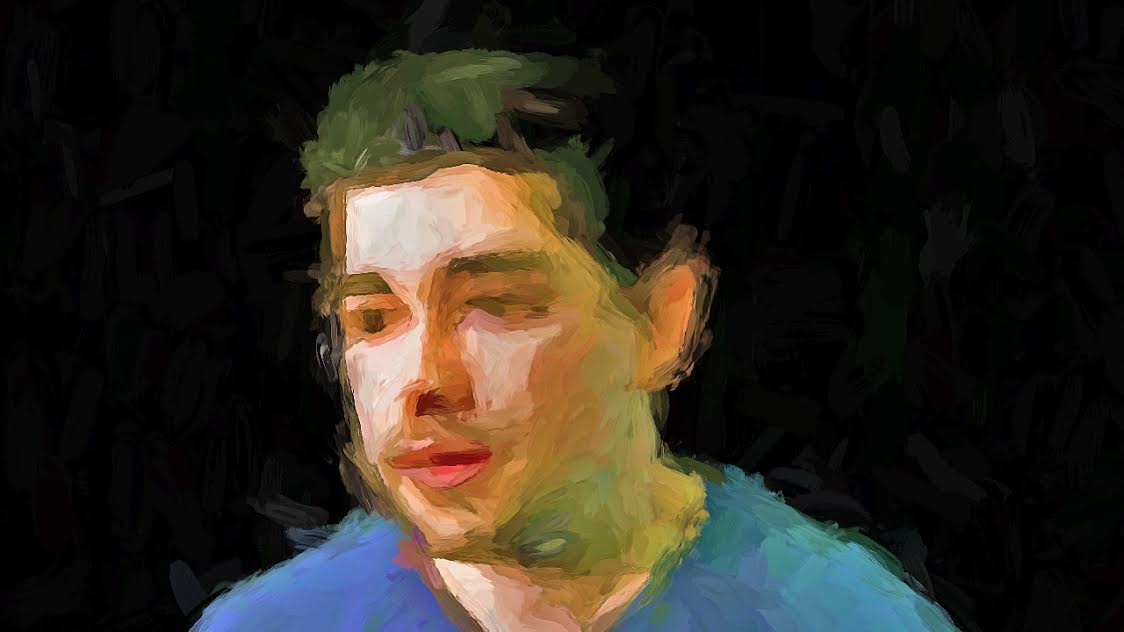
Blurring faces and leaping salmon
September 3, 2018Anonymizing faces without losing emotion A team of researchers, which includes those from SFU, are working to improve the way individuals are anonymized for television. Anonymizing faces in news broadcasts or documentaries usually involves pixelating, blurring, or blacking out…
Continue reading

AI summer camp aims to encourage high school girls to get involved in STEM
August 3, 2018The SFU Faculty of Applied Sciences held Invent the Future, an Artificial Intelligence (AI) summer camp, to encourage girls to pursue science, technology, engineering, and mathematics (STEM) fields. During the two weeks of the camp, 24 eleventh-grade girls…
Continue reading

Artificial intelligence could rob us of our humanity
June 1, 2015From basic communication tools to space exploration, the strides made yearly in science and technology are absolutely astounding to say the least. With Artificial Intelligence (AI) developments, societies around the world must now come to terms with its implications in…
Continue reading
- « Previous
- 1
- 2
- 3
- Next »

Simon Fraser University’s independent student newspaper since 1965.
For advertising inquiries: [email protected]
For promotional inquiries: [email protected]

Simon Fraser University’s independent student newspaper since 1965.
For advertising inquiries: [email protected]
For promotional inquiries: [email protected]