Home Blog Page 838

Leonardo DiCaprio finally won an Oscar, and the Internet went wild

1
Leo in his Oscar winning performance in The Revenant.

When I was younger, I recognized actors by their faces, not their names. Why would I really need to know that Harry Potter was actually called Daniel Radcliffe? Or that Spiderman was really called Peter Parker — I mean, Tobey Maguire? I was too young to care.

But as we get older, we appreciate these things more, and in doing so, our connections become more real. My connection, for example, to Peter Parker, had me conceding that I might ask him for help on this article, considering his renowned workplace.

That being said, growing up, when I heard the name Leonardo DiCaprio I always thought “Yes I know him. He’s Captain Jack Sparrow!” Only later on, I had an epiphany about the ‘Depp’ of my stupidity. Stupidity is a strong word, but it is definitely apt for describing confusing two great actors who have no resemblance to each other whatsoever — an obvious reason why one should be able to tell them apart. Could Leo have played Jack Sparrow though? Perhaps — as far as birds go, he certainly brings out his inner songbird with his melodic humming in 2013 movie, The Sparrow of Wall Street — I mean, wolf.

If Leonardo DiCaprio were in the Caribbean, it’d probably be on holiday. I can’t see him taking many of those, though, considering the large roles that he plays every year.

Consistency. Leo is the epitome of it. His longevity makes him special. At 41, DiCaprio has played key roles in several noteworthy films. Inception. The Wolf of Wall Street. Django Unchained. Blood Diamond. Those are my personal favorites! Leo has stayed true to his art and kept on acting, despite the Oscar evading him a previous six times he was nominated, before he actually “unchained” it this year. Allow me to unchain the question that serves as the backbone to this whole article.

Did Leo deserve his Oscar? Well, does February 14 deserve to be called Valentine’s Day? In both cases the answer is YES. However, more hearts were probably fulfilled on February 28 when Leo got his Oscar than on Valentine’s Day this year. I was on the train to Chinatown for a comedy show when I first found out. My brother texted me saying “Homeboy Leo got the Oscar!!!!” and my reply was “YESSSSSS! I thought I was your homeboy though?” He still hasn’t replied. . .

I believe Leo won his rightful Oscar. The others were not meant for him. But why this year?

Destiny? The universe? Stars aligning? Or was The Revenant THAT phenomenal? I don’t think we can credit the universe or stars for this one because they would have favoured Matt Damon, on account of how much time he spent up there in The Martian. So no, it wasn’t the globetrotter, Damon, who won the Oscar. It was instead the man who sees the globe as our treasure, as emphasized in his winning speech for “best actor.”

On a night where the media retina was focused and framed around the #OscarsSoWhite controversy born out of a lack of diversity in this year’s nominations, Leo had other ideas for the theme of his speech: #OscarsSoGreen. DiCaprio lamented the mistreatment of the Earth today and bashed the posers and corporations who seek personal benefit at the expense of our planet’s well-being.

What can we learn from that speech? We can play a part in something way bigger than ourselves and bigger than a Hollywood production, or whatever it is we directly manifest our energy into on a daily basis.

Keep fighting for your own Oscar moment.

A brief look at non-varsity athletics

1

In the academic world,

there are few rivals more bitter than the one that exists between athletes and non-athletic students. There exists a great debate of whether or not universities should fund athletics as heavily as they do, or if their primary focus should be on academia. Back in 2009 when rumorus of joining the NCAA first began, Dr. Nello Angerilli, Vice President of Students International, stated that “We need to think about what’s best for our student-athletes [. . . they’re] an important component of any university.” This attitude illustrates the value placed on university athletics. Joining the NCAA is far more expensive than the CIS division we were a part of before. Student artists also get drawn into the debate, arguing that the art world is often ignored and neglected, sometimes even cut, in favor of athletics.

A 2014 Rasmussen poll confirmed the results of similar polls done in 2012 and 2013, stating that two-thirds of Americans “think college sports run the show and have too much influence over educational institutions.” While Canada is not as serious as the USA is about sports, SFU’s NCAA status suggest that our school is gradually moving in that direction.

In between the athletes and non-athletic students, there are the SFU students who play sports, but on non-varsity teams, teams who don’t have a fraction of the funding or attention of our varsity athletics. It is not uncommon for varsity athletes to receive full-ride scholarships, whereas non-varsity players are expected to be both students and athletes with very little additional support from the university. The Peak interviewed three members of three different non-varsity teams on campus that are, according to them, underfunded by SFU. I talked to SFU students, and tried to uncover what it means to be a non-varsity athlete.

Interview with SFU quidditch captain, Talor Mykle-Winkler


The Peak: Where does your team practice, compete, etc.?

Talor Mykle-Winkler: We practice on Terry Fox Field here at SFU, and we go all over the place for competitions.

P: How many players are on your team?

TMW: Um, I think we have about 26 registered, but obviously numbers vary from practice to practice and who can come out to games and everything.

P: How is your team doing so far this season?

TMW: We came in third at a tournament a few weekends ago, and that was the first trophy we’ve won, so that was really exciting. We just keep getting better. We have Regionals coming up [. . .] and we’re hoping to come out with a good standing in that.

P: Approximately how much money does your team receive from SFU?

TMW: From SFU? I’m not sure of the figure. . . Most of our money comes from fundraising or the $10 team fee, which players have to pay to get into the club.

P: Would you say your team’s financial status impacts your ability to practice, travel, and compete?

TMW: Definitely not practice, because we have the equipment and any changes to the equipment is just a minor fix, like getting a new screw or some tape. The Rec department doesn’t charge us for field usage, so that saves a lot compared to what community teams have to do with booking fields and everything, so we’re really fortunate to have that accessible. And for maintenance, if we needed to use tools or anything, Rec does have that for us to use.

P: What about competitions? 

TMW: It depends on which competition we’re going to. . . that [money] does come out of players’ pockets. For some players, that does affect them on whether they can come to the tournament [. . .]. With the fundraising though, we try to reimburse that or get cheaper rates for the players.

snitch copyP: How successful would you say the fundraising is?

TMW: Not that successful. We do get some discounted prices for some expenses on things like t-shirts for fundraising, though.

P: If your team had more money from the school, what would or should it go towards?

TMW: It would definitely go towards the travelling.

P: Many would argue that schools should focus their funds on academics, and others often complain that schools overfund athletics and underfund art programs. Do you have an opinion on this issue?

TMW: I actually got into a huge debate with my friend about this. I think it’s really important to have a diverse dispersion of funds for everything, because if everything is put into academics, then there’s no fun stuff for anyone. But if everything is put into sports, that leaves some kids out. So it’s really important that everyone gets the funding they need to make the students happier.

P: What is the benefit of increasing funding towards school athletics?

TMW: I think it could really help build a sense of community and kids would be more willing to participate because most college kids don’t have access to unlimited funds, so if they’re able to save as much money as they can, they can enjoy their time here and go out and have fun and meet new people.

P: Do you think SFU should fund all sports teams equally?

TMW: I’m not sure all teams need the same amount of funding. Some do need it more than others. Like the football team, they hire coaches from outside of the team, where our club is a student-run team so we’re not really paying our coach. It’s more a volunteer position. But in regards to travel, that’s always important. We don’t go quite as far of a distance as they do, but if we had access to, we could go down to other teams and to California and get more competition.

Interview with SFU’s women’s field hockey team president, Maddy Galts


P: Where does your team practice, compete, etc.?

Maddy Galts: We practice twice a week off campus at Burnaby Lake Sports Complex and we play at various fields throughout Vancouver.

P: How often do you compete?

MG: We usually play one game every Saturday, but sometimes we play on both Saturday and Sunday in a given weekend due to makeup games.

P: How many players are on your team? 

MG: 15.

P: Approximately how much money does your team receive from SFU?

MG: Anywhere between $500–$1,000 [annually].

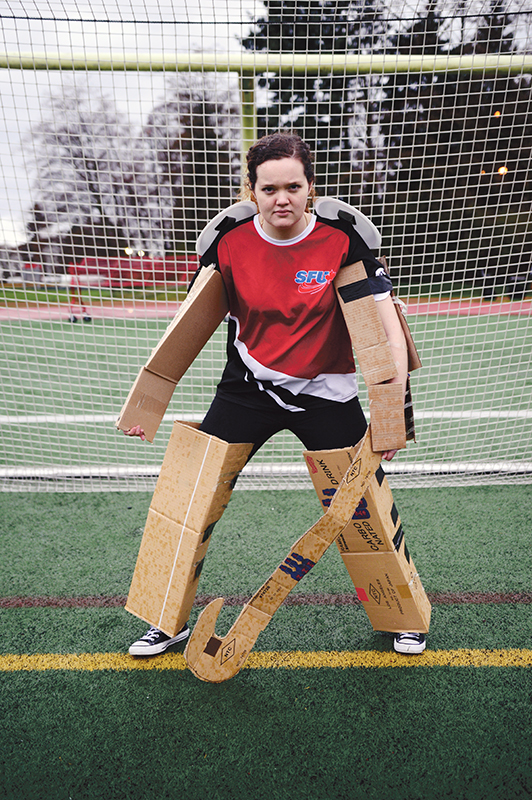
P: How does this impact your team’s ability to practice / travel / coordinate / etcetera?field hockey copy copy

MG: This money, although we greatly appreciate it, really doesn’t cover any of our expenses. We pay the league $1,725 in three instalments throughout the season for field time and umpire costs. We also pay our coaches a salary that ranges from $1,500–3,000, depending on our finances for the year.

P: Does your team get money from other sources? 

MG: We get most of our money from fundraising, which is challenging because we are all university students and our time is valuable. It’s difficult to organize events that everyone can attend, and that people will actually want to go to. Our fundraising goal for this year was $3,000. We are also looking into potential sponsorship opportunities and have reached out to a few businesses. Some of our money also comes from player fees. This season the first semester we charged our girls $85, and second semester was $35.

P: How is your team doing so far this season?

MG: Unfortunately our team is not doing too well this season. We’ve had a very hard time securing a coach. Without a coach, myself and few other executive members have had to step up and act as a coach and [disciplinarian] when necessary. As a result, practices aren’t as organized and productive as they should be, and we get no objective perspective and direction during games. This season is the first time since I’ve been on the team that we aren’t making playoffs.

P:  If your team had more money, what would and should it go towards?

MG: If our team had more money, it would go towards covering our field and umpire costs first and foremost. It would also go toward new equipment, as we had to fundraise to buy 15 new balls this year. We would also use this money to pay an experienced coach who would be with us for a number of seasons. Leftover money would go toward tournaments that we haven’t been able to enter due to financial deficiencies. All of these are definitely essential components to a successful team. We desperately need a coach, we need to be able to cover our operating expenses, and we need equipment to be able to even play.

P: Many would argue that schools should focus their funds on academics, and others often complain that schools overfund athletics and under-fund art programs. Do you have an opinion on this issue?

MG: I agree that academics are very important, and are the main reason that people go to university. However, athletics contribute to the overall university experience. Speaking from my own experience, I’ve made many friends and great memories on this team than almost any other university related experience. I just think it’s ridiculous how stressed out the execs and I get over the financial issues of the club. A little more money would go a long way and would definitely contribute to our success as a team.

P: What is the benefit of increasing funding towards school athletics?

MG: I think you would see a lot more successful SFU teams with an increase in funding.

P: Do you think SFU should fund all sports teams equally?

MG:  I don’t think they should be funded equally. Different teams have different expenses and operating costs, and I think funding should reflect that.

P: What would you say to SFU administration about funding SFU athletic teams?

MG: We cannot represent the school to our full potential with the amount of funding that we currently receive. We need the school to take us seriously and invest in us as a team. Help us make SFU proud.

Interview with SFU dance team member, Matthew King-Roskamp


P: Where does your team practice?

MATTHEW KING-ROSKAMP: Our team practices approximately six hours a week in the gym, and performs at various SFU events, such as basketball games, charity events, etc. We have also performed in outside events such as the Surrey Dance Festival.

P: How many players are on your team?

MKR: There are 15-ish members of the team.

P: Approximately how much money does your team receive from SFU?

MKR: Our team receives approximately $1,500 per academic year. We use this to offset the cost of uniforms. We fundraise through promotion of outside events, raffles, selling makeup products, etc.

P: How is your team doing so far this season?

MKR:  We are doing quite well. But, our performance is subjectively judged — we don’t have a win-lose record — so opinions may change throughout the team.

dancer copy copyP: If your team had more money, what would and should it go towards?

MKR: If our team had more money, hypothetical things it could go towards would include dance classes run by outside sources, travel and competition entry expenses, and paying for uniforms. I think these would not alter the Dance Team’s overall success, but would greatly increase the ease at which those results were reached. Our time and funds could be more focused towards our success rather than operating costs.

P: Many would argue that schools should focus their funds on academics, and others often complain that schools overfund athletics and under-fund art programs. Do you have an opinion on this issue?

MKR: I would wholeheartedly agree that Universities are overfunding athletics programs and underfunding academic and artistic performance. I am of the opinion that a university exists as an academic institution, and thus should focus the majority of its funds towards academics. Furthermore, I feel that student athletes receive a disproportionate amount of financial and other aids. For example, it is possible for a student athlete to receive full reimbursement for living and tuition expenses [the maximum amount for undergraduate national students for the 2014-15 year was $8,141, international students $13,913] compared to some prestigious academic scholarships of approximately $3,000 per semester. Ignoring individuals, team based funding can also vary widely in comparison to student union organizations.

P: What is the benefit of increasing funding towards school athletics?

MKR: Increasing funding towards student athletics would be beneficial in terms of school spirit and involvement. While SFU is in the NCAA, the comparison of school spirit and student involvement in sports is quite comical.

P: Do you think SFU should fund all sports teams equally?

MKR: Simply put, different sports team are naturally going to have widely varying operating costs. The cost of coaching, managing, and traveling for the football team of more than 40 men will always be greater than the cost of running the basketball team. The swimming team will naturally have more facilities upkeep costs than the soccer team, etc. In contrast, funding all teams equally can hypothetically greatly increase the success of underfunded teams and programs.

The fab, the fear, and the freshman 15

0

I was on the bus, eating a Rice Krispy square.

While I ate, I noticed someone looking back at me with disgust. She was beautiful and incredibly fit, wearing athletic clothes and perfect eyebrows. As she shook her head, she not-so-discreetly whispered, to no one in particular, “this girl is clearly letting herself go.”

Once we got to Production Station I rushed up the stairs to catch the train. She climbed with ease while I was huffing and puffing. When I finally got up to the top, clearly out of breath and sporting red cheeks, she shook her head again and uttered the words, “freshman 15 is so disgusting.”

What she doesn’t know is that I struggled with my weight.

In preparation for high school grad, I was 5’2” and 105 pounds. The freshman 15 — or the supposed weight gain that university students struggle with in their first year — was the one thing that scared me the most about starting university, and I vowed that I would never “let myself go.”

So in first year, I made it my mission to keep my grade 12 body. I starved myself through classes, only bringing a banana and water with me — and no cash to buy food. I politely declined trips to the food court with my new friends and refused to eat alone in public.

But at home, I ate like the apocalypse was upon us. I would eat heaping portions of everything to make up for the banana and water during the day. When my sisters wanted ice cream, I had ice cream. I smuggled chocolate, chips, and even cold pasta with me to eat in private and binge eat everything, only to repeat the cycle the next day.

At home, I was eating like the apocalypse was upon us.

I weighed 135 pounds at the end of first semester.

To my dismay, I wasn’t losing weight, I was gaining it. I balked at my mom’s attempt to fill my backpack with extra food, thinking that she was sabotaging my plan to lose weight.

But it wasn’t until I fainted at work that I realized that my successive headaches were not coincidences, that driving while seeing double was quite dangerous and that my internal rumblings were not meant to be ignored. My body was crying out for something, anything, and I had cut it off completely.

When I talked to a friend about my weight struggle, she had confided in me that she too had a similar experience with freshman 15. My friend is what most people would consider as beautiful, and her years of playing soccer helped her to develop a slender and athletic physique. It was then that I truly saw that the negative stigma around freshman 15 affected everyone. And no matter how many times I tell her that she is beautiful just the way she is, she will continue to smile and brush it off — just the same way I did so many times over the course of my first year.


Our bodies, regardless of shape and size, are fine the way they are.

I had developed dangerous eating habits out of my obsession of staying skinny, thanks to Photoshopped models and unrealistic body standards. But if even Barbie can figure out that our bodies are diverse, then maybe we need to remember that too.  I realize now that my goal is not to be skinny, but healthy.

Even if you don’t look like that Calvin Klein model, it’s okay. Over the course of my struggle, finding help and seeking a safer way to maintain a healthy weight, I began to see how valuable our bodies truly are. Our bodies do so much for us, and regardless of shape or size, it is important to remember that we are not defined by our jean size.

Tips on how to be healthy and happy

  • Schedule in eating and exercise: we all have busy schedules, so make sure that you set aside time to enjoy your food as well as time to get out for some fresh air.
  • Bring lunch with you: packing a simple lunch like a sandwich with veggies and fruit will leave you more satisfied — and it costs less too!
  • Add walking to your commute: obviously this doesn’t mean walking down the mountain to Production Station, but something simple like getting off one stop earlier and walking the rest of the distance is a way to keep yourself moving.
  • Find a workout buddy: it’s always more fun and motivating when you have someone to go with. A buddy will keep you accountable and will make it less intimidating.
  • Positive self-talk: remind yourself that you are fabulous and that your outward appearance is only one facet of you.
  • Have a support system: surround yourself around people that build you up and images that promote healthy lifestyles. Express your feelings and don’t be afraid to fail — just remember to pick yourself back up, with their help.

Comics!

0

Creator’s Pet (Destiny Hsu)

CP_019

Mystic Man (Reuben Newton)

WEBMystic Man 10 vs Master of Element

Peers (Leslie Lu)

Week6(5)

Boohoo, Woohoo

0

Boohoo: Pizza Pockets

After years of genetically modifying calzones in a mildew-covered basement, a hideous monster is born: the Pizza Pocket.

Pizza Pockets are essentially highly noxious cheese farts wrapped up like fat little gremlins in a swaddle of greasy dough. Whenever I eat them, I feel like a baby bird cawing away, eager for its mother to vomit into its mouth (and I wouldn’t be surprised if I was literally eating pre-chewed earthworms — the ingredients of Pizza Pockets are basically a military secret).

Pizza Pockets don’t even pretend to be delicious, either, since they know that you’ve already hit rock bottom eating them. After those little poop-sacks are chucked into the microwave, they immediately explode into a crime scene of cheese and self-loathing, and then arrogantly expect you to shove their mangled existence into your mouth. I won’t stand for your abuse anymore, Pizza Pockets.

Woohoo: Pizza in your pockets

Pizza in your pockets! A cool snack and great quirk — who wouldn’t want to be known as the babe with the pizza in their pockets? It’ll be a quirk you’re actually proud of, as opposed to that other quirk you have of being a nervous farter (you’ll never forget that one time at summer camp where you went in to kiss Victor for the first time and ripped one so loud that he ended up crying with fear).

Pocket pizza will make you the hippest cat on the block, like John Travolta in Grease and, incidentally, just as greasy as John Travolta in Grease. Just carry a few slices of ‘za at all times, and you’ll always be ready for action.

“Is that pizza in your pocket or are you happy to see me?” It’s both, of course! You’re always happy when you’ve got pizza in your pockets.

Satellite Signals

0

Woodwards WEB-woodward

The Djavad Mowafaghian World Art Centre will host “Two-Spirit and Indigenous Transgender Stories and Photos of Safety, Belonging and Well-being” on Wednesday, March 9 at 7:00 p.m.

The free lecture will feature research from leading Indigenous Two-Spirit, transgender, and gender non-conforming figures and will shed light on issues facing these communities in Metro Vancouver especially in health and well being.

Surrey surrey

There will be an information session for SFU’s Human Resources Management Certificate on March 17 from 6:30 to 7:30 p.m., in room 5100 at the SFU Surrey campus. This information session is a great way to find out if human resources management is for you, whether you’re a student interested in the field, a professional looking for a promotion, or just curious about the program.

The session is held at no cost, and registration is available on the SFU website.

Harbour Centre vancouver

On March 15 from 5:30 to 7:00 p.m. at Harbour Centre, SFU’s School of Public Policy will be hosting a presentation by Anne Giardini, SFU Chancellor and a former lawyer and business executive, to speak about problems and perceptions surrounding women and power.

The talk will discuss methods by which private organizations and governments can change these perceptions and enable equality.

We make assumptions, and they destroy us

0

[dropcap]I[/dropcap]n the world of text messaging, we complain about the amount of times meaning gets lost in translation — the amount of times our “K” texts are perceived as anger, or when and when not to punctuate our sentences. Our circumstances of miscommunication are blamed on the short forms we send across text. Yet, unfortunately, this is not a technological problem.

We make assumptions all the time and we don’t need a cell phone to do it. We are inherently sensitive, destined to take things too personally, and rarely inclined to go beyond our own perspectives. How many times do we read into somebody’s tone of voice? How many times do we twist the words they say into meaning something that maybe they don’t? How many times do we actually take the time to make sure we’re reading into things the right way?

Miscommunication is one of our greatest flaws. We assume things and we don’t have the courage to figure them out. And the worst part is that these assumptions destroy us. They destroy our friendships and our perspectives on people; they destroy our willingness to fight for relationships to stay alive. In a sense, they fuel our isolation. We’ve criticized the way English classes force us to read between the lines and we’ve forgotten that we’re naturals at it — that we use these tactics every single day and we’ve formed our world around the assumptions we’ve created on every kind of interaction.

One sentence has a thousand meanings and with a slight change in pitch suddenly the meanings become personal.

We live in a world where one sentence has a thousand meanings, and a slight change in pitch can suddenly make something intensely personal — targeted at us with harshness behind their syllables. A world where we fail to ask questions because our assumptions guide us to answers might not even exist; thus we perpetuate the bubble of toxicity we’ve created, of always assuming and never understanding or asking. Of never mending the bruises that have developed from these assumptions.

Why are we prone to stop trying, to let broken relationships get the best of us? Because we assume the next will be like the last. We get stuck in a pattern and assume it will perpetuate itself, so we give up before there’s even been a chance to try. We avoid relationships, avoid their repairs, avoid conflict, we let our assumptions dictate every aspect of ours lives, and we will inevitably and irreparably hurt ourselves in the process.

These days, any miscommunication is somehow linked to a text message we sent that we shouldn’t have punctuated. As if miscommunication stems from Facebook messenger and other sources of online conversation — as though this technology can create the problems we so frequently bring up. Has technology worsened our communication? Or were we never that good in the first place? As a communications student, I’m wired to believe the overabundance and heavy reliance on technology is the cause of a lot of our problems. But it’s not.

We are.

SFU Replies

0

To SFU,

I’m concerned about my class with Dr. Olle. A geography course based entirely on digging is odd. Is this standard? Also, where is Dr. Tran?

Also, and I’m not complaining about this, but I’m wondering if we’ll be able to leave the campus soon. The rations aren’t enough, and several students are worried about illness. . .

Best,

Alice Rook


Hi Alice,

This isn’t the best place to talk about specific course or professor location problems. But I do want to calm your nerves — every class has taken on a mandatory digging segment, its intensity is being left up to the discretion of each professor. I assume that Michelle was just especially interested in digging, her being a geography professor and all.

Don’t worry about calling professors by their first names, by the way. We are all comrades under SFU, as was voted upon by the SFU Voting Committee last week. Just look to the flags: “Comrades engaged under SFU, we have got our digging to do!” They’ve always been there.

Concerning your concerns concerning the rations, I assure you that more will come, come delivery day! Just last week, delivery day was a Tuesday; perhaps this Tuesday we will be just as lucky. Provided we aren’t cheated again by those UBC rascals. Those cheats! This week, perhaps, the shipment will stop by an SFU campus first.

We’ll all be able to leave soon, comrade! Our families are waiting for us, and they love us dearly. I miss my family as well, though I recognize the magnitude of our work. Who knows what glorious riches lie in the innermost depths of Burnaby mountain?

We do, Alice! And you will too, in due time, if you stay the course, and don’t question your course, of course! Look to Comrade Michelle, who goes above and beyond her digging pedagogy duty.

Look to the stars, SFU, and keep your shovel in the mountain!

Best,

Victor Von Doom

Director of Comrade Relations,

President of Voting Committee

Former city councillor celebrated in staged reading

0

The fourth annual memorial for Jim Green, former Vancouver City Councillor and community activist, celebrated his life with a staged reading of his book, Against the Tide: The Story of the Canadian Seamen’s Union.

While studying at UBC in the early 1970s, living in the Downtown Eastside, and working as a casual longshoreman, Green became acquainted with former members of the Canadian Seamen’s Union (CSU), and was approached by a committee with the request that he record the history of their union.

The staged reading was commissioned by SFU’s Vancity Office of Community Engagement and shone light on a lesser-known chapter of Canadian labour history, featuring the CSU. The memorial was held in partnership with the Institute for the Humanities at SFU, SFU’s Department of History, and the BC Labour Heritage Centre.

Vancouver City Councillor Geoff Meggs, who was the original editor of Green’s Against the Tide, explained in the foreword to the event guide: “Most Canadians have forgotten, if they ever knew, that our country once boasted one of the largest merchant navies in the world, a key to victory in the Second World War crewed by men and women organized into the Canadian Seamen’s Union.”

Charles Demers, a local writer, and SFU history alumni, adapted Against the Tide for this special performance.

The production was directed by Amiel Gladstone, and featured Andrew Wheeler as Jim Green, Carmen Aguirre as Labour, and Kevin MacDonald as Capital. Local musician and SFU MFA graduate Corbin Murdoch performed live on the set, singing lyrics that originated as poetry in the CSU’s newsletter, Searchlight.

Am Johal, Director of SFU’s Vancity Office of Community Engagement, explained that “the story of the Canadian Seamen’s Union is not just an historical tale. The relationship between labour and capital is also a very contemporary story.

“Taking this book that is rarely read these days and giving some life to the first-person narratives that are in the book was a great way to bring to life these memories in a way that they wouldn’t be forgotten,” he said.

Director of Research at the BC Labour Heritage Centre, Robin Folvik, explained, “it is important to acknowledge all of the information contained in this book that would likely otherwise have been lost without Green’s research and writing. His extensive interviews across the country and access to former CSU members’ memorabilia and clippings captured things that otherwise would have been impossible for us to access today.”

Their reading highlighted some of the key moments in the history of the CSU, including the 1949 strike, which ended in victory for the union.

The lines were divided between the three actors: Wheeler read the words of Jim Green, Aguirre read testimonies from members of the CSU, and MacDonald read the lines of the government and corporations who opposed the CSU and its ties to the Communist Party.

“Jim did these interviews in the ’70s and the ’80s — many of the people he interviewed have passed on. The interviews are held at the national archives, but it’s a very obscure story and hard to find. Jim spent a lot of time traveling the country trying to capture these stories so they wouldn’t be forgotten,” said Johal.

“We thought that at this annual memorial event, it would be an interesting time to land this text down in the present in a way that still resonates with us today.”

The reading was filmed and is currently being made into a documentary.

Folvik reflected, “although working people have always been cultural producers, using a wide range of creative practices to reflect their experiences, they are rarely the ones to receive funding or support to bring their projects to a broader audience.

“SFU’s Vancity Office of Community Engagement’s backing of this production, particularly one that is so focused on the struggles and solidarities of working people in Canada, fills an important gap.”

University Briefs

0

U of A study finds shift in Canadian attitudes to marriage

[EDMONTON] – University of Alberta sociologist Lisa Strohschein, in her study of Canadian perceptions of marriage, found that matrimony is no longer of central importance to Canadians. Her findings suggest that people are getting married later in life, are having children without worrying about marriage, and are far more focused on their careers and concerned with their financial stability than in the past century.

This study said that marriage is still important to Canadians and viewed as an end goal, but the findings suggest that our attitudes surrounding its necessity have loosened significantly.

With files from CBC News

Laurentian University’s chili lunch supports literacy program

[ONTARIO] – Laurentian University’s Equity and Social Justice Committee has raised funds for Frontier College’s literacy program by successfully organizing a chili lunch.

The literacy program aims to support Aboriginal groups across Canadian provinces. It has allowed Aboriginal children to be more immersed in reading books, a result confirmed by the parents of these children. Six thousand children have already participated in this program, which continues to grow and expand.

With files from The Lambda

McGill researchers develop model biological supercomputer

[MONTREAL] – McGill University professor Dan Nicolau and his team of researchers have developed a book-sized model for a biological supercomputer that uses proteins propelled by Adenosine triphosphate (ATP), a key chemical in the process of metabolism.

Due to the biologically-based processing providing less heating issues, these supercomputers are said to be more energy efficient than their current counterparts. The researchers are uncertain as to when full-scale versions will be available.

With files from McGill Newsroom