Home Blog Page 834

The SkyTrain redemption

1

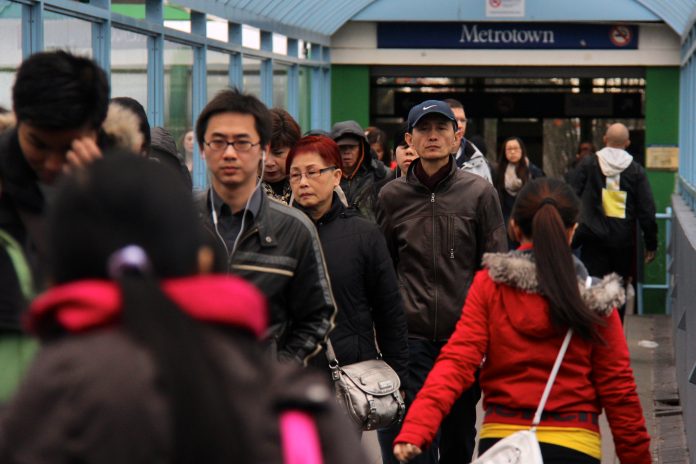
[dropcap]L[/dropcap]ost in the wallows of two bombed midterms, I nearly miss the voice of a forty something Fijian-Canadian man beside me as he sparks a conversation on the Expo line. 

“It’s so weird,” he says in what begins as a muffled whisper.

Worlds away, I look up from my phone, still orbiting the sphere of my own self-pity, “Pardon?”

“I haven’t been on the SkyTrain in a long time — it’s so different.” His eyes drift forlornly out the window before locking onto my gaze with intensity, “I just got out of prison.”

My eyes widen slightly and my grip tightens around the corded straps of my school bag.

“I killed a guy.”

I slowly nod, trying to keep calm. I can feel my cheeks begin to heat up and my pulse quickening. I had come to observe a chilling assortment of characters on transit over the years, but even the most abrasive paled in comparison to this man adjacent to me, and his resonating force of intimidation.

A shiver drifts down my spine. I feel frightened. More than I have been in a very long time.

I start preparing contingencies in my mind. My eyes dart back and forth for the nearest exit. Calculations swirl as I measure if my arms can reach the yellow security strip above the window. Blood flows fast throughout my body. I have never been in a fight. I dread to think my first might come at the hands of an incarcerated criminal. I go over every scenario — good and bad — in preparation for the events to come.

What happens next catches me off guard.

Around his eyes, glistening tears begins to materialize. He fights them back with what I can only imagine is all the willpower he can muster.

“When you’re in prison they tell you when to eat, piss, and shit,” his voice waivers as he speaks, like a worn out record. “Now, I’m out. I’m free. But I’m not. I don’t know what I’m supposed to do.”

My grip loosens on the straps of my back pack. My heart rate, once a Buddy Rich drumline, shifts back to its regular calm tempo.

With some hesitancy and just enough courage, I slide my phone into my pocket and turn my body to face the man. I put aside my fears and begin to talk with him, albeit cautiously.

It doesn’t take me long to realize that I have given the man what no one else had seemingly given him in a long time: acknowledgement.

He confides in me his past, and the lifestyle he endured for 10 years behind bars. He tells me that he is remorseful of his actions and ready to take the first steps towards a brighter tomorrow. However, he confesses that he is lost in this world he has returned to. Even with a second chance, part of him still wishes he was in prison amidst order and routine.

After a heartfelt back and forth, the man stands up as the train halts at Surrey Central. His eyes, still lined with weariness, glint for a moment with optimism. He clasps the top of my hand and thanks me for listening.

“Keep your chin up,” I call to him as the doors open.

As the doors close, I think back to the universe I was lost in only 10 minutes prior. Suddenly, two bombed midterms don’t seem to matter all that much.

University Briefs

0
Photo courtesy of The Dalhousie Gazette

Difficulty coordinating harm-reduction efforts at UVic

[VICTORIA] – A 2013 national survey on substance use by post-secondary students found the consumption levels of University of Victoria students ranked steadily higher than other Canadian universities. These results incited Changing the Culture of Substance Use in Residence (CCSUR) to launch through the university with the intention of encouraging moderation of substance use.

Concurrently, the advocacy group UVic Pride, which provides a space at UVic with clean tools for safer drug use, notes that many community members access their resources but express concerns for UVic administration’s lack of funding or involvement with immediate harm-reduction groups like itself.

With files from The Martlet

Sexual violence policy passed at Queen’s

[KINGSTON] – Queen’s Board of Trustees have approved a university-wide sexual violence policy. It is subject to future adjustments in order to align with anticipated new provincial legislation regarding sexual violence.

The draft was released in December to allow for a two-month feedback period. The policy has passed following a 2014 Toronto Star investigation stating that only nine of 78 Canadian universities had such a policy. Ryerson and York University have also since passed designated sexual assault policies.

With files from The Journal

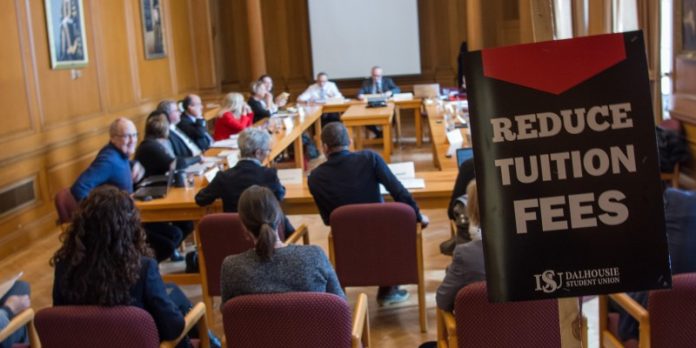
Dalhousie students protest proposed tuition hike

[HALIFAX] – Dalhousie students are protesting proposed tuition increases from the university’s Budget Advisory Committee. The changes being considered include an increase of 15 percent for engineering and pharmacy programs and 18.9 percent for agriculture.

Students have raised concerns about the high tuition fees already in place, the affordability of their education, and the feeling of not being supported by their university’s administration. The university’s Board of Governors are to vote on the approval of these increases on April 19.

With files from The Dalhousie Gazette

A call for inclusive climate action

0

[dropcap]W[/dropcap]e’ve all seen the ads — the polar bears precariously balancing on blocks of ice for a Coca Cola commercial, the devastated ecosystems captured by Discovery Channel documentaries. However, what we don’t see is input from indigenous peoples on the serious issue of climate change, despite being those who inhabited the land on which we currently live before settlers came to take it away from them.

On March 2, the Assembly of First Nations (AFN), the Inuit Tapiriit Kanatami, and the Métis National Council were all invited to meet with Prime Minister Justin Trudeau in Vancouver, to voice their concerns on a variety of issues concerning them. AFN National Chief Perry Bellegarde said that indigenous peoples should be included on the development of plans to combat climate change, as they are often among the first to feel its effects. However, the Congress of Aboriginal Peoples and the Native Women’s Association of Canada were not invited to this meeting and are advocating to be a part of it.

The fact that Trudeau is even meeting with organizations that advocate for the interests of Aboriginal peoples is noteworthy in itself, for there has been a long history of silencing these voices in order to further self-serving colonial interests.

Indigenous peoples are the first to feel the effects of climate change.

Maisaloon Al-Ashkar is a second-year SFU student who is majoring in First Nations Studies. She is also a board member of the Simon Fraser Public Interest Research Group (SFPIRG) and an organization called Fossil Free Faith, in which she uses her Muslim faith as a voice to advocate for climate justice.

Al-Ashkar had these powerful words to say on the topic: “Climate change has developed because of colonial ideals of exploiting the land and those who rely upon it. To nurture climate justice, we need to acknowledge that our well-being and the environment’s  well-being are deeply interconnected, and this is knowledge that’s beautifully embedded in many diverse indigenous worldviews.”

Her words point to the long history of exploitation and oppression of Indigenous peoples in Canada, as well as alternative solutions and ideas for world issues that those who are currently in power may never even have considered.

Most importantly, more collaborative efforts between governments and Indigenous peoples would be an important step towards reconciliation. In working with them and valuing their input, the Canadian government would be doing more for Aboriginal reconciliation than an official apology ever could. Indigenous peoples are finally beginning to have their voices heard, but they need to be an integral part of every important conversation. It is about time that we let their voices shine.

SFU Replies

0

Hey, SFU!

I’m a little unsure of these new school rules. We’re not allowed to write anything; SFU reps are taking my dictation right now, and it’s easy and makes me feel connected to the community!

I’m wondering if you can clarify the rules established this week, and I’m really excited for them!

Yours,

Amnita Chanda, gender: f, History/Anthropology, BT O+, good standing


Hey Amnita!

Here’s a list of the new SFU school rules:

  1. All clothing must be either blue, red, or grey, same as the official school rations. On Wednesdays, students may wear any plaid dancing shoes, in spirit of SFU’s Scottish heritage! Dancing remains prohibited.
  2. Communicating with the levitating bear is permitted in the RCB Hall only.
  3. Surrey and Vancouver students are reminded that classes no longer exist in those campuses, as those campuses no longer exist. All AWOL students will be forgiven once tallied at SFU Burnaby.
  4. No hard-soled shoes on any gym floor.
  5. Communication with the infected Dr. Torsten Kehler is to be done at a safe distance of five metres, minimum (though nothing will stop those dad-jokes!). Same applies for all animated, recently infected professors. SFU is working on a reversal.
  6. Members of the Egyptian League of the Undead are a valued part of this community and will be given students’ sympathy and any available ankhs.
  7. Have fun!

Amnita, we’ve never been closer to understanding the complexities of Ursa Major, or the inner workings of Burnaby Mountain. Just today, in the mountain, we’ve reached lava! Neat! Our hearts go out to the four archeology students lost in the excavation.

Sincerely,

A transparent figure,

SFU Communications

Yes, TransLink should add signage for invisible illnesses

0

[dropcap]I[/dropcap]n Adam Van der Zwan’s recent article published in the Feb. 29 issue of The Peak, “TransLink Shouldn’t Add Signage for Invisible Illnesses,” he states that we can only “properly accommodate those with physical disabilities, rather than invisible ones.” This opening assertion sets the tone for a misinformed and problematic commentary on the roles that TransLink has in accommodating those with disabilities.

Firstly, the idea that in order for a disability to be physical it must be visible, is simply false. Many invisible illnesses are physical ones. Examples range from illnesses such as Ehlers-Danlos syndrome, an illness that causes chronic joint pain, to fibromyalgia, a chronic disorder that creates muscular pain and fatigue, to many other possible combinations of pains, illnesses, and disabilities. For these people, a seat nearer to the front of the bus means the world.

The article continues to assert the claim that while asking TransLink to make an addition to the signage to include those with invisible illnesses is a “safe request,” it is equivalent to asking customers to be considerate, something that Van der Zwan says TransLink already does. While having priority seating for those with disabilities is considerate, there is still improvement to be made. Metro, the primary public transportation company in Washington, already has signage that alerts customers to the existence of invisible illnesses. “Who needs this seat? You’d be surprised,” reads the sign. This example demonstrates that the problem is not “out of reach,” as Van der Zwan claims. In fact, it would be simple for TransLink to create similar signage.

However, the article carries on, suggesting that people with invisible disabilities carry signs displaying their illness, or, even more shockingly, tattoo an indicator of their disability on their bodies. This reaches an entire new level of ableism. To ask someone with a disability to visibly mark themselves as disabled so that others may recognize their needs is to perpetuate the idea that disabilities define us. For many, disabilities are personal, and it isn’t anybody else’s business what bodily malfunctions are affecting them.

This idea as an alternative to increased signage directed towards able-bodied people who have for far too long been sitting in seats not meant for them casts the blame in the wrong direction.

It is the combined responsibility of TransLink as a company to increase signage, and able-bodied customers to not sit in priority seating when they don’t need it. Yes, this includes even when the bus is full. Why? Because you as an able-bodied person are capable of standing on the bus, and should someone with an invisible illness come aboard who actually needs that seat, it should be available to them without risk of uncomfortable confrontation.

While ableism as a whole will certainly not end with an additional symbol on a sign, it is an excellent start to ending the coexisting cultures of ignorance and silence that surround invisible illnesses.

The problem with Canadian culture and lingo

0

Moving from Oregon, I hardly expected to have a culture shock upon arriving in British Columbia. Belonging to the same stretch of Cascadia, I assumed that Portland and Vancouver would be very similar aesthetically. And if the nearly constant drizzling rain and the fresh air didn’t do the trick, the abundance of beer snobs, the locally owned vegan cafes, and the plethora of cute girls with pierced septums and unnaturally dyed hair would make me feel at home. But there are a few things that this vegetarian, Oregonian girl with a pierced septum and dyed hair simply can’t ignore. A few things that, quite frankly, confuse the shit out of me.

toqueee

Toques: They’re called beanies, you guys. What even is a toque? It doesn’t make sense. Beanies got their name from heads being nicknamed beans. That makes perfect sense. ‘Toque’ doesn’t even sound like a real word; it sounds like someone is trying to cheat at Scrabble.  

loonies

Loonies and toonies: You know your currency is basically just a ripoff of a popular children’s cartoon show, right? And what’s the point in not having $1 bills if you’re just going to replace them with coins? The only difference is that I feel guiltier paying for things with a bundle of coins than with a wad of cash which weighs five pounds and destroys my change purse. Thank you for that. The only real advantage is that your money doesn’t have crusty, problematic, old men on it.

pasta

Pasta: I have yet to meet a Canadian who pronounces this word correctly. It’s pronounced paw-sta, not pah-sta. Who hurt you?

macncheese

Kraft Dinner: On the topic of paw-sta, it’s called mac ‘n cheese, not Kraft Dinner. Just like toques, you’re just using words that don’t belong. Macaroni is the type of noodle; cheese is the sauce. What’s Kraft Dinner? The brand. Hardly specific. Try again, mates. It’s like calling Beef stroganoff ‘Hamburger Helper.’ Who does that? Heathens.

curling

Curling: Every morning when I go to the dining hall, the TV either has hockey on or curling. At that rate, if a third TV were installed, it would probably show a herd of moose eating at Tim Hortons. But honestly, curling is the most ridiculous looking sport. There aren’t beefy men pummeling each other and getting concussions on the daily, so can you really call it athletic? Congratulations on making “physics on ice” a way bigger deal than it should be.

Adult female healthcare professional as she was receiving an int

Free health care: In ‘Murica, we handle those concussions on our own. Pain is just weakness leaving the body anyway. No pain, no gain, and America is all about gains, baby. American health care is being charged hundreds of dollars for a bald eagle to tell you that soldiers have it worse than you and that at least you’re experiencing your pain in a free country. That shit builds character.


Big media stifles environmentalism

0

[dropcap]W[/dropcap]e all know by now that Leonardo DiCaprio has been a strong advocate for climate change action for a number of years. His most recent attempt at environmentalism donned his Academy Award acceptance speech a couple weeks ago.

However, some people may have forgotten how Leo received some serious flak last December. The CBC identified various tweets from ‘environmentalists’ who stubbornly pointed out that the extreme weather conditions that Leonardo noticed in Alberta, while filming The Revenant, waere merely the result of a Chinook — a warm gust of wind that hits Southern Alberta on a regular basis. Albertans insist that, no, it wasn’t the dooming effects of climate change. 

However, what they call a “cringe-worthy” misidentification seems to be more of a manufactured distraction from the real issue here: climate change. The topic that no one really seems to want to talk about; the topic that could potentially have a direct influence on big business, oil, and even capitalism itself.

The documentary Merchants of Doubt shows how the media plays an integral part in establishing doubt. This was done in the past when cigarettes were proven to cause cancer; however, think tanks were able to generate enough controversy over the issue that scientific consensus was put into question during following decades. This is the same science that we put our utmost faith and belief into. So how is it that as soon as a corporation denies the findings, it becomes ‘junk science’ and we begin to have our doubts?

The fear surrounding a loss of jobs and income is very real for the citizens of this economy.

Think tanks are employed by the big oil corporations to use the same tactics used in the cigarette case, in order to maintain their relevance in the capitalist regime.

I’d be willing to venture a guess that the CBC article is influenced by the Albertan oil and gas sector, which makes up a significant amount of the revenue of this province. The fear surrounding a loss of jobs and income is very real for the citizens of this economy.

Another CBC article said that environmentalists themselves are the ones cringing at his environmental speech; however, Greenpeace, one of the strongest advocates of eliminating our impact on the environment, showed their support for Leo on social media. From this, I’d surmise that our very own CBC is perpetuating the doubt on climate change.

Albertans in the oil and gas sector are quick to defend their position in the economy. Especially with remarks to the extent of, “What runs your car? Who makes the plastic that your computer is built from?” While that may be enough to quiet some in their shame of hypocrisy, it’s time to place more value on that planet that we all share, rather than the commodities pushed by corporations. Just like in a failed relationship, we have to let go of the past to have a future.

In the end, DiCaprio may not fully understand what a Chinook is, but that doesn’t matter. He is using his fame and prestige for good, by influencing record-breaking retweets in minutes, and by spreading the message to 34 million Oscar viewers, surely he is seen as an influential threat by big oil.

Ultimately, we need a big name like Leonardo DiCaprio more than ever to challenge the conglomerates and mainstream media that perpetuates the biggest pollution of all: doubt.

Rachel Proctor is leading by example

0
Proctor finished last season leading SFU in batting average with .354.

Baseball is an extremely team-oriented sport. Each player on the field must be at their physical and mental peak in order to achieve success. On top of that, all outfield players must be just as good at defending runs as they are at creating them.

Senior Rachel Procter is a shining example of that skill. The Health Science major plays out in right field, and last season she led the team in batting average.

“I started probably at the age of five or six,” explains Proctor. “[I] started with teeball, and worked my way up to play Club A ball at White Rock Renegades, and eventually came here.”

After the age of 12, at the insistence of her coach, Proctor switched from being a pitcher to playing in right field, a role she now greatly enjoys.

“I think that [in the] outfield you can make some really big plays compared to an infielder. If you make a mistake in the infield, it’s only a base hit, but if you make a mistake in the outfield, it’s huge. So [you’re able to] make some game-saving catches.”

From there, Proctor came to SFU where last season, she led the Clan in batting average, with .354. A tireless worker, Proctor has spent countless hour over the course of her time at SFU trying to perfect her swing.

“We have a coach who will help us correct [and] we do some video analysis on your swing [. . .] I know over the summer I used the video analysis and identified things I need to work on. So you just have to do repetitions on things that you know are your weaknesses and eventually get better at them.”

So how does she approach hitting once he gets to the plate?

“It depends on the pitcher,” she said. “From the sidelines, we watch what the pitcher is throwing and what her tendencies are. So then you can kind of go in there thinking what she’s going to be throwing. [For example,] if I know she throws a first pitch strike, then I’m thinking to be more aggressive on first pitch.”

In addition to hitting, a major part of softball is the mental aspect. Players have to cope with the doubleheader — when two games are immediately played back to back on the same day.

“At first it was really hard adjusting [to doubleheaders], just because win or lose in club ball you can just go home. But now, win or lose, you have to realise that you’re playing a game right after. So if you lose, you have realise how to bounce back, and if you win, you have to realise that you need to stay with the momentum, and that momentum is on your side.”

What goes through her mind after a tough loss in a first game?

“If you win, you have to realise that you need to stay with the momentum.”

“The thing I really think about is we really have nothing to lose,” she explained. “If a team has beaten you, they might think that they have the upper hand or advantage, so it’s really important to be resilient and bounce back with the most positive attitude that you can.”

A large part of Proctor’s senior year has been leading by example. Back in February, Head Coach Mike Renney told The Peak that he expected the seniors to lead not only by example, but by performance as well, and to help guide the younger players.

“I think one thing is definitely showing hard work and trying your best,” Proctor said. “It’s not always about succeeding, as much as we’d like to succeed, but I think if you put hard work in, your probability of succeeding is higher. I think myself and the rest of the seniors always just want to show maybe the freshmen and the sophomores that hard work pays off in the end.”

Success has come early this season for her team. They are currently 14–10 at the time of writing, with a four game sweep of Montana State University-Billings a impressive early highlight.

“So far I think the season’s gone really well,” said Proctor. “I think we’re off to the right track [. . .] We’re still pretty early in the season, but if we’re going game by game, I think we’ve done really well. We’ve shown that we can play as a team, and compete in GNAC.”

Fun Fact: Proctor’s walkup song is ‘The Only Way I Know,’ by Jason Aldean. “But,” she says, “I also like Taylor Gillis’ song: ‘King Kunta’ by Kendrick Lamar.”

An interview with two of SFU’s most ambitious entrepreneurs

0

“Loyalty initially, royalty infinitely.”


These are the words that inspired Joshua Jackai and Buk Nkosi, two SFU students and business partners, to build their brand Frontrvnners Streetwear. At a young age, Jackai would spend hours designing and creating clothing when his family couldn’t afford to splurge on it. In 2012, he and some friends launched World Class Frontrvnners in Hayward, California.

Jackai took a break from Frontrvnners in 2013 when he came to SFU on a football scholarship. Nkosi arrived in Summer 2015 from Zimbabwe. When the two met in spring 2015, they teamed up, and have used their passions to build a streetwear brand they love.

I had a chance to sit down with Jackai and Nkosi to find out more about them, and learn how their experiences have been influenced by their time at SFU.

The Peak: Obligatory icebreaker: when did you start at SFU; what’s your major?

Josh: I’m from Hayward, California, about 15 minutes south of San Francisco. I came to SFU on a football scholarship in spring, 2013. I major in communications and I’m in my last year here.

Buk: I came to SFU from Zimbabwe in spring 2014, majoring in communications with a minor in business, and a certificate in entrepreneurship and innovation.

P: What made you decide on SFU?

J: I wanted to experience something new here at SFU and try to grow. Back home, there wasn’t a lot around that was productive so it’s nice to experience another country. And the scholarship of course.

B: I had no particular reason to decide on SFU. I talked to a rep back home and I liked him so I decided to come here.

P: And how did you two meet?

J: Buk and I met in spring 2015 and since then things have taken off for the company.

P: What was your inspiration to start the company?

J:  Personal morals and principles. Growing up [in California,] I always told myself to succeed and get out of that environment, [which] inspire[s] the message behind the company. One of my role models is Scott Sasso, from 10 Deep. He does a lot of the work in his company and makes sure it’s done well. Of course, my mom inspired me too. She instilled perseverance in me.

P: Have you always had a passion for clothing?

J: It developed indirectly. Back in elementary school, we weren’t always able to buy the nicest clothes. My mom would have to put stuff on layaway. I found myself trying extra hard to make my outfits look better than what they actually were. Me being self-conscious made me put things together [in a unique way]. Ever since then, I’ve been very interested in fashion.

B: Somewhat, I’ve always thought, “[I’ll] wear clothes anyway, so what will I be comfortable in?” People have said I have a unique sense of style but it doesn’t just apply to fashion. I like to do things that I think are appropriate for me, not just what’s dictated or the “right way.”

P: How has SFU contributed to the company’s success?

J: Being a communications major, it taught me media and marketing and how to implement ideologies, mindsets, and identities, and how to build an image off that. Before I met Buk, I did everything on my own but you can only get so far doing it that way. I’m more of an introvert and I won’t go up to people and tell them about the brand, but Buk is the complete opposite and even if he doesn’t know you, he’ll go up and be friendly like he knows you. So definitely my education here at SFU, but meeting the right people [has been valuable as well]. Fashion week at SFU, too, forced us to step up our game and produce a lot of clothing and content for it. It allowed us to get the word out. 

P: Aside from the company, what has your time at SFU done for you?

J: SFU showed me how to see the intellectual side of business. Mindsets and how people think.

B: The knowledge from the business and communications courses I’ve done have helped me understand people in a business context, how people receive information. The most important thing aside from education is the opportunity to interact with different people. Like professors who are mentors, and interacting with different clubs like the ASA, Brooked Events, The Schedule, being a CA on residence; everybody you meet enriches your mind. It’s been amazing meeting different people from different groups. I definitely wouldn’t be the same person would I have gone to a different school.

P: Is it difficult balancing work, life, school, and everything?

J: Somewhat, but I find it just gives me less time to do unproductive things. Last semester was my most stressful term but also my most productive academically. Being busy diminishes the unproductive habits. If you manage it well, it works fine.

B: If you’re doing something you like then it’s not really work. My courses, this brand, and everything, it’s all things that I want to do. We do things like this brand not for money but for pure passion of it. We love it and we want it to continue.

P: What are your goals after SFU?

J: I might do a certificate in entrepreneurship once I’m done my bachelor’s, but otherwise I’m done in the summer. I want to continue building this brand because I don’t believe in working towards something I don’t believe in. I want to be able to support myself, support a family, but also give back to the community. Where I’m from it’s pretty much like the ghetto. People think the only way to get out is to sell drugs, play sports, or rap. They don’t know that you can get out through academics [. . .] so I’d like to be a role model and open up doors to show that there is another way.

P: What advice do you have for young people and SFU students?

J: Not to sound too cliché, but take matters into your own hands and control your own destiny. A lot of people focus on too many things and don’t chase what they’re really after. I heard something on a Logic track that said it’s better to live a short life filled with things you like doing than a long life spent in a miserable way. A lot of students I talk to, they don’t really know what they want to do and they feel lost. One thing I did, sit down, and write an obituary about yourself. It helps give you direction, what do you want to be remembered as, and what does your family think about you.

B: Make use of your time at SFU. Some of the coolest people I’ve met came about by random conversation on campus. All it takes is a “hello,” or if there’s a prof you like, just go up and talk to them about stuff. It enriches your life and makes school much more enjoyable. Know the value of putting yourself out there. It may seem scary, but don’t make assumptions about how people will receive you. Not everybody thinks the same way.

P: So SFU is more than just academics?

B: It’s way more. SFU is what you make it. Some people say it’s boring and not a lot happens at SFU, but so much happens that you can never have enough time for it. The experience won’t look for you, you have to create it. You can have any type of experience you want here.


MIXOLOGY 101: Student drinks on a student budget

0

It’s 7 p.m. on a Friday night.


You’re broke but you just finished a hellish week of papers and mid-terms. You want to get lit, but you’re super broke and don’t want to drink the same cheap beer that you did last weekend. What exactly are you supposed to drink?

As a student, I get it. You don’t always want to go out and spend your final dollars on an overpriced cocktail — that may or may not be any good — or a case of cheap beer where you will only be able to drink six because your even more broke friend bummed the other six, just like last time.

The following drinks were chosen for both their popularity and ease of preparation, and have been given one rating for overall quality and another for cost.

All recipes are for one glass.

Sex on the Beach

Recipe:

2 parts vodka

1 part peach schnapps

2 parts orange juice

2 parts cranberry juice


Directions:

Pour everything in a glass over ice and stir.


Rating: 3/5

Cost: $$$

It’s a fruity and girly drink that’s probably a little too sweet for my liking. It could have been a more appetizing colour — it looked a little like a peach that was a little past its prime. The vodka taste was also a little stronger than expected, but once you got used to it the drink wasn’t that bad. Not that great, either.


Long Island Ice Tea

Recipe:

1 part vodka

1 part white tequila

1 part white rum

1 part gin

1 part triple sec

1 ½ parts lime juice

Cola to top


Directions:

Pour all the booze and lime juice in a glass over ice, pour enough cola over top to fill the glass, and stir.


Rating: 2/5

Cost: $$$$

I love Long Island Iced Tea. There is something magical about a whole bunch of things getting chucked together in a glass and coming out tasting like regular iced tea. That being said, this homemade version came out like a total disaster. Somehow there was too much gin and that was all I could taste — this isn’t necessarily a bad thing, but it wasn’t a Long Island Iced Tea. Also, unless you have a properly stocked liquor cabinet, the cost is prohibitive. Just go to the bar for this one.


Mojito

Recipe:

½ oz. lime juice from a quarter of 1 lime

1 tsp. sugar

3 mint leaves

2 oz. white rum

Club soda


Directions:

In a glass, muddle — or in simpler words, squish up with a spoon — the lime juice, lime rind, sugar, and mint leaves. Press all the ingredients against the side of the glass to get the flavours out. Fill the glass about half full of ice (if desired), pour in the rum, top with club soda, and stir.  


Rating: 4/5

Cost: $

This insanely refreshing drink is something that I would sip on a hot summer’s day. The flavours balanced perfectly, and while you could taste the rum, it was never off-putting. I desperately want to give this drink a perfect score, but the effort that goes into making it brings it down a notch. I’m pretty sure that I got more lime juice and sugar sprayed across my kitchen than I did in the drink itself.


Poor Man’s Sangria

Recipe:

1 fruit cup

Orange juice

Red wine


Directions:

Pour the syrup from the fruit cup into your glass. Pour in about the same amount amount of orange juice. Add as much fruit from your fruit cup as you want. Fill up the glass the rest of the way with wine, and stir.


Rating: 5/5

Cost: $$, but $ if you use the cheap orange juice. We won’t judge.

This is a shockingly good drink. It is fruity without being obnoxious, and the orange juice helps mask the taste of cheap wine — I’m looking at you, Barefoot Merlot. It would also be super easy to make as a large batch, because let’s face it: the bigger the batch, the better. Plus, when your mom asks if you’ve been eating any fruits, you can tell her the truth. . . she just doesn’t need to know that they were soaked in sugar water and wine first.


Gingered White Wine Spritzer

Recipe:

White wine

Ginger ale or ginger beer

Lime juice from ¼ of a lime


Directions:

Fill a glass about three quarters full of wine, then fill the rest of the way with the ginger ale or ginger beer. Squeeze in lime juice, and stir.


Rating: 3/5

Cost: $
This was one of the most average drinks I’ve ever put in my body. It did have a nice ginger finish from the ginger beer, but that was the only flavour it had. It would be refreshing on a summer day, but so would plain old white wine. Unless you are looking to feel fancy and show off the fact that you are drinking a wine spritzer, maybe try a different concoction.