Home Blog Page 821

SFSS considers more study space at Harbour Centre

0
Harbour Centre (pictured) will be the major beneficiary of the approximately $70,000 project. - Photo courtesy of Wikimedia Commons

The Simon Fraser Student Society (SFSS) is considering renovations to study space at the Harbour Centre campus in response to a recent student survey.

The survey run by the Vancouver Campus Administration, included student requests for more microwaves, space to sit, natural lighting, artwork on the walls, and power outlets. SFSS Board member and FCAT representative Salathiel Wells said the SFSS will try their best to meet student needs.

The current proposal is to renovate one of the second floor study areas near the escalators at Harbour Centre. Wells said they will improve lighting and add seating to create a lounge and study space. Based on student feedback on the changes, another area on the second floor will also be renovated.

The proposed renovations could cost up to $70,000 and will be co-funded by the SFSS and the university. Wells said the current proposal asks the SFSS to allocate $35,000 to the project.

Kylene Bugden, a fourth-year communication student, said the renovations are much needed. Bugden is taking all her classes at Harbour Centre this semester, and often studies at the downstairs food court or nearby coffee shops due to the lack of student space.

Most of the recent renovations at Harbour Centre, according to Bugden, have been to high-traffic study spaces near the entrance or outside busy lecture halls. She hopes the current proposal will meet student needs. She would like to see the SFSS get more involved in student life at the satellite campuses. Wells said this is a problem he and other board members are working to address.

“It has been taking a while for the SFSS to become accustomed to expanding its resources to the other campuses,” Wells said. He added that he and previous FCAT representatives have worked hard to get the SFSS to consider all campuses, not just Burnaby.

Wells said that the SFSS is often viewed as Burnaby-centric because of where its facilities and staff are based. He acknowledged however that this can change.

The SFSS is currently undergoing a governance restructuring which includes creating committees for each satellite campus. Wells thinks that a more structured way of engaging students at other campuses will help representatives, like himself, who advocate for students at all three campuses.

There are also plans to renovate three study spaces at the Surrey campus. If the motions are passed, all renovations will take place during the summer semester and the spaces          will likely be fully functional by the fall.

Reality vs Expectations: Prep for Finals

0

Expectation:

Put aside all distractions and unlock the resonant frequency of concentration and understanding that will allow you to conquer the odds and find victory in your qualitative prerequisite.

Reality:

Throw in the towel after 32 seconds of agonizing textbook reading and binge-watch season two of Daredevil instead.


Expectation:

Gather an array of vast knowledge on two influential philosophers for your compare and contrast essay.

Reality:

Compare and contrast the skill sets of Batman and Superman as you get ready to bet next semester’s tuition on a hunch.


Expectation:

Assemble a group of the finest students in the class for the most epic turn-the-tides study session of your academic career.

Reality:

Collectively fall off the study wagon before the 60 minute mark and head to the bar for some pre-exam confidence boosting.


Expectation:

Make time in your busy schedule to tackle your tumultuous take-home exam ahead of time so you can plan ahead for other classroom finals.

Reality:

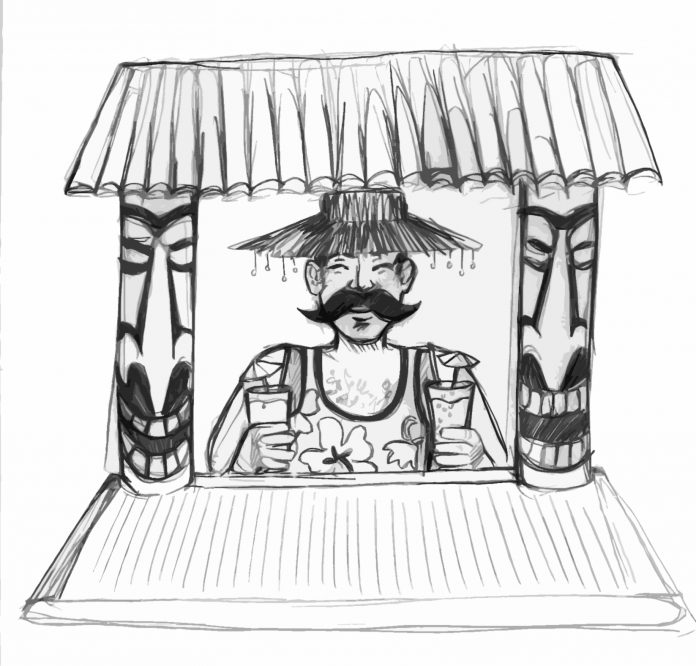
Fake your own death and begin your aspiring new career as a bartender at Fijian resort. Trust me, it’s better this way.

From the Mind of Sam Gorick

0

“My body posture can be described as ‘C-3P0 Riding a Horse.’”

“I have a pretty great workout regime: 15 reps at the water fountain, and then I do hardcore dips. My favourite is the honey mustard.”

“Working three jobs is great because now I have plenty of things to cry about in my car.”

“It’s hard to see myself living in a big house one day without a mirror.”

“It’s the small joys in life that make it interesting, like finding a five dollar bill in your pocket, or that look of disgust the cashier at Forever 21 gives you when you ask her if she needs to see your ID.”

SFU Replies

0

Friends,

Do you remember life before this semester? Think hard.

Do you remember when science classes didn’t involve digging? When philosophy classes weren’t literally digging into Burnaby Mountain?

Friends, we have our school, and our lives, back. We can leave the mountain. We can eat more than beets, dried blueberries, and gruel. We can visit our families.

As we all know, this semester, we collectively imagined the SFU overlords. The Sphinx, the ghouls, the League of the Undead, the ghost of Louis Riel — everyone. They no longer exist, but they did. Our imaginations allowed them to.

We imagined these oppressors existed because we needed an enemy. We allowed them to exist because we trusted our fear.

Also someone probably has been putting something in the air ducts.

But friends, beyond figuring out what happened, the real problem we’re facing here is uncertainty. We imagined these beings’ existence. SFU students are asking: how can we be sure anyone exists?

We can’t. The overlords’ power existed because we allowed it to. What do we allow to exist now?

You have to answer that for yourself.

For me though, I don’t have to let any fear exist. I don’t have to let any story exist. I’m free in my mind, even if I’m being lied to, even if I’m eating gruel, and even if I’m reporting every rock I find to the levitating bear.

And it’s okay to be scared of losing those we have now. But they exist now. You exist now. And the perception that you paint on the ever-mutable reality isn’t necessarily correct. But you paint because you have to. We all do. We’re all together.

Talk to each other if you need to, SFU. Talk because you’re important, you’re here right now, and the beauty and mysteriousness in that very fact is breathtaking. It’s a miracle, and it’s perfect.

Sincerely,

An SFU student
P.S., Professors Broc Rossell, Zoe Druick, and Ellexis Boyle indeed never existed; they were holograms.

University Briefs

0
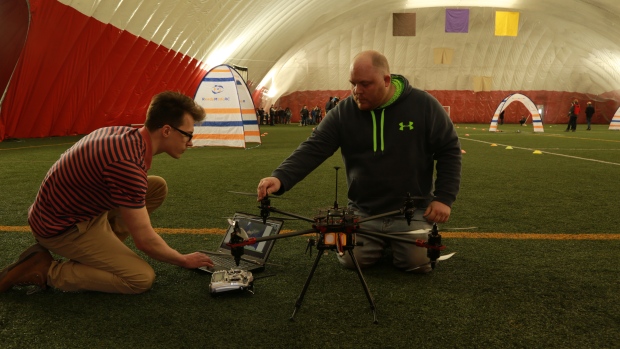
UNB students test out their drones. - Photo courtesy of CBC

U of A students finish building zero-emissions vehicle

Engineering students at the University of Alberta have recently put a stamp of approval on their over a year long project dedicated to building a zero-emissions vehicle. The 300-pound car emits only water, has three thousand horsepower, and goes 70 km per hour.

The team will be travelling to the United States where an annual clean car competition is held. The qualification for the top vehicle is not only speed, but its overall design, which is precisely what these U of A students have been focused on.

With files from CBC

University of Windsor gets a U-Pass after 24 years

The U-Pass is easily one of university’s best perks. However, since 1992, this all-encompassing transit pass has not been approved at the University of Windsor. Finally, with an overwhelming majority, it was passed in the small Toronto town.

The transit company in charge of the city has been in talks to increasing bus route services at all hours of the day and night in anticipation of a major spike in demand. The U-Pass will cost students $165 per annum.

With files from CBC

Students build drones from scratch at University of New Brunswick

April means two things for students at the University of New Brunswick: finals and drones. A group of students have been building quadcopters and drones with parts made from scratch and some found online. The team is preparing for a weekend contest at the university.

What’s more, despite the fact that this drone club only been around since September, they are already sponsored by Resson Aerospace, a company focused on integrating agriculture and drones.

With files from CBC

Point / Counterpoint: The Ghomeshi Verdict

16

OPPOSE IT:  The verdict proves rape culture is still alive and well

[dropcap]A[/dropcap]ccording to Statistics Canada’s crime victimization survey from 2004, approximately 460,000 Canadian women were sexually assaulted in 2004. Out of all of those incidences, only about 3.3 percent were reported to the police and only 0.3 percent led to a conviction.

With a stat like this in mind, it’s not surprising that Jian Ghomeshi was acquitted on Thursday of all counts of sexual assault. Since 2014, many people have been anxiously awaiting the results of Ghomeshi’s trial, with the hope that finally, a public demonstration supporting survivors would prevail.

As we have witnessed over the course of the trial, this did not come to fruition. Instead, Ghomeshi’s trial has been wrought with victim-blaming and the three complainants have been raked over the coals by Ghomeshi’s lawyer, Marie Henein.

One particularly awful aspect of the Ghomeshi trial was the implication that continuing contact with an abuser means giving consent in every situation. Ghomeshi’s defense counsel produced a pair of emails sent by the first complainant a year after she was allegedly assaulted by Ghomeshi. Though the email correspondences do, indeed, contradict her previous statements claiming she cut off contact with Ghomeshi, they do not invalidate her claims.

There are a multitude of reasons why a survivor may stay in contact with an abuser, that do not imply wanting to continue a relationship, including to confront them about their abuse. Manipulative abusers can make a person feel insecure and as though this kind of violence, being attached to sex, is somehow intimacy. In the eyes of the court, however, this inconsistency in the story added to invalidating her testimony entirely.

The legal system in Canada is ill-equipped to deal with sexual assault cases. The verdict is skewed in favour of the defendant, who is not required to testify, and what can be considered ‘evidence’ is incredibly limited. Often there is little to no proof to support a survivor’s story beyond their testimony, as it can take years to come forward. Even if done quickly, however, there is often no tangible evidence to demonstrate a person was sexually assaulted.

This needs to change. With a miniscule number of sexual assaults continually reported, something is clearly wrong. We need to properly educate people on the topic of consent, as approximately 67 percent of Canadians cannot identify the legal definition of ‘consent,’ according to a study by the Canadian Women’s Foundation. We must also continue working towards fostering a culture that believes survivors; this doesn’t mean never questioning complainants, but rather listening to their stories instead of dismissing them or claiming they were somehow ‘asking for it.’

I want to remind people that sexual assault is not a just a ‘women’s issue,’ and virtually nobody makes false claims to get attention. All people can be subject to sexual violence, and all deserve to be treated with dignity. All people deserve to be believed.

SUPPORT IT: The verdict respects the rules of our justice system

By Tatum Miller

[dropcap]E[/dropcap]very person has the right, according to our Charter of Rights and Freedoms, “to be presumed innocent until proven guilty according to law in a fair and public hearing by an independent and impartial tribunal.” If we unequivocally believe survivors, we risk violating the fundamental principle of the presumption of innocence.

In response to the Ghomeshi ruling, numerous groups have rose up in protest. One such Facebook event, “Believe Survivors: Rally & March in Protest of the Ghomeshi Verdict,” hosted by Looking Out Ottawa, states: “we cannot allow the courts to determine the validity of our experiences.”

This statement is deeply troubling. In his ruling, Judge Horkins asserted that we must avoid the “dangerous false assumption that sexual assault complainants are always truthful.” The keyword here is always. I agree that, most of the time, complainants are truthful. However, this simply cannot be the case for all. Some people will lie, or bend the truth to suit their needs. This is human nature in all court cases, sexual assault included.

It is a wonderful idea to immediately believe survivors. It would make it much easier for survivors to press charges. However, a testimony does not imply truth, and it should not be considered hard evidence. We must trust our judicial system to arrive at the truth following a fair trial, after which justice shall be served.

This is not a defense of Ghomeshi. This is not a defense of the survivors in this case. This is a defense of our justice system.

It is apparent that Ghomeshi’s alleged acts were misogynistic and wrong. Judge Horkins’ ruling did not state that Ghomeshi’s acts clearly never happened. The simple fact was that Ghomeshi’s criminal guilt could not be proved “beyond a reasonable doubt” because of a lack of evidence, and issues of credibility from the complainants, whose testimonies were the sole basis of the case.

Sexual assault is an issue that is difficult to deal with, due to the personal nature of the acts involved. Occasionally, there is more to the story than simply the offense itself. This holds true for both sides; the accused and the accusers.

Do not listen to the politicians, pandering for votes with their tweets of #IBelieveSurvivors. Recently, Tom Mulcair tweeted just this. As a trained lawyer, he should know better than to propagate an idea that violates our legal principles.

Perhaps the way our society handles sexual assault cases should be reviewed. It is a topic of sensitive nature, that puts much stress on the survivors. But the solution is not to sidestep our legal system in favour of one based on testimony as hard evidence.

We must stand with our survivors while they overcome the trauma of their experiences. However, we must not immediately accept their testimonies as unquestionable truth. This would fundamentally violate the core of our legal system, and the presumption of innocence.

Comics

0

Creator’s Pet (Destiny Hsu)

CP_027

Seagull Square (Jill Mandrake)

SeagullSquare(top panel)1

Mystic Man (Reuben Newton)

Mystic Man 15 vs Lord Villian Part 22

An interview with SFU’s coolest feminist radio-host, Kitty Cooke

1

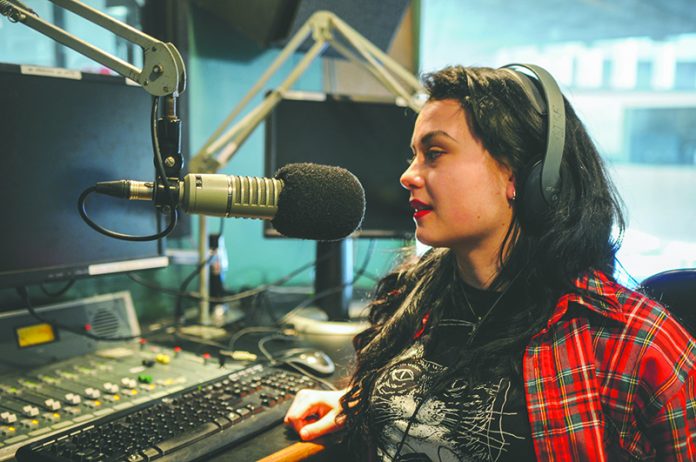
Twenty-two year old Kitty Cooke is a communication and archaeology student, DIY enthusiast, and the co-host of CJSF’s feminist radio show, IntraVenus. Sassy and smart, Kitty sees her communication and archaeology education as her pathway to educating others on culture and anthropology.

In her final semester at SFU, The Peak sat down with Kitty to talk about her experience in broadcasting with CJSF, and how she hopes to engage with world with media.

The Peak: Tell us a bit about yourself.

Kitty: I’m in my [. . .] first semester of my fifth year. I am a communication major and archaeology minor, and they go together better than you would imagine.

P: How did you first get into broadcast and involved with CJSF, and what attracted you to radio?

K: I first got into broadcast when I was in high school. I did TV production. You’re only supposed to do the class once but I took it for almost two years, just because I was good at doing the on-camera broadcast, and I’m like ‘hey, this could be a really cool career for me.’ So I also go to BCIT and I study broadcast journalism there part time, because for some reason I didn’t want to do the full-time program. [. . . if I did] I would have been there and never at SFU.

P: And how did you get involved with CJSF?

K: Well my first semester, my dad, in a weirdly insightful moment, was interested in my life and said, ‘You should do your school radio station,’ and this was back in 2012 and I’m like, ‘Okay Dad, I’ll go check it out.’ Then last year, January of 2015, my friend who had already graduated said, ‘Somebody I know needs help with the radio station show,’ and so I went and I sat in on the show and did some presenting. [. . .] I did it most weeks after that and then [Laura Scheck and I] took it over. So I’ve been doing that same show for like a year and two months.

P: Tell us about the show, IntraVenus.

K: Well, we do a lot of live stuff; my favourite segment is the feminist news update [. . .] because it forces me to be engaged with what’s happening in the world in feminism and women’s rights [. . .] It’s just such a fun show to do. I really like talking about feminism. [. . .] Because of the show, I’ve become pretty politically-engaged, like learning more about politics and reading about it, and being like ”This is actually super interesting; I wish I had been more involved my entire life so far.’

“I want to be the lady Bill Nye — but for anthropology and humanities” – Kitty Cooke

K:  I probably do. I grew up living with my dad and my brother, so I was around a lot of dudes, but I was also around my grandparents a lot, and my grandma’s not really a feminist. She says she is, but she’s not. But she’s a very strong and independent woman, and I just found that pretty inspiring. [. . .] What got me into feminism is when I realized I was queer when I was in my super early teens. I was like, ‘I’m going to be treated differently about this for the rest of my life because  I am a woman and because I’m also queer,’ so that’s [makes me think that] that I can’t just pretend [this] isn’t happening, because I can’t change the way I am, so I might as well become engaged.

P: Why are these topics so important for you to broadcast at SFU?

K: I want to say I chose SFU, but really this is the only school I applied to, because applications cost money [laughs] I really liked the idea of SFU because [it seemed like] a super politically-engaged and socially active school (which is not that true, but I’m not going to throw shade at a school that has housed me). SFU has got a lot of flaws, but it also has a lot of really wonderful things and a really good community, especially for women and women’s centres and queer people at Out On Campus. And at the time that I was starting university, I was going to Out On Campus a lot because I was like ‘whoa, there are people who are like me and super femme but also super queer and they’re also seen as not legitimate as members of the queer community and it’s so weird!’

P: That’s exactly it; SFU has this really interesting culture that you don’t expect to find.

K: And it’s so cool because we have so many clubs [. . .] there are so many religious groups and cultural groups, and queer people and women and it’s just such an assortment of [different groups who] all seem to get along.

P: What have you learned from hosting a radio show?

K: Radio is not my desired path in media. But I knew that before I started. I really want to get into TV, which kind of ties into all my post-graduation plans [. . .] and my life plans. I really want to have a TV show for kids — more anthropology-focused. I want to be the lady Bill Nye — but [for] anthropology and humanities — because I think that’s equally as important as science. The arts and stuff are so key to being a [well] rounded human. You can’t just focus on hard academia; you also need to learn about cultures and how they change and grow. And that’s how archaeology ties into communications,  because a lot of it is about culture and societies and how they’ve changed and what made them the way they are.

P: What would you say to students who are also interested in broadcast?

K: Oh definitely do it, that’s really the main thing. [. . .] When I got involved I [was] like ‘Wow, everyone is super nice, like weirdly nice,’ and they want you to get involved, and they want to make good radio, and they want you to learn and be doing stuff that makes you happy, and be making content that makes you happy [. . .] And the other thing, you don’t actually have to be on the radio to be involved. There are people who [. . .] just want to be involved, and there’s lot of stuff you can do at the station.

“. . .with the radio, creating stuff where there was nothing [. . .] it’s so magical” – Kitty Cooke

P: What else could students do?

K: You could do PR; we have a lot of graphic stuff; we have production stuff which is really interesting [. . . like] sourcing and researching content.

P: So you’re a hard-core student and you host a weekly radio show; what do you do in your spare time?

K: I do a lot of making stuff, like my jacket. I really like DIY culture, which is a really big part of feminism, coincidentally [. . .] but I do a lot of knitting, crocheting, embroidery [. . .] So yeah, I like making stuff, I love it [. . .] It’s like with the radio, creating stuff where there was nothing [. . .] it’s so magical. 

P: How do you feel your education and broadcast work come together?

K: Just the whole idea of putting information out there and media stuff is so related to communications, especially with feminism, I get to integrate a lot of what I learn in school into what I actually talk about, which is all the stuff I’m interested in, which is why I do it. One course in particular that really helped me with being intersectional in my feminism and learning more about intersectionality was Race and the Media [CMNS 452]. It was a really good course, and all the readings from that class I have used on the radio.

P: Has your time at SFU changed you?

K: I’m definitely more politically and socially engaged than I was, which was one of my goals by choosing this school, because that’s what [SFU] is known for. But it wasn’t necessarily through my studies, just kind of the environment and who I made friends with which kind of helped encourage that.

P: Is there anything else you want to add?

K: [IntraVenus] has had many iterations, transformations throughout time. Even in the past year we’ve changed focus so much just because it’s different hosts than when we first started [. . .]. So it’s really interesting how the content of the show and what we focus on really changes depending on who hosts it.

So who even knows what the next generation of IntraVenus people will be focusing on? So I am a feminist, with very strong beliefs, but I was not interested in being any form of educator or wanting people to see my point of view. I just really wanted to do entertainment news because that’s almost never depressing, so that’s one thing that’s really changed in my journeys as a university student. I wanted to do entertainment news hosting, but now I want to have a show that makes an impact on kids that they can think back on the [same] way I think back on Bill Nye the Science Guy [. . .] It’s super important to me that kids are getting quality education, but it doesn’t have to be boring.


Mackenzie Hamill off to a fast start in his collegiate career

0
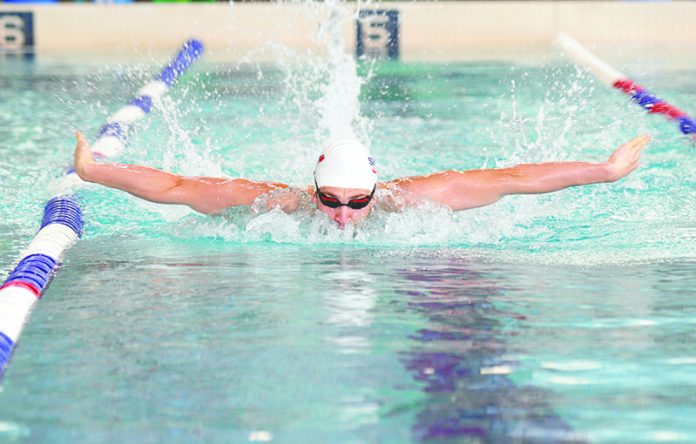
Hamill won the national championship in the 1,650 freestyle by less than one second.

Think back to your freshman year. Were you intimidated? Did it take you any time to adjust to your new surroundings?

It didn’t trouble Mackenzie Hamill at all. The first year business student from Oakville, Ontario won the 1,650 yard freestyle at the NCAA Division II Championships, becoming the first SFU athlete to win an NCAA championship in men’s swimming.

“It was certainly like a rush of joy, excitement — a bunch of different emotions,” said Hamill on winning the national championship. “But I think my favourite part of the whole thing was seeing all of my teammates and the smile on their faces and them cheering and how happy they were for me.

One of the other best parts was whoever wins the event, that coach gets to hand out the [awards]. So I think seeing the smile on my coach’s face and knowing that I just won and that this is my first year and hopefully I can continue to do that for the next three years, it was a huge accomplishment. It really hit home when I was standing there on the podium.”

Hamill started swimming around the fifth grade, continuing throughout high school before deciding to come here to SFU and start his collegiate career.

“I really wanted to venture outside of Ontario. [. . .] So I emailed Liam Donnelly, started talking to him, and then realized that the main distance coach here was Cory Beatt, and he’s a really successful coach. He’s coached Brittany Reimer, who’s one of the fastest females ever in Canadian swimming. I came here for a recruiting trip last year in October and really liked it, [and I] really liked the coaching staff.”

Hamill credits his teammates for helping him adjust quickly to the team and help motivate him.

“It’s a really open atmosphere,” he explained. “Coming in this year, knowing that we had one guy qualifying for [National Championships] last year, now we have six, it’s been a huge motivation for everyone. Everyone really wanted to make this year, and everyone saw it was possible.

“Every teammate really pushed each other to be the best we could possibly be this year,” said Hamill.

After a few strong performances, including the Clan Cup hosted here at SFU, Hamill qualified for the National Championships. There he raced in the 500-yard freestyle against fellow teammate Adrian Vanderhelm.

“My favourite part of the whole thing was seeing all of my teammates and the smile on their faces.”

“It’s definitely a little more competition, a little stiffer. But we’re both teammates. So if he wins or I win, it doesn’t really matter. Well — it matters to us, but we’re happy for the other one. There’s no rivalry really between us.”

The final event was the 1,650-yard freestyle.

“The one guy who won it last year didn’t have an insanely fast swim in the morning,” said Hamill. “So when I was looking over sort of the heat before the actual race, I saw that if I had a really good race, it would be possible to win. So I really set my focus and realized that it might be possible to win right before the race.”

From there, the strategy aspect took over.

“I knew the guy beside me was going to be with me the whole time. And then on the other side of the pool, I saw one guy way ahead. So throughout the race I was aiming for first, but when the other guy started to take off, I thought I’d just start racing the guy beside me and sort of stay in my race and not let that interfere. And when I saw things sort of die out right before the end I started making my push and thought that — depending on what the time is — I actually might be able to win it.”

The win and his success throughout the year means that Hamill has qualified for the Olympic trials in Toronto, where he will be competing against swimmers such as Olympian Ryan Cochrane. There, if he does well enough, he could be off to the 2016 Rio Olympics.

“There’s going to be a ton of fast people there that I’ll be racing against,” said Hamill on Olympic trials. “The 1,500 [what it’s called in meters] has been Canada’s best event ever since Cochrane made it back in 2008. It’s not really realistic to make now, but it’s definitely something that I would like to set my sight on for the future.”

So what are his future goals for here at SFU?

“I’d like to be able to continue to keep the national championship for four years. That would be pretty cool,” said Hamill. “To go undefeated at that meet and at that event [would be great]. But really, my main goal is to set the record, which is far off for next year, but I feel like by my senior year I can definitely get it.”

Honesty the best policy for corrupt nations, says SFU professor

0
Social values can play a large role in corruption, Dr. Hara argues.

In a collection of essays titled Broken Windows: Why Culture Matters in Corruption Reform, SFU Political Science professor Andy Hara sets out to research the root causes of corruption and critically analyze why common attempts at reform remain ineffective.

The research is split into two volumes — one published in March 2016, and the second to be published this summer — that are essentially compilations of various case studies written by a number of experts and threaded together with Hara’s narrative and analysis. Each case study focuses on corruption in one country.

In an interview with The Peak, Hara spoke about his purpose for conducting the research. “The question we’re trying to answer is, if everyone knows corruption is such a major issue for development, how come we haven’t made any progress?” he asked.

What sets Hara’s study apart from previous academic literature covering corruption is that, instead of simply detailing the extent to which corruption exists in various developing countries, his research seeks to use historical information to critically analyze past attempts at corruption reform, and then suggest more effective strategies.

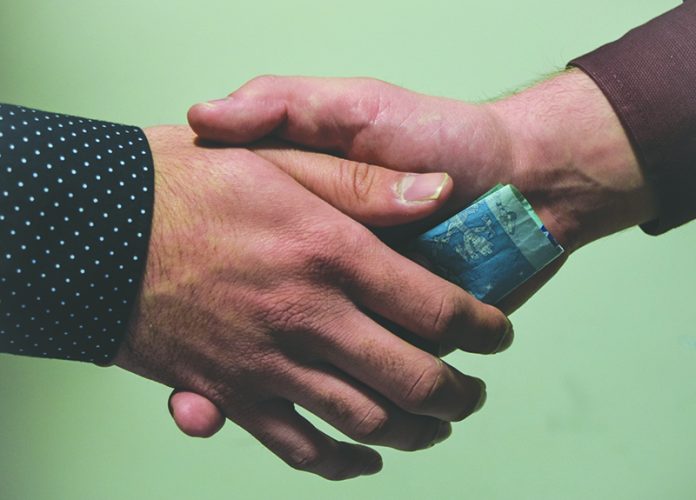
In his introduction, Hara writes about the World Bank’s cost-benefit type approach to corruption: “that an individual will engage in corruption if they see a benefit of taking a bribe that is less than the consequence of enforcement.” He continues by arguing that it has proven to be ineffective numerous times in the past. He counters this economics-focused approach to corruption reform by suggesting a more culture-centered reform program.

Hara’s research includes three developing countries where corruption is at a minimum — Singapore, Hong Kong, and Chile — and he detailed three commonalities between the successful case studies.

“There were decade-long efforts to not only change formal rules, but also change the values of the government and the private sector at large to be more honest [in these countries],” he said.

Additionally, all laws passed were equally enforced at higher levels of government, such as the show trials in Singapore where Lee Kuan Yew’s cabinet and union leaders were tried, reinforcing the idea that no one is above the law.

Finally, all three cases showed an ongoing effort to reinforce honest social values. In the case of Chile, the most common university degrees are liberal arts or law degrees, the entire culture is essentially based on the law and the legal process.

When asked about how his study can be applied to corruption seen in Canadian politics, such as the senate expense scandals that made headlines last summer, Hara replied that the major news coverage of the incidents serve to reinforce what his research concludes — that the nationwide concern over the “minor infractions” speak to Canada’s strong societal values against corruption.

“I would say that Canadians should take pride in the fact that their system works,” concluded Hara.