Home Blog Page 784

Ten TV shows coming to you soon

0
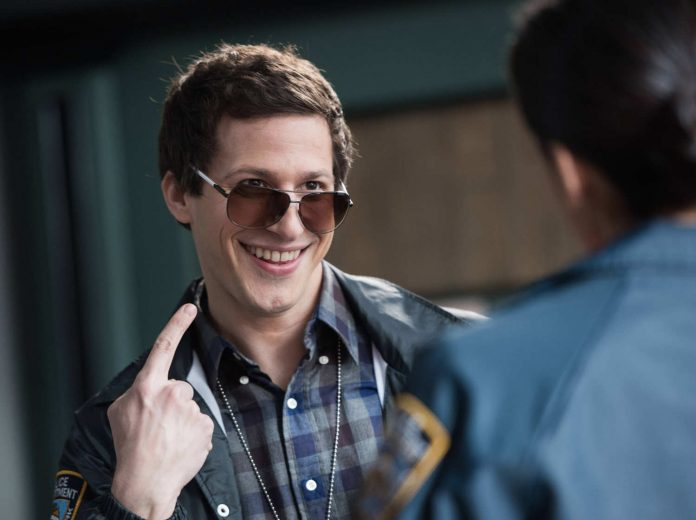
Jake Peralta (Andy Samberg) is the centre of all the antics that happen in the nine-nine.

Many things experience a summer hiatus — such as school, The Peak, or your favourite TV shows. While I’m sure we’re all looking forward to a nice break before Fall semester kicks off, there are a lot of great shows coming in September and beyond. Below are 10 of the best shows renewed for late 2016 and early 2017.

Last Week Tonight with John Oliver (HBO) – Ongoing

While this critically acclaimed series is continuing through the summer, it’s important to note that the series was renewed for a fourth season. Both season three and four will contain a whopping 35 episodes each. For those who have not seen any of the insanely popular video clips on Facebook, this news satire series offers some of the best commentary on current world affairs, on TV or elsewhere. Catch it Sunday nights on HBO — or in YouTube’s suggested videos.

Running Wild with Bear Grylls (NBC) – Season 3 premieres on August 1

This show is insane. Bear Grylls, a British survivalist, takes celebrities into the wilderness and makes them, well, survive. Not only does he get really famous people — President Obama was on the program this past December — but the things they do truly are dangerous. Zac Efron slept on the edge of a cliff, Channing Tatum helped kill a rattlesnake; honestly, the insurance budget must be through the roof. The latest season kicks off with Julianne Hough on August 1 and Nick Jonas on August 2.

Dancing with the Stars (ABC) – Season 23 premieres on September 12

Admittedly, this show is more exciting if, like me, you have a bit of a background in dance. However, Dancing with the Stars is still an amazing testament to what you can achieve when you put your mind to it. The show has seen its fair share of minor miracles: just last season, Nyle Dimarco, model and deaf activist, won the extremely close competition. As of publication time, contestants for the upcoming season have yet to be announced.

Brooklyn Nine-Nine (FOX) – Season 4 premieres on September 20

If you’re not watching this show, you are missing out. Brooklyn Nine-Nine follows Jake Peralta (Andy Samberg), a detective in the NYPD, and the rest of his squad as they encounter all sorts of mishaps. The entire cast is hilarious, and the writing spotlights Samberg’s humour as quirky rather than annoying. Catch up on previous seasons by streaming them on Netflix.

Bob’s Burgers (FOX) – Season 7 premieres on September 25

One of the best animated families on TV is back! Bob and the rest of the Belchers return with more burgers, more puns, and likely, more butts. What makes this show so great is how easy it is to relate to the characters — for example, I’m a total Louise. While facing a multitude of challenges, this group values and loves each other above all else. Tune in to see if the family can keep their failing business afloat on Sundays.

Drunk History (Comedy Central) – Season 4 premieres September 27

The premise of this show is beautifully simple: celebrities get drunk and try to tell us about historic events. What a time to be alive. Past episodes have included the Watergate scandal, the life of Mark Twain, and the invention of the bra. The upcoming season will feature Lin-Manuel Miranda retelling the ongoing feud between Alexander Hamilton and Aaron Burr. This show truly is the gift that keeps on giving.

The Mindy Project (Hulu) – Season 5 premieres October 4

After being dropped by FOX following its third season, the comedy created by Mindy Kaling was picked up by the streaming service Hulu, which was the best thing that could have happened to this series. While The Mindy Project had always been a bit more daring with its subject matter regarding race, sexuality, and body image than comparable shows, the show has gotten even more overt without the restrictions of cable TV. Considering the cliffhanger season 4 ended with, the premiere is sure to be full of drama — and laughs.

Hamilton’s America (PBS) – Airs October 17

While not technically a TV show, this is sure to be one of the most-watched programs of the year. The documentary is focused on the insanely popular musical Hamilton, and features interviews with prominent personalities (the Obamas, Jimmy Fallon, and Questlove, to name a few), and behind-the-scenes footage of Lin-Manuel Miranda creating the show. The documentary will also feature live footage from Broadway performances of the show that won an astounding 16 Tony awards.

Archer (FX) – Season 8 coming early 2017

Even though no release date has been set, Archer being renewed is kind of a big deal — especially since FX’s order of three more seasons will take Archer all the way into its 10th year on air. The animated series follows the world’s best secret agent, Sterling Archer, as he attempts to get drunk enough to save the day. While the show seemed to hit a bit of a slump in season 5 (Archer Vice? Really?), it has found its stride again in the last two seasons, regaining its place as one of the funniest shows on TV.

Call the Midwife (BBC) – Season 6 coming spring 2017 (in Canada)

If you’re a fan of period dramas like I am, you’ll love Call the Midwife. The series is based off the memoirs of Jennifer Worth, a midwife in the poor East End of London during the 1950s. Dramatic and witty, all past seasons have featured some of the best heartwarming, sometimes heartbreaking storylines I have ever seen. While the 2016 Christmas special is set to air on December 25 in the UK, it is unclear when the new season will be coming to Canada. If previous seasons are anything to go by, expect a premiere date sometime in the spring (around the time the finale ends in Britain).
Lights Out is a step above mediocre

0
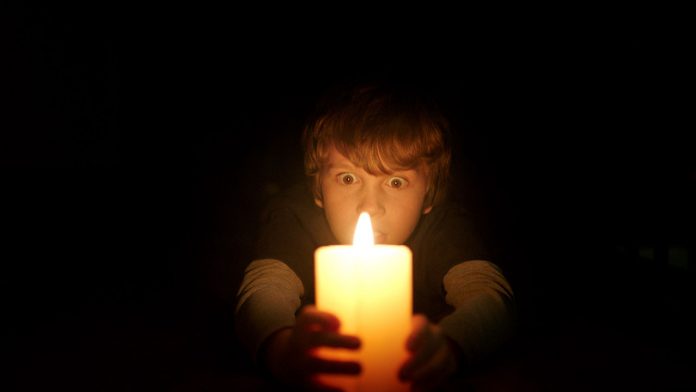
Martin (Gabriel Bateman) deals with the monster who his mother was communicating with.

Music. The beach. Money. A bowl of unsalted peanuts. Everyone has a passion. Mine? Mediocre horror movies, though it’s a mediocre passion.

And boy, when I saw the trailer for Lights Out I got excited, or more accurately, mildly enthused. I was even more enthused when I got to go see it for free, the profits of which I spent on Five Guys. It looked as mediocre as any horror movie I ever did see. To add to the typical jump scare fare, it was touted as being by James Wan, who is actually a pretty good horror writer and director. It neglected to emphasize that he neither wrote nor directed it — the oldest trick in the book for marketing mediocre horror movies.

This movie begins with some guy (Billy Burke) getting killed. For a second, he looks like he’ll be a main character, but his assistant sees a ghost thing that moves closer when the lights go out, and next thing we know, he’s sliced by finger knives or something — kind of like Freddy Krueger, I guess. The assistant is OK though, and leaves for the rest of the film, presumably alive.

It turns out the guy is married to some crazy woman named Sophie (Maria Bello), whose hobbies include neglecting her children, an act she perfected on her daughter Rebecca (Teresa Palmer) — who’s now fully grown and resents her — and her son Martin (Gabriel Bateman). Sophie has a big house, despite having no job, but I guess her now-dead husband’s job at a mannequin factory paid the bills.

Martin is having trouble sleeping, because Sophie has an imaginary friend she talks to. Only the imaginary friend is an evil semi-ghost thing, so Sophie is only half-crazy. A few subplots later, Martin goes to live with his older sister, but the ghost thing follows them, and they have to face their fears.

Rebecca is supposedly irresponsible or something along those lines, living in some pigsty in the dumpy part of town, but her apartment looks really nice. I guess she’s got a bong and lives above a tattoo parlour, but her worst sin is shilling for Avenged Sevenfold in obvious product placement.

I liked the movie. It was alright — a few shades above mediocre. A solid six-and-a-half or seven out of 10.

There were no big surprises, but it was thoroughly entertaining. I did, however, think the kill count was pretty low. For an evil ghost thing, the Lights Out monster did relatively little damage. The ghost-thing initially had finger-knives, but I guess it decided throwing people against walls was a more effective form of killing — a theory that I can’t stand by.

If you see one movie this year, probably go see something else. But otherwise, I’d recommend it. Probably.

PS: When using the Coca-Cola Freestyle machine, use normal flavours. My vanilla-flavoured Coke tasted more like orange-flavouring. Now that was truly scary.

Calgary Folk Music Festival finds

0
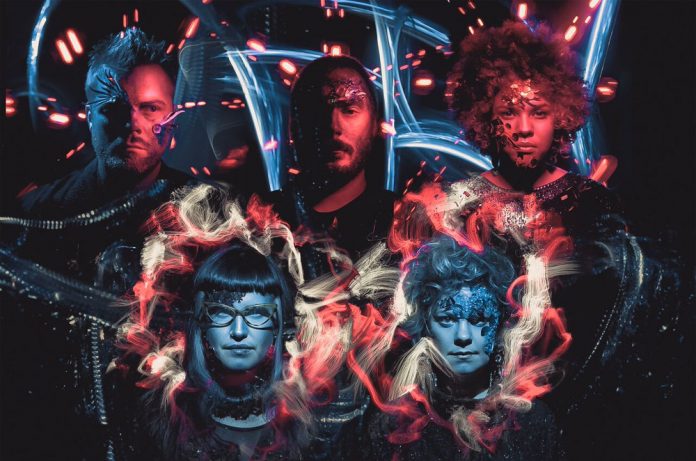
UK-based band Moulettes looked towards nature to inspire their latest album and used it to captivate the crowd at Folk Fest.

Every year, something magical happens on an island in the middle of a river, in the middle of a city in Alberta. This happening is known as the Calgary Folk Music Festival. This was my first year attending and throughout the whole festival I was thinking to myself, “Why have I never done this before?”

Aside from being an overall amazing festival experience, it also was an opportunity to discover new (to me) musicians from across the genre. The following artists are some of my favourite finds from the festival.

Lemon Bucket Orkestra

My first exposure to the self-described “Balkan-klezmer-gypsy-party-punk-super-band” was under a tent on a Friday afternoon. Since then my life has been forever changed. The band, composed of more instruments and musicians than one could hope to list here, is what you musically want for any celebratory event — even if you didn’t know you wanted it. Lemon Bucket Orkestra mashes up traditional-sounding songs with modern sensibilities that will make anyone — including your prudish grandma — dance.

Foy Vance

Prior to Folk Fest, I had heard of Foy Vance and listened to some of his music, but didn’t really think much about him other than, “He has a pleasant voice.” But after seeing him perform alongside the Bros. Landreth and interact with the Dudes, Bobby Bare Jr., and Bry Webb, I realized just how wrong I was to overlook him. Vance naturally has an unassuming charisma that draws you in and makes you hang on to each blues-tinged note that comes from his mouth. While his recordings soften some of his edge, “Make It Rain” and “Upbeat Feelgood” are just as powerful on the record as they are on stage.

Cécile Doo-Kingué

I have always wanted to learn how to play the guitar; it’s on my ever-growing list of things to do, that somehow always gets beat out by Netflix. But upon hearing Cécile Doo-Kingué play I realized that I didn’t just want to play guitar — I wanted to become her. Listening to her play gave me goosebumps, even though it was at least 25 degrees outside. Doo-Kingué’s music feels very much of the present day, but also of a time when it was more important to play individual notes as opposed to chords. It also doesn’t hurt that her lower singing voice is a perfect mix of soul and the blues.

The Weber Brothers

When you Google the Weber Brothers, the first page that comes up is their own, boasting the title of “The Baddest Band in the Land.” This is really all you need to know about them: they are bad, but in the best sense of the word. There aren’t that many bands that can mix ‘70s-inspired rock with an upright bass and DJ, but they can. They are everything you want from a band: beautifully produced studio work, and a live show that is just as much about musical talent as it is about the performance itself. The interactions between the band members were truly spectacular to behold — especially when Ryan Weber and Rico Browne played one upright bass at the same time following a friendly bass-playing competition.

Moulettes

Any band that has a song inspired by sea creatures is cool by me. Even if they sucked, I would still respect Moulettes just based on that fact. Lucky for me though — and everyone else present — they don’t. While they are folk-y, it is in the vein of Of Monsters and Men, but bigger, badder, less pop-y, and more Björk-y. Their latest album is titled Preternatural, and it truly encompasses what their sound is. It is beyond what we think music should be yet, much like a mythical creature residing in the deepest parts of the ocean, there is enough believability in their music that it stands up to scrutiny — even if there are people who aren’t fully convinced by it.

Want to actually hear these musicians? Follow thepeaksfu on Spotify and look for the Calgary Folk Fest 2016 Highlights playlist. There may also be some bonus bands thrown in just to capture the magic of the island.

SFU rapper making waves in Vancouver’s hip-hop scene

0
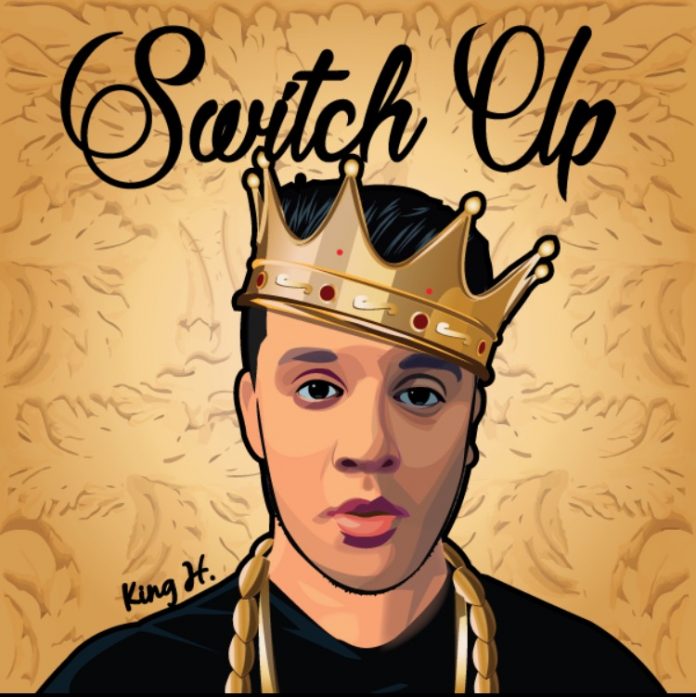
King H’s EP Switch Up (July 29) features songs inspired by changes made in his life following a car accident.

Vancouver’s music scene is diverse and ever-expanding, but for artist King H, he hopes the Lower Mainland will one day be known for more than Michael Bublé, Carly Rae Jepsen, and Nickelback.

“The music scene in Vancouver is cool, but [it] doesn’t have a dope rapper,” King H told The Peak. “I hope to make people more aware of Vancouver beyond what we are already known for.”

With a passion for music, a desire for greatness, and a strong work ethic, King H started to really take his music seriously two years ago. While listening to Kanye West or Eminem, he would rap over the songs with his own lyrics. Unlike most artists, however, King H would never write anything down; instead, he would keep performing and listening to the beats until something clicked. “It would all be freestyle and creativity. It feels like my body has a mind of its own [. . .] everything comes out perfect, without feeling like it’s forced,” he said.

This passion pushed King H to meet new people and collaborate with other artists, many of whom are featured on his new EP Switch Up, released on July 29. As music began to take on a more prominent part of his life, he pushed himself to the limits, balancing classes and work to make music. When asked how he was able to balance everything, he responded, “I see how hard my brother, my producers, and other artists are working to help me, and it makes me want to work harder.”

King H’s positive attitude makes his work seem effortless, but it wasn’t always this easy. Two months ago, a car accident left him with constant back pain, and he was unable to stand for a long time. “I couldn’t record standing up because I would be in so much pain, and the medication I was taking would leave me with dry mouth [. . .] I got to this point where I couldn’t do my music.”

But despite this adversity, King H took this as an opportunity to “switch up” his life — hence the title of his new EP. Instead of sitting around and feeling bad about himself, King H would wake up early to go to physio, water therapy, or anything that would help him feel good enough to record in the studio. This incident helped King H develop his patience, and showed him how important it was to switch up whatever life throws at us from negative to positive.

“This is what Switch Up is all about,” King H said. “The accident was super shitty, but I needed to find the positives: was I going to lie on my bed, or make myself feel better?”

This resilience is evident in the five-track EP. With contagious beats and strong lyrics, King H shows both his lyricism as well as his keen ear for rhythm. The songs all have stories tied to them; for example, his first track “Intro” is a tribute to his start in music, and how in the music business, not everyone is your friend. His lyrics are very raw and real in his songs “You Need” and “The One,” challenging people’s perceptions of making it big and what it truly means to be a rapper or artist.

Aside from his own hard work, he is thankful for his “non-Yes Men”: 40K, Malikai Motion, Kane Dabir, Samy T, TiV Productions, and TJ, all of whom played a major role in the release of Switch Up. “These are the ones that kept me searching,” King H said. “They wouldn’t tell me that something is good so that they wouldn’t hurt my feelings [. . .] they were real and honest with me, and helped me to dig deeper.”

Ultimately for King H, music is his outlet and something that he hopes to be doing for the rest of his life. With his current studies in business and communication at SFU, he hopes not only to be a great artist and rapper, but to also have business smarts and the ability to market his product confidently. Most importantly, he wants to make a name for himself and bring about a new wave of music, instead of just being known as a new Eminem or Kanye West. “If I want to do music, I’m going to do it seriously and not half-ass it.”

With his confidence and drive, King H is one to watch in pioneering Vancouver’s up-and-coming hip-hop scene.

FOOD FIGHT: Indigo Age’s mixed greens are a mixed bag

0
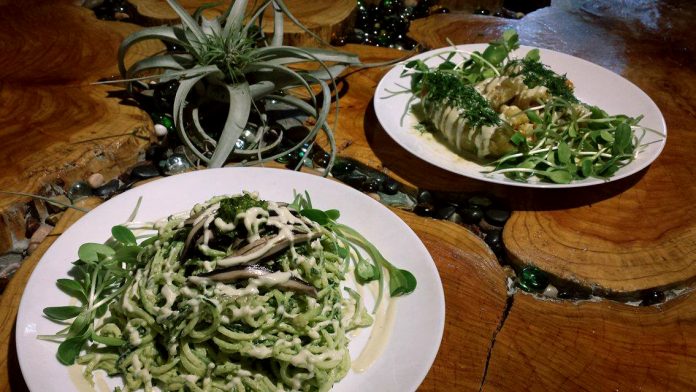
While the sauce on the zucchini pasta was disappointing the cabbage rolls were exceptional.

A colourful new sign on Richards Street beside MacLeod’s Books entices passersby down steep steps to an adorable vegan, gluten-free cavern: Indigo Age. My friend and I were not immune to this sign’s alluring appeal.

The interior reminded me distinctly of a cozy storybook cottage with its stone, brick, and wood elements. The authentic and warm atmosphere is mirrored by the surprisingly lovely plating of the unique Ukrainian-fusion vegan food, and the friendly service.

Indigo Age has kombucha on tap, so of course that was what we tried first. Though, admittedly, I am not a fan of kombucha thanks to one morning of stupidity, having drunk an entire bottle on an empty stomach. If you love yourself, I don’t recommend it. Thankfully, the rose kombucha was wonderful, tasting like a light and floral cider. The chai kombucha on the other hand made me wince at the overwhelming, pungent taste and smell of condensed chai spices. If the rose kombucha was a gentle prance in my mouth, the chai kombucha was an angry elephant stomp.

The cabbage rolls were phenomenal; I couldn’t believe the Ukrainian meat-filled favourite could be replicated so well in vegan form. The inside mix had strong flavours of dill, and nailed the signature taste of cabbage rolls — the comfort food nostalgia was intense.

The zucchini pasta with marinated portobello mushroom steak was nothing extraordinary. Though eating a “pasta” that is incredibly high in nutrients always feels good, I can’t help but look at it and think it’s a glorified salad. The pesto and cashew cheese sauce was unique, but the mild flavour and the repetitive taste notes got intensely boring before I got halfway through the dish. The marinated portobello steak was tender and salty, which helped cut through the dull flavour of the pasta, but there wasn’t enough to do it justice.

I had the green monster smoothie and was intensely disappointed, as it tasted more like a watered down juice. The overpowering mint flavour completely muffled the zing of pineapple I was expecting. The avocado mayhem ‘mylk-shake’ that my friend ordered was exponentially better — creamy and just the right amount of sweet — but was missing the pow of the matcha listed in the ingredients.

For dessert, we went all out and ordered three: key lime pie, berry ‘cheesecake,’ and tiramisu. The key lime pie was sweet rather than zesty, and the coconut topping was a decadent delight. The berry ‘cheesecake’ had a strange tofu-like texture, leaving a film on the tongue that I couldn’t get over — even with the rich flavour of the cake. The tiramisu had an intense coffee flavour and a dense texture, and although I could do without the graininess of the coconut topping, I enjoyed this cake the most.

Indigo Age is a proud supporter of local BC farms, specifically Roots Organic, G J Farm, and Two EE’s Farm. The service was friendly and the place bubbled with local chatter. This vegan café’s ethics and health-focus make a difference in the dishes they serve — even if those dishes are hit and miss.

Misogyny should be considered a hate crime

0

[dropcap]T[/dropcap]he police force in the British county Nottinghamshire announced on July 13 that, in partnership with the Nottingham Women’s Centre, misogynistic acts can now be reported and investigated as hate crimes. The Nottinghamshire Police defined such acts as “behaviour targeted towards a woman by men simply because they are a woman,” according to their press release.

The definition includes undesirable verbal, physical, and electronic interactions. This means that persistent catcalling and wolf-whistling, revenge porn, and social media abuse could all fit under the new definition.

However, Jack Storey, a spokesperson for the Nottinghamshire Police, clarified with Global News that isolated instances of catcalling are not in fact “illegal.” According to Storey, the department would only become concerned if, for example, “a woman is walking to work and there is an individual on their route who wolf-whistles at them every morning.” Storey explained that the situation would be cause for investigation if the woman then felt compelled to follow another route to avoid the harassment.

This change in Nottinghamshire, while the first of its kind in England and admittedly pretty progressive, could go even further.

Firstly, it could crack down on isolated instances of catcalling and whistling as well. Why should women be forced to wait until they fear for their physical safety before they can report harassment? How many days in a row of catcalling constitutes enough of a threat before they can feel validated in reporting it to the police?

Secondly, the current definition heavily subscribes to the gender binary. People of all genders are capable of misogynistic harassment — not just men — and the definition should reflect this reality.

A message that the catcallers, revenge-porn-posters, and the up-the-skirt-photo-snappers of Canada deserve to hear.

That being said, Canada, which has similar issues with harassment, should look to the British county as an example.

According to a British study published in March of this year, “85 percent of women [in the UK] aged 18–24 have experienced unwanted sexual attention.” Sexual assault and harassment also occur in Canada. According to a 2015 survey from the Canadian Women’s Foundation, less than 10 percent of sexual assaults are reported to the police. Confirming that misogynistic harassment won’t be tolerated by law enforcement could help to alleviate some of the shame and stigma women face when discussing their experiences. This could potentially encourage women to report their harassers more frequently.

Additionally, provided that the police will actually investigate reports of street harassment, and that this isn’t just an empty promise, the new classification sends a message to the people of Nottinghamshire that misogyny will not be tolerated — a message that the catcallers, revenge-porn-posters, and the up-the-skirt-photo-snappers of Canada deserve to hear, too.

I’ll be the first to admit I’m skeptical of police and the assurances they offer to the public. It’s too early to tell if Nottinghamshire Police will actually follow through with the new policy; however, Sue Fish, the chief constable of the force, inspires some optimism, if only because she herself can speak to women’s experiences.

In the Nottinghamshire Police press release, Fish described misogynistic harassment as “absolutely unacceptable” and “extremely distressing.” She also acknowledged that many women experience such harassment on a daily basis. Fish also tweeted later that she was “proud to be [the] first force in the country to tackle misogynistic hate crime.” Hopefully, it isn’t the last.

Metro Vancouver needs to provide space for people of African descent

0
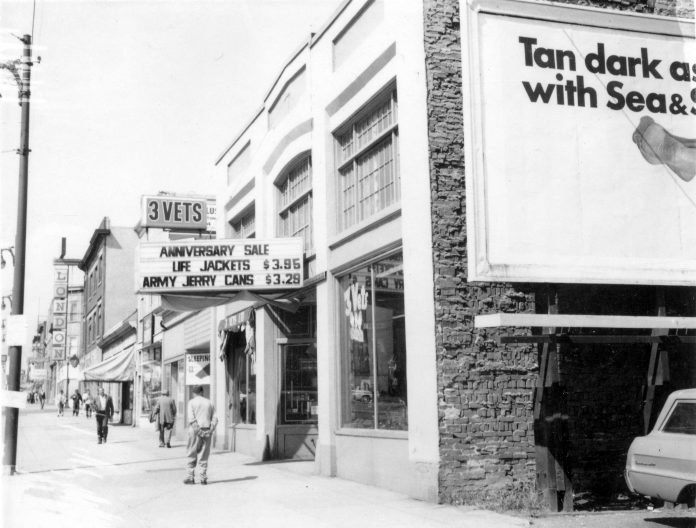
832 Main Street in Hogan's Alley, 1969, Vancouver, B.C.

[dropcap]P[/dropcap]eople of African descent have lived on the West Coast for more than a century. The first large migration of the black community, from California, settled in BC in the mid-1800s, mostly in Victoria and Salt Spring Island. Another wave of immigrants came to Canada during the 20th century, mainly from the Caribbean and Africa.

Today, Metro Vancouver is home to a significant number of people of African ancestry, many of whom are entrepreneurs, teachers, police officers, students, activists, and journalists, among other professions. Despite their enormous contribution to social, political, and economic development in the city, Vancouver’s African community has experienced systemic social problems such as discrimination, geographic displacement, and poverty.

One of the most notable historic injustices committed against Vancouver’s African community was the destruction of the Hogan’s Alley community — a prominent Afro-Canadian neighbourhood in Vancouver, comprised of residences and businesses at the south-western side of Strathcona. Hogan’s Alley was demolished in the 1960s and early ‘70s in order to pave way for the construction of the Dunsmuir and Georgia viaducts — a decision that is still widely perceived to have been racially motivated.

Despite recent municipal acknowledgements, the Hogan’s Alley community hardly exists today. Sociologically speaking, the destruction of Hogan’s Alley created large displacement amongst Vancouver’s African community, thus dispersing what most resembled a cultural ‘hub’ at the time.

Metro Vancouver’s African community is one of the few communities that does not have an officially recognized neighbourhood or cultural centre.

Today, Metro Vancouver is known for its vibrant migrant communities: Chinatown, Japantown, Greektown, Little Italy on Commercial Drive, Surrey for South Asians, the Filipino community near Kingsway, the Iranian community in North Van — the list goes on, with the glaring exception of Afro-Canadians.

Metro Vancouver’s African community is one of the few communities that does not have either an officially recognized neighbourhood or cultural centre. As a result, Afro-Vancouverites feel marginalized and excluded by municipal governments.

The African community in the Greater Vancouver area deserves, first and foremost, an official apology from the City of Vancouver for the demolition of the Hogan’s Alley community and the eviction its residents. We also must see the restoration of the African community and the implementation of a cultural centre, where Afro-Vancouverites can congregate to celebrate their diversity and debate major issues affecting them.

More importantly, the creation of African spaces in Metro Vancouver would act as a node for integration of the African community. They would capacitate the African community to assemble and reflect on its social and economic status within Canadian society and Vancouver.

Spaces would also enable the community to gather and discuss some of the most pressing issues — such as discrimination, migration, multiculturalism, and resistance against police brutality through Black Lives Matter, which has inspired a chapter in Vancouver.

The recognition of Black History Month by the City of Vancouver in 2011, the annual Caribbean Days Festival, and Vancouver’s recent African Descent Festival also act as models for addressing the lack of spaces for the African community in Metro Vancouver.

Afro-Vancouverites have made tremendous contributions to this metropolitan city, and therefore we merit a postal code.   

SFU’s course withdrawal system needs to be dropped

0

[dropcap]T[/dropcap]his year has been a rough one for me, personally and academically. Between a cancer scare and my mental health feeling like it has been rapidly deteriorating, school has unfortunately not been the number one priority.

This being my first year at SFU, I thought dropping a course would be a relatively simple process; since the school already has my money, what more could they want from me? It turns out that since I didn’t find out early enough that I would have to drop a course, the number of hoops I’ve had to jump through has made the process almost not worth it.

Summer courses began on May 9, and the last day to drop all classes without any record of it on your transcript was May 15. One week is fair enough for students to decide if a term is not for them. Should students decide they only want to drop a single class, they had an additional week — until May 22 — to drop a class without any consequences.

After that, the pressure is on for students to figure out if they’ll be able to complete their classes. This term, the last day to withdraw from a class through the Student Information System was June 12. That’s the end of the fourth week; after that, students have to go through the extenuating circumstances (WE) process.

To put that into context, if this semester had a reading week for students to catch up on their student duties, they’d have to decide beforehand if they needed to drop their class. This was the case during the spring semester this year, and it seems counterintuitive to force students to commit to these decisions before they have had a chance to re-organize their lives.

It’s simply unfair that students need to know so far in advance how their semesters will shake out.

What happens when a student has extenuating circumstances? This is where the process becomes unfair and borderline demeaning. Students are expected to prepare a package explaining why they are unable to complete the class, and discuss with the manager, student academic appeals to be judged if they validly cannot do so.

The package consists of a personal essay explaining why they are unable to complete the course, as well as supporting documentation to show that they can fully prove their reasoning.

According to SFU’s website, “It is not possible to lay down clear rules specifying precisely how WE applications will be adjudicated because the reasons for such requests are so varied,” which can be intimidating for students who want to know if it’ll be worth it.

The general criteria that SFU suggests for considering dropping a class consists of medical grounds, employment grounds, compassionate grounds, and ‘other’ grounds, each with a brief description of what those mean.

To sum it all up, it’s unreasonable for the school to pull such a power maneuver, because it shows once again how uncompassionate it can be with its students.

I’m not advocating for a penalty-free system. I don’t think the money paid should be returned, and the transcript should still reflect the withdrawal. It’s simply unfair that students need to know so far in advance how their semesters will shake out, and being judged as to whether or not your reason for dropping out is worthy enough is draconian. It puts unnecessary pressure and guilt on students who clearly need a break.

As a transfer student, I once had to drop a class in week nine for personal reasons back at Mount Royal University in Calgary. It was as simple as going to the registrar’s office, filling out a form, and never looking back.

Unfortunately, SFU’s course-drop policy is just another example of how out of touch the school is with its students.

SFU needs to prioritize funds for sending students abroad

0

[dropcap]A[/dropcap] couple years ago, I was intent on studying abroad for a year in Amsterdam. I am Dutch, and having grown up with various Dutch traditions, food, and attitudes — especially when visiting Oma and Opa — the prospect of spending a year immersed in the culture that had such an influence on my upbringing was alluring, to say the least.

As much as I love to travel, I’ve never been to the Netherlands, nor overseas for that matter, so it’s understandable that I’d find SFU’s sleek “Study Abroad” ads promising. Sadly, to go abroad requires quite an application process, and after having conversed with willing parents (at the time), I spent the next couple months gathering together submission materials — reference letters and all.

A hurried week before the application was due, my parents decided that they wouldn’t be funding the small difference I needed for the trip after all; not because it wasn’t affordable, but because they didn’t want to afford it. Needless to say, I was pretty bummed, and guilt-ridden as I sent apology emails to the lovely faculty members who’d taken the time to write letters on my behalf.

Now, I understand that funds aren’t always available to send students overseas, and I’m no longer upset with my parents in their financial decision — after all, it’s their hard-earned money. Though I see a much broader picture that seems to have swept our society: many individuals and families today simply do not perceive value in hopping borders for a diverse education.

The Canadian Bureau for International Education (CBIE) released a report in 2014 stating that student and family perspectives on international education would desperately have to change if Canada is to survive among global markets in the near future.

We live in a post-secondary society that does not value an international education.

Both of my parents were raised during the ‘70s, in more or less quiet and conventional homesteads; a time when the world was not as globalized nor was it as easy to hop a plane and explore the world. Travel was seen as a distant luxury, not a financial priority. To this day, my parents enjoy the safety net of their own home, like many people of their generation do. When travel is an actual option, it can require extensive planning and even mental preparation.

Moreover, these perspectives are clearly reflected in Canadian university culture: there’s an increasing number of international students studying in Canada, while only three percent of Canadian students go abroad — a percentage that, according to CBIE, will need to increase five times over.

We live in a post-secondary society that does not value an international education. The fact that schools such as SFU are so culturally diverse creates the illusion that an ‘international experience’ is right at our doorstep, as Yuen Pau Woo, former president and CEO of the Asia-Pacific Foundation, explained to The Globe and Mail. Why move away when other cultures are moving here?

For more perspective, an article in The Globe and Mail from 2014 stated that while Australia is shelling out $100 million to send students to nearby Asia-Pacific countries, the United States has planned to increase its percentage of overseas students to 20 percent. Meanwhile, Germany wants to send away 50 percent of its students.

What does this mean for Canada? It means that SFU and other universities should be setting aside considerable funds for outgoing students, big time.

Given the idea that global forces will very soon affect all career paths, I think the time has come for us to finally shift our collective mindsets on the merits of global study. Let’s not cloud ourselves with ideas that a global experience will come to us; instead, let’s prioritize funding that will create the most important opportunities for careers in a globalized world.

Safe policing starts without handguns

0

[dropcap]W[/dropcap]e hear about police brutality far too often these days. It seems like every day I read about another innocent civilian shot; often an unarmed black man who was complying with police orders. One of the best ways to prevent these situations would be to strip police officers of their service handguns, at least for standard duty.

Having a handgun changes the mindset of the carrier, making them see the world in terms of threat levels and potential targets. The bearer is also forced to carry with them the fear that their firearm may be turned on them. An unarmed attacker can become a deadly assailant if they seize an officer’s handgun; as such, officers are taught to treat every threat as a potential threat on their life.

A criminal with a gun can kill, if only because of a split-second decision. This, understandably, ferments fear and escalates situations. Fear and semi-automatic handguns do not mix well. This causes the police officer to think like a soldier, and to treat the streets they are meant to be protecting like a warzone.

Instead of carrying handguns, officers should be trained extensively in non-lethal methods of apprehending individuals, such as using tasers, and on de-escalating potentially violent situations. If a criminal does have a gun, however, there should still be a firearm that the officer can get from their cruiser, or a tactical team that they can call upon for backup. A firearm should not be the first solution to every problem though, simply hanging at the hip, ready to kill.

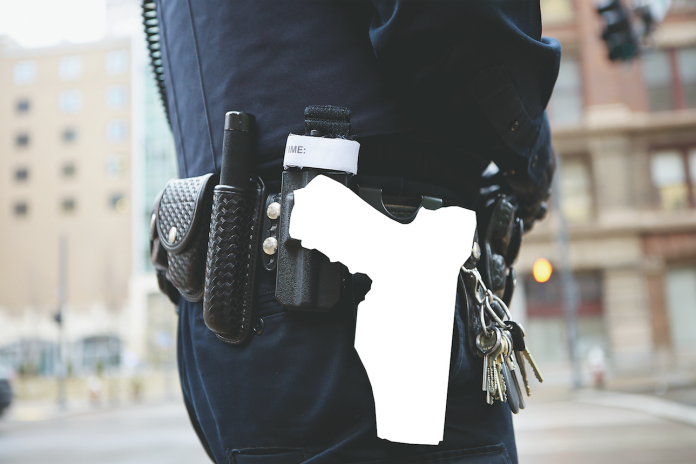
A firearm should not be the first solution to every problem, simply hanging at the hip, ready to kill.

Before you start arguing that “blue lives matter,” and telling me that I hate police officers, it is important to remember that my proposal is not revolutionary. In the UK, for example, most officers do not regularly carry handguns, and they are not having a big problem with officer safety. In the UK, they stress de-escalation tactics and proper non-lethal apprehension.

It is worth watching the video from the UK in which an incoherent man is brandishing a machete: the officers do not shoot him. They get the riot gear out, they make sure they have enough officers on the scene, and they subdue him by slowly advancing on and overwhelming him. No one gets shot, and no one dies. I have heard multiple reports of policing like this in the UK, and we in North America need to follow their example.

Officer safety still needs to be taken very seriously, but handguns for daily carry are not necessary. In many cases, having a handgun immediately accessible does not make officers any safer — such as the shooting of three police officers in Baton Rouge, where the officers were ambushed and were not able to react quickly, anyway.

Having easy access to a gun only escalates dangerous situations. If there is a chance to react in an instance that truly requires a firearm, then the officer should have time to get an assault rifle from their cruiser. At least that way, the officer is forced to think about whether or not a firearm is really necessary for the situation.

What makes officers less dangerous is if they develop a relationship of understanding with the communities they police, as well as having enough personnel on the scene. Handguns only create distance between the police and the public. If we truly want a police force that serves and protects, and if we truly believe that the lives of all citizens — including black citizens — matter, then we need to take guns off the streets, starting with service handguns.