Home Blog Page 733

SFU releases sexual violence policy draft for feedback

4

On Wednesday, January 4, SFU released a draft of its sexual violence policy for feedback. All post-secondary institutions across BC will be required to implement a final version of these policies by May 2017.

The Peak spoke with former VP academic and provost, Jonathan Driver, and Advisory Committee member and graduate student, Charis Lippett, about the new draft policy and the process that was necessary to create it.

Driver stressed that many groups throughout the SFU community had been involved in providing insight into the policy, including both a working group and advisory group along with advice from universities across Canada.

Lippett, who advised the working group draft the new policy, explained that “this policy addresses sexual violence on campus that has been a cultural epidemic of late. . . [it] directly addresses not only where the university stands on sexual violence and zero tolerance policy for sexual violence, it also outlines the rights and responsibilities of every SFU community member that is involved” in cases of sexual misconduct on campus.

In the policy the word “sexual misconduct” is used as an umbrella term and is defined under item 3.6 as a term that:

“encompasses a broad range of sexual behaviour, whether physical or psychological, that is committed, threatened or attempted against a person without the person’s consent. It varies in severity and takes many forms, including but not limited to: sexual assault, sexual exploitation, sexual harassment, stalking, indecent exposure, voyeurism, and the distribution of sexually explicit photographs or videos of a person without their consent and with intent to cause distress. Sexual Misconduct is used in this policy as a synonym for Sexual Violence.”

Lippett stressed how important it was to ensure that both gender-inclusive and sex positive language was implemented into the policy. Indeed, the draft document outlines its intentions in its preamble and defines who is part of the SFU community — more specifically, students, both undergraduate and graduate, employees of the university, sexual misconduct survivors, and respondents.

Breaking down the draft policy:

The Central Resource Office

The draft policy explains that the process through which a survivor may file a report of sexual misconduct will be done through one central office. Dr. Jonathan Driver hopes that this will “minimize the amount of times that a survivor would have to repeat their story” to the university. In order to reduce the stress that may be placed on a survivor, the policy describes a new Central Resource Office that will be the one place that the SFU community can go to file reports of sexual misconduct, where an investigation may take place accordingly.

Driver explained that the university “ha[s] a lot of people who provide assistance and support to students already” including “campus security, health and counselling, the people in residence, and one of the roles of the Central Resource Office will be to make sure that everybody is coordinated and everyone is on the same page” in regards to ensuring that sexual misconduct is adequately addressed.

Driver further stressed the importance of language and names used in creating this central office for the SFU community. While the name of the resource centre is intended to be obvious to the SFU community, both Driver and Lippett explained the triggers that may occur in directly labelling a resource centre as a “sexual violence centre.”

It is something that both of them hope the next month’s input from all members of the SFU community will aide in providing possible suggestions of names for this office along with any other concerns over the policy.

Creating a consent culture through education and training

Lippett described the new draft policy as “a great description for change, but it’s going to take all of us to step in and to create a consent culture at SFU.”

Throughout the policy an intention to provide education and training to inform the SFU community is illustrated in its call “to provide and strongly encourage training for all members of the University Community to reduce and prevent Sexual Misconduct and respond appropriately to the needs identified by survivors.”  In section 5, the role of education is addressed, including an annual education plan for the university community:

“[. . .] that may include a combination of campaigns, on-line and in-person training sessions, workshops, print and on-line [sic] resources, programs and other events on a range of topics related to: a. reducing, preventing and responding to Sexual Misconduct; and b. providing support for survivors and other members of the University Community who have been impacted by Sexual Misconduct.”

Driver explained that the Central Resource Office will work with many groups across campus to “ensure that information about preventing and responding to sexual misconduct is embedded in a whole variety of things.” He used examples of educating the community in various locations including during student orientation, new orientations for employees, or in student residences.

Lippett added that the process of developing this policy always “focused back on having a trauma- informed, survivor-focused, intersectional policy.”

After a report has been filed, what happens?

Survivors have the option to file a report with the Central Resource Office in order to begin an investigation, depending on the nature of sexual misconduct (section 7.5). If a report is filed and the investigation leads to disciplinary action against the perpetrator, Driver explained that “The survivor will not necessarily have all of the details of the complete outcome of an investigation because we are required to also protect the privacy of a perpetrator as well, and so therefore, some aspects of this may be considered private and confidential information”.

At any point, if such restrictions are ignored or violated the survivor will be able to get in contact with their officer in charge of the case. However, the survivor will not be able to directly appeal the outcome of disciplinary action.

What happens when someone outside the SFU community offends on campus?

The draft policy covers the resources available and process that will occur in the event of sexual misconduct between two members of the SFU community. As mentioned previously by The Peak, however, if a member of the SFU community has faced sexual misconduct on campus by someone outside the university, the ability for SFU to intervene falls out of its jurisdiction and the process of filing a report falls beyond the university.

However, Driver added that SFU “ha[s] policies that allow us to ban people from campus; we can get court orders and things like this to ban people off campus.” He explains that if this situation was to occur “we would obviously do our best to work with other organizations to ensure that the person responsible was held to account and we could certainly prevent them from coming on campus.”

Now what?

“It would be foolish to say, a policy has been published so now we can sit back, because everything is done. It’s not. Everyone needs to take responsibility to create a consent culture” said Lippett and thanked all those who have commented, suggested, and informed the advisory committee so far.  

Now, the policy is available to be reviewed and provide input. Both Driver and Lippett underscored the importance of providing feedback on the draft policy, either through the Town Hall meetings on January 17 and January 18 (students only), or online through the sexual violence policy website.

To read the whole policy click here.

Driver explained that while the draft policy is being finalised and will be presented at the Board of Governors meeting in March, it is important that the community knows there are still resources, other policies, and support for those affected by sexual misconduct.

Options at SFU to seek assistance or report sexual misconduct:

Campus Security: 778-782-4500
Personal Security: 778-782-8473 or [email protected]
Health and Counselling Services: 778-782-4615
Police: 911
SFSS Women’s Centre: 778-782-3670
Out On Campus: 778-782-5933
SFU Employee and Family Assistance Program: 1-800-663-1142
Women Against Violence Against Women (WAVAW)
24-hour crisis line: 604-255-6344
                  Toll free: 1-877-392-7583
Men’s basketball’s offence shut down by Alaska Anchorage in 77–47 loss

0
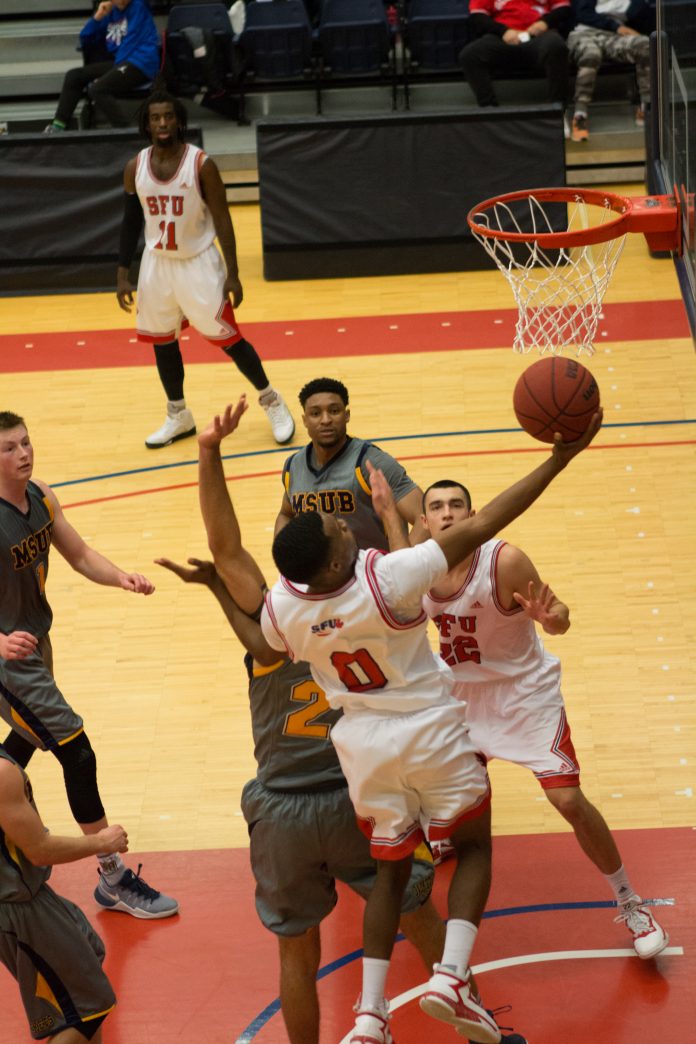
Othniel Spence (#0) had another standout performance, finishing with 16 points in 24 minutes of action.

Nearly a week removed from a close 103–98 loss to the nationally ranked Western Washington, their best offensive output of the season, the SFU men’s basketball team had reason to be optimistic. This is a team that can compete.

But that was not the case Thursday night, as the Clan fell 77–47 to the University of Alaska Anchorage Seawolves in the West Gym. It was pretty much the exact opposite of last Friday’s game.

SFU followed a nearly triple-digit offensive output with their lowest scoring game since November 2, 2012, when they put up 36 points — but that was an exhibition game against a Division I team. In their time in the National Collegiate Athletic Association, they’ve only shot less than 50 points four times, and two of those were in games against Division I teams. As it stands, 47 points is their second-lowest total they’ve ever put up since joining Division II — and their worst against Division II competition.

“Western [Washington] was not as strong defensively as Montana and Anchorage, that’s for sure,” said head coach Steve Hanson.

He does have a point. Western Washington, despite leading the Great Northwest Athletic Conference (GNAC), is ranked ninth in scoring defence — in other words, how many points they allow in a game — out of 11 teams.

On the other hand, Alaska Anchorage leads the GNAC in scoring defence. By a wide margin, too. Going into the game, they were only allowing 61.1 points per game (now only 60). The next best team is at 70.2 points per game.

Although 47 points is a historically bad performance, it is against a team that is in a league of their own in defence. This is the third consecutive game that Alaska Anchorage has held a team to less than 50 points. And they’re not just skilled in context to the GNAC — they’re third in the entire Division II.

They’re also the top rebounding team in the conference. They have the best free thrower — Spencer Svejcar — who went seven for eight, and had 31 points. Though their record may not yet say so, Alaska Anchorage is probably the best team in the conference.

“There was just some stretches where we let it get away, and offensively, we’ve just got to be a little bit more solid in our principles”

Still, a 47 point effort is a tough one to swallow.

SFU couldn’t manage a point until 3:42 in, when Izaiah Sherman-Newsome put up a three on the board. By then, Alaska Anchorage had already put up eight points.

The Seawolves looked like they were going to run away with the game early, as they had built up a 20–6 lead, and SFU had gone nearly three minutes without a point.

However, an impressive layup by freshman Othniel Spence, with little time on the shot clock, ignited a 10–1 run in less than two minutes that put SFU within only five points of the lead.

The illusion of a close game did not last long though, as the Clan were only able to put up six more points in the remaining 8:52 of the half, dropping the half 39–22.

“There was just some stretches where we let it get away, and offensively, we’ve just got to be a little bit more solid in our principles,” said Hanson. “There was some times where we had a chance to attack offensively and we missed some shots and confidence kicks in, and we started passing up stuff we normally take.”

The second half, SFU put up a slightly better offensive effort, putting up 27 points. There were long stretches without scoring from either team, including a nearly two minute stretch around the five minute mark of the second half.

Michael Provenzano, who has been a consistent offensive presence all year, was held to only six points. Kedar Wright and Izaiah Sherman-Newsome put up 10.

The lone bright spot of the game was freshman Othniel Spence’s performance. Recently, his play has been noticeable, and the coach is noticing too, giving him more minutes. Tonight he put up a career high 16 points and 24 minutes.

“With Othniel, we tried him a lot at the point, because he played the one-two in high school and I think being the off-guard is a little more where he needs to be,” said Hanson. “When he can just play with his instincts, he’s a lot better, doesn’t have to worry about leading the team — that’s tough to do as a freshman. So we just let him play with his instincts and he brings a lot of positive energy for us.”

A player in his first year out of high school, Spence is certainly a player to watch.

Bowen Bakken and Bongani Moyo were dressed, but did not receive any minutes Thursday night. Aleks Vranjes was not dressed for play.

SATURDAY: SFU will conclude a four-game homestand against the other Alaskan team — the Alaska Fairbanks Nanooks.

The Nanooks are another strong defensive team, allowing the third-least amount of points per game in the conference with 72.2.

“They’re going to zone us a lot, so we’ve just got to get back to the gym, we’ve got to shoot the ball. When you’re not feeling it from the three-point line, there’s only one way to do it — get back in the gym,” said Hanson, after yesterday’s game. “Shooters gotta shoot and that’s what we told our guys and we’re going to get back at it tomorrow and get better.”

The Nanooks, however, are in the midst of a three game losing streak and are the eighth ranked offence in the conference. This game should be more competitive.

Tipoff is at 7 p.m. in the West Gym.

Intro to Contributing

0

Read The Peak? Want to contribute? We answer some questions you might have.

Special thanks to Janis McMath and Sidney Adache

Hot new slang to use in 2017

0

Lemon-sucking fuck-face:

Bae is a lazy acronym for lazy lovers who blow their load before you can even start thinking about having an orgasm. You left that premature motherfucker in 2016 for better dick, and you should leave the term bae along with him.   

Lemon-sucking fuck-face is a much better term of endearment. The term is longer and it takes more commitment to say, showing your significant other exactly how committed you are to them. Nothing says love like a long, complicated insult involving fruits.

An example of how to use it: “My lemon-sucking fuck-face and I went on a very romantic hike and afterwards we sucked each other’s lemons dry.” Sexual innuendo including lemons is optional, but encouraged.    

Pubey:

It’s the new age, people. It’s a pubey age.

2017 is the year where we’ll all finally be cool with our body hair. It’s here, people. We can all accept ourselves for having hair on our ass cracks and nipples, and stop shaming our hair follicles. We all, 100 percent, have pulled a very long and very ungodly hair out of a very sensitive area in our lives, and we’re going to stop lying to ourselves about it. It’s time to accept all of our hair. Brush out your moustache and don’t worry, you look beautiful.  Let your hair down, girl — your pubic hair.

It’s going to be a revolutionary year. It’s going to be a pubey year.

I’m going to fuck your Pomeranian fluff-hole

The easiest way to tell someone off.  Every time a baby-boomer makes a vaguely racist comment and expects you to laugh along, you can now easily silence them with this verbal punch in their problematic ideology.

And now you may be thinking, “fucking Pomeranian fluff-holes is too crude.” But you’re wrong.
If anything, it isn’t crude enough. This culture of ours has basically perverted everything it can get its tentacles on. We take our dicks out for everything — especially apes.  So keep up. It’s the year of the fluff-hole.

Clit

2016 was lit. 2017 is gonna be clit.

The clit is the perfect mascot for a great time. No one has a better time than the clit — the clit is the life of the party, and of the female genitalia.

It’s easy to have a clit time. All you have to do is fight the patriarchy while partying. “Me and my boys are going to go out on the town, not give into the pressure society puts on us to be masculine, and we’re going to just have a great time together. It’s going to be clit, mate!”

Tru-douche

Back in 2016, some of us voted for this pretty boy because for some reason we thought that a boy band member could run our country. Now, with this pipeline full of shit spewing in our faces, we need a word for someone who is a big dickbag to Canada — someone who would punch a beaver in the face and defecate on Canadian hero Avril Lavigne.

Cue tru-douche. This insult is perfect to use against any asshole to attack sweet ol’ Canada.

The term originated in the Baltic Nations, but since that isn’t a place, you saw it here first.

2016’s best comedy specials

0
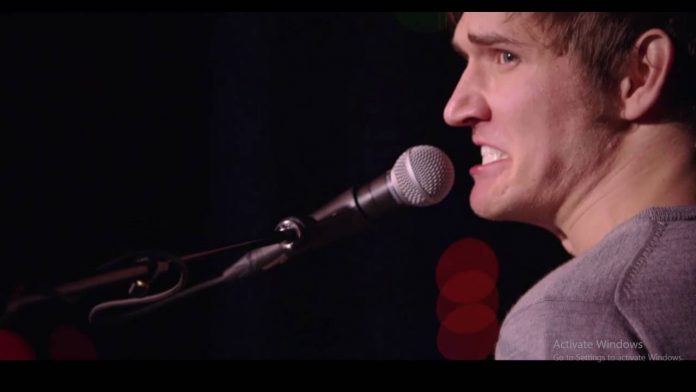
Not only can Bo Burnham make you laugh, he can also sum up how you feel about 2016 and its human counterparts — straight white males with problems — in one look.

Let’s be honest, 2016 was anything but funny. The world is a giant mess and it’s not magically going to get better in the New Year. So let’s look back on when comedians tried to make the best of a really bad situation because maybe that’ll make us all feel better for, like, a millisecond.

Big Fat Quiz of Everything


This is not a stand-up comedy special; this is better. Six guests (usually comedians) compete on this quiz show that is normally aired around Christmas. This year they did three special episodes and, honestly, bless them. While some guests are serious contestants, most have no idea what the fuck is going on. They’re just there to make jokes and it pays off. Stayed tuned for a fun fact about the host, Jimmy Carr, later.

Michael Che –  Michael Che Matters


The first time I watched this, I was blown away by how funny Michael Che is. He has great bits for all current events. One of my favourites was about how African Americans’ struggles are constantly forgotten, but we will never forget 9/11 because #AllBuildingsMatter. Another hit is when he starts talking about how Jesus was probably a shitty carpenter. My only complaint was that he joked about wanting Donald Trump as a best friend. Yikes.

Bo Burnham – Make Happy


I may be biased because I saw this special live, but it was awesome. His comedy was insightful and hilarious. My favourite bits were about how terrible stadium country is and a song about Straight White Male problems. While not everyone may be interested in musical, introspective comedy, I would highly recommend this special to anyone.

Ali Wong – Baby Cobra


Not many comedians would film a special at seven months pregnant. Honestly, that might be a good thing, but something about Ali Wong gyrating on the floor made me feel like everything was going to be okay for a while. Her big joke is how she doesn’t want to work anymore and I can 100% get behind that. She will also talk about anything to do with sex. And I mean anything.

Iliza Shlesinger – Confirmed Kills


Iliza’s pretty problematic, but try to power through it. She has some feminist jokes hidden in there. She does a brief bit about the party goblin (fans will already be familiar with this term) and it killed me while simultaneously feeling too real. I also really liked her bit about the ridiculous names we call our grandparents despite how many people they probably killed in the war.

Bonus: Worst Comedy Special of the Year – Jimmy Carr – Funny Business

The only redeeming part of this comedy special was Jimmy’s ridiculous laugh that is both hilarious and makes it impossible for you to take him seriously. His jokes are problematic, and not even funny. Stick to what you know, Carr. We all know your only talent is being the punching bag on Big Fat Quiz of the Year.

The best video games of 2016

0
There’s no doubt that 2016 was a frustrating year, but with the beautiful world of The Witness, the puzzle-based game proved to be the best kind of frustrating.

By all measures, 2016 was a good year for gamers. Much as I would’ve liked to try them all, I didn’t get around to some of my most anticipated games — still, I was able to try out some of the year’s best and brightest, all of which stick out in my memory for one reason or another. These are my favourite titles of the year.

Overwatch became a new obsession. No other game was quite as much of a cultural phenomenon this year, and for good reason. So far I’ve clocked over 200 hours playing all of the game’s 23 heroes, and I plan on adding at least 100 more to that tally. Overwatch wasn’t just my favourite game of the year — it was my favourite cultural artifact, period.

INSIDE made me reconsider what video games could do. Coming from the creators of 2010’s Limbo, INSIDE is best played with absolutely no foreknowledge of its story or mechanics. It’s an immersive and haunting experience that could only have been told through the medium of video games.

Stardew Valley gave Animal Crossing a run for its money. I never really got into farming simulators when I was a kid — my rationale was, why play video games that let you do things that you could do in the real world anyways? Stardew Valley proves how wrong I was, giving players plenty of customization and addictive tasks along with a surprisingly compelling story.

Pokémon Sun and Moon confirmed that the Pokémon series still has a few tricks up its sleeves. By eschewing some of the series’ most consistent tropes and adding several new features such as regional variants and Poké Rides, Sun and Moon breathed new life into the franchise and once again gave me the chance to raise my ‘mons and compete to be the very best, like no one ever was.

The Witness challenged me to think outside the box. Since I was a kid I’ve always loved jigsaw puzzles, so this game had me right at home. Solving the puzzles that make up the world of The Witness was a meditative experience that challenged the way I think and frustrated me to no end.

Skyrim Special Edition reminded me why I fell in love with the original. While this new edition didn’t fix all of the bugs from the original, its new coat of paint and added ability to install mods on PS4 and Xbox One made the world of Skyrim feel fresh and renewed. The original game remains one of the greatest western RPGs ever made, and it was a delight to return for a victory lap.

Hyper Light Drifter made me feel like a fucking superhero. Like The Legend of Zelda on acid, Hyper Light Drifter offers lightning-fast gameplay, a hallucinatory colour pallette, time travel, and a typically mute main character. The game is style meets substance, and it’s pretty fun to boot.

Fire Emblem: Fates built on a sturdy foundation of tactical RPGs. While originally released in Japan in 2015, Fates landed overseas in February, and proved once again that the Fire Emblem is the best in the business. The game has just enough cheesy plot points and tactical challenges to earn two (or three!) separate play-throughs of its roughly 30-hour campaign.

Best albums of 2016

0
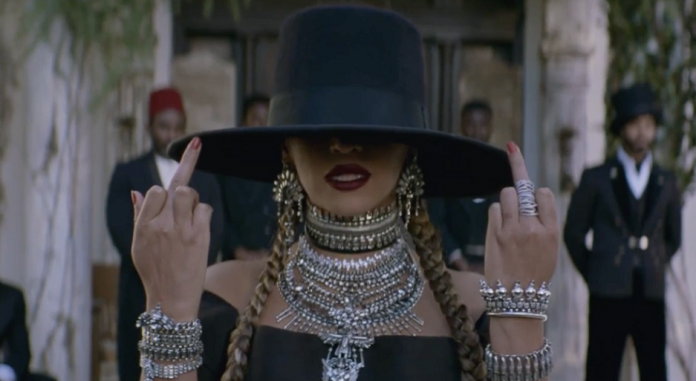
“Formation” has become an iconic song, and Beyoncé giving the world the finger captures how most people feel about 2016. Bring it on 2017.

If 2016 were a movie, it would be a blockbuster disaster movie with a perfectly peculiar soundtrack. Artists ignored the boundaries of genre, creating pieces that showcased their progression and vulnerabilities as artists and people. So I tried to put myself in the shoes of a music director and tried to curate a soundtrack for the year. This is what I came up with:

Best Album Named After a Beverage: Lemonade by Beyoncé

I might be biased because I’m a Beyoncé fan, but I still think it is fair to say Lemonade is one of the best albums of 2016. The music is wildly diverse, while the lyrics are gonna have you ready to break up with somebody even if you’re incredibly single. Combined with the incredible visual component, it’s a stunning portrayal and tribute to black femininity as explored through Beyoncé’s personal perspective and vulnerability. It is an experience from beginning to end.

Best Album Featuring Gospel Choirs and 2 Chainz: Colouring Book by Chance the Rapper

This album is so fun. Chance embraces his church roots in a way that is edgy for hip-hop, but approachable and infectious. He doesn’t shy away from engaging in themes that explore blackness in 2016, yet he does so with optimism and joy at what’s to come. He’s got me ready for my blessings in 2017!

Best Subtle, but Woke Album: A Seat At The Table by Solange

Solange’s first album in four years provides a different look into black femininity and the complexities of the African-American experience. Lyrics that explore the challenges and joys of being a black woman are laid against lush string arrangements to create a piece that is both confident and comforting. Plus I’m pretty sure “Don’t Touch My Hair” is the anthem of many black girls with natural hair (myself included).

Best Album from a Problematic Fave: The Life Of Pablo by Kanye West

Okay, 2016 Kanye has been a mess. However, The Life of Pablo is without a doubt one of the best rap albums of the year. The lyrics reveal an emotionally conflicted Kanye who still maintains his ear for musical excellence, as revealed in his orchestrations and samples. It’s messy and chaotic, yet quintessentially Kanye.

Best It’s About Bloody Time Album: Blonde by Frank Ocean

Since this has been a year where anything could happen: Leo won an Oscar, Drake & JLo started dating — it only made sense for Frank Ocean to drop an album. A nice progression from Channel Orange, Blonde plays like one long piece from beginning to end, staying true to Frank’s chill-vibes production style.

Best Underrated Pop Album: Emotion Side B by Carly Rae Jepsen

Known amongst my circle of friends as Carly ‘Slay’ Jepsen, this Mission-born gal quietly put out a part two to one of the most underrated pop albums of 2015 — Emotion. Each song has its own take on the ’80s vibe yet remains current and fun. Plus it makes mundane things like going to the store seem like a fun time.

Best Album to Inspire the Purchase of a Pink Cowboy Hat: Joanne by Lady Gaga

Mother Monster’s first solo album in three years cements her as a musical chameleon. Blending elements of rock and country with a pop sensibility, Gaga reminds us of her songwriting prowess and powerful vocal capability. Plus that key change in “Perfect Illusion” is singing goals.

Clearly, there are many more incredible albums that were released in 2016. Yet, these few illustrate the uniqueness and breadth of creativity released into the world. Hopefully, 2017 will continue the trend of great music — but with a lot less drama.

The best movies you probably didn’t see in 2016

0
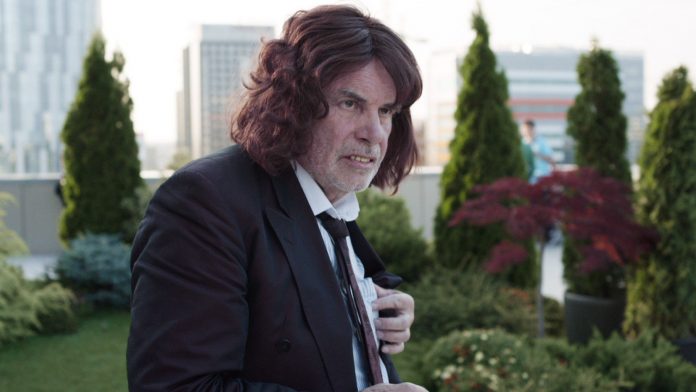
2016 might have been the year of men with bad hair. Peter Simonischek in Toni Erdmann donned his wig for pure comedic effect.

Hurt and healing, dependency and recovery; these were the subjects of my favorite films from 2016, a year where cinema was not simply art or entertainment, but a form of sustenance, a means to keep on keeping on. But if these films are of any value, it’s because they’re more about feelings than answers, less about advocacy than about therapy.

Knight of Cups

No American narrative filmmaker working in the last decade has expanded the possibilities of cinema more than Terrence Malick. His films Tree of Life, To the Wonder, and this year’s Knight of Cups have pioneered a whip-whirling montage aesthetic while articulating a vacuity begotten by most mainstream cinema: an isolation from what is true in our materialistic, postmodern hell hole.

Toni Erdmann

A lonely, retired, and divorced man adopts a silly eponymous caricature to sabotage his daughter’s corporate lifestyle, inserting humour and humanity into a one-percenter world completely absolved of those two things. Defying categorization or even mere description, Maren Ade’s Toni Erdmann is familiar in concept, but miraculous in execution; schematic in narrative, but inventive in structure. It’s also just really, really funny.

Certain Women

The latest film by Kelly Reichardt — perhaps the most overlooked American filmmaker working today — is a collection of three stories revolving around women in a small Montana town. Each character carries with them an abstracted history only made visible through gesture. There’s no backstory to any of these characters, no exposition of how they got to this point of estranged melancholy, but without being able to pinpoint exactly why, we feel their plight and we sense their desires and displacement.

Silence

Martin Scorsese’s adaptation of Shusaku Endo’s novel of the same name could very well be one of his finest films. Following a Portuguese priest in 17th century Japan where Christianity and its practices are outlawed, Silence is both Christian art and a deconstruction of it, a film to challenge the faithful and the faithless.

Manchester by the Sea

Lee Chandler faces Job-level tragedies in Manchester by the Sea, a film which isn’t about endings or resolutions, but intersections and interruptions. Instances where petty trivialities get in the way of catharsis: a cell phone buzzing at a funeral, a gurney that won’t fold properly into an ambulance, or a conversation about Star Trek immediately following a visit to the morgue. Kenneth Lonergan’s anti-three-act structure takes Chandler’s grief seriously, denying any simple narrative of recovery, and recognizing that things will never be the same.

Our Little Sister

The simple and optimistic cinema of Hirokazu Koreeda is easy to write off as fantasy, not because it feels dramatically contrived or farfetched, but because the filmmaker whole-heartedly believes in the perseverance of human goodness — even while in less-than-ideal circumstances. About three sisters who adopt their half-sister following their estranged father’s passing, Our Little Sister interrogates inner turmoil with generosity and kindness.

The BFG

Steven Spielberg’s adaptation of the Roald Dahl novel is a fantastical and whimsical immersion into another world. A simple film about family and friendship, here is one of the few Hollywood films of the year to have sincere, classicist values.

Little Men

Little Men traces the doomed friendship of two boys divided by race, class, and their parents’ dispute over rent. Ira Sachs’ film is The 400 Blows relocated to a gentrifying New York City, turning a political issue into sophisticated, balanced drama.

20th Century Women

A montage of memories, Mike Mills’ new film humorously and poignantly recounts an ideological divide in a family during the late ’70s, and a boy’s coming of age at the center of this conflict. Negotiating between his mother’s first-wave feminism and pragmatism and his generation’s radical politics, 20th Century Women is more than a collections of indie-oms, but a perceptive inquiry into how the historical period we’re born into shapes our individual values and identity.

Werewolf

Ashley McKenzie’s emotionally devastating and formally inventive debut feature is the fragmented story of a Cape Breton couple on the methadone recovery program. Werewolf is a part of TIFF’s Canada’s Top Ten Film Festival, which comes to The Cinematheque at the beginning of January.

The worst songs of 2016

1
2016 was a big year for the girls of Fifth Harmony, not only did Camila Cabello leave the group, it also made it on to our list of worst songs with "Work from Home."

“Me Too” – Meghan Trainor

Meghan Trainor’s “Me Too” is the most painful thing I heard in 2016 — and that’s being nice. The chorus is just “If I was you, I’d wanna be me too” repeated multiple times. Did Trainor sit down with her producers and think, “You know what would be a great idea? A song insulting my entire fan base!” This song is three minutes of her bragging about how great her “rich and famous” lifestyle is, and it perfectly shows how she’s fallen to the trappings of fame.

“M.I.L.F $” – Fergie

Fergie, stop trying to be cool. You haven’t been cool as a solo artist since 2006. “M.I.L.F $” makes my ears bleed. I understand you want to show the world that moms can still be fun and flirty, but is “You got that, you got that, you got that milk money. I got that, I got that, I got that MILF money” really the way to do it? You’re just setting yourself up for ridicule.

“Work from Home” – Fifth Harmony

Fifth Harmony wrote a song about needing sex so much they’d rather their men be fired and “work from home,” a.k.a. please them in bed. This is a terrible metaphor. These girls can produce much better music than a song where “work” is repeated 106 times.

“Gold” – Kiiara

Apparently Kiiara either could not be bothered, or could not think of more lyrics for this song because the chorus is just random words pieced together from the verses. The chorus is also indistinguishable by ear. “Gold” relies on reverb and choppily structured beats for the melody, which isn’t pleasant. Add in some high hats, and you’ve got yourself a bad pop song.

“On My Mind” – Ellie Goulding

Ellie Goulding tried to write a diss track. It didn’t turn out so well. She tried her hand at rapping. It also didn’t turn out so well. This song is a poor attempt at getting back at Ed Sheeran for his brilliant track “Don’t.” The lyrics are weak with the chorus just being “Why I got you on my mind” repeated. The melody is the same three-second synth riff looped over and over again.

“Treat You Better” – Shawn Mendes

Shawn just wants what’s best for this girl that he has a crush on. . . which is, apparently, to be with him. This is another pathetic nice guy anthem where he seems to know all the reasons why the current boyfriend of a girl is a shithead. How can you prove you’re a better guy, Shawn? Is it just supposed to be because you say you are?

“No” – Meghan Trainor

“No” is supposed to be a feminist song telling a guy to back off because she doesn’t need him to have fun at a club. However, it just makes her sound like she’s basing her opinions of men only on their appearances, which is incredibly shallow.

“Starving” – Hailee Steinfeld, Grey ft. Zedd

The verses here are passable. The chorus however, is a mess. “I didn’t know that I was starving ’til I tasted you” makes Steinfeld seem like someone who needs a man to make her feel something. What happened to the “I don’t need a man to give me pleasure” message?

SFU scores season high 80 points in win over Concordia

0
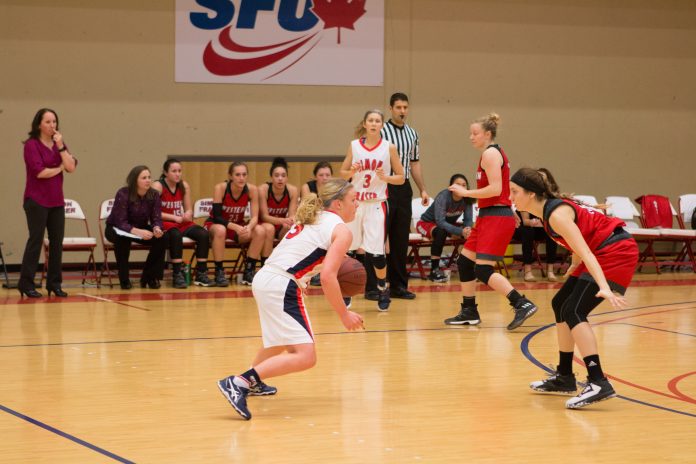
Ellen Kett (centre) had 14 points and nine assists in SFU's 12th win of the season.

2016 for SFU ended the same way it began – with a win against Concordia University. After defeating the Cavaliers on January 2, 2016, they did the same on New Year’s Eve, with a 80–58 victory.

Coming into the contest, SFU and Concordia were on two vastly different streaks. The visitors had lost four of their last five games played. In contrast, the Clan had won four of their last five.

The early portion of the game perhaps reflected the difference in confidence – SFU jumped out to a 20–4 lead and never really looked back — apart from a slip up near the end of the third quarter, when their lead was reduced to seven. After that, SFU went on a 13–3 run which was enough to eventually seal the win.

Leading the way for SFU was freshman Ozi Nwabuko, who had 18 points to lead the Clan in scoring. It’s her fifth game this season scoring 15 points, and has now become an indisputable part of the team’s starting lineup. A day after playing a mostly defensive role shutting down Western Oregon’s leading scorer Shelby Snook — limiting her to only six points and registering four assists — she’s shown a versatility that can hopefully continue throughout the season.

Senior Ellen Kett went four for six from behind the arc to register 14 points, while Elisa Homer had 12. Tayla Jackson returned to the lineup and had a limited role, playing only six minutes, but providing a block and an assist. Overall, it was a good night for SFU shooters as they went close to 50% from the field.

Despite scoring a season high 80 points, it was defence that was equally as impressive. SFU was able to force 23 Concordia turnovers, and SFU had ten blocks — four from Meg Wilson alone. Sophie Swant had four steals in 26 minutes of action, tying a season high for her, and also had six defensive rebounds.

Next up for SFU are games against Central Washington and Northwest Nazarene, both on the road, on Thursday and Saturday respectively. Central Washington is 0–3 in conference play, but have one of the best scoring defences in the GNAC, sitting third with 58.7 points per game. Northwest Nazarene in contrast are 3–0 in conference play, third in scoring offence with 77.9 points per game, but have the worst scoring defence, giving up 75.9 points per game.

They will likely be drastically different games for SFU, but the good news is that this team appears to be able to win many different ways — high scoring games such as the 78–75 win over Dominicana State on November 22 and tight defensive contests such as the 56–47 victory over Cal Poly Pomona on November 26. Recent history is also on the side of the Clan; SFU was a combined 4–1 against Central Washington and Northwest Nazarene last season, including a 78–67 victory in the playoffs last season over Central Washington.