Home Blog Page 699

Ballet BC closes season with contemporary triple bill

0

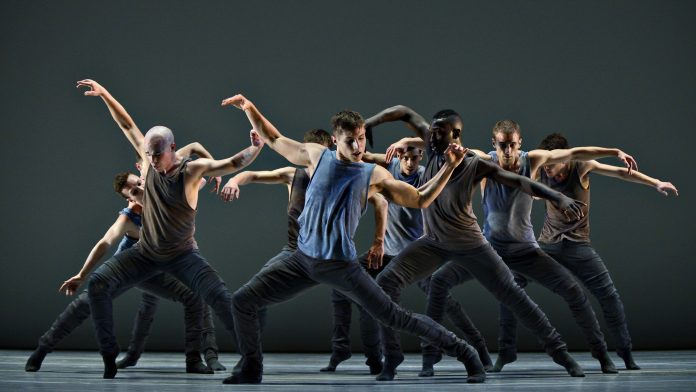
Lately, it seems that everywhere you look, contemporary Israeli choreographers are presenting new works with major dance companies. Ballet BC is no exception, as they presented a new work by Emanuel Gat, Lock, as well as a compilation piece, Minus 16, by the famed ‘Gaga’ innovator, Ohad Naharin. Also on the bill was a piece by artistic director Emily Molnar that was created for a National Arts Centre (NAC) commission of new Canadian ballet and music creations called ENCOUNT3RS. Keep Driving, I’m Dreaming had its premiere in Ottawa in April.    

In Lock, sixteen dancers stood along each side of the stage. In complete silence, two of them emerged to meet in the middle and moved slowly, as if they were stick figures, all right angles and straight limbs. Gradually, more dancers stepped out of their lines to join in, and pairs moved slowly around the stage.

There was an ominous tone as things felt scattered and incoherent. The piece gained some excitement when the music picked up speed and the dancers became a chaotic swarm, but the loud discordant sounds were unpleasant and the meaning of one dancer wearing green pants while the others were in grey was not clear. After a sudden blackout, the menagerie of unrelated pairs of dancers created a frenzied cacophony of movement that seemed as though it could have represented the green-trousered protagonist’s consciousness. Or, it could have been meaningless.

In between Israeli choreographers, Molnar’s NAC commission Keep Driving, I’m Dreaming featured eight dancers in a fast-paced piece that had them constantly taking turns moving on and off stage. There was an abundance of running — dancers running on, off, and around the stage, which created a sense of urgency and unrest, but the cause was unknown. The fantastical music created an atmospheric soundscape while the dancers moved viscerally, although repetitively.

It would have been nice to see some dancers on stage at the same time instead of always running on and off. The narrative arc seemed slow to build, and the dancers’ dreamy world seemed to be repeating in loops as they never lingered on a movement or paused for a thought. Finally, they were all on stage together for a strong ending that had them running and jumping forward only to be pulled back again in a never-ending cycle.   

Based on excerpts from three of his previous works (Zachacha, Anaphaza, and Mabul), Naharin’s Minus 16 was by far the most enjoyable of the evening. There was no real start to the piece as one dancer was grooving alone as we returned from intermission, and the lights remained up as the curtain rose and more dancers joined him. All dressed in suits and bowler hats, they gave the time-out signal, the curtain went back down, and hard rock music began. When the curtain went up again, the dancers were seated on chairs in a semicircle. Waves of energy pulsed from one side of the semicircle to the other as they arched back and threw their hats off one at a time, the dancer at the end falling down onto the stage. This pulse of energy was repeated many times as the dancer chanted along with the bass-heavy music, creating an exhilarating tone.

After throwing their jackets, pants, and shoes into the centre of the circle, the piece shifted and six male dancers stood at the front of the stage. There was a beautiful duet, and then the piece shifted back to all the dancers in suits as they came into the audience to choose dance partners. An onstage dance party ensued and their energy was infectious.


Emily Carr Graduating Exhibition — The Show: You Are Here

0

The Show: You Are Here, Emily Carr University’s annual graduating exhibition, opened on May 6 at the school’s Granville Island campus for the last time. Featuring the work of over 300 graduates in design, media, and the visual arts, The Show was the largest event held by the university, and the largest graduating exhibition in the province.

Unlike smaller graduating exhibitions at other universities, The Show had no central point, no unifying space, and no single structure. Spread across multiple floors in both the South and North Buildings, The Show was a logistical achievement that accommodated graduates, families, friends, and thousands of visitors.

Opening night on May 6 began at 4:00 p.m. and ran until 9:30 p.m., with hundreds of people staying till the very end. More than just an opening, The Show was also a civic event, a spectacle of the arts. A DJ provided a soundtrack as a team of ushers and security kept watch.

A trio of food trucks separated the South and North Buildings and were supplemented by an endless supply of plastic water bottles emblazoned with “You Are Here.” Students, some straight from the graduation ceremony, mingled about, and reveled in their achievements as eager parents and the occasional hired photographer captured the night.  

“This year’s Show was also notable for a marked ambitiousness that set it apart from previous years.”

Space in The Show was at a premium as the university’s traditional exhibition spaces, the Media + Concourse and Charles H. Scott galleries, were supplemented by former working studios and classrooms. The resulting arrangement formed a maze of tightly spaced displays and artworks that competed and jostled for attention. They included everything from the work of emergent First Nations carvers to networking apps, modular furniture, and abstract painting to specific subject matter such as a series of Chinese immigrants photographed though their cars.

The Show thus presented multiple perspectives for creative solutions and artistic engagement. This year’s Show was also notable for a marked ambitiousness that set it apart from previous years. It included performances such as a live pottery studio, and a printmaker that allowed you to ‘make your own newspaper.’ These existed alongside large installations and even a two-story painting in the North Building’s Concourse gallery.

As it was the last exhibition on this campus, students in this year’s Show pushed some of the spatial restrictions inherent in a shared graduating exhibition. Their achievements in The Show are thus also statements about their own trajectories, and that of the school they leave behind.

Over the summer, Emily Carr will enter the final stages of moving to a new purpose-built campus in Vancouver’s False Creek Flats. This new campus is located next to the existing Centre for Digital Media, a graduate institution jointly operated by SFU, UBC, BCIT, and Emily Carr. The rapidly changing neighbourhood is also home to contemporary galleries that include major institutions like the Equinox, Monte Clark, and Catriona Jeffries.

Designed to accommodate up to 5,000 students, the new campus will ease long-standing enrolment pressures at the school’s current campus, and with the future arrival of a station as part of the Broadway rapid transit extension from VCC–Clark to Arbutus, it will also be more accessible by transit. The new campus, as the City of Vancouver put it, forms a major part of the city’s broader project to repurpose the False Creek Flats into a more “productive, sustainable, and integrated” area. It will be the the second keystone civic entity alongside the relocated St. Paul’s Hospital on the north side of the Flats.

Graduate students will receive much-needed facilities and support, and the building will also provide expansive exhibition space that will operate year-round, while also presenting a more accessible and permeable public presence to the changing neighbourhood surrounding it. New changes also present new challenges.

The relocation from Granville Island will mean the loss of an active and permanent student presence that will surely impact the dynamic and the economy of the island. Meanwhile, architectural decisions such as the increased use of glass within the building will open up interior spaces while simultaneously challenging studio use and work storage. Certain departments, such as those with a design focus, will see substantial growth in space and support. Others, meanwhile, will remain static, or lose access to existing facilities.

The photography department, for instance, will lose some of its existing analog film developing space, but perhaps more importantly, will also lose the ability to print colour analog and colour photographic prints. This has been an ability which has, thus far, set Emily Carr apart as the last school in the city to offer such facilities.

These kinds of changes and tensions underlie this year’s Show. This isn’t just any graduating exhibition, and it isn’t just any move:. Graduating students and continuing students alike are saying goodbye to a campus they’ve known and laboured in, one which was an integral part of the urban fabric of Granville Island.

Those in the midst of their studies will be welcomed into the new Great Northern Way campus this coming August, with a grand public opening during the fall. The school’s move will reshape Granville Island and play a major part in the development of the False Creek Flats. Until May 22, the school’s outgoing students are showing their final farewell to their campus. In the meantime, ‘You Are Here.’

King Arthur: Legend of the Sword features an amazing cast and visual style

0

If you’re searching for a worthwhile summer blockbuster, look no further than King Arthur: Legend of the Sword. The film combines visual style, a talented cast, and an awesome music score. It’s expertly crafted into an original work that translates well for a modern-day audience.

Guy Ritchie, director of Sherlock Holmes: A Game of Shadows, ups the ante with an interesting approach to the Arthurian legend. Ritchie uses the reluctant hero archetype for Arthur, but does it so well that he makes it clear it’s fitting to the film’s narrative. Ritchie’s genius is prominently shown in the iconic moment of Arthur drawing Excalibur from the rock. His smart direction succeeds in recreating the fearsome might of Arthur’s sword with sharp visuals that evoke its immense, ground-breaking power.

“Ritchie’s original approach to the Arthurian legend engages us with its commanding spectacles.”

The film’s music is simply phenomenal. Daniel Pemberton (The Man from U.N.C.L.E.) provides a music score whose fast pace and rhythm holds a steady tone that matches the intensity of the film’s many action scenes. The music has an engaging momentum that maintains a firm grip on the audience. It keeps viewers in a state of excitement and anticipation, inciting them to not only want more, but to remain fixated on the story.

Even more impressive is the film’s cast. Charlie Hunnam (best known for Pacific Rim and Sons of Anarchy) is perfect as King Arthur. He delivers an outstanding performance in bringing about Arthur’s strength as a warrior and the torment the character feels from a past that won’t go away. Djimon Hounsou (best known for Blood Diamond) joins Hunnam in the film as Sir Bedivere, an ally of Arthur’s. Hounsou’s portrayal of a tempered and stoic character balances well with Hunnam’s fierce recklessness. Together, both actors create a powerful dynamic in this movie.

As for Jude Law, he makes for a surprisingly good villain. Having worked with Ritchie before in Sherlock Holmes, Law does not disappoint. Portraying the wicked King Vortigern, Law does an amazing job in showing the dark, cold personality of his character. Although there are times where it feels like he’s just being a deadly, even psychopathic, version of Watson, Law compensates for this shortcoming with a performance that resembles the tortured turmoil of Shakespeare’s King Macbeth. Immersed in shadow and barely lit backgrounds, Law’s portrayal enables the audience to experience his character’s twisted motivations.  

Comic relief comes in the form of quick and snappy dialogue that supplies the story’s light-heartedness. Ritchie provides viewers with a witty atmosphere reminiscent of other films, such as The Grand Budapest Hotel and Ocean’s Eleven. As for the film’s action, it grabs your attention as quickly as Pemberton’s music score. From Arthur slaying foes with Excalibur to the intense final battle between Hunnam and Law’s characters, Ritchie’s original approach to the Arthurian legend engages us with its commanding spectacles.

Overall, Guy Ritchie makes this movie a worthwhile summer blockbuster. His smart direction is strongly reflected through the film’s visual style and superb cast. King Arthur: Legend of the Sword succeeds in entertaining modern-day viewers with an old classic, transforming it into a contemporary story.

Tim Hortons’ possible closure deserves more student input

0

As you might’ve heard, SFU’s sparking a hardcore internal makeover of its available set of eateries. This includes potentially canning the Burnaby campus Tim Hortons, a hotspot for hungry students at all hours.

Tim Hortons has fallen under the gun for its lack of a fair trade option, which doesn’t quite complement the “fair trade ‘utopia’” SFU’s been aiming to cultivate for years. Of course, SFU is doing what they can to stay true to their ideals, and will be removing Tim Hortons by the end of the spring 2018 semester if they fail to offer a fair trade choice.

Before I get too deep into this, I’d like to make it clear that I personally think fair trade is an incredibly important initiative, and SFU’s leadership and commitment to it should be celebrated. It’s a fight to protect and heal so many important things — the rights and lives of labourers along with the health of the earth itself being chief among those.

Putting my views aside, I wonder: when dealing with an establishment as big a cornerstone of SFU Burnaby’s student life as the campus Tim Hortons, wouldn’t it be good to get more of a sense for what the majority of students, who likely comprise the majority of the Tim Hortons’ consumers, want done?

To clarify, and to give credit where it’s due: SFU has gotten feedback on students’ opinions on fair trade in general. As previously reported by The Peak, a survey SFU conducted in fall 2016 showed that “40% of students said that fair trade at SFU was ‘Very important,’ [and] 44% said it was ‘Somewhat Important.’”

But with such a general question — and one which, let’s be real, has a very obvious ‘good’ and ‘bad’ answer — I find it difficult to accept that those results suggest that the student body at large would be anything like happy to see Tims go.

Why the scepticism? Because if that was the case, surely Tim Hortons would already be much less successful? Surely students would choose other options on campus of their own initiative, if they had enough of an ideological investment in fair trade to reject Tims?

I mean, before the SFSS closed down the food and beverage services, we had Higher Grounds as a fair trade option on campus for coffee. Even now, we have two Starbucks locations in the vicinity, which are incredibly popular in their own right, along with various other fair trade options.

Yet hundreds of students flocked, and still flock, to Tims for their affordable eating needs. So student opinions on how to go about becoming a fair trade campus might have changed slightly, if they were told exactly what sorts of campus resources they could lose in the process, and perhaps more importantly, how those losses would be executed.

Like I said, I personally agree with SFU getting serious about fair trade. But when charged with creating a campus for paying students, actions that directly, negatively affect the quality of student life deserve more thought and more research.

Sometimes, maintaining a community means making decisions that reflect the desires of the membership, not the ideals of the leadership. I’ll admit that I don’t, personally, know the exact breakdown of what every student at this campus thinks of losing Tim Hortons. But I don’t know if SFU does, either, and as the acting party in the scenario, they had an obligation to do more to at least try and find that out.

Consider the timing. We found out we could be losing Tim Hortons over fair trade (and lost Triple O’s) just weeks after the previously-mentioned food and beverage services closure came to light. While it’s true that two different parties made the respective decisions to either close down or give a closure deadline  — the SFSS being the second — the end result is still incredibly disappointing.

Yes, we’ve heard promises from Mark McLaughlin, director of SFU Ancillary Services, that these closures, would, as The Peak reported, be part of a “long-term vision for dining services that will see nearly the entire AQ second floor and Tim Hortons space renovated with new restaurants introduced.” That’s fair; any long-lasting changes for the better are obviously going to take time. I wholly respect McLaughlin, and I have confidence that the proposed changes will come into effect.

But more could be done to soothe the students who are attending the school throughout the not-so-short short term; a short term which seems like it’ll last a couple of years, at least. With Tims gone in a year and Higher Grounds closed, we’ve lost multiple choices with no immediately clear substitutes.

Finally, let’s be blunt: yes, this particular Tims is a big part of student life at Burnaby. But how strongly do people associate Tim Hortons as a franchise with SFU? It completely sucks that Tim Hortons isn’t all about the fair trade life, but they exist with or without SFU.

That being the case, I don’t feel their presence in the school reflects SFU’s own philosophies and political stances the way an SFU-original restaurant might, any more than a landlord is held responsible for their tenants’ beliefs. The possibility of removing them entirely, for failing to conform to what the school wants, seems a little petulant to me, even if it’s in pursuit of a noble cause.

Bottom line: whether or not removing Tim Hortons is the right choice, it’s a choice that I wish SFU would consult us on more directly, and after the announcement, I wish they’d give us more with which to soften the blow. While I see fair trade as an arguably worthy cause, this trend could someday lead to more and more changes on campus being invoked against the will of the student body, on less admirable grounds.

Animal research and torture are not the same thing

0

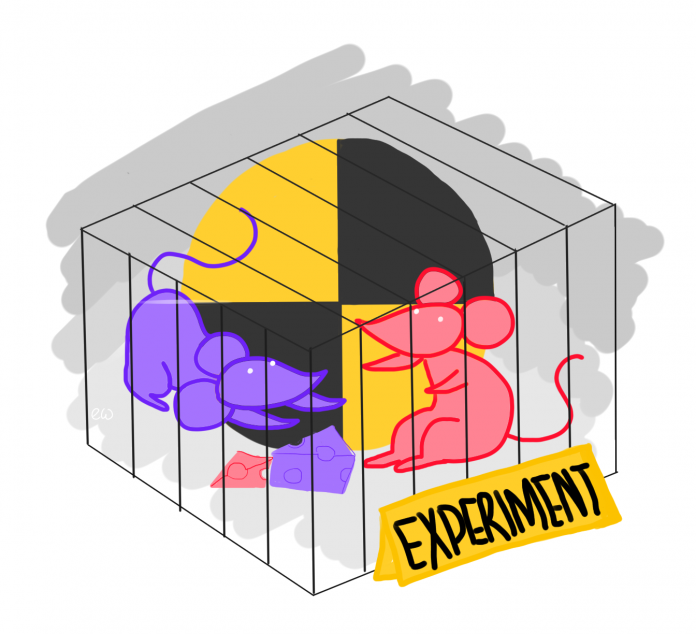
When you hear “animal experimentation,” are you conjuring images of sad animals suffering unspeakable horrors? Are they locked in tiny cages? Getting stabbed by huge needles?

If so, you’re missing a lot of the story. Through my personal experience working with animals in scientific research, I agree that performing research on animals is not something we should be thrilled about; however, it is not the terrifying horror show that some believe it to be.

Many people seem to oppose animal testing in part because they are picturing their own beloved cats and dogs being tortured in mysterious underground labs. On the contrary, the majority of animals used in research in Canada are mice (41%) and fish (32%). Cats and dogs combined only make up 0.7% of the animals used. I’m not arguing that the life of one animal is worth more than another, but this may be a comfort, at least on an emotional level.

Opponents of animal testing also seem to be concerned that scientists are going rogue, doing whatever they like with the animals on which they experiment. This is not the case. In fact, research on animals is one of the more highly regulated practices in science.

The Canadian Council on Animal Care (CCAC) releases guidelines and performs assessments of institutions doing research on animals to ensure the guidelines are being followed. These guidelines cover everything you’ve ever worried about and things you haven’t even thought of, from climate control to animal hypnosis.

Additionally, anyone who works with animals in a scientific capacity has to go through rigorous training, including courses on the ethics of using animals and the practical skills needed to perform procedures humanely.

Research on animals is only considered acceptable when it deepens basic understanding of biology, or when it has the potential to provide insight that could improve human or animal health. This means that research on animals is not performed as thoughtlessly as many believe it to be.

Another consideration when evaluating the necessity of animal testing is: what are the alternatives? This question is especially relevant in the area of drug testing. Before a new drug moves into human clinical trials, it has to be safe and effective when tested on animals. Even with this requirement, there have been issues with the safety of new drugs during and after human trials. Without preliminary testing on animals, these problems would only get worse.

If drug safety research using animals was banned, I foresee two possible outcomes: either potentially dangerous drugs would have to be tested on humans right off the bat, or no new drugs would get clinical trial approval due to safety fears. As a result, the world would miss out on life-changing new treatments for patients suffering from cancer, arthritis, chronic pain, and many other conditions. Both outcomes are undesirable and highlight the need for research using animals.

Animal testing is not ideal, but it is a necessary evil. Regulations and training imposed by the CCAC help to make the treatment of research animals as humane as possible and most scientists do their best to treat the animals with respect and dignity. With the exception of a handful of bad apples who are bound to be out there, the vast majority of scientists take no pleasure in experimenting on animals.

For all of these reasons, we should be informed and hold companies and institutions accountable for their treatment of research animals, instead of opposing animal testing outright. Animal experimentation is not something to be celebrated, but it is required to advance the fields of biology and medicine and, ultimately, to improve the lives of humans and animals alike.

Transit horror stories

0

By: Jessica Pickering, Grace Rose, Rebecca Zorg, Dan Hoy, Rebecca Chen, and Micaela Evans

Grace and The Old Lady Who Touched Her Hair

For some context, my hair is usually in braids or some sort of unique hairstyle. As a black woman, my hair can attract all sorts of attention, both wanted and unwanted, and in this case it was very much unwanted. I was sitting on a bus, minding my own business, when I felt a tugging on my braids. I turned around and some old lady was touching my hair. I nicely asked her to stop and her response was, “Oh, I didn’t think you’d feel it.” What kind of logic is that??? I don’t go up to you and start touching you without your consent. Please keep your hands to yourself!

-GR


Halloween on the 701

Back when I lived in Maple Ridge, I’d have to take the bus home late every Thursday night. Normally, this was an unpleasant experience anyway, but on Halloween it was even worse. A middle-aged woman and her teenage BFF (I’m serious, that’s what they called each other) got into a screaming match with another guy on the bus, who left. The woman then proceeded to start shamelessly drinking a one-litre bottle of Palm Bay right on the bus.

The 701 bus route also happens to pass by the most popular bar in the area: Roosters. Everyone who was kind of pre-drunk got off the bus at this stop, but in came the people who were really fucked up. I’m 99% sure someone puked. Worst. Bus ride. Ever.

-JP


Rear-Windowed

It was in the spring of 2010 and I had moved to Canada only a few months before for my first term at SFU, jumping into a new relationship (with my now-fiancé) at the same time. We were on our way to Coquitlam station on the 97, sitting at the front of the bus. As new couples often do, we shared a healthy dose of PDA — probably too much for other people’s liking, but we were newly in love. We didn’t care until the bus driver pulled into Coquitlam station and we pulled away from each other.

Only then did we notice the man in front of us, not older than mid-60s, staring right at us with this creepy smirk. We got up, he didn’t. That’s when we noticed what he was doing: masturbating on the bus while watching us.

That was the end of our PDA.

-RZ


The Party is Over

My girlfriend and I were on the Canada Line coming back home from a trip. A middle-aged lady dressed strictly in a bizarre ‘80s style stood up from her seat and started screaming at people that “the party is over” and it was time to “get back to work.” She repeated these lines, over and over, doing a half-hearted march up and down the Skytrain. I avoided eye contact because the last thing I wanted was to even understand what she was talking about. Eventually, she got off the train. I suppose her party time was over and she had to get back to work.

-DH


Transit Brawl

We were on our way to an escape room downtown when a German girl made her way toward us after being verbally and sexually harassed by a group of intoxicated boys. My friend turns to the group and asks them to calm down. Ironically, this does not calm them down. They stand up and advance toward us, chanting racial and gender slurs. We ask them to sit. The most unruly boy led the charge, bulldozing through our group like a hungry hippo, starting an unwarranted fist fight.

A cut hand, bruises, a possible concussion, and a pair of broken glasses later, we all push and shove out of the train where the police are running toward us. Somehow, two other men had joined the fray in an attempt to break up the fight. Unfortunately, the police pinned them down first, allowing the real perpetrators to get away. We ended up missing our booking, but got to escape in a whole other way. . .

-RC


Safety Concerns

My transit nightmare happened on the first day of class, as all great embarrassments do. I was riding the 135 (95 now) like I did every week for years, on my way to begin new classes.
The bus driver decided to slam their breaks to change lanes while on a large hill, and while it’s normally fairly safe to ride transit in a wheelchair, what that driver did was far from safe. Because some older buses have not made it so wheelchair users can safely ride backwards, the force of the slammed breaks combined with the bus angled downwards threw me from my forward-facing wheelchair. I landed on the floor of the bus near the bus pass machine, hurt, embarrassed, and upset.
Two broken ankles and a day in the hospital later, you could say my first day of classes didn’t go as planned.
The best part of this story? The driver blamed me for the accident, both while I was on the ground dazed and injured, and afterwards, when they continued to operate busses on the same route I had to use, and would make snide, condescending remarks whenever we unfortunately crossed paths. Thank you, TransLink, for another great instance of how dangerous the system can be to bodies considered outside the ‘norm.’

-ME


Stop Making Out Please

One time I was on a bus quite late and a couple got on. Now this bus was fairly empty, yet they chose to sit right in front of me. About five minutes later they proceeded to start making out in a very aggressive, loud, and sloppy manner. I tried to avoid looking at them but a) that’s pretty hard to do when they’re right there and b) it was so loud you kinda couldn’t tune it out. Yet that didn’t stop the woman from looking straight at me and asking, “The fuck do you want?” I want to get off this bus, lady. That’s what I want.

-GR


Worst Day of My Life

Back in December, I was working in Stanley Park. This transit trip was rough, but what made it worse on this day was the fact that I was at my parents’ house; a two-hour drive away.

Oh yeah, and there was a surprise snow storm.

It took me almost eight hours to get to work, between the West Coast Express not running, a police incident at a Skytrain station, and having to walk from Waterfront to the park while carrying a ten-pound bag because the bus wasn’t running. Did I mention that I got my period while waiting in line at the Commercial-Broadway platform for two hours? ‘Cause that happened.

-JP

SFU-based hockey analytics company acquires NHL client

0

For hockey teams looking to draft the next Connor McDavid, it can be a million-dollar decision. To quantify and decode the statistics, teams can now enlist the help of HockeyData Inc., an analytics company based out of SFU Harbour Centre.

HockeyData recently acquired its first National Hockey League (NHL) client. The company signed a contract with the Washington Capitals after reaching out to the team with their services.

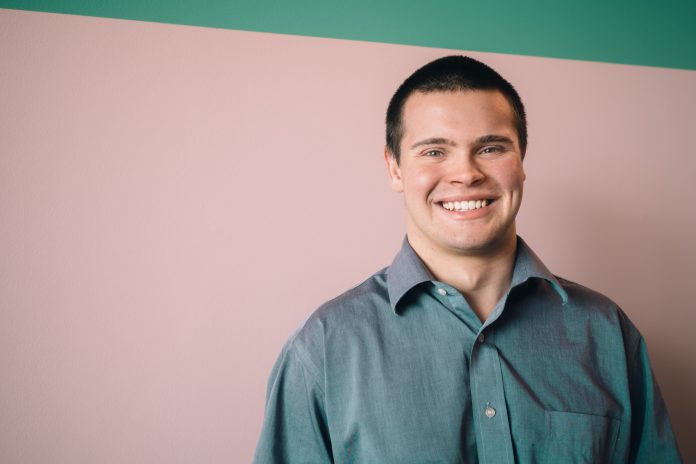
SFU Beedie School of Business student Cole Gawenda launched the company only one year ago with business partner Garret Hohl as a passion project.

“We realized there was no one providing analytics for leagues and players and teams below the NHL. [We] saw the hole and knew we would be able to fill it,” Gawenda said.

Since securing the contract with the Washington Capitals, the company has been utilizing the data to find the best way possible to help the team reach their goals.

HockeyData records statistics on hockey teams and players that can be used to better gauge a player’s impact on the game. The services provided by the company also give real-time stats to accurately measure players’ expected outcome in goals for and against, relative to ice time.

“With teams, the data provides them with an opportunity to improve players [and] to target players out of their organization,” explained Gawenda. “[We help players] develop themselves and their skills and how they play the game, and what opportunities and routes will work best for them and their career.”

The idea to open a hockey analytics company came after Gawenda started looking for ways to combine career opportunities and personal interests.

“I was always more interested in the stuff off the ice than [the stuff] on the ice, who was on the team, how the [general managers] went about their business, and I always looked at the stats,” he noted.

He and his business partner enlisted the help of one of their investors from CKM Sports Management Ltd. to provide business know-how, locate contacts, and acquire start-up funds. They also worked with venture connections at SFU to help get their idea off the ground and steer the start-up in the right direction.

HockeyData technology has the ability to track any game from any league, which is key for teams trying to figure out which player to draft into the NHL. “[We help] agents try and find the true worth of their client to comparable players to maximize their potential,” Gawenda said.

However, the founder said that the advantages of the tool don’t stop there. You can even use HockeyData to one-up your friends in your fantasy hockey league.

As Gawenda enters the fourth year of his degree, he said that the things he is learning in the Beedie program continue to apply to real world situations with his company. HockeyData was named at this year’s SFU Coast Capital Savings Venture Prize Forum and was also recently recognized by the Canadian Financing Forum.

Gawenda hopes that HockeyData will be able to create a better sport and game experience.

When asked for his advice to other student entrepreneurs, Gawenda said: “Find something you enjoy doing, so it doesn’t feel like work. Find something you love and be prepared to put in a lot of effort, because it’s not easy going from nothing.”

Having a bigger say in our learning would be sweet

0

“Pick a candy from the box,” said my teaching assistant (TA), as I walked into the first tutorial of a new semester.

Puzzled, I reached in and grabbed a Kit Kat, wondering what was the purpose of this activity. Once everybody had gotten a piece of candy, my TA sat back down.

“While I do want you to introduce yourself by saying your name and your major,” she said, “I also want you to answer a question based on the candy you picked. If you picked a Kit Kat, tell me what your favourite movie is. Smarties, tell me one place in the world you would like to travel to one day. Aero, tell me what one of your hobbies is.”

She showcased that creativity throughout the rest of the semester as well. She’d create different ‘stations’ for our tutorial with a variety of activities, from discussing relevant articles to cutting out magazine clippings that showcased society’s image of a perfect body. I never knew what would be waiting for us when I walked through that door, and I found myself participating in engaging discussions, getting to know my classmates, and actually enjoying myself in class.

As a student in my fourth year, I have had my fair share of great classes and not so great ones. There are many forums where students share negative class experiences on the Internet. There are memes about stress and confessions about failing. We share stories about how we BS’d another paper, how we cried and stressed out while studying for an exam, and how exhausted we are at the end of the semester. But what if it didn’t have to be that way?

If I had to pick one thing that many classes at SFU lack, it would be choice. When my TA had us introduce ourselves based on the candy we picked, it showed me from the outset that she valued our thoughts, our opinions, and at a most basic level, who we were as people.

Another aspect of our education that is lacking is the fact that too much emphasis is placed on theory and books. While I don’t deny the value of that knowledge, I often find myself wondering, “How is what I am learning applicable to real life?” As a communication student, many of the theories overlapped in my classes, and I’d roll my eyes whenever my professor brought up a slide on the importance of the public sphere or the Frankfurt School yet again.

University is about growth, and learning who you are as a person and as a student. It is an environment where we not only can learn from an instructor, but from ideas brought forward by each other. And when an education is given that takes into consideration the opinions of students, everybody benefits from that learning experience. I don’t think I’ll ever be able to look at Kit Kats the same way again.

Fining hate speech on social media is a slippery slope to censorship

0

Germany approved a new law this past week in which social media companies will be fined up to $53 million if they don’t remove hateful messages. Heiko Maas, Germany’s justice minister, argues that these fines will allow for a “free, open, and democratic society,” as reported by BBC News. But ironically, giving corporations an obligation to delete content leads us to a dangerous route of censorship, where freedom of content is infringed upon.

While eradicating harmful hate speech is a positive step in making the Internet a safer space for the common good, we have to ask if social media companies can be trusted to properly define what content is classified as hate speech on their platforms, particularly under the pressure this law generates.

With only 24 hours to delete illegal content and seven days to delete other material deemed inappropriate, social media companies would face pressure on a financial and temporal level to make the right calls and get the work done.

Bernhard Rohleder, Bitkom’s group manager, believes this pressure will lead to content that isn’t actually hate speech being removed. Sorting through billions of posts is “utterly impossible.” In other words, hasty decisions will be made, creating a slippery slope to unjust censorship.

In Canada, we follow the Canadian Human Rights Act that strictly prohibits any propaganda of hate speech or discrimination, while our Charter of Rights and Freedoms allows for freedom of media and press. This leaves for shaky ground when trying to ascertain whose rights come first when hate speech and freedom of speech butt heads, which makes taking down scrutinized posts on social media controversial at times.

Canada took a different approach from Germany with Section 13 a few years ago, in which users spreading hate speech via the Internet would be personally fined $10,000. However, this law has been highly contested. No one can seem to agree on whether the rights to human expression or the rights of those who feel they are targeted in speech should prevail. Section 13 was repealed in 2013.

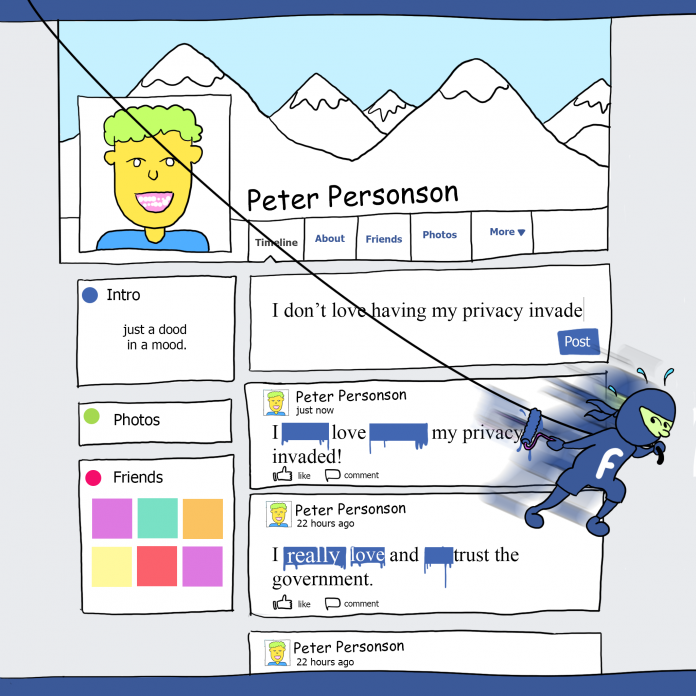
Twitter and Snapchat already have access to our valuable data and play a crucial role in news, information, and other media production. With Facebook preying on our emotions for advertising revenue, too, do we really want to give these companies reason to vet and manipulate our content any further?

The Internet historically has been grounds for non-regulation. To me, it appears as though governments who would draft these kinds of policies want to wipe their own hands clean of doing any hands-on work to help regulate the Internet themselves.

Instead of being more diligent about penalizing the users who spread such content, they choose to place the blame squarely in the laps of social media companies for not regulating content well enough.

With Brexit, the election of Trump, and other anti-immigrant and destructive movements that have taken shape in recent times, it is no wonder we want to challenge their influence in our media-scape. However, we have to be careful not to follow the leader in bending to the other side of the political horse-shoe, so to speak. Doing so risks allowing censorship of our online speech.

Action group probes SFU data on animals in research

1

A campus action group seeking data on the number of animals used for teaching, research, and testing at Simon Fraser University is speaking out after being told that the university will not release any records.  

The Wild Salmon Creative Action group, under the umbrella of the Simon Fraser Public Interest Research Group (SFPIRG), sent the request to the University Animal Care Committee in March. However, earlier this month, the group received the university’s decision that it is not required under the provincial Freedom of Information Act to create a public record of the data.

“I wasn’t entirely surprised. I wasn’t expecting the [University Animal Care Committee] to just hand over their records to me, but I guess the part I was surprised about was that I didn’t get anything back, not even a redacted response,” said Mia Nissen, who submitted the request for Wild Salmon Creative Action.

‘Not required to create a record’

In the decision obtained by The Peak, the university said that the database contains some of the information that was requested, but the data columns also contain “additional information” and the information pertaining to the request “would need to be extracted and tabulated from the other data in that column.”

“As a result, creating a responsive record would unreasonably interfere with the operations of the University,” the decision read. “Accordingly, in the circumstances of this case, the University is not required to create a record.”

Nissen asked that the data on the total number of animals used in research be broken down by species, category of invasiveness, and purpose of use.

In a statement to The Peak, Chris Kennedy, director of SFU Animal Care Services, explained that “SFU does not keep aggregate totals of the numbers of animals used in research as it fluctuates based on individual research programs over time.”

When presented with this information, Nissen was shocked that the university does not keep such data.

“To me, that just seems wrong,” she said.  

Taking action

The request came as part of the work done by the Wild Salmon Creative Action group, whose basic principles include a dedication to “the liberation of all beings.” According to Nissen, a group at Dalhousie University in Halifax was recently able to obtain a portion of the records on animals used in research from their institution.

“I think SFU’s kind of been under the radar in terms of their animal research, and with other universities like Dalhousie releasing some records, I just thought, well, maybe it’s time for SFU to step up and have some transparency around this issue,” Nissen said.

Nissen’s concerns around the number of animals used for teaching, research, and testing are two-fold: both on the level of institutional transparency and animal suffering.

“From our standpoint, Wild Salmon Creative Action would like to see the practice [of animals used in research] discontinued 100%. While we see animals used in research as an ethical issue, there are also very strong scientific arguments against animal experiments,” she said.

For the action group, obtaining the data held by the university is the first step to understanding the scope of the practice and the different uses for animals in research. Due to the fact that research done on animals varies in its level of invasiveness, Nissen would like to learn “what tests are being done and on what levels and [find out if] all of these studies [are] really necessary.”

“We’d like to learn more and possibly challenge the university once we have a better picture of what’s being done to these animals,” she said.  

Strict guidelines

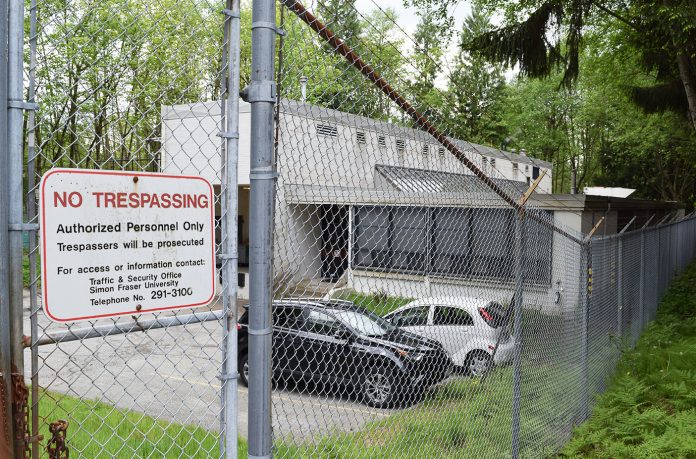
Kennedy confirmed to The Peak that the faculties at the university that use animals in research include health sciences, applied sciences, environment, arts and social sciences, and science. The types of animals used at the university include mice, rats, guinea pigs, finches, chickens, fish, and amphibians.

“The research programs associated with the faculties are wide-ranging, including immunology, genetics, behavioral, observational, medical, physiological, and wildlife studies among others,” he said.

When using animals in research, the university adheres to guidelines set out by the Canadian Council for Animal Care (CCAC) as well as university policies.

SFU does collect some data which must be reported to the CCAC. According to the latest report by the council, over 3.5 million animals were used in certified institutions for teaching, research, and testing purposes in 2015.

‘Contaminated data’

In the Freedom of Information request decision, the university noted that it did gather information on species, category of invasiveness, and purpose of use — though the latter employed different terms than the request by SFPIRG.

However, the data was mixed with other information and records were inaccessible prior to 2013 due to a technical problem.

“The database used by Animal Care Services is not set up to search and pull specific species data, category of invasiveness etc [sic] and would have required modification to the software as well as significant additional staff time and resources to do this,” Paul Hebbard, coordinator of Information and Privacy, told The Peak in a statement.

“Additionally, it’s important to point out that the database contains proprietary research information which is outside of and exempt from being publicly released,” Hebbard noted.

“I think the important point is that there is information that can be released to the public, but they’re saying data cannot be manipulated in that way,” Nissen said of the university’s decision. “There [must] be someone who can extract this data.”

Wild Salmon Creative Action has 30 days from receiving the decision to make an appeal, which the group is preparing to do, according to Nissen.