Home Blog Page 685

Sex ed. 101

0

Sex education is a topic with a lot of different responses. Some people got great sex ed. in high school. Some, like me, got six teenage boys who had to give a group presentation on the subject and ended up giggling through most of it. Hell, some people had their parents decide that they didn’t ‘need’ sex ed and opted their kid out of it. For those that still don’t have the best knowledge, I’ve prepared a quick crash course on the subject.


Practice safe sex

When people hear the term safe sex, it might conjure images of a heterosexual couple trying to avoid an unplanned pregnancy. While birth control is a part of safe sex, it’s more about keeping you and your partner healthy no matter what type of sex you’re having.

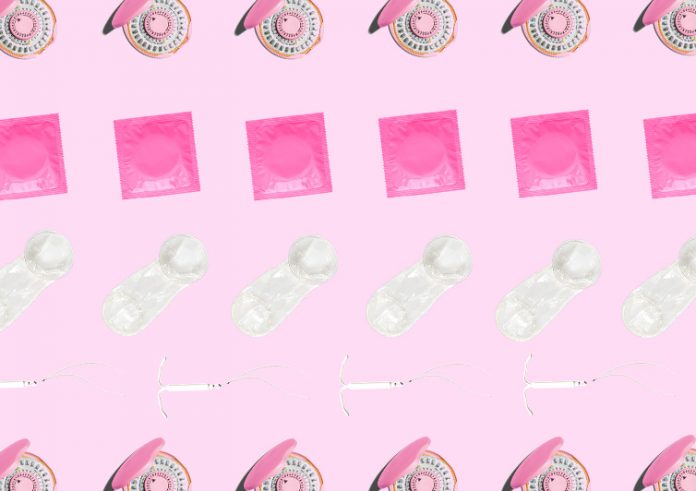
External (“male”) condoms — designed to fit over a penis, external condoms are great protection for oral, vaginal, and anal sex. Both latex condoms and polyurethane condoms (for those with latex allergies) protect against pregnancy and sexually transmitted infections (STIs). Natural condoms are made with animal membrane and can also be used to prevent pregnancy but be warned, they do not stop the spread of STIs. Both the Women’s Centre and Out on Campus have both latex and latex free condoms.

Other things of which to be aware  

  • External condoms are around 85–98% effective as birth control. Be sure to follow all instructions exactly to increase effectiveness.
  • Certain things can cause condoms to break like having two condoms in use at the same time or certain types of lubricants (like oil-based lubricants). Do some research to make sure what you’re using won’t damage the condom.

Internal (“female”) condoms — these condoms are designed to go inside a vagina. Like external condoms, they help prevent pregnancy and STIs. They’re one size fits all, and a condom that people with vaginas can choose to use themselves. It is much more expensive than an external condom, but places like Out on Campus, the Women’s Centre, and Options for Sexual Health (Opt) clinics do give them out for free.

Other things to note:

  • They can be a little difficult to insert properly so it might involve some practice.
  • Be careful when removing it as the contents (semen) may spill out.
  • Effectiveness ranges from 79–95% in preventing pregnancy. Proper usage increases effectiveness.

Dental dams — are sheets of latex that can be used to reduce the risk of STIs during oral sex. They can be used for oral/vaginal or oral/anal sex. While they do significantly help protect against STIs, nothing can completely take that risk away. Interested in learning how to use one? Check out Opt’s website or ask a staff member at Out on Campus or the Women’s Centre.

Gloves — while washing your hands can do a great job of reducing the risk of STIs during manual sex (or hand play as some call it), gloves can help if you might not be able to get to a sink right away. Some people might also like the feel of gloves better, especially if hands aren’t as soft as you’d like them to be.

Birth control — some methods only prevent pregnancy.

  • Pills have a 92–99.7% chance of preventing pregnancy. Make sure to take it at the same time of day every day and follow the instructions, especially on what to do if you forget a pill. Be aware of the side effects and consult a doctor before you stop taking them.
  • Intrauterine Devices (IUDs) prevent between 99.2–99.9% of pregnancies. There are different types of IUDs, so do some research and ask a doctor for advice before you get one. Again, know the warning signs of possible complications and see a doctor if you have any concerns.
  • NuvaRing is a small plastic ring that goes in the vagina and releases similar hormones as some birth control pills to prevent pregnancy. They are 92–99.7% effective in preventing pregnancy. They have similar side effects as pills. Follow the instructions on proper use.
  • There are a lot of different ways to protect against pregnancy. Choose an option and make sure it’s right for you and your partner. You can check the effectiveness of different methods here.


Know the symptoms of STIs

The risk of STIs can be one of the scarier aspects of sex, especially if you don’t know the symptoms. What’s scarier is some people and some STIs don’t have symptoms. That’s why it’s so important to get tested, especially if you’ve been with a new partner whose sexual health history you may not be familiar with. You can get tested and receive any needed treatment for STIs at SFU health and counselling in Vancouver and Burnaby.

Some common STI symptoms, provided straight from Opt’s website, include:

  • Sores or blisters on the genitals on or around the anus or mouth
  • Irregular growths (warts) in genital area
  • Vaginal or penile discharge (may be unusual-smelling or discoloured)
  • Genital itching
  • Pain with urination or having a bowel movement
  • Pain with intercourse
  • Vaginal bleeding or spotting after sexual intercourse
  • Lower abdominal pain
  • Pain or swelling of glands in groin area
  • Rash

There are a lot of complications that can occur if you don’t get tested, so be sure to see a doctor sooner rather than later.


Have more questions?

Obviously there’s a lot more to sex ed. than this but, like I said, this is just a brief introduction to the subject. If you want to learn more about sex ed. or have questions about the topics covered, Out on Campus and the Women’s Centre can always provide you with information and resources. You can also contact Opt via email or phone call.

Ansel Elgort stars as a music-loving wheelman in this summer must-see

0
(Image courtesy of Tri Star Pictures)

It’s all about the music. Baby (Ansel Elgort) pulls up to a bank, three robbers brandishing machine guns hop out, and Baby hits play. While waiting for them to grab the cash, he jams out to “Bellbottoms” by the Jon Spencer Blues Explosion. He’s having so much fun you almost forget that he’s waiting to flee a crime scene. The robbers hop back into the car and Baby hits the gas. The right song is all he needs to stay focused and be the best at what he does: drive. That opening car chase scene contains all of the requisite moves that we have come to expect: hand brake maneuvers, dodging cross traffic, and escaping the police — but it also contains some welcome surprises.

     Baby surprises his fellow con artists with his talent, and also with his constant attachment to his iPod. Baby has “different iPods for different days and moods,” he tells Debora (Lily James) and his musical tastes sure vary. From R&B, to classic rock, to funk and blues, he knows a good tune when he hears one. The other con artists aren’t so sure they can trust him when he is always listening to music and doesn’t seem to be listening as they plan their next heist. As their mastermind, Doc (Kevin Spacey), explains, Baby was in a car accident as a child and has tinnitus, so he has to listen to music to drown out the noises in his head. It helps him focus.

     At another heist, the robbers delay in getting out of the vehicle so Baby has to tell them to wait for him to start the song over. Everything is connected to the music. The film’s title is taken from a Simon and Garfunkel song that seems to have been the initial inspiration for the film. The song however, doesn’t play until the final credits.

     A ray of light comes into Baby’s bleak criminal life when he meets Debora, a waitress at a diner. Even though he’s a long way from The Fault in Our Stars, Elgort still knows how to put on the charm and make the romance a highlight of this film. That being said, their romance still relies on a few clichés.

     Among all the car chases and action-packed heists, one of the best scenes is actually Baby walking down the street. He’s going to get coffee for Doc and the team, but with Bob & Earl’s “Harlem Shuffle” in his ears, he skips and glides along the sidewalk with the background matching his mood. Just as the song hits a glorious saxophone solo, he happens to be in front of a music store, and even the graffiti matches his mood and the song’s lyrics. It’s a very clever scene that exudes the confidence and swagger of this riveting film.  

     With a killer soundtrack, innovative car chase scenes, and thrilling heists, Baby Driver has everything you want in a summer blockbuster. As Doc says, “He’s a good kid, and a devil behind the wheel. What the hell else more do you need to know?”

Dancing on the Edge is back with the best of contemporary dance

0
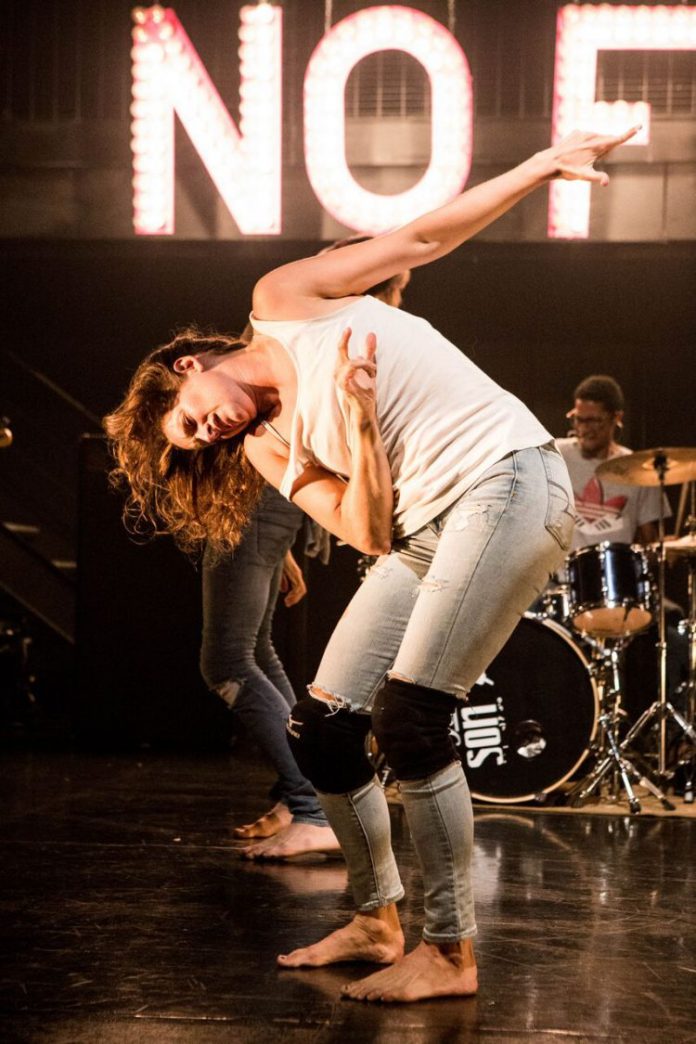
Pictured, Helen Simard's No Fun. (Photo courtesy of Dancing on the Edge)

Always celebrating the best in local and Canadian contemporary dance, Dancing on the Edge returns for a 29th year to present a unique program of innovative works from near and far. The festival predominantly features Canadian artists, with a special presentation from the Beijing Modern Dance Company to open the festival. With so much on the program, it may be hard to know which shows to check out. This list provides just a taste of what the festival has to offer, and we hope it helps find the perfect show for you.     

Best show for those who like variety: Edge 1–7 by various artists

The Edge mixed bill programs are the heart and soul of the festival and feature two to three pieces of dance at once. These grab bags of contemporary dance often feature hidden gems and always provide a varied mix of styles. For example, Edge 1 features an intense duet by Tedd Robinson, a solo about her identity as an Asian woman by Yvonne Ng, and a physical interpretation of the meeting of a stick insect and a scorpion by Chick Snipper.  

Best show for those looking for international dance: Oath-Midnight Rain by Beijing Modern Dance Company

This show is said to be an exploration of Buddhist Samsara (the cycle of death and rebirth) and features five characters: a flower, grass, a bird, an insect, and a fish. The Beijing Modern Dance Company, formed in 1995, is relatively young but has toured extensively to many international dance festivals. The company is known for their melding traditional and modern dance movements and stunning sets and costumes. This is sure to be unlike anything we’ve seen in Vancouver before.  

Best show for those who like to party: NO FUN by Helen Simard

Contrary to what the title might suggest, this show is sure to be a blast — even though the description warns, “This show contains coarse language, bad attitudes, awkward silences, blinding lights, wailing guitars, underpants, and absolutely NO FUN.” Inspired by the music and movement of Iggy Pop, how could it not be fun? Featuring three dancers and four musicians, this show is a loud, hard-hitting force of nature that will shatter expectations and take you on an interdisciplinary journey that rocks.    

Best show for those who love the outdoors: Thunderbird Sharing Ceremony: a community celebration of Coast Salish Culture by Aeriosa Dance/Spakwus Slulem 

Set in the heart of the Stanley Park forest, this is a collaborative performance between Aeriosa Dance and Spakwus Slulem/Eagle Song. The ceremony by local Squamish, Musqueam, and Tsleil-Waututh artists as well as Indigenous artists from elsewhere will be spiritually moving, and Aeriosa’s aerial dancers will captivate with their gravity defying choreography. Ancient forests and traditions combine with contemporary dance and intercultural collaboration to create this unique spectacle.

Best show for film lovers: EDGE Films: Best of F-O-R-M

This special one-night-only event is a screening of selected international, Canadian, and local films from the Festival of Recorded Movement. F-O-R-M, which took place in June at SFU Woodward’s and featured the on-screen movement of athletes, dancers, and other movement practitioners who have used film to creatively showcase their own form of movement. Over two days of screenings, the festival presented 32 films from 11 countries. This Dancing on the Edge screening will be a selection of the best of those films.

Dancing on the Edge is presented from July 6 to 15 at various venues including the Firehall Arts Centre, Stanley Park, and SFU Woodward’s World Music Studio. For more information, visit dancingontheedge.org. 

Mary Poppins lands in Malkin Bowl this summer

0
(Photo courtesy of Theatre Under the Stars)

Mary Poppins is tart, outspoken, and opinionated. Ranae Miller is a bit shy and quiet. “This is a character that’s the furthest from who I am that I’ve played,” Miller told The Peak. She’s enjoying embodying this strong-willed woman while bringing a bit of herself to the character at the same time. “She’s a little sassy, but still kind,” explained Miller. “She’s there to do a job and she has a lot of love to offer. She has a lot going for her.” The story of Mary Poppins also has a lot going for it. This musical is full of catchy songs, endearing characters, and a heartwarming message about the power of family.

     Miller explained that this production at Theatre Under the Stars (TUTS) has a focus on the story of the Banks family that we get a glimpse into. They need a little bit of help, and Poppins comes along at just the right time to work her magic. “Everyone has their own problems and no family is perfect,” said Miller. “We can relate to the Banks and know that you can get through anything with a family bond.”  

     “It’s definitely a story I grew up with; it’s a story everyone is so familiar with. I’m lucky to play such an iconic part,” said Miller. This is her TUTS debut, but she has plenty of experience with many local theatre companies including Gateway, Royal City Musical Theatre, Exit 22, and Fighting Chance Productions. Miller received an Ovation Award for Outstanding Newcomer in 2011.  

     Miller said she is fortunate to be playing alongside great scene partners, and she is enjoying working with Nolen Dubuc and Lola Marshall who play the Banks’ kids Michael and Jane. “I love kids, so it’s great that I get to play with them in rehearsal.”

     It’s very difficult to choose a favourite song from the collection of catchy numbers, but Miller said she really enjoys “Supercalifragilisticexpialidocious.” “It’s a little different than in the movie, and has crazy choreography and costumes,” said Miller. She loves the colourful exuberance of this scene, where the audience gets to see the oddities and quirkiness of the characters. The song “Jolly Holiday” is another very fun scene featuring a “surreal made-up world of pastel colours,” as Miller described it.

     Of course, the eternally catchy “A Spoonful of Sugar” and “Let’s Go Fly a Kite” will be crowd pleasers as well. If all this wasn’t enough to get you excited about the show, Olivia the dog is sure to steal the spotlight as Willoughby, the neighbour’s spoiled pooch.

     “People will take away from this a thrilling experience,” enthused Miller. The magical Malkin Bowl will be a perfect setting for this inspiring story, as Poppins swoops in to teach us all a thing or two about family, imagination, and having fun while striving to be practically perfect in every way.

Mary Poppins is presented in repertory with The Drowsy Chaperone by Theatre Under the Stars at Malkin Bowl from July 7 to August 19. For more information, visit tuts.ca.  


‘Implied consent’ is not consent at all

0

A few weeks ago, a friend and I were watching a film that focused on a teenage, heterosexual, interracial romance. At one point, the story indicated that the two leads were going to have sex. The lights were low; some random candles were lit; there were thinly veiled attempts at bedroom eyes between two 16-year-olds who probably don’t even know how to properly have sex.

Regardless, we knew it was going to happen. Sure enough, the guy reached over while her back was to him, he slowly unzipped her dress, and he started kissing her back before the scene cut to black, before opening on the two people in bed, implicitly after the fact.

As I was sitting there, I mumbled under my breath, “Wait. He didn’t ask for consent.” My friend laughed a little, “You don’t miss anything, do you?” I chuckled and let it go for the moment, but I couldn’t help but keep that moment in my head.

After the film, we were having a discussion about the movie, and I again brought up that lack of consent. My friend simply said, “Well, you know, it was, like, implied. She was, like, in the mood, and you know you don’t want to ruin the moment. They both were ready to go, so it’s not that big of a deal.”

At that moment, my inner alarm bells started really going off. That kind of thinking is not OK.

The notion of implied consent is built upon the idea that circumstantial evidence is an adequate main source of information for your actions. Implied consent would indicate that if someone looks at you with a ‘come hither’ look — or, rather, what you interpret to be a ‘come hither’ look — then it is an invitation to physically engage with them.

This thinking is the cousin of  “but she was asking for it . . .” (For the record, I would like to acknowledge that sexual assault is no respecter of gender identity. However, statistics would show that female-identified individuals are more directly affected).

Both embody a logic that attempts to justify certain behaviours, and often forces the survivor to bear the burden of blame for them. Just because you think that it’s OK to touch someone or kiss them or do that thing that you like, it does not mean that the other person feels the same way. To put it simply: no.

While this idea of ‘implication’ is often referenced within the context of sexual encounters, it frequently appears in any sort of physical interaction between people, and the inclination to just accept it must be critically assessed and dismantled. There’s nothing wrong with asking a person for permission before you do something to them or with them.  

If you’re concerned about ruining the mood, don’t be. It is more important that both individuals are comfortable and happy than it is to be worried about ruining the mood. And to be honest, if you’re concerned about ruining the mood by asking for consent, it probably isn’t that great of a moment, and you probably aren’t trying hard enough.

Explicit consent is the only form of consent that is OK. Unless they have said ‘yes,’ the answer is ‘no.’ Do not do anything to or with anyone without hearing them give explicit permission. If you want to engage in a sexual interaction with someone, you need to ask them if that’s OK. Even if the contact isn’t sexual in nature, ask. If you want to greet someone or say ‘goodbye’ with a hug, ask. If you want to sit close to someone, ask. If you want to hold your partner’s hand as you walk down the street, ask.

There’s nothing wrong with asking someone if you can do something. Asking demonstrates that you respect them as individuals, and that you want to ensure that they feel safe, heard, and loved.

And that is really the hottest thing of all.

The sex ed. drinking game

0


Sure, you can make lemonade when life gives you lemons, but what about those situations that are so bad that lemons, sugar, and ice cubes don’t cut it? That’s when you spike your lemonade and make up a game about it, that’s what. One of those situations is sex ed. classes — a rite of passage for every high schooler that, despite its importance, often ends up being inadequate, misleading, uncomfortable, and shameful for some. Here’s how to turn that situation upside down!

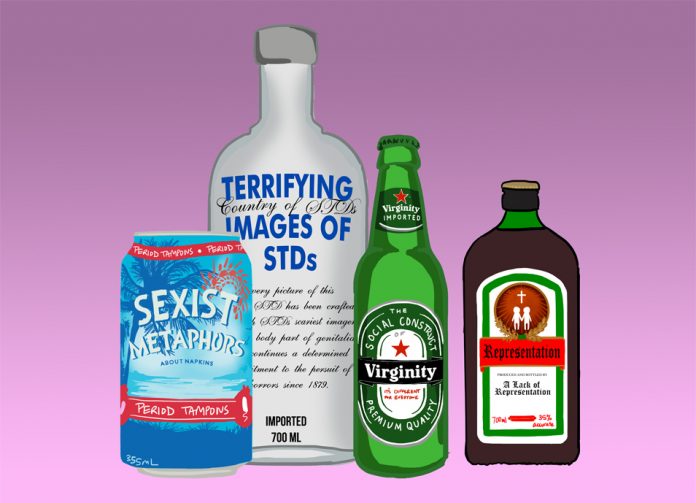
  • You’re going to want to start drinking if your teacher starts to set up a PowerPoint, because no PowerPoint in the history of PowerPoints has been good and this will definitely not be the exception. To be honest, sex ed. class as a rule probably warrants pre-drinking, but it’s too late for that now. We’ve already begun. Once the PowerPoint has started, every stock photo of groups of smiling teenagers will be worth a shot. Every funky transition between slides inserted to ease the tension also warrants a shot.
  • Have a drink if and when the teacher separates the boys from the girls for the lesson and the closeted queer kid in the group starts to sweat buckets and look around nervously. Trust me, they deserve one for the heteronormative shit they’re about to put up with.
  • Take a shot whenever somebody giggles at the word ‘vagina’ or ‘penis.’ Every inappropriate joke about a couple who have been holding hands for two weeks will also be worth a shot.
  • You drink until you forget the horrifying images of genitalia affected by STDs that will be shown to you.
  • Whenever your teacher blushes, stutters, or looks like they want to die because they are unprepared, unqualified, and uncomfortable teaching the class, give them a shot.
    You’re going to want (and need) to take two shots if the teacher uses a horrifying metaphor to illustrate a woman decreasing in value following sex (i.e. crumpled pieces of paper, a flower that everyone in class stomped on . . .) If that teacher also insists that inserting a tampon will “take your virginity,” you’re going to want to take another shot and reassure the thirteen year-old sitting next to you that not only is this untrue, but virginity is a social construct detached from one’s worth as a human being that represents different things for everyone.
  • Take two shots whenever somebody asks a question that the teacher then tells them to ask their parents. Double that if the question regards LGBTQ+ issues.
  • When one kid starts asking weirdly specific questions that are clearly relating back to some porn he’d watched on his parents’ computer yesterday, take a shot.
  • Each of the following euphemisms for male genitalia is worth one shot:
    “Manhood”
    “Tenderness”
    “Package”
    “Weiner”
    “Pole”
    “Member”
  • If a religious figure is mentioned in a class that’s supposed to be science-based, secular, and factual, take three shots.
  • If the teacher skips over showing the class how to use a condom, take a shot.  If the teacher shows the class how to use a traditional ‘male’ condom but not an interior ‘female’ condom, take a shot, too.
  • If the clit is mentioned, douse yourself in vodka instead of drinking it and light yourself on fire. Don’t worry about it, it’ll never happen.

Mating habits of the student

0


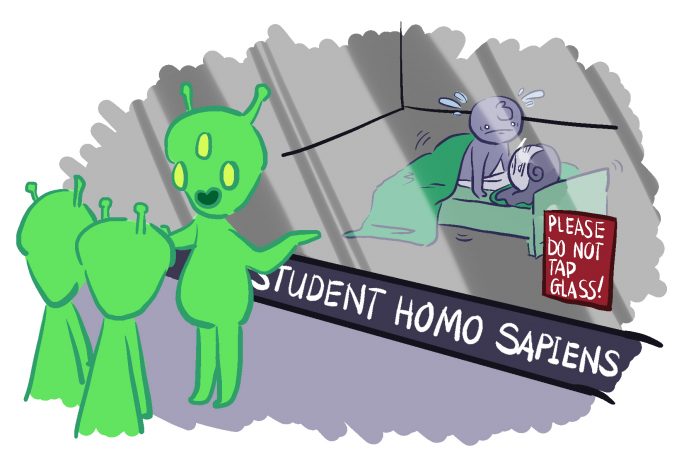
By far, the most interesting mating behaviour exhibited in the animal kingdom is that of the Student homo sapiens. Student homo sapiens are considered unique due to the many limitations and restrictions that would normally prevent them from participating in the typical mating behaviour of the rest of their species. What makes the Student so intriguing is that despite facing more limitations, they engage in mating behaviour far more often. These restrictions — and the ways in which they have adapted to deal with them — are fascinating.

Some of the most prominent ones include:

Lack of monetary assets

Since a Student generally has a negative net monthly income, this prevents them from engaging in what humans refer to as ‘dates.’ On these ‘dates,’ a male of the species typically flaunts his bank account in an attempt to impress a female with the tantalizing size of his wallet. Unfortunately, as the Student has the smallest wallet in the animal kingdom, this method of impressing females is not available to males. Thus, they must attempt other methods. This restriction acts as one of the primary motivations for development of the mating app Tinder.

Absence of any real personality

Upon leaving high school and entering university, many Students realize that although they believed they had a personality, they in fact did not. They eventually realize that the personality they thought they had was either fictional, idiotic, or what students often refer to as ‘basic.’ Coming to this realization is what results in university often being the defining years in the life of a Homo sapien. It also results in the Student attempting to navigate the world without any discernible personality at all for long stretches of time.

This makes the process of mating even more difficult, as without money, one would usually impress the female of the species with one’s unique and interesting personality. Many males, when forced to impress a female with his personality instead of his wallet, grow confused. As the crucial quality of a wallet is its size, males often generalize this to other properties of their character. In the absence of both a sizeable wallet and a unique or interesting personality, the male instead makes the mistake of attempting to impress the females with the size of their personality by speaking very loudly and aggressively in hopes of making his opinions known. This behaviour, though common among males, is particularly ineffective.

Complete lack of sexual prowess

Males of the species often wonder why it is that the females of the species tend to mate with males much older than themselves. The answer, though glaringly obvious, is often missed by the male students. Although they don’t like to admit it, the reason is that they suck at sex. The root of this problem stems from the male’s desire to believe in his own sexual adequacy outweighing his desire to actually be good at sex. This phenomenon is further exasperated by females entirely enabling this delusion to be held by males.

Commonly after 30 to 40 seconds of awkward apologies, sweat, and embarrassing noises created by the repeated thrusting of slimy naked flesh, the female will remain not only unsatisfied, but thoroughly unaroused. On these occasions, the females often engage in a series of vocal productions and bodily movements to indicate to the male that she has been satisfied beyond belief. Although this is clearly and undeniably not the case, the male is easily convinced.

Despite never encountering a real orgasm in the wild, the male somehow manages to convince himself of his ability to tell the difference between a real and a simulated orgasm. This juxtaposition between belief and reality was observed when a female of the species refused to produce even a simulated orgasm. The male did not notice.

Tinder

Perhaps the most effective evolutionary adaptation developed by the Student is the use of the dating app Tinder. Tinder allows students who possess no money, no personality, and no sexual prowess to engage in mating behaviour, and at a rate greater than ever before. By forcing possible mates to judge you solely on your physical appearance, Tinder is the perfect solution for students who have no other means of impressing members of the opposite sex.


How to have quality period sex

0


Back in the day, when you were a wee and innocent child, you had no understanding of what your vagina was — and what a cunt she would become. But then you got older, and the horror began. Your new acne, body hair, and breasts were all terrifying in their own right, but you quickly learned all of that was child’s play. You could handle boobs. What were boobs going to do to you, grow? Ha! No way, you shitty titties, get back in your lacy cotton prison.  

No, none of the strange ass hairs you grew ever bothered you either. (In fact, you sort of liked them sometimes.) Puberty would’ve been a breeze for you . . . if there hadn’t been so much blood. Your childhood was like a sentence: completely finished when the period came.

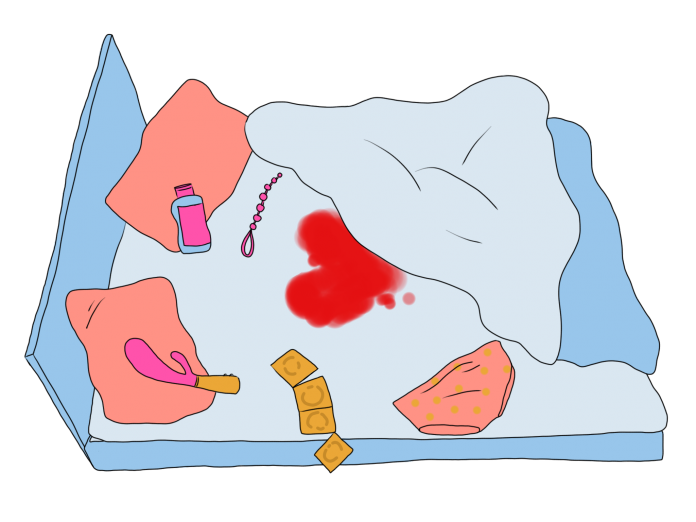
You have managed to do some growing since your first period, and now you’re some sort of an adult or something — learning about life and touching genitals whenever you can, as adults do. But, as you’ve learned, your insides tend to become your outsides one a month, and you’re worried that might be an issue if someone else is trying to put their outsides in your inside . . . and then outside . . . and then inside. But listen to me, sweetcake, your raspberry filling isn’t an issue — dessert is always delicious. Plus, having orgasms on your period ends the horror show faster, so you really are just wasting time if you haven’t got to screwing already. If you’re not sure how to, here are a few tips on how to get down and quite clean, actually.

1) Get your designated sex towel

Find that one special dark towel of yours, and let her be the magic carpet you ride. This will soak up any blood and prevent you from staining your precious Little Mermaid sheets.

2) If you’re going to make fruit salad, prepare your bananas

To those who are fans of putting bananas in their fruit salads, make sure you slap some protection on that sweet nana, because period sex has a higher STD risk! Condoms will also prevent your fruit salad from getting covered in tomato juice. If you do prefer Bloody Marys, though, make sure that both you and Mary get tested.

3) Succumb to gravity

Niagara Falls and your vagina have two things in common — they are both gushing huge amounts of liquids, and clearly should be declared wonders of the world. But since you can’t change either of those things, you need to keep that in mind if you’re going to be riding when you’re riding the red wave. Blood is coming out of you and missionary is a great position. Actually, any position that keeps you near your sacrificial blood towel is good. If you do want to get messy, though, don’t hold back. Ms. Frizzle would be proud.

4) Put a small bag in your vagina to collect blood

Menstrual cups are magic. You could get down on a white couch and leave it as beautiful as it was before. Although there’s always the trouble of the ass-sweat. That leaves permanent stains.

5) Try out the shower

Clean while you fuck and fuck while you clean. The one stop shop.

Q and Ace

0

 Yes, an entire section all about asexuals! Y’know, the ‘A’ in the expanded acronym of LGBTQIAP+? (No, it doesn’t fucking stand for ‘ally.’ Allies, we appreciate you, but please.) Though oft forgotten and neglected by this sex-crazed world, asexuals make up approximately 1% of the world’s population. We are known to love cake of any flavour, black rings, and apparently Pacific Rim (2013), for some reason. Being of a little-known orientation, we tend to get a lot of questions . . . and, well, not all of them are very respectful. So here are some totally legit answers to foolish questions that make us want to punch a kaiju. Aces, take notes!

Q: Wait, you’re asexual? So does that mean you reproduce through, like, parthenogenesis or something?

A: Dude, I’m a history major. What the hell does “reproduce” mean?

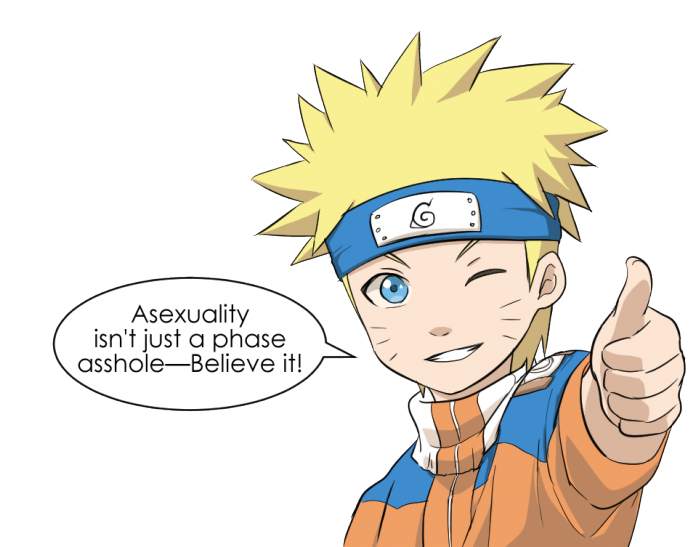
Q: Is this “asexuality” thing just a phase?

A: Yeah, sure, just like my Harry Potter phase and my anime phase — wait a second, I haven’t outgrown those either. Believe it!

Q: Isn’t an “ace” a playing card?

A: So is a joker, but that hasn’t stopped you from existing either.

Q: Isn’t this just the same thing as celibacy?

A: I’ve heard celibacy described as being interested in looking at the menu, but restraining from ordering off it. As for asexuals, well, we’ve seen the menu, but . . . ehhh, nothing looks very appetizing. We’ll pass, thanks.

Q: Have you seen a doctor?

A: Yeah, I don’t think they’re hiding anywhere? If you haven’t seen one then I recommend an optometrist.

Q: Are you broken?

A: Yes, so can you please pass the duct tape and cotton balls? I think my ears are damaged since I keep hearing this irritating noise that sounds distinctly like a voice asking me a really rude question — or maybe it’s just a mosquito. But then again, I seem to recall mosquitoes being far less annoying.

Q: What do you do all night?

A: It depends. I tend to alternate between sleeping, watching YouTube, and re-playing Pokémon SoulSilver for the billionth time. Those goshdarn Team Rocket guys just don’t know when to quit! They’re so invasive, yet surprisingly irrelevant! Kind of like this question, now that I think about it . . .

Q: You just haven’t met the right person yet!

A: Well, your face just hasn’t met the right hammer yet!

(Seriously though, don’t ever say this to anyone unless you really do want your face to meet the right hammer. It’ll be a smashing experience, that’s for sure.)

Q: So you’ve never . . . uhhh . . .

A: Listen, pal, if you’re hesitating to ask me this based on the fact it may be uncomfortable and extremely personal, then don’t.

OK, fine, the answer is ‘no,’ I have never been arrested for murder. Wait, that was what you were going to ask me, right . . ?

Bonus:

Q: Hi, I legitimately have never heard of or don’t know much about asexuality and would like to learn more! Where would you recommend I look to educate myself on this topic?

A: Great, I’m glad you asked! The Asexuality Visibility and Education Network is a great place to start. The Huffington Post also has a really great six-part series on asexuality called “Asexuality: The ‘X’ In A Sexual World” if you want a good source outside the ace community. You can find lots through doing a simple Google search or even by asking an ace person questions that they feel comfortable answering — though make sure to avoid the ones above unless you want similarly snarky responses.

Who am I?

0

By Caroline Doerksen, Cecile Favron, Ana Maria Mejia Morales, Rebecca P., Jessica Pickering, and Nathan Ross

We are the resistance

In a world where queer youth are rendered invisible.
We resist.
“Teenage youth and their teenage angst,” we hear someone scoff at us as we walk to the coffee shop after our queer youth activist meeting.
We have been told that our tall rainbow mohawks, spiked collars, tattooed skin, and the barbells hanging from our ears, noses, and tongues scare people.

But, in a world that tries to subdue us, being visible, being different, and not adhering to normative standards of beauty becomes a part of who we are.
We have been told that our expression is “too extreme” and that we would be listened to if we “toned it down,” “looked normal,” or “tried to fit in.”
We are not interested in toning anything down for the appeal of the mainstream.
We are not interested in looking “normal,” because we are not.
We are not trying to fit in, we are trying to stand out.
My dark maroon lips, half-shaved head, long ombré fuchsia hair, thick false eyelashes, tattoos, and piercings is how I have shown my queer femme gender expression.
We come in all genders, sexual orientations, expressions, and identities.
We are the resistance. – CD


My non-binary identity is for me

The subject of my gender identity has essentially been a question I had no idea I was asking my whole life.

When you’re younger, you don’t know what gender dysphoria is, what body dysmorphia is. You don’t know why going clothes shopping gives you a sickly, mortified feeling. You don’t know why you constantly feel like a gorilla stuffed in a tutu, trying to pass itself off as a “real girl.” You don’t know why you can’t seem to squeeze yourself into the narrow, rigid boundaries of socially acceptable gender expression, like you’re trying to fit into a pair of jeans three sizes too small.

There were several factors that complicated my examination of my gender identity. For one thing, the dysphoria and dysmorphia was compounded by mental illness — or maybe it was the other way around. Anxiety would feed my problems with body image, my problems with body image would feed my anxiety, all of which would fuel my depression and dissociative episodes. For another, it was never a matter of going from one binary gender to another, which was my loose understanding of what the trans identity meant when I was in my late teens. I would be no happier as a male-presenting person, than I was as a female-presenting person. It felt too much like a cage on either end.

When I first started researching non-binary identities, it felt almost too on the nose. I’d grown up writing characters in stories who either switched from one gender to another, or had no gender at all, without realizing that was a possibility outside the realms of fiction. Most representations of non-binary people I was met with were thin, androgynous models, so for a while I was convinced that the non-binary identity couldn’t possibly represent my experience.

Even so, with friends online I started asking to be referred to by “they/them” pronouns. I found others who identified as “femme” non-binary, people like me who didn’t fit the androgynous mould. What I discovered at the end of the day was that my identity as a non-binary individual had nothing to do with what I looked like. I do still like to dress more masculine on occasion, but if anything, coming to terms with myself as a non-binary individual made me more comfortable dressing in a feminine way. I used to hate wearing dresses when I was younger because I felt like I was lying in some way, like I was trying to be someone I wasn’t. Now, I don’t often find myself feeling the sickly wash of dysphoria while trying on a skirt in a clothing store.

I don’t consider myself trans, but that’s a personal choice; many non-binary people I know do. I’m not even completely “out;” most people know me by “she/her” pronouns, and think of me as a cisgender woman. I don’t mind so much. At the end of the day, my non-binary identity is for me to understand and explore, and makes me feel far more comfortable in the skin I’m in. – RP


Retiring from gender

Gender is never really something I was comfortable with. I was born as the only grandson on both sides of the family, and so there was a lot of pressure to be the man leading into the next generation. That really only set the stage for a wealth of disappointment and a gradual resentment of having to be or perform anything that was explicitly male. I never really put much thought into it until I began to look at gender critically while taking gender, sexuality, and women’s studies courses at SFU, eventually turning it into an extended minor. Really, the biggest thing for me was reading Gender Failure by Rae Spoon and Ivan Coyote. When Coyote talks about retiring from gender, I thought, “An opt-out option would be much obliged, thanks.”

I don’t necessarily change much about myself or get too attached to any pronoun or grouping, because I think it’s important that anyone can decide what gender means to them and display that in any fashion. It’s led to all kinds of fun questions like “do ‘theys’ marry?” which is a pretty neat way for cis folks to show they don’t like to grasp things they don’t personally identify with. At the end of the day, though, it’s a lot easier to try and promote gender identity equality than convince myself that I’m shitty at being male and try and force myself into the binary. – NR


There vs. here

I’m from South America, a continent that, as fantastic as it is, is in many ways a place of retrograde thinking when it comes to some issues. One of them is gender, where —at least in my home country — you can only be a female or a male, a girl or a boy, pink or blue. It wasn’t until I moved to Canada that I understood I could question this: that I could choose and that gender is very much a socially constructed concept.

Growing up, I was a hell of a tomboy. I got my mum to buy me clothes from the boy’s section at my favourite store, I played soccer on the boy’s team, and all of my friends were boys. I think this was when I first realized that I was a girl. The boys would fight over who could be my BFF. “I am Ana’s best boy friend,” “No I am!” I would hear. They all wanted to be my best friend because according to them, I was the only “cool girl.”  – AMMM


This is privilege

When talking about gender, a lot of people talk about how they never felt ‘right’ or that they struggled to fit in. I am one of the privileged few that didn’t feel that way. And it is a privileged experience. I get to walk in public and no one questions who I am or what gender I might be. I’m not made to feel like I don’t belong in the spaces I feel comfortable in. I will never be denied a job because of how I identify. I get to live a comfortable life because, for whatever reason, I was OK with the gender society forced on me.

It’s upsetting to think that people who are trying to find happiness in exploring their gender identity are being made to feel bad by people that don’t understand: by people who haven’t stopped to think about how lucky they were to be OK with who they are and not have to fight bigots every single day just to feel comfortable in their own skin.

So if you ever feel uncomfortable with someone’s gender identity remember that it’s none of your business — and not your choice — how they identify. Realize why you’re uncomfortable and work on changing your viewpoint to a more accepting one (it’ll make life a lot better for everyone). Finally, if you’re unwilling to do those things, kindly go fuck yourself. – JP


I never really got anywhere in the binary system

I am not totally clear on the moment when I realized that gender is not a give-in.

It was certainly preceded by a recognition that there were folks whose gender identity did not align with their biological sex. For me, this disrupted the assumption that the identity of a man or woman was tied to being male or female, but did not breakdown the idea entirely.

As a high school student, transitioning between gender binaries or questioning sexuality were the only things that made sense. I had always felt a little out of place at school, and I think that contributed to my extensive worrying about how I identified. Despite the amount of time that I devoted to being an angsty teenager, I never really got anywhere in the binary system.

It was when I started going out with my partner that I saw myself in a more feminine role. This brought on a host of new anxieties that I carried with me into university. However, these worries were only normal, right? I remember being distinctly uncomfortable as relatives talked about my future as a young woman. However, as a bio-female, it seemed only natural.

I can’t pinpoint the exact moment when I decided to distance myself from the whole binary gender thing. However, strangely, I do remember many months later when I searched out the terms non-binary and gender-queer. Seeing the words put to identities confirmed for me the spectrum of gender and biological sex that I knew existed.

I still would not say that I have a strong gender identity. I am generally not very concerned about pronouns, only assumptions made about me. While I still occasionally feel uncomfortable in my bio-female body, I am starting to understand that biological sex is too constructed into binaries linked closely to gender.

I have come to realize that artificial binaries — be they sexualities, genders, or sexes —  are not compatible with my own self perceptions.  – CF