Home Blog Page 671

Gavin Cobb scores two touchdowns in loss to Humboldt State

1
Running back Jalen Jana averaged 5.78 yards per carry on Saturday (Photo courtesy of SFU athletics)

The Clan’s football team travelled to Arcata, California on September 16 to take on Humboldt State University (HSU). In a game in which Simon Fraser was dominated across the field, it becomes difficult to find positives to take away. Two highlights, however, can be seen in the continued strong play by quarterback Miles Richardson, and the explosive performance that wide receiver Gavin Cobb enjoyed on the special team’s side, as well as his ability to finish off drives. It was these two athletes that kept the game respectable early, before it was broken wide open in the second half.

That being said, Humboldt State got off to a strong start, scoring two touchdowns at the end of the first quarter, going up 14–0. It was in the second quarter that Simon Fraser drew a response, as they got two touchdowns of their own, and all of their points within the frame. An eight-yard completion from Richardson to Cobb put SFU on the board, before HSU responded with a touchdown of their own.


The highlight of the game occurred on the ensuing kickoff, when Cobb was able to return the ball 83 yards to the Humboldt State 17-yard line. Another short pass to Cobb a few plays later would complete the drive, making the score 21–14 for the home team; this would be as close as the Clan would come to a win.

Humboldt State went on to score the game’s remaining 51 points, 23 of which came in the fourth quarter. HSU quarterback Robert Webber would finish the game with five touchdown completions, while running back Ja’Quan Gardner ran for 121 yards on 12 carries.

For the Clan, Richardson went 20–41 for 145 passing yards, including two touchdowns and one interception.

Both touchdowns were received by Cobb, who caught three passes for 21 yards as well as 224 yards for special teams from six kick returns.

Wide receiver Justin Buren looked to improve on his number four ranking in receiving yards per game in the Great Northwest Athletic Conference (GNAC), at 85.5 yards per game, and led the Clan with 59 receiving yards on six catches.

Running back Jalen Jana ran for 52 yards on nine carries, an impressive 5.78 yard-per-carry average.

SFU will look to rebound from this loss on September 23 as they take on Azusa Pacific at home, who have struggled against GNAC opponents in their recent games. There will be a 19+ Red Zone section, as well as $2 burgers from YOKABAI Burger’s food truck. Simon Fraser will also be honoring Al Best, who served as SFU’s long-time athletic therapist. Kickoff is at 1 p.m. at the Terry Fox Field.

A farewell interview with Leah Horlick

0

Walking through the Rotunda at the SFU Burnaby campus, you may notice an open door that invites a glance into a bright and spacious room. The area is the resource centre and library at the Women’s Centre, a space open to all genders and adjoined to an around-the-clock lounge for self-identified women, first established over four decades ago.

Leah Horlick has stewarded the space for the last two and a half years — a relatively short period in the long history of the centre, but a substantial time in the minds of many students. Over this period, she has invited numerous students and members of the larger community to the centre to access support services, health resources, and the centre’s large collection of feminist literature.

The Peak sat down with Horlick last week as she prepared to embark on the next chapter of her career, which will take her off the mountain. The conversation reflected her experiences as a part of the Women’s Centre in recent years.

“It is so wonderful to be part of a workplace where I get to practice my own values every day,” Horlick mentioned, regarding the centre. “That is really important to me and it has been a real treat to get to do that here.”

Raised in Saskatoon, Horlick’s first encounter with Simon Fraser University was as the coordinator for the centre, which brought about a steep learning curve.

“Working in a community where the women’s centre is so old really changed [the] tone of a lot of the work,” she recalled, noting that her predecessor, Nadine Chambers, oversaw the centre for a decade. “I had an incredible legacy to learn about when I started. That was just a really invaluable opportunity to get to be part of a centre that has been able to make such an impact.”

The centre has been a part of the local community since it was first established in 1974, following a period of radical activism on the campus. Since its beginnings, the centre has developed substantially and is now a service under the Simon Fraser Student Society.

Horlick explained that she was attracted to the work because the structure of the centre allowed for a lot of flexibility in providing services and support for the community.

“The mandate is just so comprehensive; we are pro-feminist, pro-choice, anti-racist, sex-positive, and trans-inclusive,” she said. “One good example is the way that we approach sex positivity. Being able to provide accurate, up-to-date, non-judgemental sexual health information for people of all genders is so important to me and it also means that we can respond to the needs of our demographic.”

Horlick added that the diversity of the mandate is significant because a lot of communities have historically been marginalized by feminism, including transwomen and women of colour.

However, providing support for the community involves knowing the needs of the people who can use the centre as a resource.

“I’m not necessarily in touch with what is important to women on campus, what is important to marginalized people of all genders at the moment, so having volunteers, including [the Women’s Centre Collective], be able to keep me up-to-date on what’s going on on campus and have ears in different corners has been really helpful,” she said.

Since starting in her position at the Women’s Centre, the university has gone through many changes, including the development the first institution-wide sexual violence policy. The years have racked up a number of significant moments in the history of the centre and the campus.

For Horlick, the experience has been overwhelmingly memorable. When asked which instances stand out, she noted that there are too many to count.

“I have so many good memories of our pancake breakfast, that [was] one of the [funnest] days of the year. We [got] to blow the whole space open and [got] to have people of all genders in here, it [was] so great, by the end of the day everyone [was] covered in pancake batter and aware of a new service that they might not have known they can access,” she laughed.  

Horlick also emphasised the development of the Hope and Safety program offered in cooperation with the Health and Counselling Services sexual violence counsellor which supports women who are survivors of sexual violence experienced at any stage in their life.

“It is just so nice to be part of a university where we can do that collaborative work,” she said.

Horlick noted that she wishes that the centre could have provided resources on the satellite campuses as well, yet one of the unique challenges that the centre faced was the isolation of the Burnaby campus.

It was also a struggle to try and make programming and resources accessible for members of the community who only spend a limited time at any of the university campuses because of other life circumstances, she said.

A large part of the coordinator role has also included crisis support for folks who walk through the doors of the centre. In terms of offering this support to members of the campus community over the years, Horlick said that the experience has been “profound and incredibly humbling.”

She described the process of peer support and crisis referral as reciprocal, as she offered informal counselling to community members and also learned how other people navigate challenges.

The most rewarding part of the job is knowing that the work has been able to make a difference, even though it may not be clearly visible.

“I think getting to be part of a large community that I have been invited into, and to be able to contribute in ways that seem small but may in fact be more significant than I could ever know, is really meaningful,” she said. “Providing a space where someone can come and quietly and confidentially access a library book, where someone can ask a question that may seem really innocuous but may in fact be a really big part of their process.”

“In the anti-violence sector, I think it is hard to get a sense of the concrete impact of your work because violence doesn’t go away. It is not like you are a firefighter and you put out the fire. There is always going to be another fire,” she continued.

However, Horlick said that she has noticed a positive shift in the atmosphere on campus around many of the issues that the centre has worked to address.

“Since I started, I feel like things on campus have changed so much,” she reflected. “The questions I notice people asking, there is a lot of nuance which is really important.”

“Some of the misconceptions that we face as a women’s centre, you know, like ‘why isn’t there a centre for men?’ . . . those stereotypes. I’m not hearing those as much as I used to and I really hope that that continues.”

Looking ahead, Horlick is certain that the centre will remain an important space and resource in the area.

“I’m really excited to have a new coordinator in the space, I think new energy is really important,” she concluded.

The Dirty Nil achieves maximum rock and roll in 2017

1
(Photo courtesy of Sean William O'Neil)

Hailing from Hamilton, Ontario, the Dirty Nil is three guys and a guitar, a bass, and a drumset. Call them a rock ‘n’ roll band, call them a punk band, call them a jazz band — they don’t care. Despite their obvious punk influence, the band’s gotten an unwanted reputation for not wanting to be labeled as a punk band.

“I have no problem calling us the best fucking rock band in the world, because we are.”

–Luke Bentham, lead vocalist.

     “There was an interview that I did, like, four years ago, and it’s funny because every subsequent interview we’ve done says that we don’t want to be called a punk band,” explains Luke Bentham, guitarist and lead vocalist. “I have no problem clearing the air that it’s not that we don’t want to be called one, it’s just not the way that we classify ourselves.”

     Regardless of what genre they’re labeled, Bentham is confident they’re doing something right, “I have no problem calling us the best fucking rock band in the world, because we are.” 

     2017 has consisted of multiple back-to-back tours in North America and Europe, supporting acts like the Flatliners, the Menzingers, and Billy Talent. Currently on tour supporting punk rockers, Against Me!, the band is happy to be touring with some of their well-known peers.

     “It’s kind of the last leg of our touring behind Higher Power, and we also have Minimum R&B out now, so it was kind of on the back of that to promote it,” Bentham explains, referring to their 2016 and 2017 releases, respectively. “But we’re really excited that after lots of smaller tours around the United States with us and our friends, we have the opportunity to do higher profile tours.”

     Their behavior onstage and the quality of the show they give is as important for them as it is for the fans. “We’ve never been afraid of how we’re going to be received, because on pretty much every tour we’ve done, we’ve managed to sway people over to what we do, so we just learned early on not to cater our set to anyone but ourselves,” says Bentham, when asked whether they feel any pressure to pander to the largely punk audiences they play for. 

     “We certainly don’t want to just go up and barrel through our songs and then leave the stage, because that’s not what we’re here to do,” Bentham explains. Kyle Fisher, the band’s drummer, adds to this: “Things happen live. I love when mistakes happen live because you can kinda laugh at it and people can see that it’s a real thing, and they have a good time.” 

     It’s been a busy year for the band: they’ve toured multiple continents, put out a record, and won a Juno Award for Breakthrough Group of the Year. When asked about a particular moment that stands out among the rest, all three members agree that opening for the Who was one of the best. “I don’t think any of our peers have really gotten to play with a band that they’ve revered so highly. It was just really lucky for us to get to do that,” recalls Bentham.

     What’s next for the band? New music, for one. They’ve been writing while on tour and hope to record a new album once they’re off the road. On goals for 2018, Bentham had this to say: “I’d pretty much like to play as many places as we possibly can. I guess my goal for next year is to play 200 shows and just keep this whole fuckin’ circus rolling.”

Museums can teach us about colonialism or preach it

0
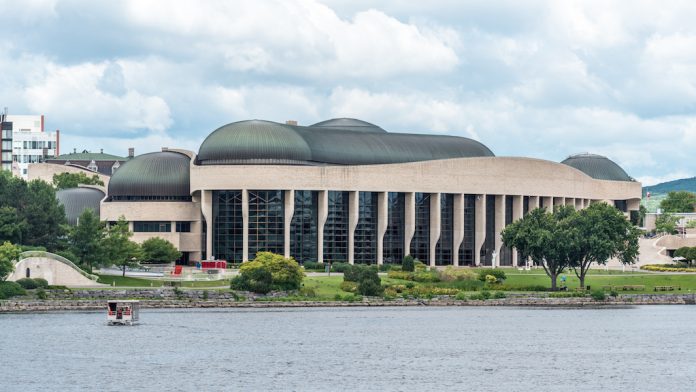
Canadian Museum of History in Gatineau, Quebec, Canada

In 2012, the SFU Museum of Archaeology and Ethnology accepted a collection of stone tools a farmer had gathered along the Peace River. The condition was that these artefacts would be repatriated to the Treaty 8 Tribal Association (T8TA), an advisory group for Treaty 8 First Nations. Repatriation means returning culturally significant items to their historically rightful communities.

SFU students sorted and restored the lithics and arranged them into a virtual exhibit in preparation for their 2017 repatriation to the T8TA. The collection will be part of the first collection of the new Tse’K’wa Interpretive Centre at Charlie Lake.

SFU’s museum includes artefacts from ancient Egypt, West Africa, Bolivia, and all across BC and the Pacific Northwest coast. While SFU has worked to acknowledge the origins of their collections, not all museums have done the same — nor are they obligated to, as repatriation is a complicated and unregulated issue. British Columbia is no stranger to the repatriation of Indigenous artefacts; in 2016, the province allocated $2 million to the Royal BC Museum for efforts in repatriating Indigenous artefacts.

Historians and archaeologists must work with artefacts in coalition with their proper owners, and we need to ensure that that’s what’s happening. Canada — not just individual Canadian groups, but Canada as a whole — must do the needed groundwork to repatriate the cultural properties that need repatriation.

Of course, repatriation is an international issue. Egypt, and its Supreme Council of Antiquities, under secretary general Dr Zahi Hawass, have worked long and hard to quench the flow of artefacts illegally leaving the country following the Arab Spring, going so far as demanding the return of the Rosetta Stone, which has been stationed in the British Museum since 1802.

These claims echo the fate of many Indigenous artefacts in museums today: the Rosetta Stone’s removal from Egypt was hush-hush. Multiple versions of the story mention the stone bouncing from French to English hands, but never an Egyptian person being consulted. To Hawass, its extended stay in the United Kingdom is a relic of colonialism.

Can the same be said for, say, the First Peoples Hall in the Canadian Museum of History? The key difference here is that the Canadian Museum of History have an easily-found repatriation policy. Policies and laws are the keys to ensuring that cultural and historical artefacts are handled in an ethical way.

Some individual museums, such as the Canadian Museum of History, have worked toward strong repatriation policies. Yet no consistent legal framework for repatriation in Canada exists — except in Alberta, which passed the First Nations Sacred Ceremonial Objects Repatriation Act in 2000, though not all nations are covered by the act.

However, the law itself doesn’t even apply to other Canadian provinces, let alone foreign countries. If any museum does refuse to repatriate human remains or cultural materials, very little can be done, aside from awareness campaigns, continuing pressure, and expensive lawsuits.

One big argument against repatriation is that setting precedents for it would empty museums worldwide. However, when BC provided additional funding to its Royal Museum back in 2016, Indigenous communities were not uniform in wanting total repatriation of all Indigenous items.

Some communities would be fine with museums retaining their artefacts, as long as those items were properly obtained, stored, and preserved. However, many Indigenous objects, and even remains, were confiscated from potlatches or stolen from graves. This is an especially problematic aspect, and it’s what leads to increased calls for the return of the artefacts.

So, as long as museums are ethical in their approach, they will likely still have enough for their exhibits even after returning the items whose owners choose to reclaim them.

Indigenous people should be leading all things repatriation — which they already do. For instance, the Haida Repatriation Committee has already returned and properly buried the remains of 460 ancestors and counting, and located Haida treasures to repatriate. Furthermore, in July of this past year, the Haida mountain goat moon chest was returned to Haida Gwaii after extraordinary negotiations with the American Museum of Natural History, and was used in a potlatch ceremony for the first time since 1901.

It’s good that museums, private collectors, and other independents are returning some of the items. But they shouldn’t pat themselves on the back for that, especially not if they continue to keep hoards of ill-gotten treasures in the archives. Repatriation is a process, not an occurrence. Federal and provincial governments need to facilitate that process by creating legal support and frameworks, and those laws need to be based in the best interests of Indigenous communities, as decided by those communities.

The progress already made doesn’t contradict the idea that stronger legal action by the government is necessary. We need rules and regulations that support our Indigenous communities.

Forgetting this country’s background of colonialism would be dangerous. But that doesn’t mean we should let colonialism continue to have footholds in pur museums. When items belong to people who are still around to claim them, those people should have a say in those items’ fate. It’s more important for a chest to be used by the people who made it than it is for me to be able to look at it.

The student cookbook

1

Authors: Yelin Gemma Lee, Victoria Lopatka, Gabrielle McLaren, Jessica Pickering


Vegan Buddha Bowl

Around $11.23 per serving (assuming you don’t have a lot of this stuff already)

I don’t know about the rest of y’all, but this heat and student life is making me almost too lazy to be an animal rights activist. Whether you are vegan or not, this recipe is simple to put together, makes a legit next-day lunch, and tastes bomb as fuck.

Ingredients (makes 3–4 servings):

-1 large sweet potato, peeled and cubed

-1 large red onion, diced

-4 tablespoons olive oil

-salt and pepper

-2 cups baby spinach

-1 package of tofu or however much tofu you want

-1 teaspoon of garlic powder

-1 clove of garlic, minced

-1 tablespoon soy sauce

-4 tablespoons smooth peanut butter

-1 tablespoon honey or agave

-1/4 cup lime juice

-1 tablespoon sesame oil

-1–2 tablespoons chopped cilantro

-1 avocado, thinly sliced

-4 cups cooked brown rice

Instructions:

  1. Preheat your oven or toaster oven to 425 F. Spread sweet potatoes and red onions onto a baking sheet and drizzle with about 1 tablespoon of oil. Season with salt and pepper and mix with a spoon or your hands. Bake for 20–25 minutes or however long it takes for the sweet potatoes to be tender.
  2. While it’s baking, heat up some oil in a pan and cube or slice the tofu. Before you put it on the pan, put the sliced tofu in a plastic bag with some salt, pepper, garlic powder, and a small dab of lime juice, if you want to get all fancy. Cook that for about five minutes or until you think your tofu is cooked enough.
  3. Make your dressing by whisking together garlic, soy sauce, peanut butter, honey, lime juice, sesame oil, and 1 tablespoon of olive oil.
  4. Divide your cooked rice between 3–4 bowls. Top with the sweet potato mix, then the tofu, then the avocado and baby spinach. Sprinkle some cilantro on top and drizzle with dressing. – YGL


Bacon Avocado Grilled Cheese Sandwiches

$5.68 per serving

Ingredients (makes one serving):

–          2 slices of bread

–          3 slices of bacon

–          1 tablespoon butter, room temperature

–          1/2 cup shredded cheese of your choice (or a block of cheese and a knife)

–          4 tablespoons guacamole

Instructions:

  1.     Fry the bacon with some butter over medium heat. Once cooked, place on a paper towel.
  2.      If you are preparing your own guacamole, mash the ripe avocado. You can add salt and/or lime juice, depending on taste preference.
  3.      Butter one side of each piece of toast and put the bacon, guacamole, and cheese onto the toast.
  4.      Place the sandwich on a medium-hot, buttered pan for about 2–3 minutes on each side, until the toast is golden brown and the cheese is melted.

[Original recipe from Spoon University] – VL


Cornbread and Baked Beans

Approximately $6.88 (if you don’t have flour, sugar, and stuff)

This is a really cheap meal you can make that will fill you up fast. The cornbread also lasts for a long time and this recipe makes a lot of it.

Ingredients (makes two servings plus a lot of extra cornbread):

– One can of baked beans (preferably on sale)

– 2/3 cup of butter

– 1 cup of sugar

– 3 eggs

– 1 teaspoon of salt

– 1 cup of cornmeal

– 1 ⅔ cups of milk (2% is recommended, but you do you)

– 4 ½ teaspoons of baking powder

– 2 ⅓ cups of all-purpose flour

  1. Preheat oven to 400 F.
  2. Grease 13 x 9 inch baking pan.
  3. Soften the butter (or put it in the microwave for a couple seconds. You want it soft, but not melted.)
  4. Cream butter and sugar.
  5. Mix milk and eggs together in another bowl.
  6. Mix the leftover ingredients together in a third bowl.
  7. Add these two mixtures to the creamed-butter bowl, alternating between the two (milk, flour, milk, flour, etc.) Mix well after each addition.
  8. Put it in the pan and bake for 22–27 minutes (put a toothpick in the middle to check if it’s done; if it comes out clean, you’re good to go.)
  9. Let it cool and then cut it into squares.
  10. Heat up the baked beans by following the directions on the can.

Ideally have some vegetables with this, but I’m not your mom so do whatever you want. Also, if you like spicy you can try adding some sliced jalapenos to this. – JP


Cheesy Black Bean Quesadilla

$2.54 per serving

Ingredients (makes five servings):

–          1 can of black beans

–          1 can of niblet corn

–          1 small red onion

–          1 clove of garlic

–          1 cup shredded cheese

–          1/2 a packet of taco seasoning

–          5 medium-sized tortillas

Instructions:

  1. Open and drain the cans of beans and corn.
  2. Dice the onion and mince the garlic. Mix the onion, garlic, cheese, beans, and corn in a bowl together. Add the taco seasoning and mix thoroughly.
  3. Place a half cup of the mixture on one side of each tortilla and fold over into a half circle. On medium heat with a little bit of butter or oil, cook each side of the tortilla until golden-brown and the cheese has melted (about 2–3 minutes).

[Original recipe from Budget Bytes] – VL


Egg Drop Soup

$1.82 per serving

The great thing about this recipe is that you can easily customize it, or adjust the portions as long as you keep your broth and egg ratio in mind. You can add ginger, star anise, cinnamon, cornstarch (to thicken the broth), or water (to stretch your last few drops), mushrooms, spinach, tofu, miso, or anything else you can find in your fridge while the broth is boiling. On its own, this soup is comforting and filling, and you can pat yourself on the back for having eaten some cheap protein. As a heads up: this soup doesn’t keep well and is best enjoyed fresh.

Ingredients (makes one serving):

-2 cups of broth (chicken, beef, and vegetarian all work well)

-1 egg

-1–2 green onions

-Salt and pepper to taste

  1. Boil your broth on the stovetop.
  2. Once the broth is boiling, crack the egg into the liquid. The egg will start to cook immediately, so be ready to whisk it and break up the egg into smaller, noodle-like filaments. Let the broth stand while the egg cooks.  
  3. Once the egg is solid and properly cooked through, remove from stovetop.  Add some chopped green onions and serve. – GM

SFSS fall kickoff concert forecasts smaller loss

1

The Simon Fraser Student Society (SFSS) will host its largest event of the year, the fall kickoff concert, this month. The event is currently on track to run a smaller loss than previous years because the society has garnered substantial sponsorship.

This summer, the SFSS Board of Directors approved a total budget of $111,400 for the concert, which included an estimated $14,400 loss to be incurred by the society. However, Alam Khehra, vice-president of student life, told The Peak that the organizers are expecting the losses to be lower than expected.

“I’m very optimistic that we will be investing less than $14,400 this year into this concert,” Khehra said.

Last year the total cost of the SFSS fall kickoff concert run under the previous board was $112,198 and ran a $24,777 loss.

Khehra said that the team has managed to exceed its original goal of $15,000 in sponsorship, some in monetary value or in the form of services or goods. The team is now banking on ticket sales to bring in the needed revenue.

In previous years, the SFSS has sold around 2,000 tickets. “This year we’re hoping to sell a lot more, mainly [because] it’s one of the biggest line-ups we’ve had in all of [SFSS] history,” said Khehra.

“Right now we’re budgeting for 2,100 tickets [to be sold and] we are close to meeting half of it,” he added.

The after party for the event will now be held at the Diamond Alumni Centre as the Highland Pub will not be reopened in time for the concert on September 22. The society transferred operation of the Highland Pub to the university last month following the permanent closure of SFSS food and beverage options earlier this year.

Khehra said that from day one the organizers had asked the university to use the pub for the concert after party. “They said they’d tried their best, but unfortunately, that couldn’t happen,” he explained.

According to Khehra, the university offered the society use of the Diamond Alumni Centre without any additional charges over what they would have already been paying.

The ultimate goal of the concert is “not to make money off of student[s’] back[s],” he added, including that if the SFSS were to make money from the fall kickoff concert, the board would invest the money into other initiatives.

SFU’s cross country team shines at the Sundodger Invitational in Seattle

0
SFU women's cross country has enjoyed a perfect start to the season (Photo courtesy of SFU athletics)

SFU’s cross country team enjoyed another dominating performance at the Sundodger Invitational in Seattle over the weekend, taking first place on the women’s side and second place for the men.

On the women’s side, senior Julia Howley, freshman Olivia Willett, junior Addy Townsend, senior Miryam Bassett, and sophomore Chelsea Ribeiro were the top five runners of a team that demonstrated consistency and solidified their position as one the top-ranked teams in the nation.

Howley led the team once again and took the third overall position in a time of 21:22, behind winner Ruby Roberts (unattached) and Jessa Perkinson (Southern Oregon). Howley was in fifth overall position with four hundred metres to go, but an impressive final sprint earned her the podium spot in this prestigious race.

Commenting on her performance, Howley said, “It is good to get a [6 km course] under the belt, beating my personal best at this course, and being really close to my best ever [6 km] time, especially at this early point of the season.” She also had good words for the team effort, stating that, “Our one to five gap is really close, less than 30 seconds, which is really encouraging if we think about what is coming in the future.”

Olivia Willett was the second SFU woman to cross the line with a time of 21:44, earning ninth place overall and consolidating her status as a very promising freshman. Closely behind Willett, Townsend (12th), Bassett (13th), and Ribeiro (14th) completed the five scoring positions and wrapped up the second win of the season. Senior Paige Nock (30th), junior Sophie Dodd (42nd), and freshmen Calli Charlton (43rd) and Amy Morris (63rd), concluded the team’s great performance.  

On the men’s side, Rowan Doherty led the team to a fantastic second overall position in the 8-kilometre course. Doherty had his second outstanding performance in a row after finishing second at the Ash Creek Invitational last weekend, and sealed his lead role for Simon Fraser. The junior ran a tactically smart race, with a conservative start and very strong middle and final sections of the 8-kilometre race, earning him a sixth place overall with a time of 24:45.

These were Doherty’s thoughts on the race: “It was our first 8 km race of the season so I wanted to go out conservatively, as I did not know if I was quite ready to perform at such distance. In the second quarter of the race, there was a big move in the front pack that I did not follow as I was too far back. That had me put a pretty good surge in order to chase them down and once I caught up to them, they made another move which I was unable to follow.”

When asked about his goal for next races, he said, “My goal is to be in the top positions of the race when the moves occur, so I do not waste energy trying to catch up with the leaders on my own.”

Behind Doherty, SFU’s second male athlete to cross the line was Sean Miller, who had a great second half of the race after being sick for the past week. The junior from Nanaimo ran a tactically simila

r race to Doherty, increasing the pace as the kilometres went by and finishing strong in a 10th overall position and a time of 25:04. Followed by Miller, senior Mateo De Dalmases (16th), junior Carlos Vargas (21st), and senior Oliver Jorgensen (34th) occupied the other three scoring spots for the men’s team.

Jorgensen’s comeback means a lot to the team, given that he has been struggling with injuries for the past year. The fact that he was able to race and perform well is a boost of confidence for both himself and the team.

The men’s team was completed by great performances from freshmen Chris Sobczak (38th) and Dawson Ribeiro (39th), sophomore Thomas Gallagher (47th), freshmen Jordan Wilson (52nd) and Aaron Ahl (78th), and senior Ephraim Tadesse (151st), sophomore Jalen Sekhon (153rd), and senior David Sawatzky (166th).

SFU’s cross country team will be back in action on September 23 at the Roy Griak Invitational in Falcon Heights, Minnesota.

It floats to the top of the box office — and for good reason

2
(Image courtesy of Warner Bros.)

There’s been a lot of buzz about It, the recent adaptation of Stephen King’s well-known horror novel of the same name that may well have sparked coulrophobia (the fear of clowns) in the hearts of people everywhere back in 1986. Upon its release, the first trailer for the film set a new record for the most Facebook views in a single day and topped YouTube’s trending videos list for a time. The film had become so anticipated that real-life clowns were complaining the movie was threatening their job security by triggering a latent phobia of clowns in people.

All of this was before the film was even officially released in theatres.

     It is set in the fictional town of Derry, Maine; a town which has a problem with children going missing, but no one seems to care enough to do more than put up missing child posters. When a group of kids dubbed “The Losers Club” begins seeing apparitions that epitomize their individual worst fears, accompanied by a nightmare-inducing clown known as Pennywise the Dancing Clown, they decide to get to the bottom of the town’s oldest mystery.

     Despite its dark and violent subject matter, It at times feels more like an homage to ‘80s films like The Goonies or Stand By Me, as producer Dan Lin puts it, that centred around a group of kids on a quest. Its young stars are believable in their portrayal of a group of preteens, making crude jokes and dropping curse words like they’re going out of style. Finn Wolfhard, known for playing Mike Wheeler in Stranger Things, shines as Richie, the foul-mouthed, wise-cracking member of the group. Sophia Lillis will surely become sought after in Hollywood after her portrayal of Beverly, a witty Molly Ringwald look-alike who has one of the darker backstories.

     The first half of the film focuses less on plot development and more on establishing the different forms that It takes for each of the children. This does start to feel a bit gratuitous in its number of scares, but this is a horror movie, after all. However, this isn’t your run-of-the-mill horror with endless tiptoeing through dark hallways until the score culminates with — gasp — a door slamming. No, the reveals of It’s various terrifying forms come hard and fast with no unnecessary build up.

     Bill Skarsgård as Pennywise manages to switch gears from frighteningly evil to whimsical and silly with no lag time. He’s not limited to the dark, either: some of the most fear-inducing scenes are in broad daylight, so you can forget about feeling safe during the daytime scenes.

     It’s always refreshing to see a book adaptation or remake that does the original justice, and also appeals to audiences that aren’t familiar with the story. Though the film has its scary parts, It stands out from a lot of other films of the horror genre in that it featured likable, funny characters and a story that’s as much about friendship as it is about scaring the audience. I can only hope the sequel is as well-cast, visually chilling, and fun as the first instalment is.

Follow the money

1

Author: Alexander Kenny

As the fall semester begins, SFU students return to campus to start new classes, whether the end of their program is within sight, or they’re just beginning their studies at the university. This semester-long routine, which has become so familiar to SFU students, begins with the same ritual as always: the opening of cheque books and paying of tuition. Once the cheque passes the registrar’s desk, however, the destination of these funds for the students is a relative unknown, simply a sacrifice passing into the void.


How much money is there?

The 2017 student welcome guide suggests that a domestic undergraduate student will pay almost $7,000 in tuition and fees in a year at SFU (two terms with five courses each term). When the fiscal year ended on March 31, SFU had created $247,630,000 in revenue from student tuition. The 2017 Annual Financial Report also indicated that student tuition fees accounted for 36% of the university’s revenue from the previous year.

The report also indicated that revenue from tuition had risen by $14 million due to a 2% fee increase on both domestic and international students. Domestic undergraduate tuition accounted for $100,717,000, while international undergraduates contributed $91,692,000, and graduate students added $30,253,000. Finally, non-credit courses and other student fees totalled $24,968,000. Of the nearly $25 million that was generated from non-credit courses and student fees, a 3% increase on student fees which relate to credit courses made the year prior is attributed to the gain.


What are SFU’s main expenses?


Staff pay

Of SFU’s expenses, salaries and employee benefits are the largest, accounting for 63% of expenses as of the 2017. From this, it is safe to presume that much of student tuition is directed towards staff salaries and benefits.

As The Peak reported in August 2016, President Andrew Petter earns $487,908 annually. In the same article, it was reported that several Vice-Presidents of the university were making six figures a year while TAs were only making $17,457.

Though further information on SFU staff salaries is unavailable, it is undeniable that most of this is extremely necessary of a student’s tuition cheque. Without the staff members, from lecturers to clerks and building services workers, the institution would cease to function.


Building maintenance

It is also reasonable to assume that funds from student tuition are being used in the physical maintenance of campus buildings. The 2017 Annual Financial Report discusses the increasing cost of building renewals from $25 million in 2015, down to $18 million in 2016, rising to $39 million in 2017, with another $19 million being offered by the provincial government to aid in those repairs.

The rising cost of building maintenance and renewal is an inevitable fact, as described in the report, given the aging campus in Burnaby, which recently celebrated its 50th anniversary. This rising cost undoubtedly points to contribution from the student body, to avoid studying in deteriorating physical spaces.


Miscellaneous costs

There are a number of smaller expenses that funds are also used to pay for, including $69,572,000 in supplies and operating expenses, $42,142,000 for professional and contracted services, and $9,841,000 for utilities. These are expenses that, much like the cost of building maintenance and renewal, are necessary components of maintaining the functionality of the university.

To summarize, the university spent $501,894,000 on instruction costs, $135,717,000 on research, and $20,777,000 on community engagement. These are at the core of integral investments to creating, and/or maintaining the university’s reputation as one of the nation’s premier academic institutions.


How is money budgeted?

At the time that this article was written, no members of the university’s administration were able to comment on exactly how much of SFU student’s tuition is spent where. Due to this, it also remains a mystery as to why the 2017 Annual Financial Report indicates that a budget of $526,855,000 was set aside for instruction costs, while only $501,894,000 was spent, though it is possibly due to going over budget in other areas or simply not needing the entire budget to meet its needs.


What about other fees?

When looking at the fees that SFU students are charged on a per-unit basis, as well as the activity fees that are charged to students each semester, it is generally far clearer to see where this money goes. A full-time SFU student pays a $75.42 fee for access to the athletic and recreation services as well as a $107.14 SFSS activity fee (a part-time student pays $37.71 and $53.60 respectively.)

The SFSS fee is split across a number of different initiatives and campus groups. Small amounts are split between the accessibility fund, the First Nations Student Association, the SFSS Food Bank Program, and Embark, a group that advocates for student leaders in sustainability, the Simon Fraser Public Interest Research Group, The Peak Publication Society, Simon Fraser Campus Radio Society, and the World University Services of Canada Student Refugee Program split a $19.40 portion of this activity fee. The remaining cost is split between the Build SFU levy, at $40 this year, for full-time undergraduate students, and a $40 SFSS membership fee.


How much does the SFSS collect?

In the SFSS financial statements from the fiscal year ending in 2015, the society made $10,070,415 in revenue, of which, $8,526,050 was from activity fees and levies. The revenue attributed to the general fund which was not from activity fees and levies came from retail services, the general office, rental revenue, Graduate Student Society service sharing revenue, as well as accumulated interest and other miscellaneous amounts. Much of their revenue is also spread and created through different separate funds, such as the Build SFU fund, the Undergraduate Health Plan fund, the First Nations Students fund, or the space expansion fund.


How does the SFSS use that money?

While the revenue that enters through activity fees is split into a variety of funds, those same funds are then removed to pay for expenses that relate to the fund. For instance, $266,194 were taken from the general fund to pay for the administration, operation of the office space of the administration and the financial office, while $195,625 were used to pay for the general office.

Similarly, $196,300 was taken from the Build SFU fund to pay for the Build SFU office. $1,207,124 was taken from the general fund in the 2015 fiscal year to pay for general activity and program expenditures, $4,445,134 was used from the Undergraduate Health Plan fund to pay for the student medical and dental programs.

The SFSS also paid its board members a combined stipend — a paid salary — of $256,118, a nearly $31,000 increase on the previous year’s amount. This included $3,224 for negotiations and consulting expenses, $11,221 in elections expenses, and $241,673 in salaries.

Over $300,000 was used from the general fund to pay for discretionary grants to help fund both departmental student unions and clubs, while over $600,000 was taken from the capital asset fund to pay for the amortization — the paying of a debt on a regular schedule in instalments, like a lease — for building costs, space, as well as food and beverage.

In the fiscal year ending in 2015, the SFSS also paid the university $308,730 for the space it uses in the Maggie Benston Centre while taking $121,726 from the space expansion fund to pay for building maintenance, and $7,906 for repairs and renovations, almost a $2,000 increase from the year prior.


Is there anything else we should know?

These documents would indicate that SFU students’ tuition does not simply disappear, nor is it frivolously thrown about. Instead, it is spent in a manner which our student body should be pleased with, with the expenses to keep SFU functioning, well-maintained, and exceptionally staffed. These are the priorities that the students should expect the university to focus on, should they also want to continue to be able to expect a high quality post-secondary education and experience. Furthermore, the Simon Fraser Student Society spends a vast amount of its funds across a wide assortment of initiatives to both maintain itself while bettering the well-being and experience of the students.

Due to no one from the administration being able to comment on these financial statements or the direction of funds, much of this information was left up to interpretation. Clearly, in asking where exactly student tuition and fees go, the question leads to answers that are not easily understood.

With the variety of funds, initiatives, and expenses that the money is directed towards, it can simply be assumed that the university is being well-maintained, and that the university and its student society have used the funds to fulfill their mission as a post-secondary institute while improving the experience of its students. Anything further unleashes a confusing web that raises more questions and necessary analysis that would take the lengths of our programs to understand.


SFU leads national dialogue on energy future

1
Citizen Dialogues on Canada's Energy Future via Facebook

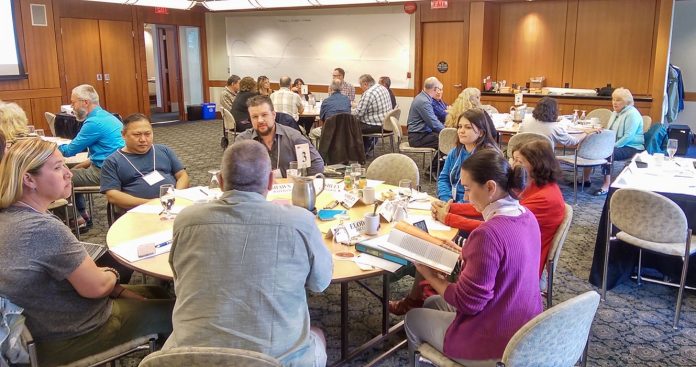
A host of Canadian citizens came together to advise on energy policy at Simon Fraser University last week. The event was one of many cross-country citizen conversations on energy policy convened by the SFU Centre for Dialogue.

With funding from the federal Department of Natural Resources, the citizen dialogues will continue in Calgary, Montreal, Toronto, and Halifax. The goal is to have Canadians engage in the matter and, by providing research-based information to participants, the dialogues will promote knowledge of current energy issues.

“Conversations around energy have become polarized,” said program director Robin Prest in a press release. “Our goal is to bring Canadians from different regions and perspectives together to find ways to move forward as a country.”

The centre’s mandate is on finding solutions through discussions that facilitate the input of the public. By inviting citizens of different backgrounds to share their perspectives about energy, the dialogue intend to illuminate an understanding about energy needs across the country.

Keane Gruending, the communications manager at the Centre for Dialogue, is looking forward to seeing how diverse groups of Canadians will come together in order to tackle the issues of energy and waste and how they will face compromises to accommodate diverse priorities. He said it is really important that everyone has the opportunity to “share how they relate to energy, and listen to the values and perspectives of others.”

Above all, it is important to him that the dialogue creates a platform in which government officials can hear what Canadians conclude about national energy policy.

The dialogues will address issues including the job market, greenhouse emissions, and global competitiveness as participants complete various exercises that are designed to encourage sharing and listening over a two-day session.

Gruending emphasized that “dialogue works best when coming from an evidence-informed baseline of information,” thus there is a discussion guide provided by the centre created to aid in understanding the dialogue’s main focus.

According to the centre, a national opinion poll found that merely 12% of Canadians have claimed to be very familiar with the government’s plans of the future of energy in Canada.  

The sessions will conclude next month when 35 participants will travel to the national forum in Winnipeg to present their recommendations to government officials. Though only 150 participants have been selected for the dialogues, the results from the sessions will be made public after the conclusion of the final event.