Home Blog Page 660

Explore the Masters of Digital Media program

0
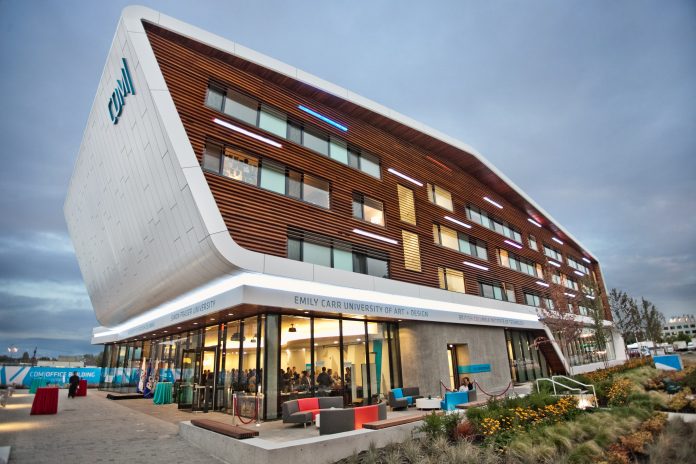
The Centre for Digital Media, home of the Masters of Digital Media program


In 2001, a company called Finning donated an 18-acre plot of land for the creation of the Great Northern Way campus. It was decided the land would be shared between Simon Fraser University, the University of British Columbia, the British Columbia Institute of Technology, and Emily Carr University of Art and Design for them to become partners in the administration and operation of a new, innovative school and program in technology. This dream would be realized in 2006 when the BC government would give the Great Northern Way campus $40.5 million for the creation of the Centre for Digital Media and, subsequently, the Masters of Digital Media (MDM) program, which would open in 2007.

In 2017, by the end of the previous fiscal year, SFU — who have a 25% share of the Great Northern Way Trust, according to their financial report — reported an investment of $19,129,000. Further, their share of the trust’s income for the 2017 fiscal year was $3,478,000. This indicates that the operation of the Centre for Digital Media has a small incentive for SFU outside community engagement and the benefit of helping to enhance BC’s tech industries.


A growing industry

10 years on, the MDM program has met its original intention of becoming a benchmark to help British Columbia lead Canada into the digital media industry. It has become an internationally acclaimed program that gives its students experience in the creation of a variety of digital media products by completely immersing them in the process of their creation. The Centre for Digital Media stresses the importance of the program due to the size of the industry itself. Their website advertises BC’s digital media industry as an ever-growing behemoth which creates over $23 billion in revenue, and has 141,000 workers in digital entertainment and technology.


Hands-on with industry partners

In BC’s increasingly crowded technology industries, there are a number of factors that could point to why the MDM program has become a benchmark program for turning students into professionals that are equipped with the necessary skills to tackle the issues of an ever-changing industry. When asked by The Peak to speak about some of the program’s highly touted industry partners and the exciting opportunities that they present, Dr. Richard Smith — the director of the MDM program — was quick to note a number of different, sometimes lesser-known, opportunities, as well as the value they present to their students.

“Students have worked on projects for major companies like Microsoft, EA, Sony, Fujitsu, SAP, Mercedes, but also very exciting smaller companies like Finger Food Studios and Elastic Path,” he said. “They also work with university researchers, who sponsor several projects every year as well. I think the opportunity to work side by side with people inside a company, solving a real problem, and learning the way in which other people work is incredible valuable.”

He also noted that these industry partners play a large role in why an impressive 95% of the program’s graduates are employed in the digital media industry. He explained the cyclical relationship of the program and their partners, saying, “The industry partners create the jobs that employ our students. Not only that, but our students go on to work in those companies and as they move up in the company, they come back to hire grads from the subsequent cohorts.”  

Obviously, it appears that the Centre for Digital Media has been able to form a truly mutualistic relationship with companies in BC’s digital media industry, which has helped the program’s students in becoming more successful in their fields. It has also kept the Centre for Digital Media and the MDM program at the forefront of BC’s tech industry by consistently helping their students become well-equipped professionals.


The key to success: a collaborative effort

While big industry partners may be a large contributing factor, Smith also had a deeply humanistic take on what is at the heart of the MDM’s success and why students choose the program above similar programs elsewhere.

“I think the success comes from the incredible passion for creation that the students bring to their graduate program, the dedication and hard work of the staff, and the experience and compassion that they receive from the faculty,” he said. “It is a transformative experience because everyone is committed to a common goal. I think the cohort model — all the students come in at once and graduate together — is also a big part of their success; students are committed to their own and each other’s success.”

Perhaps another key aspect of the program’s success is the concept that in the success of the program, everyone has a role to play, from the dedication of the staff to the passion that the students bring. The past decade has seen a team effort that, in part, mirrors the concept of collaborative effort that is so frequently touted as the driver of innovation and growth in the tech industry itself. This idea appears to be a lesson for the program’s students; success in the industry takes a team with a variety of skill sets and traits.

This appeared to be a recurring theme. When asked what some of the common traits of the students that entered the program are, Smith said that “[the] students come from diverse backgrounds — about one-third [of them] are technical, one-third are art and design, and one-third are everything else, [such as] business, science, engineering, social sciences, and humanities. We deliberately recruit a diverse skill set because we know that digital media is a blend of art and technology and making it fun and engaging for people . . . [Y]ou can’t just do that from one perspective.”

Again that trend continued when looking at what SFU students in particular bring to the program. “SFU students bring a strong local knowledge, engagement with their community, strong interactive skills ([especially from] students from the School of Interactive Arts and Technology), strong technical skills ([especially from] students from computing science) and strong communication skills ([especially from students] from the School of Communication),” said Smith. He also mentioned that students don’t just come from the four universities that operate the campus, but from across the country and around the world, furthering the concept of diverse skills and diverse ideas and understandings.

Meanwhile, discussing the presence of SFU graduates in the MDM program, Smith said that his search of program alumni indicated that there have been over 20 SFU graduates who have taken the MDM program, many going on to a wide range of fields and careers. One he mentions is Tori Romano, a 2015 graduate who was featured in a 2016 interview with SFU’s faculty of communication, arts, and technology, and who now works in Montreal for Cinesite.


A student’s perspective

The Peak was also able to discuss the experience of the program with a current student who has an undergraduate degree from SFU. According to the Centre for Digital Media’s website, Sherlaine Lau finished her criminology degree at SFU. She now has skills as a 2D designer, front end developer, UI designer (which is user interface design which focuses on a product’s appearance, layout, etc.), UX designer (which is user experience design, a way of making products easier for people to use), marketing and communications management, and project management thanks to the MDM program.

Lau demonstrates the typical wide skill set and ability that appears to be prominent amongst the students selected for the program. She noted a number of factors that made the MDM program more attractive than other programs. Being credited with a master’s degree from all four of the partner universities as well as the internship aspect of the program (the MDM being the first of its kind in the country) were factors that Lau described as important to her decision to attend. She also cites that the program reviews both an applicant’s portfolio and experience (not just their academic career). The school’s focus on both UI and UX design, and its connection to the Vancouver tech industry were key reasons as well.

The school’s proximity to the Vancouver and BC tech industry has clearly helped the program and its students be successful. It has also helped make the program more attractive to students, as it offers a closer jump to a strong career.

When asked what she liked most about the program, Lau said that she has enjoyed the focus on projects, the hands-on nature of the program, the way the program helps build her portfolio, and all the work that she gets to do with her classmates. “That is what our industry is all about,” she said, “not about doing tests!”

Further, when asked what she believes will be most beneficial to her success, the program’s close relationship with Vancouver’s tech industry appears as a key factor for the program again.

“We get a lot [of] industry leaders [who] talk at our school about what type of individual they are looking for. This helps prepare [us] for the future,” Lau said. She also noted that “in our spring semester, we will be working with actual clients [which] will definitely help us in our tech futures when it comes to experience.”

The MDM program has built what is very clearly a winning formula by providing a program centered on equipping their students with the industry experience and skills to be successful in their field. This approach seems to have been quite successful in building a reputation as a state-of-the-art digital media program, attracting students as well as making them successful in their careers by giving them the tools to succeed. Though the program has been successful through its first decade, Smith still has his eyes set on the future.

When asked about his hopes for the next 10 years of the program, he replied, “I look forward to deeper integration with our four university partners, and further examples of our students and our partners creating digital media products that change the world for the better.”

The first decade has been a success for the program, but if its reputation holds true, the sky’s the limit.

What does your pet’s name say about you?

0
Illustration by Alisha Lee

As we go through life, the human relationships we have can be hard, complicated, and non-existent. To escape this frustration, many have found it helpful to fill that void with dogs and cats — fluffy entities of kindness (and condescension) that deserve all the love in the world. But, like any big-headed psychology student will tell you, everything you do is a trademark of your identity, including your pet’s name. Because of this, no matter how simple it seems to pick what goes on your pal’s tacky and uncomfortable collar, the choice you make is a dire commitment to a display of your entire personality.


Cutesy names

(e.g., Princess, Fluffy, Skip)

You were probably a very cute kid when you named your pet after such an adorable noun, or you hold memories of that time very dearly. You love to reminisce about that distant past when your favourite things to do were watch cheaply drawn cartoons, and nag your parents to take you to Toys ‘R’ Us. Sadly, you’re all grown up now and Toys ‘R’ Us is dying. It’s the perfect metaphor for how your childhood innocence has been completely replaced by existential dread — it’s not cute anymore. You often come home to your pet’s hungry face, ready to get into your comfy socks before mutually shoving your faces into respective bags of food, and crying at your reflections in the mirror.


Normal human names
(e.g., Jack, Susan, Kevin)

The past few months of OKCupid dates have been terrible, love is dead in your world, and you desperately need your pet to sound like a roommate, lover, or human family member. The companionship is nice . . . but you definitely lack hobbies and friends, which would make you feel more fulfilled. Pets can be sweethearts, but you just can’t ignore how they are much more likely to dine on your corpse than other non-animal funeral guests. They’re good company and it’s nice to speak to them like an equal, but when people start confusing James for a boyfriend, your social fears will only get deeper, and James alone cannot cure                                                           your crippling loneliness.


Pop culture references
(e.g., Maeby, Harley, Jughead)

It takes a lot of ambition and impulsiveness to name your pet after your favorite TV character. Without thinking, you leaped into the responsibility of memorizing a long-winded explanation to regurgitate every single time someone first meets your pet. Despite that annoyance, you feel proud and cultured, and you aren’t afraid to share your passions. It can all be very bittersweet though, considering that every time you look at your pet’s face you shed a tear about how their namesake’s most recent sequel or remake was so disappointing. Thankfully, you probably take better care of your pet than the executive producers did when writing your favourite character.


Food
(e.g., Doughnut, Cinnamon, Chips)

You’re the life of the party and adore attention. People told you growing up that you could be a comedian, and even though you gave up on your dreams, you still maintain that energy in your day-to-day social adventures. Unfortunately, not all of your efforts will garner the laughter you desire, and the people who meet your pet are likely not giggling in delight in the way you hoped. Your social media photos that feature puns and cute sleeping poses may be miniature viral hits, but don’t mistake that for true fame and adoration, loser.

SFU hockey home opener cancelled due to referee “scheduling mix-up”

1
The VIU players were a lot smaller than expected. (Andrew Ringer / The Peak)

On Saturday night, Simon Fraser University hockey was supposed to host expansion team Vancouver Island University in their home opener. In front of an excited home crowd, however, the game had to be cancelled by the British Columbia Intercollegiate Hockey League (BCIHL). Their reasoning: a scheduling conflict with referees.

The BCIHL is a highly competitive hockey league that has always provided qualified referees and officiating. This is certainly a disappointment in for the Simon Fraser team and fans, but it is important to note that it is an anomaly.

SFU hockey director of hockey operations Chris Munshaw had this to say to The Peak after the game was cancelled:

“Referees are assigned by BC Hockey, which is the BC branch of Hockey Canada and governs our league. There was a scheduling mix-up within BC hockey and they didn’t have qualified referees assigned to our games tonight. We identified the problem an hour before the game, we contacted our back-up referees and weren’t able to have anybody here in time for our 7 o’clock puck drop. We decided to postpone the game because we can’t have a game without qualified referees, bottom line. We’ll host the game on a different day, but we’ll have to get a follow-up with BC Hockey and figure out how this game was missed on their referee assignment schedule.”

As for when the game will be rescheduled, Munshaw had this to say:

“We’re not sure yet. We will make an announcement online on our website and on social media. It depends on ice availability and what fits in our league travel schedule with the other teams. It will be rescheduled, we’re just not sure when yet.”

The SFU team made a nice gesture after the game was cancelled by going on the ice and performing their warm up routines for the fans in attendance. After that, they scrimmaged with some of the younger hockey fans in attendance, still playing more than an hour after the game was meant to start.

Although this was not an ideal scenario, one thing is for sure: there is still a lot of exciting hockey to be played. Simon Fraser will host the University of Victoria Vikes next Saturday, October 21 in home opener number two. Puck drop is at 7 p.m.

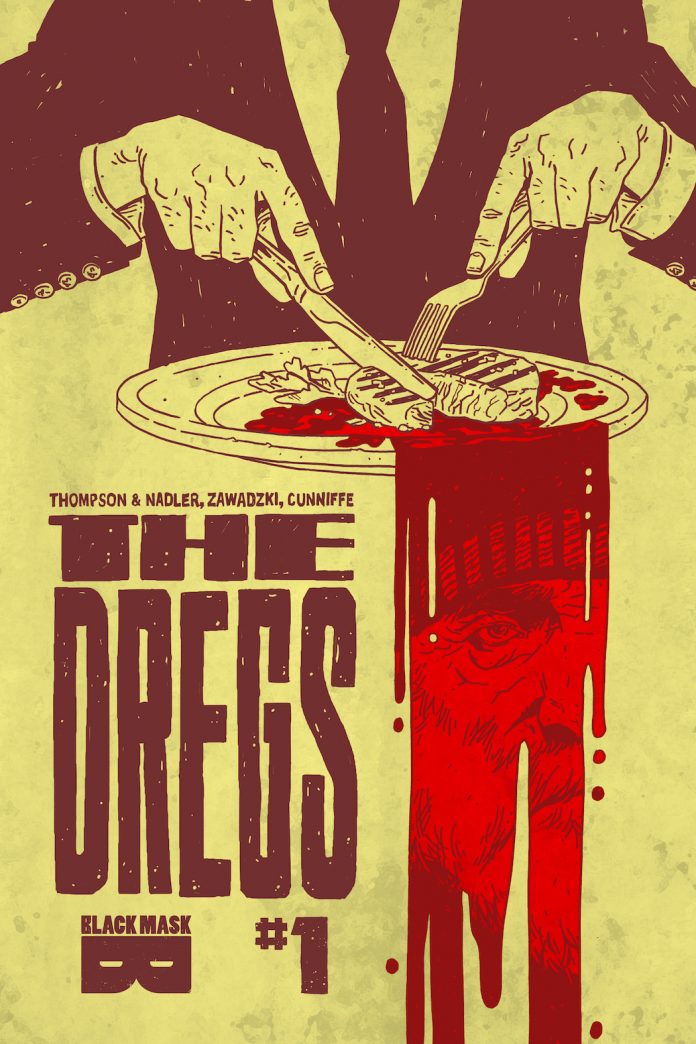
The Dregs: a graphic novel set in the Downtown Eastside

1
(Image courtesy of Black Mask Studios)

The Dregs is a graphic novel about a homeless detective at the heart of the opioid-crisis-ridden Downtown Eastside in Vancouver, where behind the scenes the homeless are being made into meat to be served at high-end restaurants. Did that synopsis catch your attention? It did for me, too.

    It is a well-researched portrayal of the real life horror, desperation, and hopelessness that homeless people are faced with on a daily basis. The class differences and gentrification of downtown Vancouver in The Dregs hits hard. Suddenly we are put very graphically in the shoes of a homeless man addicted to a drug called “listo.” To make things more interesting, The Dregs was intended as a love letter to film noir.

    Written by Zac Thompson and Lonnie Nadler, illustrated by artist Eric Zawadzki, and coloured by Dee Cunniffe, the team of four behind The Dregs displays seamless collaboration between the art and the story. All parts of the book are cohesive, and the facial expressions and lighting match the exact tone of the script. The artwork chilled me to the bone, especially in the scenes where you see the skewed vision of someone on street drugs that may or may not be laced with fentanyl.

I sat down with Lonnie Nadler, co-writer of The Dregs, and freelance writer at Vice Canada.

—

The Peak: How did this project begin? Talk to me about the creative process involved.

Lonnie: Zac [Thompson] brought out an old screenplay that he’d been working on in film school called The Dregs [that was] largely useless and largely garbage.But [it] had a great base idea so we stripped it down to “homeless detective” and worked to pay homage to the crime genre [while] also being authentic in portraying the homeless people in the Downtown Eastside. A lot of what’s in [the novel] was inspired by the journalism we were doing for Vice and what we saw in the streets everyday — we wanted to tell [an] honest and truthful [story] without being exploitative.

P: Did you have any particular points of inspiration?  

L: The Dregs is loaded with inspiration from real life, fiction, and film. In terms of the real life stuff, it was really just stuff that is going on in Vancouver, people that have been displaced and dying on a daily basis from the opioid crisis. [More real life inspiration comes from] reading headlines like “Vancouver morgues completely at capacity because of overdoses,” and the general increase of homeless people on the streets over the years. Zach and I have a lot of anger towards all of that. We wish it was better and this is a way for us to channel those frustrations . . . and [put them] together with our literary influences of early crime writers like Raymond Chandler and Dashiell Hammett. [We were] trying to find out a way you can put a homeless person in this traditional narrative of a detective and they, oddly enough, matched up quite well in the fact that they are both disillusioned from the world and angry at the city as outsiders . . .

P: What is the social commentary you wanted to make through telling this story?

L: We are dealing with themes of gentrification [and] how this impacts the people who have the least say about it. It was based around the idea [that] people in big cities are often able to walk by homeless people without paying them a second thought, as if they are just part of the scenery. Without being too preachy and without telling people that they need to make major changes in their lives, it was about making them aware that these are people and they have stories and they deserve just as much attention as anyone else. It was mostly about recognizing humanity in places where people often overlook it.

P: How did you find the team effort aspect in The Dregs, [and] what kind of advice would you give to artists just starting their graphic novel with their own team?

L: You have to understand that you all have the same goal in the end and you are all trying to tell the best possible story you can. It’s OK to concede, and important to understand when your idea isn’t the best thing for the project. The way Zach and I co-write is very different from other co-writers. We don’t write anything unless we are in the same room together or in the same Google Doc, [and know] exactly what’s going on . . .[A] lot of the time when we are writing it’s just us sitting there and prefacing sentences with “I know this idea is shit but what if . . .”  and then we go from there . . . [Usually] the other person will be able to find a meaningful idea out of that horrible idea.

     Eric [Zawadzki], started off living in Vancouver when we [began] the project and we were incredibly thankful for that because there is only so much you can communicate through writing versus in person. And our lines of communication with Eric were fully open from day one, and we encouraged him to change the script and be a storyteller in his own right. Eric works largely in isolation as an artist in a lot of ways because he spends 14 hours in his basement drawing and we just try to be really supportive while he’s doing all that hard work.  

P: Any other comments?

L: I’m very thankful to have worked with the team I got to work with. I mean, this is a book that got rejected by almost every single publisher except Black Mask because it was weird and risky: we couldn’t be more thankful that they saw some sort of potential in it.

—
You can request The Dregs at any comic book store in the Lower Mainland, and at select Indigo, Chapters, and Coles stores. The official trade launch was on August 30, 2017.

Board Shorts

1
Irene Lo / The Peak

Board approves budget for Halloween pub night

The Simon Fraser Student Society (SFSS) approved an upcoming Halloween pub night at the Highland Pub at the latest SFSS Board of Directors meeting. This is going to be the first pub night hosted by the SFSS after they surrendered their lease of food and beverage operations to SFU.

The budget for the pub night to be held later this month is $2,370 and the university will not charge the student society for its use of the space.

“We’re not looking to make money or break even at all [because] the purpose of this pub night is not to make money. [Rather, it’s] just to throw an event for the students,” said Gini Kuo, faculty of business representative.

The event is expected to accommodate a maximum of 300 students.

“This is the first pub night we’re working with SFU to figure out how the relationship will work,” said Kuo. “SFU is working to . . . learn [how to] run a pub night as well, so when student groups do start to book the space and run their pub night[s], SFU will kind of know what they’re doing.”

Men’s soccer defeat Western Washington to jump to first place in GNAC

0
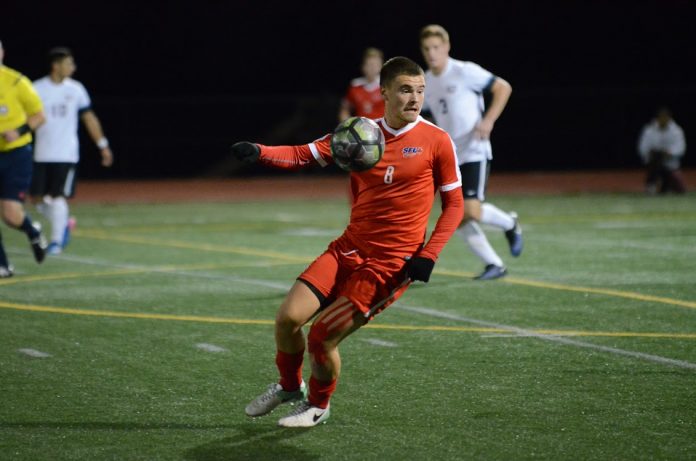
Matteo Polisi is leading SFU this season in goals (8) and points (19). Austin Cozicar / The Peak

In what was arguably the biggest matchup of the Great Northwest Athletic Conference (GNAC) season, Simon Fraser travelled to Western Washington University (WWU) to face the (then) sole leaders of first place in the conference. The Vikings came into this one with a nine-game streak of which they hadn’t loss, while the Clan were riding a three-game winning streak. In the heavyweight matchup, the only thing that could separate the two teams was SFU’s Matteo Polisi.

The two teams went scoreless in regulation time, meaning that the game would be decided in overtime. The 0–0 tie continued through the first period, giving SFU and WWU a final 15 minutes to decide the outcome. Matteo Polisi would score the decider in the 108th minute, heading in a rebound from a shot by Connor Glennon for his eighth goal of the season. Given the National Collegiate Athletic Association’s “sudden-death overtime” rule, this would be the final play of the game.

It was a well-deserved victory for SFU as they led the game in shots, 14 (five on target) to WWU’s seven (one on target), as well as corners 8–0.

This game could not have been bigger for the Clan, who have officially gotten back into good form after a disappointing loss to Concordia University earlier in the season. They are now tied with the Vikings for first place in the GNAC with identical 5–1–1 records with five games to go in the season. The two teams will rematch in the second last game of the season on Terry Fox Field, in a game that could ultimately decide the conference.

Before then, however, SFU will travel to Lacey, Washington to play the Saint Martin’s Saints on Saturday, October 21. The Saints are the only team in the GNAC without a win this season.

Album Reviews

0

Love Yourself: Her by BTS

BTS, known for aggressive hip-hop tracks, surprises with Love Yourself: Her: an album heavily influenced by pop and EDM. It is surprisingly vibrant and cheerful, which is especially encapsulated by the track, “DNA.”

     Although the seven-member Korean boy band is deviating from their hip-hop roots, BTS stays true to their sound with their personalized lyricism. “Go” talks about how youth live in the present by sacrificing their futures, while their hidden track, “Sea,” only available in physical albums, details their struggles in finding success.

     For those who miss their hard-hitting sound, “MIC Drop” has their old-school hip-hop beats, and rap verses with clapbacks meant to remind listeners of how BTS garnered its international fanbase in the first place.

Even though I prefer BTS’ grounded hip-hop sound, this album weaves each member’s distinct flair and their signature lyricism into other musical genres, marking another evolution of BTS. – MN

Humble Beast by G Herbo

The word ‘underrated’ gets thrown around a lot in hip hop, but G Herbo is deserving of the term — although he’s adored in his hometown of Chicago. Since starting out years ago under the name ‘Lil Herb’, G Herbo’s always straddled the line between his city’s popular drill scene and more conventional hip hop. With each successive project, he’s owned his sound a little more. Humble Beast is the groundbreaking project he’s spent his whole career working up to. It’s been several years in the making, and the finished project is a masterpiece of bitter, conflicted vitriol, and unapologetic skill.

     “Malcolm” features some of the most intense storytelling I’ve ever heard, the Lil Uzi-assisted “Everything” is already climbing the charts, and tracks like “Red Snow” and “No Way Out” have an almost operatic feeling of grandiosity. Herbo proves his versatility by rapping over a variety of different beats while calling in help from local legends like Lil Bibby and Bump J. It’s one of the more aggressive projects you’ll hear this year, and it’s a raw masterpiece. – NM

Drive It Like It’s Stolen by Injury Reserve

With a sound reminiscent of everything from Cool Kids-esque boom-bap to the mid-2000s crunk scene, Injury Reserve has served up some seriously impressive hip hop. They’ve returned less than a year after Floss with a new EP: Drive It Like It’s Stolen. To be honest, this project didn’t have the immediate appeal that I found in their last album, but over time it’s absolutely grown on me.

     “See You Sweat” is too much fun to ignore, “Boom (X3)” is a relentless gut-punch of a song, and “North Pole” unarguably features the best songwriting Stepa and Ritchie have put out thus far. Drive It Like It’s Stolen proves that Injury Reserve has talent, consistency, and amazing potential for growth: they’re only becoming more impressive as their career goes on. – NM

Lab-grown meat is worth its weight in research funding

3

Humanity has been eating meat for tens of thousands of years. Globally, this year we’ve consumed over 230 million metric tons of meat so far. As of 2013, about 30% of Earth’s landmass — which is about how large Africa is — was used to produce meat, according to Time Magazine.

Pretty soon, farming won’t be able to produce enough meat to feed the world. So what can we do? One solution I support is to use meat created in a lab.

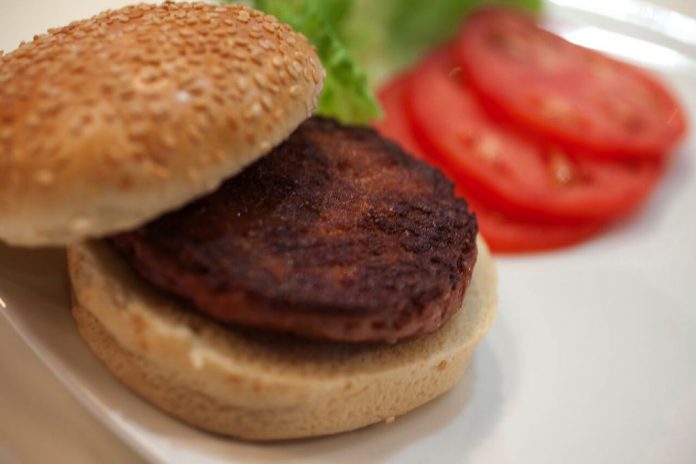
The world’s first fully lab-grown burger was eaten in London, back in 2013. This kind of meat (also called in vitro meat, cultured meat, test tube meat, etc.) is grown by taking stem cells from animals, and nurturing them in Petri dishes with nutrients, amino acids, and proteins. The cells are attached to collagen scaffolds to organize them. As they grow, scientists electrically stimulate the muscles to keep them from atrophying.

Supposedly, if you keep doing that, you will grow edible strips of muscle: no steroids, hormones, or antibiotics required. Personally, I feel pursuing this research and marketing lab-grown meat in the future is a great idea, especially with the continued growth of the human population.

Lab-grown meat is also more ethical than conventional ways of meat production, as less animal cruelty is involved. It doesn’t require an entire continent’s worth of land and water. The meat produced wouldn’t have to have hormones and antibiotics added to it, and if we wished, we could theoretically optimize the meat by adding extra omega-3 acids during the growth process. This methodology would also produce significantly less greenhouse emissions and antibiotic resistant bacteria.

Now, there are some challenges holding back lab-grown meat. Controlling the cell division to get the correct arrangements for meat is difficult, and artificially-induced cell division is a slow process.Some are worried about the loss of income and jobs for farmers, and about the fact that the meat isn’t “natural.”

It is also expensive to produce meat this way. In 2013, scientists in the Netherlands extrapolated that creating a full hamburger using their technique would take up to 6 weeks and US$250,000. To assist in this area, organizations pursuing animal welfare offered to contribute large sums of money to people that could solve these problems. For instance, PETA offered a $1,000,000 reward to the team that successfully creates marketable in vitro chicken meat.

However, by 2017, even the barrier of expense has reportedly been massively reduced. Sources such as BigThink and Next Big Future claim that, currently, the cost of a pound of lab-grown meat has dropped from several hundred thousand dollars to just $11.36 US, and it’s likely to keep dropping.

SciShow, a science-centric YouTube channel, brought up a Winston Churchill quote that I consider food for thought: “We shall escape the absurdity of growing a whole chicken in order to eat the breast or wing, by growing these parts separately under a suitable medium.”

SFU sells pond parking passes in hopes of relieving parking congestion

0
Photo-illustration by Chris Ho

An incident on October 2, in which a car drove into the AQ reflecting pond, actually offered up some inspiration for SFU admin on how to resolve the parking congestion problem at the SFU Burnaby campus. When SFU admin heard about the accident, they were struck with the idea to open up some parking spaces in the pond.

These pond parking passes were being advertised as “close to campus” and “scenic.” They weren’t advertised for long, though, since the pond parking passes have already sold out. People are already fighting each other over who gets to submerge their vehicle in a body of water because that is how dire the parking situation has gotten at this campus.

SFU admin know that the parking congestion problem is far from solved, though. Seeing how the regular parking passes sold out after just the first week of classes this fall, SFU will have to offer up many new spots, and they have been brainstorming new ways to create more space.

One of the new ways SFU was proposing to solve the parking problem was inspired by the sadistic game that is the SFU Surrey parking lottery. The idea was a parking game show, where students would compete in degrading games on live television to determine who would get a parking pass. Admin considered the idea, but decided to abandon it in fear of exactly how far SFU students would go for a parking pass.

The second idea SFU admin entertained was to play the environment card and make this all an issue about global warming. By doing that, they could blame the contribution diesel cars make to climate change as the reason they wouldn’t permit most cars on campus, thereby freeing many parking spaces. The idea is still being discussed, though, because all SFU admin would have to purchase hybrids to abide by their own rules, and no one really wants to be the guy with the hybrid.

If worst comes to worst, SFU is considering just converting the entire Burnaby campus into a concrete parking garage because that’s what this stupid brutalist campus already looks like anyways.

New Music Friday

(Linda Shu / The Peak)

“Whatever You Want” – P!nk

Neil MacAlister: This isn’t nearly as good as her song from last week, but it’s not bad. The writing on the chorus is straight-up lazy, though.

Ana Maria Mejia Morales: I don’t mind it, but she is becoming one of those artists whose music all sounds the absolute same. Lame, and frankly, boring.

Edna Batengas: P!nk, please just keep these tunes coming. I love how mellow this song is compared to her previous work. I’m digging it!

Jenna Beetstra: I used to rock out to P!nk in my friend’s living room and make up dances. This definitely isn’t a dancing song, but it’s not too bad. Nothing special.

“Ma Lo” – WizKid, Spellz, Tiwa Savage

NM: I keep waiting for WizKid to switch it up and give us something different, but I guess he’s just never going to.

AMMM: I like this song. Yeah, it sounds the same as everything everywhere, but it’s catchy. Sue me.

EB: I don’t think I’ll ever get tired of WizKid. He is one of the reasons why Afrobeats is now on the charts outside of Africa. I love his style, no one can ever replace him.

JB: Something about this just sounds off to me.

“Catchu Catchu” – Lartiste

NM: This sounds like a song Major Lazer would have made in 2010. It’s kind of catchy, but I feel like music has moved on.

AMMM: I love this French party music! This will be a song I can hear at a club somewhere in France and a girl will say, “C’est mon chanson!” Love it.

EB: This song already has me dancing in my seat. Yeah, this would definitely get anyone who has rhythm out on the dance floor. I appreciate music like this, positive vibes!

JB: This makes me want to jump on a plane and go clubbing in France. It’s a good thing I’m heading there in 2018! There’s just something fun about songs in other languages to me.

“How Long” – Charlie Puth

NM: Charlie Puth’s really on his JT here. He’ll always just be the guy from “See You Again,” though, and this isn’t doing much for me.

AMMM:  I like this. It’s a typical pop jam and an easy background listen.

EB: I’m not sure if it’s just me, but I’m kinda over Charlie Puth. Like, there’s nothing wrong with him, but meh, not really feeling his music anymore.

JB: I actually had to Google this guy because I didn’t know who he was. I feel like if I was a tween, I still might enjoy this song, but yeah, I’m just a little bit past that age.

“Pray” – Sam Smith

NM: I never got on the Sam Smith hype train. He puts me to sleep.

AMMM: Did everyone see that Sam Smith is seeing that guy from 13 Reasons Why? Sorry. Sidetracked. I think Sam is a very talented artist, but like P!nk, IT ALL SOUNDS THE SAME.

EB: Wow, wow, and wow. This song is by far my favourite Sam Smith song. Gosh, I love this. The lyrics are just so relatable. YES.

JB: I really love Sam Smith, his voice, and his lyrics. He’s coming to Vancouver next year FYI people. He has such great, slow songs. This isn’t a favourite of mine, but I do like it!

“His & Hers (Perspectives)” – Wretch 32

NM: I really liked Wretch 32’s verse on Stormzy’s album, but this isn’t really impressing me. He’s dropping a new album, though, so hopefully he’s got some more interesting stuff there.

AMMM: I don’t know much about rap, or who he is, but his accent is absolutely on point. The song is lyrically complex and personal. That’s all I can say about this.

EB: Meh, not really feeling this one. I think it’s hit or miss when it comes to British rap.

JB: The accent really threw me off at first. Actually, it threw me off the whole time. I can’t say I’ve heard much British rap, so this sounded kind of funny to me. I feel like all I hear is the accent and not the actual words.

“Mystik” – Tash Sultana

NM: This song is pretty cool, but that trumpet solo really blows everything else away.

AMMM: What a talented person! What a great voice! What a crappy rhythm!

EB: I like this. It’s alternative, but still amazing. Consider it added to my playlist.

JB: I like this one. Sounds like a road trip in Cali.

“Heart The Weekend” – Shakka

NM: Shakka’s featured on one of my favourite Young Thug songs, but for some reason I never got around to checking out his solo stuff. I think I’m going to have to, because this is kind of awesome.


AMMM: The song basically only says “I love the Weekend.” I find more interesting things inside the garbage.

EB: Even though it’s pretty repetitive, you have to admit that it’s pretty catchy! I’m already singing along to it.

JB: I love the weekend too, but no need to say it a million times. I feel like this guy could be good, but seriously, repeating the same sentence over and over again should not be considered a chorus.

“Bad Habit” – Kid Ink

NM: We honestly need to stop paying attention to Kid Ink. He put out that one good song in 2011 where he sampled “California Dreamin’,” and that was pretty much it for him.

AMMM: This week’s playlist sounds all the same. This song is OK. I don’t mind it, but there is nothing fun or different about it.

EB: I’ve got nothing against Kid Ink, but that was pretty boring. Just saying.

JB: The first 20 seconds were a waste of time. Why start off so slow? People will just change the song because they think nothing is playing. There’s still something missing in the rest of the song though, and I can’t decide what it is.

“Tuzak” – Kezzo

NM: This is alright. I’m digging the synths.

AMMM: I’m guessing Turkish? I have no idea what he is saying, and for all I know it could be some kind of beautiful poetry. Seeing that I don’t need any translation for the beat, I am gonna say this: it sucks!

EB: Someone please buy me a Turkish to English dictionary. I must know what he’s saying!

JB: I know I said I was digging the music in other languages but this one just isn’t doing it for me.

“Chaos” – Rich Chigga

NM: I love Rich Chigga. He just has this way of rapping that seems so effortless. I wish he’d change it up more, though, this is pretty much his default sound.

AMMM: No. No. No. No. Stop. Next. What the hell is that album cover? Oh God, thank God its over . . . That was my actual reaction.  

EB: HAHAHA, I can see myself dancing to this song just to humour people. But seriously, NO. He kinda sounds like a random SoundCloud rapper.

JB: I do not like the siren-sounding thing in the background.

“Free Fallin’” – Tom Petty

NM: Ooh, this is kind of hard to listen to. RIP to a real legend, nobody sounds like Tom Petty.

AMMM: Will always be brilliant. Thanks Tom.

EB: My mum loves Tom Petty, so I only have good things to say! RIP Tom.

JB: ALL THE FEELS. I saw Tom Petty live in Pemberton in 2008. What a wonderful song this is, and will always be. Rest in Paradise.