Home Blog Page 657

The Pittsburgh Penguins are not just hockey players at the White House

0
Photo courtesy of Jonathan Ernst/Reuters

Sports appeal to me because they are a way to cast aside who you are and where you came from, and to be a part of something larger than yourself: a collective that is based on passion, mutual interest, and good-spirited competition. Sports are not political.

However, the ability to separate your identity as an athlete from your politics is a privilege.

Last month, the Pittsburgh Penguins publicly announced that they will be attending the White House, just a day after the president denounced and insulted black athletes protesting peacefully. This is a tone-deaf exercise of white privilege.

With approximately only 30 black players in the entire National Hockey League, why is it that we expect only the black athletes to engage with the difficult conversations of racism and oppression? Why is the Pittsburgh Penguins given agency to continue ‘business as usual,’ and not have to reflect on the privilege of being exempt from such discrimination both on and off the ice?

Racism and oppression are embedded within our socio-political structures in ways that almost become commonplace. Stephen Curry said it best when he discussed the position that black professional athletes find themselves in: “When we’re not in between these lines and with a jersey on, in [our casual dress], we could be targets.”

When white supremacists march on Charlottesville, it’s free speech; peaceful protests against police brutality by black athletes deems them “sons of bitches.” We relieve non-black individuals of the responsibility to speak up and advocate on behalf of their teammates or other athletes enduring racial abuse and oppression.

Sports are not political. But the ability for white athletes to remain oblivious to the American president’s contention with black athletes is a marker of their ignorance. They are not personally impacted by the problem, which means they can ignore it more easily, but that doesn’t mean ignoring it is right. Maybe being athletes doesn’t obligate them to be part of the conversation, but being people does.

Sidney Crosby is not evil, but we cannot claim that he is just “a hockey player going to the White House.” Not in this political climate, and not ever. Colin Kaepernick is still without a job as a result of his protest, and has been called a “son of a bitch” by the leader of the free world for exercising his First Amendment rights.

We must look at such actions, or inactions as what they are: a fear of disrupting the racist status quo. But if those with certain levels of privilege evade these conversations, the status quo persists. By remaining detached from such issues and continuing “business as usual,” the Pittsburgh Penguins are contributing to the problem rather than the solution.

If we continue brushing off the actions of non-black individuals as unimportant to the conversation, we are enabling their complicity with the larger system at hand. Their identities are apolitical and therefore we see their stance as such; but that attempted detachment is, in and of itself, privilege.

So no, Sidney Crosby and the Pittsburgh Penguins are not just hockey players attending the White House; they are part of a greater system in which those with privilege stay silent, while the oppressed have their voices dismissed.


Homelessness in Lower Mainland reaches new levels, says report

0

The number of people experiencing homelessness in the Lower Mainland has reached its highest level and is growing four times faster than the population, according to a new report that combines the latest counts from across the region.

The recent report is the first instance of the homelessness count being jointly planned and executed by the Metro Vancouver and Fraser Valley communities. It revealed a 40 per cent increase in homelessness since 2011 with 4,211 people counted in communities across the region.

Metro Vancouver alone saw a 30 per cent increase in homelessness since 2014, compared to only a 6.5 per cent increase in general population of the region between 2011 and 2016.

The count, which included the involvement of over 1,200 volunteers, was carried out between March 7–8. Twenty of those volunteers came from a health sciences course at Simon Fraser University taught by lecturer Paola Ardiles.

“I think I was surprised that the increase was not larger,” said Ardiles in response to the findings of the report. However, she noted that many people experiencing homelessness were not included in the count, such as those “living off the generosity of friends.”

According to the report, the number of homeless youth has decreased from 20 per cent in 2014 to 16 per cent this year, while the number of homeless seniors has increased and now represents 23 per cent of the total homeless population. 34 per cent of the individuals experiencing homelessness identified as Indigenous, and 82 per cent described having at least one ‘health condition’ which includes addiction, medical conditions, mental illness, or physical disabilities.

“Homelessness is a choice we are making as a society.” – Paola Ardiles, SFU lecturer

The comparisons between the two regional districts revealed that the Fraser Valley homeless population is statistically more likely to be younger, female, and suffering from a health condition than the Metro Vancouver population.

Ardiles connected rising inequities in Metro Vancouver in regards to housing affordability, the opioid crisis, and precarious work conditions to the rising rates of homelessness.

“It does not make sense to me that we keep trying to deal with the crisis without proper investments in prevention. We have so much evidence already on what it takes to create a healthy community,” she said. “Homelessness is a choice we are making as a society.”

As part of an initiative to decrease homelessness rates in Metro Vancouver, the BC Non-Profit Housing Association, which conducted the count, has put forth an affordable housing plan which calls for a ‘housing first’ approach. Housing first focuses on recovery as a means to ending homelessness by first moving homeless individuals into permanent housing and then providing additional support for health and wellness issues to tackle the cause of their homelessness at the root.

For Ardiles, it is clear that everyone in society has a role to play in regards to the issue of homelessness in our community, including herself as an educator.

“I feel privileged to be able to teach the future leaders of tomorrow, the ones that will bring more innovative, humanistic, ecological approaches to solving the most complex social and health issues such as homelessness,” she said.

Local residents stage anti-Kinder Morgan protest at public safety office

0

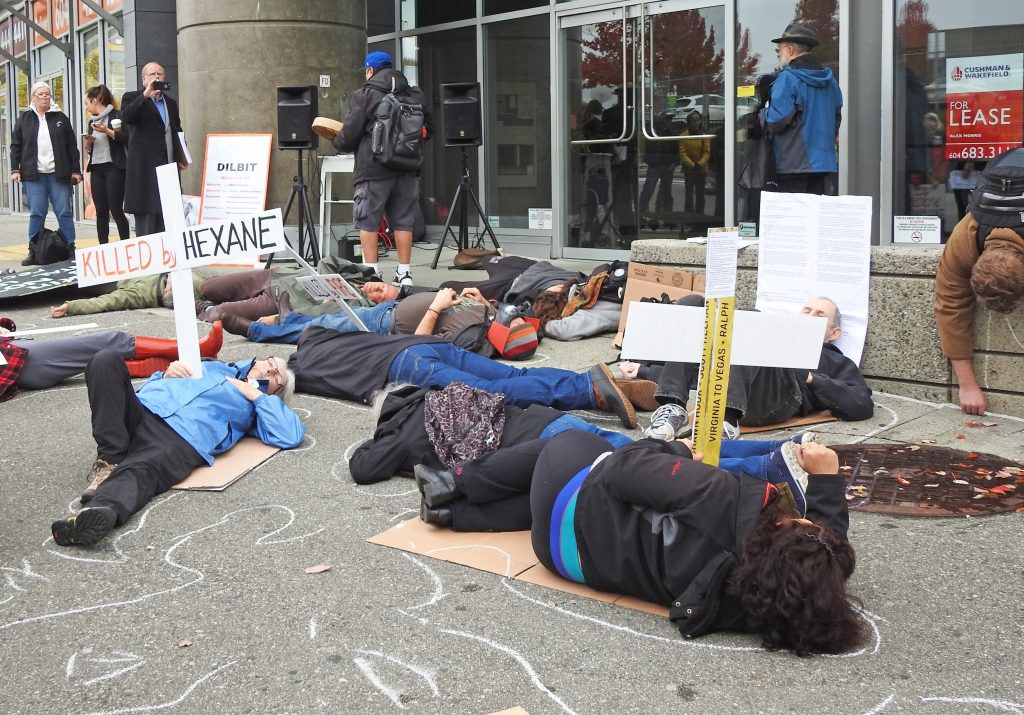
Local residents rallied against the expansion of the Kinder Morgan Trans Mountain tank farm yesterday at the base of Burnaby Mountain in front of a local branch of the federal public safety office. The protest called a ‘die-in’ featured members of the protest lying in chalk outlines on the ground to bring attention to what they say are unacceptable risks associated with the project.

The protesters delivered a letter addressed to Public Safety Minister Ralph Goodale expressing their concerns about the potential for a disaster at the tank farm that could result from a fire or explosion.

“We’re basically just calling on Minister Goodale to do his job,” said Ruth Walmsley, one of the event organizers.

The protesters staged a ‘die-in’ to draw attention to the risks associated with the expansion of the Kinder Morgan tank farm. (Aliocha Perriard-Abdoh / The Peak)

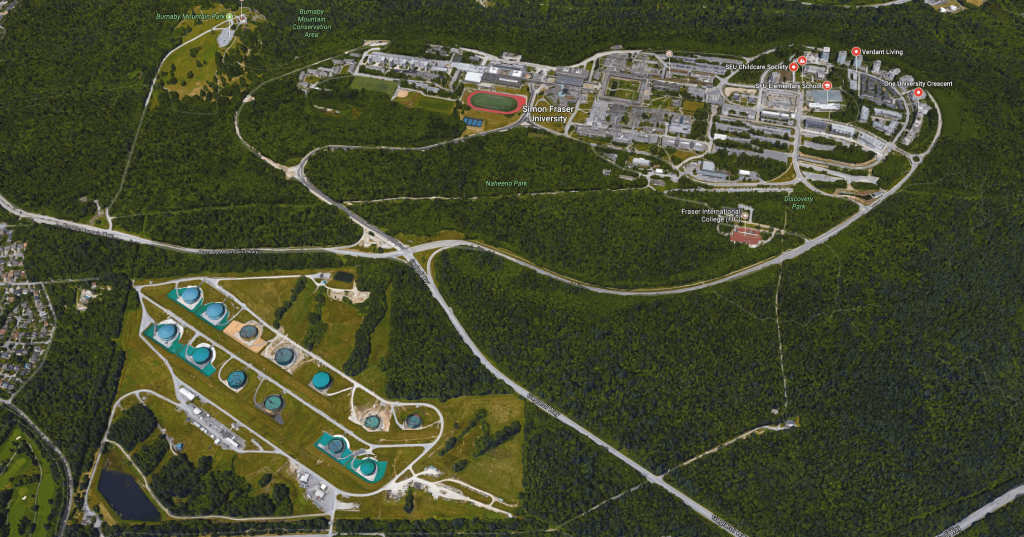
The expansion of the tank farm located on the side of Burnaby Mountain near the Simon Fraser University campus is part of a larger project that will see the twinning of an existing pipeline carrying oil from Alberta to the coastal marine terminal in Burnaby. The number of tanks on the premises will double and a new pipeline connecting the facility to the marine terminal will tunnel through the mountain.

The Peak recently reported that construction has started at the nearby marine terminal though the work scheduled for last month at the tank farm is not yet underway.

Read: Kinder Morgan gears up for tank farm construction

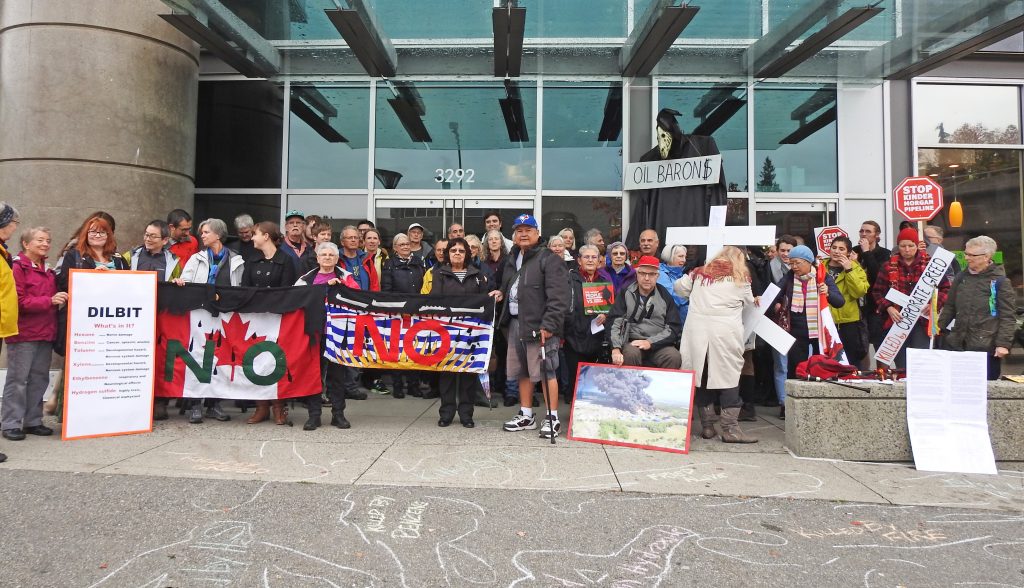
After a period of chants and speeches, the protesters left the letter addressed to Minister Goodale at the regional office. The protest was coordinated by Burnaby Residents Opposing Kinder Morgan Expansion as well as 350 Vancouver, which is a global organization dedicated to tackling climate change.

Walmsley commented that she was pleased with the turnout for the event and noted that the project posed a risk to Simon Fraser University as the only entrance to the campus is directly beside the facility.  

The tank farm is located just below the intersection that provides access to the Simon Fraser University campus. (Google Maps)

“Two major roads intersect a mere couple of meters from a [tank farm]. There are tons of other countries in which such a project would never be approved,” said Walmsley.

The letter calls for a safety analysis of the tank farm expansion made available to the public, as well as a response strategy for all those within the community who live in high-risk areas, and a report on how Public Safety Canada intends to address any forthcoming incidents.

“What’s most striking is that they want to follow through with the project even though they are completely unprepared in the events of a fire, spill, or explosion,” said Dave Lowey, a local resident. “The fire department isn’t equipped to handle these incidents either due to the air’s toxicity.”

A 2015 analysis by the Burnaby fire department concluded that the tank farm was “not the appropriate location” to expand due to the difficulties in extinguishing a fire or responding to another emergency at the location which could include toxic smoke plumes such as the release of sulphur or flammable gases.

A letter for Public Safety Minister Ralph Goodale signed by local residents was left at the regional office. (Aliocha Perriard-Abdoh / The Peak)

SFU is also concerned about the risk to people on campus and in the neighbouring urban community UniverCity after a report it commissioned last year found that a disaster at the facility could block the only access to the campus.

It is not just the tank farm that is concerning local residents, but also the increased tanker traffic from the Kinder Morgan marine terminal adjacent to the mountain.

“My [primary] concern is with the oil tankers carrying bitumen oil,” said protester Thomas Chan, citing that bitumen crude oil, one of the crude products transported in the existing pipeline, will sink faster if there is a spill on the water. “In the event of a spill, we could see the entire coastline of BC being destroyed.”

The latest protest is not the end for those who are determined to not let the project proceed. Vancouver 350 is planning a flotilla on October 28, which will include protesters on floats and kayaks as well as some on land, with the aim of disrupting Kinder Morgan activities and ensuring that their concerns are heard.


SFU football shutout second time this season in 61–0 loss

0
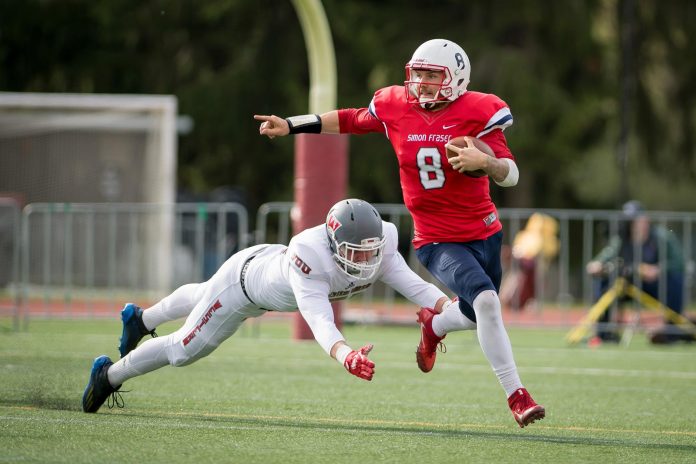
Miles Richardson went 22–36 in pass attempts, throwing for 176 yards. (Photo courtesy of SFU Athletics)

Looking to play the role of the spoiler at the Azusa Pacific University’s (APU) homecoming game Saturday night, the SFU football team instead fell 61–0 for their seventh loss of the season and the second time they’ve conceded a shutout.

They ran into the GNAC’s best offensive player — by the numbers, at least — in Azusa quarterback Andrew Elffers. Going into the game, Elffers put up a GNAC-leading 2178 yards over seven games (311.1 yards per game), and increased that total on Saturday to 2517. He only played the first half and the first drive of the third quarter, before Azusa’s backups slotted in.

On the Clan’s side, they endured another rough night on offence, and in particular, their ground game. The team managed to put up 122 yards of total offence, but that’s with negative 54 yards rushing. Only one first down was achieved on a running play.

SFU received the ball first, and achieved a first down on an 11-yard catch by Justin Buren on third and nine. They weren’t able to do anything more with the drive, however, and Azusa Pacific got the ball at the 50-yard line.

Elffers immediately showed why he’s such an effective player, throwing two passes for 39-yards, and running it in himself for 11-yards to put Azusa up 7–0 five minutes in.

SFU went three and out on their next drive, and Elffers threw a 31-yard touchdown pass less than two minutes after the previous touchdown.

By the end of the quarter, Azusa was up 23–0, thanks to three touchdowns and a safety.

The last defensive drive of the first quarter started to see some things go right for SFU. Defensive back Ben Minaker and defensive lineman Isaac Evans tackled Azusa’s Kurt Scoby for a loss of six yards. A flag put Azusa at second and 21.

As the second quarter began, they made up 19 yards, but were still fourth and two. When they went for it, Scoby was again tackled, this time by Luca Bellini and Jordan Leech for no gain, resulting in a turnover on downs.

SFU took advantage of the momentum and put up their best offensive drive of the game, lasting 4:59. On the back of some effective passing by quarterback Miles Richardson and an APU holding penalty that spotted them 19 yards, SFU made it to the two-yard line.

Alas, all good things must come to an end, and the Cougars intercepted a pass to end the drive.

The good play continued, despite the blip, into the next defensive drive, keeping Azusa to just 16 yards. They even forced Elffers to throw an incomplete pass, his first of the game.

After that, however, there wasn’t too many positives for SFU. Azusa scored two more touchdowns to go into halftime 37–0, and continued to build that lead in the second half. SFU’s next best offensive effort came in the beginning of the fourth quarter, when they made it to APU’s 33-yard line.

Richardson finished the game going 22-for-36 in pass attempts and putting up 176 passing yards. He threw one interception and was sacked eight times. Backup Mihai Lapuste played one drive in the fourth quarter, before Richardson returned to play the final drive.

Buren put up the best game on offence, making 10 catches for 89 yards. Gabe Lopes put up nine total tackles (three solo), while Deondre Townsend put up seven (five solo).

Gavin Cobb put up 84 yards on five returns. He saw limited action in the second half, being called up only once — when he called a fair catch in the fourth quarter.

SFU returns home Saturday, October 28 to face the Humboldt University Lumberjacks. Humboldt sit second in the conference with a 6–1 conference record, and are the best offensive team in the GNAC, putting up 46.9 points per game.

The Lumberjacks beat the Clan 72–14 in their previous matchup this season.

Kickoff is at 1 p.m.

Lil Yachty shows Vancouver the meaning of audience participation by starting a massive water fight

0
Whatever you think of the young artist, you can’t say that he’s boring. (Photo courtesy of Anton Mak)

Lil Yachty, one of the most divisive figures in hip hop, is essentially heralded as the harbinger of today’s SoundCloud rap movement. His sound is innovative and boundary-pushing, mixing together Lil B’s positivity, Soulja Boy’s performative aggression, and Kanye’s indefatigable pride and self-assurance into an entirely new and influential sound.  While knocking against old heads’ standards, this sound has resonated with the youth of today.

     I missed tickets to Yachty’s first show in Vancouver last year, so when he announced a North American tour in support of his new Teenage Emotions album, I grabbed tickets for me and some friends immediately (at $30 apiece, it was a surprisingly affordable event). Despite a date switch, and a venue switch, from the PNE Forum to the Vogue, I managed to make it to the show just in time for Yachty to take to the stage, and was treated to one of the craziest concerts I’ve seen yet.

     The concert was an all-ages show, which meant that there were chaperoned 10-year-olds alongside inebriated twenty-somethings, but the crowd’s energy was never less than exceptional. Yachty arrived onstage to massive excitement, pumping out hits like “Harley,” “Peek a Boo,” and his triple-platinum hit with Kyle, “iSpy.” Some mic difficulties kept him off the stage for about fifteen minutes early into the show (much to the chagrin of the young audience, who proceeded to yell and throw things onstage), but the DJ kept a steady rotation of Lil Pump hits playing while the technical issues were ironed out.

      Once Yachty was back onstage, it was on for the rest of the night. From excellent performances of older favourites like “Minnesota” and “1 Night” to newer standouts like “Say My Name.” He even brought members of the audience onstage to sing tracks from Teenage Emotions, cheering for the one who succeeded, and dumping water on everyone who got onstage without actually knowing the lyrics. Water seemed to be a theme for the show, as towards the end, he and his team started throwing water bottles out into the audience, instructing fans to hold onto them. After spending about fifteen minutes, throwing probably a couple hundred bottles out, he announced that the whole audience was going to have a water fight. As you can probably imagine, it was an absolutely surreal experience that could’ve easily gone awry, but it ended up being one of the most incredible things I’ve ever seen at a live show.

     Like him or hate him, Lil Yachty certainly knows how to put on a show. Without an opening act, or much in the terms of a light show, Yachty nonetheless carried the night with a carefree energy, great performances, and enough water to sink a lil boat.

Fish tales: the collapse of BC’s wild salmon

2
BC's lack of salmon is concerning to scientists and fishermen alike.

“Shocking,” “contentious,” and “controversial” aren’t ordinarily words you hear associated with wild salmon but the truth is the salmon runs of 2016 and 2017 have been anything but ordinary. BC salmon have been shattering records, and not in a sense that anyone is excited about.

The past two years have seen unsettlingly low returns of pink, coho, and chinook salmon while Fraser River sockeye set an all-time record with their low return in 2016. Not only has this dealt a staggering blow to BC’s economy — which relies heavily on commercial fishing for salmon — but the chaos and frustration following the collapse of these populations has created enormous tension between stakeholders as commercial fishing organizations, First Nations, and recreational fishermen vie for an extremely limited number of fishing openings.

As data regarding the ongoing 2017 salmon run rolls in, it is only becoming more clear that one of BC’s most iconic species is in a fight for its survival. More upsetting is the fact that we can’t seem to stop it.

Part of the problem might be that we are fighting from behind. In the early 2000s, studies began to show a distinct decline in population among Canada’s wild salmon. Acting quickly, the Canadian government started work on a new set of policies which would set out a clear mandate to all government agencies with a framework of goals and priorities to guide the management of wild salmon. These would be published in 2005 by the Department of Fisheries and Oceans (DFO) as Canada’s Wild Salmon Policy which promised a “significant new approach to the conservation of one of Canada’s most cherished resources.”  

This policy was a beacon of hope to conservationists and fishermen alike who believed it marked a turning point in how we handle marine species in Canada. Their excitement was short-lived, however, as vague wording within the policy itself created changes that were slow at best and, at worst, indiscernible.  

By 2009, populations had continued to decline and the crisis facing BC’s salmon, sockeye specifically, had become undeniable. Following three consecutive years of closure for commercial fishing on the Fraser River (costing BC’s economy tens of millions of dollars) the Canadian Government had had enough and invested $37 million into the formation of the Cohen Commission — an investigative team tasked with uncovering what was happening to the Pacific salmon. There was only one problem: they couldn’t.  

In 2012, the Cohen Commission report was published without an answer to its defining question. Instead, it had 75 recommendations for what needed to change in Canada’s management protocols in order to effectively monitor and manage salmon populations. At the time of publication, out of 20 deadlines outlined in the Cohen Commission recommendations, 18 have lapsed without any meaningful action.

Currently, the saga continues as SFU researchers Michael Price and John Reynolds published a study this summer in the Canadian Journal of Fisheries and Aquatic Sciences. They found that the number of adult salmon spawning in BC streams had actually declined since the implementation of Canada’s Wild Salmon policy. However, their study went further than simply looking at whether or not management efforts were effective.

The study, titled “Canada’s Wild Salmon Policy: an assessment of conservation progress in British Columbia,” went as far as to examine the management procedures that were creating these effects. In doing so, they may have uncovered the real problem with two specific conclusions:

  1. Monitoring levels of migrating pacific salmon are at an all-time low.
  2. There is inadequate information to determine the biological status of roughly one-half of [Pacific salmon].

The study suggests that the problem was not a case of negligent management but rather a complete lack of data and resources.  

The truth is the efforts that the DFO have made to support Pacific salmon populations since the Cohen Commission report have been enormous. Millions of dollars have been used to fund habitat enhancement and restoration for salmon-bearing streams while a wide range of partnerships with stakeholder groups attempt to spread the responsibility of monitoring salmon populations among a larger support group.  

“A decline in funding in recent years reduced general stock assessment activities delivered by [the] DFO and instead focused those activities on key species, stocks, and geographic areas,” said Lara Sloan, communications advisor for the Department of Fisheries and Oceans Canada. “[We use] new technologies (for example, DIDSON sonar systems) as a cost-effective approach to deliver information needed to support conservation and fishery objectives.”

The unfortunate reality is that the organizations responsible for managing these salmon simply do not have the resources necessary to cope with a crisis the like what is facing the Pacific salmon today.

“The materials presented in [Price et al.’s study] are correct to my knowledge and likely a shock to those not as closely involved as I am,” said Pacific Salmon Foundation CEO Brian Riddell. “But the message that salmon assessment is under-funded is not a new message and is one that continues today . . . On a positive note, many persons have now recognized what these authors have reported and steps are being taken to correct this situation.”

It’s easy to become frustrated, as so many have, by the pattern of redundant reports and goals fallen by the wayside that litter the recent history of BC’s salmon. But, if we are going to stop the imminent collapse of the Pacific salmon, a more destructive pattern needs to be acknowledged and corrected. The pattern of research without action, policies without resources, and cries for help with no answer needs to stop.

BC stands to lose an icon deeply entrenched in our history. It’s time that we, as governments, as organizations, and as citizens move the Pacific salmon up our priority lists and ensure that effective action is being taken at every level. We need to hold our representatives in government accountable to fund the policies that they have adopted and the mandates they have laid out and ensure that the organizations tasked with managing these species on our behalf have every necessary resource to accomplish the critical mission we have entrusted to them.  

We need to take immediate, united action to save these fish before it’s too late.

SFU develops biomass plant to decrease greenhouse gas emissions

1
Photo courtesy of SFU News

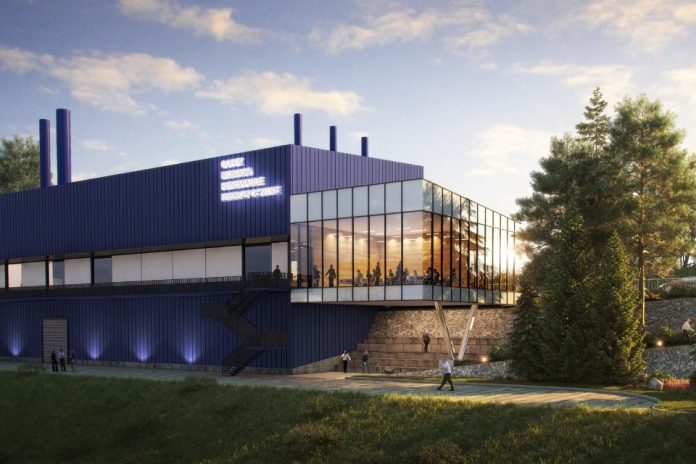
Simon Fraser University is set to start construction on a new biomass plant that will power the university and adjacent urban community while drastically reducing emissions.

SFU, along with SFU Community Trust, which oversees the development of UniverCity, has partnered with Corix Multi-Utility Services Inc. to develop a $33 million neighbourhood energy utility project called the Burnaby Mountain District Energy Utility.

The new energy utility will use biomass — recycled urban and construction wood waste — as its primary fuel source, instead of traditional fuel sources. The purpose of this biomass plant is to reduce SFU greenhouse gas emissions by 80 per cent, according to Corix’s website.

“We would expect the [biomass plant] to be in place by 2020, thereby fulfilling the objective of low carbon energy for UniverCity,” said Dale Mikkelsen, SFU community trust vice-president of development.

Once the biomass plant is complete, it is expected to reduce SFU’s greenhouse gas emissions from all sources in the region by 69 per cent, according to a press release by the university.

The biomass energy plant will be located on an undeveloped site across from the South Sciences Building.

Biomass was chosen as the alternative energy source because it is environmentally friendly, and able to help SFU reach its goal of reducing its greenhouse gas emissions, whilst effectively delivering sufficient amount of thermal energy to the Burnaby Mountain community.

The district energy utility project was reviewed and approved by the British Columbia Utilities Commission, which determined that the project met environmental regulations. The biomass plant will meet regional regulations for air emissions and will not affect air quality on campus, according to Todd Gattinger, SFU director of maintenance and operations.

“Particulate matter will be mitigated by the plants emission control systems,” Gattinger said.

“The [biomass plant is] designed to comply with regulatory noise and sound abatement bylaws. The emissions from the [plant] will be monitored and annual emission testing will be completed in accordance with regulatory requirements,” added Mikkelsen.

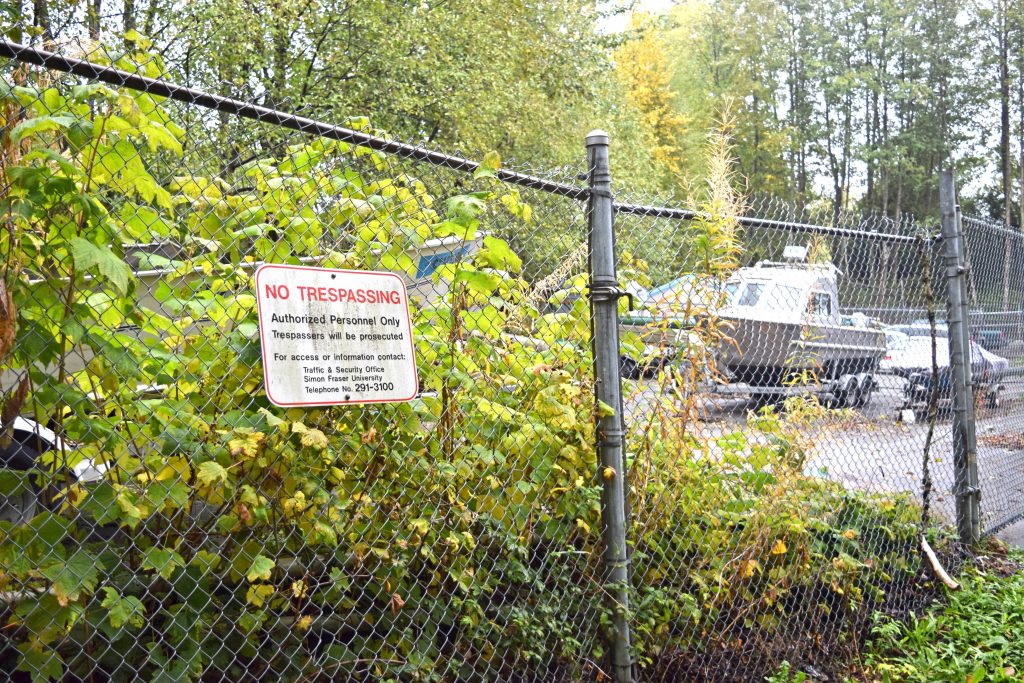
The plant will be located along South Campus Road nearing the slopes of Burnaby Mountain in a previously developed area. The majority of the site will be constructed on an existing parking lot.

Corix’s website states that the plant will “significantly improve the visual character of this undeveloped site” and that construction on the project is not expected to be a disruption to the campus community.

“This part of SFU houses much of the current mountain infrastructure facilities and is adjacent [to] Facilities Management,” explained Mikkelsen.

The construction on the plan is expected to start in the coming year.

Hairstyles for late and lazy people

0
Illustration by Carolyn Yip

Whoopsie daisy! You slapped the snooze button too many times because you’re a failure at life (don’t worry though, we all are) and now you have 10 minutes to wash the ever-accumulating filth off your body, do your hair, pack some breakfast to annoy your professor with, and fill in your eyebrows if they’re nonexistent. How will you accomplish all of that in 10 measly minutes? Don’t worry fam, I’ve got you covered! Here are five hairstyles for when you can barely afford to run a brush through them.


  1. Get creative with how you secure your bun

    Who says you need to use hair bands to tie up that bun? Go for something more extravagant and use it to distract others from noticing your greasy “could totally make KFC jealous” roots. The more shock value your choice of fastener brings, the more likely other people will want to talk to you. What an easy way to make friends! It’s a win-win situation here. Pile on the 1980s scrunchies, or wear a head full of butterfly clips. If you want to step it up a notch, use a black garbage bag as a hair tie to let others know that you’re trash. 
  2. Go for the slicked-back wet look 

    Whoever invented this hairstyle is a genius. Who cares if you’ve been knee-deep in exams and haven’t washed your hair in a week? You can look like you just stepped off the runway at New York Fashion Week with a little bit of water and a ton of hair gel. The more hair gel you pile on, the trendier it looks. You can even scratch at your roots all day and the dandruff will probably stay encapsulated in it. Wear an easy slip-on dress, and people are going to be wondering if you’re actually a morning person.

  3. The Betty ponytail
    Raise your hand if you’ve stayed up until three a.m. binging season one of Riverdale to prepare for season two, and slept a total of “NOT ENOUGH” hours. You thought about taking a shower before bed, but the risk of falling asleep in the shower was too high. How do you hide the flaming pile of garbage on top of your head? Take some style cues from Betty, and use the excess oil to guide your strands into the preppiest ponytail you can muster. Throw on a crewneck sweater, and go find your Veronica.


  4. A french braid

    This is the perfect hairstyle to do on the bus, since you’ll have enough time to undo and redo the braid over and over again. Also, you can’t scream in frustration as you usually do since there are thirty people on a moving vehicle who will stare and silently judge you. French braids work the best with sticky, greasy hair anyways, and the braid can help hide the evidence of your beer-soaked hair from when you were higher than Snoop Dogg and let someone dump a cupful on you. Plus, french braids always look elegant and sophisticated — even if you’re trashed.
  5. Hatzzzzz
    If you’ve gotta rush out the door in two minutes flat, a toque/beanie is your best bet. Remember to spray some perfume on it in case someone tries to get too close and is all up in your personal space. You don’t want them to drop dead from the stench.
SFU lose 5–1 to UVIC in penalty-filled game

0
UVIC's Alec Dillon was the first star in the game, stopping 30 of 31 shots. (Photo courtesy of SFU Hockey)

After last week’s home opener got cancelled, Simon Fraser hosted the University of Victoria (UVIC) in home opener number two on Saturday night at the Bill Copeland Sports Centre. After a referee scheduling mishap last week, the referees were very present at this game, handing out a total of 32 penalties throughout the game.

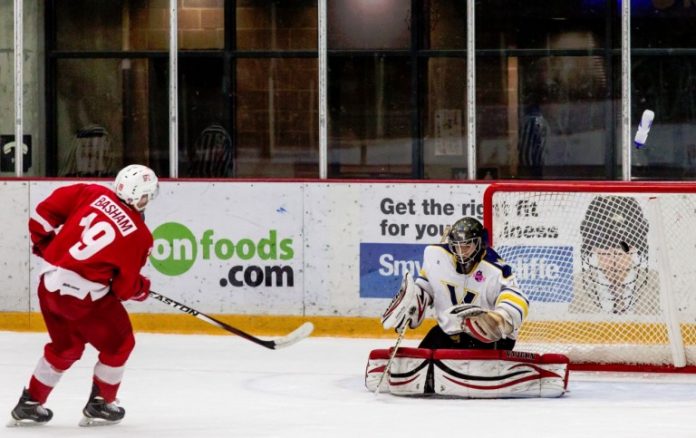
The game did not get off to an ideal start for the Clan, as Brendan Lamont picked up a tripping penalty not even a minute into the first period. After killing off the penalty, SFU got a 5–3 powerplay of their own but were unable to capitalize, with Tyler Basham’s shot off the crossbar being the closest chance. UVIC made them pay soon after, as Liam Shaw opened the scoring seconds into a penalty from SFU’s Jaret Babych at 9:36. The period would end 1–0, with multiple penalties assessed to both sides, including one 10-minute misconduct to a player on each team.

The second period started similarly to the first, with Simon Fraser being accessed a penalty not even a minute into the frame. UVIC would later score on another powerplay at 17:53, as a lucky bounce landed right onto Brandon Volpe’s stick in front of the net.

The Vikes would score on the powerplay again at 9:27 to make the score 3–0 after captain Brandon Tidy picked up a questionable slashing penalty. After the goal, Tidy showed his displeasure with the referees and picked up a 10-minute misconduct as a result. The Clan would answer at 4:02 with a powerplay goal of their own from assistant captain Mathew Berry-Lamontagna. His slap shot from the right side went into the top corner of the net, right over the UVIC goalkeeper’s blocker. The goal was assisted by Jaret Babych and Darnel St. Pierre. The teams would head into the third period with a score of 3–1 in favour of the visitors.

After the game, head coach Mark Coletta had this to say: “The first two periods, it was tough to get a flow going five-on-five. I think we play our best hockey five-on-five, especially on our ice surface. We just didn’t get into that flow.”

“Credit to UVIC, they played a perfect road game after last night’s performance. They got the bounces and capitalized on everything they got.”

In the third period, UVIC put the game out of reach, adding a goal with 5:16 to play and again with 4:06 left in the game. Unlike the first three goals, however, both goals came at even strength. They would go on to win the game 5–1, one night after losing 11–1 to Trinity Western the night before.

“[It was a] tough game to get a grasp of [due to the penalties] . . . I’ve been in this league for a while, I haven’t seen that happen in a long time. Our guys are frustrated, their guys are frustrated,” said Coletta on the game.  

On what the team can improve heading into the next one, Coletta said, “Emotion.”

SFU will next play Trinity Western at the Langley Events Centre on Thursday evening, before playing again on Friday against Eastern Washington University at the Bill Copeland Sports Centre. Puck drop for both games is at 7 p.m.

Simon Fraser lose 1–0 to Concordia at home

0
Allyson Dickson and the rest of the Clan had trouble getting past the Cavaliers defence all game. (Photo courtesy of SFU Athletics)

Saturday afternoon saw SFU’s women’s soccer team come up against a tough and well-organized Concordia Cavalier’s squad. Terry Fox Field was a cauldron of fierce rain and whipping wind as the game kicked off. The Clan were unable to gain a foothold through most of the first 45 minutes, with the majority of the game being played in their end of the park.

The first half was dominated by Concordia as their pressing play overwhelmed SFU. SFU’s women doggedly chased the game and were relentlessly defending the waves of Cavalier attacks. Notably, SFU midfielder Kaely Biring made two outstanding defensive efforts to stifle Concordia attackers in the first 45 minutes. A sliding challenge followed by a timely block helped keep the Cavaliers off the scoresheet.

The Clan struggled as they were outmuscled on the field as many battles resulted in possession with the white shirts of Concordia. “All over the pitch, physicality was not our strength,” said SFU women’s soccer head coach Annie Hamel.

“It is something we do well adjusting to, when we are playing in and around players, but they are a smart team and well-organized,” said Hamel. “Teams try to exploit your weaknesses. Size is a thing, it’s who we are, we have speed.”

SFU was unable to display the speedy attacking approach coach Hamel referred to, as they could not muster substantial offence on Saturday afternoon. At times, swift Clan winger Christina Dickson was able to push forward and fly down the right-hand flank. Frustratingly, this was to no great avail as SFU rarely produced goal scoring opportunities in the first half.

With the weather conditions still adverse, the second half began. SFU were unlucky to concede a rather awkward goal with two minutes elapsed. A midfield skirmish lead to the ball breaking free near the top of SFU’s box. Brenda Uribe of Concordia University was the first to react to the loose ball. She lined up a strike as two SFU players raced towards her in a desperate attempt to block her shot. Uribe blasted the ball as the two blue shirts of SFU arrived. The shot deflected spectacularly and looped above the back line and then dropped just before the crossbar. Goalkeeper Priya Sandhu was quick to react to the danger, but her outstretched arm pushed the ball back into play after barely crossing the line. Uribe was credited with the goal.

 Emma Pringle, SFU’s star striker, was silenced by a gritty and staunch Concordia backline. The Cavaliers were certainly aware of the threat the explosive striker imposes. Concordia did well to limit Pringle’s capabilities as they often double or triple teamed the SFU number 10.

“They do their job, they get the scouting reports and watch film and they take away your strength,” said Hamel as she commented on SFU’s inability to create offensive opportunities. Concordia had 13 attempts while SFU had six. “We have to find ways in and around that and players have to step up. Some games we do that and today we didn’t.”

Pringle currently leads the conference in points with 12 goals and one assist to her name. With her immense offensive talent, watch for those numbers to rise with Pringle averaging a goal a game this campaign.  

 With the rain still coming down in sheets, SFU skipper Samantha Donald latched onto a loose ball above the Cavalier’s box. The combative midfielder smashed an attempt over the goal late on in the game. Her rising shot was hit with enough conviction, but the captain could not keep the effort down. This was symbolic of SFU’s afternoon, as things just didn’t quite work out for them despite their committed and loyal effort to the cause.

Midfielder Jenna-lee Baxter tested the Concordia goalkeeper in the final 90 seconds of the match with a strike from a free kick situation. Donald quickly nudged the ball to her left as Baxter’s right boot connected well and let fly. The effort showed ingenuity from SFU’s offence which had been shut down for much of the match. However, the strike was saved in the decisive moments of the game. Persistent hard work and great spirit shown by the SFU women was not enough to overcome the Concordia Cavaliers as they eventually lost 1–0.

The Cavaliers extended their win streak to nine games in Great Northwest Athletic Conference play this season after their narrow victory on Terry Fox Field this Saturday.

Next up for SFU’s women is a clash with Saint Martin’s University on October 26 at Terry Fox Field. The Clan will look to bounce back and get back to winning ways on Thursday evening.