Home Blog Page 641

Album Reviews

0

Reputation by Taylor Swift

Taylor Swift has been one of the biggest names in music for years, a country-pop crossover darling who has leaned closer to pop with each successive album. 2014’s 1989 was a vacuous attempt at cookie-cutter stadium pop, but Reputation is something completely different. It’s a directionless amalgam of genres and styles that, while admirable in its experimentation, fails in Taylor’s inept hands. Her edgy rebrand is sad to watch, pushing an unconvincing bad-reputation persona, speaking more explicitly about sex and alcohol, and taking weak shots at Kanye West about a beef she already lost.

     There are points where Taylor tries to rap (as does Ed Sheeran, with even more horrific results), mishandled integration of electronic and house music, and some Imogen Heap-esque vocal manipulation, all mixed with out-of-place callbacks to her old sound. Reputation has brief, occasional moments of the pop brilliance that made Taylor Swift a household name, but it’s not enough to save the album from its misguided ambition. – NM

No Dope On Sundays by CyHi the Prynce

In 2010, CyHi the Prynce was introduced to the world after delivering a blistering verse on Kanye West’s “So Appalled” (from My Beautiful Dark Twisted Fantasy), but a regrettable deal with Def Jam saw CyHi basically shelved for the next seven years. He was relegated to a background role, mostly as a ghostwriter for artists in the G.O.O.D. Music collective. He’s released a few mixtapes over the years, but the Atlanta rapper saved his best work for his studio debut. CyHi’s an exceptional lyricist, with a notable penchant for punchlines, and his messages range from pro-black politics to the realities of drug dealing in Atlanta. This album adeptly confronts the opposing influences of the church and the streets (summed up neatly in the title, No Dope on Sunday), and features excellent contributions from the likes of Kanye West, Pusha T, 2 Chainz, ScHoolboy Q, and Travis Scott. It’s been a long time coming, but CyHi’s much-anticipated album doesn’t disappoint.–NM

Mourn by Corbin

Corbin, formerly known as Spooky Black, released his first album under his new alias this fall. The album shows how the switch of his stage name symbolizes a shift in his position as an artist. Songs on this album are produced entirely different: his songs are now quite lengthy, and tell stories. Prior to this album, all of Corbin’s music was made purely electronically, and most songs were short and contained few lyrics. Although Corbin’s sound has transformed drastically, the beauty and perfection of his music remains. In all of Corbin’s songs, the lyrics and music (whether digitally made or not), are combined into beautiful pieces of art that really make you feel something. What is unique about Corbin is you can hear and feel the emotion and the pain he divulges. It’s as if he is turning emotions that would normally be put into a diary into music. – RR  


A Tale for the Time Being is a story of personal growth and the path to happiness

0
(Image courtesy of Penguin Books)

A Tale for the Time Being, a novel written by Ruth Ozeki, takes the reader into an emotional spiral, and it’s an unforgettable experience.

     The book centres around two main protagonist’s perspectives: Ruth, who is an author living on Vancouver island, and Nao, a Japanese-American teen who is living overseas in Japan. When Ruth discovers Nao’s diary on the beach near her house, she gleans insight into Nao’s life, while developing a deep affection for her.

     In Ruth’s life, there is a strong desire for perfection, a longing for something that is missing. In her relationship with her husband, Oliver, there are tensions and barriers that illustrate the hardships of a marriage. Ruth’s obsession over Nao’s diary will warp the concepts of time and the realms of being in a way I can’t explain unless you read it.

     Nao’s perspective of the story is the best part — it’s an excellent coming-of-age story, while also addressing the harshest realities of abuse, mental health, and spirituality. Ozeki takes the teenage perspective, and makes it raw, real, and unapologetic. Following Nao’s story is intensely emotional, and it gives the reader a window into non-westernized ways of life.

A Tale for the Time Being grapples with the realities of being both middle-aged and adolescent that many authors wouldn’t dare to touch, and Ozeki has created what I will forever consider an undying classic.

Student health and wellness

0


As a student, it is often difficult to maintain a healthy lifestyle. There are many limitations on students that cause this: a significantly lower budget than non-students makes it hard to afford to eat healthily; many students aren’t even sure how to eat healthily; high levels of stress very regularly accompany academics; with a busy schedule, physical exercise is often forsaken; and, on top of all of that, many students are just leaving their parents’ house, and are beginning to take care of themselves for the first time. With all of these factors, it can be easy to lead an unhealthy lifestyle, both physically and mentally. Here are some things you need to know as a student.


Physical Health

What physical symptoms require medical attention?

Often times, it is even difficult to know when symptoms you are experiencing merit a doctor’s visit. Below is a list of physical symptoms, provided to The Peak by SFU Health and Counselling Services (HCS), that should be checked by a doctor. If you experience any of these symptoms, you should go to the doctor and get them checked out.

Keep in mind, this is far from an exhaustive list. If you are experiencing any symptoms that interfere with your everyday life, or function and quality of life, and if these symptoms persist, it’s best to go get them checked out.

  • Chest pain and shortness of breath
    These are very serious symptoms, and should be checked as quickly as possible.
  • Persistent fever for more than three days
  • Abdominal pain
  • Pain with urination or ejaculation
  • Genital sores or growths
  • A painful or swollen calf
  • Back pain that radiates to the leg or is associated with weakness or numbness in the legs
  • Change in level of consciousness or vomiting after a head injury

What symptoms do not require medical attention?

Apart from the previously listed symptoms, there are many that don’t require medical attention from a doctor, and can often be taken care of at home. Below are some examples, as well as ways in which they can be treated.

  • Common cold and flu
    These symptoms can often have an impact on the daily life of students, and can interfere with school and/or work. They rarely require a visit to the doctor. These symptoms can be treated with many over-the-counter medications. Acetaminophen and ibuprofen can be used to help relieve pain and fever. Medications such as Advil, Tylenol Cold and Flu, cough drops, and cough syrups can be used to treat many symptoms caused by the common cold and flu. Non-medical treatments such as greater amounts of rest and plenty of fluids can also aid recovery. As these are viral infections, it is important to know that antibiotics are never required to treat them.
  • Non-severe headaches, neck, and back pain
    Acetaminophen and ibuprofen can be used to treat these symptoms as well.
  • Joint injuries in the knees or wrists and ankle sprains
    Rest, icing, and elevating the injured area, as well as acetaminophen and ibuprofen are often sufficient to treat these injuries.


Mental Health

Despite any stigma that might exist circulating around mental health issues, they are strikingly common in post-secondary environments. Every three years, the National College Health assessment is held. At this conference, data of student physical and mental health and behaviour is collected and analyzed. The most recent conference in the spring of 2016 had many findings about student health and well-being. Some findings include:

  • The number one barrier to academic success is stress (with anxiety and sleep difficulties being the second and third largest barriers).
  • 55.0 per cent of students reported feeling exhaustion not caused by physical activity within the last two weeks of them doing the survey (with 87.8 per cent of students reporting such feelings in the last 12 months).
  • 53.4 per cent of students reported feeling overwhelmed by responsibilities in the last two weeks of them doing the survey (with 89.2 per cent feeling this way in the last 12 months).

Mental health issues are a common source of clinic visits at SFU, with 21 per cent of office visits being related to mental health issues in the 2015–16 academic year (this is an increase from 14 per cent in the 2011–12 academic year) according to Dr. Patrice Ranger, physician lead at HCS. Because of this high rate of mental health concerns, HCS is well-equipped with teams comprising of doctors, psychiatrists, mental health nurses, psychologists, registered clinical counselors, and even graduate students working on their practicum training. With the staff and its resources, HCS is there to help with any mental health issues students are experiencing.

Below is a list of some symptoms that are signs that you should see a doctor.

  • Persistent depressed mood
  • Feelings of being overwhelmed
  • Suicidal thoughts or thought of self-harm
  • Thoughts of causing serious harm to others
  • Hearing or seeing things that aren’t there

If you are experiencing any of these symptoms, you should contact HCS to make an appointment and take advantage of the services they can offer to help you.  

In a recent interview with the Director of Health and Counselling Services at SFU, Martin Mroz, he outlined the ways in which the environment we live in can affect our well-being. In acknowledgement of this, SFU and many other schools across the world are working on creating campuses that encourage student well-being. In 2015, SFU took part in the International Conference on Health Promoting Universities and Colleges at the University of British Columbia Okanagan campus (UBCO) in Kelowna. The main outcome of this conference was the Okanagan Charter — a call to action for schools to create campuses that promote student health.

The school is making efforts to create better environments for students. But there is plenty that students can do as well to help improve the environment they live in and even just to improve their own daily well-being, such as:

  • Developing relationships with peers
  • Eating healthily and exercising regularly
  • Joining clubs to promote feelings of connectedness
  • Regularly getting enough sleep
  • Getting help when and where it is needed

Director’s Spotlight: Roland Emmerich

0
(Photo courtesy of Georges Biard)

Roland Emmerich’s work has been criticized for being cheesy, unoriginal, and wildly unrealistic, and Peter Howell of the Toronto Star complained that Emmerich’s movie 10,000 BC deserves the “. . . Worst CGI, Most Annoying Narrator, Lamest Dialogue and Dumbest Action Hero [Awards].”

     This is not an inaccurate description. In his 2004 film The Day After Tomorrow, global warming causes an ice age to happen over the course of a few days . . . in 2004. In the film 2012, a character is reluctant to fly a plane because he’s only had a couple of flying lessons, only to turn out to be the world’s greatest pilot, expertly maneuvering a plane through catastrophic end-of-the-world stuff, like falling buildings.

     If you’re looking for deep entertainment, this is the wrong guy. But if you’re looking for a mediocre cliché-fest where a lot of cities get destroyed with a ton of CGI, look no further. Whether it’s aliens in Independence Day, Godzilla in, well, Godzilla (1998), or just the good ol’ Earth acting up. Whatever the cause, you can expect a lot of buildings to blow up, freeze, fall down, whatever. The explosions will draw you in, and the clichéd dialogue and obvious scientific flaws will keep you in your seat. Grab your popcorn, a nice cold bottle of Coke, and enjoy.

BONUS: While his 1992 action flick Universal Soldier doesn’t fit the category of his later films, it’s actually a pretty good action movie — probably better than the movies previously listed here. Starring Jean-Claude Van Damme and Dolph Lundgren, I’d recommend a watch.

New app looks to ‘break the silence’ in the classroom

0
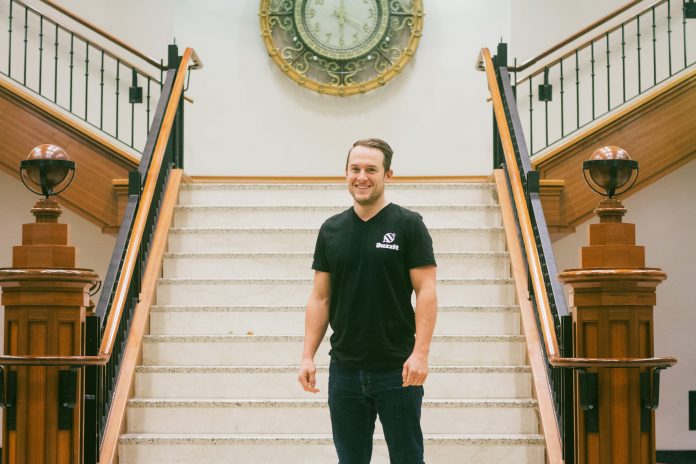
SFU alumnus Jon Harris is one of the developers of the app which was tested in a second-year business class.

If you have ever wanted to speak up in class but were hesitant to voice your thoughts aloud, this new app may offer a solution.

SFU Beedie School of Business alumnus Jon Harris along with friend Jeremy Jackson have developed an app, BuzzIt, designed to facilitate a virtual chat room among users based on their location.

“The root of the matter is that society has a self-censorship problem. We’re often too ready to stop ourselves from saying what we think,” Harris explained in a recent interview with SFU News. “Where we run into trouble is when we’re unwilling to break the silence, even when there’s something that needs to be said.”

The inspiration came after Harris, the app’s product manager, consumed some burnt food at a fair and wanted to inform others who were at the event of his disappointment. Harris envisioned having a way to communicate and share thoughts with other people who were near him.

The goal for the app has since expanded beyond food at the fair to classrooms and meetings. Harris told The Peak he believes the app can help less outspoken post-secondary students voice their thoughts.

The app was recently tested in a second-year business class and prompted students to participate and ask questions, according to professor Sarah Lubik. At least half of the class installed the app, logged in, and started chatting about the presentation.

“It was interesting to see the messages and conversations thread start rolling in,” explained Lubik, who is also the director of entrepreneurship at the university. “[The students] were definitely more excited, and it did help surface some questions from those that may not have participated otherwise.”

The app can also be used by speakers to get feedback in real-time as listeners post comments into a chatroom that the speaker can monitor.

“The people that are always willing to speak out will continue to choose in-person

discussions over staring at their screens. Those that usually stay quiet when they have something to say sometimes do that because they think they’re the only one with their point of view,” Harris said.

“By letting this second group share openly, BuzzIt will help them discover that others feel the same way, and that should give them the confidence to join in the discussion in real life.”

There are other technologies with a similar concept already being used in SFU classrooms, including Top Hat which allows professors to create interactive components for student smartphones. Lubik noted that, based on her experience in the classroom, this new app is promising as a way to help students engage with the lesson.

“I think there is potential for encouraging discussion in classes where the instructor is interested in engaging introverts, or surfacing confusion or comments students might not want to vocalize,” Lubik said.

BuzzIt allows its users to retain privacy, letting them access the closest chat rooms relative to their location and start chatting without giving away permanent contact information. The chats can be permanently ended by simply being deleted. However, you can also keep your chat history handy as you move throughout your day.

“The history section keeps you connected to anything you’ve posted, favourited, or commented on, even when you’ve left the area where it started,” Harris added.

“This is a very important feature, especially for a multi-campus commuter school like SFU. It will let you pick up chats as you move through different classes and locations during your day, and then connect back to those same groups when you’re on transit or at home studying.”

Gods of Burnaby Mountain to pray to during exams

0
Illustration by Cora Fu


Desperate times call for desperate measures, but ‘desperate’ doesn’t even begin to describe the hellish downward spiral that happens once you haul yourself over the midterm hump and plummet into exams. Luckily, Burnaby Mountain is the Canadian equivalent of Mount Olympus, and this SFU-specific pantheon of deities is ready to help.


Crapicus
The Token Evil God

Crapicus is the alter-ego of Athodin. Where one is the god of knowledge and wisdom, this piece of shit is the god of fake news, unreliable sources, and misinformation your prof propagated. He appears with the head of a cow, though he is a shapeshifting trickster god that can be hard to find. He is heavily adorned with bracelets of fool’s gold that Athodin has welded to his skin in order to identify him. His hobbies include editing Wikipedia pages and killing all the links to useful articles you can find on the library’s website. If you need to push away shitty sources or stop your stupid brain from coming up with filth, you can pray to Athodin who will beat his brother’s ass and protect you. If you need to attract some bullshit to reach your word count, leave a plate of animal feces on your open windowsill.


Cafeia
Goddess of Energy, Motivation, and Focus

With the blessing of the mighty goddess shining down on you, your 2:00 a.m. cup of coffee will wake you up and sharpen your focus instead of just turning you into a hot mess constantly jumping off the walls and laughing hysterically about poor-quality memes. Call on Cafeia during the daytime, and she will also make sure that your friendly barista gets your order just right. Her symbol is an owl, whose nocturnal habits and intensely focused eyes represent the effect her blessing has on students. They are also the animals who pull her chariot, which she rides across the sky at night to throw down fucks onto the homes of her followers, or anybody else who has run out of fucks to give.


Kronosa
Goddess of Time

Kronosa is one of the most powerful goddesses on campus, and she is the goddess of time. If her followers are struggling to finish up their term papers, she will lengthen the night for them. If non-believers are pulling all-nighters, she will turn that ten-minute Facebook break they promised themselves they deserved into a two hour excursus that will bring them to the medical mystery side of YouTube. May she have mercy upon your soul.

Her blessing is the difference between having one alarm in the morning, and sleeping through your 13 alarms and still showing up half-an-hour late. To stay on the goddess’ good side, you’ll want to keep your iPhone’s calendar up to date.


Demeterus
God of Bounty

His magical item of choice is a piece of well-worn Tupperware, containing the exact meal you’re craving whenever you open it. Whenever you have a good meal, throw a spoonful of it out the nearest window or offer a bite to a friend. Demeterus in turn will always make sure that you have the study snacks you need to maintain your focus, strength, motivation, and blood sugar to survive that term paper that you actually don’t know why you’re writing because this class ALSO has a final exam so fuck fuck fuck this is how I die.


Venusa
Goddess of Self-Love

Venusa will whisper kind things into your ears throughout the day to help you keep your chin up. Her slogans include your personal value is not determined by your academic success, you are more important than any essay ever will be, and please take a drink of water and stay hydrated. Venusa will bake homemade cookies and leave them on your doorstep, sharpen all your crayons so you can break out the adult colouring books, and brew you the perfect cup of tea. You don’t have to pray or believe in her to attract her blessing since she thinks everyone deserves to be happy and taken care of, but you can thank her by giving someone a compliment in a restroom or by watching someone’s stuff in the library while they go to pee.


Allopo
Protector of Professor Moods

Allopo is the twin brother of Venusa; the pair of them are fathered by Athodin and the water nymph who lives in the AQ reflecting pond. While his sister’s job is to make sure that you are happy and taken care of, Allopo makes sure that your professors and TAs are in a good mood when they grade the fruits of your labour. Even a Nobel-Peace-Prize-worthy lab report is going to flunk if your professor wants the world to burn along with his ex-wife Judy and her new husband Mike who thinks he’s so cool because he’s a lawyer with a condo in Florida. Allopo’s symbol is a red pen: leave one under your pillow or slip them in your professor’s bag during a break to attract this deity’s blessing.


Yahoogle
God of Research

A little-known fact about the Bennett Library is that it actually has a hundred floors — the top floors are simply inaccessible to mere mortals because it is the home of the gods. Legend says that it is a beautiful place, where there is seating aplenty, it never smells weird, and nobody has drawn penises on any services.

One day, the god Yahoogle disturbed the peace and was cast down by the other gods. In penance, he wanders the lower floors of the library — helping the librarians keep the shelves organized, picking up the trash shitty people leave on the tables, fixing the broken computers, helping students work out their theses, or finding the perfect book that will accelerate their research. To summon Yahoogle and his help, stand in the library, close your eyes, and spin in a circle three times whispering ‘holy shit I’m fucking screwed, holy shit I’m fucking screwed, holy shit I’m fucking screwed.’


Athodin
God of Wisdom and Knowledge
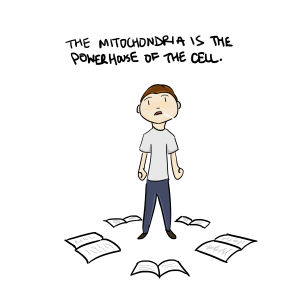
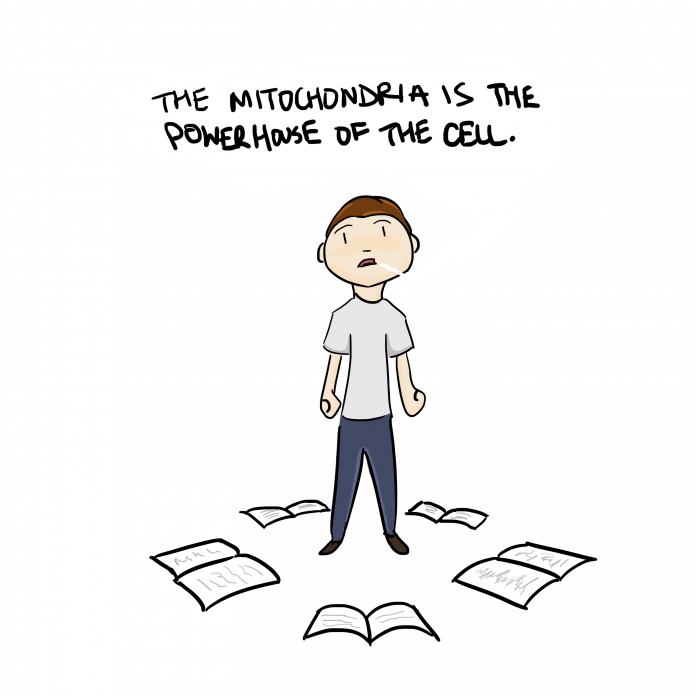
Athodin is the father of all Burnabian gods. Legend has it that every tear shed by a student contains a drop of that student’s knowledge and life source. One day, a group project was such a tragic trainwreck that a god was born from the collective pool of tears formed on the floor of their study room. If you need help remembering a lecture, filling the gaps in your patchy-ass notes, or coming up with an intelligent thesis, Athodin is your deity. Summon his wisdom and blessing by laying your textbooks in a circle and standing in the middle screaming information like: THE MITOCHONDRIA IS THE POWERHOUSE OF THE CELL, JELLYFISH EAT AND POO FROM THEIR MOUTHS, or a number of other fun facts.




The Disaster Artist is the best reason to watch The Room

0
Dave Franco (left) and James Franco (right) star together in The Disaster Artist, fulfilling fans' fantasies. (Image courtesy of A24)

When The Room came out in 2003, it was heralded as, perhaps, the worst movie ever made. Directed by Tommy Wiseau, starring Tommy Wiseau, and produced and written by Tommy Wiseau, The Room is nothing less than a fever dream of a man that seems entirely disconnected from reality. Journalist and critic Tom Bissell said, “It is like a movie made by an alien who has never seen a movie, but has had movies thoroughly explained to him.” Like many films that are critical flops, it lacked any redeeming qualities.

     It is for these exact reasons that it has become a cult classic across the world. To this day, 14 years later, it is frequently shown as a part of film festivals and in private screenings in theatres across the world. It is a movie beyond explanation, made by a man beyond understanding.

     The movie and its making were so phenomenally absurd that in 2013 Tommy Wiseau’s co-star Greg Sestero and Bissell wrote a book about his experience and friendship with Wiseau, as well as the making of the movie itself. The book quickly garnered critical acclaim, and in 2015 production began on a film adaptation of the book directed by and starring James Franco.

     The Disaster Artist is still yet to be released, currently scheduled for a wide opening on December 8, 2017. Despite this, as part of the Rio Grind Film Festival, it was shown at a private screening at the Rio Theatre right here in Vancouver on Saturday, November 18.

     As the true story about the making of the worst movie in the world, never before has something so good come from something so bad. The Disaster Artist is a character comedy. It is about Tommy Wiseau, a man who is beyond comprehension: because of which, much of the comedy comes from the ridiculous behavior of Wiseau, portrayed by James Franco. It is undeniably a hilarious depiction, and will keep you laughing all the way through, even if you haven’t seen The Room. This comedic accomplishment is impressive enough in itself. But what makes the movie exceptional is the way it does this while simultaneously humanizing Wiseau.

     Anyone who has seen The Room or has done even a little research on Tommy Wiseau will be drowned with questions about the man. Every detail learned about him makes his life more unbelievable, and more ridiculous. In seeing The Room and learning about Wiseau, it is easy to distance yourself from him and to think of him as a man from a different world. He’s a man that’s so difficult to understand that it makes him even more difficult to empathize with, and makes it easier to laugh at him. As a result, it is easy to forget that The Room was a movie that he poured his heart and soul into making.

The Disaster Artist and Franco’s magnificent performance easily makes you laugh, while simultaneously riddling you with guilt for the very laughter it produced. This film makes you laugh at the ridiculous behaviour of a man it’s easy to think of as insane, while simultaneously reminding you of his humanity.

SFU student-led team develops eco-friendly race car for upcoming international competition

0
Photo courtesy of SFU News

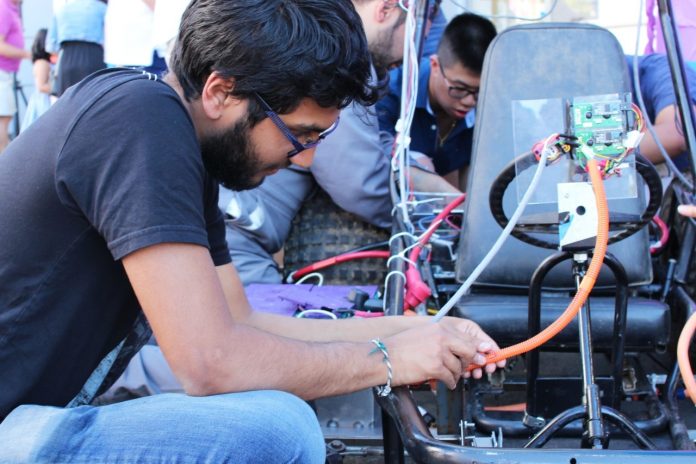
A cohort of Simon Fraser University students from various academic backgrounds are developing a carbon-free emission race car for the upcoming Formula SAE Electric competition being held in summer 2018. This will be the first time an SFU-based team has ever participated in the international competition.

Team Phantom is currently in the process of developing an eco-friendly Formula-style race car, which they plan on using to representing SFU at the international contest being held in Lincoln, Nebraska from June 20–23, 2018. The team will be competing against 30 other universities across North America if their race car prototype is successfully assembled by the competition date.

The Formula SAE Electric competition is an engineering design competition that is open to all post-secondary students. The competition challenges its participants to “develop and construct a single-seat race car for the non-professional . . . autocross racer with the best overall package of design, construction, performance and cost,” according to its website.

“Our main goal [of competing in this competition] is to put SFU on the international map for innovation,” said Edward Chiang, Team Phantom’s director of public relations. “We want to bring our home institution the recognition it deserves when it comes to innovation and sustainability.”

Team Phantom is currently comprised of 30 members and the club welcomes anyone with the passion of working on a large-scale project and the willingness to learn, regardless of their educational background and skills.

According to Chiang, the current cost of developing a race car ranges from $80,000–$100,000. However, the team believes that with the support of the university and their campaigning efforts for sponsorship funds, they will have a successful competition-ready, top-speed electric race car.

“Although [the cost of development] seems like a very large sum, there are currently 70 competition-ready universities prepared to race in this upcoming 2018 competition,” said Chiang. The registration is completely full and 40 out of those 70 institutions are on the waitlist, he added.

He also noted that electric-powered cars can actually outspeed traditional gasoline dependent vehicles, with Tesla being the primary example. “In a gas-powered vehicle, when you press the throttle . . . fuel flows into the cylinder, getting compressed, expanded, and combusted, [until] finally providing the desired power. With that power, the driver then needs to change gears to get the desired acceleration. In an electric vehicle, there is no delay from the moment you press the throttle to output speed as electrical power is instantaneous alongside the fact that there is no need for gear changing in an electric vehicle,” explained Chiang.  

The team managed to develop an all-electric go-kart earlier this year that uses reusable electric batteries as its energy source. Their success with the fully electric go-kart proved their skillset and passion for sustainable technology, as well as commitment to developing environmentally friendly transportation.

Chiang noted that without the support of the university and the local municipalities, the financial aspect of preparing for the competition can be a hard challenge to overcome. However, Chiang is hopeful that the team will pull through despite the current circumstances.

“We have a group of passionate and skilled individuals that do not give up on the dream of creating sustainable transportation and constantly try to find ways to succeed even when resources are scarce,” he concluded.

With files from SFU News.

The East Van Panto returns with a local twist on Snow White and the Seven Dwarves

0
In this year's East Van Panto Snow White (Ming Hudson) befriends the 80s rock band The Seven Dwarves. (Photo courtesy of Tim Matheson)

It wouldn’t be the holidays without traditions. Some traditions can be tedious or even irrelevant, but one that is neither of those things is East Van Panto. This year the incredibly talented team from Theatre Replacement will present their own take on Snow White and the Seven Dwarves, full of East Van references, humorous references to current events, and bad puns.  

     In this version of the fairy tale, Snow White runs from the Queen of North Vancouver across the Ironworkers Memorial Bridge and ends up at the PNE. Her adventure will see her dance with SuperDogs, ride Playland’s wooden roller coaster, and become friends with an ’80s rock group, the Seven Dwarves.

     Now in its fifth year, this annual pantomime has become a cherished East Vancouver holiday event. Pantomimes have a long history in Britain as holiday entertainment, but it wasn’t until the Cultch and Theatre Replacement teamed up to create the East Van Panto that we had our very own made-in-Vancouver pantomime tradition.

     One of the most enjoyable aspects of pantomime is the audience interaction. The crowd is encouraged to boo the villain, cheer for the hero, and shout out helpful tips such as “she went that way!” or “she’s behind you!” Crossdressing and exaggerated makeup and costumes are another panto convention that adds to its silly brand of humour. With a good balance of slapstick, puns, and political humour, pantomimes are great family entertainment.

     Writer Mark Chavez and director Anita Rochon return to this year’s creative team and they are joined by the incomparable Veda Hille and Ben Elliott (music and lyrics) and an all-star cast: Allan Zinyk, Chirag Naik, Amy Rutherford, and Ming Hudson as Snow White. With its emphasis on local artists (including Studio 58 students and local children) and references, the East Van Panto has become a beloved tradition.

     Will Snow White be able to escape the clutches of the Queen of North Vancouver? Will her new friends the Seven Dwarves be able to help her through ’80s rock songs? Will she find her prince at the PNE? I can’t wait to find out. If this isn’t already in your holiday plans, I suggest checking it out. After all, there are only so many versions of The Nutcracker and A Christmas Carol that I can take.

East Van Panto: Snow White and the Seven Dwarves will be presented by Theatre Replacement and the Cultch at the York Theatre from November 29, 2017 to January 6, 2018. There will be a post-show Q&A on December 3, 10, 12, and 19. For more information, visit thecultch.com.

Men’s basketball drop two in tough weekend in California

0
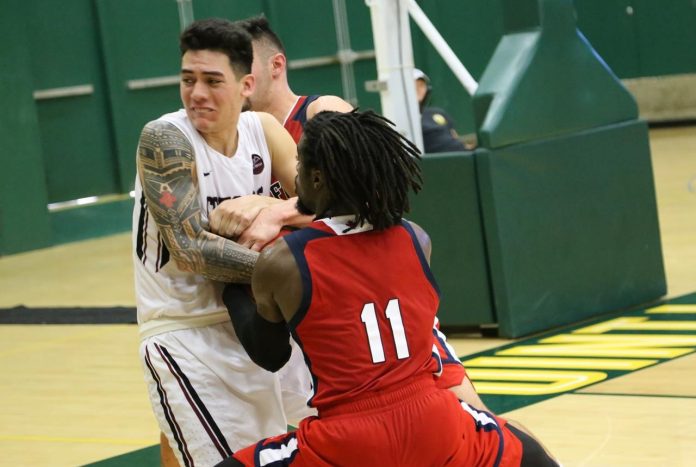
Kedar Salam had a double-double with 16 points and 10 rebounds. (Photo courtesy of SFU Athletics)

The SFU men’s basketball team struggled on the weekend, as they lost both games on their California road trip, falling 66–56 to Azusa Pacific on Friday and 79–55 to Point Loma Nazarene on Saturday.

In a way, it was a test of sorts. SFU had headed into the weekend with a 4–0 record, but two of those victories were really exhibition matches (last year, the Quest University game was called an exhibition game, and Capilano is at the same level). They did put up two dominant victories against National Collegiate Athletic Association Division II teams, but those two teams have both struggled in non-conference play and finished last year in the bottom half of their conference’s standings.

In California, the Clan faced the teams which had taken the last two playoff spots in the PacWest conference — probably a comparable level to the teams SFU will need to beat to make the playoffs in the Great Northwest Athletic Conference (GNAC).

Friday’s game against Azusa was the closer of the two. The Clan actually held a 35–27 lead at halftime.

Azusa, however, held SFU to just 21 points in the second half, and put up 39 points of their own. Michael Provenzano and N’Kosi Kedar Salam were the only players to hit double digits, hitting 24 and 16 points, respectively. Even their offence was limited in the second half, as Provenzano put up eight and Salam put up five in the second.

SFU went just six-for-11 on free throws.

On Saturday, the Clan was without JJ Pankratz, who had injured his ankle in Friday’s game. In for Pankratz was Othniel Spence, who started his first game of his collegiate career.

The first half against Point Loma was a difficult one for SFU. They surrendered 47 points to Point Loma — 20 of those coming from one player, Ziggy Satterthwaite — while only putting 25 on the board.

The second half was a much tighter affair, with Point Loma having the slight edge 32–30.

Spence led the team with 20 points, while Salam and Iziah Sherman-Newsome also hit double digits in scoring. Tyrell Lewin led the team in rebounding with four. SFU was outrebounded 39–14.

From here, it’s conference play — aside from a Division I exhibition match and two games against BC colleges in December.

After a November against non-conference teams, we still don’t know who exactly the men’s basketball team is. In Bellingham, they put up two convincing wins against, admittedly, lower-tier teams, but they were games in which they did the right things and were able to find offence. In California, they struggled to play a full 40-minute game, putting in two decent halfs, but not enough for a win in either contest.

Regardless of the takeaways, they’re going to need to score more than 56 points a night to win.

The real test, and when wins start to really count, begins this Thursday against Western Oregon. Last season, Western Oregon was third in the GNAC — one of three elite teams in the conference, who sat high above everyone else in the standings, while fourth to 10th had only two wins separate — and look to continue at the top, with a GNAC-best 6–0 non-conference record.

But one thing about sports is that they can be unpredictable. Last season, after dropping their first meeting 85–60 on the road, SFU achieved their first conference victory against Western Oregon, a 68–63 result.

Tipoff is at 7 p.m. in the West Gym.