Home Blog Page 607

Why you’re paying so much for textbooks: Part 2 ⁄ 2

0
Image credit to Tiffany Chan, Staff Illustrator

When students discuss the topic of textbook prices, it is almost unanimous amongst them that prices are too high. Last week, we discovered that textbook prices arose from a complex network of reasons. University bookstores were just the tip of the iceberg.

Students aren’t entirely wrong to assume that prices will never drop because the main players of the industry seek to make profits. However, when The Peak sat down with Mark McLaughlin, chief commercial services officer at SFU’s bookstore, solutions were a popular topic. As it turns out, SFU is at the centre of the effort to reduce cost. It’s possible that in pointing the finger of blame, SFU students are often shooting the messenger.


The potential of used textbooks

During our interview, McLaughlin mentioned that “we would prefer to sell used textbooks to students because they’re more affordable . . . [But] we can’t get our hands on enough used textbooks.” He noted, “The challenge is, the price we’re offering students . . . [for textbook buybacks] is less [than other selling platforms]. Also, sometimes, the professor doesn’t tell us what textbook is required the following semester. If we find out what textbook is required for the following semester too late, we don’t have a chance to buy them back. So we’re trying to work with professors to let us know, well in advance, what textbook is required.”

He then explained that selling more used textbooks would decrease the costs involved in shipping and returning textbooks, further lowering costs. In a system that McLaughlin describes as inefficient, he suggests some simple solutions tied to communication between professors and the bookstore, saying “We’re trying to work with professors to let us know as soon as they can. One of the things that’s going to drive down the price of textbooks is professors ordering early.”


Open-source textbooks

Looking to the future, and considering more universal solutions, McLaughlin says the bookstore has been pushing professors for the use of open-source textbooks, something that he encourages students to mention to professors as well. He points to the province, saying: “The BC province is the leader in Canada, in North America really, in promoting open-source textbooks. There’s a slew of them that are available through BCcampus that government has made available.”

Open-source textbooks are free, and considered to be of comparable quality and just as peer-reviewed as buyable books. He later explained that organizations such as BCcampus gather materials which have been released for free, either by their authors or by organizations that have purchased their copyrights, such as the Bill & Melinda Gates Foundation.

One such organization is BCcampus, an association funded by the Ministry of Advanced Education, Skills and Training, with administrative support from SFU. BCcampus amasses content and makes it publicly available at no charge to the province’s students, and even commissions authors when need be. According to McLaughlin, the SFSS has also worked with BCcampus.

Further, McLaughlin encourages students to request that their professors look into using open-source textbooks and “to be conscious of the prices students are paying, because sometimes professors aren’t aware of the actual cost. They don’t think about that, they think about learning material, but there are different options out there.” McLaughlin believes strongly that this is the approach that has to be taken to fix the textbook market. He also sees new players in the market playing a role, saying that “publishers have taken advantage of their monopoly, have driven up the prices, and they’re kind of paying for that position now. There’s a lot more disruption, [and] new players — Google, Amazon are into the textbook delivery and distribution . . . Publishers are scrambling and they’re realizing that textbooks are overpriced. It’s driving the used textbook market, and it’s driving [BCcampus].”

McLaughlin said that with the direction of the industry, “there’s tremendous opportunity for digital learning resources . . . which can be much cheaper.” He also noted that with the aforementioned options, the bookstore is also pushing for the use of custom course packs, to reduce the need for textbooks where only a few chapters are used in the entire book, something that has arisen in student discussions as a main reason for an unnecessary purchase of a book. McLaughlin commented that custom packs can be printed at the bookstore, which avoids many inefficiencies such as extra fees and shipping costs. He also noted that publishers have given the bookstore the copyright to do that, so it could be far more efficient.


Price-matching at the bookstore

The attempts to lower costs haven’t ended there, according to McLaughlin, who was pleased to say that SFU has begun matching the prices of new textbooks on Amazon.ca, if it’s in stock on Amazon. This is a clear step by the bookstore in an attempt to keep pace with the new players in the textbook distribution industry. McLaughlin said, “It’s hard to compete against Amazon or Google, but we’ve taken a stance this past semester.”

He also mentioned that the bookstore will be trying a new locker system, which will allow students to pick up their textbook orders 24/7 at a locker, instead of having to come within bookstore hours, in an attempt to further make the system more efficient.


Textbooks: there’s an app for that

If this isn’t enough, McLaughlin says that the SFU Bookstore has considered the possibility of creating an app to help make the used textbook market more efficient, and thinks the university can help make the process of buying and selling easier.

McLaughlin envisions an app that could match students who want to get rid of old textbooks with students looking for them, and facilitate payment through PayPal or credit cards- that way students wouldn’t have to arrange meetups and carry cash. The SFU bookstore would simply facilitate exchange and provide a safe drop-off point and pick-up point for students.

He sees this as possible, since it was SFU computing science and engineering students that were used to create the now-widespread SFU Vault app.


Digital education

McLaughlin believes that there are pros and cons to selling ebook copies of textbooks, saying that these ebooks “have to be more than PDF versions of textbooks, that’s where the whole digital resource world comes into play. An ebook would probably have embedded quizzes, animations, videos. Then there’s value added. Unfortunately, some publishers will sell an e-code, but they’ll bundle it with a textbook, so it’s just a way to drive up the price. So that’s not going to be successful in the long run.”


Cooperation as key

One of the biggest solutions that McLaughlin discussed, however, was a coalition that the bookstore is working to form with other institutions. He said that they’re trying to look at the digital learning resource model to come up with a unified model for the entire province, saying that “[when] we have purchasing power, then we can really drive down the price. Then we can say to these publishers, ‘if you want to play ball with us, here are the conditions that the province of BC, the institutions, are willing to play ball.’” Examples of these conditions include price cuts and price increases “capped to inflation.” McLaughlin describes pricing caps as crucial, so that prices cannot continue to rise at significantly higher than inflation rates.

He also mentioned the possibility of something like a “U-Pass model,” in which students would pay a subscription fee, as they do for transit, allowing students to access all their necessary course material at a fraction of the retail cost.

McLaughlin continued to stress the need to fix inefficiencies throughout the system, while explaining the initiatives that the bookstore is pushing in order to help fix them. He made it clear, though, that he sees the most permanent solutions being in digital learning resources, either a unified coalition of purchasing power, a subscription access model similar to the U-Pass system, and a shift towards professors using open-source materials, provided by organizations such as BCcampus.

Clearly, while the system appears imperfect, and students are skeptical of any possible solution, the SFU Bookstore and Mark McLaughlin are working on a variety of solutions to try and alleviate the problem. Despite what many think, McLaughlin and the bookstore might be one of the closest allies in the fight to fix the system that SFU students have.

Whether it’s students encouraging their professors and departments to look into open-source textbooks or professors liaising with the bookstore, McLaughlin stressed the need for the topic of textbooks to become a larger debate. He urges the need for the post-secondary community to take charge, saying: “If we don’t play a leadership role, the market will dictate where all this goes, and the market’s ugly . . . It’s complex, [there are] a lot of different players, [and there are] a lot of market forces and competitive forces at work.”


SASSY DRAG NAMES FOR YOUR SASSY SELF

1

By:  Janis McMath, Rosie Grayson, Gabrielle McLaren, Alex Bloom

If drag culture hasn’t already consumed your soul, your sanity, and all your free time, consider hopping onto the glamorous bandwagon now. Drag is art meshed with blurring gender lines and has a community filled with beauty and inclusivity that you should become a part of ASAP.  Even if you aren’t a queen in this life, you may be in your next — so you should start planning your drag name NOW. Here are a few ridiculous drag name suggestions we, The United Committee of Kinda Experts in Drag (T.U.C.K.E.D.), have brainstormed for you.

Gloria Hole

For the queen who is a sweet suburban mom in the streets and an anonymous penis expert in the stalls of truck stops.  With a name like this, you’d literally be gagging!

Drag queens in The House Of Hole

Tess Tickles

For the queen that keeps getting stuck to your leg in the summer.

Anna Conda
For the queen who don’t want none unless you got buns, hun.

Chloe Mydia
For the queen that is most common among women 15 to 24 years old.

Cleo Torres
For the queen who is impossible to find.

Missy Onary Style
For the vanilla queen.

Tess-Toss Der’on
For the queen that knows all about regulating the male sex.

Estrogennifer
For the queen that knows all about regulating the female sex.

Sarah Vix
For the queen who provides the passage that literally gives us life, hunty.

Mistress O’Vary
For the queen who likes to cause pain.

Gina Cologist
For the queen that cares about the health of boobs.

“Insert Dick Joke”
For the meta queen.

Ashtray Simpson

For the queen who smells just as bad as you thought she would. We’re pretty sure this is Ashlee Simpson’s legal birth name, but now that she isn’t famous and isn’t married to Pete Wentz, you can rip off her name without a problem.

Drag queens in The House of Dumb Celebrity Name Puns

Yoko Oh NO Honey
For the queen who broke the band up.

Clit Eastwood
For the queen who can’t remember if she rubbed it out six times or only five.

Petty Labelle
For the queen who serves pies pies pies — and shade.

Scarlett Johannesburg
For the queen who is South Africa’s biggest city.

50 Scents
For the queen who you can find in da club, bottle full of essential oils.

Ringo Brownstarr
For the queen who is the drummer in the back.

Samuel Jackoff
For the queen who is tired of all these snakes on this motherfucking plane — but isn’t tired of charming his snake.

Vladmir Put-in My Ass
For the queen who meddled with the United States 2018 presidential erection.

Rude Paul
For the queen who unjustly excludes trans people from the community of drag.

Gal GaDon’t Come For Me
For the queen who suggests that you check your lipstick and your indestructible bracelets before you come for her.

Elijah Morning Wood
For the queen that finds that taking the ring to mordor is easier than peeing.

Robert Going Down On You Jr.
For the queen that knows how to make a man hard as iron.

Mariah I Don’t Care-y
For the queen that has only one thing she needs this Christmas: for you to understand how few fucks she gives.

Miss Direction

For the queen that doesn’t know where the fuck she’s going, how the fuck she’s going to get there, and what the fuck she’s going to do with her useless degree.

Drag queens in The House Of Unrelated Names

Nora Man Nora Woman
For the queen who’s aesthetic is the idea that gender is a construct.

Masculina Fragila
For the queen that has to aggressively state “no homo bro” to disguise the fact that he’s actually extremely curious about what it would be like to suck a dick.

Helen is Troy
For the queen that is the most beautiful woman AND man that ever lived.

Nefertitties
For the queen that wants to start a religious revolution with her holy bust.

Shay D.
For the queen who is full of insults.

Cal De Sack
For the queen with no filter and no exit.

June Julyaugust
For the queen of the summer.

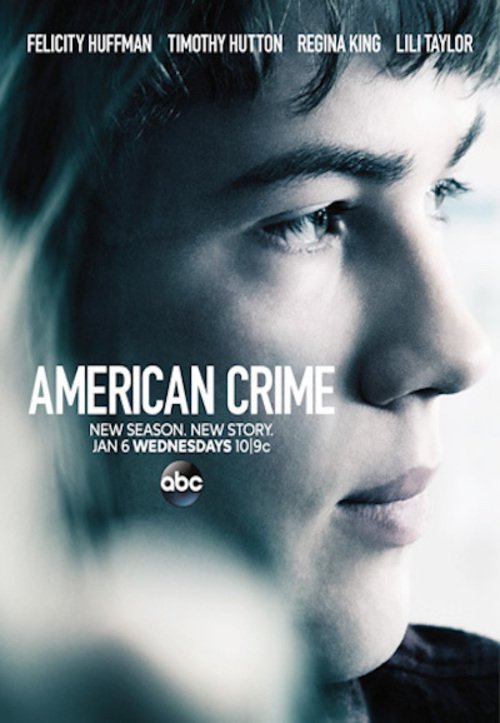
American Crime uses packed visuals to describe nuanced storylines

0
(Photo courtesy of ABC)

American Crime is a show that focuses on deconstructing and analyzing various social issues through esoteric lenses. The first season starts with the murder of a war veteran in California, and it uses the ongoing investigation and trial to explore gender, race, and class conflicts; the third season, set in North Carolina, explores immigration and poverty through the story of a Mexican immigrant who ends up trapped in a slavish labour job which essentially goes unpaid.

     Because each season operates as a self-contained story — although many of the actors return as new characters — you can pick a season and watch it standalone. For that reason, I started off watching the second season, which was haunting enough on its own.

     Set in Indianapolis, season 2 follows the story of Taylor Blaine, a financial-aid student at the exorbitantly ritzy Leyland School. After compromising photos of Taylor half-naked and blackout intoxicated at a notorious annual house party, the Captains’ Party, end up online, Leyland suspends him for failing to meet their public-facing standards. When pressed by his mother, Taylor reveals why he didn’t tell her sooner: he might have been sexually assaulted that night.

     The show does an excellent job exploring the issues that surround sexual violence against men. Much of the town is in disbelief that a high school boy could be targeted — especially by another high school boy. When Taylor’s queer sexuality is revealed, the additional layer of “you wanted it” pervades the case. Most frighteningly, you soon realize that everyone — the principal at Leland, the other students, the parents — is so out to protect their reputations in the midst of the allegations that they really couldn’t care less about what actually happened to Taylor.

     As details on what happened that night come out through investigation, it becomes clear that the case is not so open-shut. The show forces the audience to reassess their own understanding of what consent means. It manages to humanize both Taylor and Eric Tanner, the eventual accused, while condemning neither of them, yet it does so without ever once discounting the gravity of sexual violence or descending into a victim-blaming message. By the end of the season, the narration never confirms which boy was telling the truth, nor what happens to either of them going forward.

     Even while covering such heavy material, the show explores several side-plots and secondary themes. A miniature race war erupts at the public school Taylor transfers to, between the Black and Hispanic students. The LaCroix family, whose son Kevin helped host the Captains’ Party, are passionate in denouncing racism even as they discriminate against various other characters for other things, like Kevin’s girlfriend for being less rich or Taylor’s mother for her mental health struggles. Evy, Taylor’s girlfriend, finds herself used and denied agency by nearly every adult and every guy in her life.

     Yet, the overall minimalism of the show means that it can get away with covering so much ground. The show does nothing better than economy of storytelling, communicating high volumes of ideas in petite packages: single lines, single images, brief exchanges. The visuals of the show are experimental and beautiful, adding a coldly surreal element to the otherwise very grounded-in-reality narrative, and every shot means something.

The show was cancelled after its third season, but it’s still available on Netflix. If you want something psychological and insightful without being anvilicious, I very much recommend it.

SFU researchers examine the effects of nuclear accident and heart medication

0
The 2011 Fukushima nuclear accident has had a minimal environmental impact on BC’s coast. (Photo courtesy of Destination BC)


No harmful effects on BC’s coast remain from Fukushima accident

A study led by SFU associate professor Krzysztof Starosta has found no negative impact of the 2011 Fukushima nuclear accident on BC’s coast.

     Starosta’s team investigated the fish populations and coastal soil in BC using high-resolution gamma-ray spectroscopy in search of the radioactive isotopes cesium-134 and -137. Starosta chose these isotopes due to the fact that they are not naturally occurring, and their presence in natural environments is considered a direct result of nuclear reactions.

     Cesium-134 was not found in any salmon samples although cesium-137 was found in Chinook salmon samples. Both cesium-134 and -137 were found in soil samples.

     According to Starosta, the cesium levels confirmed are not an issue and the environmental impact of the Fukushima accident was minimal as “the levels found in both the salmon and soil samples remained below Canada’s safety guidelines, posing minimal health risk to BC’s salmon and human populations.”

     Starosta also said that the study helped the scientific community to understand more about the movement and the bioaccumulation of radionuclides. The team believes most of the cesium-137 came from 1960s era nuclear weapons testing.

     The paper, Starosta’s third on the topic, won the Canadian Journal of Chemistry’s 2018 Best Paper Award.


Exercise may lessen effect of heart drug

SFU professor Peter Ruben and his research team are looking into what causes the sudden deaths that sometimes occur when healthy patients with inherited cardiac arrhythmias engage in exercise.

     In a study published in the journal Scientific Reports, the team’s research has shown that exercise creates a perfect combination of increased heart rate, body temperature, and blood acid level which can trigger arrhythmia.

     These physiological changes might lower the effectiveness of Ranolazine, a medication which helps the heart function more effectively during exercise, for those with inherited arrhythmias. Decreased effectiveness of the drug leaves the patients vulnerable to catastrophic arrhythmia.

     Ranolazine is a commonly prescribed therapeutic agent and has been proven effective in treating patients with certain forms of inherited arrhythmias. However, Ruben’s study demonstrates that even if the drug is effective for patients during rest, it may not work for those same patients during exercise.

     This information is crucial to doctors who prescribe this drug and patients who take Ranolazine for this form of inherited arrhythmia as “Ranolazine could not be expected to control the arrhythmia in those patients during exercise,” said Ruben.

West Coast LEAF brings consent and sexual assault workshop to SFU

0
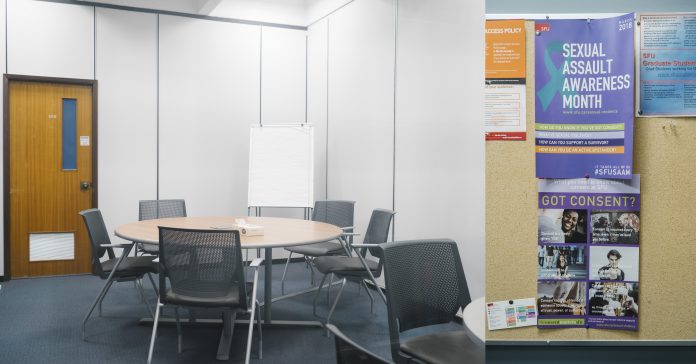
The workshop held at SFU is part of a series of workshops being presented to post-secondary students across BC. (Chris Ho / The Peak)

On Wednesday, March 14, Simon Fraser University welcomed Alana Prochuk, the manager of public legal education at West Coast Legal Education and Action Fund (LEAF), to give a workshop titled Only Yes Means Yes, which focuses on consent and sexual assault. The workshop is being presented at post-secondary institutions across BC and aims to educate students on how the criminal justice system defines and handles consent and sexual assault. It has only been running for a month but, according to Prochuk, response from students have been extremely positive so far.

     Since 1999, West Coast LEAF has been running a similar workshop for students aged 10 to 15 (grades five to nine) called No Means No. The workshop focuses on consent and sexual assault/harassment in relationships and the ways gender, power, stereotypes, and discrimination can play a role. This workshop was developed because the staff at West Coast LEAF want young people who might be thinking about sexual activity to gain an understanding of consent.

     The workshop for post-secondary students was developed due to requests from people to bring a similar program to older students. However, Prochuk didn’t just want to present what the law says about consent and sexual assault, but to also bring a critical lense to it. She thinks it’s important to teach people to make informed decisions about their own lives and emphasize the responsibility for each person to get consent, rather than refuse consent.

     The name of the workshop was changed from No Means No to Only Yes Means Yes because Prochuk wanted to dispel the myth that silence equals consent. At the beginning of the workshop, she reminded participants that the only form of affirmation is an enthusiastic yes. The Supreme Court of Canada has ruled that silence does not equal consent. “It is the responsibility of anyone initiating sexual contact to take steps to make sure that the other person is consenting in a clear, free, and ongoing way,” emphasized Prochuck.

     The workshop held in the library on Wednesday was split into three main parts. After introductions, the first part focused on learning the legal definition of consent and sexual assault. Prochuk also led participants through situations where a person cannot give consent, such as when they’re being forced to engage in sexual activity, they are afraid of the other person, and when they’re incapable of giving consent (such as when one is drunk, asleep, or too young to be able to consent). During the second part of the workshop, participants were given hypothetical real life scenarios and discussed with others whether they were consensual or not. Lastly, there was discussion of three case studies regarding sexual assault, two of which West Coast LEAF was directly involved in.

     After the workshop, The Peak had the opportunity to ask Prochuk how student reception has been in the current era of #MeToo and Time’s Up. In response, Prochuck commented that there is a lot more awareness from people who don’t have lived experience of the prevalence of the issue. She hopes that there is more conversation about sexual assault as it’s such a gendered and common experience.

“These movements are part of an important cultural moment when there’s recognition that the vast majority of women, girls, non-binary, and transgender people can say ‘Me Too.’” – Alana Prochuk, Manager of Public Legal Education at West Coast LEAF

     On the topic of reception, Prochuk said people have been commending the workshop and believes it should be mandatory for all post-secondary students. Over the past month, the program has been doing well, with open registration numbers being as high as 20 people per workshop.

     In regards to the future, West Coast LEAF is partnering with the Young Women’s Christian Association Metro Vancouver to work on a project called Dismantling the Barriers, which includes developing a report with policy recommendations based on the first-hand experiences of sexual assault survivors.

Around the circumpolar world in 180 days

0
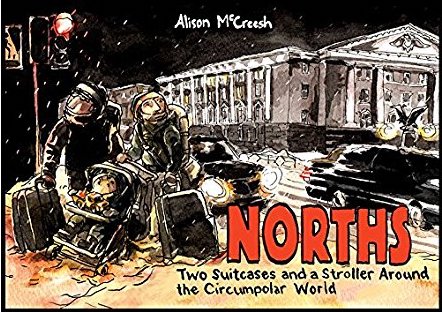
(Image courtesy of Conundrum Press)

Let’s say you just had a baby. Would your first thoughts be “cool, now I should plan a 180-day trip to different artist residencies in the circumpolar north in the dead of winter”? Probably not, but that’s exactly what Alison McCreesh, writer and artist of Norths, decided to do.

     If you need a break from hefty novels and have a soft spot for postcards, Norths is the book for you. It’s a collection of postcards that chronicle McCreesh’s adventures through seven of the world’s eight northernmost countries; according to her intro, she “just couldn’t work in Alaska, USA.” She asked artist residencies to host her as she traveled, promising exhibitions, workshops, and other artistic feats to whoever would. Deals were made, and with her partner and her 18-month-old son in tow, they set off for Lapua, Finland in November 2016. Every day, McCreesh would illustrate and write a postcard on the day’s happenings, and send it to one of her many supporters for $20.

     The book’s appearance immediately reminded me of another postcard book, PostSecret, but I soon realized the only thing they had in common were the postcards. Norths focuses on silly travel anecdotes that easily fit on the back of a postcard. These include McCreesh’s struggle to decipher Cyrillic script in Petrozavodsk, Russia and her attempt to use a Finnish washing machine.

     While I do appreciate Norths’ coverage of places in the world I don’t usually think of, I don’t find the way they are portrayed very thought-provoking. All of the postcards McCreesh painted are completely grey and most of them are scenes of empty landscapes. This seems to confirm the stereotypes I’ve encountered that the north is boring and desolate. Whether or not this was her intention, I still thoroughly enjoyed her art and wit, which improved throughout the book.

Out on Campus reopens its doors and welcomes new coordinator

0
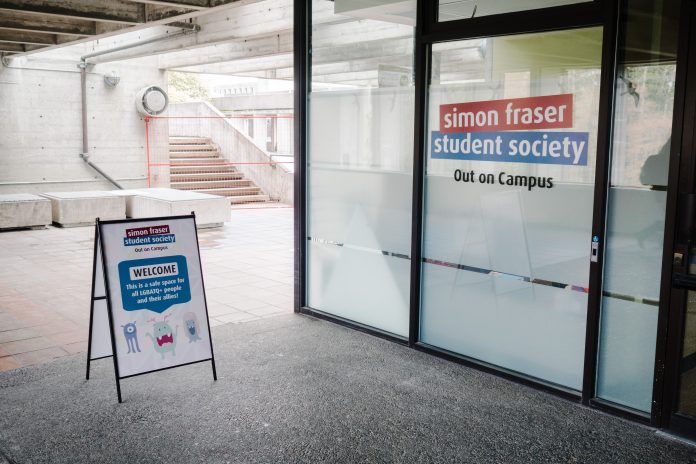
OLYMPUS DIGITAL CAMERA

Earlier this semester, Simon Fraser Student Society’s Out on Campus (OOC) — a centre that provides support services and learning space for LGBTQ+ individuals — had to temporarily halt its activities because its previous volunteer and program coordinator, Kyle McCloy, decided to part ways with the program. After a month of inactivity, OOC reopened its doors last week for the university community to access its services.

     From February 7 to March 12, 2018, Simon Fraser University students, faculty, and staff were unable to access the OOC office because the centre didn’t have its volunteer and program coordinator to organize and manage its programming and volunteers.

     After a rigorous and extensive hiring process, Dani McNeil-Willmott, who uses the pronouns they/them/their, was appointed as the new volunteer and program coordinator for OOC.

     McNeil-Willmott noted that, during this period of closure, OOC’s assistant coordinator remained diligent in replying to all of the centre’s emails as well as communicating with its frequent visitors, and the SFU community.

     “The Out on Campus space was closed, but [the assistant coordinator] was situated in the all genders resource area of the Women’s Centre for that period. She was present to maintain email communication, social media, and ad hoc volunteer opportunities,” said McNeil-Willmott.

     McNeil-Willmott also explained that the OOC office was closed for a month to ensure that the ideal candidate for the coordinator position would be found. “Time was taken in order to ensure that there was an ideal fit for the position so that Out on Campus can have a period of stability and work towards building a really solid program for students at SFU,” they stated.

     Moreover, McNeil-Willmott also noted that this abrupt closure of the OOC office did definitely impact the lives of LGBTQ+ students on campus.

     “While the all genders resource centre of the Women’s Centre was open and available for access, not having a specifically designated space for these students has been disorienting and confusing,” said McNeil-Willmott. “There is a clear need for the SFSS Out on Campus space, and so not having the centre present leaves a clear gap in resource services for students.”

     With their new role as coordinator, McNeil-Willmott expressed that they would like to foster a stronger and inclusive campus culture through initiatives such as educating the university community about queer and trans*-related issues, as well as implementing accessible spaces for LGBTQ+ students on campus.

     “Out on Campus is first and foremost a service for students, that’s why I am committed to hearing what folks have to say in terms of what they want to see the centre look like moving forward . . . I’m coming into a position that requires a lot of love and healing, so I realize that it’s going to take some time to gain [students’] trust that I have their best interests and the centre’s best interests at heart,” said McNeil-Willmott.

     In addition, McNeil-Willmott emphasized that although they have a lot of exciting new programs and projects that they would like to bring to OOC, it is ultimately the students whose feedback will give them a better understanding of what needs to be changed and what needs to be prioritized in order to make OOC a comfortable and safe space for everyone.

     “Out on Campus needs to be revamped and relaunched, but I don’t want to be the sole voice of that moving forward. I want to get people involved and excited about being [a part] of the centre . . . I know there [have] been comments in the past about how the space hasn’t been the most comfortable for certain groups of folks, but I want to work really hard to undo that,” they concluded.


Generation Screwed SFU hosts audit on SFSS spending

0
The audit brought together leaders of various SFU political clubs to examine SFSS practices. (Photo courtesy of Canadian Taxpayers Federation)


On Thursday, March 15, the SFU chapter of Generation Screwed hosted an audit examining SFSS spending, titled “The Sad State of the SFSS: Students have had enough.” The event promised to gather experienced student leaders from across campus to discuss the successes and failures of SFU’s student government.

     The event was organized by Generation Screwed’s regional coordinator for British Columbia and the leader of the SFU chapter, Ben Lawson. According to the organization’s website, Generation Screwed is “a project initiated by the Canadian Taxpayers Federation in 2013 to inform and mobilize young Canadians who want to save their economic future.”

      “The point of the event is that a lot of our politicians at the student level, they get elected and they serve their one-year term. But during their government . . . there’s very rarely any questioning,” Lawson told The Peak.

     Lawson began the event by reading figures relating to the SFSS’s budget, and discussing the difficulties faced by the clubs who have to cooperate with the SFSS. When asked by The Peak about his sources, Lawson cited that he had used “all of the financial statements posted on the SFSS website” including a number that was a “rough halving” and “what I heard from multiple sources.”

     The event featured a panel of student leaders: president of SFU NDP Robert Hanson, vice-president of SFU BC Young Liberals Ryan Vandespyker, and president of SFU Conservatives Seth Scott. The candidates participated in a discussion about what kinds of difficulties clubs faced while interacting with the SFSS. Topics included the room-booking system and difficulties faced while reviving clubs. However, as neither the moderator nor the panelists presented their sources, The Peak cannot further comment on the content of the debate or the validity of the facts presented.

     Towards the end of the debate, Scott suggested that student apathy might be the reason for lack of engagement on campus.

“I don’t think any more spending on referendums is going to increase [student engagement], it’s up to the students to come out and say we don’t want this to happen.” – Seth Scott, president of SFU Conservatives

     Lawson plans on hosting similar events in the future and on sharing his findings in a report.


With files from Alex Bloom, and Zach Siddiqui.


Album Reviews

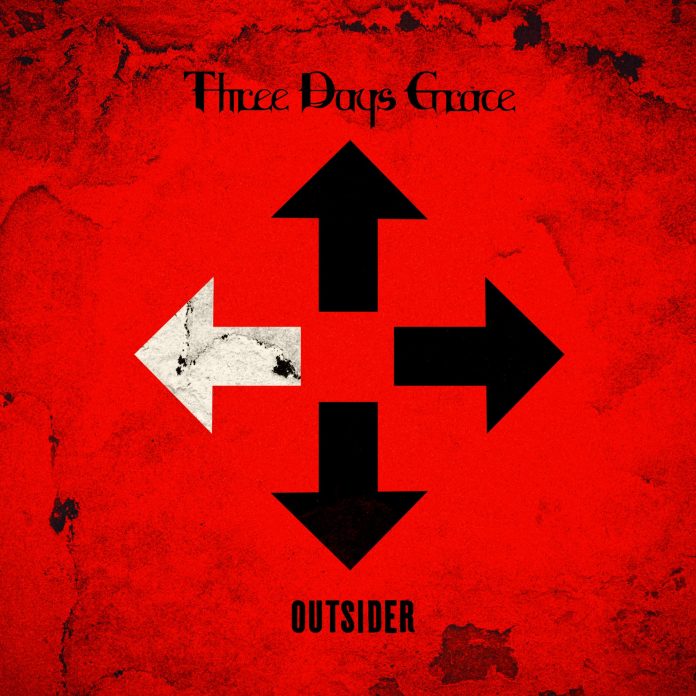
Outsider by Three Days Grace

With the release of Outsider, Three Days Grace mark the sixth instalment in their discography. While the album definitely has its upsides, tracks like “Love Me Or Leave Me” and “Me Against You” are bland, forgettable, and repetitive attempts to emulate previous tracks which had made the band popular. However, this album does offer a deeper list of solid tracks than the previous couple of albums; songs like “The Mountain,” “I Am An Outsider,” “Nothing To Lose But You,” “Chasing The First Time,” and “Villain I’m Not” offer a vibe reminiscent of some of their earlier works.

     The album is punctuated by a strong display of Matt Walst’s vocal ability, while emanating a more pop-like vibe in songs like “Strange Days.” The album is capped by “The Abyss,” a well-written departure from what fans may have been expecting, but a welcome one. The album isn’t their best — on occasion it feels shallow. Overall, it has some surprises for long-time fans, with a strong enough mix of hallmark Three Days Grace sound while still being different enough to make Outsider a fun listen. – AK

2012 – 2017 by All Against Logic (A.A.L)

All Against Logic — an alias of Nicolas Jaar, who is an esteemed electronic composer — quietly released his new album 2012 – 2017. Jaar is primarily known for his thoughtful, electronic compositions. He turns the tables on 2012 – 2017, as it’s full of house-esque, danceable production. Being a stark contrast to his previous work, it’s a nice step away from his serious nature, and it’s thoroughly enjoyable. 2012 – 2017 is very sample heavy. “I Never Dream” and ”Now U Got Me Hooked” are great highlights of the album. They are carried by the manipulation of vocal samples, while still keeping an uplifting, danceable mood. 2012 – 2017 is a very accessible album for fans of electronic music, or any other genre of music. You’ll find yourself dancing to this in your kitchen in no time. – SE
Cocoa Sugar by Young Fathers

Edinburgh-based experimental rap trio Young Fathers came out with a genre-blending release in their album Cocoa Sugar. Very few artists and bands are both as experimental and unique as Young Fathers. Cocoa Sugar experiments with incorporating R&B, hip hop, and pop in order to create an idiosyncratic palette of sound. Throughout this album, it sounds like Young Fathers doesn’t want to stick to a particular genre. Highlights within this album include the tracks “Tremolo,” “Lord,” and “In My View” — all very different in feel, but still well incorporated into the album. Cocoa Sugar is not groundbreaking material, but it is a great album for a well-rounded musical experience. – SE

 

One Stone by Trixie Mattel

Part drag queen, and part singer-songwriter, Trixie Mattel returns to music with One Stone. This album stands as her second album, and this time she is serving Mid-Western, melancholic, but melodic country-boy realness. Since 2017, Mattel has shown growth in her craft as a lyricist, writing vivid narratives and memoirs of her life as a worn-out workaholic, a concerned older brother, a wounded lover, and more.
     Unlike on her debut album, Two Birds, Mattel crafts bittersweet songs that feature a more nuanced perspective on both life and love. However, Mattel does have a tendency to be heavy-handed on the conventional country sound, and borders on being hokey. Instead, Mattel’s strengths lay in her cathartic songs, laden with emotional vulnerability. By far, “Red Side of the Moon” best showcases Mattel’s vocals, heart, and musical arrangement. Overall, One Stone shows Mattel’s maturation as a songwriter with a lot of promise. – WY

The Magic Gang by The Magic Gang

Picture a hybrid of the Beach Boys and (early) Arctic Monkeys, but self-described as “four very sad young men”, and bam! You’ve got the Magic Gang. Recently signed to Warner Brothers Records UK, the Magic Gang are a Bristol-based indie-pop band who have finally released their debut album. Upbeat, energetic, and most of all, mellow, this album is home to some of the most lively songs about heartbreak I’ve ever heard. The Magic Gang mostly focuses on their love troubles, but add a more optimistic tone and sound to the topic. Their songs are filled with dynamic guitar riffs, steady beats, and ‘60s-esque harmonies that would put the Monkees to shame. While some tracks are a bit difficult to distinguish because their upbeat sound is a little bit too cohesive, their tracks leave the lovelorn with an air of optimism, and leave listeners with a new talent to keep listening to. – WY

Stuff we like and don’t like

0
(Elena Hsu / The Peak)

Stuff We Like:

Stories of nuanced marginalized peoples

If these last few weeks have taught us anything, it’s that stories featuring all different kinds of people are not only needed, but greatly desired by audiences. From Black Panther surpassing $1 billion worldwide to the recent release of Love, Simon — a queer teen rom-com — it is safe to say that we are in a renaissance of unique stories from unique perspectives. More of these stories are coming too, thanks to recently announced projects from Lena Waithe, Michael B. Jordan, and the impending release of Crazy Rich Asians, among other projects. Media representation is talked about to the point that it might almost seem like an annoying conversation. Yet until we start to see stories like these as normal, common and celebrated by all, this conversation will need to continue. – GR

Stuff We Don’t Like:

Not having enough nuanced stories

For every Love, Simon, there’s always a movie where the queer character is tokenized, made fun of, or relegated to the sidekick — if they’re even there at all. As much as we are seeing a lot of progression in these areas, there’s still so much room for improvement. For example, when’s the last time you saw a film with an Indigenous lead character that wasn’t wrapped in stereotypes and flawed interpretations of Indigenous cultures, stories, and peoples? Or a historical drama about early 17th-century Latin America? Everyone deserves to have their voice and presence heard within the halls of media because of how influential it is to shaping our understanding of the world. So here’s to working towards more inclusive and welcoming media spaces that allow us to have a wide range of options to choose from. – GR

Stuff we like:

The Princess Bride

Not to sound conspiratorial, but Netflix is trying to ruin my life. I can tell. They started by taking down one of my favourite movies, The Princess Bride, on the day that I handed in a paper, wrote a term paper, and had a disastrous meeting for a group project. I got caught in the rain on  my way home, changed into pyjamas, got a cup of tea ready — and was shook. That being said, I can’t fully explain my eternal love for this movie. I think it’s mostly familiarity: this movie can be watched with any given assortment of family members, and it is ridiculously (and I mean ridiculously) quotable. Maybe this endearment stems from the fact that it’s just enough of a spoof on the classic fairy tale genre that it’s familiar and comforting, but also includes rodents of unusual size and corny catch phrases. Whatever, it’s gone now. I guess I’ll just have to reread the novel a thousand times, or pirate it. – GM

Stuff we don’t like:

The Rachel Dolezal documentary, whatever it’s called

Deep sigh. Deep, deep, deep sigh. I knew that this would be a problem from the moment that Netflix released the trailer for their newest original documentary. I was a lot younger when the first bout of outrage about Dolezal’s actions came around. Though it certainly didn’t teach me everything I needed to know. The conversations that sprung from Dolezal’s actions and invasion of Black spaces were a useful springboard for me to start learning about the politics of race, and the importance of being a responsible, informed, and — above all — respectful ally. That being said, I don’t see how giving Dolezal more screen time will achieve anything of the sort. Rather, I’m concerned that this will continue to take the focus away from the community into which she has attempted to transplant herself, and will draw attention onto her experience. I can’t even imagine how frustrating this is for those who Dolezal has already tried to speak for, and taken attention from. – GM