Home Blog Page 542

Staying In: Hilda

0
Image courtesy of Polygon


Best for: Over the Garden Wall lovers, animation geeks, folklore nerds


Hilda is an animated show about a young girl — the titular Hilda — who interacts with the magic and supernatural creatures in the world around her. It was released on Netflix on September 21, and has quickly climbed the ranks of my favourite shows. Hilda lives with her mother and her deerfox pet, Twig, in a town called Trolberg. The show follows her journey and the creatures she encounters and befriends. Hilda is a breath of fresh air; it is a very calm, relaxing, yet intriguing and compelling piece of media. It takes a very interesting method of world-building — the characters in the world are completely accustomed to the magic and supernatural. Twig the deerfox is considered a normal pet, and no one is surprised by trolls (though they are afraid of them). This strange familiarity with the supernatural makes the world feel completely new, and yet, like home. I would thoroughly recommend you check out this simple and beautiful show next time you sit down for some good old Netflix.


Hilda is available on Netflix

Major in a Minute: Communication

0
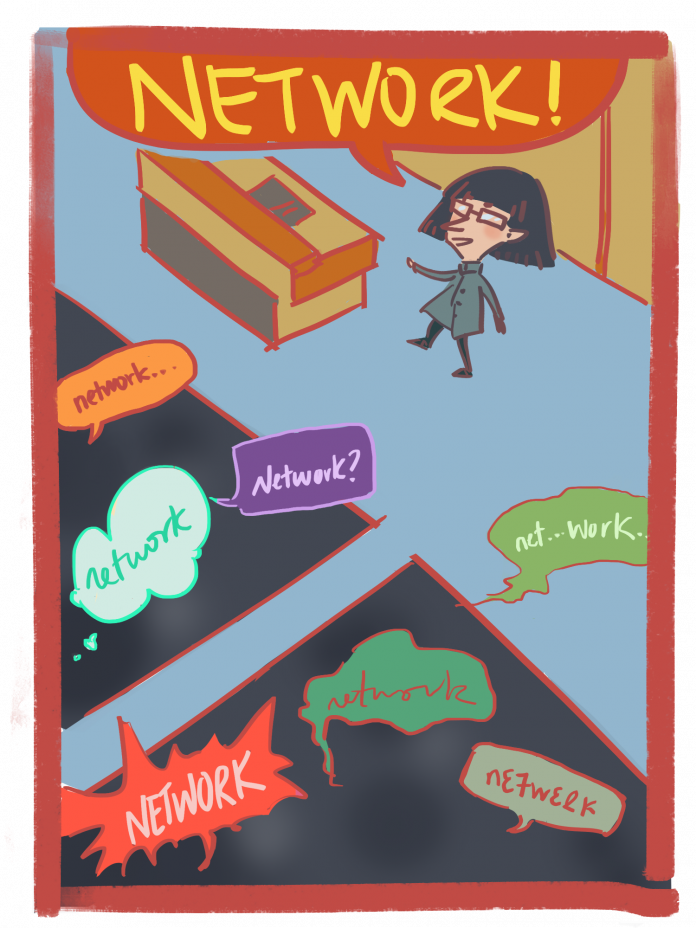
Illustrated by: Marissa Ouyang

If you’re nearing the end of your first or second year and still have no idea what to major in because you aren’t smart enough for sciences and you hate every arts subject you’ve tried so far, then communication is the major for you!

Here is the makeup of students in your classes:

  • 30%: communication majors who failed out of SIAT.
  • 30%: students who decided to throw a communication minor onto their degree after finding out that the minor program is only six courses.
  • 20%: students in need of an easy elective outside of their major.
  • 15%: student athletes who are in communication because they had to pick a major in order to play in a university league.
  • 2%: people who are actually interested in the discipline of communication and will probably go on to complete a master’s.
  • 3%: you have no idea because they only showed up to the first class and one other time to hand in an essay.

The good:

  • You will be able to scrape a solid B in almost all of your courses without doing any readings.
  • Although you will have no applicable life skills, you will develop the ability to bullshit essays really well.
  • Communication is so vague that you can probably talk your way into pretty much any job that requires an arts degree.
  • You will have amazing professors.

The bad:

  • At some point, you will be forced to actually read Marshall McLuhan (instead of just reading about him — which you will be doing a lot too) and this will cause you to forget everything you’ve ever learned about academic writing.
  • You will go through a phase where you become extremely paranoid that the government is watching your every move, and as a result, you will tape your laptop webcam and only send messages to people via BBM.
  • Prepare to feel attacked when people ask what job you can get with a communication degree, or what communication actually is, and everytime you are asked if you learn how to talk to people.
  • You will have very strange TAs (they were the 2% in your class mentioned above that went on to pursue a graduate degree in a subject that will never get them a job — other than being a communications TA).

Pro Tips:

  • Reserve the entire last month of the semester for writing papers. For the other three months of each semester, you will literally have no work to do and are free.
  • Enroll in at least six communication courses each semester because at least two will be cancelled the day before classes start “due to unforeseen circumstances.”
  • If you had a dollar for every time your CMNS 110 prof says the word “network,” you would be able to pay off your student loans.

Urban planning displaces Black populations, says professor

0
(Images courtesy of University of Toronto Press, Viralscape)


A public lecture held at SFU Harbour Centre on October 24 tackled the issue of how urban planning constantly fails to consider the Black population. The talk was held by Ted Rutland, associate professor in the department of geography, planning, and environment at Concordia University. Rutland structured the lecture around his book, Displacing Blackness: Planning, Power, and Race in Twentieth Century Halifax.

The book used Halifax, Nova Scotia as a case study to examine how the Black population has historically been displaced during urban planning by being pushed to the outskirts of major cities. It also critiqued current urban planning literature and offered suggestions to fill in the existing knowledge gaps.

Rutland began the lecture with an excerpt from his book, summarizing the history of urban planning in Halifax and how it has consistently neglected to consider Black residents.

“While we’re a long way from Halifax, we’re not outside of the orbit, of course, of anti-Blackness or Black displacement. Vancouver has its own history of anti-Blackness that dates back at least to the 1850s,” he explained.

Before discussing the book in detail, Rutland also acknowledged his own privilege as a white author writing about the presence of anti-Blackness in urban planning.

“My privilege to write this book as a white scholar depends on a series of racial privileges that are tied in various ways to anti-Blackness, and [ . . . ] the analysis in the book is derived from a long history of Black intellectual production,” he said.

“This book rests on the courageous work of others.”

Rutland then introduced his book’s three key themes. The first is about identifying racial oppression as a key phenomenon at the core of urban planning. Accordng to Rutland, much of the literature on city planning focuses on economic oppression rather than racism, referencing race “strictly in the language of poverty and access to resources” and placing urban planning as “this unique realm where racism doesn’t operate.” Rutland explains that this is problematic because racial oppression actually plays a very large part in city planning.

The second theme is about recognizing racism as something that exists in every part of urban life. Again, Rutland critiques the existing literature, as it “tends to focus on very specific spaces and lives, generally places where people of color are more likely to reside,” ignoring other spaces and assuming that racism does not operate in white spaces.

The third theme looked at how Black social movements are categorized and how this categorization can be problematic for planning. Currently, literature on Black social movements discusses them in various categories, including civil rights, Black power, and environmental. Rutland explained that, while this categorization is accurate (because that is how these movements classify themselves), “these movements are [also] concerned in one way or another with planning.” He emphasized that planners must not separate these movements from the discipline of planning and must look at the planning-related demands that these groups make.

Rutland concluded by summarizing his suggestions to improve the way planners approach their discipline, and explained how these suggestions would help fulfil the three key themes outlined above. Lastly, he stressed that while his analysis was focused on Halifax in the twentieth century, it can be applied to us in Vancouver in 2018.

Rutland ended the lecture with a quote from his book, stating that a different future requires us “to leave our place within the boundaries of humanity that has always depended for its coherence on the dehumanization of others [. . .] A new form of planning, one released from its centuries old connection to race and power will be created here, or nowhere.”

Clan dominate Mariners for second night in a row to sweep weekend series

0
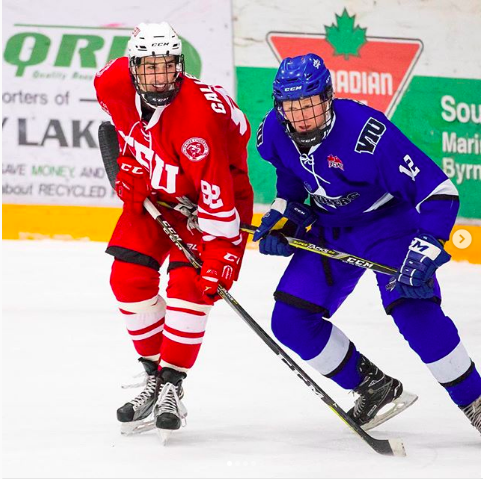
It was all smiles for the Clan this weekend. (Photo courtesy of SFU hockey)

After months of hard work, SFU hockey finally grabbed ahold of first place overall in the BCIHL standings (at least for now) with another huge win over the Vancouver Island University Mariners at Bill Copeland Sports Centre on Saturday night.

SFU defeated the Mariners 6–3. In contrast to the previous night’s game, where SFU went down 3–0 in the first period, this victory relied on opening the game with four straight unanswered goals. With these four goals, the Clan’s weekend scoring streak versus the Mariners went up to twelve unanswered across the weekend double-header. While VIU eventually broke through late in the second period, unfortunately for them, this was too little and too late to challenge the Clan’s weekend sweep of the visiting team.

The Clan were dominant from the drop of the puck, and the team was immediately rewarded for their hard work. Despite only outshooting their opponent by a slim margin by the end of the game (33–27) the Clan carried the play, spent a disproportionate amount of time in the offensive zone and, in general, demonstrated that when they play to their potential, they are one of the strongest teams in the league.

The first period saw only one goal and quite a bit of neutral-zone play as the Clan outshot VIU 12–6 and benefitted from Cole Plotnikoff’s second career BCIHL goal to give them a one-goal lead after one.

In the second and third, forwards Nicholas Holowko, Brendan Lamont, Mac Colasimone, Jaret Babych and defenseman Austina Adam all tallied multi-point nights as the Clan. Babych, striking for two goals in the second period with his signature laser beam of a shot, led the way in establishing the four-goal lead the Clan would carry into the third.

The third period saw the Clan become a little complacent in the context of a huge lead on the scoreboard, allowing the Mariners to outshoot them 17–9 and score three goals in the frame. However, despite a bit of overly relaxed play in the defensive zone, the offense continued to carry the Clan and smooth over any inconsistencies in the team. Regardless of this game’s outcome, SFU will have to work on minimizing or removing these inconsistencies and prove that they can play a consistent 60 minutes night in and night out.

Between the pipes, Michael Lenko secured his second win in as many nights and his third win of the season with a solid performance. Lenko has now started a majority of the games for SFU this season and looks to be in line for the starting position if he can keep giving the team a chance to win on a nightly basis.

“The team is really coming together in terms of chemistry and sacrificing for each other on a nightly basis,” said coach Mark Coletta on the topic of SFU’s weekend sweep of the visiting team.

Coletta emphasized that a key takeaway from the first month or so of the season was that the next step in developing a league-dominating Clan team was working on consistency. Looking ahead to their next game at the Langley Events Centre on Friday night, the Clan will certainly need to make a consistent effort if they want to break the perfect record of their main rival, the Trinity Western University Spartans.

The Clan will now use a week of practice to prepare for their upcoming game against the Spartans, who carry a 4–0 record into the matchup, which will now be a battle for first place in the league standings. Following the Friday night tilt, SFU will look ahead to a familiar two-game Vancouver Island roadtrip before an anomalous two-week break from league games that will give the team a chance to catch its breath, catch up on school work, and bask in the glow of their recent success while working hard to keep it up.

Six underrated artists you should be giving a listen

0


Tove Lo:

A few summers ago, Tove’s “Habits (Stay High)” was inescapable. While her music’s quality has since remained consistent, none of her follow-ups to that song have garnered the same attention. She recently released Blue Lips (2017), the second half of her two-piece concept album, preceded by Lady Wood (2016). One of the album’s standouts, “Cool Girl,” inspired by the film Gone Girl, is about questioning the power moves in a relationship. Both albums were succeeded by short films that follow Tove and her fictional relationships, while exploring the lyrical content of the songs.

        Her brash, confessional style sets Tove apart from her contemporaries. She’s collaborated with the likes of Coldplay, Nick Jonas, and Major Lazer, as well as serving as a co-writer on Ellie Goulding’s massive hit “Love Me Like You Do.” Tove has also contributed to the soundtracks of Fifty Shades Darker and The Hunger Games: Mockingjay, Part 1 in the form of “Lies in the Dark” and “Scream My Name.”

Top 3 Songs: Cool Girl, Talking Body, True Disaster


Tinashe:

Tinashe is undoubtedly talented. She has the voice, the moves, and the catchy tunes. Her choreography in the music video for “Company” and her vocals in “Flame” are a testament to her talent. She’s also had a recurring role on Two and a Half Men, among other TV roles. However, unlike her peers Kehlani and Ella Mai, Tinashe has never fully resonated with audiences.

        Tinashe’s style of music includes hip hop, pop, and R&B. With features from Future and A$AP Rocky, Aquarius (2014) was adored by critics as well as its fair share of fans. She has collaborated with a multitude of artists such as Nick Jonas and Britney Spears, as well as tour with the likes of Nicki Minaj and Maroon 5. It’s only fair that Tinashe have her breakthrough as a full-fledged pop star soon.

Top 3 Songs: All Hands on Deck, No Drama (feat. Offset), Slumber Party (with Britney Spears)


Marina and the Diamonds:

Despite her several critically acclaimed albums and a devoted fan base, Marina has yet to achieve a huge hit, and it’s not for lack of trying. Her single “Primadonna,” produced by the people behind Katy Perry’s “Dark Horse”, should’ve been her breakthrough song. From her anthemic electro-pop songs to her aesthetically pleasing visuals, Marina might just be the most underrated artist on this list.

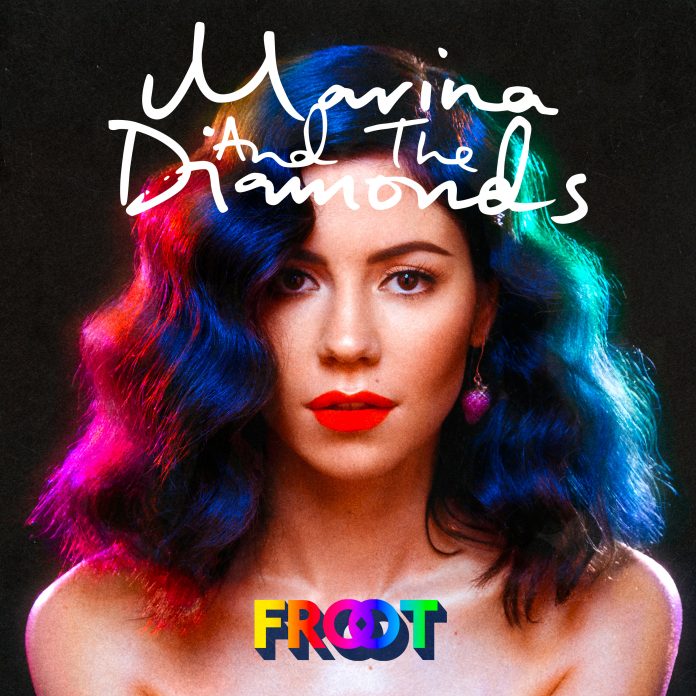
        In her concept album Electra Heart (2012), Marina portrayed several personas in songs such as “Homewrecker” and “Teen Idle,” which depict different stereotypical female archetypes. For her album Froot (2015), written entirely by herself, she took on a more indie-pop sound. Upon hearing about the Boston Marathon bombing, the artist began developing a song about the violence of sexual assault and murder, which would eventually become “Savages.” For her forthcoming album, she is speculated to drop “and the Diamonds” from her stage name.

Top 3 Songs: Can’t Pin Me Down, Primadonna, Blue  


Bebe Rexha:

Bebe Rexha’s songs are crafted to dominate the pop charts, which is a shame since her biggest hit to date is “Meant to Be,” a country song. She’s had success on the pop charts in the form of “Hey Mama,” a collaboration with David Guetta and Nicki Minaj, and “Me, Myself & I” with G-Eazy. However, her solo music has yet to garner the same amount of attention.

         She has a charming personality and a powerful voice that sounds just as good onstage. Her album Expectations (2018), preceded by two EPs, remains one of the most solid debuts of the year. With potential hits reminiscent of Rihanna and Shakira, such as “Self Control” and “I’m a Mess,” it’s clear that Bebe is destined to be the new face of pop music, alongside Dua Lipa and Camila Cabello.

Top 3 Songs: Ferrari, I’m a Mess, In the Name of Love (with Martin Garrix)


Troye Sivan:

 Troye is the male pop star 2018 needed. Despite a string of Top 10 albums and a couple million followers, he’s destined for much more. Troye, who made his start on YouTube, released his critically acclaimed debut Blue Neighborhood in 2015. In “Heaven,” which details Troye’s struggle with coming out as gay, he questions if he’ll ever make it to Heaven. The album was preceded by a music video trilogy, which follows Troye’s fictional relationship and the struggles they face.

        Sivan followed up his debut with one of the best albums of the year, Bloom (2018), which not only features huge electro-pop moments such as “My My My!” but more downbeat tracks, including “Postcard.” He has collaborated with the likes of Ariana Grande, Alessia Cara and Martin Garrix. Catch him in Vancouver on The Bloom Tour on November 8, 2018.

Top 3 Songs: Dance to This (feat. Ariana Grande), Bite, Cool


Charli XCX:

Charli has written massive hits for the likes of Selena Gomez and Camila Cabello, to name a few. She’s also had solid success on her own, notching Top 10 hits in the form of “Boom Clap” and “Fancy” with rapper Iggy Azalea. However, since then, she has failed to score a hit as big as the aforementioned songs, which is quite disappointing since she’s managed to release some of the catchiest pop songs ever.

        Charli isn’t afraid of taking risks, having collaborated with equally underrated artists such as Carly Rae Jepsen and MØ, as well as every artist that appears on this list. Her 2017 music video for “Boys,” directed by Charli herself, features numerous cameos, from Joe Jonas and Cameron Dallas to Brendon Urie of Panic! At The Disco. She’s known to experiment with different styles of music, and takes on a more futuristic pop sound in her 2017 mixtape Pop 2.

Top 3 Songs: Boys, Moonlight (with Lil Xan), Porsche (feat. MØ)

World News Beats

0


China unveils massive sea bridge

Chinese President Xi Jinping opened the longest sea-crossing bridge in the world, connecting Hong Kong and Macau to Zhuhai in southern China.

The bridge, spanning over 54 kilometers and featuring an undersea tunnel, took almost 10 years and $20 billion dollars to build. As the bridge reduces travelling time in the critical Pearl River delta manufacturing hub, China hopes it will help grow the economy.

While China views the bridge as a mark of national pride and “China’s engineering prowess”, Claudia Mo, a Hong Kong democratic politician, pointed out that the bridge’s practical use is outstripped by political significance. Mo stated that the bridge can be seen as reminder of their connection from China to Hong Kong.

This bridge comes a month after a new Hong Kong-China railway was finished.

With files from NBC News.


2400-year-old shipwreck found in the Black Sea

A 23-meter-long Greek merchant ship, from more than 2400 years ago, has been found in the Black Sea, 80 kilometers from Burgas, Bulgaria.

The ship, including its rudder, rowing benches, and cargo, was found 2000 metres below sea level, but it was unusually well-preserved because it was submerged in oxygen-free water. It is believed that the ship was one of the several ships tracking between Mediterranean and Greek colonies, on the coast of the Black Sea.

The British-Bulgarian team which found the ship hopes to keep studying it to see what it can reveal about technology and trade in the region during that time period.

With files from BBC News.


AI-created art sells for $432,500

A painting called “The Portrait of Edmond Belamy” created by artificial intelligence (AI) was sold at Christie Auction House for $432,500 to an unknown buyer.

According to Christie, the painting, which depicts what appears to be a French churchman, was the first painting created by AI to be sold. The selling price beat Christie’s estimate of around $7,000 to $10,000 by over 40 times.

The French art collective known as Obvious, who were behind the painting, stated that they had used an altered version of code from artist Robbie Barrat to make the painting. This has led other AI artists to call the painting unoriginal.

With files from USA Today and The New York Times.


New antibiotic in development

Pharmaceutical company Shionogi Inc. has made a new antibiotic named Cefiderocol.

When infected, the human body creates an “iron-poor environment,” according to Dr. Simon Portsmouth, and the affecting bacteria try to counter this by increasing their intake of iron. Cefiderocol drug acts like a Trojan horse in this situation, as it binds to the iron which the bacteria uptakes. The antibiotic then kills the bacteria cell from the inside.

The drug has shown promise in clinical trials involving 448 people with kidney or urinary tract infections.

New antibiotics are difficult to develop and antibiotic-resistant bacteria make infections hard to treat. Antibiotic-resistant bacterial infections could kill 10 million people each year by 2050.

With files from BBC News.

Director Joel Edgerton tells all about his process adapting the memoir, Boy Erased, to film and more

0
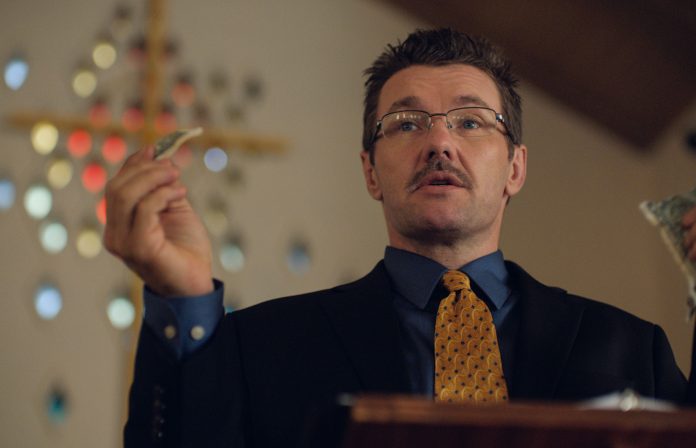
Photo courtesy of Focus Features

PC: Joel Edgerton stars in Boy Erased as head therapist, Victor Sykes


Until June 6, 2018, gay conversion therapy was still legal in Vancouver. While many may think gay conversion therapy couldn’t possibly still exist, shake their heads at the concept, and exclaim, “It’s 2018!”, it remains a reality for people in Canada and America.

        In Joel Edgerton’s new film, Boy Erased, Edgerton does not pull back on helping expose the brutal horrors, pain, and sorrow that befell a 19-year-old Jared Eamons. The Peak sat down with Joel Edgerton, and talked to him about his movie, his process in filmmaking, gay conversion therapy, and more.


PART I: The film’s origins

Boy Erased centres around the protagonist, Jared (played by Lucas Hedges), a young gay man who was outed, to the dismay of his religious parents,  Marshall (Russell Crowe) and Nancy (Nicole Kidman). Determined to “help” him, Jared is enrolled into a gay conversion therapy program entitled, Love In Action, prepared to “rehabilitate” him through group therapy, exercises and more.

     “LIA had places throughout America,” Edgerton explains, “it was under the banner of a place called Exodus International.”  As noted by the Huffington Post, Exodus International was one of the most widespread gay conversion therapy programs in the 70s, and both American and Canadian churches helped fund it.

      While the names are slightly altered in the film adaptation, the film is based off of Garrard Conley’s memoirs of the same title. Edgerton spoke of how the memoirs dealt primarily with Garrard’s therapy, but as the story unfolds, themes centering on a conflicted family are revealed.

      “I found it was drenched in irony,” Edgerton said, “And yet also drenched in empathy. Irony, because none of it should even exist in my liberal opinion, and yet it does.”

      But one of the most chilling aspects of the film, Edgerton reasoned, was not one of the obvious suspects, like the therapy or the pain Jarred endured.

      “I think the most terrifying subtle thing about this film is that everybody was trying to help Garrard,” he said. “And Garrard didn’t need any help.”

PART II: Edgerton before Boy Erased

While Joel Edgerton both directed and helped write the screenplay for the film, he is most well known for his acting career.

      When it comes to acting, and especially for choosing a role for himself such as Victor Sykes, head therapist of LIA in Boy Erased, Edgerton looks for something either relatable or complicated in a character.

      “On a macro scale, I hope that the film has some kind of nutritional value, that it’s not just flimsy or silly . . . I always want something to be taken away,” he said.

      And with a contentious topic such as gay conversion therapy, Edgerton was fascinated with Garrard Conley’s story since he read it.

      “It just felt like someone needed to make a movie of Garrard’s book, and I became so obsessed with it, I ended up putting my hand up to do that,” he explained, “and I’m very happy that I did.”

      Edgerton believes  this film is a great opportunity to provide exposure to such a painful topic, since he considers gay conversion therapy “all a mirage.”

      “And yet a lot of people don’t know it exists and there’s so much pain. It’s like this fertile ground for a lot of damage and pain that doesn’t need to exist either,” he said.

      “So I became obsessed with the family aspect of it, like: how would you feel if you were a child, and your parent told you there was something wrong with you when there wasn’t?”

      Despite not being LGBTQ+ himself, similar to the protagonist, Edgerton also grew up.

      “Nobody at high school ever came out — I remember, ever came out — and yet the slurs of bigotry around homosexuality were everywhere,” he explained.


PART III: The film’s production

Edgerton emphasized the importance of collaborating with the memoirs author, Garrard Conley.

      “First of all, everything was filtered through Garrard,” Edgerton said.

      “It was very important for me telling his story, whether I was telling his story about playing Little League as a kid, or the very painful experience he went through in Boy Erased.”

      Edgerton also travelled to Arkansas to have dinner with Conley’s family, and even met the real-life Victor Sykes. Edgerton, along with the rest of the actors, made sure to develop a relationship with the real person their character was based off of, even if their initial meeting was unexpected.

      “Very funny story about Russell,” Edgerton laughed, “the real father is called Herschel, and he has this congregation in Arkansas, and Russell just turned up one Sunday, five minutes into the congregation, [and] sat at the back.”

      Another notable fact about the film was a scene where clients of the gay conversion therapy program were required to read out a “moral inventory” of all the homosexual activity they partook in. As actor Troye Sivan mentioned in an interview with MTV, Edgerton allowed those actors to write their own speeches. As a director, by allowing the actors to speak from their own experience, Edgerton saw it as “the path of least resistance.”

      “They all had their own individual reasons to be at therapy — why they were there, whether they were dragged kicking and screaming, whether they volunteered — so that each one of them, even if [they weren’t] acting with dialogue, [had] something interesting about them going on on every single day,” Edgerton explained.


CONCLUSION

Edgerton recalls speaking to a young LGBTQ+ fan at the very first showing of the film in the Telluride Film Festival about the importance of Boy Erased.

      “He was a volunteer, he would have been your age, and he was like, ‘If only this film existed when I was 15 years old,’” Edgerton said.

      “The idea that you could watch something that is a fictional movie based on truth, where you can go, fuck, I’m not the only person . . . it’s amazing people how some people live certain experiences and don’t realize there’s a community out there of people that can help them.”

      With the film set to be released in more international countries in November, Edgerton hopes that a different kind of audience walks into the theatre.

      “The people I hope to walk into it are people who are not the obvious people to go buy ticket to Boy Erased,” he said. He elaborated that he hopes religious parents wrestling with an LGBTQ+ child see it, or that any scared teen sees it as well. As for what Edgerton hopes audiences walk out the theatre feeling or thinking, Edgerton had this to say:

      “I hope that maybe that people walk out, and if they feel that they know somebody who wouldn’t go see this movie, to let them know it’s okay to, and that it’s almost necessary in some cases.”


Boy Erased will be available in Vancouver theatres on November 9.



Men and women’s cross country both place second at GNAC Championships

0
According to head coach Brit Townsend, this may be the only time both teams have finished top two. (Photo courtesy of SFU Athletics)

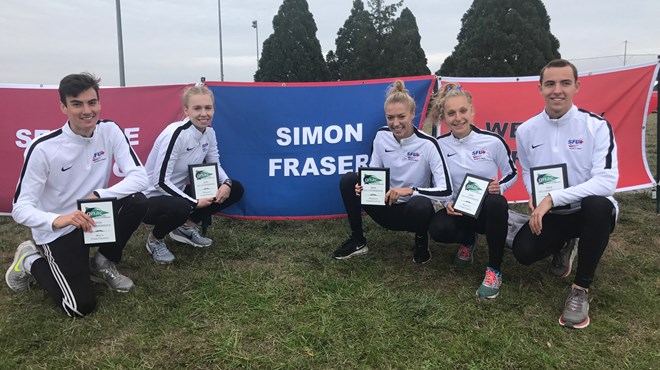
On Saturday, November 3, both the men and women’s SFU cross country teams competed at the GNAC Championships held in Monmouth, Oregon. Both teams placed second at the tournament, despite injury issues, which says a lot about the excellence of the program.

For the men, seniors Rowan Doherty and Sean Miller continued to lead the way, as they have all season. They finished third and fourth in the 8000-metre race with times of 24:40.5 and 24:43.4 respectively, only finishing behind Wesley Kirui and Felix Kemboi from the University of Alaska Anchorage. Unsurprisingly, UAA placed first on the men’s side at the championships.  

Doherty stayed with the UAA runners for the duration of the race, despite their move to split away from the pack, but was unable to pass them over the last 300 metres.

Strong finishes from the rest of the group rounded out the team, with Pierre-Louis Detourbe (25:23.6), Aaron Ahl (25:23.7) Chris Sobczak (25:30.8), Carlos Vargas (25:46.3), and Thomas Gallagher finishing 14th, 15th  18th, 21st and 22nd respectively.

“As we have said so many times, the men are running as a strong unit in each race and they will have some things to prove in two weeks to make up for their huge disappointment last year,” said head coach Brit Townsend.

On the women’s side, the team came second to Alaska Anchorage once again. Olivia Willett led the way for the Clan with a time of 21:49.1, good for a fourth-place finish. This is the first time she’s led the team all season. Captain Addy Townsend battled injury heading into the race, but was still able to finish seventh with a time of 21:53.6.

Rounding out the group were Chelsea Ribeiro (22:19.9), Sophie Dodd (22:43.8), and Megan Roxby (23:02.7) who finished 16th, 25th and 32nd.

“These women have come so far this year when we thought we had little hope of being a contender for a national spot they now look to be poised to earn their berth if they can keep this up through the west regional championships,” said Townsend.

What’s next:

The team will now prepare NCAA DIV II West Region Championships, which take place on November 17 at Montana State University Billings. “The next two weeks will be spent getting everyone healthy and recovered from this race as we have had several weeks of intense high volume workouts,” said Townsend.

SFU wrestling host SFU open and put up dominating performance

0
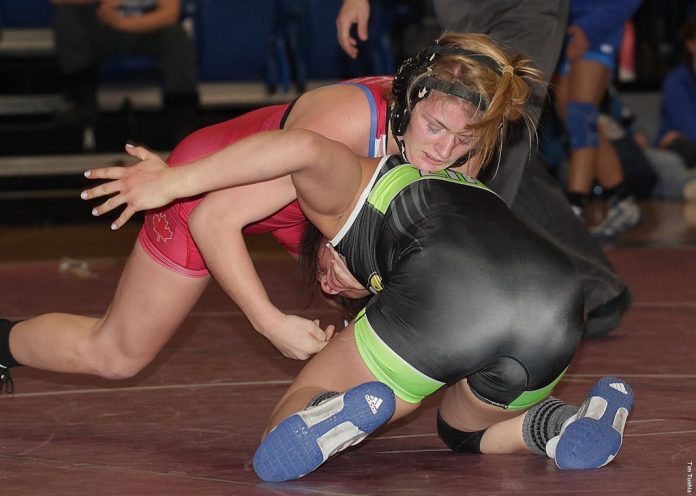
Lauren Mason pinning her opponent. (Photo courtesy of SFU Athletics)

On Saturday, November 3, Burnaby mountain hosted the SFU open wrestling tournament. The men’s and women’s teams both put up terrific performances on the day, combining to win five weight classes. Here’s how it went down.

On the men’s side, Logan Nelson, Taber Spray and Nishaun Randhawa were able to win their weight classes.

Nelson, competing in the 79-kilogram division, cruised through the tournament. All three victories were by technical fall, displaying his dominance of his opponents.

Spray also won all three of his matches in the 70-kilogram division, though these all went down to decision.

In the 97-kilogram division, Randhawa took on Arjot Gill in a battle of the big men, and was able to beat him by technical fall.

Other notable performances for the men include those by Nela Takufua, who finished second, and Riley Prough, Nolan Badovinac and Ciaran Bell, who all finished third.

On the women’s side, Alex Hedrick and Serena Woldring won their respective weight classes.

Hedrick competed in the 65-kilogram weight class, and won all three of her matches. Her closest competition actually came in her first match, when she won a tight decision 14–13 over Meghan Fendelet. She won her next match by technical fall before taking on teammate Alison Horne in her final round robin match. She would win this one 14–7.

Hedrick also competed in the 55-kilogram division, and again, took on a teammate in the final. This time it was Lauren Mason, and Hedrick came out on top with a 6–1 decision. Mason also had a great tournament, as this was her only loss.

Woldring dominated the 86-kilogram weight class, winning her first three matches by technical fall before taking on Korinahe Bullock in the final. Woldring won this match in dominating fashion, taking it by decision 5–0.

The Clan will now prepare for their dual meet against North Idaho College on December 7 at 7 p.m in the West Gym.

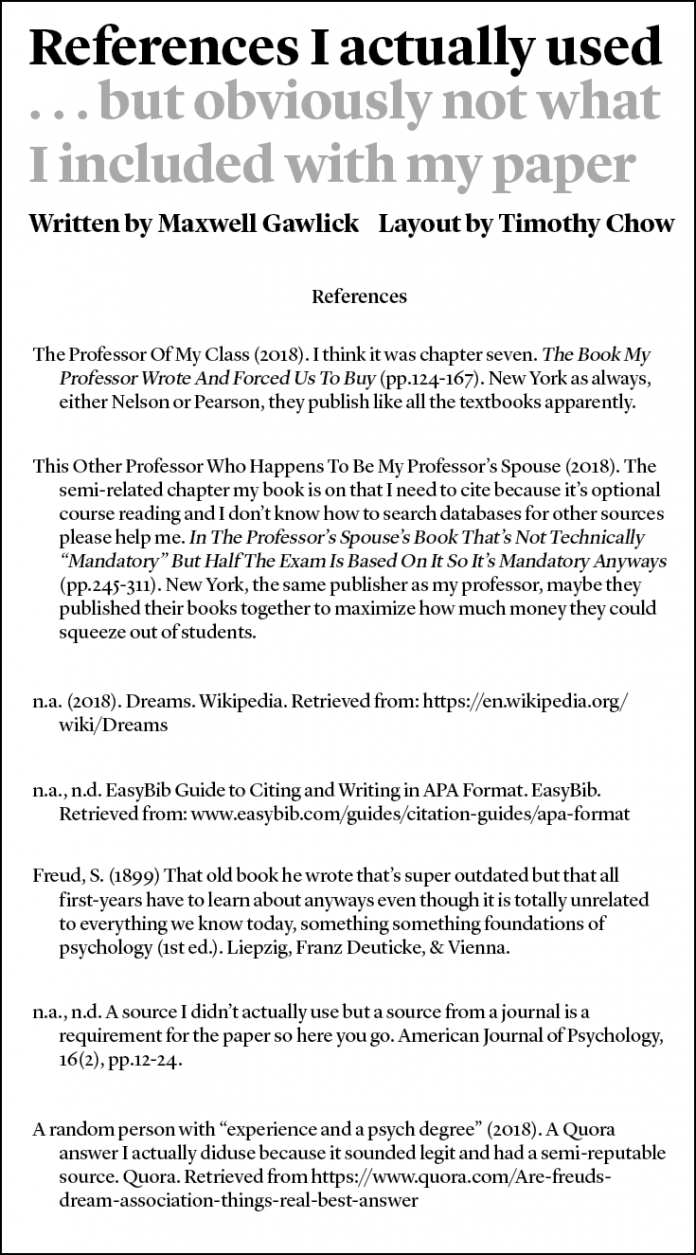
References I actually used

0
Layout by Timothy Chow