Home Blog Page 541

Long story short: Cutting my hair set me free

0
Image credit Tiffany Chan

We live in a society which puts extra pressure on women to look and act a certain way. I come from India, a society where there’s a little more tradition behind the societal pressure and where the norms push you to care about your looks.

I was raised believing that my hair was my main asset, and that without it, I lack everything that makes me a girl. I spent hours every day just turning and tossing my hair until it framed my face in just the right way. Until it made me look the way I was supposed to. Until it made me pretty.

I never saw any trouble with my identity being anchored to some dead cells attached to my body. It was just how things were and I never questioned it. I would like to say that I shifted away from this pathological dependence all by myself, and that it magically snapped like a twig one day, but that would be a lie.

It started when my friend was battling cancer. In the face of chemotherapy and radiation, she was holding on to her last few strands of hair as long as she could, refusing to shave her head. For her, her hair wasn’t just a societal norm; it represented how her very life was slipping out of her grip, no matter how hard she tried to hang on.   

That was when my twig snapped.


I had wanted to donate my hair for a long time, and now the time had come. I went to the salon in UniverCity, at the Burnaby campus, and asked to donate my hair. They asked me what hairstyle I wanted after. The answer was simple: none. I decided to shave my head completely.

Now keep in mind that I have always had hair that, at its shortest, still reached the base of my neck. I hadn’t had an exposed scalp since I was born, but there the razor was, going around my head.

In that moment, I was terrified, because I didn’t recognize the person I saw in the mirror. But I was also free, for I saw my smile and saw no flaw. For the first time in forever, I didn’t look in the mirror and think about my appearance: how my hair looked too thin or too imperfect, how my buck teeth looked when I smiled . . . For the first time, I looked at my reflection and just smiled (maybe like a maniac). Things in my life would never be the same.

For starters, it gets cold without your hair acting as a natural scarf.

Apart from that, the way I looked at myself changed. The first time I looked at myself after leaving the salon, I couldn’t believe what I had done. There was no quick way of going back now. It’s not like I was Harry Potter and my hair would grow back overnight.

I was terrified, but of nothing in particular. It just felt alien. An unchartered territory. I hate to admit this, but my fears were mainly about what people would think, including people who I might not know. Despite that fear, there was also this sense of pure and unadulterated joy, and I am proud to say I have never been more comfortable in my skin as I am now.

I shaved my head in March, so I am no longer completely bald. However, I still have really short hair, and I couldn’t love a hairstyle more even if I tried to. This hairstyle gave me confidence again.

The continuous pressure to be someone I wasn’t had gotten to me. I didn’t realize that I was toning myself down so I wouldn’t be someone else’s eyesore. Getting rid of my hair brought me out of a cage I didn’t know I was in, and reminded me that we all owe it to ourselves to know who we are.

My family, however, didn’t approve of this radical choice. Everyone liked to point out how unladylike it is to be without your hair. How no one will find me attractive, and the best of all, what would people say? Thankfully, I still had one person in my corner: my mother. She diligently pointed out how good I looked and gave the mantra of a lifetime: “Who cares?” Well, I agree.

It is safe to say that cutting my hair was one of the best decisions I made, albeit an impulsive one. I no longer scrubbed my rough edges to fit in. Instead, I learned who I was.

A person who loves to smile and show off her buck teeth. A person who, despite how much she loves colours, once stopped wearing pink because it was “girly” and that was apparently a bad thing. A person who is opinionated and loud.

A person with short hair, loving it.  

At The: Imperial

2
Chris Ho for The Peak


Ambiance: A 
There is jazz music playing, and a slew of denim jackets, wire rim glasses and bangs on every other person. The mosh pit is filling up, and everyone is chill as all hell. And even though it may be too late to be out on a Tuesday when I have quizzes in the morning, I can tell that we can expect a great crowd for Mitski.


       It’s a rainy night, but inside the Imperial, the crowd is energetic and ready for a concert. The decor is unique — terracotta warriors stand high above the crowd as decor, the stage is bathed in a deep violet light, and while the crowd is making noise, it isn’t rowdy.


Accessibility: C +

Right off the bat, this place is notably wheelchair friendly. There are ramps within the mainstage area, being transitioned from the bar, as well as a wheelchair friendly bathroom on the main floor. The bathrooms downstairs however were only limited to two genders, so one could assume that the main floor wheelchair bathroom may be the closest thing the Imperial to has a gender neutral bathroom.


Opener — Overcoats: B+
The performers’ musical sound is an cool mix of ambient, pop, and a bit of soul. The two vocalists bounce off each other’s energy, and the audience can see the chemistry that crackles between them. Overcoats are a fitting opener for Mitski as the two vocalists spend the first minute onstage standing still together, back to the audience like a hipster version of the twins from the Shining. The two croon their words, and while it was calming, it was difficult to make out their lyrics. But it honestly didn’t matter because they were a refreshing pop group, full of talented women.

       Some notable songs “Welcome,” an almost indie cowboy kind of ballad, a deeply sentimental but uninspired cover “Imagine.” It was ultimately Overcoats’ “I Don’t Believe In Us” that stood as  their catchiest song by far. Although they were an opener, and they had the moves of the coolest Oompa Loompas I’ve seen (I swear this is a compliment), the moody, crooning Overcoats had an intimately attractive energy that made for a great set.


Mitski: A 
After a solid opener, the crowd patiently waited for the grand cowboy of moody hipster music herself: Mitski.

       First and foremost a performer, Mitski was hypnotizing in every way. She walked on stage stoic, graceful, and poised. Everything about her was absolutely electric — one of the most striking things from her performance was her dance movements. With eccentric style, Mitski moved/danced very deliberately — every wave of her arm, every kick, and every curled finger was very purposeful, and even if I (or the rest of the audience for that matter) didn’t understand how each movement set coupled with her songs, we loved it anyway.

       Dance moves aside, the absolute emotion that Mitski poured into her every song was just bewitching, and the music was made even more powerful by her passionate lyrics — from her older songs like “Townie” and “I Will” all the way to “Your Best American Girl.” By far, her best performance of the evening was her slow, sorrowful “Two Slow Dancers” which not only left her audience drying tears, but also herself.

       Seeing an artist like Mitski, an Asian woman, and an unapologetic, eccentric, and passionate one at that, made for a stirring and truly unique concert experience.


VERDICT: A-

With decor as unique as terracotta stone warriors bearing down on the audience, and a gorgeous lighting system, roomy space, and stellar acts as Overcoats and Mitski, the Imperial undoubtedly makes for a great place to jam out on any late night. 

7 quotes from the TEDx SFU Dialogue event

0
Image courtesy of TEDxSFU


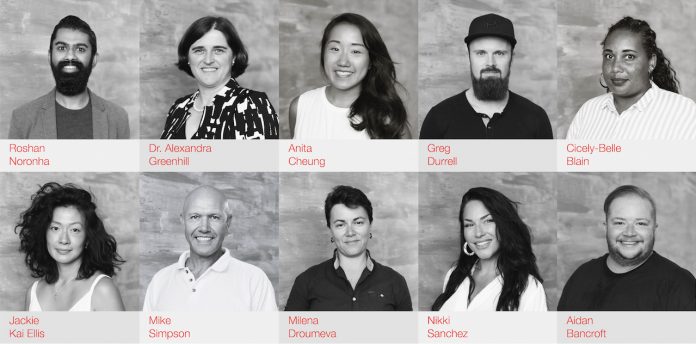
The TEDx SFU Dialogue Event was a smaller, more intimate affair than the day of speakers and entertainment that preceded it. Around 20 people from all walks of life, with various degrees of connection to the university, sat in one of SFU Harbour Centre’s conference rooms. The organizers had us pull up our chairs in a circle, and after a round of introductions, something between a Q&A session and a round-table talk took off. The discussion ran with a mind of its own, but centered around issues such as entrepreneurship, discovery, innovation, self-awareness, immigration, trial and error, and growth. Here are seven standout quotes from the speakers of TEDx SFU:


“What I find really important is to build in humility.”

– Milena Droumeva, assistant professor of communication at SFU


“I welcome that sense of fear because it tells me that I’m not playing it safe.”

– Dr Alexandra T. Greenhill, physician and entrepreneur


“I feel like you can’t even give space [to your doubts] . . . There’s no time.”

– Anita Cheung, yoga therapist, meditation teacher, and freelancer


“If you’re dealing with doubt and those what-if scenarios, you also have to wonder the opposite, which is: after all of that work and effort, what if I’m really good?”

– Roshan Noronha, SFU student and founder of EnTomorrow


“The basic misconception of what I do, and of what a lot of people do, is that talent equals success. And . . . I believe part of that is true, but it’s all perseverance . . . It’s following your dreams, but it’s working your tail off.”

– Greg Durrell, designer and documentarian


“Education . . . can also result, I think, in people, citizens, who know how to also inform themselves and participate in crafting the solutions to our shares of problems . . . ”

-Milena Droumeva


“The biggest misconception, perhaps, is that career is linear.”

-Dr Alexandra T. Greenhill

QUIZ: What Grade Are You Going to Get on Your Latest Assignment?

0
Illustration by Rebecca Lu

Take this quiz rather than doing the assignment to find out how well you’ll do.

[typeform_embed type=”embed” url=”https://peakmultimedia.typeform.com/to/lPtOyh”]


“Fake news” is a threat to democracy, but not in the way Donald Trump wants you to think

0
(Photo courtesy of Wikimedia Commons)

How many times have you heard the term “fake news” in 2018 alone?

I’m sure you read that in your worst Donald Trump voice, but US President number 45 probably isn’t the only person you’ve heard uttering those words. The term “fake news” might just sound like a joke by now, but it brings with it a dangerously simplistic attitude that threatens the democratic ideals that form the basis of the free press.

Trump has used the term time and time again to discredit any journalistic organization that he feels has made him look bad. In many cases, however, simply reporting the truth of what Trump said is enough to evoke his anger. The Washington Post cited a study which reported that 42% of Republicans “consider accurate news stories that cast a politician or political group in a negative light to always be ‘fake news’.”

Perhaps at one time, “fake news” meant what it sounds like it should mean: news that is false, either deliberately or by mistake. Thanks to Trump though, this term has become a way for people to dismiss coverage that doesn’t support their personal biases.

Recently, it seems that people are beginning to forget that the primary role of the free press is to keep the people informed, which is integral to the health of any democracy. The press has an ethical duty to ensure that the facts are accurate and unbiased before they report them. This means following leads, investigating all facets of the truth of any given situation they are reporting on, and — by extension — waiting to report on an issue until they are able to uncover the full truth of it, because half-truths can be just as dangerous as lies.

Ideally, independent press promotes a diversity of voices and ensures there isn’t just one potentially fallible source making claims about what’s true and what isn’t. This ensures that critical information is spread as widely as possible, and — for instance — that voters know what they need to know during an election.

It harms democracy if a political figure can demonize the press by claiming “fake news” any time they don’t like the way they’ve been reported on. If that figure has said something publicly, then the media’s responsibility is to hold them accountable for their statements.

I’m not saying that there isn’t bad reporting out there. Institutions like newspapers are made up of people, and it is inevitable that they will harbor some kind of bias, whether consciously or not. It’s great that people are approaching their media with a more critical eye, but dismissing most media as “fake news” weakens the foundation that democracy is built upon.

As reported by BBC News, Trump recently went so far as to claim that a third of Americans think the media is “the enemy of the people.” Regardless of how widely held this dismissive attitude is, “fake news” has become an unfortunately infectious catchphrase. Now, more than ever, we as the consumers of media need to critically examine what truly constitutes “fake news,” and who benefits from this narrative, or we risk irrevocably damaging the integrity of the press.

Boy Erased is a brutal film on gay conversion therapy, and straight people need to watch it

0
Photo courtesy of Focus Features


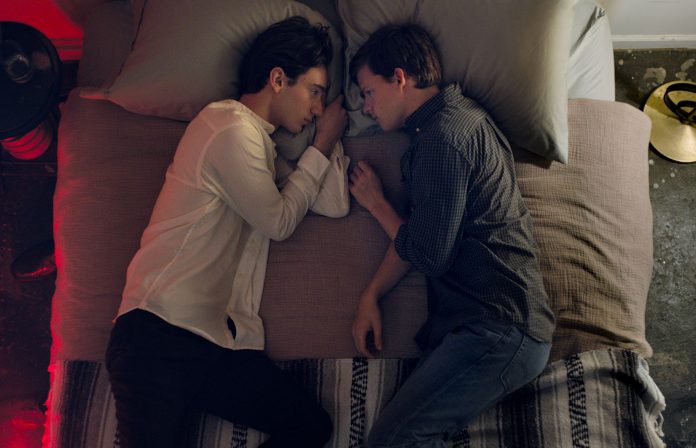
Boy Erased is centred around the story of a young man sent to a gay conversion therapy program. Taking place after his first year of university, Jared Eamons (played by Lucas Hedges), the son of a soon-to-be-Baptist priest (Russell Crowe) and dutiful mother (Nicole Kidman). The film shows Jared’s time at the Love In Action (L.I.A.) center and his journey leading up to it.

      Not only is the film an adaptation of a famous memoir, but across the board, the film features stellar performances — from Russell Crowe as a prideful but deeply confused Baptist father to Nicole Kidman as a loving, if not impassive mother. Not only do big names from the cast shine in their respective roles, but actors like Britton Sear excel as the soft-spoken Cameron or Théodore Pellerin as a caring Xavier.

     Given the fact that all of these characters are based off of real people, what struck me about Boy Erased was the deep empathy that each actor applied to their character, including the not-quite-antagonist of the film, head therapist Victor Sykes (Joel Edgerton). Each are crafted with such sympathy and depth, it easily makes some of the performances, most notably the young Lucas Hedges’, utterly poignant.

     The soundtrack included for stirring and tense instrumentations from Sigur Ros’ Jónsi, or loving ballads from the film’s own Troye Sivan — both of which helped fully carry the emotional weight of the film, respectfully.

     Boy Erased takes the bold stance that coming out is not only a time of forgiveness and acceptance, but of overdue apologies. We follow Jared’s tale mostly in silence — we absorb and live in Jared’s life as much as possible. And in doing so, we are exposed to the injustice and apathy he receives.

     When the film reaches its emotional crescendo, it affirms not just the tired sentiment of  “I’m gay and it’s OK,” but “You need to be OK with the fact that I’m gay.” The film excels in its poignancy and radical nature with having a gay character not only assert their own acceptance for themselves, but to demand that they be given that acceptance unabashedly.

     Which brings me to why I adore Boy Erased so much — out of so many coming-out narratives, especially done by straight filmmakers, this is the most radical in being an unabashed story of coming out, demanding not only tolerance and acceptance, but an apology, from its straight counterparts.

      The film, of course, is not without its flaws. The use of voiceover, while running contingently with the book, may be confusing to audiences who haven’t read the memoir. Also, when dealing with something as contentious as sexual assault, a trigger warning would have been very much appreciated, especially since the content may very well be tragic to LGBTQ+ youth who have gone through the same thing.

     While the film does little to balance the flashbacks with its current storyline, at times jumping drastically, it does ultimately weave a cohesive story of Jared’s growth.

      I hope that this film be helpful for religious LGBTQ+ youth, and more importantly, as actor Troye Sivan himself said in an interview with Stephen Colbert, the parents of such youth. With only Pride having passed just a month ago, it can be difficult for straight individuals to truly understand the plight of LGBTQ+ community, but with a film like Boy Erased, that gap of understanding can be bridged. This film serves as a microcosm of change, and as director Joel Edgerton said at the film’s screening at the Toronto International Film Festival, it will be redundant after a few years.


Boy Erased will be available for audiences at the Vancouver International Film Festival on October 6, and in theatres November 2018.

Despite losing leading scorers, SFU men’s basketball team is bigger and better

0
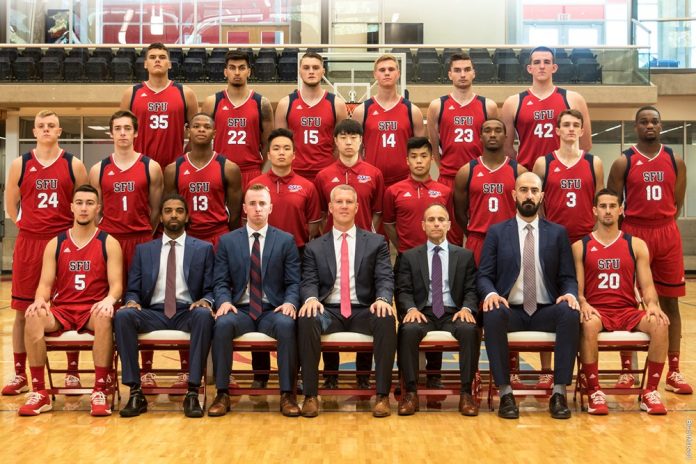
The Clan have multiple scorers that can heat up at any time. (Photo courtesy of SFU Athletics)

There are a lot of similarities between the men and women’s SFU basketball teams for this upcoming season. Like the women’s team, the men’s team is relatively young, with a lot of new faces in the locker room who will be looking to contribute from day one. Like the women’s team, we can expect the men’s team to improve throughout the season as they gel together. Like the women’s team, we can expect a dynamic offence from head coach Steve Hanson’s side, with a plethora of shooters than can heat up at any time. And like the women’s team, there are play-off expectations for the 2018–19 SFU men’s basketball team.

One of the main goals for the team this past offseason was to get more size inside. Julian Roche, a 6’11” transfer from Division I school Santa Clara, accomplishes the goal instantly. Joining him as the new faces for this Clan’s team are 6’8” NAIA transfer Jasdeep Singh, 6’7” freshman Jusuf Sehic, 6’7” freshman Sam Bailey, and 6’9” freshman Dominic Postle, none of whom would comfortably fit in your basement suite.

“Our conference is a big conference, and if you don’t have the size to match some of the bigger teams, you struggle. One of our biggest focuses this year is rebounding,” said Hanson on the size the team added this past offseason.

Other than adding size, however, one of the biggest stories surrounding the team are what they lost from last year. Their three leading scorers from the 2017–2018 season, Kedar Salam (20.4 points per game), JJ Pankratz (11.4 points per game), and Iziah Sherman-Newsome (10.3 points per game), have all graduated from the program.

Hanson does not see this as a negative, however, as the team will display a much more balanced offence than last season, where isolation plays were often drawn up for Salam. Furthermore, improvements from players such as junior guards Michael Provenzano and Othniel Spence, senior guard Jordan Muir-Keung, and returning sophomore swingman Graham Miller (who sat out last season with an ACL injury) should offset the departure of Salam’s scoring. Expect a dynamic offence from the Clan, one where the team isn’t carried by one player offensively, but rather finds the open man with regularity.

“We’re going to be an exciting team this year. On any given night we got a lot of guys that can light it up and shoot the basketball so we should be a pretty exciting team to watch,” said Hanson.

With the number of new faces on this year’s team, building team chemistry on the court will be a big factor in the team’s success. Hanson sees this, saying “gelling as a team defensively” is the group’s main goal heading into the beginning of the GNAC season at the end of November.

We will be able to see this process when the Clan hosts the first ever “SFU Showdown” tournament on Burnaby Mountain on November 16–17, where four NCAA DIV II teams, including SFU, will compete.  

After that, GNAC play will begin on November 29, and expectations for this year’s group are high.

“I think the GNAC is pretty wide open, but every night is just going to be a dogfight. I think we lost four our five games last year by less the four points. We have to win those games this year if we want to be a playoff team and that’s our goal,” said Hanson.

With the strong new recruits, the return of Miller, and a year of improvement from the returning players, we may see a lot of success from the year’s Clan.

Researchers study how to better treat mental health problems for seniors and youth

0
(Screengrab from www.free-play-mahjong.com)


Video games can help seniors maintain health

SFU education and gerontology researcher David Kaufman has found that playing video games is good for the mental health of the elderly.

Kaufman’s research, which surveyed 1,200 seniors, indicates that video games slow “mental decline” and help seniors build and maintain social connections, staving off feelings of loneliness and depression. Many among the elderly are socially isolated.

Seniors who played video games with each other were found to gain more from it than seniors who played alone. As part of this analysis, Kaufman’s research team created team-based video game competitions at residential care facilities where seniors could socialize.

Different types of games bring different benefits, says Kaufman. For example, the game Angry Birds was found to help improve reaction time, while online traditional games such as Chess or Mahjong, which were the most played by seniors, brought “cognitive benefits.”

This week, Kaufman presented his work at the 2018 AGE-WELL conference, a meeting of gerontology and tech experts.

With files from CBC News.  


Forced addiction treatment for youth could actually do more harm

A new study released by Andreas Pilarinos, Perry Kendall, Danya Fast, and Kora DeBeck, researchers affiliated with the B.C. Centre on Substance Use and SFU, have found that forced treatment could make youth more likely to overdose later in life.

The report, published in the Canadian Medical Association Journal, suggests that such use of forceful treatment reduces the trust and connection between youth and health or social services.

According to the report, such treatment methods “did not improve outcomes for substance use” and could lead to higher rates of mental health problems, homelessness, and relapse back to substance use when the youth becomes an adult.

Instead, the paper suggests building trust with youth drug users, together with coordinated evidence-based treatment across different levels of healthcare, to treat addiction.

The report also called for an early intervention and more emotional, social, and material support for addicted youth and their families.

B.C. is considering the use of the “Secure Care Act,” which would allow youth using “high-risk” substances to be forcibly detained and treated as protection from drug-related harm.

With files from The Georgia Straight.

Expect a lot of threes from this year’s SFU women’s basketball team

0
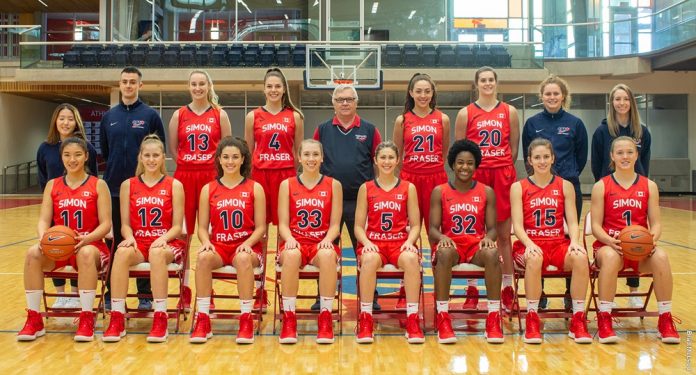
Five freshmen will look to contribute from day one for the 2018–2019 Clan. (Photo courtesy of SFU Athletics)

Every new season brings with it a sense of excitement for what’s to come. This especially goes for the SFU women’s basketball team, who have brought in new faces and returning players alike for the 2018–2019 season. We sat down with head coach Bruce Langford to talk about the upcoming campaign and what he thinks about this year’s group.

“I think we’re young, I think that we should get better and better as we get a chance to play more,” was his first comment, and he isn’t wrong. The team has five freshmen: Sierra Lenz, Sophie Klassen, Georgia Swant (Sophie Swant’s sister), Justina Chan, and Emma Kramer.

Langford is quite excited about this year’s new recruits, and they will be put in a position to succeed from the get-go. Langford already believes that Lenz will be a starter on the team, due to her rebounding ability and competitive spirit — two things that this year’s group will need.

He also believes that Georgia Swant and Kramer will be able to contribute with their shooting ability, which will fit in nicely with the three-heavy offence the team runs. Chan’s offensive ability should also help the team once she gets accustomed to the speed of the NCAA Div II.

Langford seemed most excited, however, about Klassen. Klassen has been nicknamed “Lily” because she’s not the only Sophie on the team, and in Langford’s words, “She’d be a tiger lily if she was a real lily because she’s a tiger out there. She competes like mad; she’s getting better every day. She probably [has] the fastest learning curve of any kid I’ve coached.”

Despite the large freshman class, perhaps the most important “new” pieces for this year’s team are sophomore Ozioma Nwabuko and senior Samantha Beauchamp. Nwabuko missed all of last year with a major injury, requiring microsurgery, while Beauchamp sat out the 2017–2018 season due to personal reasons.

Nwabuko should be a stalwart on defence for the Clan, if her rookie season is any sign, as she often guarded the opposing team’s best offensive player during the 2016–2017 season. Her defensive versatility and fantastic motor will be crucial to the young team’s success. Expectations have to be tempered, however, as she is still battling her injury and might be limited by it to start the season, according to Langford.

Beauchamp will add a much-needed inside presence to an otherwise undersized team. Her 6’3” frame will be a huge presence in the middle, and she will be looked upon for her rebounding ability and inside presence all year.

The only other senior on the team is Sophie Swant, who led the team in scoring (14.2 points per game) and rebounding (5.7 rebounds per game) last season. Expect her to be a vital member of the team again this year, and for her to set the standard for this young Clan team both on and off the court.

Two other returning starters include guards Tayler Drynan and Jessica Jones, who will be looking to build upon strong campaigns last year. After a fantastic season shooting the ball last year, Jones is in line to be a focal point of the Clan offence.

”We need a lot of production from her,” said Langford. “She’s a very good offensive player: she can shoot the ball, she can drive the ball and we need her to do that. We need her to consistently hit shots, and we need her to be strong and tough through adversity because teams are going to try to put a lot of pressure on her to not be able to do what she wants to do.”

While the group may struggle against bigger teams, their fast style of play and shooting ability will make for exciting basketball throughout the year. They will be shooting a lot of threes, and will be making a lot of them as well.

The team was ranked third in the GNAC in the recent coaches’ poll, which would put them in a playoff spot. Realistically, the team will look to make a postseason berth, but if all things click, this could be a team that’s playing in national competition at the end of the season.

Comedic Poetry: The Synonymity of Marijuana and Midterms

0
Illustrated by Cora Fu

It’s legal? So what?
I’m sleepy, my eyes are red —
None of this shit’s new