Home Blog Page 525

SFU men’s basketball blowout University of Alaska Fairbanks 88–55

0
Balata got the Clan off to a hot start with 14 first half points. (Photo courtesy of SFU Athletics)

After losing to the other Alaska team on Thursday, SFU bounced back big time on Saturday against the University of Alaska Fairbanks Nanooks. The team cruised to a 88–55 victory in a game with multiple strong performances.

While the second half was the defining period of the game, the Clan did manage to get off to a good first half. Starting with a 9–2 run, it was clear that SFU meant business. The starters continued to pour it on, getting off to a 14-point lead relatively quickly, and the teams would eventually go into the half with the home team leading 36–26.

Julian Roche and Wilfried Balata both had strong halves, leading the team with 10 and 14 points respectively. For the Nanooks, Tymoryae Glover led all scorers with 15 points.

The Clan made quick work of their opponents in the second half, pulling away with more than a 20-point lead seven minutes into the half. They would eventually cruise to a 88–55 win, although they led by as much as 39 at one point.

Five SFU players were in double figures in this one: Roche (19), Balata (16), Michael Provenzano (14), Othniel Spence (13), and Drew Bryson (11).

With the win, the Clan now have a 3–7 conference record, and a 9–9 record overall. Given the dogfight that is the GNAC playoff picture, the team still has a shot to make the postseason if they can put together a bit of a streak.

Peak player of the game: Julian Roche

As he’s done so often this season, Roche dominated the paint in this one. He played a team-high 35 minutes, and led the team in points with 19 and rebounds with nine. He also put up his numbers efficiently, going 8–13 from the floor (including a three), and 2–2 from the free-throw line.

What’s next:

The Clan will now hit the road as they travel to face the 6–4 Seattle Pacific University Falcons and the 9–1 and conference-leading Saint Martin’s University Saints. First off is Seattle, where they play on Thursday night. Tipoff is at 5:15 p.m.

SFU women’s basketball pull off incredible upset win over Northwest Nazarene University

1
The Clan's defence held the Nighthawks to just 12 points in the fourth quarter. (Photo courtesy of SFU Athletics)

The SFU women’s basketball team is officially on fire. Heading into Saturday night with four straight wins, there was a sense that something amazing could happen when they hosted the undefeated Northwest Nazarene University Nighthawks. It did. Behind an incredible fourth-quarter comeback, the Clan were able to pull off one of the upsets of the season on home court.

SFU did a good job of keeping the game close during the first quarter. While they struggled with their shot early, their defence kept them in the game. A buzzer beater three-pointer from Jessica Jones to end the quarter put the score at 18–17 heading into the break.

The Nighthawks were able to seperate themselves in the second quarter, however, scoring an impressive 26 points in the frame. While SFU were hitting some shots of their own, they were unable to keep up to their opponents offence, and saw themselves down 44–36 heading into the half.

NNU would win their third straight quarter in the third, this time by a score of 17–16. This set up a tough fourth quarter for SFU: stuck nine and facing the best team in the conference.

They were not fazed.

Jones particularly was up to the challenge. After hitting a three to start the quarter, she hit another three a minute later, before finishing off a fastbreak with a layup. Less than a minute later, she hit another three, than a mid-range jump shot. She scored 13 of the Clan’s first 14 points in the quarter, single-handedly giving the team a three point lead.


Everybody started to get in on the action, and the Clan led for the final 7:40 of the game, shocking their undefeated opponents. By the time the final buzzer had gone, SFU had outscored NNU 24–12 in the final quarter.

While the win marks the Nighthawks’ first loss of the season, it also extends the Clan’s win streak to five games. SFU is still tied for third in the GNAC with Central Washington University with a 7–3 conference record.

Peak player of the game: Jessica Jones

No question about it, Jones put her team on her back and carried the game during their 16–2 run to start the fourth. Without her performance to start the frame, the team would likely be looking back on a loss right now.

She finished the game with 20 points, including four threes.

What’s next:

The team will continue its home stand when they host both Alaska teams next week. First off is the 0–10 University of Alaska Fairbanks Nanooks on Thursday, January 31 at 7 p.m. Next, the team plays a big game against the now-conference-leading 9–1 University of Alaska Anchorage Seawolves on Saturday, February 2 at 7 p.m. Can the team extend the streak to seven games? Tune in to find out.

Commercializing hip-hop risks the loss of its afrocentric roots

0
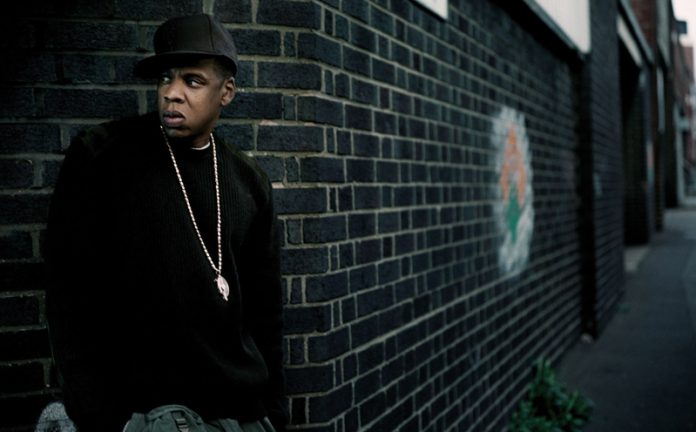
Photo courtesy of Universal Music

I’ll never forget being six years old and seeing Jay-Z on television for the first time. It was July 2001, and my cousins from Toronto were over for the summer holidays. I vividly recall a muffled voice escaping my television speakers.

“Ladies and gentlemen, let’s put our hands together for this dynasty.”

I proceeded to watch this young Black man, with a large white t-shirt and shiny necklace, spit what would soon become an undeniable hip-hop classic.

17 years later, Jay-Z’s “Izzo (H.O.V.A.)” transfers me to my happy place. Whenever I feel irretrievably misunderstood and on days where I miss my brother, songs like these provide me with a fortitude that I can’t seem to find elsewhere.

In 2017, according to Nielson Music’s statistics, hip-hop (albeit categorized alongside R&B) officially became the most popular genre of music in America, overtaking rock. Through the accessibility of music videos on YouTube and the mass spread of AAVE (African American Vernacular English) on social media, hip-hop has manifested across pop culture in an incredible way.

At first, I found myself happy that the creative contributions of Afrocentric people were being celebrated so regnantly. But the more I thought on it, the more I found myself scared. Hip-hop is notorious and constantly consumed, but a big reason for that is the genre’s vast whitewashing and commercialization.

A relatively recent example took place in January of 2017. Danielle Bregoli, also known as the “Cash-Me-Ousside” girl, appeared on The Dr. Phil Show, where Bregoli’s mother implored Dr. Phil to help her with her daughter’s abhorrent behaviour. This included stealing cars, cussing, and physically assaulting her mother. But Bregoli’s irritable put-on Blaccent and urban colloquialisms made her a social media phenomenon.

What brings this back to music is that Bregoli used her fame to begin a rap career, which has already been nominated for awards alongside prominent Black women rappers without even two years of her career. This speed is greatly comparable to Nicki Minaj, a Trinidadian-American rapper who put over a decade of hard work into her career before being widely considered the most successful Black woman in hip-hop.

The most troubling notion of this event lies in the fact that, in the 16 seasons that The Dr. Phil Show has been on air, hundreds of young Black women with attitudinal issues have made highly similar appearances to Bregoli’s. Instead of gaining international fame or success, they remained simple, problematic figures who elicited dismay and ridicule online.

To see Danielle Bregoli find such success — through caricaturing a “‘hood” Black woman — exemplifies how hip-hop is seen as a series of marketable traits, rather than as a culture.

The whitewashing of Black-created musical genres is far from new. Rock & roll, a genre stemming from the musical styles of African-Americans from the 1940s, rarely showcases or champions Afrocentric musicians. Elvis Presley, however, is often noted as the King of Rock even though his sound and artistry was taken from Black musicianship. Country music has had a rather similar history, where white musicians drew from Black blues singers in the American south in their contributions to the genre.

Both rock & roll and country were manifested by African-American culture before Eurocentric musicians spread it further and claimed it as their own. As a consequence, both rock and country are widely considered “white” genres of music today. With that, the process of erasing Afrocentric benefaction from these genres it’s birthed has succeeded.

Any race has the right and freedom to partake in hip-hop. However, the commercial success of the genre’s visitors comes at the expense of its Afrocentric community and themes.

Hip-hop is a relatively young genre with an utterly profound cultural impact. With artists like Post Malone taking up spaces that have traditionally been allotted to Black hip-hop musicians (urban radio stations), it’s becoming increasingly clear that the genre is another artistic platform where proclivities towards whitewashing are frightfully palpable.

Bas, and the Beautiful Effect of Hip-Hop

0
Image courtesy of Mike Judy Presents

In a time where hip-hop has officially become the most popular music in America, the genre’s market has become oversaturated with artists who use its culture solely as a means of monetary acquisition. Consequently, hip-hop is now faced with a plethora of artists who create fun, schematic music but lack the propensity to make substantial connections with fans. Bas, or any of the artists on J. Cole’s Dreamville, certainly don’t have this issue.  

On Wednesday, January 16, Bas performed at Vancouver’s Fortune Sound Club as a part of his Milky Way Tour. With a comprehensive setlist that was comprised of songs from his latest album Milky Way, in addition to his past projects, Bas was able to perform an electrifying show that had fans wildin’ out from start to finish. There were a number of song selections that had the audience galvanized. One song in particular, Front Desk, had fans screaming and cheering the second they heard the familiar piano notes. As I looked around, I saw young women and young men with infectious smiles shouting, “Oh you headed out of town with your best friend!” Another song that ignited Fortune Sound Club was “Too High To Riot,” the title track from Bas’ second studio album. More than the audience’s enthused reaction to the song, the most noteworthy aspect of this specific performance was Bas explaining how he had been inspired to write track by the complaints and calls to the police that racist neighbours made against him and his friends as they moved into an affluent California neighborhood. Artists explaining the incentives behind the art they’ve created is remarkably refreshing, particularly in an era where many artists aren’t as heavily involved in the creation of their content.

Moreover, one of the biggest episodes of uproar experienced on this night was when Bas performed the Cole-assisted track, “Tribe.” The most euphoric (and humorous)  moment of the show was captured as I perceived four grown men with arms around their shoulders, swaying back and forth as J.Cole’s voice sang, “Lalalalala” over the speakers. As evidenced by the concord across the audience, Tribe was an excellent choice to close the show.

Whether it was Bas’ amazing connection with his collective fan-group, the intimate performance-setting provided by Fortune Sound Club’s small size, or both of these factors, the entire duration of Bas’ show felt like a uniting experience. Perhaps accentuated by the contrasting, chaotic political state our society is currently placed in, Bas provided concert-goers with a space of joy and serenity, one which prompted everyone present (Bas, his DJ, club staff, and audience members) to dance and rap in a  unilateral motion. Out of the many concerts I have attended, this particular element made Bas’ show stand out.

Tickets are still available for Bas’ Milky Way Tour on http://dreamville.com/milkywaytour/. His latest album, Milky Way, is available in stores and on all streaming platforms.

Love letter to SFU #2

0
Image courtesy of Pixabay

Dear SFU,

You might be drab, colourless, and concrete, but come convocation time, your entire structure hums with hope. The hope of the new and aspiring graduates alike, the hopes in the eyes of the first-years dreaming of reaching that podium someday . . .

Come convocation time, SFU is a different place. It suddenly doesn’t matter whether it is wintry, dull, rainy, or grey – no one lets that bother them amidst the confusion of robes, families clicking photos, people struggling to walk in their heels, and cheering friends (including some with vuvuzelas!)

Of course, Convocation Mall only gets all dressed up twice a year. But what people miss is that even when nothing’s going on, even in the dullest parts of the year, SFU has spots that are truly stunning. All over the school, there are little places where I fall in love again and again.

If you’ve ever been to the study area under the Images Theatre, you know what I’m talking about. No, no, not the study spot directly underneath – the one looking out at the AQ pond, where the stairs almost cut into the scenery to make it look all the more magical.

Looking at the scene while studying with a big cup of tea, it all seems like something out of a movie, especially when the view is covered in snow or red leaves. A lot of the time, though, actually studying there is tough, because of its beauty. It’s distracting!

But if you’re really looking for a place to take a breather, try the terrace above the Rotunda. Both sides of that terrace are places you could go to at any time of day, in any season, to feel oxygenated and fresh. Whether you’ve been stressing about something all day, studying for a long time, or feuding with group members on ideas for a group project, it’s a great go-to spot to relax and empty your mind.

When I had class in West Mall, I remember getting up there, on the side that looks out over Terry Fox Field, almost every single day on my way back from class. I loved taking in the city and the roads leading up to SFU. This may sound like the most cliché thing ever, but time stands still.

So in short, SFU, thank you for your pockets of beauty.

Love,

Anindita  


Hunt for the Best: Coffee at Burnaby Campus

0
Image courtesy of Natasha Tar for The Peak

Coffee is a university must, but answer me honestly: have you been anywhere but Tim Hortons and Starbucks for your pre-class hot bean water? If you’re as busy as me, probably not. However, I decided to challenge myself to find coffee providers that you might not know about. Here are the four locations I gave a shot.

Nature’s Garden

Hours: Monday–Friday 7:30 a.m.–5 p.m.; Closed Saturday and Sunday

Location: Cornerstone

Nature’s Garden is a quiet café tucked into Cornerstone. When I stopped by at 9:30 a.m., there were only a couple of people sipping coffees among the many available seats.

There’s a fair selection of food and drink, though the food prices are a little steep. The combination of wood flooring, brick walls, reruns of The French Chef, and boring photography of popular travel destinations made for a standard yet somewhat quirky cafe vibe.

I ordered a Marley brand medium-sized, medium-roast coffee, which cost me a mere $2. It was mild, smooth, and not overly bitter — nothing to rave about, but overall a solid cup. Also, if you’re into stamp cards, there are a variety at the checkout counter for different purchases.

The overall ambience complimented my coffee experience so well that I’ll definitely be back to try their mixed drinks!

Rating: 4.5/5 coffee beans

Renaissance Coffee

Hours: Monday–Thursday 6 a.m.–7:30 p.m.; Friday 6 a.m.–5:30 p.m.; Closed Saturday and Sunday  

Locations: One each in the Maggie Benston Centre, the Applied Sciences Building, and the Academic Quadrangle

During a quick break in my evening class at 6:30 p.m., I sprinted to SFU’s signature caffeine provider, Renaissance Coffee. You’ve probably been to Renaissance before, but if not, I highly recommend it. I once again got a medium coffee, this time for $2.05. I was also tempted to pick up one of their incredible Nanaimo bars, but I resisted.

The nice thing about Renaissance is that you can mix and match whichever coffee flavours you want from a selection. I made myself a half hazelnut/half French Vanilla coffee; it was strong and slightly nutty. There are little blurbs about each coffee’s flavour profile and origins, but I don’t think I’ll ever find the time to read them. I also like how instead of sleeves, they have fuzzy, compostable cups.

Renaissance was dead at the time I went, but it’s usually insanely busy, especially at the AQ location. I suggest heading to MBC if you want a quicker coffee (though good luck navigating that Convo Mall construction…)

Rating: 4/5 coffee beans

Residence Dining Hall

Hours: Open 24 hours, but entry fee depends on when you go.

  • Breakfast: 6 a.m.–10:30 a.m., student entry fee is $6.50;
  • Lunch and overnight: 10:30 a.m.–5 p.m. and 10 p.m.–6 a.m., student entry fee is $10;
  • Dinner: 5 p.m.–10 p.m., student entry fee is $11.

Location: Just past the Lorne Davies Complex, towards Shell House

I wasn’t expecting to make this stop, but, like Denny’s, the Dining Hall is somewhere you end up at unexpected times in your life. This coffee is not worth it if you’re going for it alone, but if you’re there for breakfast or lunch, there’s no reason not to have a couple of mugs and then sneakily fill up your tumbler. You can also get a coffee-to-go for $1.85.

I attempted to make myself an affogato with the soft-serve machine and the medium roast, but instead made something I’d rather not talk about. Their coffee is Ethical Bean brand and, like at Renaissance, you can mix and match a bit. The medium roast was very weak, and the dark roast tasted burnt and sad. Disappointed, I tried the Carnation brand drink-maker for a French Vanilla. After a puff of powder and a lot of weak grinding noises, I got a drink that Tim Hortons would scoff at.

Unfortunately, the Hall’s ambience (if you can call it that) doesn’t make up for the weak coffee, and at 1 p.m. it was loud and busy. Unless I’m freezing or I find a way to make better affogato, I probably won’t go for the coffee again.

Rating: 2/5 coffee beans

Mackenzie Café

Hours: Monday–Thursday 7:30 a.m.–8 p.m.; Friday 7:30 a.m.–6 p.m.; Closed Saturday and Sunday  

Location: Part of the AQ

I hadn’t been to Mackenzie many times before, so as I entered, I was immediately disoriented. Where’s the coffee? I wondered, walking around somewhat aimlessly until I found it just past the Subway.

They have a little chart on the wall stating prices, and I found that a medium coffee would cost me $2.20, making it the most expensive cup on this journey. That said, I was happy to find out that the medium size was larger than previously encountered cups, but then immediately saddened that the coffee served was my newfound enemy Ethical Bean. I once again went for the medium roast, half-hoping that it would be better than the Dining Hall stuff.

After filling my cup, I wasn’t sure where to take it. There were checkout counters, but at 9:30 a.m., there seemed to be no one at them. I was tempted to just walk out with my coffee, but someone noticed me and rung it up.

The café seemed like a chill place to hang out and the service was friendly, but at lunch it gets pretty busy. As for the coffee, it was hot, but tasted like nothing more than mild, slightly bitter water. It was somehow worse than my affogato disaster at the Dining Hall. I felt ripped off.

I have nothing against ethical coffee, but if you can help it, avoid Ethical Bean. Check out Mackenzie for comfy seating, but maybe not coffee.

Rating: 2.5/5 coffee beans

I went clubbing to a Vancouver goth club and those goths know how to party

0
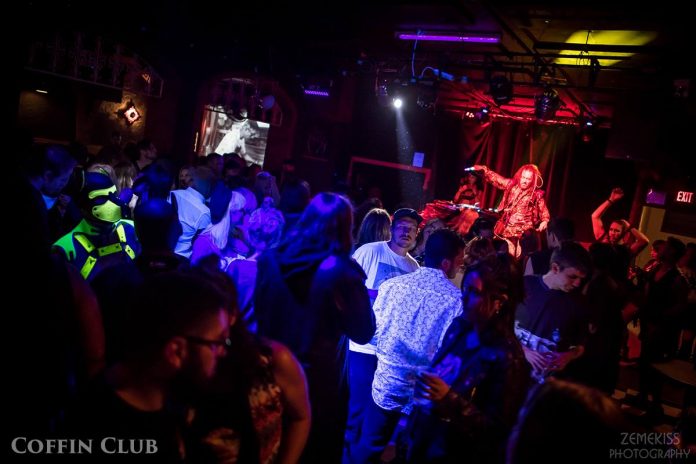
Image courtesy of Zemekiss Photography via Coffin Club Facebook page

The line is a sea of fetish wear, messy black eyeshadow and even messier hair — this seemed to be the unofficial dress code to get into Vancouver’s newest clubbing event, the Coffin Club at Astoria Hastings. Opening on January 18, 2019, the Coffin Club stands as a new hub for the goth and glamorous who are looking for somewhere to turn up.

Admittedly, the most goth/metal I’ve ever listened to was Good Charlotte and Green Day. Walking in with my date, I prepared for the night to be the weirdest and perhaps scariest night of clubbing I’ve ever experienced; but what I found out was — damn, these goths know how to fuckin’ party.

THE SPACE

Walking in at around 11:30 p.m., the music was bumping and (no surprise) was decked in all black. However, it is still Vancouver, so along with the slightly grimy atmosphere, various retro pinball machines were on display by the wall which definitely helped me feel more at ease.

Decked out with a long bar, ten or so tables, two pool tables and a dancefloor, as far as clubs go, the place was well equipped! There was a projector screen that played Rocky Horror Picture Show, while televisions showed old music videos (some gory, some as regular as David Bowie).The bar was modestly priced — it had three bartenders manning the station with highballs at $7, doubles at $11.

As far as accessibility, while there were only male and female bathrooms available, the place was wheelchair-accessible. Looking at the patrons, the pool table was at a wheelchair-friendly height too.

THE CROWD

After waiting in line for half an hour and entering the space, I could understand why. There were around 100 to 150 people in there, According to the photographer, it was that hype and that full since 9:30 p.m. when the club opened.

It was a sea of black leather, black eyeshadow, and wild hair (all genders — all looked equally unkempt). Doc Martens could have sponsored this event. But despite the fact that a lot of party goers went big with their outfits, everyone was both polite and respectful. I distinctly remember a person in a neon fetish mask politely nudging me aside to get to his drink, and before he walked way, he turned to my date and I, pointed between us and then made a heart sign with his hands before going on his way.

There were definitely other notable guests: I did see a man walking with (I’m assuming) his partner on a leash, clad in a leather fetish-wear mask. To me, the place felt somewhat like a kink-friendly Twilight Zone — just as spooky, but covered in black leather and with nicer music.

Something I did notice was that I met just a tad fewer fellow POC in the crowd that night than I usually see in the Vancouver club scene. Despite this, I want to emphasize that the place was both very inclusive and comfortable. In terms of age, it was a very wide cast; I saw people from age 19 to at least their early 60s.

Towards the end of the night, I felt genuinely safe and welcome in the space. Hard metal aside, probably the most traumatizing thing I saw there was a guy in a Family Guy t-shirt.  

THE DANCE FLOOR

Now the dance floor is what I was most looking forward to. The Club music was loud — raucous, but not more or less annoying than regular club music honestly. And the setlist? When DJ Sean Reveron went onstage, while yes, there was some heavy metal, there was also . . . Depeche Mode’s “Personal Jesus”? And The Cure? The setlist was less a Satanist party mix and more a thotty goth friend’s “Edgy Playlist.”

The actual dance floor itself had a black-and-white checkerboard print, but it was relatively clean. The folks dancing all had equally eclectic fashion and an equally carefree vibe. Now don’t get me wrong, these people couldn’t dance to save their lives, but God, I’d be lying if I didn’t feel 100% comfortable and safe around them. Everyone kept to their personal space pretty well — no shoving, no people getting in each other’s business or unwelcome physical contact of any kind on the dance floor, which, as someone who’s been partying all over the world, is a major plus in my book.

LAST WORDS FOR THE COFFIN CLUB

All in all, I did not expect the Coffin Club would make for a solid date night, let alone, a place for clubbing for a normie like me. While the place isn’t for the faint of heart, anyone with an open mind and just enough curiosity, should get their monster mash on and party it up.

Othniel Spence talks basketball, faith, and identity

1
Spence is currently averaging 14.4 points per game while shooting .432 percent from three. (Chris Ho / The Peak)

If it weren’t for a fractured left fifth metatarsal in his senior year of high school, Othniel Spence would likely not be playing basketball for SFU. He was being recruited by mid-major schools in the states, as well as schools across Canada, before Spence “fell off the face of the basketball planet,” as he put it. What remained were two offers, one from Queens University, and the other from SFU.

“I knew what was coming for me at Queens, I knew how I was going to play, I knew how good the team was going to be, but one thing that interested me about Simon Fraser was that there wasn’t much knowing,” said Spence when interviewed by The Peak. Another major factor in his decision was that SFU plays in the NCAA.  

Well, the decision seems to have paid off. Not only is Spence one of the leading scorers and on-ball defenders on this season’s Clan, but he has also grown into a leader on and off the court. We talked to Spence about his time playing for SFU basketball, his faith, and not rooting your identity in your performance.

The Peak: What’s your favourite thing about playing here at SFU?

Othniel Spence: “My favourite thing is just community. Something I’ve realized in Vancouver is that the basketball world is really big over here, and it’s really interconnected. I didn’t know the impact that I would have on the community and the people around me by being the person I am, being a person of faith, being a leader on the court, being a leader off the court.

[ . . . ] I’m grateful just to have this position, just to show others how to work and exercise my faith as a Christian athlete towards the community here in Vancouver and the basketball world.”

P: How does being a person of faith affect you in your day-to-day life going to a secular university?

OS: “It gives me a lot of perspective being here at SFU, being at a secular university, from people coming from all walks of life. Something I’ve realized just being here is that my identity is not rooted in my performance. My identity is not rooted in whether our team wins or loses, whether I play well or I don’t.

I will always be valued and respected, and [identifying] as a follower of Christ first [ . . . ] Just bringing that mindset and bringing who I am towards the community and my friends, teammates, and just trying to find that consistency in being a loving person that’s open towards anyone and everyone.”

P: Obviously your role on the basketball team has grown during your time here. How do you think you’ve grown outside of basketball during your time here, and how playing for SFU basketball has inspired you to grow?

OS: “This is a quote I heard: “Not to let successes get to your head, and don’t let failures get to your heart.” [ . . . ] Just learning what my circumstances are, obviously enjoying it — taking in the joy of being a basketball player, being grateful to play in the NCAA, being grateful to be a student athlete here at SFU, to be successful in my studies — but not believing in the hype of my successes, or not believing in my failures and putting myself in a downwards spiral.”


P: Moving a bit back to basketball. With Kedar [Salam] leaving after last season, you’ve really grown into a new role of being one of the leading scorers. How do you think you’ve adapted into this new role?

OS: “I think it’s still a process. Something I’ve learnt just over this year alone is that I can impact the game so much more than just scoring, and I don’t want to be one-dimensional in that. A lot of people think it’s just about the points, but most of the time, it’s those things that don’t appear on the stat sheet, the things that you do in the game, that can really impact your team and lead them to a win.

If I’m not playing well, I’m going to encourage my teammates, I’m going to look for them, I’m going to create for them, and I’m still going to be that guy on the court that’s going to be a leader.”

P: Who are some of your basketball inspirations, players you try to model your game after if you have any?

OS: “I really like Damian Lillard. [ . . . ] I like his tenacity, I like his attitude, he seems like a humble guy. He likes to shoot the three a lot and I find that I do the same. We’re both – well, he’s way more athletic than me – but we’re both slashers, defensive lockdowns, we both do our jobs, both leaders. So I try to model my game after him right now.”

P: Who do you think is the funniest guy in the locker room?

OS: “I think it’s Dom[inic] Postel, he’s a freshman, and he is by far the most caring person but he can be so funny — just the way he delivers his jokes, or just the way he talks. He brought this term from Washington, he calls it scoop, so anything we do that’s good is like, ‘Oh, that’s your scoop’. He’ll say it like an accent like ‘schooooop’, like weirdly. It’s actually really cool having him on the team; he really lightens up the locker room with his attitude and just who he is.”

Athlete’s corner:

“Whatever situation you’re in, just know that your identity isn’t rooted in your performance. Something I’ve seen here at SFU is a lot of people take a lot of stress during midterms, exams, whatever it is, and that determines who they are. They think that because their parents might judge them differently, or that they may not pass a class, or they may just obviously be disappointed in themselves if they don’t do well.

But something that I’ve seen, even after having losing seasons with SFU, is that your identity doesn’t change before or after the event. Whatever happens, your identity can’t be rooted in your performance, because that’s when you start valuing yourself in only your successes and devaluing yourself in your failures.

[ . . . ] Discover what your identity is, discover where you find yourself, what makes you you, and don’t use results to determine that.”

What if . . . all lectures were recorded and uploaded online

0
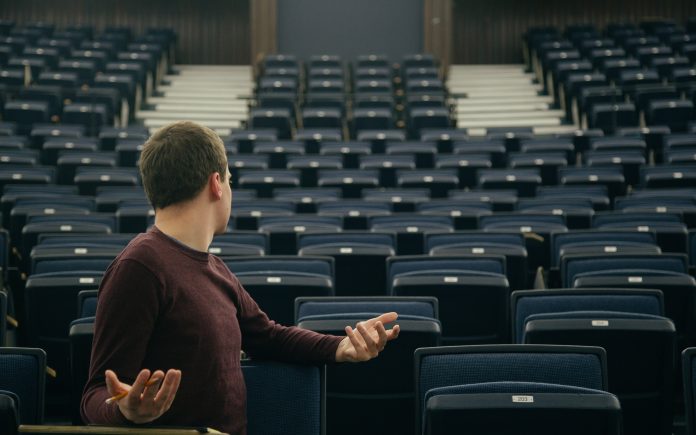
Photo by Chris Ho / The Peak

Imagine a lecture with less than 10 students inside. Students still sit in the back rows, forcing the lecturer to unnecessarily raise their voice. One student is eagerly sitting in the front, prepared to share anecdotes whenever the floor opens to questions. Another is fast asleep, being judged by the other eight students who are just copying the PowerPoint slides.

This might just be a regular 8:30 a.m. class in the middle of the AQ. But, with perfectly and consistently recorded lectures, this uncomfortable ghost town could be the new normal for nearly every lecture. If people could treat every lecture like a podcast, it would be way too hard for most students to justify their journey to campus.

On the plus side, this would make things somewhat nicer in lectures themselves. Missing half the lecture because of a broken bus wouldn’t require an awkward email to the Canvas page asking someone for notes. Students who attend them live would get a calmer experience, while the distracting students would just stay in bed to watch the lecture with dinner.
But it would come at the expense of every tutorial, something that cannot be just as helpful in an online/recorded form. People would be watching their lectures on their own schedule, meaning there would barely be any students — even compared to now — who come ready to talk about that week’s material. Without an hour or two for everyone to even just loosely listen to the prof, there would be an hour of exceptionally more awkward silence soon to come.

Opinions of the Hour

0

A sobering amendment – Meera Ulysses, The Varsity

Back in December, Canada’s impaired driving laws changed to let officers give breathalyzer tests more liberally, fines for being overly intoxicated within two hours of driving, and higher maximum penalties. Meera’s piece goes into detail about the likelihood of this being used to target visible minority groups, but she also goes into detail about how this is also likely to particularly target post-secondary students.

SEE MORE: “Advocacy groups contest Canada’s new impaired driving laws.”

“Studies have consistently found heavy episodic drinking and higher instances of drinking and driving among young adults,” Ulysses cites as a main reason for most post-secondary students to be concerned. “By operating under a presumption of guilt when encountering us, and now, being able to exercise their power without requiring a reason, officers can interrupt our lives at any time.”

This change in the law has a lot of potential to cause extreme harm, and has come in a culture where there’s already plenty of mistrust towards the police. Even if you don’t drive, this law change sets a dangerous precedent of how the police can treat us, and should be everyone’s concern.

~~~~~~~~~~~~~~~~~~~~~~~~~~~~~~~~~~~~~~~~~~~~~~~~~~~~~~~~~~~~~~~~

To combat Holocaust ignorance, we must empower teachers – Naomi Azrieli, Globe and Mail

Azrieli’s article branches off of a survey done on behalf of The Azrieli Foundation and the Conference on Jewish Material Claims Against Germany. The core finding was that while most people knew of Hitler and the Holocaust, many of them couldn’t name a concentration camp, and many didn’t believe or didn’t know that six million Jews were murdered.

She goes on to emphasize the importance of this knowledge, saying how this knowledge will “fundamentally combat the increase in neo-Nazism and anti-Semitism we are seeing.” Learning these things is how we stop hateful and misunderstood beliefs from becoming further normalized.

SEE MORE: “The Pittsburgh shooting is a symptom of normalized anti-Semitism in social media.”

Her key solution, as per the title, is that teachers have the power to change this, which is a valuable point. It’s plenty common for schools to treat the history of marginalized groups as merely a bonus mention in textbooks and classes. Devoted classes and more reading content are things that Azrieli makes a compelling case for; one that’s evidently needed considering how little people know about an atrocity that happened less than a hundred years ago.