Home Blog Page 522

SFU hosts a discussion about consent and bystander intervention

0

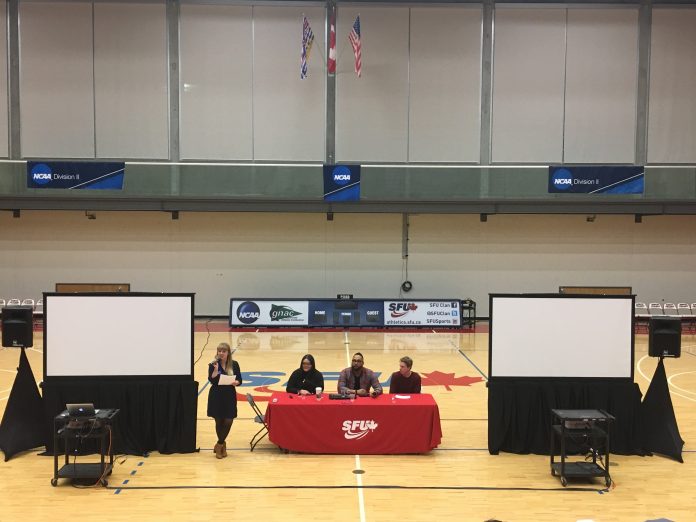
On January 30, Simon Fraser University’s Sexual Violence Support and Prevention Office (SVSPO), SFU Athletics, and SFU Residence and Housing, hosted a community dialogue about the importance of consent and bystander intervention. The dialogue was hosted at the Lorne Davies Complex by JR LaRose, a former BC Lions football player and current motivational speaker.

During the discussion on consent and bystander intervention, LaRose shared some statistics about sexual violence. “25% of women are assaulted in college, with most of the assaults occurring in the first eight weeks of classes, and one in three Canadian women are sexually assaulted in their lifetime,” LaRose told the crowd.

LaRose then provided analogies in the form of educational videos and personal anecdotes to educate the attendees on the concept of consent and bystander intervention. For example, he played the viral “tea and consent” video posted by Blue Seat Studios to demonstrate how saying no to having sex is the same as saying no to drinking tea and the importance of respecting that individual’s decision in either situations.

Following the presentation, there was a question and answer period where two designated SFU students, Sarah Law and Ryan Stoyls, asked LaRose questions regarding the topics of consent and bystander intervention. Law is a community advisor in SFU Residence and Housing; Stoyls is the vice-president engagement for the Student Athletic Advisory Council.

Stoyls asked LaRose what is the best way to assist someone who has experienced sexual assault but aren’t able to seek professional help. LaRose replied, “The best way to assist somebody that’s gone through it [ . . . ] is to let them know that it wasn’t their fault.”

“I think far too often when we wanna be there, be their support system, we ask questions like what were you wearing, what were you doing, how much did you drink. Screw all that,” Larose stated. “How about let’s be a real friend and support that person because they’re broken and that’s the last thing [they want] to talk about . . .”

Following that, Law asked: “Why are we as a culture so focused on how not to get raped versus not rape?” Law was wondering why women are held responsible for their own trauma, such as having to dress appropriately and go out in groups to protect them from being sexually assaulted.

LaRose responded, “This isn’t a women’s issue, it really is a men’s issue. Men should be the ones [holding] each other accountable for this . . . We as men need to really reshape what it is to be a man.”

Afterwards, LaRose answered questions asked by the general student body. Raffle prizes were drawn by the SVSPO staff at the end of the night to thank the students and staff for their attendance.

The discussion was part of the SVSPO’s Sexual Assault Awareness Month, a series of engagement opportunities that educates SFU students, faculty, and staff about sexual violence. The month-long initiative is a partnership between the SVSPO and other community partners such as the Simon Fraser Student Society and the Graduate Student Society, according to Ashley Bentley, an educator at the SVSPO.

Sexual Assault Awareness Month took place during January 2019 and consisted of a series of community outreach events and social media activities, according to the SVSPO’s website. This is the second Sexual Assault Awareness Month hosted by the SVSPO since its inception in March 2018, according to Bentley in an email interview with The Peak.

Bentley also explained that due to the academic calendar, the SVSPO has decided to move the Sexual Assault Awareness Month from March to January. It will run at the beginning of every January starting this year.

When asked what the SVSPO’s purpose was in organizing the Sexual Assault Awareness Month, Bentley replied, “It is a learning opportunity for people to engage in the topic in a low barrier and accessible way. The hope with creating communication campaigns and hosting events is to engage the entire university community on the topic of sexual violence, and to share some ways in which people can be a part of creating a culture of consent, care and respect at SFU.”

A guide to avoid hypersexualizing Black bodies

0
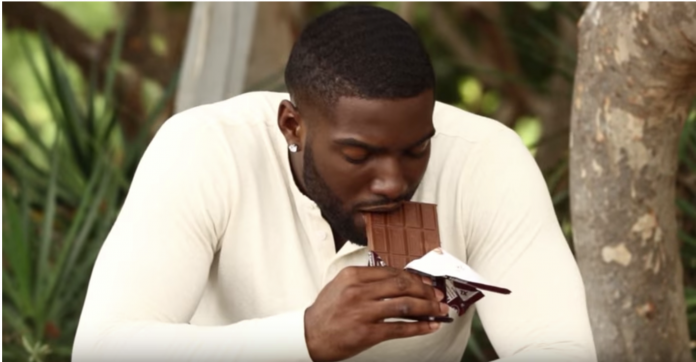
Screenshot from Donnell Blaylock Jr Hershey Chocolate Teaser Video

As a young Black man who lives in Vancouver, a city where African-Canadians constitute 1.2% of its population, I discovered what it means to be “visually different” at a very young age. When I hit puberty, and when my friends began to date, things took an interesting turn.

On my hockey team, in my high school, or even in my church, my white companions would talk about Black bodies in ways that, as a youth, left me profoundly confused. I wondered why the timid white girl in my grade 11 class emphasized her need to exclusively date dark-skinned Black men. I wondered why a leader in my church scoffed at a Black teenage boy holding hands with his white girlfriend, stating that “Black guys always know what to do to get white girls.”

Now, as a young adult, I’ve become actually aware of the hypersexualization of Black men and women. It’s also not a new phenomenon: take for example the story of Sara Baartman, a Khoikhoi woman born in the late eighteenth century in what is now South Africa. Baartman was brought to Europe as a human exhibit after supposedly signing a contract she probably did not sign well-informed and out of her own free will.

Placed in front of vast crowds across Europe, Baartman’s large buttocks were presented to millions of European eyes within human “freak show” exhibits. She became infamous and ridiculed. White people would travel long distances and pay fees just to gawk at Baartman’s Black body.

“Her brain, skeleton and sexual organs remained on display in a Paris museum until 1974. Her remains weren’t repatriated [to South Africa] and buried until 2002,” explains Justin Parkinson, a BBC writer, in a historical feature on Baartman.

The story of Sara Baartman is one of the most tragic examples of Black hypersexualization.

In our present, I understand that this kind of hypersexualization often surfaces as a backhanded compliment, like when white women express how fun it is to “get with” Black men. This fetishization mirrors the sexual curiosities of individuals who, after long ingesting poorly represented media content, yearn to explore Black bodies as if these bodies are theirs to conquer.

In the end, the hypersexualization of Black bodies is rooted in the tremendously problematic ideology that whiteness is the norm and that Blackness is of the “other.” It is propelled by a shameful desire to partake in the fallaciously depicted “deviancy” of Black sexuality.

I also know what it can do to Black men and women. Many damaging stereotypes are derived from this hypersexualization: Black women have bigger behinds and breasts than white women, Black men are brutes in the bedroom… Although some may conceptualize these as “positive” stereotypes, they actually lead Black individuals down an unhealthy path where unrealistic expectations and underlying worries become ingrained into romantic relationships and self-images. Take, for example, a recent Vice article that dove deep into ugly scenarios where Black women were hypersexualized within their interracial relationships.

Black people, time and time again, are forced to navigate offensive and awkward situations. Keeping this in mind, I thought it’d be helpful to curate some do’s and dont’s when it comes to discourse regarding Black bodies.


Do:

  1. Understand that we, just like you, are humans. We appreciate and practice sexuality just like anyone else.

Like you, we bleed. We also love sex. However, we don’t f*** like animals. We do understand that sexuality, practiced respectfully and consensually, is beautiful. Forget what you’ve heard: our sex looks exactly like your sex. Issa Rae said it best when discussing how Black actors perform sex scenes in her hit show Insecure: “We don’t get to see Black lust in a normalized and natural way that isn’t hypersexualized. For HBO, we have so much license to show Black people loving and f*cking. Why wouldn’t we take advantage of that?

2. Going on a hike is an “adventure.” Dating a Black person isn’t.

I will never understand why white people think that dating Black people is “exciting.” Going on a rollercoaster is exciting. Kendrick Lamar dropping a surprise single — THAT would be exciting. However, dating Black people is just like dating people from any other race: you have your honeymoon phase, you secretly hate your partner’s parents, and you even develop their bad habits (I still watch Netflix with subtitles on). However, insinuating that we are “exciting” really just means that we are “the other,” and that’s a horrible thing to think.

3. Know that we have different shades of skin.

There are many shades of Black skin. Therefore, it’s erroneous to state that a light-skinned Black man is “the handsome type of Black” or that a dark-skinned Black woman isn’t the “beautiful type of Black.” Whether it’s Zendaya and J.Cole or Viola Davis and Morris Chestnut, all Black skin radiates with a beauty that can’t go unspoken.

4. Understand that the amount of sexual experience we have varies greatly, just like with individuals of any other race.

Some of us have had a lot of sex, while others haven’t.

5. Call us Black, not “chocolate” or “caramel.”

There seems to be a wildly misinformed conception that Black folk enjoy being referenced to as candy? If you aren’t Black, please don’t refer to us as food — we don’t exist to sate your sexual appetite.

6. Respect that the physical strength and athleticism of Black men varies.

Please understand that if a Black man doesn’t know how to play basketball . . . he’s still Black. If a Black man doesn’t have a natural inclination towards sports, he’s still Black. The age-old notion that Black men have “super genes” is actually more racist than you think. Understand that not all Black men are 6’11’’athletes who can give you the life of a “basketball wife.”

7. Understand that you don’t have to tell a Black woman that they look like Beyoncé or Rihanna to compliment her.

We all obviously know how gorgeous Queen B and the Badgal are. However, Black women are diverse and their beauty is versatile. To be quite honest, when you tell a Black woman that they look like Beyoncé or Rihanna, it really just shows how narrow your knowledge and perception of Black womanhood, and Black beauty, really is.

8. Understand that if a Black woman had plastic surgery or otherwise altered her body, it wasn’t to “look more Black.” She did so because she wanted to.

I’ll never forget the confusion and shock I felt when I was talking to a group of (non-Black) friends and realized that they all believed that Black women in hip-hop got body enhancements to look more like “Black women.” Realizing that there was a lot to unpack in these comments, I simply stated that Black women, just like women from any other race, have complete autonomy to do what they want with their bodies. When a Black woman undergoes plastic surgery, it’s a sign of her agency, not her racial image.

9. Know that a Black woman’s hair — whether it’s natural hair, a weave, a wig, or is bald — doesn’t determine her Blackness. She’s Black because she is Black.

To be completely honest, I’ll never understand where white and non-Black people develop their fascination with a Black woman’s hair. Comprehend that whatever is on her head will NEVER negate, or accentuate a Black woman’s blackness. Case closed.

10. Understand that a Black woman’s curves doesn’t have any indication or influence on her sexuality.

We’ve all heard the stereotype of Black women and their butts. Whether small or big, a Black woman’s butt should never be indicative of her race or affect the respect you give her.


Don’t:

  1. Say “Once you go Black, you never go Back.”

I’ve been hearing that since my childhood. However “amusing” or positive this stereotype may seem, it perpetuates the stereotype that Black men and women are foreign creatures and their bodies are so majestic that once you have sex with them, you’ll never settle for anything else. It actually reinforces the notion that Black people, and their sexuality, is Other.

2. Call Black bodies “exotic.”

Don’t assume that Black bodies can give you different experiences than what you’re used to.  We are humans, just like you. Nobody has ever taken “exotic” as a compliment.

3. Ask Black women if it’s “really better” with Black men.

Again, this coincides with the notion that Black men are beasts who, in accordance to your racist fantasies, can leave you sexually satisfied. White women are usually the culprit of this crime, and it almost always stems from stereotypes shown on TV or in movies.

4. Assume that a Black woman’s Blackness is defined by the size of her behind.

One more time for the people in the back: a Black woman will always be Black and she must always receive your respect.

5. Proclaim that a Black woman is being lascivious for wearing any type of clothing.

Growing up, my church would watch the Super-Bowl halftime performance every year. One year, Madonna performed and no one from the (predominately white) congregation said anything about her costume. The next year, Beyonce performed and a number of church members (who know I’m a fan of Bey’s)  told me that she dressed like a “prostitute” who needed to “class it up a bit.” Historically (ever since white slave-owners raped and abused the bodies of Black women), people (especially white men) have felt entitled to speak on how a Black woman must conduct herself. White women slut shaming Black women isn’t foreign, either. Black women can wear what they want.

6. Feel entitled to make assumptions on the origins or motivations of an interracial relationship that involves a Black individual.

At the end of the day, love is love. Who are we to tell anyone who they should or shouldn’t date? An interracial relationship between two consenting adults doesn’t require your assumptions. Ever.

7. Assume that light skin Black men/women are pure and that dark-skin Black men/women are sexually aggressive.

This is a testament to how the issue of colourism (particularly in the Black community) is so rampant. An individual’s shade of Blackness is never an indicator of how they’ll behave. This is not that hard to understand.

8. Claim that Black men and women within the LGBTQ21A+ community aren’t “real” Black men or women.

Like in every demographic, homophobia unfortunately still exists within the Black community. Homophobic attitudes deriving from both the Black church as well as years of toxic masculinity mean that the sexualities of Black LGBTQ21A+ individuals are still demonized and validated. Karamo Brown, when speaking about making history as the first openly-gay Black man on television, stressed how problematic this homophobia is: “That’s just the unfortunate truth with many people in our community. We have been told that we are not good enough, that we are less than.” We must always respect and cherish the Black individuals within the LGBTQ21A+ community, and we must understand that Blackness is not invalidated by queerness.

9. Attribute sexual deviancy to Blackness.

Again, Black people have sex just like individuals from any other race. When you depict Black sexuality as something abnormal, you explicitly or implicitly apply a deviancy to its nature.

10. Touch our hair. Like WTF? Don’t.

I’m so tired of this shit. We are not your personal petting zoo. Imagine how crazy I’d look if I walked up to a white man on the skytrain and fondled his herbal-essences, hipster hair. For the love of Black Jesus, don’t touch our hair.

If you follow these integral Do’s and Don’ts, you’ll be on your way to becoming a master of evading the hypersexualition of Black bodies. As one last piece of advice: whenever you decide to compliment the beauty of a Black person, always make sure to ask yourself where your admiration comes from. Is it the person themselves, or the stereotypes that have plagued their race for centuries?

“The need for safe space”: SOCA publishes letter on ongoing space conflict

0
Photo Courtesy of Chris Ho

On January 16, SFU Students of African and Caribbean Ancestry (SOCA) published a letter on their Facebook page directed at the SFSS, regarding the issue of space in the new Student Union Building (SUB).

The letter includes a quote of support from 1997-98 SFSS president Joey Hansen. “I urge the SFSS to continue to find and supply space to the various groups on campus engaged in [anti-oppression activism],” Hansen wrote.

Previous Internal Relations Officer Panther Kuol allegedly stated, “I am saddened by the news that SOCA has been given notice to vacate its long held space. I find it highly disturbing.”

In the letter, SOCA writes that “we hope that this letter brings a heightened understanding of the need for a safe space for the Black community on this campus and is followed with a shift in priorities within the SFSS board.”

This letter follows the statement SOCA released to the public on December 13, calling on the continued support of their fellow students to advocate for space in the SUB.

Along with SOCA, the other Rotunda groups who have not been granted space in the SUB are campus radio station CJSF and Simon Fraser Public Interest Research Group (SFPIRG).

On November 23, 2018, the SFSS announced that they would allow CJSF, SFPIRG, and SOCA to stay in the Rotunda on a month-to-month basis until the SUB opens, as opposed to being evicted in April. They confirmed that the groups would not be getting permanent space in the SUB.

Giovanni Hosang, president of SOCA said in an interview with The Peak that the last time they officially met with the SFSS was at a board of directors’ meeting on September 14, 2018, which the group left feeling good about. Since September, they had asked for more meetings; however, they had been “categorically ignored, then finally denied, on November 23.”

Craig Pavelich, director of communications at SFPIRG, said in an email interview with The Peak that they “have attempted to engage the SFSS through formal letter communications, by meeting directly with them, and by attending their Board meetings,” however are consistently “met with attempts to avoid dialogue and accountability.”

Magnus Thyvold, station manager at CJSF, said over email that CJSF hasn’t “been given much opportunity to interact or have contact with Board members regarding this matter of space.”

Samer Rihani, acting president of the SFSS said, “We’re still discussing alternate methods, we want to look into other options with the university, and so we felt that [sic] it was just going to be a similar dialogue to the September 14 meeting, which was a lot of history [ . . . ] As it’s been stated, we politely declined because we’re still in the works of figuring out how is it that we want to do it.”

Former SFSS president Jeff McCann wrote to SFPIRG in 2012 discussing the SUB and promising to recommend a lease extension for their current space in the Rotunda. McCann finished the letter by stating that “I will personally recommend a lease extension until both organizations move into the new student union building.”

In response to this, Rihani said “based on asking our staff, I’ve never gotten a document that had written anything in stone.”

He acknowledged the email sent by McCann in 2012, but added that “from Jeff McCann’s time into our time, we’ve had a lot more clubs come up, a lot more interest [ . . . ] so for us it’s difficult.”

Rihani also elaborated on the SFSS’s decision making process, explaining that “we don’t want to prioritize anybody, regardless of the background of the club, how long you’ve been here, the services that you do. Clubs and student unions on campus all offer something different and we want each student to feel like there [is] available to them a safe space and an open space for them to access.”

Board Shorts

3
Irene Lo / The Peak

Meeting minutes will now note which director is abstaining or voting against a motion

At the latest Simon Fraser Student Society (SFSS) board of directors’ meeting on February 1, the board passed the motion to keep a voting record for all future board meetings.

The motion was brought forward by Kia Mirsalehi, applied sciences representative. Mirsalehi stated that: “If we make it obvious on who’s voting against or who’s abstaining from a motion [it] adds transparency to our motions and means that we can’t [hide] behind any sort of barrier.”

Jackson Freedman, vice-president university relations mentioned that the disadvantage to this new protocol is that it might make some directors vote out of fear. “I don’t want to put our board member in a position where they may have to vote out of fear [. . .] because there are some board members who may be afraid to put their perspective forward.” However, Freedman made it clear that he was not against the implementation of this new practice.

Giovanni Hosang, president of the Students of Caribbean and African Ancestry (SOCA) stated that: “This is a good way to track people’s voting record [ . . . ] We get to see who is voting what, where, and if people are voting [differently] because [of personal reasons].”

SFSS to officially recognize February as Black History Month

The SFSS board of directors has formally agreed to celebrate February as the Black History Month, starting this year. According to the SFSS meeting agenda, Black History Month is an important event to recognize the contributions that black Canadians have made to the nation and remind “all Canadians that racism is not a matter just of the past.”

Balqees Jama, internal relations officer of SOCA gave a presentation on why Black History Month is of importance to the SFU community.

Jama stated that: “Celebrating Black History Month honours the leaders of this country in the black community [ . . . ] I think a lot of people forget that Black people exists in Canada especially in the West Coast just because we’re not as visible compared to the Black community in the East Coast.”

At SFSS community events such as Munchie Mondays, the SFSS will be providing educational pamphlets as well as a list of existing certificates and courses that SFU students can take to learn more about the history of the Black community.

Board approves shared-space model for the new Student Union Building

Following the space allocation discussion that the SFSS directors had previously, the SFSS directors have agreed to use the shared-space model to allocate space to student organizations and student unions in the new Student Union Building (SUB).

Under this model, clubs and student unions will be allocated space in one of the four suites and eleven offices in the SUB on a semesterly basis, according to Freedman in a follow-up interview with The Peak.

In response to this announcement, Hosang said: “This model is one logistical nightmare. There are 300 clubs on campus and based on the current model, only [a limited amount of] clubs will get a suite each semester.”

Hosang further commented that, “There are 22 other bookable rooms in the building. I don’t understand why you are pushing so politically for a shared space model. It is not efficient.”

Freedman then clarified during the meeting that the SFSS has received only 66 applications for space in the SUB, so not all 300 clubs require space in the new building.

Aiswariya Sunder, an SFU undergraduate student said to the board if clubs have to apply for spaces in the SUB through these application processes, it means that the SFSS is “indirectly stating that one club is better than the other.”

“Organizations like SOCA, SFPIRG, CJSF, need space to run on a day to day basis. Clubs don’t. Clubs meet once or twice a week or biweekly. I’m part of three clubs. We meet every two weeks, sometimes once a month. Clubs do not need [a] permanent space,” she further said.

Samer Rihani, acting president of the SFSS said in a follow-up interview with The Peak that after the semester has ended, the SFSS will conduct an internal review to determine if they should extend the space usage to the group who is currently occupying that suite.

“It’s still a bit of a rough plan as to exactly how it’ll look, but we’ll be sure to communicate this to students well in advance,” said Rihani.

Freedman also stated to The Peak that the board of directors is currently exploring different options to ensure that every SFSS group have a chance to use space in the SUB. An option that Freedman had in mind was to make ownership for three out of the four suites rotate every semester, he shared. However, this hasn’t been brought forward to the board yet.

Physical altercation during break

As the board meeting transitioned from an open session to an in-camera session (where only the SFSS board of directors are permitted to attend), a physical altercation took place between two non-board members. The altercation took place during the 10-minute break.

According to a public statement by the SFSS, the involved individuals are non-SFU students. Campus Security and the RCMP have been contacted and the individuals remain unnamed for the time being as an investigation is underway, according to Rihani.

As a result of this incident, the SFSS will be making changes to ensure that future board meetings will be safe for its membership to attend, the statement further adds.

Two-Minute Turnoffs

0
Illustration by Alice Zhang/The Peak

Written by: Gene Cole, Gabrielle McLaren, Winona Young

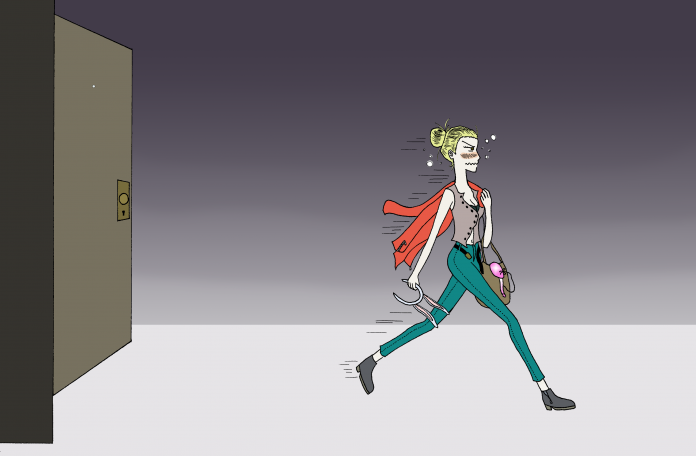
People who wanna bring out the big kinks on the first date

Don’t get me wrong, kinks can be a hell of a time. Lots of people love to be a little extra, get a little more intense, or roleplay someone besides themselves. Opening up to a partner with these can be a stressful experience, and while it’s important to be proud it’s an intimate and important part of your private life. It’s a relieving and worthwhile moment when you finally do open up, and from there you can start communicating and preparing for the night of your dreams.

So excuse me if I’m taken aback when they ask to go all 50 Shades in their twin bed after the first date.

It certainly ain’t wrong to be open and brave with your private interests, and I can definitely applaud you for being brave enough to ask to be choked after the first passionate kiss. But there’s definitely a way to ease into it, and there’s no rush to start on them; if we’ve been leg-rubbing under the table for this long, we can wait until the second date for the weirder stuff.

Besides, rushing into it breaks the first rule for intense kinks, and for crossing the road; safety first! I want to be sure of what your bed looks like so we aren’t gambling when we try tying each other onto parts of the bed. We have to make sure we’ve got any safety tools we might need, like scissors or first-aid. We need time to buy stuff for aftercare, like tea or snacks. I’m cool to get extreme, but please don’t rush through these things. -GC


Straight guys close-minded to pegging

This callout is mostly aimed towards straight boys. You’re absolutely allowed to be uncomfortable and have boundaries but also: ya boring.

I’ve seen so much hetero porn of guys alternating between anal and vaginal sex with women, but not once has a guy ever gone, “Hey, why don’t we try it the other way around?”

And why is that? Many men have great behinds, and it’s a downright waste, nay, a downright travesty not to enjoy them.

Such close-minded men will never know the wonder that is the prostate or the intimate feeling of personally getting rammed into the mattress. The only mainstream representation we’ve seen of pegging was Ryan Reynolds getting pegged by his partner in Deadpool looking mildly uncomfortable. The man being on bottom isn’t degrading or humiliating — like all sex, it’s supposed to be fun. For the close-minded, all I can say is, you are truly missing out. Try it, or at least think about it a little more. -WY


Guys who don’t moan

I don’t know ‘bout y’all, but I be in my guy’s ear like, “Ooh ee ooh ahh ahh ting tang (walla walla bing bang).”

Really, nothing is more boring to hear from a man in bed than hearing occasional grunts and a self-satisfactory sigh after two and a half minutes. Where’s the moaning? Where’s the passion?

Apparently nowhere, because your ass is “too manly” for moaning. I’m sure there’s a whole lecture I can go on about how it’s more acceptable for women to moan because they’re the subject of desire, et cetera et cetera. But when you get down to it, lack of moaning to me just translates as “I’m not willing to be vulnerable and vocalize how much pleasure I’m feeling from you right now.”

It’s an insult to your partner! By moaning, you are giving them a great verbal signal of “I’m loving this! You’re great! This is better than the free pizza I got for lunch.”

Grunting is okay. Whimpering, whining, wailing, and/or sobbing in pleasure is all fine. Full-on moaning, though, is too rare and needed. It’s a perfect way to say to your partner, “I’m here right now, and I’m focused on nothing but us.”

Also, moaning is just really hot. -WY


Straight men seeking lesbians

This phenomenon is even more flabbergasting to me when it happens on dating apps where you specifically know what the person you’re talking to is after, but it happens in real life as well.  Sometimes I just think to myself: why are you fishing in this pond, sir? Actually, I have a lot of questions.

Hunter, what is it that’s so great about you that it will fundamentally change my queer identity? Think to yourself, Brad, “is my penis really that great?” Luke, would you be creeping me and my significant other so hard on public transit if I promised we weren’t going to start making out?

When I told you I was gay and you said, “that’s because you’ve never been with me,” I heard you, Jason. And yet, inexplicably, I remained gay. Dare I say, maybe I became gayer. On the bright side, when you told me I was too pretty to be gay, the flesh-mask Aphrodite cursed me with melted away from my face and revealed my true form as Darth Lesbian—so thanks for that, Jared.

Jokes aside, nobody has time for this kind of tomfoolery and shenanigans. Not only are you being a huge pain in my ass, wasting my time, and polluting the small wedge of the electronic dating scene I access, but as a bonus, you’re also tapping into the phenomenon of corrective rape (the sexual violence against queer folks in order to “turn them straight”) and the dismissive and disrespectful mentalities that make such violence possible. So, kudos.

I don’t mean to imply that this kind of thing doesn’t happen to other LGBTQ21A+ folks. I’m just saying I’ve met more than my fair share of straight men who can’t fathom the idea of an off-camera lesbian wearing clothes and not existing specifically for their viewing pleasures, and I can only speak from my experience.

So from the bottom of my heart: get out. And if you ever get lost and end up in the wrong aisle or barking up the wrong tree: accept this answer, apologize, and leave. -GM

Age-Well Innovation Hub revealed at SFU Surrey

0

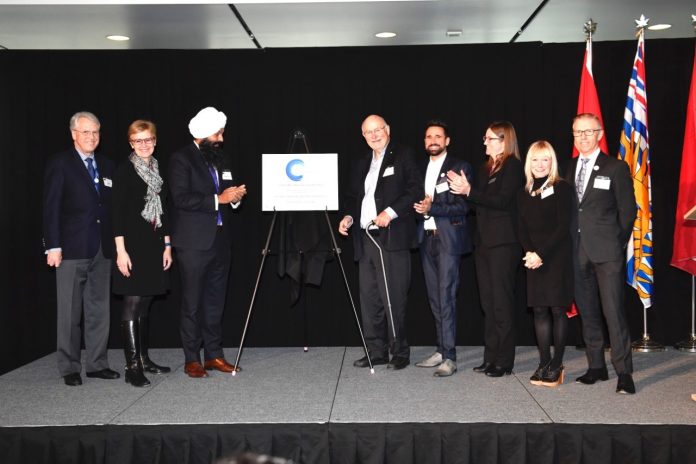
Simon Fraser University Surrey‘s Age-Well Innovation Hub, a newly manifested resource launched by the technology and aging company AGE-WELL Network of Centres of Excellence (NCE), has received $3.5 million dollars in federal funding.

The hub, which was first revealed to the public at SFU’s Surrey campus on January 17, received the funding from the federal organization, Western Economic Diversification Canada.

Created with the incentive of introducing medical solutions to elders within the province of BC, the Age-Well Innovation Hub’s mission is to “engage a range of stakeholders in a specific location to advance innovation and (the) adoption of technology-based solutions, policies and practices for healthy aging”.

Dr. Andrew Sixsmith, a gerontology professor at SFU and Age-Well’s scientific co-director, stated in a media release by the university that the contributions of the Age-Well Innovation Hub will help both caregivers and those of an older age. In describing the primary geriatric objectives of the hub, Sixsmith stated, “Our aim is to leverage the extensive resources already established in B.C. to spur the development of technologies and services in the digital health sector.”

According to SFU’s media release,  Associate professor of professional practice at SFU’s School of Interactive Arts and Technology (SIAT), Sylvain Moreno, will lead the conduction of the Age-Well Innovation Hub. Versed in neuro technologies pertaining to cognitive health solutions and interactive digital medias, Moreno spoke to the impact that the hub aims to have on the residents of B.C.

Moreno articulated, “The Digital Health Circle’s focus on translating knowledge into new technologies is essential for BC to strengthen our research and innovation while growing the health technology sector in B.C. The hub will coalesce these objectives to deliver real impact and improvement to the aging population in B.C”.

In addition to Moreno, the Age-Well Innovation Hub will be comprised of a comprehensive leadership team consisting of several SFU staff. The Hub will incorporate the leadership of Thecla Schiphorst, both SIAT professor and vice-president design and community engagement, as well as Carolyn Sparrey, vice-president research and training and associate professor of SFU’s School of Mechatronic Systems Engineering (MSE).

The medical care of seniors has been a significant topic of discussion for healthcare workers and their patients in BC. An article published by the Globe and Mail presented statistics pertaining to the low rates of service BC seniors receive within residential care facilities. In the article, BC Seniors advocate Isobel Mackenzie stated “provincial guidelines require 3.36 hours of daily direct care services such as bathing or therapy for each senior but data shows just 15 percent of all facilities met that standard last year.”  

In further discussing the ramifications the Age-Well Innovation Hub will have for the province, Carolyn Sparrey said, “By training the leaders of tomorrow to be prepared to address the challenges of healthy aging, we will develop new talent that meets the demands of B.C. technology companies while driving economic growth”.

Additional information on the Age-Well  National Innovation Hub can be found on their website.

With files from the Globe and Mail, AGE-WELL, and SFU News

How Deaf storytelling breathed new life into Hamlet’s story

0
Image courtesy of Brownen Sharp for Why Not Theatre


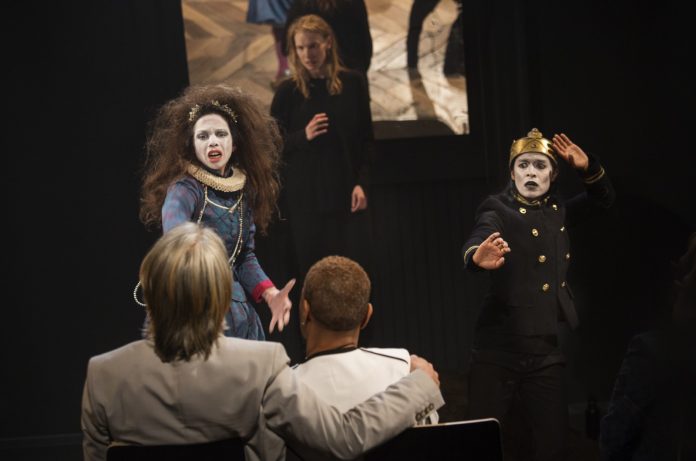
Time to break the fourth wall and preface this by admitting that I am still absolutely, completely destroyed by the production I just witnessed. PuSh Festival really did a number on me by hosting Why Not Theatre’s Prince Hamlet, a bilingual production of Shakespeare’s magnum opus that integrates English and American Sign Language (ASL) from start to finish.


Overall, it’s the Hamlet you know and love with a killer set and some gender-bent casting (you might not think that a man playing Ophelia could work, but that’s because you haven’t had your heart broken by Jeff Ho’s earnest and genuine performance yet). But where a Greek tragedy might have a chorus, this Danish disaster features Horatio (Dawn Jani Birley) as the main storyteller from the prologue onwards.


Horatio also happens to be Hamlet’s Deaf friend, hence why some characters alternate between English and American Sign Language (he and Hamlet frequently code-switch). When Horatio is off-scene, Birley is still present as the narrator, interpreting for the audience.


Birley’s work looked exhausting: her energy was sky-high, her focus was sharp as Laertes’ foil, and her characterizations for each character was unique and beautiful. My ASL is only at a beginner’s level, but my attention was torn between Birley and Christine Horne (Hamlet herself!) during the soliloquies. And that’s while keeping in mind how hilariously witty and engaged (and sassy) Horne herself was. A personal favourite moment was when Horatio gave up on translating Polonius’ speech after realising just how full of shit he was, and instead made fun of him.


I should also mention the dirt — piles of it, which surrounded the set in varying locations. These piles of dirt were stood on, kicked around by a possibly-delirious Hamlet, fucked on (looking at you, Claudius), prayed on (still you, Claudius), shaped into graves, and thrown across the stage during Ophelia’s flower speech. It was finally used by the Gravedigger to mark the spots where Gertrude, Hamlet, Claudius, and Laertes sat during Act V.


That’s right: the final duel had no swords. Horatio took over the narrative and used some incredibly poignant ASL storytelling techniques to recount the final duel, during which the Hearing actors interjected with their lines. They fell over one by one, leaving a devastated Horatio to sob through his iconic “goodnight, sweet prince” line and close the show. For the record, I also sobbed.  


I happen to be a World Literature student, which means I spend lots of time thinking about translation, and I was baffled at this play. This was an intelligent, purposeful, comprehensive, and believable translation. Never once did I think why are we doing this? We just had to.


Horatio was Deaf, he had a story to tell all of us, and my gosh, I wanted to hear it. Both languages were built into the narrative, and I can’t imagine the amount of work that went into translating Shakespeare’s work and staging the play to keep Horatio and other signing actors visible. Part of me wants to say “this is how you do translation,” but really I think that this is how you do Shakespeare if you want to truly showcase the universality, accessibility, and powerful storytelling of the Bard.

The Fore-Playlist


We would ideally have 69 tracks on this playlist, but for our Sex, Sexuality, and Gender Issue, we’re hooking you up with these hot tracks ASAP for you and your hot date(s).


“Power Trip” by J. Cole

Slow, heated, and too easy to get your grind on, “Power Trip” makes for a great hook-up song. It features a solid beat, a smooth pre-chorus with Miguel plus J. Cole’s rhymes. Regardless of if you’re taking it fast or slow, it’s great for any mood as long as it’s sexy. – WY


“Mile High” by James Blake

If you want to take your partner to sky-high pleasure levels, this song will do it for you. Incorporating a Travis Scott trap-beat on top of a sensually smooth James Blake track, you have the perfect rhythm and mood to get those hips thrusting. Extra Air Miles points if you hook up to this song on Burnaby Mountain. – GM


“Sadie’s a Sadist” by The Buttertones

I don’t know who Sadie is, but she sounds like my kind of girl. Richard Araiza’s smooth vocals, the wailing saxophone, and the suggestive lyrics (“As long as she’s on top…”) in this short little banger (no pun intended) make for the perfect soundtrack to a quick and dirty hook up. This song makes me send wink-face emojis to guys at midnight. – AR


“Rocket” by Beyoncé

As a musician known for showcasing her sexuality and empowering listeners to feel sexy, Beyoncé delivers an intimate and visceral song with “Rocket.” This song celebrates sex, evoking deeply amorous imagery with its rocket and waterfall metaphors. The flirtatious vocals and smooth production make an anthem for engaging in glorious pleasure with someone you intimately love. – KC


“Japanese Denim” by Daniel Caesar

The definition of a slow jam, “Japanese Denim” is intimate and stripped down to a steady beat, a smooth guitar, and Daniel Caesar’s crooning vocals. While this track isn’t high energy, it’s the best mood music for a romantic evening with your date. Lower the lights, get cozy, and definitely put on this track. – WY


“Honeymoon (Forever)” by Hellogoodbye

Hellogoodbye takes us on a romantic getaway with “Honeymoon (Forever),” making you feel as if you’ve stepped right into the dreamy world of La La Land. Forrest Kline’s sensuous vocals layered over the brass and strings set the mood perfectly for your next candle-lit dinner — rose petals on the floor and all. – KR


“Special Affair” by The Internet

The bass in this song is enough to ruin your drawers. Layer on lead singer Syd’s seductive melody and you’ve got the embodiment of “sex vibrations.” For your next sexy-time session, groove along with your lover or fly solo, letting Patrick Paige II’s bass take you away on a truly special affair. – KC


“Pet Cemetery” by The Paranoyds

The lyrics to Pet Cemetery might seem a bit spooky for lovemaking, but the fuzzy guitars and synth create a mood that’s eerily sultry and seductive. We’re all a little goth sometimes, right? Just make sure your partner is OK with having your black lipstick smeared all over their face. – AR


“Body” by Syd

Syd celebrates the female body with this evocative panty-dropper. The seductive lyricisms, conveyed with her captivatingly sultry voice, are irresistible as the narrator of this sex jam praises her lover. Syd’s voice sways listeners and lovers to take the time to luxuriate in each other’s bodies. – KC


(Dis)Honourable Mention:

“Piece of Me” by Britney Spears

To the guy who had this on his Fore-Playlist while we hooked up — really? We’re going to bump uglies to this? Really? I’m not sure if you made this mix in middle school but this jam is not going to get me hot, more mildly confused. Definitely swiping left on this song — to the guy though, you’re still cute, so call me back. – WY

“She uses they/them pronouns” : allyship to the gender-diverse community

1
Illustration courtesy of Wessex Scene

I appreciate the initiative of including your name and your pronouns in class introductions. But I am always frozen with fear in this situation.

I also appreciate this momentous phenomenon of creating language that challenges cissexism and that is welcomes and appreciates trans and gender-variant identities. I’m a Gender, Sexuality, and Women’s Studies major and sociology minor also getting my social justice certificate. I know very well that language works to shape knowledge, and further, I understand the need to create new language and conventions to normalize trans genders.

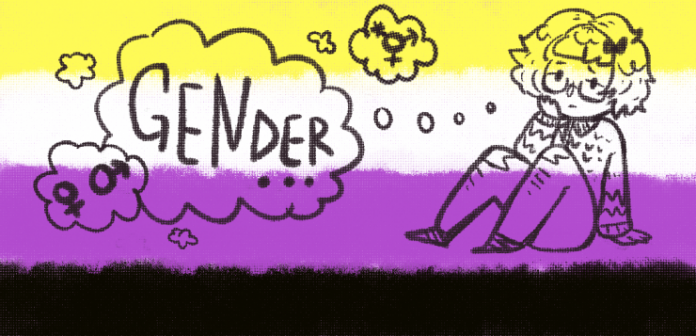
My fear, however, comes from the fact that normalizing trans/gender-variant genders takes lots of work, lots of emotional labor, lots of engaging with oppressive systems in a battle to work within the system to change the system . . . I’m trans non-binary, and my pronouns are the singular they/them/theirs and the neopronoun xe/xem/xyrs. This means that disclosing my pronouns is synonymous with disclosing a trans/gender-variant identity.

When asked for my pronouns, I enter instant panic mode — my brain and heart race: “Is this safe,” ba-boom, “what if people are transphobic,” ba-boom, “am I going to face ridicule? (Micro)Aggression? Discrimination? Be judged? Erased? Isolated?” Boom-boom-boom, “Am I going to be the only person in class who isn’t cis,” ba-BOOM, “Will my pronouns be respected? Should I share them? What if I don’t share them? I guess I have to share them cause everyone else is… Is it safe to share xe/xem/xyrs? Or is it risky enough already to say ‘they/them’,” BOOM-BOOM-BOOM…

I wonder what cisgender people think and feel when asked to share their pronouns. I’m too scared to ask, though, and I don’t foresee being comfortable asking anytime soon. I bet a lot of it is rooted in cis privilege though. I mean, every time a cisgender person has introduced me, they’ve said, “This is Sarah. She uses they/them pronouns.”

Being asked to disclose pronouns in class should be a positive thing for trans folks. But swimming uphill in a sea that is the cissexist/cisnormative/cis privileging systems in which we live translates to an anxious negotiation of safety and comfort. It really shouldn’t be this hard, but my lived experience proves otherwise. Here is some useful information for cis folks to know.


My glossary of (gender-related) terms

The following definitions are a combination of my knowledge from school and mainly my own research over the years. They represent how I think about and understand these terms. However, this list is non-exhaustive. You can check out the website It’s Pronounced Metrosexual for a more expansive glossary. Another impressive glossary can be found on Julia Serano’s website. She is a trans activist, speaker, performer, and writer.  Check out her books as well: Whipping Girl, Excluded, and Outspoken!

  • Cisgender (also shortened to “cis”): An adjective for someone who identifies as the gender assigned to them at birth, i.e. someone who was assigned male at birth (AMAB) identifies as a man; someone who was assigned female at birth (AFAB) identifies as a woman… It operates as a mode of privilege.
  • Cisnormativity: The assumption that everyone is cisgender (cisgender being society’s default gender identity) and the institutions that maintain this belief.
  • Cis privilege: Advantages that people have solely for identifying with their sex/gender assigned at birth.
  • Cissexism: A system of oppression that perpetuates the belief that transgender people are inherently inferior to cisgender people.
  • Gender binary: The social construction of gender as being two distinct, opposite categories of male/man/boy and female/woman/girl; the idea that there are only two genders and everyone is either one or the other.
  • Gender essentialism: The belief that gender, gender roles, and gender stereotypes are innate/natural. Assumes that biology is destiny; assumes someone AMAB is a man and masculine while someone AFAB is a woman and feminine; a basis for oppression and violence against trans people.
  • Gender normative: A term for people whose gender/gender presentation conforms to society’s gendered expectations.
  • Gender variant: A term for people who do not conform to society’s expectations of gender.
  • Neopronoun: A newly proposed gender-neutral pronoun.
  • Non-binary (sometimes shortened to “enby”): A term for a gender identity that falls outside of the social construction of the male/man/boy-female/woman/girl gender binary; gender that is not distinctly/solely male or distinctly/solely female; an umbrella term for genders that do not fit into the gender binary or a gender identity on its own.
  • Transgender: A term that can be a gender identity on its own or an umbrella term for gender identities that don’t match one’s gender/sex assigned at birth
  • Transphobia: Prejudice, dislike, hatred, disgust and/or discrimination towards trans people; a system of oppression.
  • Transmisogyny: An intersection of two forms of oppression: transphobia and misogyny; this is specifically directed to transwomen and transfeminine people.

(Editor’s note: Both ‘transwomen’ and ‘trans women’ are in use, depending on context, literature, and a person’s choice. Always respect the latter, and be mindful of your language.)


Ways to challenge cisnormativity, cissexism, and cis privilege

  1. Gender is a loaded term. Start by understanding the concept of gender. One of my favorite articles explaining gender What is Gender? can be found on Everyday Feminism’s website.  
  2. Remember that even though there is a lot to (un)learn, trans and otherwise marginalized folks are not educational tools at your disposal. Of course, if someone is willing to exert emotional labour and educate you, listen! But remember that you are not entitled to anything. Educating yourself is important and necessary, and Google is free!
  3. Check your privilege. Be aware of the intersections of your identity and how you are advantaged and/or disadvantaged by these intersections. Be aware that privilege comes with power. Further, privilege and power are inherently linked with oppression; where one person/group has privilege, they have power over another who is oppressed.
  4. Be aware of the space you are taking up. Are you speaking over/for trans folks? Is there someone with lived experience who could speak better to the topic? Trans folks are frequently silenced: make sure to listen.
  5. Related to the last point: uplift trans voices, but also respect silence. By this, I mean if you have privilege, use it to help folks who are traditionally and systemically silenced be heard. Simultaneously, don’t force anyone to do or say anything; a situation or topic could be triggering or tiring. Again: no one is entitled to the labour of trans folks.
  6. Respect pronouns. Use the pronouns that you are told belong to a person. If you struggle with using certain pronouns, practice (the website Practice with Pronouns is a handy tool)! If you’re unsure of someone’s pronouns, don’t assume anything, and default to gender-neutral pronouns (i.e. they/them/theirs). Ask for pronouns if you are unsure — and then use these pronouns!
  7. Even (especially) if you’re cis, introduce yourself with your pronouns — this normalizes the practice of introducing oneself with their name and pronouns, and works to establish a more trans-inclusive and positive environment and future.
  8. If you misgender someone: acknowledge your mistake, apologize, correct yourself and move on. It’s okay to make a mistake; what’s not okay is making a big deal out of this and flipping the situation to be about yourself, and about how guilty or bad you feel. Going on about this mistake and making a big deal out of the situation is extremely uncomfortable for the individual who has been misgendered.

I believe that in order to dismantle oppressive systems, we must work within the existing system to change the system. Cis folks, there’s movement on a social level to challenge cissexist norms, now I challenge you to challenge cis privilege within yourselves; it’s not hard to use someone’s correct pronouns, educate yourselves, and check your privilege.

Game devs and publishers need to just make us gay in open-world games

0
Image courtesy of Ubisoft

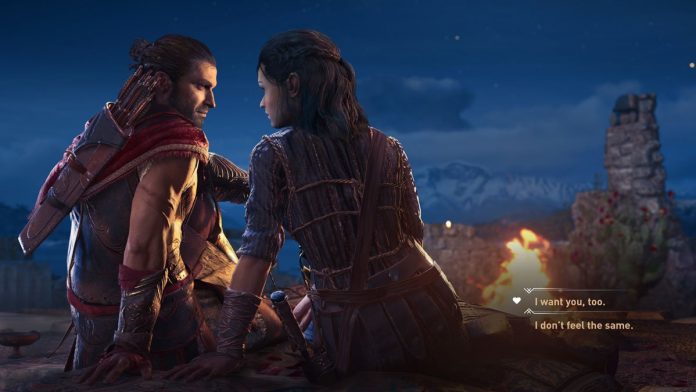
Ubisoft’s recent open-world game, Assassin’s Creed: Odyssey, recently got nominated for a GLAAD media award for Outstanding Video Game for letting you romance any character, regardless of whether you choose a male or female playable character.

This nomination came as a pretty significant surprise, though, as earlier in the month the game released a largely disliked piece of downloadable content (DLC) where your character marries a heterosexually-compatible character in one of the final cutscenes as part of the story. This is the only point in the game where you have no control over your romantic partners, rendering your sexual identity relatively pointless.

I do want to disclose that I come at this as an outsider, being cisgendered, straight, and male. But I’ve certainly experienced more than enough heteronormative relationships in video games for a lifetime, even more so in open-world games. Usually the most representation I see is in giving players the option to romance every LGBTQ21A+ character, which is certainly important in a genre where you’re meant to play however you want.

But if Ubisoft’s DLC and this award has shown anything, though, it’s that there’s a huge void in how sexuality appears in open-world games. The only romance options we’re typically given in this genre are the power to choose, or mandatory heteronormative characters. What we need way more of is an open-world game where you specifically aren’t straight.

This is something I was thinking about when reading GLAAD’s foreword about Odyssey’s nomination: “At worst, this sends the harmful message that sexual orientation can be changed at will and that LGBTQ people can choose to conform to heteronormative expectations in spite of their identities.”

A typical way this is solved in games this is to make sure every character is romantically available to you, but it isn’t inherently wrong to have a game that limits a player to their character’s identity. The problem with Odyssey — and several other open world games with heterosexual characters — isn’t that it forces a relationship on the player. Rather, it pushes an overly common heterosexual one, and erases the player’s queer identity.

This isn’t the only alternative, though, as “open world” doesn’t inherently have to mean “infinite choices.” This is especially true with Assassin’s Creed: Odyssey, as you aren’t playing an avatar of yourself; you’re playing a specific character, either Kassandra or Alexios, with their own history and identity. Others, like Grand Theft Auto, may not include mechanics around romance, but still puts you through the perspective of the cisgendered and straight male playable characters.

It really shouldn’t be so rare for a game to let you explore a world from an LGBTQ21A+ perspective in the same way.

After all, LGBTQ21A+ people don’t have the same experience in the world as the rest of us. Ubisoft has thankfully announced plans to change the ending, but their change is unlikely to make us forget about their original ending. More than that, I doubt it’d be consequential enough to change the problems it still represents in the genre.

I’d guess that the hesitation of developers and publishers is due to fears of marketability to the wider masses, but I have trouble with this idea in seeing the popularity and success of other game genres with greater LGBTQ21A+ playable characters. Story-driven adventure games like Telltale’s The Walking Dead and Life is Strange are fantastic examples of purposefully queer characters. Just the same, there’s been a surge of playable representation in the lore of less story-based games, particularly Overwatch and even League of Legends.

Being able to explore a world from a distinct perspective of a non-straight character is something that we absolutely need more of. For cis and straight people like myself, it’s an opportunity to see through a perspective we can’t experience in the same way from reading books or watching films about queer life. For everyone else, it’s a perspective they ought to see represented in this massive entertainment medium.