Home Blog Page 491

Think before you buy “Indigenous” artwork in tourist shops this summer

0
Photo courtesy of Shutterstock

With the crisp, vibrant hues that briefly come out for the summer months, it’s little wonder that Vancouver holds such appeal for tourists and locals alike. And if there’s one activity that exists in abundance here, it’s shopping. Many of us may feel the pull to purchase symbols of the places we live in or visit. But consumers should think twice about what they purchase, especially when it comes to picking out Indigenous artwork.

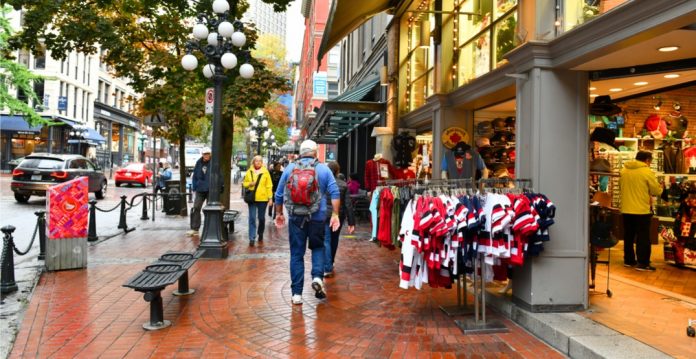
Tourist stores and hotspots abound with iconic Canadiana. Think splashes of red everywhere as you peruse flags, hockey paraphernalia, beavers, polar bears, orcas, and maple in every type of consumable conceivable. And let’s not forget the massive quantities of Indigenous symbols and motifs displayed in shop windows and shelves as if to proudly say, “This is us! This is ours!”

But before picking up that $10 resin totem pole at a brightly lit junk shop in Gastown, customers should be aware that much of the Indigenous art sold in Vancouver’s souvenir shops is, in fact, fake. The Discourse reports that a solid three-quarters of Vancourver’s tourist shops sell counterfeit Indigenous artwork. That is to say, they sell pieces that are produced without verifiable connection to any Indigenous artist, let alone one who is paid for their work or designs.

There is perhaps an argument to be made that not every consumer is interested in authenticity. Maybe the cheap keychain with the stylized Haida orca painted on it has its own charm and appeal. But there are a few problems with this reasoning.

As a multi-part investigation by Discourse writer Francesca Fionda shows, the flood of cheap knock-offs eats into the market of actual Indigenous artists trying to make a living. Furthermore, as the artists Fionda interviews point out, appropriating Indigenous symbols and motifs erodes the meaning and cultural significance behind them.

Of course, there is something to be said about how fake Indigenous artwork, divorced as they are from the history and people they supposedly come from, are cheaply repackaged as part of the “Canadian” identity. Selling counterfeit Indigenous art as Canadiana adds to the erroneous mythology of Canada being one single cohesive, cooperative nation — all to earn a quick buck.

It’s important to keep in mind that Indigenous art is not Canada, and is not Canada’s — at least not as a possession of the settler state. It’s a part of the history of the nation, yes, but it has a history stretching far before that as well. If the settler state considers reconciliation with any measure of seriousness, it must be respectful of that history and mindful that it does not condone industries that cynically seek to profit from Indigenous peoples.

If you have family visiting from out of town this summer and they want to bring home a little piece of Canada, please do your best to check that any Indigenous art that is purchased has legitimate ties to an Indigenous artist. If that can’t be done, perhaps it’s best to settle for a red toque and some maple syrup.


The “cure” for fake news should never be prescribed by the government

0
Photo courtesy of tryingmydarndest via The Independent

Singapore’s government has passed the Protection from Online Falsehoods and Manipulation Bill (POFMB). POFMB criminalizes the publication of any “fake news” online. This includes places like news sites, Facebook, message boards, and even messaging apps like Whatsapp. Perpetrators may be subjected to jail time as high as 10 years and face a fine of 1 million Singapore dollars (approx. $980,000 CAD).

Singapore is not an outlier in undermining the free flow of information. A little country called America has a president who has denounced legitimate newspapers under the guise of “fake news.” Places like Russia and Malaysia have also adopted similar bills. But these policies may be less about actually combating disinformation and more about censorship.

POFMB sounds like something out of the dystopian novels many read in high school. It draws one too many parallels to Orwellian fiction. But far from fiction, Singapore regulating “truth” is now a horrifying reality. With the passing of this law, any minister might now have the power to decide what is fake news. Who knows what could be considered “the truth” in Singapore now.

Perhaps the most Orwellian thing of all to emerge from this new bill is a vending machine I saw on my visit to Singapore last month. Deep in a food court I saw it: bright and glossy, with the words, “THE BEST ANTIBIOTIC AGAINST FAKE NEWS.” Inside were copies of Singapore’s national newspaper, The Straits Times. It’s also sometimes called the government’s mouthpiece.

As a former permanent resident of Singapore, the phrase “benevolent dictatorship” was often used to describe the Singaporean government. We lived in a city of heavy regulations and numerous fines. A bill like POFMB risks stifling the freedom of speech of Singaporeans. From journalists to online forum bloggers, all the way to everyday people like my friends.

Singapore is still a beautiful and a booming economic powerhouse. But newspaper vending machines and the POFMB should remind us that Singapore’s government is all too ready to persecute “fake news.” The POFMB is at risk of silencing Singaporean voices in the future. In trying to avoid “fake news,” people will only get copies of government-issued truth instead.

Parents, are those social media accounts really for your kids?

0
Social media accounts for very young children may make them vulnerable to bad actors. Image by Brinna Quan/The Peak

In recent years, Instagram has seen an influx of parent-run accounts for young children. Such accounts have become immensely popular, each one prolifically documenting a child’s everyday life. As such, parents should reflect on whether they are putting their own selfish desires ahead of their children’s well-being.

While this seems benign, the issue is that social media is a level playing field: content is equally accessible to family, friends, fans, trolls, and predators. Parents can’t control who screenshots their posted pictures, nor can they control what’s done with them.

By making public accounts, parents are opening up their children to all kinds of reactions from their audience. While comments can be restricted to an extent on Instagram, malevolent users often have creative, effortless ways to work around this. Furthermore, strictly restricting comments minimizes page traffic, which defeats the purpose of most public accounts.

Thus, most parents accept the trade-off between less security and more clout. In much harsher terms, Instagram aids parents in exploiting their children for purposes that benefit themselves far more than their child.

With accounts of babies and toddlers reaching hundreds of thousands of followers, great potential for fame stands to be gained by the parents of minors when such accounts take off. However, even though children with immense social media followings may be equally famous as child movie stars, they remain unprotected by the labor laws and regulations of a film set or a professional setting. With so much power in parents’ hands, opportunities for parental abuse increase.

Some may argue that intent is important, and that most parents make accounts for their young children out of pride and happiness. But an act is never divested of its consequences.

By acquainting children with the world of social media at a very young age, parents also risk opening them up a completely new and still evolving set of digital dangers, dangers kids might not even be equipped to deal with in the long run. Children deserve to grow up without more pressures being added to what they already will (inevitably) face in the digital world of today.

For children growing up in the digital age, it’s already hard enough to navigate the new trends and the pressures that come along with them in daily life. As the protectors of their children, parents are responsible for their well-being and need to recognize the effects of their actions.

At the core of it all, children are immensely vulnerable and essentially helpless in an adult world. I think parents should be mindful of whether they are motivated by attention, fame, or fortune, and actively work to make sure such desires are not satiated at the expense of their child’s safety.

Board Shorts: May 30 2019

0
Irene Lo / The Peak

SOCA approved as a tier 2 constituency group

On May 16 2019, during the first SFSS board meeting of the 2019-20 term SOCA gave a presentation to become a tier 2 constituency group. The decision to carry the motion was postponed due to a lack of knowledge on the different tiers by some board members.

The motion was addressed again during the next SFSS board meeting on May 30 2019.

The  board approved SOCA as a tier 2 constituency group under the Resource Office.  

SFSS President Giovanni HoSang to split his stipend amongst the SFSS executive team

Read more here.

The 2019-20 SFSS board refers the motion to have transparency in board meetings to governance committee

While the previous board had moved to discontinue the practice of listing the voting records of board members, the present board would like to reinstate that practise. According to the motion, this would be to “have better transparency in board meetings” as well as “hold the directors accountable for the decisions they make.”

Health sciences faculty representative Osob Mohamed stated that she does not see any benefit for the board not to associate the names of board members with their respective votes, stating that everyone on the board ran on platforms of “transparency and accountability.”

“I don’t see any benefit really for us to not have the names of the people who maybe abstained or the names of the people who were in opposition of a motion . . . there are people here anyway they see how you vote. . . I think it is in good faith for all of us to put it on the minutes . . . I think it gives us a bit of a better image as well we did all run on transparency and accountability.”

While applied sciences faculty representative Nick Chubb brought up the issue of a lack of context in the minutes, stating that “. . . you can really jump to conclusions without seeing the full story [which is] different from people being here.”

Vice-president external relations Jasdeep Gill commended the idea while highlighting that board members Osob Mohamed and Fiona Li seemed “passionate” about the issue. She then suggested that they start a working group and bring back a proposal to the board in order to have the motion addressed and resolved in a timely manner.

Indian Student Federation seeks funding for Holi event

The Indian Student Federation presented the logistics concerning their Holi event occurring July 13, 2019. The presentation was given by the Vice President Rubab Ahluwali and Vice President Marketing and Sales Neil Karia.

Ahluwali outlined the Federation’s expected revenue as $23,750 and their spending costs at $24,695. She continued stating that these figures were a “worst-case scenario” and they were not expecting to spend more than they would earn.

Ahluwali disclosed that the club does not at the moment have any money in their accounts due to the poorly planned logistics of last year’s Holi event. The purpose of the presentation was to convince the board to grant the club a loan of $14,600 in order to allow the club to pay its fixed costs and deposits.

SFSS president Giovanni HoSang highlighted that the board had loaned out money before, citing SFU’s Got Talent as an example. Vice-president student life Jessica Nguyen stated that she did not think it advisable for the board to give out a loan because there would be no assurance of reimbursement, emphasizing that the SFSS is “ . . . not a bank.”

Executive Director Sylvia Cearcero suggested that she and the Indian Student Federation set up a meeting to discuss the finer points of the event. After that meeting, she would return to the board with a properly discussed and agreed upon proposal.


SFSS president to split his summer pay among vice-presidents

0
Chris Ho / The Peak

On May 30, during the second SFSS board meeting of the 2019–20 year, the board approved a motion to distribute SFSS president Giovanni HoSang’s June–August stipends between the SFSS’s vice-presidents (VPs). The motion came in response to HoSang leaving for co-op over the summer, delegating certain presidential responsibilities to the VPs.

On May 16, during the board’s first meeting, HoSang presented his mandate and goals for the 2019-20 Summer semester. This included his plans to handle his presidential responsibilities while simultaneously taking on a co-op with Microsoft in Seattle.

HoSang stated that he would waive his stipend for the time that he would be working remotely. A guest in attendance asked if it was possible to split the stipend amongst the executives who would take on extra responsibilities. For example, vice-president external relations Jasdeep Gill will be the primary point of contact for presidential matters during HoSang’s leave of absence. SFSS executive director Sylvia Ceacero replied saying that she would have to check whether this option was legal under the B.C. Societies Act.

During the May 30 meeting, applied science representative Nick Chubb questioned the lack of a proposed pay raise for faculty representatives, noting that HoSangs’s absence would affect them too.

He then went on to say that it seems “not completely fair to [him] that [representative members] don’t get any necessary increase, especially when [vice presidents] are already getting double what [representative members] get.

Rayhaan Khan, at-large representative, suggested that the motion be approved without the change because SFSS VPs have already planned to take on the bulk of the work. However, he continued that if faculty representatives do end up taking on more responsibilities, the motion could be revisited.

Ultimately, the motion to divide HoSang’s stipend amongst the five VPs from the months of June to August was carried. Each vice-president will earn an extra $175 per biweekly payroll during HoSang’s absence.

What grinds our gears: high sodium mega compilation

0
Illustration by Marissa Ouyang/The Peak

Byline: Kitty Cheung, Kelly Chia, Jennifer Low, Gabrielle McLaren, Nicole Magas, Onosholema Ogoigbe, Winona Young

The NASTY future of the SUB’s napping room

People are gonna jerk off in the new napping room. There! I said it!

That reality is one of the few horrors to come from the Student Union Building (SUB) — that is, if it opens “soon,” anyway.

The SFSS promises that the napping room will have “comfortable furniture” and even “small lockers” for students to keep their belongings in. But what if people hog the furniture? What if an understandably sleep-deprived student stays there for over a few hours? What if people fuck in the napping room?

All of that will surely happen because it has already happened all around SFU Burnaby. But now, SFU will have a cornucopia of concentrated fuckery and unholy sinning in one room! The SFU subreddit and SFU Confessions are going to get a flood of horrifying content, that’s for sure.

You may protest, “Maybe there will be a SUB nap room attendant, or security cameras!”

First, I admire your naivety, you sweaty summer child. But would anyone feel comfortable sleeping with one of SFU’s security guards hovering over them 10 feet away?

The napping room is a disaster waiting to happen. And I, personally, can’t wait to laugh in amusement and sheer, utter horror.

Winona Young, Head Staff Writer


AWOL food vendors of SFU

We’ve got to start by acknowledging that Burnaby campus isn’t exactly a food lover’s paradise. The options are limited, they can get pricey pretty quickly, and if we didn’t have Cornerstone, we would all be in some serious trouble.

That being said, most people have found their go-to signature dish for those eight-hours-of-lecture days and  have learned to make Burnaby campus cuisine work. We as a (hungry) student population have developed poké addictions, have found Tim Hortons hacks to carry us home, and have finally been won over by all those new MBC cafeteria pop-ups that we thought were doomed to failure. Somehow, we manage.

But everything changes when the summer semester attacks.

I’ve been burned in the past week by multiple places:

  1. Running out of food.
  2. Deciding not to have certain menu items on a given day (especially if those missing menu items happen to fulfill your dietary restrictions).
  3. Spontaneously closing earlier than usual.
  4. Changing their summer hours without updating their information online.

It was a bad week not to pack a lunch I guess, but I still don’t understand. Capitalism is a circus, but it’s a circus I’m trying to throw my money at so I can fulfill my basic human needs. And the money doesn’t even land.

I know that summer semester is slower and quieter, but it’s just too sad when you jazz yourself up for bubble tea only to see that cold, desolate little stand with the grid pulled halfway down. Then comes the scramble to find sustenance at 7:12 p.m. because your last resort for food was closed.

Nothing is more awful than the thought, “Well, the vending machines take Visa.”  

Gabrielle McLaren, Editor-in-Chief


Professors fumbling with technology

It’s a certain kind of unbearable when a professor’s microphone collides with their shirt collar and produces an eardrum-shattering pop. When this happens every 10 seconds during lecture, the collective student eye-roll is bound to ensue.

We’ve all been there: watching uncomfortably as someone with a PhD fumbles through a technical difficulty during class time. Document camera blunders, projector screen errors, microphone mishaps, rotated PDFs . . . I once had a professor who had trouble with Canvas. Canvas! The entire lecture hall stared at the projector screen in confusion and pity, offering half-hearted advice as our lecturer’s mouse cursor stumbled about the screen.

Look, I get it. If the mighty computer lords choose to sabotage our classes as a result of their frivolous boredom, it’s no one’s fault. But I find that many of these problems can easily be mitigated. Professors should either receive adequate training for the technology they choose to use in class or at least come into the lecture hall at another time to test out the equipment.

Having these mishaps happen in front of students is distracting, frustrating, and frankly unprofessional. I come to lecture to learn, not to waste the first 10 minutes waiting for someone from IT Services to show up and save the day.

Kitty Cheung, Staff Writer


Poop in the toy room

There is something rotten in the toy shop lately. When I walk down the toy aisle, I see something that utterly confounds me: poop toys of all different colours and textures decorate a noticeable portion of the shelves. And I don’t mean gag gifts, either.

These toys are not marketed to disgust kids, but to catch their interest. They are dressed up as cute purses named “Pooey Puitton,” or as a game called Flush N’ Frenzy, which encourages players to catch poop in their hands. Oh, that’s not your style? How about some squishy collectible Poopeez, a capsule toy filled with various poop characters with names like “Skid Mark” and “Lil Squirt”?

What little comedic value is to be had here pales compared to the spine-chilling idea of collectible feces toys. Please reassure me that this is only a strange, passing trend, because I am absolutely baffled.

What possesses toymakers to look at poop and toilets and decide that’s their muse? No matter how endearing these toys are, all that goes through my mind is that I am being asked to make the association between “cute” and “bodily waste,” and I don’t like it! I don’t see these toys as having much educational value either.

When the day comes that some innocent child tells me that a stuffed poop toy with the unicorn horn is super cute, I won’t know how to respond. Do I say, “Yeah, that poop sure is magical”? Do I internalize my scorching confusion for the trend? I’m not sure. Poop toys just aren’t something that adult life has prepared me for.

I don’t care what emoji or glitter you use to dress up your excrement, this is one trend I want to flush down the toilet. I shouldn’t have to explain why it is heinous to grab poop, even if it is personified as a funky character. I just want it to stop, for my sanity’s sake.

Kelly Chia, Staff Writer


The mountain-high price of food

You are sitting in lecture. The prof is droning on about a concept, clicking through a PowerPoint . . . then you hear it: the low, growling rumble of your stomach calling out desperately for food. You clasp your hands over your midsection as if to block out the sound, but it keeps coming.

This story sounds all too familiar to SFU students. Unless you are able to bring enough food in your already full backpack, you will ultimately be faced with a dilemma: either go hungry or fork over your hard-earned cash to pay for the overly expensive food on campus.

Tuition is expensive. Textbooks are expensive. Food doesn’t need to be. SFU’s Burnaby campus is located on a mountain and our trapped student population can’t escape to cheaper options. Also, not everyone is able to go home and raid their parents’ refrigerator at the end of the day.

The options at SFU are limited and spread widely across campus. This makes hunting for cheap options very difficult, especially during the short 10-minute period between most classes. Is it too much to ask that students not feel cheated every time they buy themselves food at school?

Jennifer Low, Features Editor


Bus hygiene routines

My fellow transit passengers,

Please groom yourselves at home, not on the bus or train. It’s fine if it’s just to freshen up — if you’re applying makeup or deodorant, you do you! But you can very clearly clip your nails at home. This is an unspoken rule of riding on transit: there are just some things we don’t do on moving vehicles.

There was one special incident in particular that compelled me to say something. I was just staring blankly out the window of my 188 bus, as you do, and I looked down at the floor only to notice soap suds just merrily making their way down the bus. What. I looked around my seat and found a grown man who looked like he had just come from the gym, soaping up his leg and seemingly pristine Nike runners with a sponge.

This was simultaneously the weirdest and most frivolous thing I have ever witnessed. There this man sat, rinsing his calf down with water before starting again. I watched in anticipation for him to stop. But I was to be bitterly disappointed when he, again, picked up the sponge to rub down his leg and shoe.

This is in the realm of things you should do at home, right? Your legs can surely wait just a little longer to be scrubbed down. Even washing your shoe on the street or in the park would be somewhat less confusing. I suppose that among spilt drinks, soap is not the worst thing that could be on the floor. Still, just . . .  save it for the bathroom, all right?

Kelly Chia, Staff Writer


The AQ’s temporary brick slabs

It seems as though every time one construction project wraps up on Burnaby Mountain, two more are erected. At this point, the nightmarish labyrinths of pedestrian walkways, the chorus of drilling and banging, and the white caps of tarps on scaffolding are as synonymous with SFU as our pipe band or our lack of community.

But to continue beating this poor, dead horse, can we talk about the temporary brick slabs that have been laid on the Academic Quadrangle (AQ) stair landings leading down into Freedom Square?

I knew it was too good to be true when the tarps started coming down on the north corner of the AQ. I knew something was up when the ugly, grey, unsettled bricks lifted and slammed back down as I walked across them. I knew, down in the deepest corner of my cynical student heart, that the newly finished ground should not shift like a sponge under my feet.

So I was not surprised to learn that these stones are temporary. In fact, I felt that little thrill of vindication at being right. But this was very quickly followed by the sour edge of ugly rage at the thought: why not just do the job right the first time?! Why trample the fragile blossom of our frail hopes by taking down the tarps if only to have to put them back up again to re-lay nicer, firmer bricks?!

The answer, of course, is so Convocation won’t be disturbed by gaping holes in the ground. That being said, why not simply move Convocation to another location like everyone already thought would happen, instead of having to do the bricklaying twice?!

Nicole Magas, Opinions Editor


Shifting pathways in the AQ

So here I am, completely exhausted at around 12 a.m. and just about done with anything this campus has to offer. I was trudging my way through the maze of construction that I have involuntary committed to memory, when suddenly I hit a newly constructed blockade. I’m confused, but adamant that my internal map of what SFU has become is not wrong. However, there it is: a roadblock in my route homewards.

Did you know that the pathway connecting the Academic Quadrangle to the Shrum Science Building sometimes gets cut off at nighttime? You didn’t? Well, now you know, so keep that in mind the next time you’re staying late on campus.

I find that one of the benefits of living on or around campus is that I can stay on campus as late as I want. I can complete assignments that should have been done eons ago and I’m still able to get home without the help of hired transportation. For those of you who relate to this privilege, you can probably also relate to the practice of mentally plotting your route before you set off on your journey back home.

Now imagine this route changing unbeknownst to you. If you were planning to catch a bus, you probably missed it, and if you were walking home, then it’s just unnerving and annoying, especially if you’ve been working all day.

I’m paying to be in this facility. If SFU wanted maze runners, they should’ve just kidnapped us like WICKED.

Onosholema Ogoigbe, News Team Member

Burnaby city council agrees to support gondola project to SFU

1
Courtesy of Tri-City News

Recently, the Burnaby city council agreed to support in principle the construction of a gondola to SFU. The project has been talked about for nearly a decade, but this decision marked the first time that Burnaby city council agreed to support the potential project. However, council support of the project is contingent on TransLink developing a proposal that is agreeable for Burnaby residents.

Back in 2009, the SFU Community Trust commissioned a feasibility study to look into alternatives to diesel bus service. It found that a gondola would be a potential alternative. This study was followed by a full business case study commissioned by TransLink in 2011. The business case was revisited in 2017, which led to the finding that the gondola was still worthwhile, though capital costs had increased. A more detailed history with figures can be found on TransLink’s website.

The Peak spoke to Dr. Joanne Curry, vice-president of external relations, through email about the decision.

“We are very pleased with Burnaby Council’s decision earlier this week to support a transit gondola,” Curry wrote.

According to Curry, the project has a number of benefits for commuters besides reducing travel time.

“There are other benefits such as reducing over 1,700 tonnes of greenhouse gas (GHG) emissions cut annually with the removal of diesel buses [ . . . ] Over 50,000 hours of diesel bus operations would be eliminated per year, reducing traffic noise and congestion,” wrote Curry.

Curry also highlighted that a gondola could have safety benefits, such as being a potential evacuation route in the event of tank-farm related issues.

Curry noted that the project had a lot of support from the various groups in Burnaby, including the SFSS, the Burnaby Board of Trade, Tourism Burnaby, and the UniverCity Community Association.

Another community that is supportive of the project is the “Build the SFU Gondola” Facebook page. At the time this article was written, the page had 372 likes.

The Peak reached out Colin Fowler, one of the co-founders and administrators of the page.  A current SFU student and a self-described public transit buff, Fowler and his fellow co-founder Daryl Dela Cruz “created the page out of anger,” after an extended commute due to snow.

Having been present at the city council meeting, Fowler feels that the project could be very beneficial to SFU students, highlighting the time that would be saved.

“Late-night and weekend commuters would especially appreciate this frequency over the 30-minute waits they’re used to.”

The council’s decision was also discussed at the May 30 SFSS Board of Directors’ meeting. SFSS president Giovanni HoSang was thankful that the council supported the project and commended all of the work that had been done so far including those from the SFSS and the GSS. HoSang also noted that there was still a lot of work ahead of the board.

“We have to do a lot of education internally, externally, and we’ll have our gondola coming to campus.”

Part of the education that HoSang and the board discussed revolved around the concerns of residents living under the proposed path regarding the noise of the gondola.

When asked whether studies on gondola noise exist, HoSang responded, citing the feasibility studies conducted by the University and Translink and stated that research is still on-going.

Additionally Sylvia Ceacero, executive director of the SFSS, had attended a Transport 2050 consultation meeting and shared her experiences with TransLink with the board.

“They were really excited that we were present because they are really looking forward to putting this gondola in place and of course they’re trying to mitigate all those risks. But they did say [ … ] that they would invite us to go to Whistler so we could go in the gondola and some people could see what the noise was so that you could inform people better.”

Concluding the discussion, Rayhaan Khan, at-large representative, noted they were shown three routes the day before, two of which avoid the residential areas.

“We are excited about the future of the project given this major first step after ten years of advocacy by generations of students,” Fowler concluded.

What Are Students Looking Forward to This Summer?

0

Ranking Outdoor Study Spaces

0
Image courtesy of Kitty Cheung

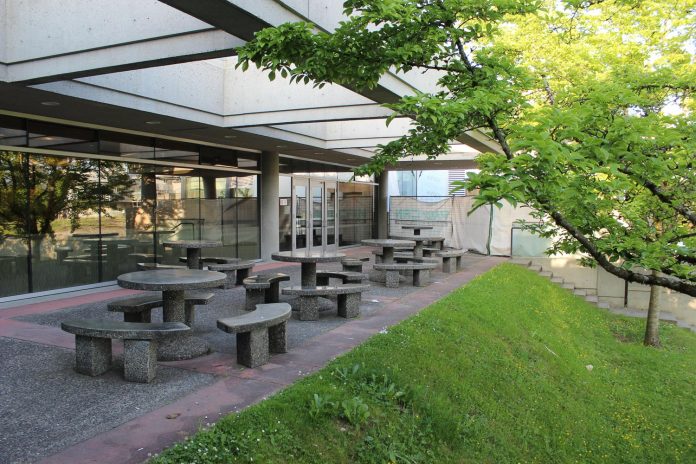
#1: Outside of Maggie Benston Centre (MBC) Food Court

  • Available seating and table space – 3.5/5 notebooks
  • Access to gendered washrooms – 4/5 notebooks
  • Access to gender-inclusive washrooms – 4/5 notebooks
  • Traffic and construction noise – 4/5 notebooks
  • Comfort – 4.5/5 notebooks

The stone picnic tables found just outside of the MBC Food Court are ideal for any kind of studying, whether you’re staring at a laptop or textbook. The picnic tables overlook a small grassy hill, dotted with slim trees that contribute to a shady and comfortable space to learn while enjoying some fresh air.

* Gender-neutral / wheelchair-accessible washrooms are available on all floors of MBC.

#2: Djavad Mowafaghian Courtyard

Image courtesy of Kitty Cheung
  • Available seating and table space — 2/5 notebooks
  • Access to gendered washrooms — 4/5 notebooks
  • Access to gender-inclusive washrooms – 4/5 notebooks
  • Traffic and construction noise — 5/5 notebooks
  • Comfort — 4.5/5 notebooks

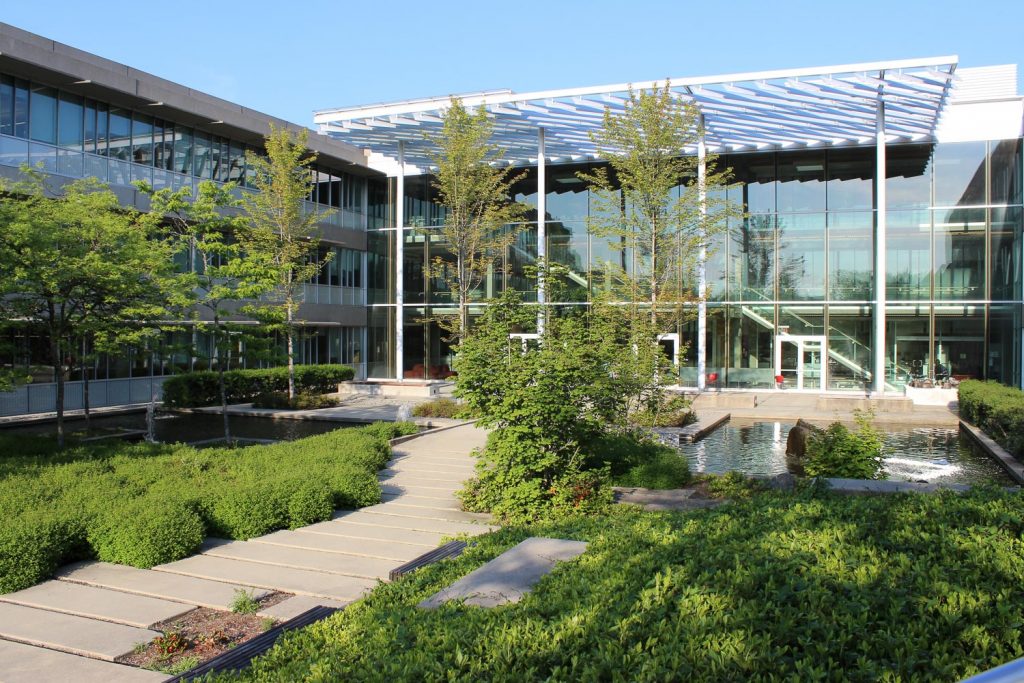
Located in the centre of Saywell Hall, this courtyard features beautiful urban landscaping, complete with fountains and sculptures. While there are no tables within this courtyard, this space does have stone block seating, a park bench, and a grass field, making it a relaxing place to complete a reading.

* Gender-neutral / wheelchair-accessible washrooms are available inside Saywell Hall.

#3: Pond between Robert C. Brown Hall (RCB) and the Academic Quadrangle (AQ)

Image courtesy of Kitty Cheung
  • Available seating and table space — 3.5/5 notebooks
  • Access to gendered washrooms — 4/5 notebooks
  • Access to gender-inclusive washrooms – 4/5 notebooks
  • Traffic and construction noise — 2.5/5 notebooks
  • Comfort — 3.5/5 notebooks

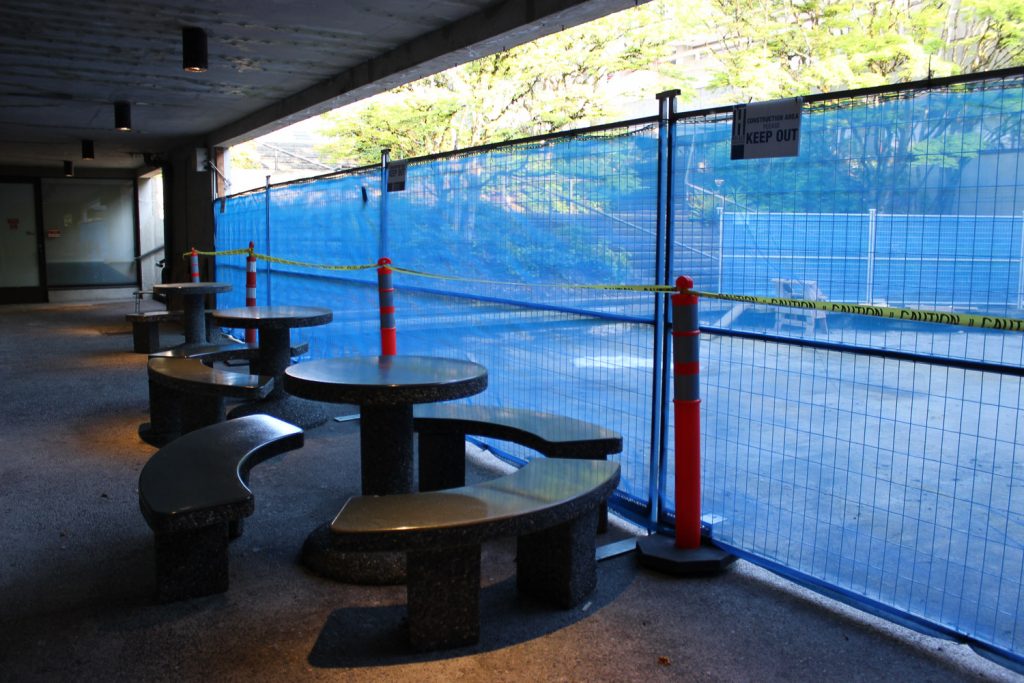
Normally one of the most calming places to study, the beauty of this space has thoroughly been ruined by construction. The pond has been drained and construction fencing invades the area, making this a tragically ruined study spot, though hopefully it’ll be restored after construction. If the ruined beauty doesn’t bother you though, the picnic tables are still available, albeit a bit dusty.

* Gender-neutral / wheelchair-accessible washrooms are available inside RCB, as well as various high traffic AQ locations — some washrooms lack automatic doors.

#4: Embark Learning Garden

Image courtesy of Kitty Cheung
  • Available seating and table space — 2/5 notebooks
  • Access to gendered washrooms — 3.5/5 notebooks
  • Access to gender-inclusive washrooms – 1.5/5 notebooks
  • Traffic and construction noise — 5/5 notebooks
  • Comfort — 3.5/5 notebooks

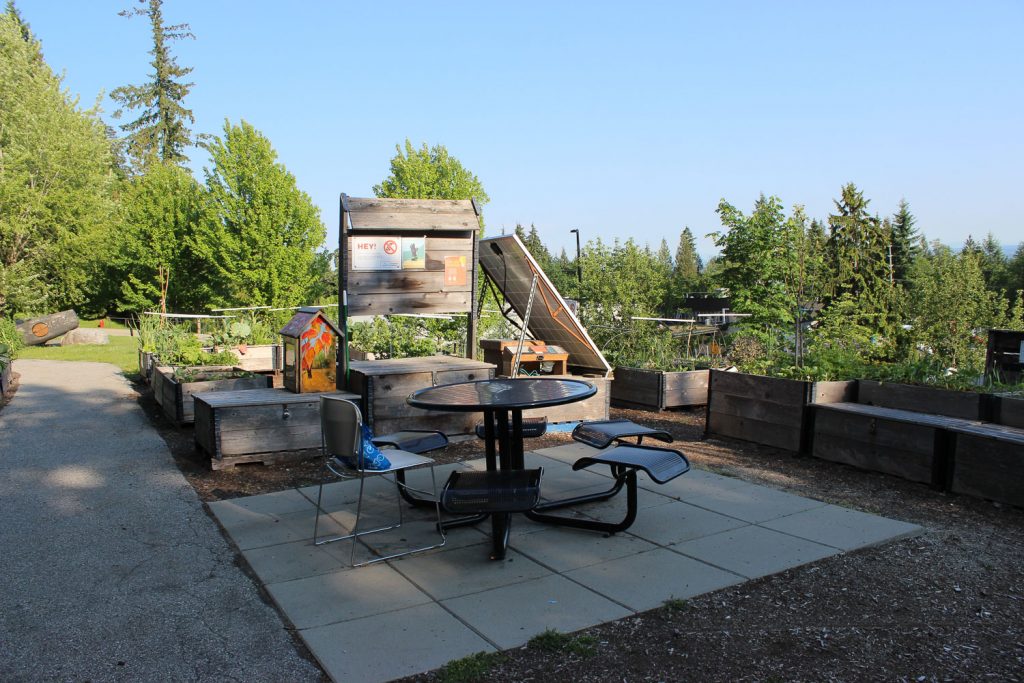
Located outside of Technology and Science Complex 1 (TASC 1), the Embark Learning Garden is a quiet and relatively secluded place to spend time. Aside from a single picnic table and some benches, there’s not much seating. Still, if you’re already studying outside and want to go the extra mile with connecting to Mama Nature, check out this garden on campus.

* Gender-neutral / wheelchair-accessible washrooms are available inside TASC 1. However, the nearest gender-neutral washroom that I’m aware of is located in the Applied Sciences Building (ASB).

A student life of horror

0
Photo curtesy of Pixabay

Being a student is being the character in a horror movie stumbling screaming through a haunted house, endlessly making the worst decisions but having no idea how it’ll affect the outcome of your life. Here are the worst “oh shit!” moments of any student career, moments that make academic life feel like a horror movie about an endless dark pit of debt and insanity. 


  • Having a grand time at a party when your stomach flips and your instincts tell you to check your deadlines again. FUCK. You have a discussion post due on canvas at 11:59 p.m. on Judith Butler’s feminist theory. It’s 11:46 p.m., you’re wasted, and you have a 30-minute transit ride home. The real horror starts when you pull out your phone and type in “canvas sfu” because your stubbornness just told you that you’re sober enough to do this.


  • Going on StudentAid BC to apply for next semester’s student loans and seeing your total student loan so far as a rapidly increasing five-digit number and having a panic attack. How are you gonna pay this?! You’re an English major with two years of school left and you’ve been taking your sweet-ass time with this degree.


  • Running into a Tinder ex on campus.  


  • Running into a Tinder ex at an on-campus event who is dating one of your exes. Both of them turn out to be in your tutorial later. Is this what queer theory is? 


  • Missing last week’s seminar because you were sick, then showing up to this week’s lecture only to see that on the board it says “TEST 3 SEATING” and there are deadly exam vibes in the air. “The Fuck?” is your answer to most of the fill-in-the-blanks.


  • Walking across the AQ pond on that “aesthetically pleasing” cement walkway way too sleep-deprived. So tired you have to slow down and carefully shuffle across because you feel like you have no centre of gravity and you don’t want to join the fish in the suspicious-looking water.


  • Accidentally making a series of self-deprecating jokes at office hours and having your professor’s eyebrows start to knit together in a look that can only be described as deeply concerned. Have you no shame?


  • Having nightmares about getting lost in the AQ during construction, missing your final exam for your online course, and failing another goddamn WQB requirement, which means you have to take another goddamn WQB requirement next semester.


  • Spotting a bear at SFU and have to decide whether to run like hell or just let the wilderness take you.