Home Blog Page 452

SFU invites students to Feral Coyote Therapy

0
Photo courtesy of skeeze via Pixabay

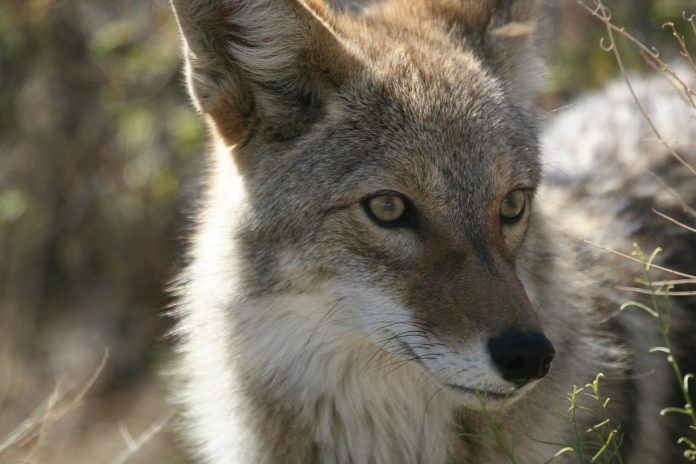
After the great success of the school’s recent Dog Therapy sessions, SFU’s Health & Counselling Services is bringing the initiative back this winter — albeit with a cheaper alternative. By laying out a variety of appealing snacks in the middle of Convocation Mall, such as Dining Hall leftovers and organics bin waste, SFU has attracted a pack of wild coyotes.

According to an email from Health & Counselling Services, Feral Coyote Therapy (FCT) involves students befriending the coyote pack, recent migrants from the woods on Burnaby Mountain, while eating or roasting marshmallows. The pack then mauls the students, bleeding them out in much the same way the university bleeds out their wallets. 

Students will crawl out of the altercation feeling “refreshed” and sometimes “grateful to go back to class,” according to the email.

It’s unclear what inspired SFU to introduce FCT to campus, and students and staff alike are somewhat skeptical of the project. Faculty in particular are concerned about how little FCT appears in overpriced peer-reviewed literature. 

At least one student theorized to The Peak that SFU didn’t leave the appealing snacks and leftovers in Convocation Mall to facilitate FCT at all. Rather, certain administrators may have gotten sick and tired of sorting their trash for the sake of SFU’s globally recognized Zero Waste Initiative.

“You just have to warm up to them [the coyotes],” reads a second email from SFU in response to this allegation. “As long as you keep them fed, they’re quite docile.”

According to Health & Counselling, coyote therapy was slated to begin February 1. But there are some (medical) reports stating that it may have already begun. 

SFU Security seems to have been kept totally in the dark about the Health & Counselling initiative.

“A dramatic increase in the number of coyote sightings has been reported in the last week,” SFU Security Tweeted on Thursday morning. “Students should take caution and avoid dark side paths. If doglike yipping and barking is heard, students should seek shelter immediately.” 

Though classes are still in session, students are now stranded in the AQ and are warning others to stay home, as the rest of SFU Burnaby is basically comprised of dark side paths.

From brutalist to boo-talist: SFU turns Robert C. Brown Hall into a year-round haunted house

0

In a move to facilitate easy fundraising, SFU has decided to turn Robert C. Brown Hall (RCB) into a year-round haunted house. After much discussion on where to hold their new money-making attraction, SFU decided it would be most cost-effective to use RCB because “it’s basically already a haunted house,” according to one SFU spokesperson.

All those who dare to enter will face some of the following scares:

  • Zombified students who, in previous semesters, took a wrong turn and were lost to the caverns of SFU. (And there are many turns to RCB.)
  • Ghosts of graduates who have sold their souls in order to afford living in a city with increasing housing costs.
  • Kettlebells precariously hung from the ceilings, symbolizing the impending weight of tuition costs.
  • The darkness of existential doom lurking at every turn to make you question your worth.
  • The monotone voices of professors droning on and on and on and on, lulling you to sleep to be savaged by the other attractions, while you try and stay awake enough to make it out.

The decision has garnered much excitement around campus.

We asked a third-year student, Charlie Wolf, what they thought of the haunted house. They responded, “Honestly, this makes sense. My friend had a class in RCB last semester, and I haven’t seen him since. Maybe I’ll run into him today.”

SFU opened the RCB Haunted House attraction to the public for the first time on Tuesday, January 14, with more dates planned for February.  The Peak is not actually sure what SFU was fundraising for, and the school has declined to answer this question. We were, however, assured that their cause was “engaging” and “totally something good.”

For a special bonus scare, the January 14 opening included the chance of being stranded because of the snow, never getting off the mountain again, and turning into Jack Torrance from The Shining.

Leaked transcript: a hostage negotiation with a stupidly rich man

0

DIAL TONE. 

A PHONE IS PICKED UP OFF THE RECEIVER.

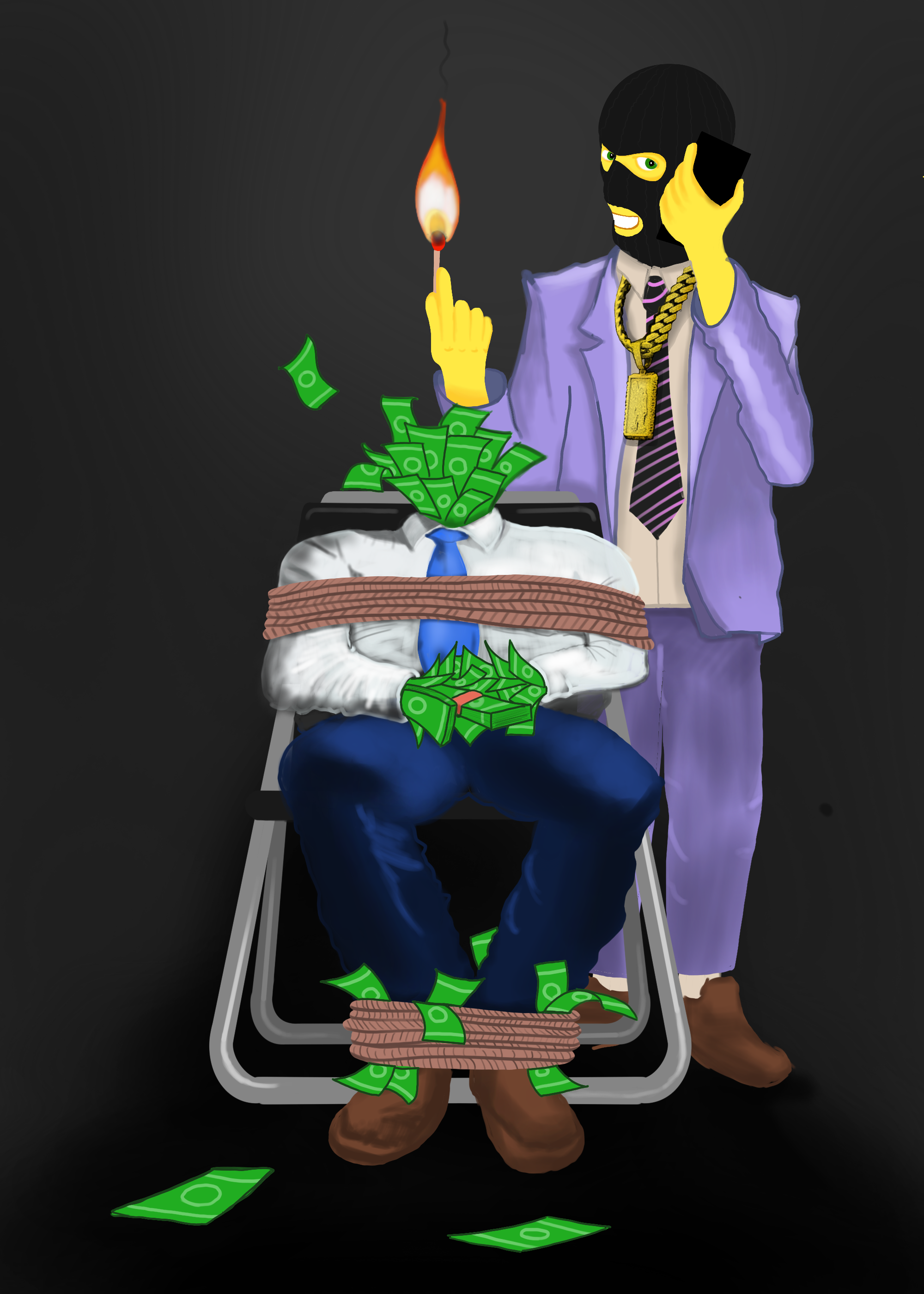
???: Who is this!? Listen! I’m holding a lit match and five litres of gasoline and I’m not afraid to use’em!

FBI NEGOTIATOR: Sir, I understand you are stressed. This is a difficult situation. We just want you to understand that we’re here to help in whatever way we can. We just want the release of the hostages without any harm.

???: I don’t need your help! I’m a self-made man! I drank baby formula as a baby so my mother wouldn’t think I owed her anything!

FBI NEGOTIATOR: No offense was intended—

???: Offended!? I’m not some snowflake!

FBI NEGOTIATOR: Of course, but then why keep the hostages, sir?

???: I have a right, don’t I? I made them. I kept them down here safe in my bunker for years! Far from creeps like you! Who are you, or anybody, to tell me what I can and can’t do?

FBI NEGOTIATOR: Sir, please, think this through. Wouldn’t you want what’s best for them?

???: You people just want to take them away! All to some freaking charities or needy orphanages somewhere. I’m not having it! They’re gonna burn up with me!

FBI NEGOTIATOR: Think of your children, sir. They deserve better than this.

???: Children? What children? Those bums never worked a day in their lives! I’m not leaving a cent for them. They were always eyeing my Swiss bunker! Trying to get at my fortune!

FBI NEGOTIATOR: I’m sorry, sir. Who exactly do you have as a hostage, then?

???: My money, boy! I’m burning down my millions before you health-care lovers get to it. Taxes are a sin!

A PHONE IS PLACED BACK ON THE RECEIVER.

???: Hello? Are you listening? I won’t be ignored anymo—

A LIT MATCH IS DROPPED. 

???: Oh.

THE LINE GOES DEAD.


The hidden treasures at the Shelf of Reciprocity

0
Photo taken by Kim Regala


Photo taken by Kim Regala

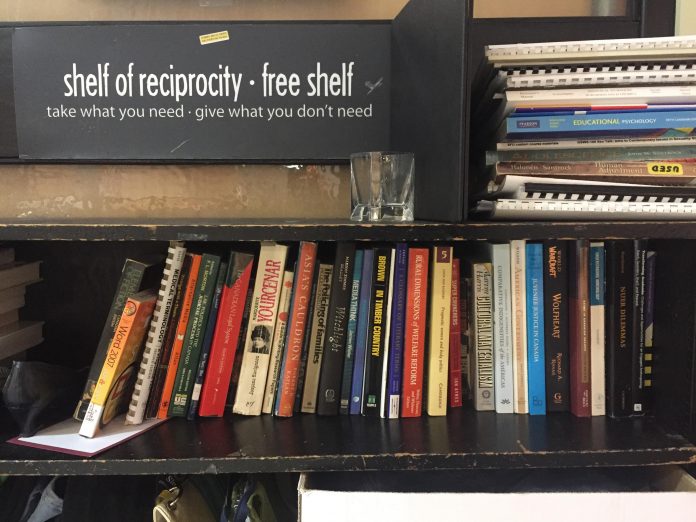
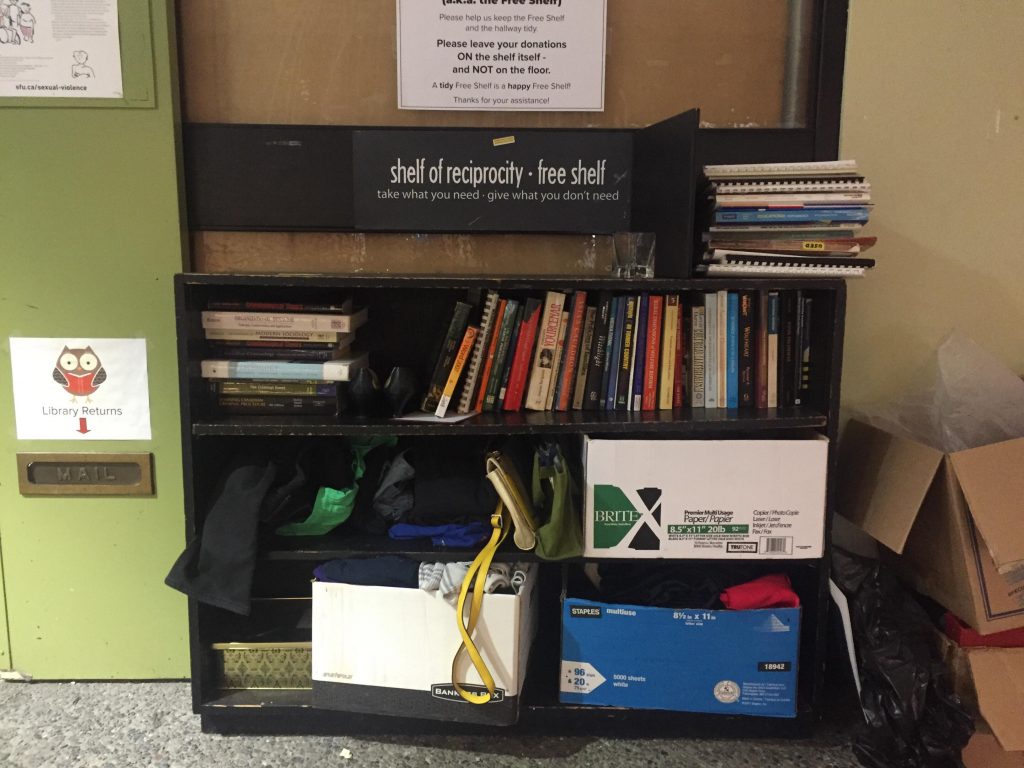
Across the Burnaby Rotunda and in front of the Simon Fraser Public Interest Research Group’s (SFPIRG) office rests an assortment of books and cardboard boxes overflowed with clothes and other personal items. This is SFPIRG’s Shelf of Reciprocity, a designated space for any and every member of the school eager to donate items that — while no longer serving a purpose to them — may serve a newfound purpose for someone else. All the items displayed on the shelf are free to take with no strings attached, except for the voluntary option to reciprocate the kind gesture of leaving something in return.

Photo taken by Kim Regala

Given the Shelf of Reciprocity’s name, I expected to find only a bookshelf filled with tons of old and worn out books stacked in every row. I was pleasantly surprised, however, to see plenty of cardboard boxes filled with more than just literature. Sitting on top of one the boxes was a fairly sizeable blanket, along with a variety of sweaters and jackets tucked neatly inside. I found the warmth and comfort of these items especially suitable for our current chilly climate, perfect for anyone who may be looking to add to their possibly lacking layers department.

Photo taken by Kim Regala

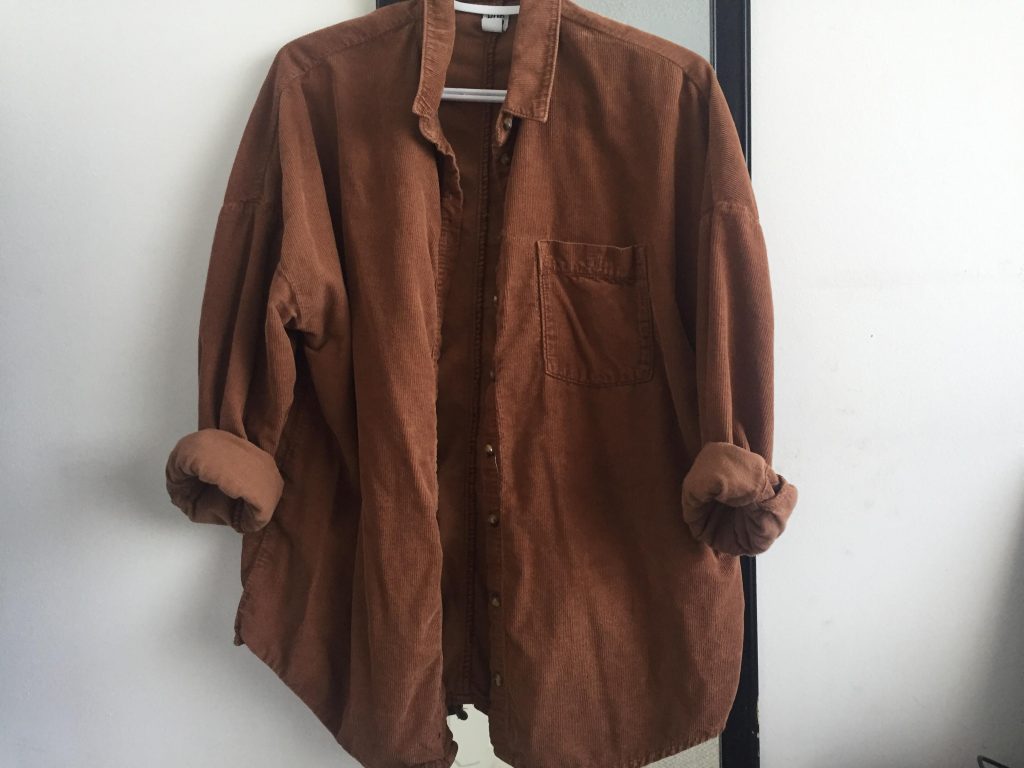
While I personally wasn’t too sold on keeping those for myself, I was instantly attached to a brown corduroy button-up hidden in one of the clothing bundles. Any good friend of mine knows that I’m a sucker for anything brown and corduroy, so naturally I grabbed the gem with no hesitation and made a run for it. That may explain why this photo is taken straight out of my bedroom. I found it incredibly heartwarming to know that I could extend the longevity of this piece again, and at no cost.

Photo taken by Kim Regala

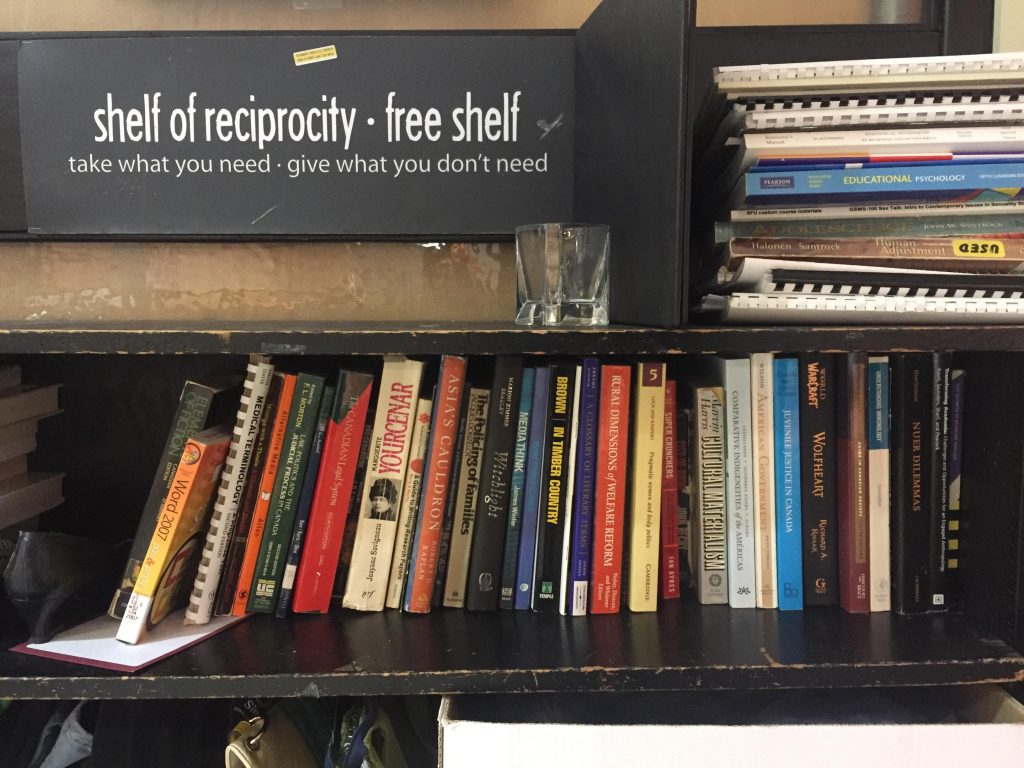
The Shelf of Reciprocity also has a plethora of books resting on its shelves. Various texts with a wide scope of genres stood out as interesting reads to me. One was the adventurous World of Warcraft: Wolfheart by Richard Knaak, a fantasy fiction. I also eyed a biography detailing the curious life of Belgian novelist Marguerite Yourcenar.

Photo taken by Kim Regala

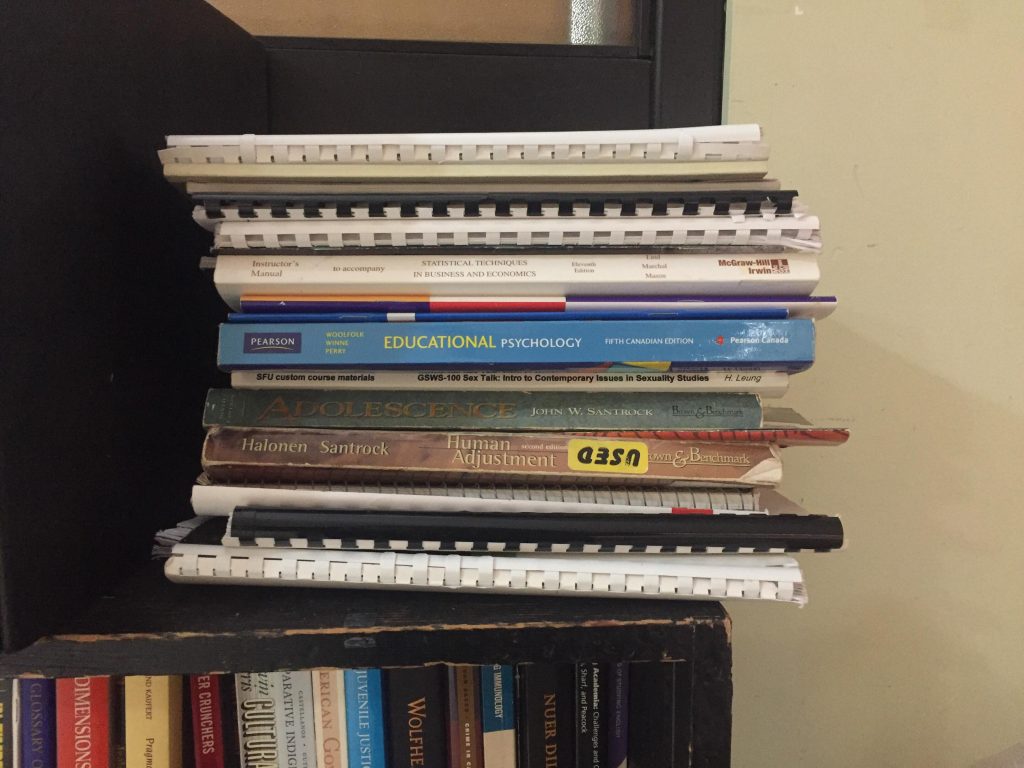
What I didn’t expect, however, was to spot plenty of course materials for a variety of subjects. Textbooks were available for classes in educational psychology, sociology and criminology, while instructor manuals for gender studies and business courses were also up for grabs. As we all know, buying course materials through the SFU bookstore can be extremely time-draining given the long line-ups. And frankly, as one of the many students on a budget, these expenses can easily add up to our already dreaded school tuitions. It was refreshing to see an alternative to attaining these costly requirements — an option that is both easily accessible to anyone and is free of charge.

The Shelf of Reciprocity offers a great source to students looking to donate items that may no longer require space in their lives, but could still be meaningful to someone else. So the next time you walk by SFPIRG, be sure to glance over and stop by the shelf, and you may just find yourself coming home with a new treasure.


Post-secondary students assemble to plan for climate justice

0

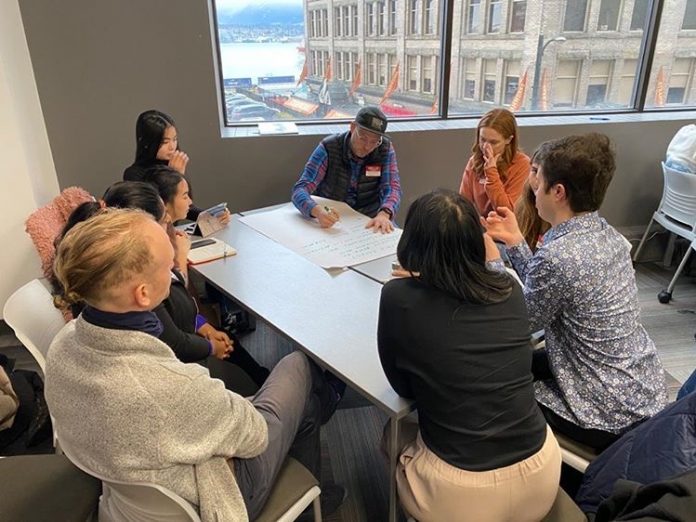
Post-secondary students from across Metro Vancouver came together on the afternoon of Sunday, January 19 at SFU’s Harbour Centre to start a coalition for climate justice.

The first meeting of the Metro Vancouver Post-Secondary Students Coalition for Justice consisted of setting respectful conversational boundaries, brainstorming the vision for the collective, and group discussions on the topics of goals, values, and how to work towards climate justice. Attendees included students from SFU, UBC, Langara, Capilano, BCIT, and Emily Carr. 

Climate justice is a somewhat different topic than, but not exclusive of, environmental justice. It advocates for both climate action and human rights issues in the hopes of creating a better future for all.

After a rousing rally cry of “WHAT DO WE WANT? CLIMATE JUSTICE! WHEN DO WE WANT IT? NOW!” from SFSS president Giovanni HoSang, the collaborative session ended with the students breaking off into four distinct groups to plan the coalition’s next steps.

This initial meeting was organized by, but not directly affiliated with, individual members of the youth-led groups Climate Strike Canada, SFU 350, Sustainabiliteens Vancouver, and UBC 350. Building off of the momentum from September’s Climate Strike, which saw over 100,000 people attend, the event aimed to bring together existing communities of climate-justice-aware students interested in sparking renewed, collaborative change.

One of the organizers of the event and SFU 350 member WeiChun Kua hopes that these meetings will bring Metro Vancouver post-secondary schools’ existing activists together.

“We see so much potential on campuses for students. There’s a lot of great people, a lot of great organizing going on [on] campuses, but it’s not very connected [ . . . ] We basically organized this [coalition] to hopefully be a hub where students can come together and rally and share resources and show solidarity with each other on different campuses on issues.”

Examples of issues that Kua highlighted include:“climate justice or tuition hikes, affordable student housing, and basically anything related to student life.” 

Amongst the clamour of students passionately, but respectfully, discussing climate justice and its importance is Shakti Ramkumar, a recent UBC grad and member of the global not-for-profit organization Student Energy. While stopping to talk with The Peak, Ramkumar gives her reasoning for this gathering’s relevance.

“I feel like the people in this room and a lot of the front line communities fighting climate change have the most at stake if we don’t take action in the limited decade that we have.” 

She also believes that “breaking the isolation that can [follow] the typical ‘university job life’, and building a really supportive and nurturing community [ . . . ] [through] this kind of in-person organizing [by] building relationships on top of building strategy is really important.” 

Another attendee, Raaj Chatterjee, an SFU student and member of SFU 350, felt similarly when asked what outcome he would like to see from these meetings.

“I hope that we’re able to empower students to advocate for what they believe in, and change the power structures that we’re all exposed to at the university — and even on the federal and provincial levels,” said Chatterjee.  “[These meetings] allow students to advocate for the change we need for climate justice, social justice, and all these issues that are really impacting people across the world today.” 

The coalition plans to hold monthly general assembly-type meetings, though no future dates are set as of now. If any students are interested in joining, Kua suggested that they reach out to their local climate justice student group on campus, for example SFU 350, or contact Climate Strike Canada. Recent high school graduates can also connect with Sustainabiliteens for more information. 


Heating coil bursts open at SFU’s Interfaith Centre, leaving space unusable and damaged

0
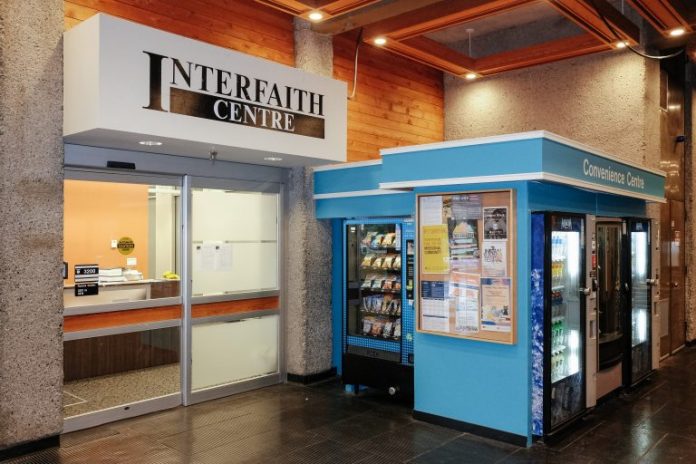
SFU's Interfaith Centre has been moved to MBC due to flooding

Flooding in SFU’s Interfaith Centre has temporarily caused it to be moved to the Maggie Benston Centre.

The Peak spoke with Victor Thomas, Director of the Interfaith Centre, and Todd Gattinger, P.Eng, Director, Maintenance & Operations of Facilities Services, about the flooding and temporary relocation. According to Thomas, the flooding began in the early morning on Tuesday, January 15. It was caused by a pipe that burst above the ceiling boards in the back room, releasing water and steam. Gattinger explained that the problem arose due to a combination of the age of the building and the cold weather.

Thomas added, “An incredible amount of water came out very quickly.”  

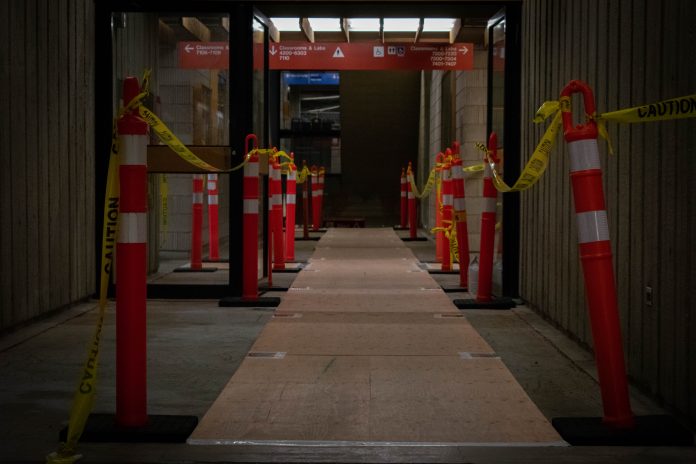
The AQ hallway was blocked off with yellow tape and signs indicating that the floor was slippery, while maintenance workers tried to fix the leak. 

Thomas added that chairs, tables, sound equipment, and religious objects were also damaged by water and steam. SFU retained the company FirstOnSite Restoration to assist with restoring the space to its original condition.

Over 1,500 students use the space weekly, including groups such as SFU’s Muslim Student Association. Mishaa Khan, the Muslim Student Association (MSA)’s Social Media Coordinator, spoke with The Peak regarding the temporary closure.

Khan told The Peak that the Interfaith Centre’s prayer mat “got completely soaked from the pipe burst [ . . . ] this is especially frustrating because it cost a little less than $800 and was paid mainly through donations from the MSA community.” She adds that other resources and equipment were damaged as well. 

Khan stated that there is already a lack of space for Muslim students and staff to pray at SFU, and the temporary closure exacerbates the problem. The space provides only enough room for 7–8 people. 

“This results in individuals praying outside the prayer room or waiting in line, risking being late for class,” she said. “Why not provide an adequate space for people of faith to practice their faith because of the role it plays on their mental health?”

The displacement of the staff and visitors of the centre is estimated to last around 4–6 weeks. The temporary rooms are in MBC 1304 and 1306. Thomas requests that students check the Interfaith Centre’s website or Facebook page for further updates.


The Peak interviews SFU’s incoming president, Dr. Joy Johnson — Part 1

4
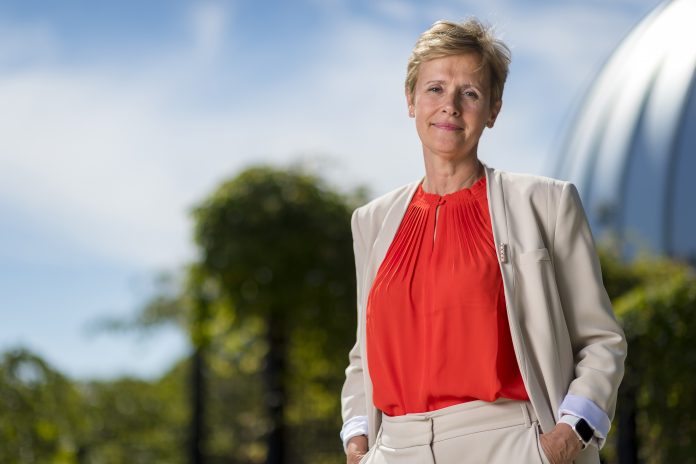
Photo courtesy of SFU

After a prolonged consultation and hiring period, Dr. Joy Johnson was hired as SFU’s next president. The Peak sat down with Dr. Johnson for an interview, which will be published in three parts. Some of the following answers have been edited for length.

The Peak: Congratulations on the position. What you would like students to know about you, or how you’d like to introduce yourself to SFU students?

Dr. Joy Johnson: I have been at SFU for just over five years, and serving as the Vice-President of Research and International. And I have seen the potential of this amazing university. I think we’re just at such a fortunate place at SFU, in terms of the three campuses, exciting things happening like the New Student Union Building opening, the new Energy Systems Engineering Building out in Surrey, and more potential to come. So that excites me a great deal, and that’s partly why I put my name forward, because I do believe there’s so much potential — so much more that we can do.

I do want students to know that students come first. They’re at the heart of the university. It’s really important that the learning environment be front and centre for the president to be thinking about — the ways in which we provide an excellent education for students.

I’m really aware of the literature that suggests that some of the most important learning that students have takes place outside of the classroom, not necessarily inside the classroom. [For example] The Peak [is] such a great example of this opportunity to engage in real world work, and learn[ing] from that is really important and something that our university values.

P: [We] understand that you previously earned a PhD in nursing and were a professor at UBC. Is there anything else you would want students to know about your background?

J: So I did my first degree in nursing and worked as a nurse for five years before I returned to graduate school. And I loved that work. It’s really a privilege to work with patients and families [ . . . ] and I found it very rewarding. But I found myself also kind of interested in other opportunities as well and went back to school to do my graduate work in nursing, as you mentioned. I really caught the research bug there and really loved the university as an institution [ . . . ] And so [I] did my PhD and then was recruited to UBC. And I had a faculty appointment in nursing at UBC. So I taught at the undergraduate and graduate level. 

P: I think a lot of students know the president is the public face of the university, but I don’t think a lot of students really know what the role of the president actually is. Could you give us an outline of this position?

J: The president is the public face of the university and [ . . . ] plays an important leadership role in terms of creating relationships with other entities, be they industry, community, etc. [ . . . ] You can kind of think of it as the CEO role, to lead the leadership team. So the leadership team consists of the vice-presidents and the associate vice-presidents, and to make sure that we are talking to one another, that we are strategically aligned [ . . . ] You can think about the president also though, as the chief academic officer in some ways because the president chairs Senate, and that’s where academic matters come to be considered at the university [ . . . ] And the other important role that the President plays is also sitting on the Board of Governors, right. [ . . . ] the President is unique and in sitting on both of these bodies and making sure that they’re coordinated and and operating in the best possible light. [ . . . ]  make no mistake. I mean, universities are complex, big, big organizations.

P: In terms of your previous position as the Vice-President of Research, how does your day-to-day role change? We understand this may involve a lot more direct involvement with students?

J: A lot of my work [as VP Research] has been with faculty and staff, looking at ways that we can encourage and facilitate research across the university and engage with students primarily through very specific initiatives [ . . . ]  I had interaction with students, but not as much direct connectivity. I know that one of the things I need to do as president is spend more time listening to students and learning more about student concerns, and [I’m] really looking forward to engaging directly with the SFSS, [which] has not been part of my role. 

P: In a broad sense, what would you like to express as your goals for the five-year term as the president?

J: A vision for a university is not an individual president’s vision. It’s a shared vision. And so in my early months, I will be out meeting with students, talking to them, understanding what their concerns are. I’ll be meeting with faculty and staff, community members, alumni as well. [As VP Research], I have not had a sense of the whole university. And that’s something I need to take the time to do [ . . . ] I have made a personal commitment to three areas that I’m passionate about. 

The first is students, and making sure that we really are focused on students first, and our learning environments — making sure that we are providing the best quality experiences for our students. And there’s been a lot of great initiatives on learning and teaching here at SFU. But, I think there’s more that can be done. I think we can be more creative, I think we can think longer and harder about ways in which we can provide these real world experiences, the ways in which we can align students’ concerns and societal issues.

[ . . . ] Another is equity, diversity and inclusion [ . . . ] I’m passionate about making sure that the university is a university of inclusion, that everybody feels welcome and feels that they can show up as their best and authentic selves. And I make no illusions about the fact that we’re not there yet, that, you know, we are a reflection of society. Let’s be clear: society has elements that are sexist, racist, homophobic, etc. I think that we need to have to have a conversation and to be thinking about the ways in which we can enunciate our values as a university and make sure that barriers that are there for our students, faculty, and staff to be who they need to be at the university, so they can do the best work they possibly can, need to be addressed. And so that’s part about what equity, diversity inclusion is about, and my vision really is about an inclusive campus. So that’s a priority for me to continue that work, to think about how to continue forward. 

And then the third personal priority for me relates to reconciliation. We received a report from the Aboriginal Reconciliation Committee, I think that was about three years ago, and we haven’t delivered on all the commitments that we’ve made in that report. So there’s more work to be done. I think that the president needs to provide leadership in that area, needs to demonstrate commitment to that work as we decolonize, Indigenize, [and] think about ways that we again can provide better access to our Aboriginal students, to the university, and support them. So that’s another kind of personal commitment.

These are things that the university is already committed to, but I really want to enunciate that these are things that are top of mind for me, and things that I want to be able to say everyday ‘I am thinking about how to move the dial on these things’ and thinking about how to, how to resource them appropriately.

Coming Up at SFU Jan 27—Feb 2

0

Ready, Set, Craft: SAAM Creative Bash

January 28 | James Douglas Safe Study Area | 12 p.m.—3 p.m.| Free

January is Sexual Assault Awareness Month (SAAM) and SFU is running a series of events with the goal of raising awareness, addressing sexual violence, and promoting a necessary and positive environment of “consent, care, and respect.” This event focuses on the importance of creating and supporting a culture of consent. Attendees will have the opportunity to get creative and make buttons and shirts to spread awareness about consent culture.

Bunny Café

January 29 | Maggie Benston Centre 0300, Group Rooms 1 & 2 | 11 a.m.–3 p.m. | Free

SFU’s Health & Counselling is partnering up with Rabbitats Rescue Society to bring you BUNNIES. What better way to practice self-care than by getting some bunny cuddles? They will be running five 45-minute sessions throughout the day, all of which will be first come, first serve. This event is sure to be popular so be sure to get there early. The Bunny Cafe will be accepting donations to Rabbitats.

Rabbitats is a non-profit charity whose goal is to “safely house the large (and ever expanding) feral rabbit population in a sustainable and affordable way.”

The session times are as follows:

Session #1 – 11:00 a.m.–11:45 a.m.

Session #2 – 11:45 a.m.–12:30 p.m.

Session #3 – 12:35 p.m.–1:20 p.m.

Session #4 – 1:25 p.m.–2:10 p.m.

Session #5 – 2:15 p.m.–3:00 p.m.

Further details can be found on the SFU events page.

A Shield and An Ornament

January 29 | Morris J Wosk Centre for Dialogue, RM 320–370 | 6:30 p.m.–8:30 p.m. | Free

Keynote speaker for SFU’s Sexual Assault Awareness Month (SAAM), Vivek Shraya, will be reading excerpts from her newest books “I’m Afraid of Men” and “Death Threat”, followed by a Q&A related to the themes present in the books. According to the Eventbrite page, the discussion will centre around “the relationships between transphobia, art and resilience . . . as they relate to building awareness around the impacts of gender-based violence.” In light of transphobic events in the Fall 2019 semester, this event will contribute to an ongoing conversation at SFU regarding transphobia and accessibility for transgendered persons. 

Shraya is a multidisciplinary artist, Assistant Professor of Creative Writing at the University of Calgary, and five-time Lambda Award winner. 

Registration is required, and can be found on the SFU events page.

One Book One SFU

January 30 | Djavad Mowafaghian Cinema | 7 p.m. | Free

As part of SFU’s ongoing One Book One SFU series, Esi Edugyan will be giving a reading from her latest award-winning novel, Washington Black. According to a statement from the Publisher on the novel, it “span[s] the Caribbean to the frozen Far North, London to Morocco.” Following the reading will be a discussion on the novel facilitated by award-winning journalist and author, Omar El Akkad.

Edugyan is a John Hopkins University graduate, winner of the Scotiabank Giller Prize for both Washington Black and Half-Blood Blues, and a finalist for five other awards.

Registration is required, and can be found on the SFU events page.

Council catch-up: January 22

0
The SFSS 2020 Elections debate was held on Wednesday March 18

Council agrees to a referendum to address the lack of Rotunda space allocations

The SFSS Council passed a motion to hold a student referendum on housing Rotunda groups in the Student Union Building (SUB) in the Spring 2020 SFSS general elections.

Council wrote a letter of condemnation to the SFSS Board of Directors in December, asking them to reconsider their decision not to house Rotunda groups in the SUB. During the SFSS Board meeting on January 8, the Board members drafted a response to Council’s letter. The SFSS’s response reiterated that they would not reconsider their earlier decision, and that housing these groups in the Forum Chambers and the Undergrounds is a viable option. 

The referendum will ask students if the SFSS should sublease organizational suites in the SUB to Embark, SOCA, SFPIRG, and CJSF for a minimum of 10 years. 

Women’s Centre Collective Representative Simran Randhawa said, “I don’t think 10 years is fair at all, because these organizations should have gotten permanent space to begin with. But at this point, 10 years is the least that we can ask for in this referendum because it provides some form of stability.”

SFU student and former SFSS Board member Corbett Gildersleve addresses Fall Kickoff deficit

Corbett Gildersleve, SFU student and former SFSS Board member, presented on the 2019 Fall Kickoff’s deficit of over $100,000. In his presentation, Gildersleve urged Council to recommend that the Board conduct a forensic audit. 

Gildersleve described the event as “high risk,” and noted that that the budget report following the event was “only two pages long.” He mentioned that the emergency Board meeting in August where the SFSS decided to increase the allowable deficit from $15,000 to $60,000 only lasted 14 minutes long.

“Realistically, the debate period was between eight-to-ten minutes at most,” Gildersleve said.

According to Gildersleve, a forensic audit is much more thorough than the standard audit that the SFSS conducts yearly, and would be able to better determine how the event was planned.

The SFSS cuts ties with student resource Lifeline

Osob Mohamed, Health Science Representative on the Board of Directors, commented during the meeting that Lifeline will no longer be funded through the SFSS. 

“We had a discussion with the group, and from that moment forward, they were made aware that they would no longer be funded through the SFSS, they were not permitted to participate in clubs days, and they will no longer from this moment forward be receiving any resources.” 

Gabe Liosis and Tristan Raymond voted chair and vice-chair of the Council

The two Council members will hold these positions for the remainder of the 2019–2020 term. Liosis is the Representative of the Political Science Student Union. Raymond heads the Psychology Student Union as their president and representative on Council.

Extinguishing the Flame of Hatred and Islamophobia

0
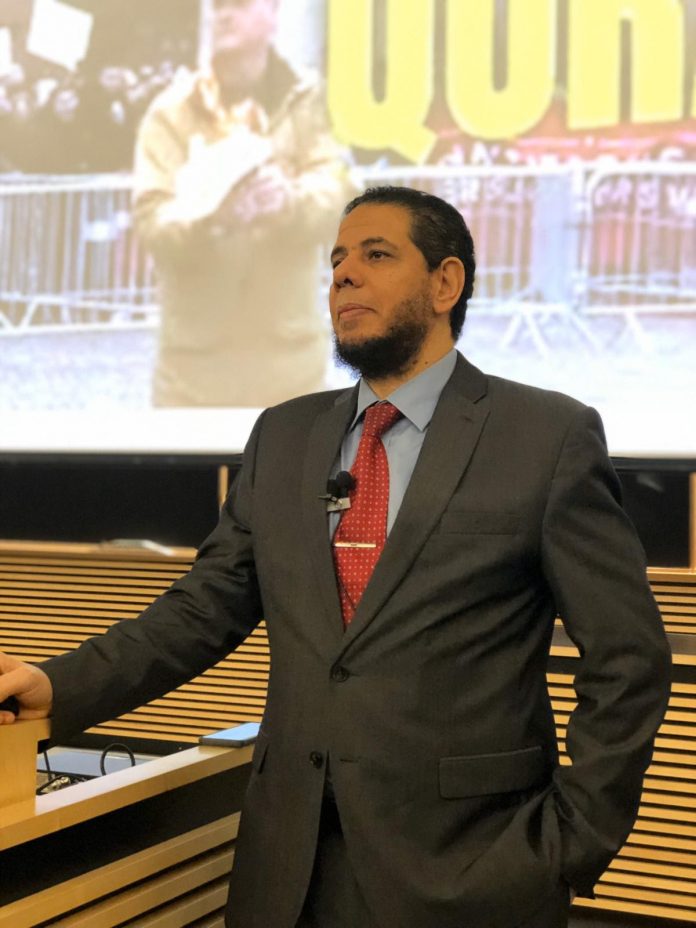
Dr. Reda Bedeir spoke at Islam Awareness Week at SFU

A harrowing image begins a lecture: a white man, in his hands a Qur’an that was on fire as an act of hatred. The lecture, from Dr. Reda Bedeir, was titled Qur’an Burning Doubt. Throughout the talk, Bedeir kept coming back to this image, but from a perspective of empathy: those who have hatred towards the religion of Islam and Muslims have likely never read or studied the Qur’an.

The lecture was part of Islam Awareness Week, that ran from Jan. 20 to 25 and was organized by Simon Fraser University’s Muslim Student Association. The weeklong event featured a series of lectures that were intended to raise awareness and address various political and practical elements of the religious practice.

Bedeir, an associate professor at Al Azhar in Egypt, the oldest university in the world, comes from Edmonton, Alberta. He is also a former professor at Simon Fraser University. He brings a background of a man who has experienced racism and prejudice, only to respond with a smile and see the good in people. When he was a professor at the University of Calgary, a colleague from the religious studies department asked him, “Why do you always smile?” to which he responded, “Because I believe in the power of Allah.” During the lecture, the positivity and energy through his smile was evident. 

“Read the [Qur’an] and the book will burn the doubt within you,” Bedeir said repeatedly. He listed a myriad of reasons of why people accept the Qur’an. It is the word of Allah (God), revealed through the Angel Gabriel to Muhammad, Islam’s final prophet. The verses have been unaltered since their revelation in the 7th Century, preserving its authenticity. Verse 57:25 reads, “We have already sent Our messengers with clear evidences and sent down and sent down with them the Scripture and the balance that the people may maintain [their affairs] in justice,” which is the main objective of the Qur’an.

There is a misconception that Islam was spread through the sword, which Bedeir counters by saying it was spread through love, through its words. With nearly 2 billion people following Islam, it is the second-largest religion in the world and one of the fastest growing, especially in North America and Europe. 

Bedeir spent a portion of the lecture discussing the doubts people have about the religion. Islam is often thought of as the religion of terrorists but Jihadists decontextualize verses of the Qur’an and apply them to their own beliefs, comparable to white supremacy and the decontextualization of the Bible. 

Bedeir’s sense of humour was seen when he was throwing candy to a student in the audience for answering a question correctly. The candy did not reach the student, making a loud sound when it clanged against metal and Bedier said, “That’s violence, that’s terrorism, I’m sorry,” to which the audience burst intolaughter. 

Islam is often perceived as  restricting women’s agency, but before the advent of Islam, women were killed for having daughters instead of sons. Prophet Muhammad teachings are what modern day Islam is known as, to respect life. Verse 49:13 speaks on the equality of women and men. Women wear a hijab and concealed clothing in the Muslim world but the misconception is that it is forced. For the majority of Muslim women around the world, it is their decision and they do so because Allah requires women, as well as men, to dress modestly.

When asked what he does to reach a wider audience beyond Muslims, Bedeir stated that he never declines invitations to speak, speaking at churches and interfaith dialogues often. “It’s a chance for me to… [explain] the basics of Islam,” he explained. (2:40)

At its core, the Qur’an unites humanity to an ethico-legal framework constructed upon Allah’s divine wisdom and justice (67:14). In the Qur’an, the world operates by the law of justice, not the law of the jungle, which is what has been happening for centuries. With a grin, Bedeir gave the example of “Operation Iraqi Liberation,” or the United States invading Iraq for oil. But,Islam is about finding peace in this world, within oneself and in physical form. 

“It is the miracle of all miracles and the [Qur’an] will burn the doubt within you,” said Bedeir.