Home Blog Page 394

The exploitation of Research Assistants (RAs) by SFU

2
Photo courtesy of Simon Fraser University.

Research is one of SFU’s three pillars in its strategic vision, resulting in $161 million in income. Research assistants (RAs), a group that primarily consists of graduate students at SFU, conduct much of the day-to-day research. 

For years, RAs have raised concerns about their working conditions, their contributions not being recognized, low wages, and the theft of their intellectual property (IP). Thus, the Teaching Staff Student Union (TSSU) led a campaign for SFU to recognize research as work and include RAs in the union. On November, 15 2019, SFU and TSSU signed an agreement recognizing TSSU as the union for RAs and grant employees.

To an undergraduate student not familiar with the issue like myself, it seemed as though the campaign was successful and that RAs would soon be receiving the appropriate wages and benefits for their labour. While the former is true, SFU has not kept up their end of the bargain. In fact, SFU has violated the voluntary recognition agreement multiple times, and has failed to take action to prevent the theft of graduate students’ work and their resulting IP.

According to the Research is Work campaign, SFU has violated the agreement in the following ways: 

  • SFU refuses to recognize TSSU as the union for RAs 
  • SFU initially refused to provide TSSU a list of RAs until ordered to by a mediator 
  • SFU refuses to start the collective bargaining process
  • SFU has attempted to exclude scholarship RAs and work-study RAs. 

The need for a union is clear. RAs receive irregular payment, and sometimes no payment at all, for their work. There have even been cases where RAs are reprimanded for reporting unsafe work conditions. 

An anonymous RA provided an account of their experience(s) as an RA to TSSU. They worked on three projects simultaneously, where the method and time of payment varied for each project. Despite taking on three separate projects, the RA was still not receiving a living wage.

“The salaries from the first two projects were not sufficient to pay for my rent and living expenses. As a result, I had to work 30–40 hr/wk at my hourly wage job in addition to the first two projects. I spent 50–60 hours a week on campus. In terms of mental and emotional labour, I was never not at work. [ . . . ] On August 20, I got the news that the funding I was relying on to pay my tuition in the Fall would no longer be coming my way. [ . . . ] This meant that if I was not able to secure a student loan in 3 weeks to cover my tuition, not only would I be out of school, I would also be unemployed.”

Derek Sahota, a TSSU advocate spoke to the average wages an RA receives in an interview with The Peak,

“A typical environment is you’re working [ . . . ] 50–60 hours a week and you’re making (after you pay your tuition) a thousand to two thousand dollars a month, so it’s much less than you would make even at minimum wage.” 

In addition to not receiving a living wage, RAs also face the possibility of their work and related IP being stolen from them. If an RA creates something patentable and licensable during their work under the supervision of a faculty supervisor, they may not retain the rights to their work due to factors such as coercion.

Sahota provided a hypothetical example, similar to those that have repeatedly been reported to SFU. Say that an RA is paid from a grant to work on solar cells as a part of their work towards their thesis. In this case, the RA is working towards the capstone project of their academic career and is receiving employment. 

Through their work as an RA they develop a new technique for a solar cell, something that is potentially patentable, licensable and therefore profitable. Their faculty supervisor (who essentially controls the RA’s employment, academic career and potentially their status in the country) may ask the RA to sign an agreement that would give SFU all the rights associated with this new IP or face consequences, such as refusing to allow them to defend their thesis. 

This environment allows for coercion, where faculty and SFU can use their nearly absolute power over graduate student RAs to steal their IP. RAs are usually just starting their graduate career and are not told the rights they have regarding IP.

If a student were to report such coercion regarding IP, their options are limited. They would have to report their case to the SFU Technology Licensing Office or the Office of the Vice-President, Research and International (VPRI). Harjap Grewal, the Advocate and Policy of the Graduate Student Society (GSS), spoke to the current reporting processes in an interview with The Peak,

“The office is linked to industry, and it isn’t necessarily set up [ . . . ] for a student to go get advice or to better understand their legal rights with regards to IP [ . . . ] if there’s a dispute [a student] can go through the VPRI [ . . . ] but the concerns we’ve had with that office is that it is an office that consists of either existing or former faculty members that [adjudicate] whether something should proceed to investigation or not.” 

Grewal continued, “The VPRI Office has a vested interest in increasing research dollars coming into the university and private firms that want to do research in partnership with the university [ . . . ] there is an incentive to undermine the rights of students in order to attract industry by making IP more readily available to capture from students. You can’t put a lot of trust into that office to fairly respond to the concerns of students. We need an office that is independent of fundraising and industry interests.”

Not only is this unethical and a violation of power, it is also against SFU’s own intellectual property policy. Point 5.4 of SFU’s IP policy states the following:

“The University specifically acknowledges that IP created exclusively by a student Creator in the course of completing the requirements for an academic degree or certificate is owned by the student Creator, to the extent that the IP comprises part of the requirements for the degree or certificate.”

The School of Mechatronic Systems Engineering (MSE) at SFU Surrey has been subject to multiple of these cases being brought forward by RAs. Due to this, there have been two separate external reviews done of the school; one of which SFU has released, and one that SFU has kept confidential despite several calls for its release. 

The review cites that three separate student cases were thought to be the catalyst for the review. Recommended action 17 of the external review speaks to how the IP, Integrity in Research and Conflict of Interest (COI) guidelines and procedures all should be updated and reviewed. The preamble to this recommendation in the external review also states the following:

“Most MSE professors do not understand SFU policies on COI and IP [ . . . ] this leads some researchers to not report instances of COI, to create their own practices around COI and IP and even to write their own agreements that they then have their students sign.”

This is particularly problematic when the managing director of a venture capital company and a director on the board of a tech company is the associate director of SFU’s Innovation Office, which the Technology Licensing Office (one of the offices RA’s go to to report cases of possible theft of IP) falls under. The director of MSE was also the CEO on the board of the same tech company. 

This was the case until early 2019 in MSE, where the external review made indirect reference to this situation in recommended action 12:

“In the future, terms for Director, Associate Director and Graduate Chair should be limited. The length of the terms of the Associate Director and the Graduate Chair should be shorter than that of the Director and the changeover should be staggered such that new people are taking on leadership roles in the School regularly.”

It is clear that SFU is taking advantage of graduate students, whether it be by denying the terms of the agreement with TSSU, not paying RAs a living wage, or stealing/coercing RAs to sign away the rights to their IP.

Grewal outlined the next steps the GSS is planning to take to make students aware of their rights if they find themselves in such situations in the future.

“We’re very supportive of RA unionization because I think that will have an enormous impact not just on the working conditions of graduate students, but them being able to exercise their rights in a way that’s not dependent on the good will of faculty members. [ . . . ] The other piece that we’re doing is putting out a rights guide [ . . . ] in that guide we’re talking about the rights that graduate students have more generally, but we’re also specifically telling graduate students that they do not need to sign away their IP before they begin research at SFU.”

Mask usage mandated provincial-wide across indoor public places

0

A mask mandate has been implemented province-wide in all indoor public and retail places. The announcement from Dr. Bonnie Henry on November 20, 2020 came amidst the rise in COVID-19 cases hitting local records in the province since the pandemic started. 

Previously, SFU health sciences professor Scott Lear created a petition demanding a mask mandate in the Greater Vancouver area and asked BC Health Minister Adrian Dix to consider making masks mandatory in all indoor places to stop the spread of the virus. 

Lear views the mandate as a preventive strategy: “Things that we’re putting in are very reactive [ . . . ] The idea of wearing masks is to prevent cases going up [ . . . ] Wearing a mask would be more favourable than having my place of employment shut down or the place where I like to go eat shut down,” he added.

A week earlier, Dr. Henry was asked if she would consider a provincial-wide mask mandate similar to other jurisdictions. She stated, “No. We have always said that these individual measures are ones that we expect people to do and we’ve seen that that is the way that people have responded to that. We know that there are some people who are not able to wear masks and we need to respect that. But most people can and do,” she responded.

Lear said that the former expectation that people would follow suggestions based on goodwill is not reasonable and “goes against decades of research [as] knowledge of something doesn’t equal behaviour.” Lear explained, “Public health measures can help shift or determine social norms. So if we see [more people wearing a mask], the more likely we’re to go ourselves, going to wear a mask.

“We should be making all efforts to stop this and get out of it as fast as we can and if by getting a mask mandate, if that can reduce cases, maybe that can reduce having to lean on restrictions as much and I think that’s overall healthier for the community.” 

SFU epidemiologist receives Trailblazer Award for active transportation research

0
PHOTO: Roman Koester / Unsplash

SFU health sciences associate professor Dr. Meghan Winters was awarded the Trailblazer Award by The Canadian Institute of Health Research. It recognizes her career-long work in researching public health, mobility, and transportation. 

The award, for Population and Public Health Research, specifically acknowledges her achievements within the field of active transportation, done by bicycle and foot, and her role in researching how cities can plan infrastructure to make these options accessible for all people. 

In Dr. Winters’ research, the impact of different active transportation policies on the populations that use them is analyzed. “With any of these kinds of initiatives, there are often unintended consequences,” she told The Peak. “As a population health researcher, I’m looking for the impact of these things, who are they impacting the most, and who might they actually be harming.”

This has taken form in research labs focusing on how active transportation impacts the well-being and community of cities, like the Interventions, Research, and Action in Cities Team, or INTERACT, with which she is a principal investigator. The program is one of the first of its kind to use publicly-sourced data, in the form of exercise app Strava, on which users track their cycling or running routes. 

“We need to get a sense of where we see more cyclists in the city. It’s hard to get really rich spatiotemporal data [which accounts where cyclists are in time and space], so with this sort of citizen science data by using things like Strava, we can get a richer picture of where people are cycling across the city and get really nuanced data.”

In previous research, Dr. Winters studied the mobility of older adults and its impact on their environment at the Vancouver Coastal Health Research Institute, which informs her work today. “We’re looking for how community design impacts people across all ages and abilities, and that might be people as they age as well. I want to highlight that the experiences of people as they age are very heterogeneous.” 

She described the complexities of aging, and how a city’s planning impacts it as something worth researching. “Often what I’m doing is trying to unpack common myths [ . . . ] there’s always nuance to those stories. It’s about reaching out to individuals and getting different perspectives and understanding how a particular design or program or policy affects them directly, and what the specifics might be for them.”

In regards to the future of her work, she sees the COVID-19 pandemic as having a major impact her research in two ways: one related to active transportation, specifically how new outdoor facilities to accommodate social distancing impacts it, and the other related to what she calls “social connectedness,” and how public infrastructure can facilitate it. 

“As soon as [our physical communities have] been taken away from us, we all realise ‘God, what would I do if I didn’t have places to connect with people; if I couldn’t get out there and meet face-to-face with people; if there’s not a public space where we can get together and meet with each other and be warm enough, to be sheltered from the rain?’ 

“We’ve been doing this work for a number of years and perhaps it wasn’t as easy to get funded, but I would say right now, it turns out now to be a high priority and high recognition in terms of the importance of understanding the health benefits and creating communities for where people can feel connected.”

We have to hold our political leaders accountable after they are elected

0
Casting a ballot shouldn’t be the last action that is taken. PHOTO: Element5 Digital / Unsplash

As I’m writing this, election news is very fresh on my mind. John Horgan has been re-elected as premier — and, to me, it is a relief that the NDP is staying in power. However, I know I’m not the only one to warily eye the presidential election in the United States. While it felt good to celebrate Joe Biden and Kamala Harris as President and Vice President-elect respectively, that celebration comes with the urgent reminder that we must still be vigilant and engage our elected politicians as our employees, not idolize them. 

The most obvious case I can refer to for idolizing a political leader is the way President Trump’s followers are so devoted to him. In an exit poll examining how voters cast their ballots, 86% of people who voted for Trump thought that he was handling the pandemic very well. This perfectly exemplifies how political devotion can blind people to their leaders’ mistakes, as the pandemic in the states is far from under control. However, with the election of Biden and Harris, I’m even more worried that people will be content with political leaders that seem more candid than Trump, because the risks posed by them don’t seem as urgent.

“Rather than being complacent because a left-leaning leader has been elected, it’s more important than ever to make sure that they work for the people.”

That lack of scrutiny may further entrench marginalized people in silence. The United States is rife with blatant displays of systemic racism, something I’m reminded of seeing the Proud Boys being escorted by riot police a few weeks ago, knowing how quickly peaceful protests for Black lives earlier this year were escalated by them. Even so, having a leader that doesn’t embolden white supremacy groups like the Proud Boys as Trump did in the presidential debates, is the bare minimum. Rather than being complacent because a left-leaning leader has been elected, it’s more important than ever to make sure that they work for the people. 

We need to pay attention to when politicians express meaningful sentiments of unity in their speeches, but their policies don’t reflect these sentiments. For one thing, policy-making is their job. We can certainly appreciate and celebrate their policies, but treating them as celebrities for accomplishing these policies is a dangerous precedent because it can make us view their mistakes through rose-coloured lenses. 

A prime example here is how Trudeau was treated when he was first elected as Prime Minister in 2015, Trudeau was made the cover of Rolling Stone, with cover text gushing over him as a leader. Idolizing him as this unusually handsome and charismatic leader ignores how many mistakes he has made while he has been in office. For example, Trudeau campaigned for electoral reform, but did nothing to change the current first-past-the-post voting system. He also accepted the Missing and Murdered Indigenous Women and Girls (MMIWG) report while simultaneously buying the Trans Mountain Pipeline, disregarding Indigenous communities. And yet, as a global leader, his performance is celebrated compared to Trump’s because of his charisma. It completely undermines him as a political employee, and the people that he has hurt with his policies, which is unacceptable.  

Even if Trudeau hadn’t gone against his word multiple times, and he has many times, we shouldn’t celebrate politicians for doing the bare minimum. As I said previously, I am relieved that John Horgan has been re-elected as many NDP policies reflect my beliefs. But already, Horgan has said that he can’t guarantee payments to families during the pandemic, something that his party promised in their re-election campaign. He is also allowing the Trans Mountain Pipeline to proceed legitimately despite saying he would attempt to stop it from expanding into Burnaby. For going against his word, he should be more harshly criticized. We can’t let sentiments like “it could be so much worse” distract us from that, because it makes their mistakes seem unimportant 

We need to continue paying attention to local and federal policies and rallying against them when they mistreat people, because politicians aren’t, and shouldn’t be, in total control. This is something we should do regardless of who’s in charge, because hurtful policies under left-leaning leaders are still hurtful. Holding our leaders accountable to their promises puts them in their rightful position as people who are supposed to serve us, not be our idols.

In the end, their policies speak louder than whatever beautiful speeches and promises they make, no matter how much better they may seem in comparison to their political opponents, or other political leaders.

TransLink launches Phase 2 of the SFU gondola project following feedback report from Phase 1

1
PHOTO: Aditya Chinchure / Unsplash

TransLink has completed Phase 1 of their planning for the Burnaby Mountain Gondola Transit project. Phase 1 consisted of gathering community feedback on the proposed project and TransLink looked for route option preference, and aimed to discover the community’s main concerns. They released a report on the feedback they received from community members and they plan to submit their final report to the Burnaby Mayor’s Council this winter for project approval.

They have now launched Phase 2, which involves further public engagement and evaluation on the three route options.

The conclusion report from the end of Phase 1 outlines community feedback that was gathered through an online survey, virtual stakeholder meetings, virtual open houses, and direct phone and email communication. They concluded that the average level of support was 87%.

Through the period of September 1, 2020 to September 30, 2020, 12,955 British Columbians were surveyed, and TransLink gathered the themes that most participants were concerned about. The top ranked priority was providing safety and security, followed by improved all-weather travel, connecting existing transit networks to meet future travel demands, reduced GHG emissions and air pollution, and improved travel time and transit reliability relative to the current bus system. 

A route for the gondola has not been established yet. The routes proposed are as follows. Route 1 is a direct 2.7km route from Production Way-University SkyTrain Station to SFU Burnaby Campus. Route 2 is an indirect path from Production–University SkyTrain Station to Gaglardi Way. It would change direction at an angle station without stopping and the terminal would be near the bus exchange at SFU. Route 3 is a western route from Lake City Way SkyTrain Station to SFU Burnaby campus. This route would also change direction at an angle station, and continue to SFU Burnaby Campus. As previously reported in The Peak, a report by the Simon Fraser Student Society (SFSS) saw a majority of students prefer Route 1. 

SEE MORE: “TransLink launches Phase 1 of Burnaby Mountain Gondola Transit project”

Similarly to the SFSS’ report, a preference for Route 1 was expressed and noted in the report at the General Stakeholders Meeting. However, the survey results do not indicate which of the three routes the public was favourable of. At the Virtual Open House and Town Hall, a preference for Route 1 was noted.  

Of those who participated in the survey, 37% were in the age group 15–24 and the average support for the project from that group was 91%. 35% of the survey was taken by residents of Burnaby: these results were split into residents in the Forest Grove neighbourhood (18%), UniverCity (17%), and other Burnaby neighbourhoods (60%). The average response of support from Forest Grove was  44% while UniverCity maintained 91% support from respondents. 

TransLink also held workshops in the Forest Grove area to address their concerns. Questions around safety and emergency plans, noise and privacy for residents around Route 1, and the loss of bus service to Burnaby Mountain were noted in the report. 

TransLink also noted support from Indigenous peoples. They found that the average level of support from local Indigenous peoples was 81%. 

Those with self-identified disabilities who took the survey expressed 85% of support for the project. 

TransLink’s contact information can be found on their website where they are encouraging continued feedback.

Teaching staff are human too

1
Teachers are under as much stress as us. ILLUSTRATION: Sabrina Kedzior / The Peak

SFU’s sessional instructors and teaching assistants are underpaid, have a huge workload, and are often treated poorly by some students. While SFU students have been vocal about needing leniency and understanding from professors and TAs, given how radically everyone’s lives have changed since the onset of COVID-19, SFU’s teaching staff deserve just as much care and understanding from us. We, as students, need to start treating our teaching staff like they are humans worthy of respect, rather than adding to their challenges and dehumanizing them.

Most instructors at SFU are sessional and are often also PhD candidates. This is a stressful, high-pressure, low-paying job with generally little to no job security. Sessionals get rehired every semester and their prospects are, to some extent, affected by the anonymous evaluations they receive from students — students who seem to have little to no investment in the outcome of these evaluations. 

It’s not uncommon to see students appear to not care about engaging with the course material, despite the best efforts of the instructor or teaching assistant. This is an awkward and unpleasant experience for everyone, especially for the instructor. I’ve often found myself sympathizing with them because they are clearly trying their best, and having a ‘dead,’ uninterested class is usually not their fault. Granted, some instructors are better at engaging their students than others. Though, more often I’ve had instructors who I thought were great, but the class itself could not be roused from their great, disinterested slumber.

There’s a lot of reasons to actively engage with course material. University is expensive and students should ensure they are getting value for their money by putting in the effort to learn all that they can. A lot of this material will pay dividends by making us into more intelligent, skilled, or well-rounded people, which for many, will result in better jobs and pay. By not engaging, students are cheating themselves out of the very education they paid to have. 

However, one of the biggest reasons to engage with courses is because instructors have put so much effort into creating their materials. The sudden changes that COVID-19 has brought on, including remote learning, have been challenging and emotionally fraught for students. It is certainly just as much, if not more so, for instructors and TAs at the best of times. It is even more so now because they suddenly had to learn how to deliver class material online that was originally designed for in-person instruction. 

SFU’s instructors and teaching assistants are human, despite often not being treated as such by their students. During this pandemic, many students have asked for empathy and understanding navigating the uncertainties we’re all experiencing right now. When we ask for empathy and understanding from teaching staff for the changes wrought by COVID-19, we should give it back by engaging with their courses. SFU’s students and teaching staff certainly deserve as much.

How is this Animal Crossing island coping after its mayor got over the game months ago?

0
ILLUSTRATION: Shaheen Virk / The Peak

Fog sets in on anotha night. Da animals are running amok since da boss dipped. I look around, dart in ma mouth, frown on mah face, and no time fa bullshit tonight. Tonight, ya boy’s on da case.

I swear I still see traces of ‘em. I can’t help it: the platforms left half-done, the uneven pathways from bridge ta bridge . . . if da human had big plans for this island, youse couldn’t tell what dey were now.

Da name’s Marshal. Full time P.I., part time mafia underboss (hey, ya gotta make a livin’ somehow, now dat the radishes are off da table.) I live on New Yak, an island I was invited to months ago because da human told me I was “the second most popular animal villager!” and they “finally found me after 374 tickets!” whatever dat mumbo jumbo means. I’m told by one of da lifelong residents, Shari da monkey, dat da human attendant came to da island, talkin’ about wantin’ to recreate da sights of da Big Apple. But since da human left, none of us have been managing dis concrete jungle well at all.

“That Tom Nook . . .” she says to me bitterly, kicking at an empty Emperor butterfly habitat that da human brought. “I always knew that he’d be swindlin’ up a storm one day, and look what happened after he did, cheeky!” 

Tom Nook. Dat was a name dat sends shivers down ma spine. Once, we knew da freedom of parading from island ta island and setting our camping spot to explore our horizons. Tom Nook promised us stability, and we took da bait like fools. Now we’re stuck paying his mortgages while his nephews reaped da benefits of his work. I’ll get dos smug trash pandas one day, lemme tells ya.

It seemed our prospects were endless then. Crime didn’t appeal to ya boy. I didn’t need da mafia, but here we are.

Nook is my top suspect for da human’s disappearance. His wiley ways have me convinced dat he took da only human we knew to a life of unimaginable pain — or worse. Now, I just need ta prove it.

We trusted da human with every decision: dey convinced us dat dis was the perfect home when all we wanted was a new, excitin’ life. We even trusted dem with where to put our homes. Da human knew everything: how to pick fruit from trees, how to find our lost items. Without dem, we was lost. 

I was lost.

Poor old Wolfgang had it da the worst of all. He had a house set up all by himself in da lonely corner where Radio City Music Hall was supposed to be. Da human came by everyday to give him ritzy ditzy clothes and such. Wolfgang was beside himself when da human disappeared. Da human had given him his identity, and, just like dat, taken it all away.

My investigation took me to the biggest house on the island: the human’s. Once, we heard da sounds of dem busying ‘emselves with tools and talks of “escaping the pandemic.” Now, all dat could be heard was da roaches. Da only “pandemic” around here is the loss of da life around here. All dat’s left are empty museum sections and our empty, empty hearts. Shuri da monkey was right — Tom Nook mortgaged his way to da top, and all of us fell down because of it. 

I slowly head back to mah home when — what’s this? A letter on ma front step? I grab it without thinking, tears stingin’ my eyes.

“Dear Marshal,

I miss you. All of you. Please don’t mourn for me. I’m just feeling the burnout now, and I swear I will be back soon. I’m really excited to see the features of the Summer update. Can’t wait to swim in these beautiful crystal waters!

May 14, 2020”

Always had a way to joke wif us . . . now, I can only hope dat da new autumn additions might just bring da human back to us soon.

Students learn better through assignments, not exams

0
Assignments are much better for students, especially international ones. PHOTO: Muhammad Haikal Sjukri / Unsplash

The fact that I see so many posts with some variant of “course suggestions with no exams? TIA” on the Facebook group “Must Knows for SFU Courses” says something about the way SFU students want to learn. The comments, which are filled with suggestions and expressions of annoyance about exams, show that a lot of students look for alternative grading criteria. This may be because we learn a great deal through participation and assignments of various forms, but I’m not sure whether we actually learn when we’re cramming for exams. Therefore, assignments that challenge our learning at a higher level and are a much better alternative to evaluating students’ knowledge.

Assignments, like essays, are a lot better for my learning experience. Exams induce a lot of fear and often lead to cramming, a defence mechanism that isn’t great for my, or any other student’s, mental and physical health. I’ve noticed that sometimes I get so burnt-out that I’m not actively reviewing my course materials, just reading them absent-mindedly so that I can cross it off my to-do list. On the other hand, that doesn’t happen when I’m researching for an essay. I’m more focused because I have to look for the author’s main ideas and paraphrase them in my own words, or even actively apply a theory to explain something I’ve come across. 

Moreover, we’re encouraged to discuss assignments with TAs and professors; I’ve done so several times and this sparked many interesting conversations beyond the classroom. In my experience, this kind of intellectual discussion does not happen in classes that are weighed more to exams. At most, the instructor simply posts the solutions and asks students to talk to them if they have questions. Students are more focused on finding the answers to the specific set of questions they’ve received for the exam and don’t explore the material further. 

Assignments are especially more relevant than traditional exams in our current remote learning environment. For one, essays and creative projects often need more higher-order thinking than exams do, as the latter may be more focused on remembering materials with set solutions, while the former asks for individual interpretations. This reduces the chances of cheating, as students can’t simply copy from each other. 

They are also more accessible for international students who are living in different time zones. I’ve been given disastrous exams at 4 a.m. during remote learning, leaving me to be a demotivated mess for the entire term. Instructors have told us to be “ready for unusual hours of commitment,” but they are basically asking us to suck it up even though international students pay exorbitant amounts of tuition fees and should be given time zone accommodations for timed exams. I know instructors will argue that exams are meant to test our knowledge, but when they’re at such inaccessible hours they’re only testing my ability to stay awake, rather than how well I know the subject. 

These timed exams also have additional nuisances that add to those problems: technological issues like Canvas glitches and invasive proctoring software. I have experienced both of these and they resulted in professors sending an all-caps email with the subject line “STOP SENDING ME EMAILS ABOUT THE EXAM.” It’s funny when I look back on it, but not so much when I’m trying to write an exam worth 30% of my grade while checking emails for updates, which wastes precious time. Needless to say that these stressful problems do not occur when we’re required to do an assignment and are given sufficient time for it. 

Exams are old-fashioned and ridiculous in this day and age, and assignments are much better for testing our true knowledge — it’s time SFU recognizes this.

We shouldn’t celebrate Black Friday

0
Superfluous spending isn’t necessary. PHOTO: Gudrun Wai-Gunnarsson / The Peak

Black Friday has never been a holiday for the people. From its conception to its frenetic present-day form, it has always been a way to encourage impulsive consumption. With the dramatic changes in our lifestyles ushered in by the COVID-19 pandemic, we should take advantage of this upset to our social norms and put an end to the practice of Black Friday. 

The event that grew to be known as Black Friday first took the form of a Santa Claus parade in 1905. Despite limited advertising in the parade itself, the event drew in crowds of families, jumpstarting the Christmas shopping season. The practice quickly spread to businesses throughout the United States, some of which — such as Macy’s, still host parades to this day. Although the date of the event has since changed slightly, the concept of a store-sponsored celebration to mark the beginning of holiday shopping has remained constant.  

And understandably so! In 2019, North American shoppers alone were the source of over $7.4 billion in spending. With Canadian Black Friday shoppers expecting on average to spend $1,000 on gifts, this so-called holiday is a big merchandiser’s fantasy come true. But while a mass spending spree helps pad the accounts of businesses worldwide, it comes at the cost of people who are better off saving their money for more deliberate purchases. Not only does Black Friday hurt the finances of its participants, surveys show that it builds off of unfounded assumptions about gift-giving. Nearly half of Canadians were found to feel a great importance towards gift-giving, but only 5% feel as strongly about receiving. Considering that one in six people are expecting to return gifts received over the holidays, something doesn’t quite line up.

The pressure to buy runs far beyond any desire to receive. We’re being duped, played, and muddled — coerced into extravagant purchases for those we care about to reconcile the imbalance in pressure to give and receive. The implication of an outside influence looms large, and we find a prime suspect in the subtleties of advertising, produced by the businesses that benefit directly from events like Black Friday. 

Every year, Black Friday explosively marks the start of a pressure to spend hard-earned money on things that we don’t necessarily need. We gift away entire paychecks for presents that may not even be wanted. This year, it’s time that we finally stop. Not stop in the sense of shopping from home instead of going to stores (hello Cyber Monday), I mean stop in the sense of being critical with our purchases. I mean talking to our friends and family about our collective spending habits and our expectations for the holiday season. 

By taking a few moments to reflect on whether we really even want that article of clothing, that newest piece of technology, or that cool kiln that lets you melt glass in the microwave (no matter how sweet it sounds), we can build a better sense of our own, independent values outside of what is being sold to us. By distinguishing between genuine want and casual appeal to both ourselves and those around us, we can begin to move away from the commercial dominion that has come to represent the winter months. 

Let’s start by recognizing that the beginning of holiday shopping — Black Friday — is not a day to be celebrated.

Universal accessibility doesn’t just benefit those labelled as disabled

1
PHOTO: Gudrun Wai-Gunnarsson / The Peak

Predating my disabilities, I still faced a multitude of inaccessible infrastructure and practices. Whether it’s having to go through a maze to reach the nearest elevator or not being provided the option of closed captioning for videos, I found inaccessibility everywhere. Irregular breathing and preferring to learn by reading (rather than listening) were never adequate excuses for these kinds of accommodations. Now that I have the label of disabled, which I use exclusively in writing pieces and begging for accommodations at SFU’s Centre for Accessible Learning, it seems just slightly easier for people to understand my needs.

But what’s in a label? Prior to my diagnoses I was treated as though my needs were not relevant to anyone else. If I decided to not seek a diagnosis, which many people do, does my health not matter? People should not have to seek out a diagnosis to prove that they have accessibility needs and require those needs met. 

Consider this: everyone has accessibility needs, therefore, greater accessibility and accommodations are beneficial for all abilities.

First, I’d like to introduce the idea of disability justice. A disability justice framework recognizes that all bodies are essential, have their own strengths and needs, and their complexities give us strength. This framework also acknowledges that all bodies are defined by gender, sexuality, race, ability, religion, amongst other factors of identity, and that these intersections are inseparable. All bodies have different necessities in order to survive and thrive, and what is needed to meet these necessities are examples of accessibility needs. Thus, all people have accessibility needs. Although, due to oppressive structures around ability, some identities have more significant needs.

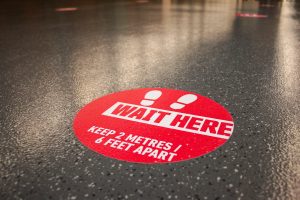
For example, physical environments are made for and by abled people. During the initial wave of the COVID-19 pandemic, stickers to keep two metres apart were placed on the floor of public spaces. This didn’t take into account low-vision or blind individuals and how to accommodate them. The pandemic has produced countless examples of how those most vulnerable are being excluded from prevention strategies. Disability justice is a collective struggle to create a world where everyone can flourish, not just those who are neurotypical and physically abled enough to thrive with limited struggles.

PHOTO: Gudrun Wai-Gunnarsson / The Peak

So, any system should account for all abilities, not only abilities which are present at a given time. Anyone can have their abilities change slightly or significantly due to a specific event, or even from day-to-day changes. If someone feels well one day and has a headache the next, their accessibility needs have changed. If someone doesn’t want loud auditory stimulus from a film or video one day, their accessibility needs have also changed. Rather than going through the painstaking process of retrofitting accessibility to an existing system, it is more efficient, and even empathetic, to build in accessibility to all systems and structures from their inception. For example, when a new crosswalk is made it should include tactile paving, auditory indicators of when to cross, and a raised symbol on the button to help with what direction to walk in.

This isn’t a question of whether someone who is disabled will be present to make gaps in the system more apparent and communicate their needs for change. Their labour shouldn’t be used to fix something that should have already been done. This is about understanding and accommodating all abilities from the get-go so that no one has to struggle to operate in life; whether accommodations are made for styles of learning, differences in executive functioning, or just general living differences. 

PHOTO: Ahmed Ali / The Peak

It’s like the motives behind implementing universal healthcare. There is an investment made in peoples’ health because we all understand that it is a human right and it can deteriorate at any time through no fault of a person’s own. Providing healthcare to all is not only cost-effective, but it saves everyone the hardship of not knowing if they will have enough resources to address their healthcare needs.

Similarly, we should invest in accessibility. Everyone has accessibility needs and we should invest in supporting them so they can thrive and live according to their requirements not according to what is (not) provided to them in public infrastructure. Acknowledging and accommodating everyone’s accessibility needs would not only be effective in preventing undue burden in terms of seeking a diagnosis, but it would be the right thing to do.