Home Blog Page 384

Beedie’s School of Business affordability guide aims to aid housing in Metro Vancouver

0
PHOTO: Aditya Chinchure / Unsplash

SFU’s Beedie School of Business and the Vancouver Economic Commission (VEC) have joined in efforts to develop a guide to affordability in Vancouver. Based on various levels of income, the guide’s objective is to provide a realistic representation of the cost of living throughout different cities in the region.

Finding comprehensive data regarding housing affordability in Vancouver can often be a challenge as most of the data available has not been updated, according to Beedie professor Andrey Pavlov. “Since living in Vancouver, as in any city, requires multiple expenditures for food, shelter, taxes, childcare, there is no single source that can provide desegregated and consistent information,” Pavlov told The Peak in an interview. 

By identifying housing costs across the Lower Mainland, the guide can help citizens and businesses navigate locations best suited to them. Information regarding the cost of housing, labour markets, taxation, child care, income, spending, and transportation were gathered to create a coherent economic depiction of life in Metro Vancouver. According to Pavlov, the guide can also determine areas that are “most desirable for housing supply increases and/or transportation infrastructure improvements.”

Researchers concluded that owning basic lower-priced property — which can be referred to as the 25th percentile — offered reasonable and safe housing. For single family homes, Vancouver West required the highest household income in the 25th percentile at $325,643 annually for a mortgage to be approved by the bank, while Langley held the lowest requirement at $118,072. The guide also presents average rental rates ranging from 3+ bedroom units in West Vancouver costing up to $3,753 to bachelor units in Surrey for $898. 

“There are [many] neighbourhoods and market segments that are still relatively affordable for somebody with good employment,” Pavlov explained. However, he added that these neighbourhoods may not be as convenient as some houses are priced higher due to better commuting time or housing quality. Compared to similar cities, prices in Metro Vancouver do not necessarily vary greatly, but he thinks they “[offer] relatively limited housing variety.” 

Pavlov stated that “a vibrant and growing city should offer a very wide range of housing options in order to accommodate people of all financial means and tastes.” Although he doesn’t see much desire from BC’s government “to help increase housing supply,” he suggested that  renewing real estate and creating more accessible accommodation could improve affordability in Vancouver. 

The full Affordability Guide can be found on the Vancouver Economic Commission website.

Beedie student bails on Valentine’s Day date to check stocks

0
PHOTO: Gilly / Unsplash

February 14, 11:32 a.m.

Baby Girl💦 — heyyy baby, happy valentines day! <3 hope your morning is going well and can’t wait to see you tonight. i’m gonna look so good for you mwah mwah I’ll order Anton’s to the house around 6:00 don’t be laaaate

February 14, 11:41 a.m.

Boo Thang❤️ — gm i can’t wait to see you in that new dress you’ve been talkin bout mmm yo can u send a pic for me rq

Boo Thang❤️ — plz?

Boo Thang❤️ — please baby? for me?

February 14, 3:23 p.m.

Baby Girl💦 — I was running errands i’m so soo sorry bb I promise I’ll make up for it tonight 😉 😉 we can cuddle and watch a movie awww

February 14, 4:11 p.m.

Baby Girl💦 — Are you excited? I just started getting ready, I’m so excited to see you I miss you soOoo bad

February 14, 5:14 p.m.

Baby Girl💦 — Why aren’t u responding on v-day?? I did my hair in curls like you like 🙂

February 14, 5:24 p.m.

Baby Girl💦 — HELLOOOO? Jake??

February 14, 5:30 p.m.

Baby Girl💦 — Where the fuck are you? This is so shitty of you.

February 14, 5:49 p.m.

Baby Girl💦 — The food is almost here, I got your favourite, plain spaghetti so u can put ketchup on it 🙂 pls let me know when you’re almost hereeeee

February 14, 5:57 p.m.

Baby Girl💦 — Wow. This is worse than when you didn’t wear your suit to my sister’s Quinceañera bc your only one was dirty from your photos from that stupid fucking Beedie conference!!!!!! PICK UP YOUR PHONE.

February 14, 6:10 p.m.

(8 missed calls) from: Baby Girl💦

February 14, 6:12 p.m.

Baby Girl💦 — don’t even bother calling me. fuck you.

February 14, 8:29 p.m.

Boo Thang❤️ — damn b sry i was so into these Dogecoin stats it’s off the charts like u wouldnt believe, it’s so complex but so sick like you wouldn’t get it but like whatever trust me these stock trends rly inspire me as an entrepreneur fr fr

February 14, 8:42 p.m.

Boo Thang❤️ — ya ok i can try telling u about them but not sure u would get it

February 14, 8:43 p.m.

Boo Thang❤️ — YO in that minute it went up by a tenth of a cent b thats pog ya anyways so basically the stock market is like a fishtank. big fish against bigger fish. gotta keep on that grind u know like i’m always on my game it’s so tough but someone gotta do it

February 14, 9:22 p.m.

Baby Girl💦 — … 

February 14, 9:23 p.m.

Baby Girl💦  changed contact from Boo Thang❤️  to Capitalist Pig🐷

BC experiences COVID-19 vaccine shortage

0
PHOTO: Stephen Cornfield / Unsplash

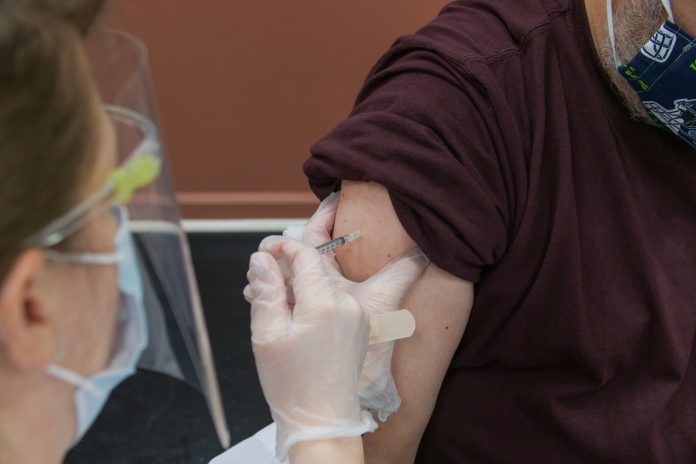
A shortage of Pfizer-BioNTech and Moderna COVID-19 vaccines is forcing the provincial government to alter their distribution plan. Dr. Bonnie Henry attributes this to delays in production and delivery. This has forced health officials to extend the time period between each dose. Previously, Pfizer’s doses were administered 35 days apart, but have now been extended to 42. 

According to Global News, health officials were told that the shortage of vaccines experienced in January is expected to continue into February. In the Vancouver Sun, Henry said she is extremely concerned. “We do not have enough vaccine[s] to protect everybody who needs our protection right now and we are not going to get that until a few weeks on.”

On January 26, 2021, the First Nations Health Authority (FNHA) put out a statement noting that the “global delay in receiving vaccine doses from Pfizer may affect the start date of some vaccination clinics in British Columbia First Nations communities.” While the FNHA primarily received the Moderna vaccine because it can be stored at a higher temperature and administered in rural areas, the statement notes that “in some regions, the regional health authority has provided Pfizer vaccines to support community clinics.”

Indigenous communities, residents and staff of long term care facilities, and health-care workers are priority groups in phase one of BC’s rollout. On January 27, 2021 the BC Center for Disease Control (BCCDC) website reported that starting in mid-February they plan to be ready  for phase two — where seniors aged 80+ and Indigenous seniors aged 65+ — will be vaccinated. However, BC Nurses’ Union president Christine Sorensen told the Vancouver Sun that she understood that phase one would be completed by the end of March. 

CTV News stated that Health Canada may be able to approve a third vaccine, AstraZeneca, by mid-February with hopes to receive 20 million doses. They also report that Canada has pre-ordered 10 million doses of the Johnson and Johnson vaccine, pending approval, with the potential to receive 28 million more. The Johnson and Johnson vaccine only requires a single-dose.

The Government of Canada reported that as of January 21, 2021 British Columbia had distributed 144,550 vaccines. They also noted that the total number of vaccines distributed across Canada is 1,119,225 — largely to health-care workers, adults in Indigenous communities, and long-term care home staff and residents. 

For more information on Canada’s Immunization Plan, visit the Government of Canada or the BCCDC website. 

Melania Trump does not deserve a redemption arc

1
The First Lady should not be the first to have our sympathy. Photo courtesy of Andrea Hanks via Wikimedia Commons

Since the Trumps’ glorious eviction from the White House, a lot has changed. Dogs are in the White House again, Biden has reversed the transgender military ban, but for some strange reason, people are still trying to defend Melania Trump. This defense ranges from celebrities like Chrissy Teigen praising her fashion on Twitter to The Hill publishing a piece on how she “deserved better.” 

Let’s get this straight: Melania Trump is not a victim here. She is an adult woman married to an authoritarian. It doesn’t matter that the media says it might be a transactional relationship or that she is gearing up towards divorce, she is still choosing to stay in the relationship. She stood by for four years as her monster of a husband let hundreds of thousands of Americans die of COVID-19, separated children from their parents at the border and put them in detention camps, and incited a deadly riot on the US Capitol. At best, she is a bystander. At worst, she is complicit.

At best, she is a bystander. At worst, she is complicit. 

We also cannot forget that she is her own person outside of her husband with her own beliefs. She is a “birther,” someone who believes that Barack Obama forged his birth certificate and was not eligible to be the president. She only believes sexual assault allegations when there is hard evidence. The woman whose fashion choices people are praising is the same woman who wore a jacket that read “I really don’t care, do u?” while on her way to a border detention facility.

Melania Trump could not be more clear about her viewpoints, and yet she garners sympathy. There have been plenty of memes of how uncomfortable she looks around her husband, and even a once-trending #FREEMELANIA hashtag, but what for? It doesn’t matter if her relationship with the former president is for appearance and nothing else, she still makes it a point to stand by him. It’s easy to paint her as a victim; white women, throughout all of history, have been seen as docile, virtuous, damsels in distress. But while Michelle Obama had to endure countless criticisms when her husband was president, Melania is viewed as an innocent person trapped by her big, bad husband. 

Now that she’s left the White House, people are pushing for her comeback. They’re pointing towards the good she’s done, like speaking out about racial harmony once, and . . . that’s about it. But as America moves forward with a new administration into a new era, it’s important not to let Melania Trump continue to play the victim. Terrible people can have good qualities. That doesn’t mean they should be praised for them, or, god forbid, that their actions should be forgotten because they have a single redeemable trait. And that certainly doesn’t mean they should have a platform — especially right after their power has been rightfully stripped from them.

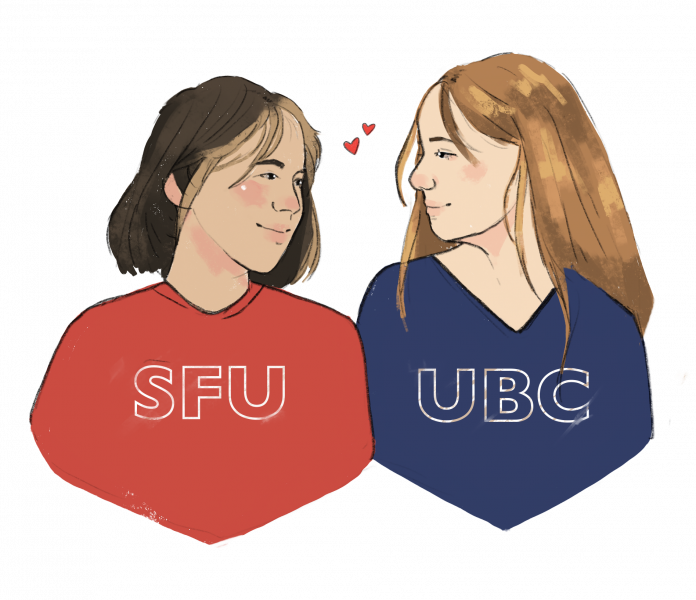
SFU x UBC: a forbidden love

0
ILLUSTRATION: Shaheen Virk / The Peak

Vancouver’s January air struck through the bones, the same as always. That is to say, it was cold, but if you expressed this to anyone outside the Lower Mainland, they’d laugh at you. 

She pulled her scarf tighter and, with numb fingers, sent her fifth text in as many minutes. 

You’re 20 minutes late now. 

It was embarrassing, but being here hit a nerve. The sun was on its way out, its scarlet rays peeking through the stationary SkyTrain cars across the street. Soon even that would be gone, and she’d be alone in the dark, in the middle of nowhere. 

And then she heard her. “Oh my gosh, sorry, I missed a bus on the way back from lecture.” 

SFU didn’t even turn around. “That wouldn’t be a problem if you just let me meet you on campus, UBC,” she muttered. 

UBC either ignored the aloofness, or didn’t notice. She joined SFU on a bench by the bus stop, sidling up beside her. 

“You know this is how things have to be, Si,” she said, smiling almost apologetically. Her tone was soft, but she still snuck in a note of force. Classic UBC. “We have to be careful about who sees us.” 

SFU scoffed. “Are you still burned over what happened last spring break?” 

“UVic just about saw us holding hands!” UBC shot back, her eyes wide. “He would’ve told everyone. And you know how our parents would’ve reacted. My mom has a bumper sticker that says ‘Proud UBC Parent’ on her Tesla, for goodness sake. I’m sure yours are just as loyal.” 

SFU’s parents would be overjoyed if she brought anything with a pulse home. It’d be taken as proof her classmates not only existed, but were more than a bunch of raccoons in trench coats. She tried that one already. The options are slim on a commuter campus, unfortunately.

“We really should talk about things, Bee,” SFU said out loud finally.

UBC poked her in the ribs. “Okay, I get you’re a communications major, but—”

“Communication, singular.” 

“Wow, such a difference,” UBC teased, leaning in closer. Even in the cold, she was a beacon of warmth, her own little hearth. SFU leaned away: she didn’t trust herself not to melt. She gets a McDonald’s within walking distance of her and she’s this charming? 

“Do they, like, remind you guys to talk to each other because you’re stuck on that mountain all the time?” 

SFU rolled her eyes. “You’re so pretentious.” 

“And I’ve earned that!” UBC exclaimed, a mischievous grin on her face. “Go on, Si, tell me: who’s the number one university in BC, again?” 

“Who’s the most comprehensive university in Canada, according to MacLeans?” SFU shot back. 

UBC groaned. “What does that even fucking mean?” She prodded SFU again, so hard it actually kind of hurt. Under all the blouses and cardigans, she was buffer than she had any right to be. Probably thanks to carrying all her stupid overpriced textbooks. “This is why I can’t take you back to my parents, you know.” 

“That’s why?” SFU barked out a laugh, all bitterness and no humour. “I thought it was because I’m not from your school. You know, we aren’t even that different. You’re from an upper-class Vancouver suburb. I’m from an . . . almost upper-class Coquitlam suburb. Well, technically Burnaby but, like, the lines kinda blur — um, yeah. We both spent all of high school overachieving and being the best just for no entrance scholarships. A couple years from now, we’ll both be in crummy studio apartments, digging our way out of debt.” She was out of breath by the last sentence. She hadn’t even known all those feelings were writhing around in her. Probably under all the Zoom fatigue. 

For a long time, UBC just stared, digesting her words. SFU got the feeling she wasn’t used to being disagreed with. She was the top — uh, on top of things all the time.

Finally, and rather grudgingly, she said, “Yeah, I guess I could’ve taken to someone like Douglas, huh?” 

“Hey, don’t knock Douglas!” 

UBC snickered. “I thought we agreed I could have my superiority complex as long as I didn’t use it on you.” 

God. They had agreed to that, hadn’t they? SFU pinched the bridge of her nose. “What do I see in you?” 

“You see what I am: the best.” 

“Modest, too,” SFU muttered. “You’re such a jackass.” 

UBC’s head rested on SFU’s shoulder. “Yeah, but I’m your jackass. You love me.” Her hand slipped into SFU’s, their fingers intertwining. “You know, if you’re so hellbent on being open like that obnoxious Convocation Mall of yours, how about a real date?” 

“A real date? What, a UBC engineering party where I’ll never see you again among all the Christophers and stock market talk?” 

“NO!” UBC said, her life flashing before her eyes. “We’d have to go somewhere cheap, because I just paid tuition.” 

“You did? Or your parents did?” 

UBC glared up at her. “You’re literally no different.” She perked up. “Hey, what if I took you to my dorm? You deserve to see what an actual university campus looks like.” 

“We have three campuses, actually!” SFU objected. 

“Oh, please. That Silent Hill looking hellscape? And is SFU Surrey even real?” 

“Geez, Bee, Silent Hill jokes stopped being funny years ago. Stop living in 1908.” 

Snow began to fall from above, light as a kiss on SFU’s bare skin. 

“You know,” SFU said, “I could show you all the places they’ve filmed stuff. Because apparently our campus is a dead ringer for sci-fi dystopias. So . . . your place this week, and mine the next?” 

UBC smiled, and suddenly the cold meant nothing. How could it, when she looked at her like that?

Board Shorts — January 15, 2020

0
Image: Irene Lo

The Board takes action to reform the temporary pass/credit/no credit grading system

SFU administration recently announced that they are introducing a new, temporary pilot grading system: pass/credit/no credit (P/CR/NC) for the Spring 2021, Summer 2021, and Fall 2021 semesters. University Registrar and Executive Director, Student Enrolment pro tem Kathryn Verkerk noted in her email to students that while not all details had been finalized yet, they are aiming to give students autonomy over which courses they want to use this grading scheme for up to 12 units. However, students are limited to choosing program electives and not required courses. 

The SFSS Board discussed that they felt this system was flawed. Student senate members had introduced a motion to “reinstate the original pass/fail grading scheme that was used as an emergency response to the emerging coronavirus pandemic back in March 2020,” as noted by VP University Relations Gabe Liosis. He said that “Since then students have been calling on SFU to bring back this grading scheme [ . . . ] up until about a few weeks ago these calls were largely unheard. And so a motion was put forward to senate by students senators to try and bring it back.”

Liosis noted that the SFSS Board has heard feedback from students that the grading system only being available for electives may present some problems for students. “There are a lot of questionable components to this new grading scheme that are really frankly confusing and will present logistical issues going forward,” said Liosis. 

VP Finance Corbett Gildersleve questioned whether this system will be applicable for students in general studies programs or students with undeclared majors. Liosis added that this may also present a variety of issues for students that will use this grading system and then potentially change their majors in the future as using that option for an elective may now become a prerequisite.

The system works by having students request alternative grading prior to the last day of class. At that point they are assigned either a pass, credit or no credit. 

System breakdown:

  • Pass is where credit is awarded but CGPA is not affected for a grade that would otherwise be above a C-
  • “Credit” allows credit to be awarded and CGPA still is not affected for a grade that would otherwise be below a D. However, students may not use courses with a “credit” grade as a prerequisite for other classes. 
  • The “no credit” option is awarded to students who have failed the class but it does not affect their CGPA.

Liosis noted that while at the Senate meeting, SFSS Chair Osob Mohamed “attempted to move an amendment to expand the scope of the grading scheme to all courses not just elective courses, however, that amendment failed.”

This prompted Liosis to bring forth a motion to the SFSS Board to direct all faculty representatives to speak with their respective faculties about the current grading system. He reported that in the memo discussed at the Senate meeting, it was indicated that each program is permitted to “expand the scope of the grading scheme within their program.” 

“What I believe is an important next step is working with individual departments and faculties to try and do this at a much smaller level because clearly it did not work at the institutional level,” said Liosis. 

The Board voted unanimously to call on individuals departments to encourage expansion of the P/CR/NC grading system. 

The Board received a presentation from MeaningfulWork

CEO of MeaningfulWork, Raaj Chatterjee, discussed the potential for the SFSS to use their tech systems. MeaningfulWork is an online platform supported by the SFU Coast Capital Saving Venture Connection that “matches skilled corporate employees with nonprofits and charities for volunteering.” 

According to Chatterjee, it is difficult for students to get involved with campus clubs and it is time-consuming for clubs to recruit the right people for their initiatives. He told the SFSS Board that their program can aid students in figuring out their goals and career paths.

Their platform works by having students register with their information and interests. Clubs also register with the website and outline what positions they are currently looking to fill. “The idea for this hub is to match students to club opportunities that align with their skills and their passions,” said Chatterjee.

Chatterjee noted that MeaningfulWork has done a beta project with over 10 clubs at SFU to test the website and they are hoping to work with the SFSS to expand the scope of their Opportunities Hub at SFU. 

The Board asked MeaningfulWork to develop a formal proposal to be considered at a later date. 

SFU professors raise concerns about snowbirds travelling during COVID-19

0
PHOTO: Freddy Castro / Unsplash

Many retired Canadians continue to participate in international migration to warmer climates such as Mexico or Florida during the COVID-19 pandemic. People who engage in this practice can be referred to as “snowbirds.” An estimated 375,000 snowbirds travel annually to the United States and Mexico to escape the Canadian winter. 

In an article by SFU professors Valorie Crooks and Jeremy Snyder, the authors describe how snowbirds may complicate the distribution of COVID-19 vaccines. “We need to be preparing ourselves for how we’re going to deal with the fact that people are going to access this vaccine abroad,” Crooks explained in an interview with The Peak. 

“Somebody, such as a snowbird, may access the first dose while they’re abroad, and then actually have to access the second dose upon return,” Crooks explained. This is because the Pfizer and Moderna vaccines both require two doses with 21 and 28 day intervals between each dose, respectively. Canadians meeting eligibility requirements are able to access the vaccine in American states such as Arizona and Florida. 

Canadian snowbirds are eligible to receive the vaccine if they are 65 years of age or older and able to produce proof of Arizona or Florida residency and legal identification. Canadian travel insurance may not cover the cost of the vaccine abroad, as it is not considered a medical emergency.

“Although many people aren’t aware of this, there actually is no standardized international language of medicine, and so the information you may be given when you access your vaccine abroad may not be what we’re looking to capture here in Canada,” Crooks stated. Based on this information, she emphasized that Canada and other countries must prioritize the creation of a “dynamic and thorough vaccine registry” to better keep track of health information across international and domestic borders.

Crooks and Snyder also noted that prioritizing snowbirds for the vaccine might be unfair to those who did not travel abroad. Crooks clarified that she does not think that “anyone is planning, necessarily, to access ‘dose one’ abroad and ‘dose two’ here,” but this could happen if there are changes in access to borders or if doses arrive later than expected.” 

For instance, the US/Canadian border closure that was implemented in March 2020 is an example of travellers changing plans abruptly to return to Canada. Due to the unprecedented challenges of the pandemic, Crooks stated that there could be potential for similar circumstances.

Snowbirds might experience a “different sense of risk and [ . . . ] health while they are abroad” as living in cold climates can trigger existing respiratory conditions, according to Crooks. While people with respiratory conditions are also highly susceptible to COVID-19, some snowbirds have stated they feel safer while travelling to warmer climates during winter months due to illnesses that worsen in cold weather. 

Although Crooks acknowledged that international retirement migration can generally provide people with positive health and recreational benefits, she warned that “there are going to be instances where people have complications following the vaccine.” Complications might include potential allergic reactions to the medicine and the capacity for travel health plans to cover this.

The Canadian Snowbird Association recently notified their members that all air passengers are required to get tested three days before their flight to the US departs, and must confirm negative test results with their airlines before boarding. Travellers who have received the COVID-19 vaccine are still required to present a negative test result before their flight. 

Crooks suggested that people who choose to travel abroad should carefully weigh their personal health risks with their family physician to “assist them with helping them to understand the implications of decisions to travel abroad.” 

More information on Crooks’ and Snyder’s article can be found online.

Skip the food delivery apps

0
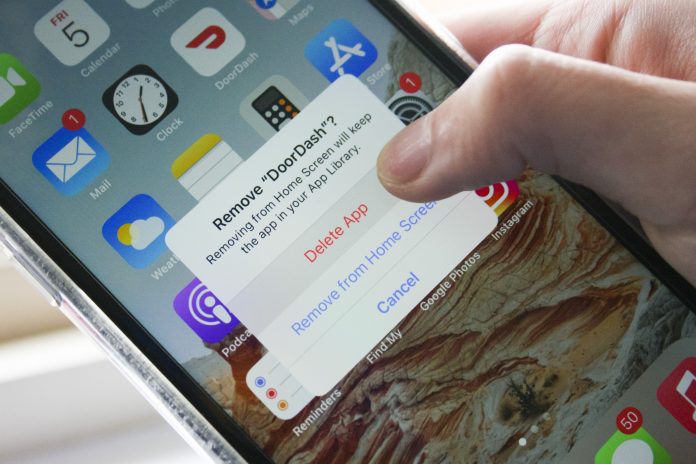
Support the food, not the delivery corporations. PHOTO: Gudrun Wai-Gunnarsson / The Peak

UPDATED 11/2/2021 to reflect the BC Federation of Labour’s stance on the provincial government’s fee cap.

Delivery apps: they’re great, right? They provide meals from a number of local restaurants, the food is already prepared, and they provide deals not available with normal takeout orders. That’s what the advertisements for apps like Skip the Dishes, Uber Eats, and DoorDash say, anyway. What they don’t talk about is how they classify their workers as contractors instead of employees, so they don’t have to provide them with any benefits. When the struggles of a pandemic are layered on top of that, what’s left is workers with COVID-19 exposure risk and little means of protection against it. To actually support food industry workers, we should avoid these apps.

The struggle of delivery drivers hasn’t gone completely unrecognized. This past December, the provincial government set a cap on delivery order fees at 15% at the request of the restaurant industry itself. The aspects of the legislation that protect “workers’ wages and tips” were praised by the BC Federation of Labour and recognizes “the critical role delivery workers have played during this pandemic.” However, these regulations are the most protection delivery workers have ever seen, with the apps themselves — worth collectively billions of dollars — refusing to give them any proper benefits. Most of these apps pay their workers based on the individual deliveries they complete and not an hourly rate, and that’s all that workers can expect from them. 

Research and action based on this new gig economy — filled with independent contractors jumping from job to job — is only emerging, but it’s needed as labour laws surrounding this concept are almost non-existent. Plenty of food delivery workers in the United States have taken this kind of action by expressing interest in unionization, much to the chagrin of the apps. A statewide referendum (Proposition 22) was even held in California that proposed to mandate Uber, Lyft, and Doordash to recognize their workers as employees. Had the companies not thrown around millions of dollars to defeat the initiative, millions of workers would have gained healthcare and the right to unionize. While similar legislation is yet to take place in BC, growing research is keen to call for it. 

A report by researchers with SFU’s School of Communication found that, in BC, food delivery workers are “particularly vulnerable to exploitative working conditions,” and even more so with the onset of COVID-19.

It’s not all hopeless, though. Drivers for Uber in Toronto have organized and have fought against their employer’s disputes with the Ontario Labour Relations Board. The same board also ruled that the now-defunct delivery app Foodora’s workers should be recognized as employees. This sets the legal groundwork for potential organization across the gig economy field and could give unions a leg up against their employers — something that needs to happen soon if their livelihoods are to be protected. 

But what can the average consumer do about this problem? For starters, ordering food doesn’t have to be through an app. Most local restaurants will offer delivery for a comparable cost just by calling them, and the same rush of not having to cook and clean is the same. To take things a step further, advocating for revised labour laws that protect gig economy workers and allow them to unionize is crucial. By recognizing gig workers as employees rather than contractors, that process can begin.

Opinions in Dialogue: Is SFU’s U-Pass system fair?

The U-Pass system has been controversial over the years. PHOTO: Gudrun Wai-Gunnarsson / The Peak

Over the years, there’s been a lot of conversation from students about the equity of SFU’s U-Pass system. Specifically about whether students who don’t want the U-Pass, and don’t meet the U-Pass exemption criteria, should have to pay for it. On the other hand, some students believe that having these harsh restrictions allow the program to fiscally function, and give students who actually need the pass an affordable transportation option. Now, when fewer students are using the pass, and students at schools like Kwantlen don’t have to pay for it without in-person classes, the topic is fresh on students’ minds.

Gurleen: Overall, I believe SFU’s U-Pass system is fair. It is one of the key services provided by the Simon Fraser Student Society (SFSS), the Graduate Student Society (GSS), Simon Fraser University, TransLink, and the Province of British Columbia. It is a necessary part of many students’ lives as they use it to travel to and from campus(es), get groceries, go to work, and see family or friends, to name a few uses. In addition, a 2019 referendum on the U-Pass passed with 86.78% of student respondents in favour of continuing the program until at least May 1, 2025. 

The current cost of a monthly transit pass is $98 for a 1-zone pass, $131 for 2-zones, and $177 for 3-zones. Depending on where students are commuting from, this can mean a savings of up to $538 per semester. It is certainly one of the cheapest options available for students, compared to driving, using a taxi, or a ride-sharing service. 

Dev: I agree. While the U-Pass system requires students to pay a per-term fee of $170, the alternative for students using public transportation is much less economical. Not to mention that several students pay for their tuition fees through student loans, bursaries, scholarships, and other forms of financial aid that aren’t out-of-pocket. If the U-Pass was not available to SFU students, many would be forced to take on public transportation as a personal expense. This can be an additional financial toll and stressor, considering all the external expenses that come with being a student and living through a pandemic.

I understand the frustration I’ve heard from other students who feel that it is unfair to be paying for the U-Pass when learning is currently remote. There may be less urgency for some students to have the U-Pass, but this does not exempt the fact that there are always students who are essential workers and students who rely on the U-Pass as the cheapest possible transportation option. 

Gurleen: Quite honestly, I believe it is a lifeline for many students. I can certainly understand the sentiment from students who, pre-COVID-19, drove to campus or found public transit more of a hassle than a benefit. But, in the end, it is a type of social benefit program. The universal model and strict exemption categories of the U-Pass program are what make it affordable and attainable for students. This is something that comes with being part of the student community. 

I would also add that because of the U-Pass, fewer students drive. This means less cars on the road, which has a positive impact on campus parking, traffic, and road conditions. And from what I’ve heard, parking is already a nightmare on campus.

As you mentioned, we are in a bit of a difficult situation with the current public health emergency and the majority of students studying from home. Those who have access to other forms of transportation have either reduced or completely avoided the use of their U-Pass. But, I believe the exemption criteria provided is, for the most part, fair. There was even an added exemption criterion for students taking classes remotely and living outside of Metro Vancouver due to COVID-19. This ensures that those who simply cannot use the U-Pass — not those who just don’t want to — are fairly exempt from the program. The one criticism I will add, with regards to exemption criteria, is the lack of options for individuals in a high-risk category for severe complications if diagnosed with COVID-19. 

Dev: Going off of your point of the U-Pass being a social benefit program, the program is inevitably not going to benefit every SFU student — particularly considering the current status of remote classes. But the benefits for those in need of the U-Pass outweigh the downsides for students who do not use it. Those who don’t need it can merely apply for an exemption or pay the semesterly fee.

For example, there are many places that our money goes towards besides actual tuition. One of these is the Student Activity Fee, which funds helpful student organizations like the Simon Fraser Public Interest Research Group (SFPIRG) and the SFSS Food Bank Program. Just like the U-Pass, many of us may not be using these services or engaging with these student organizations, but it is a price we pay to ensure accessibility and support for all students. It is also a given aspect of attending a university and being a part of a student community, as you mentioned. 

I also believe that the added U-Pass exemption is relatively fair, although I agree that there should be further exemptions in regards to COVID-19. Nonetheless, the current exemptions are also valid for folks with documented disabilities that prevent them from being able to use public transportation. While this only applies to students registered with SFU’s Centre for Accessible Learning (CAL), I do think that these exemptions make sense, especially considering that an exemption for simply not using public transit was not even available before COVID-19. 

Gurleen: Very well put, Dev. The last thing I would add is that we, as students, need to realize how important of a customer base we are for Translink. They have negotiated these contracts with a number of post-secondary institutions all across BC, but SFU has one of the largest student populations in BC. This is something to consider when the SFSS works again with Translink to negotiate our U-Pass contract. As always, student input is necessary on services such as the U-Pass. I would encourage all students to vote in referendums and provide their input on the program as the SFSS works on behalf of and for students. 

Dev: Precisely. The SFSS is not a separate entity from the general student body and while they do negotiate matters like the U-Pass on behalf of students, their decisions are based on our needs. That being said, when there are opportunities for students to communicate their concerns on U-Pass to the SFSS, they are free to express them and are encouraged to do so. Whatever the future outcomes for the U-Pass system are, I do hope that the SFSS is not put in a negative light for the work they do for SFU students.

Entertainment shouldn’t be the exception to pandemic caution

0
Why can Supernatural socialize outside when I can’t? ILLUSTRATION: Maple Sukontasukkul / The Peak

As a lifetime citizen of Hollywood North (aka Metro Vancouver) it’s a hobby of mine to stumble onto film and TV sets. I live by a park, one that’s seen everything from Sonic to Supernatural, and my mother and I love watching shows and pointing out film locations we recognize. Needless to say, when COVID-19 hit, the entertainment industry came to a screeching halt. 

So imagine my surprise when I see a dozen cars clumped together on my daily walk. Everyone’s wearing masks and there’s a testing site down the road, but it feels wrong when you know just how many cracks the virus can slip through. I know this more than most: my father got COVID-19 from a coworker despite being outdoors and never removing his mask. The gears of the industry started turning again even though the situation remains dire, especially in America where many filmmakers are from. This filming resumed in Canada as of last July, but its continuation just shows how inherently reckless this type of work remains.

Besides safety risks of filming, COVID-19 restrictions can also alter the final product. The last season of the CW network’s long-hauler Supernatural premiered after filming during COVID-19. Some of its disliked finale is blamed on social distancing guidelines, which resulted in the appearance of several strange, masked figures never seen before in the series. This lack of quality was a choice: instead of suspending production, they went on to make a product with limitations, resulting in these underwhelming villains.

This isn’t even half of it. Time-tested shows like The Bachelorette, Wheel of Fortune, The Conners, and even newcomers like Carnival Row and The Witcher, among countless more have chosen to brave these strange times. As it turns out Hollywood waits for nothing — not even a virus that has claimed the lives of 2.2 million people globally. Many other productions have been suspended or delayed, why can’t these?

I especially feel for the crew members of these productions who depend on this work to fund their livelihoods. They already go through so much, with their long, grueling hours of work and lack of career support.

I know these productions are probably doing their best to keep up with prevention practices by mandating quarantining, testing, and social distancing. But that only does so much, especially when it’s followed by hours of close contact on shooting days. Besides, it’s a well-established fact that what we watch affects how we perceive reality. When the entertainment industry starts moving again, projecting these illusions of normal life, we almost feel like it’s real. Even when it isn’t. 

To continue shooting now is inherently reckless, as things can go wrong even when all  precautions are followed. It can also change the end result of these productions, with pandemic guidelines limiting creative freedom. And worst of all, it normalizes the idea of close contact to viewers, and helps contribute to the illusion that the pandemic is “over.” But it isn’t, no matter what the entertainment industries are saying.