Home Blog Page 344

SFU Residence needs to strictly enforce COVID-19 guidelines

0
With more residents moving in, enhanced safety is important. Photo courtesy of SFU Guest Accommodations

Home to approximately 2,000 students, SFU Residence has faced challenges housing undergraduate and graduate students safely during the pandemic. Fall brings many SFU students to Residence, some returning and some starting their university journey. With so many people living in close quarters in a pandemic, it’s fair to question if SFU is taking required steps to ensure students’ safety and address concerns for their welfare. While SFU Residence does have community guidelines in place, there is a lack of strong implementation and information on what happens in case of an outbreak, which puts residents at risk.  

As the BC government’s guidelines change with the rise and fall of COVID-19 cases, SFU Residence needs to be on high alert and have stricter measures for the safety of its residents. While having mandatory proof of vaccination is great, being double vaccinated does not prevent transmission, which makes it more important to strongly implement community guidelines.

Currently, masks are required “in all indoor public areas in residences,” and as a resident, I have noticed Community Advisors (CA) going on routine rounds around Residence buildings to try to ensure that safety rules are being followed. However, I have still seen many students sitting in common areas with no masks and no social distancing. Other than the CA’s rounds, there is no effort to implement the mask mandate inside residence buildings. Appointing more CAs would help increase the number of rounds and aid the enforcement of the guidelines. 

Additionally, while the importance of cleaning high-touch areas is mentioned on their website, I have not observed surfaces being cleaned more than once a day. With restrictions being lifted on room occupancy limits, students are likely to have small gatherings in rooms or common spaces without social distancing, making it even more important to strictly enforce safety protocols. UBC has a limit of hosting up to five people in a shared space, and SFU should do the same. 

Although there is information provided on what to do if you are experiencing symptoms or have been in contact with someone who has COVID-19, lack of information about what will happen to the rest of the students in the event of an outbreak is concerning. 

Not having a set back-up plan can generate anxiety in students, especially since they are living away from their families, and affect their performance in school. Acadia University of Nova Scotia has a detailed plan, which includes training their residents on “preventing, recognising, and monitoring symptoms of COVID-19.” Similarly, SFU Residence needs to have a solid plan and communicate it clearly to all residents, as soon as possible.

With COVID-19 rising in BC, it is imperative that SFU Residence ensures better implementation of its community guidelines and has a clear contingency plan in place.

An overview of the major Canadian parties’ platforms

0
It’s important to check out each individual party's platforms yourself, but for those busy university students we created this quick summary. PHOTO: Gudrun Wai-Gunnarsson / The Peak

On August 15, 2021, Prime Minister Justin Trudeau announced the next Canadian federal election will be on September 20, 2021. We break down each major parties platform to help you make an informed decision. 


Liberal Party:

To support the COVID-19 vaccination rollout, Prime Minister and Liberal Party leader Justin Trudeau promises to implement proof-of-vaccine credentials, mandatory vaccination for travellers, and booster vaccination shots. By offering provinces and territories a $1 billion COVID-19 Proof of Vaccination Fund, the Liberals aim to support the launch of vaccine credentials throughout Canada for non-essential businesses and public places.

To address accessibility and affordability for Canadian mental health services, the Liberals hope to establish a three-digit suicide prevention hotline and provide specialized services for Indigenous peoples to address these concerns. Similarly, they plan to improve the health-care system by hiring more staff, reducing surgery waitlists, and increasing online and rural health services.

In their election campaign, the Liberals also feature several projects to promote climate action, such as funding research on Canada’s freshwater and investing $1 billion to conserve lakes. Through new legislation, Trudeau pledges to reduce plastic waste by mandating manufacturers responsibly dispose of plastic materials and require all plastic packaging to be 50% recycled plastic by 2030.

They also outline various initiatives to provide Canadians with affordable housing, such as their rent-to-own program and new First Home Savings Account, which “will allow Canadians under 40 to save up to $40,000 toward their first home.” Through the rent-to-own program, the Liberals intend to boost tenants’ chances of buying a home: “The landlord must commit to charging a renter a lower-than-market rate [and] commit to ownership in a five-year term or less; and proper safeguards will be in place to protect the future homeowner.” Similarly, they will adjust the guidelines for the First Time Home Buyer Incentive to offer homeowners flexible payment plans.


Conservative Party:

Erin O’Toole, the Conservative Party leader, plans to improve the financial well-being of Canadians through an increase in the Canada Workers Benefit and Employment Insurance sickness benefits, creation of a “Super EI” as a temporary solution for potential recessions, and by requiring large companies to have employee board representatives. He also promises to “invest $250 million over two years to create the Canada Job Training Fund.” Through this fund, the Conservatives aim to make job training more accessible to unemployed and marginalized Canadians, which they say will help small businesses and sectors struggling financially.

The Conservatives will also support families by reducing the costs for banking, food, housing, internet access, and mobile phones. One affordable housing project their campaign features is their promise to “build 1 million homes in the next three years.”

In their plan for future pandemics, the Conservatives will invest in Canadian personal protective equipment, pharmaceutical companies, and vaccine research. In addition to preventive measures, they also will “develop evidence-based contact tracing systems.” 

To target various aspects of Canadian health-care, the Conservatives propose initiatives such as “[a] three-digit suicide prevention hotline,” a tax credit for mental health services, and greater funding for palliative care.


New Democratic Party (NDP):

Under Jagmeet Singh’s leadership, the NDP promises to increase affordability for cell phones, housing, internet access, and post-secondary education. To make post-secondary education affordable, they will forgive “up to $20,000 in student debt, end interest charges on student loans, and permanently [double] non-repayable Canada Student Grants.” Two NDP affordable housing initiatives are offering new homeowners flexible mortgage payment plans and a bigger tax refund through the Home Buyer’s Tax Credit.

Canadian health-care’s affordability and accessibility are two major concerns for the NDP. They say they will make health-care affordable through publicly funded dental care and pharmacare, among others. Similarly, they plan to reduce wait times, produce Canadian-made vaccines, and invest in health sciences research.

Regarding Indigenous communities, the NDP announced they would honour treaties and “fully implement the United Nations Declaration on the Rights of Indigenous Peoples and the Truth and Reconciliation Commission’s 94 Calls to Action.” One of NDP’s initiatives to meet this goal is the Indigenous National Housing Strategy, which will provide affordable and energy-efficient housing to Indigenous peoples.

To reform Canada’s electoral system, the NDP will adopt a mixed-member proportional representation system. They also plan to give citizens ages 16 and up the right to vote. 

Climate action is another important component of the NDP’s platform. They announced plans for several sustainable initiatives, such as enforcing a Canadian Environmental Bill of Rights, implementing green technology in public transportation, and investing in renewable energy sources.


Green Party of Canada:

Green Party leader Annamie Paul’s campaign is focused on sustainability. By investing in clean energy sources, ecotourism, and local farmers, the Greens intend to promote the economy without compromising the environment. Similarly, they will reduce fossil fuels for public transportation through investments in railroads, electric buses, and cycling.

Affordability is another key theme throughout the Greens’ platform. Under Paul’s leadership, the Greens plan to address poverty by creating social housing programs for the homeless and Indigenous people on and off reserves. They intend to reach their goal by creating a “culturally sensitive Housing First approach” for the homeless. 

To support post-secondary students, the Greens will provide free education, offer grants to graduate and doctoral students, and “adopt student debt cancellation programs for student debt that exceeds $10,000.”

The Greens will prioritize the health of Canadians by addressing the opioid crisis and the high costs of dental care and medication. For example, the Greens aim to introduce pharmacare and publicly fund basic dental care, especially for children with financial needs. They pledge to promote harm reduction projects, such as increasing supervised injection sites and enforcing tighter regulations on prescribed opioid medications.

They also plan to end on-reserve drinking water advisories by providing Indigenous communities with clean drinking water.

To revamp Canada’s current electoral system, the Greens propose implementing the proportional representation (PR) system. They predict electoral reform will increase voter turnout and increase citizen’s political literacy.


Bloc Québécois:

Bloc Québécois leader Yves-François Blanchet prioritizes Quebec’s interests by addressing “issues in areas such as Quebec sovereignty.” He promises more funding for Quebec’s child care. Blanchet also advocates for Quebec’s involvement in international treaties and the World Health Organization (WHO). Under Blanchet’s leadership, the Bloc will mandate the ability to speak French for Canadian citizenship in Quebec.

Their campaign features several climate action goals, including investments in Québec’s natural resources and exceed the Paris Agreement’s targets by redirecting “unspent money on the Trans Mountain pipeline to renewable projects, and compel provinces that have emissions higher than the national average to pay into a ‘green equalization’ fund to be distributed to provinces polluting less.”

The Bloc intends to make prescription drugs, housing, and health-care more affordable. To offset the costs of prescription drugs, the Bloc will call on Canadian pharmaceutical companies to reduce costs. According to CBC, “The Bloc has called on the federal government to increase its share of health-care funding to 35%t of its cost.”

They also hope to create an equitable hiring process for government employees. One way they plan to meet their goal is to implement resumes without names.

For Indigenous peoples, the Bloc will offer affordable housing, invest in Indigenous schools, and “replace the Indian Act with a set of negotiated nation-to-nation treaties.” 

Visit CBC News to review updated information on the major parties’ platforms. To compare the similarities between your political beliefs and the parties’ platforms, complete CBC’s Vote Compass questions. Go to Elections Canada’s website for student resources on voting.

Staying safe this cuffing season

0
Dating should be fun, and with these tips it can be. ILLUSTRATION: Alyssa Marie Umbal / The Peak

You’ve been swiping, liking, messaging, and now you’ve found your new potential boo. It’s time to go on your first date. Dating can be confusing, intimidating, or even scary. “Staying safe” on a date means a variety of different things to different people. For some, it’s about not having to fake an emergency phone call to get out of the date early. For others, it’s about protecting your physical health from COVID-19 and sexually transmitted infections (STIs). This article will outline a few safety tips for your debut back into the dating world. 

1. Talk with potential dates for a little while before planning a meet-up 

It can be difficult to read someone in only a few sentences — talking with potential dates for a little while can help you determine if they’re a good match for you. Then, if you decide they are, having pre-existing inside jokes and references can reduce that first date awkwardness.


2. Ask mutual friends

If you’re comfortable with and know some mutual friends pretty well, they can serve as personal references for your date. Mutuals can give you insight into this person, including any potential red flags or deal-breakers that haven’t naturally come up in conversation. This can save you and your potential date time and energy. Personally, asking mutual friends about someone has given me valuable insight into their personality and how they treat someone prior to my date 


3. Tell a trusted person what you’re up to 

Before I go on any date, I let a friend or family member know all the important details: where I’m going to be, when I’m going to be there, when I expect to be home, and who I’m going to meet. I’ll also update that person if the plan changes. If you find you’ll be moving around a lot, like going on a walk, turning on your location services is a good idea.


4. Establish an escape plan in advance

Your first date will probably go great . . . but on the off-chance it doesn’t, it’s important to have a way out. Maybe that escape plan includes you saying “Hey, I think I’m going to head home now, I have a few errands to run today.” Maybe it includes getting a friend to call you with an excuse to leave, like a fake minor emergency. Another excuse could be that you work early in the morning and need to get to bed early. Additionally, make sure you have your own way home. If the date doesn’t go well, you don’t want to be stuck relying on this person to take you home. Drive yourself, have a reliable friend pick you up, plan your transit route, or budget for a cab or Uber.


5. Meet for the first time in a public place

I think this is self-explanatory — people you meet on online dating apps are literally strangers. No hiking to secluded, forested spots. Instead, consider meeting in a place with lots of people. A coffee shop or a picnic in a public park are great date ideas.


6. Get on the same page about COVID-19 safety

If you have any preferences regarding vaccination status, the use of masks, and social distancing, this is something you should discuss with your date before meeting up to avoid any awkward surprises. It can be tempting to “go with the flow”. It can be even more challenging to implement boundaries with someone you are trying to impress. However, it’s important to advocate for your safety, comfort, and health. If you live with other people, be it your family or roommates, you may also want to check if they’re comfortable with you opening up your bubble to potential new partners. 


7. Get on the same page about safe sex

This first means figuring out what safe sex looks like to you. Does that include using a condom or dental dam?  Does this mean exclusively sleeping with one person? How often would you expect partners to get tested for STIs? What does “safe” oral sex look like? What does “consent” mean and look like to you? Lube? Birth control? Toys? Kinks? Then, see what your partner thinks about these topics. Talking about sex can be uncomfortable, but getting on the same page is necessary to avoid potentially confusing or scary situations. If you feel completely unable to discuss this with your partner, it may be an indication you’re not ready to have sex with them. 


8. Pick dates and activities within your comfort zone 

If the idea of hanging out in a bustling, crowded bar seems like a bad idea in this current health climate, then that’s okay! Plan a picnic or patio happy hour. If you’re unsure how you feel about sex on the first date, you’re not alone. There are a variety of activities and environments that allow you to get to know someone and feel close to them outside of sex. If going on a first date alone is anxiety-inducing, then maybe your single friend can help. See if a double date is a good option. First dates can already be pretty anxiety-inducing, so doing activities that feel unsafe or scary doesn’t benefit you at all. Sometimes it even helps to go somewhere you’ve been before or stake out where you’re going to meet before your date. If you’re in your environment and comfortable, that comfort and ease will be apparent to the person you’re with, and probably put them more at ease, too.


9. Take post-date precautions, if feeling sick or unwell 

This tip applies to both COVID-19 and STIs: if after your date, you notice symptoms associated with either, it’s important to discuss them with a healthcare professional. Get tested, and share any positive results with your partner so they can take precautions. The most common symptoms of COVID-19 include a fever, fatigue, and a dry cough. Different STIs have different symptoms, and some can be present with no symptoms at all, but common things to look out for include unusual discharge, pain when urinating, itching and rashes, lumps, blisters, sores, or warts. 


10. Post-date self-care

Dating can be fun and exciting, but it can also be tiring and nerve-wracking. After a date, it’s important to give yourself the time and tools to recharge and feel good. This may include talking to a friend or family member about the date, journaling, meditating, taking a hot bath, having a skincare routine, exercising, or just relaxing out on the couch with some Netflix. 

Strategic voting is an outdated way to use your vote

0
Your vote should go towards the party you believe in the most. PHOTO: Arnaud Jaegers / Unsplash

Strategic voting is what happens when people vote to prevent parties they don’t want elected coming into power, rather than voting by preference. Brock University labour studies professor  Larry Savage wrote, “For many anti-Conservative voters with NDP sympathies, that has traditionally meant voting Liberal in districts where the Liberals and Conservatives are competitive, but New Democrats are weak.” Social media promoting this line of thinking influenced me to vote this way in the 2019 election. But in reality, this isn’t very effective. And now, as we approach a snap federal election, it’s time to ditch this practice.

Strategic voting is harmful because parties like the Green Party or the New Democratic Party (NDP) often lose support as people fear they’re wasting their vote by choosing them. This may resonate with young voters who have viewpoints which align more with these parties, but feel as though they shouldn’t vote for them as they won’t get elected anyway. 

A poll conducted after the last election showed that one-third of Canadians voted strategically rather than for their desired candidate. The National Observer also states that, “of the respondents who had voted Liberal, 46% said they had considered voting for the NDP at some point in the campaign.”

Historically, strategic voting hasn’t proven to be very effective. During the federal elections of 2008, the Canadian Autoworkers Union (CAW) ran a campaign to defeat the Conservative party. Although the CAW targeted 40 districts and encouraged people to vote for Liberal, NDP, and Green candidates in them, few of these candidates won and the Conservatives ended up winning 32 districts.

There isn’t a guarantee that voting according to who you think has the most chance of winning will work. After all, your neighbours might have a different idea about candidates’ prospects of victory, which would undermine your choice. 

This strategy relies on every riding to make the same and most calculative choice. But your perception of how you think your riding will vote based on shared values may not be correct. For example, the Port Moody-Coquitlam riding elected a Conservative MP in 2019, and an NDP MP in 2015. The swing from NDP to Conservative — two very different parties — in just four years proves how difficult it is to predict how your community might vote. This change proves that agreeing on who to vote as a community is very difficult.

A more productive strategy would be to research what each party’s candidates are promising voters in their riding. For example, in the Coquitlam-Port Coquitlam riding, NDP candidate Laura Dupont specifically emphasizes her work in advocating for climate action, and her history on the Metro Vancouver’s Climate Action Committee. 

While Liberals are considered the safer choice over the Conservatives in my riding, the climate crisis is an important issue to me, so I’m watching to see which candidate’s platforms align most with my values. I can assess Dupont’s history and the actions she has outlined working in that committee to make my decision. This way, I can at least be assured my vote can make a difference, and add my voice among the polls in my riding. After all, voting for the “safest” candidates gives you less of a chance to have an MP that truly represents your values. 

It’s tempting to vote strategically with campaigns seemingly emphasizing they are your best bet for defeating the party you don’t want. What I’ve found important over the last few years is to vote for an MP you believe will follow through on their promises. Now more than ever, we need MPs to fight on our behalf for climate change, Indigenous issues, and the homelessness crisis. 

I helped elect Liberals in 2015 because I was afraid of a Conservative win, and chose to vote for the NDP in 2019 instead of the Green Party because I was more confident in the NDP party winning. In both situations, I chose to gamble on the potential of a victory. I was scared by the statistics that showed Conservatives were popular in my riding with a narrow 0.7% difference in popularity compared to the Liberals.

In our last provincial election, I voted for Green party elect Sonia Furstenau because I believed in her platform. While John Horgan took premier in that election, I don’t feel that I’ve wasted my vote. I’ve realized I would rather have my vote reflect the things I care about, than play a game of statistics with plainly unpredictable factors.

Ali Zohar on growing up in Bangladesh, family, and determination

0
A lot of Ali’s inspiration comes from his family. . . and cold showers. PHOTO: SFU Athletics

Name: Ali Zohar

Pronouns: He/Him/His

Major: Communication

Position: Defensive midfielder 

Favourite soccer player: Zinedine Zidane

Fun fact: Loves to watch anime


Four new players joined SFU’s men’s soccer team this season, including defensive midfielder Ali Zohar. From Bangladesh to Kentucky to Surrey, Zohar has demonstrated commitment and drive on the field, racking up several accomplishments — including being named the 2017 BMO Whitecaps Youth Player of the Year. After being benched with an injury for almost all of 2020, Zohar is back. The Peak caught up with Zohar right before his first official league game to get his take on confidence, family, and cold showers.

Editor’s note: Some answers have been edited for concision and clarity

The Peak: What does a defensive midfielder do during a game?

Ali Zohar: On the SFU team, they want me to help with the build-up phase, help the team, ticking, control the game and tempo, making plays from a deep position — I’d say is the best way to describe it. Get the ball, break up plays defensively, and pick up smart positions with and without the ball, get it moving, find forward passes, find my teammates in the opposition’s half. I’m the guy that connects with everyone. 


P: Could you walk us through what your soccer career has been like, from kicking a soccer ball for the first time to now?

AZ: I was born in Bangladesh. My family and I moved here as refugees. So, I would say I started kicking a ball here in Canada. I used to play back home on the street when I was very little, like seven or eight, but it wasn’t with a soccer ball. It was more like a flat volleyball or maybe a plastic ball or something. 

When I first came to Canada [ . . . ] I think in grade five, this kid saw me play at lunch and saw I was somewhat okay, and invited me to play on his team. His dad was the coach at that time. So, I went to the team and played there. 

I played with that team for a year, I went from bronze, silver, and gold — three different levels in one year. From there, I had a mentor. He’s like my soccer dad; his name is Jack Reddy, and he’s helped me with every step of the way, from when I started playing soccer in Canada until basically now. He mentors me and gives me advice. 

After I was done with that team, I went to play BC Soccer Premier League with Coastal FC 2000, won the provincials with them, and played for a year and a half. 

I went to play for Surrey United SC, and played there a season, then got called up for the provincial team and made the Whitecaps. 

From the Whitecaps, I got called up to play for the U15 national team at the age of 14. I also went on to the U17 team camp at the age of 15 or 16. I was named the 2017 BMO Whitecaps Youth Player of the Year, then had some opportunities to train and play an exhibition with the Whitecaps First Team. I was really grateful for my five or six years at the Whitecaps. 

I committed to Northern Kentucky University to play NCAA DIV1 Soccer, did two years there, was named in the Horizon League Fresh XI. But then I had surgery, in 2020, and I was out for all of 2020. 

Now I’ve finally transferred to come back home to play under coach [Clint] Schneider and [assistant coach] Kevin Harmse. That’s one of the main reasons I transferred to SFU, just knowing Kevin Harmse from when I joined the Whitecaps at the age of 13 or 14. Harmse was there for like six months, and I got to know him very well, he was a really good guy. 

He’s someone who played pro and I know I will learn a lot from him. We stayed in touch over the years. It made my decision to come to SFU easy. 

They have a really good playing style, and it suits me really well. I’ve been friends with most of [the guys] from when I started playing at a young age and I’ve stayed in touch. Throughout my journey, even until now, I have had so many friends, family coaches, teammates help me along the way.


P: Could you tell me about that injury you mentioned, if you don’t mind getting into it?

AZ: I went to Northern Kentucky University. My first year was in 2019. A month into the season, I basically tore my meniscus a little bit, and I kept playing because the season was so short and I didn’t want my first season to go down like that. I just went through the pain and kept playing for a month longer [which] made my knee even worse. 

There was a point where I had to stop because it was getting worse and with three games left before the season ended [ . . . ] we weren’t going to make the playoffs. The physio team in Kentucky decided it would be best if I rested and did rehab on that knee. 

I came back home during winter break in January, rested for that period, saw my own physio, and he was helping me with everything, doing rehab every day.

I went back to Kentucky in January 2020 and then I was just feeling good, just wanted to train every day, sometimes even twice a day plus a gym session on top, because I hadn’t trained for like three months. I think I came back too soon to training fully [ . . . ] I went to the field, kicked the ball the same way as I did the first time I injured it, I felt the exact same pain in my knee. At that moment, I called [my] physio right away. The next day I got an MRI and an X-ray, and they gave me the bad news that it was a really big tear. I had to get surgery as soon as possible, and so I got surgery on February 14, on Valentine’s Day. 

From then on, I was just recovering for the whole of 2020, and now I’m finally back. Healthy, feeling good, and excited to play for SFU.


P: That must’ve been really difficult, especially the second time. What kept you going while you were recovering? Was there a thought or idea that you were holding onto?

AZ: I think, for me, my motivation comes from my family. Seeing where we came from. It just makes me hungrier and hungrier, wanting to work even harder.


P: What has been your impression of the SFU soccer team thus far?

AZ: It’s a really good team. A lot of talented players with really good attributes and character, but I knew I was going to bring something different. I knew that this team could go really far with the talent they have, and the coaching staff is really good. I’ve watched the players play before, trained with them before, played with most of them growing up, so I kind of knew what it was going to be like and knew what kind of players they were. It’s a really good team that likes to play football. It’s a really good playing style, and the coaching is really good. It’s a really good set-up, and I’m so happy to be here.


P: Speaking of your coach, Clint Schneider, he has said you bring communication and leadership potential to the team — what’s the secret to being a great leader?

AZ: I don’t know about communication — because I’m not the best at it when it comes to on-the-field. I do communicate, but not as much as I should be doing in my position. [ . . . ] I just like to keep learning, analyzing, from everyone.

Leadership, I think it is almost a natural thing. There are leaders that lead by example, leaders that vocalize [ . . . ] I scream here or there, but I’m more of a leader that leads by example. Maybe like winning the ball in the air, making a good pass forward that breaks the other team down — I think that’s the type of leader I am. 


P: Which do you think is most important for an athlete: confidence or resilience?   

AZ: Every athlete has to be confident, they have to believe in their abilities. If they don’t believe in themselves, then why play the sport you love? I would say a bit of both, just believing in who you are and knowing your ability.


P: Where does your passion for soccer come from?

AZ: I’d say it’s my brothers — I have two older brothers, two younger brothers, and a younger sister. My two older brothers used to play back home in the village, so I used to walk to go watch their games. When we came to Canada, I got really into watching games and watching my favourite player [ . . . ] Zinedine Zidane. He was really good when I first heard about him, but I never got to see him until I came to Canada.


P: I’m noticing a theme of family — your soccer dad, your family inspires you — so would you say family is very important to you? 

AZ: Family is very important, the most important thing in life.


P: What is your pre-game routine?

AZ: It’s changed a bit in recent years, it also depends on what time the game is. If the game is in the morning, [I would] wake up early [ . . . ]  watch a game or two, have some breakfast, and head to the game. Before the game, I would listen to some nice RnB music, and relax [ . . . ] just calm my mind. I usually take cold showers most of the time. If it’s a game at like 7:00 p.m., then breakfast, watch some games or anime — just relax as much as I can. But there are times when you do think about it, so just know it’s normal, part of the game.


P: I’ve heard cold showers are good for you, but I’m not sure they’re for me.

AZ: I love a cold shower, I used to take cold showers like two to three times a day. It’s really good, plus it cools me down so much. For me, when I take a hot shower, I don’t feel like I’ve taken a shower. 


P: I guess you get used to it, right? Anyways, if you could give advice to younger athletes looking up to you, what advice would you give them?

AZ: I would say work really hard, do the extra work on the side when no one’s watching. A great mindset and mentality go a very long way. No matter how good you are, you can always work hard to get better. Growing up, I wasn’t technically or physically the biggest guy on the field, or the smartest player on the field — I had to work for everything [ . . . ] I’m still not athletically gifted, so I try to watch a lot of games and become smarter, analyze the games, learn from the game, put in the extra hour in the gym with my trainer, Gavin. It’s those small things that make a big difference as you get older. 

Nutrition is a really big thing — that is one of the most important things I didn’t have growing up. The Whitecaps tried to help me out with my nutrition plan, but I wasn’t disciplined enough [ . . . ] we eat different food at home than what some people eat — pasta, this, that. I grew up eating rice for breakfast, lunch, and dinner back home in my village. It was basically the same for most of my life. At the end of the day, nutrition goes a long way. I wish that was something I took care of when I was younger. There were literally times when I had a chocolate bar, or nothing for lunch, or just one meal throughout the day, and just went to a game.


P: Speaking of food, what’s your favourite post-game meal?

AZ: I love rice, and maybe steak, grilled chicken, shrimp or prawns, or baked salmon or pasta, or chicken alfredo, something like that. I love pasta and rice. Can never go wrong with that. 


P: What are you looking forward to in upcoming seasons and your future with SFU?

AZ: For the season, I’m just really excited to play my first game [ . . . ] We’ve played pre-season games and trained a bunch with the guys, and now I’m just excited to get on the field with these guys, y’know? I would say we’ve got really high expectations of ourselves for this year, got a really good group of players, talented players, good coaching. I think just seeing how far we go together as a team, game-by-game, and hopefully going all the way. 

We play a lot of top teams this season, which is really exciting, and we travel a lot, which is nice, too [ . . . ] My main reason for transferring to SFU was for me to go somewhere, professionally. I knew that if I came to SFU, this was like the perfect place to be a pro, to go somewhere, to be a pro. I just knew that I could learn a lot. Also get my degree at the same time, hopefully.

To read the rest of this interview, visit the-peak.ca.

 

An essay by someone who never read the book

0
Woman holds and bites pencil staring at laptop screen.
PHOTO: JESHOOTS / Unsplash

Frankenstein is about the monster Frankenstein who is created by a doctor, also named Frankenstein. Dr. Frankenstein puts together the monster and then shocks it with lightning. Like, a whole lot of lightning, to get Frankenstein to come alive and then celebrates by shouting “He’s alive, it’s alive!” 

Frankenstein is tall. Like really tall. Like if three children were wearing a really long trench coat, that would be the size of Frankenstein. And he walks all stiff because his joints are still getting used to moving.

When Frankenstein goes into town, the townspeople don’t like him. They are all like “Hey, you . . . you are all weird looking, and we don’t like that.” Then he sees fire and it scares him because fire is all hot and stuff.  

In the end, Frankenstein dies because the town did not like him and that made him sad. So he dies. From being sad. The book is about Frankenstein, but it is also about not being mean to people who are different. Being mean is not nice. 

Maybe Frankenstein would have felt better if he had another person just like him, a bride of Frankenstein or something. Then, there would be someone else in the world who looked like him and felt the same way he felt. 

What about Dr. Frankenstein? Why did he want to create this monster? Somewhere in chapter two, he said that he created the monster because he wanted to. He said something like  “Creating life will make me like a god, then I can be the best that no one ever was.” (I’m paraphrasing a bit here, but a quote like this was in the book, I swear.) Maybe he thought he was God? I’m sure this is up to interpretation so I am just going to say that yes, Dr. Frankenstein is God on Earth. 

If Frankenstein was a book written today, it would probably be about someone who likes jazz or something, and wears skinny jeans. The author of this essay thinks that would totally ostracize him from the community today. 

In the end, Frankenstein is a good book that I definitely did read. Five out of five stars. Can’t wait for Frankenstein 2: Electric Boogaloo.

Your SFU horoscopes September 13–19

0
An illustration of a girl with long flowing hair. Astrological signs and stars shine around her.
ILLUSTRATION: Marissa Ouyang / The Peak

ARIES: You’re a gas, but the things that fuel you might leave you a wreck. At least you’re driven, like the car that crashed into the pond. 

TAURUS: You might want to sit down for this . . . A case of plastic chairs found their way into the pond. Take a stand by bringing them to class. The three decent seats will be taken by the time you get there, anyway.

GEMINI: Bud, you’re balling, but I have something that’s right up your alley. Put a pin in it and go snatch a bowling ball!

CANCER: 1,000 goldfish live in the pond, not added by SFU. You are all of those fish simultaneously. Don’t be koi — dive in after your dreams but stay in a school.

LEO: You are, clearly, the koi fish that routinely eats cigarette butts. This is your sign to quit vaping all those milky mustard-flavoured nicotine pods. Or don’t, I don’t know your story.

VIRGO: Go puck yourself! Three hockey pucks have your name on them. Literally. Stop trying to play hockey on the frozen pond every year and find a normal hobby, like doing homework.

LIBRA: Know your worth, Libra! Some dumped pet fish in Burnaby can cost a fine of $250,000. Tell your ex you’re worth at least two fish, maybe even three.

SCORPIO: You’re a catch! Your own reflection shines through the murky waters and reminds you to reel yourself in and stop fishing for compliments.

SAGITTARIUS: Shoe la la! It’s a-boot time you reclaim those shoes from the pond. We all know you jumped in there as a dare. 

CAPRICORN: You’re exactly the person to annotate a book with “she should have kicked him in the strawberries” and it shows. Kick your internal dialogue in the strawberries and just enjoy a book for once.

AQUARIUS: Turtles definitely don’t belong at SFU. Join them in returning to natural habitats: basking in the sun, swimming in a swamp, and eating lots of bugs.

PISCES: In 2008, a “really boring” diary was found. I’d say you should ask for it back, but it’s probably long gone by now. Hey, at least someone read the soggy pages, right?

Reconnecting with Transit: A Return to Campus Student Webinar with TransLink

0
Expo line train on track
Diego Mazz/Unsplash

On August 27 and 30, SFU Ancillary Services and TransLink hosted Reconnecting with Transit: A Return to Campus Student Webinar with TransLink. At the webinar, Dave Lewin, TransLink’s senior advisor for public affairs, explained safety measures and the new technology they’re implementing to slow the spread of COVID-19.

At the start of the pandemic, there was a 83% reduction in commuters, but recently the daily number of TransLink users rose to 50% of the pre-pandemic amount. 

Lewin pointed out that decreased daily riders during the earlier stage of the pandemic reflected British Columbians’ transition to online school and work, cycling, and driving. With the vaccine rollout, restrictions are lifted, leading to an increase in ridership. If the vaccines continue to effectively reduce the spread of COVID-19, TransLink anticipates the total number of daily riders will reach 80% of the amount of pre-COVID-19 daily riders.

As part of TransLink’s Safe Operating Action Plan, they have implemented many safety measures for customers, including mandatory face masks, frequent cleaning, and social distancing. Bus drivers will also have a physical barrier between them and commuters. On the Transit app, TransLink launched a pilot program where commuters can preview the amount of empty seats on arriving buses. This aims to help commuters physically distance and choose if they want to wait for the next bus.

TransLink is helping in COVID-19 vaccine rollout by providing shuttle services to vaccine clinics, and specially-equipped buses as vaccination sites in partnership with Fraser Health. The Group Vaccine Shuttle Program will increase accessibility to vaccine clinics, mainly for vulnerable groups. At different vaccine pop-up locations, Fraser Health will accept drop-in appointments at their VAX buses.

Through their pilot program, TransLink will test copper coating, which is designed to reduce virus and bacteria’s lifespan on surfaces. According to Lewin, TransLink is “the first in North America to pilot copper coating on transit.”

Dr. Marthe Kenny Charles, a medical microbiologist featured in the webinar, explained the rationale behind the copper coating pilot.

“The viruses and bacteria don’t survive well on copper. As a matter of fact, copper kills it. We want to be able to harness that potential,” Dr. Charles said.

They also improved the new buses’ roofs and driver seats’ ventilation systems, so they “can provide upwards of 10 fresh air changes per hour.”

Lewin explained TransLink will be “tracking and monitoring how the travel patterns changed during COVID-19, and we’ll be using those findings to really allocate that service to the busiest routes to hopefully reduce that crowding.”

In September, some major bus routes and SeaBus will have more frequent service to help students commute to campus.

The West Coast Express, which had trips cancelled during the pandemic, will resume full service between its Mission and Waterfront destinations beginning September 7. 

TransLink also implemented new safety measures for bikers. Throughout Metro Vancouver, they set up bike racks and bike lockers. TransLink will also be releasing maps outlining possible, safe bike routes.

For more updated information on TransLink’s services, visit their social media or website, www.translink.ca. To plan your commute to campus, visit TransLink’s trip planner. Download the SeeSay mobile application to stay updated with transit announcements, crime reports, and more. Subscribe to text or email notifications for service disruptions via TransLink’s website.

SFU professor marks one year of civil disobedience against TMX pipeline expansion

0
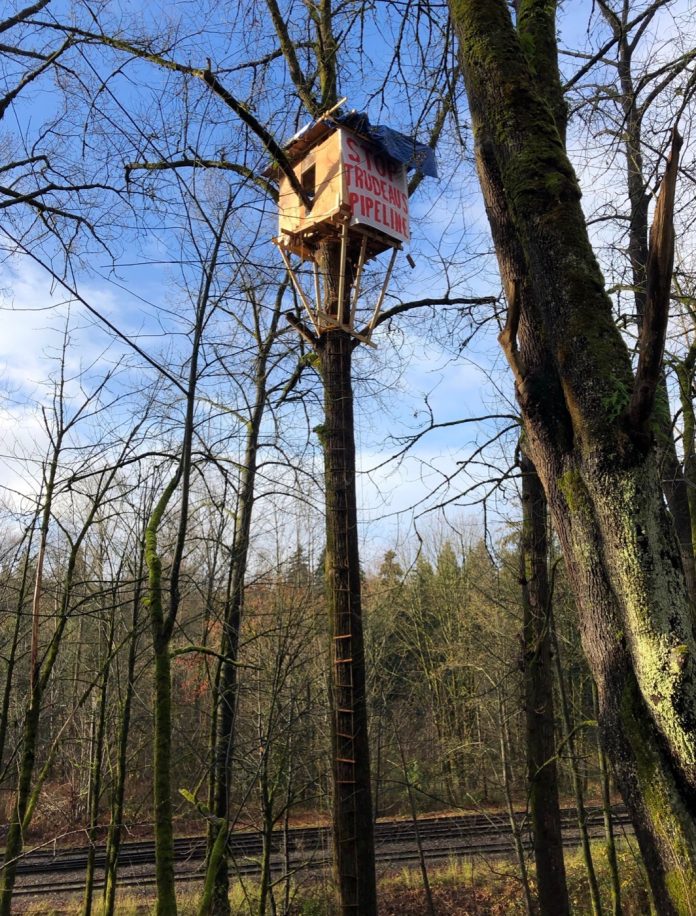
A treehouse high up with poster on right hand side. Red words on poster: "Stop Trudeau's Pipeline"

On August 3, 2020, SFU health sciences professor Tim Takaro and the Protect the Planet Stop TMX (PPST) coalition occupied the forest canopy of Lost Creek, in the Brunette River Conservation Area. They plan to delay the pipeline expansion project. Over a year later, Takaro is among the protestors building multiple treehouse camps for protestors to occupy. 

“We will be up there as long as needed. We’ve built several other houses [ . . . ] and tied together a hundred trees. We’re not going anywhere. We have thousands of people that will come out if they try to take us out,” Takaro said in an interview with The Peak.

For the past year, Takaro has been living in these treetop structures alongside other members of PPST aiming to delay the Trans Mountain Expansion Project (TMX). They hope to eventually see the cancellation of the project. It was originally set to be completed in 2019, with the most updated “in-service” date set for mid-2022.

The project has faced public opposition, environmental activism, and “unresolved Indigenous consent.” In August 2018, the Federal Court of Appeal ruling cancelled the 2016 federal approval of the pipeline, requiring the federal government to revise and resubmit parts of the proposal. 

On their website, Trans Mountain stated they “will have ongoing conversations to further understand and address the concerns of Aboriginal communities, and ensure their members are able to share in the success of the Project.” So far, Trans Mountain has signed a total of 59 Agreements with Indigenous communities across Alberta and BC. 

Prime Minister Trudeau defended the government’s decision to invest in the pipeline expansion in 2019, “We need to create wealth today so we can invest in the future. We need resources to invest in Canadians so they can take advantage of the opportunities generated by a rapidly changing economy, here at home and around the world.”

“The Prime Minister said it’s in the national interest, and it absolutely is not,” said Takaro, “[It’s] not in planetary interest, and it’s not even in the interest of Canadians since there are no jobs on a dead planet.” 

PPST is working with the support of Chief Rhonda Larrabee of the Qayqayt Nation and Chief Leah George-Wilson of the Tsleil-Waututh Nation to protect the Brunette River conservation area. 

Takaro initiated a parliamentary petition on July 7, which was set to be presented to the House of Commons. Takaro and PPST gained over 5,500 signatures within a month. The presentation of the petition was cancelled when Prime Minister Trudeau called the election. 

“He pulled the petition to avoid any embarrassment,” Takaro said. He and PPST will resubmit the petition when there is a new government sitting.

“Civil disobedience is required,” said Takaro, “We’re in a climate crisis. Our leaders are sleepwalking through the crisis and pretending like they’re doing something when they’re not doing anything. So that’s a time when you have to take to the streets — civil disobedience works [ . . . ] It’s sometimes required, and we’re in that time.”

Teaching Support Staff Union and faculty respond to SFU health guidelines

0
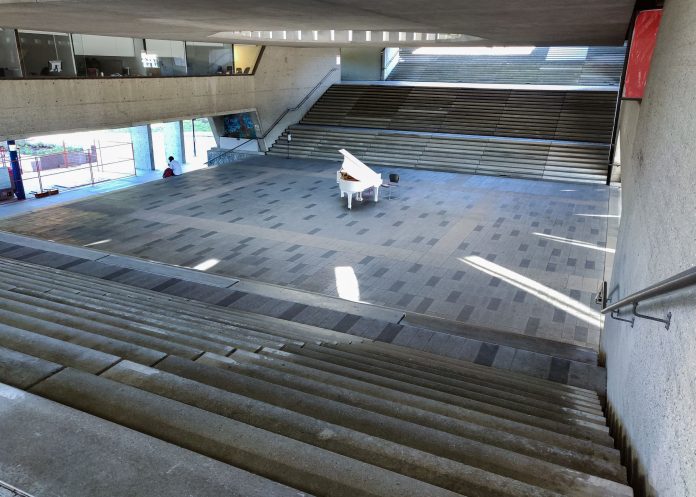
Staircases leading up to Convocation Mall from the lower bus loop

On August 24, the BC Provincial Health Office (PHO) issued an updated COVID-19 guideline for post-secondary institutions. The revised guidelines include a mask mandate for return to class, but students will not be required to be vaccinated to attend in-person classes. 

The Peak spoke to Katie Gravestock, chief steward of the Teaching Support Staff Union (TSSU) and Dr. Scott Lear, a professor in the faculty of health sciences, about their thoughts on the new guidelines. 

In early August, the TSSU endorsed an open letter to the Ministry of Advanced Education and Skills Training, calling for stronger back-to-school guidelines for post-secondary institutions. The letter had over 800 signatures of support. It did not receive a response from the Ministry or school administration.

“However, after months of denial, the government did a complete 180 and instituted both mandatory masks for all indoor settings and proof of vaccination on campuses,” said Gravestock in an email interview. 

“While Dr. Bonnie Henry won’t admit it, I think this was because our demands gained a lot of support from other unions, student groups, faculty, community members, and media who recognize the importance of the precautionary principle.” 

However, both Gravestock and Dr. Lear expressed concerns despite the updated guidelines. 

“The updated guidelines do not go far enough,” wrote Gravestock. She emphasized the importance of ventilation on campus to prevent spread of COVID-19. 

“I want to reiterate my serious concerns around ventilation. SFU has been working on a ventilation audit over the summer but this process has been slow and inadequate,” wrote Gravestock. 

The American Society of Heating, Refrigerating and Air-Conditioning Engineers (ASHRAE) recommendations are the standards being implemented in schools in BC. SFU keeps a list of rooms that meet ASHRAE standards on its website. As of September 9, there are still rooms in the process of assessment for ASHRAE standards on campus. An email update from vice-president, academic and provost Catherine Dauvergne clarified that “classrooms that were unable to meet ASHRAE standards have been pulled from scheduling.”

In a phone interview with The Peak, Dr. Lear discussed his concerns for the back-to-campus plan and potential steps SFU could take to mitigate those concerns. 

“I worry that with the self-declaration there will be people who are unvaccinated who won’t declare that and so then they won’t get rapid testing done and if that’s the case, and if it’s a sizable number, it will actually create a false sense of security on campus,” Dr. Lear said. The self-declaration of vaccination for staff, faculty, and students was announced by president Joy Johnson on August 26. 

“I would like to see [ . . . ] our leadership being more vocal in protecting the SFU community, from the students to the staff to the instructors and faculty. [I] haven’t seen our president, or other senior leadership actually advocating for that in the public,” said Dr. Lear. “SFU should be fighting for more autonomy in setting their own rules.”

According to Dr. Lear, post–secondary institutions are not allowed to set guidelines beyond that of the provincial health office. 

“The province has basically handcuffed the post-secondary institutions from mandating their own public health measures,” Dr. Lear said. 

When asked about why vaccines are mandatory for faculty and staff and not for students for in-person classes, Dr. Lear suggested it could be due to how SFU has authority over the staff they hire, and drew a metaphor of SFU being a bank and faculty being its employees. 

“The students may be more similar to customers of the bank,” Dr. Lear explained, pointing to the lack of authority SFU has over the student body.

Dr. Lear also raised concerns over Dr. Bonnie Henry’s comment over not wanting the vaccines to be a barrier to access education. 

“I have a problem with that type of comment because it comes across that this is an equity issue [ . . . ] I would see the equity argument if the vaccine has been distributed inequitably [ . . . ] There have been pop-up clinics already started at SFU so it’s not that it’s hard to get the vaccine. So that, to me, isn’t a strong argument why students shouldn’t be vaccinated,” Dr. Lear said. 

He also pointed out various barriers that he thinks prevent students from accessing school in the fall.

“There’s cost, there’s actual physical accessibility [ . . . ] because the main model is in-person, so that excludes a lot of people [ . . . ] those are what I would say are more problematic equitable barriers than having a vaccination.”

When asked about how SFU can improve its return plan, Dr. Lear suggested flexibility in online options for classes is something to consider.

“In the next few weeks, we’re going to see [ . . . ] massive amounts of people getting together. We can probably expect cases to rise even further as a result of that. So it would be great if universities could have that flexibility, if SFU wasn’t mandating that course instructions have to be on-campus and [ . . . ] offering online options where appropriate,” Dr. Lear said. 

Students who wish to consult SFU’s return to campus plan can do so at SFU’s website, along with the provincial restrictions website.