Home Blog Page 341

We need to bring sex ed to post-secondary — Part Two

0
Sex education should be mandatory for all students. PHOTO: Cottonbro / Pexels

Content warning: mention of sexual violence in fourth and fifth paragraph

Previously, I discussed how sex ed in high school can be terrible, with many students receiving fear-based, inaccurate, and limited lessons. Sex ed at SFU should focus on prevention of STIs and sexual violence, and be designed with marginalized groups in mind. It should also be offered in multiple formats to increase accessibility. 

It is crucial that sex ed provides students with information on STIs to reduce the stigma surrounding them. The Sheaf reports, “Canadians aged 18 to 24 are at the greatest risk of contracting [STIs].” Despite this, studies show young Canadians aren’t worried about getting STIs because they’re unaware of the risks, chances of asymptomatic infections, and symptoms. 

The physical symptoms of STIs include sores, rashes, pain, or discharge in the affected areas, and long-term complications include infertility, consistent pain, inflammation, and more. Those living with STIs may also experience depression and anxiety. Comprehensive sex education would help prevent the spread of STIs.

Sex education could partially address the problem of sexual violence on university and college campuses. A study on sexual assault in American universities noted first-year students are the most vulnerable to sexual assault due to age and inexperience. 

Many universities, including SFU, have been critiqued for their handling — or rather mishandling — of sexual assault on campus. That is why curriculum on enthusiastic consent, rape culture, toxic gender expectations, and healthy relationships (to name a few potential topics) should be mandatory in post-secondary.

When designing such courses, educators should be aware of the barriers some young people may face when it comes to learning about sex, and assess how to organize the lesson in a impactful way. Students who are queer, have physical or learning disabilities, or are from varying religious or cultural backgrounds, should all be considered when planning inclusive sex ed. For example, ActionCanada outlines what young people want to see in their sex ed, including information on healthy relationships, LGBTQIA2S+ inclusive content, and discussions of sex as fun and pleasurable. 

As for the methods of delivery, SFU can learn from the University of California, Berkeley, which has a “student-run course titled Sex 101: Topics in Sexual Health that students can enroll in just like any other academic class.” Since being introduced, the class has become incredibly popular for all age groups, from freshmen to seniors.  

At SFU, sex ed could take many forms: a synchronous or asynchronous course taught by a sex educator, a Canvas course (like the plagiarism modules we all do), or a workshop (like the resume and cover letter workshops for co-op).

Different forms have different strengths and weaknesses. Asynchronous courses and Canvas courses are more widely accessible, and some students may feel more comfortable learning sex ed privately. However, they’re less hands-on than synchronous courses, which may be more engaging and could allow for real-time dialogue and discussions. Students can ask questions, learn from others’ questions, and create safe spaces to share experiences and concerns among peers. But scheduling this for thousands of students is a concern here.

Combining strengths from multiple forms may be a good first step for SFU. This could look like a remote, synchronous class, with accompanying Canvas modules. Or it could take the shape of an in-person workshop that is streamed and recorded, with take-home resources for participants. Ideally, all forms should be available, and students could select the option(s) that work best for them.

Such education could create a community where sex and conversations about it are destigmatized, accurate information is freely accessible, and students are empowered to make healthy choices about their sex lives.
Fun facts about SFU’s Vancouver and Surrey campuses

0
photo credit: greg ehlers

So you’ve been on campus for a few weeks now, and you’ve finally managed to find that one tutorial in that really obscure part of the building. But what else is there to do on campus? Well, buckle up, because I’m about to take you on a tour of some of the coolest places on the SFU Surrey and Vancouver campuses. Spoiler warning: there are many.


Surrey campus

It turns out Surrey campus is actually younger than some of its students, with the school opening back in 2002. I’m sure you didn’t need any help feeling old but here you are. What’s more surprising is this campus was originally a Zellers Department Store and did not look anything like the campus you know and love today. Additionally, it consisted of open access classrooms and study spaces. That’s right, think of a studio apartment except it’s an entire school. Talk about minimalism. 

It wasn’t until 2006 that Surrey campus actually got its first real building that wasn’t a closed-down department store. This is now the four-story tall building we are all familiar with. You heard right, four stories. While you may have classes on the “fifth floor” of the campus, Surrey campus starts on the second floor. Why? Maybe you should ask the people who built the “fourth floor” of the Academic Quadrangle of Burnaby campus. 

While you may groan about Surrey campus being built inside a mall, the decision was very intentional. In an article for Canadian Architect, Bing Thom, the designer of Surrey campus said, “We always intended for Central City to serve as a catalyst to create a new urban core for Surrey. We wanted to connect a learning institution to the broader community, and with the campus nearing full student capacity, we are proud to have achieved this goal.” 

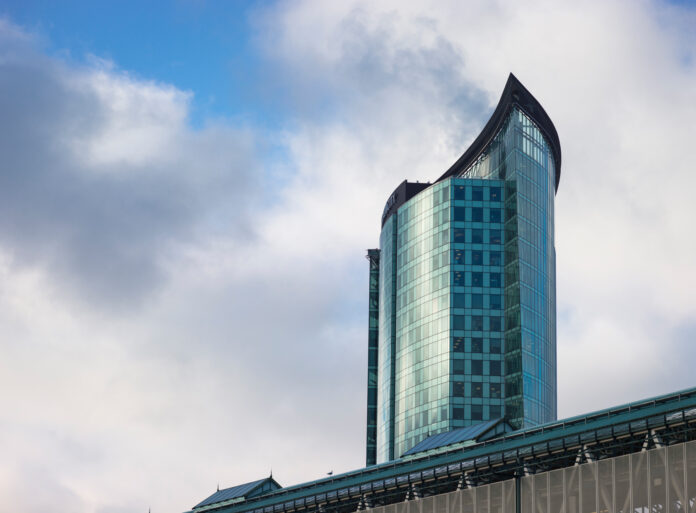
The building is intended to resemble the prow of an overturned boat and its roof is made out of heavy timber. Michael Heeney, one of Bing Thom’s partners said, “To recognize British Columbia’s past, we chose to use timber construction, but to reflect our future, we interpreted wood in a very contemporary and high tech manner.” 

A notable place to check out is the Embark Sustainability Learning Gardens which has both outdoor plots and a vertical garden located inside the campus. According to Embark, the purpose of these gardens is to give students “a space to explore their connections to food production and security in our communities.” 

You can find this vertical garden on the third floor of the Surrey campus close to the elevator (technically the second floor but I already made my petty comment four paragraphs ago). Students can embark on their gardening journey (sorry I couldn’t help myself) by renting individual plots and growing their own produce.

Lastly, it’s important to note you can borrow video games and video game consoles from the Fraser Library on campus. And I’m not talking about old consoles either, but Play Station 5s and Nintendo Switch consoles. What was the most exciting for me was to discover you can rent some of the old Pokémon DS games like Pokémon Diamond and Pokémon Pearl. Catch me falling behind in class to relive my childhood nostalgia.


Vancouver campus

The building with the most history on the Vancouver campus has to be the Goldcorp Centre for the Arts. This one came as a surprise to me, but Goldcorp is not named after a person, but the gold mining company with the same name based in Vancouver. Why you may ask? Well . . . because of the $10 million they donated to SFU. This was a big controversy back in 2008 because of Goldcorp’s questionable mining practices in Latin America. 

In an interview with NewsWire, Goldcorp president Chuck Jeannes said, “We are optimistic that by working with Simon Fraser University, we will be able to reach out to its businesses and residents to help create a more sustainable future.” What has Goldcorp done to help the community? Beats me, but in 2019 they merged with Newmont, a gold mining company based in Colorado and Goldcorp kind of disappeared. 

Notable buildings inside of Goldcorp include the Audain Gallery which was built in 2010. The gallery “advances the aesthetic and discursive production and presentation of contemporary art through a responsive program of exhibitions that support engaged pedagogy.” Whoever can tell me what “engaged pedagogy” means, please send me an email at [email protected]. 

The Audain Gallery has been home to exhibitions by various international artists. The gallery is named after Michael Audain who is chair of Polygon Homes LTD, the Audain Foundation, the Jean Paul Riopelle Foundation, and the Audain Art Museum Foundation.

Additionally, Goldcorp includes Woodward’s Cultural Programs & Community Engagement. The name originates from Woodward’s department store which operated from 1892–1993 in Vancouver. It was forced to close after being hit hard by the 1980’s recession, but we will always have SFU’s Woodward’s to remember it by. Why we keep naming all of our Vancouver campus places after companies is beyond me (actually I’m pretty sure it’s capitalism but as a current SFU student I don’t know if I could get in trouble for saying that). 

Another notable thing to check out is SFU’s Collection at Bill Reid Gallery located at 639 Hornby Street. This collection contains 161 pieces of art, including different prints, sculptures, and jewelry, that were gifted to SFU from the Bill Reid Foundation. 118 of these works are by Bill Reid himself. 

Now who exactly is Bill Reid and why does he have his own gallery? Well, he is “a master goldsmith, carver, sculptor, writer, broadcaster, mentor and community activist” who lived from 1920–1998. Born to an American father and Haida mother, Reid did not start exploring his roots until he was 23. According to the gallery website, “Bill Reid infused Haida traditions with his own modernist aesthetic to create both exquisitely small as well as monumental work that captured the public’s imagination, and introduced a timeless vocabulary to the modern world.”

Political Corner: Canada cannot call itself a leader on international climate action

0
The Trudeau government’s strategy on climate action is counter-productive. PHOTO: Presidencia de la República Mexicana / Flickr

The world’s latest chance to collectively start scaling back fossil fuel production is right around the corner. The 26th Conference of the Parties, or COP26, is a meeting of the 197 signatories to the 1995 United Nations Framework Convention on Climate Change. From October 31 to November 12, the group will meet to get the international community on board with reducing worldwide greenhouse gas emissions and preventing catastrophic warming. Canada’s lack of domestic progress on climate, however, means the country is not poised to convincingly lead any transformative collection action. 

Canada accepted an invitation from the United Kingdom to co-lead the development of a new international climate finance action plan, alongside Germany. In response, Canadian Minister of Environment and Climate Change Jonathan Wilkinson said the invitation “underlines the leadership that Canada has demonstrated internationally” on climate. But it’s an assertion that doesn’t stand up to scrutiny.

As usually happens with high-profile climate summits, there’s a report from the previous year that jumpstarts the conversation. For COP26, it’s a report that found the best path to keep warming under 1.5° requires the immediate halt of coal mining, oil extraction, and the development of new fossil fuel infrastructure. Unfortunately, Canada’s domestic agenda flies in the face of this new report.

Trudeau has been espousing the paradox that Canada can effectively address climate change while investing in fossil fuel extraction. A recent example of this thinking involves the 2018 purchase of the Trans Mountain Pipeline for $4.5 billion. This year, Wilkinson confirmed the government’s commitment to maximizing profits from the pipeline in order to fund a clean energy transition that decarbonizes the country. 

It’s evidence of the shambolic nature of the Trudeau government’s climate strategy that the plan’s foundation is based on the continued enabling of planet-warming emissions. Trudeau’s “plans” to fight climate change will only further exacerbate the issue. 

In June 2021, the Liberal government took a stab at enshrining the “net zero by 2050” target into law with Bill C-12. It’s a step forward, but it’s undercut by the fact that the country is one of the only G7 members — a group of the world’s largest economies — whose emissions have risen every year since the signing of the Paris Accords. Trudeau is leaving successive governments with the task of figuring out how to make good on those targets, rather than boldly tackling the issue himself. 

Before taking a leadership stance at COP26, Trudeau should look, to a finite degree, to the US to reform its domestic policy. Consider the proposal for the Green New Deal — it expands beyond what usually constitutes climate policy, reaching into decarbonizing buildings, transportation, manufacturing, and the agricultural sector, among others. South Korea and the European Union have also passed climate plans titled “Green New Deal,” or “Green Deal.” While they both fall short of the ambition of the original proposal, it’s indicative of the global reach the original GND has had.

So is it possible for Canada to come into a climate summit with a sterling domestic record? Not in time for COP26. But if the government can examine the emissions reductions and adaptation potential of each piece of legislation put forth, and adopt a holistic approach to climate, we can be a real leader in the next summit.

Drag is art, and it’s important to queer history

0
We should appreciate queer art for its complexity and rich history. PHOTO: Greta Hoffman / Pexels

It’s LGBT History Month. For many, the history of the queer community is marked by a small number of major events, like the Stonewall riots, the AIDS epidemic, and the legalization of gay marriage in America and Canada. But queer history is much more expansive than that, and continues to grow. Few touchstones of queer culture seem as controversial as drag — even in our own community. Somehow, the art form is simultaneously alive and well, yet horribly misunderstood by most of the cisgender heterosexual population, and even some queer folks themselves, because they only know it as a homophobic or transphobic punchline. 

When most people conjure up a mental image of drag, it’s pretty specific: a cis queer man dolled up in an exaggerated caricature of a woman, with six-inch heels and eyeliner that could cut you in half. Besides that, they’ll probably think of RuPaul’s Drag Race, the hit reality competition TV series. While there’s no doubt Drag Race is revolutionary in some ways, it’s not without its flaws. This show has led to drag itself being scapegoated. People see Drag Race and assume the whole art form begins and ends with cis men, as if drag isn’t a complex spectrum of gender performance.  

But drag has a long and diverse history — one which is often overlooked. If we go back to Stonewall, drag can be seen in its key figures. Drag is in Marsha P. Johnson, a trans woman who also identified as a drag queen, and in Stormé DeLarverie, a “male impersonator,” or more accurately, a 20th century drag king. At the time, identities were more fluid, and while some of the language is antiquated, the fact is gender as performance has always been alive and well, and not just for cis men. 

Much of drag’s diverse and storied history has been recorded, especially through film. The Queen, for example, is a documentary covering a 1967 drag pageant. It’s a gem in its own right for existing as a pre-Stonewall and pre-AIDS snapshot of queer life. 

While pageant culture was not without flaws — most notably favouritism for white competitors — it laid the foundation for drag culture, where queer people of colour made their own safe space. This is where much of drag as we know it today was born, and where a certain RuPaul Charles got his start. 

Another great film is 1990’s Paris is Burning, which shows the true complexity of drag as a performance, and how diverse it can really be, with many of the leading figures in the documentary being trans women. It also focused on the struggle of being queer and in poverty at the peak of the AIDS crisis. 

Finally, though in no small part thanks to these shows, drag is being recognized as queer art. Many would describe it as elaborate or exaggerated gender expression, and what’s queerer than making gender itself your plaything? You can be a boy dressed as a girl, or a girl dressed as a boy, or a boy dressed like a girl dressed as a boy, or be genderless and wear multiple genders at once. 

And that’s not even getting into the effort that goes into drag. You need clothes, you need makeup, you often need wigs, and you also need to perform — be that singing, dancing, or even stand-up comedy. Denying it as an art form is like denying makeup or fashion design as a part of the  performing arts. 

If this is all news to you, maybe you should explore drag a bit. Look into the films and TV shows mentioned, catch a local performance in Vancouver’s drag scene (one that’s socially distanced, of course), and maybe even give it a shot yourself. With everything it’s done for the community, drag deserves to be given an open-minded approach. Rather than dismissing what you’ve been exposed to, dive into the colourful art and honour its queer history. You never know — you might love it!

We need more BIPOC diversity in literature

0
I’m tired of reading about cultural stereotypes. PHOTO: Priscilla Du Preez / Unsplash

It’s important we continually recognize novels and stories with proper representation. Mainstream literary texts tend to be recognized and applauded when written by white people, which is harmful since less people are exposed to diverse bodies of work. I can go on and on about why we shouldn’t be glorifying harmful representation, but it is more worthwhile to understand why we should celebrate stories that include a well-written and diverse cast of characters.

As a Chinese woman living in Canada, I’ve experienced my fair share of alienation when looking at popular media. In Harry Potter, my all-time favourite series and franchise, the only East Asian character was literally named Cho Chang and heavily stereotyped.

She is a shallow character whose only purpose is to be a love interest for Harry. Not to mention, Chang was sorted into Ravenclaw at Hogwarts. Sorting the only East Asian character in the entire series into a house for smart people does nothing but reinforce stereotypes. 

I also don’t believe for a second that the author of this series had the time to carefully curate a plot-heavy seven book series but not the time to pick a better name for this character . . . I mean, seriously? Cho Chang? I cannot fathom how the author thought that putting a typically Korean surname and a Chinese last name together was a good idea for diversity. Many characters of colour in those books were poorly written, but we can’t expect much from an author who advocates transphobia. 

However, when I read These Violent Delights by Chloe Gong, I feel appreciated as a Chinese girl who grew up in North America. For the first time, I am reading about a character who looks like me and is from the same city that I was born in. For the first time, it feels as though my experiences are being represented. The main character is everything I wish to be and more. She’s powerful, beautiful, and smart. Juliette can speak multiple languages and can be deadly when she wants to be. The importance of representation cannot be underestimated — it matters “because it can shape how minorities are viewed by society and how they view themselves.”

People of colour should be represented in western publications, because they make up a huge part of western culture. Reading about diverse characters also exposes people to different cultures. This combats internalized racism because seeing different cultures depicted in the right way shows how beautiful other cultures can be. This would also honour the complexities of different cultures, not boil them down to harmful stereotypes, increasing stigma. In the end, we just want our experiences to be portrayed in the media we consume.

Beauty pageants are a harmful entertainment tradition

0
Pretty tiaras and sashes can’t hide the toxicity of such contests. PHOTO: Mochammad Syaiful / Pexels

Beauty pageants started as a form of entertainment for (mostly) men and have now become a cultural phenomenon across the world. Beauty pageants exist in many forms — under the titles of countries, states, cities, and even the universe itself! Contestants show off their physical qualities on stage for a panel of judges, who will determine a winner out of the group based on an arbitrary list of qualifications that no one knows about. The judgement of bodies and supposed beauty as a form of entertainment is archaic and sexist, and continually perpetuates dangerous gender and racial stereotypes. Entertainment should not be about making money off of the judgement of beauty, since beauty is in the eye of the beholder. 

A look at pageants event rounds is enough to point out the sexism that fills such forms of entertainment. For both men and women beauty pageants — yes, men’s beauty pageants exist and they are as toxic as the women’s — the swimwear event is perhaps the most glaring example. Contestants are expected to wear revealing bikinis (or swim trunks) on a stage and perform a 360° spin for the panel of judges to see and evaluate. The mere idea of placing bodies up for evaluation and judgement is deeply unsettling. The swimwear event, and perhaps the whole of beauty pageants, encourages the audience to engage in the practice of sexualizing and objectifying people. 

On top of that, the association between cities or countries with beauty pageants creates an incorrect association between race, gender, and outward appearances and the country in question. Take, for example, the Miss America beauty pageant. Despite the racially diverse makeup of the United States, there has only been one Native American woman crowned winner of Miss America in 1926, and “it has never had a Muslim, transgender, or openly gay winner.” The title of Miss America suggests whoever holds it is representative of America, yet the contest did not have a Black Miss America winner until 1984, over six decades after the inaugural Miss America pageant.

There has been resistance to the white, cisgender norms of beauty pageants in the United States. The first Miss Black America — a pageant specifically for Black women — was part of a force that slowly transformed the inclusivity and diversity of beauty pageants. In 2020, five crowned winners of international beauty pageants were Black women. 

In 2018, Miss America changed its rules on the swimsuit event and replaced it with a “live interactive sessions” with judges to “demonstrate their passion, intelligence, and overall understanding of the job of Miss America.” The nightgown event is still present, and swimwear is replaced by athleisure clothing for Miss Teen USA.

Despite the continued efforts to make beauty pageants a more inclusive and diverse experience, the core question remains: is the objectification and evaluation of people’s appearances for the sake of entertainment an empowering event? Looking past the leaps made in racial and gender equity, beauty pageants rely on the display and judgement of people and reducing them to the external qualities (and internal minds, if we’re to take the rebranding of some contests seriously). 

This judgement of bodies does not lead to empowerment — it leads to generations of people having a misunderstanding of what beauty is, and how “beautiful” they themselves are. Dismantling this toxic symbolism of societal emphasis on physical beauty and judgement is a small step for furthering women’s rights, and a big step for gender equity.

Club Profile: SFU Esports Association

0
The SFU Esports Association events are open to both SFU and non-SFU students. PHOTO: SFU Esports Association

Since 2015, the SFU Esports Association has been a strong presence not only on the SFU campus, but also in the Vancouver Esports scene. The Peak had the opportunity to sit down with a couple of executive members for the club to talk about the recent growth of Esports, the club’s beginnings, and how people can get involved. 

“This hobby is always in a state of change given how volatile the popularity of video games can be day-to-day, month-to-month, year-to-year,” said Max Kaczmarczyk, vice-president internal for the SFU Esports Association. “Always getting new faces and new perspectives can be incredibly helpful in having a guide on how the game works and what players might, in turn, want to see in our club. Not to mention there are countless video games that likely you and I have not heard about that have bustling online communities.” According to Kaczmarczyk, the club is now home to over 2,000 members on Discord and grows more each semester.

It is no surprise the SFU Esports Association has this many members — the video game and Esports industry has seen tremendous growth over the past decade. You’d be hard-pressed to find someone who hasn’t at least heard of popular titles like League of Legends and the newly trending game Valorant. 

Anyone is welcome to join the SFU Esports Association, Kaczmarczyk said. “As long as you are interested in video games, you’ll find an incredibly passionate, open-minded and receptive community. Video games are an amazing medium, when you are open to the range of experiences these virtual spaces can offer, you can make the most amazing discoveries and worthwhile friendships.” 

In an article for the Vancouver Esports Association, former vice-president Rui Yang Xu said, “Many post-secondary schools have gaming clubs like SFU Esports that run events from viewing parties and various get togethers all the way to high level Esports tournaments.” He also said these clubs operate as “a social hub for the growing student population and general public that enjoy gaming.” 

The SFU Esport Association was formed when several smaller clubs dedicated to individual games such as League of Legends, Counter-Strike: Global Offensive, and Hearthstone decided to come together and form the SFU Esports Association. The club has found great success over the years despite not being formally recognized by SFU as a sports club. This is unlike other post-secondary Esports clubs like Vikes Esports at UVIC which has been recognized by UVIC Athletics and Recreation.

Meetings take place primarily over the club Discord server which has been the club’s main online space over the years. The club frequently collaborates with Esports groups at UBC (UBC Esports Association), UVIC (Vikes Esports), and Langara College (Langara Esports Association).

The SFU Esports Association typically hosts one major event per semester, in addition to a few smaller events throughout. Past events this year include the flagship club event Racoon Cup — a large week-long competitive tournament that features popular games such as League of Legends, Valorant, Dota 2, and Super Smash Bros. Ultimate. 

Minecraft is also a game popular among club members and in May 2021, the club hosted the BC Intercollegiate Minecraft Build Contest. This was a collaboration between the SFU Esports Association and other student-led Esports organizations at UBC, UVIC, and Langara College. At the end of August, the club hosted in partnership with Langara a three-day Minecraft build contest. The Minecraft End Of Summer Clash Of Craft consisted of many minigames, PvP (person vs person) events, a build contest, and a parkour map in SFU Esports Associations Minecraft server. 

In October, the club is planning a four-day Halloween collab event with SFU Canadian Asian Club (CAC) and UVIC Minecraft Club which will include numerous casual games. Vice-president of events Emily Zhang said anyone is free to join and has the opportunity to win one of the numerous raffle prizes being offered. “It’s a great opportunity to meet new people that share an interest in the same games.” 

The best way for prospective club members to join in on the fun is by joining the SFU Esports Association Discord server and activating their membership by logging into the SFSS Club Portal listing for the club. 

Executive position hiring just recently closed, but Hanna Luu, vice-president of media, said the club is always looking for more graphic designers and video editors. “Most of the graphics you’ll see from us are also made by our amazing graphic designers,” said Luu. She added the club would love to expand their broadcasting and video work to competitive events and teams — but they need more graphic designers and video editors to help with that.

“We’re always looking for more graphic designers and video editors. If video games are also a hobby/passion, then the club is a great place to help build up a creative portfolio while also getting to work and talk about video games with other people.”

COVID-19 pushed the club to try and think outside the box to help keep club members feeling engaged off-campus, so they started recording and live streaming some of their casual events and posting edited highlight videos of them on their YouTube and Twitch channels. Now that school is back in person, the club executives said they expect even more events to be announced soon. 

Keep an eye on the SFU Esports Association Discord for updates and events or by following them on Twitter or Instagram @sfuesports

We need to bring sex ed to post-secondary — Part One

0
We can’t rely on high schools alone to provide adequate sex ed. PHOTO: Reproductive Health Supplies Coalition / Unsplash

The quality and content of your sexual education depends largely on where you grew up and which high school you attended. This leads to discrepancies in how much sexual health knowledge post-secondary students have. In high schools, a complicated web of parents, teachers, school boards, and religious institutions can veto or censor sex ed lessons, leading to inconsistent and sub-par sex ed. Universities have less burdens and more resources. Young adults need up-to-date, inclusive, and informative sexual education — and continuing sex ed from high school into post-secondary is the solution. 

Think back to the sex education you received in high school. Was it a fear-based affair featuring pictures of untreated sexually transmitted infections (STIs)? Did it include pro-abstinence rhetoric and virginity pledges? Maybe you didn’t receive sex ed at all?

Global News notes, “Sex education varies across Canada, with provinces and territories having their own curriculum, some more comprehensive than others.” For example, the Abortion Rights Coalition of Canada reports that, as of 2017, BC sex ed excludes LGBTQIA2S+ curriculum and consent, while Ontario sex ed covers both, in addition to lessons on contraception.

SFU’s Fall 2020 International Student Report notes that “international students represent 21.2% of the total undergraduate population.” Since sex education varies a lot between countries, students may be entering university with completely different sex ed experiences.

For example, from a young age, children in the Netherlands are taught age-appropriate sex ed, while in China and India, sex education may be absent or minimal. 

In some schools, sex education is a pro-abstinence curriculum. It encourages students to wait until after marriage to have sex, portraying pre-marital sex as “unhealthy or dangerous.” Such abstinence-only programs neither delay nor prevent pre-marital sex and leave students with no information on preventing unwanted pregnancies and STIs. 

Similarly, students who attend Catholic schools will likely receive sex ed aligned with Catholic values, excluding “important aspects of human sexuality and sexual health.” As someone who went to a Catholic high school, I can vouch that my sex ed was subpar, leaving me and my classmates without useful or tangible information on safe sex.

University is a time of growth and exploration — and for some, that includes having sex. But what happens when those with sub-standard sex ed start having sex? Well, in some cases, unplanned pregnancies, the spread of STIs, and violence against intimate partners. 

Sex ed can and should be a continuous, age-appropriate learning experience. Research by the United Nations Educational, Scientific and Cultural Organization states “the best way to ensure just and equal access to high-quality information on sexual and reproductive health and rights is to include it in a written school-based curriculum.”

Universities and colleges can offer resources high schools may be unable or unwilling to. For example, SFU could easily hire a professional sex educator to teach inclusive sex ed that a small high school in Vancouver or Burnaby may be unable to access. 

Additionally, older students may be more receptive to such resources. Post-secondary students may feel more ready to have sex for the first time, or they may be living away from their parents’ home for the first time, and thus, have more freedom to be themselves and make their own choices.

Good sex ed is important. ActionCanada notes “the impacts of high-quality sex-ed” include more awareness about sexual health, and “increased contraception use.” Some SFU students may have received good sex ed in high school — but we can’t assume every student did, due to the varied backgrounds and upbringings of our student body.

Stay tuned for part two of the argument for sex education in post-secondary, which includes how post-secondary students could benefit from sex ed, and what sex ed could look like at SFU.


The term “Hispanic” ignores the complexities of Latin American heritage

0
We can honour Latinx people without mentioning Spain. PHOTO: Alexander Schimmeck / Unsplash

Ah yes, the so-called “Hispanic Heritage Month.” A month made to celebrate the “histories, cultures and contributions of American citizens whose ancestors came from Spain, Mexico, the Caribbean, and Central and South America.” Grouping these people and cultures together gives the impression they’re a monolith, when instead they are all richly diverse. The term “Hispanic” doesn’t reflect the distinct histories of Spain and Latin America. 

Merriam-Webster defines “Hispanic” as “of or relating to the people, speech, or culture of Spain.” The word is increasingly being recognized as a poor term as it barely gives any information on individual identities. Somehow, the word manages to mesh together over “62 million people with complex identities,” while also excluding non-Spanish speaking Latinx folks. In an attempt to define all of these people, “Hispanic” erases Indigenous and Afro-Latinx communities who do not speak Spanish, as well as cultural traditions that don’t originate in Spain. It does not include non-Spanish speaking communities — and there are over 400 Indigenous languages used in South America alone. 

As someone with a Latin American background, I don’t understand how it makes any sense to group together the whole of Latin America with Spain. While one could argue Latin America has Spanish influences due to colonization, solely noting Spanish influence is not an accurate way to describe Latin Americans. At least the term “Latinx” indicates someone’s geographic origin and includes Indigenous and Afro-Latinx communities.

“Hispanic” was essentially a careless way to group an extremely diverse set of races and cultures so the US could collect data on its population. Given that “Hispanic” is neither a race or culture, and has language as its only basis, many Latinx folks have never particularly been a fan. It groups us with our colonizers, which is a disservice to those who fought for independence against the Spanish. 

In spirit, Hispanic Heritage month aims to celebrate cultural ties to a variety of places. However, according to author Paul Ortiz, the use of the term “erases all of the centuries of pre-Columbian history, culture and civilizations that existed before the European conquest and colonization of the Americas.” That is to say, Latin America had its own unique histories and cultures before Spain colonized it. These people and their heritage didn’t just disappear, they have remained a part of Latin America, and a month to honor their heritage should reflect that.

“Hispanic Heritage” literally means nothing. There is no unifying “Spanish” heritage. Spanish culture only refers to Spain — which has different cultural customs and celebrations than Latin America. In the case of “Hispanic Heritage Month,” this was obviously made to include more than one country. I love the idea of celebrating Latin American culture, however “Hispanic Heritage Month” has been mushed together with Spain, like no one bothered to tell the difference. 

So, I ask anyone looking to celebrate the month to acknowledge the rich diversity of Latin America and consider the differences in history and culture of its colonizers. Hispanic Heritage Month should have been understood with more nuance before rushing to make a celebration for “Hispanics.” If we are to truly honour Latinx people — we should do just that. 

Keep the “winter blues” away this semester

0
If you experience symptoms of SAD it’s important to talk to a medical professional. PHOTO: Allyson Klassen / The Peak

As the weather gets colder and the days get shorter, some people happily bundle up with a good book or excitedly begin rifling through the basement for decorations — and some brace themselves for the sluggishness and sadness that comes with fall and winter. This feeling has a few different names like “the winter blues” or “seasonal depression,” but the clinical name for it is seasonal affective disorder (SAD). If wintertime in the Lower Mainland makes you feel . . . well, bleh, and you dream of tropical, sunny vacations every year, then read on.


What is seasonal affective disorder?

“Seasonal affective disorder (SAD) is a type of depression that’s related to changes in seasons,” most often beginning in late fall, continuing throughout winter, and stopping as the weather gets sunnier in spring and summer. The symptoms of SAD include feeling depressed or “sluggish,” problems with sleeping, and changes in appetites. According to the Canadian Mental Health Association, about 18% of Canadians “will experience SAD in their lifetime,” with 15% of those being mild cases. Those most at-risk of experiencing SAD are adults under the age of 50, women, and people who live furthest from the equator. In addition, those with major depression or bipolar disorder, and those with a family history of SAD may be more at-risk.


What causes seasonal affective disorder?

Scientists who study SAD have a few different theories about what causes it. Dr. Alfred Lewy believes it’s because the human body’s circadian rhythm is being disrupted in the wintertime. “The wall clock may tell you it’s time to get up and at ‘em, but your body’s internal clock says you should be resting,” said Lewy.

Other experts, like Dr. Thomas Wehr of the National Institute of Mental Health, suggest SAD is caused by too much melatonin, affecting people’s mood and sleep. Wehr noted people who have SAD “secrete melatonin for longer periods” during the winter. Raymond Lam, a researcher at UBC, suggests there’s a link between the circadian system, serotonin, and SAD. 


University students and SAD

One demographic that can be hit hard by SAD is university and college students. Stress levels are high, sleep is in short supply, and entire days can be spent indoors studying. In addition, COVID-19 restrictions can leave students feeling isolated and stagnant. Experts encourage students to take symptoms of SAD seriously, and make lifestyle changes as soon as possible. This may include creating a regular sleep schedule or implementing strict school-life boundaries.


COVID-19 and SAD

Spending a lot of time indoors can worsen symptoms of SAD — without much exposure to sunlight, a feeling of “eternal winter” is created. Additionally, stress from other areas of life, like school and work, can have a negative effect on those experiencing SAD. Thus, winters during COVID-19 have posed challenges, as people stay indoors more. In an article for Very Well Mind, Dr. Leela R. Magavi said, “This year, individuals may experience SAD symptoms for the first time, or they may experience severe SAD symptoms, which affect their ability to take care of themselves and the people they love.” 


Taking care of yourself this winter

If you think you have SAD it’s best to talk with a mental health professional, who will be able to screen and potentially diagnose you. If that is not an option, these are some alternatives that may help. 

Expose yourself to sunlight 

Light seems to be a key factor in SAD, so getting outside and soaking some natural light up is said to help those who experience SAD, even on cloudy days. 

Get daily exercise 

Experts have noted that all forms of depression have been alleviated by regular exercise — bonus points if you can exercise outdoors, in the sunlight. 

Try light therapy

Light therapy involves using a light box “that emits bright light,” similar to outdoor natural light. It’s best to use your light therapy box in the early morning, shortly after sunrise. Some light boxes have different brightness and warmth settings that can be adjusted for your preferences. 

Invest in a dawn simulator 

A dawn simulator is similar to an alarm clock, “but rather than waking you abruptly with loud music or beeping, they produce light that gradually increases in intensity, just like the sun.” It has been suggested that this simulated sunrise helps users regulate their circadian rhythms and melatonin production, two things that SAD has been related to.

Try aromatherapy 

Dr. Ani Kalayjian, a traumatic stress specialist, suggested essential oils can influence moods, circadian rhythms, sleep, and appetite, all of which can be negatively impacted by SAD. A 2015 study found that poplar tree essential oils “were found to help depressive disorders.”