Home Blog Page 336

SFSS campaigns for SFU to continue recording lectures

0
Empty classroom with green chairs in background
PHOTO: Krystal Chan / The Peak

During the last week of August, the Simon Fraser Student Society (SFSS) published the Accessible Course Practices (ACP) campaign letter and an accompanying student survey to their social media accounts. This campaign calls for professors to provide student access to mandated recordings, and hopes to see this become a post-pandemic university standard. 

Kashish Mehta, SFSS councillor and ACP campaign chair, started the ACP campaign after being inspired by the SFSS’ previous campaign, Access for All. While the previous campaign focused on hybrid courses and decreasing COVID-19 outbreaks on campus, ACP concentrates on access to lecture recordings. 

“I started to question what could be done to ease some of the anxiety that students feel about returning to campus amid a pandemic,” said Mehta in an email interview with The Peak. “According to the student survey, which is still currently ongoing, the majority of the responses have been in support of the campaign.”

Mehta said the key motive of this campaign is to improve on what was already being done during the pandemic. She explained this “next step” could look different for each class. Professors who haven’t been recording their classes at all would take the next step by recording, and those who have been providing audio-only recordings could take the next step to video recordings. 

This would be for “folks who can’t make it to each and every class because of their commitments, like taking up more than one job due to financial restraints put on by the pandemic, or needing to stay home for personal as well as familial risks regarding COVID-19,” wrote Mehta. “It would be helpful for them to not have to compromise their education for situations they have little control over.”

Gabe Liosis, president of SFSS, gave a statement to The Peak about the ongoing effects of COVID-19 on student life through the delta variant and the fourth wave.

“This campaign advocates for policies and tools that we know will make post-secondary education more accessible and equitable for folks being impacted hardest by the return to campuses,” Liosis wrote. “We are in a really uncertain time — compassion is what we need to navigate through it together.”

A second accompanying survey was created for and sent out to SFU professors and instructors. Mehta claims faculty have expressed concerns about lecture material being released to third parties, technological logistics of recording lectures, lack of student engagement, and learning approaches that do not translate well to recordings. 

Elizabeth Elle, vice provost and associate vice president of learning and teaching, explained to The Peak in a statement that recordings are not always possible. Some courses have participation-based discussions, significant active components, or involve  sensitive subject material, she wrote. Elle added, “A safe space is created by not recording student responses.

“As we move through fall and into winter and spring, we will continue to encourage instructors to consider recordings and other mechanisms to support accessibility whenever possible,” wrote Elle. “We also recognize that there are reasons why recording is not the best practice for some courses.”

The ACP campaign letter states their willingness to work collaboratively on making sure faculty have the resources and support to make these changes. 

“I would like the opportunity to collaborate with faculty to come up with ways so that this campaign does not come in the way of student engagement and instead tries to enhance it,” Mehta said. “65% of the professors who are on board are doing it for student accessibility and convenience, which is really optimistic to see.”

Community Capacity Building program cohort present equity-focused projects

0
Different hands joined in a circle
PHOTO: Hannah Busing / Unsplash

SFU Public Square and Lifelong Learning partnered to present Equity in Practice: More Stories of Community Capacity Building on September 9. The event promoted the success of SFU’s Community Capacity Building (CCB) certificate program, featuring five recent cohort learners and their projects. 

The CCB certificate program, created in 2013, is a free program funded by the BC government. Its goal is to help program members “build deeper relationships with [themselves], community and the land, and to move forward the change [they’d] like to see in the world.” 

Yvonne Rigsby Jones, the program’s class Elder, opened the event by giving a blessing for all presenters and attendees. She concluded with an acknowledgement of SFU’s work towards reconciliation with Indigenous communities. 

“Having me here today is a true act of [reconciliation in] practice,” said Jones, “[SFU] invites Indigenous teachings to the work that they do, they don’t just tokenize the work.”

The five presentations were moderated by Vanessa Richards, an instructor for the CCB certificate program. She explained the program was created as a way to create opportunities, connections, and support for communities. 

“I suppose you could say [the last couple of years] has been ‘the worst of times and the best of times’ to quote Dickens in his Tale of Two Cities and some of what we’re trying to do in CCB is start to massage the worst and the best so that we might have a tale of one people, and one place, together.”

Sarah Common, co-founder of Hives for Humanity, talked about their Garden of Care initiative to bring the Hastings Folk Garden under Community Land Trust. This action, if achieved successfully, would make the space unavailable for market transactions and place it “into community-led governance.” 

Lystra Germaine Sam, the founder of QmooniTi, talked about her newest project, Sisters Leading Sisters , which focuses on rest as a tool of colonial resistance. BIPOC women are invited to go to Sisters Leading Sisters for transformative retreats of rest and connection. The program also offers “financial support, computers, educational tools, healing, scholarships” in addition to relaxation retreats.  

“When Black and Indigenous women at all of our intersections are free, then so shall everyone else,” said Sam.

Maria Dela Cruz, systems change community developer, spoke about her pro bono coaching work. She coaches women, femmes, and youth during times of transition.

“The work I’m most focused on is to consider what the impacts have been of colonization, patriarchy, capitalism, and white-body supremacy,” said Dela Cruz. “They have truly limited our capacity especially for Black, Indigenous, and racialized folks like myself.”

Certified coach Fawziah Bhatia and community leader Vicki Wang, presented their project called Curiko. Curiko is a program that aims to build a “community of people with and without disabilities” in moments of connection that help facilitate belonging for all. 

Closing off the presentations, Romila Barryman, death doula, introduced Jiwa, a grief collective “exploring the interconnectedness of loss by connecting future ancestors back into the wisdom and care of their hyperlocal communities and each other.” Programs at Jiwa last eight weeks with a mission “to create closed, continuous and cross-collaborative opportunities for remembering while exploring our positionality on stolen land.” 

Richards closed the event with an acknowledgement of the group’s diversity, “We put together what we thought would be a really dynamic grouping of people where not everybody was the same. And what we learned together from each other was remarkably rich.” 

Students who wish to find out more about the CCB certificate program can do so at SFU Continuing Studies’ website.

275 faculty and staff call for Indigenous students’ tuition waiver

0
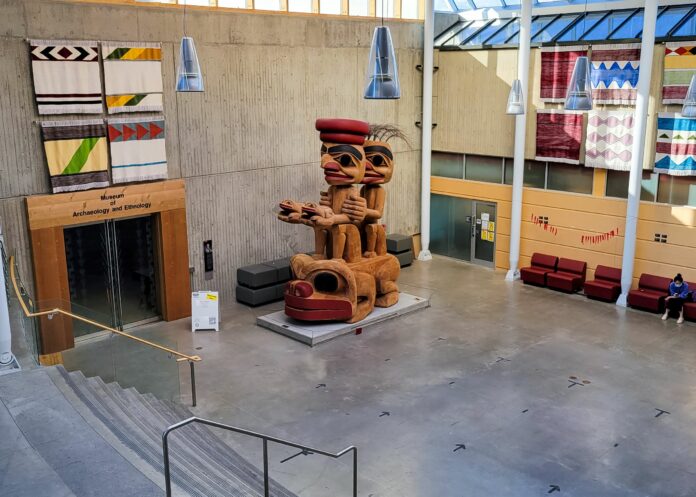
Indigenous carving found in Burnaby campus
PHOTO: Amirul Anirban / The Peak

Content warning: mention of residential schools in first paragraph

Three letters, signed by a total of 275 SFU faculty and staff, have been sent to president Joy Johnson, calling for a tuition waiver for Indigenous students at the university. One letter dated July 20, 2021 states, “In the spirit of reconciliation and social justice, underscored by the findings of mass and unmarked graves at residential school sites across Canada, we write to urge SFU to materially demonstrate its support for Indigenous people.”

The first letter was sent on June 6, 2021, the second on July 20, 2021, and the latest on September 3, 2021. The letters were respectively signed by 56, 62, and 157 faculty and/or staff. The Peak was unable to gain access to the contents of the June 6 and September 3 letters. 

According to SFU health sciences professor Susan Erikson, the initiative has been a collective effort of “many others, present and past, who have also worked toward a tuition waiver.” 

In an email statement to The Peak, associate English professor Ronda Arab noted the September 3, 2021 letter was created by the Board of Directors of Academic Women.

“We would like to see the administration consult with Indigenous leaders, and in conjunction with Indigenous leaders follow through by creating a policy on tuition waivers for Indigenous students,” said Arab. “It is something SFU can do. It is a small but meaningful step in the attempt to right the historic and present day injustices experienced by the Indigenous peoples of this land.

“Post-secondary education is a means by which the intergenerational health, wealth, and self-determination of Indigenous communities can be built.” 

The July 20 letter noted “SFU would not be the first university in Canada to do so.”

UBC offers a program for students who lived as youth in care for at least two years in BC. The UBC Post Care Tuition Waiver program makes students eligible for tuition waiver towards their undergraduate degrees. 

The first university to offer tuition waiver programs was Vancouver Island University in 2013. Following this, the then-NDP government created the Provincial Tuition Waiver Program. Indigenous students, alongside other youth in care ages 19–27 are eligible for the program if they are attending a BC public post-secondary school or some eligible union trades training centres. This letter is calling on SFU to waive tuition for all Indigenous students. 

Erikson noted “enlisting Indigenous leadership is the most important step SFU needs to take at this point.”

“The committee that spearheaded this petition, to demand free tuition for Indigenous students, is to be lauded for their vision,” Dr. Deanna Reder (Cree-Métis), associate professor and chair of the department of Indigenous Studies, said to The Peak. “If reconciliation can ever be attainable, a rethinking about how things are done, and a restructuring of Canadian society needs to happen [ . . . ] we know a tuition waiver will open the door to some who can’t come in otherwise. This initiative will undoubtedly raise up leaders whom we might otherwise never meet.”

Reder pointed to the importance of Indigenous inclusivity in classrooms, “The inclusion of Indigenous students who once would have been barred from attending, will change discussions in our classrooms and throughout the university. It can change how we teach and how we think. We all can benefit from this change.”

The Peak reached out to SFU’s Indigenous Student Center (ISC) and the First Nations Student Association, but both declined to comment, with ISC citing a lack of knowledge of the initiative.

In a statement to The Peak regarding the July 20 letter, senior director of media relations Angela Wilson said, “We can confirm that the letter has been received by the president and is currently being reviewed by members of the executive team, including the Office of the Vice-President, Academic and Provost, and Student Services.” 

Arab said the president of Academic Women “reported that Academic Women can expect to hear a response soon.”

“SFU continues to work to advance reconciliation, including enhancing supports to increase Indigenous student enrolment as well as creating safe spaces for Indigenous peoples to learn, work and visit. More information about progress with these initiatives will be shared in SFU’s 2021 reconciliation report, expected to be released in the coming weeks,” said Wilson.

Fun facts about SFU’s most popular animal: the raccoon

0
There are three cutely drawn raccoons in the picture. In the right hand corner is one on four legs looking to the right. The one in the middle left is laid out promiscuously and the one in the bottom right is sitting holding on to it's legs with it's tiny paws.
Not only are they cute, but they are extremely intelligent too. ILLUSTRATION: Maple Sukontasukkul / The Peak

Whether they’re breaking into student residences, learning how to use the automatic doors in the AQ, or stealing the fish in the reflection pond, raccoons are the most involved out of all the wildlife on SFU’s Burnaby campus. They’re large enough to be noticed, cute enough to gather legions of devoted fans, and devious enough to find a way into anywhere with food. But what are they exactly?

The name “raccoon” originates from the Powhatan people of the East coast whose word for them is “aroughcun.” This roughly translates to “one that rubs, scrubs, and scratches with its hands” and has been adapted by the English language into the term we all know and love. 

In Latin nomenclature, a raccoon’s name, procyon lotor, is a little less clear. Translating to “before-dog washer,” the name serves to illustrate the raccoon’s tendency to handle things with its paws. Raccoons were thought to be related to dogs, badgers, bears, or cats, and were thus the source of much controversy among European taxonomists. Given the bear-associated name ursus lotor by Carl Linnaeus (father of modern taxonomy), raccoons were subsequently renamed by Gottlieb Conrad Christian Storr, who believed they were more doglike. In fact, raccoons are not closely related to dogs at all. The genus procyon, of which raccoons are near-exclusive members, marks them as the relatives to otters, skunks, weasels, and distantly, bears. Get rekt Storr. 

Raccoons’ bear-like tendencies remain fixed in many other languages around the world. Ranging from Norwegian to Mandarin to Italian (and many others), raccoons are known in some form as “wash-bear.” They earn this name from their fixation with touch. Much like how we as humans are sight-based, dolphins are reliant on their sense of hearing, and dogs live through their noses, a raccoon’s primary sense is touch. 65% of their brains are dedicated to tactile input — more than any other studied mammal. 

The tough, calloused layer of skin that covers their paws softens in water, which can make a raccoon’s tactile senses more sensitive. In conjunction with the whiskers that surround their fingers, raccoons can identify a whole host of characteristics — including whether something is edible — by touch alone. This is hugely valuable in the wild, as they can then investigate new objects while keeping their heads up to survey the world around them. Their incredible sense of touch is possible because of the tiny whiskers on their hands that work similarly to cats’ whiskers.

Native to North America, raccoons are spread across the continent. With habitats ranging from cold grasslands to tropical areas, raccoons are generally happy living near a water source. Although fantastic swimmers and moderately skilled hunters, raccoons tend to not be picky in their choice of food. They favour meals that are easily accessible, and don’t require too much effort to obtain. They can eat just about any type of food they can get their paws on, ranging from fresh leaves and acorns, to frogs, birds, and snakes. This also includes whatever momentarily unsupervised snack you packed to eat between lectures. The majority of a raccoon’s diet during the winter consists of worms and insects.

One of the raccoon’s defining traits, aside from its bandit mask and people-like fingers, is its curiosity. As one of the first and most prominent examples of curiosity in the animal world, raccoons were a source of controversy among psychologists and behaviourists.​​​ The “free ideas” of a raccoon — the act of finding creative solutions and investigation of objects or places without hunger or fear-based motivation — had previously been described as an exclusively human behaviour. Amidst accusations of bias and gullibility from the opponents of this, raccoons became somewhat of a taboo subject, and associated research “fell out of favour” for a few decades. 

To this day, raccoons are rarely chosen as research animals. Despite the promise of their startling intelligence, they are generally considered too clever for experiments. In the experiments that have been performed, raccoons often found ways to cheat the system to obtain more rewards, faster, and with less effort. For example, in a test requiring animals to drop stones into a tube to raise the water level and bring a floating marshmallow within reach, one raccoon figured out a way to tip the tube over to get the marshmallow. This is in line with a raccoon’s curiosity-based methodology: rather than finding the most efficient solution, one that works is good enough.

Further dissuading researchers, raccoons have proven to be cunning escape artists. Whether by studying the scientist’s routine in opening their cages, by their own creativity, or simply by gnawing through the cage bars, they have invariably escaped. In an infamous case, raccoons escaped their cages and were later found inside the (hidden) ventilation shafts. The raccoons became hostile when cornered, leading to an unpleasant situation for these researchers and the decline in attempts to study raccoons in a laboratory setting.

However, it has been concluded raccoons are among some of the smartest mammals — just under humans, monkeys, and the great apes (e.g. chimpanzees, orangutans, gorillas, etc.). Raccoons were able to remember which door hid a treat, despite being distracted before being able to make their choice — something dogs and rats failed to do.

It’s their intelligence that allowed raccoons to thrive in an urban setting — raccoons are known to be more common in cities than in the wild. As one of the few animals whose populations have increased with the development of cities, their success has been attributed to their ability to identify and avoid danger (mainly in the form of busy roadway intersections), find shelter (often making use of human buildings), and match humans step-for-step in the arms race for developing animal-proof trash cans. 

In some parts of the world, raccoons are kept as pets. Though cute, raccoons are generally considered to make poor pets, as males are known to become aggressive as they mature. However, they are among the few animals able to transition from domestic to wild life. Despite the temptation, the domestication of a wild raccoon is not recommended. A high percentage of raccoons carry a roundworm parasite that can cause harm to humans. Raccoons can also carry rabies, but although there have been no reported cases of this in BC, a raccoon’s teeth remain pretty sharp, and can cause significant harm, rabies or not. 

Northern raccoons conserve energy over winter by becoming inactive, going into a state called torpor — akin to how bugs sleep (or a student feels after having finished a midterm) for most of the winter. While torpor is similar in principle to hibernation, there is a distinction between the two. Hibernation is recognized by a drop in body temperature, which does not occur in overwintering raccoons. 

Stealing is a very common hobby among raccoons — they will find a way to take anything they want. So keep an eye on your snacks, keep an eye on your affections, and remember raccoons are coming for both.

Digging into the SFU archives

0
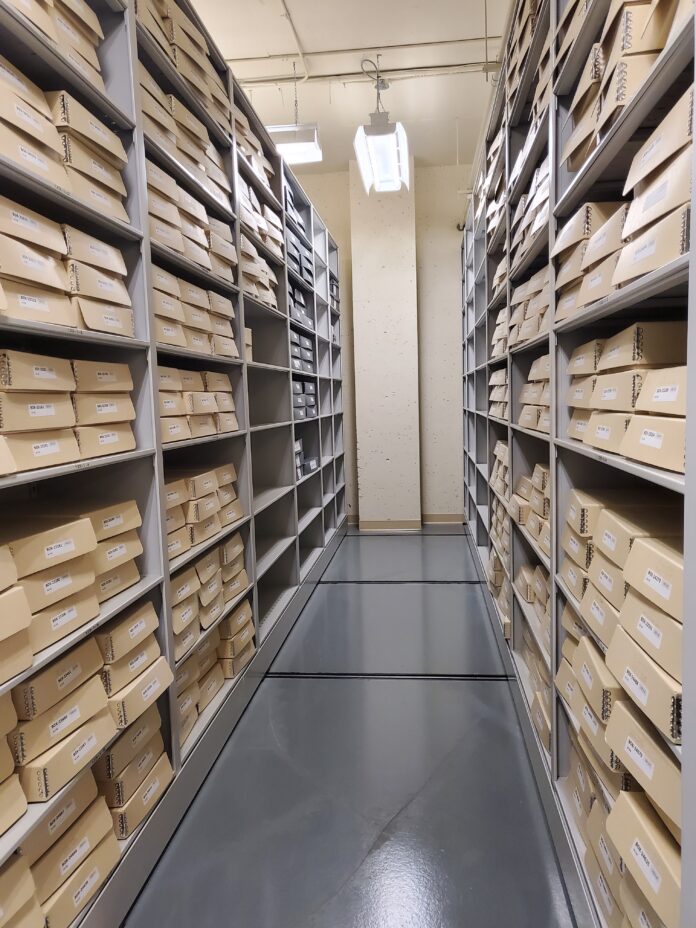
A hallway with shelves on either side holding beige archive materials. The floor is grey and is illuminated by fluorescent light. Overall, pretty bland.
PHOTO: Kelly Chia / The Peak

Whether you’re doing research for a paper or you’re really curious about how people in the Lower Mainland lived years ago, the SFU archives has got you covered. Housed on the bottom floor of the Maggie Benston Centre, the archives have original copies of letters, tapes, reports, films, recordings, and other artefacts donated by the SFU community and the general public. 

During my tour of the vault, I spoke with archival technician Matthew Lively, acquisitions and outreach archivist Melanie Hardbattle, and information and privacy archivist Robert McLelland about what students might be able to find. 


Exploring the archives

What’s charming about looking through the archives is there isn’t a voice guiding you through these records. This is because they aren’t curated by subject, but by place of origin. The archives also have collections, which they define as materials they’ve assembled on a specific subject. They also keep fonds, which are a different type of collection that preserves the original order from when the donator created them. 

Looking through archival fonds means you’ll do more searching to find a specific topic. But, you’re almost certain to uncover things you don’t expect to find. For example, you might learn more about the environment a document was created in. You could also hear tapes about the family life of the person you’re researching. Preserving these artefacts without curating them gives researchers the ability to form their own conclusions and connections about what happened. “Your research is very unique because the records themselves are very unique,” Hardbattle said. “You may find something that somebody else has never looked at or thought of in that particular way.” 

While this may seem like a daunting amount of information to sort through, SFU archives offers online finding aids through the SFU AtoM website. Finding aids are basically guides that show which records the archive has available so it’s easier to know what to look for when you enter. For example, when I look up “Peak” to find more information about The Peak, a finding aid describes a brief history of how The Peak was created and shows relevant records sorted by access status. Sometimes a record may be pending review before being uploaded online, but Lively explained if you email the archives requesting access to a few files, they should be ready to access within a week. Still, it’s good practice to give the archives ample time to review multiple files ahead of a deadline. 

The archives decide what materials to accept based on their acquisition mandate. These can range from official SFU materials to those from the greater university community, like from the Teaching Support Staff Union (TSSU). Additionally, the archives collect the personal papers of key faculty, staff, and students.


What to expect

When arriving at the archives, visitors will enter the office and the brightly lit reading room where visitors can go through archival materials. I didn’t expect there to be so many windows in the office but I quickly learned this isn’t where the materials are stored. The archivists showed me the vault storage, which is climate controlled to keep items preserved. One of the projects the archives are working on is digitizing audio files and old VHS tapes. This is important because the files themselves are fragile. McLelland said the archives have many recordings of lectures given at SFU by well-known guests, such as Marshall McLuhan, a famous Canadian communications theorist. I also learned Bill Nye spoke at the SFU convocation in 2015. 

“There is a lot of oral histories as well, particularly the early labour movement [ . . . ] and the Indo-Canadian oral history collection,” Hardbattle added.

They also accept private research collections, particularly those that relate to women’s issues. “There’s a whole other group of records that we acquire, and that’s from individuals and organizations that aren’t affiliated [with SFU],” Hardbattle said. 


Interesting artefacts

One of the files that Hardbattle showed me was a record associated with the East Enders Society. While not directly connected to SFU, East Enders was a social service group for women living in East Vancouver from 1965 to 1993. The file contains financial records, letters, and newspaper clippings. There were papers celebrating the East Enders’ sixth anniversary and others about rent increases. Looking through these records helped me imagine how East Enders interacted with the Vancouver community.

Some of the files that really fascinated me were old issues of The Peak. We used to publish student handbooks in the 1980s at the beginning of the school year. “Different resources for the campus are printed here, the directory, things like the hours for the gym,” Lively said. There were also course analysis handbooks dating back to 1969, which were compilations of polls sent out to students in classes rating the class and the lecturer based on things like their speaking ability. McLelland said this may even have helped develop SFU’s course evaluation system. 

Inside these handbooks were photographs The Peak had published about student activism. One article I read from a 1985 student handbook said, “Educating ourselves shouldn’t be so financially devastating: we have to fight for better student assistance.” The article goes on to talk about cheap student housing, and rejecting consumerism. I laughed wryly when the author wrote that students shouldn’t have to pay more than $200 per month. The writing hit especially close to home because these are all things we still write about today: students still discuss their finances, exchange tips on how to scrape and save, and they still find ways to buck against consumerist culture. 

Another fascinating record was about Dallas Walker Smythe, a professor at SFU from 1980 to 1986. “The government was investigating him for un-American activities because he fell on the left side politically,” Hardbattle said. Smythe requested to see his FBI records, and they revealed the FBI had tracked his movements through the US until he left for Regina, Saskatchewan in 1963. Much of the content was censored. Some letters from the director of the FBI at the time, J. Edgar Hoover, read, “The mobile file on [REDACTED] reflects no significant Communist Party associations or activities.” It then goes on to talk about watching Smythe’s lecture to see if he criticizes the Bureau. Like many key people’s records kept in the archives, the files tell an interesting story about his life and about Communist sentiments in the 1960s. 


More than just documents

The archives are also working on digitizing their films, and just picked up the very first student film made at SFU. Some particularly interesting films are from Arthur Erickson, the winning architect of a design competition held by Dr. Gordon Shrum in 1963 for SFU’s construction. “They’re beautiful, and it’s really interesting because he talks a lot about how his travels inspired him for the architecture,” Hardbattle said. “Coming into these films, you can actually see part of what he saw.” The archive website on SFU’s architecture explains Erickson was inspired by “the acropolis in Athens and the hill towns of Italy, where the mountain was incorporated into the design itself.” Knowing Erickson’s vision and dedication made me more appreciative of the school building I had previously only thought of as resembling a prison box. 

Having these new insights about the school we all go to, I strongly encourage more students to look into visiting the archives. It gives so many clues about student culture, and the way people navigated their lives in Vancouver. Our history reveals how actively students fought, and continue to fight for student rights. It was such a memorable experience to take all of this in.

The SFU archives recently made an Instagram page, and it is filled with nuggets of information from student groups, papers, and poems. You can follow them @sfuarchives.

My experience with Accutane

0
I have been on so many different acne products but Accutane was the only one that seemed to work. PHOTO: National Museum of American History

In 2019, I thought I found peace with my skin. After years of closely examining myself in the mirror, experimenting with more skincare products than I can count, and using dozens of medications — I accepted the state of my skin. It wasn’t perfect, but I didn’t particularly feel a need to pursue perfection either. I had gone on and off from flawless to blemished skin and resigned myself to a comfortable in-between. Then came 2020, and I had the worst breakout I’ve ever had. 

It was a pretty big deal. My skin was tender to the touch, cystic acne crept underneath the skin, and it was impossible to get rid of. I went to my dermatologist, and once again started the cycle of pills and topicals. Throughout my life, I’ve tried products such as doxycycline, minocycline, tetracycline, TactuPump, benzoyl peroxide, ivermectin, and things I don’t even remember the name of. 

This time, I was particularly sick of it. I certainly wasn’t going to get out of this one with the medications I had taken in the past — much less “change my lifestyle,” which already included drinking water, eating well, and resting. I knew my skin was much too stubborn for that. I had been recommended isotretinoin (more commonly known as Accutane) many times in the past and never felt the need for it. But during the fall of 2020, I decided to finally take the plunge. 

Anyone with mild to severe acne has likely heard of Accutane. It’s the “final resort” drug, the cure, the one that’s supposed to leave your skin spotless after a few months. It’s associated with severe acne and wouldn’t usually be the first drug anyone takes. It comes with some side effects and scary warnings: dry skin, joint pain, fatigue, sensitivity to the sun, mood swings, thinning hair, birth defects, and liver damage. To prevent the last two, patients take monthly blood tests while on Accutane and check their organ function before starting. Those who can become pregnant typically take birth control and pregnancy tests. To protect the liver, patients need to also avoid alcohol entirely. Accutane is an oral medication you take anywhere between 4–12 months based on your dosage and body weight to reach a cumulative dosage of the drug. I personally had to take it for 6 months. 

I was terrified of starting this drug, but I knew what to expect. When my skin and lips began peeling and cracking, I whipped out my heavy-duty moisturizer and vaseline. I diligently went for my blood tests, and frankly, I was always in pain. I woke up every night with nosebleeds and I was always stiff and tired. I religiously used eye drops to soothe the dryness in my eyes. Though the experience wasn’t nearly as bad as it could have been, it was far from pleasant. 

As my skin started to clear, I opened up to my friends and family about taking Accutane. I wanted to be transparent about my symptoms and didn’t think pretending my sudden improvement was due to skincare products would be honest. As I talked about it more, I realized more people had taken Accutane than I thought. Some told me nonchalantly; others preferred I kept this detail to myself. But finding those who shared the same experience made the process less scary, and made me feel less isolated.

We shared tips on what helped us get through the symptoms, how to prepare for blood tests, and reassured each other that acne isn’t something to be embarrassed or ashamed of. I was open with my experiences with friends who’ve been blessed with clear skin and found support among them too. 

Many people go on Accutane and keep it a secret. It’s not a fun thing to advertise, and maybe it feels like our skincare routines failed us. The number of uninformed people who told me to avoid Accutane entirely and “just drink water” and “eat healthy” is more than I would have liked. Frankly, everyone is different and there’s nothing wrong with going on Accutane if you think it’s right for you. It’s just important to be aware of the side effects, time commitment, and to have a doctor or dermatologist who is willing to patiently walk you through the process.

The people around me have seen how difficult it’s been to calm my incredibly sensitive, angry, and irritable skin. Trends like “glass skin,” which encourage a plethora of serums and toners, are definitely not for me. Many people have a variety of skin issues, and I’m a little tired of skincare being portrayed as something that will guarantee clear skin. The most important part of skincare is the caring of your skin, which looks different for everyone — it doesn’t necessarily entail a poreless, glowly, face. 

Fast forward a couple of months to the spring and I completed my dosage. I could not have been more thrilled. My skin was the best it had been since high school. It isn’t perfect, I still have redness (rosacea) and deep acne scars — but to me, it’s more than enough. The thing that got me through the process was being vulnerable with those around me and trying to actively accept my imperfections. While no one is obligated to share their physical insecurities with others, talking about them and supporting one another has been extremely valuable to me. Skincare is unique to each person, and while Accutane is considered to be a last resort, I’m happy I took it at a time when I was fully confident in my decision. 

What Grinds Our Gears: Loud neighbours in SFU Residence

0
Nobody needs to hear your 1:00 a.m. conversations, people are trying to study. PHOTO: Ramiro Pianarosa / Unsplash

SFU Residence is home to almost 2,000 students, and living in close quarters with so many people can have its cons. For instance, not only are the rooms in Residence small, but the walls are so thin, you can hear when your neighbour gets up in the morning. When I’m studying for midterms I don’t want to hear you blasting Mariah Carey in your room regardless of how close we are to Christmas.

It’s important to make yourself feel at home in Residence, especially when staying for multiple semesters. But being conscious about noises and disturbing others late at night is important too. Being thoughtful of your neighbours is always appreciated, and it is important to remember people have different schedules than you.

Someone living next to you could be waking up at 6:00 a.m., and your neighbour living across from you might be pulling an all-nighter for an exam. Keeping in mind the varied sleeping schedules of students, most buildings have quiet hours after 11:00 p.m. I have had midterms in the morning and I hear people outside my door chatting about the latest Marvel movie, which is bound to distract me. 

No one wants to snitch and complain to the community advisors, but it’s also insensitive to disrupt your neighbours’ sleeping schedule for your own pleasure. If you are unusually loud on a night, being mindful and apologizing to your neighbour after can help. Otherwise, you will have to deal with me being an absolute menace without enough sleep. You’ve been warned.

BC’s second medical school program comes to SFU

0
Blusson building at SFU
PHOTO: Amirul Anirban / The Peak

SFU is in the early stages of developing a medical school program in partnership with the First Nations Health Authority and the Fraser Health Authority. “We want to be a catalyst for change in BC with a focus on community-embedded, socially accountable, and culturally relevant health care,” said SFU vice-president academic and provost Catherine Dauvergne in an email statement to The Peak. 

In an information session on October 18, 2021, Dauvergne reported she has been working with the two health authorities the past few months to create “a foundation for collaboration.”

She noted the discussion of a new medical school at SFU has been in progress since late 2020. One of the NDP’s election promises was that it would put BC’s second medical school at the SFU Surrey campus.

She believes in the importance of having a culturally sensitive and socially accountable health care curriculum. “Like other provinces, BC is in need of more primary care physicians, especially those who have an understanding of anti-racist practices, and Indigenous knowledge and experience.” The program aims to focus on Indigenous healthcare needs.

“We want to ensure that our programming embeds Indigenous ways of knowing and being, teaches cultural safety and humility, and trains practitioners who will have the skills to provide a diverse range of primary care in Indigenous communities as well as other underserved and historically marginalized communities,” said Dauvergne to The Peak. 

“I’m really excited about this opportunity. We know in Canada, these opportunities don’t appear very often to develop new medical curricula. It’s a chance to envision a new way of thinking about medical education,” said president Joy Johnson during the information session.

“This is a project that forces us to look into the future and has the potential to have a significant impact in our local communities,” Dauvergne said.

“We are in the early phases of this work, and there are still many phases of planning and approvals ahead. If approved, the start of the school will still be several years away,” she said. 

Dauvergne noted feedback from the SFU community is being considered at this time in the planning stages. They have a survey available on their website where community members can share their thoughts. 

Council Meeting — November 3, 2021

0
SFU Stadium with red seating
PHOTO: Krystal Chan / The Peak

Motion on Leave of Absence Policy Amendment 

SFSS vice-president internal and organisational development Corbett Gildersleve put forward a motion to amend the leave of absence policy for executives and council members. The motion proposed increased flexibility in various types of leaves. It states leave of absences are “basic” and force “a counselor to either work through those challenges, or go without their stipend.”

The policy amendment will include a leave of absence of 21 business days. Councillors may be paid in relation to sick leave, mental health leave, ceremonial leave, and family obligations. The amendment states there is “no medical notice required” and leaves “shall not be determined as neglect of duties.”

The unpredictability of getting sick or the time needed to recover were important factors for this motion, and its passing will “allow some portion of the potential total of absence time to be paid,” said Gildersleve.

Vice-president events and student affairs Jess Dela Cruz agreed, stating many council members and executives have had to choose between working and taking a leave of absence. She explained many often choose the former because they cannot afford to miss out on payments.

Serena Bains, vice-president university and academic affairs stated her support for the motion. Bains mentioned the difficulty in paying rent if one takes more than a week of absence. She said, “As an executive or a non-executive councillor, the best way we do our work is if we are taking care of ourselves, and we have the appropriate capacity to do our work. So I think it’s really important that we all take care of ourselves and each other by supporting this motion.”

The motion passed with unanimous support.

Council agrees on Stadium Payment Schedule 

Gildersleve brought forth the second amendment to the stadium payment schedule. The SFU Stadium Project was completed in Summer 2021. The stadium is partly paid for by the SFSS, and their payment plan is based on a predetermined schedule.

Gildersleve said the SFSS committed to contributing $10 million to the cost of the stadium. A payment schedule was finally set shortly thereafter.

Due to delays in the project, SFSS had to make multiple payments in a small period. This meant the payment schedule had to be amended in the past. SFSS was required to make another payment on November 15, 2021, which did not appear feasible due to COVID-19 and other restrictions which made their budget tight.

The SFSS asked for the November 15 payment to be cancelled, and the owed amount added to subsequent payments.

The motion passed unanimously. 

COVID-19 protocols should be included in the syllabus

0
Not knowing a professor’s specific COVID-19 policies can lead to anxiety and confusion. PHOTO: Fusion Medical Animation / Unsplash

As part of the fall safety plan, SFU has outlined procedures and required documentation for staff who contracted COVID-19. However, the expectations for students who contracted COVID-19 are not as clear. The return to campus plan focuses on self-assessment tools, diagnosis, and quarantine, but there should be more information on academic concessions (extensions, deferrals, or re-weighting the amount each assignment is worth) for students who catch COVID-19. 

While SFU student services outline the guidelines for academic concessions, instructor-granted concessions vary for each professor. Without a return to campus plan outlining steps for students who get COVID-19, many students can feel anxious or confused about what to do next. This is why professors should be clearly communicating their COVID-19 protocols to their students in the syllabus.

Fall 2021 was the first in-person semester for many students. As a student who transferred to SFU during the pandemic, I still consider myself a new student. So I know how confusing it can be for us to figure out what options and resources are available. Professors offering clear guidelines on COVID-19 protocols for students like myself would help ease the transition to SFU and alleviate some of the anxiety they may be feeling.

Since each professor has their own expectations for instructor-granted concessions, students have the right to be aware of what these expectations are. The syllabus should include details on these protocols for an academic concession such as what kind of documentation students should provide to get a concession. This could be a positive COVID-19 test result or the academic concession self-declaration form. 

Additionally, professors should offer accommodations for students who are sick, such as hybrid lectures where students can dial in from home. If students are in classes that don’t record lectures or post slides, they especially need accommodations or else they may fall behind. Without clear guidelines, student access to important resources may be delayed. 

It is possible to get accommodations through the Centre of Accessible Learning (CAL), but they have deadlines for students to submit documentation and it may take time to get these accommodations. While students collect their documentation and wait for their application’s status, it would be helpful for students to be aware of what they can do in the meantime.

Clear guidelines would also help guide students who are ineligible for CAL. For example, while students with a “minor illness of 1–5 days,” should be eligible for concession — CAL has a minimum one-week processing time for applications. If the syllabus clearly outlines what documentation the professor requires, students may quickly start acquiring it. 

The reality is, students could contract COVID-19, especially during the transition to in-person classes. Clearly stated alternatives to in-person class participation would provide students with options to protect their health without compromising their grades.