Home Blog Page 335

SFU student creates his own chess engine

0
a chess board with black pieces on the left, and white pieces on the right
PHOTO: Jon Tyson / Unsplash

Editor’s Note: Gabriel Kitsos and Vincent Yu are both affiliated with SFU’s chess club. 

Vincent Yu, a fourth-year computing science student, received recognition for his chess computer in August 2020. Today, Yu’s chess computer is among the top 100 in the world. He spoke with The Peak about his motivation and the process of designing his chess computer.

Yu is a self-taught chess player who began playing his first online chess games to kill time while waiting for class to start. With his background in computing science, Yu realized he could make a program that plays chess.

“I wanted to make a chess board at first,” Yu said. He then added pieces such as kings, queens, knights, and pawns. 

Yu said he did not know any chess players and decided to build a program using artificial intelligence to play with him. After some games with his computer, Yu saw places for improvement. 

From there, Yu started making his current chess engine, naming it Mr Bob. 

“I knew nothing about chess engines before,” Yu said. He relied largely on intuition along with online resources that show techniques of other chess programs.

Explaining the different components that went into Mr. Bob, Yu said he input “if/then” statements giving the computer commands, such as if there is a piece that’s one space diagonally above a pawn, then the pawn can capture it. 

He also told the engine how much each piece is worth. A queen is worth nine points, while pawns are only worth one; this is called “material advantage.” Engines must also learn to value how the pieces are arranged, otherwise known as “positional advantage.”

When the computer decides on a move, it will be whichever leads to the highest number value advantage. For example, if there’s an enemy knight (worth three points) which you can capture, but if the move also makes your king more vulnerable, the computer might value this at 2.6, as opposed to three. 

Yu can set the engine to look at least 20 moves ahead or further, depending on various factors such as how much time is allowed for each move.

He released his engine on GitHub,a software developing website where people build and contribute software. Yu entered new versions of the engine as he improved it. 

Mr. Bob was discovered by Chessdom’s Computer Chess Ratings List in August 2020. On September 11, 2021, Mr. Bob played 1,089 games, earning a ranking of 91 in the world in the blitz category. Blitz is a style of chess where the player has a few minutes to complete all the moves in the game; if the timer runs out, that player loses.

Yu continues to find his chess engine, and others, fascinating. They are known to play moves that almost make no sense to humans, and require patience to understand.“Even the weak engines are interesting to play because they play a lot of non-human moves. You’ll be like ‘ohh what is that move?’ But then it turns out to be an amazing move.” 

For those interested in chess, SFU’s chess club is recruiting new members. You can also watch Mr. Bob play chess on Youtube.
SFU researcher aims to advance existing technology to combat climate change

0
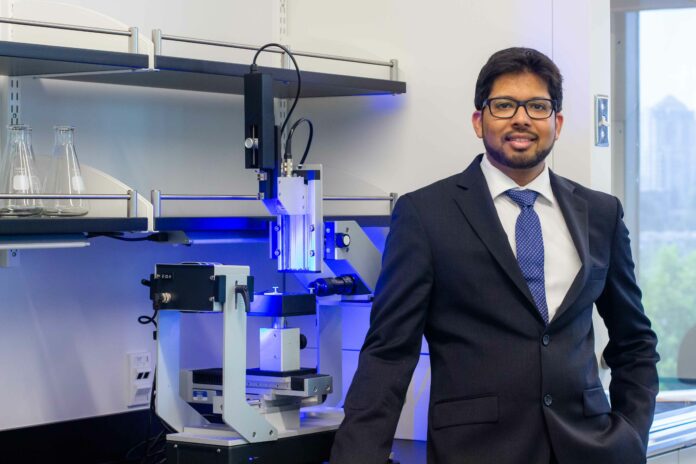
Sami Khan on the right hand side, with microscope in the background
PHOTO: Courtesy of Sami Khan

Sami Khan, an assistant professor at SFU’s School of Sustainable Engineering, aims to combat the climate crisis by researching ways to improve existing energy systems. Khan directs the research group, Engineered Interfaces for Sustainable Energy (EISEn), in using chemistry and mechanical engineering to address climate change.

Khan spoke to The Peak about the research he and EISEn are focused on. “The specific focus for us is CO2 [carbon dioxide] capture and conversion because this is also a process that happens at interfaces. When CO2 bubbles are inserted in a liquid, the interfaces swarm between the bubble and the liquid that is absorbing or dissolving the CO2,” Khan said. “We are very interested in engineering [and] tuning this interaction so that we can enhance the performance and longevity of CO2 capture and conversion.”

Khan explained interfaces are “the boundaries between two mediums.” The interfaces are everywhere in the natural world, Khan said, such as at the bottom of the ocean, where there is a boundary between the ocean floor and the water. EISEn is interested in researching which interactions take place at these boundaries. 

Khan said enhancing carbon dioxide capture and conversion is a challenging endeavour. Currently, there is a dilute concentration of CO2 in the atmosphere, about 400 parts per million which Khan compares to “a drop in a pond.” 

“When you have a very dilute concentration of CO2, then in order to capture that, there has to be a lot of energy and materials spent to filter out these molecules which are very dilute at the moment in the atmosphere,” said Khan. “If a lot of energy is spent to capture CO2, then that means that fuel has to be burnt and energy has to be spent so, in a way, the efficiency and the net benefits that you get from the process are lowered.”

He said there is great potential for CO2 capture and conversion systems to be more effective, as well as to use less energy through innovative chemistry based methods and materials. He explained the difference this could make, using an  analogy of glue. 

“If a surface is covered with glue and this glue is selectively capturing CO2 molecules, then it is spending less energy than, let’s say, pumping CO2 through a fluid,” said Khan. 

Khan emphasized the importance of interdisciplinary and collaborative approach in tackling the problem of climate change. 

“The current natural systems are not just finding it hard to cope but they’re also getting reduced, so forests getting annihilated, it’s a big challenge, because not only are they destroying trees which are natural capturing agents for CO2 but they are also emitting CO2 from the fires themselves,” said Khan. “CO2 capture and conversion systems, reducing the amount of CO2 emitted from our existing systems, and offsetting the existing impacts of climate change — all of these have to work together.”

Khan also explained this approach is necessary in policy-making, as there is currently “no homogeneity in terms of the understanding of the urgency and the next steps.” He emphasized it’s important for all levels of government to work together on regulations that collaboratively address these challenges. Khan encourages students to facilitate more conversations about the challenges we are facing from the climate crisis. 

“We all have to be in this together and we all should be aware of the challenges and the opportunities and the options that are available to address this crisis,” Khan said. 

Andrew Mack Dialogue on Peace & Security discusses the transformation of violence

0
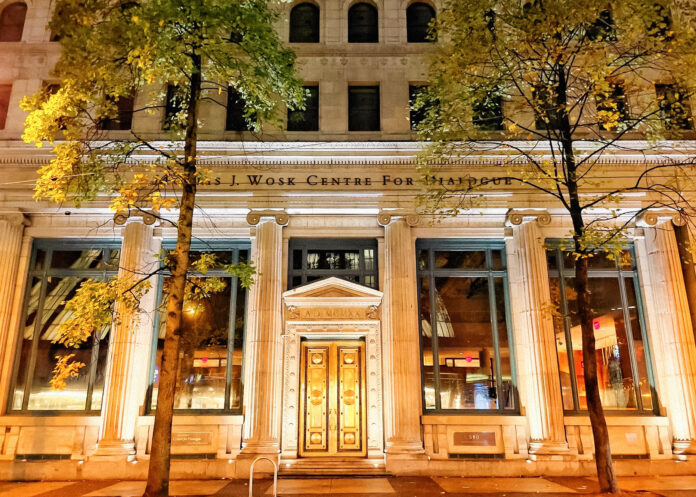
SFU center for dialogue at downtown campus
PHOTO: Almas Phangura / The Peak

On September 13, 2021, SFU hosted Andrew Mack Dialogue on “Peace & Security: The Past, Present, and Future of Violence.” The event highlighted “trends in violence” and how violence statistics is not adequate in measuring the effects violence has on people. 

According to Bojan Francuz, a program officer at NYU’s Center on International Cooperation, the webinar intends to “challenge us all to think how we can be better at making significant reductions in violence and save lives.”

Senior fellow at the Carnegie Endowment For International Peace, Dr. Rachel Kleinfeld, said while there has been an increase in civil wars, medical innovation and the shift from large armies to drones reduced battle deaths. Despite the declining rates of violence, she cautioned against relying on statistics alone.

“Violent death numbers don’t count intimidation; they don’t count other forms of death,” Kleinfeld said.

“Our numbers might not be rising to the extent that they were in the mid-20th century, but the effects on our geopolitical system might be just as great,” Kleinfeld said.

Dr. Robert Muggah, co-founder of the Igarapé Institute, a non-profit “think tank” based in Brazil, opened the event with his report on the declining rate of violence. “We’ve actually seen rates of conflict violence decline since the middle of the 20th century,” Muggah said. Muggah noted several initiatives to support this downtrend, such as the United Nations’ treaty against nuclear weapons.

Dr. Dan Smith, director of the Stockholm International Peace Research Institute, clarified there are more armed conflicts and a decrease in battle death numbers. Smith said this signals a new form of violence. 

Geography professor at the University of Sussex, Dr. Clionadh Raleigh, noted another concerning misconception about violence concentrated in certain regions. 

“We really need to break this notion that poor countries have conflict and that somehow increased wealth means less conflict,” Raleigh said.“When we see dramatic shifts in the economic fortunes of state investment or not, what we can find is that some of these exacerbations in that crisis, that competition gets even fiercer.”

According to Smith, peacekeeping must go beyond being anti-violent by incorporating proactive measures, such as protecting women’s rights.

While violence is an ongoing problem, Kleinfeld identified decreasing public acceptance for violence as a reason to be hopeful. Smith offered an alternative perspective. Concerned about the threat of future violence, Smith recommended a cooperative approach to international relations.

For those interested in learning more, the full event can be streamed on YouTube.

BC needs to use its Alert Ready system for natural disasters

0
This was the worst storm BC has seen in a long time, yet I still had to drive to class. PHOTO: Egor Yakushkin / Unsplash

On Saturday, November 6, 2021, a tornado rolled its way through the UBC campus. Winds reached anywhere from 90–110 km/h on campus and there are numerous videos of the wreckage this storm left behind. The tornado left behind damaged vehicles, fallen trees, and downed power lines crews were still fixing Monday morning. If there was ever a good time to use BC’s Alert Ready system, this would have been it. 

BC’s Alert Ready system allows the government to send an emergency message to phones, major television stations, and radio broadcasters to alert the public of life-threatening dangers. 

I didn’t hear about the tornado until Monday night while watching the news. Looking at the footage of the destruction afterwards, I was amazed I hadn’t heard anything sooner. Where were the alerts telling people to stay inside? Despite being given an EF0 rating (the lowest rating for a tornado), it is still quite dangerous to be outside in 90–110 km/h winds with trees being uprooted. 

But this tornado did not warrant an emergency message from Alert Ready. In an interview with City News, meteorologist Bobby Sekhon said the Alert Ready system is “really for the most severe cases [ . . . ] when danger to life is imminent.” However, upon looking at the footage of destroyed vehicles and fallen trees, I would argue the destruction posed danger to human life.

This isn’t the only time the Alert Ready system was not used. Think back to the heat dome BC experienced over the summer, the one that killed nearly 600 people. That would have been an excellent time to send an emergency message warning people about the extreme temperatures and directing people to cool-down centres set up across the Lower Mainland. It was also not used for the Lytton wildfires which left around 4,300 properties under evacuation order. Additionally, more than 1,000 people had to flee their homes and two people died. 

So what’s the hold up on using this emergency broadcast system? Well in the same City News article, Sekhon said, “If every warning is broadcast-intrusive, people might not take it as seriously.” This is a fair point, but the only time I’ve ever received one of these warnings was as a test. We have this software, and if there is a dangerous weather event, we should be using it instead of waiting for a bigger one. What is the point of having this life-saving software if we aren’t planning on ever using it? 

Tornados and fires are both listed as potential alert types on the Alert Ready Website. Yet according to the Alert Count on the website, BC has not sent out a single alert since 2019. Without any other clear criteria listing what would count as “danger to life,” it makes me wonder why BC has not used this service more. 

I think it’s time we reconsider the criteria for when BC uses its Alert Ready system. I would rather be overly cautious and potentially save lives than risk the lives of BC citizens. 

SFU350 paints mural at Convocation Mall to campaign for climate action

0
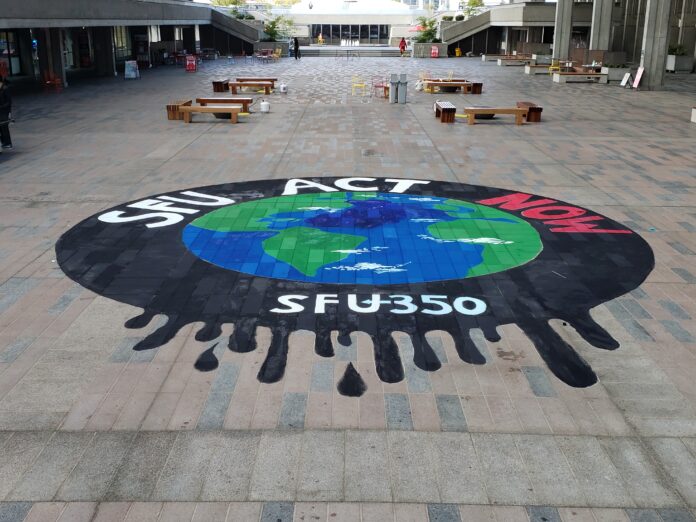
A circular mural, earth surrounded by a black ring dripping like oil
PHOTO: Nancy La / The Peak

A picture is worth a thousand words, and SFU350 is betting on that being the case with their new mural installation at Convocation Mall. The group painted the mural on September 12, 2021 to raise awareness of their ongoing campaign against SFU’s fossil fuel investments, among other demands. The Peak was present for the painting of the mural, and spoke to SFU350 executives at the event.

Gurleen Aujla, outreach lead of SFU350, explained the rationale behind the event. “This is a no-cost, low-barrier access to our campaign, which will hopefully help us engage with as many students as we can in the SFU community,” she said.

The mural was designed and painted by Jess Stanley, a Vancouver-based illustrator and artist. She works with climate groups across the Lower Mainland for both art builds and direct actions. Stanley is also in charge of designing SFU350’s stickers and buttons.

SFU350 published an open letter in August 2021 calling for SFU to declare a climate emergency. The letter also campaigns for SFU to divest its investment portfolio from “fossil fuel extraction, processing, and transportation companies,” educate students on the climate crisis, and engage students on “climate justice topics.”

“We have had a number of conversations with the SFSS and SFU350 regarding the mural, as it has been placed on university property, which is not permitted,” Rumanna Khan Hemani, vice provost, students and international, student services, said to The Peak in an email statement. “The university is currently assessing the best way to remove the mural to prevent permanent damage to the area.”

“SFU350 will continue pushing for this mural to remain in place until the 28th of September,” Aujla said in an email to The Peak. “This mural was put in place because we’ve been silenced for years.” She added they have been advocating for divestment for over seven years.

SFU350 plans to present their open letter at the September 28 Board of Governors meeting. According to Abigail Herd, co-president of SFU350, vice president finance Martin Pochurko and vice president research and international, Dugan O’Neil, have endorsed a presentation of the letter at the meeting. Board of Governors undergraduate representative, Serena Bains, will put forward the motion on behalf of SFU350.

“They did express the fact they don’t necessarily agree with all the demands we provided in our letter. While they didn’t say which ones, we know in the past they haven’t agreed with divesting from fossil fuel,” Herd said.

SFU implemented its own sustainability plan in Spring 2020. The plan includes shifting “50% of the fossil-fuel based energy used by SFU to renewables by 2025,” and reducing greenhouse gas emissions by 50% from 2007 by 2025.

WeiChun Kua, executive member of SFU350, said while SFU’s sustainability plan has “some good policies,” it is still missing some actions. The plan “does not meet the 1.5℃ [pathway] the IPCC [Intergovernmental Panel on Climate Change] sets up.

“We need SFU to take immediate action in enacting systemic change to address the root cause of the climate crisis,” Kua said, citing capitalism and colonialism as the causes.

As of September 24, 2021, the mural is still present at Convocation Mall. 

On September 24, The Peak received news from the SFSS Executive Committee that there were attempts from SFU’s Student Conduct Office (Office of Students Rights and Responsibilities) to issue letters of “disciplinary proceedings” for those involved in the creation of the mural. 

The Peak will be providing continued coverage of this developing story.

SFU350 urges students, staff, and faculty to sign their Climate Emergency Open Letter.

The Study reopens to safely serve the SFU community

0
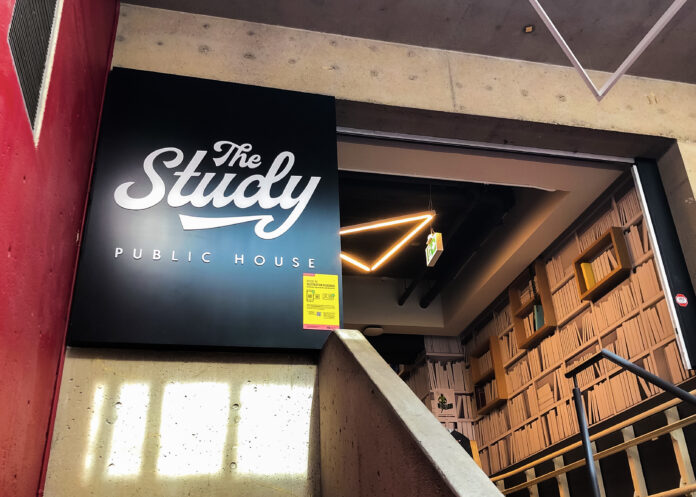
The Study sign on the upper left hand
PHOTO: Allyson Klassen / The Peak

The Study Public House in SFU Burnaby’s Maggie Benson Centre has reopened after being closed for 18 months due to the pandemic. The Study continues to follow all COVID-19 protocols set out by Dr. Bonnie Henry and the provincial health authority, which includes asking for proof of vaccination starting September 13, 2021. 

“We’re excited to see guests in the space again! It’s been so long since we’ve been able to open the doors,” said Karen Renaud, director of marketing and communications at Joseph Richards Group (JRG), in an interview with The Peak. “We’re so happy to see people with smiles and full stomachs.”

The Study is one of JRG’s 20 hospitality ventures across the Lower Mainland. The company also has restaurants in Langley, Chilliwack, and Abbotsford.

The establishment originally opened its doors on April 1, 2019, replacing the former Highland Pub. According to their website, The Study promises to be a “vibrant social hub” with a mandate to “inspire inclusivity and foster lasting friendships for students, staff, faculty, and our UniverCity community.” 

About one year after its grand opening, The Study temporarily closed operations due to COVID-19. According to CBC, over 15,000 businesses closed in Greater Vancouver between March and April 2020. Renaud explained JRG was among those in the food industry who struggled with the sudden impacts of the pandemic. 

“Being closed for 18 months was challenging for our overall group of companies as a whole. We were forced to move product and inventory [to] other locations,” said Renaud. “We have a great partnership with SFU and we were able to thankfully keep the space with the goal of reopening when it was safe to do so.”

The Study is currently open with temporary hours Monday to Friday from 11 a.m. to 7 p.m., and their gaming amenities such as the pool table and arcade machines are available for customer use. Following public health orders, guests must stick to the group they arrived with and not mingle while using these gaming amenities. 

Renaud asks for patience with staff as they prioritize safety and maintaining their license to serve by following COVID-19 protocols. She stated they hope to extend their current hours as soon as possible, but will do so while monitoring both demand and the evolving situation of COVID-19. 

“We can’t wait to make moves on campus and get to know the students, faculty, and staff. Our catering division is excited to start servicing events and meetings too!” said Renaud. 

For more information on The Study, students can visit their website.

Senate Report: September 13, 2021

0
AQ with blue skies
PHOTO: Allyson Klassen / The Peak

Motion to Hire 15 Black Faculty at SFU 

The Simon Fraser Student Society (SFSS) president Gabe Liosis brought forward the motion to hire more Black faculty at SFU on behalf of former SFSS president, Osob Mohamed. The motion includes the following actions: 

  • Recognize and support Black History Month and the International Decade for People of African Descent,
  • Recognize the contributions of SFU’s Black faculty, staff, and students,
  • Support the implementation of a hiring initiative that would result in “15 tenure-track Black faculty” being hired across all faculties and disciplines at SFU, 
  • “Recognize harm and trauma that Black faculty and staff have faced due to the systemic and institutional racism that has existed at SFU” and implement further supports for current “Black faculty, students, and staff,”
  • And consult the SFU Black community in the implementation of these changes to ensure they are beneficial “for Black faculty, staff, and students.”

Liosis noted, due to a minimal number of Black faculty at SFU, many students have never had a Black professor and, thus, do not have the opportunity to hear about Black experiences first-hand. Senators noted there is currently no data regarding the amount of Black faculty at SFU. Mohamed, Balqees Jama, and Dr. June Francis, were allowed to speak for two minutes each on the subject.

Mohamed spoke about institutional racism at SFU, and its occurrence in all aspects of student life, including in the classroom and in meetings. She shared she has never had a Black instructor at SFU, or anyone who reflected the same background as her. 

“I really do believe that this is going to be an opportunity to actually walk the walk,” Mohamed said. “SFU has made a new commitment to equity, diversity, and inclusion [ . . . ] this is the time to see that commitment come to life.” 

Jama, president of SFU Students of Caribbean and African Ancestry, said, “Black students are experiencing SFU in a way that is not equitable.” She shared experiences of being tokenized, experiencing racist and violent discussions in class, feeling isolated in the SFU community, and seeing racial bias in all disciplines. She noted certain departments make “sweeping generalizations about Black communities” and center white research. 

“It’s a dream of mine and so many of my Black peers to have people to connect with,” she said.

Dr. Francis, special advisor to the president and a member of the SFU community for over 30 years, described Black students at SFU as “invisible,” and their thoughts, traditions, and experiences being “erased.” She also shared SFU has not been a welcoming place for her ideas, perspectives, and goals.

Multiple senators raised questions regarding where the 15 faculty positions, as well as the funding to support such initiatives, would come from, and expressed interest in a more formal plan. It was noted any financial decisions will need to be made by the Board of Governors.

Through a vote, the motion was carried. 

COVID-19 Safety Measures on Campuses 

The Senate meeting opened with discussions of COVID-19 health and safety, including mandatory masks in public indoor areas and declaration of vaccination status. On August 27, SFU sent out an email survey asking for student, staff, and faculty’s vaccine status, with over 22,000 responses recorded. Of the 22,000, roughly 1% of respondents declared they are not vaccinated. 

Vice president academic and provost Catherine Dauvergne announced they were tentatively aiming to begin rapid screening unvaccinated students and students who did not disclose vaccination status in late September. SFU is planning to audit survey responses and is taking steps to ensure all students can access the online survey. 

Campus spaces have also been assessed on ventilation potential, and those falling short of necessary requirements are not being used, Dauvergne noted. She also discussed the addition of technology in classrooms to allow for recording “to support students who we hope will not come to campus if they are not feeling well.” The choice to record lectures remains with individual professors.

For convocation, SFU is opting for multiple, small ceremonies, rather than few, large ceremonies, and will be checking attendees’ proof of vaccination. 

Shafik Bhalloo, associate professor in the Beedie School of Business, raised concerns about SFU’s current system of vaccine declaration. “This is not a mandatory vaccination policy, this is not even a proof [of] vaccination policy either — it is only a policy only based on the honour system, based on the hope that students, staff, and instructors will be honest in declaring their vaccination status.” Bhalloo asked whether SFU will implement a vaccine mandate, require proof of vaccination, and if those with “legitimate exemption” would be allowed to remain unvaccinated.   

Dauvergne responded that, at this time, SFU will not be making vaccines mandatory, as, among other reasons, “the province has specifically asked all post-secondary institutions not to exceed the guidelines of the Provincial Health Office.” 

The next regular Senate Meeting will take place on October 4, 2021.

Council Meeting — September 15, 2021

0
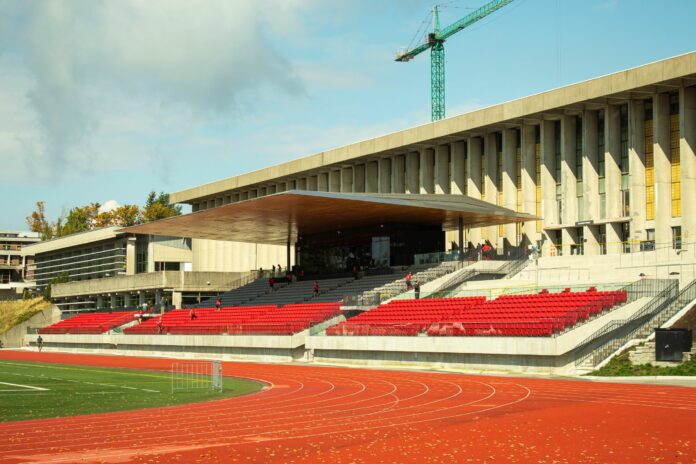
SFU Stadium with red seating
PHOTO: Krystal Chan / The Peak

Return to campus concerns voiced

President Joy Johnson attended the council meeting to answer councillors’ questions regarding the return to campus and SFU’s COVID-19 safety measures. “In terms of returning to campus, it has not been a smooth and direct path to get to where we are today,” she said. 

Johnson reported in BC, post-secondary institutions have been all working together to find a way to get back to campus while following public health orders. “There was a lot of concern around the mental health of students [ . . . ] and so it was really important to try and find a way to get us back on campus.

“Vaccination rates, self-reported, albeit, were sitting around 94%,” said Johnson.

Biology representative Nicolas Bonilla noted there hasn’t been any vaccine enforcement and asked if there will be moving forward. Johnson noted vaccinations are required at select places around the campus such as the pub, UniverCity, students living in residence, among others. Johnson responded, “If you have a concern I’d really encourage you to contact Campus Safety and let them know.

“In the last weeks of August, we were trying to find a way to open up our community to new students. Also, to raise their voices around safety issues [ . . . ] we were trying to work with our public health officials to say at minimum, we need mandatory masks,” said Johnson.

She noted, “One thing that really surprised us is when the minister of advanced education Anne Kang set up a press conference and said universities can put in extra measures should they so desire. Later on, in clarification, we were told we can put in extra measures but we have to work with public health.”

Vice president equity and sustainability Marie Haddad presented some photos and videos that highlighted a lack of social distancing, ability to remove masks in lectures, and other safety concerns, particularly in crowded areas such as the hallways in the AQ. 

Johnson reported “there is no requirement for social distancing anymore in post-secondary institutions.” She also noted public health orders allow lecture halls to be at full capacity. “There is very little evidence of transmission in classrooms,” said Johnson. 

Vice president university and academic affairs Serena Bains noted the requirement of documentations by the Centre for Accessible Learning is causing “undue burden” for students requiring assistance. Bains said, “I’m wondering what SFU is doing to ensure that these folks can receive the access to learning that they need that supports their health at the same time.” Johnson noted she cannot comment at this time but would follow up.

Executive Committee support for hiring Black faculty members at SFU

President Gabe Lioisis presented a report updating councillors on the executive committee’s work. He noted the executive committee passed a motion brought forth to the SFU Senate. This motion asked SFU to “hire 15 Black tenure track faculty at SFU.”

Liosis noted the motion passed in Senate on September 13, 2021. “It’s an exciting achievement,” said Liosis. “There was a lot of work and labour put in by Black student activists and community leaders to make that happen.”

Council supports Anti-TMX Day of Action

The Council put forth a motion to support the Anti-TMX Day of Action which took place on September 24, 2021. The event was held by SFU350 and the Teaching Support Staff Union at SFU.

The Council’s motion included their endorsement, financial support, and promotion of the event. They created a working group of Council members to volunteer at the event.

Their motion states the Trans Mountain Expansion (TMX) project is adding 13 new tanks next to the Burnaby Campus. Over a 50 year period, the probability of an oil spill is 79–87%. This would create a “devastating environmental impact for BC’s wildlife.”

In the case of a fire caused by a tank spill, students would be trapped on the mountain with little route to escape. 

Haddad highlighted the TMX pipeline goes against Indigenous sovereignty and safety. 

The motion passed unanimously. 

The BC vaccine card, explained

0
a phone scanning a QR code
PHOTO: David Dvoracek / Unsplash

BC has developed a vaccine card which is now required for individuals age 12 and older to enter some events and services. As of September 13, 2021, individuals need proof of partial vaccination with at least one dose. As of October 24, 2021, individuals will need to be fully vaccinated with proof of two doses to enter select events and services. They will require the vaccine card to be accompanied by a piece of valid photo ID. 

Proof of vaccination via the vaccine card will be needed for ticketed sporting events, nightclubs, exercise facilities, pubs, restaurants, theatres, and post-secondary student residences, among other venues. 

They will not be required for grocery stores, retail stores, health care, or other essential services. At post-secondary schools, classrooms, academic events, libraries, teaching labs, or campus cafeterias do not require them either.

The card creates an individual-specific QR code that restaurants and businesses will be able to scan. To ensure privacy, the QR code stores “the absolute minimum level of information and is not connected to other health records,” according to the provincial government’s website. 

The card can be obtained after vaccination by entering your birth date, personal health number, and date of either vaccination dose at BC government website. Along with the QR code, the card will display your name and vaccination status — partially vaccinated, vaccinated, or no record found. 

The card can be stored by screenshotting the QR code and saving the photo to your mobile device. For those without access to a smartphone, a paper copy can be requested online.

The announcement of vaccine cards has sparked outrage amongst some British Columbians who held a protest outside of Vancouver General Hospital. Thousands of protestors gathered on September 1, 2021 and were reported to have caused a great disturbance to hospital patients, ambulances’ ability to travel, and hospital staff. 

In a press release on August 23, Premier John Horgan said, “Vaccines are our ticket to putting this pandemic behind us [ . . . ] So I call on all eligible unvaccinated British Columbians to roll up their sleeves to stop the spread, and help protect themselves, their loved ones and the people in their community. British Columbia has one of the strongest vaccination rates in Canada with 75% of eligible people now fully vaccinated, but there is still more work to do.”

SFU will require students to use the BC vaccine card to attend non-essential activities, events, and business on campus as of September 13, 2021. These events include ticketed indoor concerts, gyms, recreational facilities, pools, conferences, club events with more than 50 people, among other activities.

SFU researchers make breakthrough discovery on earthquakes and tsunamis in Greater Tokyo region

0
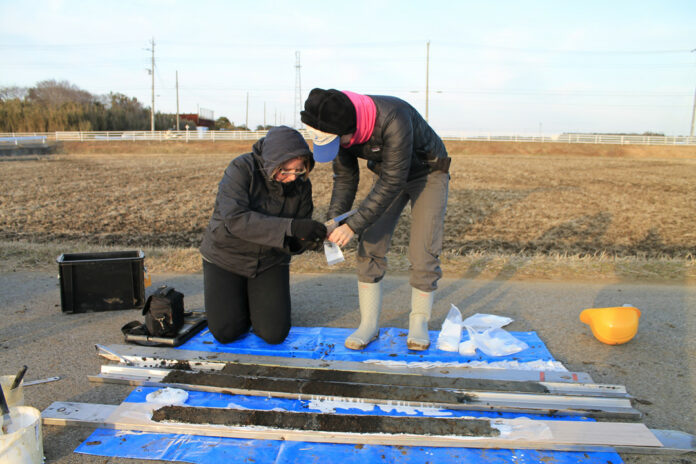
Jessica Pilarczyk on the left and colleague on the right, looking at sediment on a blue tarp
PHOTO: Courtesy of Jessica Pilarczyk

SFU earth sciences assistant professor Jessica Pilarczyk leads her team in making a new discovery related to a plate boundary that affects the risk of earthquakes in the Greater Tokyo region. The present and historic earthquakes taking place in Tokyo can now be traced to the Philippine Sea-Pacific plate boundary, making it a place of interest for detecting seismic risk.

The plate boundary, which lies in the southern part of the Japan Trench, received stress from the Tohoku earthquake and tsunami in 2011, generating questions about its seismic risks, as this plate didn’t rupture. The impact of the event was felt across the ocean, including in BC. Pilarczyk and her team have been working on this research for a decade and recently published their findings on Nature in early September.

As tsunamis come onto shores, they bring sand and marine sediments, creating a tsunami deposit, Pilarczyk explained. “We went looking and trenching [digging], which would tell us whether a tsunami had happened here or not. 

“We went to a lot of rice paddies [ . . . ] We wanted something very close to the coastline, we want it to be low-energy, we don’t want it to be too manipulated by anthropogenic or human-induced changes,” said Pilarczyk. The team also used paleoecological (sifting through sand for small fossils), geological (looking at the sand and measuring mountains), and radiocarbon dating methods for their research. Microfossils and micro-organisms in sand samples were analyzed and dated using radiocarbon analysis, which utilizes the predictable way radioactive carbon atoms break down to date organic material. 

Pilarczyk and her team found three sand layers, of which the second layer could be traced for 50 km “along the shoreline.” According to Pilarczyk, this was extremely “unusual” and was a key discovery in this research. Collaborating with a modeler from Japan, the team was successful in understanding the type of earthquake that could create a tsunami with deposits as far as 50 km. 

“The lowest magnitude [earthquakes], we call those our preferred model because it’s the smallest earthquake possible [ . . . ] basically came from a subduction zone between the pacific plate boundary and the Philippine sea plate boundary.” Subduction zones occur when two tectonic plates are next to each other and one slides beneath the other. These boundaries were not previously recognized as an earthquake source. 

Pilarczyk explains “there is a high probability that this major [Tohoku] earthquake and tsunami actually came from that boundary.” Pilarzyck’s finding will help inform the Japanese seismic hazard maps used to build hospitals and apartment buildings. 

By understanding other subduction zones and plate boundary processes, Pilarczyk hopes to help Canada mitigate hazards, such as an earthquake in the Cascadia subduction zone located from California to BC. This zone has been predicted to pose a big risk of earthquakes in the future. 

Pilarczyk, a Tier II Canada Research Chair in Natural Hazards, will go to Vancouver Island with her team in search for more geological evidence related to plate boundaries and subduction zones.