

Home Blog Page 1141

Sugar daddies sweeten the deal for students in debt

0

WEB-Sugar daddy

SYDNEY (CUP) — Sugar daddies and students seem to be coming together, according to a survey and press release from www.seekingarrangements.com. The site offers users the opportunity to meet a sugar baby or daddy, stating they provide a resourceful new way for young college students to pay back their student loans — by getting someone else to do it.

The Seeking Arrangements release says that from 1990 to the year 2017, tuition prices will have tripled with inflation, leaving students with around $38,000 in debt.

Critics are concerned that tuition has risen so high that students would rather enter into this type of relationship than face a huge debt from schooling.

“Why hope for financial aid when you can guarantee it with a Sugar Daddy?” Brandon Wade, founder and CEO of the website, said in the release. “Student loans lead to endless debt, which amounts to more than a new graduate can handle. Sugar Scholarships provide real solutions to the problem of student debts.”

The site was started by Wade to pair wealthy sugar daddies with young attractive women who need money. When faced with criticism after the UK site launch, he told press that the sugar babies were all “intelligent and goal-oriented ladies, while sugar daddies were respectful gentlemen.”

Wade markets Seeking Arrangements as a dating site. He told the Wall Street Journal, “I started the website mainly out of frustrations with online dating. I had graduated from MIT and was making six figures, but it was very poor pickings for me. I would write emails [to prospective dates] and get a one to two per cent response rate.”

Seeking Arrangements claims to be the world’s largest sugar daddy site, with over 2.7 million users signed up. Of those, 42 per cent, or about one million individuals, are seeking help with tuition. The average “allowance” of a sugar baby is around $3,000 a month, but this is not the limit.

Seeking Arrangements’ commercial states the site is open to attractive women, aged 18 or older, and if they sign up with their university email account they get a free premium membership. The site requires they provide photos, detailed profiles and “clear expectations” – that is to say, the intentions of both parties are clarified at the beginning so there is not a misunderstanding of the relationship.

The site then sets up the arrangements, which they define as, “a ‘mutually beneficial arrangement’ or a ‘mutually beneficial relationship.’”

Seeking Arrangements does not require a minimum GPA, but it does require the sugar baby be attractive and pass a background check. Despite this, there are still online warnings against sugar daddies that get their side of the bargain and run off before paying their sugar babies.
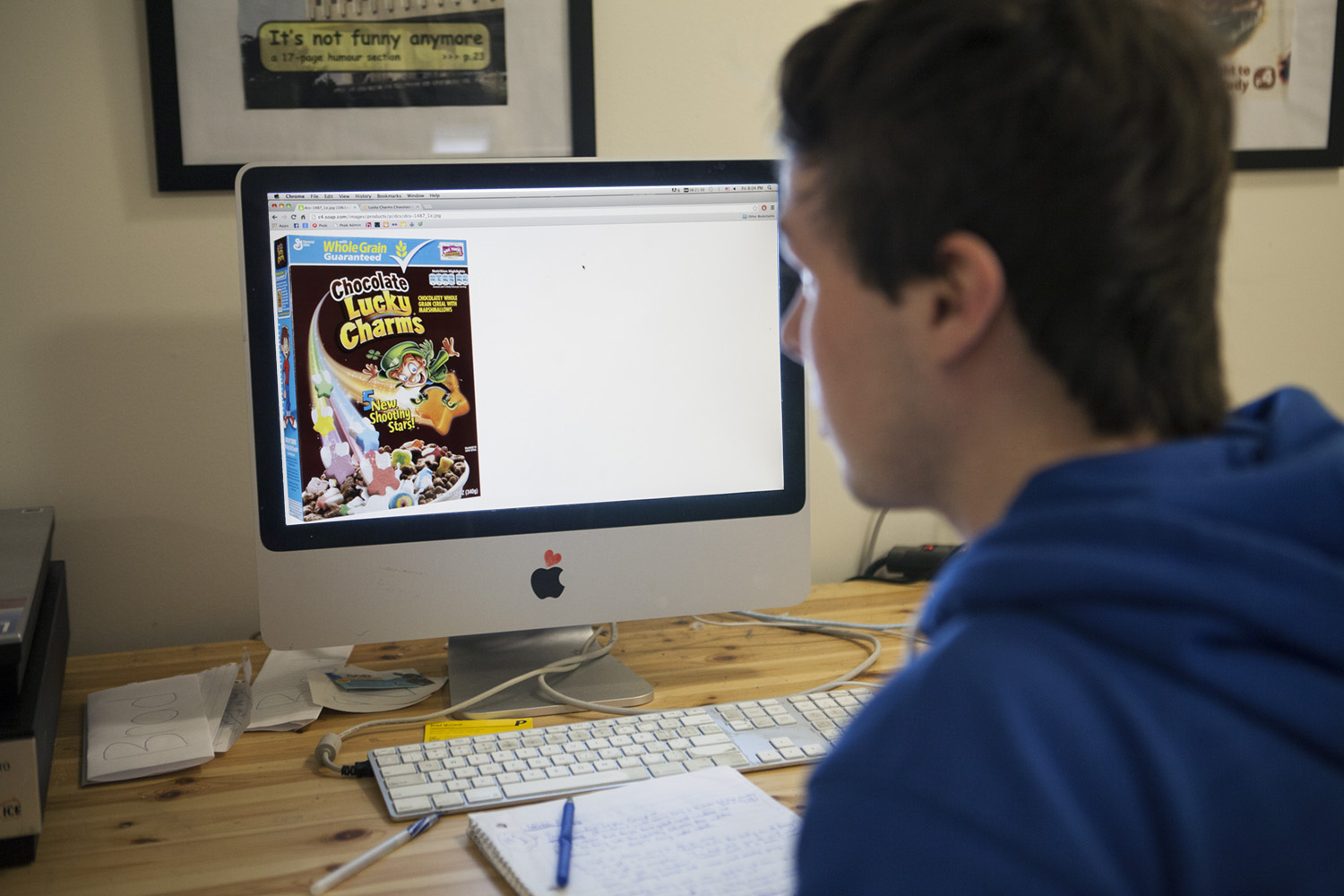

Man awoken from 30-year coma most amazed by Chocolate Lucky Charms

0

VANCOUVER — After spending the past 30 years of his life in a coma, a local man has gotten the opportunity to witness the future, but the only development that has impressed him thus far is a chocolate version of his favorite cereal.

According to doctors at Mount Saint Joseph Hospital, Timothy Smith had been comatose since 1984 after suffering a stroke when he was just 12 years old, and was only awoken last week.

“We didn’t think that there was any chance he would actually survive,” explained Saint Joseph’s head practitioner, Dr. Bill Truman. “He’s been given an amazing opportunity to literally jump into the future but he’s not reacting like we thought he would.”

According to Truman, the now 42-year old Smith’s first request upon waking up was to eat breakfast and he almost went into shock due to the cereal that was brought to him.

“He started yelling and screaming incredulously when we put the box down in front of him,” Truman recalled. “We thought, wow, if he’s that excited by a chocolate version of a cereal he’s going to be in for a lot of surprises.”

Weirdly, however, that moment is still the pinnacle of Smith’s excitement about the modern world.

“We brought in iPhones, laptops, the Star Wars prequels . . . all of our greatest technological achievements, but nothing seemed to phase him,” Truman said, shaking his head. “He just shrugged them off and went back to staring at his cereal in amazement.”

“At one point I did catch him marveling at an iPad but it turned out that was only because he had figured out how to get to the Chocolate Lucky Charms website.”

While doctors and researchers alike have been unable to explain Smith’s bizarre attitude, Smith thinks it’s quite simple.

“They used to just have regular Lucky Charms from what I can remember,” Smith stated casually. “There were chocolate cereals, sure, but Lucky Charms were always just toasted oat pieces and marshmallows so naturally this development is incredible to me.”

“Everyone wants me to be blown away by this Internet thing but come on, it’s just a global system of interconnected computer networks that serves several billion users worldwide . . . I can’t even eat that!”

Boring budget

0

The budget may not be the most exciting thing in our country, but it is one of the most important. While we were all off enjoying our reading break, the federal government announced its budget for the coming fiscal year.

If all goes according to plan, the 2014-2015 fiscal year will be the last deficit budget for a long time. While part of that plan involves the Conservative government being given another four-year mandate to govern, a balanced budget will play a big part in convincing many voters how to vote.

If the Conservatives can manage a re-election, they will have pulled off an economic coup. With Canada already leading the G-7 nations both in job creation and net debt-to-GDP ratio, the government is hoping to continue our economic stability by having a surplus budget as nations around the world continue to struggle to climb out of the recession.

Though many in the country may not be happy about the cuts to some programs, the Conservatives are looking out for the long-term, for a future with more people taking advantage of our many social programs than people funding them.

Increased taxes on tobacco are estimated to bring in over $3 billion.

Finance Minister Jim Flaherty has also continued to champion the cause of those with developmental challenges, following up on previous measures like the Disability Tax Credit and the Registered Disability Savings Plan. He proposed that the budget allocate funds towards the Ready, Willing, Able initiative, which helps Canadians with intellectual disabilities contribute to the workforce, and vocational training programs for Canadians with autism.

The biggest criticism of the budget so far has been that it is boring. Flaherty takes this as a compliment, saying it avoids “flashy spending,” keeping the country “on the right track.”

Little by little, he has been eating away at the deficit incurred at the height of the recession, and there is the expectation that if the Conservatives maintain the leadership of the government, Canada will see a $30 billion surplus over the next five years, barring any unexpected events.

And since the government builds a $3 billion cushion into its budget, it is likely that the budget could end up being balanced this year if all the numbers line up properly.

Unless you happen to be a smoker, you will also be a fan of the increase on tobacco, which is estimated to bring in over $3 billion over the next five years. Furthermore, the government is looking to close the price gap between goods sold in the United States and Canada, which is exciting news for an avid reader like me who hates paying that extra $3 for a book in our country.

For those of us who have been following the Senate scandal, this budget also looks to close the loophole that is currently allowing the three disgraced senators to collect pensionable years despite being suspended, with a private member’s bill calling for the stripping of pensions of any senator or MP convicted of a crime currently being debated in the House of Commons.

While the budget may be boring, now is not the time to start taking chances with the Canadian economy. We have travelled a long road to get out of the recession, and we have done so with one of the strongest economies in the western world, in no small part due to the efforts of Flaherty and the Conservative party.

A new dimension

0

WEB-3d printer-flickr-Dennis van Zuijlekom copy

When I think of 3D printing, my mind flashes back to Mission Impossible 3, in which 3D printers are used to quickly create silicone face-masks with which the agents can disguise themselves. I remember thinking that this incredible technology, with all its complexity, speed and precision, couldn’t be too far from being developed.

In fact, as I found out later, that kind of technology had already been in the works; 3D printing has since evolved enough to become a burgeoning development in our consumer market.

I must say, I find the concept of 3D printing amazing in terms of its convenience and flexibility for product manufacture. 3D printing will sport endless benefits for companies, as well as their consumers.

With a 3D printer, shopping for products online would be incredibly fast and convenient. Imagine you’re shopping online for a pair of shoes: you’ve purchased the pair you’re interested in, you download a specific file containing instructions for the printer, and once the printer has been loaded with the right materials, the shoes can be printed right from your home.

The possibilities for customized products would be near infinite!

I, myself, am “flat-footed”; I’ve been wearing specialized, custom-fit soles in my shoes since I was very young. The notion that I could print out my own in-soles from home, rather than spending more time at the physiotherapist’s office, astonishes and relieves me. This level of customization could be applied to endless different products.

3D printing also allows for increased instant gratification. While this theory is widely frowned upon (especially at SFU), think about the possibility if the production of goods could avoid factories entirely.

Stores, such as auto-shops, could manufacture new parts without having to wait for them to be shipped. The Harvard Business Review had it right, saying that higher per-unit production would be “offset by the elimination of shipping and of buffer inventories.” At least one company has seen the cost for production of goods reduced by 70%, according to Indian Springs Manufacturing Company’s president Shawn Ferguson.

So, do I have your attention yet?

Many companies have now begun to use 3D printing in their manufacturing processes. Recently, Hasbro Inc., makers of Monopoly and Play-Doh, signed a contract with the company 3D Systems to create a 3D printer for children to print off their toys. Adidas and Nike have been using 3D technology to create the cleat for their footwear.

But consider this: 3D printing could also be used to print food. Last year, NASA granted significant funding to mechanical engineer Anjan Contractor in order to develop a 3D printer for astronauts to use while on lengthy space-missions.

With the correct dehydrated powders, astronauts would be able to print out their food through a printer that heats and mixes these powders together. This has already been achieved with chocolate, and now, believe it or not, Contractor claims that he can print pizza!

In a heightened post-Ford era where niche marketing and instant gratification are very important, 3D printing will undoubtedly broaden and evolve the ways we view the production and consumption of goods.

In other words, when I have kids, I’ll be printing out their face-masks when Halloween rolls around. Say adios to Value Village!

Where are they now?

0

Ever wonder what happened to those celebrities who were everywhere back then, but have since fallen off the face of the earth? Well, stop asking yourself stupid questions like an idiot and find out where they are — now!

CMYK-KuroKatsuo_VickyYi

Kuro Katsuo

Japan’s #1 Suicide Bomber (1943-1943)

Oh man, Kuro Katsuo used to be the biggest deal back in ‘43 after he single handedly killed 300 allied soldiers and himself. He was on the cover of almost every magazine and newspaper in Japan for a solid month and was even named Tokyo’s “Mr. Suicide Bomber”. Unfortunately, following his crowning achievement he’s said to have retired from living and is now resting all across the south pacific.

CMYK-Provinces

Former Provinces of the Soviet Union

Latvia, Belarus, Ukraine . . . why do you never hear about these guys anymore?

Back in the ‘80s, the provinces of the Soviet Union were almost inseparable and spent all their time together as the best of friends. But what ever happened to them? Well, their break-up was pretty dramatic. Belarus still isn’t talking to Kyrgyzstan. To this day Russia still calls Bulgaria almost every week asking if they can all get back together. From everything I’ve heard, Ukraine’s doing really well though.

CMYK-socks

Your Lucky Pair of Gym Socks

The unique ones with the blue stripe that definitely weren’t mass-produced

Remember those guys? The socks you claimed helped you score 30 points in that pick-up basketball game? Bad news, you left your lucky socks at the laundromat and the owner threw them out. The good news, however, is that they didn’t actually contain any magic powers. That great game you played? That was all you. And all that recent bad luck you’ve been having? That isn’t because you aren’t wearing those socks, it’s just because your life is slowly deteriorating in the way it was always destined to. What a relief, eh?

Moment of Zen

0

WEB-momentofzen-wallyg-flickr
Last week, President Humza Khan pointed out to SFSS executives that there were only 70 days left in the term of their current positions. This announcement was met with surprised laughter and the interjection of “that’s too long!”

Khan said, “It’s going to be over in no time. It’ll be us sitting down like this, and it’ll be [like] ‘Oh, the year’s over. Good times.’” He encouraged members to focus and work with one another over the next 70 days saying, “In the last few months we have, we could really leave a big impact on how the student society is going to work.”

The next generation’s health could go up in smoke

0

Web e cigarettes Andrew Zuliani

From British Columbia to New Brunswick, electronic cigarettes have stirred up political debate and controversy.

While these might look like a blessing for those trying to quit smoking, they may also be the start of a dangerous trend amongst Canadian youth. The product remains unregulated and available to all ages, leaving myself, as well as healthcare officials across the nation, wondering when and if the government will intervene.

Despite the novelty of e-cigarettes, disturbing stories are emerging of how this product may affect children. This winter, an 11-year old South Delta boy purchased an e-cigarette at a local store. His parents were horrified to find the boy as he tried to blow smoke rings with it at home. After the boy’s father attempted to return the product, he was denied a refund on the grounds that the store owner did not violate any provincial regulations.

A bit shocking, no? Since there are currently no restrictions on this product, vendors have been offering the inherently adult product to children. These vapour-producing cigarettes appeal to youth as they come in a variety of kid-friendly flavours (such as grape and cherry), and they can be purchased at any local drugstore.

By making this product available to youth, we may open the door to a revived smoking culture.

Since e-cigarettes legally cannot contain nicotine, they were deemed harmless when they first hit the shelves. However, this is a premature conception of the potential dangers associated with the trend.

After years of anti-smoking campaigns, the world began to see a decrease in its smoking population. This happened because kids were educated about smoking; from an early age, adults started warning of the dangers of nicotine and smoke.

Now, after all this progress, we risk seeing a reversal in the way kids view cigarettes.

With every innovation comes a trial period where you learn how society adapts to the product. E-cigarettes present a slippery slope that may lead from fun flavours to tobacco. They look like real cigarettes, and are held like cigarettes — what’s to stop young people from experimenting with tobacco after doing so with e-cigs? By making this product available to youth, we may actually desensitize the next generation and open the door to a revived smoking culture.

Seeing these products used outside of their intended purpose — to help people quit smoking — makes me wonder whether they will lead to a generational movement towards a world where “lighting up” is a social norm. Although e-cigarettes have the potential to help smokers quit, the government should hastily intervene and restrict them as 19+ products.

SFU lax earns weekend split

0

kirkby vs BYU 2

The Clan lacrosse team continued its season with a road trip down to Boise, ID, going 1-1 over the weekend in a double header against #4 Brigham Young University and conference opponent Boise State University,

The preparation for Saturday’s game versus BYU was almost military-like; no one but the coaches spoke, as the team steeled itself for a game it had been working toward all semester. But after fighting tooth and nail until the final buzzer, the Clan fell short 8–7 to the BYU Cougars.

The Cougars came out firing, outscoring the Clan 6–2 in the first half.  After settling their nerves the Clan came out hot in the second half, scoring four straight and keeping the Cougars scoreless for almost 25 minutes. In the end, the Cougars tallied two goals off unsettled plays in the dying minutes to jump ahead 8-6.

SFU refused to back down, though, as Tyler Kirkby found Travis Hayes in the middle to bring the game to within one, late. Unfortunately, that would be as close as the Clan would get as the Cougars maintained possession of the ball for the final two minutes, barely staving off the SFU rally.

Tyler Kirkby lead the game offensively for SFU, potting two goals and two assists, while Sam Clare also netted a pair. Senior goaltender Darren Zwack had a strong game, making 13 saves on 21 shots, walking away with an admirable .619 save percentage. The Clan’s penalty kill also stood strong, shutting down all seven of the man-up opportunities BYU had over the course of the game.

The team, disappointed with the tough loss, still proved that it is a top contender in the Men’s Collegiate Lacrosse Association (MCLA), and that a spot in the national tournament final is well within reach.

In their second game of the weekend, against Pacific Northwest Collegiate Lacrosse League (PNCLL) rival Boise State Broncos, the Clan came out firing on all cylinders and didn’t let up for the full 60 minutes. Thirteen different Clan players recorded points in the 27–5 trouncing over the Broncos.

Sam Clare had six goals on the game while eight SFU players
had multiple-point performances. Tyler Kirkby’s five goals gives him 12 on the year, and his 15 points put him first in the PNCLL and seventh in the MCLA in scoring.

Goalies Darren Zwack (10 saves on 12 shots) and freshman Jeremy Lasher (five saves on eight shots) split the game in net.

The Clan’s next home game is against long time PNCLL rival, University of Oregon Ducks on March 1 at Terry Fox Field.

Stop freaking out about your life already

0

To the fine folks who populate SFU: do you have a five-year plan? If so, congratulations on your ability to be good at stuff. You can probably stop reading here, and get back to doing bicep curls while you write your thesis, or whatever it is that you do to entertain yourself.

If, like me, your current five-year plan consists of merely trying to stay alive, read on!

When people ask me what I’m doing after I graduate, I genuinely have no idea what to say. Last week I realized I’m only ten courses away from finishing my degree, which resulted in a short episode of internal screaming that I quickly drowned out with three or seven cocktails.

But then, I got serious. Goals are important. They give us structure when Canvas schedules no longer can.

After much introspection, no research, and a fun makeover montage, I have come up with a plan that I like to call the “Do Cool New Shit Pretty Often” plan.

The basic tenants of the DCNSPO lifestyle are as follows: 1. Try new things. 2. Don’t compare yourself to other people. 3. Expect to fail miserably sometimes.

You will probably royally fuck up a number of things in your life; believe you’ll get through them.

This plan works great for millennials such as myself who typically need structure to function and often suffer from an immobilizing fear of failure. I’m not saying that everyone is like me but if you have ever found yourself reading the “Top 25 People Under 25” lists and wondering why you spent so many years collecting Beanie Babies instead of practicing your networking skills, you might want to put a copy of the DCNSPO plan up on your fridge.

Trying something new can mean anything — for me, that could mean eating a new, interesting fruit, or maybe trying heroin. Just kidding. Seriously though, it means doing whatever you want, as long as it challenges your personal status quo. This way, in case your life flashes before your eyes, you won’t die out of boredom before you die from whatever else is about to hit you.

Making sure you don’t compare yourself to other people too often allows you to focus on your strengths. Just because you showed up at job interview with a chocolate chip melted onto your shirt doesn’t mean you don’t have important skills to bring to the company. So what if everyone else showed up in a suit? Pretend they don’t exist and you’ll be way more confident.

Accepting failure as part of life is by far the most important part of the plan. Fear of failure stops us from experimenting and traps us in our comfort zones. Stepping outside of yours might bruise your ego a little bit, but bruises build character. Maybe you’ll need a tetanus shot afterwards but you’ll have some great stories.

Getting used to failure is liberating. And, at the end of the day, we’re all human; accept that you will probably royally fuck up a number of things in your life, and just believe that you’ll get through them. Don’t let your fear stop you from trying things.

You can’t make five-year plans for the unknown and that’s what makes not having one a bit frightening. But the “Do Cool New Shit Pretty Often” plan has really put my mind at ease, so if you need the structure right now, feel free to plagiarize it.

TL;DR — I suggest you throw caution to the wind, and write something for The Peak this week.

Reconciliation through Poetry

0

chief-joseph-media-photo

Last September, 70,000 people gathered in downtown Vancouver on a rainy Sunday in an effort to build new relationships among Aboriginal peoples and all Canadians. The four-kilometre walk began at Queen Elizabeth Plaza and a steady stream of umbrella-toting individuals took over the Georgia and Dunsmuir viaducts, gathering together as one.

The Walk for Reconciliation on September 22, 2013 was part of a week-long culmination of events in Vancouver to engage in a dialogue about the painful legacy of residential schools in Canada.

“I’m still moved by the results of Reconciliation Week, in particular that big walk,” says Chief Robert Joseph, Hereditary Chief of the Gwawaenuk First Nation. “We were trying to create that image, that vision, to convince others that there are those who care,” he says.

These comments were part of a video created by SFU’s Centre for Dialogue, which presented Chief Joseph with the 2014 Jack P. Blaney Award for Dialogue to honour his life’s work. The Walk for Reconciliation was just one piece in the ongoing process of reconciliation.

“We were trying to create that image, that vision, to convince others that there are those who care.”

Chief Robert Joseph, Ambassador for Reconciliation Canada

The Blaney award was presented on Jan. 15 and several events were also organized for the local community to participate with the ideas and topics at hand.

“We don’t want to just give this award and then walk away,” explains Mark Winston, the director of the Centre for Dialogue, speaking about the series of events in conjunction with the Blaney award.

A key figure in the ongoing process of reconciliation, Chief Joseph is the current Ambassador for Reconciliation Canada, an organization dedicated to using dialogue to revitalize relationships and build resilience.

“The real profound shift [from healing to reconciliation] for me was being part of a national dialogue […] as we moved across the country, the tone of these discussions and the attitudes of people between each other started to shift. People were actually starting to talk to each other instead of screaming and pounding tables. We began to listen to one another and we began to think, well, maybe there are some ways to resolve this terrible legacy.”

Chief Joseph is also a special advisor to both Canada’s Truth and Reconciliation Commission and Indian Residential School Resolutions Canada; he is also involved in several other societies and organizations for Aboriginal First Nations and Residential School survivors.

“I know that there are enough of us — including Simon Fraser and other institutions — who care, and other like-minded people are thinking about how we can continue to do this,” says Chief Joseph. “We have to stay the course and we have to promote this idea that we are one: Namwayut.”

“All five poets have different styles and approaches to reconciliation.”

Mark Winston, director of the Centre for Dialogue

A workshop for the SFU community in early February addressed how SFU could be more welcoming to Aboriginal peoples and perspectives. The dialogue included administrators, faculty, community leaders, and students, and Winston says a full report will soon be released.

Next week, a third event will take place called Reconciliation through Poetry.

“We wanted something arts-related,” explains Winston, and the connection to Lunch Poems at Harbour Centre made poetry a fitting medium.

On Thursday, Feb. 27, five poets will read from newly commissioned poems exploring the concept of reconciliation. A selection committee approached poets Jordan Abel, Joanne Arnott, Juliane Okot Bitek, Jordan Scott and Daniel Zomparelli after careful deliberation.

“We wanted a diverse selection of poets — both Aboriginal and non-Aboriginal, gender identity, cultural background. All five poets have different styles and approaches to reconciliation,” Winston said.

The event is free and open to the public. It will take place at the Vancouver Public Library, Central Branch, in the Alice McKay Room from 7 to 9 p.m. The evening is not dialogue-based; it is intended to be a community gathering to explore the theme of reconciliation through the medium of poetry.