Home Blog Page 1081

The Winter’s Tale is classic Shakespeare with a twist

0

CMYK-Officer, Alchemist, Cleomenes, Dion, Emilia and Paulina (Donna Soares, Julia Siedlanowska, Jalen Saip, Joanna Redfern, Christina Wells Campbell) - photo Gaelan Beatty  sized

With summer in full swing, there are several Shakespearean productions that are being brought to life onstage. The Winter’s Tale is one such play that has been beautifully re-imagined by director Lisa Wolpe of Classic Chic productions, a company that is founded on the notion of creating a platform for women to explore great roles and opportunities in the acting world. 

Thus, this production of The Winter’s Tale features an all-female cast. The tale is unique in that it features a range of the story elements that the bard does best: his classic dark tragedy as well as some lighthearted comedy are incorporated into one of his most fascinating problem plays.  

The play is set in two separate locations with comedic scenes in the land of Bohemia transitioning into the darker events that take place in the land of Sicilia. The story centers around the insecurities of King Leontes of Sicilia, who becomes convinced that his wife Hermione is having an affair with his best friend, King Polixenes of Bohemia. Leontes’ jealousy manifests itself in his leadership with devastating results. 

Featuring swordplay, tyrants, dancing, and song, the production also has women cast in authoritative male roles. Corina Akeson plays the starring role of Leontes, the jealous tyrant who is held in a tight grip by his insecurities. 

She says of the play’s premise, “The themes of the play are very current. It deals with the issues of the general energy of male against female, and how a feminine divine energy is expressed in life. It also questions how they function against each other, or with each other, and what the repercussions of that are in society in general.” 

The play also provides opportunities for women to play “beautifully defined, strong, classic roles [. . . with] everything from clowns to kings,” according to director Lisa Wolpe. Seeing such a dynamic story performed by an all female cast is a rare one, especially considering the historical context of all characters in Shakespeare’s plays being performed by men, as it was once illegal for women to perform on a stage. 

Akeson echoes Wolpe’s sentiments and says of the all-female ensemble, “I think that this [play] gives women several opportunities in the field, both onstage and offstage.” 

The poetic language of Shakespeare, while eloquent and beautiful, is not easily understood by modern day audiences. “We have become such a monosyllabic society,” says Akeson, “but the human heart is still full of poetry. There is imagery in Shakespearean language. When people watch our performance, our bodies will be telling the story and effectively opening the portal to that language. “

Indeed, the vibrancy of this performance of The Winter’s Tale cannot be compared to a reading of Shakespearean works within a classroom setting. Rather, the bard’s work will come to life through the performances of a unique and talented cast. Akeson encourages people in the community to watch the play as she says, “If we continue to watch and support Shakespeare, we can make sure that his art form doesn’t die.”

 The Winter’s Tale will be presented by Classic Chic productions at the PAL Studio Theatre July 26 to August 9. For more information, visit palstudiotheatre.com.

Looking on the bright side

10

I believe in the power of positive thinking.

Before you discount this article as some mumbo jumbo about new age meditation, let me explain. You may have heard that if you just think positively, you will achieve your goals or get what you want. I don’t exactly believe that, but I think that keeping a positive attitude and believing that you will succeed will get you much farther in the right direction.

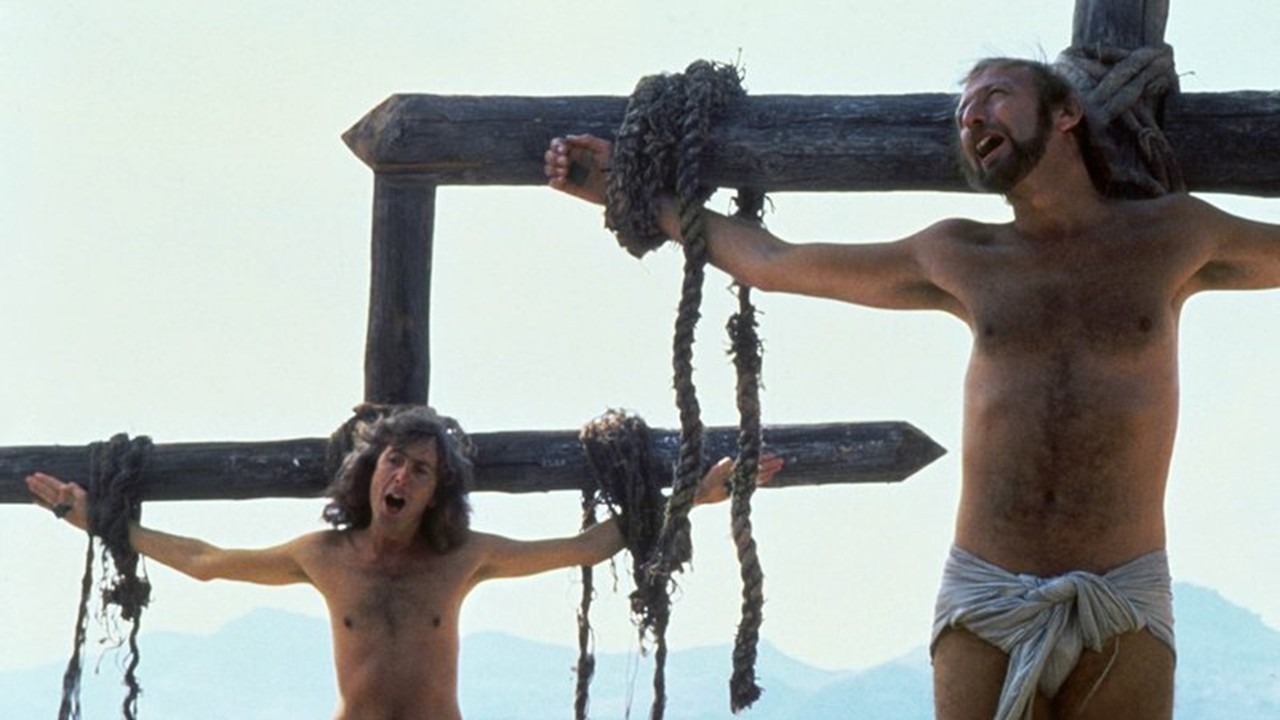
I’ve always been an optimist, and, in general, things tend to go my way. It’s not that bad things never happen to me, but when they do, I think having a positive attitude is extremely important. While watching the Monty Python cast sing “Always Look on the Bright Side of Life” during their reunion show live from London last weekend, I was inspired to expand on these ideas.

Looking on the bright side means being able to see the positive aspect of any outcome. For example, last week it took me three hours to get home by bus when the Skytrain stopped running. Instead of being grumpy the whole way home, I accepted it and used the time to relax and chat with other people who were in the same position. Even in situations that seem completely hopeless, there is almost always something positive.

Being led down a different path in life could turn out better than you expect.

Rejection is another thing that can be turned into something positive with the right attitude. When I first came to SFU, I auditioned to be part of the School of Contemporary Arts’ dance program. When I didn’t get in, I tried not to dwell on that rejection. Eventually, I ended up studying something else that I found incredibly rewarding. If you approach life with the attitude that things are meant to happen for a reason, you will be less devastated when they don’t turn out a certain way.

I have also found that a positive attitude leads to more positive outcomes. I’m not sure if there is any proof of this, but I believe that patients who stay positive and think they will get better actually help their body to do so. I am convinced this helped my mom when she was fighting cancer.

In a similar way, thinking you will succeed at anything will increase your chances of doing so, as you are guided by positive energy on the way there.

I don’t want to imply that you shouldn’t put effort into getting what you want, but a balanced approach of your best effort and a positive attitude will lead to happiness. Putting your mind to something and wanting it badly is important, and by doing this you will always get much closer to your goal than if you assume you can never reach it. At the same time, it’s important to remember that if your original plan isn’t successful, it means that you are being led down a different path in life. And this path will probably be better than you ever expected.

I guess what I’m trying to say is this: always look on the bright side of life. In the words of Monty Python: “When you’re chewing on life’s gristle / don’t grumble, give a whistle!”

Have a good sense of humour, don’t take yourself too seriously, and always look for the positive aspect of any situation. This will help you lead a happier, more productive life. And if that doesn’t work, just turn on some Monty Python.


Patients need to come first

2

Doctors are not slaves — they have rights, freedoms, and opinions just like anyone else. But they don’t have the right to deny care to patients in need. It is simply not the responsibility of the doctor to decide what is and is not an ‘urgent’ and necessary treatment.

Last month at a walk-in clinic in Calgary, a young women was told the physician on duty would not prescribe her the birth control pills she needed. While this treatment may not be a ‘life threatening’ one, the patient had decided it was essential for her all the same. Not many of us have time to drop by multiple clinics or come back a different day.

One of the reasons I love this country is knowing that if I needed medical attention, I would get it, no questions asked. But the policy review of the College of Physicians and Surgeons of Ontario may change that. Canadians need to feel safe in the system. No one should worry they will be turned away or judged by their healthcare professional.

Last week’s article mentioned that referrals would be issued explaining why patients were being refused care, and how, according to Carolyn McLeod, that would some how ease the humiliation. Well, according to Kate Desjardins — a young women who was given one of these letters in the middle of a busy walk-in clinic — it doesn’t.

If a doctor truly can’t do their job because of personal beliefs, then what attracted them to the public sector? 

As she rightly says, a piece of paper doesn’t make the walk out the door in front of a group of people any more comforting. Having a doctor explain to you that they will not help you because of moral reasoning and leave you nothing but a referral will only make patients feel embarrassed and vulnerable. Is that really how the system should work?

According to the Vancouver Division of Family Practice, there are 100,000 people living in Vancouver who do not have a family doctor. That is 100,000 people relying on walk-in clinics to service their medical needs. Many of these people are currently searching for family doctors, says the Vancouver Division of Family Practice, but will have no luck.

The sad reality is that there are not enough doctors to go around; the demand has surpassed the number of available physicians. One of the disadvantages of walk-in clinics is that you never know which doctor will be available to care for you. What this means for the ‘moral’ debate is simple: doctors need to care for whomever walks in their door. The system is already stretched thin, so why create more barriers for patients?

Canada’s medical professionals who, after all, work in a publicly funded system, should put the patient first in order to guarantee timely and comprehensive care for any patient in need. Police don’t choose whom they protect and teachers don’t handpick their students — doctors have the right to an opinion, but a responsibility to the patient.

Instead of getting mixed up in the ambiguous philosophical debate, people should focus on what is practical. And if you ask me, small inconsistencies throughout the system that make it difficult for patients to predict whether they will be cared for is neither practical nor ideal. If a doctor truly can’t do their job because of personal beliefs, then what attracted them to the public sector?

Until there are enough family doctors available, and everyone has the opportunity to select a medical professional who best aligns with their values, it is unreasonable to divide the system and open the door to possible discrimination, humiliation, inadequate care, and untimely services.


Eight reasons to look forward to fall

0

James McAvoy and Jessica Chastain filming in New York

1) Before I Go To Sleep– September 12

Featuring Nicole Kidman and Colin Firth, Before I Go To Sleep tells the story of Christine, who can’t remember who she is or anything about her past each morning when she wakes. With the help of her husband, journals, video diaries, and her doctor, she goes through the process of finding herself each day. Until the accident that caused her memory loss just doesn’t seem to add up… 

2) The Skeleton Twins  – September 19

Estranged twins, played by Saturday Night Live alums Kristen Wiig and Bill Hader, cheat death on the exact same day, and decide to try to fix their relationship. The Skeleton Twins is sure to be full of laughter and sweet sibling bonding moments. 

3) The Disappearance of Eleanor Rigby  – September 26

Featuring Jessica Chastain and James McAvoy, The Disappearance of Eleanor Rigby was created uniquely as a set of three separate yet interrelated films. “Them” will be coming out in theaters this year. “Him” and “Her” were screened last year at film festivals. All three tell the story of a relationship break down following a tragedy, from their different perspectives. 

4) Left Behind – October 3

The latest in our line of end of the world films, Left Behind is based on the series of the same title. It stars Nicholas Cage and Chad Michael Murray as some of the people who are left behind once a large population of the world suddenly vanishes, leaving destruction in their wake. 

5) The Best of Me – October 17

The newest in Nicholas Sparks’ line of romantic books turned into movies takes place in two timelines 20 years apart. High school sweethearts Amanda and Dawson are reunited when they are both visiting their hometown, only to realize they haven’t lost their high school love. The Best of Me stars Michelle Monaghan, Liana Liberato and James Marsden. 

6) Interstellar – November 7

Director Christopher Nolan’s latest, Interstellar, is a dystopian space adventure featuring Matthew McConaughey, Jessica Chastain and Anne Hathaway. In a catastrophic future, astronauts discover a wormhole they believe may lead to saving the fate of mankind. 

7) Foxcatcher – November 14

Foxcatcher follows the tragic true story of wrestling brothers Mark and Dave Schultz and their Olympic trainer, John du Pont. Starring Channing Tatum, Mark Rufalo, and Steve Carrel, this sports thriller already has Oscar buzz surrounding it. 

8) The Imitation Game – November 21

With everyone’s favourite Sherlock, Benedict Cumberbatch, and Kiera Knightly, this biographical drama is sure to be popular this fall. The Imitation Game follows English logician Alan Turing, who races against the clock to crack the Enigma code, which transmitted secret enemy messages, during World War II. 

Moonlight magic in the south of France

0

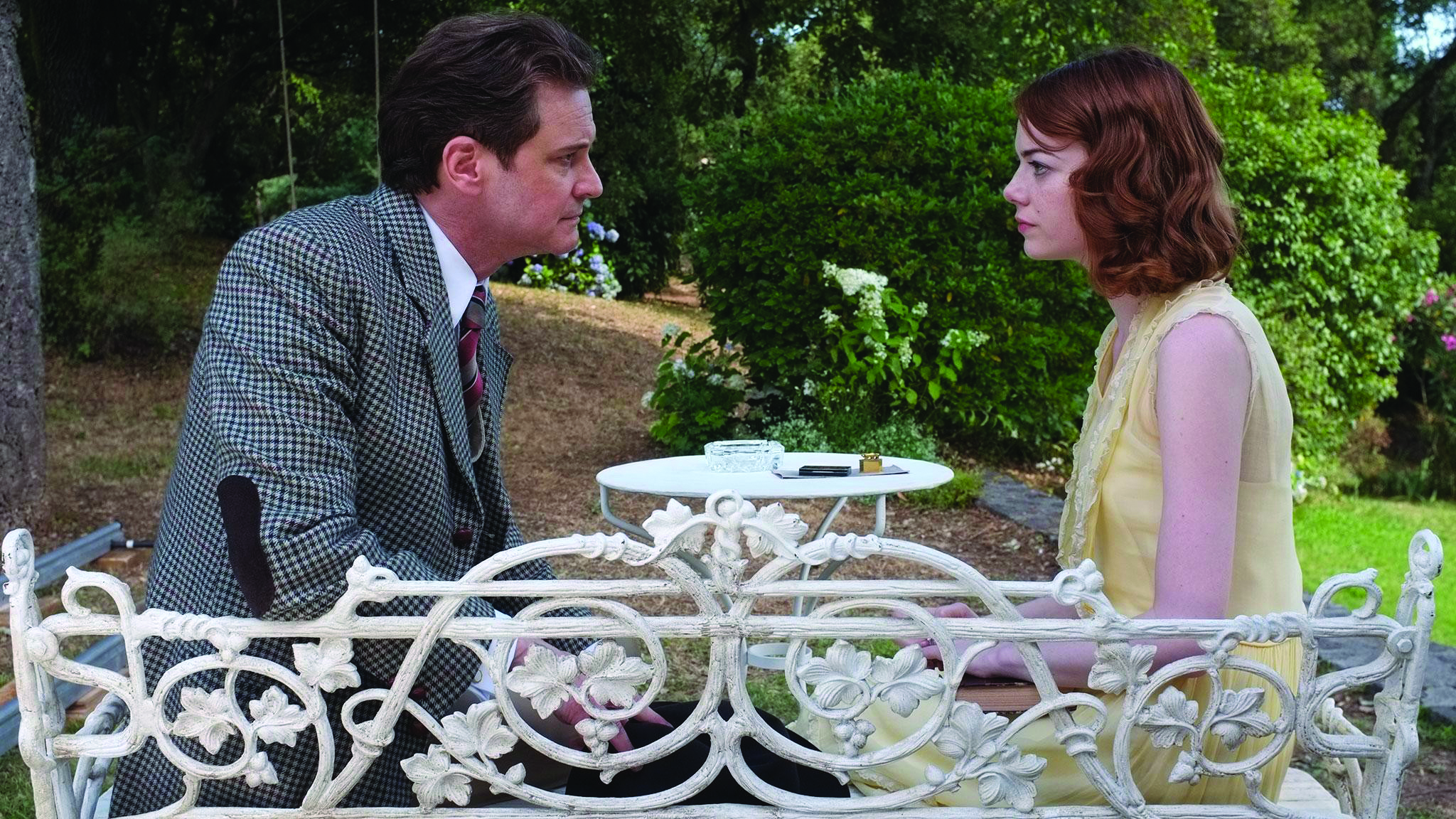
CMYK-Magic in the moonlight

Woody Allen’s fascination with France in the 1920’s seems far from over. While in Midnight in Paris, Owen Wilson’s character travels back and forth between present-day Paris and the Paris of the Jazz Age, Magic in the Moonlight is set in the south of France during the late 20’s. The experience of watching Magic in the Moonlight is in some ways similar to that of Midnight in Paris: there is a lot of jazz music, Gatsby-like costumes, and a picturesque French setting.

While the visual experience of the two films may be similar, Allen presents a very different and — as with most of his other films — original story in Magic in the Moonlight, offering a welcoming respite from the summer blockbuster films that often regurgitate familiar storylines.

Stanley (Colin Firth), a renowned illusionist and a rigid rationalist, travels to the south of France to expose a spirit medium named Sophie (Emma Stone) at the request of a magician friend. While Stanley is initially certain that Sophie, like all other people who claim to be spiritualists, is a fraud, he soon finds himself believing that her gift is real and begins to question his own worldview. 

One intriguing aspect of the film is its constant juxtaposition of spirituality and logic. It seems to ask if it is worthwhile to be an unbending rationalist if that leads to a hopeless, pessimistic life, or if it is better to live a more meaningful life as a spiritualist, even if it means that we may have to believe in illusions. 

While Magic in the Moonlight raises these thought-provoking questions, it also oversimplifies the spirituality versus rationality debate. Yet, that may be intentional on Allen’s part. The film is filled with humour (it is supposed to be a romantic comedy after all), thus the very questions that it raises are perhaps not to be taken all that seriously.

 If there is anything close to magical in the film, then it is the performances by the lead actors. Emma Stone handles the theatrical, stereotypical character of a spirit medium nicely without making it seem ridiculous. 

 Colin Firth is brilliant as an arrogant rationalist. There are several moments in the film that showcase his talent, one of which is a conversation that his character has with his aunt near the end of the film. In the scene, Firth effectively juggles the various contradictions of Stanley’s character such as his wittiness, his ego, his rigid rationalism, and also his growing desire to heed something other than logical thought.     

While it may not be absolutely magical, Magic in the Moonlight is still entertaining to watch. Fans of Woody Allen will not be disappointed with this film, as it possesses the aesthetic feel that is unique to Allen’s work blended with some impressive acting and several amusing moments.

Q&A with SFU author Eve Lazarus

0

eve headshot princess park web

Eve Lazarus, a published author and freelance writer, was born in Australia but calls Vancouver home. She earned her BA from SFU originally studying business, but switched to a major in communication, and also has a certificate in journalism from Langara College. Lazarus has worked in journalism and corporate communications for more than 20 years and has a passion for local history and heritage.

Her fifth book, Sensational Vancouver, focuses on the seedy underbelly of Vancouver, during the first half of the 20th century. The book launch will be later this summer, hopefully at the Vancouver Police Museum, and she will also be at Word Vancouver in September. Lazarus also blogs about the stories behind local buildings at Every Place has a Story.

The Peak: How did you get involved in local and provincial history and heritage?

Eve Lazarus: I fell in love with the idea that a house has a social history or a genealogy much like a person and I wanted to tell the stories of the house. I found that the stories that really fascinated me were the ones that weren’t in traditional history books — stories about rum runners and bootleggers and brothels and murders. I also discovered some really amazing women that most people never had the chance to hear about, and I wanted to change that.

Writing about history for me is all about the thrill of the chase. It’s about uncovering connections, it’s finding descendants of people who lived a century or more ago to tell you their stories, and it’s finding that nugget of information that no one knew was there.

I served on the District of North Vancouver’s heritage commission for four years, and part of the reason I write what I do is I hope that by telling the stories behind some of our old homes, we’ll be more inclined to save them.

P: Besides local history, what other topics are you drawn to as a writer?

EL: Women and murder. My next book is about unsolved murders in Vancouver. I also love writing about some of the amazing women that have carved out or are carving out their place in history and helping to change our world — most of whom have received little, if any, attention.

P: Can you tell me about your latest book, Sensational Vancouver (Anvil Press, 2014)?

EL: Sensational Vancouver is a fully illustrated popular history book about Vancouver’s famous and infamous filtered through the houses in which they lived. In many ways it’s a sequel to At Home with History: The Untold Secrets of Greater Vancouver’s Heritage Homes published in 2007, but in Sensational Vancouver I’ve organized the book into themes and told the story of Vancouver’s seedier history through real characters such as Joe Ricci, a kick-arse detective who joined the Vancouver Police Department in 1912, Lurancy Harris, the first woman police officer hired in Canada to patrol the high-end brothels, and Ray Munro, a reporter who brought down the corrupt chief of police in the 1950s.

It’s not all about Vancouver’s underbelly though, I’ve also written a chapter called a Century of Entertainment that includes Bryan Adams through his Gastown warehouse, Michael Buble and his childhood home, a chapter on legendary women and a chapter on West Coast architecture.

We’ve also included a map of the DTES, Strathcona, and Chinatown with the buildings that appear in the book. I’m hoping people will use it to go down there and really take a hard look at some of these buildings that formed a part of our history.

P: What is your writing and research process like?

EL: As far as research, I spend a great deal of my life at the Vancouver Archives, at Special Collections in the Vancouver Public Library and at their 5th floor microfilm, at the Vancouver Police Museum and finding and interviewing as many people that are connected to the homes and the characters as possible. For instance I found Joe Ricci’s daughter, now in her 80s, living in the house her father built in 1922. She was able to tell me tons of stories, loan me photographs for the book and boxes of newspaper clippings and letters that she’d saved.

Choose life, not your cell phone

0

WEB-Cellphone-Nurzhan Kabdrakhman

Would you risk your life for your cell phone? I wouldn’t, but there are those who would.

American media website CNET reported July 20 that a woman from Houston, Texas had a mugger threaten to shoot her on the street if she did not surrender her cell phone. When the woman refused she then crouched to the ground in preparation for the bullet. The man shot and just grazed the woman’s head before she ran to her friend’s house to escape.

It saddens me that people are both willing to kill and be killed for a small electronic device.

I understand that many may initially find this a tough choice. A cell phone could almost literally contain someone’s soul. There are pictures, videos, passwords, and deeply personal information stored on them, information that is permanent and not locked away in the safe haven of our minds. With all these thoughts we’ve filtered out through our fingers, some people may choose death over exposing their personal or even embarrassing self, such as the lady in the news report.

These concepts can even be applied to a broader scale. In some impoverished countries there are people who designate most of their money to maintaining a cell phone rather than to their own families.

I would have taken alternative routes to saving my information, and immediately realize that it’s just a cell phone.

A couple years back I travelled to Sao Paulo, Brazil, where I visited a couple of Brazilian slums, known as favelas. Knowing that technology is expensive in this city, I was shocked to realize that many people in these impoverished communities owned and maintained monthly cell phones, but could barely afford homes, or provide for their families.

“They really don’t need cell phones,” my Brazilian friend claimed. “They just choose to put what little money they have toward them.”

We must remind ourselves that our lives — our real lives — do not live in our technology. In an instance where one must choose between life and death over a cell phone, if one chooses death, technology has won that person over. The second, intangible self has become more important.

As beings who create technology, we must pride ourselves on maintaining dominance over it. And as much as I hate to say it, this means surrendering the cell phone, whether to a mugger, to live a healthier life, or in any other circumstance.

Heck, with the way our society has become so digitally-dependent, we would probably all take bullets for our technology if given the ultimatum!

Seriously, if I found myself in this woman’s shoes, I would have gladly surrendered my phone. Yes, there are personal conversations and information that I would not want others to witness, but in the end I would have taken alternative routes to saving my information, and immediately realize that it’s just a cell phone.

So, take a good look at your device. Would you be willing to die for it? Do you have deeply personal information on it that would influence this decision? Perhaps we should be finding alternative ways to express personal feelings or to store invaluable information, rather than putting it all into the digital system. Letters on paper or a face-to-face conversation may be more ideal.

Give the mugger the phone, and think about what really matters.

Highest number of contraband cigarettes in BC found at SFU

0

WEB - cigarettes - SebastianA recent study conducted by the Western Convenience Store Association (WCSA) found that 17.2 per cent of cigarette butts collected in BC contained contraband tobacco, which refers to any tobacco that enters the country illegally, or cigarettes from untaxed or counterfeit brands.

The number one hot spot in the province for contraband cigarette smokers was a smoking pit at SFU, where they found that 51.6 per cent of the cigarettes were contraband.

In a province which has the highest compliancy rate for youth smoking in the nation, these statistics complicate combating underage smoking for Andrew Klukas, president of the WCSA.

Klukas explained the origin of these products: “Usually [contraband tobacco products] come from two sources: one is central Canada. [The] RCMP tells us that a lot of the contraband is found in Canada — it’s smuggled from the US from an area near Cornwall, Ontario that sits right on the border of New York and interior Quebec and it makes the perfect entry point for smugglers.”

The second source is here on the west coast. Klukas said, “BC is kind of unique because we’re right next to Asia. There are foreign products manufactured in Asia and they too shouldn’t be sold in Canada; they’re not taxed but they will appear here in a fair amount because we’re exposed to that.”

In the study, cigarette butts were taken from the ground and ashtrays, then shipped to Montreal for analysis. Legal cigarette butts have brand marks while the illegal ones don’t, so they are easily distinguished. Others are branded, but these are noticeably foreign or native brands that haven’t been taxed. Tobacco made on reserves in Ontario is not taxed, and while it is legal in Ontario, it is illegal in other provinces.

“It’s not very glamorous work, I’ll tell you,” Klukas laughed. “Sometimes [researchers] get hassled, but they’re very hands on, and what you see is what you get.”

For the WCSA, this study raises concerns over the issue of youth smoking. Age testing in convenience stores has shown that BC has an over 93 per cent percent compliancy rate, which is the highest in Canada. The tests are done by sending underage customers into stores to see if they are able to purchase cigarettes.

With contraband tobacco, however, underage customers are much more likely to be able to obtain tobacco products. “Contraband stuff is not subject to age testing, people selling it out of the back of their trunk or wherever they sell it are not asking for age. Often there are no warning labels, it’s stuff just sold in baggies and they’re really cheap so kids can get access. That undermines all of the efforts to prevent youth access to tobacco,” Klukas said.

With a 51 per cent contraband level at SFU and a 0 per cent level found in Kelowna, it raises the question of why this school is using illegal products more than half of the time.

“That was a real surprise to us but I suspect that it [occurs] if people go to school and they smoke, and university students are really good communicators and they don’t have a lot of money,” Klukas laughed, “So if someone says ‘Hey I can get pretty good quality smokes from over there for 50 bucks a carton,’ then word gets around.”

Halving the Orange lacks emotional punch

0

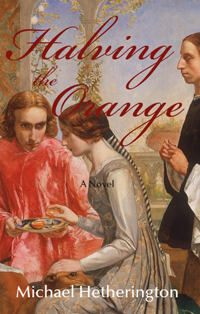
HalvingTheOrangeCover200x300

In Halving the Orange, Michael Hetherington forges a universe in which SFU’s medieval studies program is not a small rump, but instead bolstered by quirky, world-renowned, (and unfortunately fictional) Allenbeigh College. Amidst the seemingly idyllic academic environment, however, are the seeds for conspiracy, drama, and intrigue which slowly become more apparent as the plot progresses.

While Hetherington flips back and forth between over half a dozen different viewpoint characters, the bulk of the novel follows the journey of Isabella Allenbeigh, daughter of the college’s founders. Raised completely inside its walls, she is kept cloistered by fear of the outside and devotion to her parents’ wishes for her insulation. The crux of the novel’s plot revolves around Isabella’s deliberation about whether or not to challenge this status quo. These deliberations amount to an incredibly taxing personal struggle, intended to be emotionally evocative.

Yet Halving the Orange is not Isabella’s tale alone. Her story is complimented by a range of characters including her patriarchal father Richard, the wayward Malcolm, the mysterious Filbert, and even a flashback to the perspective of her deceased mother. One thing that shapes nearly all the characters, though, is their academic environment and association with the focused study of Allenbeigh College.

Many of the characters express anxieties and obsessions that we students should find all too familiar — worries about job prospects, enthusiasm for obscure books, and fixation on each other’s educational pedigree. Perhaps the greatest strength of Hetherington’s work is his ability to realize his characters distractions by mundane mental meanderings that readers like us will surely emphasize with.

Unfortunately, the ability of the characters to come to life on the pages of this book is greatly hampered by his narrators’ indistinctive voices. Each seems to approach the world in a matter-of-fact way. Dialogue and internal monologues alike seem to be more reminiscent of a technical manual than vibrant living beings, bubbling with emotion.

For example, when the gardener, Gregory is faced with an unsettling proposition, Hetherington writes: “He thought more about his predicament. He was not certain he would consider himself in a predicament, but that was the way he felt.  He had to be careful how much he disclosed.”

If one is to pick Hetherington’s chief literary sin, though, it is that he violates the sacred authors’ adage of ‘show, don’t tell.’ Indeed he has the subtlety of a rhinoceros, seeming to have absolutely no confidence in his audience to pick together anything on its own or draw the most basic conclusions. Every plot turn and character attribute seems to be directly explained, re-explained, and then re-re-explained once again.

Another deeply disappointing aspect of Halving the Orange is simply the prose itself, which is as flowery as a dry tumbleweed. Hetherington, with his three university degrees from two top-notch schools (as well as UBC), seems to bear the curse of an academic writing tradition that values concise clarity over any measure of confusion or floridity. This greatly undermines the ability for the story and characters to truly come alive on a visceral level.

The advantage of Hetherington’s style affords the reader a great deal of clarity. I do not think I was left confused about what was happening at any point in the book, despite the somewhat convoluted plot. While I believe Halving the Orange lacks the emotional punch Hetherington aspires to, anyone who opts to pick up a copy can fully expect to read something that is both complex and coherent.

Losing the Abbotsford Heat

1

Abby Heat - Mike Ivall Flickr

Did you know that there were two professional hockey teams in the Greater Vancouver region? Unfortunately, the key word here is “were.”

In addition to our NHL team, the Vancouver Canucks, there used to be an American Hockey League (AHL) team, the Abbotsford Heat. The AHL is a lower-tiered professional league that serves as a farm team. This is where either young players develop or where players who don’t quite cut it in the NHL play.

The Heat, who came to Abbotsford in 2009, served as a farm team to the Calgary Flames, which meant that fans got to see future NHL players rise to the Flames, like Sven Baertschi and Max Reinhart.

However, the team suffered from low attendance and presumably didn’t make too much money. On weekends, the attendance was pretty pitiful, and it was easy to shuffle from your lower priced seats to empty rink-side ones. I don’t even want to know how empty a weeknight must have been.

I understand why tickets didn’t sell.

To start with, they were the Calgary Flames’ farm team in Vancouver territory. I can’t imagine any Canucks fan liking the Flames. As a matter of fact, they are my least favourite team (aside from the Bruins, that is).

I would guess most don’t want to venture to Abbotsford to catch a game.

This may be a bit harsh, but I would wager that my sentiments are hardly unique. The players are being groomed to face the Canucks, a thing most fans would (an-’ould cheer for a team that wears, essentially, Flames jerseys? It doesn’t help that those jerseys are nearly identical to the Flames’, with matching colour schemes right down to the Flames’ unique shoulder flag crests.

It should be noted the few games that really did sell were those against the Canucks’ farm team — proof, perhaps, that being associated with the Flames probably hurt their sales.

However, it’s not all on the fact that the two teams are essentially the same. Location probably didn’t help too much either. Abbotsford is just not a good enough location for a pro team. It’s very small, and I would guess that most people don’t want to venture that far away to catch a game.

In the last few games, even the Utica Comets (the Canucks’ new AHL affiliates) did not draw that many people to the Heat. That’s the writing on the wall: if the Canucks can’t draw in fans, no one can.

Finally, Abbotsford was the only AHL team on the West Coast with the rest of the teams located in the east. This has no impact on the fans, but it may hinder player development, with extra travel time and odd schedules to accommodate.

You’re probably thinking I had some grudge against the Heat, but I loved going to games. They had cheap tickets (hovering around $20), cheap concession foods, along with an entertaining, high-level game to watch. Plus, they displayed the prospects of both the Flames and whoever they faced.

Sure, I cheered against them each time. I hate to say it, but with them gone, I find myself sentimental for the Flames. It’s no doubt the Heat will be missed.

(A)side jab: This year the Canucks actually have some prospects to watch on their farm team, and now the one way to watch them up close has been taken away. Really?