Home Blog Page 107

Nutritious nibbles: Baba’s sweet and Dido’s sour prairie pickles

0
Pickle slices sit on a white plate beside a set of metal tongs.
PHOTO: Solstice Hannan / Unsplash

My grandmother (Baba) is a spectacular homecook who runs her home kitchen she calls “Pat’s Diner.” All her kids and grandkids know when we go to Pat’s Diner, we’ll always enjoy ourselves. It’s time to bring one of her specialties to light — pickles! 

Perfect for charcuterie boards, both my grandparents have a recipe. It has become tradition for my grandmother to make two batches: Baba’s sweet (garlic dill) pickles, and Dido’s sour (cloudy dill) pickles, with both being served on the same dish. You’ll need to taste it as words don’t do the flavours justice. Like all specialty recipes passed down through generations, there are no exact measurements. One thing she is very insistent on for both recipes is that the cucumbers should be straight and roughly three inches in length. 

Baba’s sweet (garlic dill) pickles

Ingredients (makes 1 quart jar):

  • Cucumbers
  • Dill weed
  • Garlic (approximately 3 or 4 pieces)
  • Peeled raw carrot (approximately 4 or 5 small pieces)
  • Pickling spice (approximately ½ to ¾ tsp) 
  • 1 tablespoon brown sugar
  • 1 tablespoon coarse pickling salt
  • Canner to help with pickling

Brine (makes 5 cups):

  • 4 cups water
  • 1 cup vinegar

Directions:

  1. Wash cucumbers and dill weed. Cut off the ends of the cucumbers so they will fit in the jars.
  2. Peel carrots and garlic, chopping carrots into small sticks, roughly the size of your index finger.
  3. Place three or four pieces of garlic, some dill weed, and four or five carrot pieces at the bottom of the jar with pickling spice.
  4. Fill the jar with cucumbers. Add brown sugar and pickling salt on top.
  5. Bring 1 cup vinegar and 4 cups water to a boil.
  6. Pour brine over the sugar and salt. Add additional dill weed to cover cucumbers.
  7. Seal tightly! Shake each jar to dissolve sugar and salt.
  8. Place jars in a canner. Jars should be completely covered by warm water to process. The water should be warm but not boiling. Leave jars in the warm bath for approximately 15 minutes. The pickles will turn yellow when finished.
  9. Remove jars from the canner and tighten lids on jars. Check for leakage during the cooling process and store in a cool place.

Since these pickles use a canner, they have a longer shelf life if stored in a cool place. It’s best to wait at least a week before opening them to ensure they are yellow and taste sweet enough. When putting them out to be eaten, my grandma cuts the pickles into thin slices to differentiate them.

Dido’s sour (cloudy dill) pickles

Ingredients (makes 1 quart jar):

  • Cucumbers
  • Dill weed
  • Garlic (approximately 5 or 6 pieces)
  • 1 tablespoon coarse pickling salt

Directions:

  1. Boil water the day before so that it is room temperature and sterile when ready to make the pickles. 
  2. Wash cucumbers and dill weed, cutting off the ends of the cucumbers so they will fit in the jars.
  3. Place some dill weed and five or six pieces of garlic at the bottom of each jar.
  4. Pack the jar tightly with cucumbers, making sure they are on top of the garlic pieces, cutting them at the neck of the jar. Add pickling salt on top of cucumbers.
  5. Pour cooled boiled water into jars to cover the cucumbers. Seal the jars and shake to dissolve salt.
  6. Check for leakage and ensure the seal of the jars. Store in a cool place for upwards of three weeks.

These pickles need far longer to set, as they are fermented rather than pickled. Fermented pickles are more risky to make since sometimes the odd jar goes bad. The littlest bit of air seeping into the jar can cause mold. Even so, this pickle recipe is an all-time favourite in my household! My father adds the juice to his caesars, garnishing it with caesar rimmer, lime wedges, celery, pickles, and whatever makes your heart content. It’s a Sorochuk specialty!

Controlling the military is key to consolidating democracy in South Korea

0
This is a photo of the impeached South Korean president Yoon Suk Yeol.
PHOTO: EPA Images / Free Malaysia Today

Content warning: brief mention of sexual harrassment and suicide.

When I found myself waking up to the news of martial law in South Korea last month, my first thoughts were, “Not the military again.” Videos of armed special forces breaking into the parliament to arrest opposition politicians and tanks rolling into Seoul mirrored the images of past military coups, events still vividly remembered by those who rose up in protest.

This was followed by a stand-off between the police and the military in the former’s failed attempts to arrest the impeached president Yoon Suk Yeol in early January. 

South Korea is a liberal democracy and has been since 1987. So, why did the South Korean armed forces take part in such obvious incidents of democratic regression? What are the implications of the military’s (re)involvement in politics for South Korea? Answering these involves understanding that the Republic of Korea Armed Forces retains the legacy of conservatism in a country otherwise progressing democratically. 

Through their vague and unchanging rhetoric of deterring communist aggression, South Korea’s Ministry of Defence have majorly avoided democratizing their upper-level management. They continue to influence conservatism through active conscription and have often evaded scrutiny by the country’s judiciary.

The top military personnel are highly politicized. If there is a silver lining in all of the recent political chaos, it is that it brings this issue to light. From defence ministers and security advisors, to the martial law commander, the top men involved in president Yoon’s gambit to cling onto power are military officers personally associated with Yoon.

“Republic of Korea Armed Forces retains the legacy of conservatism in a country otherwise progressing democratically.”

While the top brass is definitely undemocratic, what about the rank and file? The answer lies in mandatory conscription, one of the largest indicators of militarization in the everyday lives of South Korean men. Bullying, abuse, and sexual harassment of conscripts are all normalized within the institution. As a result, conscript suicides remain widespread. With 90% of men having experienced a culture deeply embedded in bullying and abuse, similar patterns in other aspects of South Korean society are hardly shocking.

The conscripts are also victims of the military’s training and education doctrines. Repeatedly emphasizing their mantra of deterring communists, these doctrines instill political biases in conscripts who, in their search for an adversary that best represents “communism” outside of an active war, tend to view left-leaning and liberal political actors with skepticism.

The fact that conscription is limited to men also gives way to conservatism along gendered lines. The popular view among conscripts is that conscription is a “waste of time.” This sentiment, combined with other factors such as job uncertainty due to more women entering the workforce, leads to young men increasingly devaluing challenges faced by South Korean women and opposing feminist efforts. 

South Korean politics today is a constant tug-of-war between conservative and liberal politicians, and the former are happy to assist military officers who may be in a tight spot with the legal system. After all, these officers might have to lead the conservatives’ next foray in unconstitutional ventures. The recent investigations into a peacetime death of a Marine corporal is a case in point. 

With such an institutional lack of accountability, it is no surprise that the South Korean military has remained the country’s pillar of conservatism even as the country makes its way towards a more equitable and just society. 

From mass surveillance and covert election sabotage, to a trigger-happy attitude towards martial law, this conservatism has emboldened the military to act undemocratically during periods of unrest. This was proven once again with the military’s rallying behind Yoon’s unconstitutional power grab. Preventing the military from repeatedly intervening in civilian politics is the key to consolidating democracy in South Korea, but much work needs to be done to achieve this goal.

The climate’s health is ours

0
This is an illustration of a sad planet Earth with a thermometer in its mouth, which reads “2 degrees C”. Earth is accompanied by the moon wearing a mask.
ILLUSTRATION: Kristen Lee / The Peak

There it is again, that funny feeling. Climate change is causing catastrophic floods, droughts, wildfires, atmospheric rivers, bomb cyclones, and extreme temperatures around the world. In seemingly unrelated news, the US just reported the country’s first death from H5N1 bird flu. While the virus is mainly ravaging cattle and poultry, current factory farming practices which keep animals in close quarters increases the risk of transmission to other animals, including humans — it’s for this reason that population density is an important factor in our health. Aside from the (now) immediate consequences of “natural” disasters and dwindling ecosystems, a long-term consequence of climate change will be mass migration of humans and other species alike. 

As the climate becomes more extreme, global regions are becoming uninhabitable. Many animals will be forced to migrate from their native habitats, and while encountering other species for the first time, provide the opportunity for viral transmission. Zoonotic viruses (also called zoonoses) are specifically viruses that “make the leap” to humans from other animals. Viruses that spread across species to other animals are more likely to be able to spread to humans in a spillover event, which is how viral species like HIV, Ebola, SARS-CoV-2, Mpox or bird flu emerged in the human population.

In 2022, researchers studied the potential migration of 3,000 mammal species to predict the effect of global warming on populations and the spread of cross-species viruses for the year 2070. They found as populations move and encounters between species happen with greater frequency, the rate of cross-species virus spread will also increase. As well, it was predicted that “future hotspots” for mammals in 50 years will coincide with areas highly populated by humans — this means a higher chance of cross-species transmission and a greater possibility for novel pandemics.

“Climate change is scary, but it’s already here. We will not get anywhere pretending that the sheer amount of natural catastrophes and novel illnesses are consequences of anything else.”

Even by slowing the speed of global warming and decreasing carbon emissions, the research suggests that “mitigation alone cannot reduce the likelihood of climate-driven viral sharing. Instead, the mildest scenarios for global warming appear likely to produce at least as much or even more cross-species viral transmission.” The researchers emphasize however, that this does not mean we should stop trying.

Climate change is a difficult topic to broach because it is not simple enough of a problem for there to be one concise solution. What we need is international collaboration and for world leaders to take climate change seriously; stop putting money into extracting resources and, for example, invest in farming practices that will reduce emissions and the spread of viruses among livestock. As food insecurity worsens globally (particularly due to the unviable, changing climate) the need for more water-efficient and sustainable farming has never been more apparent.

While there are large-scale implications of climate change which beg for comprehensive solutions, one aspect we can manage in our day-to-day lives is the health and well-being of our communities. By wearing masks in indoor public spaces like the grocery store or transit, we can contribute to keeping ourselves and the most vulnerable in our communities safe. As well, making sure that our spaces have proper air flow and ventilation can be an impactful way to prevent the spread of communicable disease. 

Climate change is scary, but it’s already here. We will not get anywhere pretending that the sheer amount of natural catastrophes and novel illnesses are consequences of anything else.

Can’t ski, too broke

0
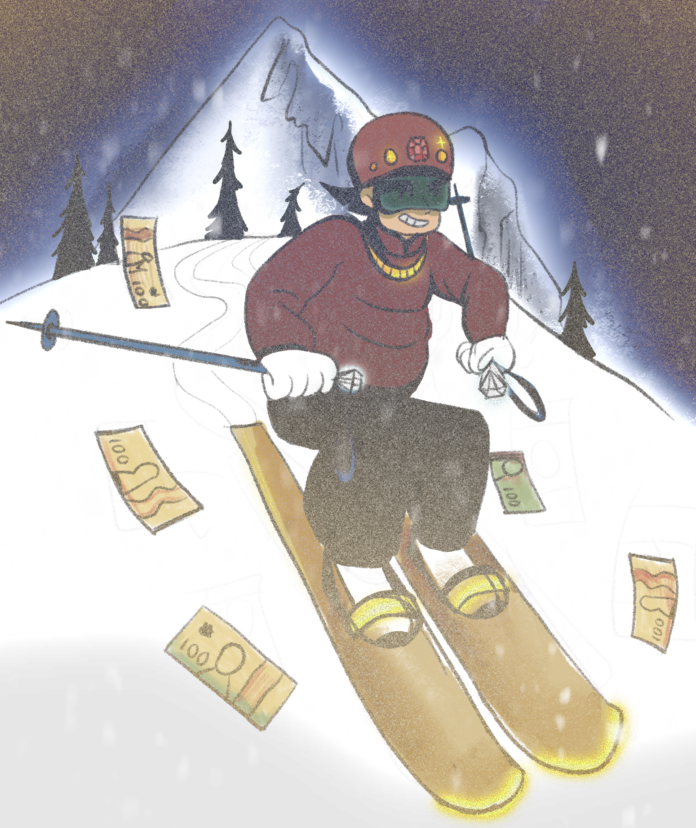
Person skiing down a mountain wearing a red coat and helmet and golden skis. Their ski gear is covered in expensive gemstones and there are $100 bills all around them.
ILLUSTRATION: Angela Shen / The Peak

So, uh, I’ve been invited to go skiing. Skiing? In this economy? Right, right, I forgot that not everyone has to choose between ski boots or textbooks every time the temperature drops and it snows all the way yonder on yee old mountains. The saying among us peasants is that you cannot have both unless you learn how to ski on financial aid papers. However, others in . . . another tax bracket may not see it this way. 

You can tell someone grew up skiing when their idea of “saving money” is skipping apres-ski cocktails, not the $300 lift ticket. To my skiing friends: I love you, but your college starter pack was a solid metal credit card and a family chalet in the heart of Whistler, not a value pack of highlighters (albeit they are handy). While I appreciate that you would consider inviting me to shred some powder, I’m already on thin ice financially; I don’t need to hit the slopes to make it real. And although I’d love to come in person to admire your full Arcteryx get-up, custom Chrome Hearts ski goggles, and a snowboard signed by Shaun White himself, I’ll resort to watching virtually via your Instagram stories. I hope you enjoy the overpriced ski lodge food; that $15 hot chocolate made with water is calling your name (thankfully not mine)! 

Oh, you found a cheap lift ticket? Nice! I’ll just go ahead and grab my nonexistent $600 worth of gear and a vehicle of choice to get to the mountain. Ah, but what about thrifting? Secondhand skis, mayhaps? Cool, can I also buy a secondhand bank account that isn’t empty? The way my finances keep me awake, makes me see things at night. Might as well ask the Benadryl Hat Man to come down the slopes with me. And I can’t tell what scares me more: a black diamond trail or the increasing tuition that seems to go nowhere. Both make me want to curl into a ball and slide down to the bottom. Though, tuition is seriously the only downhill slope I can (or CAN’T) afford to be on right now, and it’s not that fun! 

So, no, I can’t go skiing this week — or next week, or ever — until they start accepting Monopoly money or my leftover U-Pass dollars at the lift ticket counter. In the meantime, I’ll be here, throwing snowballs into the koi pond on campus, trying to feel something other than the mild hypothermia setting into my toes. 

Kisses!

Emilia Pérez is entertaining — but reductive

0
Two women face each other from separate ends of a restaurant table. In the background, a white water fountain can be seen.
PHOTO: Courtesy of @emiliaperezfilm / Instagram

Content warning: mentions of transphobia, homicides, and missing peoples cases. 

A crime-thriller musical about a trans Mexican cartel leader is an intriguing premise for a film, to say the least. Emilia Pérez (2024) received four wins at the Golden Globes and has been shortlisted for the Oscars. On one hand, while “critics have lauded the film for its avant-garde approach and representation of underrepresented characters,” it’s also under fire “for its problematic portrayal of trans identity and reliance on stereotypical depictions of Mexican culture.” 

Emilia Pérez tries to do many things. It tries to produce representation for trans women, it tries to engage the audience with its setting, and it tries to differentiate itself with a set of oddly-placed musical numbers. However, Emilia Pérez is so riddled with flaws, it’s hard to argue that it’s a step forward. I give the film credit for trying: the protagonist is played by Karla Sofía Gascón, an emerging trans actress, and her performance is engaging. She plays Emilia with a duality — jumping between tenderness for her partner and family, but displaying a chilling amount of anger when these are threatened. This is largely where the trans representation fails: in Emilia, the film seems to suggest there is an inherent anger and violent tendency in trans women, which is far from true. She should have been written with more care — especially as Emilia Pérez uses “trans identity as an ‘inherently redemptive’ tool for its criminal protagonist” at a time where homicides, transfemicides, and missing peoples cases are all very real issues in Mexico. 

Gascón herself shouldn’t be getting hate for the film, being trans, or winning awards. The film’s director, Jacques Audiard, on the other hand — deserves a lot of criticism. The characterization of Emilia is far from the only issue with Emilia Pérez. The plot itself treats transitioning as a spectacle, with its musical number “La Vaginoplastia” (“The Vaginoplasty”) focusing on gender-affirming surgery as being the core of the trans experience. Emilia’s attempt to right her wrongs as a cartel leader post-transition might have been a compelling story about finally being true to herself and coming into her own, if it was done mindfully. Instead, the film’s conclusion completely derails any character development as Emilia threatens her ex-wife Jessi (Selena Gomez) and withholds her funds for attempting to move out with their children. The film also had the opportunity to explore motherhood, as she and Jessi co-parent their children with very different approaches. However, the film does not delve into this, and instead portrays Emilia as possessive. Jessi’s storyline is an interesting one, as she is trying to find balance between being a mother and her own happiness. Again, this plotline isn’t deeply explored. 

“The film seems to suggest there is an inherent anger and violent tendency in trans women, which is far from true.”

What also left a bitter taste in my mouth is Audiard’s comments on Mexico. When asked about his research process to create the film, he said, “I didn’t study much, because what I needed to understand is what I already knew.” This arrogance is glaringly obvious in the film, as Mexico is largely portrayed in its relation to drug cartels and little more. Cristina Escobar, film critic and editor put it perfectly: “There’s a whole society out there, and people living their lives, and other identities and other ways to understand what it is to be Mexican in Mexico. And the film just doesn’t have any . . . curiosity about those things.” Despite the initial intention of hiring an all-Mexican cast, the casting director claimed they “had to figure out how to adjust authenticity,” as they felt the best fit for the roles were primarily non-Mexican actors. I find it quite hard to believe that in a population of over 100 million, there were no suitable actors for the film — especially when Mexican films themselves cast their own actors.

Emilia Pérez is engaging, and it has a few songs to jam to afterwards. However, to say it is a meaningful step forward for trans or Latin American visibility would be giving it too much credit. 

Findings from SFU study may help with stroke recovery

0
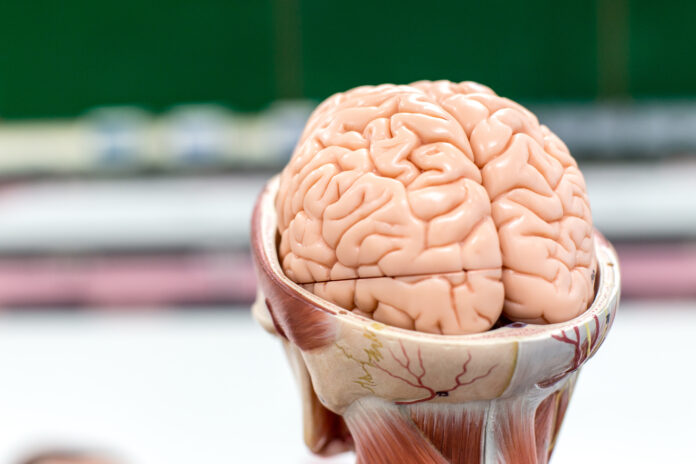
This is a photo of an artificial human brain with a dark green background.
PHOTO: sinhyu / Adobe Stock

A recent study from the SFU Institute for Neuroscience and Neurotechnology (INN) and Rotman Research Institute at the University of Toronto points to the thalamus to help explain the long-term disabilities experienced after a stroke. Under lead author Phillip Johnston, a graduate student at SFU INN, the November 6 publication focuses on why strokes cause “a prominent slowing of neural activity.”

A stroke is the result of “blocked blood flow to the brain” or “sudden bleeding in the brain.” In both cases, this sudden change can cause damage to the brain cells. When an individual experiences a stroke, damage to axons in other parts of the brain can cause indirect injury to the thalamus. The thalamus is a part of the brain that works as a “central networking hub that regulates functions such as language, memory, attention, and movement.” It receives all sensory information (except smell) through nerve fibers, called axons, then processes this information. Next, the thalamus sends the data back through the axons to the cerebral cortex for interpretation. The cerebral cortex helps with “high-level functions” such as memory and reasoning.

The thalamus’ communication with the rest of the brain via axons “makes it susceptible to indirect damage.” This can potentially lead to corticothalamic circuit dysfunction, where the thalamus’ ability to communicate with the cerebral cortex is inhibited.

Using computer models to measure brain activity with magnetoencephalography, or “magnetic fields produced by [the] brain’s electrical currents,” researchers compared 18 chronic stroke survivors to a group of healthy individuals. SFU researchers concluded that there is “a link between the amount of indirect damage suffered to the thalamus and the level of impairment a patient experiences” after a stroke.

“If certain treatments, such as drugs or brain stimulation, could restore normal function in the thalamus, [ . . . ] researchers believe some long-term impacts of stroke could be alleviated.” — SFU news release

Specifically, researchers noted “decreased thalamic volume, altered tissue microstructure, and decreased blood flow” in those who had experienced a stroke, which “correlated significantly with poorer cognitive and language outcomes.” Researchers stated that because a stroke does not directly affect the thalamus, it can remain “somewhat intact.” Inversely, there is still “brain tissue that dies due to direct damage from the stroke lesion,” Johnston told SFU News. This key difference provides researchers “some hope that new treatments could promote recovery by restoring [the thalamus’] function, or preventing its disruption in the first place.

“If certain treatments, such as drugs or brain stimulation, could restore normal function in the thalamus [ . . . ] researchers believe some long-term impacts of stroke could be alleviated,” noted SFU’s press release.

“These findings also raise many new questions about which facets of post-stroke disability are due to indirect thalamus disruption, and which are due to direct damage from the lesion itself,” said Dr. Randy McIntosh, SFU biomedical physiology and kinesiology professor, who was quoted in the press release. McIntosh also noted that “the thalamus could undergo several types of damage following stroke and we don’t know if one type in particular, or a combination, produces the abnormal brain activity observed in this study. 

“A crucial next step will be investigating how indirect thalamus damage and related abnormal brain activity develops over time, particularly in the first hours and days after the stroke,” he added.

Horoscopes January 13–19

0
An illustration of a girl, stars and astrological signs strewn in her hair.
ILLUSTRATION: Marissa Ouyang / The Peak

Aries
March 21–April 19 

This week, you will wake up all motivated to go to the one required lower division course you have ignored for two whole years. Then, as you wash your face, you will remember why you avoided that course in the first place — packed lecture halls, professors that talk too fast, and TAs being overwhelmed by confused first years during tutorials. Then, you will crash back into bed and hope the summer term will have fewer students. My advice? Go to the class before SFU lays off the professor.

Taurus
April 20–May 20

Visit West Mall, forget about class, get some Timmies, and go right home. Actually, just take advantage of the DashPass or Uber One you have (and I know you do) and order in your iced capp and timbits — no one really goes to West Mall at 8:30 a.m. anyway. 

Gemini
May 21–June 21

The only thing you are looking forward to is club days. Making awkward small talk and acting interested in random clubs is your way to train for tutorial discussions and case competitions. Get some free stuff while you’re at it. Keep that free SFU BASS pen for your final exams but don’t worry, you probably won’t use it much during the semester. Unlike last year, the snow won’t ruin your club days heist in 2025. 

Cancer
June 22–July 22

Please don’t trauma-dump on your TA. As you find it hard to finish your 2,500 word research essay, they are crying under their blankets trying to organize the data they collected for their 100+ page thesis. If you crave TA validation, just talk during your labs and tutorials instead of playing Wordle on your iPad and browsing Pinterest for cute winter fits.

Leo 
July 23–August 22

This is the week for you to plan what to wear to your morning IAT class at Surrey. This is also the week for you to realize that you have the commitment to watch One Piece in its entirety but not the commitment to commute to Surrey by 9:30 a.m. once a week. Since you will plan your outfits more than you go to class, maybe it is time to tidy your wardrobe instead. Repeat “I’ll go next week” three times a week.

Virgo
August 23–September 22

Instagram notes aren’t the place to complain about your horrible group project teammates. Take some time to calm down, meditate, watch some ASMR, and tell yourself, “This too shall pass.” Or not. Write a long email to your professor asking if you can kick them out and question your life decisions that have led you here. I hear SFU Kendo is running trial days soon if you want to scream your lungs out without any judgement. 

Libra
September 23–October 22

Start a crochet business. Yes, devote your academic career to selling those tiny crocheted octopuses and Sanrio keychains. Why? Because I, the stars themselves, love crocheted plushies and over rely on the SFU Bookstore every time there’s a birthday gift. 

Scorpio
October 23–November 21

Scorpio sounds a lot like scorpion, and scorpions sting. There is an energy drink with the same name — which reminds me, don’t forget to stock-up on your favorite energy drinks this semester. Why fear a slight chance that you will get a heart attack if you can have your own Kay Chung all-nighter moments, right? 

Sagittarius 
November 22–December 21

You should take a break. That’s it. This just isn’t your week so stay home and keep the negative energy away from packs of newcomers getting lost in the AQ.

Capricorn 
December 22–January 19

Did you spend all of last week obsessed with Squid Game season 2? Are you behind on your chores and laundry? Did you even check your emails to see if your waitlists have been resolved? It’s OK, get the holiday binging all out of your system before you inspire fellow lecture-mates to watch Netflix at the back of the hall. 

Aquarius 
January 20–February 18

You will go to every single class. Yes, you will be the one sign that will make SFU your true second home. Then you will visit the Central Gym and sigh as you ask yourself why you didn’t choose a university that wouldn’t take over two years to refurbish a swimming pool. As someone who might also graduate before I can inhale the sweet chlorine of a university pool, I feel you.

Pisces
February 19–March 20

You have two fishes as your symbol, this is your “sign” to go get sushi at Cornerstone. See the pun? While Japarrito’s huge sushi burritos are filling, there is nothing that compares to a succulent plate of a spider roll (soft-shell crab roll) from Togo Sushi. Wait, this isn’t the Arts and Culture section!

Community Days at SFU

0
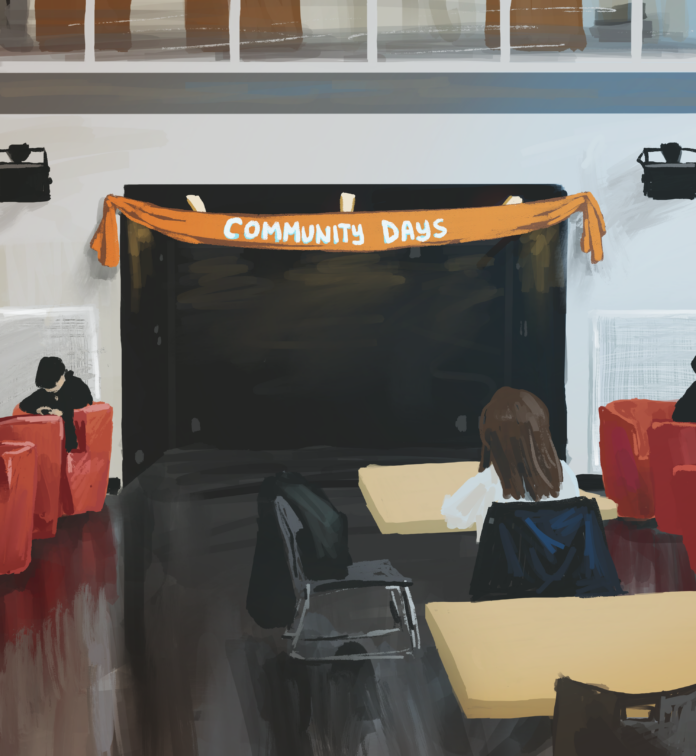
A room in the SUB with red chairs and desks. Strung up along the wall is an orange banner that reads “Community Days.”
ILLUSTRATION: Angelina Tran / The Peak

Editor’s note: The Peak acknowledges that Chloë Arneson, who was interviewed, was a News Writer for The Peak in 2023. However, the writer and editor of this piece have no personal affiliation with Arneson.  

“A sense of community is an important part of our university experience,” Simon Fraser Student Society’s vice president of equity and sustainability Chloë Arneson told The Peak. “Shared experiences give us the opportunity to have important conversations, forge new ideas, learn from one another, and grow as individuals.” With this in mind, she came up with “Community Days” every Thursday in the Student Union Building for students to mingle with clubs and organizations on campus.

Like a smaller version of Clubs Days, these are set up with the aim of bridging the wider student body by holding activities such as craft-making, self-help, and performances. With a backdrop of campus radio jams, some of the clubs will also be presenting paid and volunteer opportunities so you might even be able to take away something for your resume.

“This weekly event gives us an opportunity to meet students where they’re at,” Arneson added. “We can chat with them about their university experience or just sit together and do crafts.”

The SFSS is the organizing body of student unions at SFU. They coordinate many events — most notably Club Days, free breakfast programs, and cultural festivals like Ujjwal. They  maintain the Student Union Building and have campaigned against issues affecting students such as tuition hikes. 

“Each of the student groups is bringing something different to the table,” Arneson said. 

Community Days take place every Thursday, from January 9 to February 6, between 11:00 a.m. to 2:00 p.m. at the social stage beside the GO Desk in the SUB, on the third floor.

Here are some of the groups you can expect to meet, with more yet to be confirmed:

The Peak

If you are reading this article, you are probably already familiar with The Peak. We’re SFU’s one and only independent weekly newspaper, allowing students easier access to the comings and goings around the university as well as the wider world. Tired of writing papers for your courses and want to write news stories, film reviews, or quizzes? Or maybe you want to turn your photography hobby into a career? The Peak is happy to chat with you about freelance paid opportunities. Stop by the table to test out a Peak-themed wordle and grab some merch! 

Embark

Embark is for any member of the SFU community striving for a better world. They promote equitable and sustainable lives for students in two key areas — climate equity and food justice. Embark organizes many events and campaigns to achieve these goals, such as climate workshops, and their community kitchen and gardens. If you strive to be a changemaker one day, also consider volunteering or joining the team in a paid capacity! 

CJSF

CJSF is SFU’s very own community radio station. As a representative of the campus community, they pride themselves in expressing non-mainstream voices, which is reflected in their choices of music. CJSF also works to connect the university and students by taking on various news announcements and press releases. They are also open to eager volunteers! 

The Simon Fraser Public Interest Research Group (SFPIRG)

The SFPIRG is an independent research body run by students for students. Their main interests are on social and environmental justice, which they have organized many events and activities around to increase the student body’s knowledge. If you are a student with a keen heart for activism and justice and a willingness to expand your knowledge for change, consider checking out the SFPIRG’s resource library!

“The connecting thread each of our groups shares is an ideology centred around community,” Arneson explained. “In order to advocate for our community, we must actively strive to nurture a sense of community.”

As SFU undergoes budgetary issues, Arneson said the resources that were once used to promote student well-being have been slashed. Against this backdrop, Arneson is hopeful that behind Community Days lies a desire for “creating something that speaks to [students]” and “resistant communities [that] help us take care of one another. 

“This event is more like a love letter to my time at SFU, and these student groups are responsible for making this school into an experience that I’m truly grateful for,” she added. “I’m in my last semester of my degree and if I’m being honest, I’m most looking forward to spending time with the leaders that I’ve had the privilege of working with during my time here.”

Community Days is an embodiment of what makes SFU a community. In this spirit, we reflect Arneson’s wishes that they will continue beyond the planned deadline of February 9. Support this effort by giving Community Days a visit every Thursday!

From grassroots movements to thriving campus communities

0
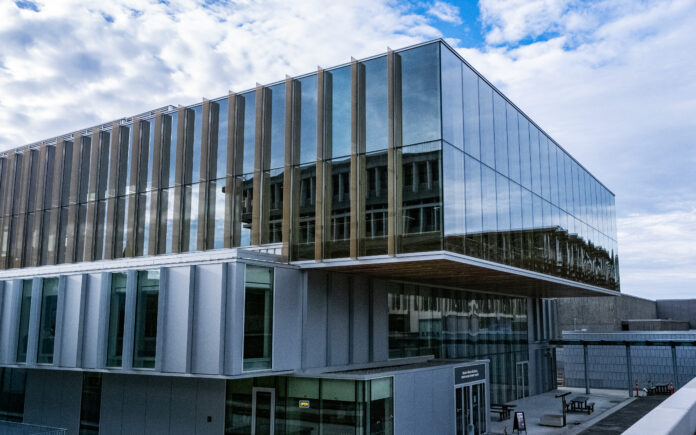
A photo of SFU’s Burnaby campus Student Union Building
PHOTO: Courtesy of Manmeet Sagri / The Peak

Some students might focus solely on grades and finishing courses as quickly as possible, slipping through the seams of this transitory institution that is colloquially compared to a prison complex. Though, like the winding vines that grow on the side of the W. A. C. Bennett Library, some students choose to root themselves into the student society. Student-led clubs, unions, and organizations are the heart of a thriving university community, where connection, collective support, and advocacy are built from the ground up. The university as we know it wouldn’t exist without them — they’re not just a part of campus life, they’re what bring it to life.

The roots of campus life

There’s a big difference between a student body — a group of students who happen to go to the same university — and a student society. Picture this: it’s September 1965 and SFU has just opened its doors to its campus sitting on Burnaby Mountain. Though thousands of students quickly filed up the hill and into the buildings, seeking out their educational prowess, it took quite some time for them to coagulate into a real student society. According to The Tartan, a former student-led publication, it took over a month for the first student government to be established and it’s been developing ever since.

Donald Arthur Pulsford, former SFU student, was instrumental in shaping SFU’s student community. He stepped up to the plate and championed student voices, laying the foundation for what is now the Simon Fraser Student Society (SFSS). As the first SFSS Public Relations Officer, he set up park-ins and sit-ins against tuition hikes and pushed for the creation of the Student Union Building (SUB). He was also co-founder of The Peak, originally named S.F.View.

In 1994 came the first meeting of Students of Caribbean and African Ancestry (SOCA), which created a space for students of African and Caribbean heritages ever since. They’ve tackled issues such as racism, advocating for hiring and amplifying the voices of Black professors, and more. SFPRIG has rallied around critical issues through action groups, such as the committee to end ableism, racialized resistance and healing, and no cops on campus. And let’s not forget how these two and several other groups brought systemic change to the student government to include marginalized communities and fought for their space in the SUB. If only Pulsford could see what would come decades later from his idea of the SUB. 

When the First Peoples’ Gathering House began construction in 2019, SFU First Nations, Metis & Inuit Student Association (FNMISA) condemned SFU for failing to adequately consult them on the plans, even going as far as barring Indigenous students from entering discussions. Thus began the Let Us Speak campaign, backed by tens of allied student-led groups who amplified their mission: “Indigenous students should be the centre of reconciliation work on this campus, as we are the ones on the front lines of fighting systemic issues that continue to create barriers to achieving our academic goals,” the group wrote. 

These efforts remind us that a student community is shaped by the collective will and solidarity of its members. 

“A student community is shaped by the collective will and solidarity of its members.”

The SFSS, clubs, student societies, and more

The SFSS is the central organization representing and advocating for students. They also administer the student society fee towards student-led groups and resources like the health and dental plan, BC U-Pass, several grants, and more. The SFSS is present everywhere, from maintaining the SUB to student-led events, but many don’t know what goes on behind the scenes. In an interview with Sam Killawee, vice president internal and organizational development, we get an inside look at his role and the work that goes into supporting student initiatives and the challenges they face. As Killawee explains, “My connection to the student body is a little bit more tenuous than that of some of the other executives as my role is very much an internal facing one.” He is one of two executive members overseeing student health and dental plans and focuses primarily on reviewing the SFSS’ policies to assess governance structure. 

For context, clubs are groups with a specific interest and mandate, student unions represent students within a certain department or faculty, and constituency groups “represent and serve its members who share an experience or condition of oppression and systemic discrimination.” FNMISA provides resources such as safe spaces, Elder visits, cultural workshops, academic support, and more to First Nations, Métis, and Inuit students. 

There’s also independent student societies, which operate autonomously to serve the broader student body. Embark Sustainability, for instance, is a climate-driven group which provides essential food security resources to students.

Killawee highlights how student-led groups offer essential spaces and resources for marginalized communities beyond the academic institution. He also recalls the Tuition Freeze Now movement, which he says “stands out to [him] as a moment when a lot of student societies banded together in solidarity.” Despite these successes, Killawee underscores the challenges student societies and clubs face, particularly in terms of stagnant funding. Membership fees (Student Society Membership Dues) haven’t increased since 2006. Since their last fee adjustments, many student-run services and societies have experienced significant inflationary erosion. Almost two decades have passed and there hasn’t been a membership increase while inflation has risen by 48% since. Campus radio station CJSF has not adjusted fees since 2009, while The Peak fees have remained unchanged since 2003, and the most striking being SFPRIG, whose fees have remained stagnant since 1995. 

 “At some point, we’re going to get to a place where the funds that we have no longer have the same buying power that they used to.” Killawee stresses the importance of student engagement like “coming out to student events and events run by your student society,” reminding students, “these are your societies . . . and they work for you.” 

Voices of the community

So, what do students have to say about the importance of student societies? The Peak sent out a survey to students to share their thoughts. Yulissa Huamani, an arts and social sciences student, said “student led organizations allow students to find like-minded people.” Huamani also notes on memorable experiences, “I remember assisting many events organized by clubs such as the career night hosted by the International Studies [Student Association] allowing me to hear professionals’ perspective and experience.” Paiton, a student majoring in history and member of the Association of Latin American Students, said, “I made a majority of my life-long friends from clubs run by students,” and that clubs and societies “foster community and create a space outside of the classroom for people to meet.” Sena Isik, a member of Embark Sustainability, mentioned the impact of their society, citing the reduction of CO2 by reducing food waste on campus. One student mentioned how having organizations for and by students is “a good way for students to be engaged with university life and to be a part of the community, by either joining or designing their own organizations.” Education major Katie Wilkie said student-led media “impacts the way I receive information. I like to know fellow students or local journalist are where I’m getting my information.”

SFU student verbally harassed on campus by group of teenagers

0
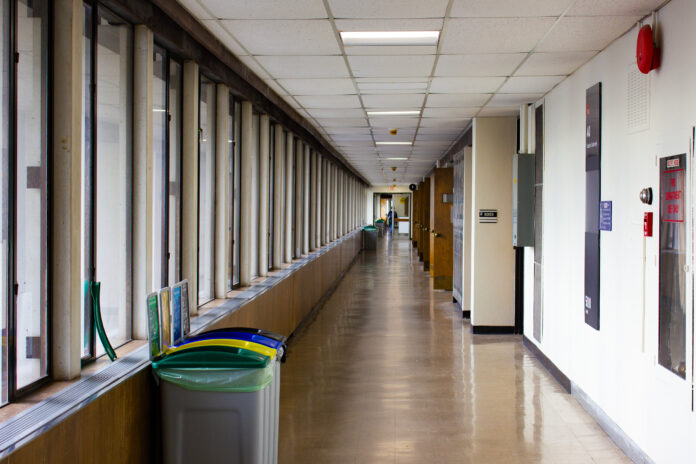
This is a photo of one of the inside halls of the upper 5000-level of the academic quadrangle at SFU.
PHOTO: Jin Song / The Peak

Content warning: details of harassment, and racist and sexist language. 

The safety of SFU students is being questioned after an incident of verbal harassment against an SFU student occurred on the Burnaby Campus on November 24, 2024. Following this incident, she posted her experience on Reddit to r/simonfraser. The Peak reached out to learn more about her experience and opinion on campus safety. Jane’s name has been changed to protect her identity.

At 5:00 p.m. on a Sunday night, Jane took a break from studying and went to order food from a restaurant at UniverCity. While walking from the Student Union Building, she encountered a group of boys “smoking marijuana and vaping” in the 3000 level of the academic quadrangle (AQ). Upon seeing Jane, the group of teenagers began to hurl racist remarks and sexist slurs at her, going as far as to say they could take her “to the stairwell and fuck [her] up so easy” and that “nobody would even know what would happen” to her.

Jane then said she ran from the group of boys and called security near the education building entrance of the AQ. “When I called the security guards, I felt there was no urgency to actually catch these boys. They were walking to these boys as they were running away,” she said. The group of teenagers then started “running around campus” as Jane accompanied security. When Jane spotted one of the boys, a security guard jogged toward him. Jane said she then stood alone for “seven or eight minutes,” when she called campus security again. She wanted to know if she could leave campus and how the boys would be dealt with. Jane felt “there was no sense of communication” between herself and security. She also expressed her disapproval of the school’s Safe Walk service as she stated security escorted her to the UniverCity area, where they had also escorted the teenagers off campus.

“One way or another, the reason why I wanted to share this was so it could spark discussion about the way that SFU handled this.” — Jane, SFU Student

This incident is not the first safety violation arising on campus allegedly involving the same group of teenagers. In March, an SFU student was bear-sprayed on the Burnaby campus. According to an interview with City News Vancouver, the student intervened to stop the harassment of a custodian by a group of teenagers. He was then shoved and bear-sprayed by them. This student stated that when he reached out to SFU, “they did not provide any support or information regarding how they would prevent similar instances from happening in the future.” There were also reports of police responding to a pepper spray incident in late March, but The Peak wasn’t able to confirm the details of the incident, and whether or not it was separate from the bear spray incident. Many anonymous Reddit users and an anonymous City News interviewee suspect these teenagers are linked to several other incidents throughout 2024 involving violent threats, racial slurs, and shooting BB guns.  

Jane also added that a security guard told her the group of teenagers she encountered had “12 to 14” incidents involving campus security in the past. Both Jane’s original Reddit post and the post about the bear mace pictured the suspects. The photos were forwarded to the Burnaby RCMP by Reddit users. Reddit users reacting to the bear mace incident were able to find the social media handles and full names of the alleged suspects. The Youth Criminal Justice Act makes it illegal to publish the identity of minors, including publishing their names on social media.

Jane said that when she filed a report with the Burnaby RCMP, they forced her to delete the pictures of the teenagers online. She said she felt “very much pressured into it because of the boys being minors.” The police proceeded to ask her to “give the boys an apology and sit down with their parents” for posting a photo of them. After Jane refused to do so, the case was closed with the Burnaby RCMP. The Peak reached out to the RCMP Burnaby district for more information but did not receive a response by the publication deadline.

In a statement to The Peak, SFU stated that the “campus public safety team continues to offer support to those impacted by these incidents and is working with the Burnaby RCMP to aid police in all avenues of their investigation.” The Peak also reached out to SFU security for a statement but did not receive a response by the publication deadline.

“Perhaps other women [or people] could have similar stories to share about this,” said Jane, when asked what prompted her to share her story. “One way or another, the reason why I wanted to share this was so it could spark discussion about the way that SFU handled this,” she continued.

Jane and another Reddit user alleged that only four guards work the Burnaby campus per shift. The Reddit user said that two guards are stationed at specific areas on campus, while two other guards conduct campus-wide patrols. The user said in their conversation with security, they learned that security staff believe it is unreasonable to only have two guards on campus-wide patrols to respond to emergencies. Jane added there were only two patrol security guards on campus the night of her harassment. The Peak was unable to verify the number of campus security working per shift, as SFU security did not respond by the publication deadline.