Home Blog Page 1032

Dying for it

0
"Assisted dying helps people reclaim some control over their lives."

To be honest, I probably think about death too much.

My continuously growing list of unreasonable fears — including sharks, sink holes, stray bullets, black holes, and death by accidentally tripping and hitting the pavement with my teeth in a way that they go up into my brain — all share the noticeable theme of being death-orientated. I’ll also be the first to admit that just talking about death terrifies me. Few things in life are as guaranteed as the fact that we’ll all one day be dead, and that fact is simultaneously unsettling and reassuring in equal measure.

So why am I deciding to share all of this personal and otherwise useless information with you? Because I want you to know how uncomfortable the subject makes me, so that hopefully you’ll recognize just how strongly I feel about assisted dying.

There are a multitude of terms for it — assisted dying, assisted suicide, euthanasia — but they all result in the same thing. According to National Health Services, euthanasia is “the act of deliberately ending a person’s life to relieve suffering,” whereas assisted suicide is “the act of deliberately assisting or encouraging another person to kill themselves.” Both become options for consideration when a terminal patient is seeking a way to accelerate their death.

The decision should fall in the hands of those who it affects most: the patients themselves.

Why would someone want to end their life any sooner than they have to? There are many reasons, actually, but some of the most common are if a patient knows they’ll be in considerable pain and is against prolonging the process; the sheer cost of maintaining proper medication and treatment to delay the inevitable; or — one of the biggest points of contention for assisted dying supporters — wanting to reclaim control of their life and end it on their own terms.

Seems pretty reasonable, right? So what’s standing in the way?

Quite bluntly, the practice of assisted dying is illegal in Canada, and anyone who commits the offence could face up to 14 years in jail. The issue is currently in front of the Supreme Court of Canada, where the BC Civil Liberties Association is arguing in favour of “doctor-assisted dying only, and not assisted suicide at the hands of just anyone.”

By lessening restrictions on the practice and awarding it more legality, the BC Civil Liberties Association hopes that fewer illegal assisted suicides will take place and that there will be a reduced chance of said suicide attempts being botched or leaving the patient in even worse shape. Quebec is the only province in Canada to successfully pass right-to-die legislation back in June of this year, meaning that terminally ill patients over the age of 18 who are in constant pain and stand no chance of improving can submit a request for a doctor-assisted death.

So what does the rest of the country think about assisted dying? A 2014 poll conducted by national charity Dying with Dignity (DWD) found that 84 per cent of surveyed Canadians agreed that “a doctor should be able to help someone end their life if the person is a competent adult who is terminally ill, suffering unbearably, and repeatedly asks for assistance to die.”

Even more surprising is that 80 per cent of Christians and 83 per cent of Catholics polled showed support for assisted dying. The poll’s scope is admittedly limited in that only 2,500 Canadians were sampled, but DWD still calls it “the most comprehensive Canadian survey ever undertaken on the public’s perception of dying with dignity.”

In British Columbia specifically, a full 87 per cent of people surveyed were found to be in support of assisted dying.

Aside from the legality of assisted dying, a large chunk of opposition comes from various religious groups who entirely oppose the taking of another person’s life. The Death with Dignity National Center dedicates a large part of its website to listing which religious groups are against assisted dying, as well as specific reasons as to why it conflicts with their beliefs. Among these is the view that the “killing of a human being, even by an act of omission to eliminate suffering, violates divine law, and offends the dignity of the human person.”

However, some religions acknowledge that a person’s suffering and the need for compassion in terminal cases is important. The Mormon Church, for example, acknowledges that “when dying becomes inevitable, death should be looked upon as a blessing and a purposeful part of an external existence. Members should not feel obligated to extend mortal life by means that are unreasonable.” Again, we encounter the issue of set rules and beliefs coming into conflict with what might seem to be the morally right thing to do.

No one wants to hear they have a limited amount of time left to live — but when you factor in the hopelessness that comes with knowing your illness is terminal and that your quality of life will only worsen going forward, it’s no wonder people are rallying behind the right to assisted death.

As someone who’s not in a situation where I have to choose whether or not I want to pursue assisted dying, it seems condescending to comment on if it should be allowed or not. From the outside, it’s easy for me to weigh in on the topic and say what I personally feel is right or wrong. In reality, the decision should fall in the hands of those who it affects most: the patients themselves.

No one has a say in whether or not they will die one day, but assisted dying helps people reclaim some control over their lives. Dying is inevitable; having no say in how you die doesn’t have to be.


A child’s healthy diet is a parent’s inherent responsibility

0

Author Karen Le Billon believes in “taste training” — that we should condition children to enjoy healthy foods, rather than those loaded with sugar and fat. She elaborates on this concept in a book entitled Getting to Yum: 7 Secrets For Raising Eager Eaters, where she also examines the impact of junk food advertisements on children and their families — she feels that similar marketing slogans could be applied by parents to entice their children to eat healthy.

This is all well and good, but do we really need to use Le Billon’s strategies for a parenting tactic that should already be common knowledge in the 21st century? Yes, picky eaters can be difficult, but whose fault is this really? It certainly isn’t the fault of junk food advertising, which Le Billon and many other parents are all too quick to blame.

I know that advertising can have a profound effect on a young child’s mind, but it isn’t the demon that people make it out to be. Instead, the fault lies with the parents. Parents buy and cook unhealthy food, and then blame the food industry for making their children overweight.

Sure, these parents are quick to say that they must buy Kraft Dinner to prevent their child from throwing a temper tantrum, but that excuse is simply unreasonable. Parents have to lay down the law in terms of what their children can and cannot eat, and they should not be concerned with losing face if their child throws a tantrum in the store.

Parents buy and cook unhealthy food, then blame food industries for making their kids overweight.

Instead of using advertising slogan strategies (this broccoli is magically delicious!) to counter the effect that junk food advertisements have on their children, parents should consider saying “no” to their kids when it comes to unhealthy food. If parents are that concerned about advertising, then they should discard their cable television — something my parents did when I was born.

I understand that, in this day and age, communication technology is much more ubiquitous than it was 21 years ago — due to the internet and mobile handhelds — but parents can easily download apps such as Adblock for free, as well as limit their child’s access to certain games that may contain certain advertising.

Moreover, there are many websites that parents can use as educational resources to teach their kids about advertising. Many of these websites even have recipes for cheap and healthy meals that kids will enjoy. Parents should simply teach children what is unhealthy, limit their child’s access to ads, and watch which foods they purchase.

Parents do not need influences from the food industry to help them raise their kids, and we certainly do not need to read Karen Le Billon’s book, which  merely reiterates the obvious.

SFU volleyball dominate on Senior’s Night

0
The Clan won both the second and third sets by a margin greater than 10 points.

For their final home game, the Clan gave fans something great to remember until next year, sweeping the Saint Martin’s University (SMU) Saints.

It was Senior’s Night — the last time that Brooklyn Gould-Bradbury, Madeline Hait, Amanda Renkema, and Kelsey Robinson would suit up for the Clan in the West Gym. Robinson and Renkema lead the team in kills, while Hait is fourth on the team for kills.

Despite the sweep, it was actually the Saints who opened up the scoring on an SFU attack error. However, fitting for Senior’s Day, Robinson and Hait opened up the Clan’s scoring with two straight kills.

Throughout the first set, the Clan looked dominant, putting up two separate five-point streaks and a four-point streak, culminating in an 11-point lead. However, Saint Martin’s battled back with their own five-point streak. Still six points up, SFU wrapped up the set quickly with Robinson notching the final kill.

The momentum from the first seemed to carry into the second, with the Clan scoring 10 straight points as the set opened. After that, the offence balanced out with both teams taking turns notching points, but for the Saints it was too little, too late. With the help of an additional five-point streak, SFU easily won the second 25-13.

The Saints had the quick start in the third, taking three straight points. However, SFU would prove too much, and thanks to six- and seven-point streaks, the Clan won 25-14, thus completing the sweep.Screen Shot 2014-11-14 at 7.57.33 PM

Robinson led the team with 10 kills along with sophomore Devon May. Renkema also put in a solid effort, netting nine kills on her final night in the West Gym. While libero Alison McKay led the scoresheet in digs, seniors made a great impression here as well, with Robinson and Gould-Bradbury taking second with nine digs each, a total matched by setter Danielle Curtis.

“I was very proud of how the girls stayed focused tonight,” head coach Gina Schmidt told SFU Athletics. “There are always lots of emotions with it being Senior’s Night but the team stuck to the game plan and executed well on a big night.”

With this win, the Clan bring their record to 16-8, and 10-6 within the Great Northwest Athletic Conference. Each win marks a new height for the team, as their previous high in the NCAA was 11 total wins, with only six in the conference, achieved last season.

Meet the Clan: Priya Sandhu

0
Freshman goalkeeper Priya Sandhu was thrust right into action, appearing in every game for SFU this season.

Screen Shot 2014-11-14 at 7.21.11 PMWhile nobody is claiming that any position in soccer is an easy one, not every position is known to be reserved for the “crazy,” like that of goalkeeper.

In terms of responsibilities, this position requires 90 minutes of focus, courage, bodily sacrifice, vocal directing, and consistency. There is constant pressure to do your job properly, because you’re simply not allowed to make mistakes. Any takers?

Leave it to Surrey native Priya Sandhu — she agrees that you need to be a little bit crazy to stand between the woodwork and shoulder the duty.

“Yeah, you have to be crazy to be a goalkeeper,” said Sandhu. “You have to realize that not everything is your fault, shake things off, and have that tough personality [. . .] it gets easier with time.”

The freshman goalkeeper was thrust into the action immediately after arriving at SFU, appearing in every game of what was a difficult season for the Clan — they went 2-16, and 10 of those losses were shutouts.

Despite the baptism by fire, Sandhu persevered with a passion for the game that stems from her very first year of playing; even then, she set her sights high.

“I was five years old and already wanted to be in the World Cup!” said Sandhu, with a laugh. “My mom played soccer when she was younger and so did my brother, so I wanted to be a part of it too.”

Much like other players in this unique position, the role essentially chose her, albeit assisted by a little push from her mom and then-coach.

“Everyone didn’t want to play in net when the team would rotate, so my mom kept putting me there and eventually I made a save at some point. So I stayed there, I couldn’t say no to my mom.”

Driven to succeed, Sandhu began to compete at higher levels, playing with the Whitecaps prospects program, the provincial U-13 team, and eventually winning gold at the 2013 Canada  Summer Games.

Quite simply, the Clan are in capable hands, and the young keeper feels that the added challenge of Great Northwest Athletic Conference (GNAC) competition has helped her grow. “At first it was overwhelming and a hard adjustment, but next year we know what to expect,” she said.

The 17-year-old explained that the opportunity to play at SFU was a great relief and affirmation of her goals as an athlete, and this was coupled with a dream invitation to make her first international appearance training with the Canadian U-20 team in February.

“When I finally got to commit [to the game] it was a relief and I was really excited,” said Sandhu. “The prospect program that I had played in when I was little was held at SFU, so I made a pact with a friend at the time that we would go to SFU together.”

Playing with the Clan has also benefitted Sandhu through the valuable coaching staff, which Sandhu believes can take her game to a higher level. Even though it was a transition season for the players and the philosophies introduced, the rewards are sure to follow soon.

“The coaching staff we have are really great,” said Sandhu, who found a mentor in assistant coach Anna Picarelli, herself a former goalkeeper.

“Anna helped me so much because she’s a smaller goalkeeper [like me] and has taught me a lot of things that other coaches haven’t been able to.”

Screen Shot 2014-11-14 at 7.26.41 PMDespite her short time with the team, Sandhu is already a leader on the pitch, requiring that she develop the vocal aspect of her game in order to guide the outfielders in front of her.

“I’ve been a part of teams where they didn’t bring that out of me, but it was good and I felt really challenged.”

Vocal development will surely aid in Priya’s career goals as well, which are equally as daunting as her playing aspirations. The Surrey native has zeroed in on studying criminology in the hopes of eventually becoming a lawyer.

“I feel like I will do well in that area, so I plan on getting high marks and getting into law school. Sometimes it’s hard to focus on school, but it’s something I’ve always wanted.”

A goalkeeper is constantly facing challenges head on, both mentally and literally on the pitch. For Sandhu, who made an impressive 76 saves over her 18 appearances for the Clan, educational challenges will surely be met with the same fortitude that was shown in her first campaign in the net for SFU.

HUMOUR: Letter to the Editor

0
Remembrance Day is important, but it shouldn't come at the cost of Halloween

Dear The Peak,

A problem has recently come to my attention that I feel compelled to bring up with your readership. As a respectable individual and a member in good-standing with the community, I am asking people to please stop commemorating Remembrance Day so early and wait until after Halloween has passed on October 31 to start remembering our country’s fallen veterans.

It feels like people are wearing poppies and attending memorial services earlier and earlier every year, taking away from the importance of Halloween. It’s downright disrespectful and it has to stop.

Just a few weeks ago, I was shopping in Walmart when I spotted a poppy box. A poppy box! In the middle of October! Have companies no decency anymore? What happened to honouring those who want free candy and are willing to spend all night — often in below-moderate temperatures — knocking on the doors of strangers, asking them for a “trick or treat?” Are we just going to ignore all of the parents who had to stay up late the night before, sacrificing hours of sleep to finish sewing a costume for their child who will simply outgrow it within a matter of months? By commemorating Remembrance Day too early, we are forgetting about our heroes of the present.

November 11 is an important day for remembering the fallen soldiers of World War I and the utmost respect should be given to our veterans on this day. However, this should not come at the cost of simply skipping over Halloween. I’m not alone on this one either: I’ve been reading more and more about  trick or treaters coming forward and asking the public to hold off on their poppy boxes until after Halloween, in reverence of free candy and ghost decorations. But I worry it’s not enough.

So the next time you contemplate donating your change and donning a poppy while it’s still October, I encourage you all to reconsider what Halloween represents and forgo commemorating Remembrance Day until after October 31 has passed. It will still be Remembrance Day after Halloween, so what’s the harm in waiting another week? You might think I’m old-fashioned, but I believe respect and tactfulness never go out of style.

Sincerely,
A concerned citizen

Clan look forward to tough start

0
Erin Chambers was named the GNAC preseason player of the year.

Last year, the women’s basketball team made nationals and finished in the top 32 of NCAA Division II play. This year, they’re jumping right into the fire — head coach Bruce Langford made sure that their opening non-conference  games would challenge his team.

“We wanted to have as tough a schedule as we could,” said Langford.

After opening the season on the road against the Notre Dame de Namur Argonauts and the Academy of Art Urban Knights, the Clan will play their home opener against the Cal Poly Pomona Broncos, who were ranked first nationally in the pre-season rankings.

And it won’t get much easier when Great Northwest Athletic Conference (GNAC) play begins. The Clan will open up conference play at home against the Western Washington Vikings, who are a favourite to sit atop the conference, and finished second last year.

“They were the pre-season favourites in our conference to win, so we open up against the best right off the bat,” explained Langford. “They’re physical, they’re big, they have a couple of kids who really shoot the ball, they are very competitive, intensely competitive, so it will be a tough start too.”

The tough start is meant to get the Clan accustomed to a higher level of play from the get-go, elevating their level of play throughout the season. The team will need to do this in order to make nationals once again — their ultimate goal.

Although Langford admits that he doesn’t think the team is quite ready to win a national championship, he knows that the key is to make it and get in a position to win: “Our goal is to get to nationals and see what happens,” he said.

The coach hopes that the team can advance past the west region semifinal, where the Clan finished their season last year — he believes the mix of new and returning talent will help them achieve that goal.

“We are hoping to better that. We are excited about some of our incoming prospects, and we’re very happy with the people returning,” he said.

Erin Chambers, who led the team in scoring with 692 points and averaged 23.1 points per game last season, returns as one of the team’s two seniors. Chambers was named the GNAC preseason player of the year.

Katie Lowen, the other returning senior, is second in team scoring. Fellow returner Meg Wilson led the team in field goal percentage — the only Clan player able to notch a percentage over .500 at .612.

Although the team lost key senior players — including Marie-Line Petit, Rebecca Langmead, and Chelsea Reist — Langford is looking forward, not back. With the help of new players such as Ellen Kett, who plays on the point, and redshirt-freshman Elisa Homer, Langford hopes that this team will be better than last year’s.

“This season’s team will hopefully shoot the ball better as a whole than last year,” he explained. “I think that Ellen Kett and Elisa Homer are going to really add some shooting to our team this year. I think [returners] Ariana Sider and Alisha Roberts are both going to be able to hit some shots, so we have a good number of kids who can shoot the ball.”

The women’s basketball team opens at home against the Cal Poly Pomona Broncos on Sunday, November 23 at 1:00 p.m.

Universities must prioritize their budgets for existing students

1
UBC ignores the current students who deserve to be prioritized.

CORRECTION: An earlier version of this article incorrectly stated that UBC will increase tuition fees by 20 per cent. Rather, UBC will increase housing fees by 20 per cent. This factual error has now been corrected. Facts are taken from a recent CBC report.


Last week, I stumbled upon an article that discussed UBC’s plans to construct an expensive new college that will cater only to wealthy international students. While I’m aware that the university has a colossal budget, I’m also aware that post-secondary budgets are shrinking, and that there is still an ironic division between the wealthy and the poor with regards to university costs.

I also understand that by chastising UBC’s blind economic decisions, I’m further perpetuating the long-established rivalry between between SFU and UBC. Though, in this instance, I feel a bit of ridicule is necessary, as our radical campus could probably learn a thing or two.

For those of you who don’t know, UBC has decided to pull $127 million out of its shrinking pocket to build the new Vantage College — an institution that will not be open to domestic citizens or permanent residents. The campus will contain housing with over 1,000 rooms, and will cost students over $50,000 per year to attend.

This comes as quite “a slap in the face,” as one UBC student so justly told CBC last week. The university has blatantly ignored the housing needs of their domestic students: some 5,000 individuals are waiting impatiently to get in on the presently limited number of housing spaces offered by UBC.

Adding insult to injury, because of this project, domestic students will soon face an over 20 per cent increase in their already high housing fees. As an SFU student who has lived in residence the past three years, I’m all too accustomed to the frustration and anger that accompanies learning that housing fees will be slightly higher than they were the year before.

Vantage College will provide wealthy international students with preferential treatment over their domestic counterparts.

I feel for these UBC undergrads — a 20 per cent increase will surely (and unnecessarily) place a hefty financial burden on a great number of students, many of whom are undoubtedly far along in their educational careers.

Current students also worry about the creation of an elite presence on campus. Vantage College will not only sequester these wealthy new individuals and discourage them from mingling with the Canadian student body, but will provide these people with preferential treatment over their domestic counterparts — after all, they’re the ‘50,000 dollar elite,’ they deserve to be pampered, right?

Sure, Angela Redish, vice-president of enrollment, can tout what is apparently the primary reason for this project: the college will “better support international students whose second language is English.” But anyone with a brain can see that Redish hides an ulterior motive behind her words. The institution sees enormous profit in prospective international students, so much so that it carelessly ignores the needs of existing students who deserve to be prioritized.

Thankfully, this discussion allows an opportunity for SFU and other institutions to learn from UBC’s mistakes, and critically examine where they allocate their own resources. While it’s important to entice future students to SFU, hopefully this institution has the sense to use its money to help better the experience of its current students, both foreign and domestic.

In other words, SFU: please treat your students with respect and don’t spend our money on exclusive bullshit. Place the focus on your current students, the thousands of us who are easily accessible, need education, and will benefit far more from your financial aid.

The hypocrisy in condemning a national park graffiti artist

10

Last month, graffiti artist Casey Nocket was caught by federal officials after painting on rocks in several national parks across the United States. Although popular opinion and the law suggest that Nocket is an awful person for having destroyed the natural beauty of these sacred national parks, I say that these parks are anything but natural because they are pristine,  perfect, and require preservation.

Annually, hoards of tourists from across the globe take planes, cars, and mobile homes to vacation in national parks. Before arriving, they stock up on essentials at Costco, Walmart, or some other supermarket. To make the most of their trip, they purchase camping equipment, gas, stoves, shoes, clothes, communication technology, and more. After they arrive, they visit designated spaces for camping, parking, swimming and eating. Days are spent hiking on pre-planned routes with man-made bridges and stairs.

When you look at national parks from this perspective, they don’t seem so natural anymore, but are in fact, a reflection of a society based on domination, hierarchy, and consumption. These parks are so artificial that we don’t even allow them to extend their borders to grow naturally.

Even wildlife population is controlled — like everything else, national parks are planned spaces that support big businesses and serve as vacation getaways. These parks become playgrounds for the global elite; the experience of nature becomes a commodity and a privilege.

We must ask the broader questions about nature and real environmental concern.

In such a controlled space, it’s ironic that when a person places his or her artwork (a natural human phenomenon) on a rock, society then silences this person. It’s easy to direct the blame and frustration we feel about the environment toward a single person who has defaced something we have been cultured to hold sacred. Although this feels right, we must ask the broader questions about what nature and  real environmental concern are. Nature is not only in these national parks, but everywhere.

It’s hypocritical to be angry at a woman who paints on a rock while we live in a society that is detrimental to the entire world. Almost every square inch of this earth is accounted for by someone or something; domination has plotted its territory across the globe.

More people should reconsider whether or not Nocket deserves punishment, especially in light of global events like the Mount Polley mining disaster, Fukishima, and the BP oil spill which lasted for 87 days. These events were true acts of environmental degradation. In combination with the amount of fossil fuels burned and the garbage we throw into landfills daily, one person who draws on a rock is insignificant.

Real environmental concern is a difficult issue to tackle. To criticize a person for painting on a rock is easy and feels good, but the real criticisms lie in pointing blame at ourselves, the corporations we support, and the economic system that plunders our daily lives.

Unique degree explores environmental controversies

1
The degree aims to train the environmental decision-makers of the future

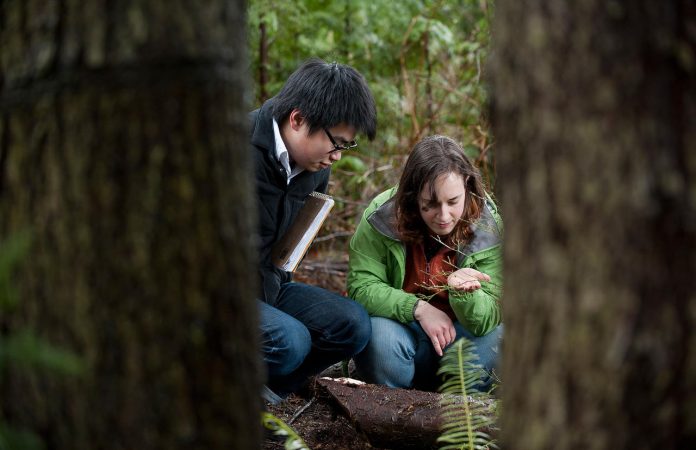
SFU’s Faculty of Environment (FENV) launched Canada’s first Bachelor’s of Environment program, which aims to create environmental problem-solvers and decision-makers capable of making a contribution to mitigating climate change.

A balance of the social sciences and the natural sciences, the degree program will begin in January 2015.

Dan Burns, manager of curriculum and planning in the Faculty of Environment said, “We are trying to produce the graduates who can address and understand environmental issues in its broad context.”

Burns emphasized that many employers are looking for candidates who have an understanding of contemporary environmental challenges and who know how to interact and work well within a group with people from different backgrounds. The courses offered within the program are meant to prepare students for these types of roles.

One such course, to be offered in Spring 2015, is called ENV 222-3: Environmental Controversy. Environmental controversies are complex since they require thorough understanding of social sciences such as policies, laws, and ethics, but also require a foundation in natural sciences such as biology and ecology.

In ENV 222, students will have to explore the complexity of specific environmental issues and assess their potential effects.

Burns explained, “The idea [of this course] is really trying to be unbiased. This is team-taught; students take command in a third of the course, work with a faculty member, and organize the field trip and debate. It is not lecture based.”

Burns said the course should provide a good footing for students regardless of their knowledge base: “If you want to be involved in environment and don’t know where to start, start with taking ENV 222.”

Just as students in ENV 222 will have to combine their knowledge of social and natural sciences, SFU’s Bachelor’s of Environment is considered an interdisciplinary degree, as it combines different courses from other departments as well as core environment courses.

For example, students have three options for majors: global environmental systems, environmental resource management, and sustainable business — a joint major offered collaboratively by FENV and SFU’s Beedie School of Business.

Students can take courses from other departments as well as core environment courses.

Environmental resource management relates to fisheries, forests, fossil fuels, and mines. This major will focus on coming up with a resolution for how to take environmental action in the community, as well as awareness of laws and regulations on a regional and local scale.

Global environmental systems is broader in that it looks at different environmental problems internationally. It also examines social systems, such as the global health system.

Sustainable business is a joint major in the environmental sciences and business program. This is a degree for people who hope to work for companies in environmental mining and forestry. Students will gain knowledge around environmental protection, environmental risk assessment, and corporate environmental management.

As more and more companies become concerned with sustainability, Burns speculates that this joint major could bring huge benefits.

Modern medicine isn’t always the answer

1

While modern medicine is effective in treating many serious illnesses, I feel that traditional, native medicine can often be as powerful, and should be taken into account when looking for ways to cure these illnesses.

Modern antibiotics are usually seen as having a quicker effect, but traditional medicine aims to restore the long-term balance of one’s body. Because they both have their advantages, I feel justified in suggesting that we combine the two, thus integrating traditional medicine into the modern healthcare system.

Traditional medicine can be used to innovate the development of modern medicine, which can be highly effective in treating many illnesses and in allowing people to live much longer lives than in past generations. However, there is one major drawback to modern medicine: because most clinical medications are manufactured using synthetic chemicals, using them can often result in unwanted side effects.

Often, one may be forced to take drugs in order to counter the side effects of the original treatment. Modern medicine may seem more effective, but in fact, it often treats symptoms using direct methods, which usually further harms our bodies.

Among the 300 types of traditional medicine around the globe, Chinese medicine in particular has garnered increased attention from researchers. Traditional Chinese medicine treats the body as a collection of interconnected systems, and thus has great potential to treat more complex illnesses such as cancer, AIDS and Alzheimer’s.

Traditional medicine aims to restore the long-term balance of one’s body.

Traditional remedies usually use ingredients that come from the natural environment, and are therefore much less harmful to our bodies. Consequently, modern scientists can use traditional cures as a starting point from which to produce more effective, less harmful medicine.

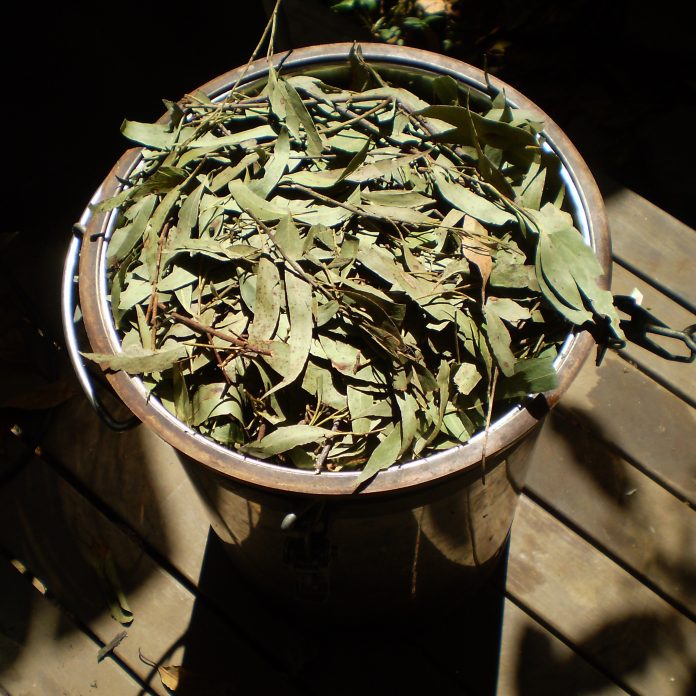
For example, qing hao su, an herb that has been used to treat fever for over 2,000 years in China, was scientifically proven to contain anti-malarial properties and its active compound, artemisinin, was then isolated to make medicine.

One of the biggest concerns with traditional native medicines is that they have not been scientifically vetted. Unlike modern medicines, which filter through various tests before being mass produced, people usually doubt the trustworthiness of traditional remedies because the knowledge of their effectiveness only comes from cultural experience.

In this regard, it is important to adopt a more scientific approach to prove the effectiveness of traditional medicine. Chinese medicine, for example, is a system of traditional medical techniques that have been gradually incorporated into modern Chinese medical practices.

Outside of China, many researchers in Europe and the US are also becoming increasingly interested in using Western techniques to analyze complex biological systems, as part of the Chinese ideology that sees the body as a networked whole. They do this by studying how genes and proteins interact throughout the body when a disease develops, instead of just examining a single gene or molecule.

For many years these traditional medicines have been part of conventional academic teachings, and many universities in China offer degrees in traditional medicine. Many native cures do work; however, they lack the formal and systematic explanations for how they work.

While traditional medicine has so much history to support its use, I, like most people, turn to modern medicine more often than not. But when it comes to treating the root cause of certain illnesses, I feel that traditional remedies are the better answer. With more systematic study, it would be easier to integrate traditional medicine with the modern healthcare system — a move that would be beneficial for everyone.