Home Blog Page 851

Confessions of a schoolyard bully

0
Procrastinating? Not anymore. ILLUSTRATION: Tia Young / The Peak

[dropcap]W[/dropcap]hen you meet new people on campus, you always end up talking about your life before university.


A lot of the people I’ve met at SFU have some kind of story where they encountered some form of bullying prior to their university days.

Except for me. I’m on the opposite side of the story, I was a childhood bully. I don’t say this with any pride for how I acted, and I realize this won’t garner a whole lot of sympathy, but it’s the truth.

I went to the same school from kindergarten through to grade nine, which was the end of junior high school in Alberta and also the last grade offered at the private school I attended. The school was very small, and as a result, it was unavoidably intimate — my graduating class was no more than 30, and it was still the largest the school would see for a number of years.

This was the kind of school where you knew the names of all your classmates’ pets. You had a rotating cast of teachers because it wasn’t practical to hire specific ones for each grade. It was the kind of school where reputations stick.

It started when I was around eight years old. Some of the older kids thought it would be funny to see if us younger kids could hold our own in a scrap with them; a real life ‘how many toddlers can you take’ scenario. I remember the thrill of how impressed they were when I went all out and tried to pummel anything that moved. It was a different kind of acceptance that I hadn’t had before, and I loved it.

This rush, combined with the toxic environment in which I grew up — both at home and at school — was why lashing out became regular for me. It’s tempting to avoid your feelings, even if it involves hurting someone else in the process.

[dropcap]S[/dropcap]hockingly, the administration didn’t care for my tough guy ways, and put a stop to them fairly quickly.


But I had already developed a taste of what it felt like to win at someone else’s expense. Since I was a hypercompetitive child, I decided to find another outlet for my frustration.

For me, that became being very verbally abusive towards others. I have a list of justifications that I want to be able to give for this, but at the end of the day, the fact remains that I was a bully, and a vicious one at that.

Amidst school suspensions and threats of expulsion, the situation got worse and worse until the summer before high school, when I truly understood how people saw me. At a summer camp — just months before I started high school — I saw myself through someone else’s eyes.

At the end of the day, I was a bully, and a vicious one at that.

A girl in my unit was crying. When I went over to comfort her, she just screamed at me to leave her alone.

I knew that I didn’t have the greatest reputation with people, but it was eye-opening to realize that people would rather stay in pain than let me anywhere near them. This moment was so powerful it made me disappointed with myself. It genuinely made me want to change to who I was.  

I was also fortunate enough to benefit from a change in scenery. I went from an uncomfortably small school, the only one I’d only ever known, to a public high school that had well over 2,000 students.

Early on, I got involved in my one and only fist fight at that school, and fittingly enough, I was on the receiving end of being bullied. We fought just outside the school, right after football practice. Pretty cliché, right?

We were called into the administration’s office the next day, where I expected them to just suspend us and give us the usual scolding. It wouldn’t have been my first suspension, and it wouldn’t have been my last if the school didn’t intervene the way they did.

Instead, they sat us both down, and had us talk through our issues until we got to the bottom of it all. It didn’t result in us becoming best friends, but we were civil towards each other, which is probably what they were hoping for.

The real victory for me was how close I became with the school’s administration after that. Feeling like you have a good relationship with your school helps the healing process a lot. It set the tone for how much I truly enjoyed high school and wanted to dive into everything that school had to offer in hopes of rebuilding my character, instead of engaging in self-sabotaging behavior.

[dropcap]I[/dropcap]t’s been a long road of recovery since then.


I learned that I was so set in the habit of bullying, it was a defence mechanism as well as a default. Throughout high school, I would agonize over the day’s interactions when I went home. I wanted desperately to build relationships, and would often become frustrated with myself when old habits showed.

It was a difficult position to be in. Instead of trying to deal with it in a healthy manner, I turned most of my anger inwards and became brutal towards myself. Combined with the fact that I was still in the aforementioned toxic environment, there wasn’t a lot of reprieve, no matter how desperately I just wanted to be liked and accepted.

Ironically, I’m now my own worst bully.

It’s been tough reconciling with how other people viewed me, and even tougher to move forward. Occasionally I still catch myself going too far with jokes at the expense of others, not realizing it until I’ve offended someone. I can safely say that I have lost friendships because of how easy it is to slip back into the role of the tormentor.

Kindness is one of the best traits you can aspire to, and understanding this has been trying. One day, I hope I can stop beating myself up over how I used to act, but for now I’m just content that I’ve changed how I treat the people in my life.

The Valentine’s Day cards that the SFU bookstore refused to stock

0

vday_zombie_colour

Illustration by Serena Chan

to-my-sister

Illustration by Janis McMath

YeezusILoveYou1ZacharyChan

Illustration by Zachary Chan

Dumbledore_ Christina Kruger-Woodrow

Illustration by Christina Kruger-Woodrow

Stalin and Lenin Valentine - Tia Young

“You’ve Stalin my heart!”

Illustration by Tia Young

The Peak Collab Project #2

“I’d let you see my browser history. Happy Valentine’s Day.”

Illustration by Leslie Lu


SFU student advocates for national eating disorder policy

0
Siefferts’s postcards through writing, and illustration, explore possible changes to how eating disorders are dealt with. - Photo by Lisa Dimyadi

SFU student Claire Sieffert is petitioning for a national eating disorder policy the old-fashioned way: one postcard at a time.

After receiving positive feedback for her UnmaskED project, a photography project featuring intimate portraits of individuals who have a history with eating disorders, Sieffert has launched the PostED project through the Post Your Change organization, which she founded. The PostED campaign is focused around individuals creating postcards to send to Canadian politicians, urging them to create a comprehensive national eating disorders strategy.

In an interview with The Peak Sieffert shared her thoughts on how the healthcare system deals with eating disorders currently: “I think it’s pretty abysmal. [. . .] We’re always comparing ourselves with the US, and on healthcare, that’s something we’re proud of. I think eating disorders is a department where we can’t be proud of our healthcare system.”

The campaign takes a hands-on approach by asking participants to either write or illustrate their answers to the questions, “What does a community that supports people with eating disorders and mental wellness look like to you?” or “What positive change do you want to see so that people with eating disorders are supported in Canada?” onto a postcard, which they then hand to Sieffert and she mails off to the MPs in House of Commons at a rate of one postcard a day, until May, the month’s first week being Canada’s Mental Health Awareness Week.

“This way is [one way] for the community to connect by actively going hands on and making this postcard and sending it to politicians. I think that shows a real willingness for change,” Sieffert stated.

Sieffert cited her partnership with the National Initiative on Eating Disorders as an important source in helping her understand Canada’s current policy, and thinking of changes and improvements the both of them would like to see made, which are written on the back of each postcard.

Some of these proposals include increasing medical professionals’ training on eating disorders, allocating more funding for eating disorder treatment, upholding a commitment to universal care, and establishing interprovincial information sharing on eating disorder statistics and best practices.

The cause is especially personal to Sieffert, who was diagnosed with an eating disorder when she was a teenager. Through this project and first-hand experience, she also is trying to frame eating disorders as a mental health issue, rather than simply a “need to eat more.”

“A lot of it isn’t even tied up in body image,” Sieffert said. “I think that’s a dominant misconception [. . .] Eating disorders, at least for me, can be a coping mechanism for stress. It’s a way of when you can’t control anything else, you can control food.”

Sieffert explains, “Unlike alcoholism, where to deal with your addiction, you go sober and you don’t drink alcohol again, [with an] eating disorder, the addiction is controlling food, but you can’t just go off food. You have to face food every day.”

In regards to future plans for the project, she says that for now she’s waiting to see how it further develops before making any long term plans.

Said Sieffert, “We’ll have to see how it is goes. It really is an ongoing effort to break the silence around this issue, so the more conversations we have, the greater the impact of this project and to me that’s pretty profound.”

Duke scholar draws link between ISIS and Islamophobia

0
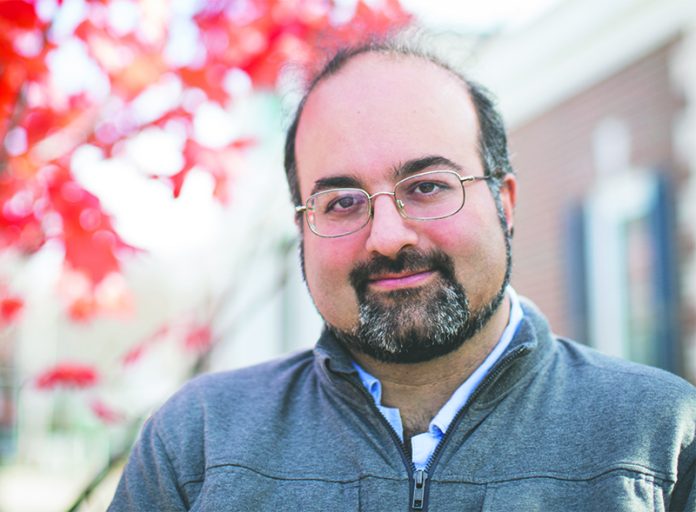
Omid Safi (pictured) is the director of the Islamic Studies Center at Duke University. - Photo courtesy of Duke University

“You measure the moral health of any community or society by the way in which it treats the people who at the moment find themselves the weakest and the most vulnerable. And, I would argue, that there is probably no [. . .] population worldwide who collectively is more vulnerable than the Syrian people.”

Leading American Muslim intellectual and director of the Duke Islamic Studies Center Omid Safi was referring to the plight of the Syrian people, as well as the refugee crisis in relation to the rise of ISIS in the region, and Islamophobic sentiments worldwide.

On Tuesday, February 2, Safi spoke to a crowded room at SFU’s Harbour Centre campus in a lecture titled “Muslims in an age of Islamophobia and ISIS: Towards a holistic stance of Justice.”

Before unpacking Islamophobia and the role of ISIS (also known as ISIL) in its most recent proliferation, Safi explained that while it is undeniable that Muslims are being increasingly targeted, the community does not have any sort of “monopoly on suffering,” and advised against “wallowing in victimhood.”

Safi opened the discussion with a quote by Jewish theologian Abraham Joshua Heschel: “Few are guilty, but all are responsible.” He referred to Heschel’s comment throughout the talk in light of the way Muslims in general have been held responsible for the actions of ISIS.

Safi acknowledged the relationship between the recent rise in Islamophobia, especially in Europe and North America, and the phenomenon of ISIS — a group whose barbaric actions are based on a very specific, and highly contested interpretation of Islam.

On the tactics used by ISIS, he noted the music and camera angles used in their propaganda videos are based on hollywood horror movies, like Saw. Coupled with a staggering 80,000 tweets produced by members of the group per day, Safi argued their self-promotion and recruitment as well as the militaristic responses of the “American Empire” has resulted in a condition“as much about over here, as over there.” The production of English propaganda in particular suggests a target audience in Western countries.

However, in order to combat Islamophobia, Safi explained that we must collectively address all issues of social and political justice.

“Justice has to be holistic, and a threat to justice anywhere is a threat to justice everywhere. We have to remember that the conversation about Islamophobia [. . .] is inseparable from the conversation on racism, sexism, militarism, xenophobia, and others.”

He noted there is an onus put on the Muslim community — by media and politicians, among others — to publically condemn the actions of terror: “We hate and condemn, we hate and condemn, we hate and condemn — there should just be an app for that [. . .] you just plug in the name of the latest terrorist tragedy, and it produces for you, your press release.”

However, Safi argued that the language of “hating and condemning”, while important, is far from enough. While few are guilty for terrorist attacks, all of us are responsible for what is happening on the ground, and for engaging in radical change.

With the recent rise of Islamophobia, an entire “made-for-media” academic industry of specialists in “Islamic-inspired terrorism” has emerged and gained popularity with support of mainstream and corporate media. Safi referred to Bernard Lewis and Samuel Huntington, author of the infamous Clash of Civilizations, as some of the pioneers in this industry, and explained that parts of their work have influenced US policy, in some cases being used verbatim. Even more pernicious are “terrorism experts” who opine on places that they have no historical, contextual, or linguistic expertise, but only operate out of ideological pre-committements, often reinforcing the militarism of Western Empires.

Safi believes racism and white supremacy are partly to blame for why Muslims are held accountable for the actions of ISIS while other ethnic and religious groups are not targeted in the same way.

He explained, citing a number of recent shootings in the US conducted by white American men, and instances of state-sanctioned violence — both within the military and law enforcement systems — that acts of terror committed by non-Muslim Americans far outnumber instances of terrorist attacks by Muslims. Acts of violence committed by white domestic terrorists are always set aside as being the action of “lone wolves” (perhaps under influence of mental illness), while the actions of Muslims are cast as being due to a communal responsibility, and emerging from the heart of the Islamic tradition.

“Think about what it would have looked like if President Obama had said that, ‘it is time for white people, it is time for white men, to unanimously, explicitly, forcefully, and consistently, denounce the actions of white domestic terrorism,” said Safi.

“That never happens, and the reason it doesn’t happen is simple: white privilege.”

Comics!

0

Creator’s Pet (Destiny Hsu)

CP_022_valentines2016

Pun, 2, 3 (Sarah Walker)

Magic trick

Mystic Man (Reuben Newton)

Screen Shot 2016-02-12 at 12.39.29 PM

Canadian hedge funds stronger than american ones: SFU study

0
The former Toronto Stock Exchange building (pictured). - Photo courtesy of cantech letter

Not only did Canadian hedge funds outperform American hedge funds as well as global indices last year, they maintained high returns amid a decline in the US hedge fund sector.

This follows the predictions of a study by Beedie School of Business Professor of Finance Peter Klein and his colleagues, who investigated the Canadian hedge fund industry and found Canadian funds to have higher risk-adjusted performance than their global peers.

The study attributes the strong performance of Canadian hedge funds to a lower level of competitiveness for capital due to the smaller size and number of hedge funds in Canada. In addition, Canadian funds are better able to exploit inefficient domestic financial markets and having an information advantage by investing in markets that are closer in proximity.

Hedge funds, according to Investopedia, are a type of financial investment that allows multiple investors to pool their money together. In Canada, hedge fund investors must have a net worth of at least $1 million or earn $250,000 per year in income. Thus, hedge funds are allowed to take more risks than traditional mutual funds and are less regulated as investors are seen to be better able to shoulder losses.

Professor Klein was motivated to study Canadian hedge funds “to articulate a business opportunity” to potential investors and contribute to the growth of the hedge fund sector by advising investors to look to Canada.

Klein himself facilitated two pensions plans placed with KCS Fund Strategies as part of their Canadian hedge fund portfolios, and continues to promote Canadian hedge funds. Said Klein, “There is too much capital chasing too few opportunities” in the US, and there is room for development in Canada.

This room for development has been realized in 2015, according to John Shmuel of the Financial Post. While US hedge funds contended with high competition for investors and a higher number of closures last year, the Canadian sector has seen relatively strong returns with new hedge funds opening up.

The small number of hedge funds makes it easier for new entrants since there is less competition. Furthermore, Canadian hedge fund managers are more knowledgeable about the Canadian markets they are investing in, which can improve returns.

One disadvantage for Canada is that investors with large amounts of capital tend to invest in the US, since Canadian hedge funds are too small to generate a significant impact for their investment. Shmuel noted that this can even be seen with the Canadian Pension Plan Investment Board, which has invested $272 billion in US hedge funds.

Klein argues that this places “limits on growth” for Canadian hedge funds. Additionally, a unique risk for Canadian hedge funds is that of a real estate market crash. Moreover, Klein mentions that Canadian hedge funds may already have higher risk-taking activities than seen in the US.

However, if Canadian hedge funds can continue attracting investment, Klein sees “Canadian capital markets becoming more efficient and creating more employment” in the near future.

Universities could use a good place to sleep

0

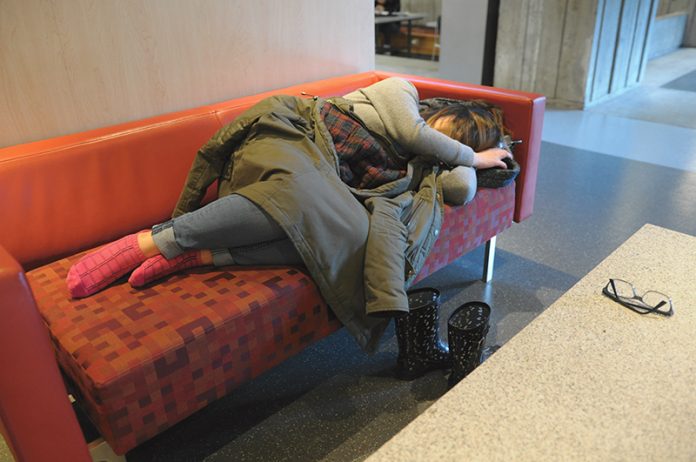
[dropcap]W[/dropcap]e’ve both seen, and probably been, that person: head down, slightly drooling over your notebook or laptop, trying to catch a bit of shut-eye on that cold, hard countertop.

Not only are there heaps of empirical data on the benefits of napping, but as a napper myself, I feel refreshed and optimistic after dozing for 20 to 30 minutes. As such, and because of the benefits they provide, I fully support work- and school-place nap rooms.

Recently, the British Columbia Institute of Technology (BCIT) introduced a nap room at its campus, where students can book an hour slot in a room with mats and pillows. This isn’t a new idea, as technology giants like Apple and Google have introduced similar features in their work environments. However, at the time, it had yet to be seen in a post-secondary institution in BC.

The National Sleep Foundation’s research demonstrates that to take a nap for 20 to 30 minutes can improve alertness and performance without affecting nighttime sleep.

Some of us may actually benefit more than others from napping, too. Over 85 percent of mammalian species are polyphasic sleepers, which means they sleep in short intervals during the day. Humans are said to be monophasic, meaning that we generally partition our days into sleeping during one time and being awake during another. But are we all fully monophasic? Small children and the elderly often nap during the day, so why aren’t more adults getting in on it, too? A short nap never hurt anyone.

Napping may also be of economic value; instead of loading up on costly caffeinated beverages for an energy boost, one could simply recharge the old-fashioned way. Not only would napping save money on coffee or Redbull, but it’s probably a lot healthier than drinking either excessively.

Now, I understand that SFU’s new Student Union Building plans to have a napping room, which is great, albeit still a few years away. But imagine how awesome it would be if all universities and colleges did the same. Instead of having to put your head down on a hard desk, or pass out in some contorted position on a chair in the library, we could all have a quiet room equipped with comfortable bedding designated solely for sleep.

The fact is that course schedules don’t always line up perfectly. In my time at university, there have been days where I’ve had six hour breaks in between classes. While the majority of my time is obviously best spent studying, I could also use part of it to catch up on sleep. Universities could even turn a profit on it: I’d pay a dollar or two for a snooze on some comfortable bedding in a quiet room.

SFU has adopted other stress relief practices such as puppy therapy, but we still have room to improve the mental and physical health of everyone, and SFU as well as other universities should follow BCIT’s lead — and fast — to create a comfortable environment in which students can recharge in a practical way.

Dear Dr. Breakup

0

Dear Dr. Breakup,

William has just been dumped by his valentine, Lady Francesca. William will not stand for these indiscretions. William has made a blood pact with our Lord of Darkness to be with the Lady Francesca forever. William’s hand still bares the cut of Grand Mama’s butter knife from the sealing of the holy blood pact. William now seeks the help of Dr. Breakup to help recapture the heart of his unruly mistress. William wishes to purchase necessary pharmaceuticals to complete his task. Please accept William’s cash advance of 23 dollars taken from Grand Mama’s purse.

–William, 31

Dear William,

Maybe “William” should use his 23 dollars from Grand Mama’s purse to invest in a healthier relationship with say — I dunno — a blow-up doll?

–Dr. Breakup

Dear Dr. Breakup,

I’ve hatched the ultimate plan to get Derek back. I’ve acquired two cartons of free range eggs, my brother’s butterfly knife, and a packet of Post-it notes. I plan to slash his tires, egg the shit out of his basement suite, and post mean notes all over his door about the size of his penis. I want him to suffer for breaking up with me last year at Denny’s on Valentine’s Day. I want to make sure he realizes what he’s missing out on. Then he’ll realize what a basic little bitch Tina is. Do you think I’m going to easy on him, or should I try something really drastic to get his attention?

–Liz, 24

Dear Liz,

I think you’re being far too easy on Derek. It’s very clear to me that to get him back you’re going to have to really go out of your way to show it. May I suggest walking out in front of busy traffic? Nothing says ‘I want you back’ like an oncoming semi-truck.

–Dr. Breakup

Dear Dr. Breakup,

Okay, there is something seriously wrong with my partner. I came home this Sunday and found a trail of rose petals all over the floor. Like, what the hell? I just vacuumed the house, man! She never picks up after herself, ever. I’m always the one that has to clean up after her. And to top it off, she taped promiscuous little notes all over OUR FRESHLY PAINTED WALLS. Now I’m going to have to put another topcoat of paint on. And just when I think it can’t get any worse, I walk into our bedroom to find her in expensive lingerie and room full of freaking candles everywhere. Fire hazard much? I have no clue what to do, man. What do you suggest?

–Gerry, 27

Dear Gerry,

I suggest you give your head a fucking shake, you twat-muffin.

-Dr. Breakup

Dear Dr. Breakup,

Yoohoo! It’s your obscene correspondent Brandy Jay again. I couldn’t resist the urge to write you another dirty note. Ever since you sent me that feisty little message to go away, I’ve wanted you all the more ;). I just love a man who plays hard to get and you are no exception. I’ve been go absolutely insane without you, darling. I can scarcely find the will to anything, I just strut around my home naked all day ;). Please Doctor Breakup, probe me with your thermometer — I have a fever and the only remedy is more of you. 🙂

–Brandy Jay, 43

Dear Brandy Jay,

You are a sick woman, all right, but you need a cold shower, not my thermometer.

–Dr. Breakup

Feeling heartbroken? Send a message to Dr. Breakup today at [email protected]


University Briefs

0
The University of Alberta students who created the "Hangry" app were featured on Dragon's Den (pictured). - Photo courtesy of iPhoneinCanada

U of Alberta students use app to stop “hangriness”

[EDMONTON] — Students at the University of Alberta are now a lot more happy and a lot less hungry. Two weeks into launch, the Hangry app allows students to order meals ahead of time, avoiding long lunch-time lineups.

This may not be the first time you’ve heard of the app, as it was pitched on Dragon’s Den by its founders and received $120,000 to start up. Hangry doesn’t only let you pre-order food, it also offers loyalty points and allows users to rate food and their experience.

With files from The Gateway

U of Regina press celebrates short but controversial legacy

[REGINA] — Just over two years old, the University of Regina Press has already published three national bestsellers. The Press focuses on Canadian history and culture, and never hesitates to focus on the truth of important issues that have surrounded Canadians, specifically First Nations.

This year, readers can expect new publications focusing on typically taboo topics, like sex and mental illness. They hope to normalize these topics by inputting them into mainstream media.

With files from The Carillon

Dalhousie musicians support North Korean refugees

[HALIFAX] — North Korean refugees are being supported by music produced from students at Dalhousie University. Not all musicians themselves, many learned guitar in order to contribute. Focusing on lyrics that promote solidarity, one of the songs is even an original.

The movement was created by an International Development Studies student who was inspired by a Development & Activism course. The students involved marched and sang to bring awareness to North Korea’s liberation movements. The group also raised money for funds to support the cause.

With files from Dal News

Senate Report

0

President’s Update

SFU President Andrew Petter highlighted the search for the new chair in Technology Innovations for Youth Addiction Recovery and Mental Health. SFU, along with the John Volken Academy, the City of Surrey, and the Surrey Fire Fighters Association, have partnered to make $1.25 million available for funding.

The chair’s goal is to be able to assist youth who are recovering from substance abuse issues to be able to develop long-term solutions to their problems. They will also be working on problems that youth with mental illnesses face, and will looking into non-invasive innovations for diagnosis and recovery.

First Nations Health Authority Chair in Heart Health and Wellness

The senate congratulated SFU health sciences professor Dr. Jeff Reading on his recent appointment as First Nations Health Authority Chair in Heart Health and Wellness at St. Paul’s Hospital. This $2.5 million chair co-located at St. Paul’s, SFU, and the First Nations Health Authority will focus on First Nations cardiac health and drive research to improve health outcomes.

Reading, a Mohawk from Tyendinaga First Nations in Ontario, told SFU News that “you have discovery, treatment and advocacy in a triangle, working together and supporting each other.” Reading believes this three-pronged approach should be replicated across Canada.

Reading says that one of his main goals is to create “optimal physical, emotional, and spiritual health” for future generations of First Nations peoples.