Home Blog Page 816

SFU hockey eyes NCAA Division I membership

0

NCAA Division I hockey might come to SFU as early as the 2018–2019 season. Athletics director Theresa Hanson has launched a three- to six-month consultation process that she hopes will lead to a decision from administration by the end of the summer or September 2016.

“DI hockey makes sense on a lot of levels, certainly in our market,” said Hanson in an interview with TSN 1040. “We’re a hockey-crazed country, [but] we have no DI university hockey in our country,” she said, adding that many great student athletes leave Canada to play NCAA Division I in the US.

SFU is the only Canadian university that competes in the NCAA, with 17 teams competing in Division II in the Great Northwest Athletic Conference. SFU is allowed two Division I teams, and is exploring the possibilities of men’s hockey and beach volleyball to make the jump. Division I is the most prestigious division in the NCAA, and features the most competitive schools and athletic programs.

SFU men’s hockey has played against NCAA Division I teams in exhibition and has games with said teams scheduled for next season as well. Two years ago, the team played against NCAA Division I champions, North Dakota, a game they lost 4–3.

“It could be a game changer.”

Men’s hockey currently competes in the BC Intercollegiate Hockey League against UVic, Selkirk College, Trinity Western, and Eastern Washington.

Moving to NCAA Division I would be good for SFU, Burnaby, the province, and the country, said head coach Mark Coletta to CKNW 980.

Former Executive VP Business for the Vancouver Canucks, Jon Festinger, told The Province that SFU Division I hockey would engage audiences on local, regional, and national markets.

It’s “a game changer” said Hanson, due to the uniqueness in the hockey market and the story associated with it. Imagine, the only NCAA school in Canada, offering Division I hockey for Canadian-born athletes to play while receiving the world-class education SFU has to offer, Hanson explained.

In the most recent Frozen Four NCAA national championship 10 BC-born players were on the North Dakota, Quinnipiac, and Denver teams. In addition, Canucks first-round pick Brock Boeser played for North Dakota in the national championship; goalie Thatcher Demko, another Canucks prospect, played for Boston College in the semifinal.

“Sustainability is the biggest thing,” said Coletta. He noted that while the move would be years away, stakeholders must look “50 years down the road.” Coletta also argued that the consultation process will help the school decide whether to move forward.

There are some significant challenges that the consultation must address, the most prominent being the venue. SFU does not have a rink, and therefore external rinks must be looked at, such as the Pacific Coliseum.

Other factors include conference affiliation, travel, equipment, revenue streams, and number of student athletes on scholarships.

SFU’s scholarship fund currently sits at $11.5 million. Hanson aims to increase the funding to $20 million.

Joining Division 1 could mean SFU could compete on an even larger scale, but at this point it’s too early to tell if SFU could sustain an NCAA Division I team.

SFU has contemplated one in the past, but with the consultation process now in place, it shows this time around there is a serious intention of pursuing the distinction.

“It’s a lofty goal, but I think it’s doable,” said Hanson.

SFU students create home brewing system for craft beer

0

Sharing their passion for beer, six SFU students have teamed up to create Brewstr: a startup that facilitates simple beer brewing at home. Specifically, Brewstr is an automated home brewing system controlled by an application on mobile phones.

Ryan Lymburner,  a fifth-year Mechatronics student at SFU who helped to create Brewstr, described the beer-making process as “tedious,” “boring,” and “quite [a lot] of manual work.” Brewstr was designed to allow users without the usual knowledge or experience to make beer and cider that can be personalized to suit the owner’s taste.

The Technology Entrepreneurship@SFU program at Surrey campus was where it all started. The program’s main goal is to successfully commercialize projects and establish new startups. There Lymburner first met his team: Jeremy Thompson, Derek Muxworthy, and Jordan Sciberras, all of whom are Mechatronics students, and Business students Karan Thakur and Kavi Sekhon.

Lymburner called his team “a great blend of everything,” describing their diverse skill sets and backgrounds.

Brewstr has gained much attention from local media, despite having begun in January of this year. Lymburner added that the team is very “motivated” to know that their projects are gaining popularity  and “going [quickly]” to the next stage.

Regarding Brewstr’s near future, the complete prototype will be finished soon and ready for public tests and funding. In addition, the team will work closely with local breweries to ensure that the quality of the beer is suited to the tastes of consumers.

Lymburner and his team see their inventions as a “complement” to the local beer industry, rather than a competitor to it. They suggested that local breweries could create their own ingredient packs and kits for purchase, allowing them to share their recipe with people more easily. Ultimately, the Brewstr team hopes that their invention might help to create a community of people who, like them, enjoy a cold brew.

CENTRE STAGE: Just Words melds poetry and dance; flamenco, Irish tap, and belly dance share the stage in Encuentros

0
Just Words explores the importance of dance as an art form.

Just Words – Les Productions Figlio

April 27–30, Firehall Arts Centre

Serge Bennathan steps to the front of the Firehall stage, a spotlight on him as he picks up a sheet of paper. He reads off a letter that he wrote to fellow choreographer and dance artist Grant Strate who passed away in 2015. The letter shows his respect for Strate as he says “we need your grace,” as well as his thoughts on the importance of dance as an art form.

In personal, reflective interludes, Bennathan spoke directly to the audience and shared parts of his life: his experience as an immigrant, his desire to write a blog, to choreograph chaos, and he even shared an original poem with us. His words coloured the choreography as Karissa Barry and Hilary Maxwell translated the words into dance. Aside from directing his Vancouver-based dance company, Les Productions Figlio, Bennathan is also a writer and painter, and with this latest work he wanted to express himself through words and speak poetically. The love poem he shared with us, in French and then in English, was full of beautiful imagery and romantic tension.

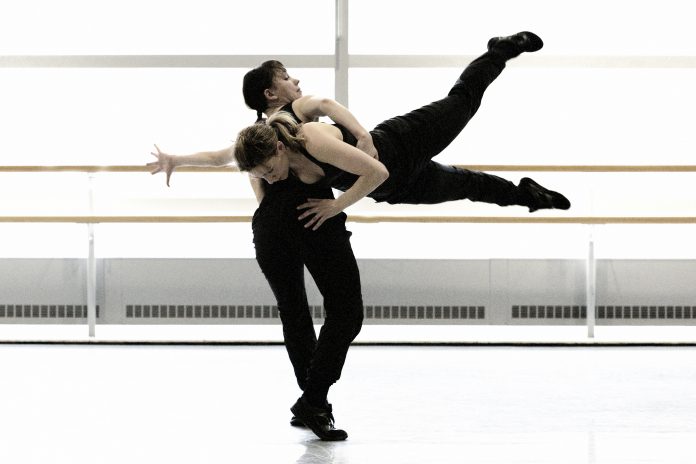
Barry and Maxwell, dressed in black pants, tank tops, and sneakers, were at times dancing in sync and at times in opposition, pushing against each other and throwing each other aside. The steady pace of the choreography was neither overly physical nor lacking in intensity, and Bennathan was able to augment his words through rigorous movements.    

Bennathan danced with Barry and Maxwell at a couple points during the show, but for the most part he stood at the side of the bare stage while they danced. Sometimes he urged them on with directions such as “vas-y,” and traded places with them to share more of his words. With fervent choreography and thoughtful poetic interludes, this show was much more than just words.

Encuentros – Kasandra Flamenco and Caravan World Rhythms

May 1, Vancouver Playhouse

Kasandra “La China” and her ruffled red dress swirl and dip in unison. Her dance partner is the long train of her dress, following her every move as she skillfully maneuvers it. When she is joined onstage by another flamenco star, Ricardo Lopez, the dress envelops both of them in a gentle hug.

Kasandra is the artistic director of Encuentros, as well as her own company Kasandra Flamenco. Her concept for this one-night show was to bring together Irish tap dance, flamenco, and Egyptian belly dance to highlight their percussive similarities and have dancers face off in passionate encounters.

Kasandra and Lopez shared a couple of particularly passionate scenes; you sensed that they felt the rhythm in their bones and were completely in tune with the onstage musicians. One of their duets featured an innovative costume piece that kept them connected: they each wore a small vest connected by a long piece of fabric. As they danced the fabric wound around them and helped to visualize their patterns and symbolize the relationship being portrayed.

Representing Irish tap was Vancouver-based Joel Hanna, who has performed with Riverdance and has some of the most virtuosic footwork I’ve ever seen while making it look easy. He must have been working hard, though, because at one point between lightning fast footwork sequences he looked at the audience and said with a sigh, “It’s hot!”

Hanna and Lopez shared an intense scene teasing and challenging each other with increasingly difficult steps. Like an impromptu jam session between musicians, their steps shared the same rhythm and mood but displayed the different qualities of their respective genres. Kasandra had her own dance duel with belly dancer Ashley Kirkham, whose undulations and microscopic vibrations were impressive. It was interesting to see the rhythm represented through the hips and torso in belly dance, as opposed to through the feet and hands in flamenco.

Another essential element of flamenco dance is the live music. Guitarist Gareth Owen, singer Vicente Griego, percussionists Davide Sampaolo and Tim Gerwing, and Oud player Serwan Yamolky provided the perfect accompaniment to the movement.

Cries of “Ole” and “Bravo” could be heard throughout the show. It was wonderful to see these four soloists who are experts at their craft sharing a stage and showing us how their grounded, rhythm-infused styles can work so beautifully together.

Album Reviews

0

By: Beau Bridge and Courtney Miller

The Summer Set – Stories for Monday

The Summer Set’s latest album very much echoes their previous records, featuring an all-around pop sound with a hint of rock. Although their sound seems to have matured on the opening track “Figure Me Out,” the rest of the album, while fun, leaves the listener wishing for more of that depth. They deliver the same themes over and over again: youth, nostalgia, and their signature we-did-some-crazy-shit, most prominent on “All My Friends.”

“Figure Me Out” is the best track on the album musically, with excellent drum beats and substance behind the lyrical story. It reads as an autobiography of the band, unsure where they fit in: “I’m a bit too pop for the punk kids, but I’m too punk for the pop kids.”

“Jean Jacket” is the only other track that experiments with saxophone and a groovy, out-of-character bassline. It has the makings of a great summer album with catchy hooks and riffs, but there’s nothing risky about their music. –CM


Explosions in the Sky – The Wilderness

I’ve always found Explosions in the Sky to be great study music. With mostly instrumental songs, their previous albums have been studying gold. Alas, all good things must end. This album, though recognizably Explosions in the Sky, doesn’t contend with 2003’s The Earth is Not a Cold Dead Place.

The entire album is minimalistic and heavily reliant on percussion. There is a cultivated monotony to the track, like they decided to deconstruct their sound and left most of it at the side of the road.

“The Ecstatics” builds into a powerful pep talk, full of motivation. “Tangle Formations,” which follows, keeps the energizing feel, climaxing in a rollicking tune. A drummer’s epic, “Logic of a Dream” sounds like a majestic death march. Other tracks like “Disintegration Anxiety” and “Landing Cliffs” are relaxing, calming tunes, with the latter adding in a dreamy, subdued quality.

Overall, still great study music, but only for content that’s exciting in itself. –CM


Brian Eno – The Ship

For any fan of ambient music, Brian Eno’s newest release is a bountiful one, both innovative and recognizable. Listeners of 2016’s The Ship will immediately identify with the chorus’ over-sustained vocals and light strings that have typified Eno’s most well-known works: 1978’s Ambient #1: Music For Airports and 1983’s Apollo: Atmospheres and Soundtracks.

The four tracks that make up this album inevitably build off one another to form the sense of a movement rather than an album. This will be no surprise to those familiar with Eno’s early ambient works mentioned above. Aside from the thematic inspiration of the sinking of the Titanic — which is depicted vividly through the pieces’ progressions — Eno actually provides verbal narration in a couple of tracks that pull off as omnipresent poetry. A must for Eno fans. –BB

FOOD FIGHT: Amazing pannekoeken overlooking the New West Quay

0
Berries, whipped cream, and syrup grace the top of the perfect breakfast food.

Until the moment you devour one of Angelina’s fresh berry pannekoeken or their locally famous eggs benedict, you are missing out on seriously amazing shit. Throw Denny’s in the bin and sit yourself down at a patio table at Angelina’s, enjoy the view of the New Westminster Quay, and weep joyfully over the Dutch-inspired breakfast and lunch.

Angelina’s is a small daytime restaurant quite conveniently located across from New Westminster Station, open weekdays 6:30 a.m.–2:30 p.m. and weekends until 3:30 p.m. It has the nostalgic local diner feel that everybody seems to love and is often very busy. So busy that the only open tables without a waitlist are on the patio overlooking the river. Like any brunch place, Sundays are the craziest, so don’t be dumb like me and show up on Sunday at 2 p.m. starving after a night of drinking — there may be quite a wait for the food.

The menu has greatly expanded since opening and they offer all the standard breakfast fare such as waffles, French toast, omelettes, and oatmeal. But what really stood out as different was the savoury and sweet pannekoeken. A pannekoek is a Dutch pancake that is the happy medium between a pancake and a crepe — it’s every breakfast lover’s dream. Light but flavourful, it’s delicious when served sweet with berries and cream but also savoury with housemade hollandaise sauce and ‘yummy hash’: a mixture of hash browns, various vegetables, and your choice of protein (or mushrooms for vegetarians). You will be fully convinced that you can eat 40 of them in one sitting after a single bite.

Their omelettes, although quite ordinary, are done right: chock full of fresh vegetables and five cheeses to choose from, served with toast and perfectly seasoned baby potatoes. A highly recommended local favourite is the eggs benedict — even rumoured to be the best in Vancouver. I definitely neglected the lunch menu as Angelina’s is notorious for its bragging rights over a damn fine brunch, but a lunch menu does exist and consists of sandwiches, wraps, soups, salads, and burgers.

Although maybe not the optimal hotspot for vegans — its menu does not include fake meats, tofu, or vegan pannekoek — Angelina’s Restaurant offers many vegetarian options alongside their bratwurst. The coffee was good but not great, and the service was friendly but not brisk enough for a busy restaurant. Price range is about $15–$20 per person, which I found a bit on the pricier side, but fair for the portions and quality of food.

At the end of the day, Angelina’s is a charming local brunch place with a nice view and homestyle fresh breakfast food, that never fails to receive a thumbs-up in response. Definitely worth a visit — just not on a hungover Sunday.

How Person of Interest resisted falling into the post-9/11 TV trap

0
Person of Interest goes beyond the typical crime drama and engages with current events, without sensationalizing them.

When Person of Interest first aired in September of 2011, I was immediately hooked.

A response to the American War on Terror, Person of Interest follows John Reese (Jim Caviezel), Harold Finch (Michael Emerson), and all-seeing citywide surveillance system The Machine, as they fight crime in New York City. The cast is also rounded out by hacker Root (Amy Acker), government assassin Sameen Shaw (Sarah Shahi), and NYPD Detectives Joss Carter (Taraji P. Henson) and Lionel Fusco (Kevin Chapman).

As described by the opening narration, Finch programmed The Machine to predict and prevent acts of terror for the American Government. He felt guilty though that they would ignore the premeditated murders, robberies, and domestic abuse that The Machine also foresaw. Operating in secret, Finch serves as mission control to Reese, the former Special Forces agent haunted by years of guilt, who supplies the skills needed to prevent these crimes.

It’s like Minority Report if they replaced those weird psychic twins with that scene at the end of The Dark Knight when Batman hacks into everyone’s cellphones.

What sets Person of Interest apart from other crime dramas is how, at its core, it looks to discuss current issues. Sure, some other shows might write up a quick and vaguely topical episode about the latest murder or assault case that flashed across the headlines the week before. Those shows are shallow and sensationalist in comparison, though. While those shows are about criminals, lawyers, or crime scene investigators, Person of Interest speculates about a society at the turning point where technology can become either our friend or our master.

Person of Interest engages in dialogue on issues of privacy and surveillance, freedom versus security, artificial intelligence, the ubiquity of technology, and corporate and government corruption.

It also deals much less vindictively than other post-9/11 shows — particularly when compared to the bloodthirsty, ‘ends justify the means’ attitude of 24‘s Jack Bauer. Whereas Bauer once threatened to force a towel down someone’s throat “all the way” and pull out his stomach lining during an interrogation, the characters of Person of Interest are far less sadistic; their primary goal is the protection of life.

The first episode of the fifth and final season aired May 3 and had the protagonists still reeling from the debilitating events of the previous season. The already high production values have gotten even higher in the show’s final lap around the track, and the show looks set for a spectacular finish when it takes its final bow.

When the show finally powers down on June 21, I know I will not forget the intelligent scripts and compelling characters that made up that world. Until that day, you can be sure that I, just like The Machine, will be watching.

Person of Interest airs on Tuesdays at 10 p.m. on CTV.

CINEPHILIA: Sing Street is nostalgic and clichéd but doesn’t give a damn about it

0
The boy gets the girl, and the movie ends on a happy note, but this movie so much more than just that.

You can feel the endorphins rushing to your brain watching Sing Street. It’s like the sweet-spot of a run when you only feel the euphoria, a drug trip right before the freefall, or an orgasm that lasts nearly two hours. This is superlative wish-fulfilment: unashamed, delightful, and frequently quite awesome. It’s so unabashedly earnest you couldn’t find a subatomic particle of cynicism in its genetic makeup.

Set against a job crisis and an eroding Dublin in the 1980s, a group of delightfully weird teenagers search for themselves by creating music inspired by their life in a crappy Catholic school, and their favourite countercultural artists of the time — Duran Duran, Elvis Costello, and many more. It’s an angst-ridden search for identity. If we all had to be perfectly honest, though, the whole band thing was just to get a girl and pass the time in a place that can be more boring than watching the plaster peel from their homes’ deteriorating walls.

I could tell you that the boy gets the girl, that the band nails their climactic gig, and that basically everything works out. But what good would that do you? Would you be any closer to understanding the moment where Conor, the high school band’s frontman, imagines a candy-coloured music video with a ‘50s prom? Do I need to tell you that the band nails every note in this hallucination? How about the sequence where Conor and the lead guitarist write their first song, surprising themselves with how damn good it is? How about Conor’s sloppy first make-out with Raphina, an orphaned and mysterious girl, when he goes in for a kiss while she is still chewing on a mouthful of cookies?

Sing Street transcends clichés and formulae, actively reinventing what we thought possible in our snarky and ironic times.

This film was directed by John Carney, a man whom I suspect hasn’t told a lie in his life — unless, of course, it was for the sake of graciousness. He has made two other musically-inspired films: the surprise indie-hit Once, and the totally inauthentic yet completely sincere Begin Again.

Sing Street, like two of his other musical films, has a killer soundtrack; at times it practically mounts the entire film on its airless wavelengths. All of his films are variations on familiar rhythms. There is always a girl and a boy and a band. They play music. They fall in love. They struggle, but create something special along the way.

That last part, the struggle, is just as important for Carney. He is not reducing anyone’s pain in Sing Street. He is resolving it, finding a way for his characters to heal at a time when it’s hip to be bleak. This doesn’t minimize sadness or reduce its importance. Conor’s anxieties are founded on a world collapsing around him. His older brother, who listens to records and smokes pot all day, is a victim of his country and family’s degradation. There are real problems on display here, real tragedy lurking underneath the sweet charms.

This is a great film of the rarest kind: simply beautiful, essentially perfect within its own constraints, and so committed to making you fall in love with the world, even if it only exists for the brief moments it is on screen. Sing Street is a nostalgic, clichéd, and catchy fantasy. It also doesn’t give a damn what you think about it.

Ghost in the Shell: The sad truth about Hollywood ‘racism’

3
Scarlett Johansson's casting in Ghost in the Shell is yet another case of Hollywood whitewashing.

The latest Hollywood ‘racism’ scandal that has ethnically minded moviegoers filling up their skivvies is a photo of a stoned-looking Scarlett Johansson gazing at what appears to be a wall of glass. The still-shot from the upcoming Hollywood remake of Ghost in the Shell, based on the popular Japanese anime, shows Johansson as the lead character — an ostensibly Japanese cybernetic policewoman.

All would probably have passed more smoothly if the filmmakers hadn’t decided to give Johansson the character’s original anime-style hair. Further, the fact that her clearly Caucasian film character goes by the name “Motoko Kusanagi” is so hokey it’s comedic — almost as if Johansson were a guest on Saturday Night Live.

Given the ongoing public distaste with Hollywood’s recent casting choices (think Oscars 2016), I’m left unphased by Twitter’s accusations over the film industry’s choice to ‘whitewash’ what would otherwise be an Asian character.

Though diluted from all the claims that ‘Hollywood is racist,’ there’s a fleeting truth that proves we activists are forgetting how the film industry actually runs. As always, it boils down to money, folks.

What’s forgotten is that the film studios acquiring super high-budget films aim to make all of that money back when the film is released. Given that Hollywood currently has only a handful of actors that we could label ‘A-list’ — roughly 95 percent of whom are white — filmmakers are aware that if they do not acquire wildly popular actors from this small group of people, then film studios will have less interest in acquiring the rights to their expensive films.

In other words, Scarlett Johansson is what’s saving this film from being bumped to the ‘B-list’ that makes only a fraction of what it would make with a white actor playing the lead role. Sad, isn’t it?

So, let’s revisit this question. Is Hollywood racist? When it comes to making money, Hollywood will be as racist as it needs to be, while playing off the majority of mindless American film fans who enjoy the same darn actors re-packaged in mildly different ways. This means Scarlett Johansson dressed as every action-oriented, superhuman character in spandex — regardless of the ‘proper’ ethnicity.

The real question we should be asking ourselves is why the pool of A-list actors comprising Hollywood’s successful films is so small. Why aren’t there currently any mainstream female Asian celebrities to fill these roles? Let’s face it, our blockbuster entertainment industry is a system run by profit and trepidation — something of which we should all be ashamed.

So next year, don’t boycott the Oscars because you think it’s racist. Boycott it because it symbolizes an industry that takes your hard-earned money to stab your eyes with the same old crap because it’s scared of delivering anything else. Every single time.

You want a proper portrayal of Kusanagi? You’ll have to download the original.

Drop the pot charges already

3

[dropcap]L[/dropcap]egal marijuana is upon us! Health Minister Jane Philpott announced on April 20 (oh, the irony) that the process of legalizing pot would begin during the spring of 2017. Students, stoners, and probably several of our professors rejoiced.

As most Canadians know, the federal government has been promising to legalize marijuana since the beginning of Trudeau’s campaign. It’s a promise that really resonated with the younger electorate, and I’d bet was at least partially responsible for Trudeau’s popularity at the polls.

Considering the upcoming changes to drug laws in Canada, why are law enforcers still wasting their time and our tax dollars enforcing outdated and soon-to-be-off-the-books laws? Both the general public and members of the judicial system have already begun questioning the morality of criminal marijuana charges since the government announced the pending changes.

According to CBC, tens of thousands of Canadians are still considered criminals in the eyes of the law, despite the obvious change in attitudes around personal and medical marijuana use. The delay between promise and (hopefully) implementation of this law has created a moral and legal quagmire that is difficult to navigate. The only sane solution is to stop enforcing existing laws around possession for personal use and the sale of cannabis products in shops.

Criminal marijuana charges seem especially ridiculous when compared to actual violent or disruptive crimes that occur daily. Some direction for law enforcement on negotiating the interim period would go a long way to settling the concerns for those caught between old laws and new attitudes.

Unfortunately, to most law enforcement agents, the law is the law, illogical logistics be damned. It seems the responsibility falls on the Liberal government’s shoulders to urge law enforcement to stop the criminal pursuit of petty drug charges — which are a waste of time and morally ambiguous at best. This would be the best way to protect innocent Canadians from marring their (otherwise clean) criminal records.

Luckily for us, the Lower Mainland and its associated police forces have adopted a much saner stance on drug prosecution. CBC stated last September that Vancouver Police have made it clear they barely pay attention to marijuana dispensaries. Other than instances in which dispensaries have been accused of selling to minors, or being involved in organized crime, the Vancouver Police Department won’t pursue charges.

Moreover, the current dispensary crackdown in Vancouver is due to the fact that these shops are, by city rules, too close to public schools and community centres; not because people may have been found with illegal possession of the drug.

Vancouver Police Chief Adam Palmer has publicly spoken of Trudeau’s legalization of pot, stating that more dangerous drugs are his priority — as they should be! Politicians like Tom Mulcair, and Neil Boyd, director of the school of criminology at SFU, have publicly urged Liberals to pardon past and present offenders.

The entire legalization procedure is complex, and I understand that the logistics of such a major change in the law take time and planning. Still, this doesn’t negate the fact that these offenders aren’t really criminals any longer, and therefore should not be treated as such.