Home Blog Page 757

Marc-Antoine Rouleau goes the distance

0
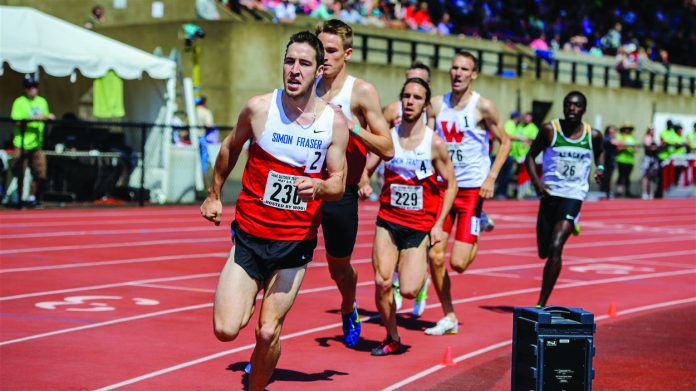
Rouleau finished sixth in the 1,500-metre national final last season.

Transferring from one school to another can be a difficult process for any student. Now add the fact that you are transferring not only from a different school, but to a different collegiate league, and you get a sense of what Marc-Antoine Rouleau had to go through. However, he has become one of the top performers on his team, and expectations are high heading into his final year.

“I heard about the amazing team they had here, and I had a good option to really explore my potential and see where I could go with running,” said Rouleau on his decision to come to Simon Fraser University from the University of Sherbrooke. “So I need[ed] to try the West Coast and really avoid the winter in Quebec. That was a big part.”

Besides the comparatively moderate winters, Rouleau was also drawn to the fact that SFU plays in the National Collegiate Athletic Association (NCAA).

“In the NCAA, you get to go to California every weekend, and you get those amazing opportunities. [. . .] The other aspect of the NCAA is you have a lot of races and a lot of opportunities to race competitively compared to the CIS [Canadian Interuniversity Sport], where you’re going to train for two months on your own and really do one big race at the end of the season to see how fit you really are. But in the NCAA, you race to get fitter.”

He has certainly adjusted to life in the NCAA. Last year in track and field, he made it to the national championship in the 1,500-metre and finished sixth. The year before, he made it to the nationals as well, finishing 17th.

“It was amazing,” he said on making the national championships two years in a row. “I was really disappointed [the first year] because I was just not used to a type of race where you start slow and start to get going with one lap to go.

“This year, I think me and Brit [Townsend, head coach], we just managed everything differently, and it went really well and worked out in the final. We practiced our speed and our kick to really react with those top guys at the end and be up there until the finish line.”

The 1,500-metre is a different race than most. Unlike, for example, the 100-metre, which is all about pure speed, the 1,500 requires strategy and being able to pace yourself through three and a quarter laps.

“The first lap you have to stay focused, and really go through and realize that you’re going to have to be efficient the whole way and be fluid,” Rouleau explained. “And then the second lap you get through the motion of getting fast, and it’s pretty easy because you’re not even midway. And then the third lap, that’s when it gets harder because that’s where you can really start to lose focus and you start to go slower and you won’t be in a good position to react with the top guys. And the last lap is the last lap — you have to go no matter what.”

Like the vast majority of runners, Rouleau also competes on the cross country team, even though he sees himself as more of a “track and field guy.” Nevertheless, he relishes the team-based aspect of cross country.

“It’s totally different, because in cross country the top five will mark points,” he said. “So you don’t really care who’s going to be in the top five, you just want anyone on that day to step up and get out there and do the
best they can.”

A senior, Rouleau is entering his final year of competition. After his collegiate career, he has aspirations of turning pro, depending on how the upcoming season goes. However, Rouleau has some advice for incoming student athletes on how to make the most of their time at SFU.

“I would tell them to enjoy the journey,” he said. “Especially in the first few years, because that’s where you make some amazing new friends that you can have all your collegiate career.

“When you get to your fourth or fifth year, that’s when you can decide if you really want to go forward with your running, or any sport you do.”

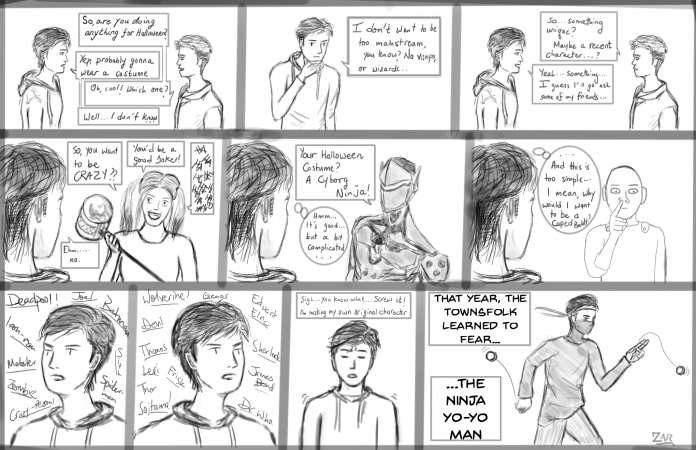
Fun Fact: Halloween costume this year?

“Probably a pirate. I really love the theme.”
Personal Shopper drags the audience into a fog of angst

0
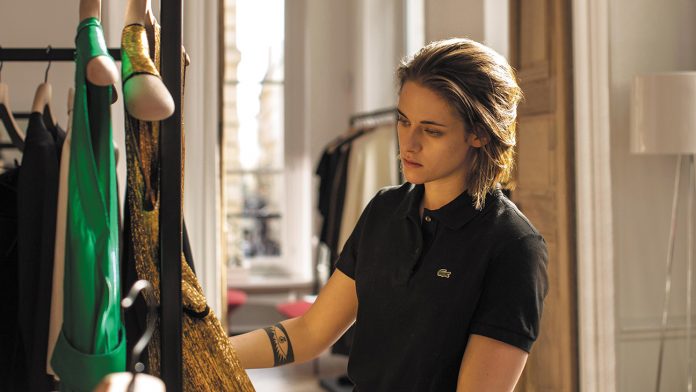
Maureen (Kristen Stewart) tries to contact her recently departed brother throughout the course of the film by using her skills as a medium who can’t directly talk to the dead.

Personal Shopper is classified as a horror movie, but the scariest part wasn’t the ghost. It was the malaise the audience was left with at the conclusion of the film.

My initial response was that it was a horrible film, because it left me feeling confused and disappointed. There was a lot going on, and the many threads of plot were never resolved. Indeed, it was greatly unsatisfying not getting any resolution. In the end, though, things did come together for me.

Personal Shopper follows Maureen (Kristen Stewart), an American in Paris working as a personal shopper for a celebrity. Maureen also happens to be a medium. While she can’t directly talk to spirits, she has a self-proclaimed “awareness of their vibe.” Throughout the film, she tries to contact her twin brother, who recently died of a heart defect that she also has.  

She doesn’t really like her job, but she doesn’t really want to do anything else. She doesn’t like who she is, but she doesn’t know who she wants to be. In this existential limbo, the only conviction Maureen seems to have is her desire to get in touch with her brother. Then again, she isn’t certain she will be able to get in contact with him, or that there even is an afterlife.  

After watching this movie, the only thing I could confidently assert was that Stewart’s character is steeped in uncertainty. One of the most confusing parts of the movie was a sequence of shots in a hotel: an elevator door opening and closing, and a sliding door opening and closing. It was as if someone was leaving the hotel, with the camera following them as they walked out, except that there was no one there! The implication being that a ghost was leaving — I think. Immediately after, the same sequence of shots were played, but this time one of the characters was included in the sequence, walking out.

This was one of the most jarring moments in the film, which also makes it one of the most pivotal for me. Were there literally both a ghost and this man leaving, or did the writer mean it as a statement that “it doesn’t matter what happened” or that “it’s up to personal interpretation”? I think it was just meant to show that we really don’t know what happened. As unsatisfying as that is, there is no answer.  

Other audience members seemed to be frustrated. When the credits started, I heard a bunch of WTFs. This was my gut reaction too, but ultimately I felt this film accomplished what it was supposed to. Lack of answers or closure, confusion, disappointment — this is exactly what the main character experiences in the film. She was looking for answers to metaphysical questions about the afterlife. She was looking for closure after her brother’s death, to know whether he was at peace.

At the end, she doesn’t gain the understanding she had hoped for. So if my feelings after watching this film were meant to parallel the feeling of the main character, then this movie was a huge success.

COMIC: The Joke Train

0

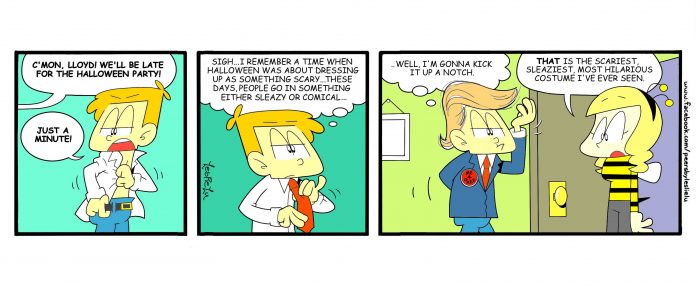
COMIC: A Peers Halloween

0

Current horror offerings are more formulaic than scary

0
One day, there will be good horror movies released once again.

In the fall of 2014, the horror genre began to shine a little brighter for mainstream audiences. Horror movies found their way to theatres in time for Halloween, while video games also had their fair share of horror. Some of them went on to become pop culture phenomena (Five Nights at Freddy’s).

The popularity spike of spookiness appeared to be here to stay, even into the early months of 2016, with flicks such as The Forest, The Boy, and Lights Out.

Horror connoisseurs (myself included) normally look forward to the annual influx of fresh horror media that’s released in the fall. Every year I open up my Internet, go to IMDb, and check out what frights I have to look forward to.

This year, however, my excitement disappeared quicker than a loud jump scare. This fall is a bleak one for horror, and not in a good way. Fans of horror — seasonally or generally — seem to be experiencing a horror fatigue, whether it’s movies or video games.

“What horror needs is more gems like Don’t Breathe.”

The first problem is (and it kills me to say this) the superhero blockbuster. Moviegoers have seen not one, but five comic-book releases in 2016 so far. Because of all of the hype that surrounds these movies, the few horror movies that were released around these flicks were swept under the rug.

This year, two major horror movies arrived in theatres. Two. Blair Witch and Ouija: Origin of Evil. And herein lies the second problem with this fall’s horror: redundancy. Despite being high-budget, modern horror movies consistently follow a predictable formula that includes loud, abrupt sounds with CGI ghosts and some shaky camera footage. It undermines what makes horror cinema and gaming exciting and enjoyable, which is the anticipation of the unexpected. The formula gets stale, and audiences lose interest.

What’s more, they’re either sequels or, more generally, exercises in blatant brand recognition. The fifth iteration of Five Nights at Freddy’s might as well have been Look, Loud Noise and also a Furry 5. Ouija: Origin of Evil might as well be called Spookier Transformers: Buy Our Stuff (by Hasbro).

The lack of originality in these horror movies, and a genuine love for the genre, leaves fans with a bad taste in their mouths, and it seems that audiences abroad have smartened up to the cut-and-paste strategies seen in big company spook-fests.

What horror needs is more gems like Don’t Breathe, The Witch, or The Babadook. These were low-budget indie movies made out of sparse props and a lot of TLC. The results were unique, terrifying experiences.

Overall, my point is not that horror has died a gruesome death this fall. Rather, it is hibernating, to hopefully usher in a 2017 that puts scariness back on its feet, at the ready to scare the pants off of audiences everywhere, with video games and cinema alike. Until then, enjoy the classics, and enjoy the Halloween season nonetheless!

SFU PhD candidate designs first-ever combined drug and alcohol detection test

0

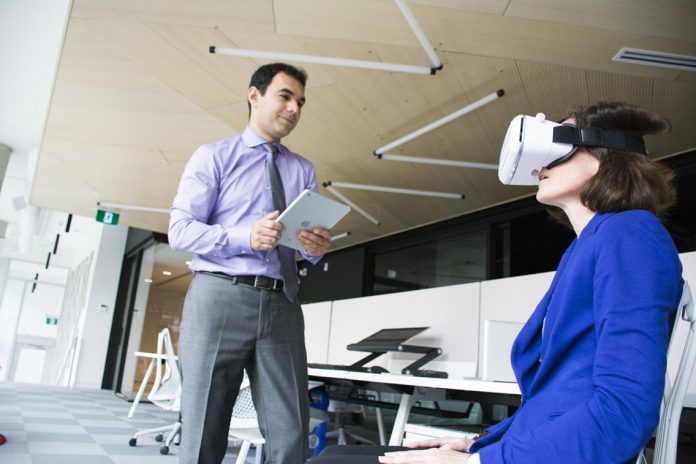
Ehsan Daneshi is revolutionizing how sobriety is tested. He may even help officers get a better look at whether someone is under any influence in the near future.  

Daneshi is a busy man, running between meetings for his latest product and Ophthalight — a company he co-founded to innovate eye examination devices. The Peak sat down with him at his SFU Surrey office to hear about the wide variety of uses this new technology has in the ophthalmology and sobriety test fields.

Unfortunately, we didn’t get to try it out — the device he had on hand was a non-functioning prototype — but nevertheless, we managed to get a better idea of what he and his team are up to.

The Peak: What are police officers using right now to test for driver impairment?

Ehsan Daneshi: Swinging flashlight test. What they are looking for is the way the pupil is responding to the light stimuli. They are looking to see if pupils are dilating and constricting in a normal way. If there is any difference between how your right pupil is reacting with respect to the left pupil, it is an indicator of potential abnormalities.

P: How consistent are field sobriety tests?

ED: Field sobriety tests are quite subjective. The way they are doing it, is very subjective and dependent on many variables. A DUI [Driving Under the Influence] defence lawyer normally shows up and argues against the police officer, claiming they may not have been trained, or the environment may not have been perfect. There are scientific studies that say nearly 40 percent of diagnoses by ophthalmologists are inconsistent with one another. If a doctor in an office has such a high error rate, how could a police officer on the field fare any better?

P: What does the device track on your eye?

ED: We track eye movements via several different sensors including pictures and video. The cameras collect data, what we do with that data is what makes this product special. We are working on a product like photoshop for doctors.

P: How do ophthalmologists diagnose eye conditions now?

ED: They literally draw on an image of the eye. They do their best, but it contributes to the 40 percent inconsistency between test results. We did a successful clinical trial with 44 patients. It was a great moment for our company.

P: Has this technology been used in an actual medical space?

ED: We have used it in actual patients, and quite possibly saved [one patient’s] life. She had vague visual complaints, the standard swinging light test couldn’t find the disorder, but our device when used found problems that led to a diagnosis of early-stage of MS.

P: How did you realize this technology would be useful for police officers?

ED: We had it recommended to us, and when we went searching, we noticed it’s a great way to take our product to market.

P: How did Venture Connection (VC) get involved?

ED: We are a client of Venture Connection, since last year, SFU introduced a new program in business school called science and technology commercialization. The course is open to graduate and post-doc students. During the last year advisors from VC and Beedie School of Business, all helped us to refine the business plan, and how to monetize this technology, and developing a customer profile.

P: Have you won any awards?

ED: New Ventures BC, [the] largest tech competition in BC. Over 160 companies competed. We actually made it to the top 10. We talked to the director of communications at Johnson & Johnson, she became a mentor.

P: What are your next steps? One-year timeline, five-year timeline?

ED: We have partnerships with some clinics and eye care providers. We want to continue performing clinical studies. We want to give our devices to them. We are also in touch with the police and DUI experts, to customize this device to help [their accuracy] and make police officers’ jobs easier.

P: Will this be available consumer-wide?

ED: No, this is something designed for special groups.

P: What do you think the price point will be?

ED: Probably under $5,000, with software subscription fees. But you never really know with start-ups until the moment you want to sell it. The market will dictate pricing.

P: Are you intending on raising venture capital?

ED: We have raised over $50,000. We received non-diluted funding from the government, Health Tech Innovation Foundation, BCIC, and Wavefront. We are looking for investors to scale up and take care of legal issues, such as being Health Canada approved, and ISO 13485 certifications.

P: What is your exit strategy?

ED: We want to licence out the technology to bigger players or if we get a good offer, we want to sell to a company that can provide distribution so this product can be in the hands of as many ophthalmologists as possible.

P: What important truth about this field do very few people agree with you on?

ED: There are scientific studies out there that say not everyone is perfect at doing this swinging flashlight test. A lot of the time, some of the eye care providers are very confident in doing the test correctly. And they claim they have never missed a single diagnosis. But it’s very obvious that they don’t even have the perfect condition for doing the test. That’s the moment you don’t feel very happy. If I could help them, inform them, educate them, of the problems they have in their office, that would be very good.

“Killer clown” sightings in BC terrorize local population

0

[dropcap]T[/dropcap]hose afraid of clowns may want to stay inside this Halloween season.

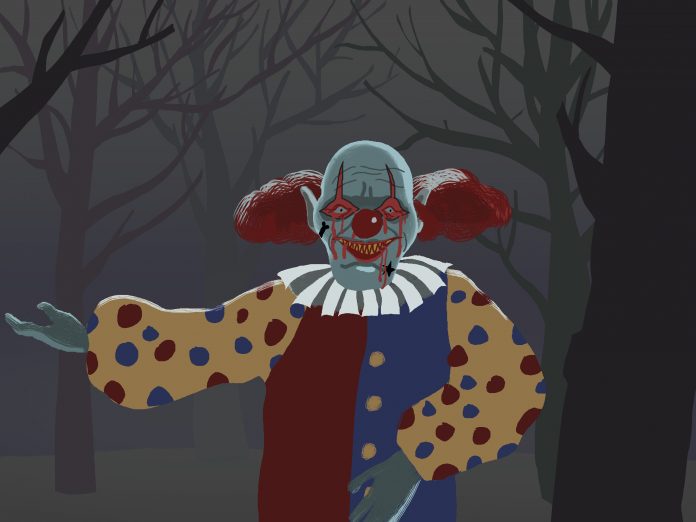
Sightings of people dressed as clowns have become a phenomenon recently, with reports in many cities of the United States, Canada, and the United Kingdom. The unprecedented trend of so-called “killer clowns” has taken over social media platforms including Twitter and Instagram.

Simultaneously, the notoriety of clown sightings has crept into North Americans’ lives, leading to disruptions in school schedules or causing a frenzy in neighbourhoods.

The first of these sightings reportedly occurred in South Carolina, US. They have since become a common occurrence in other cities across the country. This phenomenon has also slowly worked its way into Canada, where there have been incidents in the cities of Prince George and Langley in British Columbia, as well as in Nova Scotia.

The student spotted a clown near the Duthie Avenue bus stop, which is approximately 10 minutes from the Burnaby campus.

The cause of the sightings is undetermined as of yet; however, Gary McCarron, an associate professor from the faculty of communication at SFU, has helped shed some light on the social media phenomenon.

“I don’t think there is a single cause for such events, but the absurdity of the story was sufficient to spawn immediate imitators,” he said. As per McCarron’s observations,  clown sightings have increased exponentially throughout the month of October.

Professor McCarron stated that the involvement of mass media helped create hysteria within the public and spurred a phenomenon known as “moral panic” — something sociologist Stanley Cohen called “a condition, episode, person, or group of persons [that] emerges to become defined as a threat to societal values and interests.”

McCarron agreed when asked if the pranks are going “too far.” He also noted that “the responses to such pranks can themselves risk going too far.” While newsfeeds have been filled with overwhelming coverage on an issue that has caused a frenzy, the professor suggested that the phenomenon could be thriving due to its proliferation by young people through social media channels.

SFU student Irmak Erdal resorted to Snapchat to share her experience of encountering a clown. Erdal spotted the individual near the Duthie Avenue bus stop, which is approximately 10 minutes from the Burnaby campus. The clown had casual clothes on with a mask, with hair on either sides of his head and a bald spot in the centre.

She described being consumed with “shock” and “fear” when the prankster walked towards her. She alleged that the clown had started to pick something up from the ground when the bus arrived, returning her to safety.

Professor McCarron argued that the moral panic among young people has spread fear about killer clowns, but he believes that this phenomenon will not last much longer.

“The story gathered steam in a way that is certainly out of proportion to its newsworthiness,” he stated.

Seven things to do in Vancouver this Halloween

0

Whether you’re a spooky history buff, are looking to win a best costume contest, or just want to save the world from zombies, Vancouver has an attraction for you. Picked from all the festive activities running all month long, below are the top seven Halloween attractions in the city.

Richmond Country Farms  
Boasting 37 years of experience, Richmond Country Farms has gotten Halloween celebrations down pat. With a huge pumpkin patch, wagon rides, a corn maze, free apples fresh from the tree, and much more, this is a must-visit attraction in the month of October.
Where: 12900 Steveston Hwy, Richmond
When: October 1–31  

Admission: $9–12 (includes a pumpkin!)
All ages

Fright Nights at Playland
Advertised as “Western Canada’s Scariest Haunt,” Fright Nights is another popular Vancouverite scare destination. If you’re drop-dead scared of the dark, clowns, possessed dolls, or ghosts, best steer clear and stick to one of the 15 rides available. Try not to puke up your mini powdered donuts.
Where: Playland Entrance at East Hastings and Windermere Street, Vancouver
When: October 7–31
Admission: $22–$79 (depending on the pass you purchase and the day)
Not recommended for guests under 12 years old and over 65 years old

Zombie Syndrome interactive theatre
Your mission, should you choose to accept it, is to save Downtown Vancouver from a rampant zombie plague. Find the clues, outrun the walking dead, and try to hunt down suspected vampire psychopath Mattias Van Cleave. Bring your running shoes, your smartphone, and your vigilance — you never know what’s lurking behind that corner.
Where: Downtown Vancouver/Granville Island (exact location revealed the day before your mission begins)
When: October 4–31
Admission: $12.50–50 (depending on the day)
For ages 15+

Potter’s House of Horrors
If you love movies about abandoned prisons, bloodthirsty inhuman creatures, extraterrestrials, and hillbilly psychopaths, this is the haunted house for you. With two houses, Monstrosity and the Swampin’ Slaughterhouse, horror movie fans and thrill-seekers should buy their tickets fast and kiss their loved ones goodbye. For those with little ones, there’s even a Li’l Haunters haunted house for kids aged 12 and under.
Where: 12530 72 Avenue, Surrey
When: October 1–2, 7–9, and 11– 31
Admission: Adults $14–$50 and kids $10–$40
For all ages

Halloween International Students Party
Are you a university student? Do you want to see some of the hottest student DJs from around the world play? Do you want to win up to $1,000 in cash prizes for having an amazing costume? Do you want to tour Vancouver in a limo and then attend one of the best Halloween parties Vancouver has to offer? If you answered yes to any of these, this party is for you! With various packages and price points, you’re sure to find something that matches your budget and tastes.
Where: AllStar Wings & Ribs, 808 Bute Street, Vancouver
When: October 29, starting at 9 p.m.
Admission: Varies depending how many tickets are left
Ages 19+ only

Haunted Halloween Trolley Tour
This one’s for the spooky history buffs. In the dark shadows of October nights, the trolley will take you to some of the most haunted Vancouver destinations, including the city morgue, the Fairmont Hotel, Mountain View cemetery, the Vancouver Police Museum, and Stanley Park. Prepare to hear the gruesome tales of Errol Flynn, the Lady in Red, the Castellani Milkshake Murder, and many more. Call to make your reservation in advance, since the tour always sells out!  
Where: Departure and arrival at Canada Place
When: October 14–31 (excluding Mondays and Sundays)
Admission: $40 for a two and a half-hour tour
Ages 13+ only       

Ghost Train in Stanley Park

If you’re a bit of a wimp, and looking for something on the fun side, this train ride through Stanley Park is a great way to spend an evening. Complete with a mariachi band, this year’s Day of the Dead theme will have you smiling and maybe a little spooked.

When: October 8–31, 11 a.m.–5 p.m.

Where: Stanley Park
Admission: $7–11
All ages

Haunted campus: A look at legends in and around SFU

1

The frat house

One of the most haunted locations in Burnaby has an SFU connection. Fairacres — or as it’s better known now, the Burnaby Art Gallery — was built in the early 1900s and has changed owners several times over its long history, including being the home of SFU’s first (and very short-lived) fraternity. According to interviews conducted by The Peak’s own Bess Lovejoy back in 1998, staff at the gallery have had their fair share of ghostly encounters. One of the employees claimed to hear voices on the other side of her office door, despite nobody being there when she went to investigate. Other tales include the gift shop being found in shambles after a night when the gallery should have been empty, footsteps and sounds of moving furniture coming from the unoccupied third floor, and lights on telephones lighting up with no connection.

There has even been a sighting of a monk praying — a spirit left over from the building’s time as a monastery. The most common stories are of the house’s first mistress, who wanders up and around the main stairs. Another ghost also haunts the staircase, which may explain the feelings of unease Lovejoy experienced in this area. Countless others have shared accounts of strange goings-on, ranging from small sounds of rustling fabric to intense instances of inexplicable terror. Could you make it through a night?

An AQ office

There is a well-known rumour at SFU that a professor was found dead at their desk and now haunts the campus. This tale has more truth to it than you might think. Psychology professor Barry Beyerstein was found in his office. Cause of death: a heart attack. Beyerstein was the co-founder of a skeptic society in BC. Yet, he remained open-minded about the unexplained, only ruling out what the facts proved to be absolutely impossible. While it is unclear what Beyerstein believed happened in the afterlife, wouldn’t it be fitting for someone who tried to disprove the paranormal for most of their life to now forever haunt the halls?

The art gallery

There’s a legend floating around SFU that the art gallery in the AQ is haunted. The story goes a little something like this: a long time ago, a house stood right where the art gallery is now. The house was owned by an American outlaw who was rumoured to be a cult leader. In this house, the man tortured children. That far up the mountain, no one would have been able to hear the screams of the young victims. Who’s to say one didn’t die during the process? Whatever the truth is, the memory of these terrible events reveals itself late at night when the halls are seemingly empty.

People who have stayed late enough at SFU have reportedly heard the screams of young children. Some have even seen the image of a young boy. What everyone seems to agree on is that all the strange goings-on appear to take place around 2:30 a.m. A note of warning to anyone hoping to hear the ghost for themselves: if you hear it cry for help, it may just follow you home.

The old burned-out Bugs

By the time you’ve been at SFU for a few years, you’ve probably heard of the old Volkswagen Bugs that are hidden in the woods. Hell, maybe you’ve even seen them for yourself.

There are two Bugs slowly being claimed by the forest. It seems that many years ago, the drivers lost control of their cars and they went plummeting over the edge. While the Bugs themselves aren’t inherently creepy by the light of day, after sundown it’s a different story. After all, who knows what happened to the people in the cars?

The abandoned playground

It’s a long-standing trend in horror movies to include images of childhood in chilling and creepy forms. With its monochromatic greyscale and semi-permanent fog, it’s not hard to picture SFU as the setting of just such a film — especially if one stumbled upon the abandoned playground. Half-consumed by the forest, the only structure still visible is the old swing set. With the fog rolling in, the wind gently blowing the swings, even students with nerves of steel may find themselves shaken. Don’t believe me? Go see for yourself.

The treehouse

If there is one thing that can strike fear into students’ hearts (other than finals), it’s the Vancouver housing crisis. This isn’t the first time those attending SFU have had trouble finding places to live. During the 1970s, there was a popular trend of building treehouses in the forest around campus. Even after that, there were still students who chose to live rent-free in the woods. Most of these structures were destroyed by parking lot expansions, but at least one still remains. Hopefully, if you ever stumble upon it you don’t disturb someone — or something — inside.

The morgue

Something that very few people outside of the criminology department will know is that Burnaby campus has its own working morgue. It is off-limits to everyone except the RCMP and research assistants that run it. Every day, as you walk through the halls, somewhere nearby there is a room full of dead bodies whose souls can be tortured by their untimely ends. If you’ve ever felt like you’re not alone when studying late at night, this might be the answer.