Home Blog Page 741

#YesWeChen prevails, Larissa voted in as SFSS president

1

The SFU undergraduate student body has spoken — well, some of it, anyways — and has elected Larissa Chen to become the official president of the Simon Fraser Student Society (SFSS).

With just over five percent of the student body casting a vote, Chen defeated opponents Deepak Sharma and Darien Lechner. This is Lechner’s second defeat in a presidential race this year, while Sharma failed in an attempt to reclaim the position he infamously resigned from back in June.

Of the 1,574 students who cast a vote for president, 55.8 percent chose Chen, making her the overwhelming favourite. Lechner — who was not present at the announcement  — came in second with 25.9 percent of the vote, and Sharma in third with 18.3 percent.

Chen seemed very grateful for the way the vote went, and could barely process the results herself.

“I think I am still in shock. I feel overwhelmed; the past few weeks have just been so overwhelming with support, so much interaction with people,” she said. “It was kind of interesting to step away from board and see the real world outside of board, and now I know what students think about certain things and how we can go about changing it. I am excited to incorporate this new mindset into board.”

Sharma was on hand at the announcement ceremony Friday morning, and while he was disappointed at not getting another chance at the presidency, he had nothing but kind things to say about Chen.

“The biggest thing I want to say is thank you to the membership for giving me at least one opportunity to serve as president. Second time ‘round it didn’t work out, but I am very thankful that I was even given the opportunity to run again and additionally being proud that I did go through with it,” he said.

“That being said, I am very happy for Larissa, as you may have noticed,” he said, having hugged Chen upon the announcement of her victory. “I still think this was quite a positive campaign between both of us, and I think she is gonna make sure the board continues towards the success it has already had this year.”

Chen is eager to return to the board after resigning from her original position as VP student services to run for chair of the board of directors. She acknowledged that her time away from board gave her some perspective on how students view the SFSS, and noted that the student society is disconnected from students.

“I am excited to work with the staff again and students again, and I think that the little period where I stepped away from the the board, it did give me a perspective of someone who is not so engulfed in this environment,” she said.

“Once you are in that environment, all you think is, that environment, that’s the norm, but it’s not the norm, it doesn’t have to be.”

Meanwhile, Thadoe Wai defeated Supreet Malhi for the position of environment representative, collecting 61 of the 91 votes cast in the race. He will fill a position that has been vacant since April, as there were no candidates in the general election for the role — a vacancy which was the original cause of the byelection.

“I am feeling elated about it, to be honest,” Wai said. “It was kind of nerve-wracking, I guess, although I’m pretty happy about the result.

“Next few months, to be honest it’s hard to say [what my plan is], but I do hope to start working together with people from my DSU [Departmental Student Union] as well as other people from the faculty and start forming a plan to help strengthen the faculty.”

It’s been a whirlwind year, but the dream isn’t over for PUP

0
PUP has had a busy 2016 and 2017 is all ready shaping up to look the same. After a short break for the holidays the band is heading out on a tour of Europe and the UK.

This has been a big year for Toronto-based punk band PUP.

Their second album — The Dream is Over — was released in May, and made the shortlist for the 2016 Polaris Music Prize. If that already wasn’t enough for one year, the band has also spent the majority of 2016 touring North America, Australia, and Europe.

The Peak spoke with guitarist Steve Sladkowski ahead of their Vancouver show, and he credited the band’s success to a mix of hard work, community, dumb luck, and determination: “I think we went all in from the beginning. We were gonna do whatever we needed to. When all of us were working, we were still playing three to five times a week. When it came time to go on tour and take that leap and quit our jobs, we were all willing to do it.”

Saying “yes” to any opportunity that comes up is one explanation for the band’s exhaustive tour schedule. “I guess part of the reason we spend so much time on tour is that we just wanted to do whatever sounded cool,” Sladkowski said, laughing. “Cool things just kept coming up and so we didn’t say no. That might’ve affected us a little bit in terms of burning us out a little bit, but this is what the four of us dreamed about when we started playing at 12, 15 years old.”

For a band that’s consistently on the road, maintaining relationships at home and keeping things as normal as possible is key. “You try as much as possible to bridge the gap between the touring life and the home life, if that makes sense?” Sladkowski said. “We all have girlfriends who are in Toronto whom we miss, obviously. We played in New York and Boston last month and a couple of our girlfriends were in Boston. It was like a big family affair. So you have little moments like that.”

Sladkowski also emphasized the importance of giving PUP’s fans the best possible experience at every show: “We might drink a bit too much, but it’s not a wild party every night. It’s more like after a show we’ll go to a hotel or a friend’s place and have a couple beers. Even our drinking is boring. But that’s how you’re able to maintain that standard.

“One of the most important things for us is the consistency of the live performances. This is still a job and you want to be good at your job, especially one like the one we have.”

Building a following in the United States is another reason Sladkowski thinks PUP has reached its current level of success: “We were very lucky to very early on focus ourselves on trying to build a following not only in Canada, but in the United States. We were also lucky to pair up with an American record label in Los Angeles called SideOneDummy Records.”

On the topic of the United States, it’s no secret that the recent presidential election results are on everybody’s mind. As someone who was touring the United States for much of this year leading up to election night, Sladkowski said he “wasn’t expecting it. But on the Monday before the election, we were driving through Pennsylvania, which was one of the states that swung for Trump. We probably went about 200 kilometres without seeing a Hillary Clinton sign.

“We only saw Trump signs, and there were a lot of hand-painted, home-made signs. We saw signs that said ‘Pray Before You Vote’ and that sort of thing. So, in terms of a visual sight test, that was when I sort of had this feeling in the back of my mind, like, ‘Something is going on here. . .’”

Sladowski was also able to observe the reactions of fellow Canadians towards Trump’s win. “There’s this smugness, this belief that somehow the decision-making in our country and the political zeitgeist of the country are not connected to the United States, rather than having empathy.

“But Toronto elected Rob Ford, and I saw signs in the suburbs of Toronto on the way back home that said ‘Canadians for Trump.’ This is not something that is contained just within the United States. It’s more important than ever to try and be open and empathetic and have conversations while also not losing sight of the fact that you have to stand up to hatred and bigotry and all that shit.”

In the wake of the election results, the band found a way to give back to communities in America. “We were able to make a donation to Planned Parenthood a couple nights ago from proceeds that we raised in Chicago. Our merch guy donated all of his tip money from the event in Chicago to an LGBTQ community centre in downtown Chicago. We’re trying to help however we can, whether that’s through donations or through moral support. We’ve made enough money in the United States and we work here a lot, so we felt like that would be an appropriate way to show solidarity with people that we love and friends that we’ve met here.”

On a lighter note, we also talked about the difference between music festivals and club shows. Sladkowski weighed the intimacy of club shows (“They’re sweaty, or at least our shows are, and there’s beer everywhere and people are having a great time. It’s kind of like human soup.”) against the opportunities to play with your idols at festivals.

He talked about a festival PUP played with the Smith Street Band in Tasmania in 2015: “It was in this little town of like a thousand people. We played in the hills of these mountains and we were playing as the sun was setting. So we were watching the sunset in the mountains in Tasmania playing this show, and you get those sorts of experiences that are kind of burned into your memory.”

After a whirlwind of a year, Sladkowski is ready for some downtime. “I think first and foremost we are all ready for some time off and a little bit of rest and relaxation over the holidays.” However, the downtime will be somewhat short-lived: PUP heads back to Europe and the UK in early 2017.

Sladkowski has his sights set on more new adventures, too: “We all really want to go tour Japan and South America and stuff and get culture shock. We would love to play in the Northwest Territories and the Yukon. So those are all things that are on the wish list right now.”

Fantastic Beasts lives up to its name

0
With enough personality to melt even the coldest of hearts the niffler is a scene stealer in a film fill with all manner of magical creature.

Nothing will ever give you goosebumps quite like hearing “Hedwig’s Theme” while the Warner Bros. logo comes into view. While much different from the original series, Fantastic Beasts and Where to Find Them definitely deserves the classic Harry Potter intro.

Fantastic Beasts, as you probably already know, follows Newt Scamander who has travelled to New York City with a nearly complete draft of the book that will make him famous. Once there, he runs into some trouble when he reveals his magic to a muggle (or no-maj, as the Americans say), is taken into custody by a member of the Magical Congress of the United States of America, and has to stay in an apartment with both the muggle and a witch who can read minds.

The movie starts with a cold open, which can lead to a bit of confusion in the beginning. It seems like this is done so the audience can experience the plot as if they are Jacob Kowalski, the no-maj whom Newt meets on his first day. Without the aid of a pre-existing book, viewers may find it helpful to familiarize themselves with the characters on IMDb first. Also, be on the lookout for a small Quidditch joke at the beginning of the movie (I wouldn’t have caught it without the members of the SFU Quidditch team sitting next to me laughing).

The screening I attended was standard IMAX and some of the scenes were a bit blurry. It became obvious that the film had been shot for 3D and certain shots did not work as a normal movie. I highly recommend seeing the film in 3D, or IMAX 3D if possible.

The highlight of the movie is by far the graphics. All of Newt’s fantastic beasts are gorgeously animated. Be prepared for the niffler to melt your goddamn heart. Also, Newt’s mating dance with the erumpent is one of the best comedic moments of the film, followed closely by the group encounter with a baby occamy. Kudos to all the writers and special effects artists who were able to give so much character to the beasts. Newt’s pets truly are the stars of the movie.

The storyline as a whole though was good. Slight references from the original series (such as a mention of Albus Dumbledore, one of Newt’s school teachers) help tie in this new series. According to J.K. Rowling’s Twitter, we can expect five Fantastic Beasts movies over the years. While this first movie definitely leaves a lot of questions unanswered (is soccer the no-maj Quidditch?), it’s hard to see how Rowling expects to drag out this storyline for four more movies.

For now, fans can wonder what the future holds for Newt, the American witch sisters Tina and Queenie Goldstein, and most importantly, Jacob Kowalski — the muggle caught up in the magical affair. What is for sure is that Eddie Redmayne was perfectly cast, and Dan Fogler was a great addition as Kowalski (if not a little strange for those of us who know him as Hutch from the 2009 Star Wars parody Fanboys).

Overall, the first Fantastic Beasts and Where to Find Them movie will definitely be a hit. With the same comedy, drama, and heart we’ve all come to expect from the Harry Potter world, Fantastic Beasts is a solid addition to the franchise we all love.

Holiday guide to Metro Vancouver

0

Enchant Christmas Light Maze and Market

Promising to be the world’s largest light maze, with hundreds of thousands of LED lights, illuminated sculptures, and a giant Christmas tree at the centre, Enchant has something for everyone — especially with the associated food trucks and Christmas market.   

When: November 25 to December 31, 4–10 p.m. (check website for ticket availability)

Cost: $19.95 for a day pass or $5 for market-only access

Where: W 1st Avenue and Crowe Street, Vancouver

More info: enchantchristmas.com

The 13th Annual Rogers Santa Claus Parade

Featuring over 50 marching bands, choirs, and floats, the Santa Claus parade is one of the largest fundraisers for the Greater Vancouver Food Bank. You’re welcome to head out early and claim a spot along the parade route, as well as decorate gingerbread men and Christmas tree ornaments, get your face painted, write a letter to Santa, and take a picture in the photo booth at the Coast Capital Savings Christmas Square.

When: December 4, 10 a.m. (Coast Capital Savings Christmas Square) and noon (parade)

Cost: Free, although donations to the food bank are encouraged

Where: The parade begins at Georgia and Broughton, then turns onto Howe, ending at Howe and Smithe. The Coast Capital Savings Christmas Square is on Robson between Howe and Hornby.

More info: rogerssantaclausparade.com

Yule Duel

In its second year, the Yule Duel pits top local choirs against one another to see who has what it takes to be a carolling champion. You are able to support your favourite choir by buying a badge with proceeds going to May’s Place hospice on the Downtown Eastside. A panel of local celebrity judges will pick the top choirs out of the ones with the most votes so that they can battle it out on stage for carolling superiority.

When: December 1, 6–9 p.m.  

Cost: Free, although it’s $5 to support your favourite choir

Where: Along Water St. in Gastown

More info: yuleduel.com

Lights of Hope

Entering its 19th year, St. Paul’s Lights of Hope will be lit up for the first time of the season with its traditional fireworks display and community celebration with food trucks, choirs, and hot chocolate. All of the lights in the display — over 10 km’s worth! — are donated and then hung by volunteers. Only a small portion of funds raised go towards the display and fireworks, with the majority supporting the foundation.    

When: November 24, 6 p.m. (community celebration and fireworks) and nightly through the holiday season (light display)

Cost: Free, although you can donate to St. Paul’s Hospital Foundation

Location: St. Paul’s Hospital, 1081 Burrard Street, Vancouver

More info: lightsofhope.helpstpauls.com

Canadian Pacific Holiday Train

In conjunction with local food banks in communities along railroads owned by Canadian Pacific, the Holiday Train collects food and monetary donations for them. Each stop lasts about 30 minutes and will feature performances of traditional and modern Christmas songs and a short presentation by local officials.

When: December 16 (Maple Ridge at 7:45 p.m. and Pitt Meadows at 9 p.m.) and December 17 (Port Moody at 4:45 p.m. and Port Coquitlam at 6:15 p.m.)

Cost: Free, but donations for the local food bank are strongly encouraged

Location: Across from Billy Miner Pub, Maple Ridge; Corner of Harris Road and Advent Road, at the railway crossing, Pitt Meadows; 300 loco Road, behind Arena and Rec Centre, Port Moody; Poco WCE Station, 2125 Kingsway Avenue, Port Coquitlam

More info: cpr.ca/holiday-train/canada  

Vancouver Christmas Tree Lighting

Vancouver’s roving Christmas tree is back. After being outside of the Vancouver Art Gallery and Jack Poole Plaza, the 2016 Christmas tree will be at Robson Square. The lighting celebration will feature photos with Santa, hot chocolate, cookies, holiday crafts, food trucks, and the nearly 6,500 LED lights on the tree.

When: December 2, 5–7 p.m., although the tree will be there through Christmas Day

Cost: Free

Location: Robson Square (Robson Street between Howe and Hornby)

More info: http://dailyhive.com/vancouver/vancouver-christmas-tree-lighting-2016

Burnaby Village Museum Heritage Christmas

Take a trip back in time with the Burnaby Village Museum’s Heritage Christmas. There are different events and performers scheduled throughout the season, some of which are: roasted chestnuts, BCR Brass Band, quilting displays, holiday singalongs, and much, much more.  

When: November 21 to December 9 (Monday to Friday: 1–5:30 p.m., Saturday to Sunday: 1–9 p.m.) and December 10 to January 2 (1–9 p.m. daily)

Cost: Free gate admission, carousel rides $2.60 each

Location: 6501 Deer Lake Avenue, Burnaby

More info: burnabyvillagemuseum.ca

Bright Nights Christmas Train in Stanley Park

Featuring over three million lights, Bright Nights Christmas Train is a beloved holiday tradition. The night train features a live performance to accompany the lights along the route. Santa will also be on location for photos, with all proceeds from the photos going towards the BC Professional Fire Fighters’ Burn Fund.

When: November 28 to January 1, matinée train 10 a.m.–2:30 p.m., night train 3–10 p.m. (night train runs until 11 p.m. December 16–26). Closed Christmas Day.

Cost: Matinée train $6 + GST, night train $12 + GST

Location: Pipeline Road, Stanley Park, Vancouver

More info: vancouver.ca/parks-recreation-culture/bright-nights-train  

Festival of Lights at VanDusen Botanical Gardens

VanDusen’s Festival of Lights features lights programmed to music, a carousel (one free ride is included in the ticket price), photos with Santa, Scandinavian gnomes and reindeer, storytelling courtesy of the Vancouver Public Library, and more. There are also opportunities to win prizes by sharing photos of your trip with #VanDusenFOL, or if your photo is in Jardins de Paris, #JardinDeParis.

When: December 1–15 and December 26 to January 2, 4:30–9 p.m. December 16–23 4:30–10:00 p.m. Closed Christmas Day.

Cost: $15.24 online, or $17.86 at the gate.

Location: 5251 Oak Street, Vancouver

More info: vancouver.ca/parks-recreation-culture/festival-of-lights

Canyon Lights

Featuring the world’s largest living Christmas tree (153 feet tall), interactive light displays, plus hundreds of thousands of lights spread throughout Capilano Suspension Bridge Park, it’s like you are in a winter wonderland. There are also indoor activities in the Winter Pavilion such as cookie decorating and Christmas card-making (by donation) if you get too overwhelmed by nature.

When: November 24 to January 8, 11 a.m.–9 p.m. Holiday events begin at 4:00 p.m. Closed Christmas Day.

Cost: $32.95 with valid student ID

Location: Capilano Suspension Bridge Park, 3735 Capilano Road, North Vancouver

More info: capbridge.com

World News Beat

0

US – Football player Mike Evans sat during anthem to protest Trump

Mike Evans, a wide receiver for the Tampa Bay Buccaneers, protested the recent presidential election of Donald Trump by remaining seated during the singing of America’s national anthem before the team played the Chicago Bears. Evans expressed his intent to continue sitting during anthems, explaining that he saw Trump’s campaign and the election result as a joke. His team delivered a statement to the public, saying that they respect the rights of an individual, but still encourage each other to give respect to the flag. Like Evans, other NFL players have also refused to stand during anthems in the past, such as to Colin Kaepernick, a quarterback for the San Francisco 49ers.  

With files from BBC Sport

INDIA – 100,000 students in Kashmir take exams regardless of long-term school closure

Kashmir students recently decided to carry on with their exams in spite of a four-month shutdown to their schools due to fires that have been described as “mysterious” by the BBC. With over 100,000 students taking these exams, security was in place, due to recent conflicts following the death of Burhan Wani, a well-known rebel. In addition to civil unrest in Kashmir, there has also been tension between India and Pakistan: India claims that Pakistan has incited the conflicts.  

With files from BBC News

MEXICO – Kidnapped priest found alive after suffering apparent physical torment

Father Jose Luis Sanchez Ruiz was discovered alive after being kidnapped in Veracruz and reportedly tortured by his captors. Ruiz, a Roman Catholic priest in Catemaco, was abducted due to his outspoken opposition of drug violence and corruption in his town, as per the statements made by Father Aaron Reyes. Roughly 30 priests have been murdered in Mexico within the last 10 years.

With files from BBC News

Vancouver residents share their unique stories at annual event

0

CORRECTION: In a previous version of this article, The Peak stated that Martin Meerman had won the Interesting Vancouver Prize. Robert Chaplin has won the Interesting Vancouver Prize. We regret the error. 

Interesting Vancouver! co-hosted by SFU Woodward’s Cultural Programs, invited 10 speakers to share their interesting and unusual stories with passion and humour.

Throughout the night, the lecture hall was filled with laughter. Robert Chaplin, an author, won the Interesting Vancouver Prize, for an individual or group in Metro Vancouver doing something particularly interesting.

Among the 10 speakers, aeronautical engineer, Martin Meerman was curious about how small he could make inanimate objects. When he had time away from his job designing satellites, he built miniature sculptures such as dollhouse furniture. He showcased a miniature portrait of president Lincoln, measuring in at under 0.001 mm.

Among these 10 speakers, a grief counsellor named Gaby Eirew described her work and experience of being a mom. She asked, “If you face the loss of one of your parents, especially when you are still children, what would you wish you knew about them?” She went to the street and asked over 100 people in Vancouver over the last five years.

She found people wanted to know what their parents would say about love, their favourite recipes, and what they felt guilty about. Based on the research she had done, she created an app called Record Me Now. This app is free, and designed for people to leave messages for their loved ones, to record their thoughts on life to be treasured after their death.

The night took a turn to the creative side, when Dusty Hagerud a puppeteer, explained his passion and artistry behind living in a world surrounded by puppets. “I am the only child in my family. You can see that.” He came to the stage with a witch puppet in one hand who is described as being based off of his grandmother.

Vanessa Richards, emcee and speaker at Interesting Vancouver, explained that Interesting Vancouver “is an opportunity to bring voices together, bring all kinds of voices together because this is the common breath we share.”

Gopa Biswas Caesar, an SFU student and attendee at the event explained that she often thinks of Vancouver as a “boring” place, but this event sparked her curiosity and she wanted to learn the ways in which Vancouver could be “interesting”. 

She mentioned that she really appreciated the variety of speakers at the event. “It is really uplifting to know there is a group of ordinary people in the Metro Vancouver from different backgrounds doing something extraordinary. ”

The secret life of a sessional instructor

1

Sessional instructors, also known as adjunct faculty, are every university’s secret. We know they exist, but we don’t know too much about them, what they do, or why job security in academia is such a large issue.

Don’t be surprised when I tell you that a significant portion of your courses at SFU might have been taught by sessional instructors. I’m taking four classes this semester, two of which are being given by sessional instructors. The Teaching Support Staff Union (TSSU) at SFU has reported that sessionals provide over 20 percent of undergraduate courses.

What is adjunct faculty?

Sessional instructors are, simply put, professors. But the thing is, they lack a certain status that comes along with the title of a regular professor — and they certainly lack some of the perks regular professors are given. The reason: SFU is taking advantage of sessional teaching contracts. As students who roam these concrete structures on top of Burnaby Mountain, there are many things we don’t think about because we’re too preoccupied with our lives; but unveiling the life of a sessional instructor makes for a good reminder that we should always be asking SFU to do better by its students and employees.

Why don’t we know about sessional instructors?

Universities are here to help us navigate our careers, educate us, and take all of our money, but there’s a lot going on beneath the surface that most of us do not know about.

We take multiple courses, earn our degrees within a minimum of four years and move on — but have you taken a moment to consider the people who help you get there? Have you wondered about the person who stands at the other end of the classroom? Their experiences, their lives, or even their official position in the university?

Sessional instructors stand at the middle of the hierarchy of the teaching faculty. They are often unsure if they will ever move up the ladder to become regular professors while they cling to their temporary teaching positions, hoping to be kept on in future semesters.

Many courses at SFU — varying from foundational courses such as FAN and FAL to graduate-level courses — are taught by employees who could easily be let go with just one month’s notice. This discrepancy isn’t widely talked about, because the university extracts the same amount of skills from sessional instructors as it does from a senior professor.

If little to no job security isn’t enough to turn you off, note that it’s common practice to also pay lesser salaries and provide minimal benefits.

Universities across the country, SFU included, profit from the short-term employment of sessional instructors, with no obligations to them as employees.

As Derek Sahota, chief steward of the TSSU, told The Peak, “all sessional instructors stay to teach, despite the difficulties, due to the hope and the dream of becoming a professor.” A hope, he said, that can cause a sessional instructor to be stuck in middle-ground hell for decades. Sessional instructors can be the heroes we need in the classroom, but most of them get the bitter end of the bargaining table.

SFU’s love/hate relationship with adjunct faculty

When I interviewed Sahota, it was early on in the semester and the Convocation Mall was full of new graduates going through their well-deserved ceremony. We met in the AQ and he shared with me what, in his opinion, it means to be a sessional instructor at SFU.

Sessionals have been a part of SFU’s teaching faculty for decades and have become an integral support system. Even though sessional instructors are meant to be one-off people covering for full-time professors in situations of emergency, some instructors at SFU might even teach up to 15–16 courses per year, Sahota added. The goal behind having sessional instructors then is no longer the reality for these educators. Universities are taking advantage of this position. Instead of using them as temporary substitutes, they are keeping instructors in the limbo of academia.

This out-of-sync working relationship is now leaving sessional instructors to reevaluate the power dynamics in their work environment. The nature of the work is precarious, to say the least, as their contract ends immediately after the four-month semester.

Accepting a job, fully aware that you may be relieved of it in a few months, and knowing that your job prospects will always be uncertain, is a burdensome load to carry. However, sessional instructors bear it nonetheless because of their love for teaching.

SFU hires sessional instructors who are competent and capable of replacing full professors. Adjunct faculty members have the same experience academically as a full professor, and are either completing or have newly pursued their PhDs. Sahota explained that they view the position of sessional instructor as a bridge to becoming professors, but soon realize that “there are no professor jobs” available to them.

When asked if there was any real opportunity for the university to do something about the lack of opportunity, Sahota was adamant there was.

“Of course, the lack of employment opportunities is a universal problem, but we feel that there are small ways in which SFU could provide safety nets to these instructors,” he said.

Sahota elaborated on the successes that TSSU has achieved in collaboration with the university to make sessional instructors feel more secure about their jobs. One of the mechanisms established recently through the collective bargaining process is the seniority system.

“Depending on the number of courses or semesters a sessional instructor has taught, they can gauge the probability of getting a course next semester.”

Universities across the country, SFU included, profit from the short-term employment of sessional instructors, with no obligations to them as employees.

To earn a sufficient and comfortable living, many instructors might teach multiple courses at various universities within a semester. Sahota described these instructors as “travelling professors,” who live and work out of their cars since they commute between different universities to teach.

Despite what may seem to be an unjust system, there is some light at the end of the tunnel for adjunct faculty. SFU has a policy in place that guarantees every sessional instructor to become a limited term lecturer — a more secure position — after teaching 16 courses within the duration of four years. This policy is another success story from the collective bargaining, Sahota said.

But, for many sessional instructors, it’s an arduous process to begin reaping any real success from their position.

Their side of the story

As Peter* sat down at the table across from me, he told me what it was like to be a sessional instructor here at SFU.

“I applied for the job out of a whim and was surprised when I got it,” he explained. He summarized how he had worked as teaching assistant and a research assistant at SFU, but was surprised that he was never actually interviewed for his new role.

“They didn’t interview me, they said I got the job and I was given the course details and asked to prepare for the course,” he continued. The casual manner with which he was hired is something Peter has reflected on over the years. As he suggested, the position might have been initially offered to someone else, but after they declined, the job fell right into his lap.

“I felt like I was hired based on a need rather than my credibility.” A common practice on the administration’s part is that sometimes sessionals only get notified about a course two weeks before they are to start teaching, and there are many ways this can go wrong.

Peter teaches on an average four courses at SFU and feels satisfied with his pay, which is more than the average of what other sessional instructors make at SFU, all thanks to his specific department.

Despite feeling financially secure at the moment, he mentioned that in the summer of 2015, when tensions between the TSSU and the university were at their highest, no sessional instructors were hired. He sighed, “I often feel insecure in my job and I’m terrified at the thought of losing it, because teaching is the love of my life.”

Echoing Sahota, it seems many sessional instructors are willing to take the risk if it means getting to do the job they love.

Among many shortcomings of his department, Peter seemed to be most disappointed by the lack of communication and encouragement.

“They would rather pay attention to a professor than to a nobody. [. . .] They really don’t pay attention to what I’m doing,” he said. He shifted in his chair and unpacked the idea for me.

Sessional instructors, he asserted, have to deal with anything that gets thrown at them. That ranges from being excluded in departmental meetings, to having no say over which courses they would like to teach, or having no say in the outline of the course. Sessionals enjoy minimal to absolutely no autonomy.

“In the seniority system, there are a lot of people above and below me and I do not know where I stand. And, if I were to make a mistake as an instructor, my department could implicitly get rid of me next semester. It’s because the hiring process is not transparent enough,” he said.

Sahota also hinted at this feeling of censorship, saying that “sessionals feel like they are forced to hide everything” in order to not risk losing their jobs.

Problems such as no benefits, crammed and shared office space, increased class sizes, and sometimes quality and quantity of teaching assistants only add to the stress experienced by adjunct faculty, according to Peter.

The precarious work for only passable pay has some wondering where the money goes. As Sahota suggested, most of the money earned through increased employment of sessionals goes to the middlemen: the people at the clerical and managerial levels of SFU, who aren’t instrumental to the university experience of a student.

As a sessional instructor who has to settle for less than what could have been, Peter is still cautiously optimistic. “I like to see big, I like to dream big, but I don’t get to teach big,” he said.

Often sessional instructors are seen as failed professors, but Sahota emphasized that this is not the case. “It’s a failure of the institution, not the failure of the sessional instructor.”

*Name has been changed to protect the anonymity of the source.

How not to write your thesis

1

Thinking of getting a master’s degree or embarking on a thesis? Let me help you with the essentials. First of all, as an intro: be sure to sign up in a graduate program which is not to be completed in your mother tongue. This should really give you a head start with hating your life. You may skip this part, but it really does help with losing your shit.


  1. One of the most important things in maintaining non-existent progress and excessive anxiety is to keep away from your thesis and anything related to it for days — preferably weeks. This guarantees an immoderate aversion towards writing every time you attempt a comeback.
  1. Refrain from doing anything other than the thesis: eat, sleep, exercise, fun. In fact, at all times, hold your thesis and its progress as a hostage. No progress, no life — simple!
  1. Re: fun things. Always, always, think of what your supervisor would think of you having fun since you didn’t complete chapter three when you were supposed to.
  2. OK, shit. Now, freak out about not having completed chapter three.
  1. Re: freaking out: let yourself completely go on a tangent about how
    • you’ll never graduate
    • everyone in your faculty despises you
    • you’ll end up a meth head in a gentrified Gastown ditch
  1. For the love of gawd, don’t ask for help. There is a saying in Finnish that goes “Suffer, suffer, you’ll earn the shiniest crown.” (Yep, it’s biblical af.) So, just suffer silently with your editing. Weak people ask for help.
  1. As we have established, it’s good to let things blow completely out of proportion. Hence, as if your supervisor’s commentaries were not enough already, entertain yourself with taking interpretation of any other communication with le superviseur to the next level — preferably out of orbit.
    Example – emails: “‘Best, George.’ What do you mean, ‘Best, George’?! Last week it was ‘Warmly, George’! He hates me.” 
  2. Now that we’ve got the basics covered, you should also start comparing yourself to other people. Assume that everyone is doing better than you. After all, grad school is kind of not a big deal — that’s why everyone goes there.
  1. Forget about your pride: It is possible, very possible, that you will cry. Possibly, a lot. On campus, off campus. Supervisor’s office, co-supervisor’s office, lunch, bus, bus stop — you name it. But hey, worry not, I’m sure it’s gonna be a great thesis!
  1. A few words about perfectionism: wipe your rear with it. 
  2. Aaand when it comes to wiping, please do the same with your old drafts. Never look at them. Ever.


Now go on, child; run and make your mistakes!


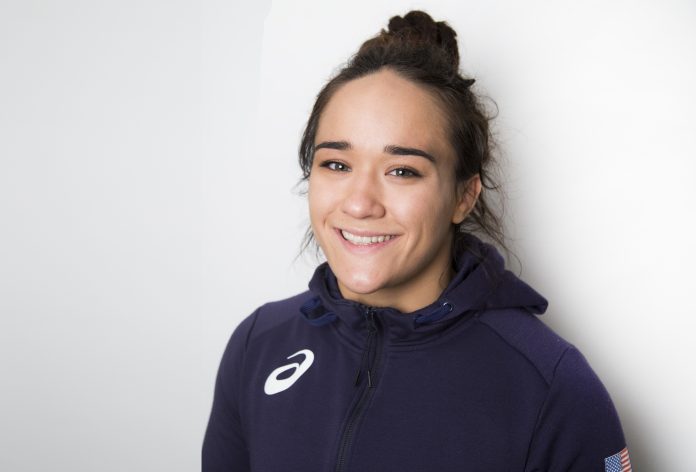
Mallory Velte is the example of the wrestler’s life

0
This season, Velte finished first in the 136-pound weight division at the Mike Clock Open.

Since Grade 9, Mallory Velte has been wrestling. It’s been an unexpected journey for the fourth-year student, who has since made a name for herself with outstanding performances as part of SFU’s wrestling team. For Velte, competitive wrestling defines her life in every aspect.

“I wanted to try wrestling in middle school, but I was told that no girls were allowed on the team,” she said about her first inclinations to take up wrestling. The senior wrestler is originally from Sacramento, and said she’s grateful to be a part of the team at SFU, as she feels women’s wrestling is more welcomed in Canada than in the United States.

“I was in contact with the coach at SFU when I made the team. I thought I was going to be a redshirt in my first year, but I ended up wrestling. I got fourth at the college nationals for my first year,” recollected Velte. She talked about the team’s strong position when she was a freshman, and how she started training for the university nationals that could have qualified her to compete in the World University Championships.

The only thing that stopped Velte was an injury to her ACL, which she had sustained during practice. Velte’s dream to continue fighting for her goals had plummeted. “I had to return home to undergo surgery and recover. It took me nine months to a year to fully recover and start competing again. I redshirted in my sophomore year, finally.”

Velte opened up about the highlights of wrestling at SFU, saying that “Mike Jones, our coach, is the person that I look to for motivation. They have taken me everywhere such as the Olympics with Team Canada, and it’s very beneficial to meet and receive support from Canadian and US wrestling.” There have also been challenges, though: “Funding proved to be tough for non-seasonal events and was hard to get paid for.”

Velte also talked about her psychological struggle post-ACL tear. “I felt most down when I had to watch someone else wrestle and walk to my classes after. Our team also hadn’t performed well that year and not being able to be a part of it was difficult.”

Velte brushed off this specific low-point in her athletic venture to talk about what wrestling meant to her. “It feels pretty natural to be wrestling as a woman, and I think it’s about accepting your body, accepting what you’re capable of.”

Wrestlers are of different sizes and shapes — long, skinny, muscular — and different types — explosive, flexible, funky, or strong. Velte comfortably and quickly remarked, “I think I’m a stocky, explosive wrestler.”

Velte emphasized that there was no specific moment in her life that prompted her to invest her time in wrestling. She explained, “It just kind of came to me. It just feels natural.”

“It feels pretty natural to be wrestling as a woman; it’s about accepting your body, accepting what you’re capable of.”

Velte is also a psychology major who works at a daycare while sticking to her demanding training schedules. “It’s a busy struggle and a lot of responsibility. I also travel a lot because I’m on the US senior national team, so I’m gone almost two weeks a month.” Velte’s regimen comprises strict dietary and sleeping patterns, as well as workouts and practices. “The team has 7 a.m. workouts with a run or practic, and afternoon workouts that consist of a lift or practice depending on the days of the week.”

None of this godly discipline ever throws Velte out of balance, though. “I don’t really think about it. I just wake up and do it every day and now four years have gone by.”

Velte has definitely come a long way since her first year, as she explained the amount of discipline and perseverance she had to develop in herself to stay ahead. “It’s not like I like every workout that I have to do, but my passion drives me forward. Honestly, if I have to go do an extra workout or go study for a midterm, I’d rather work out.”

Her mindset entering a match is always that of excitement. “I like a challenge. The level of competition in the college season is questionable, so I’m always excited to compete with someone who’s better than me.”

Velte expects to wrestle for the next four to eight years minimum. With a vision for the future clear in her head, Velte did have some advice for her younger self: “Enjoy your freedom while it lasts.”

Fun Fact: What would you describe as the most unusual thing that you do?

“I’ve started to listen to books on tape. I think it’s lame, but I’ve started doing that.”

Tyrell Lewin’s breakout performance leads Clan to win 73–72 nail-biter

0
Lewin finished with a career-high 14 points in the win.

A timeout was called with 17.1 seconds left. SFU’s last point — a lay-up by Andrew Williamson — was 1:18 ago, while Lindenwood University just scored two free throws to put themselves within one.

What followed was a long 17 seconds, drawn out by stoppages of play. Hidde Vos was fouled, and had chance to cushion the lead by one with a free throw, with seven seconds left. He missed.

Lindenwood picked up the defensive rebound and ran it down to the other side of the court. There, Jackson Price had a chance to end it in their favour with a three pointer. It would be a crushing buzzer beater against SFU.

But he missed too. SFU won 73–72, the team’s second win of the year and its second consecutive win, sweeping the Lindenwood Lions in a pair of back-to-back games.

“I’ve been in a few games like that before, where it’s back-to-back, you’re playing the same team, you kind of the know the other team’s stuff,” said head coach Steve Hanson. “I just felt it was going to be a down to the wire type of game.”

In just their fourth game, SFU has two wins against National Collegiate Athletic Association (NCAA) Division II competition. Last year, SFU only mustered one win against Division II competition, and it didn’t come until February 11. While SFU had two wins last year, that counted a Douglas College matchup that this year was deemed exhibition play. SFU already has a better record than they did all last year, regardless of where they go from here.

To make it all the more impressive, this was with a shortened bench with five players —  Bowen Bakken, Vinnie Safin, Kedar Wright, Gibran Sewani, Aleks Vranjes — not dressed. Freshman Bongani Moyo did not see any minutes.

A big part of the team’s success was players who don’t usually score stepping up.

Sophomore Tyrell Lewin, who had only put up double-digit points three times last year, put up a career-high 14 points, and was noticeable right from the start.

Catching the ball on the opening tip-off, he started the give-and-go that resulted in Graham Miller opening the scoring just five seconds in. He then put up four of the next six SFU points.

“I just felt it was going to be a down to the wire type of game” – head coach Steve Hanson

“I was really just trying to look for teammates every time I caught the ball, but they were just laying off me, so I figured, ‘Why not?’ So I just went to the rim and worked it,” said Lewin.

He was also good on the rebounds, taking six — four of them defensive.

“He was aggressive in the first half, offensively, which we haven’t seen much. The guys looked for him in the second half. He got some nice easy two-foot lay-ups,” said Hanson. “I think he’s just doing things to keep himself on the court defensively, he’s a smart player, and [it’s] good to see him score.”

It seemed like a breakout game for Lewin, who, having been a pure freshman (straight out high school) last season, struggled at times.

“It’s pretty difficult [jumping from high school to university] because the skill level — pretty much everybody is the best player on their high school team,” said Lewin. “The spacing, the speed, and the knowledge — as soon as you’re not in the right position, a good point guard is instantly going to know where the open man is. You have to always be in the right frame of mind,” he explained.

What did he work on?

“Just mentally trying to get in the zone and know where I had to be on offence, where I had to be on defence, and just kind of letting the skills and the talent fall second to the mental, because I feel like if I’m in the right position, and I’m always doing the right things, then good things are going to happen, and the ball will start to drop eventually.”

Lewin, who started the game, however, credited much of the win to the bench — specifically Andrew Williamson and Hidde Vos.

“We just banded together as a team, a lot of guys who don’t usually get minutes, stepped up really hard, and I know Andrew and Hidde came on and they were huge for us in the second half, getting downhill, creating drives, getting open shots for guys, and without that, I don’t think we would’ve won tonight.”

Vos, who before the season Hanson said he expected a big year from, put up some big threes in the second half, going two for five on the night.

“He took three really good shots in the first half. They didn’t go down, and that’s kind of a shooter’s life,” explained Hanson. “I just keep telling him, ‘You’ve got to keep shooting them, you’ve got to keep shooting the ball,’ and he shot two big ones in the second half.”

After a quick start to the game, SFU gave up the lead with 1:59 and did not take the lead or tie it — down by as much as eight — until 5:58 left in the second, when Michael Provenzano sank a three to put SFU up 63–62. SFU only surrendered the lead once more, for a period of 16 seconds.

Provenzano shared the lead with Lewin with points with 14, and had six rebounds too, while junior Izaiah Sherman-Newsome was the only other player with double-digit points with 10, and led in rebounds with eight.