Home Blog Page 692

SFSS board overhauls election and referenda policies

0
Irene Lo / The Peak

The Simon Fraser Student Society (SFSS) Board of Directors has passed a host of changes to the policies governing elections and referenda held by the society. The changes were launched by last year’s board citing a “lack of clear process” resulting in “inconsistent elections and referenda.”

Among the changes to the policies, specific election processes as well as communications policies have been introduced, all of which has expanded the new document to eight times its former size.

Further updates to elections documents were approved at the board meeting on June 19.

“The previous board had put together a new set of elections policies, to keep in line with these approved election policies. A bunch of changes have to be made,” vice-president university relations Erwin Kwok informed the board, noting that recent changes were smaller scale.

The previous board noted that elections “inconsistencies pose significant challenges for the administration of the elections and referenda by the [Independent Electoral Commission], and participation in the elections and referenda by the SFSS members” in a motion at the meeting on April 24.

Chief executive officer Martin Wyant advised the board at the June meeting that the changes to the policy should be communicated to the student body.

“I think the next step is to communicate that this policy has been passed with students, many of whom will have questions about why they were developed,” Wyant said.

The Peakeasy 2017: Episode 2

0

Album reviews

The Road Ahead is Golden by Jon and Roy

With an optimistic title, Jon and Roy’s seventh album continues their whimsical brand of indie folk-rock with a bit more realism than their previous works. The melodies are still jubilant and upbeat while some of the lyrics this time around are less so, but that’s not a bad thing.

     Roy Vizer’s signature congas (that were not present on their last album, Riverside) have made a welcome return, and Jon Middleton is joined by guest vocalists on a few tracks, including members of another Vancouver Island band, Current Swell, on “The Better Life” (the album’s first single). The song strikes a good balance between the realism of admitting that we have a lot of work to do to make our world a better place and the hope that we will get there one day.

     Seemingly steeped in natural grassroots music making, Jon and Roy’s latest effort is full of their perfect mix of calming, peaceful acoustic guitar, raspy vocals, and gentle percussion. This record is best enjoyed on lazy summer days while swinging in a hammock and just watching the world go by. – TP

Drop Top Wop by Gucci Mane

Gucci Mane is well-known as one of, if not the, most prolific rapper of all time, and it appears his lengthy incarceration didn’t hinder anything: Drop Top Wop is his seventh album since getting out of jail a year ago. It’s also one of his most solid projects since Everybody Looking, and we have Metro Boomin, the true star of this record, to thank for that. Metro’s beat-making is phenomenal, creating dark, brooding soundscapes reminiscent of his last collaborative project, Savage Mode.

     Over the past four years, Metro has proved himself as a meticulous producer who crafts remarkably complex sound without sacrificing Atlanta’s signature trap aesthetic. His beats are sinister, ethereal, and hard as hell; “Tho Freestyle” is so hypnotic you can get lost in the vibe for days, and “Helpless” sounds like trap Danny Elfman. This isn’t to say that Gucci isn’t great on this album: he’s healthy, confident, and on point for Drop Top Wop, and “Finesse The Plug Interlude,” in particular, features some of his most impressive writing in years. 2 Chainz brings all of his charisma to “Both Eyes Closed” and Offset continues to prove himself as the best of Migos with his feature on “Met Gala.” – NM

Neva Left By Snoop Dogg

A quarter-century into a historic career and Snoop Dogg is still able to breeze through a track like a zephyr, bringing his laid-back flow and philosophic simplicity. Neva Left is being billed as a re-establishment of Snoop’s greatness, reminding the world that he’s an OG who stayed consistent throughout his career. But if you’ve been paying attention, you shouldn’t need reminding; his last two projects, BUSH and Coolaid, were fantastic, and in many ways even better than Neva Left.

     This album has some major highlights: his flow in “Bacc in da Dayz,” his storytelling in “Vapors,” and his fantastic remix of BADBADNOTGOOD and Kaytranada’s “Lavender” being only a few. But Snoop has a few strikes against him here. Most of the beats sound like knockoff ‘90s-era Dre beats, multiple tracks are simply boring, and “Trash Bags” is a song we’re better off pretending never happened. Snoop’s had one of the most impressive careers in rap, and there’s no denying that he’s maintained his quality, but I’d recommend last year’s Coolaid before Neva Left for the vintage Snoop sound. – NM

SFU researchers identify relationship between diversity and extinction in amphibians

0
Photos courtesy of Dan Greenberg

Simon Fraser University researchers have discovered a potential explanation that sheds light on why a third of amphibians are at risk of extinction. Following a year-long study, the biologists found that amphibian groups that diversify rapidly are more prone to extinction.

Amongst the other vertebrate species, such as mammals, birds, reptiles, and fish, this pattern is only found in amphibians.

“For many amphibians, the amount of distance they can travel is often limited and they are also typically sensitive to water availability. These traits likely contribute to why amphibians are one of the most threatened vertebrate classes in the world,” according Greenberg, a PhD candidate in the biology department at SFU.

The study by Greenberg and professor Arne Mooers looked at amphibian groups on a global scale to understand how evolution may influence extinction.

“The goal of this study was to ask how diversification rate influences extinction risk, by testing whether diversification influences the proportion of currently threatened species in amphibian genera,” said Greenberg.

The biologists discovered that amphibian groups that diversify rapidly have a greater share of species that are at risk of extinction. The reason for this appears to be related to the nature of these rapidly diversifying groups, in that they consist of species that are highly specialized to certain environments.

“If a species is specialized to a certain environment and their environment gets altered, their choice is to either [adapt] to those conditions, move, or go extinct,” said Greenberg.

Amphibians are dubbed ‘ecosystem indicators’ because they are thought to be very sensitive to changes in the environment including air quality, light intensity, moisture, and temperature. With current climate change and increased habitat loss occurring worldwide, many species are being affected and amphibians are, in turn, one of the most at-risk groups.

Specialist species, which predominate in rapidly diversifying groups, are potentially at a greater risk of extinction if they cannot adapt to changing conditions as their options are more limited.

“The ability to rapidly speciate and colonize new environments was beneficial for these groups, but now this a liability as these species may be disproportionately lost under human-driven environmental change,” explained Greenberg.  

Initially, slowly diversifying species were hypothesized to be more at risk of extinction based on studies of mammals and birds, but Greenberg’s research showed the opposite in amphibians.

Groups that have rapidly diversified are more likely to go extinct. “This makes a lot of sense: groups that diversify rapidly should lose species rapidly too because several traits that are thought to increase speciation, such as low connectivity and genetic exchange between populations, also are tied to extinction in the present,” said Greenberg.

When conducting this study, Greenberg also noticed that there are 20 rapidly diversifying amphibian groups where every single species in that genus is threatened with extinction. Applying models to estimate evolution history loss indicated that just saving one species from each of those 20 groups would save about 1.4 billion years of independent evolutionary history, he found.

What this means is that scientists and conservationists may need to rethink the way they currently conserve species. “Conservation could benefit greatly by focusing on a long-term evolutionary perspective, instead of the short-term time frames we usually consider to preserve biological diversity,” said Greenberg.

Humans are the primary cause of the current decline in the amphibian species as invasive species and foreign pathogens are introduced to new environments. “This is very significant because it can cause massive die-offs of species that don’t share an evolutionary history with these pathogens and therefore often lack the necessary immune defenses to fend off infection,” explained Greenberg.

In addition, land conversion, climate change, and pollution also play a role in the decline of amphibians.  

Greenberg urged that more efforts need to be stepped up to understand why certain amphibians are rapidly diversifying. The study also revealed another significant piece: that speciation and extinction may be positively related and high diversity amphibians are also poised to be disproportionately lost.

Policing our outdoor activities so isn’t chill, dude

0

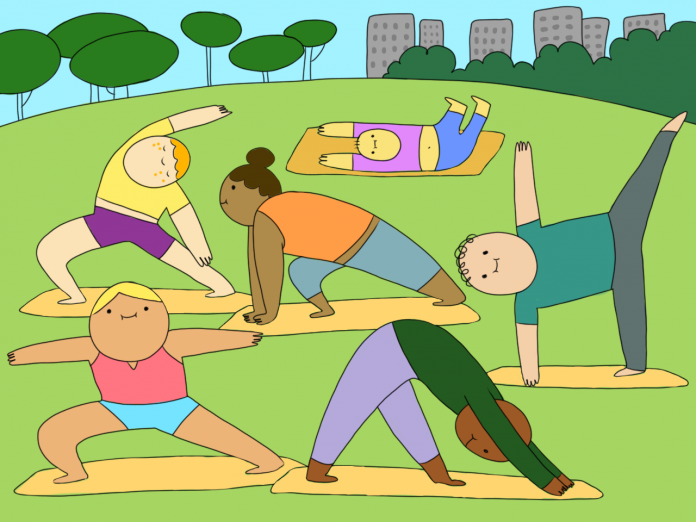
I never thought that something as simple as yoga would be banned from public parks.

Let me first say that I love Vancouver. I love the blend of city and nature, and the amount of green space in this city that makes it all possible. As Vancouverites, we are encouraged to get outside, be active, and enjoy nature. It’s all part of Vancouver’s vision for active living and getting outside.

So when the Vancouver Park Board announced that the free yoga classes held at Dude Chilling Park for the past few years would be cancelled and even risk getting fined if caught continuing, I was perplexed.

Some people enjoy parks by reading books, lazing in the grass, or walking around the perimeter. Others roll out yoga mats and perfect their warrior one pose. But despite the difference in these activities, one thing remains the same: last time I checked, all of these activities were harmless and — dare I say — fun.

But let’s say we put aside the fun for a hot second. Even so, I was brought up with the belief that as long as you aren’t physically or emotionally harming anyone, or any property, you can do whatever you like in a public space.

So yes, if you happen to be in warrior one and you have a flaming bow and arrow ready to fire into a crowd of people, I would go over there and fine you myself. Thankfully, most yogis are more focused on their breathing rather than their shooting accuracy.

Fun or not, parks are public spaces. As in, they are spaces for the public to enjoy in whatever way they see fit. To have the Vancouver Park Board police how people enjoy the city’s parks is simply ridiculous.

The Dude Chilling Yoga Collective, which runs these outdoor yoga classes, offers them for free. They encourage, but do not enforce, donations, and they never turn anyone away for lack of funds. As such, the class attracts many different types of neighbours of all different walks of life.

Should the collective one day charge fellow yogis an entrance fee to take part in the class and begin to turn serious profits from it, then I think that this could warrant the need for a permit or a license as it becomes a business. Otherwise, there really isn’t a difference between those in the collective versus a group of yoga enthusiasts who just happen to do their thing in the park. These people come to enjoy and use the park, just like anyone else, the way that parks should be enjoyed.

Eventually, the city might start targeting large groups of people playing touch football in an open field or a few people doing tai-chi. If the city continually tries to police how people enjoy the outdoors, I think that it’s safe to say that people might start disappearing from the parks all together.

So park-goers, beware: this might be the death of playing outside, and probably why Vancouver is called the ‘no-fun city.’

Why you should read the modern classic, The Outsiders

0
(Image courtesy of Speak)

The Outsiders is a story that has touched me in so many ways. S.E. Hinton created a masterpiece of a novel in 1967 at the tender age of 18. Just recently, Hinton celebrated the fiftieth anniversary of her book with a tour, which I was lucky enough to attend. Seeing her in person reminded me of why I fell in love with this novel when I was 14 years old. Hinton’s timeless classic is a coming-of-age story that unravels the good and the bad of society. The Outsiders has something for every reader; there are star-crossed lovers, misunderstood teenage boys, thrilling fighting scenes, and suspense creeping up through every page.

     Based on Hinton’s own childhood, the story is about two very different high school gangs, the Socs and the Greasers. The Greasers are considered to be the delinquent troublemakers of the social pecking order. The Socs (short for Socials) on the other hand are considered to be the elites of society. Protagonist Ponyboy is a flawed character: he is a moody, troubled kid who acts recklessly when faced with tough choices. Ponyboy grows tremendously throughout the novel as he witnesses death and the harsh reality of living life as a Greaser.

     Coming from the wrong side of town myself and having been exposed to drugs, violence, and crime at a young age, I have always identified with Ponyboy. The reason why this novel continues to be a success, even after 50 years of publication, is because the message of the story still holds value to this day: it is never too late to change your circumstances.

     If you haven’t read this novel already, I highly suggest adding this book to your summer reading bucket list. The short novel will take you on a journey that will keep you hungry for more. This novel will also take you on a roller coaster ride of emotions: anger, heartbreak, frustration, and at the very end, hope . . . Hope that happy endings do exist, if you want them to.

A matter of a hundred factors

0

There is a preconceived notion that a university student who drops out does so because they are not strong in academic study. Dropping out of university is usually a difficult moment for those who endure the experience. Often, the concept of dropping out is considered in terms of a dichotomy, black and white, either a student continues their studies at the institution, or they drop out. However, studies over the years, data taken from SFU, and student experience would indicate that the reasons for students to drop out are far more varied, and far less black and white than supposed. Many can’t be counteracted by university programs, nor are the results always due to poor student performance.

SFU’s Institutional Research and Planning is a department which states on their web page that they “define, collect, analyze, project, maintain, [and] disseminate institutional data, information[,] and research about all aspects of the University.” Amongst the information that it collects are statistics regarding SFU student retention and dropouts. In late April, the department released their updated statistics for student retention rates to include students who began their program in the fall 2016 semester. The updated report indicated that of students admitted a year earlier, ending the first year or beginning the second year of their program at the time of the report, 18.7% of students were tallied as non-persisters, indicating that they were not taking classes or pursuing their program at the university. This is an increase from 16.8% a year earlier and 15.1% the year before that.  However, this does not appear to be cause for great alarm, as fluctuations are normal, and the attrition rate of SFU students had steadily dropped from around 21% of first-years from the fall 2004 admission term. These statistics, however useful, do not indicate reasons for why SFU students leave their studies, leaving students to either be classed as simply pursuing their program, or not.

A decade ago, in 2007, Institutional Research and Planning released a couple of reports regarding SFU students and their reasons for leaving the university. Of the reasons outlined in the report at the time, social environment, difficulty in making stable relationships, feeling connected to campus life, and poor availability of necessary classes (making it difficult for students to complete their degree requirements) were noted. A decade on, these issues continue to be front and centre in student discussion and remarks regarding their time at SFU. Clearly, the matter of social life at SFU is far more difficult to combat than it is to discuss as an issue facing students at SFU. I often hear students say that since the university is a commuter school, SFU lacks the liveliness within its smaller residence.

Within the conclusions and recommendations of the report was a paragraph which suggested that SFU should work to reduce the issues that students were having at the time in being able to enroll in the classes that they need. Despite the administration’s efforts, these struggles appear to remain prevalent, as it is a popular topic within student dialogue. Students bemoan class enrolment during the semester. No one from the administration was able to comment on the topic during the writing of this piece.

During an interview with a former SFU student and my longtime classmate Corey Ng, many of these issues, which were raised in Institutional Research and Planning’s decade-old report, became clear as factors in his decision to leave the university. Ng began his studies in the fall 2014 semester and left the university behind in spring 2016, stating that he had begun his studies in psychology before dabbling in a handful of different classes. Ng said that was “why I stopped, one of the reasons, anyways, because I didn’t really have a focus.” Ng went on to say that “I felt like I was wasting my time and money, because I didn’t know what I wanted to do.”

Ng also explained that he had a tough time staying engaged in classes but had no problem working shifts at a job because, “when you’re in lecture, you’re just sitting there, and writing, and maybe I needed to be doing something more than that to have more of an attention span.” He believes that at the time, university simply wasn’t for him, since he now works two jobs, which is something that he enjoys and believes he has gotten more out of. Ng also stated that “unlike high school and elementary school, I just felt like a number up there” which he later said he felt he would likely get from any university. Ng would prefer to attend a college when he returns to post-secondary. Further, he expressed his frustration with the social element at the university, asking, “Do you know how many friends I made [at SFU] in two years?” before answering his own question: “Zero.” Ng did, however, explain that he could see that the institution attempts to make socializing easier with events like clubs day, admitting that he simply did not feel engaged.

I spoke with student engagement and retention director Annette Santos regarding some of the programs and initiatives that SFU has in place to try and help students. When talking about the Back on Track program, which aims to help students on academic probation return to good academic standing, she stated that, “74.9% of students who successfully complete the Back on Track program are able to remain at SFU beyond the program,” and then went on to say that “as of fall 2016, 1,427 Back on Track program alumni have graduated from SFU.” These points demonstrate that despite the idea of the Back on Track program being an absolute last resort when discussed amongst students, the program has actually been highly successful in regaining academic stride, and helping students to succeed in completing their degrees.

This isn’t the only area in which SFU has set up programs and initiatives to assist its students, however. Santos said that “non-academic reasons for students leaving are varied, complex, and personal.” These can be anything from health to financial reasons to other opportunities for students like jobs, as well as institutional fit and engagement. She mentioned a wide variety of resources and programs that are in place within the university to assist with these issues, from financial aid, scholarships, and bursaries, to co-operative education, Headstart, Classroom to Career, opportunities in student government, SFSS departmental unions, and clubs. Clearly, SFU has created a large number of resources to help students combat the equally large number of factors that can lead to SFU students eventually leaving.

These are cases that would demonstrate that there is nothing inherently wrong with SFU or universities in general, as they attempt to have as many resources as possible to students to help them be satisfied, happy, and successful in their time at the institution. Likewise, it is not a sign of anything being wrong with students who choose to drop out, as it may simply be that the environment or the routine of life in academic institutions are not for everyone. These are issues that, while the university may try and aid them, may simply not be applicable to some people who thrive in, or enjoy, the university atmosphere more than others. Those who do not feel engaged or feel alienated may be better suited to other opportunities. Similarly, many students face obstacles that are outside their control, which can make SFU an option that doesn’t fit for them. For these reasons, the only guarantee appears to be that the experience will open some doors and close others. Where the open door leads, exactly, has yet to be seen.


The summer adventurer’s trail guide

0

Hiking appears to be on the rise, particularly due to the Instagram-worthy shots people climb to the top for. There is a reason our license plates all say “Beautiful British Columbia”; this province truly is a natural beauty with so many extraordinary places to explore.

Before going into the different hikes that I recommend, I’m going to start with the most important part of hiking: be prepared!

You may think you’ll be fine out there on the shorter hikes, but accidents happen and I have had friends who, even though they hike often, slip, fall, and hurt themselves. Luckily, they brought the necessary supplies to get out safely.

There are some things that no matter what hike you go on you should always carry in your backpack. Water is number one! Even if you aren’t someone who drinks a lot of water, you should if you are hiking. If your muscles get tired and you’re dehydrated, you may not be able to make it back down. This happened to a guy who went hiking in North Van and had to spend the night on the mountain with the search and rescue crew. Not only is it embarrassing to have to be rescued on what you thought was a simple day hike, but it also costs our city money and resources that could be better used elsewhere.

When packing for a hike, here are some important items that could end up saving your life.

Must haves:

  1. Water
    Can’t stress this one enough. Seriously.
  2. Proper shoes
    For the rougher hikes, proper hiking boots are highly recommended. Break them in.
  3. Map and compass
    You may have never used an old-school map before, but if your phone dies, it could save your life.
  4. Protection from the elements
    Sunscreen, sunglasses, a jacket, and extra layers.
  5. Flashlight or headlamp
    Even if you don’t plan to be out past dark, it’s not a heavy extra and is always good to have.
  6. First aid supplies
    You don’t have to bring a full kit, but make sure to have some of the basics such as gauze pads, antiseptic wipes, bandages, blister treatment, pain relief such as ibuprofen, tensor bandages, and tape.
  7. Knife or a swiss army knife
    It’ll be really helpful in an emergency, trust me.
  8. Food
    Enough to keep you going for at least a day.
  9. Fire starter
    There are tons of homemade fire starters you can make, just don’t forget to bring something to light it, i.e. waterproof matches.

You may be thinking that you don’t want to have to carry a backpack with all these extra things, but most of them can be found in small travel sizes and don’t actually weigh very much. If you run into danger or there is an accident, I guarantee you will be wanting these things with you. Plus, if you’re going with a friend, you can split up the supplies between you so it weighs less!

It is important to do your research before you go, and to make sure you know the hazards of your hike. For example, if it’s a popular area for bears, bring bear spray! I don’t know about you all, but I wouldn’t enjoy an encounter with a bear and especially not without some deterrent to keep it away from me.

Speaking of bears and wildlife, please DO NOT feed them. Bears who get habituated to humans and human food often end up getting shot because they can become a danger to people. Even if they have not harmed a human yet, if they display any aggressive tendencies they may be killed as a precaution. Do not feed the wildlife. Also, be considerate and keep nature clean by picking up after yourself and not littering.

There are hotsprings near Pemberton that had to be closed for possibly the next two years due to increased aggressive bear activity caused by people being irresponsible with their food and leaving behind garbage. These are events that are easily avoidable, so everyone please be responsible, respectful hikers and make sure you encourage your friends to do the same!

Now onto the actual hikes!

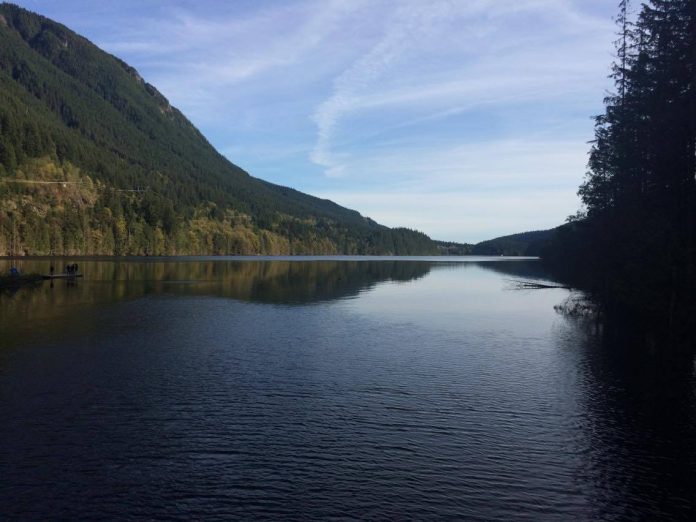
  1. Buntzen Lake
    Anmore
    Approximately two-and-a-half hours
    This one is relatively easy with some uphill parts that will get your heart pumping! One half of the lake is less hilly which is best saved for the end. Check out the maps around the beach.
  2. Quarry Rock
    Deep Cove, North Vancouver
    One-and-a-half hours
    Most Vancouverites have done this hike, but if you haven’t then head on over and get a nice view of the Indian Arm.
  3. Lighthouse Park
    West Vancouver
    Two hours
    Quite easy with some small hills, although there are many trails in this area if you’re looking for something longer.
  4. Deer Lake
    Burnaby
    One hour
    This is more of a walk, but it is still nice nonetheless! You may get lucky and see some of the baby ducks or geese this time of year.
  5. Sasamat Lake
    Belcarra, Port Moody
    Approximately one hour around the lake
    Easy, but fun. On a hot day you can jump off the dock that cuts across the lake.
  6. The Lynn Loop
    North Vancouver
    One-and-a-half hours  
    This is one of the shorter and easier trails in Lynn Valley Headwaters, but the area is filled with hikes of different distances and levels!
  7. Coquitlam Crunch Trail
    Coquitlam
    One-and-a-half hours
    Think of this as a mini Grouse Grind.
  8. Cascade Falls
    Mission
    30 minutes
    I know TLC said “Don’t go chasing waterfalls,” but they sure are lovely.
  9. Stawamus Chief
    Squamish
    Six hours
    Hiking boots are needed for this one! It’s a toughie, but the view at the top is spectacular and great for photos
  10. Norvan Falls
    North Vancouver
    Five hours
    This one is not for first-time hikers, but if you’re ready to tackle something a little more difficult, the scenery is beautiful!
  11. Panorama Ridge
    Whistler
    11 hours
    This is no joke! This hike gives you a breathtaking view of the turquoise waters of Garibaldi Lake. Many people turn this hike into an overnighter with camping, so if you’re wanting a fun adventure after working up with some other hikes definitely look into this!

Now that you’ve got some ideas for hikes of all levels, get out there and explore. Marvel at the beauty of the Pacific Northwest. Like the saying goes, “West coast, best coast,” so put on some shoes and get adventuring!

SFU falls 19 spots in global university rankings

0

Simon Fraser University’s global standing took a dramatic hit this year, according to the latest QS World University Rankings. The university dropped 19 spots from number 226 among top world universities last year to number 245 this year.

The decline is mostly due to a drop in academic reputation that has been felt by universities across the country. SFU narrowly missed a spot in the Canadian top ten, once more achieving eleventh place among universities nationwide.

The University of British Columbia fell six spots to number 51 in the world and third in Canada, while the second best-ranked university in the country, McGill University in Montreal, landed at number 32, two spots shy of last year’s placing.

The University of Toronto, the highest-ranking university in Canada, came in at number 31 which is one place higher than last year.

Though this year’s Times Higher Education World University Rankings have not been released, the ranking last year also placed SFU in the 201–250 bracket.

“While the global university rankings provide some sense of measuring excellence, it is only one perspective to measure SFU’s performance,” explained Wayne Sun, an analyst with SFU Institutional Research and Planning.

“We do not primarily use rankings to measure ourselves against other institutions, but we recognize that rankings provide an easily understandable method for comparison.”

These rankings are a useful tool to see how the university compares academically with national and international institutions and also how it is perceived globally, Sun noted.

For three consecutive QS rankings, SFU has seen lower performance in academic reputation — dropping from 41.6 two years ago to 31.5 in 2018.

“Our academic reputation may not always reflect our strong research scores in these ranking systems,” said Sun. These “rankings rely heavily on subjective reputational surveys that we have very little control of and no explicit information on who receives these surveys.”

QS explains on its website that a university’s academic reputation, which accounts for 40% of the final ranking, is measured through a survey of 70,000 academics worldwide.

However, Sun mentioned that the university does “relatively well” on objective measures such as citations per faculty, and numbers of international students and faculty.

According to the QS rankings, though the number of citations per faculty member diminished in recent years, SFU still ranks second highest in the country. The university also placed third in the country in terms of international students and fourth in numbers of international faculty.

“We focus more of our attention on research activities knowing that our researchers and academic staff strive to be the best in their field,” Sun said. “So based on these rankings, we feel that there is opportunity for SFU to promote and expand ourselves in the academic space to further improve our reputation.”

The rankings also allow the university to gauge trends in global higher education to determine which institutions are shifting their focus to certain subjects, Sun continued.    

The Peak did not receive comment on the QS World University Rankings from the Office of the Vice-President Academic before our publishing deadline.

Vancouver set to celebrate National Aboriginal Day

0
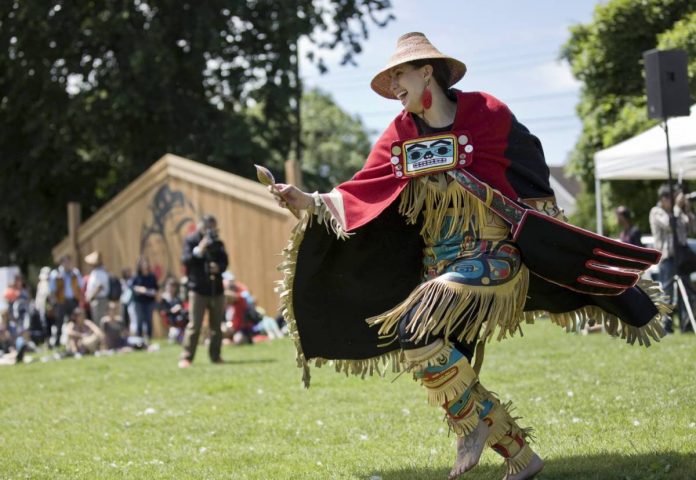
Git Hayetsk dancers, led by Nisga'a, Tlingit, Tsetsaut, and Tsimshian artist Mike Dangeli, perform for the crowd at Trout Lake.

Metro Vancouver is preparing to celebrate National Aboriginal Day this week with events set to take place across the region.

While the day is acknowledged across Canada, it is not recognized as a statutory holiday within BC, the unceded Coast Salish lands on which the many events are taking place.

According to Indigenous and Northern Affairs Canada, National Aboriginal Day “is a day for all Canadians to recognize and celebrate the unique heritage, diverse cultures and outstanding achievements and contributions of First Nations, Inuit and Métis Peoples.”

The largest event scheduled for the day, which coincides with the summer solstice on June 21, is part of a cross-country gathering.

Aboriginal Day Live is an annual, national event series taking place across eight cities this year. Vancouver is the province’s featured city, alongside similar events in Halifax, Winnipeg, Montreal, Yellowknife, Ottawa, Edmonton, and Toronto. Organized by the Aboriginal Peoples Television Network, Aboriginal Day Live will be taking place with live local performances and events, as well as being live-streamed on TV, radio, and online.

The main events taking place in Vancouver this year will be mainly at Trout Lake, with some morning opening events at the Vancouver Aboriginal Friendship Centre Society nearby.

These events include cultural performances, a sacred fire ceremony, storytellers, dancers, and other entertainers. For families, there will be face painting, craft making, and a commemorative photo booth. The event will also feature a free community lunch, and an evening concert headlined by the JUNO award-winning indie band Digging Roots and other recognizable performers in Aboriginal music and television.

There are many other events taking place during National Aboriginal Day as well, across the many cities of the Lower Mainland.

Burnaby will be hosting their second annual celebration at the Burnaby Civic Square from 4:30 p.m.–7 p.m. There will be traditional performances, dancing, storytelling, and children’s events throughout the evening.

In Abbotsford, there will be an event at the Thunderbird Memorial Square from 4 p.m.–7 p.m. This event will feature storytelling, Pow Wow dancing, and Salish weaving.

Surrey will be hosting their own celebration as well from 2 p.m.–8 p.m. at the Bridgeview Community Centre with the Fraser Region Aboriginal Friendship Centre Association. This event will feature singing, dancing, storytelling, activities for kids, traditional sharing and teachings, and traditional food.

In New Westminster, their event will be taking place from 10 a.m.–2:30 p.m. at the Anvil Centre on Columbia Street. This celebration is said to include “unique programming” to celebrate the cultures of Canada’s Aboriginal peoples, including storytelling, drumming, K’uuts’iixuu T’aaxwii traditional dancing, and cultural resource tables.  

In Maple Ridge, the day will be celebrated on Saturday, June 24, from 10 a.m.–2 p.m. at Memorial Peace Park. This event is taking place for its eighth year, organized in partnership between the Fraser River All Nations Aboriginal Society and the city. This event will include dancing, live music, free food and a farmers market, games, crafts, and ceremonies.

The cities of Richmond, Fort Langley, and Vancouver chose to hold large community events this past weekend to celebrate National Aboriginal Day as well.