International students pay three to four times more tuition than domestic students in Canada, and you’ve probably wondered why. The Peak brings you some answers.
Presented by Sina Khalili
Special thanks to Alex Bloom.

International students pay three to four times more tuition than domestic students in Canada, and you’ve probably wondered why. The Peak brings you some answers.
Presented by Sina Khalili
Special thanks to Alex Bloom.

GERMANY – Hamburg hosts the G20 Summit
The G20 summit kicked off in the German port city of Hamburg last week as leaders of global economic powerhouses were expected to discuss issues on trade, climate, conflict zones, and migration. Huge protests occurred as up to 20,000 police were poised to face off against an expected 100,000 protesters. The conference is hosted by German Chancellor Angela Merkel, who chose Hamburg, the city in which she was born, to signify openness. The conference is an important one for Merkel, as she seeks to show Germany her diplomatic credentials ahead of the German election in September.
With separate files from Reuters and Reuters.
CYPRUS – Reunification talks in Cyprus falter
Diplomatic efforts to reunify divided populations on the island of Cyprus failed last week. Negotiations were ended by United Nations secretary-general Antonio Guterres who was quoted at a news conference expressing that he was “very sorry” for the failure, but insisted the result “doesn’t mean that other initiatives cannot be developed.” The Cyprus dispute has been marred by distrust and stalemate since the island was split between its Greek and Turkish Cypriot populations in 1974. The United Nations had been optimistic that this attempt at negotiation was the best opportunity for reuniting the island.
With files from Reuters.
SWEDEN – Volvo ditches petrol for electric and hybrid technology
Volvo revealed last week that the company plans to produce only hybrid and electric cars within two years. It would be the first major automobile producer to stop manufacturing vehicles that only use an internal combustion engine. The trend towards electric and hybrid vehicles is echoed by the other companies as General Motors unveils its electric Chevy Bolt and luxury brands like Audi and Mercedes-Benz roll out hybridized vehicles. Volvo CEO Hakan Samuelsson stated that such moves were directed by customer demand. Electric and hybrid cars are still predicted to account for only 9% of new vehicle sales in 2025.
With files from the Associated Press.
MEDITERRANEAN – Migrants favour Spain as route to Europe
The Spain–North Africa migrant route has seen its number of users double this year, becoming the fastest growing route for migrant entry into Europe. While most migrants still choose the Libya–Italy route, its numbers only increased 32% from last year compared to the Spanish route, which grew by 75%. The Spanish route may be seen as a safer option by some migrants, but Spain’s ability to cope with the influx of people is being strained, according to the United Nations Refugee Agency. Over 360,000 people crossed the Mediterranean to reach Europe in 2016.
With files from Reuters.

Slave follows the true life story of Mende Nazer, a Sudanese woman, who lost her childhood when she was sold into slavery at the age of twelve. After being captured by Arab raiders, she was enslaved in the city of Khartoum and was later sent as a slave to a family in London. Although Nazer faces many hardships and struggles, we also learn about her life before she was captured, living in a village in South Sudan with her family.
It was so hard to put this autobiography down as it was intense, deep, and emotional. Even though this book was not an easy read due to its mature and at times very graphic content, it is still worth the read. The language of the book itself is simple to understand with no unnecessary jargon.
I think that everyone should read this book, as we are privileged to be living in freedom and we take it for granted. This slavery didn’t take place hundreds of years ago, but just in 1993. It highlights how the Arab slave trade and other forms of slavery are still common and continue to go on today. This powerful story opens up our eyes to the realities of the world we are living in. Slave takes on the journey of a young woman who faces several trials, but with courage and strength, overcomes them all.

It sure did take a while for this summer to start up. Despite the dreary weather we’ve been having, sunny days are ahead which means BBQ season is in full swing!
I love walking down the street in the summer and being able to smell people barbecuing their food. It reminds me of people coming together, laughing, and enjoying each other’s company. Even more than how much I love that smell, I love hosting my own BBQs with my family and friends.
Sometimes after a particularly long spell of wet Raincouver weather, the sun will come out and I will feel like a new person. Although Canada Day has passed, which would have been an awesome time for a BBQ, I don’t think there needs to be a special occasion to host a BBQ other than wanting to share some good food with good people and have a nice summer evening. Any weekend or sunny day is enough of an excuse to hold a kickass BBQ. Here are some of my summer BBQ must-haves!
On the grill
Obviously you cannot have a BBQ without food. I like to have a variety of things to go on the BBQ including beef burgers, veggie burgers, and hot dogs or smokies. It’s nice to have a variety for people to choose from and especially something for people who don’t eat meat.
TIP: Costco has good frozen garden veggie burgers.
Toppings
In addition to the stuff being grilled, be sure to have all the goodies to load up the burgers. Bonus points for sautéed onions, bacon, or other toppings that make burgers feel gourmet. My friends are always stoked for my BBQs because they know there will be delicious food. If money is tight, don’t feel bad for asking everyone to bring something or to pitch in $5 each for ingredients. People are usually just happy to get together and don’t mind helping out!
Sides
My favourite summer salad is something that people are always hesitant to try, but once they do, they are changed forever. It is a salad made with only watermelon, fresh mint, and feta cheese. Simply cut up a watermelon into bite-size squares, chop up some fresh mint (as much as you’d like), and crumble up some feta. I like to squeeze some lemon on top as well. Although this may seem like a strange combo, I guarantee the ingredients go together wonderfully and it will be a hit! Make sure to refrigerate it before serving, as the watermelon is best served cold. This salad is light and extra refreshing, especially on a hot day.
Potato salad is another side dish that goes perfectly with summer. It requires a bit of prep since you need to cook the potatoes and eggs first before you combine them. Add diced pickles and chopped cooked bacon to make your next potato salad extra tasty!
Snacks
Don’t forget to have some snacks and finger food that people can munch on. If people are drinking, it’s always good to have things people can grab so no one makes the rookie mistake of drinking on an empty stomach. I find cut-up veggies and fruit are always popular. If you go to the fruit and veggie market, you can buy quite a bit for relatively cheap. Chips and salsa are another essential at any BBQ.
TIP: The fresh peach mango salsa from Costco is delicious and not too spicy which makes it a good choice when hosting for many different people.
Now I’ll move on to drinks, which of course is a key part of any summer BBQ. First off, make sure you have at least one big cooler with some bags of ice (you can buy ice from any gas station or grocery store.) There is nothing worse than warm beer, and your guests will be extremely appreciative if you can keep their drinks cold. As drinks can get expensive, I usually have a BYOB policy at my BBQs and may pick up some extras just in case, or some non-alcoholic beverages if people want those. If you pick up a container of iced tea or lemonade mix, people can make some if they please. That way you don’t have to keep a bunch of cans cold, you just need water and ice!
Summer games
You must have games at any gathering. They get people laughing and if there are people who don’t know each other, it eases the tension and helps people bond. If you have a lot of room (like if your BBQ is at a park or you have a big backyard), bring a volleyball that people can pass around. It’s even better if you can set up a net and get a game going, but that depends on the crowd.
Another fun and easy game that requires no setup is bocce. Bocce is fun because you can play it while drinking and don’t need to do any running or jumping around. If you don’t have a bocce set, ask around! I bet one of your friends’ families does.
Drinking games
If you’re into drinking games, beer pong is a great go-to that can be played in teams and is sure to get the party going. All you need for this is a long enough table, some ping pong balls (which are super inexpensive), and some red Solo cups which you should have even if beer pong is not on the agenda.
There are so many other fun games that can be played at a BBQ: Cards Against Humanity, charades, flip cup, king’s cup . . . the list goes on! Talk to your friends and see what their preferences are and then let the games begin.
Some final extras for a successful BBQ include:

For those of you who have wondered what it’s like to be a real teacher, or if you can’t choose between teaching high school or elementary, here is an inside look at the joys and stresses that come with teaching. I interviewed Susan Gouchee, an elementary school teacher responsible for a grade six and seven split class, but who began as a high school French teacher.
Her first teaching job out of university was at the elementary level in BC’s Lower Mainland. Next, her little family moved to the interior of BC and she received a full-time position as a high school French Second Language teacher (FSL). Born in England, an FSL job was the last position Gouchee imagined filling. Having only studied French for her last two years of high school, she was nowhere near qualified to teach the language. With this in mind, sit back and learn about the unique and enjoyable journey teaching can offer you.
Victor Gouchee: How did you get a job teaching French from barely studying the language yourself?
Susan Gouchee: There was a desperate need for French teachers at the time, but I was not one of them (as I had only briefly [taught] beginner French [in elementary schools]). The timing was right, though, and the school district offered me a position teaching FSL [in] high school. I said ‘yes,’ as it was a job, but I was scared stiff, as I did not have the qualifications or the belief that I could do that level of French! So I spent a great deal of time studying the textbook and trying to figure out how to teach rules of the language that I ‘kind of’ knew.
VG: How did you enjoy teaching high school French?
SG: After a year or two feeling like a ‘fake,’ I started to find my groove and realized that I only had to be a step ahead of the students and they assumed I knew everything! The teenagers grew on me and I started to really enjoy working with them. I learned that they were just like elementary students — they wanted to know you liked them and care[d] about them — only they were bigger! As my confidence grew, I loved teaching high school.
VG: You taught other subjects in high school, too. Which ones [did you teach] and how did you enjoy those compared to French?
SG: I also had the opportunity to teach psychology. Again, [although] I was not qualified on paper, it was an opportunity to maintain a full-time teaching position. So not even knowing what the course was, again I said ‘yes.’ I was supporting [my] little family and we needed the money. Once again, as I learned about the course, I learned to love it! Psychology is interesting stuff at any level, and being with teens who find so many concepts interesting, made it quite fun to get into. We nicknamed my psych class “Sex, Drugs, and Rock ‘n’ Roll.”
VG: How was the transition to elementary [school]? Do you enjoy elementary more than high school now?
SG: The transition [back] to elementary was brutal! It was absolute culture shock. It is a totally different job! I underestimated the changes that had been made since I had taught at that level over a decade ago! It took a solid two, three years to find my groove again and get used to the changes: leading the students to the library instead of just sending them, things you could or could not say, and joking at a more safe, less sarcastic level (as they take everything you say literally!) But now that I’ve found that groove again, I love it! [There are] so many more out-of-class opportunities at elementary. Sports days, field trips, bike rodeos, fun days, plus cupcakes. Always cupcakes, everyone always brings cupcakes for their birthday!
VG: With regards to teaching in general, what are the best and worst moments? Most rewarding? Most difficult?
SG: If you happen to be like me and enjoy the presence of kids and helping them learn, then teaching is the most fantastic job of all. The children are fascinating, and it is just a wonder to see them grow — physically, mentally, and socially. It is always changing, so there is little time to be bored. When a student writes a card or comes to you at the end of their time with you and they point out all you have done for them, often things you didn’t even realize, it is a tear-jerking moment and so rewarding.
It is a deceivingly physical job with very little downtime through the day, but the days go fast! I don’t really find anything bad about it, though I don’t love doing report cards. It is, however, the hardest job in the world if it is not right for you. I have seen teachers who, quite frankly, just don’t like the kids. Then the job is difficult [and] exhausting, and they burn out.
VG: If you weren’t teaching, what would you be doing?
SG: After 27 years of teaching, I can’t even imagine an answer to this question. Would I have continued waitressing? Maybe, but I certainly wouldn’t have learned as much from that as I have from teaching, and I definitely wouldn’t have had so many happy and fun-filled days.
The only thing I can imagine that might be more enjoyable than teaching would be working out all day, and getting paid twice as much.
VG: Any other information you may think will be insightful to our audience?
SG: One thing I’ve always felt lucky for was teaching both levels of school and being part of my son’s growth. I learned so much about high school in Canada and in . . . small town[s] especially. It helped me [become] aware of my son’s experiences as he went through school both academically and socially.
Editor’s note: Susan Gouchee is the writer’s mother.
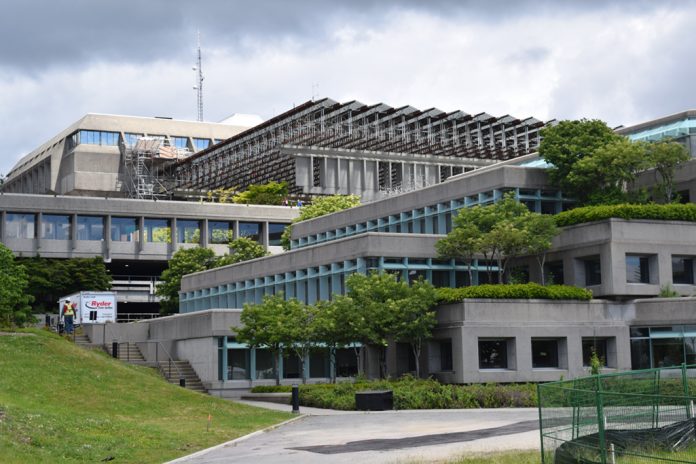
The number of cases of discrimination and harassment brought forward to the SFU administration spiked by 13.5% last year, with the largest portion of complaints surrounding the accommodation of disabilities.
A report by the SFU Human Rights Office, which is responsible for receiving complaints under the university’s human rights policy, stated that there were a total of 295 cases reviewed in 2016, though not all were initiated complaints.
“The majority of the work was providing advice to managers who were dealing with human rights issues and to people who believed themselves to be the targets of harassment or discrimination,” stated office director Brenda Taylor in the report.
However, there were 80 cases filed last year that involved the office in mediation, investigation, and accommodation, according to the report. This maintains a steady increase in the number of such cases filed over the past decade.
Since 2007, when 29 complaints that lead to further investigation were recorded, the figure has risen each year.
It is unclear what is behind the rise in the number of complaints, and the Human Rights Office was unable to respond to The Peak’s request for comment by publication.
This past year, most of the issues pertained to the failure to accommodate disabilities, followed by sexual harassment. There were also a number of cases of personal harassment, or harassment based on grounds of discrimination such as age, race, religion, physical or mental disability, or sexual orientation.
The report stated that the majority of those who sought advice perceived that they faced discrimination or harassment and wanted guidance on how to respond to the behaviour, or were management staff looking for advice on how to handle such situations.
These types of inquiries saw an 18% increase from last year. Of these consultations, many were requests from managers for advice on disability accommodation, while others dealt with complaints not under the mandate of the human rights policy such as social status and obesity, the report noted.
The office also fielded consultations regarding gender discrimination including breastfeeding, gender transitioning, and the “denial of service based on perceived gender.”
Similar offices at other post-secondary institutions in the province also release figures of complaints and consultations.
In 2015–16, the University of British Columbia fielded 110 concerns including discrimination and harassment due to sex, race, and ability, according to the university’s annual report.
In the same period, the University of Victoria reports it saw 39 cases filed. However, there is no consistent method for collecting data on complaints among post-secondary institutions in the country.

The glamour of a film set, the sophistication of Italy, and the timeless wit of one of Shakespeare’s best comedies — Bard on the Beach has a hit on their hands with Much Ado About Nothing.
The show opens in a flurry of revelry with champagne bottles popping and a film crew celebrating the wrap of their latest project. A set of large white doors at the back of the stage serves as a screen for black and white projections and retro movie posters. This provides a stylish backdrop to the beautiful, black-and-white costumes by Christine Reimer.
A dream team made up of scenery designer Pam Johnson, lighting designer Gerald King, projection designer Corwin Ferguson, and sound designer Murray Price all come together to create a spectacular set that glimmers with silver-screen glory, and an exciting soundtrack that highlights the action and situates it firmly in 1950s Italy.
Director John Murphy played Benedick in Bard’s last production of Much Ado About Nothing in 2010, and Jennifer Lines, who played Beatrice in that production returns to play Ursula for the second half of the summer. On opening night, Ursula was played by Lois Anderson, who flitted around as a sort of stage manager, always herding people to and fro amid the scene changes. This was a great addition to her character and fit perfectly with this adaptation taking place on a film set.
Beatrice (Amber Lewis) and Benedick (Kevin Macdonald) are young film stars who exchange witty banter and have great chemistry, the kind of characters you just know will eventually fall madly in love with each other. Don Pedro (Ian Butcher), a film director, decides that he will try to set them up by letting them overhear that the other is in love with them.
Thus, we get two hilarious scenes where Benedick hides behind a wardrobe wearing a wig to blend in, and Beatrice conspicuously makes herself as scarce as she can behind a small shrubbery. Both Lewis and Macdonald command the stage with their leading roles, playing these huge, effusive characters so well. Their story shows how thinking that someone loves us can make us love them in return.
The other love story doesn’t run as smoothly. Benedick’s friend, Claudio (Julien Galipeau), is in love with Hero (Parmiss Sehat), the daughter of Leonato (Andrew Wheeler), head of the film studio. Don Pedro’s sister Dona Johnna (Laara Sadiq) does not approve, and plots to fool Claudio into thinking that Hero has been unfaithful. The wedding scene where Claudio publicly humiliates Hero for her alleged infidelity is full of heart-wrenching emotion as she wonders what she has done to deserve his cruel treatment. It is a comedy after all, though, and to lighten the mood Benedick says, “This looks not like a nuptial,” which breaks the tension.
There are many laughable moments, particularly involving two bumbling constables who try to teach an old Italian and a blind friend how to do their job. But perhaps the most enjoyable moment was an Italian song with surtitles shown on a screen above the stage. Mixed in with the Italian lyrics were a few refrains of “Hey nonny nonny.” Coupled with Tara Cheyenne Friedenberg’s choreographic touches, the mood created was perfect.
Beatrice and Benedick are hard not to love, and they are perhaps Shakespeare’s most endearing characters. Their love story is born out of their friends’ plot to set them up, but it soon becomes very real. This production takes the essence of their relationship and amplifies it with Italian charm, mopeds, and some cinematic touches.
More information about Bard on the Beach and their current season can be found on their website.
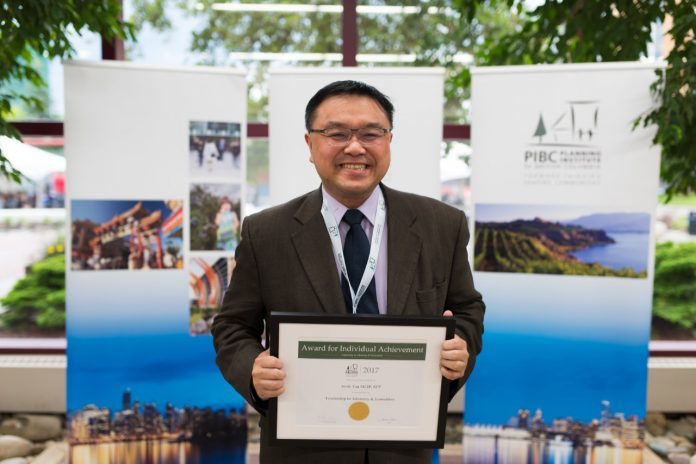
SFU professor and director of the City Program Andy Yan was recently honoured by the Planning Institute of British Columbia (PIBC) for a decade of work on housing affordability and urbanization in Vancouver.
A leading expert on the province’s housing affordability crisis, Yan has helped shape the public policy response. He received the award in the Leadership in Advocacy and Innovation category last month.
“It is a great honour to be recognized by my professional organization [for] the work that I’ve been doing for almost a decade,” said Yan, whose research has focused on many aspects of city life, including Vancouver’s housing market, residential real estate, population, and transportation.
Through his research, Yan has also concentrated on elements of globalization, ownership patterns, and Metro Vancouver’s overall economic state. As a result of studying these factors over a ten-year time frame, Yan was able to identify the role these factors played in Vancouver’s current housing crisis.
“The biggest finding of [my research] has been the ongoing decoupling of local incomes to local residential real estate,” said Yan.
There has been a rising disparity between local income and the rate at which the local real estate prices have increased. Since this gap affects both renters and homeowners, it has become a big challenge in terms of affordable housing, Yan explained.
With the crisis still going strong, this makes housing a difficult issue for many demographics. “Increasingly what we see is even further pressure for both renters and owners to live in metropolitan Vancouver, and I think that provides a profound challenge whether you are a young person, a worker, or a senior,” Yan noted.
According to Yan, policy increasingly needs to account for the types of demands that exist for housing. This includes recent initiatives such as regulating short-term rentals such as those advertised on the website Airbnb, taxing empty houses, and looking at the size of the land designated for housing.
However, policy has been slow to respond to the problems in the demand market.
“I think that fundamentally . . . there has been a lot of reluctance to deal with the demand side,” explained Yan. “It provides a major challenge to actually make public policy that produces a level of housing on a scale that can make a difference.”
Importantly, planners need to look at for whom the residences are being built, which is a “major element towards shaping housing policies,” he added.
Yan recommended that there are certain types of demand, such as buying a home that you don’t plan to live in, that should be discouraged.
However, the housing demands from aging members of the community and young people are not yet being met. Yan believes that these residents are some of the most affected by the current housing crisis and it is pivotal to ensure that they have access to housing.
“Should we want a thriving, sustainable economy, those are key demographics,” Yan explained.
Yan emphasised that citizens often are not aware of the role that they can play in shaping the development of their own communities. He encourages people to get involved through elections and by attending hearings to have their say in mitigating the current housing crisis.

A recent study from a Simon Fraser University think tank demonstrates that cities can achieve better value in restoring urban ecosystems over building additional infrastructure in the fight against climate change.
The Adaptation to Climate Change Team, which is based in the faculty of environment, highlighted potential environmental, financial, and health benefits gained from the restoration of Still Creek — one of just two daylit streams remaining in the city — from 1949 to 2014, through collaboration between the cities of Vancouver and Burnaby.
“Many cities around the world are considering ecosystem-based responses to climate change,” said Deborah Harford, the team’s executive director. “This is because ecosystems are cheaper to install, maintain, and upgrade, compared to traditional hard infrastructure solutions that are often more expensive and emissions intensive.”
Healthy ecosystems in urban settings are extremely valuable and much of urban development has overlooked their benefits in the past. While responding to flooding and extreme levels of heat can be expensive for a city, urban ecosystems have the power to stem the effects of climate change.
“Soil and vegetation absorb flood water and reduce heat, while asphalt and concrete amplify heatwaves and stormwater run-off,” explained Harford.
“Thermal imaging over cities shows how much heat concrete stores emit, causing heat bubbles known as urban heat islands,” she added. Ecosystem-based responses such as green roofs can help offset this impact.
It was awareness around ecosystem restoration in the area that prompted cities to re-evaluate waterways like Still Creek which has had a positive effect on environmental well-being, according to the study.
“Still Creek was extremely polluted by the 1970s, it was basically a wastewater channel,” said Harford.
The ecosystem revival also helps species that are struggling to adapt to climate change. For the first time in years, salmon came back to spawn in Still Creek in 2012, and have returned every year since, partly thanks to the restoration work.
The focus on urban ecosystems has also had success in other cities around the world. After Copenhagen, Denmark experienced a series of rainstorms several years running, their sewer system was overwhelmed, said Harford. Upgrading the sewer system would have interrupted the city for a significant length of time.
Instead, the city chose an ecosystem response, installing parks, swales — vegetated boxes in sidewalks —and trees to absorb stormwater and alleviate flooding. In the city’s analysis, not only was this a cheaper option, but it served to potentially boost the property values.
“Ecosystems offer as many values and benefits that are comparable to regular capital assets,” noted Harford. “It’s time we took into account the benefits associated with intact, healthy ecosystems, and the power cities have to make positive change when they collaborate across municipal boundaries.”

It is only half way through the year, but a company founded by SFU students has already claimed the top place in a number of entrepreneurship competitions — racking up more than $40,000 in prizes.
Orello Hearing Technologies, a startup working to create affordable hearing aids, took first place at the Hong Kong-Canada Investment Pitch Competition last month. A total of three out of the six teams in the national finals were from the university, and Orello won $10,000 in cash and $5,000 in legal assistance.
The company CEO and alumnus from the Beedie School of Business William Brenner told The Peak that the money will be used to enhance their latest hearing aid prototype, which is in its fifth generation.
Earlier this year, the company also won the university’s $30,000 best overall Coast Capital Savings Venture Prize.
Last year’s first place prizes at both competitions were also seized by an SFU student-run startup that develops electrochemical applications.
Orello was born out of the technology entrepreneurship program at the university and is working on the only hearing aid available that doesn’t require that the fit and tuning be done by a specialist.
“What we’re trying to do is we’re really trying to create new ways for people to access hearing health care,” explained Brenner.
According to their website, “360 million people around the world suffer from debilitating hearing loss but only 10% of this demand is being met by the current global hearing aid market.”
“We just think that’s unacceptable and that there is a lot that we can do in that area,” Brenner said. “We all know someone who is wearing a hearing aid or should be wearing a hearing aid.”
Hearing aids are currently expensive for most people without medical coverage, averaging around $2,400 US, according to Brenner.
“There are not that many hearing aid companies out there [which means there is] not a ton of competition,” Brenner said. As a result, consumers don’t have a lot of options when it comes to choosing from where to get their product. Orello is trying to change that by offering a “hearing healthcare solution that is more accessible and affordable.”
The company is aiming to sell their product for around $400 US dollars.
“We don’t just view ourselves as a hearing-aid company, we view ourselves as a hearing health-care company [. . .] In that way, we are always looking for ways that we will be able to provide more value to our users and a big part of that is in education,” he added.
Originally, the students created the company with clients in developing countries in mind. “But what we found was, being a young start-up located in North America is really hard to validate those connections that you need, [especially] if your customers are going to be halfway around the world,” said Brenner. “Right now, we’re focused on [the] North American market.”
“We’re always looking for ways and looking for partners to help us get the distribution we’re looking for into those areas of the world where we feel that our device can have the largest impact,” he added.
The first prototype was developed by the company last year, though the device was in need of some fine-tuning. “The latest [model] it is by far the most discrete and we really think it is something close to what we want to bring to market,” said Brenner.
Two of Orello’s founders will fly out to Hong Kong this December to participate in the flagship forum for the Hong Kong-Canada Business Association.

Simon Fraser University’s independent student newspaper since 1965.
For advertising inquiries: [email protected]
For promotional inquiries: [email protected]

Simon Fraser University’s independent student newspaper since 1965.
For advertising inquiries: [email protected]
For promotional inquiries: [email protected]