Home Blog Page 656

How to take a better unsolicited dick pic

0
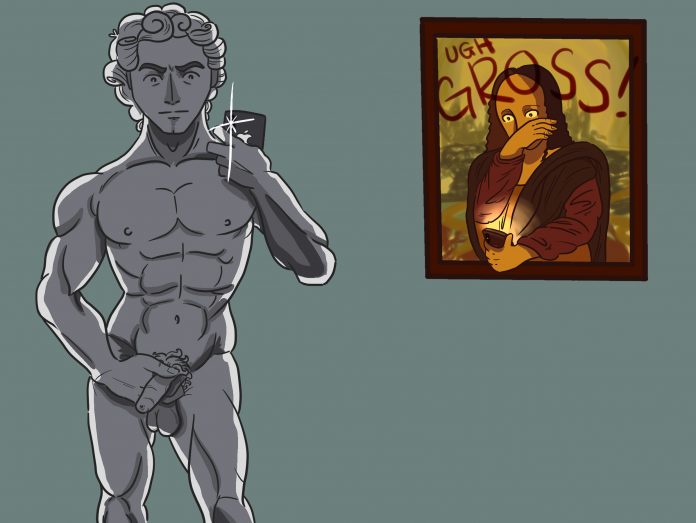
Illustration by Alisha Lee

We each need to spend our free time doing something. Some of us take on hobbies to distract ourselves from modern life, others make fancy dinners, but only the most ambitious and socially oblivious people know the best way to spend time: sending unsolicited photos of their genitals to a friend, classmate, or partner.

Psychologists theorize these wretches of humanity send unattractive photos of these unattractive body parts in hopes of consensual sex. While no evidence of this result appears to exist (outside of questionable posts on Reddit), this is an unsettlingly common hobby in our modern social world. If you have this illogical need to risk losing most of your social circle, you should do your best to make sure your photo and text are of the
highest quality. With these tips, you should be able to maximize your near-zero percentage of success.

For your first shot at improvement, it always helps to make sure your item is clean and presentable before you start. This may be a challenge for you, since you likely gave up on the concept of hygiene many years ago, but it will help your photo be far easier to evaluate and identify. What might shock you is that this can be done for very little cost and effort, as soap and razors are widely available in most stores. Despite the ease, the process itself may also have benefits of better physical health and psychosomatically cleansing the guilt you should rationally feel. Additionally, this will make your penis stand out from the foliage when the recipient of your photo violently removes it and throws it into the woods for you to desperately recollect.

Next, the technology for your heinous act is going to need an upgrade. Phone cameras have advanced a lot over the years, but your decision to take this kind of photo is unprofessional enough as it is. Average camera quality and the Snapchat filters that “make it look sicker” just guarantee the disgusted response that you’re already 99.9% likely to get. If you’re the repulsive kind of person who sends these pictures, you might as well commit to your identity and purchase a higher quality camera and lighting rig specifically for this revolting purpose. This will make the pictures clearer for when your recipient shares them with friends as a serious warning about you, as well as make the photo process much more efficient by having dedicated equipment.

The final touch is the packaging that goes with your unwanted picture — the text with your image to explain its “deeper” meaning. This is where you can put a lot of personal flair, as there are many unique strategies to presenting this unwanted and unwelcome gift. Some monsters try to be direct, asking if the recipient liked what they saw for some ungodly reason. Others will try to restore their non-existent integrity through unconvincing denial, claiming it was a wrong number or that they attached the wrong image. However you choose to dress it up, though, remember that your actions will likely be disliked regardless and there isn’t a single correct answer you can give. If you feel disheartened by the hopelessness of it all, a suggested course of action is to find friends or professionals to help analyze the problems that led you to your lack of respect for other human beings.

 

The Goblin Market: a stellar acrobatic performance

0
The performance was as gymnastic as it was suggestive. (Photo courtesy of Jen Raoult)

During the walk to your seat at the recent production of The Goblin Market you were accompanied by a half-naked man in a goblin mask fingering a cantaloupe. Far from the most sexual use of fruit in the performance, the pre-show to The Goblin Market set the stage for the entire event.

     The performance is an adaptation of Christina Rossetti’s narrative poem published in 1862. The poem follows the story of two sisters, Laura and Lizzie, who give in to the irresistible temptation of the fruit sold at the travelling goblin market. Filled with figurative language and complex metaphors, it wasn’t much of a leap to adapt the poem into an interpretive acrobatic performance.

“A story ripe with fruit-filled sexual tension, passion, and desire.”

     As a narrative circus show, The Goblin Market tells a story of “temptation, sacrifice and eventual salvation,” according to the Cultch’s website.  With acts of trapeze, silks, and even spoken word and music, it was an engaging performance from beginning to end. With only three performers — Rochelle Mangan, Eve Gordon, and Edward Clendon — The Goblin Market was an 85 minute show without an intermission. The sheer acrobatic talent required for such a performance is enough of a reason to see the show. But the performance goes beyond the usual repertoire of circus theatre, and tells a beautiful story in an entirely original way.

     The slogan of the performance, “Eat fruit. Love lust,” is a surprisingly accurate description of the event. A story ripe with fruit-filled sexual tension, passion, and desire, The Goblin Market was well worth the price of the ticket.

     Although there is a small element of spoken word, almost the entire story is told without dialogue of any kind. Instead, it is told through the use of music, visuals projected onto the back wall, and undeniably fantastic acrobatic performances. The Goblin Market is a striking example of how a compelling narrative can be told through movement, as opposed to words.

     As the first half of its Canadian tour, stopping next in Montreal, The Goblin Market was a New Zealand based circus theatre company. The Dust Palace was founded by Eve Gordon and Mike Edward in 2009. Since then The Dust Palace has become the preeminent circus theatre company in New Zealand, and has began performing shows across the world. With the performances She Loves Me and Midnight still in the works, The Dust Palace is sure to continue the success it had with The Goblin Market.

Things you could buy other than tuition

0
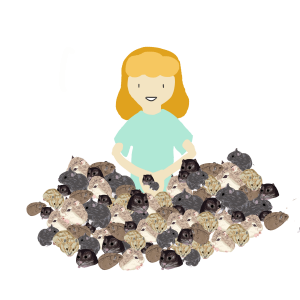
Illustrations by Cora Fu

We just finished midterm season, unless your prof decided that September 17 was halfway through the term. Right now, you’d rather be anywhere but in the library studying or in lecture listening. Money can’t buy you happiness, but it’s buying you sadness and draining all the youth out of you right now — so here are some alternatives.  

If you’re a domestic student taking four first- or second-year classes, none of them being at Beedie or anything wild like that, the SFU budget calculator adds fees for the SFSS, books, your dental plan, and whatever else. Which means that the estimated value of one term, before you pay rent, feed yourself, make bad choices, or drink your sorrows away, is $1,670.24. OK, math is garbage, but now it’s done. And now we know that:

  • You can buy Wonderful Roasted and Salted Pistachios — which will cost you $9.47 for 400 g at Walmart. Instead of spending a semester at SFU, you could buy 70,548.68 g of pistachios.                                                                                                                                                                                                                                                    At PetSmart, a male russian dwarf hamster (the only hamster you really want) goes for $14.99. With one semester of your tuition, you can buy 111 hamsters (technically 111.4, but the good people of PetSmart don’t respond kindly when you ask for a portion of a hamster, so we’ll round it down).



  • If Arizona Green Tea costs 99¢ a can (and it doesn’t when you’re getting ripped off), you would be able to buy yourself 1,687 cans of Arizona Green Tea. Since one can is 23.5 oz, you will be the proud owner of 39,644.5 oz of tea.


  • Apple Earbuds are overrated at $35.00 a pair. Meaning that your tuition for one semester could get you 47 pairs. Or, you could use your tuition to buy 1.26 iPhone X’s — and get a single pair of Apple Earbuds with it “for free.”  
     
  • If university has given you perma-pimples or imbedded worry lines and tear tracks all over your face, you might want to fix that. The price for a 100 vials of botox is $525, which means that you can buy yourself 318 vials of botox with your tuition dollars. Go to Thailand for better prices.                                                                                                                                                                                                                                                                                                              
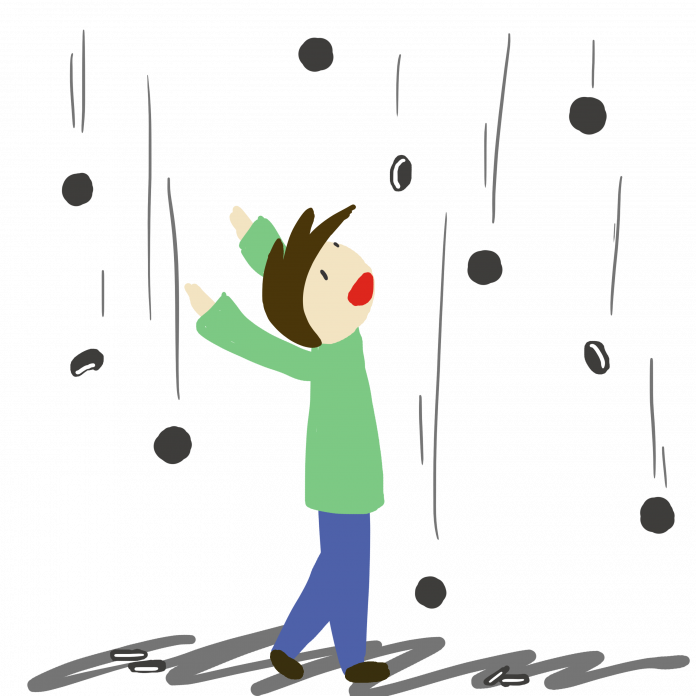
  • If your budget is quadruple digits, then you deserve Double Stuf Oreos. Double Stuf Oreos are $2.97 a pack at Walmart, which means that if you threw away your education, you could get your hands on 562 packs of Oreos. One pack of Double Stuf Oreos includes 30 cookies, which means that you would be buying 16,860 Oreos. Nothing has ever made me want to leave university more than that possibility.


  • If you are an international student, you and three of your international friends pooling your tuition funds together could buy SFU.

SFU cross country have solid GNAC championships, look to improve further

0
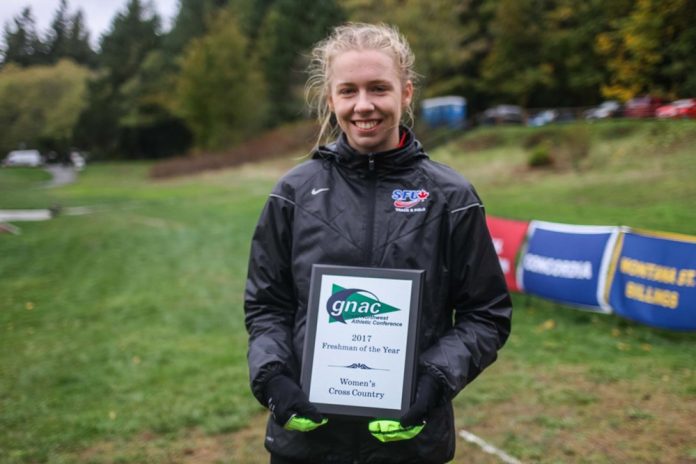
Olivia Willet took the Freshman of the Year Award. (Photo courtesy of SFU Athletics)

For the past two months, SFU’s cross country teams have shown extreme discipline.

Every member of both groups (men and women) has prioritized the team interests over any individual pleasure or decision. The discipline in hard workouts, food choices, and choosing sleep over partying has brought many successful results such as the undefeated streak on the women’s side and the prestigious wins on the men’s.

On October 21 at the Lake Padden course, this trend was interrupted abruptly. Both the women and men’s teams fought with all their hearts from start to end, but didn’t quite get the results they had hoped for.  

Lake Padden Park’s trails are known for being a tough running course to race on. Regardless of how one is feeling on the day of the event, it is always going to be a grind. Alaska Anchorage had a truly amazing race, placing first and taking the GNAC title, and our women, led once again by Julia Howley, placed second.

The outstanding performances of Howley, Miryam Bassett, and Olivia Willett (who took freshman of the year title) were definite highlights, but due to factors beyond their control, Chelsea Ribeiro and Addy Townsend could not compete at their full potential. Ribeiro has been battling illness for weeks and therefore has not been able to train properly, while Townsend faced unexpected breathing issues the day of the race. Because cross country is a team sport, and GNAC championships have such a deep field, if a few runners of a team do not perform at their best on that given day, the overall score is severely affected. Today, the women’s cross country team had to settle for second place. However, these high results, will surely further motivate them at the Regional Championships.

On the men’s side, there is one word to describe the result: frustration. From an insider’s perspective, the men gave everything they had on the course, but unfortunately the goal of winning championships will have to wait at least one more year.

Placing four guys in the top 11 wasn’t enough to take the win for the first time in SFU’s history, which shows the high level of today’s race. Oliver Jorgensen led the team for the second race in a row and placed fourth overall. He was closely followed by Sean Miller, fifth, and Rowan Doherty, seventh.

As a team, the men were third behind Western Oregon and Alaska Anchorage, a solid performance in ordinary circumstances, but truly unfortunate when you take into account that they just needed one more person in the top 20 of the race to have won the title.

Both the men and women have undoubtedly performed well throughout the season. They will be travelling to Monmouth for their most important race of the season at the West Region Championships on Saturday, November 4.  

Mateo De Dalmases is a member of the men’s cross country team.

Facial coverings in Quebec should not be banned

0

Quebec has been making rounds on news platforms worldwide for their Bill 62, which bans the use of face coverings while, as National Post puts it, “receiving provincial and municipal government services.” These “services” include taking public transit and speaking to your child’s elementary school teacher.

It’s ridiculous, frankly. For a province whose historical struggle has been based in protecting its language and culture from being lost, Quebec appears to have missed the memo on what constitutes “assimilation.” Meanwhile, some Canadians defend this ban based on a misguided idea of keeping things equal and maintaining Canadian rights.

But “equality” is, itself, a subjective concept. One “equality” is “everyone must have their faces uncovered in public.” Another is “everyone must be allowed to practice their culture or faith.” In this case, they are not compatible. So who decides which equality is more important to obtain? Or, put another way: why would one definition be chosen over the other?

The plain answer, of course, is that the ruling class of society decides based on their own values. Most recognized Western belief systems do not require a facial covering, so it’s no problem for Quebec to implement a ban. It’s a very fake equality.

Then, there’s the argument that Canadian values must be preserved, and that those who come here need to accept that. Yet this explanation is also lacking. I’m Canadian born and raised, and I know for a fact that, if you see a person walking down the street in a ski mask or a hood or big sunglasses, your first thought is not that that person is committing cultural disrespect.

With the ski mask, there are security concerns, I guess. This is, nominally, what the ban on niqab and other facial coverings is actually addressing.

However, such an explanation is undermined by the extremity of the law. Justice Minister Stéphanie Vallée clarified that on the bus, for example, it isn’t enough to identify yourself upon boarding: you would have to keep your covering removed for the whole ride. This is blatantly unnecessary if speaking from an identification perspective.

Furthermore, the idea that Muslim women unanimously refuse to expose their faces for reasonable identification needs is untrue. As Al Jazeera writer Shelina Janmohamed points out, “Contrary to high-pitched opposition in the media discourse, women who cover their face are happy to lift their veils for identification such as in airports to ensure security.”

There are also those who support the ban under the supposition that facial coverings are not religious, that they are a form of oppression, and that people should be happy to be rid of them. This is a very “white saviour” point of view, which fails to recognize the ability of Muslim women to speak for themselves. Also, as Janmohamed and other Muslim authors are quick to point out, there’s no moral difference between forcing a woman to wear a veil and forcing her not to wear one.

Bill 62 is called “an act to foster adherence to State religious neutrality.” But at the National Assembly, the crucifix still dangles behind the chair of the speaker. It’s clear what the intent of the law actually is, and we can’t allow Quebec to further marginalize their people — any of their people.

World News Beat

0

SPAIN – Catalonia president opposes Spanish bid for direct rule

Catalonian President Carles Puigdemont has voiced his opposition to a plan by the Spanish Prime Minister Mariano Rajoy to invoke an article that will allow for the state to implement direct rule in the autonomous regions. The plan comes after a referendum earlier this month where the majority voted in favour of Catalonian separation, though the vote was deemed unconstitutional by Spanish courts. Invoking Article 155 of the constitution would enable the Spanish government to replace Catalonia’s regional leaders with their own. Concerns have been raised about the implications of using the article, namely a takeover by the Spanish government and the threat to Catalonia’s right to autonomy. 

With files from BBC News.

JAPAN – Japanese prime minister elected, aims to counter North Korean threat

Prime Minister Shinzo Abe was the decisive victor of a recent election held in Japan that resulted in another strong majority for the coalition. The election comes as North Korea becomes increasingly hostile towards the nation, and last month Hokkaido island was just below the above trajectory of two missiles launched from Pyongyang. After winning the election, Abe reaffirmed the imperative to address North Korea’s growing threat to Japanese national security, which would drastically change the country’s pacifist policies. The vote took place despite the onslaught of Typhoon Lan affecting airline and rail services in Japan’s southern areas.  

With files from BBC News.

UNITED STATES – Former presidents offer concerted support at hurricanes fundraiser

Five former American presidents — George W. Bush, his father George H.W. Bush, Jimmy Carter, Bill Clinton, and Barack Obama — appeared at a fundraiser to support people affected by the many hurricanes that have hit the country this year. The funds from the One America Appeal event will help those displaced by hurricanes Harvey, Irma, and Maria which have caused extensive damage in Texas, Florida, Puerto Rico, and the Virgin Islands. The fundraiser has brought in $31 million.

With files from BBC News.

ZIMBABWE – World Health Organization reverses appointment of ambassador Mugabe

Tedros Adhanom Ghebreyesus, the new leader of the World Health Organization, has revoked the decision to make Zimbabwe President Robert Mugabe a goodwill ambassador. The choice attracted criticism when it was revealed last week for many reasons including the president’s alleged poor leadership which critics say compromised Zimbabwe’s health care system, leaving medical staff without salaries and limited access to medical supplies. There are also concerns over human rights abuses by the government and out-of-country medical treatment allegedly sought by the president.

With files from BBC News.

Bad habits to pick up now!

0
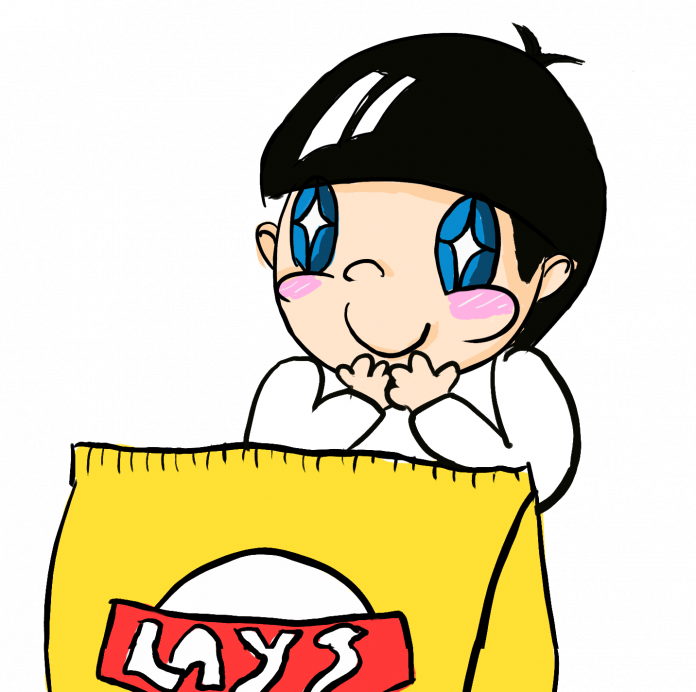
Illustrations by Emma Wu

Want to improve your life? Interested in feeling better both physically and mentally?

Well, good for you! Go find one of the million posts which will tell you how to live like a basic human being, and how to do the things everyone knows but no one actually does — like drinking plenty of water. But if you’re tired of reading that health blog bullshit, The Peak presents the flip side here: four bad habits you can pick up easily, or that you already have because you honestly just don’t care enough to try in life.


1) Look at yourself in the mirror and point out all your flaws

Do this every day. And when I say every day, I mean every day. Let your insecurities run wild . . . it’s easier than trying to subdue them. This is a surefire way to lower your confidence. This doesn’t sound like a good idea, but it’s the best bad habit there is. Firstly, it prevents you from becoming a narcissist and causing the few people who actually like you to start hating you. Secondly, it will make you feel better in the long run. If your confidence is low, then it will actually feel nice when someone compliments how nice your hair looks today (‘cause damn girl it looks fine!) instead of you just already knowing how fabulous you look. It ties in with the whole ego thing; it’s great to avoid being a narcissist — and being self-deprecating is much better!

2) Eat more junk food!

This seems obvious, but I feel like not enough people today appreciate the sacred beauty of a good bag of chips. It’s all about being vegan or gluten-free (not because you’re celiac but because you want to be healthier), which honestly, is a lot of devoted work. We all know junk food tastes better, and it’s way easier to open a bag of chips than to wash and cut a piece of fruit or veg! Why be sad eating a carrot when you can be happy eating chocolate? Why spend $40 on a fancy dinner when you can spend $5 at McDonalds? This is clearly a better option than eating healthy.

3) Never exercise!

Never. . . ever. It’s really just easier not to. It requires too much effort. We all prefer to binge-watch shows on Netflix anyway. Why not just stay at home and do that instead? They say exercise releases endorphins that make you happy but let’s be real, true happiness comes from being a couch potato and watching reruns of Friends until you can quote every single episode.

4) Don’t sleep

You have too much to do, so what’s the point of sleeping anyway? It’s just a waste of time. We’ve all had that feeling of dread which comes with waking up late and having to rushing around to get ready, and apologizing to our boss or professor for our tardiness. Why not just avoid that entire situation by not sleeping? It gives you way more time in the day to wander aimlessly around your house being bored and thinking about why you don’t have any friends.

SFU concludes national energy dialogue with recommendations for decision-makers

0
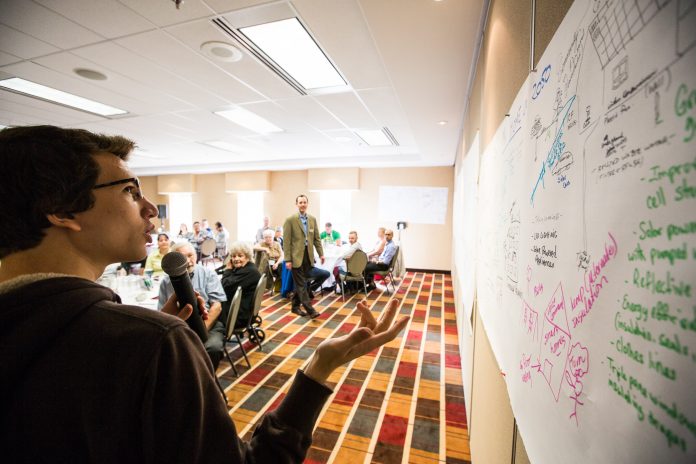
Photo courtesy of the SFU Centre for Dialogue

A series of cross-country citizen dialogues launched by Simon Fraser University wrapped up with a consensus on recommendations for Canadian energy policy earlier this month. The SFU Centre for Dialogue hosted the initiative which sought to encourage discussion between ordinary citizens on the future of energy and advise the federal government on energy policy.

The regional dialogue events were hosted in Vancouver, Calgary, Montreal, Toronto, and Halifax last month to help capture the diversity of Canada. A final national forum aiming to create a set of recommendations for government policy-makers was held in Winnipeg from October 11–13 and attended by 35 participants from the regional dialogues.

The events were funded by the federal Department of Natural Resources Canada, but were designed and facilitated by the SFU Centre for Dialogue.

“Making good policy decisions involves both consulting citizens and convening experts,” said Robin Prest, a program director at the Centre for Dialogue. “Experts provide critical evidence-based information and can help to frame trade-offs for decision-makers. Citizens add to this by bringing their values into the discussion, and by providing a feedback loop for understanding what actions are ultimately in the public interest.”

The final recommendations were presented at the close of the event, but a report on the outcome is forthcoming. However, the organizers have compiled the themes from each of the regional dialogues.

The takeaways from the regional dialogues included a country-wide call to transition to green energy and the vast majority of participants were in support of investing in technologies that would make the transition possible. The participants also discussed how to mitigate the impacts to citizens as the economy shifts and introduce new forms of governance and oversight.

“The outcome will be to produce concrete policy recommendations that will be received by the federal government,” explained Prest. “These dialogues are important because they provide a deeper level of public judgement than conventional public engagement.”

According to a statement by the Canadian Minister of Natural Resources Jim Carr in a press release, the government will take the recommendations into consideration.

“Decision stemming from these discussions will set the course for Canada’s energy future for generations to come,” said Carr. The minister was informed of the outcomes from the regional dialogues and will be briefed on consensus of the national forum when it is released, Prest added.

SFU was chosen to convene the series because of its experience in facilitating such dialogues. The event brought together randomly-recruited citizens with different views on energy to find common solutions, some of which included a drastic refocusing of Canadian approach.

Energy makes up around 6.5% of Canada’s gross domestic product and contributes to 80% of our greenhouse gas emissions, according to federal data. Long-term energy policy will help address issues such as sustainability, affordability, jobs, climate change, and human health, according to Prest.

The final report will likely be released sometime next month.

The power of a poem

1

the pain

taught me how to write

and the writing

taught me how to heal

–Harman Kaur


When asked why she is constantly compelled to put pen to paper, Instagram poetess and fourth-year SFU student Harman Kaur came up with the above poem as a response. “[My writing]’s for me,” she said when The Peak asked her the same question in an interview. “Most of the stuff I write, I write to free myself from all these emotions and any problems I’m having.”

Under the Instagram handle @_harmankaur, Kaur has been posting her poetry since January 2016. She currently has over 32,000 followers and more than 90 posts. The poem above was quoted by Alicia Keys on Twitter, another sign of Kaur’s writing gaining exposure online.


The beginning of the story

Kaur can remember herself writing since she was in the fifth grade, starting with short stories and songs, and gradually settling into poetry and prose as she entered high school. She spoke about wanting to share her poetry long before she actually took the step. “It was 2014 and I was in high school. I was scared of judgement, I didn’t want people to think I was a weirdo,” she laughed.

After posting her work online for just a little over half a year, Kaur’s Instagram account garnered over 10,000 followers by August 2016. Kaur remembered her surprise as her account began gaining more popularity than she’d ever imagined. “The account [initially] just had friends following me, and I expected that support, but I didn’t expect it to blow up like this,” she said. “This was not my expectation or my goal, it was just kind of my public diary.”

The themes that occur throughout Kaur’s work speak to her identity: what it means to be a woman, a Sikh, a child of immigrants. Kaur admitted to being a huge bookworm — with credits to J.K. Rowling’s Harry Potter series — but the more she read and the older she grew, the more she realized how there was no one in her books that was like her.

As she pursued an English major in university, Kaur continued to note the lack of diversity in the work she studied in class. “Shakespeare, Renaissance work, these are stories we’ve been taught over and over again,” she emphasized. “Like OK, they’re great, but I can’t relate.”

Ultimately, the lack of representation for women of colour, Punjabi culture, and her balancing act as a child of immigrants were the factors that pushed Kaur to make her writing public. “There are many specific messages in my work,” she said, “but I’m not trying to be a voice for anybody. I’m trying to inspire others to use their own voices to tell their stories.”


From Abbotsford to the world

As her poetry continues to garner attention across Canada and the world, Kaur finds herself in places she’d never imagined herself — figuratively, but also literally.

During the interview, she could tick off a list of places in Canada and the US she had been invited to come perform at and talk about her poetry and the themes she writes about. “Before this, I had never [set] foot outside of Abbostford or BC,” she recalled. Most recently, she has been invited to New Jersey to speak at a conference at Princeton University in November.

Travelling and making connections, both physically and through social media, has been Kaur’s favourite part about her experience so far. “Being able to connect worldwide with so many different people and creatives who are into different things, like art and videography, that’s beautiful,” she said.


Standing up for standing out

Making her work and herself visible online has also come with drawbacks Kaur hadn’t previously anticipated. It forces her to confront issues such as negative social media attention and sexual harassment. “Sexual harassment, sexual DMs, those are just normalized for [women],” she said. “And people’s first response to me will be ‘hey, why can’t you just block them or erase it from your life?’”

For a brief period earlier this year, Kaur did choose erasure as a coping mechanism: when the negative attention and sexual harassment began significantly affecting her, Kaur deleted all pictures of herself from her Instagram account.

“But then, I thought about how there aren’t enough girls like me out there doing things like this, and how as a young girl I needed someone like me to look up to,” said Kaur, gesturing to herself. “I look different from everyone else, I’m visibly a woman of colour and a woman who practices religion. It’s something I struggled with growing up, but now I’ve really accepted [it]. Clearly not everyone has.”

Ultimately, after the support of her close friends, Kaur ended up bringing the pictures of herself back. She has since been following up on her campaign against discrimination and sexual harassment through poems and online discussions. Her efforts have gained online and local news attention. She was recently interviewed on the matter by OMNI News, a local Punjabi nightly news broadcast.

“Now I’m on this momentum where I don’t think I’m going to stop,” Kaur said about her newfound voice. She’s looking forward to beginning new creative projects that touch upon the topics of sexual harassment, discrimination, and erasure more thoroughly.


Reflecting and looking forward

For her long-term goals, Kaur looks forward to walking across Convocation Mall to receive her Bachelor’s in January 2019. She also hopes to take her writing beyond Instagram and make one of her earliest dreams — writing a book — come true in the next couple of years.

Almost two years after she posted her first poem online, Kaur can note the changes that have occurred in her approach to her writing, and in herself. “Before, I was concerned that my poetry should be relatable, and when I’d write something more personal, I’d always wonder ‘what if someone reading this doesn’t get it?’”

These days, she recognizes herself being more authentic with her work and her identity than she has ever been before. “If you don’t get it, it wasn’t written for you,” she summed up with a line from one of her poems.

Album Reviews

0

don’t smile at me by Billie Eilish

With the release of her new EP, don’t smile at me, Billie Eilish has taken the alternative and pop music industries by storm. Alongside her older brother, the two have written, recorded, and produced each of the tracks on their debut EP. The level of sophistication and insight Eilish conveys through her music is nothing short of outstanding, especially when considering that she’s only fifteen years old.

     In the lyrics of each and every song, Eilish is able to touch on all different teenage emotions, ranging from the experiences of self-hatred, to falling in love and out of love. Her voice is haunting and intriguing while her beats are simple yet unique, allowing her to bring almost an entirely new sound to the realm of pop music. With each time you listen to this EP, your appreciation for every aspect of these songs will only continue to grow. – RB  

Georgica Pond by JOHNNYSWIM

With the release of their sophomore album, Georgica Pond, JOHNNYSWIM provides listeners with an album that isn’t only meant be heard, but also felt. Through this new album, the duo allows their Nashville roots to shine while incorporating sounds from a variety of different genres, including folk, blues, and R&B.

     On the new album, the husband and wife duo invite their listeners to join them in reflecting upon their experiences, from their love to losses. The vulnerability and honesty of their lyrics, accompanied by their clean, powerful vocals allows listeners to engage with the music in an intimate and personal way. Georgica Pond is a breath of fresh air,  a reflection of some of music’s greatest influences, sounds which seem to have been missing in recent times. The album is one that you can find yourself getting lost in, beautiful in every aspect, from beginning to end. – RB   

Black Ken by Lil B

My favourite person on Twitter is back with a new mixtape. If any rapper deserves our attention right now, it’s Lil B.

     The 27-track mixtape, Black Ken, brings back a more classic approach to hip hop, with the addition of lots of experimental stylistic twists. The style Lil B takes on with Black Ken certainly goes with his idea of “based” music, a positive, vibrant approach to rap. With hints of MF Doom, Odd Future, and subtle influences from larger artists like Kanye West, the album pulls in a variety of different styles, and surprises with every single track.

     Lyrically, Lil B addresses a wide range of philosophical and political issues, including the struggles he faced as a young black man in songs like “West Coast,” and exudes confidence about who he as an artist in “Rare Art.” The unapologetic approaches he takes with his lyrics makes it a true masterpiece. His rapping flows smoothly and effortlessly as well, allowing for an easy and enjoyable listening experience. The funky, unique songs on Black Ken are what more mainstream hip hop should be. All I have to say is to add it to your list of classics. – ML

Love What Survives by Mount Kimbie

Mount Kimbie has made some of the most interesting music, maybe ever, and this album is no exception.

     The English duo’s first album since 2013 shows incredible production quality, and an extreme attention to detail. The features on Love What Survives include James Blake, King Krule, and Micachu, making the album super creative and interesting. It holds incredible hooks that keep you listening from one song to the next, and carry an unfathomable amount of uniqueness that will influence countless artists in the future, no doubt. Tracks like “Marilyn” and “We Go Home Together” are complex, impressive, and will be stuck in your head for days.

     The sound of the album itself is a little distorted, and is definitely an acquired taste, but it’s generally pretty coherent across all the tracks. With a darker approach to the electronic sound than their previous music, it outlines a different stylistic approach than they took in the past. With the proper headspace, Love What Survives can serve as one of the most intriguing listening experiences you might have . . . ever. It’s a short one, but absolutely worth it. – ML