Home Blog Page 651

Busty and the Bass’ Alistair Blu discusses origins, inspirations, and the artistic process

1
Alistair Blu (pictured centre, seated) injects rap, synths, and more into the band's sound (Photo courtesy of Greg McCahon)

Busty and the Bass is a Montréal-based band composed of nine members: Scott Bevins (trumpet), Mike McCann (trumpet), Chris Vincent (trombone), Nick Ferraro (alto saxophone and vocals), Louis Stein (guitar), Milo Johnson (bass), Julian Trivers (drums), Eric Haynes (piano, keyboard), and Alistair Blu (keyboards, synths, vocals, and rap). The Peak spoke with Victoria, BC-born Alistair Blu about songwriting, their musical inspirations and how the band got started.

        The members of Busty and the Bass met and started the band while studying music at McGill University, getting their name at “some drunken music frosh orientation,” according to Blu.

“We decided after graduating that we wanted to take it seriously, so then we did . . . That’s where we are now, two years out.”

     Their sound has also gone through several evolutions since they began. “When we started, we were basically playing covers, but instrumentally, because Nick wasn’t really singing at the time, and I wasn’t really singing or rapping at the time, either. That came later,” Blu said. “So we basically played top 40 covers, but in like a funk, brass band way, and some classic stuff like Stevie Wonder and Earth, Wind & Fire. It evolved more in the past couple years with our own songwriting, [and by] just developing our own individual sounds.”

     Blu explained that “obviously it’s a lot different now; if you listen to our album, it doesn’t sound anything like that. I think we’ve come a long way since playing ‘Toxic’ by Britney Spears.”

     Since playing covers, Busty and the Bass has developed their own style. As Blu said, “I mean, it’s kind of funny because each song might be described as having its own genre, some songs are very R&B or soul. Other songs are like hip hop, and other songs are funkier. I think our general sound is like soul music. I personally think that.” While they are clear in their influences, overall it is hard to define them as one single genre.

     Their creative process varies for each track on the album. “Each song [sounds] different, and the process for each song is very different as well,” Blu said. “I mean . . . there [are] nine people in the band so a song can start with somebody just in their bedroom on a keyboard, or on their laptop or something like that, and then they can bring it to the band and then it will develop a bit more. Like “Dance with Someone!!!”, which was three or four of us jamming in a basement, coming up with that bass line, then going home and putting lyrics over it, then the horns coming up with their crazy melodies on top of that. So it’s again a wide variety of different processes.”

     The band worked with producer Neal Pogue on Uncommon Good: “The thing with our album is, even though the processes might vary as the song comes about, once the songwriting was finished, we did bring it to the studio and complete it there . . . I think [that] was really good for us and helps the cohesiveness of our album. I think Neal Pogue brought that out of us a lot. It’s cool to be able to finish the process in a studio.”

     Pogue has also worked with Earth, Wind & Fire and Outkast, who Blu listed as some of the band’s top musical inspirations. He also expanded on his own musical inspirations, “. . . Personally, it’s going to vary a lot from the band, but for me Outkast is big, Nate Dogg is really big for me. [So is] west coast hip hop, Roy Ayers, [and] Thelonious Monk. That’s kind of the foundation of how I learned music, through jazz basically, then I went on from there.”

     When asked to pick between André 3000 and Big Boi of Outkast as musical inspiration, Blu responded, “That’s tough. What I like about André is that he incorporates singing a lot, which is something I do as well, so I would probably pick André just because of that. But that doesn’t take away from Big Boi’s flow at all.” The band is as diverse in its inspirations as it is numerous in members, and as Blu said, these inspirations come out “on a track-by-track basis.”

     Being from the west coast of BC has an influence on Blu’s personal music, “The west coast sound, I mean, it’s not like a BC sound, but growing up I think us wanna-be west coasters took a lot from Southern California, or I did at least. Like Nate Dogg and Dr. Dre and all those guys. Just G-funk in general, that’s my biggest go-to in terms of inspiration.”

     Blu provided advice for any student that wants to pursue a serious career in music, “I would say don’t pigeonhole yourself into what you’re comfortable with. Take risks . . . you’re always going to [have] to step outside the box. For us, we all were jazz musicians and then we started coming out of the shell and singing, and I did the same as a rapper, and now as a singer as well. I think it helped a lot not having to strictly play jazz music.”

Busty and the Bass has clearly taken their own advice; they are a band that is hard to pigeonhole.

     When asked where he sees the band in five years, Blu responded, “I don’t know if we’ll be in Montréal or not, but I hope that we will be continuously touring and it would be great to tour in Asia because we haven’t done that yet. Also, the southern hemisphere would be great, and I hope that we will be continuously making albums.”

     Released by Indica Records, you can listen to Uncommon Good on iTunes, Spotify, and SoundCloud. Busty and the Bass has also released several music videos on their YouTube channel.

http://https://open.spotify.com/album/7ox4NVNRBCuZBEDnYU9rQ1

Canzine returns to Vancouver with art, pizza, and witchcraft

0
(Image courtesy of Canzine)

Two hours before the doors to Canzine are opened to the public, vendors are bustling about and choosing their tables. The woman beside me is arranging her seaweed-inspired zines made from chiffon fabric. Another vendor nearby is displaying pins that feature her ballpoint pen art. Vancouver’s second-biggest independent arts fair seems to be setting up for another successful year.

     Taking place at SFU’s Goldcorp Centre for the Arts on Sunday, November 5, Canzine Vancouver was one of four Canzine events that took place throughout Canada this year. Though its main focus is on zines (small, self-published booklets) vendors brought along a variety of other wares such as charms, stickers, and tote bags.

     “I think my favourite part about Canzine is how accessible it is,” said Max D’Ambrosio, a vendor at this year’s zine fair. “A lot of people come here with a variety of content, and it’s very casual in the way everyone’s doing their own thing.”

     At around 1 p.m., people started drifting in and engaging with the artists at their tables. There was definitely a lot of ground to cover this year with over 100 vendors spread throughout the building. It was a comfortable atmosphere, and people took their time with each vendor, asking them about their art and zines.

     Aamba Chavis, an artist at Canzine, noted that the setting was perfect for vendors to interact with each other. “People can get inspiration from each other,” she said. “Artists can help people develop their art styles, while also developing their own.”

“Events like Canzine are important to recognize artists who aren’t usually recognized, and they help artists get paid for their hard work,” she added.

     Most artists who come to Canzine are usually completely independent from a publishing house, usually replicating their works with a photocopier or by hand. By doing this, art can be priced in a way that’s accessible to almost anyone. Zine trades are also common among vendors at zine festivals like this one.

     Later in the day, a panel on feminism and witchcraft was followed by a pizza party. Artists drew a slice of pizza each and taped them together on the wall to form a collaborative art piece.

     As the last of Canzine wrapped up, a few stragglers came by to catch the tail-end of the festival. Artists who shared tables exchanged contact information and zines, promising to meet up at the next festival.

     Though only six hours long, Canzine Vancouver was undoubtedly an important fair for the artists present. “Events like Canzine keep the cycle of culture going, with people absorbing art and outputting art,” commented D’Ambrosio. “One problem we have now is that it’s too easy for people to stay in their bubble, so coming out to events like these really help people to connect.”


Natasha Tar was a vendor at this year’s Canzine Vancouver.

SFU consults student societies about proposed tuition increase

2
The university has been raising tuition in recent years as provincial funding decreases.

Simon Fraser University is proposing another increase in student tuition and fees come fall 2018.

The administration held a student consultation on October 27 regarding the university’s budget for the 2018–19 fiscal year. According to the budget proposal, there will be a general fee increase of two per cent on all tuition and student fees, with an additional two per cent increase specifically for international undergraduate students.

“For a number of years, we’ve had our domestic tuition levels capped at a two per cent increase level,” said Martin Pochurko, vice-president of finance. “This year is no different.”

The university has been raising undergraduate tuition by two per cent each year since 2005 when the provincial government placed a cap on increases for domestic students. This year, the tuition increase for existing international students was four per cent, but new incoming international students saw a 10 per cent increase over the previous year.

According to vice-president academic Peter Keller, SFU and many other post-secondary institutions in the province are becoming more reliant on student tuition for their revenue. The university’s revenue from tuition amounted to 36 per cent, while the provincial government contributed 31 per cent in funding, according to the 2017 annual financial report.

Alison Blair, associate vice-president of finance, explained that it is necessary to implement the tuition increase to balance the university’s budget, during an interview with The Peak.

The price of scientific equipment used at the institution has increased exponentially over the years, and library purchases in US dollars have added extra costs for the university, explained Blair.

Blair also clarified that international students will see higher tuition rates in the coming year because the university does not receive subsidies for them by the provincial government and their families have not contributed taxes towards the university infrastructure.

However, the university will add more support and services for international students by allocating 25 per cent of the “international undergraduate tuition revenue beyond the general fee increase,” as outlined in its latest proposal.

According to Blair, the university has increased mental health and counselling services for international students as well as increased advising and co-op services, and engagement programming.

“Generally, over the past five years, from 2013–14 to 2017–18, we’ve received approximately $5.8 million from international student tuition and 60 per cent of that funding would go to student awards,” she said, regarding the portion of revenue allocated to student support.  

The fee increases, however, will not double the general fee increase over the course of five years after a student is admitted to the university.

“If we were to increase international student [tuition], say in [2019] . . . hypothetically . . . those new students coming in, brand new students, would be the ones that [see] the increase of the fee. [International] students already in the system would be grandfathered at four per cent,” explained Blair.

Hangue Kim, president of the Simon Fraser Student Society, asked university administrators during the consultation session about how current engagement expenditures address the non-academic events that are happening on campus. Pochurko responded by saying, “There is currently a project called student engagement which [Peter Keller] is overseeing and we have significant financial resources put into that project.”  

Moreover, Kim asked about the university’s overall contribution to mental health, to which Pochurko replied, “It’s certainly a priority for the university.”

The Graduate Student Society director of university relations Chantal Turpin also asked about the current ratio of faculty to graduate students because the challenges of finding a suitable supervisor for graduate students can delay the completion of their degrees.

Keller responded by noting that the ratio can vary between academic units depending on resources available.

“I think we shouldn’t assume that there’s a magic number of [graduate students],” he said, adding that there are many of factors to consider around the faculty-student ratio.

SFU departments will be able to enter their budgets into the system starting on November 22, 2017 until January 15, 2018. The university will present the final budget to the Board of Governors in the spring.

SFU needs to think harder about student nutrition

0
"If our school does not make healthy dieting a priority issue, then neither will we."

After a long day of lectures and tutorials, I’m about to collapse from mental exhaustion, but my evening agenda still includes a 1,500 word essay to revise, a project to edit, and two papers to read. “Ramen it is!” I yell, pulling a Hail Mary for the sake of hunger. I rip open a bag of instant noodles from my Costco-sized collection. I grab the “vegetable” flavoured package in a desperate attempt to make a better choice, and crack open a Redbull in preparation for another all-nighter.

(Fact: a recent study found that more than half of American post-secondary students are in danger of being malnourished as a result of poor eating habits.)

Why would I think to play out this evening any differently? I know very well that every student to my left, and most likely to my right, are making the same sacrifice in order to maintain their GPA.

We can stomach undercooked ramen and canned spaghetti, but never a low GPA. University life is a dog-eat-dog world where we students are willing to sacrifice our own health to meet the demands of our classes. Eating healthy is not on the syllabus.

(Fact: a Health Marketing Quarterly study shows that increased consumption of energy-dense, low-fibre, high-fat foods are associated with “a higher perception of stress” and lower academic performance.)

It’s no secret that we put our health on the backburner in university. In fact, it’s a widely accepted mentality, so standard that we even joke about it. We laugh about our bottomless supply of instant noodles and our inevitable “freshman 15.” Yet, no one stops to acknowledge the serious health implications.

There’s an elephant in the dining hall, and what is my university — SFU —  doing to address it?

A large focus lately has been on “sustainable dining” which rewards restaurants bronze, silver, or gold certified decals based on their level of sustainable service: things like switching to reusable sugar containers and milk bottles.

But where’s the gold medal for eliminating added sugars all together? Or how about a silver for adding an extra serving of greens? If there’s a reward for environmental sustainability, then where’s the reward for keeping people healthy?

(Fact: a recent study asserts that the main reason for poor eating habits among college students is due to “a low level of nutrition knowledge,” based on data from two 1984 studies on the topic. The study also mentions our “reliance on sources that provide inadequate information on nutrition,” referencing data from a 1987 study on how teenagers and young adults think about vitamin supplements.)

SFU’s Healthy Campus Community program encourages healthy campus initiatives that tackle the overall health of students. However, between the three primary focuses seen on their homepage — “Well-being in learning environment,” “Physical Spaces,” and “Recognizing Champions,” none focussed very strongly on the nutritional aspect.

I am not proposing that we move our attention away from tackling issues concerning the social and mental well-being of students, such as student loneliness or depression, but how about throwing some food for thought onto the table?

(Fact: a study done by Australian Healthy Neighborhoods found that adolescents with low-quality junk food diets are 79 per cent more likely to suffer from depression. Another study found that diets high in trans fats found in processed foods raise the risk of depression by 42 per cent.)

Healthier eating helps to not only tackle the physical, long-term health of us students, but the largely discussed mental health issues as well.

SFU’s state-of-the-art dining hall was acknowledged for its positive traits, making it easy of students to relax, work, charge their electronics, and print documents, among other things. The only mention of actual nutrition is in the SFU Dining Hall 101 video: a tour of “Canada’s first, 24/7, all-you-care-to-eat dining hall” which consists of an SFU rep flaunting the convenience and food variety, loading up his plate with a burger, pasta, sushi, and pizza. There wasn’t a vegetable in sight.

(Fact: according to a study in the International Journal of Epidemiology, eating up to 10 portions of fruit and veggies a day will reduce the chance of heart attack, stroke, cancer, and early death.)

The only takeaway I got from this “Healthy Campus Community” initiative was that my midterm, all-nighter, binge-snacking just got a whole lot easier.

The stigma needs to change. “Healthy Campus Community” should mean stronger access to fresh produce and plates half full with veggies. Students should be surrounded with options for a fresh salad, not a fresh slice. The “ramen diet” and “freshman 15” should be a campus-wide fear, not a campus-wide joke. SFU needs to turn up the volume on this conversation and make healthy eating a priority for the lives of students.

(If our school does not make healthy dieting a priority issue, then neither will we.)

Men’s soccer defeat Seattle Pacific 2–0 to clinch GNAC championship

0
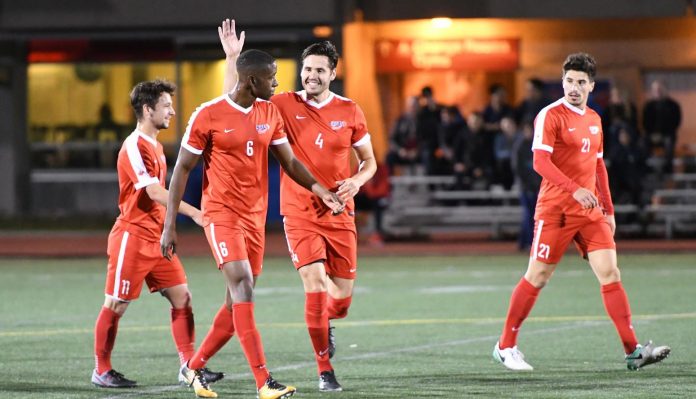
With the championship, the Clan earn an automatic birth to the NCAA National Tournament. (Photo courtesy of SFU Athletics)

Last season saw SFU clinch their first Great Northwest Athletic Conference (GNAC) in two seasons. At the beginning of this current season, the Clan were unanimous favourites to repeat as GNAC champions. After a less-than-ideal road trip last week which saw SFU drop five of a possible six points in Montana and Idaho, the Clan found themselves in second place behind rivals Seattle Pacific.

In order for the Clan to repeat as champions, they would need to beat Western Washington on Thursday night and tie or win against Seattle Pacific on Saturday. Flash forward to Thursday night, and the game is forced to be postponed due to snow atop Burnaby Mountain. The game is to be rescheduled to Sunday. Therefore, SFU could win the GNAC title with a winner-take-all match on Saturday night between first place Seattle Pacific and second place SFU on Terry Fox Field.

Two notable absentees for SFU are the Jones brothers, who missed the match due to non-serious injuries. Both players will be looking to be back on the pitch in the next few weeks.

On a freezing cold night on Burnaby Mountain with snow surrounding the field, the contest began slowly and fairly even as both teams shared possession and no real chances at goal for either side. The Clan struck first in the eleventh minute as defenders Magnus Kristensen and Michael North combined down the left flank and North found forward Mamadi Camara inside the box where he made no mistake and buried the ball from close distance.

The score would stay that way right up until halftime. As the second half began, the Falcons came out on the front foot, dominating possession and chances. The Clan would eventually find their legs and begin to create chances of their own. As the teams would trade chances back and forth, it was eventually the Clan who would strike again as Camara would get his second of the contest in the 89th minute to seal the win for the Clan. SFU goalkeeper Miguel Hof was forced into action several times throughout the contest, racking up eight saves on road to a shutout.  

SFU would go on to win the contest 2–0, meaning they are in fact the 2017 GNAC champions.

With the title clinched, SFU receives an automatic birth into the NCAA National Tournament. The selection show is set to go down on Monday, November 6. Last season, SFU was unable to host their playoff game due to them being the only Canadian team in the NCAA. Having to play their match away from home proved to be detrimental for the Clan. Let’s hope for this year to be different.

Secret study spots for when all the other ones are taken!

0
Illustration by Carolyn Yip

Have you ever taken unreliable transit to campus on a day you didn’t have classes in hopes of having a productive study session — only to walk around aimlessly for thirty minutes? YA, ME TOO!!! Most of the people using the campus’ spaces don’t even go here! She doesn’t even go here!

To the parents with children sitting in our study spots, I totally get that you want to expose your kids to education at an early age but don’t you think three years old is a little too early? Your kid does not give a single fuck that you’ve brought them to this institution of higher learning, because guess what? They’re too enamoured by the LOUD and annoying ass choo-choo train you bought him.

Same goes for students from other schools, because even though SFU students are flattered that you’re trekking to any of our three campuses to study . . . you don’t pay a nickel of tuition here. We totally feel bad for your lousy study spaces, but go to a Starbucks or something instead.

Well, since we’ve established that all the good spaces are taken up by leeches, where are you to go? Allow me to share a list of study spaces for when you’re feeling extra desperate.


  • The avocado

OK, I know you’re probably already disgusted by this suggestion, but hear me out. It’s currently too rainy for anyone to bother having sex in it because they’ll probably catch hypothermia or at least end up bedridden with the flu. Obviously don’t study in it when it’s wet, but on a rare sunny day, it’s semi-decent. There’s a smooth rounded groove for your butt to rest in, and a mirror to occasionally check yourself out in — and you can be sure no one will bother you.


  • Your one night stand’s dorm room

You met this attractive person in class who’s down for an evening of Netflix and chill. You go back to their dorm room and have sex so quiet it could end up in the Guinness Book of World Records. Halfway through the night, you suddenly remember a quiz you have in the morning. To avoid bumping into the strange people who roam the halls at four in the morning, you can just study at this person’s desk. It’s spacious and cozy, and the chances of them waking up is slim.


  • Inside the Dollarama at Harbour Centre

Usually the little kids and post-secondary leeches avoid the downtown campus. If the unthinkable does happen, though, head downstairs to the mall. Make a beeline for the Dollarama. Don’t even think about studying at the food court unless you have an inexplicable interest for prison, because you will end up killing someone. The Dollarama is pretty quiet so you might actually get some work done. The aisles are spacious enough for sprawling out, annnnnd you can eat knockoff Bounty bars for 82 cents. What could be better?


  • In the single-person bathrooms

If you can brave the stench in the single-person bathrooms, then it’s the perfect place to study. Lock the door, flush the toilet, and turn on the tap every once in awhile, and you’re set! You can one hundred per cent crank out a paper in there with no one knocking on the door. Just remember, wash your hands thoroughly before you leave. Ain’t nobody wants to be catch rare skin diseases.

Rate my professors: Peak edition

0

Mary-Ellen Kelm
History

Whether you’re taking a history class because it’s your major or because you need to fill in a breadth requirement, try to take one with Dr. Mary-Ellen Kelm. She is the Canadian Research Chair for the history department, but you can tell from the first ten minutes of lecture that she isn’t just a professor who teaches; she is also a teacher.  

Even if you think Canadian history is boring and you know it all, she’ll prove you wrong. I have never been taught Canadian history with such a focused and careful approach on Indigenous history.

Her lectures are well-prepared and constructed, and she is fun and easy to listen to. She focuses on your understanding of concepts, events, and causalities rather than suffocating you with facts and dates which can be a problem with a lot of history profs.  

She makes sure to answer questions in class, to review lectures from the previous week, and to explain not only the expectations of projects you’re writing, but also the point of them. She is an incredibly interesting and approachable professor, in person and in email.

I don’t think I’ll have another professor who brings dried apple chips and Indigenous art to class, or who simulates the Acadian deportation by making all the men in the class get up and stand in the front of the class. She’s amazing. – GM      


Paul Budra
English

The first English class I took with Dr. Paul Budra, there was an offensively hot guy in my lecture. After taking his class, I would have Budra give a speech at our wedding.

Budra has cool English teacher realness. Each lecture with him is part education, part John Oliver-esque sass, and all parts enjoyable. His slides are generously detailed and easy to understand, so much so that you kind of consider sacrificing your first-born because the notes will save you for your final.

The man is passionate about Shakespeare (and can give a hell of a reading of Hamlet), is outrageously intelligent, and has a pretty sharp wit. I honestly think he could make any casual class skipper renounce their ways and start looking forward to every single one of his lectures.

In all seriousness, Budra is a hilarious, articulate, and compelling professor. Definitely a prof you have to take before you graduate. – WY


Andrew Perkins
Geography

Perkins is a truly wonderful man and a pleasure to learn from; I’m legitimately not kidding. While his classes are incredibly text-heavy, his sheer passion for the material will surely rub off on any student.  

His slides are mostly pictures, but if you pay attention to his lectures it’s not difficult to keep up. He makes classes fun to attend, uses students for demonstrations, welcomes questions in class with enthusiasm, and highlights career opportunities in fields as the course material is covered. – OR


Daniel Ahadi
Communication

Ahadi’s tests are seriously tough (no matter how much he says they aren’t), but I really liked his teaching style. He’s one of the most organized professors I’ve ever had and his Canvas page is really easy to navigate.

His slides are very sparse, though, since he does most of his talking in class. It’s hard to get by in his class just by looking through them, so go to lecture.

One thing that’s kind of annoying is the way he makes people participate in class. He isn’t above using long awkward silences to force people (usually the same five people) to raise their hands.

And — fair warning — he has a very soothing voice. Try not to fall asleep. –MC


Richard Lockhart
Statistics

Richard Lockhart: good stats prof, great guy, weird classroom habits.

Imagine a prof who teaches so hard he forgets to go to his next class or is so chill that no one raises their hands, they merely yell at him to get attention. Sound amazing? It is, but this comes at a price.

He sets his phone’s alarm to go off so he won’t forget that class does end. You can be scribbling your notes, then weird 1970s UFO movie music starts blaring and you lose your train of thought.

Not to worry, the prof uploads everything: his slides, everything he writes in class, and he gets IT to record his lectures so you can serenade yourself at home with Canada’s version of the BBC or UK’s version of the CBC . . . it’s hard to tell.

If that wasn’t enough, he even writes out summary pages for each lecture and provides solution guides to assignments detailing answers and how he marked the question. He also provides many practice exams (he’s made one each year dating back to before I was born).

Now here’s the bad part; his handwriting is so terrible he even confuses himself. Students can spend the whole lecture confused about examples because his z’s are written like 8’s and his 8’s written like α’s. And, Lockhart, please stop taking off your glasses. You know you’re going to misplace them at break. Also, he has a habit of peeling off the wiring insulation on the lecture microphone when he thinks it doesn’t work (it does work, I swear).

To sum it up: take his class, learn lots, be entertained. – NT


Rodney Hunt
Health Sciences

I seriously recommend you take Hunt’s courses if you are a major in health sciences, or need an elective. The reason he makes such a good professor is because he is attentive to students’ needs and learning abilities. Though his classes usually have 100 or more people (especially in the 100/200 levels), he pays attention to how the student body as a whole is adjusting to his class outline, and changes things accordingly.

He also clearly cares about you as a person — which is in such short supply at our university, in my opinion. In terms of course content, he keeps his readings and information up to date. He isn’t going to bore you with 400 pages a week that aren’t going to matter later; it’s going to be relevant. His assignments are straightforward and fair, and he comes to class prepared.

A couple downsides: it’s not a horrible quality, but Hunt has a really calm voice. I wouldn’t recommend nighttime classes at the end of a long day or you might doze off. Another thing is that he is easily persuaded by students to comply to things that they want, but it’s because he obviously cares. I think a lot of people probably take advantage of how nice he is (so don’t do that).

I highly suggest you take a class with him while you’re at SFU. You won’t regret it! – ML


Martin Davidson
Psychology

Have you ever had a professor where you’re like, “Wow, this would be a fun person to hang out and go for drinks with”? Well, that’s Martin Davidson.

Davidson teaches developmental psychopathology — basically dealing with young children and teenagers and their difficulties. Davidson is also a child psychologist, so he has real life stories that help you understand all of the topics he’s covering. It might also give you a chuckle because, let’s face it, kids do funny things.

Davidson is one of my all-time favourite teachers at SFU and I always recommend his class to anyone in psychology. He starts each class by playing music which I think is super cool and it put me in a good mood even though my class was at 9:30 a.m. on a Monday. I HATE mornings, but I actually looked forward to getting up just for his class.

He’s funny, makes the content easy to understand, and doesn’t treat you like an idiot undergrad which some professors do from time to time. Also, we got to write a paper on the movie Where The Wild Things Are which is definitely the most fun I’ve had writing in psychology (usually the essays are boring as hell).

Only downfall is he only teaches the one course so you can only have him once. If you do decide to take his course (which I suggest you do), make sure you enjoy it while you can! – JB


Gary Teeple
Sociology

Teeple is nice enough, but he’s a very one-sided professor. The guy is obsessed with private property. Name anything in the world, any concept, and Teeple will tell you it exists because of private property.

His lectures can be kind of boring. He spends forever on one slide and then quickly flips through the rest of the slides because he feels like he already covered them (he hasn’t). His slides are very text-heavy and he doesn’t post them, so if you’re a slow typer, you’re in trouble.

The one upside was I found he was a really easy marker — even if it did take a while for him to give assignments back. – JP

Album Reviews

Visions of a Life by Wolf Alice

Every once in awhile, a female-fronted, guitar-prominent rock band will burst onto the scene and enchant the entire music community with their talent. Wolf Alice is one of those bands. Their debut album, My Love is Cool came out in 2015, and was a perfect mix of Cobain-era grunge and indie rock. The sound on their sophomore LP Visions of a Life shifts away from grunge, as they never enjoyed that label. Instead, we’re offered eleven tracks of perfect indie rock tunes.

Ellie (lead vocals and rhythm guitar) experiments with spoken word verses that blend in effortlessly with the melody. This can be found on songs like “Don’t Delete the Kisses” (which is the perfect song for wooing your crush with), and “Sky Musings.” The band also dabbles in punk with “Yuk Foo,” and post-rock on the eight-minute title track “Visions of a Life.” All in all, if you’re into polished, heavy indie rock, I strongly suggest you give this band a listen. – EZ

Super Slimey by Young Thug and Future

For an album that incited lofty expectations and had a supposed recipe for greatness, Young Thug and Future’s album Super Slimey was underwhelming. The album artwork is a perfect way of mixing Future and Young Thug: the background is a white marble design, which links to most of Future’s designs, whereas the snake and album name ties in with Young Thug’s theme of slime. The beats are agreeable, but are way more representative of Future’s style. Tracks such as “No Cap” and “Drip on Me” seem like Future intended them for his last album HNDRXX but didn’t go through with them. The eleventh track “Killed Before” is entirely for Young Thug; the beats are in character for him and are pure greatness.  Each song on this album only shows off one artist or the other. There should have been more fluidity in combining the unique qualities of both artists in each song, leading me to think this project isn’t truly complete. Hopefully any future collaborations between the two artists showcase both of their styles more. – RR

IWASVERYBAD by IDK

IDK is one of the DC/Maryland/Virginia region’s biggest rising stars, three albums deep into an impressive career and only getting better with age. His last two albums were both introspective, narrative-heavy projects, but IWASVERYBAD is IDK’s most personal work yet, taking a close look back at the rapper’s childhood. The album deals mostly with his relationship with his mother: as a child, their lack of closeness drove him to look for love in the streets, engaging in violence and promiscuity later in life that eventually landed him in jail. It was this event, however, and the way his mother supported him when no one else did, that mended their tumultuous relationship. By the end of the album, her passing is eulogized in harrowing, yet profoundly beautiful terms: “where you get them wings from, pretty?” There are shades of early Kanye and good kid-era Kendrick throughout the album; IDK wears his influences clearly on his sleeve, but none of that takes away from the personal nature of this remarkable project. – NM

ken by Destroyer

Destroyer isn’t just one of the best artists to come out of Vancouver, he’s one of the best artists indie rock has to offer. Frontman Dan Bejar has led a career that spans more than twenty years (including work as part of The New Pornographers). His band Destroyer is a frequently experimental art project, constantly evolving across various iterations of the rock genre. Every album is unique, from the jazz-influenced Kaputt to the free-form explorations of This Night. With ken, Destroyer’s twelfth album, he’s decided to explore the synth-driven style of ‘80s artists like New Order and the Cure. Bejar’s writing is as dense and apocalyptic as ever, alternating between tender warnings, whimsical musings, and repetitive maxims that can mean anything depending on your state of mind. He’s never been a particularly easy artist to decipher, but there’s something about the mystical soundscapes and endlessly evocative songwriting that elevates him from indie rock philosopher to being one of the most important artists of the last twenty years. – NM

The Vancouver International Film Festival in review

0
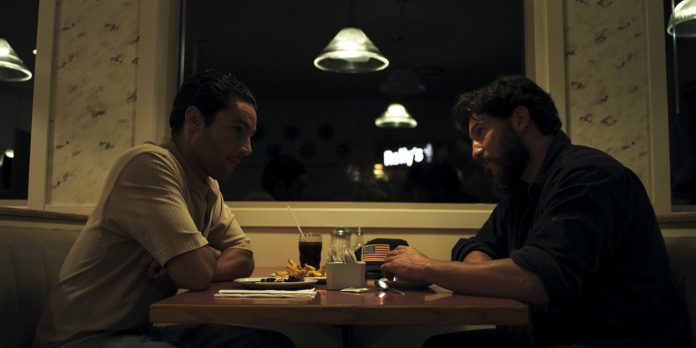
Jon Bernthal stars in this small-town Alaska Neo-Noir. (Photo courtesy of VIFF)

Sweet Virginia – directed by Jamie M. Dagg

Three men play Texas Hold ‘em in a bar after hours. A stone-faced man sits at a booth and demands the early bird special after being told that the bar is closed. He returns moments later and guns down all three men. The problem is, he was only supposed to kill one of those men. Filmed in Hope, BC, (standing in for a small-town in Alaska) this crime drama is a tension-filled film that opens with a bang and slowly burns toward a predictable end.  

     With plenty of infidelity, secrets, and betrayal, director Jamie M. Dagg’s film mostly focuses on Sam, a former rodeo star (the wonderful, brooding Jon Bernthal of The Walking Dead). At first, the switches in perspective are confusing as it seems the protagonist will be the killer-for-hire, Elwood (Christopher Abbott), although he does still figure prominently as he is staying at Sam’s motel, the Sweet Virginia. Lila (Imogen Poots) who hired Elwood is a classic femme fatale, and Bernadette (Rosemarie DeWitt) is Sam’s vulnerable love interest.

An enjoyable neo-noir, Sweet Virginia is a wonderful blend of suspense and action. – TP   

The Florida Project – directed by Sean Baker

The Florida Project is a poignant, sympathetic, and introspective film surrounding the lives of a family and people living on the outskirts of a Disneyland in modern Orlando.

     The film is a slow soak in the lives of the residents at a motel in Florida. It centres around a young, rambunctious child, Moonee (Brooklynn Prince), along with her short-tempered, free-spirited mother, Halley (Bria Vinaite). The two take an extended stay in a motel (known as the Magic Castle) run by Bobby (Willem Dafoe), the manager. Moonee, along with the rest of the residents and children of the motel, create a wonderful juxtaposition between a childhood fantasy world and the struggles that many children face today. In addition to the moving story, the cinematography is colourful and arresting. Shots often go moment-to-moment through different characters’ lives, with each seamlessly blending into one another.

     The drama and comedy balance each other out with the shenanigans of Moonee and her ragtag team, the ever-reluctant Bobby, and the zany motel residents. The bond between Moonee and Halley is especially touching and leads to intimate moments as they weather problem after problem together.

     By far what is most notable about Baker’s film is that it paints a picture of hardship without turning it into what some people call ‘poverty porn.’ Baker, along with the help of a stellar cast, creates an honest story of the impoverished, emphasizing not only their status, but the lives they lead as people. – WY

Lady Bird – directed by Greta Gerwig

With razor-sharp mother-daughter dialogue and a stunning performance from Saorise Ronan as Christine “Lady Bird” McPherson, this is a sharp-witted coming-of-age story set in 2002 Sacramento. Christine is in her final year at a Catholic high school and dreaming of college on the East Coast. She yearns to escape the “Midwest of California” and her daily battles with her mother, but she eventually realizes that home is something you appreciate much more once you leave.  

     Part ode to her hometown and part loving portrait of growing up in a small town in the early 2000s, writer-director Greta Gerwig crafts a nuanced tale of teenage angst. Quirky Christine and her best friend, Julie (Beanie Feldstein), spend their days binging on communion crackers, signing up for the school musical, and developing crushes on students and teachers. Lady Bird’s overworked mom (Laurie Metcalf) doesn’t think she has what it takes to get into an East Coast school and is concerned about the cost, but Christine is determined to go her own way.

     There are plenty of unexpected, dark, and funny scenes. Life seems pretty stale in Christine’s sleepy town, but she is an inspiring character who chases her dreams and does things her own way in spite of everyone else. – TP

Loving Vincent – directed by Dorota Kobiela and Hugh Welchman

This film touts itself as “the world’s first fully painted feature” film. A biopic about the life and death of Vincent van Gogh, Loving Vincent is a visually breathtaking film that’s weakened by lacklustre writing.

     The film takes place a year after the death of Vincent (Robert Gulaczyk). A young Armand Roulin (played by a charming and surly Douglas Booth) is given the task of travelling to France to deliver Vincent’s last letter to his brother, Theo. Armand embarks on a journey, interviewing people Vincent has painted in an effort to complete his task and understand the events that led to his demise.

     Right off the bat, the film is nothing short of a masterpiece in motion, showcasing the beauty of van Gogh’s iconic Impressionistic style. However, due to the large cast size, characters had little time to experience a full character arc, resulting in (literally) two-dimensional performances. A few exceptional performances include Game of Thrones’ Jerome Flynn, who gave a stirring performance as the remorseful Dr. Gachet, and the hilarious Bill Thomas as the manic Dr. Mazery.

     By far the weakest aspect of the film’s writing is its foray into a mysterious, whodunnit story as Armand interviews character after character about Vincent. It felt less like a film, and more like a detective role-playing game with each interview resulting in a flashback, similar to a cut scene out of a video game.

     Overall, what unfolds is a collaborative portrait of Vincent van Gogh, painted in his style. While beautiful, and at times quite stirring, it ultimately falls flat as a story. – WY

What to expect from a new Simon Fraser women’s basketball team

0
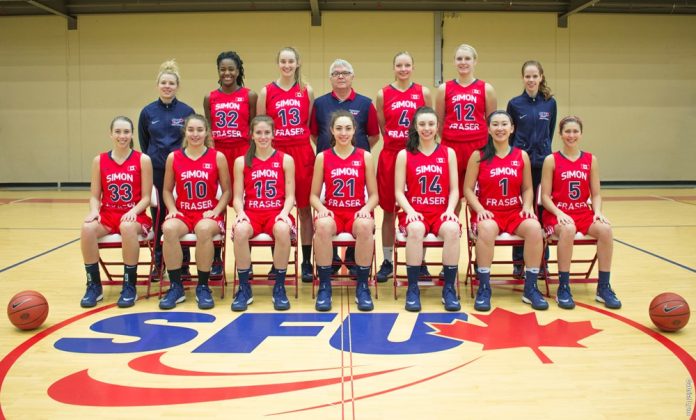
The Clan will be looking to make it back into the regional championships this season. (Photo courtesy of SFU Athletics)

Last season saw Simon Fraser finish third in the Great Northwest Athletic Conference (GNAC) with a record of 15–5, their best season since they finished second place in 2012–13. Last season saw point guard Ellen Kett (12.2 ppg, 7.7 apg) and forward Meg Wilson (14.2 ppg, 5.3 rpg) lead the Clan to the GNAC quarter finals, where SFU lost to Central Washington 58–57 in a game where Wilson was injured. But last season was these two players’ senior season for the Clan, and they will no longer be able to suit up for the team.

Combine this with the likelihood that last season’s starting forward Ozi Nwabuko will miss this season due to injury, and this looks like a opportunity for other players to step up. After playing with an injured leg towards the end of last season, Nwabuko got it checked out in July. What ensued was a three-week recovery that turned into a six-and-a-half month recovery, effectively ending her 2017–18 season. “We were ready to lose Ellen, we were ready to lose Meg, we weren’t really ready to lose Ozi,” said head coach Bruce Langford when asked what this loss will mean to the team.

Add in losses to last season’s starters Elisa Homer and Rachel Fradgley, and this season looks like a beginning of new things for the Simon Fraser women’s basketball team.

”It’s a new team in the sense that we don’t have any starter back, it’s a new team in the sense we’re really young,” said Langford. While losing all five starters brings uncertainty, there is plenty to be excited about for the team going forward.

“We’re hoping that Tayler Drynan can come in and replace Ellen, and we have some other people to play the point if we need to.” said Langford. “I think Sophie Swant can come in and do a lot of what Meg did.”

Swant will certainly be looked upon as a leader for this year’s team. As one of two juniors on the team, the other being Tayla Jackson, and no seniors, she adds a level of experience to a young roster. When asked about this new role, Swant responded with: “I think that it was by circumstance that I’ve been thrown into this role. I’m excited to take it on with the new team.” She added, “Our team has a collection of people who love basketball, want to be [here], all want to work towards a common goal, value the ‘we’ before the ‘me,’ and are all leaders in their own right, so I don’t think this new role for me is necessarily different from everyone else’s new roles.”

The five starters were also the five leading scorers for the Clan last season, but Langford is not worried about scoring points. “One of our strengths is that we can shoot the ball. I think we’re gonna shoot the ball better than we did last year.” Claudia Hart and Tayla Jackson are both capable of scoring in different ways as the team’s main bigs. Jessica Jones (who was a redshirt last year), Tia Tsang, Drynan, and Swant are all great shooters returning for the Clan, with Swant also being an adept inside/outside player as well. No, points won’t be the issue.

“The issue is can we play our style if we’re worried about foul trouble, can we play our style if we’re afraid of people getting injured?”

Simon Fraser’s roster currently stands at eleven players. While the team recruited three new freshmen in Sierra Schefer, Juliana Babic and Kendal Sands, both Schefer and Babic are currently injured. While the Clan is “very pleased with [Sands] so far,” Langford also noted that “it’s hard for rookies to fit in.” While this may be true, Sands will be put in a position to succeed right away due to the injuries around the team.

Sophie Swant started three games for SFU last year, but will be a main option this season. Chris Ho / The Peak

Swant knows what it is like to be a rookie and forced into action. “[It’s] similar to what happened to us in my first year: I came in and there was only eight of us that could play. What I found in my first year is that everyone got just that much better because of the sheer amount of minutes that everyone gets to play because of the low body count. Everyone improves, everyone gets better, everyone learns the system, and is able to play within the system that much more reliably.” She also added that having no seniors on the roster bodes well for the team in the future.

Simon Fraser’s other recruit is sophomore guard Nicole Vander Helm, a division I transfer from Santa Clara. Langford describes her as a good shooter who is capable of taking advantage of mismatches due to her size (six feet tall). He added that she has a “very competitive, very fiery personality . . . so she’ll bring some vinegar to the mix.” Last season saw another division I transfer dominate the GNAC, as Taylor Peacocke led the league in points for Western Washington. While this is an unreasonable standard to set, Vander Helm will certainly be looked upon as a key weapon for a young Clan team.

Despite the exciting new recruits, SFU was ranked No. 5 in the GNAC preseason coaches poll. The ranking is a combination of looking at the team record from the season prior and the amount of returning players on the roster. Given that there are few returning players (Swant, Tsang, Drynan, Nwabuko, and Jackson), with Nwabuko being injured, it is no surprise that the team was given an underwhelming ranking. However, this does not faze the team at all.

“We can upset some people here and show them that we’re better than they think [we are],” said Langford.

Swant added that “it gives us a bit of an advantage . . . everyone on our team knows that we’re better than fifth. I see us in the top three of GNAC and our goal is to make it back to regional championships.”

Witness it for yourself as the Clan’s home opener will take place on November 16, when the team hosts Hawaii Pacific University.