Home Blog Page 647

Being in an interracial relationship doesn’t absolve you of racism

0

CBC has reported that the number of interracial marriages has steadily increased over past decades. This ought to come as no surprise as Canada is known for its multicultural nature; according to the article, “[currently] 22% of Canadians belong to a visible minority,” so it is only logical that relationships between people of differing ethnicities would have to start to integrate themselves into the new normal.

However, with the rise of interracial relationships, a number of questions arise. Are they different from same-race relationships, and if so, how? Does the presence of more interracial relationships signify a turn for a more diverse, respectful nation?

While such diverse relationships prove that love across racial and cultural boundaries is possible, they do not prove that racism is extinguished. Individuals can be racist, even if they are in interracial relationship.

Every relationship I have been in, ranging from casual hookups to official dating, has been interracial one. I acknowledge, though, that I am an outlier of sorts, given that I left my home country at a young age, and have been an international student since kindergarten. With that said, I have seen all kinds of interracial relationships, and I have noticed a few common patterns.

I have heard many people (including a few exes) say, “Well I don’t see colour — I just see people.” While that sentiment has good intentions, I think a better, and significantly less dismissive adage to live by, is “I recognize the race and culture of others, but I do not let racial stereotypes affect my judgement.”

There is a hot debate over whether or not professing to have a racial preference in partners is racist. Since online dating and dating apps have come into fashion, more and more people are being open with what, and specifically whom, they’re attracted to.

On Grindr, an app designed for gay male users, a common line found in bios is “No fats, no fems, no Blacks/no Asians.” Interestingly enough, in heterosexual circles Asian women are so often coveted that such a preference has even been called “yellow fever.” The dating site SwirlMingle even allows users to filter potential dates based on their race, which accommodates such type of searching.

Some argue that such preferences is just ‘knowing what they like.’ But when a person’s racial profile is a determining factor of whether or not a relationship can work, it’s clear that race ‘colours’ one’s judgement.

Failing to acknowledge the multifaceted nature and dimensions of race in a relationship is wilful ignorance. Speaking as a person of colour, while race doesn’t define a person it can be an integral part of someone’s identity. This sentiment also extends to the friendships you have to friends who are persons of colour. You can listen to Kendrick Lamar, know how to pronounce phở, think Riz Ahmed is cute, and still be racist.

Obviously, not all individuals in interracial relationships are outright racists. Nonetheless, because our culture rests on racist foundations, we have to find a balance of acknowledging the necessity of recognizing race in interracial relationships while refusing to play into the harmful stereotypes that may surround those ethnic identities. This is why I’ve compiled a list of questions you can ask yourself if you are in an interracial relationship.

When you first saw your partner, what specifically attracted them to you? Was it how light- or dark-coloured their skin was? Their body type? Do you know your partner’s cultural background? Do you know to court them respectfully in the context of their culture? What kinds of racial jokes do you make to your partner, if any? And if you do, what aspect of your/their own race do you joke about?

Racism remains a difficult topic to discuss with others. But it is an aspect of our relationships which we need to be able to address. If we choose to ignore or dismiss the prejudice inherent to our interactions with others, by claiming not to see colour or by citing our partner’s skin, we just enable undercurrents of racism to continue undetected.


What boys do in the washroom instead of washing their hands

2
Illustration by Emma Wu


Men’s washrooms are more poisonous than the Sauder School snakes at UBC. You’d think that would make guys more likely to wash their hands when they leave, but as teen pop sensation Hannah Montana would say, “life’s what you make it,” and plenty of guys
choose to walk away with dirty hands. These peasants would rather dip their mitts into the damn toilet bowl than sanitize their toxic fingers and toxic egos. Sorry, fellow boys — I’m here to expose all the shitty things you do instead of soaping up.

Wash the toilet seat with their piss

As cute puppers have taught us, boys love marking their territory. As decidedly less cute animals like Christopher Columbus and Jacques Cartier have taught us, boys also love colonizing spaces that don’t belong to them. That’s why you, an intellectual, had to suffer while searching for sweet, post-exam porcelain release — only to find the only available toilet seat in the AQ drowning in eau de tinkle.

Do you take up paper-y arms and do God’s work, cleaning away this nasty little troll’s sins with love and mercy in your heart? Or do you flee the scene, letting other boys walk right into the odorous little mousetrap? Moral dilemmas have never been so loaded.


Play wet paper wad dodgeball

Why wash your hands when you can let the grime soak into your ammunition and boost its toxicity? Hegemonic masculinity is all about asserting dominance, and the best way to do that is by hosting underground intramural dodgeball in public restrooms.

A silver medal goes to whoever lands the most balls of damp paper on the floor. Gold is reserved for whoever uses up the last toilet paper roll in the room.


Attempting to divine the future by reading crap in the toilet bowl

This is why you should just not be offended any time you find that the toilets haven’t been flushed. Reading tea leaves is so yesterday; poop reading is the new Tarot deck, and the longer the turds are left to sit in the water, the higher their potency!

So, please, next time you see what you think is a sign of poor hygiene, don’t be so quick to jump to conclusions. Take a good look, accept this anonymous charity, and lean in to see what’s in your future. So far, every SFU student who’s performed a poop reading has gone blind. That sounds like an overly metaphorical (but accurate) representation of how lost and confused you become the longer your degree here stretches on.


Hold town halls to figure out why girls always go to the washroom in groups

Guys are the types to literally earn themselves PhDs, and then pipe up during their convocation ceremony to ask why girls take bathroom breaks together. Apparently it is so impossible to crack this decades-old conundrum that, despite the staggering leaps we’ve made in cancer research, men have made zero progress on this.

Because men would never want to overthink anything, given how ‘thinking’ is considered ‘girly’ and therefore a capital sin, the obvious solution is to just not think about it and collectively wonder about it in the men’s room. (It’s not, like, gay, I swear.)


New study suggests pollution is the culprit in 16 per cent of deaths worldwide

1
The report details the detrimental effects of pollution on global human health.

Pollution is the leading environmental cause of death and disease, according to a recent study.

SFU health sciences professor Bruce Lanphear is the author of a report released by The Lancet Commission detailing the adverse health outcomes that pollution causes in the global human population.

In the first report of its kind to quantify the burden of pollution as well as its economic and social cost, the study found that nine million deaths or 16 per cent of all deaths around the world in 2015 were caused by pollution-related diseases.

“We can prevent pollution-related deaths because we are generating the pollution,” Lanphear explained.

The report cites that pollution is responsible for three times more deaths than those that are caused by malaria, tuberculosis, and AIDS put together. In some places, up to a quarter of the deaths in a population may be caused by complications from environmental pollution.

Lower- and middle-income demographics and countries are being disproportionately affected by pollution and its effects. Up to 92 per cent of those nine million deaths occurred in these lower-income areas, the report found. Lanphear stated that this was due to the fact that rapidly industrializing countries often had the highest levels of pollution.

The report also found that children face greater adverse outcomes from pollution because low levels of exposure when the child is young or even before birth can lead to lifelong illness.

“We hoped that the report — which quantified the contribution of various pollutants and toxic chemicals — would galvanize action to prevent deaths from pollution.” – Bruce Lanphear, SFU health sciences

However, Lanphear believes that pollution-related deaths are preventable, and points to the progress that has been made over the last few decades in regulations to control and identify pollutants. Even pollutants that had very prevalent usage in everyday life such as lead were eventually reduced or eliminated. The use of cleaner sources of energy can also help reduce air pollution, which can help improve human health.

The current regulations are still not enough, as many chemicals remain untested and regulations to control pollution or reduce pollutant use are often stalled.

“We can do much more to prevent or reduce the effects of pollutants that surround us,” Lanphear said. “We are also finding that some of the most studied pollutants — like air pollution, lead, and benzene — don’t have a threshold or safe level of exposure. That means we are underestimating the number of diseases and deaths caused by pollution.”

Beyond governmental regulation, Lanphear sees ways for ordinary citizens to help reduce disease-causing pollution. He encourages sharing of carbon-emitting vehicles or using other transportation methods like cycling.

“Minimize the unnecessary use of chemicals, like pesticides and cosmetics,” he added. “Encourage your family [and] friends to find ways to reduce pollution and minimize the use of unneeded chemicals in your homes.”

The commission views this report as a call to action, since it was first motivated by the fact that pollution-related deaths were overlooked as a big contributor to fatalities. “We hoped that the report — which quantified the contribution of various pollutants and toxic chemicals — would galvanize action to prevent deaths from pollution,” Lanphear said.

“We will, invariably if slowly, continue to make progress,” he added. “The question is how many deaths are we willing to accept?”

World News Beat

0

INDIA – Indian capital experiencing extreme smog pollution

New Delhi has been experiencing severe air pollution this past week as the number of toxic microscopic particles in the air reached 75 times what is considered safe by the World Health Organization. The crisis prompted a 20 per cent increase in hospital visits for people suffering from heart and lung issues. The government is taking steps to fight against air pollution by stopping trucks from entering the city and closing schools. Air quality usually falls in colder months as farmers burn fields and residents build street fires for warmth. In recent days, the level of pollution has decreased from ‘severe’ to ‘very poor.’

With files from AP News and Economic Times of India.

ZIMBABWE – Military seizes control over the country

President Robert Mugabe who has held power in Zimbabwe for nearly four decades has been displaced by the military. Army officials said the apparent coup was aimed to stop “criminals” in the president’s inner circle. The 93-year-old ruler is being held by the military who also might be attempting to prevent Mugabe’s 52-year-old wife and successor, Grace, from taking the presidency. The crisis stems from last week when Mugabe fired his vice-president and intended successor.

With files from Reuters and Al Jazeera.

UNITED STATES – Obama not needed for jury duty

Crowds greeted former the US President Barack Obama as he arrived at a Chicago courthouse for jury duty on November 8. The Cook County chief judge Timothy Evans informed reporters Obama was dismissed from duty, though the politician was ready to serve if asked. This is the second time that Obama has been summoned for jury duty, the first time he was still serving as president in 2010. Former presidents George W. Bush and Bill Clinton have also been called to serve on juries in the past, though neither politician was included in the final selections.

With files from AP News.

CHINA – Consumerism smashes record at shopping festival

A Chinese e-commerce giant has recorded record sales of $25.4 billion in product during the world’s largest shopping fair. Alibaba made the haul at Singles’ Day, an annual event in the country. 1.5 billion packages are expected to be delivered to shoppers who took part in the event this week. The sales records even beat out both Cyber Monday and Black Friday in the US combined, with Alibaba exceeding one billion dollars sold after just two minutes.

With files from Reuters.

WORLD – This year set to rise to the top of temperature records

The World Meteorological Organization (WMO) has released preliminary figures stating the 2017 is “very likely” to be one of the three hottest years on record. The WMO says that “the average global temperature is 1.1 degrees Celsius above” the pre-industrial revolution temperature. This follows another report last week stating that atmospheric CO2 levels are at their highest recorded levels. The organization’s Secretary-General Petteri Taalas believes that the temperature increase is contributing to the extreme weather events such as hurricanes, monsoons, and droughts seen this year.

With files from BBC News.

Men and women’s wrestling both impress at Mike Clock Open

0
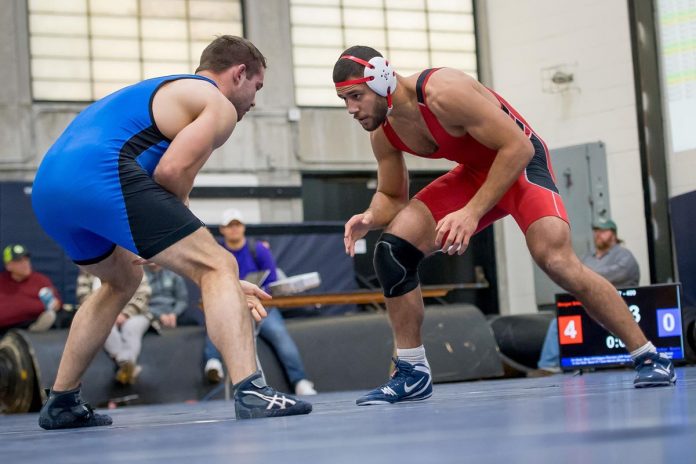
With a dominating performance, the women's wrestling team continues to impress. Lauren Mason / The Peak

This weekend, the Clan traveled to Pacific University in Forest Grove Oregon to compete at the annual Mike Clock Open. The men’s and women’s team both competed, and were able to secure medals in almost every weight class.

On both the men’s and the women’s side, Simon Fraser dominated the event. This open had over 15 teams for the men, and about eight for the women as it was an open tournament allowing anyone to compete in it. There were SFU wrestlers winning left and right.

Some standout performances for the men were Tyler McLean, Nishan Randhawa, and Morgan Smith’s first place finishes, Ciaran Ball taking second, and Logan Nelson and Cruz Velasquez finishing off with third. On the women’s side, Abby Lloyd, Dominique Parrish, Nicole Depa, Francesca Giorgio, and Alyvia Fiske came out on top with first-place finishes. Brooklyn Bartelson, Alex Hedrick, and Sara Brinkac all ended up taking second, while Alexia Seal, Lauren Mason, Jenna Garcia, and Livleen Sidhu placed third.

Coach Justina Di Stasio explained that she “thought there was a lot of growth in the transitions from take down to turns with the younger kids on the team.” Also on the women’s side, there were some rule changes, so it was “a good experience having to weigh in, and then having to recover and compete.” Di Stasio then explained how “tournaments like this show us what we are doing well on, and what we need to keep working on in practice.” The Clan will return home with high hopes and aspirations as they continue on in their season.

With the women’s team ranked #1 in the Women’s Collegiate Wrestling Association, this tournament was a good opportunity to compete and implement the things they have been working on. With a strong team coming in this year, the Clan is working on honing in on and perfecting their skills along with working hard to prove that they really are the best.

The men’s team, coming off of a big win against Northern Idaho College, was able to capitalize on the good things they executed at the dual and relate that here at the Mike Clock Open. With only a few graduating seniors this year, the men’s team looks to wield a strong team this year and in the years to come. Both the men and the women have high calibre wrestlers that help to push each other and create a depth of talent.

Catch the Clan next week as they travel to Spokane Washington to once again prove themselves on the mat. The men will also be competing in the Cardinal Duals on November 18th.

Lauren Mason is a member of the women’s wrestling team. 

Medicine Walk is a well-crafted story that examines the nuances of family

0
(Image courtesy of McClelland and Stewart)

Richard Wagamese’s Medicine Walk is almost guaranteed to be one of the best modern novels you’ll ever read (and that’s coming from an English major). One of the main reasons this book is such a success is that the prose is beautiful from start to finish. In the opening paragraph, Wagamese masterfully describes footprints in the frost as “inkblots in the seeping melt.” He later describes a son thinking of his absent father who is away at war, and the son explains, “His father became envelopes. He became the sporadic ones his mother picked up from the general delivery box or the ones she gave him to lick before she sent them off to Belgium, France, and Italy. He became the taste of glue.” The descriptions are so detailed and unique that any moments that feel stereotypical or cliché feel real, and original.

     Medicine Walk follows sixteen-year-old Indigenous teen, Franklin, and his relationship with his father, Eldon. Eldon didn’t raise his son, but he calls Franklin to tell him he is dying and asks him to bring him to a specific location to be buried as a warrior. Throughout the story, Franklin learns of his estranged father’s personal history and how it led him to become an alcoholic and make the choices he made. While in Eldon’s personal narratives he presents himself as a more empathetic character, Franklin’s memories of his father growing up complicate this representation and show many of the faults with Eldon’s character. These conflicting stories help readers understand Franklin’s confused emotions towards his father, but overall complicate the resolution.

     In the end, I’m confident almost everyone will thoroughly enjoy this novel. There is something in it for everybody, whether it encourages you to reconnect with family members, reconnect with your heritage, or even just to appreciate the excellent prose, there is little room for disappointment.

Starters play big minutes in California due to low roster numbers

0
Tayla Jackson had a season high 25 points in Monday's game. (Photo courtesy of SFU Athletics)

The Clan started their season in Riverside, California where they competed in a two-day tournament against the University of California, San Diego (UCSD), and Cal State San Marcos. Following the tournament, they stayed in Riverside for a game against California Baptist University. SFU went 2–1 on the trip, only losing their first game to UCSD.

This game was a disappointing way to start the season for the Clan, as they struggled shooting the ball in a 69–52 loss. A major part of their 27.6 shooting percentage was Sophie Swant and Nicole Vander Helm (two players who will be relied on heavily on offence this season) combining for 2–22 from the field and eleven points. Point guard Tayler Drynan had a strong first game as Ellen Kent’s replacement, going 4–7 from the field (all threes) for 12 points, and added in five assists. For USCD, Mikayla Williams had a game high 22 points and 12 rebounds.

Swant and Vander Helm put the tough game behind them the next day, as they led the Clan to a 63–59 win over Cal State. Swant lead the game with 17 points on 50 per cent shooting, while Vander Helm chipped in 13 points and six rebounds on 6–9 shooting. She was clutch down the stretch as well, getting SFU’s last two field goals of the game in a close match.

SFU played its third game in four nights on Monday, in what was their best game of the young season. While they struggled in the first half, being outscored in the first and second quarters to be down 42–35 at the break, they bounced back for a big second half. Tayla Jackson had a fantastic game, finishing with 25 points, seven rebounds and three steals. Vander Helm was great again down the stretch, with nine of her 14 points coming in the fourth quarter.

Another important thing to note was head coach Bruce Langford playing his starters big minutes, with four starters playing 35 minutes or more. With only two available players off the bench tonight (Tia Tsang — 18 minutes; Kendall Sands — 12 minutes) due to a small roster size and injuries, look for this to be a recurring trend throughout the season.

All in all, this road trip should be seen as a good start to the season for the Clan. With a low body count, being able to go 2–1 when playing three games in four nights is a positive. While they struggled tremendously to UCSD, this was an uncharacteristic shooting night for a team that, in coach Langford’s words, should shoot better than last year. If the team can stay healthy, they look like they will be highly competitive in the Great West North Athletic Conference.

Catch the Clan when they take on the University of Hawaii in their home opener on November 16. Tip off is at 12 p.m.

Men’s wrestling starts season off right with a win at home

0
Returning senior Morgan Smith looks to continue his strong form from last season. (Photo courtesy of SFU Athletics)

The Simon Fraser University Clan opened their season with a dual meet against North Idaho College (NIC) this past Friday. The Clan’s starting lineup features four seniors this year, and two of them were in official action on Friday. Both Morgan Smith (197 lbs) and Tyler McLean (165 lbs) clinched victories, helping lead SFU to a 27–19 victory over their North Idaho rival.

The dual opened with the 125 lb matchup. Oscar Bulaqui fell to Esco Walker Jr. to open the matchup, which gave NIC the early four-point lead. However, true freshman Riley Prough came from behind in the next match to pin his opponent, putting the Clan ahead.

Head coach Justin Abdou called Prough’s win “a pleasant surprise [. . .] We knew Riley was tough, but we hadn’t seen him compete yet. Good win.”

The following two matches were both forfeits in the Clan’s favour, putting them up 18–4. However, NIC had their own comeback win, as NIC’s Cooper McCullough managed to swing a six-point move in the dying moments of his match against the Clan’s Cody Osborne to take the win 15–14.

Senior McLean turned in a steady performance in the following match, winning a decision 9–7 against Trey Meyer. McLean was an All-American in 2016 and is currently ranked fourth in the NCAA’s Division II.

Logan Nelson lost a close matchup at 174 lbs, being edged 4–3 by NIC’s Hudson Mauseth. This was followed by another loss at 184 lbs, as the Clan’s Nolan Badovinac was caught in a tough pin by NIC’s Levi Perry. This match brought NIC within striking distance for the final two weight classes, as the Clan held onto a 21–16 lead.

However, Clan captain and senior Morgan Smith (197 lbs) had no intention of losing his final home dual. Smith dominated his opponent throughout the first round, showing why he was an All-American last year and is currently ranked second in NCAA’s Division II. Following the first period, Smith overwhelmed his opponent and secured a pin, clinching the dual for the Clan.

When asked about his exciting finish, Smith answered, “I love putting on an exciting performance. One thing I love about collegiate-style wrestling is the tenacity and action it brings out in wrestling. One of my goals this year is to wrestle matches that people want to watch.”

Nishan Randhawa, heavyweight, lost a tight match in overtime to end the dual for the Clan. SFU also split a pair of exhibition matches against NIC, with senior Cruz Velasquez pinning his opponent and Doug Peyser giving up a major decision.

“Great start to the season with a victory over a team that has given us a lot of trouble over the years,” Abdou said. “Our three star seniors (Velasquez, McLean, and Smith) looked great, which we need because they are the leaders of this team.”

The Clan was in action again on Sunday in Oregon for the Mike Clock Invitational. Stay tuned for more details on their performance.

Fresh out of school, international development helped me learn the biggest lessons

0
The suspended bridges of Kakum National Park, designed by Canadian engineers as a part of forest conservation efforts.

My path to Ghana was a kind of indirect one. In 2016, I had an MA in criminology, a BA in women’s studies, two years as a research assistant, and three years of volunteer work with a local non-profit. I had an increasingly unsettling student loan balance. I had 32 polite rejection letters and one overarching theme in my life: not enough work experience.

I was paying my bills by working as a diner cook while I waited for something to break open. That’s when I came across a job posting online for a volunteer program abroad. EQWIP advertised 3- or 12-month contracts, in a variety of international offices. It was a project aimed at helping young un- and under-employed Canadians develop themselves professionally while contributing to international development (ID).

They were recruiting everyone: ecological impact researchers, business advisors, communications specialists, digital engagement workers. Fundraise a contribution to their innovation fund, and off you go. Hashtag propelling youth forward.

Hashtags are something I could generally do without, and I’m perfectly aware that anyone who wants money from you on the Internet is always a catfish, no matter what. But when I went to Global Affairs Canada registry, EQWIP was indeed listed as a recipient of their funding. They were serious. I banged out an application to be a gender equality advisor, and the process began.

They did all the responsible things one would hope for from a youth-focused organization; they asked for a criminal record check, interviewed my references, followed up about yellow fever vaccinations, took my banking information for payroll (a modest monthly stipend, enough to live on while you’re abroad), and eventually sent me my ticket to Tamale, Ghana. I got off the plane with my head still spinning, and thus began my first job in international development. It would incidentally be the most educational year of my life.

International development is a wild ride. As someone who never studied it or planned to go into it, it helps me to think of it as the more proactive, less reactionary older brother of emergency relief work. Instead of disaster management, ID involves building infrastructure and other sorts of long-term intervention.

Done unethically (see Confessions of an Economic Hitman), ID can be a horrifying practice. In the middle of the spectrum, you see a lot of voluntourism and culture-blind useless efforts. Handled well, though, even my cynical heart somewhat believes that these projects can move mountains.

Take Saha Global. This American non-governmental organization works in Ghana, taking elderly women from rural communities with limited social support and no livelihoods. Saha sets these women up with water purification materials. The women sell the water back to their communities for pennies. Women’s livelihoods are improved, and illnesses and deaths due to water contamination decrease.

My project took us underemployed Canadians and brought us to staff a small office that provided job training for underemployed Ghanaians. We offered employment readiness classes and entrepreneurship training to people our own age. The training ran the gamut from ‘stop putting smileys in your work emails’ to ‘here’s how to calculate your operating budget.’

EQWIP has five years of funding from the Canadian Government, so the aim wasn’t just to train youth during that time, but to set up a sustainable system for lasting change. We developed partnerships in each city, and worked with staff at those organizations so that they’d be ready to take over and deliver our training programs as an addition to their core services.

In Tamale, we worked with the local branch of the Ghanaian National Service Scheme (NSS). In Ghana, if you complete any kind of university, you owe one year of your life to a government labour pool, and will be posted to various offices around the country. The aim is to repay society for their part in subsidizing your education, and to give recent grads some meaningful work experience.

EQWIP has been folding in work conduct and readiness training to be delivered to NSS personnel before starting those placements, and then offering more intensive trainings to those who completed their placements and still couldn’t find jobs. The program is concise, the advice it offers is good, and twinning just a little more professional development to the already existing placement system will hopefully be worthwhile and useful for everyone.

Work stuff aside, it was a year just as full of ridiculous stories as you could hope for. I got woken up at 3 a.m. one morning to discover the cell network and Internet were down and my roommate had been stung by a scorpion. I fought a goat and accidentally bit into a cockroach that got into the hot chocolate powder. I once thought someone was trying to break into my room, but it turned out to be a baboon. I went a full year without a good cup of coffee, but I ate passionfruit off the vine and mango off the tree. I learned the value of a good pocket knife. I survived malaria.

What I thought was going to be a stepping stone is turning into a vocation. Yes, plenty of my co-volunteers in the same boat have come back and found work, and I know that’s an option for me down the line. Right now, I’m applying for a gig to head to Sri Lanka in January to do it all over again.

SFU research reveals being eco-friendly promotes personal well-being

0
The findings of the study run contrary to the assumption that people don’t want to expend the effort to engage in environmental measures.

Contrary to popular belief, engaging in pro-environmental behaviours can enhance a person’s satisfaction with their life, according to new study.

SFU professors Michael Schmitt, Lara Aknin, and Jonn Axsen, with colleague Rachael Shwom from Rutgers University, recently published a study that looked at how green behaviour can improve psychological well-being. Their study suggests that helping the environment produces the same benefits associated with engaging in social behaviours that help other people.

The researchers conducted two large surveys, one in Canada, and one in the USA, that asked participants to report their life satisfaction and engagement in a range of pro-environmental behaviours. Their study examined a variety of eco-friendly behaviours, making the study more in-depth compared to previous research, according to Aknin.

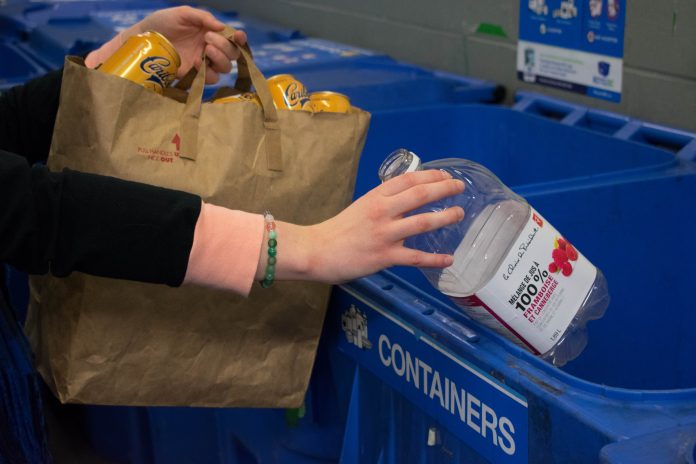
Some examples of eco-friendly behaviours include reusing bags when shopping, setting the thermostat lower, taking shorter showers, and participating in environmental organizations.

“Most people think that engaging in environmentally friendly behaviour may be difficult or unpleasant. Challenging this belief, we find that people who engage in these behaviours are happier, suggesting that they may actually promote well-being,” said Aknin.

 The reason that many people assume that engaging in pro-environmental behaviour undermines their well-being is because of the costs affiliated with those behaviours, according to Schmitt.

“Most people think that engaging in environmentally friendly behaviour may be difficult or unpleasant.” – Lara Aknin, SFU professor

“We tend to focus on the effort, time, and money it might take to engage in pro-environmental behaviour, and think that we might better off spending those resources directly on oneself,” he said. “We tend to underestimate how good it feels to do something good for others, even when, or maybe especially when, we have to give something of ourselves.”

The researchers’ findings indicate that the costs of pro-environmental behaviors — in time, money, and effort — actually lead to the behaviours being more strongly related to life satisfaction.

“We found that some behaviours are more linked to life satisfaction than others. In particular, the more the behaviour had costs in terms of time, money, and effort, the more strongly that behaviour was linked to well-being.  This is likely [due] to the more costly acts being perceived as making a bigger contribution of one’s own resources to benefit the environment,” explained Schmitt.

Schmitt noted that “as long as people perceive a pro-environmental behaviour as contributing to the well-being of others, then doing that behaviour is likely to promote well-being.”

For the next phase of their research project, the researchers are conducting experimental studies that can determine whether engaging in eco-friendly behaviour has a causal effect on well-being. More specifically, they are looking to see when, why, and how engaging in environmentally friendly behaviour actually causes increases in happiness or well-being.

“There is an abundance of evidence that other kinds of helping behaviour has a causal effect on well-being, but in the environmental context, all the research thus far has been correlational,” concluded Schmitt.