Home Blog Page 642

Stop sexualizing and harassing the Stranger Things cast

0

Recently, Spanish radio company PlayFM spoke about the W Magazine cover which named Millie Bobby Brown as one of the reasons “Why TV is Sexier Than Ever.” The magazine also included her in one of their online galleries called “11 Actors Who Prove TV Has Never Been Hotter.”

If you don’t know who Millie Bobby Brown is, here are some basic facts about her: she plays Eleven on Stranger Things, she’s won a Screen Actors Guild Award and an MTV award, she has been nominated for an Emmy, and she’s been on The Tonight Show Starring Jimmy Fallon.

She’s also 13.

Folks, W magazine labeled a 13-year-old sexy. People immediately called the magazine out for including her on lists meant for adult actresses. “Seeing Millie Bobby Brown classified as sexy in an article is disgusting. She is a CHILD. A successful up and coming actress. NOT SEXY,” one Twitter user expressed.

You don’t need to think too hard to realize that it’s quite disturbing for an adult watching Stranger Things to focus more on the sex appeal of people like Brown and her 14-year-old co-star Finn Wolfhard than their acting abilities.

Speaking of Wolfhard, he was the subject of an Instagram Story posted by 27-year-old model Ali Michael with the caption “not to be weird, but hit me up in four years.” After other social media users criticized her, Michael apologized, trying to convince everyone that “it was never [her] intention to sexualise a minor.” Wolfhard responded, calling the situation “gross.”

Why are adults so keen on having famous young teenage celebrities act and appear older than they are? By including them on “sexiest” lists, the media is actively perpetuating this unhealthy trend.

Furthermore, gossip and lifestyle websites do their part by criticizing the stylists of these young stars for dressing them too “age-appropriate.” This occurs often in coverage of award shows — as if dressing a 13-year-old girl to look her age is too “childish.” At the MTV awards in May, Insider bitingly labelled Brown as looking “comfy but lost in a shapeless white dress.” This, of course, raises the question of why anyone should be concerned about seeing any sort of shape.

This is not the only example of fans being strangely voyeuristic when it comes to these child stars. Last week, fans of Stranger Things complained on social media when Wolfhard entered his hotel without stopping to engage with them. Shannon Purser — who played Barb on the show – reminded people that no one has any obligation to stop for fans if they don’t want to. Generally, celebrities should not be expected to completely give up on their privacy, and that holds doubly true for minors.

They might appear to be unrelated issues, but they boil down to the same problem: people forgetting that their favourite child actors are kids. Of course, adults also have every right to privacy, and every right not to be sexualized against their will. But minors especially need to have their rights respected, and you have a responsibility to show that respect.

SFU needs to do better about snow closures this year

0

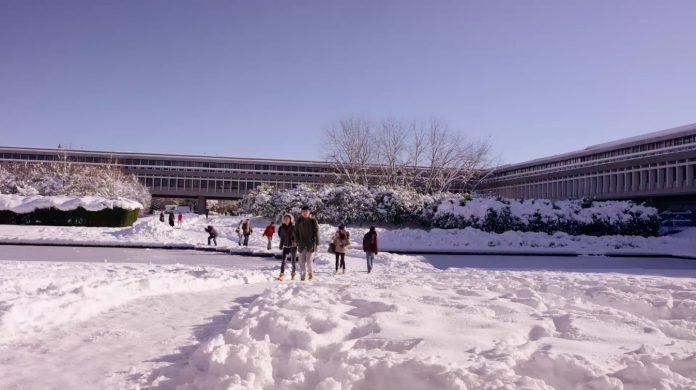
As a Communications major at SFU, my faith in the university’s own communication strategy was questioned during last year’s snowstorms, which forced the cancellation of several exams and caused both school and road closures. The SFU social media team left students stranded during arguably the most stressful part of the semester — final exams — with little to no warning.

As a student whose majority of time is spent studying methods of communication, I could not understand why a decision that should have been made regarding road closures was left to the last minute to distribute to the students of SFU. When the final call was made to cancel classes on December 9, the registrar confirmed over 1,800 people were on campus to write exams at that time.

SFU didn’t start to inform students that the campus would be closed until 2:44 p.m., barely forty-five minutes before the scheduled 3:30 p.m. exams for that day. TransLink cancelled both the 145 and then-135 buses almost an entire hour before SFU made the final call to cancel classes.    

Moving forward this winter, I recommend that SFU collaborates with TransLink on the weather’s impact to bus routes early. As soon as the snow is impacting the buses’ ability to climb Gaglardi or the hill to campus, the decision should be made and communicated in a timely fashion.

According to TransLink, “88 per cent of SFU undergraduates report regular use of public transit for their commute to the university — 31 per cent higher than the national average.” Because of this, any threat to the possibility of cancelling or delays in service must be seen as essential information for students, in order for them to be able to make informed decisions about their safety and/or overnight accommodations. TransLink’s ability to continue to provide service should be an essential part of the university’s decision making on whether to remain open or shut down.

Cancelling an exam twenty minutes before the start time is inexcusable. The calls should have been made at least an hour before the next round of finals began to save students from making the journey up the mountain. I had friends that had to sleep on campus overnight due to the situation and uncertainty of the school being open the next day.

If the weather reports are calling for heavy snow, SFU should offer a one hour minimum window of warning for students. SFU needs to use emergency text and email services providing increased active reports via their social media platforms. Students should know instantly through Twitter feeds or banners on their phones instead of having to switch between their study notes and refreshing the “SFU road conditions” page.

The students understand that the rescheduling of exams is an imposition for the SFU administration. However, for the amount of money each student pays to attend the school, the lack of communication left students feeling undervalued and that their personal safety was not of importance. In the spirit of advanced education and learning, I can only hope that SFU administration has learned from the mistakes made last year and will expedite the communication about school closures moving forward.

Celebrate Christmas, the solstice, and not doing homework anymore

0


Although it’s tempting to write that last exam, wrap yourself up in blankets, and go into hibernation until next semester, don’t let the break slip between your fingers. There are plenty of fun, and more importantly free or low-budget, things to do in Vancouver while the weight of studenthood is lifted from your shoulders — regardless of whether you celebrate Christmas or not.      

Eastside Flea Holiday Markets

  • When: Every weekend from November 17–December 17
  • Where: The Ellis Building, 1024 Main Street
  • Cost: $3 for a single day entry, $5 for all weekend entry

One of the best ways to get your hands on completely unique Christmas presents is to support independent artists and vendors. Even if you’re not shopping, there are plenty of things to see. The Holiday Markets will host a rotating cast of 40–50 vendors at each market, and food trucks will be waiting for you just outside.     


Glow Christmas

  • When: November 22–December 30
  • Where: 6690 216 Street, Langley, BC
  • Cost: $20 per ticket online, or $25 at the gate

You don’t need to celebrate Christmas to admire the effect that 500,000 lights spanned across 103,000 feet can have. Langley’s Milner Village Garden Centre will be completely lit up from November 22 to December 30. The display will also include food trucks, a bar, four different light gardens, craft vendors, and a 210-foot musical light tunnel.   


Burnaby Village Museum Heritage Christmas

  • When: November 25–January 5
  • Where: Burnaby Village Museum, 6501 Deer Lake Avenue
  • Cost: Free gate admission, carousel rides are $2.65 each

If you’re the type to get nostalgic as the holidays come around, the heritage village in Burnaby will be decorated and lit up. Activities range from heritage baking to sing-alongs and visiting hours with Father Christmas. If you stop by the ice cream parlour, you can also pick up cards for their free Twelve Days of Christmas Scavenger Hunt, which will send you exploring the entire village. Join them for the launch of the season from 4:00 p.m.–9:00 p.m. on December 2, where you can catch the tree-lighting ceremony and enjoy some refreshments.  


Ice skating at Robson Square

  • When: December 1–end of February 2018
  • Where: 800 block of Robson Street, between Hornby and Howe Street
  • Cost: FREE  

Just behind the Vancouver Art Gallery, you can recreate Bambi’s slip-and-slide skating misadventures, or enjoy a picturesque date surrounded by snowflakes. Skating is free from 9:00 a.m.–9:00 p.m. Sunday to Thursday, and from 9:00 a.m.–11:00 p.m. on Friday and Saturdays. No skates? No problem! You can rent a pair for $5 (make sure to bring cash, not debit or credit, for that).


Carol Ships Parade of Light

  • When: December 2–17
  • Where: Multiple locations
  • Cost: FREE

Fifty years ago, a single little boat decked out in Christmas lights took to the sea. Now, over fifty cruise around Coal Harbour and False Creek. Privately owned vessels and commercial cruises alike join in, which means that you can buy a ticket aboard any number of ships for dinner, a show, and a ride. If the budget won’t stretch that far, you can watch the parade from shore-side events put on by the Carol Ships Parade of Lights Society throughout December.  


Christmas Drive-In

  • When: December 2, 3, 9, and 10 (movies showing at 7:30 p.m. or 9:00 p.m.)
  • Where: 3650 East Kent Avenue South
  • Cost: $20 per parking pass (8 people per car)

From Home Alone (and Home Alone 2, of course) to Elf and Die Hard, all the classics will be screened by Fresh Air Cinema. Pack up some friends, or a date, and enjoy the nearby food trucks to make it dinner and a show. Bring yourself some blankets and hot chocolate, and enjoy sobbing to It’s a Wonderful Life from the privacy of your own vehicle this holiday season.   


Hyatt Gingerbread Lane

  • When: December 4–early January
  • Where: Hyatt Regency, 655 Burrard Street
  • Cost: FREE, with donations.

Every year schools, families, cooking institutions, and community groups across Vancouver build and decorate gingerbread houses to be displayed at the Hyatt Regency hotel’s ballroom.  There’s no entrance fee to peruse, admire, and vote for your favourite gingerbread creation, but if you enjoy the delicious sights you can leave a donation which will go to the Make-A-Wish Foundation.  


Yule Duel

  • When: December 7, 6:00 p.m.–9:00 p.m.
  • Where: Water Street, Gastown
  • Cost: FREE, donations collected  

If you can’t get enough of Christmas music but need a break from Mariah Carey, the Yule Duel is for you. The streets of Gastown will be taken over by choirs singing their hearts out to a panel of judges. All profits from these carolers with a cause are benefiting May’s Place hospice downtown. You can donate to contribute to your favourite choir online, or you can bring cash.


Christmas Celebration in Maillardville

  • When: December 12,12:00 p.m. – 3:00 p.m.
  • Where: 209 rue Lebleu, Coquitlam, BC  
  • Cost: FREE

Need to practice your French?  La Société francophone de Maillardville (The Francophone Society of Maillardville) is putting on a Christmas party that will combine live francophone music, a Christmas ornament workshop, refreshments, and a slew of French-Canadian Christmas traditions, Réveillon et autres.  


Chanukah in the City: Vancouver menorah lighting

When: December 12, 5:00 PM

Where: The Vancouver Art Gallery

Cost: FREE

As it turns out, the tallest menorah in Canada is right here in Vancouver, and it will be lit on December 12 to celebrate the first day of Hanukkah 2017. Live music and other celebrations will follow.

Since you’re nearby, you may as well pop into the Vancouver Art Gallery since admission is by donation every Tuesday from 5:00 p.m. – 9:00 p.m.  


Vancouver Chinese Lantern Festival

  • When: December 15–January 21 (Closed December 25)
  • Where: The PNE at Hastings and Renfrew Street
  • Cost: $19 per adult, $15.50 if you book a group of 10+ in advance

Stop by this festival to see thirty-five beautiful silk Chinese lanterns lighting up the night. Chinese food and snacks will be sold on site, and you can catch live performances ranging from dance to acrobatics twice a night.    


Winter Solstice Lantern Festival

  • When: December 21
  • Where: Multiple locations
  • Cost: FREE, suggested donation of $5 a person

The 24th annual Winter Solstice Lantern Festival will light up the darkest night of the year, from Yaletown to Strathcona. You can purchase a handmade lantern of your own or, better yet, register online for a lantern-making workshop from the Secret Lantern Society. Because the festival is so large and dispersed, it’s worth taking a look at their online schedule to make sure you don’t miss the fire shows, the Labyrinth of Light, lantern processions, or live music that interest you most.  


Volunteering opportunities in Vancouver

December is a great time to give back, whether it’s part of your celebrations or just because you have the time. Make sure to do your homework about where, when, and what kind of a helping hand is needed and make sure to contact organizations in advance so that they have time to process and organize any kind of paperwork. Ideas include:

SFU student-hosted event highlights diverse women’s voices

0
Nasra Amed performed poetry and a song about her experiences living at the intersection many identities.

SFU Surrey became a platform dedicated to the stories of women of colour with a recent student-run event. The second annual Celebration of Women’s Voices brought students and locals from the community to the campus’ Westminster Savings Theatre on November 25.

The event was organized by fourth-year student and Instagram poet Harman Kaur, the SFU club Students for Humanity, along with local social worker Sandeep Gill. This November was the second time the event had been held at SFU Surrey. Kaur and Gill had also brought this event to the University of Calgary earlier this year in April.

“It is so important for women to control their own narratives, and be able to tell our own stories,” said Kaur in her opening remarks as she summarized the purpose of the event.

All proceeds from the ticket sales were donated to Students for Humanity, a SFU club dedicated to tackling social and health issues in the community, and additional monetary and food donations were also accepted.

Gill noted the sensitivity of the topics that would be covered in the event, which ranged from domestic violence, beauty standards, experiences of women of colour, and sexual abuse. She issued a trigger warning and informed the audience that a registered therapeutic counsellor was also available for anyone that may need support.

The audience was empowered to show solidarity with the speakers by snapping their fingers if the performance resonated with them.

The evening consisted of nine women speakers, each addressing her experiences through mediums that included stories, poetry, singing, and monologues. A large majority of the speakers had a significant Instagram presence — as each woman took the stage, the backdrop behind her featured her name as well as her Instagram handle.

“It is so important for women to control their own narratives, and be able to tell our own stories.” – Harman Kaur, Instagram poet

The list of speakers included Kamal Dhillon, a domestic violence survivor and author of Black and Blue Sari, a memoir accounting the abuse she suffered at the hands of her husband. After recounting her story and her healing process, Dhillon reaffirmed the need for the evening in her parting words to the audience.

“Let’s be the voice of those who couldn’t be a voice,” she said.

Jasmin Kaur, an Instagram poet under the account @jusmun, recited poetry about her experiences as a visibly religious Sikh women in the face of women’s beauty standards in contemporary society.

“All of the performances had something really special to offer,” commented audience member Karen Brar. “The most impactful for me was Nasra Amed because she wore so many of the stigmas of society — being a woman, being black, being queer, and unfortunately sometimes even being Muslim — and she turned them into something beautiful.”

Amed had taken the stage earlier that evening to share two poems — one of them about “when [she] came out to [her] mother a second time” — as well as a song about her experiences living at the intersection of so many controversial identities.

Gill commented on the lineup that had been put together for event, admitting that “it can be triggering, and we do have some intense pieces.”

“But we need it.”

Bah Humbug! brings the holiday spirit to SFU Woodward’s

0
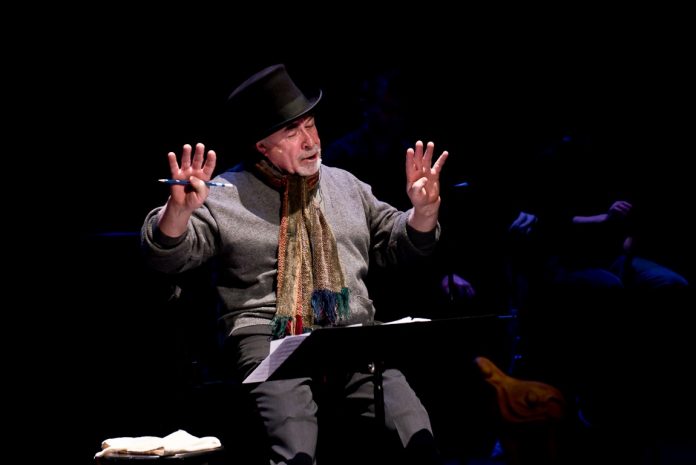
As a storyteller and musician, Jim Byrnes is a perfect fit for the lead role of Scrooge. (Photo courtesy of SFU Woodward's)

Charles Dickens’ A Christmas Carol is a classic story with heart-warming holiday season themes of redemption and gratitude. SFU Woodward’s has teamed up with Vancouver Moving Theatre and Full Circle: First Nations Performance Society to present the eighth annual Bah Humbug!, an East Vancouver version of A Christmas Carol. This holiday favourite compares Victorian era London and present day Vancouver.  

     James Fagan Tait, who is a Jessie Award-winning actor as well as playwright and director leads this annual tradition. The production is full of a variety of musical genres and local touches such as the projections of artworks by Strathcona-based Richard Tetrault. His images of back alleys, ravens, and East Vancouver houses provide the context for this production.

     Juno-Award winner, blues musician, and storyteller Jim Byrnes stars as Ebenezer Scrooge, but in this retelling he is a pawn shop owner on East Hastings. Scrooge faces spectres of the past, present, and future who emerge from the Coast Salish land beneath the city to tell tales of Vancouver’s history, present struggles, and future potential. The story is infused with social commentary, compassion, and ultimately redemption.

     Although the tale is over 150 years old, Dickens’ story is just as relevant today, especially when seen from the context of the Downtown Eastside and the growing economic disparities in our society. Vancouver is a wealthy city, but the Downtown Eastside is known as the poorest postal code in Canada. This production asks the question, “How did a neighbourhood full of rich history and strong community become a neglected source of shame?” Acknowledging the need to support their surrounding community, all proceeds from Bah Humbug! support the Downtown Eastside Heart of the City Festival. As Bah Humbug! reminds us on their event page, Dickens said, “Charity begins at home and justice begins next door.”

The production is appropriate for all ages and mixes traditional holiday tunes with a diverse array of folk, pop, gospel, rock, and blues music.

Bah Humbug! will be co-presented by SFU Woodward’s Cultural Programs and Vancouver Moving Theatre, in partnership with Full Circle: First Nations Productions from December 7 to 16 at the Fei and Milton Wong Experimental Theatre. For more information, click here. 

Media Democracy Day tackles social issues through communication

0
The conference looked at ways to mobilize the role of media in addressing issues like climate change and decolonization.

A way to address social issues was at the centre of the annual Media Democracy Day conference highlighting local independent and democratic journalism at the Vancouver Public Library’s Central Branch on November 18.

The Vancouver-based leaders in communication ran a series of workshops and roundtables to explore solutions media, a response to social problems that incorporates various forms of communication including journalism, digital art, and public campaigns.

“The reason [solutions media is] so valuable to democracy is that citizens need a clear picture of what’s possible so that they can mobilize, so that they can engage with movements, so they can press for a better future,” said David Beers, an adjunct professor of journalism at the University of British Columbia and the founder of the independent online magazine The Tyee.

The event, a collaboration between the SFU School of Communication, OpenMedia.ca, and the Vancouver Public Library since 2001, has brought local, alternative media as well as scholars, activists, and citizens to discuss the role of media in democracy.

The opening talk incorporated the insights of Angela Sterritt who is a Gitxsan journalist with a long history of working for the CBC and Darin Barney who chairs communications studies at McGill University. The day also explored multiple examples of solutions media, including responses to the housing crisis, the child welfare system in BC, and decolonizing practices in media.

The design jam, a brainstorming session hosted by SFU students and the Vancouver Design Nerds, challenged attendees to create solutions to issues faced by the media and how the public can engage in the solutions media production. A series of roundtable events also explored how the media can improve representation for underrepresented or misrepresented communities. Beers explained that solutions media is a “future focused” endeavour.

“It’s about exploring in [a] tangible, fact-based way, what is possible,” he noted.

During the opening talk, the speakers Sterritt and Barney offered a critical consideration of how solutions media has a role in some of the pressing issues society faces.

Barney addressed the potential for climate change to alter the relationship between politics and communication, noting the recent decision by the federal government to approve two major pipeline projects — including the Kinder Morgan Trans Mountain expansion project — was not “swayed by political arguments,” according the the Prime Minister’s statement.

“What I want to highlight is the manner in which this disavowal of political implications of these decisions is symptomatic of a radically impoverished understanding of what politics actually means or could mean in relation to energy and its infrastructures and the environment,” Barney stated.

“I think [this is] indicative of the conventional understanding of what politics is and where and how it happens. A limit that has been exposed quite dramatically in relation to the politics of climate change, energy, and its infrastructures.”

Sterritt spoke about solutions journalism and the role of storytelling in the approach which has implications for the relationship between Indigenous peoples and journalism.

“It’s about not predicting answers or solutions but using the same rigour and investigation and curiosity to get it right without falling into poor reporting of the past,” she said.

Referencing the increasing interest in Indigenous-focused stories in media, Sterritt stated that the state of affairs is changing due to the Truth and Reconciliation Commission and Indigenous-led institutions that have created a space for these stories. However, she noted that the relationship between Indigenous peoples and media has not always achieved this progress.

“In many ways, Indigenous people are still only in the media when, as esteemed journalist Duncan McCue has reported, we are only one of the four D’s: only when we’re drumming, only when we’re dancing, when we’re drunk, or when we’re dead,” Sterritt noted.

“We have to get out of that crisis reporting, we have to build relationships with communities. So solutions [media] is not about changing our mode of reporting. It’s about shifting the way we report on Indigenous communities since many of us don’t have strong connections to, relationships, or understandings of Indigenous communities at all,” Sterritt explained.

“When we’re talking about solutions journalism, we’re not telling communities what their solutions are. We’re not dictating what they should do. That is not our role as journalists — our role as journalists is to dig into the truth and find out what other people are doing to create change.”

“It’s important for people to know that you don’t need to be Indigenous to understand, relate to, and learn more about these stories.” Sterritt added.

SFU expands its labour studies program to include major

0

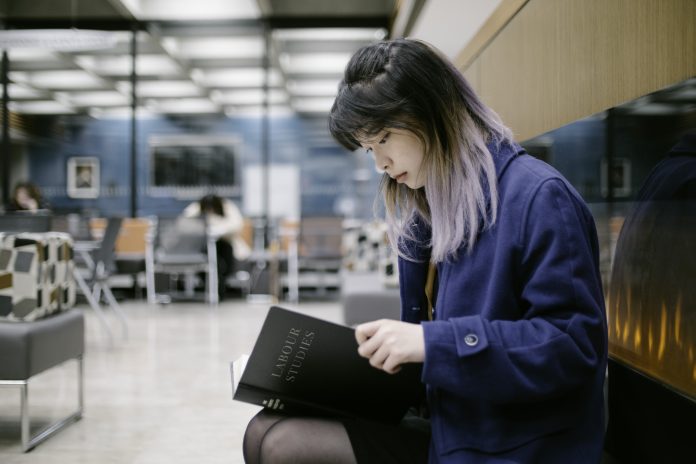
Simon Fraser University will expand its current minor and certificate program in Labour Studies into a major beginning fall of next year. Students, however, will be able to declare a major in this discipline as early as next semester.

Since 2012, the faculty of arts and social sciences has worked on developing a labour studies major for its students. The notice of intent to add the new major into the curriculum was submitted to the Ministry of Advanced Education in 2015 and was recently approved for implementation earlier this summer, according to Kendra Strauss, director of the labour studies program.

The major will not be fully launched until fall 2018 because there are a few changes to the program requirements that are currently undergoing the curriculum approval process. In particular, there are several new 200-level courses being added, according to Strauss.

“The world of work is changing, with implications for all of us,” emphasised Strauss. “For young workers, there are challenges with the rise of precarious employment. Our economies are increasingly globalized, with larger and more complex flows of capital, goods and people, but there are also significant backlashes against these trends.”

The current labour economy operates as the ‘gig economy,’ where workers, especially but not exclusively in the field of media and high-tech sectors, are increasingly employed on insecure, short-term contracts.

“These contracts tend not to have any benefits, and workers have to spend as much time looking for work (their next gig) as performing the work itself. While it offers flexibility, it also produces a lot of insecurity,” explained Strauss.

The new major will look at the current labour market trends and experiences of work, placing an emphasis on critical analysis, thinking, practical writing, and research skills, according to Strauss. “We also focus on the future of work, looking at topics like technological change, automation, and demographics and migration,” she said.

“We have a lot of financial support for a small program, and are working towards co-op and paid internship programs. Our co-op program will launch in the fall, so that our students can gain real-world experience in their field,” noted Strauss.

The labour studies minor has expanded a lot over the last five years, and students have voiced their interest in seeing the program develop into a major. The launch of the new major was funded by the late Margaret Morgan, a long-time labour activist in Vancouver.

There are approximately 130 students in the labour studies minor program from a variety of academic disciplines and the number of students enrolled has increased over the years, according to Strauss.

“We’ve seen a steady increase, with enrolments more than doubling since 2013. We’re still a small program and we have work to do to raise awareness of the program, but we’re hoping that more courses and a focus on skills and experiential learning will help bring more students into the [labour studies] program,” expressed Strauss.

A reception will be held for the university community at SFU Woodward’s on December 8 to celebrate the launch of the new major.

SFU hockey suffer 4–1 loss to Vancouver Island University

0
SFU had a hard time separating themselves from VIU throughout the game. (Photo courtesy of SFU hockey)

On Friday night, the Simon Fraser hockey club took on Vancouver Island University (VIU) at the Bill Copeland Sports Centre. After defeating VIU 8–1 just two weeks ago in Nanaimo, anything short of a win would come as a surprise on Friday night’s game. As is often the case in sports, however, this game came with many surprises.

Things started off poorly for SFU, as they allowed two goals in the opening period. Turner Popoff popped off the scoring with an even-strength goal assisted by Ryan Lawson roughly 12 minutes into the game. A few moments later, Kobe Oishi scored his first shorthanded goal of the game, finishing off a pass from Gage Colpron on a two-on-two break.

The two would combine for another shorthanded goal in the second period, as Oishi put VIU up 3–0 with 13:50 left on the clock. However, SFU did have a few opportunities in the period. Not even a minute into the frame, Mac Colasimone appeared to get the team on the scoresheet, but the referee called goaltender interference on the play. After Oishi’s goal, SFU’s Spencer Unger had a breakaway opportunity, but was shut down by VIU goalkeeper Carson Schamerhorn.

SFU managed to get on the board five minutes into the third period, but it proved to be too little too late. Colasimone scored his second of the game, this one counting, off an assist from Mathew Berry-Lamontagna on an end-to-end break. Once VIU scored an empty netter, however, the game was put out of reach.

All three stars were given to VIU players, with the shorthanded one-two of Oishi and Colpron taking one and two, and Schamerhorn taking the third star with 26 saves on 27 shots.

After a dominant performance against VIU in the two teams’ last meeting, as well as a strong showing against Selkirk College in their last game, this was a disappointing outing for SFU. The power play went 0–6 on the night and allowed two shorthanded goals, after getting two power play goals last weekend.

“Consistency’s been our downfall most of the year, and we’ve got to get better,” said head coach Mark Coletta after the game.

SFU will look to rebound next week as they host rivals Trinity Western on Saturday night. Trinity is currently second in the British Columbia Intercollegiate Hockey League with an 9–3–0 record. Trinity defeated Simon Fraser 4–3 in Langley in the last meeting between the two teams. Puck drop is at 7 p.m.

SFU professor designs specialized insole that can identify the causes of foot pain

0
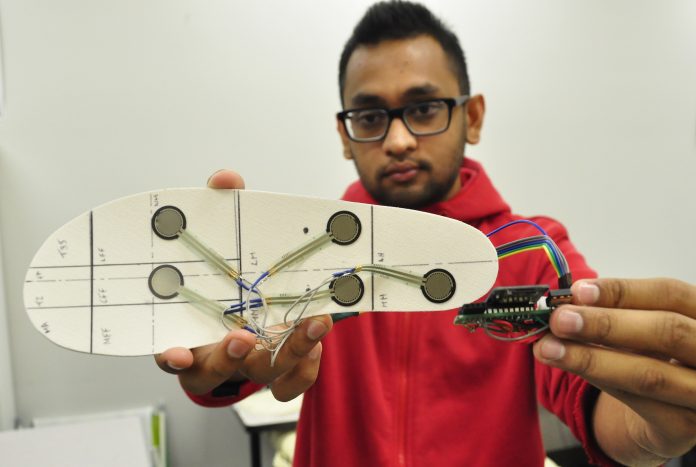
SFU undergraduate student Refayet Siam with a prototype insole that will help inform a new study involving SFU researchers, a Surrey-based footwear company, and WorkSafe BC.

Simon Fraser University, along with WorkSafeBC and Kintec Footwear & Orthotics — a Surrey-based custom insole and orthotics manufacturer — are co-creating a new line of insoles that are able to deduce the causes of foot pain for workers who stand for prolonged periods of time. The device will help researchers understand the factors that cause plantar foot pain, which is discomfort at the bottom of the foot near the heel.

Carolyn Sparrey, a professor in mechatronic systems engineering and the project’s lead, explained that the study’s aim is to better understand the relationship between plantar tissue loading and foot biomechanics in the workplace.

The prototype is currently unnamed but it will begin its first phase of testing in early 2018, according to Sparrey. Commercial availability of the insole will depend on its performance on the market.

“Plantar fasciitis (PF) is an inflammation of the plantar fascia. It causes significant pain and can result in missed time from work,” stated Sparrey. This condition becomes more prominent as a person ages, especially when workers stand for prolonged periods of time. For example, construction workers and nurses are more prone to developing PF because of the nature of their work and the duration of time they stand up for, she explained.

One cause of developing PF is due to weight-bearing activities. Weight-bearing activities are defined as any activity that causes a person to apply force and pressure to their feet, causing their feet to bear the weight of their body. These activities include climbing stairs, jumping, running, and walking.

Sparrey’s newly developed insole is a measuring device that can differentiate and understand patterns of foot loading in the workplace. “While some occupations show a higher prevalence of PF, not all workers in that field or industry have PF,” stated Sparrey. “We want to quantify how mechanical foot loading contributes to the development or aggravation of PF.”

Moreover, the specially designed insole is designed to differentiate typical workplace postures (sitting, standing, and walking). It is simply an activity tracker of sorts and is distinct from other activity trackers currently on the market because it is able to recognize passive activities, such as sitting and standing.

“For our research differentiating [passive] activities is crucial. Therefore we developed an insole that is capable of differentiating between passive activities to better understand work related foot loading exposure,” said Sparrey.

Sparrey also highlighted that the insole will be the first low-cost instrumented insole technology based solely on force sensitive resistors. What this means is that the insole is more cost effective to manufacture and easier to implement in a manufacturing line. “Typical lab grade insole technologies to track [plantar foot pain] cost $10,000–20,000. This insole system costs around $100 to make,” she concluded.

Mak Barden talks SFU hockey club . . . and Christmas

2
Mak Barden has two goals and six assists eight games into the season. Israrul Haque / The Peak

Year: Senior

Major: Communications

Hometown: Surrey, BC

Favourite Christmas movie: Elf

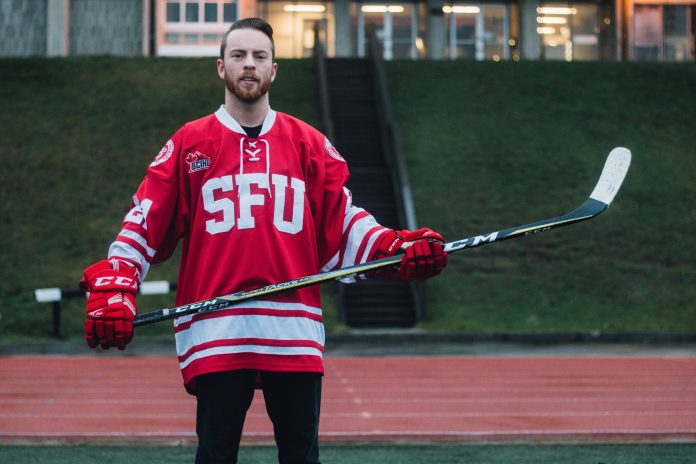
Mak Barden and the SFU hockey club have gotten off to a great start in the British Columbia Intercollegiate Hockey League, with a 6–4 record. Barden is currently tied for second on the team with 1.0 points per game (eight points in eight games). He was named the ANYTHING BRANDED Player of the Week, after a four-assist night against Vancouver Island University on Remembrance Day. Read more to find out more about his thoughts on the SFU hockey club and Christmas

The Peak: Why SFU?

Mak Barden: I initially transferred here from Arizona State, where I spent just one year. I heard a lot of good things, a lot of good reputations coming from the schooling aspect [of SFU]. I got in contact with the [SFU hockey] coach Mark Coletta and he reassured me that it was a good fit school-wise and hockey-wise.

P: How was Arizona when you went there?

M: It was a good experience for sure, moving away to a different type of culture [and] different schooling. It came with its own set of demands and it was definitely a much different experience than schooling up here, but it was good.

P: How do you think playing as a club differs from being recognized by SFU Athletics?

M: I think we’ve made some big strides in the last 3–5 years of trying to develop a little bit more recognition to the program and it’s really taken off and gotten there. We’re not really recognized by the school as much as we would like to be but I think we’re on the upswing of things and we’re making some good strides in order to be successful as a program.

P: How did you get into hockey?

M: It was at a very young age, my whole family was involved. [I was] basically in skates by the time I could walk so it was just instilled upon me at a young age and I rolled with it and I love it.

P: Being young and playing hockey, how was it waking up for all those early practices?

M: The early ones were definitely a little more of a dagger to my parents, I think, than to me. When you’re younger, 7, 8, 9, 10, you’re just looking for any excuse to get to the rink so you don’t mind waking up at six o’clock in the morning, but the parents definitely sacrificed a little more than we did.

P: Towards the team a little bit; who’s the funniest guy in the locker room?

M: I have to say Eric Callegari, he’s a pretty funny guy. He’s a rookie on the team this year but we had his brother on the team last year and he’s a quieter guy, but [Eric] definitely brings a bit of life to the dressing room.

P: You guys have gotten off to a pretty good start this season. Where do you put the expectations this year on the team?

M: I think the last couple of years that I’ve been part of the program, we’ve had very high expectations, if not to win [we wanted to] be right there [. . .] [this year] we have a [few] more veterans, guys that have been around the program and the school for the last couple of years now. So, I think this is definitely the time to [win the championship] if we’re gonna do it, with a lot of guys [in their last year, Mak Barden included]. Everyone’s on board, younger guys and older guys, and I think everything is starting to come together really well. We started really well, and now we’re starting to find our groove.

P: Who do you guys see as your rival in the BCIHL?

M: I have to say Trinity Western. [They’re] definitely a good opponent and they’re in close proximity, so there’s a good rivalry between the schools [. . .] We do play them four or five times [a] year so it gets pretty heated [. . .] and it hurts a little bit more if we lose to those guys.

P: How has it been balancing hockey with school?

M: It’s definitely a big commitment. I think guys understand that when they make a commitment at the end of the year to be a part of both programs: school and hockey. I think we’re aware of it at the beginning of the year [. . .] We’ve got a support system around us and other guys on the team that you can lean on, coaches, and a good tutoring system if you need it. It’s definitely a balance, but with the maturity of the guys [on the team] I think we can definitely handle it.

P: A bit more on school, what has been your favourite class so far here at SFU and why?

M: Being a communications major I’ve enjoyed a lot of the media classes that I’ve taken. A couple of [international studies] classes I’ve shown interest in. World history, world lit, that sort of thing. Communications and applying the media field to business is something that’s going to be important later on in life.

P: With Christmas around the corner, when do you think it’s acceptable to start listening to Christmas music, watching Christmas movies, and doing Christmas things?

M: A lot of people have that Remembrance Day rule which I like, but, the tree and decorations [are] the last things to come in around early December, late November. As soon as mid-November hits, the Christmas carols start coming out and the TV starts revering those types of shows and movies. My sister loves all those cheesy Christmas movies so they’re on in my house all the time.

P: So what are you getting up to for the holidays this year?

M: We’re pretty fortunate with the hockey program. We have like a three week break so obviously with the huge load that we go through [during] the year with hockey and school it’s definitely going to be nice to just have two to three weeks by myself and just recoup and get my body back to [where it needs to be]. Just to have some time with friends and enjoy socializing.

P: What’s the most interesting Christmas present you’ve ever gotten?

M: It was always a joke back in the day, my grandpa when I was young, he — [as part of] the infamous Scottish family — was gonna get me a kilt for Christmas. I thought he was always joking about it, and then one Christmas he actually ended up giving [one] to me as a joke. The funniest part about it was he wrapped it up, putting ounces and pounds of tape around it, and making it so difficult to get into and once I finally did get into it it was a joke of a Christmas present. It was kind of demoralizing but at the same time [I] appreciated the joke. That was one of the funnier ones. I was upset at the time, I was 10, but at the same time now I really appreciate that.

Athlete’s corner: I wanted to give some recognition to the hockey program and how it’s taken off the last couple of years. Mark Coletta (head coach) and Chris Munshaw (director of hockey operations) have taken the bull by the horns, so to speak. Considering where [the program] was 10–15 years ago to where it is now speaks wonders about the seriousness [of] the program that we’re trying to become. Eventually, recognition from the school is the main goal. There are financial aspects of that as well, but we want to have the fundamental building blocks: good grades [and] recognized as a smart, mature group of guys when we go on the road. Everyone’s aware of what they have to do, and we all want to make this program go in the right direction as it has been the last few years. The ultimate goal is being recognized as NCAA hockey and representing the school. We do see ourselves as a program recognized by the school, that’s how we act, that’s how we want to be approached, but we want to make that official.