Home Blog Page 629

The latest world news on sex, sexuality, and gender

0

Embarrassment causes young women to miss smear tests

A survey done by the British charity Jo’s Cervical Cancer Trust suggests that young women avoid smear tests because they are reportedly embarrassed by their pubic areas. Smear tests can help prevent 75% of cervical cancers which is the most common form of cancer for women under the age of 35. A third of 2,017 responders said that they had delayed their test due to body image issues and “embarrassment” over the appearance of smell of the pubic regions. A third of respondents also admitted they would not attend a smear test if their bikini area was not groomed. Up to one in four women do not attend smear tests in the UK.

With files from BBC News.


Quebec university under fire for HIV and menstruation job application questions

Université Laval is being criticized for their job application questionnaire that asks candidates whether they have been tested for HIV and the date they last menstruated. Other questions included asking when applicants last had a gynecology exam and whether they had ever been pregnant or if they had ever had an abortion. The university reports that the questions were used to see if candidates needed workplace accommodation. The university also stated that no applicant was disqualified based on their answers and no complaints were received. The university stopped using the questionnaire, in use since 2009, after local news started questioning the practice.

With files from Global News.


Japanese government being sued over forced sterilization

A Japanese woman who was forced to undergo sterilization in 1972 is suing her government for violation of human rights. She was one of 25,000 people who were sterilized under a law in place from 1948 to 1996. Under the now-defunct law, people were sterilized due to mental illness or having conditions such as leprosy. Approximately 16,500 of these procedures occurred without consent of the patient. The woman decided to sue the government for $101,000 upon learning she was sterilized after developing mental problems from having surgery as a baby. Similar eugenics laws were enacted by the governments of Germany and Sweden, who have now issued apologies and monetary compensation to victims.

With files from BBC News.


Ghana schoolgirls forbidden to cross river while menstruating

Ghana girls are not allowed to cross a river while menstruating and on Tuesdays due to a ban issued by a local river god. As the girls must cross this river to get to their school, this ban has enraged children’s activists, social workers, and teachers since it is hindering the girls’ education. The social outcry has propelled the Government of Ghana to investigate the issue further. Up to 30% of classes in a school year are missed by girls from this Central Region of Ghana due to this reason. Sub-Saharan Africa has a history of having difficulties keeping girls in school during their periods.

With files from BBC News.

A brief history of gay athletes in sports

0
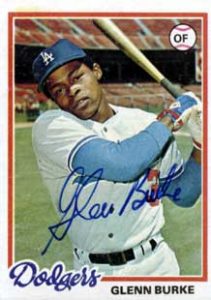
Glenn Burke was the first openly gay play in Major League Baseball. (Photo courtesy of Topps)

Acceptance is a major key when it comes to sexuality and gender in today’s society. Today it is widely acknowledged that people are free to make their own choices when it comes to sexuality — even if many may not like that reality. However, how does this notion of acceptance play out when there are careers stereotyped by masculinity such as major league sports? Football, basketball, and baseball (to name a few) have long been the poster sports for the stereotypically “macho” personalities. So what happens when someone tips that balance by defying stereotypes? Is our society really as accepting of people’s lifestyles as we would like to think? The ‘coming out’ of many athletes has been documented as being riddled with mixed reactions and effects on their careers. Here are a few of those cases.

GLENN BURKE


(Photo courtesy of Topps)

Major League Baseball (MLB) (1976–9)


LA Dodgers, Oakland Athletics


Glenn Burke was a MLB player for the LA Dodgers when it became apparent that he was gay. Although he did not officially come out during his time playing in Major League Baseball, it was widely known that he was openly gay. According to ESPN, the team’s management and his teammates all knew of his sexual preferences. As such, he is considered to be the first openly gay player in MLB history.

However, unlike other people who have come out to their teams in recent years, his personal life strongly affected his career, especially when playing with the LA Dodgers. As an up-and-coming outfielder, Burke had been described as the next Willie Mays.

By 1978, however, it had become clear that the team’s management was not quite as accepting as Burke’s teammates were about his sexuality. According to Burke himself, he was once offered a $75,000 honeymoon by the team’s vice president if Burke would agree to get married — with the underlying instruction that it would be to a woman. His relationship with management was further jeopardized by his growing friendship with team manager Tommy Lasorda’s son who was openly gay even though his father never acknowledged his sexuality.

In 1978, as if to add insult to injury, Burke was traded to Oakland Athletics for the older Billy North — a controversial decision when comparing the players’ abilities. According to remarks later made by Burke’s former teammates, the move was heavily motivated by management’s disdain at having a gay man on the team. Outrageous as this may sound, it clearly illustrates how people felt about gay people in the ‘70s, especially in sports. Stigmas that connected gay men with AIDS and AIDS-related deaths at the time hurt Burke’s professional career, and may have kept him from reaching the potential many believed he had.

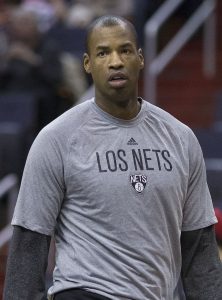
JASON COLLINS

National Basketball Association (NBA) (2001–14)

Played for seven different NBA organizations

(Photo courtesy of Keith Allison)


In 2013, Jason Collins, a 13-season NBA veteran, became the first openly gay active athlete in the four major sporting leagues. According to Sports Illustrated, the athlete gained the courage to come out from the realization that life is not guaranteed after the events of the Boston Marathon bombing that year.

Collins’ announcement came almost 35 years after Burke’s ordeal and the reception of his announcement clearly illustrates how far some professional sports associations and the political landscapes has come with regard to the LGBTQ+ community. Collins received public support from athletes like Kobe Bryant and Steve Nash; official statements from two former presidents of the United States, Barack Obama and Bill Clinton, were also issued expressing support for Collins and his decision. Although some people openly expressed some concerns regarding Collins’ coming out, it is significant to note that Collins’ career did not suffer in the wake of his announcement — if anything it gave him a spotlight he may not have found if reliant on just his NBA statistics. The support he received made him a leading force in the advancement of LGBTQ+ rights which is work he continued to focus on after retiring in 2014. In April 2014, Collins also featured on TIME magazine’s 100 Most Influential People in the World.

MICHAEL SAM

National Football League (NFL) (2014)

Many protestors stood for Michael Sam. (Photo courtesy of Mark Schierbecker)

Although Michael Sam’s experience as a gay man playing professional sports takes place around the same time as that of Collins, the outcome unfortunately more strongly resembles that of Burke’s. After completing a successful season in his last year of college football at the University of Missouri, Sam publicly announced that he was gay three months before the NFL draft.

Despite having won the Southeastern Conference Defensive Player of the Year award in 2013, Sam was only drafted in the seventh round by the St. Louis Rams. After the draft, the NFL and the Rams were praised by former president Barack Obama for their acceptance and progress in drafting an openly gay man to play in the NFL. However, it seems that this praise was premature as Sam was released by the team in the final round of cuts in order to retain Ethan Westbrook over Sam.

Sam was then recruited to be a part of the Dallas Cowboys’ practice squad but was promptly waived after only six weeks in order to open a roster spot for linebacker Troy Davis. It has been argued that the only reason he was released from both teams was due to his ability and had nothing to do with his sexuality. However, it is clear that his experience has not inspired much confidence in other possibly gay athletes in the NFL. With media sites reportedly focusing their scrutiny on mundane things like Sam’s showering habits instead of his performance on the field, it imposes barriers for others to follow in his footsteps.

It is clear from these three documented experiences that professional sports have a long way to go to be on the same wavelength with the LGBTQ+ community. Not all experiences have been bad, but it also cannot be ignored that even in this day and age, these bad experiences are still expected and sometimes accepted to be the norm. The general consensus should be that people are only assessed by what they do and not by their sexual preferences. The fact that we can question the morality of trading or cutting gay athletes shows that, despite what society would like to think about its advancement of equality, there is still a lot to be done to make sexuality invisible in decision-making in the sports world.

Old Music Friday: love and heartbreak edition

(Linda Shu / The Peak)

“Crazy In Love” – Beyoncé, Jay-Z

Danielle Davie: To me this is not a love song, but a party song that everyone can get into. It reminds me of school dances in elementary school, and then high school, and any throwback playlist. I love the nostalgia it brings.

Elisha Summers: I think every woman can relate to this song when it comes to love, especially the line “you got me looking so crazy right now.” You are lying if you say that you have never acted crazy in the name of love. Men bring out the crazy in us, am I right?

Lyz Boyd: Beyoncé definitely accomplishes a balance of sexy and sweet in this one, then Jay-Z swoops in and ruins it for me a bit. I definitely agree with Danielle in terms of it being a great nostalgic party song.

Courtney Miller: Yeah, still a banger, you know? In terms of setting the mood, this is like meeting someone on the dancefloor and seeing where it leads — could be sexy, could be hella not.

Natasha Tar: My mom used to play this song all the time. I think it was her favourite song for a solid year. Maybe she was heartbroken, who knows. I guess I like it by default.

“Shape of You” – Ed Sheeran

DD: If you have nine minutes to spare, I highly recommend that you watch the making of the “Shape of You” video that The New York Times put out. I think the song is crafted really well, and that referring to the “shape of you” (someone’s entire being, and not just their body) is a refreshing concept for a pop song about love.

ES: Love the beat of this song. Everything about it is so catchy!! Any time that it comes on the radio I can’t help but dance!

LB: I love this song. Everything about it is fun and sexy, the beat, the lyrics, the melody. It makes me want to dance despite the fact that I’m terrible at dancing!

CM: When I first heard this song, everyone was like damn this is shallow. Whether it’s the shallow interpretation or the deep one, this is a song that I like and love. Is it sexy? Not necessarily, but it’s seductive-adjacent I guess. Probably annoying NT by singing along so. . . gonna keep doing that.

NT: Yeah, I don’t find this song that sexy either. That said, it’s really catchy. ^ nope.

“Adore You” – Miley Cyrus

DD: It’s not that exciting, and the “I love you more / I need you more” message isn’t great. Be with someone who loves/needs you just as much you do them! Make sure they “Adore You” too!

ES: Ooooohhh this song gives me chills! I just love 2013 Miley . . . this song is adorable and hits me right in the feels.

LB: As someone who lives under a rock, I don’t think I’d heard this song until now and I was pleasantly surprised! I would really like to hear a stripped down/acoustic version of this, it would make the emotion come through more effectively as her voice currently gets a bit lost.

CM: I agree with Lyz, this could be better as a song in a stripped version. She’s definitely overproduced. The track has that slow kind of groove where I could almost see Magic Mike making this song work. It also gets pretty monotonous.

NT: Aw. This song is actually kinda cute. I can see this being played with the credits at the end of a romcom.

“Primetime” – Janelle Monaé, Miguel

DD: This song is dripping with sensuality. Janelle Monaé and Miguel are two beautiful people with beautiful voices, a great backing track — and that guitar solo! A very smooth, sexy track.

ES: Hmmm, I have never heard of this song before. I don’t love the lyrics and the talking section of it, but the rest is decently smooth. This isn’t something you would find me listening to, though.

LB: I’m not really feeling this one. The vocals are good, but everything else about it seems a bit generic to me.

CM: I really like Janelle as a person, so I have hopes for this song. Her vocals are spot on. To be sexier, it needs a heavier/better bassline. Miguel’s vocals work well with Janelle’s. Around minute two, the backtrack feels too repetitive.

NT: I do like her voice, but the lyrics seem pretty typical of a sappy love song. I think Miguel’s voice complements hers, too.

“Cameo Lover” – Kimbra

DD: I don’t like this one. It sounds like bubblegum and cotton candy tried to write a semi-PG love song, and it didn’t work out.

ES: I don’t like anything about this song and couldn’t listen to the entire thing. Whiny and cringe-worthy. Skip!

LB: This is one of my favourites from the playlist. It’s fun and upbeat, with some retro vibes that I’m digging. Lyrically, it’s not super convincing as a love song, but musically I’m enjoying it.

CM: I could see a rom-com montage accompanying this song. Conversely, the leading lady prancing through city streets, belting this to the best of her (limited) ability. Unless it’s Anna Kendrick, which would improve the scene’s appeal by 1000% at least.

NT: This song sounds way too cutesy romantic for me. It reminds me of that weird YouTube video of a singing bunny cuddling a carrot.

“Mama Papa” – Sauti Sol, Dela

DD: Other than the fact that the track isn’t mastered very well, and you’ll need to turn the volume up a lot compared to all the other songs, this is a really sweet song. I’m really getting into it.

ES: Catchy chorus but there is a reason why we don’t hear it on the radio.

LB: When this song came on I had a moment of extreme confusion, was I listening to the right playlist? Despite the fact that it is very different from the other songs on the playlist, it is a fun time. The lyrics don’t convey much emotion though, so I’m not really buying it as a love song.

CM: The strings at the beginning are pretty romantic. Then it morphed into the slow dance section of an island playlist. It’s chill, but after that first bit, only minimally romantic.

NT: It seems like a nice song, but I missed most of the romantic part? Maybe I’m not listening hard enough.

“Somebody That I Used to Know” – Gotye, Kimbra

DD: This song was so big back in the day! It isn’t a great break-up song (it’s too depressing) but, it is a great song to sing the chorus of over and over again in the shower.

ES: Here’s a high school classic. I remember that this song was all the rage when it first came out and for obvious reasons; great instrumentals, passionately haunting voice. Plus, we all have that ‘somebody’ that we used to know.

LB: I’ve lost my ability to take the heartbreak in this song seriously, due to how overplayed and parodied it was back in 2011. Coming back to it is enjoyable, but I’m still not taking it very seriously.

CM: I never really liked this song when it first came out, and age has not improved it. I also don’t find it romantic. This song is the epitome of “it’s a you problem.”

NT: I never found this song romantic! The guy seemed kinda petty to me tbh. Get over it, man.

“Hello” – Adele

DD: To be able to write a song this eloquent after experiencing heartbreak is amazing. Adele is great, this song is great, but Lemonade should have won. (We all already knew that though.)

ES: If you haven’t already listened to Ellen DeGeneres’ spoof on YouTube about this song (titled “Ellen Inspired Adele’s New Song”), I highly recommend giving it a listen . . . however now anytime that I listen to this song, that is all that I can think of. Haha!

LB: Adele is undeniably talented. Heartbreak just drips from her voice in this song, so much so that I can almost feel it. That said, this song is excessively long and repetitive. At one point I thought to myself, “Am I really still listening to this?”

CM: Agreed with Lyz, it’s a bit too long and drawn out. Other than that, yeah, Adele’s great and this song is such a great sing along in the car as you’re driving along at night in the rain. It’s very peak heartbreak aesthetic.

NT: I always liked this song. I always found that Adele was good at heartbreak songs, but sometimes it seems like that’s all she writes about? Kinda like a superior Taylor Swift.

“Love on the Brain” – Rihanna

DD: Rihanna is so powerful and tender at the same time in this story of unrequited love. I also love the instrumental. This song is great.

ES: Rihanna is killin’ it! I love how this song shows off Rihanna’s powerful, effortless vocal ability!

LB: I was expecting more from Rihanna on this track. It doesn’t feel like she’s using all the power she’s capable of in her voice. The first time I listened through, I zoned out for the whole song.

CM: This is pretty Motowny. It’s pretty smooth and nice for a tease, like burlesque, not strip. There are a bunch of opportunities for vocal runs and showing off, and I wish RiRi took more of them.

NT: Yes, definitely a sexy song.

“I Still Love You” – Jennifer Hudson

DD: This song doesn’t really do anything for me. Jennifer Hudson’s vocals are, as always, fantastic though. That person doesn’t deserve your love, Jennifer!

ES: I am not liking the techno aspect of this song. Is this the original? I think that it would have been much better without all the hyperactive music in it.

LB: I’m pretty lukewarm on this one. It’s very repetitive, both in lyrics and beat. In a few spots, Jennifer’s voice sounds awesome, but for the most part it’s not very noteworthy. Again the emotion of “I still love you” doesn’t really come through in the beat and tone of the song.

CM: Honestly, Hudson has an amazing voice and it is wasted on this techno trash. I can only hear Cher’s “Believe” on this track, which is a song I dislike with every fibre of my being. So 0/10 for sexiness.

NT: This has the beat of every single club song ever made. It reminds me of the one problematic “romantic” scene in A Night at the Roxbury.

“Thinkin Bout You” – Frank Ocean

DD: I love Frank and I love this song. “Do you think about me still? Or do you not think so far ahead? Cause I’ve been thinking about forever.” I love the sadness, the optimism, and how he seems to know his love story is a long one.

ES: Woooah, why have I never heard of this man or this song? Loving this.

LB: I have mixed feelings about this one. Initially, his voice sounds very nasal and gives me an instinctive negative reaction. However, when he moves into the falsetto part it becomes much more enjoyable. It’s also pretty adorable that he’s “thinking about forever.”

CM: The intro sounds like “Mama Who Bore Me” from Spring Awakening which is a song I’d much rather listen to. So now I’m like doubly disappointed. His voice is annoying and grating because of the nasal aspect. His falsetto is better, as Lyz points out, but I’m still gonna tap out of this romance-less song and listen to Spring Awakening instead.

NT: Eh, I don’t like this. I think it’s a bit too whiny to be romantic. Or sexy. Or anything other than whiny.

“Hotline Bling” – Drake

DD: Poor Drake! His booty call doesn’t call him anymore! Waah! (This song is a banger though.)

ES: This one is also in Ellen DeGeneres’ same YouTube spoof mentioned prior (Double the reason to listen). I’m not sure why this girl is ghosting Drake, but I am sure it won’t take him long to move on.

LB: Due to the aforementioned living under a rock, I think I have miraculously managed to not hear this song in its entirety until now. I don’t think I missed much. Drake’s voice is super whiny, I want to tell him to stop being a man-baby and get over it.

CM: “You used to call me” never and I loved that time in our lives, Drake. Let’s go back there. Cannot be sexy with this entitled whiny ass.

NT: THE BEST MEME SONG EVER, HANDS DOWN. Not sexy or romantic, but definitely a nice meme.

Political fanbase nicknames

0
Illustrations by Cora Fu

So you like politicians, huh??? So much so that you’re a self-proclaimed fan that stands beside them under all circumstances? That’s all fine and dandy, but let’s take a look at the nicknames for the fanbase(s) that you are a part of — because the politician you support says a lot about you as a person.

Justin Trudeau: The Trou D’eaus

We GET it, Justin Trudeau is very attractive and young (yes, when you’re a politician, anyone under 50 is young) but that doesn’t excuse some of his shittier policies. However, a large portion of his fanbase overlook the latter. These people melt into puddles at the mention of Trudeau and excuse any bad behaviour with “but he’s so fucking HOTTT.” Therefore, they’re The Trou D’eaus (holes filled with water). They’re probably just turned on just by the mention of him.

Bernie Sanders: The Arsonists
Bernie Sanders is the woke grandpa we all wish we had. So much so that many of his supporters just want to watch the world BERN — hence, The Arsonists. Imagine if every offensive old person was replaced with him? It would be fabuloussss! We need Bernie a lot more than Bernie needs us. Think about the possibilities of free college, universal healthcare, and legal weed!


Donald Trump: 1) The Trumpets 2) The Cat Sitters

Trump’s band of loyal supporters can be called one of two names — both of them equally degrading but hilarious . . . and I am 100% OK with this. The first option is
The Trumpets. Why, you ask? Think about it: Trump supporters are loud and obnoxious, and there are waaaaaaay too many of them (like every high school band’s trumpet section), and they’re in everyone’s face. At this point, are you proud you like him or do you shove your stance in our faces to convince yourself that you’re not a flaming pile of garbage behind the Trump Hotel? The second one is The Cat Sitters, because Trump supporters sure like (or are not angered by) people grabbing other non-consenting people by the pussy.

Emmanuel Macron: The Macarons

The newly elected president of France’s supporters and the delicious French pastry have a lot in common. A macaron contains mostly air, comes in whatever flavour the general public wants, and is mainly for rich people. In comparison, Macron’s supporters stand behind a president who talks a lot of fluff, does whatever the public (read: not the working class) wants, and panders towards rich people.


Roy Moore: The Tu-Moores

Roy Moore’s supporters are a cancer to society, hence why they’re called The Tu-Moores. I mean, come on! What kind of decent person would support a pedophile?

Hillary Clinton: The Mintons

Much like the United States Mint, fans of Clinton support a person who is only concerned with making money. Don’t be fooled — she might pretend to care for you and your minimum wage job, but she’s secretly sucking all the corporate banks’ dicks.


SFU women’s basketball struggle in 72–55 loss to Concordia University

0
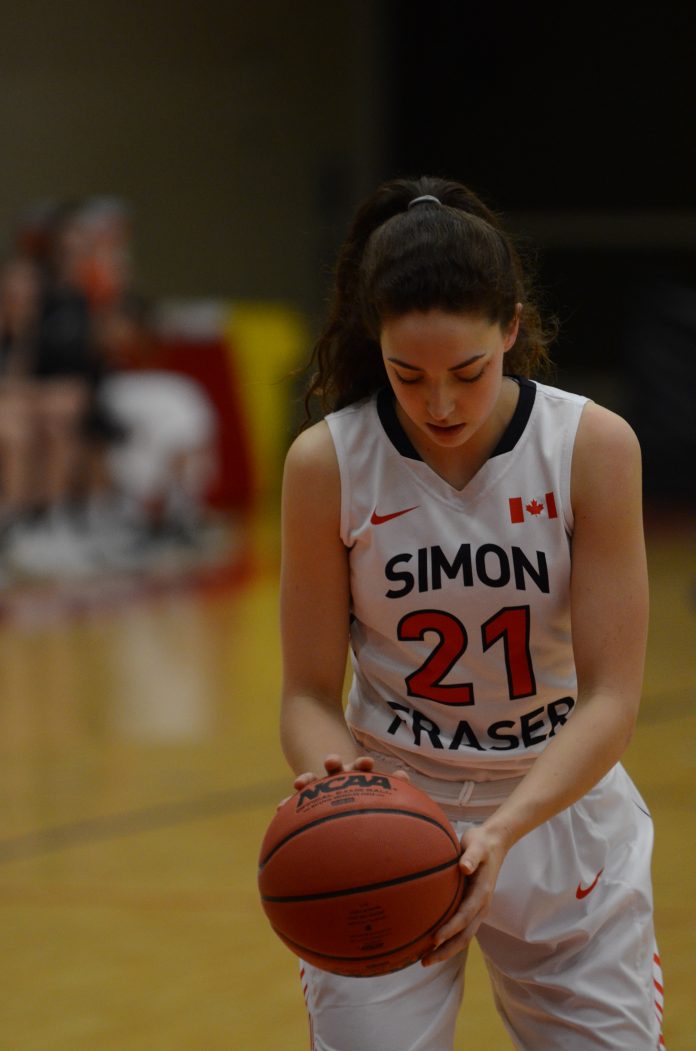
Sophie Swant's 19 points were not enough in the loss. Kelsey Nikl / The Peak

On Thursday night, the SFU women’s basketball team hosted Concordia University on Celebrate Diversity T-shirt Giveaway night. While many fans received T-shirts, the game itself was far from desirable, as the Clan got outplayed on both ends of the floor. While the game was within single digits after the first half, a slow third quarter ended any opportunity for SFU to pull off the comeback, as they eventually lost 72–55.

Sophie Swant kept the Clan in the game for the first half, as she was tied for the game high with Caveliers’ guard Danielle Hartzog with 11 points in the first two quarters. Swant currently leads SFU with 14.7 points per game this season.

As the teams went into the break, however, the Clan saw themselves down 38–29.

While things may have been expected to improve in the second half, they didn’t. The Cavaliers pushed their lead up to 16 points in the first few minutes of the third quarter, and never looked back. SFU struggled on offence in the frame, scoring only six points. The teams went into the fourth quarter with a score of 54–35, in a game that was all but over. SFU would eventually lose the game 72–55, being down by as much as 21 in the process.

Swant finished the game with 19 points on 7–10 shooting from the field. Tayla Jackson was the only other SFU player in double digits, finishing the game with 13 points.

Head coach Bruce Langford summed up the issue of the night, saying, “I thought we got out-competed. We got annihilated on the boards.” Annihilated on the boards they did, as Concordia outrebounded Simon Fraser 44–23 in the game. Even more shocking, however, was the fact that the Cavaliers had more offensive rebounds than the Clan had defensive rebounds, by a margin of 20–16. When asked about this, coach Langford responded with, “We have no hope if we give [another team] 20 offensive boards.”

Roster numbers have been an issue all season, and may become more and more of a factor as the season wears on. When asked if a short bench is hurting SFU’s chances of winning as we enter the last month of the regular season, coach Langford responded, “I’m wondering, ‘why did we come out and play like that?’ We didn’t play like that in Alaska last week . . . Are we tired? Maybe.”

With the loss, the Clan slipped to 4–9 in conference play, and eighth place in the Great Northwest Athletic Conference. Playoffs are still within reach, as the top six teams in the conference qualify. Unfortunately for SFU, Concordia currently sits in the sixth spot with a 6–7 conference record. They will next host Western Oregon University, who have an identical 4–9 conference record as the Clan. The game is on Saturday, February 3 at 7 p.m.

History in the making: Dee Rees

0
(Photo courtesy of Alberto E. Rodriguez)

Looking at her filmography, it is no surprise that the first full-length movie Dee Rees directed was a documentary. Eventual Salvation (2008) tells the story of her grandmother’s return to Liberia. Rees went on to direct Bessie (2015), a biopic of Bessie Smith starring Queen Latifah, as well as her latest work: the Netflix original Mudbound.

     Mudbound, adapted from book to screenplay by Rees, illustrated to me her command of history. She is able make history feel real with her attention to detail and well-developed characters. Mudbound employs a great deal of narration, something that rarely works well on screen (and sometimes it was too much), but the exposition coupled with compelling performances from the actors created truly nuanced characters. It is clear that Rees is not only a great director but a great writer, and critics definitely agree: Mudbound made her the first-ever black woman nominated for the best adapted screenplay Oscar.

     In addition to adapting Mudbound, she wrote Bessie and Pariah (2011). She is also in the process of working on An Uncivil War, — which she is credited for writing and directing — a film that depicts the life of journalist Gloria Steinem. Rees’ works delve into a variety of issues that plague America today, from the legacy of colonialism and racism, to sexism, homophobia, and transphobia. Pariah told the story of an African American teenager and her struggle to hide her queer identity from a society that does not accept her. Mudbound showed the life two farming families in the 1940s south, one white and the other black, and how racism didn’t just vanish after slavery. She also directed one episode of When We Rise a mini-series about the US gay rights movement. Rees has an eye for history and a voice we need to hear more from in 2018, and she is sure to oblige.

SFU researchers weigh in on the Vancouver housing market

0
Photo credits: Melissa Dimyadi

The rising housing prices in the Greater Vancouver region continues to be a hot local topic early in 2018, and SFU researchers are weighing in with their own analysis of the data.

Andy Yan, director of the City Program at SFU, spent two weeks analyzing the 2018 assessment data to create maps illustrating areas in Greater Vancouver where single-family homes are worth $1 million or more. The maps graphically revealed that up to 73% of single-family homes in Greater Vancouver are now worth $1 million or more. This is a 50% increase since 2014.

Yan also found that up to 19% of the homes worth more than $1.5 million were owned by foreign buyers. He believes the housing situation could even be a province-wide issue as the maps could help prove that the housing issue is a problem bigger than Vancouver.

According to SFU’s assistant professor at the School of Public Policy Josh Gordon, this rise in prices can be attributed to foreign and non-resident ownership of houses: “Whether housing is owned primarily on the basis of foreign income or wealth.”

In an interview with The Peak, Gordon commented that “the substantial, continuous influx of foreign capital into Vancouver real estate has served to ‘decouple’ the housing market from the local labor market. This has greatly harmed housing affordability for those who work in the region.”

“We are now one of the worst housing markets in the developed world in terms of affordability.”

Gordon believes these foreign “marginal buyers” are raising the housing prices for everyone by “setting the pace,” outbidding local buyers and increasing prices on the housing market overall. This affects sellers’ behaviour and allows a relatively small number of buyers to have a big effect on the market.

The BC government has introduced a number of measures to help mitigate the housing situation such as the “foreign buyer tax” introduced in July 2016 and the Empty Homes Tax in Vancouver.

Gordon, however, believes that the government should be more aggressive in their measures. He stated, “. . .the previous BC Liberal government undermined the psychological impact of the foreign buyer tax by subsequently introducing demand stimulus measures, which sent a signal to the market that they wouldn’t let prices fall.”

Further measures the government should implement, according to Gordon, include a property surtax which could be offset by recent income tax paid, as well as a method to verify residency of property owners in the region. He suggests comparing income-tax data and home ownership so that policies such as “locals first” could be effective identifying who qualifies as a local.

Gordon also advocates for more complete data to be gathered on where the foreign money for buying homes in Vancouver is coming from.


With files from The Globe and Mail and Global News.

The cosmological constant might not be constant, and neither is baby talk

0
Photo Credits: NASA/GSFC

SFU physics study questions cosmological constant

SFU physicist Levon Pogosian has shown that dark energy might not be considered the cosmological constant through an international study on dark energy that he co-led. Dark energy is the energy of empty space that makes up most of the universe.

The study, published in Nature Astronomy, documents data collected by the researchers as they studied dark energy density over time. Before this study, it was believed that dark energy did not change. However, the study’s results suggest that dark energy density might have increased over time. This finding runs contrary to the prevailing hypothesis, which is based on Einstein’s idea that the universe and the cosmological constant are constant, that density should decrease as the universe expanded. The study also suggests that dark energy’s repulsive gravity is responsible for accelerating the universe’s expansion.

“What we find is not conclusive evidence,” emphasized Pogosian. “We see that the data prefers dark energy if it was changing, but the preference is not sufficiently strong to rule out a cosmological constant.”

The researchers await results from the Dark Energy Spectroscopic Instrument Survey starting in 2018, in the hope that it will confirm their findings.


Mothers and fathers differ in ‘baby talk’

According to SFU psychology professor Tanya Broesch, mothers and fathers in urban and Western societies have different ways of talking to babies using ‘baby talk.’

Mothers altered the pitch of their voice when talking to babies, which was a common trait across cultures. Canadian fathers however, did not raise their pitch but slowed down their speech rate when practicing baby talk.

This research was the first of its kind to look at how parents alter their voices when talking to babies. It was conducted as part of numerous studies through which Broesch is investigating how early experiences affect development. Broesch commented on the significance of the data collected, saying, “Evidence for this suggests that this parenting behavior may be universal — something that is common across diverse societies.”

Another study showed that fathers from the non-Western South Pacific society of Vanuatu modified their pitch in a similar manner as mothers in Western societies. Broesch added that this evidence could demonstrate how similar communicative problems are solved with variations in behaviour across different cultures.

Broesch is currently finishing two follow-up studies with SFU linguistics researchers.

Downsize your expectations if you want to see Downsizing

0
(Image courtesy of Paramount Pictures)

If you want to maximize your time and money, don’t see Downsizing. The movie had such a promising, original concept, but it fell apart in the execution because the writer and director, Alexander Payne, seemingly couldn’t decide what his movie was truly about.

     In the film, “downsizing” refers to a medical procedure that shrinks people down to a mere five inches. The procedure is presented as the only solution to reduce human impact on the environment, and as a great way to solve financial issues (since for some reason, the conversion rate allows most to live like millionaires). While this process sounds promising, it has one major setback: the process is irreversible.

     The first thirty minutes of the film were genuinely entertaining, but as soon as Paul (Matt Damon) downsizes and his wife Audrey (Kristen Wiig) calls Paul to tell him she couldn’t go through with the procedure, the movie falls apart. It became a confusing mix of healing after heartbreak, love, politics, climate change, and the end of the human species. While all of these themes have the potential to make an exciting movie, the combination of all of them together made me feel like I was watching thirty-minute segments of completely different movies.

     This movie also fell short of my expectations because the main characters weren’t very memorable. Damon’s character seems to stay with a newfound companion only because he doesn’t want to take an eleven-hour hike, and Wiig’s character was also a disappointment, primarily because she just . . . disappeared. She played a key role in the first thirty minutes of the film and then vanished from the plotline, making her storyline feel incomplete. The most entertaining characters in this movie were actually the supporting characters played by Hong Chau and Christoph Waltz. In fact, the only good thing to come out of this movie was Hong Chau’s nomination for Best Supporting Actress for the 2018 Golden Globe Awards. Although she didn’t win, hopefully this nomination will lead to future roles and awards.

     Another reason I found this movie dreadfully boring is because it was advertised primarily as a light-hearted comedy, but there was minimal humour. I expected to see people trying to overcome all the hilarious challenges that would occur if we were only five inches tall, but the only focus on being small occured in the beginning and end of the film. Some of the scenes I saw in the original trailer that made me laugh (such as them using a bottle of vodka like a gigantic keg) were even completely cut from the movie. Downsizing not only lost thematic direction, but clearly lost sight of genre.

SFSS ELECTION HOW-TO: The importance of forming a good political slate

0

We’re only a few months away from being inundated with multi-coloured posters full of smiling faces, meaningless buzzwords, and bland slate names also known as the Simon Fraser Student Society Board of Director elections!

If you’re already a board member, you’ve probably started planning your campaign around November last year. If you are a newbie, I’d be surprised if you even thought about it yet. That’s why newbies rarely win.

Do non-board candidates have a chance? The last few years have had low candidate turnout, especially for executive positions, so the numbers are too skewed to say for certain.

But incumbent candidates have a distinct advantage due to experience, knowledge, and access to information. When multiple incumbent candidates combine their respective advantages by joining together in a slate, it only compounds that head start.

A non-incumbent candidate has two different routes they can go: form a slate of their own or go independent. Each requires a well-thought-out approach, but victory isn’t impossible. It would be great if this year was different from past elections, allowing for a more competitive race between the incumbents and non-incumbents. So, if you’re a new face who wants to run for office against an incumbent, here’s what you need to know.

A slate is a political group with a shared set of views, goals, and messages. Slates can save a lot of time and resources by co-ordinating advertising, campaigning, etc. Other shared benefits come at the ballot box: if someone votes for you, they’ll also probably vote for your slate members. Of course, the reverse can also be true, in that your slate could be punished by the electorate if you have any pariahs.*

Incumbents, meanwhile — people who already have positions on the SFSS — are so powerful due to experience and access to information. They have the experience of previously running in and winning an election. They know the SFSS bureaucratic system and what each position is like. They know the current state of society projects like the Student Union Building and stadium, and they have access to more information than regular members.

It’s almost impossible for a newbie to be able to come up with effective policy ideas, especially financial ones, with what little information they have access to. Combine that experience with others in the form of a slate and it’s easy to see why independents can’t compete. How do you get around this?

Let’s say you want to run your own slate. First, realize that an election is not simply a popularity contest; it’s a numbers game. You need to have a diverse set of candidates who are known and liked. If you’re a slate that is primarily made up of just one demographic, you’re going to end up running short of votes. Student electoral apathy seems to be uniformly distributed, so don’t count on getting a high turnout from a small base.

No, what you need are candidates from multiple student areas: gender, ethnicity, interests, knowledge, etc. Not only will this give you a group with a variety of perspectives, experience, and ideas, it will also give you a wide set of demographics to earn votes from.

You also need each candidate to convince their group(s) to vote for your slate members. For example, you have a full slate of 16 candidates, if each faculty representative can get an average of 100 unique votes for each at-large and executive candidates (since everyone can vote for them), then those people have each received 800 votes. And, if the remaining six execs and two at-larges can pull in 200 unique votes each for themselves and each other, than they’ve gained 1,600 votes each.

That gives the execs and at-larges 2,400 votes, which would give you a pretty solid chance of winning. No one received more than 1,200 votes in the last election and the more people who run for a position, the more likely vote splitting will happen, which might be to your benefit. So you and your slate members need to work your asses off to get your base voting.

If you do decide to go it alone, you’ll have to know your stuff, be visible, and hustle for the whole campaign period to gain the votes. Only one non-incumbent independent candidate, Enoch Weng, has become president since 2011; Weng benefited from vote splitting, a sizable personal network, and clear messaging. Also, while you can’t campaign until the week before voting starts, you can talk with people about issues, do research, attend board and committee meetings, and ask questions.

To summarize: If you’re a newbie thinking of running for the SFSS Board, you’ll need to account for a board-run slate. Find compatible slate members across multiple student areas and demographics that are known and liked to give you the largest possible set of potential voters. Co-operate to win votes not just for yourselves, but for your fellow slate members, especially the at-large and executive positions. If you can do that, you’re on your way to being a strong competitor.

*From 2005–7, almost every candidate ran on a slate. Slates lead by incumbents tended to do well, while independent candidates did not. For the 2007 election, the board banned slates to reduce partisanship on the board, and to encourage candidates to run for their preferred position rather than for whichever spot on their slate was open.

However, this didn’t really make much of a difference. Slates or no slates, executive positions still often went to an incumbent. The total number of executive, faculty, and at-large candidates, meanwhile, fluctuated just as much as in the past.

When slates were revived for the 2014 election, two incumbent-led slates competed for student votes and the results showed it, with the board made up of both slates and two independent candidates. However, the last three elections were dominated by one board slate where almost every incumbent ran on that one slate.

Also, the last two elections had especially poor candidate numbers, with many executive positions running uncontested. I can’t speak for the 2016, but the 2015 board — speaking from personal experience serving on it — was just as partisan, even with the majority of seats going to one slate.