Home Blog Page 578

Album Reviews

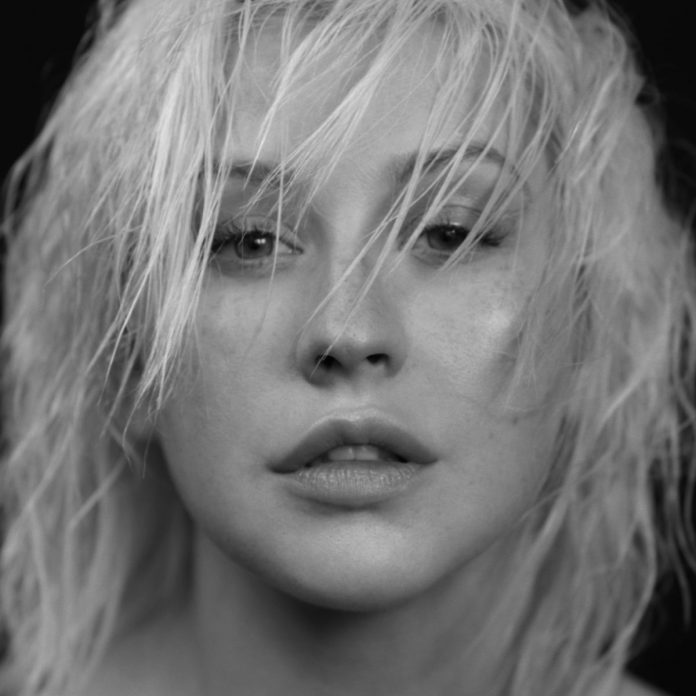
Liberation by Christina Aguilera

After six long years, Christina Aguilera is finally back with her studio album Liberation. The powerhouse vocalist has always been known for producing solid music, and her new songs continue to exhibit her strong sense of authenticity as an artist. While her previous major project, Lotus (2012), mainly consists of extremely catchy numbers like “Let There Be Love,” Liberation is primarily comprised of slow-to-mid tempo tracks conveying meaningful messages, with some upbeat elements.

     When she released “Accelerate,” the first single of this album, featuring rappers Ty Dolla $ign and 2 Chainz, I initially felt it had a little more rap than I anticipated, but the fun, sing-along tune made it worth a listen. “Twice,” my new favourite of hers, is a haunting ballad and a perfect combination of rawness, restraint, and emotion, proving she still has one of the best voices on the planet.

     The lead single “Fall in Line,” a duet with Demi Lovato, is an explosive female-empowerment anthem paying homage to what she has stood for since the beginning of her career. It’s a profound musical creation that did not disappoint. Overall, with Liberation under her belt, Aguilera is having an amazing return to the spotlight. – TC

Nasir by Nas

There are implications which arise from naming an album after yourself; your listeners expect something personal and revelatory, a glimpse into the artist behind the music. Unfortunately, there isn’t a lot of Nasir Jones in Nasir.

     For his first album in six years (following 2012’s Life Is Good), expectations were high for the revered rap veteran’s latest offering. Fans were expecting Nas to address the allegations of alcoholism and domestic abuse raised by his ex-wife Kelis. Nasir, however, doesn’t just fail to address these issues: it fails to offer anything personal from the rapper at all.

     Nasir attempts to play to Nas’ strength — his ability to craft songs around tight, visceral concepts — but even this falls short on Nasir. “Adam and Eve” feels like too many ideas mashed into one song, and the gorgeously-produced “Everything,” with its haunting chorus of “if I could change anything, I’d change everything,” deserves better than an entire verse devoted to anti-vaxxing. Nevertheless, the production is solid, giving Nas a distinct aura of grandiosity, and “Cop Shot the Kid” builds a simple vocal sample into an anthemic condemnation of police brutality. Nas is well-established as one of the best rappers alive, and he’s still impressive on Nasir, but this album simply feels like a series of missed opportunities. – NM

K.T.S.E. by Teyana Taylor

Since Kanye West released ye a few weeks ago, I’ve had a clip of Ty Dolla $ign singing “Keep that same energy” (off “Wouldn’t Leave”) playing in my head near-constantly. It turns out that the lyric was a preview for the last album of West’s Wyoming Sessions, Teyana Taylor’s K.T.S.E.

     Taylor is one of GOOD Music’s lesser-known acts, having only released one album through the label (2014’s VII), but she’s a vastly underutilized R&B talent. For Taylor, West managed to craft a very mid-2000s R&B-influenced project, built around lush guitar loops and seductive soundscapes. The biggest left turn comes at the very end, where “WTP” bounces and vogues with all the energy of an Azealia Banks hit.

      Despite feeling somewhat unfinished (something Taylor admitted to herself and a consequence of West’s ambitious release strategy), K.T.S.E. is a great closer to the Wyoming Sessions. Taylor is immensely talented, and while she deserves better than a rushed album at the end of a long five weeks, she nevertheless delivered what will go down as one of the best R&B projects of the year. – NM
WHAT GRINDS OUR GEARS: International duties are the worst surprises ever

0
Image courtesy of Air Cargo News

Online shopping is like receiving a Christmas present, except you bought it yourself. You get to obsessively track your package the minute the “your item has been shipped” email arrives in your inbox. Who doesn’t love clicking the refresh button 1,358,506 times a day?

You know what I don’t love though? International duty fees. I get that countries want their people to buy domestic products, but don’t charge me my firstborn child because I don’t believe in nationalism.

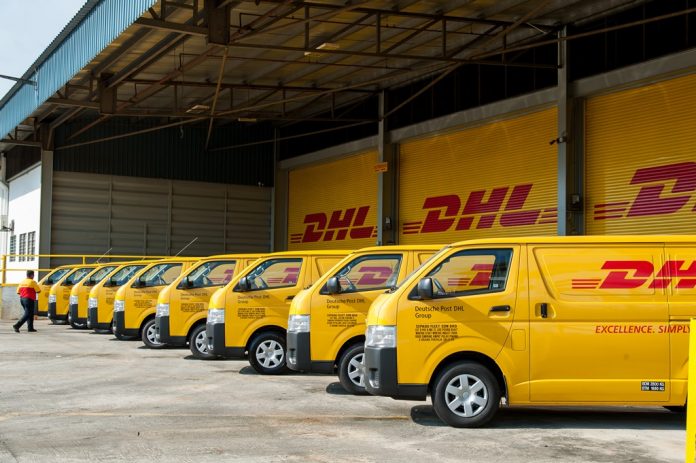
I’m not here to pay another $50 on international duties to a money hungry DHL when I’ve already spent hundreds of dollars on a new bag. Do I look like I have a never-emptying bank account? The worst part of all of this is when my predictions end up being wholly wrong and the actual amount of the duty hits me like a delivery van. Instead of begrudgingly paying the $10, I have to accept the fact that I’m probably not going to eat for the next 17 days while I type in my credit card number slower than my Grandpa walks.

In conclusion, while I appreciate shipping companies for delivering my stuff in record time, can they be nice for once and not be the reason I eat Mr. Noodle for two weeks straight?

There is an evaluation problem in Silicon Valley

0
Photo courtesy of REUTERS/Mike Blake

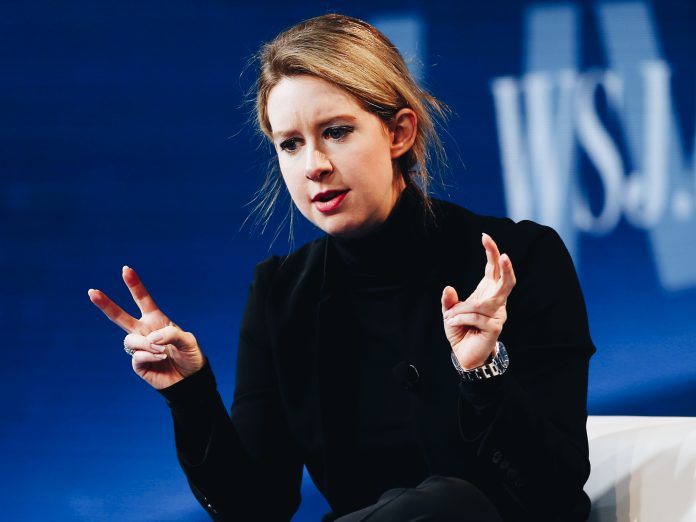
There was something irresistible about Theranos, the now-disreputed Silicon Valley startup, and its scheming founder Elizabeth Holmes. The possibility of revolutionizing the blood test, the cornerstone of a medical care technology industry worth over US$40-45 billion globally, created an itch in investors that was hard to ignore. So strong was the company’s allure that several prominent public figures, ranging from Rupert Murdoch to the Walton Family, invested large sums in the company.

Some major factors contributed to the successful duping of countless investors to the tune of over $700 million. A Machiavellian combination of major corporate secrecy, zero external validation or peer review, and lack of medical expertise among investors allowed Theranos to pull off its long run. In addition, the company exploited a regulatory grey area to avoid the scrutiny of external actors. Usually, diagnostic companies buy testing machines from external companies, and thus, the machines they use have to be FDA approved. Theranos built its own testing equipment and were allowed to bypass FDA inspection.

Elizabeth Holmes herself has been described as having “sociopathic tendencies” by John Carreyrou, the Wall Street Journal investigative journalist who initially uncovered the company’s misdeeds. He revealed that Holmes lied about numerous things, including the types of tests Therano’s machines could do, a contract with the Department of Defense that didn’t exist, her schooling, and how much annual profit Theranos made. Holmes lied with no remorse, knowing full well that her technology could put the lives of millions in danger. Carreyrou wrote Bad Blood: Secrets and Lies in a Silicon Valley Startup about Holmes’s embellishment and deception regarding Theranos.

But no matter how many justifications one throws out for the mistake investors made in financing Theranos, the truth is that at no point did any of them try to verify the capabilities that startup’s technology purported to have.

Had they done as such, they would not be where they are now. Even if Theranos were to resisted attempts at verification, that resistance itself would be a sufficient warning sign for investors to withdraw from the company. Yet nothing of the sort happened. A major cause of this occurrence is the culture of over-evaluation that has become commonplace in Silicon Valley.

Companies such as Snapchat and Pinterest have been given billion-dollar evaluations despite having never made any revenue, and few raise eyebrows over this. FOMO — “the fear of missing out” — seems to be a huge part of this culture. One never knows when the next billion-dollar evaluation will be assigned, and it might very well be given to the company in which you currently have a chance to invest big while it’s still small.

Suddenly, it makes a lot of sense to put money in a company that hasn’t been properly vetted, so long as those around you seem to be doing the same.

All it takes is a few people to start the chain reaction, and the next thing you know, suddenly everyone is doing it — all of them ignoring the signs of catastrophe and premature investment. They share the assumption that surely someone in the crowd must have a good reason for doing what they’re doing, and so they all follow the example of this hypothetical person.

Well, it turns out that sometimes, it’s the blind leading the blind, where in fact none of the investors have done their diligence. But forget the investors for a moment — what’s worse is the potential impact that this company might have made already on the poor, unsuspecting people who relied on the assumed accuracy of the blood tests completed by Theranos technology.

Say you had invested in Snapchat, and it turned out to be a sham. Having that happen with a company that allows its apps’ users to send pictures to their friends has far smaller consequences than having it happen with a bogus medical technology company. This is a fact that needs to be recognized by the venture capitalists and private investors of Silicon Valley.

Imagine a person with mild irritation goes to a doctor to see if their pain is something to worry about. This person is later told that they have nothing to be concerned over, as all of the blood tests have come back negative. Think of all the ways this could go wrong for them. Even the possibility of death is not out of the question.

Now, imagine this happening to thousands of people.

This is exactly what an investor needs to think about before backing a medical company that they know hasn’t been vetted. Investing in a company is what allows it to continue to operate, and if its operations are dangerous or harmful, then your contribution facilitates that harm. This isn’t to say that Theranos’s investors bear moral culpability for the company’s wrongdoing, but when money is thrown without careful scrutiny, the impacts of the decision can be hard to anticipate.

The companies of Silicon Valley have created some of the most innovative and groundbreaking technology products and services the world has ever seen. It can be hard not to become blinded by the prospect of getting involved in the next supposed game changer. Yet more must be expected by those involved in facilitating these companies.

Premature investment in an unverified technology might make sense statistically speaking, when the industry you’re funding reliably creates revolutionary products. Even if you get the occasional Theranos, it is worth it, so long as you’re not missing out on the next Uber. But this assumes that the shortfall of investing in a fraudulent company lies solely in the loss of capital. It doesn’t.

Financial contribution is a form of implied trust for many others watching, and when the rich and powerful put their faith in something, those around them assume that it is something trustworthy. If Silicon Valley and other investors do not learn from this whole debacle, more victims of the next duplicitous company lie just around the corner. This next time, the moral responsibility might stand with the investors as well.        

World News Beat

0

Filipino soldiers battle with Islamic State supporters for control of town

Mechanized units of the Philippines Army drove pro-Islamic State Bangsamoro Islamic Freedom Fighters (BIFF) supporters out of the southern Philippines town of Maguindanao into the countryside. The militant group had held the town for 12 hours.

     Four members of the militant group were reported to have been killed, with two others injured. Two Filipino security force members were also injured.

     The Filipino military has been conducting operations to prevent urban attacks by militants over the last four months, resulting in over 40 BIFF members being killed. The Filipino president had warned that pro-Islamic State groups were trying to create their own state.

With files from Reuters.


Rising death toll from Quebec heat wave

A blast of hot temperatures in Quebec has helped caused around 54 deaths, with many of the victims being around the ages of 50–85.

     Temperatures reached 35 C, together with high humidity levels and a smog warning. People were encouraged by officials to increase their fluid intake, limit exercise, and find air conditioning or shade. People were also advised to check on the elderly, the sick, and other vulnerable demographics.

     Officials say this is one of the worst heat waves Quebec has seen. Ontario also recently issued its own hot weather warnings.

With files from BBC News.


Thai cave rescue completed

The 12 boys trapped in a Thailand cave have been rescued.

     Divers from the Thai military and the international community gave the boys diving lessons and heavily sedated them before guiding them out over a three-day operation. The boys were then transported to the Chiang Rai Prachanukroh hospital for medical examinations.

     Thai Navy SEAL Saman Gunan, a member of the dive team helping to rescue the boys, died on the mission when he ran out of oxygen.

     The boys, aged 11 to 16, were in the cave for 17 days alongside their 25-year-old soccer coach, and they each lost around 4.5 pounds on average.

    The boys, who play together in a soccer team, are believed to have journeyed into the cave to commemorate one of the their birthdays.

With files from The Straits Times,  BBC News, The Sydney Morning Herald and The Guardian.


Germany’s ruling parties reach deal on how to handle refugees

The governing parties in Germany reached a deal on how to handle refugees already in the EU. The leader of the Bavarian Christian Social Union had initially wanted to block entry of refugees at the German border.

     The deal will see migrants sent back to the EU countries where they had first sought asylum. This agreement also helped to maintain German Chancellor Angela Merkel’s fragile coalition government, which was in danger of breaking over the migrant dispute.

    15,414 individuals had applied for asylum in Germany last year, though the number of migrant arrivals appears to be falling.

With files from Reuters.


Amazon product reviews for SFU degrees

Image courtesy of Amazon

Bachelor of business administration
✩✩✩✩
This degree was very expensive, but it works pretty well. I get decent returns on my investment. Because of the Co-Op Add-On, I got several job offers right after graduation. Would be five stars but degree was missing “social life” when it arrived. –MG

Bachelor of Arts, economics major
✩
Nice – MG

Bachelor of Arts, communications major
✩✩✩✩
Overall, I’m satisfied. It’s useful. If you’re into writing about how reality is socially constructed until your fingers fall off, then this is the major for you. I like most of the profs, but the lectures could be a bit dry. Some of them just go on and on. I feel like I’ll be staying in school until I start wearing dentures. Plus, I can’t stand that joke from students in other faculties that comes with the territory: “What do you guys do in Communication anyway? Communicate?” For those who are considering Communication, you’ll be alright . . . I think. – TC

Bachelor of Arts, communications major
✩
Degree did not come assembled, and did not include batteries. – AB

Bachelor of Arts, history minor
✩✩ +1/2
Degree did not contain sufficient mindless memorization of dates. Studying history, I was forced to do things like actually try to understand the broader context of why the world is the way it is today. Would much rather stuff dates of dubious import into my brain until I can’t take it anymore. Overall unimpressed with the teachers, who actually tried to engage with the students rather than scribbling furiously on a chalkboard and yelling at us to keep up. On the bright side though, I did learn that Canada isn’t part of the United States.  – AB

Bachelor of Arts, cognitive science major
✩✩✩✩
I learned a lot of cool shit about the brain. But I’m still not really sure what cognitive science is. All I know is that cognitive science majors don’t like it when their field is compared to psychology. – AR

Bachelor of Arts, cognitive science major
✩✩✩
The content of this package seems valuable in itself, but it lacks compatibility with the job market, which makes it seem a little useless.  – AR

Bachelor of Arts, philosophy minor
✩✩
Return Policy? – AR

Bachelor of Science, biology major
✩✩✩✩✩
I decided to study fungus as my speciality, and I have never made such a great decision. As soon as I began my study of mushrooms, I was absorbed into the superbeing that all fungus professors and students belong to. I now love the taste of dirt, hate sunlight, and make fungus-based puns at every opportunity. I know the effects of mushrooms on every livable species, and grow morels in my house just to be closer to them. Mycelium now threads through my body, and I no longer need to breathe. On the upside, I can finally say that I am a FUN-GUY – IE

Bachelor of Science, biology major
✩✩
I originally ordered my biology degree to deal with my employment problem, and so far, I have been very disappointed. To begin with, it was meant to arrive in four years, but ended up getting here in five and a half. Not only this, but upon receiving the product, inside was a piece of paper stating: “Employment not included. Look online for great deals on Graduate Degrees!” Buyer beware, I suppose. Thankfully, I just ordered a nursing degree, which will hopefully arrive quickly and finally give me the employment I desperately need. – IE


Playland Nights is great for the adrenaline junkie, but not so great for the budgeting student

0
Image courtesy of PNE

For $31 in advance, or $34 at the door, you can enjoy five hours of children-free fun at the Pacific National Exhibition’s Playland Nights events. Running from 7 p.m. until midnight on Fridays in July, if you’re an avid amusement park ride enthusiast, then you need to cash in on the opportunity.

     The major selling feature is that the event is 19+. You don’t have to deal with kids, or stressed-out parents running after their kids. If you’re in your mid-20s, this night is pretty much made for you and your friends.

     Sadly, not every ride (like Atmosfear) is available during this event series, but most of the major players are ready for action. Something they don’t advertise (but should!) is that the lines are pretty short. They’re at their emptiest right at the start of the night, and you can get on the Wooden Roller Coaster, the Corkscrew, or the Hellevator in under three turns.

     Lines only get a little longer throughout the night, except for the Wooden Roller Coaster, which can take six or seven turns around 10:30. The great news is that if you’re a fan of The Flume (better known as the log ride), you can ride that sucker all night long because somehow no one wants to get wet on a Friday night.

     Playland offers a VIP experience for $81 advance and $84 at the door, but it’s not worth it. You get to jump the line at 10 different rides once each, an express entrance to Playland, and a special bar, but that doesn’t justify the added $50 spend.

     They also have other adult-oriented experiences, only one of which is included in your ticket price. New this year, if you trek to the back of the park at any hour on the hour, you can be treated to a 30-minute mini-burlesque show, featuring several different acts that aim to delight an audience that grows throughout the show, with their fun and tasteful clothing removal.

     There are, as always, some downsides to what seems too good to be true — and brace yourselves, because they’re worth considering if you’re not going to Playland Nights for the rides. It’s an expensive evening. If you’re looking for alcohol, you’re better off hanging out with friends beforehand and getting your pre-drink on because these bad boys are not student-budget friendly.

     Beer starts at $7.50 and cocktails and martinis go up to $12. You might be thinking, “oh, that’s about on par with some restaurants,” and monetarily, you would be right. But considering they use small plastic glasses, you’re not getting all the drink you paid for. And don’t forget: you can’t take your drinks on the rides with you.

     Unlike during the day, you also have to watch out for the overly intoxicated gangs of friends roaming around the park, threatening to puke after the spin-tastic anti-gravity experience that is Alien Invasion. If you like drunk people, or you plan to be one of those obnoxious groups, then you’re all set.

     So if you love the adrenaline rush and can enjoy yourself without buying too much liquor, it’s a no-brainer. You can circle through all the rides a few times before you turn into a pumpkin at midnight and get thrown out. If you just want a fun night with drunk friends, maybe find a bar with drink specials or get rowdy in a friend’s basement instead.

How Did Simon Fraser University Get Its Name?

0

Ever wondered where SFU got its name? The Peak brings you some answers. (P.S It’s a lot less straightforward than you might think).

Presented by Sina Khalili, Edited by Melissa Campos

POLITICAL CORNER: Is our world becoming more national and less international?

0
Image courtesy of El Español

Living in a first-world country, it now seems almost impossible to be disconnected from anything. For a long time, we’ve seen the increasing interconnectivity of our world through the internet, electronics, and international politics. Some have rightly argued the potential downsides of this increasing globalization, but I feel that the old adage still rings true: united we stand, divided we fall. Yet, it seems like nations the world over are increasingly pushing for division.

Leading the charge in the division department seems to be none other than Donald Trump with his lack of understanding of international politics. It seems like if a deal or treaty benefits anybody other than the US, then the US is getting a “bad deal.” Trump’s already discussed his distaste for NAFTA at length and a couple weeks ago the US officially pulled out of the UN Human Rights Council. Now, international tensions are riding higher as Trump seems to be taking aim at the WTO, the EU, and NATO. One has to wonder why Trump seems so concerned about peace with North Korea while he continues to push his closest allies away.

Make no mistake though, our friends across the pond seem to be having their own difficulties. Brexit turmoil continues to be a mainstay in UK politics, though despite much opposition, it appears that the Tory government is still intent on leaving. In the meantime, Eurosceptic parties across Europe continue to rise. Poland also made headlines last week after the government passed legislation to give themselves more control over the country’s courts, despite criticism from the EU and numerous European states. And Russia, well . . . continues to be Russia.

Let’s face it: this posturing and these power moves don’t do us any favours. All of it just breaks down the trade, the policy, and the peace that we’ve worked so hard to build for decades. It’s time that all the world’s leaders wake up and realize that, in the end, the people who are going to have to deal with the fallout of their divisive actions are none other than the citizens they claim to be protecting.

Still figuring things out as a university student is OK

0
Image courtesy of worldofweeks

Here we are, in our 20s and in the midst of our university careers, ready to enter “the real world.” We emerge proudly sporting a cap and gown, a distinguished post-secondary degree in our hands — but still bare, vulnerable, and without even a single notion of how to survive once we leave.

How can we be expected to know exactly what to do with our lives so soon? We have an unspoken expectation from our parents and other older adults to get through life with as much speed as possible. They start asking us what we want to do halfway through high school, as if we learned enough in three measly years of education to figure out our future. We constantly get compared to siblings, cousins, friends who have their lives more together than us. They’ve already been accepted to graduate school, while you’re still in the process of switching your major.

Those who seem to be clearing life milestones — whether those milestones are finishing university, getting a profitable job, or climbing the corporate ladder — with the most rapidity are seen as the most successful. This puts immense stress on those who take a little bit more time to figure out their trajectory. It leads to what is becoming a new phenomenon of quarter-life crises, mocked by older generations but a very real and genuine issue for those who experience it.  

There’s this lie that other adults feed us when we’re kids: the adults know WTF is going on in life, they have it all figured out, and they know exactly what they’re doing and why they’re doing it. Adults are 100% sure of what they’re doing, and so what they do is always “the right thing” because they have it all figured out.

I think adults let kids fall into believing this lie so as to make themselves feel better about having absolutely no idea what is going on, and even less of an idea as to how to figure it out. As kids, we believe the lie . . . and then we grow up and realize, wham, there really is no secret to be figured out here. We’re just as screwed on this side of the fence as we were on the other.

That leads to the fact that we have no idea what we want to do with our lives. Society — being almighty and all-knowing — expects us to have it all figured out. By the time you’re in post-secondary, and definitely when you’re nearing the end of it, you should know what to do.

I think a lot of it has to do with the fact that we have so many options. It almost seems like there are an unlimited amount of routes one could be taking. Since we have so many options, we are constantly questioning whether the route we have chosen will culminate in success. We’ve all probably met someone who’s suffered through a quarter-life crisis. Personally speaking, I have so many interests that I don’t know which one to follow, and I imagine it’s similar with you.

It’s OK if you don’t know what is going on, what you want to do, where you’re going. It’s perfectly fine if you’re still figuring it out — know that you’re certainly not alone in this confusion. A degree earned after six years of study is still as much a degree as one that is fast-tracked in three years.

There’s no single destination that we all need to hurry to reach. It’s all about the journey.

Western Canada’s first dockless bikeshare service launched by SFU alumni

0
(Photo courtesy of U-bicycle North America)

Western Canada’s first dockless bikeshare program, U-bicycle North America, has been launched by a team of three SFU alumni. The U-bicycle team is lead by an all-female trio, CEO Grace Min (BA, sociology and education), Chief Strategic Officer Angel Fu (BBA, finance and marketing), and Business and Chief Marketing Officer Mandy Chan (BA, communication).

     Describing the goal behind U-bicycle, the team wrote to The Peak over an email interview that “U-bicycle plans to support members of the community an affordable and reliable mode of transportation [sic] by building a smarter and greener city.”

     Min wrote that the goal behind launching U-bicycle was to improve city living through eco-friendly transportation. “What inspired me to set up U-bicycle was BC’s clean air and amazing cycling infrastructure. I saw the opportunity of bringing this concept to promote healthy living, increase interconnectedness and a business that has a positive environmental impact.”

     When asked why there was a need for dockless bikes, CEO Grace Min replied, “Accessibility, affordability and sustainability.” She explained that the dockless solution takes up less space on a busy road and provides a point-to-point commute solution and convenience. Min continued, “Users can pick up a bike anywhere and park the bike in a safe and legal location and continue on with their day. Having a dock-less [sic] bike share system allows more users to ride a bike since they can find a bike in their neighborhood and with its affordable pricing, more people can use the bikes for their daily commutes.”

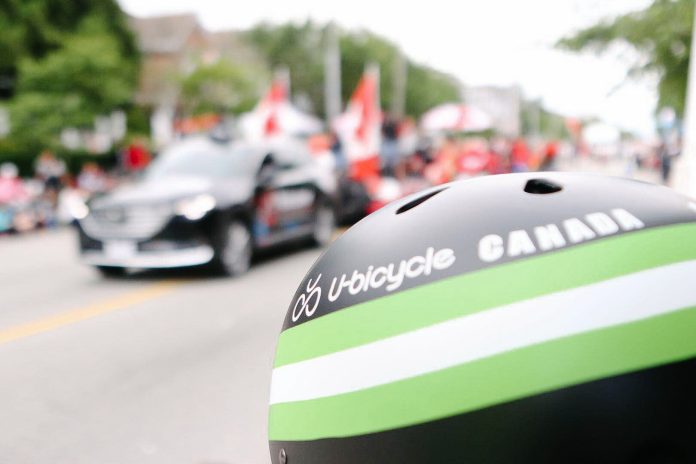
     According to Min, the company’s smart bicycles are specifically designed to cater to the residents of BC. When asked how exactly the smart bikes specifically cater to BC residents, she replied, “With specific modifications such as the enhanced fenders on the rear wheel for those rainy commutes, to the customizable and adjustable seat designs friendly to users of all shapes and sizes.” Min further added that “U-bicycle will also provide a complimentary helmet that is to be used during the rides to abide by the B.C. helmet laws.”

     Explaining how the U-bicycle system works, Min stated that “it operates through a mobile app.” She continued, “To rent a bike, users need to make sure that their data and Bluetooth is on. Users can pick up the bike that they can locate on the map, scan the QR code, ride to their destination and end their trip by physically locking the bike (at the back wheel) and click ‘Complete’ on the app.  Every 30 minutes ride is $1 (+5% GST).”

     U-bicycle launched its service in Victoria, BC on October 2017, and SFU News reported that they operate 450 bicycles in the provincial capital. The company plans to expand to the lower mainland and beyond. Min announced to The Peak that U-bicycle is officially launching in Port Moody.