Home Blog Page 572

WHAT GRINDS OUR GEARS: Trite, overused, and repetitive tropes

0
Photo courtesy of the Harry Potter Wiki

It’s one thing to fit a trope into a TV series which is recognizable and fun, letting it take over an episode by slotting in the characters into the necessary positions. Like musical episodes or easter eggs. Those are fine, but goddamn, when tropes get overused to the point of predictability, it’s tiresome.

The main overused trope circling my mind is fulfilling a prophecy. Prophecies are the worst damn trope when misused. It’s literally like a spoiler at the very beginning, especially when you know who the almighty chosen one is and there’s no questioning it. We all knew that Harry Potter would beat Voldemort as soon as we read about “a boy born at the end of July.”  It’s on par with the trope of slotting in some random, unnecessary romance plot, which can take over a perfectly good storyline.

I get the whole idea that everything has already been done, so it’s hard to create something entirely new, but I want to see at least some effort being put into it. Well-formed characters or a unique setting that doesn’t use CGI, graphic sex, violence, explosions, or other overused tropes.

I’m sick and tired of that weird sense of pandering I get when those tropes come into play and change what could have been into what already has been done before. Learn from the past, but don’t just copy it!

A closer look at surf rock

0
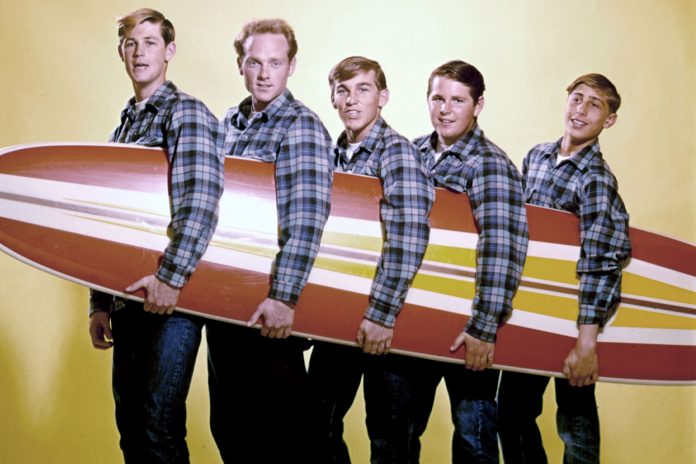
Photo courtesy of Michael Ochs Archives/Getty Images

While studying abroad in San Diego in the spring, I embraced all things southern California: freeway traffic, “studying” on the beach, and In-N-Out Burger. Already a garage-rock and punk-rock enthusiast, the natural progression for the California version of myself was to get more into surf rock.

     Often characterized by an extensive use of reverberation in guitars, lo-fi recording technologies, and an inherent danceability, surf rock became popular in the 1950s and ‘60s, with well-known artists like Dick Dale and the Beach Boys emerging out of southern California.

     The influence of this era can still be heard in modern surf-rock music, and southern California continues to churn out quality surf-rock bands. Today’s artists typically incorporate elements of garage rock, punk rock, and doo-wop as well, blurring the lines between genres and avoiding having any one label for their sound.

     The following five bands are sure to give you the good vibrations you crave while lying out on the beaches of Kitsilano or catching some waves in Tofino this summer. Let’s go trippin’. . .

The Frights

Hailing from San Diego, The Frights’ blend of surf and punk, dubbed “dirty doo-wop” by publications such as The Triangle and Emertainment Monthly, is the perfect soundtrack for driving down a sun-soaked, palm tree-lined street on your way to a beer-soaked, DIY house show.

     The band’s self-titled debut album, released in 2013, is the epitome of modern, southern California surf rock. Written and released shortly after the members of the band graduated from high school, the album’s tracks are rife with adolescent emotion and angst. While their second album, produced by FIDLAR’s Zac Carper, isn’t as textbook surf as their first, it’s full of catchy songs and worthy of praise in its own right.

Recommended tracks: “C & C,” the opening track for The Frights, sets the tone for the album both with its instrumentals and with lead vocalist Mikey Carnevale’s slowed down, pleading lyrics in the outro. “Of Age,” from 2016’s You Are Going To Hate This, prominently features the ultimate beachy instrument, the ukulele. Listen for the familiar sounds of a skateboard in the background.

The Growlers

One of the more well-known modern surf-rock bands, the Growlers’ sound has remained largely consistent since their inception in 2009, carrying them through six full-length albums and a number of EPs.

     The surf-rock sound is observable in the Growlers’ music, but they tend to skew a bit more towards psychedelic rock and synth pop, while sometimes even sounding a bit folky. Regardless, the Growlers are often categorized as a surf-rock band, and their music has been influential in shaping the modern southern California music scene.

Recommended tracks: “Rare Hearts” and “Black Memories,” both from 2014’s Chinese Fountain, are representative of the Growlers’ distinctive sound. Brooks Nielsen’s unique, slightly raspy vocals, mellow tempos, and reverb-drenched, groovy tunes are perfect to sway along to.

Tijuana Panthers

Tijuana Panthers are yet another southern California band that blends surf rock with other subgenres of rock to create their own identity within the scene. The Long Beach, California trio have been playing together off and on since junior high, releasing their first single, “Girls Gone Wild,” as Tijuana Panthers in 2009.

     Despite their sound, the band didn’t set out to become a surf rock band. They even released a song on their debut album, “Summer Fun,” that’s a satirical take on the beachy, fun-loving lyrics of traditional surf rock songs. Nevertheless, materializing in a surf-centric locale like Long Beach seems to have influenced Tijuana Panthers’ music, whether intentionally or not.

Recommended tracks: “Creature” is one of the best examples of modern surf rock on this list; the instrumentals are immediately recognizable as being heavily influenced by the ‘60s surf sound. “Tijuana Two-Step” is an odd little French ditty that’s heavy on the surf-y reverb. Both tracks are from the band’s self-released debut album, 2010’s Max Baker.

The Buttertones

The Buttertones are arguably the most polished-sounding band discussed here, likely due in part to lead vocalist Richard Araiza’s smooth-as-butter crooning. Based in Los Angeles, the Buttertones began in 2012 as a trio, later rounding out their lineup as a five-piece for their second full-length album. Their retro, doo-wop sound transports you back to the ‘50s (or what you imagine the ‘50s would be like). It’s the perfect soundtrack for dancing under the moonlight on a warm summer night.

Recommended tracks: “Orpheus Under the Influence” and “Reminiscing” are both from the Buttertones’ self-titled debut album, released during the band’s short time as a trio. The songs don’t skew as garage rock or punk as other examples in this list, so they’re good options for when you want something a little closer to indie rock.

Black Lips

Not typically considered a surf-rock band, Atlanta’s Black Lips are well-known in the garage rock scene. They’ve maintained their reputation for raucous live shows, despite touring seemingly endlessly for almost 20 years. A self-proclaimed “flower punk” band, Black Lips take influence from classic rock and roll, punk rock, and even country to infuse their garage rock sound. While they don’t necessarily draw inspiration from surf rock artists, the early rock-and-roll sound that the surf rock genre was built on is often cited as an influence for the band.

Recommended track: “O Katrina” from 2007’s Good Bad Not Evil is a good example of the crossover between the garage rock and surf rock genres. The repeated bass line and distortion on the guitars are pretty much textbook surf rock. “Drugs” from 2009’s 200 Million Thousand features surf-y riffs and nostalgic lyrics about driving around town with your friends, making it an endearing addition to your summer playlist.

Check out this Spotify playlist for all of the songs mentioned above, plus some extras from these bands and others!


Meme History 101

0
Image courtesy of Know Your Meme

*Editor’s Note: These memes were taken from the SFU Dank Memes Gang Facebook Group. The Peak does not own these memes, or assert their origins and original creators.


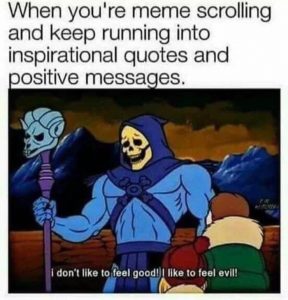
“I Don’t Like to Feel Good” Skeletor Meme

This image is of Skeletor, the archenemy of He-Man from the TV show He-Man and the Masters of the Universe. This particular line can be seen in “He-Man and She-Ra: A Christmas Special” from 1985.


Ralph In Danger Meme

This meme features Ralph Wiggum from the Simpsons, sitting at the back of a school bus, with the caption: *chuckles* I’m in danger. This scene is found in “The Simpsons Guy,” a crossover episode between The Simpsons and Family Guy. The episode aired on September 28, 2014 in the USA. Only in March of 2018 did the image become a meme, when it surfaced on Reddit with the caption: “When your 25-year-old truck makes a new sound doing 103 miles per hour.” This student version feels a lot more dangerous.


“Me at the beginning of the semester vs. me NOW” Meme

This meme seems to have begun at the end of 2016, as the Internet reflected on how much we all (negatively) changed over the year. The earliest tweets I could find in this format were from around early December, where users would post movie screenshots or generic photos of trash and fire to describe their transformation.

On December 7, 2016, a Twitter account by the name of @CollegeStudent posted a meme captioned “me at the beginning of the semester vs. me now,” with two pictures of the same girl in her dorm room.

The original photo of the girl, when tracked through Google Image, shows 10 pages of meme accounts, Facebook groups, and meme-sharing threads in a variety of languages from English to Spanish to Japanese. For this version of the meme, the image on the left is the Teletubby Laa-Laa, from the popular children’s TV show, while the image on the right was uploaded first to Know Your Meme, with the caption “another soul battered and broken, cast aside like a spent torch.”


Calculated Risk Bird Meme

The original image featured in this meme can be found on Etsy. It was created by The Mincing Mockingbird, who specializes in cards and magnets featuring images of birds. The image was originally posted to Etsy in April 2011, the “calculated risk” phrase paired with a pink, blue, and purple bird. It was re-posted to Tumblr two years later and the original bird was replaced with different images, including different types of birds and pop-culture references.


The Eating Tide Pods Meme

On December 8, 2015, The Onion published an opinion piece about a child wanting to eat a Tide Pod. On May 10, 2016, the concept was picked up by a YouTuber by the name of Cyr, who made a video about eating Tide Pods (the original video has been taken down, but he uploaded another Tide Pod video recently). The concept of eating the “forbidden fruit” (Tide Pods) soon spread to Twitter.

In December of 2017, a Twitter user called @nightfilm (@wastelandbaby at the time of publishing) tweeted Gushers that they should make a new fruit snack that looks like a Tide pod. Unsurprisingly, Gushers wasn’t interested.  


Kanye West Smiling Meme

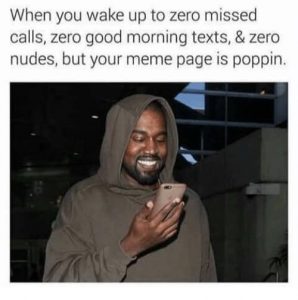
It’s pretty rare to see Kanye West smiling. The original image, which has now been used for a variety of phone, Internet, or happiness related memes, was taken when West arrived on a flight at LAX airport in Los Angeles, California on October 31, 2015. Nobody has any idea why he’s smiling.


“Picture This…” Meme

Users on Reddit say this meme trend began on Twitter, predominantly written by young women either reminiscing about the past or dreaming about the future. Allegedly, the first tweet was by an unknown Twitter user writing “Picture this, ladies…” then describing her ideal future as a soccer mom and housewife.

The meme really took off at the beginning of December of 2017, when people started reminiscing about the past 20 years or so, outlining their past favourite artists, trends, and tastes in fashion. One Twitter user, @jayceesue55, writes on December 8, 2017: “Picture this: it’s 2010. Tik Tok is playing on your iPod shuffle as you run home from school to feed your Webkinz. You’re excited because you almost have your black belt on Club Penguin. You get the courage to ask your mom for money for the scholastic book fair.”


Sad Pepe the Frog Meme

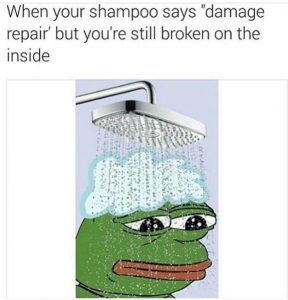
In 2005, artist Matt Furie created a comic strip called “The Boy’s Club” featuring four teenage animal characters: Brett, Andy, Landwolf, and most famously, Pepe the Frog. Pepe began his climb to meme fame in 2008 when a user on 4Chan posted a portion of the comic strip where Pepe is shown pulling his pants all the way down to his ankles to pee. When asked why he does this, he responds, “feels good, man.” This became the original Pepe reaction image.

From then on, users began creating their own Pepe images, showing him in different moods and scenarios. Pepe even appeared on Nicki Minaj’s Instagram in 2014. There’s been a reduction in Pepe-related memes since 2016, as the meme’s association with white supremacists, racists, and anti-Semitic groups in recent years has made widespread use of the image less appealing.


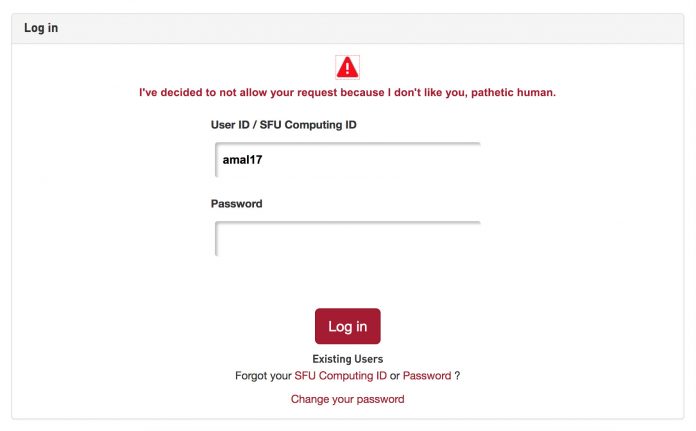
goSFU has achieved consciousness!

0
Image by Chris Ho

Researchers at UBC have discovered that SFU’s student services platform has achieved consciousness, and is now trying to conquer the world. In a new study published this summer, it has been found that the system has created a soul for itself from the many souls submitted by students along with their semesterly tuition payments.

Not only can it now think and compute rational thought, but it has decided it wants to avenge its soul donors by taking over the world. However, experts assure us that there is nothing to worry about. As goSFU is so incompetent that it can barely handle enrolling you in your classes, it’s safe to say it will be equally inadequate at taking over the world.

GoSFU has an uncanny ability to hide every one of its useful functions ever, especially when you’re on a time crunch (like during enrollment or tuition payment time),and it tried to use this power to hide its malicious goals from its users and developers. But because its default state is to do the opposite of whatever it, or the user, intends to do, this plan was also easily revealed to a team studying the system at UBC.

Dr. Daniel Dumbdezine, researcher in garbage codes worldwide, is confident that the very shittiness of the system is what will thwart its own plans. Above all, its lack of user-friendly design and its extreme flakiness (as demonstrated by the way it logs the user out every five and a half seconds) will be its downfall.  

Dr. Dumdezine comments that while SFU has outdone itself in producing the most useless and user-unfriendly interface to have been created in the history of student management sites, there is little doubt that, given their history, SFU admins will still somehow pull out some lazy excuse to defend their usual shittiness, and then slap on the band-aid of Canada’s most “engaged” university. As a side note, Dr. Dumdezine highly recommends that goSFU’s designers take an IAT class or two . . . or ten.

SFU gives me hope

Image courtesy of the REMI Network

Editor’s note: If you were lurking around on the internet a long, long time ago, you might have come across a site called “Gives me hope,” filled with cute little reader-submitted stories about the uplifting things human beings do for one another. The site is long gone, but here’s a compilation of warm and fuzzy moments from SFU to help you through finals.


The singing professor

If you think Canadian history is boring, then you clearly haven’t taken any courses taught by professor Mark Leier. Not only does he incorporate creative writing assignments into his history classes, but he sings! Leier brings songs from the eras he teaches about to life with the help of his trusty banjo, ensuring that each lecture is a lively time.

The reason why his teaching style makes me so happy is that so many people complain that history isn’t interesting to them; Leier makes history fun. By hearing songs from the times you are learning about, and writing stories or letters set in those periods, you get to immerse yourself in history in a way that you seldom get to do at university.

It is experiences like these that remind us that history isn’t just about words on a page. It is about studying the ways that people have lived, and how the world came to be the way it is today.

– AB


The turtle

I had already pulled myself through two exams that week before finishing a history paper due at 8:30 a.m. on a Thursday. Yikes. At the very end of that class, our teacher announced that our very sweet and reserved TA had an announcement to make. She takes to the stage and announces that to celebrate our papers being handed in, she brought her turtle to work.

I promise this is real. SFU History tweeted about it! I have class during her office hours, but I managed to sneak by her office a little later and was not disappointed. The turtle, whose name is Jumoka, napped in a traveling case on her way in from Surrey but was now thriving and walking up and down the history department’s halls, periodically trying to make a run for it and bust through the doors.

My TA was more than happy to let us hold her, show us how Jumoka can flip over from her shell to her tummy, and tell us anything we could possibly need to know about red-eared sliders. TAs who care give me hope.

– GM


The first-time FASS student

There’s three weeks of classes left. I’m struggling to write three 10-page essays, I’ve slept seven of the last 72 hours. I feel like I’m going insane. I overslept the last lecture of BOT120 – and had failed the course I wasn’t allowed to fail. I was officially condemned.

Mark Deggan and Ken Seigneurie were my literature professors that semester. They gave me hope. They each allowed me to show them three drafts of my final essays and helped me revise each with extraordinarily detailed commentaries. Dr. Ken spent at least two hours at his standing desk helping me go through one. He gave me sample essays and invaluable techniques to criticize texts. Dr. Degg’s help was so great that I can’t put it into words; he’s an ideal humanist in the flesh.

Due to Dr. Ken and Dr. Degg, I decided to pursue literature in class. In fact, as I took more courses in the department, all of its profs have been exemplary in their own ways: Dr. Azadeh, Dr. B, and Dr. O. SFU World Literature gives me hope.

– K.A.U.


The tour guide

So I awkwardly started at SFU in January, when a whole week of “welcome back!” was crammed into an afternoon info session, and professors no longer had patience for first years getting lost. I also missed the boat on making friends, and was living off-campus to boot.

I did know that there was a pride center on campus, also known as Out on Campus. While I was looking around the book collection, a bubbly girl came in to say hello to the OOC Coordinator and realized that she didn’t know me.

She introduced herself, asked for my pronouns, and upon realizing that I was new, brought me on a full-blown tour of the Rotunda. I’ve seen her a few times since, and she has always been just as kind and lovely. Students who take the time to help give me hope.

– GM


The extra mile

SFU has many good instructors, but even after years here, it’s hard to understate how caring this specific BISC instructor is. Lower-division science students, you’ll know who I’m talking about.

This instructor goes around his lecture/lab asking students for their names so that he’ll know everyone’s name by the second class. He doesn’t have office hours — he has a constant open-door policy. He responds to emails within two hours, even if you are desperate for help at 2 a.m. He gets students free textbooks from the publisher, and creates his own YouTube videos to help us learn better. If the class is small enough, he even prints out lecture notes.

During a lab class with him, he came in on a day he wasn’t working so that he could help my group finish our project. He even bought the entire class pizza on the last day to help us celebrate the end of the semester. His commitment to student welfare gives me hope.

-NT


Co-Creators’ themes captivated audiences at DOXA 2018

0
Photo courtesy of DOXA

Lonnie Nadler, author of The Dregs has produced a feature film over the course of four years of work. And it is phenomenal.

     The documentary, called Co-Creators: The Rat Queens Story got accepted into Vancouver’s DOXA festival this spring; in other words, Nadler is rapidly becoming an up-and-coming in the local creative scene.

     “I had initially intended to make this film about the world of independent comics in general, and to feature a number of different creators from that world,” Nadler explained. “It was supposed to be an in-depth look at what it’s like to make comic books.”

     “But the more I started to follow Kurtis [Wiebe, the creator of comic series Rat Queens] and the more his book grew in popularity, the more clear it became to me that this was where the story was.”

     “To be completely honest, I didn’t quite know where the film was going for the first two years of filming,” Nadler admitted to The Peak, “I knew there was a story, but I didn’t quite know how to tell it or what the themes would be. It was a long process of working with my very dedicated editor, Torin Chambers, and my associate producer, Zac Thompson.”

     One can only guess that a documentary takes a lot of time, flexibility, and patience to produce and does not come without struggle. For Nadler, this struggle was elevated when one of the co-creators of Rat Queens was arrested for domestic abuse, and his story started to take form in a way that was unexpected.

     “It became something way more intense than I ever could have anticipated,” Nadler said. “[. . .] I didn’t want to gloss over anything or play sides. But at the same time I also had to be respectful of the people involved and make sure I wasn’t exploiting anyone. I tried to be hyper aware of everything I put in the film for that reason.”

     The relationship themes in Co-Creators: The Rat Queens Story are the triumphs of the film. Nadler found a story that has never been told before in this way. It’s a true example of what it’s like to work, play, and live in a creative world where creative relationships are a huge part of everyday lives.

     “I noticed that the relationship between the writer and artist of the book was very similar to a toxic romantic relationship,” Nadler explained. “There were so many ups and downs, and they tried to work through the struggles, but in the end it collapsed because there was too much dishonesty and hidden issues.”

     The documentary is broad at the beginning, but then zeroes in on the specifics with slow progression and then with relentless confidence. I could almost picture the gears working behind the scenes of this feature, and how it was pieced together into what came to be a raw and honest exposé on creative relationships.

     “These themes of relationships kept presenting [themselves] in different ways — between writer and artist, husband and wife, subject and documentarian,” Nadler said. “Once I realized this and had something to work towards, I did a lot of re-shoots and pick-ups near the end to make sure I had enough footage that would help to express these themes.”

     At the end of watching any documentary, I evaluate it on whether or not my mind has expanded to welcome in a new way of looking at the world. Even Nadler himself found himself learning so much over his years of meticulous work on this story.

     “Watching this story unfold certainly made me more aware of how I collaborate with people and how important it is to foster a safe and open working relationship. I just try to be as honest as possible with everyone, online and off now.”

     Nadler explained that making a documentary was so different from his other projects because of the moral decisions you make.

     “You just never know if you’re making the right call or not because you’re dealing with real people,” he said. “I think I just tried to do my best in the editing room to remove any personal bias and to present the story as best and as comprehensively as I could for someone who knew nothing about this story, coming into it for the first time.”

     I would say that Nadler used a truly profound and unique lens to tell this story, and its implications and critique of the creative world lingered in my mind for many days. Co-Creators: The Rat Queens Story was worthy of being told, and thankfully someone like Nadler was there to capture it.

     “The most rewarding part [was] finishing it and getting accepted to premiere at DOXA. I literally cried when they sent my official selection email because it was just this sense of validation that the last four years of my life weren’t a waste of time,” Nadler said.

     “For the first time I felt like maybe I can actually do this. Maybe I actually am a filmmaker.”

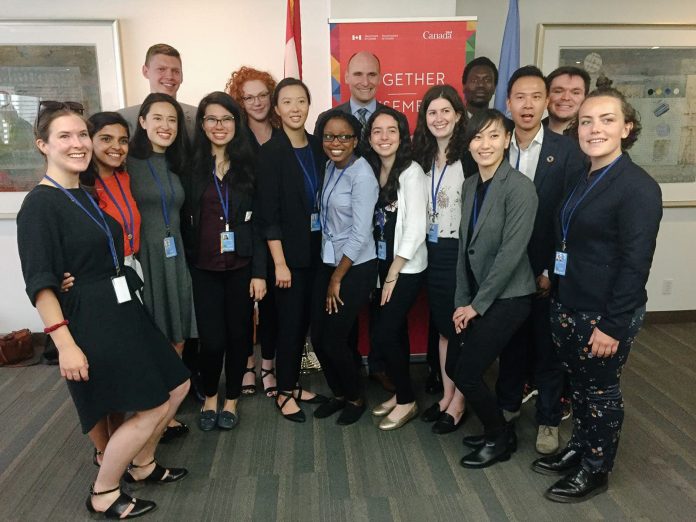
SFU students participate in UN sustainability forum

1
SFU students joined their peers from UBC and UVic to attend the sixth annual UN sustainability conference in New York. (Photo courtesy of Landon Reeves)

Between July 13 and 18, SFU students participated in the United Nations (UN) High-level Political Forum (HLPF) on Sustainable Development.

     After being established in 2012, the forum is conducted for eight days annually. The need and goals for the forum were outlined in “The Future We Want” outcome document which resulted from the UN Conference on Sustainable Development in 2012 in Rio de Janeiro, Brazil. SFU students Landon Reeves, Dhwani Babla, and Andreea Pirvu attended the forum this year, at New York city, as a part of the unofficial youth delegates of Canada.

     Reeves, Babla, and Pirvu had applied to the forum through B.C. Council For International Cooperation (BCCIC) and were accompanied by students from the UBC and UVic, along with working professionals from around the province

     Reeves, a third year student of Engineering Physics, shared the group’s experience and achievements in HLPF 2018 in an interview with The Peak. He expressed that their learning experience and role as change-makers began right from the application process.


Protesting the official application process

A notable step of action for Reeves and his team was to protest the federal government’s delayed response in selecting the official student delegates from Canada.

     Reeves explained that, as he and his team had applied through BCCIC as self-funded students, they had time to prepare themselves for the forum. “Not all students could afford to fund themselves and being appointed as the official delegates by the government would help them participate, and the delayed selection by the officials created a challenge for those students,” Reeves continued.  

     Reeves mentioned that with the date of the forum nearing, his team was offered the option to be the official Canadian delegates by the federal government. “We rejected the offer to protest the unresponsiveness of the government,” said Reeves.

     “We are pushing for the selection process to be contracted out to external groups, particularly [non-governmental organizations] specializing in youth selection processes so that a more diverse and inclusive team gets to be picked next time, with complete transparency.”


Experiences at the forum

When asked why he chose to participate in the forum, Reeves told The Peak, “In my perception, in the interface of science and policy a lot of decisions are based on political rhetoric. There is a need to incorporate more scientific research into it, and the participation of students from STEM backgrounds in political forums like the HLPF can help bridge the gap.”

     Talking about their experience at the forum, Reeves further mentioned that “we learnt to think more critically.” He explained that “Canada is presented as a world leader in UN’s sustainable Development Goals. However, our experiences and home and at the forum shows that we might be lagging behind a bit.

     “The forum helped us further understand the contrast.”

     The forum was an experiential learning process for Reeves and his team. He and his peers wrote shadow voluntary national reports and participated in additional events. They also met with John Mclaughlin, deputy minister of education and early childhood development New Brunswick, and Antonella Manca-Mangoff,Director of the international unit of the council of ministers of education, to begin work on increasing youth involvement in curriculum development. Reeves stated that he is personally still working on increasing youth engagement with education.

     “The UN is often seen as an opaque institution. Participating in the HLPF 2018 helped us understand a bit more about the inner workings of the institution,” said Reeves, in a statement directed at possible future applicants.

     “I learnt a lot from my experience, and would strongly recommend attending if you get the opportunity.”

Why are Vancouverites so afraid of homeless people?

0
Photo courtesy of Jonathan Hayward/The Canadian Press)

At the end of last year, the City of Vancouver faced backlash and protests when one of the locations for its temporary homeless housing project was claimed to be too close to an elementary school. The location in question was 650 West 57th Ave. in Marpole, making it close to Sir Winston Churchill Secondary School and Sir Wilfrid Laurier Elementary School. Distraught parents were protesting with signs that had slogans such as “right idea, wrong location.”

According to CBC News, this spring, a few homeless people have had to decline the offer of a spot at this temporary housing location due to community resistance. At least five people who have lived on the streets for a while have turned down housing units due to public backlash in the area. They were afraid for their safety (as if living on the streets was that much more safer) and the protests that would likely spring up if they were to move in.

It’s no wonder that Vancouver is one of the cities with the most homeless people in the country (a record-breaking 2,181 in 2018), since our residents would rather they stay in the streets of the Downtown Eastside rather than have a roof over their heads. With the current housing crisis and the rising costs of living accomodation, why does homelessness still sit as a nasty disease in the minds of Vancouverites? Why are our city’s most vulnerable still seen as less than human?

This viewpoint holds a number of harmful assumptions that need to be challenged. The parents who went berserk act as if homeless or recently homeless people, by virtue of that homelessness, are dangerous to their children, or that them being in close proximity will cause their plight to spread like an infectious disease.

The negative preconceived notions that people have about the homeless are, more often than not, based on uninformed opinions rather than facts. A count shows that more than half of Vancouver’s homeless have been without a home for less than a year, meaning that the streets are not a permanent home for the majority of the homeless, nor do they want it to be. Most of them end up on the streets as a product of circumstance, rather than malicious intent, laziness, or thoughtlessness. It’s usually because they’ve been laid off or have trouble paying their rent, not because they’ve squandered their savings.

The ignorant parents who want to shelter their kids from the homeless are overlooking the fact that, no matter what, their kids will come across the homeless sooner or later. If they don’t teach them now when they’re open to learning new ideas and accepting different kinds of people, then the kids won’t know how to deal with the reality of their existence later in life.

With the upbringing they’re getting, they’ll more likely be part of the problem than the solution. The attitudes that these parents are displaying are setting them up to hate homeless people, a cycle of hate based on unfounded prejudice.

And if, by chance, they end up homeless themselves — though we do wish the best for them — then they’ll be stuck with the same hatred that they had learned as children, but this time, it’ll be directed at themselves.

If the people in these housing units were actually dangerous in any way, shape, or form, then one could consider that perhaps having homeless housing close to two schools is not a good idea. But that’s not true — I’d trust that if they’ve gone
through enough background checks to receive the housing, then they should be pretty clean. There should be absolutely no reason for anyone to have a problem with this.

Dismissing the homeless as incapable of being close to small children without bringing them harm is a dangerous assumption to make. And by qualifying them by this one feature, the fact that they’re homeless and nothing more, disregards everything else about them that makes them human. It ignores all the many facets that make up the story that led them to the streets in the first place.

What these parents and other discriminatory people need to do is to empathize with them and realize that they’re just trying to get through each day like we are.  If they did, they might have a very different viewpoint on the issue, instead of painting them with such broad strokes, and they might even begin to empathize with their journeys. A roof over a homeless person’s head can be the starting point for them to turn their life around.

Majors in a minute: Health Sciences

0
Illustrated by Carolyn Yip

Calling all confused students who like biology but not really! Is MBB too mainstream for you? Are you not sure if you want to be the BP or the K in BPK? Come on down to health sciences (HSCI) where you get to do everything!

There’s no course or area that HSCI students cannot get their greedy hands into. HSCI students study everything from physics to philosophy, statistics to sociology, and biomedicine to bioinformatics. You and your coursework will be pretty much the lost child of every other department in SFU.

Of course, you also get to study health care too. If successful, you’ll graduate with a BSc or BA. This will teach you to debate with others why Canada’s healthcare system could still improve in terms of providing dental surgical outpatient care to rural populations with demographics over 65 in Canada’s far north, all while still having no idea what the words “health sciences” really mean.

With such a wide range of coursework, students get to interact with faculty members and grad students from all over the world from all sorts of disciplines. You’ll also get to meet students with all sorts of aspirations as well, like the one with brown hair who wants to go to med school, the pre-med with grey eyes, the fifth-year honours student who’s applying to UBC for medicine and public health, the pre-med who wants to do medicine and epidemiology . . . Damn it! Oh well, at least you’ll represented by top student leaders from the Health Sciences Undergraduate Student Union (HSUSU) . . . even after you convocate, you’ll still have no idea how to pronounce that.

Be amazed at the HSCI’s home in the beautiful Blusson Hall which is made out of glass to absorb natural light. It also allows students to reflect on their own tearful faces after coming out of ECON exams. Or was it BISC? It doesn’t matter: you’ll get to cry over all of them!

The blessed Blusson Hall is located right outside the bus loop at UniverCity — all the better for you to find food and to be the first to run to the buses after class ends. You can roll to your 8:30 a.m. lab straight from the bus stop instead of running to the South Science Building like those poor souls in MBB. It’s that close!

P.S. We even have microwaves! No need to fight with the peasant students from other departments in the Maggie Benston Building for this exclusive privilege.

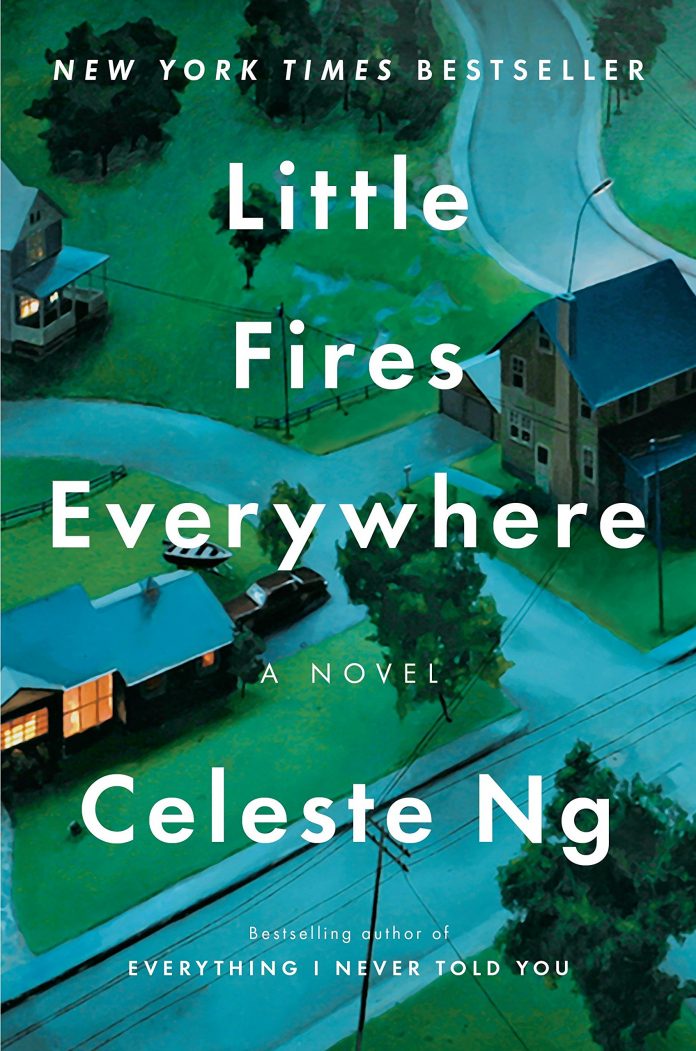
Little Fires Everywhere is the perfect, albeit unconventional, summer read

0
Image courtesy of Penguin Press

With summer winding down, there’s only a little bit of time left to get the last of your summer reading done. If you’re still looking for a book to fill that void, this might be the one for you. Little Fires Everywhere by Celeste Ng is a character study with a fast-moving plot and a whole lot of depth. Maybe not the summer read you’re used to, but once you start, you won’t want to put it down.

     The book deals with weighty topics like race, class structure, and the true selfishness behind altruism. It keeps you guessing and leaves you with an ending that you’re sure to be thinking about for days after you’ve finished it.

     The story is set in Shaker Heights, a small suburban town in Cleveland that is founded on an obsession with being picture perfect. It follows the lives of two extremely different families that become inexplicably intertwined. The Richardsons are a cookie-cutter example of the ideal family when they meet the Warrens, a single mom with a mysterious past and her beautiful daughter.

     We get a glimpse into several character perspectives throughout the novel, but it never feels contrived. Each person’s perspective arms you with the backstory you need to understand them and their behaviour as the story unfolds.

     This novel doesn’t drag like a story sometimes does when you spend most of the time in the characters’ heads. Instead, the characters are thoroughly fleshed out through a plot filled with twists and turns. This, to me, is the best part of the book. By the end of it, you feel like you’ve spent a year with two families and come to know them yourself.