Home Blog Page 511

All the places I’ve never been!

0
Photo curtesy of Public domain pictures

Another Reading Break has come and gone and you did absolutely nothing the entire time. Don’t think your entire break is lost though. You can still make yourself look cool with just one word: deception. Forget faking studying (especially if you care about trivial things like academic honesty), instead, convince your friends that you went on an awesome trip, using these simple tips:

Tip 1: Sunburn — There isn’t really a natural way to do this unless you want to go skiing in your bathing suit, but luckily we have these things called tanning salons. Simply ignore all of the posted rules and you should be thoroughly sunburned in no time.
Remember: the worse the burns are, the more people will make fun of you, but the less likely they are to suspect you of lying about travelling.

Tip 2: Fake the photos — Now if you’re starting this after reading break, you’ll have to say that you went to North Korea or something to explain why you haven’t been posting this whole time. Once that’s established though, it should only take a couple of hours with a green screen and Photoshop to get everything done.
Of course, just getting the cliché tourist pictures isn’t good enough. You may want to post a fake news article about an event that happened in the place you supposedly visited, then fake a photo of you documenting it.

Tip 3: Souvenirs — This requires a bit of prep work. Visit your relatives at their respective homes, and steal back any souvenirs you may have given them from your last trip. Then, simply redistribute them amongst your friends.
Your relatives definitely won’t notice they’re gone, and even if they do, they will assume that they lost them and will be too embarrassed to tell you. Because your friends likely won’t actually care about the dumb trinkets you get them, this technique can theoretically be repeated an infinite number of times.

Tip 4: Create a backstory — Make sure you can answer for everything you would normally do on a trip. Learn a few phrases in the local language, at least one of which you should pronounce incorrectly or use in the wrong context. Ensure you’re aware of all the typical tourist observations (e.g. “the Mona Lisa is actually a lot smaller than you think”) and tell everyone how much you appreciate the culture and practices of the people you were visiting, especially if the activities you said you were doing have nothing to do with cultural practices.

The biggest thing to remember is that if you’re at this point, you’re in too deep. There’s absolutely no turning back.


What grinds our gears: Getting a caffeinated drink when you ordered decaf

0
Photo via Pexels

You know those people who annoyingly brag about switching to decaf? Well, that’s me now. Maybe I decided that I do not always want to be filled with a constant, albeit non-crippling, level of caffeine-fuelled anxiety. Maybe I was hoping I could lose my dependency on caffeine by cutting it from my diet completely. Even if you’ve quit or attempted to quit caffeine, I hope you can empathize with my dislike of feeling weird and jittery all lecture, but still craving a nice, warm drink to sip comfortably.

So imagine how stressful it gets when you’re halfway through what you thought to be a decaf coffee, when all of a sudden you feel that all-too-familiar surge of energy.

You feel alert, awake, and able to contribute valuable things to discussions. Your fingers start to tingle. You can smell colours with your ears. You start fidgeting non-stop and have enough energy to march back to the coffee shop and demand they give you what you originally asked and paid for.

What will it take, my friends, for cafes to give us what we actually requested? Do we need to articulate our orders so precisely that the barista thinks we’re being condescending? Do I need to yell “DECAF!” so that important adjective is not to be missed? Most importantly, when will I stop paying four dollars for something I could easily bring with me from home?

Am I being dramatic? Maybe. But maybe I wouldn’t have even had the energy to write this unnecessary rant if a certain someone hadn’t given me a regular coffee.

Extraordinary Student Homes

0
Photo curtsey of Flickr

Here at The Peak, we were lucky enough to have been given tours of some of the most incredible student homes in Vancouver. The following are true experiences of renters in the area, exposing the wondrous beauty one is subjected to when renting on a budget.

The one that builds character

Designed in the style of what we like to call DIY-CHIC, this home features exposed everything: exposed brick, exposed wall beams, and even exposed sky. To get a mental image of this one-of-a-kind apartment, imagine Grandma’s cute, picturesque cottage on the edge of a beautiful forest, and then imagine, situated deep inside that forest, an abandoned lodge once inhabited by a serial killer who hated interior design. The residents shared that they needed to get a tetanus shot before being medically cleared to live in this building.

“Overall,” the young-adult roommates say, “this place has really made us stronger.”


Six times the bedrooms, six times the beauty

Residents of this gorgeously humid apartment have ingeniously converted a one-bedroom, one-resident home into a six-resident sex palace. The living room has been divided into four sections. Two students share the couch as their bed, while two others share the coffee table. Similarly, two residents share the dining room, one on the table, one underneath.

What about the actual bedroom? It is the designated room for when one roommate knows they are going to be having sex that night.

Exciting mystery-filled basement suite

This basement suite has charm, history, AND mystery. Years upon years of water damage has wreaked havoc on the electrical circuit of a ceiling fan that’s now been duct-taped to the ceiling in case it were to ever come crashing down. The wallpaper is so old it comes off in flakes, revealing newspapers from the 1920s that were used to insulate the walls. Generations of macaroni and dark brown splatters (tomato soup?) are crusted on the backsplash behind the stove. Unfortunately, those same soup splatters are also found in the bathroom, hallway and one of the bedrooms. It is sort of suspicious how much the previous resident loved soup.

The home’s inherent mystery comes partly from a regularly expanding patch of mould that grows on the inside of an old shower curtain (is it dangerous? Maybe!), partly from a rhythmic tapping heard every night from 12:08a.m to 1:13a.m, but mostly the mystery comes from a brown duffel bag sitting in the middle of the hallway.

“We do not know where that came from,” says one roommate. “It was there when we moved in.”

The other chimes in: “We are too afraid to touch it.”
The mystery bag will stay there permanently.


The Nintendo DS should be rejuvenated, not rejected

0
Photo by Chris Ho/The Peak

When I was 10, I broke open the box of my brand-new Nintendo DS Lite and booted up Animal Crossing: Wild World, the first video game I would play on my very first gaming console. Over Wi-Fi, I would connect with my friend who lived three hours away, and we would play for hours. On long roadtrips, the DS’s battery life would somehow hold up for days without a charge. It was sturdy, portable, and fun. It was the only console I needed.

Today, the DS is still my only gaming companion (along with its siblings, the 3DS and the 2DS XL). But I’m afraid it won’t be long before the DS family tree is completely chopped down, or at least overrun by the insatiable ivy that is the Nintendo Switch.

If you watched the latest Nintendo Direct, you might have noticed it’s all about the Switch, leaving Nintendo’s other available console out in the cold. While this fairly new console seemed oh-so-shiny and incredible to me when I first heard about it, the more I think about it the worse I feel. The Switch claims to be portable, but it’s not a new DS, and it is not anything like one. And losing the qualities of the DS that made it perfect for kids and students is a shame.

As a student, I want two things from a gaming console: affordability and portability. Is the Nintendo Switch affordable compared to the DS family? I go on Walmart Canada, take one look at the Switch (about $400) and the price of one Switch game (about $80), and my eyes water. To put that in perspective, for the price of one Switch I could buy either pair of 3DS XLs or brand-new 2DS XLs for the same cost. Games for the DS and 3DS also end up a lot more reasonably priced, often around $30–60 at most, making the console a far more reasonable investment, and easier to buy multiple of if you aren’t able to share a Switch with family or friends.

As for portability, the Switch is both more expensive and difficult than the DS ever has been. The Switch is basically a tablet, all screen with no folding cover to protect it, so I would have to bleed another $20 for a case. In comparison, DS consoles have always been able to fold closed, protecting the screens and saving you the bother of a case. And would I even want to carry around the Switch? Absolutely not. It would take up way too much room in my already overflowing backpack.

The only alternative to portable games is mobile games, but compared to the Switch and DS these are far from an equivalent. In regard to the DS, Eurogamer editor Martin Robinson explains, “A dedicated handheld device just doesn’t make any sense in this day and age, especially coming from a Japan in which mobile games dominate.”

Perhaps mobile games dominate, but do they have any of the depth of DS games? No. Mobile games that try to be complex are ultimately money-grabbing letdowns. Just take Harry Potter: Hogwarts Mystery or Nintendo’s mobile games Super Mario Run and Animal Crossing: Pocket Camp. These were all fun for maybe 10 seconds, but don’t have the lasting value or depth that we’ve gotten on in DS games featuring Mario and Animal Crossing. The DS allowed for something portable, but substantial.

While we got a couple standouts, such as Luigi’s Mansion in October of last year, this year Nintendo has given us YO-KAI WATCH 3 and a Bowser Jr. extension of Mario & Luigi: Bowser’s Inside Story that no one asked for. Without new titles being announced, I’m willing to bet the latest iterations of the DS are soon to stop production and it’s unfortunate considering how strong each iteration of this console has been for its 15 years on the market.

It’s my hope that companies other than Nintendo will continue to make 3DS games, and that portable and affordable gaming will live just a little longer through the DS family. Maybe one day I’ll get a Switch, but if you want affordable games on the go, it’s still better to spend $40 for the giant library of 3DS games you might have missed.

SFU hosts its first ever blood drive

0

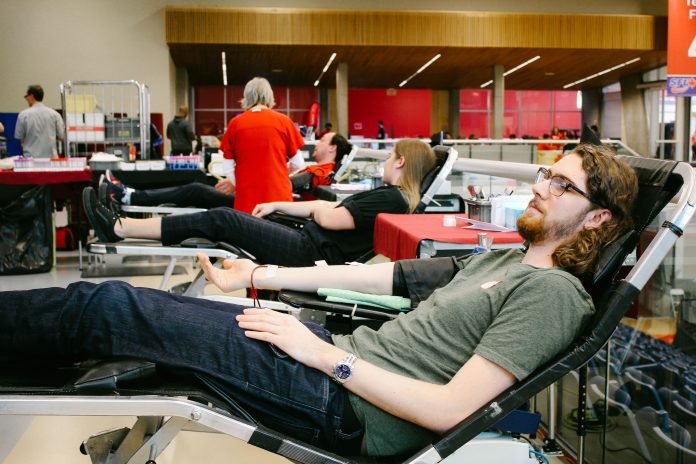
On March 1, 2019, an inaugural blood drive was held at the Simon Fraser University Burnaby campus. The event was organized by the SFU Blood, Organ, and Stem Cell Club, formerly known as SFU Blood For Life.

The blood drive took place in the Lorne Davis Complex from 10 a.m to 4 p.m. with approximately 160 SFU students, faculty, and staff in attendance. Staff from the Canadian Blood Services were also present to administer the blood collection.

The Peak had the opportunity to interview Iman Baharmand, who is the executive director of SFU Blood, Organ, and Stem Cell Club, about the process of organizing SFU’s first-ever blood drive.

Baharmand shared with The Peak that the Canadian healthcare system “relies on blood donors who selflessly roll up their sleeves and donate,” so it’s important that the SFU community come out and support this event.

“It can take 50 units of blood to help a car crash victim so donating quite literally saves lives,” said Baharmand.  

According to Baharmand, the blood-drawing process only takes approximately 5–10 minutes but the entire process can be an hour long if donors decide to stay at the refreshment station to consume the snacks and juices provided or to socialize with their peers.

When asked what was the biggest challenge in organizing this event Baharmand said it was the logistics.  

“Organizing this blood drive involved multiple stakeholders but what we found to be very encouraging was that these stakeholders were in support of having a blood drive [ . . . ] The biggest challenge was finding space that could appropriately house such an event – in fact, we spent the last 3 years working to make this event happen . . . so it is fair to say that we are so excited that it’s happening!” stated Baharmand.

When asked if another blood drive will be held in the future, Baharmand explained: “We really hope so – it partly depends on how successful this event will be, so we are doing our best to spread the word and have students register (or tell their peers to register).”

He further commented that if the club does decide on hosting additional blood drives in the future, they might start out on a yearly basis before they transition into a semesterly basis, but the club will decide on this matter within the next few months.

Since its inception in fall 2016, SFU Blood, Organ, and Stem Cell Club has organized various stem cell drives at the SFU Burnaby campus. During the stem cell drives, students’ cheeks get swabbed and are then sent to a lab to be processed. Once the cotton swabs arrive at the lab, they are analyzed for human leukocyte antigens (HLA) tissue markers, which are components of the human white blood cells, according to DKMS, a non-profit organization that aims to eradicate blood cancer and blood-related diseases. The donors’ information are then registered into a database and when a patient who is in need of a stem cell, they will be cross-matched with the donor that has the most similar HLA to them, according to DKMS’s website.

Baharmand further mentioned that the club was originally named “SFU Blood for Life” but they decided to change the name to SFU Blood, Organ, and Stem Cell in January 2019 because it better communicated their mandate. The club initially started off with a group of seven passionate students, but now it has grown into a 16-person executive team with more than 20 volunteers who dedicate their time and creativity towards the cause, shared Baharmand.

“At SFU Blood, Organ, and Stem Cell Club we know that not everyone is eligible or interested in being a donor. That is why we provide alternative ways of getting involved in the cause. In other words, you do not have to be a donor* to join, volunteer, or be on the executive team – all you need is a passion for helping patients and individuals who rely on this help,” he concluded.

*According to Baharmand the club’s requirements for being a blood donor are similar to the Canadian Blood Services.

Board Shorts

0
Irene Lo / The Peak

U-Pass Referendum

In the SFSS board of directors’ meeting on March 1, the board voted on what question would be asked in the upcoming U-Pass referendum.

The price of a U-Pass is currently $41 per month, as per the current contract that will expire at the end of December 2019. A proposed five-year agreement between the province of B.C. and TransLink states that the price will rise to $42.50 in May 2020, after which the rate will increase by 2% per year rounded to the nearest $0.05. This contract will be re-evaluated after 2024.

The board discussed two options for the U-Pass referendum question. The first option simply states that the 2% increase will continue until 2024. The second option includes the clause that “this structure could continue past April 30, 2025, upon renegotiation or renewal of the agreement.”

Jasdeep Gill, vice-president external relations, explained that if the second option were to pass, it would give the SFSS leverage to go to TransLink in 2025 and show that they already have student support of a continued 2% increase past the five-year contract. She noted that it gives them more “bargaining power.”

The U-Pass BC program will be discontinued for SFU undergraduate students if a majority of students vote “no.”

The motion of the second option was carried.


SUB Naming Referendum Question

The Build SFU Committee has created a shortlist of four names from the student submissions received in Fall 2018. The shortlisted names are the Student Union Building (SUB), The Den (DEN), The Hive (HIVE), and The Treehouse (TREE).

The referendum will ask students to select their preferred name for the new building.


Federal lobbying trip

Gill explained that the three main topics that they would discuss with the federal government are the Burnaby Mountain Tank Farm safety plan, the reduction of federal student interest on loans, and tying education grants to inflation.

This would be the first time that the SFSS has independently gone to the federal government. She noted that in lobbying the provincial government, the SFSS previously had a high success rate of booking meetings, with a response rate of about 60%.

She noted that “it is important to go this year because it is a federal election year, and a lot of ministers [ . . . ] are trying to develop their election platforms. If we can get in there earlier rather than later, then it’s easier to get more buy-in for ministers when we can bring these issues forward immediately, prior to them actually starting their campaigns.”

The motion to spend up to $3374.77 for the Spring 2019 Federal Lobbying Trip was carried.

The increasingly fancy smartphone hardware is utterly pointless

0
Photo by Chris Ho/The Peak

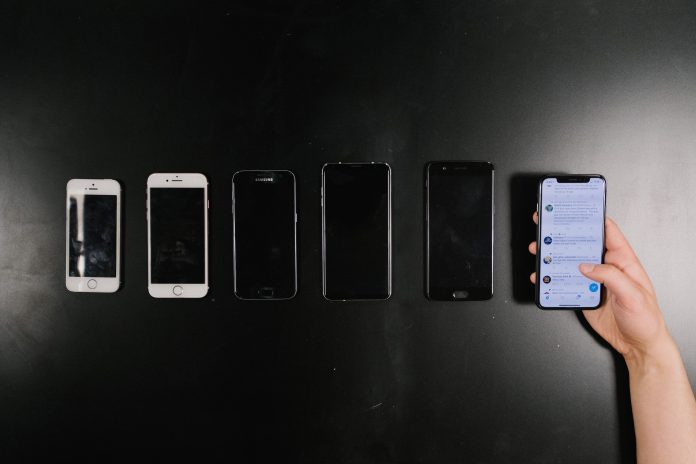
In the past few weeks, we’ve gotten a lot of news about the newest experiments when it comes to smartphones. This past week alone, I’ve been seeing reveals of all sorts of weird new technology, from foldable screens to having five cameras on the phone’s back. These sorts of innovations are certainly impressive, and considering we’ve already got voice-activated digital assistants everywhere it really does feel like we’re living in the future.

It’s a shame, though, that this sort of tech is utterly useless to anybody who isn’t lucky enough to afford and get use out of it.

I realize how much I sound like a technophobic old man saying this, but I’m constantly rolling my eyes at this point when I see anything reporting on the newest models of smartphones. It’s incredible how much things have changed in the past decade, and every time I find my old 2005 Sony Ericsson phone I had high school, I’m in awe at how having an MP3 player in my phone was the coolest thing at the time.

But when you look back at that huge transition from flip phones to smartphones, I don’t know why I should ever care about more features being added to a device that needs nothing more than an internet connection — let alone a data plan — to be a perfect machine.

In the real world, the majority of us aren’t going to see a lot of these for a solid two ir three years, when we “treat ourselves” by making an expensive purchase of a new phone out of necessity when our old one breaks. Even then, a lot of people will still need to buy second-hand or older model phones depending on their budget. This is the normal experience when it comes to phones, especially when it comes to post-secondary students on exceptionally tighter budgets, most of which only want their phone to easily socialize and do schoolwork.

These tech companies, and the people who buy and report on their newest toys, keep up a myth that phones are a luxury rather than a requirement.

The only changes that have mattered in the past few years of phones is in the software we use. The inclusion of digital assistants for those with visual or cognitive disabilities have helped more people be able to use such an inherently complicated machine with ease. Social media interfaces have changed to be easier to use and navigate, to use so that more people can socialize around the world quicker and smoother. Apps like Uber and Skip the Dishes have made smartphones even more of a utility than a communication device.

But these features could have existed in both the phone I own now, and the one I owned four years earlier.

So why do they add all of this tech? I’m sure most of it is just a marketing ploy to make every small change seem like the next big deal, but a lot of it more feels like it’s trying to make us think a revolution on that scale is going to happen again. But that’s not the world we’re in at the moment, as the big revolution has already happened: we now can access the internet in an instant everywhere we go.

Instead, this entire world of foldable or multi-camera phones just looks like an exercise of rich tech companies making machines for rich tech aficionados, and ruins my interest in following any technology news.

If a company or tech nerd ever wants to get my attention, show me a change that actually could make a positive impact in how we use this technology, which we’re required to own to function in the modern day. Things like phones that are built with additional physical and cognitive abilities in mind so that they can be used easier, or better durability so that we don’t need to spend a bunch of extra money for a screen-coating and ugly case that make my phone heat up unsettlingly faster.

At the end of the day, the majority of hardware changes that come with smartphones are nothing but a self-congratulation between giant corporations and the people that give them too much money.

Andrew Petter won’t be seeking a third term as SFU’s president

1
Petter’s words last year have been proven to be hollow. Photo courtesy of Greg Ehlers

In December 2018, Fiona Robin, chair of the SFU Board of Governors, announced that Andrew Petter will be stepping down from his role as the institution’s president and vice-chancellor at the end of August 2020. Recently, The Peak had the opportunity to sit down with president Petter and discuss his soon-to-be 10-year tenure at SFU, what he plans on doing for the remainder of his term, and his decision to resign.

Petter started his term at SFU on September 1, 2010, and prior to becoming SFU’s ninth president, he was a NDP cabinet minister. Since then, he has helped champion multiple initiatives on campus such as creating the co-curricular record that enables students to record and be recognized for their volunteer activities, maintaining SFU’s status as one of Canada’s leading comprehensive universities in the last 10 years, establishing the Aboriginal Reconciliation Council to facilitate reconciliation between Indigenous and non-Indigenous individuals on campus, as well as increasing co-op and research opportunities for SFU students.   

“I hope [all of that] has helped to enrich the student experience because I’m a big believer — as important as it is for students to learn in the classroom or in the lab — but also for them to gain understanding outside the classroom,” said Petter.

When asked why he won’t be renewing his term, Petter said: “One of the really great things about universities is that we get new students every year and that’s one form of renewal. But we need renewal in terms of leadership as well: new ideas, people who can come in with new perspectives [and] add values.”

“I feel I had that opportunity and I helped along with others to move the university forward. After 10 years I think it’s a good time to turn over the reins to someone else to help the university take that next big leap forward,” he continued.

At the moment, a presidential term at SFU lasts for five years and the average length of a university president’s tenure in Canada right now is around six years, according to President Petter.

In addition, in January 2019, Petter was named to the Order of Canada — along with 102 other inductees across the nation — for his significant contributions to humanity and society at the municipal and national level.

“What makes me feel really good about the Order of Canada was when I read the top line reason for giving me [the award] and it was for the work that I’ve done to help connect the university with the community,” shared Petter.

“I take some comfort from the fact that the award I got is not an award for individual achievement but rather an award for the collective effort that we as the university have shown and an affirmation that that effort has been appreciated not only here but across the country.”

“I would say with some pride that SFU is very much seen as a leader now nationally and even internationally for the efforts we’ve made to show how you can more fully engage communities and by doing so benefit the university,” he further added.

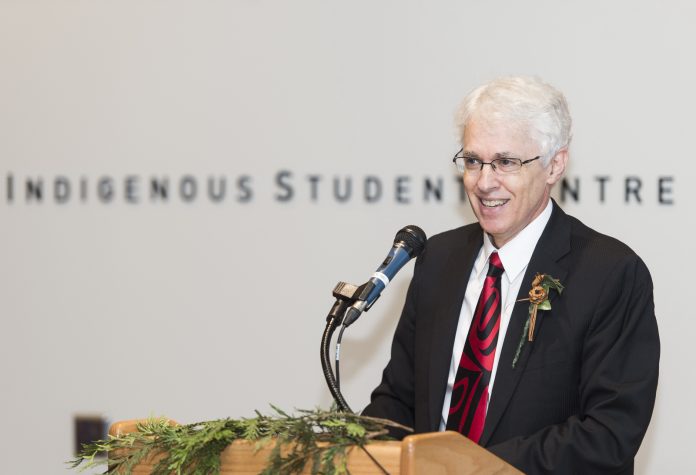
When asked what he will be doing for the remainder of his term, Petter shared: “We have started work on the first phase of a major residence expansion that will add over 400 new units for single undergraduate students. I’m hoping we can break ground on phase two as well, make it over 800. There is [also] work to expand the Indigenous Student Centre.”

In addition, the president is hopeful that the university will deliver the commitment to develop a First Peoples’ house on the Burnaby campus.

“That’s been a long time goal to have a place that will complement the Indigenous Student Centre by providing a cultural space where not only Indigenous people can gather but [other students] can gather and appreciate the value of Indigenous culture and knowledge on this campus,” he said.  

He also mentioned that he would like to see significant headway for a rental housing facility in lot 21 in UniverCity that will be primarily reserved for graduate students and students with families.

In terms of initiating the search for the next SFU president, Angela Wilson, SFU’s senior director, media relations and public affairs, shared that the process will take approximately 12–15 months and it has already started since the beginning of January 2019.

“The Board of Governors has established the Presidential Search Committee (as per University Policy B 10.06), and has charged that committee with conducting the search,” said Wilson in an email interview with The Peak.

The search committee will be consulting SFU students, faculty, and staff about the presidential position description, such as what qualities, leadership and personal qualities they would like the ideal candidate to possess and the opportunities to have input will be broadly advertised, she further added.

When asked what Petter will be doing once his term finishes, he said “I will have a bit of an administrative leave which will allow me to think through a little bit of what the future may hold for me [ . . . ] While I will step down from my role as President, I will not be stepping down in my capacity as a professor of public policy and I may well end up doing some teaching.”

“I’m certainly not going to disconnect myself from SFU. I love this university [ . . . ] I applied to be the president of this university because I thought this university was different; it had an energy, a culture, a vibrancy that was different than traditional universities. I believe in this university [ . . . ] my heart will still be with SFU,” he concluded.

With files from SFU News and The Georgia Straight

SFU men’s basketball lose season finale to WOU, still make playoffs

0
Michael Provenzano and company will now prepare for their playoff matchup against Northwest Nazarene. (Photo courtesy of SFU Athletics)

The GNAC regular season went down to the wire last night in spectacular fashion, with multiple playoff spots going down to the final game of the season. In the thick of things were SFU, who went into Saturday tied with two other teams for the fifth seed in the conference. With a win, or a loss from either Western Washington University or Montana State University, the Clan would be in the postseason for the first time in their conference history.

Western Oregon University stood in SFU’s way, however, and did not make it easy for the Clan. In front of a thunderous crowd, SFU were unable to keep up to their opponents (the fourth seed in the GNAC), eventually losing by a score of 68–56.

The fans were treated to some great moments though. Despite going down 18–6 early, SFU bounced back in a big way, going a 12–0 scoring run to tie the game up in the first half. WOU regained momentum, however, and led the Clan 29–23 at the half.

In the second half, Othniel Spence did everything he could to bring his team to victory. He scored 12 of the first 17 second half points for SFU, single-handedly managing to keep his team in the game. Once he started to cool down, however, the Clan were no longer able to keep up. Despite SFU fouling down the stretch, WOU coasted to victory.

Clan fans will have to thank Concordia University for their efforts against Western Washington University. Beating the Vikings 79–70, the Cavaliers win gave SFU sixth place in the conference, good for the final playoff spot.  

It is the first time that the Clan will compete in the GNAC postseason, and is a testament to a strong second half from the team. Despite losing their final two games of the regular season, SFU had won six of seven previous to that, including wins over the nationally ranked Saint Martin’s University Saints and Northwest Nazarene Nighthawks. Wins like that show that SFU is able to beat anyone when they are on, and they should be a dangerous team in the postseason.

It was also Seniors Night, with Jordan Muir-Keung, Bongani Moyo, and Bowen Bakken suiting up for their final time on Burnaby Mountain.

What’s next:

The Clan will face off against Northwest Nazarene in their first-ever GNAC postseason game on Thursday, March 7 at Western Washington University. In their two meetings against the Nighthawks this season, the Clan are 1–1, with the home team winning each game. In their last meeting, SFU won a 78–77 thriller on Burnaby Mountain back at the beginning of February.

The winner will face off against Seattle Pacific University, the number-two seed in the GNAC.

Staying In: Umbrella Academy

0
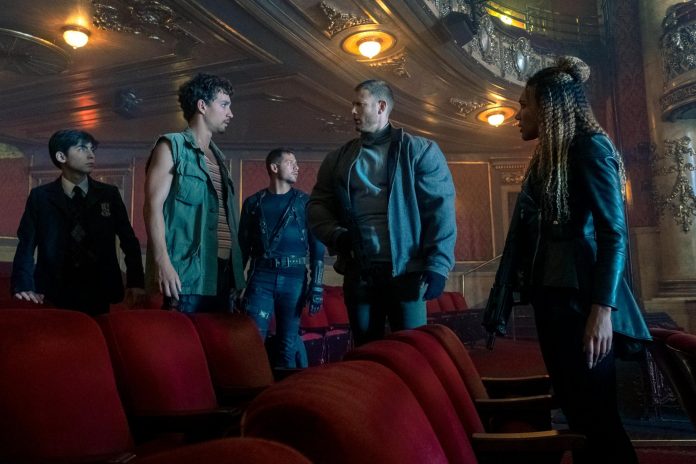
Image courtesy of Christos Kalohoridis:Netflix

Best for: Superhero fans, dysfunctional family fans, time travellers


Umbrella Academy is like superhero fanfiction with the polish of a Disney-Marvel film. Complete with time travel, family drama, romance, mystery, and a CGI talking monkey who acts as a father figure, it may seem like it’s trying to do a lot of things at once. But through clever writing and a compatible cast, Umbrella Academy handles them all brilliantly. It takes after serious superhero shows like Marvel’s Daredevil and Runaways, but with a sense of humour and self-awareness like that of Arrested Development but more serious.

The show is about seven children with superpowers, all adopted by an adventurous billionaire father and all — except for Ellen Page’s character Vanya — trained to be superheroes. The story takes place around 10–15 years after they’ve moved out, reunited by their father’s passing and the return of their sibling who went missing as a child. From there, the siblings have to work together to save the world from an oncoming apocalypse, and come to terms with their terrible childhoods.

Despite its seemingly-complex plot and large list of characters, it ends up being surprisingly easy to follow thanks to its focus on dialogue and character chemistry, rather than the rules of its science fiction. The show dives into serious themes of parental abuse and self-esteem, but the siblings don’t hesitate to talk casually. They poke fun at each other and make the dialogue constantly fun and snappy. More than that, it uses its superhero setting to tell a story about a family learning to understand and relate to each other better.

If you want a little more fun and family in your serious superhero drama, Umbrella Academy is absolutely worth digging into.

Available on: Netflix