Home Blog Page 436

SFU must be willing to make structural changes for remote learning to be successful

0
SFU must be willing to make structural changes for remote learning to be successful

Over the past several months, the COVID-19 pandemic has had a devastating impact around the globe, and our SFU community is no exception. One of the most obvious ways that SFU students have been affected is by the transition to online instruction. Whether we’re dealing with serious financial strain (i.e. job insecurity or hardware costs of adapting to online school), a loss of motivation, or a technologically clueless professor, every university student has been affected one way or another. So with the social distancing measures still in place, and the summer semester just starting, I have some concerns that I’m sure many other students share as well. Will professors be more prepared this time around? Will our remote learning be a little less chaotic? There were many problems with the abrupt switch last semester that I hope have been addressed and corrected for the benefit of students this semester.

Let’s start with a big one: equality. Not all students have equal access to the same spaces, technology, or uninterrupted free time while studying from home. I hope that SFU has put some thought towards ensuring equity in class arrangements, including encouraging professors to practice additional sensitivity to the various situations of students — first and foremost ensuring accessibility and fair expectations during these confusing and difficult times. SFU has already stated that there will be no pass/fail option for students in the summer semester. That being the case, I hope adjustments have been requested of individual departments to ensure fair grading takes into account inequalities in students’ situations.

Similarly, it is important that class arrangements integrate inclusive and accommodating measures that ensure no student is denied the option of gaining course credits during the summer due to the lack of their accessibility needs being met. Classes that rely a great deal on class presentations, field work, or lab attendance are going to need to ensure that all students are able to participate equally as their circumstances allow. This includes allowances not only for technology, but also for the ability of students to safely leave quarantine zones. This will likely require assessment of each individual students’ abilities at the beginning of the semester. Failing to provide these accommodations may result in students withdrawing from enrollment until in-person classes can resume again, delaying completing their required credits.

Additionally, courses that rely on timed exams are going to be a problem for some students in quarantine. A two-hour timed exam set in a particular time frame does not consider the barriers that students face when completing an assignment in their own home, without access to on-campus commodities such as a quiet work environment (e.g. the library), or access to reliable Wi-Fi. Moreover, many students have families, dependent loved ones, pets, and any number of other responsibilities in their homes that may be difficult to ignore during a high-stakes, timed event like an exam. 

Reconsidering the necessity or form of timed exams is especially important, as I have found that the added stress of a timed final during COVID-19 is an unnecessary burden on the anxieties that a university student already faces. Just speaking for myself, but requiring a final of this nature would have been no more beneficial to retaining course content last semester than alternative assignments that provide a more reasonable time limit. I have found that added research assignments or even untimed take-home finals have been much more productive forms of examination in these particular circumstances.

SFU students pay this institution a whole lot for our education and expect the quality of that education to reflect the money that goes into it. In the time of a global pandemic, it’s understandable that we all have to make some adjustments. However, the onus should not be on students alone to shoulder the unreasonable expectation that remote instruction be as similar to in-person learning as possible. SFU should also be willing to adapt and accommodate to what is reasonable in these unprecedented times. Anything less is not a proper utilization of student tuition money. 

These are exceptional circumstances that are beyond anyone’s control, and expecting students to follow the same academic structures as pre-quarantine learning is frankly unfair and unrealistic. Hopefully with the added notice, the summer semester’s agenda will be more clear and SFU students won’t have to experience another semester of chaos. 
 

We can’t let nostalgia for “normal” prevent us from addressing systemic inequality

0
The new normal has to be better than the way things were before. Photo: Izaz Zubayer/The Peak

It’s week nine of lockdown in Canada; longer for those of us who took precautions earlier to safeguard ourselves or the vulnerable people we love. Restlessness has set in for some, resignation for others. As SFU students begin summer semester classes, the return to school is either going to be a torture or a much anticipated return to routine. 

It seems the longer we sit in quarantine, the more one word is spoken almost as much as COVID-19 itself: normal. There have been calls to get the economy back to working as “normal,” speculation on what the “new normal” will be, even wistful comments on when things might return to “normal” — before COVID-19 was such a deep, terrifying part of our lives.

The problem with “normal” is that it idealizes our thinking about the world. In much the same way that some people nostalgically look back on “simpler times,” the idea of returning to a “normal” existence makes us underestimate just how ugly and terrible certain parts of that existence were. 

A “normal economy,” for example, means 500,000 people living in poverty in British Columbia alone. In West Vancouver on April 22, a vacant lot sold for just over $1 million, and instead of questioning why an unused plot of land sold for such an obscene amount of money in an era when many Vancouver residents can’t find affordable rent, the headlines screamed about how it sold for nearly half a million less than asking price. 

Now that we’re all forced to stop the frantic buzz of activities that usually occupy our minds from day to day, it’s worth taking this time to reflect on whether or not this is the “normal” we want to return to.

To be sure, the advance of COVID-19 through our communities and the terrible toll it has taken in terms of loss of life, loss of health, and loss of economic security is miles away from an ideal situation. However, we shouldn’t allow ourselves to feel nostalgic for another less-than-ideal situation, just because it’s not as bad as the one we’re in right now.

If anything, the COVID-19 crisis has shown us the ways in which our “normal” system is cracked and flawed. Service industry employees, nurses, and janitorial staff have become overnight heroes keeping us fed, keeping us healthy, and keeping our spaces sanitized. And while we’ve been gracious enough to consider things like hazard pay and wage increases for these folks, it’s worth keeping in mind that “normal” for these workers in the not-so-distant past meant unbelievably long hours, poverty wages, and a supreme lack of appreciation. 

Once the pandemic subsides, these frontline workers we are currently praising aren’t going to be any less essential than they are now. It’s absurd to want to go back to the way things were, as if we can just forget how eye-opening these past few months have been.

Instead of gazing out the window, longing for the world to go back to the way it used to be, we should be considering the ways in which we will need to pressure our leaders to make the world better when this is all over. Returning to “normal” is not an option. We’ve seen the cracks in the foundation now, and it’s imperative that we don’t continue to build our society on unstable ground.


5 Britney Spears Bops That Were All About Class Consciousness, All Along

0
Photo courtesy of Chief Warrant Officer 4 Seth Rossman via Wikimedia Commons.

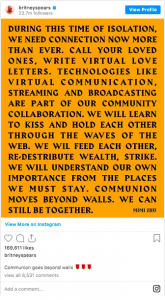
Ever since Britney Spears’ iconic post about wealth redistribution went viral on Twitter, long-time fans have been scouring her past music like The Da Vinci Code looking to retroactively uphold their idol’s woke honour. 

Luckily for you, we at The Peak have done the work for you! Ready to tear down a politicized economy from the comfort of your own home? Do it to the tune of these historic bops.

“Toxic”

Britney whispers, “A guy like you/should wear a warning,” and we all know who she’s talking about: a guy named Canada. That’s right: she’s making social commentary on the continued patriarchy of this country and our failure to warn outsiders that inequality does exist here. “With a taste of a poison paradise” is an apocryphal malaise of a future where Canada “guarantees economic stability” with pipelines, tank farms, and a second-rate oil sands industry. 

“You’re toxic/I’m slippin’ under,” Britney ultimately belts as she drowns in the rushing flow of what used to be the Arctic Circle.

“Gimme More”

So enraptured were we with “It’s Britney, bitch” that we all missed the real point of the song: sustainable public transport. When Britney sings, “Every time they turn the lights down/Just want to go that extra mile for you,” she’s obviously talking about switching to the bus for that last mile to the grocery store, once the sun is blotted out by CO2 emissions from the corporate world. And that refrain of “Gimme more”? She means she wants more electric vehicle infrastructure. 

“. . . Baby One More Time”

In this iconic song, Britney once again tapped into her inner Delphic oracle to talk about representations of romance and social relations in media. “Oh baby, baby, how was I supposed to know/That something wasn’t right here?” is a dramatic re-enactment of how Grey’s Anatomy showrunner Shonda Rhimes probably felt after stepping back to let others take over the writing. “I never should have let you go” refers to what we like to imagine Rhimes felt after seeing Krista Vernoff force us through 1000 Grey’s Anatomy/Station 19 crossovers.

Conversely, “Boy you got me blinded” comes from the perspective of the fans. Many of them have been blindfolded by Derek Shepherd’s hair for years, never noticing that he basically workplace-harassed Meredith into dating him, repeatedly. Yikes!

“Oops! I Did It Again”

Here, Britney makes a scathing critique of food service middle-management. “I made you believe we’re more than just friends” highlights the common practice of squeezing extra labour from low-income employees — by promising promotions that just never materialize! Her refrain of “Oops! I did it again” caricatures the words silently spoken by franchise coffee shop managers, repeated every time they fire someone and guzzle up their last two weeks’ tips. 

“I’m not that innocent,” she concludes over and over, proving that shift-leaders everywhere know and relish their own darkness.

“Piece of Me”

If the other songs were critical, then “Piece of Me” is Britney’s Utopian vision. Becoming the avatar of the 1% — “Miss American Dream, Mrs Lifestyles of the rich and famous,” Britney asks the public again and again if they would like “a piece of [her].” Does she mean a piece of her net worth for the bank, or a piece of the rich’s flesh to be eaten like blueberry pie? We might never be sure, left in a longing mystery.

An open letter to the Forum Chamber musicians

0
Photo: Flickr

Dear Forum Chamber musicians, 

You’ve never met me and I’ve never met you, but I’m familiar with your work. See, The Peak’s office is located right next to Forum Chambers and over my four years at SFU I’ve spent quite a bit of time there — working, studying, slacking off, writing, fuming, pondering, conducting interviews . . . and because of that, the rotating cast of Forum Chambers musicians has been a constant of my degree. 

I’ve heard some of you guys sneak in early morning practices, squeeze in songs between classes, and stick around campus late at night to take advantage of the piano in the room. I’ve heard Korean drumming, acapella rehearsals, “Flight of the Bumblebee,” the theme songs to your favourite anime, Disney tunes, Christmas carols, K-Pop, classical symphonies and odes, pop music covers, and more. I’m sure some of you wrote your own songs that I just didn’t recognize as brand new additions to the music world, too. Sometimes, it was the same song over and over again as a musician tried to get the melody just right; other times, I’d overhear someone soar through ballads as if it was as easy as breathing in and out. 

On a campus where we always talk about a lack of student connection and a lack of student support, you saw a space that could be filled with creativity, talent, passion, and hard work. Like I said, you’ve never met me and I’ve never met you, but hearing you fill campus with just a little bit more art has made me feel more in touch with the community I’m in. I can only remember one late Friday production night in which I didn’t hear anybody play, and it was uncanny. I got annoyed whenever construction drowned out your work or made Forum Chambers impracticable. While social distancing and working from home, the quiet has definitely been one of the strangest adjustments to make and get used to. 

I’m on my way out now, as finals and convocation approaches. That also means that I’ll be turning in my office key after three years. I’m going to miss a lot of things after leaving SFU, even if that was the goal all along and I’ve often said that I couldn’t wait, and strangely enough you guys are one of them. And so before I went, I did want to say thank you for the music.


Best,

Gab

Indoor climate control measures at SFU need an overhaul

0
Walking from one hall to another is like teleporting through climate zones. Illustration: Tiffany Chan/The Peak

Why is it that people feel the need to travel to the sands of the Sahara or the glaciers of Antarctica for a change in climate, when they could save themselves the arduous journey and visit our campus here in Burnaby? Walking into a classroom at SFU is like opening a box of chocolates, you never know what you’re gonna get. It seems as though, from building to building and classroom to classroom, there are significant variations in temperature that make for an uncomfortable experience on campus. This leads to windows being opened and space heaters being summoned, and an unnecessary amount of energy wasted. 

This huge range of temperature differences between classrooms is concerning since SFU has as one of its goals the conservation of energy — specifically with a target to reduce total emissions by 2% from year to year. To be clear, SFU has taken measures to address its impact on the climate. These include replacing halogen bulbs with LEDs to reduce the need for climate control devices, and installing carbon dioxide sensors in some classrooms that adjust the climate based on the presence of large numbers of students, according to Bernard Chan, Energy Manager. However, given that many classrooms still feel inhospitably intemperate, the issue of classroom temperatures versus climate impact seems to be presented as a false dichotomy; i.e. SFU can either reduce emissions or students can learn comfortably. In reality it is not unreasonable to ask for both. 

The automation of climate control in classrooms — even with the best carbon emission intentions — just isn’t working. Walking into any classroom that has its windows open to release some of the stifling heat proves that. By just keeping rooms a consistent, comfortable temperature, or allowing people to adjust temperatures on their own, the university could save all that energy which is currently being vented out the windows.

Chan states that SFU’s classroom temperatures are set based upon a “central control system.” This system is adjusted through “a preventive maintenance program” that “requires space temperatures to be checked diligently and regularly.” In addition, he also recommends that “students and staff [ . . . ] report temperature issues to [the] Facilities and Services desk.” This will then prompt a member of the Facilities Services team to “first check the temperature to see if it is meeting the target settings” before any adjustments are made. 

The obvious flaw in this system is that information regarding the need for students and staff to report inconsistent temperatures is poorly disseminated in classrooms around campus, let alone information on who to call at what number. This entirely nullifies the reporting aspect of the classroom climate control strategy. 

Furthermore, the “diligence” of the maintenance program itself could be called into question considering the magnitude of temperature variations felt by students. All of this culminates in students and staff looking for alternative strategies for regaining control of classroom climates  — such as keeping windows open, bundling in too many layers, or furnishing offices with space heaters This opens the door to an incredible amount of wasted energy, as well as wasted time.  

We are quick to call out politicians when we feel they are not making the best decisions in terms of climate action. As climate concerned students, we should also hold SFU accountable for the ways it needlessly wastes energy on inefficient classroom climate control systems. If the university is serious about mitigating the effects of climate change, it should look to better integrate students and staff in addressing the sweltingeringly warm and numbingly cold classroom environments.


Political Corner: Heralding frontline nurses for working while pregnant hides systemic labour abuses in China

0
Extreme working conditions and shaved heads among female nurses are being propagandized by Chinese state media. Photo: /Gansu Daily

The World Health Organization declared that coronavirus was a global pandemic as of March 11. In addition to the increasing number of cases of viral infection, many social issues have been exposed during this extraordinary time that are also worthy of attention — particularly those involving the work of frontline women.

As the first country to find and take action to control the novel coronavirus, China has received the most attention from the world on the pandemic issue. Among all the media reports about COVID-19 in China, those that praise the sacrifices of female nurses have been particularly criticized as a form of propaganda. For example, one nurse was reported to be nine months pregnant but still working, another  returned to work just ten days after a miscarriage. These reports, as well as others showing nurses “sacrificing” (cutting) their hair before going to work on the frontlines, take advantage of the labour situation of many women in China, and humiliate medical staff based on their gender. 

Propaganda is nothing new for stories in Chinese media. But what prompted the recent wave of criticism is that the sacrifices of the nurses are being propagandized as heroic efforts. In reality, their labour rights have never been acknowledged. Going to work while pregnant or medically compromised is expected as normal for many women in China.

Reporting the story of a woman who is still working hard just before giving birth is not illustrating a single heroic act that is worthy of praise, but rather is exploiting the everyday economic situation of these women in an unprecedented and stressful situation. Unfortunately, this kind of exploitation is quite common in China. Many young women are discriminated against because of the possibility of future pregnancy. About one-third of Chinese women report having lower wages or being demoted after giving birth. For new mothers it is even harder to find a job if she is fired or leaves her current employment. As a result, most women will still work dangerously hard during their pregnancy, not because they are born with the spirit of “dedication” but because they are afraid to lose their jobs. 

Although it is a good thing to care about the state of female medical workers in China during the fight against this pandemic, it is just as important to continue to practice such concern when our lives return to normal. This applies not only to the context of China; protecting women’s labour rights should be a common goal for the whole world. Women have contributed a lot of important work in the global market. However, this work is often  degraded as unskilled, and many of their basic rights and benefits (such as minimum wages, reasonable rest periods, and even personal safety, etc.), cannot be guaranteed.

As SFU students, no matter where we come from, we all need to be aware of and care for women in the workplace, speaking out for them, and taking action to protect them. Because every woman we love — our friends, our family, or even ourselves — may face similar struggles when going to work. When we help other women in the world, we help everyone.


Feel Good Hour: People are helping each other through COVID-19 and we should celebrate that

0
We're all in this together. Photo: Branimir Balogović/Unsplash

Look, I know our current situation seems grim. A global pandemic isn’t something that we should be happy about. But we also shouldn’t be blind to the kindness and compassion sprouting from these difficult circumstances. They have the ability to lift us up when we need it the most. 

Social media is ripe with examples of the generosity of the human spirit. Take my neighbourhood’s Facebook group (yes, they somehow still exist). What is usually a page where middle-aged, nuclear-family parents complain about how “the homeless are taking over” is now a space where communal help is found in spades. People in the group are making themselves available to go out and get supplies for older or immunocompromised folks, for example.

This selfless behaviour is not just relegated to our corner of the world, either. I’ve seen countless videos of people lightening the mood in quarantine by singing and playing instruments from their balconies, restaurants giving away free food, and even breweries around the world taking the time to help alleviate the hand sanitizer shortage. This trend of “caremongering”  — organized acts of kindness and generosity — is almost as infectious as the actual virus. Dispelling fear and bringing people together through the power of compassion is something that is sorely needed right now to focus and to break through the existential panic of the pandemic. 

Sure, there are also people who’ve had not so great reactions to this crisis — people like toilet paper hoarders and resellers, ignorant, rich celebrities, and people going outside acting like nothing is happening. But these people are a small blip in the population. The majority of people are finding ways to connect and care for one another in seemingly impossible conditions. It’s almost as if humans aren’t as inherently horrible as we think. Like we’re beings who want to help each other, to care, and to love one another. Who would have thought?

I hope these words give you some comfort in these uncertain times, and that you and your families are safe. As the 2008 graduating class of Albuquerque High once said, “We’re all in this together,” and once people recognize and embrace this wholesome and connective fact, then our time indoors will surely seem a bit less lonely.


How SFU and representatives of the disability community came together to improve the Re-use for Good initiative

0
Photo: Chris Ho / The Peak

In the Fall 2019 semester, SFU rolled out the Re-use for Good initiative across its three campuses. The initiative focuses on reducing single-use plastics in various areas, including dining locations and the SFU Bookstore. Its ultimate goal is “To implement and promote reusable alternatives to single-use plastics and disposable products (SUPPs),” according to their website. The Peak previously covered this initiative in the fall. 

As stated in previous coverage,  although a representative of SFU’s Sustainability Office advised that those requesting straws and other tools do not have to justify their requests, some students scrutinized this approach. They questioned whether these plastic products are truly accessible if they must be requested rather than just being readily available. Secondly, they asked how students with disabilities could be involved in the decision-making, to avoid unknowingly harming or segregating those who depend on these products for their daily lives. Since the fall semester, there have been changes made to the approach of the Reuse for Good campaign.


Single-Use Plastics around Canada

Under the Canadian Environmental Protection Act, the Government of Canada is seeking to ban “harmful single-use plastics” by 2021. According to the Prime Minister’s website, the Act will work to ban single-use plastics that are considered detrimental to the overall health of the human population and the environment. The page mentions that all plastic bans will only occur following extensive research. This research includes socio-economic considerations and public consultations. Examples of these plastics include, but are not limited to: plastic bags, cutlery, straws, and stir sticks. 

On a wider scope, the City of Vancouver continues to roll out its Single-Use Item Reduction Strategy in 2020. Beginning with foam containers and progressing to banning straws, disposable utensils, and plastic bags in the future, the program mentions an “accessibility requirement” for vendors to provide SUPPs such as straws and utensils. The website notes that “Anyone who asks for a flexible plastic straw, individually wrapped in paper, should receive one. People are not required, and should not be asked, to provide any medical information to prove their need.”

SFU is not the only university reducing their SUPPs. The University of British Columbia began charging students for single-use coffee cups with the minimum price at 25 cents. The university swapped out plastic straws for compostable, bendable ones for accessibility purposes — available upon request.


Re-use for Good Phase One outcome

While the initiative continues at SFU with environmental impact in mind, for students like Sanam Prasad, a fourth-year history major at SFU, such actions can be harmful if proper training is not provided for staff.

“I had a severe allergic reaction to one of the biodegradable straws that the Re-use for Good Initiative replaced the plastic straws with [ . . . ] I became extremely paranoid of the biodegradable products that have been put in, particularly since I have been told by my doctor that it is likely that I might go into anaphylactic shock the next time I have a reaction like that,” Prasad noted in an emailed interview with The Peak. Prasad requires straws due to severe hand pain and other concerns that compromise her ability to drink. 

“Personally, I just started trying to get plastic straws from other places because it’s far easier for me to do that rather than have to deal with that constant worry,” she continued. “I do wish that they had listened to us when we stated that training of staff should happen before this initiative is rolled out because it would have likely prevented me from experiencing that particular medical emergency.” 

Prasad’s experience led the Re-use committee to reconsider their approaches to accessibility. Kayla Blok, Manager of Campus Sustainability noted that, “Since the launch of the first phase, there were some challenges that we faced in terms of communication around accessibility [ . . . ] What we wanted to do right away was listen and chime in, hear what students had to say: what are the concerns, what are we missing?” 

She noted that the task force listened to recommendations from the Disability and Neurodiversity Alliance (DNA) and the SFSS Accessibility Committee. Representatives of the initiative tabled at StreetFest, a street festival held at UniverCity, and in Convocation Mall in an attempt to get student feedback. SFU’s Sustainability’s website also lists an email that students can provide feedback to as well, include accessibility concerns.

The Re-use for Good task force also hired Serena Bains as a paid student employee. Bains acts as a liaison between the Re-use for Good initiative and both neurodiverse students and students with disabilities on campus. Blok stated that one of Bains’ main tasks is ensuring appropriate, inclusive language is used throughout all advertising and messaging of the campaign. In this way, Bains is working to close the gap between the task force and the students with disabilities on campus. 

“A big piece of that really has been around the training with Chartwell staff,” said Blok. She added that Bains helped to train the Chartwells staff, including explaining how it may impact a person with a disability if they are unable to get the required straw.  

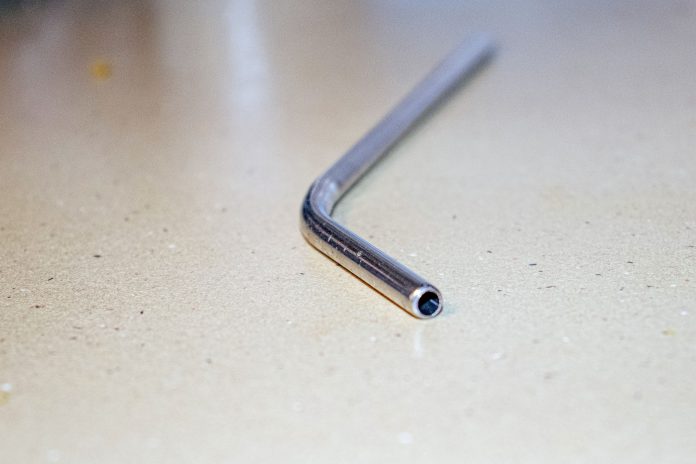
Blok stated that the task force took suggestions for what should be used to replace plastic straws as the primary option. As recommended by the DNA, a toolkit with utensils, a medical-grade silicone-tipped metal straw, and a foldable straw are available at SFPIRG, the SFSS office on Burnaby, and the Centre for Accessible Learning. According to Blok, the kits will become available at the Surrey and Vancouver campuses in the future.

While Prasad believes that a better training procedure may have helped to avoid her situation, she wrote, “I personally think that the instigators of the initiative have been at least been trying to speak [to] the disability community more [ . . . ] I have personally met with the people involved in the initiative and I do think that they are trying, as they seem to be receptive to the suggestions and ideas of SFU’s disability community.”

Bains mentioned that the feedback for the initiative thus far has been “mostly positive” from those who contacted her during Phase One, other than with matters around training concerns and the initiative’s fast-paced rollout. She noted that training for this initiative should occur “at a speed where it’s not too fast where everything’s being taken away, but also at a speed where people aren’t being injured or having their needs not met.”


Phase Two of the initiative: what’s to come

According to Blok, SFU will be holding an open forum in the spring semester about the Re-use for Good initiative. “It’ll kind of be like a ‘lunch and learn,’ so [students] can find out more about the project,” Blok explained when asked about the future for the initiative.

She adds, “We want to learn from any mistakes that we’ve made and make improvements going forward, particularly on the accessibility side of things. And the big one for that really is the training that Serena mentioned.” She further emphasized that training for staff will be a key focus of the initiative in the future.

There is a survey available online for SFU patrons to provide feedback on the initiative and its future directions.

Bains touched on training as a matter to consider in the future efforts, as well.

“Once you get the point across that straws are needs [for some] to be able to live and it’s a necessity, most people are understanding. And it’s just about educating and training the staff appropriately,” Bains said.

“Moving towards the future, I think the difference between Phase One and Phase Two will be that instead of being reactive, we’ll be proactive — especially with the plastic bottles on campus,” she said. “

“I’ve given Kayla and the team some notes about any concerns or what we should look out for in the future to avoid what happened with the straw ban, and to renew the culture at SFU where disabled and neurodiverse people have a voice at the table.”

CONFESSIONALS: I finally found myself, and everything I found horrified me

0
Illustration of a closed envelope, with the text, “Confessionals”
ILLUSTRATION: Marissa Ouyang /The Peak

With my $40 trip to Greece abruptly cancelled, I wasn’t going to give up on self-discovery. And that, really, was my downfall.

Ever since my brief stint as a volleyball player in middle school, I’ve felt a pull towards . . . ascertaining who I am, if you will. Mapping my mental expanses. How to put it in a way you’d understand . . . I needed to find myself. And I was sure as hell going to do it. 

I was so excited to meet myself. We would take pictures together, and travel together, and memorize my social insurance number together. You know, all those things they say are better to do with a friend. Of course to the outside world it would look like I was doing them by myself. But I and I would know. 

And if I wasn’t going to get to find myself in Greece, I was just going to have to find me here at home. 

Stupid, I was, invoking the magic of a binding vow like that. Enchantment like that, it settles over your residence, over your bones.

In the end, I came across it on a Tuesday, gently wedged between my washroom mirror and my turbulent-at-best sense of self.

It stared at me like I was nothing.

I’d found myself. 

Wretched, the other “me” was. In these eldritch conditions I could see past veneers to the truest quality of this counterpart. Thousands of terrible eyes like voids — wait, I think most of those are just pores — self-sabotage scrawled across skin, no sense of timeliness to speak of. All these things radiated through its body like light. No: this creature has never known light.

I fled into the darkness of my refrigerator, to no avail.

From then on the apparition emerged in all sorts of places. On Wednesday I found myself buzzing and suckling from an empty San Pellegrino. I looked at myself, and I saw things, terrible things: I saw that I complain about no one texting me first as a defense mechanism to avoid acknowledging that I’m the one who doesn’t text anyone first.

Thursday came and I manifested under my desk. Fleetingly I registered a cozy sweater, the kind you get at Value Village, and a fresh obsession with the #quarantinecouture hashtag. Looking down on myself,  I found that I vocalize criticism of power structures not to pose actual opposition but to absolve myself of responsibility for my complacency within those power structures.

Just this morning I found myself shuffling around on my dining room table, all pretense of subtle haunting dropped. Upon my table I discovered it as it stress-snacked and recoiled, discovered that fact that when I say “self-care,” I mean “I guess my roommate can pay my credit card bill this month.” Ghastly, truly ghastly.

Tomorrow I will likely find myself at the bottom of a wine glass, and I’ll realize that my next flaw to unpack is my chronic oversharing problem. But, you might be thinking, if you already know what’s wrong with you, why wait until tomorrow to deal with it?

Because, little classmates, I know now that confronting your problems head-on is the darkest art of all. Better by far to swim in the light of bliss, unaware of your own identity, believing you’ve never done wrong at all.

Preserving routines can help students avoid the pitfalls of self-isolation

0
Transitioning to online classes is rough, but it doesn’t have to be. Photo: Chris Ho/The Peak

The outbreak of COVID-19 is a troubling time for all of us, filled with more questions than there are answers. However, the transition to online classes during this pandemic is not permission to transition into a state of disarray. It’s more important than ever for students to maintain the routines they already have in place, or create new ones if they haven’t already. We have to ask, how do we not let this situation overwhelm us? How do students balance the fear (deserved and undeserved) and potential danger of a global pandemic with the existing stress of their final exams and projects?

I have to believe that routines are the answer. Routines have always helped provide me with the structure I need to balance life’s responsibilities. I’m sure I’m not the only one, either. In an educational environment, routines can help students to maintain focus and persevere through years of hard work that changes semester to semester. 

Over the years, students come to be conditioned to view the physical space of classrooms as a place for working hard — or at least a place nearly exclusive for learning. Adjusting to the transition to working from home when the work/home divide is no longer available for the foreseeable future is difficult. When we’re home, our brains tend to be at ease. Priorities change, evolving to fit the needs of an entirely different type of space. 

While I’ve had my fair share of struggles adapting to this new situation, I have found a strategy that works for me — creating metaphorical distinctions in my home life that parallel my school life of just a couple weeks ago. Students should do all that they can to likewise mimic their previous schedules to keep their mood up or losing the motivation to finish the semester.

To start with, designating an area of your home as a work space will go a long way. We all have different living situations and this may be easier to do in some homes than others, but dedicate a space to working, whether it’s a desk, your dinner table, a comfortable spot on a couch, or on the patio. If you work well around others, then this is much easier, but if the distractions are too much, try to create a space just for yourself, and let others know when you need time to concentrate. For those who work better alone and are struggling to do so at home, try using headphones or earplugs to create the school environment in your head. 

Keeping formal work times is also important. Follow the routines that were already in place before we all had to start working from home. If a lecture or tutorial began at a certain time, such as in the morning, keep “attending” it — block out that same amount of time at home to work on something from that class. Morning classes are the bane of our existence, but configuring your daily life at home to continue following that schedule will help you maintain discipline. So get out of bed for that 8:30 a.m. class, just as you normally would.

Likewise, be disciplined by working hard during the scheduled hours of lecture and tutorial. Put your phone on silent and stay in that mental space for as long as class usually lasts. Follow along and take notes in online classes, participate and do your part to facilitate learning in others as well. 

Without the cushion that routines can provide, there is a serious chance that online classes, social distancing, and in some cases, extreme self-isolation will worsen the bad habits students may already have. If we don’t put the effort in to set some form of routine during this difficult time, the last few weeks of this semester are going to be rough.