Home Blog Page 404

My first impressions of skateboarding as a WOC

0
Illustration by Maple Sukontasukkul.

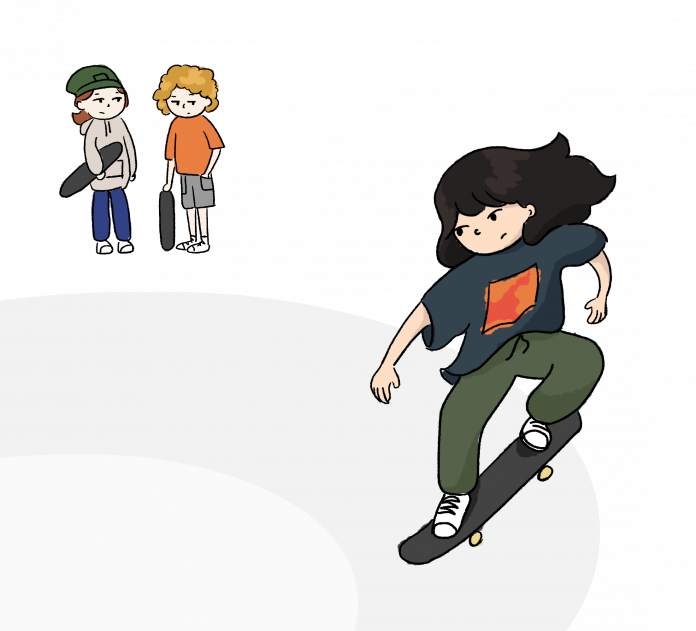
The first time I went to a skatepark with my board and helmet, I remember feeling excited. I chose to go on a BC holiday — which would turn out to be a big mistake — and opted for the park that was closest to my neighbourhood, which was nestled in a little suburban area. The park itself was small but versatile; it featured two bowls, a rail to slide on, and little hills that featured colourful graffiti against smooth, sleet-coloured concrete. 

It was a little past 11 a.m. with the sun full-frontal in the sky, which already had me sweating by the time I got to the park. As soon as I entered the green fence, however, my confidence dropped. I chose to come alone, thinking I’d have time to skate around an empty park, but instead, I found myself in a buzzing hive of white boys (baggy shirts, jeans, and all) ranging from kids to grown men, blasting past on their scooters and skateboards.

I was the only woman (and for that matter, only person of colour) there, in a sea of skaters who were younger and more talented than me. I gulped, my body suddenly tense, and my hands more than ready to text my mom to pick me up. 

I decided to start skating several months ago. It was a move that surprised not only my family, but me too. But in hindsight, it really shouldn’t have. 

I grew up in a Catholic Filipino household. Being the youngest of three daughters, I always noticed I was deviated from my parent’s expectations of being a proper Filipina girl. When I was eight, I often opted for baggier t-shirts, hated the colour pink, and listened to my dad’s Queen CDs. It wasn’t until I turned 12 my mother outright told me that video games were for boys and began dressing me in more pastels that I quietly closed the door on being a tomboy.

From that age, I would explore my femininity for a very long time. This past year, at the age of 23, I saw my partner ride his skateboard and felt electrified just seeing someone cruise down concrete.. Wide-eyed in my pink skirt and tight ponytail, I thought about how cool it was to be the girlfriend of a Sk8er Boi, á la Avril Lavigne style. But as soon as he let me ride his skateboard, I thought to myself: oh wait, I can be the cool Sk8er Boi. 

I began looking up skate tutorial videos on YouTube, excited to dive into something new — but then, I was painfully reminded of the fact that there was a standardized Sk8er Boi look that I didn’t fit. Namely, a white male in a baggy t-shirt. So whenever I walked the streets with my skateboard, or moreover, saw a white dude with his board skate past, I would feel immediately defensive. I felt paranoid if others, especially men, would immediately see that I was a beginner and would call me a poser like we were in a generically mediocre 90s TV show. 

However, I understood that it made sense for skateboarding to be populated by white males because it was founded in California during the 60s by Caucasian beach-blond boys who wanted to surf on the sidewalk. 

This isn’t to say that there were only white skaters; men of colour, especially Black men, were part of the skating scene. Skaters like Steve Caballero (pro skater and creator of the skate trick, the Caballerial), and Christian Hosoi (pro skater and past rival of Tony Hawk) were also big names that are integral to the history of skateboarding. 

But I still felt alone. I did, however, begin improving over the next few weeks. Every single time I rode my board, I felt this incredible urge to prove to others I was competent enough to ride. I kept trying to prove that to myself so I didn’t feel like an impostor. It’s not that the skate community, online and offline, wasn’t welcoming, but I found it hard believing myself that I was part of that community and I belonged there as a woman of colour. 

Then, enter Skate Kitchen. Skate Kitchen is an all-female skate collective based in New York City. Their members include Rachelle Vinberg, Dede Lovelace, and Moonbear, who are all women of colour and even actresses in the HBO series, Betty, wherein it showcases the lives of fictional characters based on themselves. 

When I first saw Vinberg and her all-female crew spill into a male skate park in the series, I remember feeling a surge of empowerment and the striking feeling of being found. Although I didn’t immediately feel less of an impostor, I definitely felt more safe.

After seeing Skate Kitchen, I began looking to my own community; I hit up a fellow female SFU student I met from Emo Nite Vancouver, and began asking her where to go in the big old skate world of Vancouver. She recommended that I follow @vancouverqueerskate, a pro LGBTQ2+ skate account based in BC, @latebloomersskateclub, an inclusive skate account that posted daily inspo-videos of (usually) women sharing their skate progress, and suggested I joined Chickflip, an all-female Facebook group of female skaters in BC. 

After months of looking inward and looking outward at skate videos online, I decided to get my skateboard at Skull Skates, Canada’s oldest skate shop downtown in Vancouver. So when I walked into the skate park, alone, with my new board, shaking in my pastel-coloured Converses, I did the only thing I (sort of) knew how to do. I skated — badly. 

I pushed around on my board, doing small turns around the hurdles and not so much stopping, but stumbling to a halt every time I circled the bowl. Guys did laps around me, getting air time, doing tricks, and out-racing their friends, but I kept pushing through the anxiety until all the other skaters left the bowl. 

I remember feeling my face erupt in the smallest smile meant only for myself because I knew, despite the fact I was the only woman of colour there, I was a skater, and nobody could tell me otherwise. 

Fast forward to the end of this summer and I was in Surrey, skating on a late afternoon day. There’s a road of fresh concrete that spans a block down at the block my partner lives. He and I were skating down that concrete after a board session at the park nearby. I followed behind him, my right sneaker pushing off the pavement hard, my left hand at my hip holding my bubble tea order as my eyes focused forward. The wind whipped past me and I stood up straight on my board, enjoying the sunlight. 

But as soon I cruised down the concrete, I saw a girl cruising towards us, her bangs in her face as she stared down at her board, arms flailing as she tried to steady herself on her board. I sped past her but stole a look as I was riding away. She looked like me, five months ago, struggling to skate in a parking lot while better skaters passed me. 

I thought more about her as I put away my helmet and board once I got home. I thought of how I wanted to tell her that it was OK to struggle, that all she’s gotta do is commit. But mostly, all I wanted to tell her was how good it was to see her, and how just like me, she belonged too.
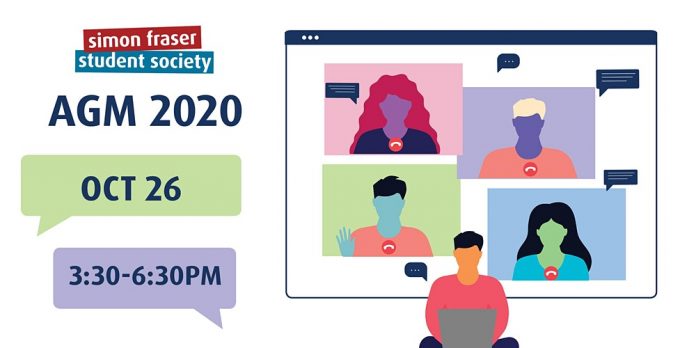

SFSS 2020 AGM: Moving towards equity and democracy

0
Illustration courtesy of SFSS.

Recent SFU Student Activism

SFU has witnessed a wave of student activism over the last couple of years that was inspired in 2018 by an interconnected combination of movements on campus. This includes women’s rights advocacy sparked by the impeachment of the Simon Fraser Student Society (SFSS) president, calls for equity within our student society over the Rotunda Space issue, and the ongoing battle against yearly tuition increases. Student activists organized around issues, mobilizing to pressure both SFSS and SFU for equity and transparency in the way both organizations make decisions.

The highly politicized campus climate led to engaged student activists being elected as SFSS representatives with a mandate of building back student power. The SFSS is a student-led organization that represents and advocates for the rights and interests of the 25,000+ undergraduate students at SFU. It provides undergraduate events, services, and advocacy to SFU. The Society continues to advocate for anti-oppressive practices and structural support for students during COVID-19 advocacy.

SFSS has successfully lobbied for the construction of the Burnaby Mountain Gondola, mobilized students across North America to take action for climate justice and Indigenous rights, and supported the Don’t Forget Students campaign. 

Attacks on Student Democracy 

Currently, the SFSS consists of two governing bodies: the Board of Directors and the Council. The Board consists of 16 elected student representatives, including six Executive Officers that carry out the day-to-day responsibilities of the Society, and 10 Faculty and At-Large Representatives.

The Council is an advisory body to the Board and serves as a space for students across SFU to connect and bring their issues to the governance table. It represents every faculty and departmental student union at SFU, and equity-seeking constituency groups including the Women’s Centre, First Nations Students Association (FNSA), Disability and Neurodiversity Alliance (DNA), Out on Campus (OOC), and Students of Caribbean and African Ancestry (SOCA).

Unfortunately, there have been attacks on Council from the Board in recent years. In the spring of 2017, Councillors mobilized against by-law changes which diminished the Council’s role in the Society, removing its role in SFSS governance with the intention of eradicating Council. 

SFSS by-laws are governing rules and principles agreed upon by membership that define our governing structure. In Spring 201–20, Council held the Board accountable for their decision to go against providing equity-seeking groups space in the new SUB. The Board drafted by-laws in response that removed the Council’s governance powers, systemically writing Council out of existence. 

This year’s elected Board scrapped those drafts and worked with Council to create new by-law proposals for membership to vote on at the SFSS 2020 Annual General Meeting. When it comes to equity and representation, SFSS must ensure that Council’s powers are systemically ingrained into our governance structure so that student democracy is protected.

SFSS 2020 Annual General Meeting 

Moving Towards Equity and Democracy

To advance student advocacy efforts, the SFSS Board and Council have worked together to propose a new model for the Society that involves redistribution of governance power to a more diverse range of students at SFU. 

The SFSS Board proposes that Council become the new legal Board of Directors, as defined in the BC legislation we follow. The model aims to establish the new executive role of VP Equity and Sustainability within SFSS. 

As part of the anti-oppressive shift within the student body, the newly proposed model ensures that marginalized equity-seeking groups have a direct vote at the decision-making level of student governance. These would include the Women’s Centre, FNSA, DNA, OOC, and SOCA.

SFSS Condemnation Vote Against SFU Tuition Increases

After refusing to join students’ calls to lobby the BC government together for increased educational funding, SFU is raising tuition during the COVID-19 pandemic. A motion is being proposed at the AGM to condemn SFU tuition increases as a student body.

SFSS President Osob Mohamed’s briefing note on the tuition condemnation states the significance sending a unified message to the SFU institution:

“A formal, public group condemnation can be a powerful tool in the lead up to a bigger action, and to a direct concession from the University in the near future.”

Why it’s Important to Vote at the SFSS AGM

Along with the regular procedural matters that the student society updates membership about, such as the financial status of the Society, students can actively participate in student democracy by vocalizing their thoughts and ideas.

It’s essential that membership votes in favour of adopting the structural changes proposed in the new bylaws; it would be the start of a new era for the SFSS. 

These systemic changes in our student union would advance student engagement and advocacy efforts, including fighting against tuition hikes, providing academic advocacy, advancing SFU’s role in racial and climate justice, and more. The new structure would be a move towards equity and democracy, as it systemically redistributes power to students to include representation of every faculty and departmental student union and marginalized group on campus.

How to Vote at the Oct 26 SFSS AGM

All undergraduate students are encouraged to attend and participate in the SFSS AGM on Oct 26 at 3:30 p.m. Cast your vote in formally condemning SFU tuition hikes as a student body and vote to build student power within the Society through equity and democracy. 

Quorum is reached at 250 members, the minimum number of members required to conduct AGM business. Changes to SFSS bylaws must pass by a 2/3 majority to be successful. All relevant AGM documents are available for download.

By attending the AGM, students will be automatically entered in the draw to win prizes ranging from Skip The Dishes gift cards to smart tablets, and more. There is also a prize for the student union that has the highest number of students to attend the AGM.

SFSS 2020 Annual General Meeting Details

Date: Monday, October 26, 2020

Time: 3:30 p.m.–6:30 p.m.

Register on the Eventbrite page.

See Relevant AGM Documents: bit.ly/SFSS2020AGM

U.S. presidential debate formats that would have gone better than what happened on September 29

0
PHOTO: Charles Deluvio / Unsplash

I know what you’re thinking: what the flag-thumping-fuck was that Trump-Biden debate? There’s nothing worse than chugging tequila thinking “oh, this might be easier to sit through if I make it a drinking game,” only to realize as you’re driven to the hospital for alcohol poisoning that A) having a Libra as a moderator was a horrible idea and B) facism never looked so orange. Let’s take a look at some ideas for the format of the next debate that might be more productive than that dumpster fire — and may lead to an actually funny SNL parody (hopefully with Pete Davidson playing Biden. I’d just like to see that.)


  • A Karaoke-Off


It’s every theatre kid’s dream and every normal person’s nightmare. I imagine Trump starting with a rendition of white-trash anthem “Sweet Home Alabama.” He’ll probably get dubbed over, just like Zac Efron did in High School Musical (sorry to have to break this news to you so abruptly. Now your dreams of Troy Bolton and the United States as a whole are both crushed.) 

Biden, however, seems likely to go the hip-with-the-kids route — even though there’s nothing less hip-with-the-kids than picking a cop as your VP. Personally, I’d like to see him rap “Fuck Donald Trump,” but given that he plays it safe, he’ll probably go for something from Hamilton (told you the theatre kids would be happy.) 

Side note, imagine the power Kanye would have here if he had stayed in the running. The mention of independence arises and he just goes, “Your titties, let ‘em out, free at last. Thank God almighty, they free at last . . .”


  • Kahoot


Is there anything that brings more fury and violence than Kahoot? Designed to be played in grade school classrooms, this is the perfect option for these two candidates that act like children. With Kahoot, there’s no grey area. When asked “do you condemn white supremacy?” Trump can’t tell the Proud Boys to “stand back and stand by” because YEAH, that was a thing that happened (???) Instead, all he has to do is click that red “yes” button. 

Kahoot is also time-sensitive, which will help Biden avoid prefacing every answer with “well . . . here’s the deal” and waving his hands around a bunch. If wanted, the American people can even play along! Now that’s a better voting system than the mail-corrupting mess of the USA, folks. 


  • American Ninja Warrior


What better way is there to stress to the candidates that they’re too old for this job than with an athletic competition? Due to Trump’s heavy steroids because of his “mild” COVID-19 symptoms, he “feels better than he did 20 years ago” and really wants us to believe that he has the advantage. So let’s ignore the debilitating illness that he has and send this 74-year-old man through a physically taxing obstacle course that only three people have ever completed. I’m sure nothing bad will happen! Well, nothing bad by my standards. 


  • MasterChef


Being a chef and being a politician need the same amount of experience: none. Just ask Remy from Ratatouille! The rat had no cooking experience and straight-up vibed his way into a job by pulling some dude’s hair. I’d take this rat as president over the other two rats in suits any day. 

Biden will make a sorry attempt at some kind of ethnic food in order to appeal to voters that he definitely never cared about in the first place. Trump, on the other hand, will tweet “MCDONALD’S. VOTE!” and then UberEats a Big Mac to present as his meal — but not without a fly landing on it, probably. 

In the end, both of them will be bettered by it. This reality show may actually be good for Trump; if he won, that prize money could pay off his next 15 years of taxes!

Opinions in Dialogue: Trump and COVID-19

0
Shaheen Virk / The Peak

With Trump’s diagnosis of COVID-19, the internet has been swarmed with arguments to be empathetic while weighing the irresponsibility of the Trump administration in their management of COVID-19, leading to over 200,000 deaths. Peak Associate Kelly Chia and Staff Writer Emma Jean discuss below.

Kelly: To start, while I definitely believe it’s in poor taste to wish sickness on a person, I find it really difficult to empathize with Trump being diagnosed. This was a man that, most recently in the presidential debate, mocked Biden and his family for wearing masks. This was a man that, after being diagnosed, was admitted to a luxurious six-room suite receiving top treatment. My biggest fear was that should he recover swiftly, he would downplay the seriousness of this disease, and that’s exactly what he did in this tweet. 

Emma: I agree. It’s very hard to not abide by the traditional sentiment of not wishing harm on another person, but when the health of a single person could dictate by proxy how seriously countless governments and individuals address a literal plague . . . it feels almost wrong to hope for a swift and full recovery. If some of the more severe symptoms of COVID-19 had taken hold of Trump, and there were people other than Claudia Conway who could publicize it, it could be a global example of how even the most powerful people in the world can be dramatically affected be this virus — even if they’re receiving the kind of world-class care you described at a world renowned military hospital. Instead, though, we got this horseshit, and he can justify all the lies he’s spread about COVID because he’s lived it. I never thought I’d say that beating an illness is the worst case scenario, but in Trump’s case, it really is.

Kelly: As a politician, it feels like he has already done the most dangerous thing he could in his situation: say COVID-19 is nothing to be afraid of. A study from the 2020 Health Care Trend Report states that COVID-19 treatment costs about $14,500 a person. For him to talk about his recovery like it represents all Americans is to spit in the faces of the citizens that can’t afford this treatment. I also take issue with Trump continuing to call COVID-19 the Chinese virus. He continues to aggravate Anti-Asian sentiment, and I can only imagine how nerve-wracking that must be when voting at the polls. 

Emma: I couldn’t imagine how he could possibly cause more damage than he already has, but, jester, he has done it again. The rhetoric he’s used the last six months seem to exemplify the greatest hits of his presidency, namely racism, fear-mongering, and science denial — but it’s all applied to an issue that forces everyone to listen to him talk about it because he’s technically the leading public authority on it. The exorbitant cost of healthcare that you highlighted also makes it even more despicable that the other favourite talking point of his campaigns have been the slandering the Affordable Care Act, which was flawed but still began to provide bare minimum of public health insurance, and any form of Medicare for All. Considering that comes from one of the most privileged people in the world, it’s beyond insulting and exponentially damaging to know how much this combination of lack of health coverage and reckless handling of a pandemic will cost in human life, as well as the financial ruin COVID-19 leaves behind to those affected by it.

Kelly: In other words, Trump’s own treatment of the virus has largely informed how we empathize with him in the virus. As we are writing this article, Trump has claimed that he has fully recovered from the virus, and we know that he has been receiving treatment that most Americans can not afford to see. Regardless of whether he has truly recovered, I don’t think that the reactions to him getting diagnosed is a true measure of anyone’s empathy. Many people are understandably hurt by the way he has navigated the COVID-19 crisis in the States, and they are still suffering from the effects of it. 

Emma: Exactly. I think there’s nothing wrong in taking some satisfaction that Trump can finally experience a fraction of the pain he’s caused others, nor with hoping his situation would have become a lesson on how contagious and serious the virus can be. Obviously, the latter hasn’t come true, so settling for the former is the best we can do. That being said, I think everyone’s entitled to feel however they do about this, because we all have our own relationship to illness and death. Twitter should not be banning accounts that are making jokes about Trump’s death (especially after they’ve ignored countless death threats against racialized people, trans people, and women in the public eye for years). Ultimately, there is no reason you should feel bad for feeling good about Trump’s COVID-19 diagnosis. (FBI, please don’t come to our homes.)

NDP pledges SFU will get BC’s second medical school program

0
PHOTO: Simon Fraser University Communications & Marketing / Flickr

The BC NDP announced that upon re-election, they will begin the conversation with SFU to put British Columbia’s second medical school at the Surrey campus. The Peak interviewed NDP Burnaby-Lougheed Member of the Legislative Assembly, Honourable Katrina Chen, to discuss the pledge. According to Chen, Surrey’s quickly growing population and the location of the SFU campus makes an ideal time and location to develop a medical program. 

Assuming the NDP government is re-elected in the upcoming provincial election, a more in-depth discussion on funding, educators, and program development will need to take place, according to Chen. She noted that the discussion phase of the project would likely “take about four years of planning.” She hopes to have SFU welcome their first medical school class in the 2024/25 academic year. 

Chen stated that this is “great news for our community as a whole” as an additional medical school in the area will help to deflate wait times for medical attention by training more local doctors. According to Chen, excessive wait times in clinics were “a problem that was really left by the previous government [ . . . ] not being able to address wait time.” 

SFU’s potential medical school training would partner with the Fraser Valley Health Authority and the First Nations Health Authority to put training programs in place for culturally sensitive healthcare services. Chen noted that it is a priority for the NDP government to be aware of BC’s large and diverse population, and that the new “medical school will be able to connect with those needs” across a number of marginalized groups in Canadian communities.

“We need more locally trained doctors. BC [has been] lagging on that” despite the recent attempts to invest in healthcare, stated Chen. “We need to do more,” she added, expressing that during the pandemic, the importance of healthcare has been made clearer. 

The NDP has and will continue to “[work] really hard on the primary care network,” as stated by Chen. She said that the new medical school will be a unique partnership in the community across the coming years. 

There is more information on the NDP’s platform website detailing their priorities for the upcoming election. 

Natural ingredients aren’t necessarily better for your skin

0
PHOTO: Alex / Flickr

The skincare industry has exploded in recent years — in 2019, skincare sales went up 13% in the United States. Along with the skincare boom, came the clean or natural beauty movement, which advocates for cosmetics that only contain natural or “non-toxic” products. 

The idea is that this will be more beneficial to your skin, because if cosmetics are free of “chemicals,” then they supposedly pose no harm. The issue is that in reality, natural skincare often irritates skin in its attempt to nourish it — and it’s also a myth that synthetic ingredients are inherently worse than natural ones.

There are good natural skincare ingredients, like glycerin and honey. However, it really depends on the ingredient itself. Products that list ingredients such as witch hazel and peppermint oil will often rave about their benefits. The problem is that many of these ingredients’ so-called benefits aren’t studied too well — and there’s always a risk of skin irritation. 

In the case of witch hazel, there are claims about its antioxidant properties, however long-term use of the ingredient isn’t recommended due to the sensitizing tannins within it, which is an antioxidant that can dry the skin. While witch hazel is a natural ingredient, it’s only one of the many natural ingredients that shouldn’t be in a daily skincare routine. 

Similarly, there’s a false notion that natural fragrance is better than synthetic fragrance. However, even natural fragrance irritates skin just as much as a synthetic fragrance. While some may not notice any irritation due to fragrance, this isn’t a sure sign that there is none, and gives all the more reason to avoid sensitizing ingredients in general. 

Cosmetics labelled with the words “natural” and “non-toxic” plastered onto them are usually meaningless and solely provide a false sense of comfort, because in skincare “natural” is not synonymous with “safer” or “better.” The idea of knowing what an ingredient means may provide a sense of security — especially when ingredients like tetrapeptide-30 don’t sound the most appealing. However, it’s simply false that natural skincare is always going to be a better choice than a non-natural alternative. 


The Living Lab program is researching solutions for more sustainable practices on campus

0
Photo Courtesy of Simon Fraser University

Editor’s note: This article previously stated that the application deadline for the program was October 30. It has now been extended to November 13 and the article has been edited to reflect this change. 

A new pilot program at SFU seeks practical solutions to on-campus sustainability. The Living Lab, a program consisting of graduate students and faculty, combines environmental research with hands-on learning to build ways for SFU to reach its sustainability goals, and to apply them to other communities all over the world. 

“We want to engage in sustainability in all aspects of the university: teaching and learning; research; and operation,” said program leader Dr. Kilim Park. 

With a “solutions-seeking” model, the program focuses on four main goals aligned with the on-campus SFU’s 2025 Sustainability Plan: reducing waste, switching to renewable energy, reducing greenhouse gas emissions, and lowering transportation pollution. Along with the direct environmental impact, Dr. Park also notes the program’s hopes to “create and foster research culture in our operational decision-making [ . . . ] showcase our talented graduate student and faculty researchers, and hope that SFU will continue to highlight and provide further support to climate action research.

“The Living Lab brings all of these elements together by facilitating the collaboration between researchers (graduate students and faculty) and practitioners (operations), and providing an opportunity for graduate student learning and research.” Graduate students who are chosen for the program in the coming months will plan and develop the inaugural projects for the program, all related to SFU’s sustainability goals, alongside faculty and staff. 

A collaboration between SFU Sustainability Office, the Vice-President, Research and International, and the Pacific Institute for Climate Solutions, Dr. Park describes the program as a “unique environment where the university as a whole is engaged in [the] research process through a collective process of inquiry.” 

When it comes to adhering COVID-19 protocols, Dr. Park notes that while many staff working with the operations of the project are on campus, “[they] don’t have a physical space dedicated or assigned to our Living Lab research projects, and expect that most of the research would take place virtually.”

Though planning for the Living Lab is mostly focused on the pilot year, Dr. Park notes that they hope it will grow past its initial run to focus on larger sustainability goals.

To get involved, graduate students can apply by November 13 with their research proposal. Accepted applicants, known as Living Lab Scholars, can receive a maximum of $12,500 in funding per project. Projects will begin January 2021. 

#NotGoingBack Climate Strike

0
Photo by Brent Richter, North Shore News.

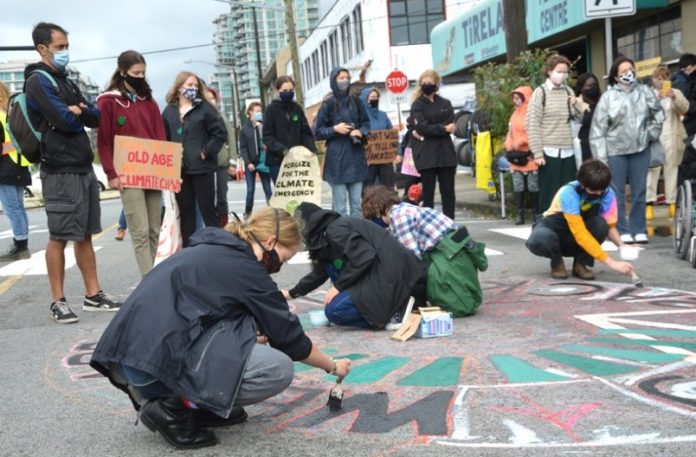
Sustainabiliteens, Climate Strike Canada, and Our Time planned four Metro Vancouver #NotGoingBack climate strikes on September 25. This initiative supported Friday for Future’s Global Day of Climate Action. In response to Prime Minister Justin Trudeau’s throne speech, the event organizers demanded for economic, racial, and climate justice.

Over 3,500 towns and cities in 154 countries participated in the Global Day of Climate Action. The We Are Not Going Back movement’s objective was to initiate a “transformation of our society and the/our economy to build a more equitable and resilient future.”

Due to the provincial health guidelines on public gatherings, the organizers divided their annual climate strike into four smaller climate strikes at Holland Park in Surrey, outside a MP’s office in Vancouver, outside Liberal MP Terry Beech’s office in Burnaby, and outside Minister of Environment and Climate Change Jonathan Wilkinson’s office in North Vancouver, which was the central action. 

Guest speakers included Will George from the Tsleil-Waututh Nation, Ella from Black in BC, SFU Health Sciences Professor Dr. Tim Takaro from Burnaby Residents Opposing Kinder-Morgan Expansion (BROKE), and Sustainabiliteens members Natasha Ivkov, Viduni Kankanamge, Naisha Khan, Ria Laura, and Sonja Schutte.

Sustainabiliteens also implemented COVID-19 safety measures such as mandatory face masks, hand sanitizers, and RSVP forms to assist with contact tracing. Due to health concerns, some supporters may not have been able to attend a climate strike, so Sustainabiliteens live streamed each climate strike via Instagram. Supporters could also participate through sharing Sustainabiliteens social media campaigns, utilizing the toolkits, and wearing felt green circles, which resembled Climate Strike Canada’s logo.

According to Tavie Johnson, the North Shore Sustainabiliteens coordinator and spokesperson, “The three principles of Not Going Back was [to] dismantle racism and colonialism, treat the climate crisis like an emergency, and invest in people and not corporations.” 

“What we called normal — what we used to do before COVID hit — was not working for so many different people. It was just adequate in every sense of the word,” claimed Johnson.

Johnson and her colleague Kiran Niet, the Sustainabiliteens regional coordinator for Burnaby, New-West, and the Tri-Cities, noted that the pandemic not only highlighted but also exacerbated several concerns ranging from racism, wealth inequality, homelessness, and the opioid crisis. 

These climate strikes are a platform for people to voice their concerns. Stewardship of the land is an integral component of Indigenous culture, so Sustainabiliteens consulted with and invited the Musqueam/xʷməθkʷəy̓əm, Squamish/Sḵwx̱wú7mesh, and Tsleil-Waututh/sel̓íl̓witulh Nation’s to participate in the event. At the North Vancouver Climate Strike, guest speaker Will George from the Tsleil-Waututh Nation started off the event. George showed his appreciation for these youth advocating for justice.

“This fight is not only an Indigenous problem, this is everybody’s problem, and quite often these fights are put on the backs of Indigenous folks, and we’re spread so thin with how many other fights we have,” emphasized George.

He expressed his concerns regarding the Trans Mountain pipeline’s construction by explaining the importance of protecting sockeye salmon’s spawning grounds.

“It’s a keynote species, and we all know what it does. It feeds the bears. It feeds the forest. It feeds the people  [ . . . ] [There are] sockeye bones in Vancouver Island that are 4 million years old. And then th[e construction] can destroy it in a matter of one season and not [allow the salmon] to respawn.”

During the interview with Niet, she also expressed similar concerns regarding Indigenous and environmental justice.

Niet insisted, “We can’t have climate justice without no recognition of Indigenous sovereignty [ . . . ] They’re inseparable, because colonialism in a lot of ways is the root of the climate crisis.”

Niet admitted that environmental justice is intersectional in nature, because members of marginalized communities disproportionately endure the consequences of climate change. Johnson also shared similar sentiments on the importance of including marginalized voices in the event planning process

Johnson responded, “When we’re choosing spokespeople or speakers within Sustainabiliteens, we also try to have at least one Indigenous, one Black, [and] one LGBTQ2+ person, so that we have as many different lived experiences and points of views made possible. We always partner with different organizations like Vancouver Allies, Our Time, Black in BC, for example, and then [the] Tsleil-Waututh Nation, Squamish Nation, Musqueam Nation, because we’re on their unceded traditional territories, so it’s really important that wherever we’re holding an action on their land we have to include them in what we’re doing.

“Racial justice is climate justice.”

At the Burnaby Climate Strike, Dr. Takaro protested against Kinder-Morgan’s Trans Mountain Pipeline expansion and proposed alternatives to the pipeline. He suggested, “Instead of laying a pipeline, let’s lay a high voltage direct current line. Let’s move renewable energy from East to West.”

SFU Wildlife Conservation Club’s Creative Director Zain Haq also attended the Burnaby #NotGoingBack Climate Strike.

According to Haq, “I think the message other participants might want to take away is that these demonstrations outside the offices are excellent in putting pressure, and a good way to have consciousness raising [ . . . ] If we want to put real pressure on those in power, we need to take part in non-violent civil disobedience.”

Similarly, Johnson advises activists to continue fighting against inequality after the climate strike.

“We have so many things that are unfair for the vast majority of people, and people need to realize that there is a better future possible. It doesn’t have to be this way, so we need to first pressure our government to take action and to change the way things are done so that we can achieve climate justice and social justice and Indigenous justice. And we’re also trying to encourage participants to raise their voice every day.”

Johnson believes that advocacy requires commitment beyond the climate strike.

“A climate strike is one day a year. The other 364 days you have to be fighting and taking action in your own lives,” urged Johnson.

SFU student clubs are still trying to create community online

0
Illustration courtesy of SFSS.

Following the trend of these unprecedented times, the SFSS launched its first online-exclusive Clubs Day on September 15–17. The event being moved to online follows SFU’s decision to make classes and planned gatherings remote in accordance with COVID-19 health and safety regulations.

As a campus with over 90 student clubs and several Student Unions overseen by the SFSS, what can an online semester mean for the student life on campus? How are clubs continuing to operate during this time? To investigate this further, The Peak interviewed executives via email from a few of SFU’s largest student clubs: Pearl Tran from K.STORM (Korean Storm), Rolin Liu from SFUTA (Taiwan Association — SFU), and Justin Yu from the SFU Anime Club. At the time of writing this, SFU SOCA and SFU Surge have not provided statements. 

When K. STORM, a Korean culture enthusiasts club, and their president Pearl Tran heard there would be a Clubs Day this fall, they were relieved.

“Of course, we were a bit disappointed to hear that it would be online,” she wrote, “but we knew that was inevitable due to SFU remaining online for health and safety reasons. We were a bit curious to see how the format would be, since all we were familiar with at the moment was Zoom and BB Collaborate for video-calling.”

Rolin Liu, VP of SFUTA, one of SFU’s oldest clubs being established since 1989, similarly found the Clubs Day online format intriguing, but he and his team also had reservations.

“We were [sic] nervous that it might not attracted [sic] as many people as in person but it was better than nothing,” he remarked.

Justin Yu, the social media coordinator of the SFU Anime Club, found that the SFSS holding the event online “[set] a good example” for the rest of the overall SFU club community. And unlike most clubs, SFU Anime has been holding online events since quarantine even began.

“Since the start of self-isolation in March, SFU Anime Club has actually been holding several online events for our community,” Yu wrote. “[This includes] a Mental Health Week, our Summer Icebreaker, and SFU Gamefest (a collaboration event with SFU E-Sports), and we’ve seen great success with these events, often times having event attendance nearly equivalent to that of our in person events.

“We were very confident in our abilities to adapt to an online Clubs Day successfully,” Yu stated. 

According to the SFSS, approximately 2,000 students attended the event itself that was hosted on the video conferencing platform, Hopin. Liu and Yu agreed that the online Clubs Day was the best effort by the SFSS. 

However, the virtual Clubs Day was not without its shortcomings. For instance, lagging video feeds were an issue, as well as the inability for club executives to see which people were currently in one’s Hopin booth.

“At first, it was a bit awkward talking to students while we were on video while they were mainly speaking through the chat box,” Tran wrote. “One of my execs mentioned she understands what her [P]rofessors mean when they say that they feel like they are talking to no one.”

Yu of SFU Anime Club also shared this sentiment. 

“Sometimes it felt like talking to an empty audience,” he wrote, but also expressed it still felt like him and his club execs could hold one-on-one conversations with those in the Hopin chat box. 

Yu added, “The platform seemed to be moderately active throughout the three days, although more advertising during events like Welcome Day might have helped make it more successful.”

Concerns regarding Clubs Days did not stop there. K.STORM and SFUTA club executives expressed concern about recruitment for the online semester. Not only did Liu write about the lack of engagement that may come from disinterested students during an online semester, he also wrote about the issue of being international.

“Many of our club execs are not in Vancouver so it will be harder to host events,” Liu expressed. “We are planning events in Taiwan [ . . . ] [execs are] helping with the planning of online events in Vancouver, through making event posters, posting on social media, creating proposals and connecting with sponsors online.” 

Another worry for club executives like Tran for K.STORM is how their club will survive financially.

“Our club offers two kinds of memberships; regular and VIP,” Tran said. While regular members do not need to pay fees to be part of the club, VIP members not only purchase a membership, but enjoy perks like free entry to all events, discounts from club sponsors, and extra swag. 

“However, since we cannot host our in-person events that tend to have higher costs so we can charge a ticket fee, we must rely on hosting free admission online events,” she wrote. “Therefore, we may have a lower cash flow even though we are continuing to spend money for events.”

But despite these concerns, all three clubs are getting creative on how they can engage other students online. For instance, Yu mentioned how SFU Anime Club utilizes its Discord server that holds over 1,200 members which has been especially useful during this semester.

“The Discord server has really become an essential part of the club,” he remarked, “It really helped us adapt well to the online nature of current activities [ . . . ] The result of this work has led to our club being more active than ever, and we’ve had a growth of over 400+ members interacting in our community since self isolation began in March.”

In terms of the first events held by clubs for the semester, SFUTA hosted their workshop of making at-home bubble tea virtually which, according to Liu, garnered over 20 students in an online room. 

“It was different and a little nerve [w]racking that we might have technical difficulties but we made it work,” Liu wrote, “It feels a lot different than in person as you don’t have the same type of interaction. I think the more we do it the better we will become.”

The combined efforts of SFU Anime Club, K.STORM, SFUTA, and the other 90 or so SFU student clubs prove you can still be social in a socially-distanced semester.

Are you ready for a quarantine pet?

1
Courtesy of Film Daily

Since the onset of the COVID-19 pandemic, shelters have been struggling to keep up with the demand for pet adoptions. This increase in demand is great for the shelters and animals in the short-term, but there are negative effects as well. The most significant of these are pets experiencing separation anxiety and shelters bracing for an influx of surrendered pets because of this. While adopting pets is immediately beneficial to all parties involved, there needs to be an understanding of best practices, what adopting a pet entails, and possible alternatives.

Now that COVID-19 restrictions are becoming less strict, many pets are experiencing separation anxiety. The animals become accustomed to people constantly being in their presence and caring for them, that the sudden change to being alone for significant amounts of time can cause separation anxiety and associated behavioural changes. Behavioural changes can include: panic, pacing, destroying items, vocalizing, etc. 

Behavioural problems are the most common reason for why people surrender their pets, which is why some shelters are anticipating a “surrender boom” once individuals revert to their old routines. There is also concern amongst shelters that the longer people are unemployed, the more financial hardship they will face. Thus, people will no longer be able to afford caring for their pets, resulting in more pets being surrendered.

To avoid having to contemplate surrendering a pet one should have an understanding of the best practices and alternatives to adopting available to them. First, determine whether you can afford having a pet if the situation you are currently in continues. Consider the costs of grooming, vaccinations, annual appointments, pet insurance, food, supplies, etc. Second, prepare your pet for increased time alone. This can include crate training, leaving the pet alone for a few hours at a time and investing in professional training. Lastly, if you have any doubts about adopting a pet, foster. Fostering pets can be a great way to determine if you are ready for the commitment and to have the opportunity to provide the pet with greater love and socialization.

I understand that in the pandemic, most of us are spending more time alone at home than ever before. The impulse to adopt a pet to share all of this extra time with is a natural progression. I adopted a dog, Lena, a couple years ago for the same reason, but I had no idea what I was getting myself into. The costs associated with grooming, specialized diets, kidney failure, being denied pet insurance due to a pre-existing condition, training, etc. seemed insurmountable. Although, I could never imagine surrendering her I’m not sure what I would’ve done if I was dealing with behavioural issues on top of the extreme financial stress I was facing. Let this serve as a caution, do your research, be prepared to train your pet for when you go back to work and have an understanding of the commitment adopting a pet is. Only after taking all this information into consideration, make a decision regarding whether or not to adopt a pet.