Home Blog Page 343

We shouldn’t ask people why they don’t drink

0
Intrusive questions disrespects other people’s choice to avoid drinking PHOTO: Yuliia Bas / Pexels

Asking questions can be a great way to learn more about your peers, but it is important to be mindful of the types of questions you ask. Asking someone why they don’t drink might seem harmless, but for the person on the receiving end, it may not always be. 

People may have various reasons for avoiding drinking. They may be abstinent because of health concerns. For people who take medicine that causes drowsiness, alcohol can worsen these side effects. Also, people who are allergic or intolerant to alcohol may experience nausea and hives. 

If someone does not drink, it is also possible they did drink in the past but decided to stop for a variety of reasons. Given that “excessive alcohol intake can lead to high blood pressure, heart failure, or stroke,” someone may choose abstinence. If people don’t want to reveal their personal or medical history to you, respect their privacy and do not dig for more personal details. If they consider telling you about possible health conditions, it is better for them to tell you when they are ready, not on your terms. Also, not everyone enjoys the taste of alcohol, which is completely okay. Based on genetics, some people “perceive alcohol to be more bitter.”   

If you act like you’re entitled to know why someone avoids certain substances, you are infringing on their boundaries. This turns the conversation into a one-sided interrogation and may even lead to peer pressure.

If you are in a conversation where you notice that someone is asking intrusive questions, remind them they should be respectful of others’ personal choices and redirect the conversation to another topic. People may not want to explain their reasons for not drinking, and it’s not anyone’s place to intrude

We shouldn’t ignore other people’s boundaries to satisfy our curiosity or pressure someone to drink. Whatever the reason behind someone’s abstinence, recognize they are more knowledgeable about their situation than you are to make an informed decision about their lives.

SFU must mandate all professors record in-person lectures

0
Accessibility should be a top priority as we make the difficult transition to in-person classes. PHOTO: Amirul Anirban / The Peak

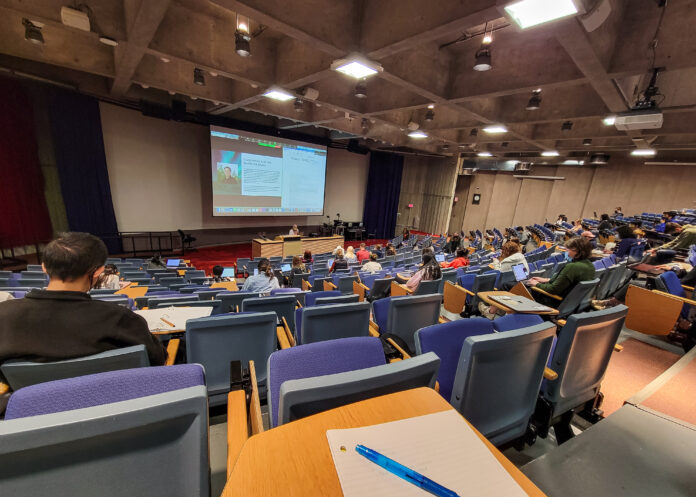
SFU’s return to in-person classes brings bustling hallways, packed lecture halls, and students reuniting face to face with peers. However, we cannot let the exuberance of classes starting again overshadow the dangers of the fourth wave of COVID-19. While the university’s safety plan includes mask mandates and ventilation, these efforts are not enough. We must give all students the option to watch lectures from home. Requiring professors record all courses would offer students the space to make their own decisions about their health and the safety of their community. 

Many professors underestimate the importance of recording classes, claiming it will give students “an easy way out” and lead to a decrease in classroom attendance. Not only have studies proven this theory wrong, they actually show recorded lectures “[correlate] with higher grades.” This excuse also fails to acknowledge it is a public safety hazard to make attending lectures compulsory. If a student shows symptoms of, or has been exposed to someone with COVID-19, they should not feel any pressure to come to class. 

The majority of undergraduate and graduate students fall in the age range of 18–29, and only 68.93% of this demographic in BC have been fully vaccinated as of September 17. 

Additionally, at the time of writing, there are 6,068 active cases of COVID-19 in BC. These statistics paint a worrisome picture of possible outcomes. One student with COVID-19 endangers all surrounding students as studies found the virus can linger in the air for up to three hours and on surfaces like plastic and stainless steel for up to three days. Given that 88% of students commute to campus, a campus outbreak could turn into multiple city outbreaks in weeks.

On September 15, 2021, Tom Nault, registrar and executive director, student enrollment, sent out an email to all students detailing the ways in which excused absences would be handled. In it, Nault asks students to stay home if they are feeling unwell. He added “it helps to know your options,” should students need to stay home. Although these sentiments are perfectly agreeable, he then goes on to say, “If you think you might have to miss classes or cannot complete your coursework, your first step is to speak to your instructor about getting an academic concession.”

If a student wakes up the morning of an early lecture with COVID-19 symptoms, they should not have to gamble their class grade on the mercy of a teacher. In my experience, even if a student receives academic concession, many times the only accommodation made is an email containing that class’s powerpoint. A simple powerpoint does not give a sick student the same educational opportunity as a recorded lecture does. These requirements for academic concessions may have been accepted in years past, but tradition is no longer an excuse for inaccessibility.

Given that 71% of college students have felt increases in their stress and anxiety due to the pandemic, transitioning back to in-person classes is a hard switch for many. Having the option to watch recorded lectures at home will ease the transition and help with students’ well-being. 

While we’re all eager to transition to normal lives, we must still remember we aren’t out of the woods quite yet. Continuing to use the technology that helped us get through the pandemic’s peak is a simple and effective way to ensure the safety of students, staff, and community on campus. SFU needs to make the proactive decision to mandate recording lectures to prevent any future outbreaks. I’d like to keep attending my classes in-person for the rest of my time here, but if we don’t act now, there’s a chance we would have to go back to online classes. 

The SFSS recently put out a statement to push for enhanced safety on campus, which includes demands related to teaching adjustments, mental and physical health, as well as public health.

Health and Counselling’s lack of in-person sessions fails students

0
If we can have in-person classes, we can also have in-person counselling. PHOTO: Krystal Chan / The Peak

COVID-19 uncertainty and lack of physical interaction has led to record levels of anxiety and depression among students. Students are now faced with new issues as they return to campus, and the counselling services at SFU have fallen short in facilitating this transition. SFU Health and Counselling should offer in-person counselling sessions as soon as possible to respond to students’ mental health needs.

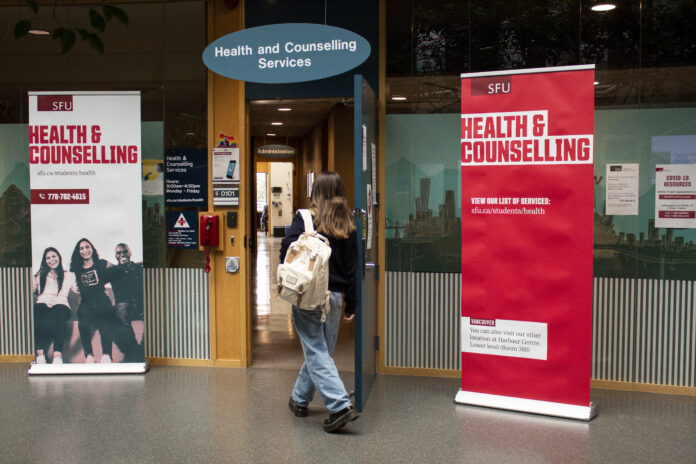
As the pandemic has taken a more manageable approach in Canada, many private practices have returned to providing in-person services. SFU Health & Counselling office is still only operating remotely, mentioning in vague terms that “as the pandemic and restrictions ease, counselling services will be offered [in-person].” However, the province already set guidelines for in-person counselling in June 2021. If students can pack themselves onto buses and sit side-by-side in lecture halls, they can connect with a counselor privately in-person. 

While online therapy has its benefits, one major concern is the loss of connection patients have with their counselors, and arguably vice-versa. The lack of physicality within the sessions translates to difficulties in bonding. For counselors, it is harder to make thorough assessments, which also waters down the level of care a student receives. 

Additionally, many students are unable to get privacy at home due to the presence of family members or roommates, which hinders communication as they may not be able to speak freely with their counsellors. Most importantly, those worst affected are students with severe mental health disorders or students suffering from suicidal thoughts. These students require the most intensive care and may not respond as well to virtual treatment, or be receptive to the idea of meeting online. 

Counselling is an important tool for students as they prepare to take on the challenges of the return to in-person socializing. Some may harbour feelings of anxiety as they relearn how to socialize after long periods of isolation, especially as it’s important to consider pandemic etiquette.

Currently only those with the financial resources will have access to private in-person practices. Students who had trouble with remote-learning due to technological barriers or low-income backgrounds may require counselling to cope with the stress, but they are once again disregarded.

The university completely neglected this crucial element in their planning for a return to campus. SFU has had over three months to adapt their practices to the provincial guidelines. The current state of service is unacceptable. 

There is no reason why in-person counselling shouldn’t have been available for students right from the beginning of the Fall term. It is hard to rationalise that SFU did not have the resources to implement the provincial guidelines, given that it just spent $20 million dollars on a new football stadium. Mind you, half of which was paid for directly by students.

SFU has a duty of care for the well-being of its students. Health & Counselling should announce their plan of returning to in-person services as soon as possible.

The importance and history of vaccine cards

0
You still need vaccination proof to travel to places like Venezuela or Panama and children need it to attend schools. PHOTO: Markus Spiske / Unsplash

The long days of quarantine and lockdowns are finally ending, and it is time to get back to our near typical day-to-day life. To help facilitate this return to in-person, all Canadian provincial governments are implementing vaccination proof for specific activities to ensure a safe transition. This proof of vaccination is required for indoor ticketed sporting events, indoor concerts, indoor theatre, restaurants (indoor and patio dining), nightclubs, casinos, movie theatres, and fitness centres/gyms (excluding youth recreational sport), among other venues. 

Vaccine cards, more colloquially known as “vaccine passports,” are for the safety of everyone. But there is a rising concern from certain groups of people who strongly oppose this decision. Whether they identify as anti-vaxxers, conspiracy theorists, or propagandists, all these groups of people have one thing in common: a false ideology that has created tension among the masses. While the conversation about vaccine cards recently began during the COVID-19 crisis, the history of needing proof of vaccination dates back to 1885 when it was introduced by US border officials. Travellers coming to the US did not necessarily need to show any official documents, but needed to be able to prove their immunity status a different way, such as through evidence of a scar.


The History of Vaccination Proof

The first proof of vaccination could either be a document or the scar from the smallpox vaccine. Approximately 5 million people a year died from smallpox and it is estimated that 150–200 million lives have been saved since the creation of the smallpox vaccine. The smallpox vaccine — introduced in the 18th century — was different from modern vaccines. The vaccination was administered by scratching pus on a person’s arm instead of inserting a syringe into the body. The vaccination area would form blisters, scab over, and eventually leave a scar. 

Due to the crude vaccination process of the time, many people risked contracting tetanus or syphilis through the vaccine, and wanted to avoid it by any means possible. Additionally, many anti-vaxxers of the time exaggerated this risk. Initially, people bought fake vaccination certificates or forged the certificates themselves. So, officials around America started to look for the scar from vaccination, which served as the physical form of the vaccination record. Vaccine technology has improved vastly since the 18th century, increasing in safety.

There was also a vaccine card during 1970 where people needed to carry a yellow booklet called the International Certificate of Vaccination (ICV). The certification was required to travel to countries in Asia. Retired microbiologist Gavin Clarke writes the certificate contained ten pages of text which had detailed columns collecting dates, signatures of vaccinators, vaccine origins, code numbers and approved stamps. Without this certificate, people were not allowed in some parts of the world. 

And this is not just ancient history either. People travelling to countries like Venezuela, Congo, and Panama today are required to show their yellow fever vaccine evidence. Schools in Ontario and New Brunswick also require proof of child’s immunization before allowing them to attend classes. Further, Times Magazine explains that many of the states in America during the 19th century adapted compulsory vaccination certificates for employment and social gathering. It is clear the concept of vaccination proof is not new.


So does proof of vaccine work?

Now comes the central burning point, whether vaccine cards are an effective measure for controlling the transmission of COVID-19. Dr. Horacio Bach, an infectious diseases expert at UBC, told Global News, “Proof of vaccination comes with an added insurance and is a good idea.” With the rising threat of the delta variant, the BC vaccine card will surely help control the cases of COVID-19 in a few different ways.

Firstly, it creates an incentive for people to get vaccinated. BC provincial health officer Dr. Bonnie Henry said, “Anything that encourages people to get vaccinated is important.” 

City News reports the vaccination certificate aimed to increase immunizations to suppress the fourth wave of COVID-19 in Ontario. According to Ontario health minister Christine Elliott, the number of vaccine bookings “have more than doubled” and they are “already seeing thousand more Ontarians roll up their sleeves” after the announcement of the vaccine card system. A similar situation occurred in Quebec and BC after announcing vaccination proof with these provinces seeing a surge in vaccination appointments after the announcement.

Secondly, history shows us vaccination cards can eradicate epidemics. Such aggressive steps and imperative vaccination campaigns helped essentially eliminate smallpox in the US by the middle of the 20th century. Additionally, the plague has been essentially eradicated for countries in the Global North with the development and distribution of the vaccine. Since then, our vaccines have become safer, more available, and more accessible.

The vaccine card has existed for whenever there was an outbreak. The proof of the vaccination worked effectively to curb down the spread and eradicate the problem. Implementing proof of immunization might seem to infringe the rights and customs of people initially, but it protects the health of a population in the long term. Provinces executing the vaccination proof for the specific activities will diminish the COVID-19 cases and outbreaks. This is why it’s so important the Canadian provincial governments implement the vaccination card for the safety of the masses, especially for those who are unable to get the vaccine due to medical reasons or who could potentially have severe allergic reactions to the vaccine. As a result, we can finally get back to our normal lives, which has been a long time coming.

Zoom is distorting your self-image

0
Distance from webcam and low light can affect how you look over Zoom. PHOTO: Chris Montgomery / Unsplash

As COVID-19 numbers began to rise in March 2020, school, work, and social events suddenly went remote, converging on one app: Zoom. After nearly 18 months of Zoom, some users are beginning to notice an unexpected consequence of using the app. Staring at their own faces all the time is making them dislike themselves. 

This phenomenon has been coined “Zoom dysmorphia” by dermatologist and Harvard Medical School professor Dr. Shadi Kourosh. Since March 2020, Dr. Kourosh began to notice crowds of patients coming into her office complaining about their noses, wrinkles, and sagging skin, citing video-conferencing as the source for their negative self-image. 

To explore how video-conferencing apps like Zoom are making some people dislike their appearances, we have to go back in time to when people primarily saw themselves through a mirror. 

A 2011 study on body dysmorphic disorder (BDD) suggests “mirrors can act as a trigger for individuals with BDD [ . . . ] by an increase in self-focused attention and associated distress.” Researchers compared participants with BDD and participants without BDD, finding both groups experienced self-focused attention and distress when staring in a mirror for a long period of time. Fortunately for everyone, there is no mirror in front of us when we’re going about our daily lives. But, there are smartphones and laptops equipped to capture our image at any time and place. 

Before Zoom dysmorphia existed, we had Snapchat dysmorphia. Snapchat is an app that allows users to send temporary pictures and messages to each other, which, once viewed, disappear. Some users enjoy taking selfies on Snapchat because it offers a wide variety of face filters, many of which include skin-smoothing and eye-widening features. As Snapchat grew in popularity and use, plastic surgeons noticed patients increasingly asking to look more like their filtered Snapchat selfies — this led to the birth of the phrase “Snapchat dysmorphia.” 

After seeing themselves with a filter on, some patients felt their natural appearance was unacceptable and imperfect. Now, in 2021, we have Zoom dysmorphia. While there is some overlap between Zoom dysmorphia and Snapchat dysmorphia, the key difference is that Snapchat users are aware of the filters being applied over their faces, while “Zoom dysmorphia is unconscious.” Users see an “idealized version” of themselves on Snapchat, while on Zoom, users see an “exaggerated perception of a physical flaw.” 

“[People] are not looking at a true reflection of themselves. They don’t realize it is a distorted mirror,” Dr. Kourosh said, noting factors like angle and distance from the camera can have a distorting effect. 

According to a study published in the International Journal of Women’s Dermatology, “A portrait taken from 12 inches away increases perceived nose size by approximately 30% when compared with an image taken at five feet. With webcams often recording at shorter focal lengths, the result is an overall more rounded face, wider set eyes, broader nose, taller forehead, and disappearing ears obscured by cheeks.” 

Zoom’s chief technology officer also noted Zoom struggles in low light environments — if your room is dark, it’s likely having an unflattering effect on your on-camera appearance. In addition, Zoom captures us in poses and expressions we generally don’t see ourselves in: bored or concentrated, and face-to-face with others. 

New research suggests “the up-close interaction of a tool like Zoom can trigger the same physiological reaction as a threat or attack,” like if someone were to stand nose-to-nose with you and invade your personal space. If Zoom calls make you anxious or uncomfortable, this is another potential reason why. 

The difficulty here is many users do not realize any of this is occurring, so we’re left thinking we naturally look the way our Zoom self-view says we do. This may have several negative effects on Zoom users, including self-consciousness, a lack of focus during calls, negative thoughts about one’s appearance, and even the development or worsening of body dysmorphia. For example, “an analysis of Google trends during the COVID-19 pandemic showed an increase in search terms such as ‘acne’ and ‘hair loss.’” Staring at your own face all day can make you especially self-conscious and stressed. This stress can then lead to acne and hair loss. 

So, why not just look away? Well, if you find it difficult to look away from your image on a Zoom call, you’re not alone. In an interview with MBG Lifestyle, psychotherapist Dr. Annette Nunez said humans are “constantly thinking” — and many of our thoughts tend to be negative. “Sometimes instead of focusing on the meeting, you’re actually doing self-talk, focusing on yourself and identifying all the negative things that are wrong with you.”

Living in a “society that’s hyper-focused on physical appearance” means many of these negative thoughts are about physical appearance. For women, specifically, “body dysmorphic disorder [ . . . ] is on the rise during the pandemic and worsened with the use of video-conferencing.” 

For those who already have body dysmorphic disorder, Zoom calls can be a source of anxiety, providing opportunities to compare themselves with others and worry about their physical presentation. And these problems follow us beyond the “end call” button. In an article by Wired, it was reported three out of 10 study subjects were “[planning] to invest in their appearance as a coping strategy to deal with returning to in-person events,” expressing concerns about weight, skin appearance, and others.

Zoom will likely be a part of our lives for a while, so it’s important to try to cope with Zoom dysmorphia. If you are struggling with Zoom dysmorphia, here are some tips to help you deal with it:

If you can’t see yourself at all, then you’re less likely to scrutinize or get distracted by your appearance. 

If you find your attention wandering away from the purpose of the call to your own image, try your best to re-focus on the purpose — this may include tactics like taking notes on what’s being discussed, doodling while you listen, and using fidget items. 

Seeing dozens of photoshopped, filtered images of attractive, happy people can fuel negative thoughts about your appearance — especially when you begin comparing the Zoom version of yourself to them. 

  •  Fill your social media feed with realistic images

Many people are not represented by mainstream media — seek out accounts that display those who look more like you. For example, if you’re someone who has acne, try following Instagrammers with acne who do not edit images of their skin. 

Dr. Nunez recommends noting negative thoughts that pop into your head during Zoom calls and exploring the patterns you see. You can also challenge these thoughts: Is this something only I notice about myself because I look at my own face so often? Where did I learn that these characteristics are objectively bad? Is this really true? What qualities do I like about myself? 

It can be tempting to spend a lot of time looking into the mirror and pick at things we don’t like, but this will just make you feel worse about yourself. Go do something you enjoy instead. 

If Zoom dysmorphia is negatively impacting your life and making it more difficult for you to engage in lectures and/or meetings, then it may be a good idea to seek extra support: talk with friends, family, or a therapist. SFU students have access to support through SFU Health & Counselling services or through MySSP.


 

SFU’s vaccine declaration survey is ineffective at protecting students

0
Having the option to not disclose your vaccination status defeats the purpose of a declaration survey. PHOTO: Lubaba Mahmud / The Peak

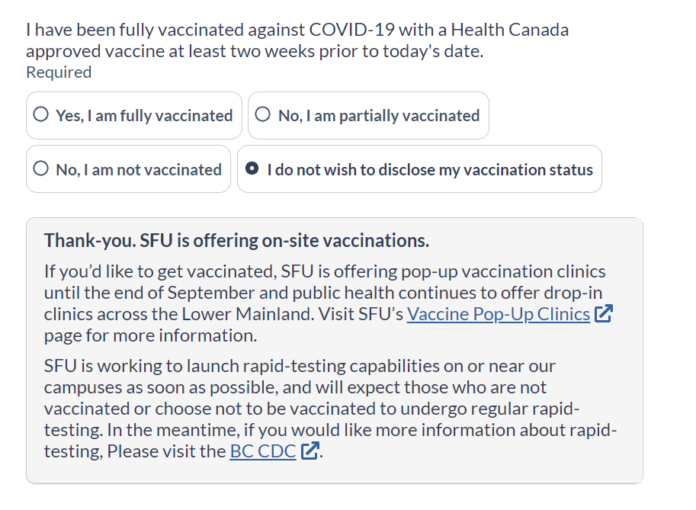
On August 26, president Joy Johnson released an announcement stating SFU is “working to implement mandatory self-disclosure of vaccination status for all those who access our campuses.” In the next sentence, she wrote there would be regular rapid testing “for those who are not vaccinated or choose not to disclose their vaccination status.” But if students can choose to not disclose their status, how in the world is it mandatory? This is only the beginning of what is an unclear and poor method in assessing SFU’s vaccination rates. 

Students deserve to have an understanding of how COVID-19 may spread on campus, and they can’t do that unless SFU implements a better way to assess how many students, faculty, and staff are truly vaccinated. 

Upon taking the survey, I was shocked to see that SFU does not ask for proof of vaccination in it. While SFU stated they “may” ask for this in the future, the process should have been polished before the semester started.

As of now, there is nothing stopping anyone from lying about their vaccination status. Those who take the survey simply need to check a box that states their claim is true. This relies on all students and staff to truthfully declare whether they are vaccinated, which doesn’t give me much faith in the accuracy of the results. 

So far, it seems as though someone who didn’t want to be bothered with regular rapid tests could simply indicate they were fully vaccinated, and that would be the end of it. No follow-ups, SFU would just leave them to roam the university. This would create an immense false sense of security on campus. Even though the preliminary results from the survey demonstrated vaccination rates upwards of 90%, they could very well be much lower, because currently, there’s no way to tell whether the results are accurate.  

It is also unclear how SFU is mandating the “required” survey. Are they simply stating it’s mandatory without any enforcement? I haven’t seen any indication of consequences put in place for those who don’t complete it. For those who glaze through the mass amount of emails SFU students send to students, I wouldn’t be surprised if some had never heard of this at all. Coupled with the murky idea of what “mandatory” means, this method of assessment is currently filled with loopholes. 

Supposedly, those who don’t disclose their status or are unvaccinated will need to complete “regular” rapid testing. However, there is no information on how often this will be. Testing does not prevent infection, and COVID-19 is most contagious a few days before symptoms. Frankly, I cannot imagine staff or students wanting to go through the hassle of daily rapid tests. Even more confusing is how SFU will mandate these tests when the surveys are anonymous. 

SFU’s attempt to grasp our vaccination rates is messy and poorly executed. While SFU stated more information would be coming soon, we’re already a few weeks into the semester. Students are in classes, interacting with one another, and we don’t even have a clear sense of how many people are fully vaccinated. As of the first week, only about 50% of students had disclosed their vaccination status, and this is under the assumption they were all truthful.

SFU could add more steps into the survey — such as asking for proof of vaccination. They should also ensure the survey is completed by not solely relying on the community to do it themselves. I’m no expert in SFU’s IT systems, but I wonder if they could have required disclosure during course registration. However, weeks into the semester, vaccination rates are still unclear. After over a year of mandatory COVID-19 rules being outright ignored, I don’t understand how they ever thought this was a sound idea. 

The BC vaccine card and verifier app are simple but effective tools to fight the pandemic

0
Digital vaccine cards are a quick and easy way to check people’s vaccination status. PHOTO: Government of BC

On August 23, the BC government announced that proof of vaccination will be mandatory for “people attending certain social and recreational settings and events.” The new proof of vaccination, called the BC vaccine card, can easily be obtained through the BC government’s website. Globally, there have been concerns about digital vaccine cards, but the BC vaccine card and its verifier app are working great so far. They have the potential to move us towards stage four of the province’s restart plan because they are designed to both protect privacy and be user-friendly.

Businesses have to use the verifier app to check their customer’s vaccination status. I personally tested the app using the source code posted on GitHub, which “hosts collections of code for projects.” 

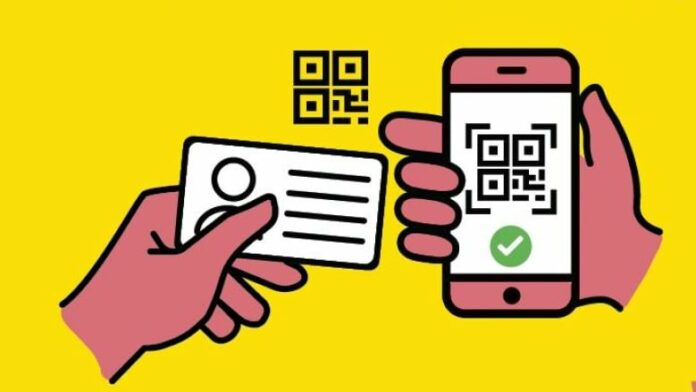
On the user interface front, the app is fairly simple. After launching the app, the user is greeted with a reminder to allow permission for the app to access the phone camera in order to scan the QR codes of vaccine cards. Upon scanning the card, a colour-coded result appears with the name of the person on top — green for fully vaccinated and blue for partially vaccinated. The name can then be verified using a secondary ID such as a driver’s license to prove that the QR code belongs to the person.

On the technical side, this is where things get interesting. The app can function without the internet. It makes no contact to government servers to verify vaccine cards in a cloud database. Instead, it reads the QR code which includes name, date of birth, immunization dates, vaccine brands, and immunization provider, to determine eligibility for vaccination status. Not requiring an internet connection is great for accessibility since the app will theoretically always be able to work.

Since an internet connection isn’t required for verification purposes, the government will not be able to track what venues and businesses people go to. This also lowers the risk of a hacker intercepting personal information because of unsecured Wi-Fi. 

People may speculate that anyone can make their own QR code and bypass the need to get vaccinated to enter certain spaces. However, all vaccine card QR codes follow the SMART Health Card standard. This means it alerts the user of the app of any false QR codes, so people cannot forge them to get into restricted spaces.

The only issue I have with the process is there is no app to store the vaccine QR codes on mobile, unlike in other jurisdictions like Quebec or Manitoba. The BC government suggests the public save the QR code to their camera roll. This is tiresome since people would have to scroll through their camera roll or carry a piece of paper. The app should have a designated space to save the code so that everyone can easily access them.

Nevertheless, the BC vaccine card is turning out to be a great motivator for people to get vaccinated, with vaccine registrations climbing with the implementation of the app. It is a fast, easy, and privacy-friendly app that will help us to leave the pandemic behind us.

Canadians with disabilities deserve to vote without barriers

0
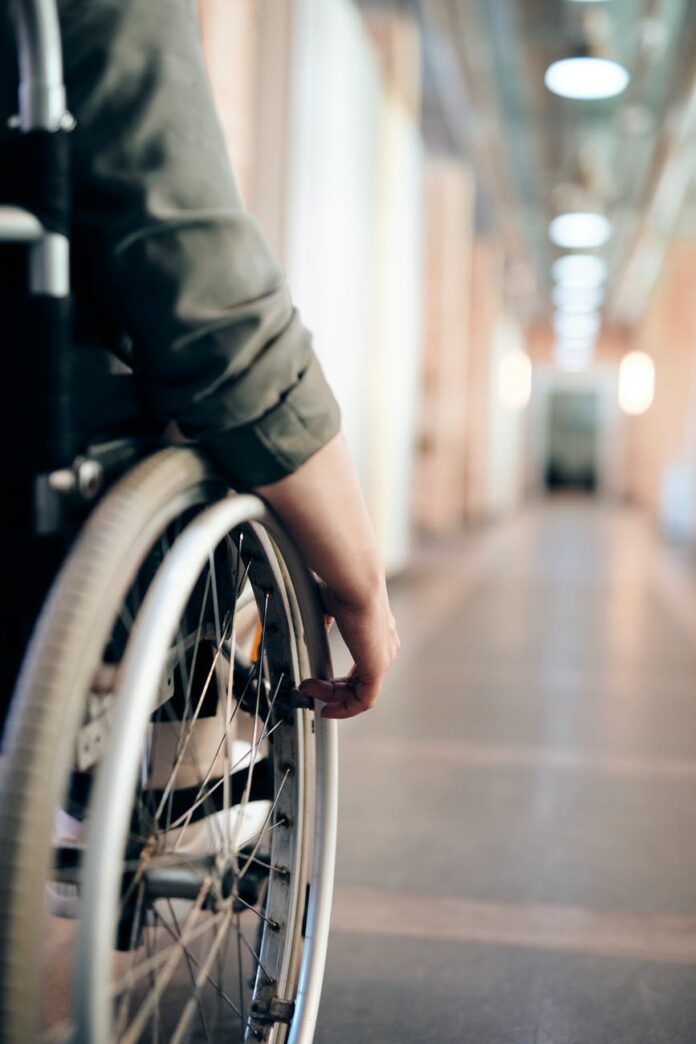
We need to devote more resources to confront ableism in the voting process. PHOTO: Marcus Aurelius / Pexels

For Canadians with disabilities, no election is without challenge. Nevertheless, voting access strategies during COVID-19 have produced some meaningful results for citizens with visual or physical disabilities.

Among the many inadvertent lessons of the COVID-19 pandemic, however, is the realization that increasing the availability of alternate forms of voting helps to drive participation of citizens with disabilities. According to data compiled by Rutgers University, the 2020 US election saw an increase in turnout of “5.9 points relative to the 2016 election, which was slightly more than the 5.3 point increase among citizens without disabilities.”

Over the last year, democracies have stumbled into several partial solutions for disability voter access. 

For the first time in Canadian history, this system includes online registration for everyone to vote by mail, thereby preventing the necessity to travel or enter a building. The process of casting a ballot by mail itself offers voters with disabilities a chance to avoid casting a ballot at a polling place that, once again, may not meet their mobility needs. At present, however, voting by mail is not a guaranteed service for all elections. For example, a 2021 byelection in the City of Burnaby, voting by mail was not an option provided.  

The secret ballot process, an integral part of democratic elections, poses problems for people with visual impairments. In a polling station, a sighted friend is sometimes asked to walk a visually impaired voter through the options at hand, then mark the voter’s choice down. Advocates argue “the sighted assistant may try to take advantage of the situation and influence the disabled voter.” The Canadian National Institute for the Blind (CNIB) says voting in Canada will not be “truly accessible” until voters with visual disabilities can “independently cast” their ballots. 

A 2015 report by Elections Canada identified 350 out of 661 polling locations lacked wheelchair accessibility. While these locations were temporarily fitted with ramps during the election, a BC Disability Caucus representative argued some ramps were installed at a 45-degree angle, making them unscalable. 

For starters, Canadian voters with disabilities can be well-served by maintaining the expanded vote-by-mail system. In the US, states concerned with increased voter turnout in the 2020 election driven partially by mail-in voting, have introduced voter suppression bills that, among other tactics, “shorten the window to apply [and] deliver a mail ballot.” By going in the opposite direction, By widening the time in which mail ballots can be applied for and sent in, Canada can help promote a service that supports voters with disabilities. Ensuring consistent access to mail-in voting, during, and post-pandemic can help support voters with mobility issues.

During the 2017 BC election, Elections BC, in partnership with the CNIB, launched an assisted telephone voting program aimed at voters with “vision loss, a disability, or health condition.” Around 1,000 British Columbians who fit the criteria voted by phone in 2017. During the 2020 provincial election, the number shot up to approximately 1,900. 

In 2020, officials expressed concern that “ineligible voters [ . . . ] could tie up phone lines” if trying to vote by phone. However, this could be solved through a more robust phone voting system to promote participation by visually and mobility impaired voters. This may mean adding more volunteers and for election officials to guarantee access to voting by phone. The process of voting by phone, paired with online registration for all voters, offers a potential new tool for visual impared voters to independently cast their ballots. 

Expanded registration options, lengthening voting by mail deadlines, and voting by phone have been tools adopted to reduce voters’ potential exposure to COVID-19. Devoting resources toward creating an equitable system for voters should remain a priority after the pandemic is over. Moving forward, we cannot disregard voters with disabilities.

The OnlyFans explicit content ban further stigmatizes sex work, despite reversal

0
Sex workers are not disposable — they deserve to be treated with respect. PHOTO: Gudrun Wai-Gunnarsson / The Peak

OnlyFans is a subscription-based platform with “130 million registered users and over 2 million creators.” Users pay for subscriptions that give them access to creators’ photos and videos. Though OnlyFans is not explicitly for sexual content, the platform has become synonymous with such content in the public eye. On August 17, OnlyFans shocked users and creators by announcing it would ban “sexually explicit content,” but after a few days of backlash, they reversed the ban. The ban and unban was not only a slap in the face to individual adult content creators who built OnlyFans up to what it is today, but it strengthened stigma around sex work.

When asked about the reason behind the initial ban, Tim Stokely, CEO of OnlyFans, told the Financial Times, “Banks have refused to work with the company due to ‘reputational risk,’ alluding to [ . . . ] users who sell explicit content.” This refusal manifested in transactions being flagged and rejected by banks. Stokely framed the ban as protecting creators from not getting paid properly — but if they’re banned, they’re not getting paid at all, Mr. Stokely.

Adult content creators put OnlyFans on the map next to other big players in the porn industry like Pornhub, making it a household name for anyone looking to make or purchase adult content. 

But OnlyFans repaid such creators by introducing guidelines that would drastically affect their income. These guidelines stem from concerns about profit and the stigma around sex work  —  the tired, old argument that sex work is “immoral,” “dirty,” and “not real work.”  Sex work isn’t dirty because sex itself isn’t “dirty,” and it is definitely real work as it involves both emotional and physical labour, just like other professions

For those who have their own negative beliefs on sex work, we get it: you watch adult content, but for some reason, still hate adult content creators, and were jumping up and down in excitement about the idea of hundreds of thousands of creators being laid off. 

If you think “selling your body” is an “immoral” concept found only on OnlyFans, I hate to be the one to unpack what athletes, firefighters, military personnel, and personal trainers do with their bodies for their paychecks. Put simply, people have a right to bodily autonomy, and they should be able to exercise this right in all careers.

How much collateral damage is acceptable in such a rebrand before consumers and viewers begin asking some hard questions? OnlyFans is important, both as a means of income for creators, and a place of rebellion against stigma and anti-sex-work sentiments. During the COVID-19 pandemic, many have turned to the site to keep afloat financially. Sites like OnlyFans can also push back against a society that stigmatizes and excludes sex workers, normalizing sex work as a real job option. 

We cannot pretend things are fine just because the ban was reversed. Creators lost subscribers, income, and peace of mind. Imagine if your boss told you that you were going to be laid off then a few days later said, “Never mind, you can still work here for now.” You would likely feel unappreciated, insecure, and disposable.

If OnlyFans cared about its adult content creators and saw them as a valuable asset, this flip-flopping wouldn’t have occurred. Adult content creators on OnlyFans deserve respect, and they should be seriously considered during major decisions. 


September Bingo

0
A bingo sheet labeled "September Bingo" with joke experiences
LAYOUT: Josh Ralla / The Peak

Plain text of bingo card:

  • Got caught mimicking airbender moves outside lecture hall
  • Couldn’t carry bag overpacked with Renaissance Coffee snacks
  • Missed a class because you were walking in quadrangles in the AQ
  • Realized you were in the wrong class after finishing the lecture
  • Discovered a raccoon stole your snack
  • Slept in because you forgot classes are synchronous
  • Used your laser pointer as a makeshift lightsaber
  • Ran with a vegetable during a virtual scavenger hunt
  • Awkwardly flirted with McFogg the Dog to make up for lost time
  • Accidentally spilled bubble tea when running to class
  • Spammed class group chat with Shang-Chi memes
  • Showed up to an empty tutorial classroom
  • Argued with a broken vending machine for stealing your change
  • Joined student union games just to get freebies
  • FREE SPACE: Checked your waitlist position (again) 
  • Played cricket sound effects to cope with an online tutorial’s awkward silence
  • Bought enough stationery to open up your own store
  • Advertised your Instagram spam account on Welcome Day
  • Forgot which university year you’re in
  • Matched pyjama pants and a dress shirt for Zoom
  • Hosted a dorm-kitchen cook-off with leftover quarantine snacks
  • Mistakenly swapped luggage on Move-In Day
  • Got lost on campus because SFU Snap misled you
  • Procrastinated getting your student ID
  • Convinced your student mentor to film a TikTok with you