Home Blog Page 338

SFU researchers find logging impacts on salmon populations

0
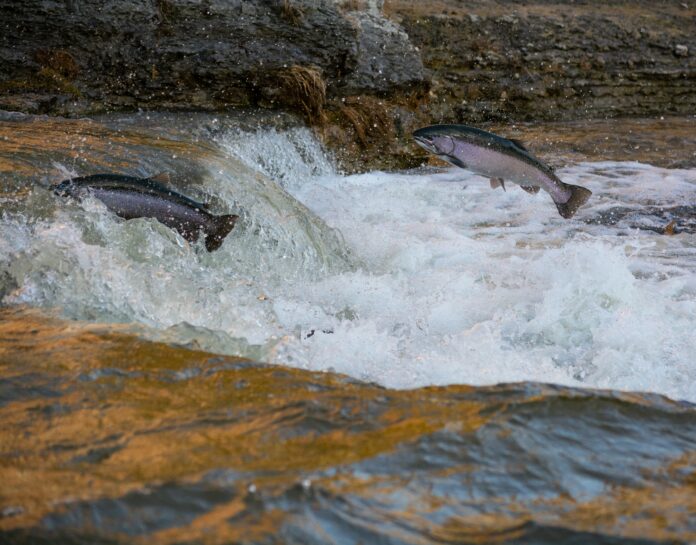
Salmon jumping over water
PHOTO: Brandon / Unsplash

SFU researchers have found changes in saltwater and freshwater ecosystems are decreasing the survival rates for North Pacific salmon species. PhD candidate Colin Bailey, a researcher on this project, spoke with The Peak about the group’s findings. 

Bailey explained there’s a relationship between logging and ecosystems. The team analyzed data of clear cut logging — when all trees are cut from a site and replaced — in watershed areas and the effects on salmon survival rates. Because the effects can take up to 15 years to show, long term data is crucial for this research. 

Watersheds are areas where smaller water bodies can drain into larger bodies of water, such as the “mouth of a bay” or a larger reservoir.

“When you have a lot of logging activity, you can free up a lot of sediment to move into the river systems,” Bailey explained. 

The sediment — sand, grit, and clay — that travels into the rivers should be held back by trees and foliage. Clear cutting forests in watershed areas means rainwater is forced to flood the rivers. This can make it difficult for salmon eggs to receive the oxygen they need to survive during incubation.

Bailey noted another major impact of logging is the way rainwater moves through the land. Clear cut forests prevent rainwater from being able to absorb into the ground. This leads to them running overtop of the land, causing flood activities. Excessive water movement can then pull large rocks and boulders into the river which disturbs and destroys the fish eggs incubating in the river beds. Untouched forests allow rain water to penetrate the ground and slowly seep into rivers. 

The current consensus among researchers in this field is that putting energy into improving the health conditions of freshwater ecosystems won’t have an impact on the salmon populations if marine ecosystems do not improve first, said Bailey. “And this paper really counters that narrative,” he added.

“We found that the impact of the freshwater environment and the marine environment were approximately equal on the number of adult female steelhead you had coming back and spawning.”

This tells Bailey putting effort into freshwater environments will have an impact on the number of fish returning to spawn and will increase the survival rate of their incubating eggs. 

Bailey clarified logging is not the singular cause for salmon decline. “But ultimately, that logging impact is still there, and it’s still placing a big weight for those fish to carry.”

When asked about using this research to inform policy decisions across the BC provincial government and Canadian federal government, Bailey noted he hopes to see more Indigenous involvement in land and marine management in Canada. 

“As First Nations gain the recognition of title over their land again, over unceded land, land management will move to those First Nations again. They’ve been taking care of land for millennia [ . . . ] So in the future there’s going to be probably more co-management of land resources between the provincial government and First Nations,” said Bailey. 

Additionally, he suggested wood harvesting policies that work to better manage the forestry industry of clear cutting and logging practices to reduce the impacts that they have on watersheds. Specifically the streams that feed fish-bearing rivers. 

This research was funded by the Habitat Conservation Trust Foundation, amongst many other sponsors. It was carried out on Kwakiutl First Nations territory in Port Hardy. 

The study was led by SFU’s Dr. Kyle Wilson and supervised by Dr. Jonathan Moore, a professor of biology and resource and environmental management. 

BC government considers new paid sick leave program for all workers

0
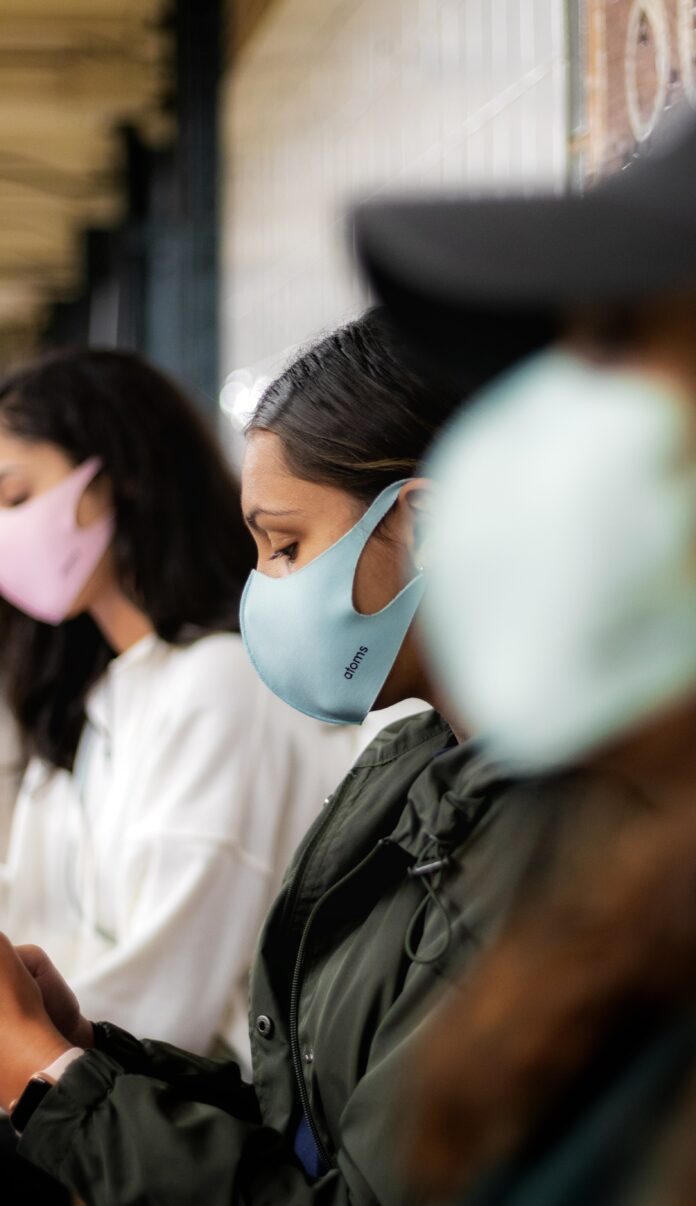
people wearing masks
PHOTO: Brian Asare / Unsplash

On August 5, 2021, the government of BC opened an employer and worker survey to gather public opinion on a new sick leave program in BC. The survey was to determine whether the program would include 3, 5, or 10 days of paid sick leave. 

Phase two of public opinion surveys opened on September 22, 2021 and closed October 24, 2021. Updates on the outcome are expected in November this year.

Senior economist at the Canadian Centre for Policy Alternatives’ (CCPA) BC office, Dr. Alex Hemingway, discussed this initiative with The Peak. He noted most wealthy countries have a 10 or more day paid sick leave program whereas most Canadian provinces “simply [don’t] have any paid sick days.” At the time of writing, BC’s sick day policy states employees can take up to three days a year for personal illness or injury without pay.

The CCPA and 84 health experts and economists recently called on the BC government to set the standard for Canadians “for our collective health, safety, and prosperity.” Their letter notes New Zealand and Australia both have 10 day programs whereas countries such as Germany have 30 days. 

“A right to paid sick days has always been sound public policy, and the pandemic has made this clearer than ever,” said the CCPA letter. 10 paid sick days is at the lower end of the spectrum compared to other countries in the Organisation for Economic Co-operation and Development (OECD). Hemingway said that is why the CCPA is calling for 10 days as a minimum.

He added when “we look at the research, we can see that having people going to work sick comes at a significant economic cost. It means co-workers are infected and the illness spreads into the community — that comes at a cost to productivity in the economy.”

Pointing to a report released during the COVID-19 pandemic, he explained it indicated the relationship between paid sick days and COVID-19 outbreaks. In long-term care homes where workers were offered less paid-sick leave days, their staff had a much larger COVID-19 outbreaks. 

He noted if a paid sick leave program had “been implemented 18 months ago, it could have made a difference in this pandemic, it could have prevented illness, and saved lives.”

In an email statement to The Peak, SFU professor of health sciences Dr. Tim Takaro said, “Everyone deserves to be protected at work. Paid sick leave has demonstrated effectiveness in preventing disease. In the United States, the introduction of a temporary paid sick leave [ . . . ] was associated with an estimated 50% reduction in the number of COVID-19 cases per state per day.”

Hemingway said, “It’s striking that you have a policy that is common sense. It’s backed by public opinion polling, supported by expert opinion, and it’s still been such a fight to get sick days implemented.”

Having paid sick days is also related to equity. Hemingway exwplained, “89% of British Columbians with incomes below $40,000 have no paid sick days. And we know that low wage workers are disproportionately young people, women, and racialized folks.”

“They should not be forced to decide between feeding their families and protecting their co-workers by staying home,” said Takaro.

“The good news is, the BC government has already committed to bringing in a permanent paid sick days program,” reported Hemingway. The BC government notes the new paid sick days program will be implemented by January 1, 2022. 

More information on BC’s paid sick day found on their website. 

We shouldn’t give in to cuffing season pressures

0
Two people and a dog are sitting on bed. They are smiling, laughing and talking to each other. One is holding a book and one has a phone.
Dating can be fun, but it’s not the be all and end all of life. PHOTO: AllGo - An App For Plus Size People / Unsplash

In the cold months of cuffing season, social pressure encourages cozying up with a special someone. These days, with life largely online, social media can have a significant impact on anyone consuming content. There are a variety of reasons people don’t date, but cuffing season can pressure people to start relationships just to avoid being single, which harms everyone involved. 

For many students, focusing on other parts of their life can be more important than pursuing a relationship. Many students are working part time, full time and/or doing volunteer work — all of which takes up a lot of time and energy. Besides which, cuffing season may not be the right time to be dating for people who need to focus on their mental, physical, or socio-emotional health. Starting a new relationship takes time, energy, and emotional labour, something many students may not find feasible — and they shouldn’t be shamed for it.

With COVID-19 still a threat, dating is not safe for everyone. Meeting new people who may not share the same boundaries or vaccination status can be challenging in itself. Cuffing season can add to the pressure to continue life like the pandemic is over, which has its own risks.

When being single is stereotyped as being lonely or sad, it pressures people to start dating when they may need or want to be single longer. In fact, most stereotypes about single people just aren’t true. People can be single and have meaningful friendships, contribute to their community, and feel just as content with their lives as those in serious relationships. 

Asexual or aromantic people (those who experience little or no sexual or romantic attraction) can have different kinds of dating experiences, which are often overlooked. People on these spectrums may have different wants and needs in intimate relationships.

The season is also primarily for monogamous people, and doesn’t address the different kinds of complexities ethically non-monogamous people may face. For example, communicating boundaries with multiple partners (who may also have multiple partners) looks different than communicating boundaries with just one person. For anyone who does not want to pursue a monogamous sexual and romantic intimate relationship, cuffing season holds different meanings and the pressure to date is full of different complexities not shared by others pursuing relationships.

As an asexual person (who has been in monogamous and polyamorous relationships) and as someone with a lot on their plate, I have no plans of pursuing a new intimate relationship right now. Tuning out cuffing season pressures to focus on myself is challenging, but I know it’s right for me this winter. I’m more than OK with that, and I hope other single people can feel all right not dating if that’s what feels right for them too.

This cuffing season, be mindful of your social media presence and the impact that encouraging cuffing season may have on followers who aren’t dating. If cuffing season pressures affect you negatively, consider muting posts for a while. Regardless of whether you’re dating or not, consider that cuffing season isn’t always for everyone, and being single can be just as great as dating.

All internships should be paid

0
A couple of people having a meeting and working on their laptops.
Interns add a lot of value to a company. PHOTO: Windows / Unsplash

University is a time for gaining educational and work experience so that students are prepared for the future. The National Association of Colleges and Employers report that “75% of post-secondary students graduate with at least one internship.” When we intern at a company, we give our time, energy, and talent to them. It’s only fair to be paid for our work — not paying interns is simply an unethical act. 

Internships are based on the “concept of learning a skill or trade under the direction of a more experienced worker.” So essentially when you intern, you are being trained for a job. When I was being trained at my job at McDonald’s, my shorter hours meant I had a smaller pay cheque. But, I was still paid for my time as a trainee. 

Paid internships also benefit the employer. If an intern is being paid, then they have a greater incentive to bring in higher quality work. Paying interns ensures a higher productivity rate — which helps raise profits and ensures long-term happiness for workers. 

Not paying interns also fuels a class divide. Those with privilege can afford to take unpaid internships within their field of study and thus have a higher chance of getting well-paying jobs after graduation — the same cannot be said for everyone else. Now should be a good time to end unpaid internships because paying interns gives them the necessary money to keep working for a company. This is even more necessary now with people choosing not to return to jobs because of the less than ideal working conditions. 

In Canada, it’s still legal for students to have unpaid internships. One of the conditions for someone to be deemed a “student intern” is that they are “performing activities for an employer with the primary purpose of gaining knowledge or experience.” But getting paid and gaining experience are not mutually exclusive. This is just another way in which students are getting exploited in this country.

Students usually take up unpaid internships to gain credible work experience. We can’t blame them for trying to increase their chances of getting a good job after graduation. The real culprits are companies that do not hesitate to exploit the desperation of someone who is simply looking to gain experience. 

Interns are not volunteers. Volunteers choose to be at a workplace or a non-profit because they believe in the organization’s message and have a “desire to help out.” Interns are interns because they want to develop their skills to help them understand how to best do their job.

If a company decides they need to hire employees, they should be prepared to pay them. If a company does not have the resources to pay their employees, then they should rework their business model so they can. Even if companies do not pay interns the same wage they’d pay a full-time worker, interns should be given minimum wage for the time they’re putting into the company. Paying employees is the bare minimum sign of respect that a company should have for the people they hire.


How to properly pull an all-nighter

0
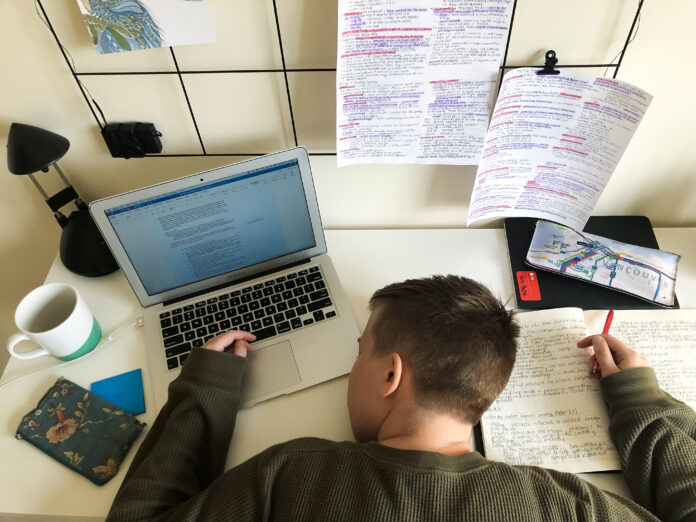
A person face down on a desk fallen asleep with notes scattered all across the desk
I would sacrifice my well-being for an A. PHOTO: Allyson Klassen / The Peak

University life is remarkably busy. Having to balance several classes which share similar schedules almost guarantees you’ll eventually find yourself pinched between deadlines. This is where the all-nighter comes in. It’s pretty universally accepted that foregoing a night’s sleep for an extra few working hours is a bad time. I’m not going to tell you to not be stressed about it, because it’s a terrible situation. But I am here to tell you there are ways to make the most of it, and things you can do to stop it from ruining the rest of your week. 


Sleep is important

The first thing worth mentioning is sleep is important. Sleep deprivation entails a whole host of side effects, including a weakened immune system and increased susceptibility to depression and anxiety. Staying awake for 24 hours is comparable to a Blood Alcohol Content of 0.10% — which is well over the legal driving limit. The only way to recover from sleep deprivation is to sleep. There is no magic path to needing less sleep (I’m looking at you, caffeine). While an all-nighter can provide some extra hours when we need them most, it’s crucial to remember we will need to make up for this sleep soon after. Unlike how muscles adapt to regular exercise, your brain will not adapt to consistent sleep deprivation. This is a loan on wakefulness, not a free pass. 


Staying focused

In the absolute simplest terms, the key to a productive all-nighter is sustained focus. The best way to manage this is by taking regular breaks and looking after yourself — taking 20 minutes will help you be more productive over the course of the night than trying to force yourself to work through a foggy brain. Let’s break down how to do this:

Find somewhere well-lit where you can work uninterrupted without too many distractions. I’ve found it’s helpful to go somewhere away from home to study — Breka Cafe (Robson & Bute, Vancouver) and SFU’s Burnaby Campus are both open 24 hours and have all the amenities you should need. Staying home can easily lead to spending more time setting up the perfect study environment than actually studying.


Snack Time

One of the main influences on our energy levels is blood sugar. High blood sugar equates to high energy, and low blood sugar implies low energy. When studying, we aim to have blood sugar in the mid-range — high enough to stay focused, but not so high we can’t sit still. Food is a great resource for managing this. 

When choosing snacks, there are a few guidelines to follow. Nutrition is a complex science, but for our purposes, we can reduce it to two terms; glycemic index and glycemic load. The first describes how readily sugars and nutrients are absorbed into the bloodstream. The latter describes the number of sugars within the food itself. For example, the sugars within a carrot are easily digested, but are relatively sparse, resulting in a lower glycemic load.

Foods like white bread and certain kinds of rice are high in their glycemic indexes and loads. This means they cause a quick increase in blood sugar. This “sugar rush” is good for energy, but is quickly metabolized and the drop in blood sugar leaves feelings of fatigue and hunger. This can cause unwanted interruptions in a study session. Fruits, along with vegetables and proteins (beans, lentils, and nuts) offer more of a balance between their glycemic indexes and loads. This will provide a more sustained sugar release that will keep you feeling energized throughout the night. 

Drinking plenty of water also helps a lot. While dehydration in itself is a cause of fatigue, getting up for washroom breaks also serves as a great way to force you to stretch your legs and get some light exercise — helping keep you awake and focused.

A discussion of nutrition would be incomplete without mentioning caffeine. Found in sources like coffee, tea, and dark chocolate, caffeine is widely used to keep people awake and active. Caffeine works as a competitive inhibitor. In simple terms, this means it gets in the way of the neurological process that lets us know when we’re feeling tired. This is great for when we need to avoid the feeling of fatigue, but it’s important to distinguish between feeling tired and being tired. Caffeine will help us feel awake but does not offer any of the benefits of being well-rested. This includes all of the symptoms of sleep deprivation mentioned earlier, as well some of those not mentioned — not being able to think clearly, focus, and process information. In short, when tired, caffeine will let you write a paper, but most of it will probably suck.


Have a plan

Studying is not easy even in the best of circumstances, and with the added challenges of sleep deprivation, it’s important to keep the process as straightforward as possible. It helps to have a set of tasks you want to accomplish by the end of the night — whether that be to finish some readings, write a paper, or complete an assignment, having a concrete goal to work towards will make your all-nighter easier.

Next, have a way to gauge your focus. Although we may wish otherwise, multitasking does not work. Balancing two tasks at once (noting “tasks” include such things as texting friends and watching shows or movies) has been found to reduce productivity by up to 40%. Staying aware of your posture is a great indicator of how engaged you are with the material. If you find yourself slouching more or needing to reread lines, take a break for a few minutes. Many people have found value in the Pomodoro Technique, which involves five-minute breaks between 25-minute work segments, with a longer 15–30 minute rest for every fourth break. 


Nap Breaks

Many of us are somewhat familiar with how sleep is divided into phases — at the very least, a term like REM (Rapid Eye Movement) should evoke something beyond the eponymous bands’ single “Everybody Hurts.” By being methodical, we can use these different phases to our advantage. A full sleep cycle will take about 90 minutes, meaning if you want to wake up without feeling groggy, try aiming for a complete series of sleep cycles — 90, 180, 270, etc. minutes. If you find yourself really pressed for time (given this is an all-nighter, we can assume this is the case), we can cut down the necessary sleep a little bit more. 

Between yacht racers, space agencies, the military, and over-caffeinated students, there has been a tremendous amount of research on how to cut back on the amount of sleep needed. We can extract a useful practice from this research: namely, the 20 minute — or stage two — nap. 

Sleeping for 20 minutes is the ideal balance between getting enough sleep to feel refreshed, and still being able to wake up easily. By going through the first two stages of sleep we are able to bolster our energy and alertness, and wake up before the phases of deep sleep relax our muscles and slow our breathing — causing feelings of lethargy that would get in the way of our studying. In practice, this doesn’t often feel like actually sleeping — rather, it feels closer to just being on the cusp of a snooze, but waking up before falling asleep.

Between proper nutrition, sleep management, and a measured work ethic, you should have all the tools you need to not only make it through the night but emerge with a completed chunk of work. While there is something fulfilling about watching the sun rise over your freshest accomplishments, don’t let it get to your head — because sleep deprivation certainly will.

The City of Burnaby and SFU plan for new firehall on Burnaby Mountain

0
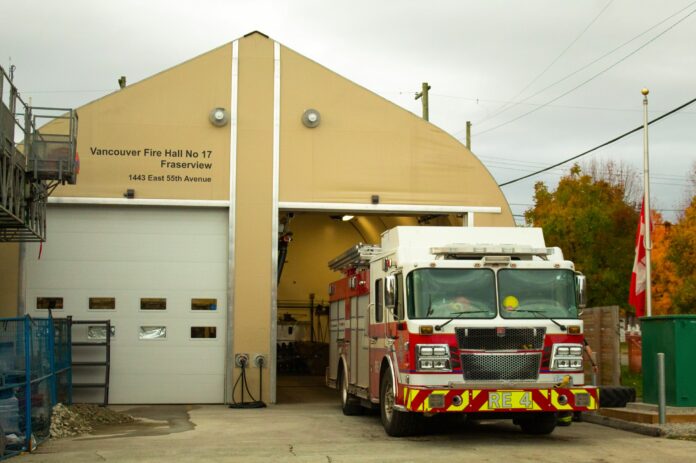
A firehall with a fire truck
PHOTO: Krystal Chan / The Peak

The City of Burnaby is working with SFU to push forward the design phase of a new firehall at Discovery Park on Burnaby Mountain. Construction is set to begin in 2024 at the southeast corner of SFU Burnaby campus. This is two years later than the recommended construction start date by the city’s 2019 Needs Assessment Study. 

According to Burnaby Beacon, the City of Burnaby is evaluating proposals with SFU before moving forward with the contract and beginning the design stage. Fire chief Chris Bowcock told Burnaby Beacon there’s a need for faster emergency response times for the tank farm and SFU Burnaby should a fire occur. 

Bowcock said since citizens have been told the Trans Mountain Pipeline Expansion (TMX) facility on Burnaby Mountain is part of a national interest project, necessary provisions for fire safety should be considered a federal concern and funded by the federal government. 

The SFSS Council referenced the fire safety risk from the tank farms in their September 15, 2021 Council meeting, where they unanimously passed a motion to support the Anti-TMX Day of Action. The motion stated the TMX expansion would mean 13 new tanks on Burnaby Mountain with an increase of 79–87% oil spill probability over 50 years. Should a fire occur at Burnaby Terminal tank farm, it would quickly block the only road of escape for those at SFU and UniverCity. 

The students organizing a hunger strike for climate action on November 1 included this fire safety concern within their three demands for SFU administration. 

“We hope that the university will [ . . . ] commit to educating and preparing the Burnaby campus community with the required fire safety risk measures needed as a result of the installation of the expanded tank petro-storage facility on Burnaby Mountain,” said Jaden Dyer in a previous interview with The Peak. 

“If there is a fire, it’s going to obstruct the main exit route from the mountain, so you’re looking at thousands of students being in life-threatening danger in case of [a] fire safety risk which is massive especially looking at the heat waves we’ve just had recently,” said Zain Haq, an organizer of the hunger strike. 

The Burnaby Beacon reported “by the end of 2022, the city expects to have conceptual design, SFU-related approvals, and a rezoning application completed” for the firehall on Burnaby Mountain. Leading up to the anticipated construction date, the city will be obtaining and completing paperwork such as building permits. 

Food Stash expands operation to mitigate food waste

0
Veggies and bellpeppers lined up at a grocery store
PHOTO: Kriti Monga / The Peak

Food Stash recently expanded their operations on October 1, 2021, with the opening of the Rescued Food Market. Food Stash is a Vancouver-based organization focused on rescuing food from being thrown away and redistributing it around the community. 

In an interview with The Peak, program manager and SFU alumni Mahjobeh Badakhsh said, “We have a dual mission of reducing the environmental impact of food waste but also bridging that food insecurity gap that exists.”

According to Badakhsh, “58% of all food produced in Canada is lost or wasted. That can happen along any stage in the supply chain.” Food waste occurs anywhere from harvesting, wholesale, grocery stores or markets, or within households themselves.

Food Stash rescues 70,000 pounds of food every month. “We’re still quite a small organization but just for us to rescue 70,000 pounds shows how much food is being wasted and how much more opportunity there is to prevent that waste.” Food Stash collects food from over 20 suppliers, including farms, wholesalers, and grocery stores. 

75% of the food they rescue is used for the Food Recovery Program. With their fleet of trucks, drivers collect food from their suppliers and deliver it directly to Food Stash’s supported charities, including shelters and non-profit organizations. They make deliveries every day. 

The majority of the remaining food is taken to their warehouse for the Rescued Food Box program. This program allows Food Stash to package 30 pound food boxes and deliver them directly to over 100 food insecure households in the community. 

“In 2021, about 20% of the population in Vancouver unfortunately does live below the national poverty line and 1 in 7 Canadians are currently experiencing food insecurity,” said Badakhsh. “A lot of people, when they think about Vancouver, they think of it as such a wealthy city [ . . . ] but surprisingly there is a huge wealth gap in Vancouver and that wealth gap leads to a lot of food insecurity.”

Food Stash supplies food insecure households with fresh produce, meat or meat alternatives, and dairy or dairy alternatives. They aim to provide nutritious food so distribution of non-perishables is limited. 

Badakhsh emphasized “the value that we place on the concept of dignity when it comes to food.” She explained that “cultural, religious, or dietary restrictions and preferences” are a priority so families are “really able to create recipes that they’re able to enjoy.”

At the end of each week, the food that is not distributed is relocated to the newly opened Rescued Food Market. This grocery store is located in the Olympic Village in Vancouver. Their grocery store uses a “pay what you feel model.” This means “there is no obligation for anyone to pay. If you would like to donate to our cause and support the organization you can,” Badakhsh explained. 

“It’s supposed to be a low barrier option for folks who are experiencing food insecurity [ . . . ] it’s also open to community members who, for example, might want to lower their environmental footprint and reduce food waste.”

Badakhsh discussed her start at Food Stash and how she was inspired to work with the organization. “There was an increase in both poverty and food insecurity in Vancouver as a result of COVID-19, a lot of folks were experiencing financial difficulties.

“Having studied international studies at SFU gave me a really broad understanding of global, economic, financial and social issues [ . . . ] that made me realize in order to have a greater impact we need to first look at our own communities.”

Badakhsh noted anyone at SFU interested in the cause can reach out to Food Stash. “We’re always happy to collaborate and share our experiences and knowledge; our ultimate goal is to support this work in any location and any area.”

More information on Food Stash’s programs, ways to get involved, or utilize these resources can be found on their website. 

MA student discovers new way of estimating age of skeletal remains

0
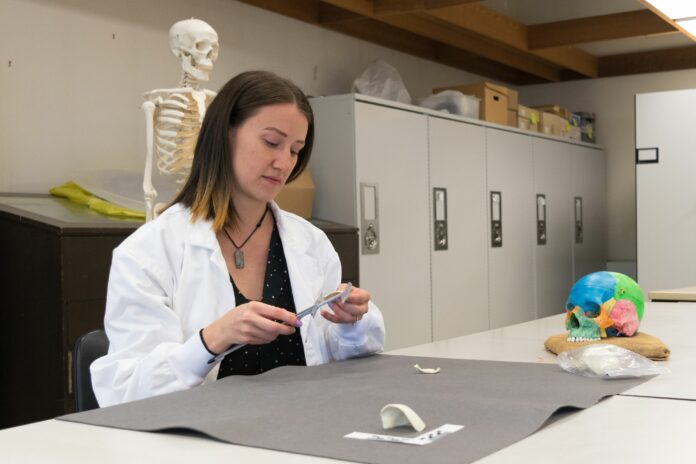
Deanna Smith measuring bones
PHOTO: Courtesy of Deanna Smith

CW: Mentions of violence in the third to last paragraph

SFU archaeology MA student Deanna Smith discovered a new way to identify the age of skeletal remains at the time of death. Smith’s new approach includes measuring bones located in the skull, which could give a more accurate age identification in children’s remains. 

In an interview with The Peak, Smith said physical anthropologists are often called out to criminal investigations. “It’s not unheard of, but thankfully uncommon, for child remains to be found.” Discovering the age of the individual narrows down the possible victim if they are unrecognizable upon discovery.

“Age is one of the crucial components of what we call the biological profile: these are components that make up the specific identity of an individual — their sex, age, stature, ancestry [ . . . ] These specific characteristics can tell us a lot about a person and they are extremely important to archaeologists studying past populations as well as physical anthropologists working in the forensic community,” said Smith. 

This publication came from Smith’s honours undergraduate research which looked at the relationship between skull and jaw bones growth and the individual’s age. “Growth is a continuous — but not uniform process — there are periods where the body grows faster and subsequently periods where it grows slower. So in addressing this, we wanted to identify the growth trajectory and the different patterns of growth for each of these bones.”

Smith used measurements of a series of bones inside the skull, collected by her supervisor Dr. Hugo Cardoso and fellow researcher Dr. Louise Humphrey. She noted “the goal was to provide specific formulae which could provide a better measure of accuracy and precision than models that are already out there.”

Most commonly used models are ones that take a single measurement of bones to estimate age throughout any given growth period. Using multiple bone measurements with Smith’s formulae could provide, in some cases, a better measure of accuracy by an “age prediction interval of two months — which is very small when you’re looking at a specific year increment.”

Currently, the most precise method for measuring growth is derived from taking dental measurements. However, Smith noted these measurements are not always available. “There are many cases where only specific bones are found — cases of decapitation and things like that. In instances where people are trying to hide identity, those really identifiable markers like teeth and fingers are often removed,” said Smith. Her method helps provides a reliable alternative.

Smith noted this method, along with context from the rest of the biological profile, could help archaeologists learn about past civilizations’ behaviour, health, and stressors during their youth’s growing periods.

Smith was a part of the 2019 and 2020 Juvenile Osteology Group, a group of PhD and MA candidates who study the relationship between juvenile human skeletons and their genetic environments which include “all biocultural processes,” according to their website.

Smith’s research is published in Forensic Science International. 

Funké Aladejebi discusses education as a tool for Black activism in Canada

0
Funke Aladejebi profile photo
PHOTO: University of Toronto

On October 22, 2021, Funké Aladejebi gave the lecture “Black Radical Traditions and Educational Encounters in Canada” at the Harbour Event Centre. Her lecture focused on 60s–70s Black educational experiences in Canadian schools and how resistive methods of teaching responded to everyday occurrences of institutionalized racism in Canada. 

Aladejebi opened the lecture by pointing to conversations about anti-Black racism and the lack of knowledge about Black Canadian history entering mainstream thought. “It feels like that initial momentum that we started with, that urgency to address anti-Black racism in Canada is waning.”

She talked about Black Canadians in the 60s and their heightened political awareness which stemmed from international demonstrations. “We can find that political activism through shared links of experiences around segregation, racial oppression, and violence. 

“As the civil rights movement grew [ . . . ] political activism and social unrest gave rise to a counterculture in North America that directly challenged notions of citizenship and democracy in new and radical ways.

“Education was one of the primary ways in which Black Canadians took political, and at times, radical action [ . . . ] Educational programs implemented during this period, worked to ensure that Black children and parents were taught their African roots, and, of course, that they understood themselves as universally oppressed peoples.” 

Aladejebi explained educational initiatives were the main focus of moderate and radical approaches to activism. She said initiatives such as the 1968 Congress of Black Writers at McGill University and the 1969 Sir George Williams protest “created a redefinition of community activism during this period.” 

Aladejebi explained in the 70s, student groups became dissatisfied with the “existing political order” and looked to alternative educational circles which “embraced Black power rhetoric.” She said other groups in the city continued “advocating for a more unified front to combat racial inequality in Canada.”

She gave an example of the 1971 Black People’s Conference in Toronto, which helped bring together a network of Black populations across the provinces and advocated for Black liberation. Aladejebi said events such as the Black People’s Conference would bring in speakers from the United States and Africa and develop “community events that would conjoin or bring their communities together.”  

Aladejebi closed the lecture by noting the impact of Black Canadians’ political activism on the international political scene. “The initiatives by the Black People’s Conference and the Black Education Project reflected the need for Black Canadians to take direct political action against institutionalized racism in Canada,” said Aladejebi. “They adopted but also changed the language of Black Power movements to sit and fit with Black Canadian ideals. In the hopes of being viewed as less militant in some instances, organizations tried to emphasize a non-threatening form of racial pride.” 

Aladejebi is an assistant professor at the University of Toronto. Her research focuses on “oral history, the history of education in Canada,” Black feminist thought, and transnationalism. She is the author of Schooling the System: A History of Black Women Teachers. Her lecture is the first in a three-part series hosted by SFU’s department of history called “Highlighting Black Histories.” 

The next lecture in this series will be “Homegoing: Blackness and Belonging Across the Canada/US Border” by Debra Thompson on February 17, 2022. More details about this lecture series can be found on the SFU department of history event page.

SFU should release full course outlines sooner

0
SFU letterhead paper with “The Department of Sociology & Anthropology, faculty of Arts and Social Sciences” written on top. The heading is “Course outline, Spring 2022,” but the rest of the syllabus is blank with a couple question marks on it.
Students are tired of seeing incomplete course outlines. PHOTO: Gudrun Wai-Gunnarsson / The Peak

As winter descends upon SFU, so too does the chaos of course enrollment. Enrollment appointments for Spring 2022 start on November 8, 2021. Students can access MySchedule to plan classes from November 1, just a week before enrollment. Full course outlines need to be published before November 1 at the very least, and students should be notified promptly, so they have enough time to plan their courses and schedules. The anxiety around course-planning is real and it’s an important issue SFU needs to pay more attention to.

At the time of writing, there are few courses that have full syllabi with grading criteria and course breakdown uploaded. Without a syllabus, students don’t know what they are signing up for. They’re unable to play to their strengths while choosing courses, since they don’t know if a course is going to rely more on exams or essays. This can haunt them later when the course outline is finally introduced, and the workload is different than expected. This may even result in students trying to transfer to another course at the last minute, which is difficult since most courses fill up quickly. 

The middle of the semester is already a busy time for students and not having access to full course outlines in advance makes course-planning — which often involves discussions with academic advisors — very hard. Proper course-planning is extremely important for students, since it ensures they are on track to complete their degree. Students doing multiple programs, facing academic difficulties, or who have transferred from other institutions, may need multiple advising sessions, which take time. Since advisors are extremely busy around this time of the year, having course outlines posted in a timely manner and notifying students when they’re all published would make things easier for advisors and students alike.  

Limited time for course-planning harms students who have jobs and extra-curricular activities. It is especially troublesome for low-income students who work full-time. Speaking from personal experience with my part-time job, my manager has always asked for a two week notice for schedule changes, especially at the beginning of every semester. Assuming this is standard practice, the small time-frame given to students for course-planning leaves little time to figure out students’ work schedules. This could potentially result in a poor work-life balance, which also contributes to anxiety and burnout.

For international students, the exorbitant cost of tuition and the financial planning required to pay for it makes it even harder to plan courses in such a short amount of time. In 2020, there were 25,700 international students at SFU, which means a huge part of the student body is likely to face this issue. Since SFU increased the international student tuition by 4% in 2020, and plans to continue to increase tuition at a similar rate, it is only fair to give them enough time to manage their finances. 

Students need sufficient time to both plan out their courses and change them if needed. It provides them with a better opportunity to ensure that their lives are planned out for the next semester. Courses are hard enough on their own, at least planning them should be easier.