Home Blog Page 1110

Insomnia? There’s an app for that

0

BW-SleepCounting-Chen

If counting sheep isn’t enough for busy university students looking to tuck in after a long day, a new app from SFU cognitive science professor Luc Beaudoin may be just the ticket to curing sleeplessness.

Beaudoin’s new app uses audio cues to interrupt the problem-solving and sense-making nature of our minds that keeps us awake. The app, mySleepButton, presents users with a variety of content which has been specifically chosen to induce sleep, shuffling the suggestions every five seconds.

Sleeplessness can be a big problem for university students, interrupting cognitive function the next day. Explained Beaudoin, many people before bed tend “to engage in problem solving, ruminating, imagining or thinking. One of the worst things is worrying that you’re not going to fall asleep.”

“The brain is in the business of making sense,” Beaudoin continued. “During sleep onset there is actually something special going on, and that is when you successfully fall asleep, you give up on controlling your mental processes.”

This understanding led Beaudoin to come up with the idea of a signalling mechanism within the brain which triggers sleep onset. “You can’t just say, ‘Let’s go to sleep.’ Your brain needs a signalling mechanism,” he said.

Beaudoin took it upon himself to develop such a trigger that would help users to suspend “sense-making, prediction, and thought-control” — all of which inhibit sleep.

The app is very simple. Users enter the launch screen, press the “put me to sleep button,” and the application reads words and phrases depending on one of the three available modes: Simple Things (single words or short phrases), Scenes (multi-word phrases, e.g. “Bird on a branch”), and Things to Draw. Explained Beaudoin, “Your job is to imagine each word or phrase that is spoken to you and let yourself fall asleep.”

The images included in the three mySleepButton packs were carefully selected by Beaudoin and his team based on the imaginability of images, the affective state, and common sense. “We didn’t always agree. Sometimes people thought, ‘Insect is ok, or ant.’ I personally said ‘No! It’s not good! People do not like ants or snakes when they’re going to sleep!’[. . .] Oh god. . .” exclaimed Beaudoin.

Recognizing the differences in peoples’ personalities, Beaudoin acknowledged the possibilities of creating personalized or specialized sleep packs in the future. “This opens the door to all kinds of cool things. We could tailor streams of content for particular concerns and types of users,” said Beaudoin.

Beaudoin admitted that with his busy schedule of interviews and marketing his new product, the app is coming in rather handy: “My mind is a very busy place, so I just reach for the thing, and it works.”

SFU grad launches Vancouver’s first affordable 3D printer

1

CMYK-3D PRINTERLego pieces, forks, guns, medical models, and makeup; with capabilities to create everyday items, 3D printers are poised to disrupt mass production and the manufacturing sector as a whole.

Leading the charge is SFU graduate Eugene Suyu, who recently put Vancouver on the map with the launch of his company, Tinkerine, and its revolutionary printer DittoPro. The DittoPro is a prosumer-level 3D printer that, according to Suyu, is meant to “sit in your office or home and not look like it’s out of place.” Suyu graduated two years ago from the SIAT program, where he encountered his first 3D printer in an industrial design course.

“Once you use a 3D printer [as an industrial designer], a lot of thoughts go through your head. It opens up the doors in terms of what you can create,” said Suyu, who decided to create a 3D printer geared toward individuals after being unable to find one on the market.

3D printing decentralizes the manufacturing process by allowing the average person to print an entire object in their own home by uploading a digital image to the machine. The range of objects that can be created is limited only by each machine’s size, and the types of materials it can handle.

Most 3D printers use a variation of plastic, although recently a Harvard student launched a printer that is able to create powdered eyeshadows and lipsticks through a process that is more similar to that of an inkjet printer. Tinkerine elected to use PLA, a biodegradable corn-sugar substrate, as the input version of the plastic; “[It] makes the room smell like a candy shop,” Suyu said.

While Tinkerine does not have facilities on-site to handle material recycling, they do manufacture most of their machines in-house. Despite using local labour, DittoPro’s price is about 30 per cent lower than a comparable model on the market right now. Suyu said that producing locally allowed for greater quality control and reliability of the machines.

SFU acquired its first 3D printers at upwards of $15,000 whereas the DittoPro costs just $1,999 — although the two models can print about the same size and resolution. However, it would take SFU’s printers up to two to three times longer than the DittoPro to print the exact same object. But back in 2007, when SFU purchased its printers, the slower model was the baseline for affordability and productivity.

Despite the political, social, and economic implications of a technology that can decentralize power and production, Suyu is more focused on the technical aspects of 3D printing — he sees the socio-political controversies as a “side effect” of what he is doing, rather than the driving force.

SFU has yet to place an order for the new DittoPros, which are set to ship in May, but Suyu is optimistic that there could be cross-collaboration between industrial design courses and Tinkerine’s education initiatives.


SFU’s RADIUS Lab releases report on combating homelessness

0

Exif_JPEG_PICTURE

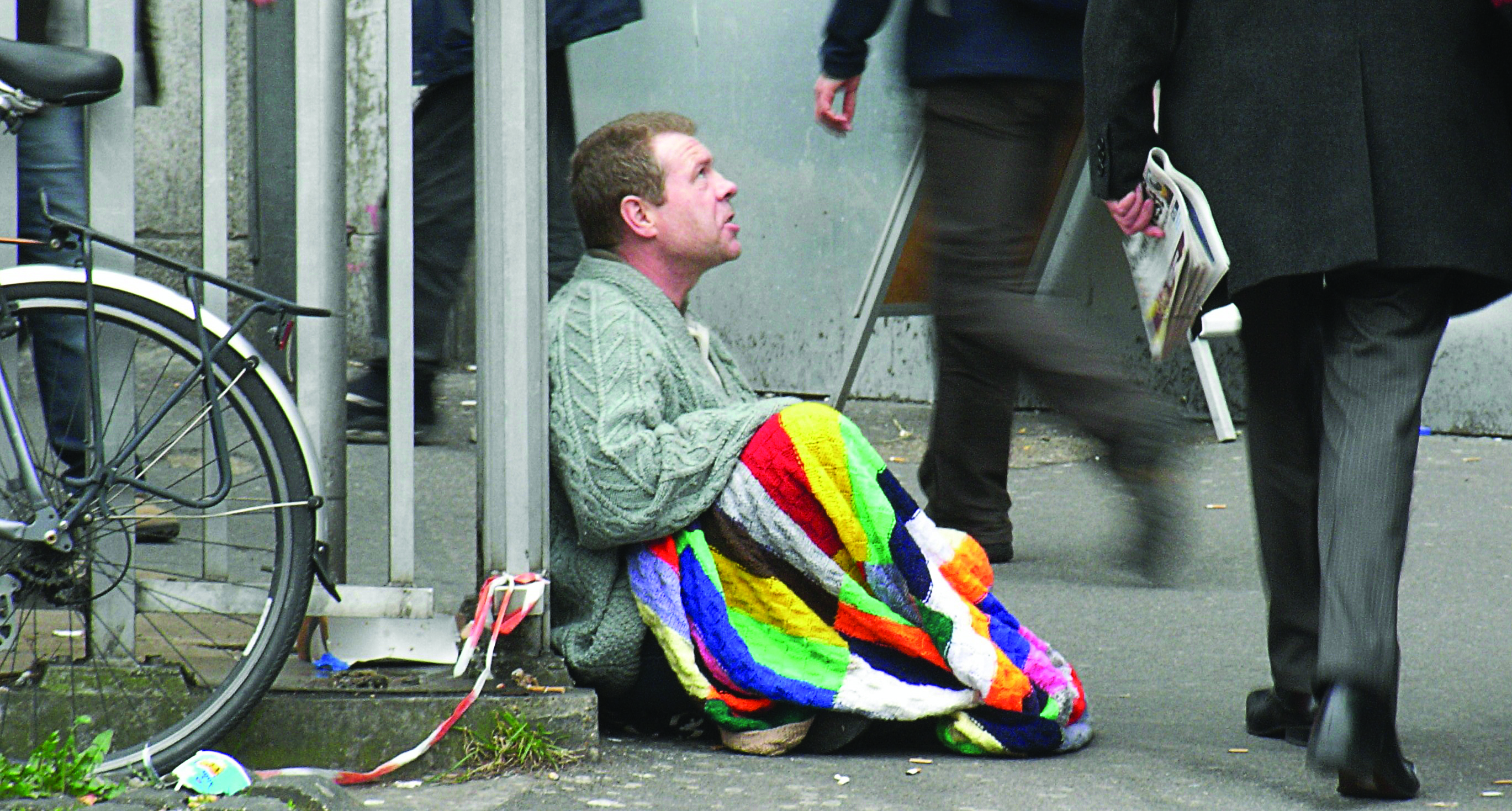
A new report out of SFU has validated innovative initiatives which aim to provide supportive housing for marginalized individuals in Vancouver.

SFU’s RADIUS Lab, in partnership with Ecotrust Canada, recently released a report called Pay-for-Performance Partnerships: A case study in funding for Supportive Housing. The report covers a feasibility study of the application of social impact bonds (SIBs) to the issue of individuals with severe addiction and or mental illness (SAMI) living on the streets of Vancouver.

The report suggests that SIB’s might be an important “jump-start” for providing people with SAMIs with affordable housing and supportive services.

The SIB model involves private investors who provide start-up funding to innovative social programs that aim to solve a persistent social welfare issue, and also save the public money long term. If the program is successful, investors are paid back out of public savings that result from the implementation of the program.

Normally, governments can’t afford to gamble on new social programs that have not been proven to work, explained Colin Stansfield, who co-prepared the report with Ecotrust Canada intern, Geordan Hankinson. The beauty of the SIB model, he says, is that it provides a non-philanthropic incentive for private companies to fund social projects. The report summarizes the SIB model as “privatizing risk and socializing benefits.”

The team’s research was based on evidence that came out of the At Home/Chez Soi study done by the Mental Health Commission of Canada, which provided proof that a “housing-first” approach to mental health and homelessness issues provides the most benefit for both the individuals it treats, and the public.

The benefit comes from a marked reduction in inappropriate use of social services, such as unnecessary time spent in hospital inpatient care, repeated encounters with police and the justice system, and frequent emergency room visits.

With a permanent place to live, marginalized individuals receive more consistent care, and can rely less on emergency services.

The first SIB ever implemented is an ongoing project in a men’s prison in the UK called the HMP Peterborough, which aims to reduce rates of reoffending among recently released prisoners. The project is slated to serve 3,000 individuals over a period of six years. If recidivism rates are reduced by 7.5 per cent or more by the end of the program, investors will be paid out of public savings at a maximum return rate of 13 per cent annually.

While SIBs have found success outside of Canada, the model has yet to be implemented here. This is where last week’s report comes into play: it provides academic evidence that the SIB model could offer a solution to Vancouver’s homelessness issue, by garnering enough funding to cover startup costs of supportive programs.

RADIUS Lab focused their study on Vancouver’s SAMI population in response to a declaration of a mental health crisis on city streets by the Vancouver municipal government in September, 2013. Due to a limited increase in funding available to deal with the crisis from the Ministry of Health and Vancouver Coastal Health, Stansfield says the benefits of having access to a large pool of private capital became even more apparent.

“The federal government has expressed an interest in innovative social funding, which includes SIBs,” Stansfield said in an interview with The Peak. “The point [of SIBs] is to attract new sources of capital, and to de-risk the uptake of these innovative service interventions into public policy.”

The report presents hope for homeless SAMI individuals in Vancouver, calling SIBs “a tool to model total system redesign, restructuring and redesigning how support systems are delivered to a target population.”

Partner abuse affects new mothers’ mental health

0

WEB-partner abuse-Bethany Brown-Flickr

A new study from SFU graduate student Ashley Pritchard suggests that partner abuse may have adverse effects on the mental health of new mothers.

Published in the journal, BMC Pregnancy and Childbirth, Pritchard said, “The study examined the associations of different types of intimate partner abuse and postpartum mental health problems.” The research brought to bear a few findings on the mental health of the women studied.

Pritchard, a master’s student in SFU’s clinical forensic psychology program, explained the research team’s findings: “Higher levels of postpartum mental health problems were reported by women who experienced intimate partner abuse either before or during pregnancy. In addition, the negative effects on postpartum mental health increased as a function of the number of types of intimate partner abuse — psychological, physical and sexual — experienced.”

Furthermore, the effects of different types of abuse were varied after pregnancy. “Psychological abuse [. . .] was associated with symptoms of PTSD and stress in the postpartum period. Physical abuse [. . .] was associated with symptoms of depression, OCD and PTSD in the postpartum period. Sexual abuse [. . .] was associated with symptoms of OCD in the postpartum period,” Pritchard said.

Of the 100 women who participated in the study, 61 per cent experienced mental health symptoms in the postpartum period. Forty-seven per cent had mental health symptoms at “clinical” levels.

The research also found that two thirds of the women “had a familial income of $60,000 or more, [suggesting] that intimate partner abuse is not constrained to households of lower socioeconomic status.”

The scope of trauma in these findings is significant; however, Pritchard suggests there are things women can do to help themselves in these situations. Pritchard recommends that “healthcare providers should conduct routine screenings for intimate partner abuse” and “foster strong rapport with their patients so that mothers-to-be feel comfortable enough to discuss such issues.” Additionally, she said that it is “important that healthcare providers are informed about the prevalence and consequences of intimate partner abuse.”

In the end, it all comes down to greater information. Said Pritchard, “Informing both women and their healthcare providers about findings like these will further help to open lines of communication, reduce stigma, and work to prevent harmful mental health problems.”

Freedom of opinion: for right wingers only

4

WEB-Justin Trudeau-Dave Huehn-Flickr

Wednesday mornings seem to be Justin Trudeau’s chosen time to drop his political bombshells. A few months ago, a Wednesday morning announcement signalled the end of Liberal senators remaining part of the party caucus, and May 7 heralded yet another announcement with ramifications for next year’s election. That morning, the Liberal Party leader announced that “future candidates [. . .] will be expected to vote pro-choice on any bills.”

Up until 2012, the Liberal Party did not have a position on the issue, regarding it as a matter of conscience for the individual. This leaves several party members, including some sitting MPs, in an odd situation. While incumbent MPs will be allowed to continue to run regardless of their stance, Trudeau struggled when asked if he would force them to vote against their conscience if an abortion bill did come up in the House. He would only say that their views “will be respected to a certain extent.”

This declaration bans several former members who only lost their seats in the 2011 decimation of the party from attempting a return. It also has the potential to alienate many voters, as polls show that Canadians are thoroughly divided on the issue, with most polls showing that legal abortion under any circumstances is supported by less than half of the population.

The stance on abortion is only part of a larger issue here. The real problem is the erosion of freedom. In making his pro-choice declaration, Trudeau has shown himself to be anti-choice when it comes to being a Liberal. In addition to the abortion stance, future candidates will be vetted and undergo what essentially amounts to an ideological checklist to ensure that those candidates are “consistent with the Liberal Party [. . .] as it stands under my [Trudeau’s] leadership.”

It sounds to me like the Liberal leader is attempting to set up a party full of clones who will blindly obey the dictums of their “Glorious Leader,” setting up an ideological dictatorship of the sort that both the Liberals and the NDP have accused Prime Minister Harper of enjoying the past several years.

It also seems to be a way for Mr. Trudeau to weasel his way around a promise not to use his power to appoint candidates and to allow open nomination contests in every riding. There is every expectation that the vetting process will be used to weed out candidates considered unsuitable by the party leader.

It would appear that the Conservative Party, contrary to what many would like to believe, is the party of free opinion, and one where MPs can disagree with the party line, including MP James Moore. In 2004, he was one of the few Conservative MPs to vote in favour of legalizing same-sex marriage despite the official party position on the issue. He continues to sit as a Conservative MP today, and has served in many important cabinet positions, including the Minister of Canadian Heritage and Minister of Industry.

In addition, the Conservative Party caucus features a wide range of opinion on several important issues, including abortion and the death penalty, but all are still allowed to both run for office and sit in the House as Conservatives.

It would appear that in Canadian politics, freedom of opinion is now a right wing ideal.

Totem explores the infinite potential of human existence

0

CMYK-Totem - cr OSA Images

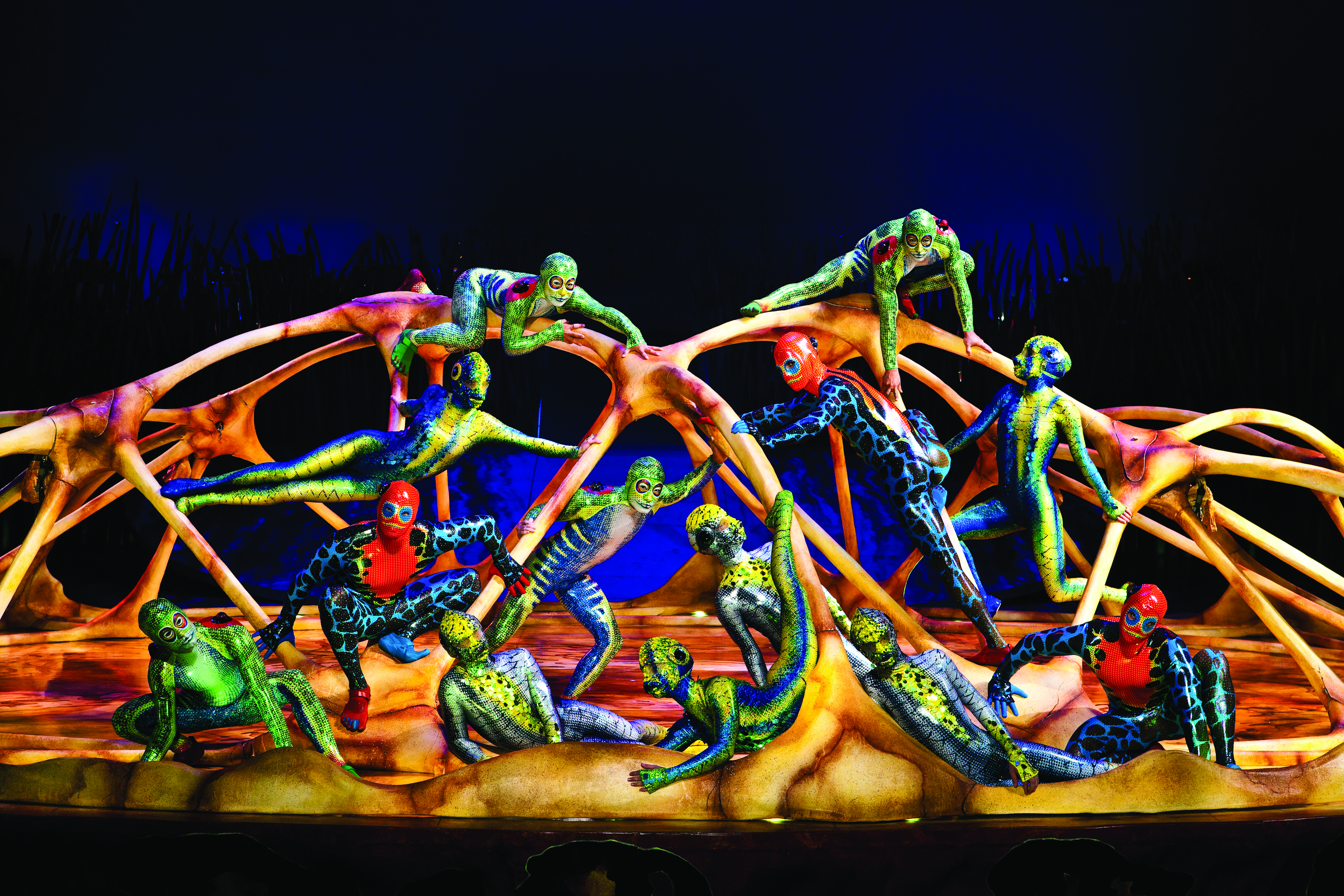
Chronicling the evolution of the human species from amphibians, to apes, to the present, Totem is a new Cirque du Soleil production that fuses many cultures and inspirations to create a magical tapestry of human ingenuity. As tour publicist Francis Jalbert explains, “It explores the infinite potential of human beings. We’re always moving onwards and upwards; we don’t accept the status quo.” It’s also about the evolution of our own lives and the way we evolve as individuals.

With the focus of this show being mainly on the overarching theme of evolution, rather than plot and characters, Jalbert said that the audience is invited to draw their own conclusions and interpretations of what they see. This production allows people to “discover Cirque in a new way,” he explained, describing it as “the most intimate, strong bond and connection with the performers” of any Cirque show. Even if people have seen a few Cirque du Soleil shows, he assures that this one will be different. 

Each act is its own story that represents a different stage in our evolution, but they are not presented in chronological order. Instead, they jump back and forth in time and see the parallel bars act representing the origins of life. Fish, frogs, and other amphibious creatures dominate the stage along with a giant turtle. 

The Russian bars act takes the show into outer space as they represent cosmonauts trying to defy gravity. Another act that Jalbert finds very impressive is the fixed trapeze duo. Performed by two teenage characters, he said that this act represents the evolution of young love and touches the audience on an emotional level while also being technically stunning.  

Many Native Canadian and American cultures are represented in the show, explained Jalbert. Although no specific tribe is portrayed, the hoops dancers act is inspired by many of these cultures and represents the circle of life and a deep connection with the earth. The music, also heavily influenced by native cultures, is very tribal and heavy on percussion. The vocalists are Esi Kwesiwa Acquaah-Harrison, an African heritage singer and Christian Laveau, a member of the Huron First Nation within Quebec City.

The costumes by Kym Barrett include many natural elements such as feathers and shells, and Jalbert explained that they are very diverse with each act requiring a different aesthetic. The inspiration for these costumes is a fusion of imagination and reality as Totem seems to straddle these two worlds. 

The many video projections used allow for the audience to escape to many different places. “It’s like travelling around the world without leaving your seat,” said Jalbert, “you step into the big top and forget about your reality.” The projections include a marsh in Montreal, a waterfall in Iceland, and a volcano in Guatemala. 

The mixture of different landscapes and cultures, and an emphasis on the earth and our connection to it, fills this show with a sense of hope. “When the audience leaves, they will feel like they just dreamt for two hours with us,” said Jalbert, “It’s an outstanding, unique theatre experience.”

Totem will be presented by Cirque du Soleil under the big top at Concord Pacific Place from May 15 to July 6. For more information, visit cirquedusoleil.com/totem.  

Report weighs pros and cons of Site C dam

0

254107207_8f8ef627cf_z

A report determining the fate of the proposed $7.9 billion Site C dam project has come back inconclusive, neither suggesting approval of the project nor suggesting tis rejection.

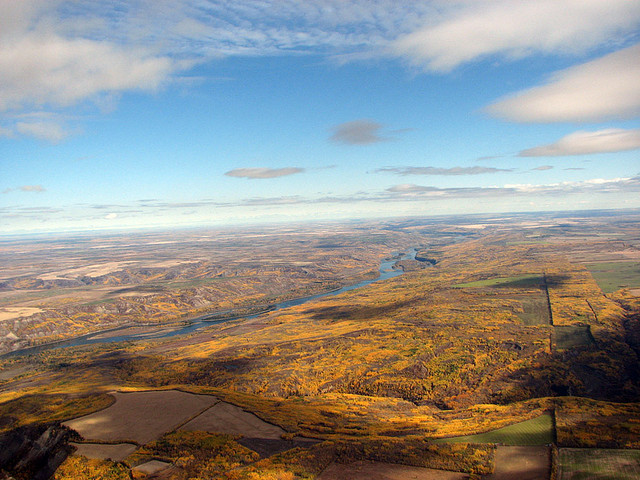
The dam’s construction — which would occur on the Peace River in northern BC — would begin in 2015, but has been under discussion because of the accompanying environmental, economic, social, health and First Nations concerns.

In the report, the joint review board acknowledges that the dam “would provide a large and long-term increment of firm energy and capacity at a price that would benefit future generations” while producing “a vastly smaller burden of greenhouse gases than any alternative, save nuclear power, which BC has prohibited.” It also notes possible local economic benefits such as jobs created.

However, it also points out that in addition to concerns about “high initial costs” and a question of when the power will be needed, the project would cause damage to local ecosystems.

“[It] would significantly affect the current use of land and resources for traditional purposes by Aboriginal peoples.” It would also affect local farmers, “who would bear the loss” of “agriculture on the Peace Valley bottom lands,” though it would not significantly impact BC agriculture.

For SFU political sciences professor and former BC Hydro board member Marjorie Griffin Cohen, the report is problematic in that there was not enough analysis into alternate possibilities, such as geothermal energy. She states that the lack of costings done for alternative energy sources makes it hard to determine whether the Site C dam is the best possibility, and makes it difficult to give the project a definite yes or no.

The panel does not believe that BC Hydro has adequately proven the need for more power.

“There is nothing to compare it to,” Cohen commented, while also blaming what the report calls “policy constraints that the BC government has imposed on BC Hydro [that] have made some other alternatives unavailable.”

Along with geothermal energy, plans for several smaller dams instead of one large dam were proposed, but declined. The report claims that these would be of “similar or somewhat higher costs” than the Site C dam project.

Cohen also notes the government has reduced the role of the BC Utilities Commission (BCUC), with this project having been exempted from their oversight. “Removing BCUC’s oversight of efficacy of electricity policy [. . .] means that a true airing of alternatives simply does not occur,” Cohen told the Vancouver Sun.

BC Hydro plans for construction to start in 2015 with it ending in 2024. Though Site C would be the least expensive viable energy option, the panel does not believe that BC Hydro has adequately proven the need for more power in such a brief period of time.

Many First Nations are also concerned with the project’s potential effects on their lifestyle. However, Treaty 8 Tribal Chief Liz Logan, whose tribe boycotted the official announcement ceremony in 2010, was pleased with the report, telling the Times Colonist that, “It’s not necessarily a clear yes or a clear no, but we’re happy that they did say there were significant impacts to our way of life.”

Environmentalist groups, such as the Wilderness Committee, have stated their concerns for the affected area, most notably the agricultural land that will be lost. They also doubt the need for the dam, claiming on their website that “it is about exporting electricity [. . .] and expanding BC’s oil and gas and mining industries” rather than a legitimate need for electricity.

However, some environmentalists find the lack of a carbon footprint hard to resist. “Site C is a fantastic conundrum. Even someone like me, [who is] pretty environmentally oriented, is not entirely sure you should not build that dam,” SFU professor and former chair of the BCUC, Mark Jaccard told The Globe and Mail.

Although the report was indecisive, it was not intended to be the final word. The report states, “The decision on whether the Project proceeds is made by elected officials, not by the Panel,” and as such it is up to the government to decide the fate of the project.


Spaces and Reservations presents a reality of life

0

Spaces and Reservations

It’s a story that isn’t a story. There are no plot twists and no special effects. It’s not a drama showing unfaithfulness, it isn’t seeking to teach a life lesson, and it isn’t a documentary. It is quite simply a film depicting one of life’s realities.

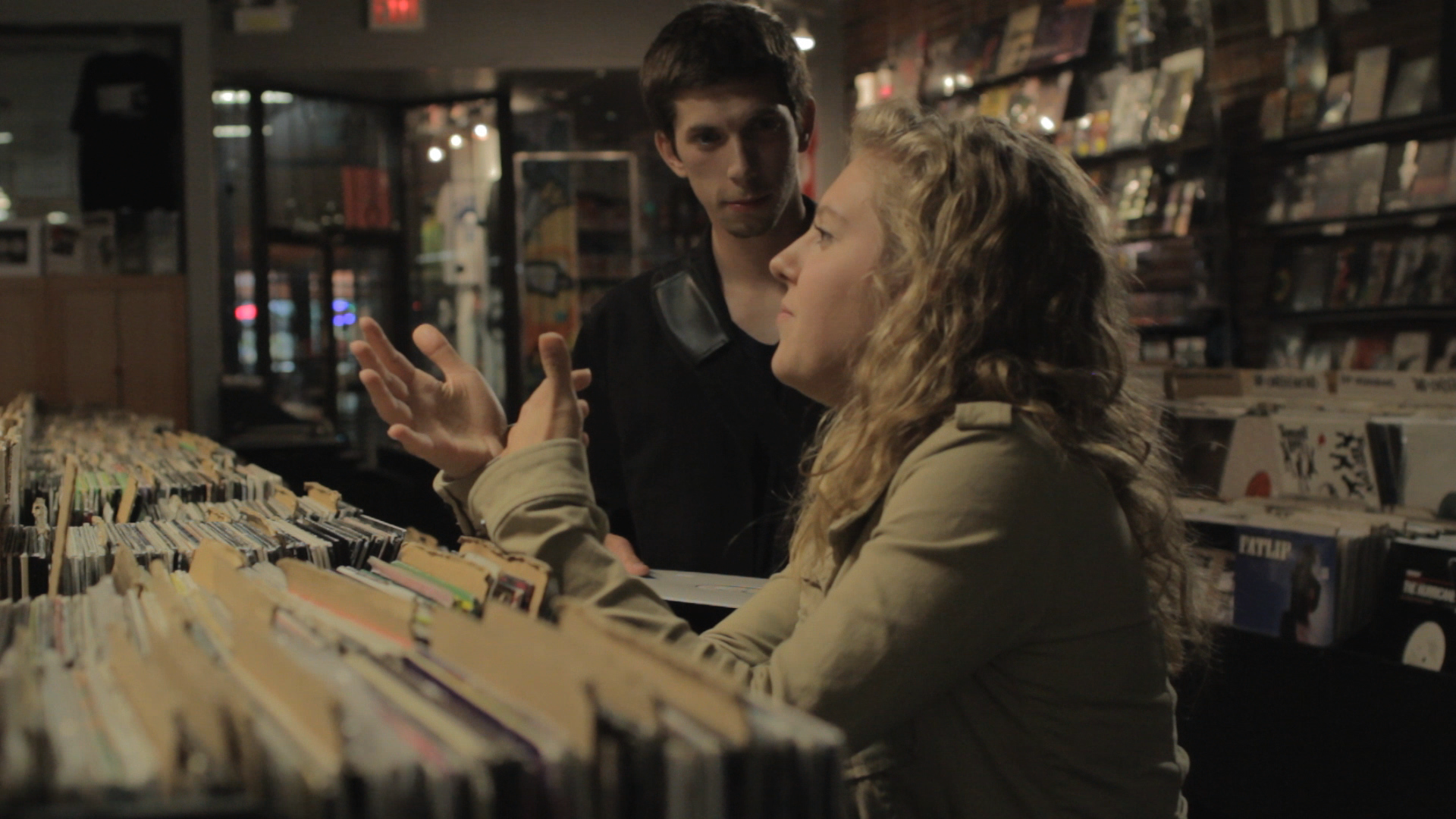
Spaces and Reservations, is the latest feature film from DIY filmmaker and SFU film student, Brendan Prost, who is best known for his previous films, Generation Why and Choch. This film follows the relationship of Jamie (Zach White) and Kacie (Taylor Hastings) as they drift apart, their separation, and eventually their break up. 

It is about “malaise and stoicism, about the feeling of stoicism, and being stuck and static. It’s about losing people, feeling people drift away from you. It’s about having your actions motivated by guilt and fear, and sympathy for someone else,” explains Brendan.  

For Spaces and Reservations Brendan assembled a crew of talented individuals, including local actors Taylor Hastings and Jennifer Kobelt (Cassandra) as well as fellow film students at SFU, notably Jeremy Cox as the director of photography, and Rheanna Toy as the production designer. 

Brendan also reconnected with Zach White with whom he worked on both Generation Why and Choch. “The big difference between doing this project and the other two feature films [. . .] was getting to collaborate with people like Jeremy and other people from the SFU film program, and having their technical knowledge and their skills at my disposal,” says Brendan.

It is within the raw nature of the actors’ performances and the director’s careful gaze that the strength and beauty of this film can be found. Not a lot happens action-wise, the majority being either dialogue or silence, but “if a script is any good [. . .] the scene isn’t about what the characters are saying, it’s about [. . .] what’s going on underneath,” says Brendan. 

The two main actors play their connection in a way that is realistic, and this reality drives the story forward. Their characters are unremarkable, average individuals, but their situation is nostalgic and familiar, and the audience is invested despite themselves. Perhaps in witnessing something unfold, in waiting in the silence, they are reminded of their own relationships.

Jamie and Kacie’s relationship has already begun to stall before it even begins; with the first line in the film the awkwardness is obvious between the two. In one scene, as Jamie turns to leave, he stops and after a slight pause he goes back to Kacie, hugs and kisses her. 

“He has to remember and turn around and come back, and that is the degree in which the characters are conscious of the fact that they are drifting apart from one another. They just catch themselves in these moments,” Brendan points out. 

It isn’t until two thirds into the film that Kacie and Jamie begin to open up and seem like a couple. The film is like driving toward a pothole, without knowing for certain where it is and when the car will reach it.  

Brendan wrote a detailed 105-page script for this film, however the actors improvised their lines depending on how the scene played out, lending to the realistic quality. “It just speaks to [the] degree of naturalism [the actors] managed to achieve, and at the same time being so emotionally attuned to what’s going on in the scene,” said Brendan. 

Cinematographer Jeremy Cox elaborated saying, “One thing we’ve all learned from this film was how to improvise effectively [. . .] take exactly what you have around you, the people you have, the resources you have, and make the best out of exactly what you have.”

Essentially “it’s a film about first experiences, about naivete. It’s really a film for younger people, a film for people our age,” says Brendan, “[however] that varies . . . it appeals to a first heartbreak, a first time that you lose someone.”

Spaces and Reservations will screen at the Rio Theatre May 20 and 27. For more information, visit spacesfilm.com. 

Tippy Top Ten: Donald Sterling

0

Here are the Tippy Top Ten Most Appropriate Punishments for Donald Sterling…


10. Spend eternity in black heaven

9. Have fate decided by OKC referees (am I right?)

8. Slap on the wrist from Dennis Rodman

7. Season tickets at Apollo Theatre

6. Fined until he has to live as a lowly millionaire

5. Have courtside seats moved to directly below basket

4. Lifetime ban from speaking

3. Walk a mile in Magic Johnson’s size 14 shoes

2. Forced to own LA Clippers from 1981 to 2014

1. Elevator ride with Solange Knowles

Stuck between childhood and adulthood

0
SFU: engaging adult-children?
SFU: babysitting the world?

Have you ever felt like you’re somehow less mature than, say, your parents were when they were your age? Chances are you have. In generations past, it seemed like a lot more young people knew where they were headed in life and how to get there. In contrast, today’s youths seem to be marred by constant uncertainty and worry for their futures. But, why?

I first came upon the concept of extended adolescence in one of my psychology courses; it alludes to a trend in the younger generations in which individuals remain in a prolonged period wherein they don’t identify as adults. They are largely dependent on their parents and have yet to establish an autonomous lifestyle (i.e. moving out, having a full-time job, etc.).

However, this period of dependence is increasingly being stretched out into one’s early to mid-twenties. Many young adults today (myself included) are living with their parents, often move back in with their parents after moving out, and are marrying and having children later in life.

It appears as though adolescence, or at least the transition from adolescence to “full” adulthood, has become a longer process for contemporary youths, and I believe that this is due to the fact that people now stay in academia longer than ever before. This is a phenomenon caused by Sir Ken Robinson’s “academic inflation,” or minimum job requirements generally becoming more complex.

Those extra school years buffer the responsibilities that come with being a mature, independent adult.

Graduating from high school no longer marks the end of formal education for most, as it did in the past. With each passing generation, more and more people are able to attend colleges, universities, and other post-secondary institutions.

Even so, having a bachelor’s degree used to almost guarantee employment, and having a master’s or higher meant you would never be out of a job. Fast forward to present day, and a bachelor’s degree no longer holds as much prestige as it used to. It has now become necessary, but not necessarily sufficient for a career. People graduating with a BA are now as commonplace as people graduating from high school a few short decades ago, and today’s MAs are near equivalent to BAs of the past.

All this inflation means that people have to stay in school longer to get the required degree for their desired profession, or just for a better chance at getting a job. Today’s youths are thereby remaining in an academic setting for a longer period of time; those extra years serve as a buffer against the responsibilities of getting a job, finding their own place of residence, and everything else that comes with being a mature, independent adult.

Many young adults today are stuck in psychosocial moratorium, not completely dependent but far from being autonomous. Psychologist Erik Erikson says this occurs while people try to find identity during their adolescent years.

It is hard to say whether this extended adolescence is a good thing or a bad thing, as it is a relatively recent phenomenon, and I am personally still on the fence about it.

However, it does help to explain why today’s youths appear to be less prepared and less certain of themselves than the older generations; it’s not because we’re any less competent, but because we’ve been given a few extra years of academic safety from the real world.

Maybe it’s time we personally draw more attention to mixing the school world with the real world, to take advantage of the longer period we spend as adult-children.