Home Blog Page 1101

Co. Erasga presents the return of Colonial

0

CMYK-Colonial - creations_in_pocess


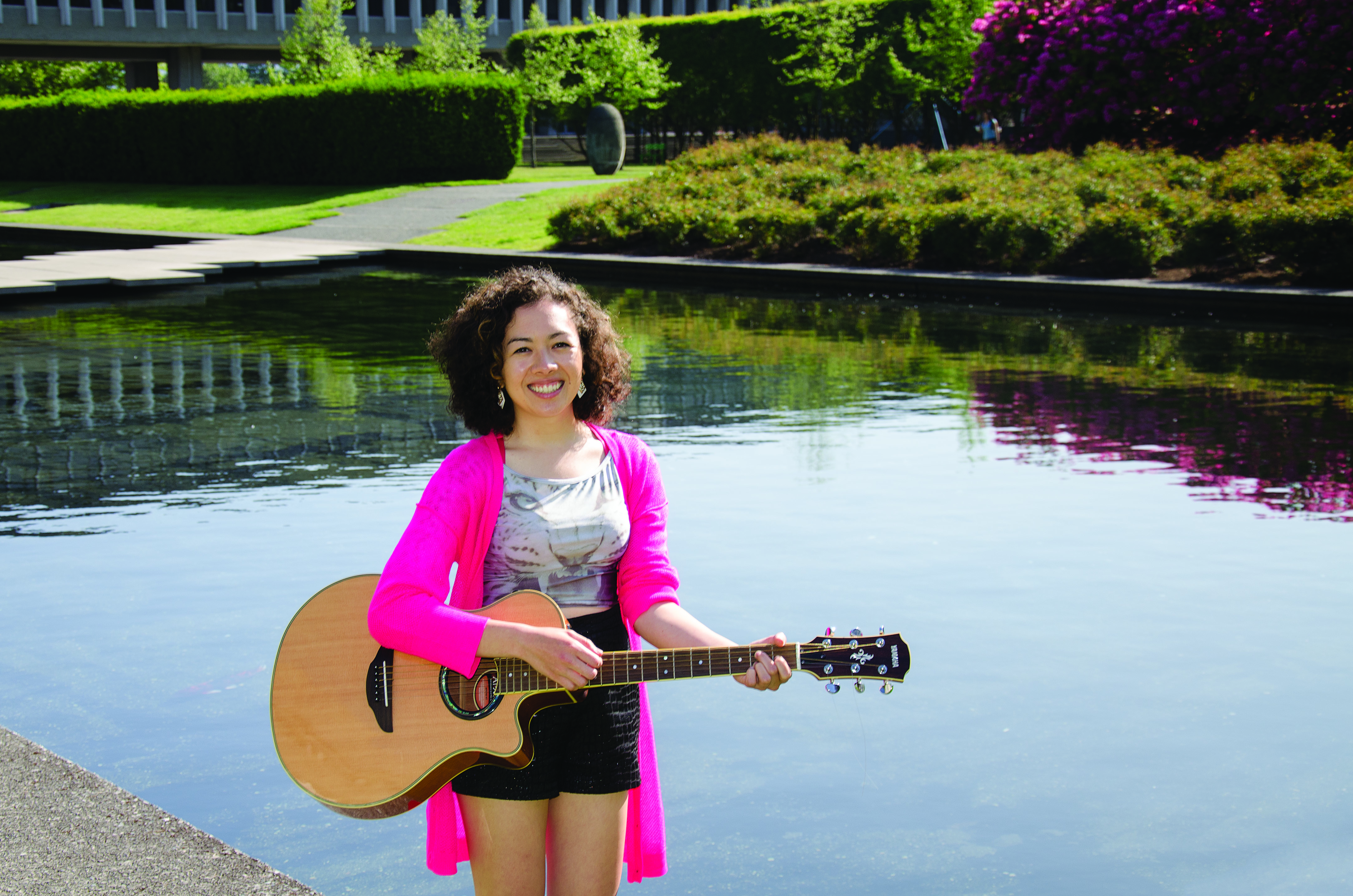
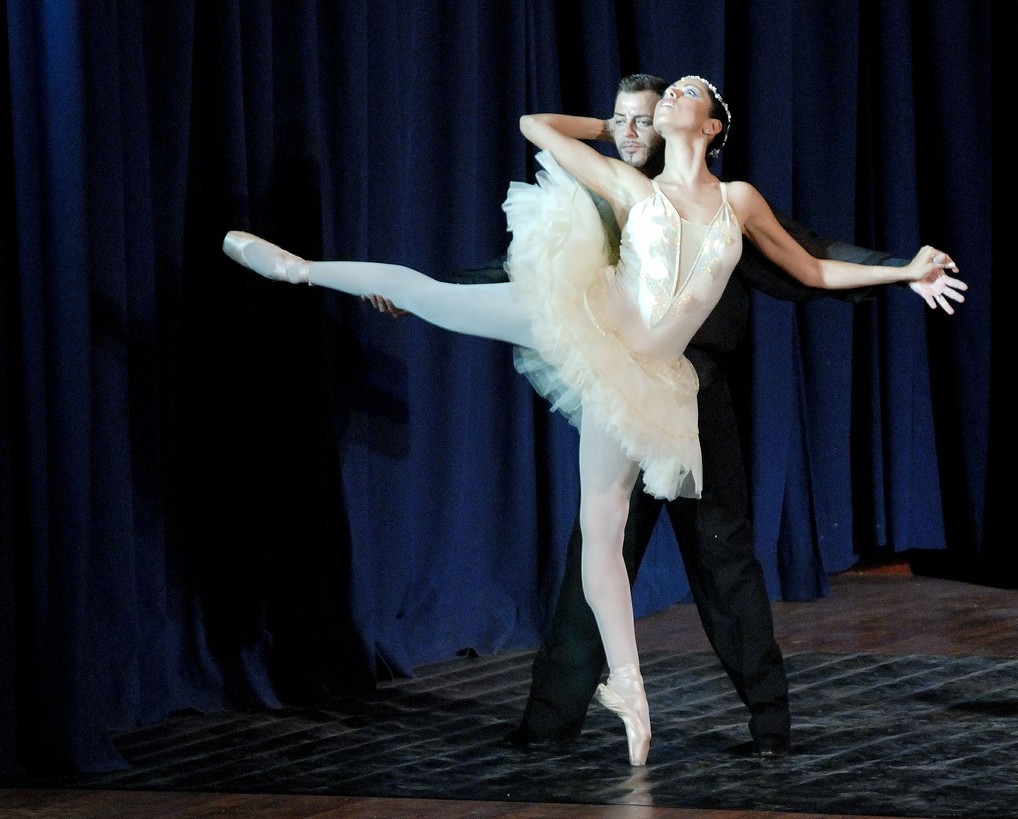
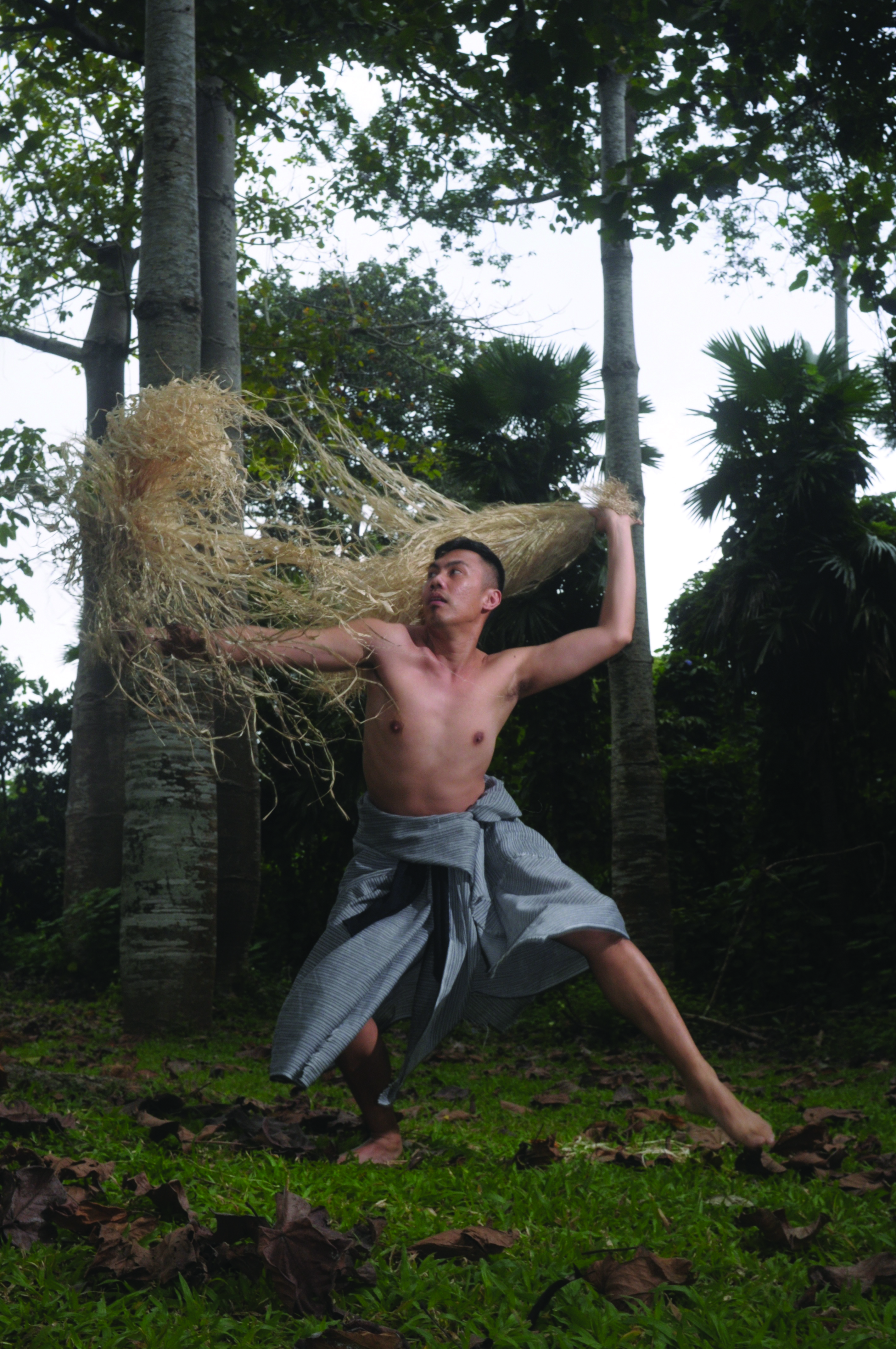
Dennis Gupa, theatre director behind Colonial, Co.ERASGA’s provocative exploration of the colonization of the Philippines, is sitting in a plastic chair, watching Alvin Erasga Tolentino reconstruct a section of the performance. A multi-media dance piece conceptualized by the two, Colonial premiered in Vancouver in 2012 and toured the Philippines in early 2013. 

The show was a hit on both sides of the Pacific, and Tolentino is currently preparing for a second tour. With an expected audience of over 3,000 people, Tolentino says he feels like Lady Gaga. “When does contemporary dance reach that many people?” he asks. 

Tolentino moved to Canada in 1983, but he keeps close ties to his birth country, the Philippines; he met Gupa in 2007 while touring there. When they began Colonial, Tolentino wanted a collaboration with Filipino artists. As Gupa puts it, “We were concerned with the honesty of the vision, and Alvin is a daring artist, strong enough to say no.” 

Gupa helped Tolentino bring four new generation Filipino artists to the project: Jon Lazam, videography; Angelica Dayao, musical composition; John Carlo Pagunaling, costume design; and Jonathan Tsang, lighting.

The project was not without controversy. Its Filipino audience challenged the artists’ politics, along with Tolentino’s empathy for the country’s post-colonial issues today. On one level, Colonial responds to Gupa’s questions about Filipino politics: “I wonder,” he muses, “why are we engaged in disputes between the US and China. Why don’t they just leave us alone to follow our course? In some way our government is still participating in colonialism.”

However, the question of the artists’ politics is a sensitive one. In the Philippines, politics is still dangerous if taken too far. “We still have desaparecido,” says Gupa, referring to the Filipinos who were allegedly kidnapped by authorities. “We are moving out of that era now, but art has a responsibility to challenge. Part of being an artist is to transcend the fear of death.”

In exploring colonialism as a dancer, Tolentino had to bring up forgotten memories and embody the pain experienced in those days past. “The process strips me,” he says. “I have to empty my body, like meditation, in a way. I give it as a physical offering, a prayer.” Similarly, for Gupa, the project revolves around what’s been lost and what’s been found. “We have debris from the past,” he says. “Can we do something with the debris? We can reclaim it. We have archives, but there are other ways to engage with the memories.” 

Gupa says he’s become sensitive to conversations that have arisen as a result of Colonial. “When the project is responded to, it gives us a chance to expand it and make it deeper. We’re going to an area that celebrates their Spanish ancestry. I am excited to bring an anti-colonial view to that audience.” 

Colonial’s opening falls on the Philippines’ celebration of independence from Spanish rule. This coincidence represents, for both Tolentino and Gupa, the tour’s essence: it was a long, episodic and communal process where the pieces came together in serendipitous ways. Through it, both had the feeling that this project was meant to be. 

Colonial will be presented at the Scotiabank Dance Centre June 11 and 12. For more information, visit companyerasgadance.ca. For tickets, visit ticketstonight.ticketforce.com.

Google claims the road

0

CMYK-Prototype Google Self-Driving Car Project- Google plus

Yet another ground-breaking technology is being covered by global news outlets: Google’s new self-driving car.

Yes, you read that correctly. Self-driving.

For the last week or so, the vehicle has incited both positive and negative speculation. Some analysts have argued that the car will flop due to potential errors in its computer system, while others have stated that the vehicle will be hugely beneficial to the automotive industry.

Although it resembles a giant piece of rice with a face, the benefits of the vehicle’s safety and convenience mightily outweigh its drawbacks.

The Globe and Mail recently announced that the current prototypes for the car are bereft of steering wheels, brakes, and gas pedals. Run by electricity and an Internet connection, and with a motion sensor on its top that scans for oncoming vehicles and irregular surroundings, the car will take the user on a magic-carpet ride to wherever their destination may be.

Notice I say “user,” as the concept of a “driver” does not apply anymore, which isn’t something to be upset about! While some may see it as beneficial that the “driver” of a vehicle exercise physical awareness and social acuity while driving, the “user” of Google’s car will experience the ultimate in vehicle safety.

The car would provide freedom of the road for elderly and disabled people.

The motion sensor will be able to detect and respond to surroundings instantly and far more accurately than a human driver would. This may also be due to the vehicle’s current 40 km per hour limit, which, as CBC reported, would end speeding and provide intoxicated drivers with a safe ride home.

While it’s clear to me that the car would only be restricted to residential and other congested urban areas (rather than the highway), it could undoubtedly revolutionize inner-city taxi services, and eliminate yet another title: the designated driver.

Soon, the “sober” one will be able to pound back a couple more drinks and have a little fun with the rest, as the Google Car is sure to precede the automated-cab. (And, no doubt, the automated pizza delivery service.)

More important than late-night partiers and automated pizza, the car would provide freedom of the road for elderly and disabled people. It was a very sad day for my grandmother when a doctor stated that she wouldn’t be able to drive anymore due to her health; her tearful, unbelieving reaction had quite an impact on all of us.

A piece of life is lost when one’s ability to drive is revoked; for many, driving is a profound sign of independence. Google’s car will mean the elderly can maintain their driving freedoms, as well as allowing many disabled people a new freedom.

Certainly, this vehicle will not be for everyone. Because of speed limitations and autonomy restrictions, there will be many who opt to remain fast and furious.

Regardless of preference, Google’s self-driving car will accomplish ground-breaking progress in vehicle safety. While there is small potential for computer error, the car has the potential to eliminate almost every unsafe aspect of the road.


Student assembles artists for day-long Buskathon

0

CMYK-Busking-Scott Jacobsen

Performers busked, danced, and sang at the first annual Buskathon, founded and organized by SFU philosophy student Samantha Dowdell.

According to Dowdell, the idea arose from her prior musical interests and through her band Alluvium. As a result, the day-long Buskathon occurred on May 31 from 11:00 a.m. to 6:00 p.m. at Rocky Point Park in Port Moody.

Dowdell explained the nature of the event: “Busking is simply taking your talent out on the street, laying out some sort of spot where people can drop money for you, and sharing whatever with the world. If people like it, people will give you something.”

She described the event as a genuine “opportunity for the new and unknown artists to have a voice and present their work.” To make the event happen, Dowdell approached local artists, “seeking them out, [and] bringing them out into the open.” She continued, “Not a lot of people know this small community exists.”

Dowdell used her musical connections to put together a lineup: “I [asked] my musician friends, my band Alluvium, and another band called Blue Smoke.” Most of the bands in attendance were acoustic. “We [didn’t] want them to blow out the park,” Dowdell said, laughing.

She also reached out to local high school music programs, with which she was involved before coming to SFU. “I [had] been trying to contact them and have them and students do promotions,” she explained.

Many places in the Lower Mainland require a license to busk, and only allow musicians to perform in a spot for one hour before requiring them to move on. There are exceptions when iat comes to certain side streets, parks, and the sea wall. However, Port Moody supported Dowdell’s event by relaxing its restrictions.

To keep costs down, Dowdell decided to keep things simple. “It was funded by the city, really simple.” she said. She also reached out to many businesses such as COBS Bread and David’s Tea for sponsorship.

She explained, “[The community has been] printing posters for me, helping me out with contacts. [There’s been] a lot of email communication with people involved with the park — not much from the province, mostly from the city of Port Moody.”

Dowdell explained to The Peak that community building was her primary focus. “I plan to make [the Buskathon] an annual thing, building it up,” she said. In light of the support she received from the community, she feels this could be a reality.

“Literally” literally means nothing

0

Woohoo: English mutability

The word “mutability” comes from the word “mutation,” and refers to the way things change. When it comes to English, the ability to both absorb other languages and change over time has earned it the reputation of being mutable.

English comes from Romanic and Germanic backgrounds. It spits the harsh consonants of German, and guards the silent letters of French. The phrases, “gazuntite” or “ménage à trois,” sound almost English due to prevalence, but we’re still left to stop and think, if only momentarily, of these root languages.

English words also have the ability to change in meaning with regular use. When we hear a colloquial word taken from a different English culture, we are left to truly listen to the word and decide why that particular sound means what it does.

So, English doesn’t get stale. It stays dynamic, it arouses the ideas behind words, both where they come from and what they mean.

Boohoo: “literally”

“Literally” literally means nothing now.

No matter what, this sentence makes sense. The word is widely used as it has been for the majority of my life: meaning “exactly, actually, truly.” In Google Dictionary, under its definition reads, “used for emphasis [. . .] while not being literally true.” Literally can literally mean “actually” or “not actually.”

I recognize English changes, even for the worse sometimes. But I’m not one of those people who will start crying over text message language. “U” logically replaces “you.” “R” can replace “are.” These aren’t destroying the fundamentals of the language: they don’t make a word simultaneously mean something and its opposite!

Are we taking English too far? I’m not sure.

Maybe what worries me most about this is my reluctance to do anything other than complain about it.

I’m worried by my reaction to a word actually changing: how I want to stop and sit crossed-armed, inwardly scared of the blisteringly fast pace at which the world is changing.

Stop and smell the SFU roses

0


My personal experience in university, for the most part, was of a place where enthusiasm was infectious, spreading wildly throughout hallways and corridors, providing undergrads with a sense of multiple possibilities for the future. The idea that your degree can take you anywhere is a mantra lived and breathed by many, especially when we question the thousands paid in tuition each semester.

Losing the sense of security that my undergraduate studies provided me feels similar to losing a lover (albeit one whose expensive dates I will not miss). At SFU I met some of the most brilliant minds, built lifelong friendships, and acquired knowledge on matters beyond the scope of my imagination.

Now that I’m sending out applications for employment opportunities by the half-dozen each day and making ends meet temporarily by serving coffee, the nostalgia of my time spent writing papers and frantically cramming pulsates through me, highlighting what a relatively enjoyable and honouring experience getting a degree was.

Questions and suggestions float around in my head in each moment of this transition period: Could I update my LinkedIn profile further? Have I checked my phone for any missed calls from prospective employers? Did I pursue the right degree? Should I pursue my master’s only months after graduating if my job applications are not triumphant? What do I want to do with my life, exactly?

Of course, there is great relief simultaneously that comes from completing my studies. Gone are the looming deadlines of term papers, the repetitive nature of some courses within the same field of study, and the strains of financing education. Indeed, finding a relatively normal sleep routine after four years of writing papers during each hour of the day is miraculous.

The nostalgia of time spent writing and cramming highlights how enjoyable getting a degree was.

But it feels like the undergraduate experience happened all too quickly. Certainly, studies could have been prolonged but it seems futile to do so without a defined goal.

It is encouraging to be told, by people with far more wisdom and experience, that this transition period too will pass. Life continues. New opportunities will present themselves, learning will occur in a variety of forms, and time will provide the chance to reminisce and reflect about being at these unique crossroads.

At the risk of sounding like a cliché, truly do enjoy your time as a student. Seek involvement with the smartest people, the most determined of imaginations, and thrive on the inquisitive energy that is rare outside the setting of formal education.

After all, the privilege of being able to invest in your future is not accessible to all, and awakening to the reality of its end can be bittersweet.

Remembering Maya Angelou

0

CMYK_Maya_Angelou_visits_YCP_Feb_2013 Wikimedia Commons

Maya Angelou was a woman with the power to impact lives from the tip of her tongue to the turn of her pen. From a young age she was deeply affected by the world around her; Maya had a vision for how the world should be, one that we need to continue to strive toward today and tomorrow now that she is gone.

Born in 1928, Maya led a challenging life full of obstacles, racism, and pain, all of which she could have let cripple her. At the age of eight she was raped by her mother’s boyfriend, and subsequently stopped speaking after her rapist was murdered, presumably by her relatives.

Young Maya believed that her words, upon speaking about the incident, were the reason for his death. If her words could cause so much pain and death, she  decided that she never wanted another to come to harm because of her. She went five years without speaking a single word because of this fear.

But finally, she realized that her words did not connote pain, but rather power. She had the power to tell her story, and to positively affect the lives of others. Out of this experience and many others, she became an author, a poet, an actress, and an activist, among other jobs, to make ends meet in a world so cruel to women of colour.

Maya had the ability to bring a voice to the issues no one else could. She spoke from her heart, and encouraged others to follow.

Maya not only used her writing to inspire change in the world around her, she became an activist, working towards freedom for all despite their race. In this work, she witnessed the assassination of fellow friends and activists. Again, she could have called it quits, called it all too much. Instead, she pushed on.

She continued to shape her experience into her writing and humanitarian work. She led a life in pursuit of justice and civil rights for people of colour, and for all to have access to equal education. Her fiery passion for equality and optimistic outlook towards the future fueled many of her peers and successors.

Maya once said, “There is no greater agony than bearing an untold story inside you.” She pushed past racial and gender oppression just to tell us this. Now that Maya Angelou has left us, with her words and her actions leaving a mark on us all, it is our job to do the same: to push ourselves past all we know, specifically personal pain, and embrace all that we can be.

University Briefs

0

4121521415_45d78b2cbd_bProfessors create romantic ballet video game

An english and film studies professor from U of A recently collaborated with a computer science master’s candidate to recreate a classic romantic ballet in the form of a video game.

The game, titled iGiselle, is for Microsoft Kinect, and challenges its users to re-enact a tragic ballet by copying the dance poses of the protagonist, Giselle.

Although the female protagonist dies at the end of most classic romantic ballets, the creators of iGiselle decided to “to take a sort of feminist approach, ideally allowing the woman — the ballerina — some agency, and that would involve allowing her to stay alive.”

With files from The Gateway


UBC database hack goes undetected for almost two years

It was recently revealed that over two years ago, UBC was hacked by Team Digi7al, an infamous hacker group who succeeded in stealing information (such as passwords and email addresses) from the school’s very own database.

The group has also infiltrated the US Navy, the US Department of Homeland Security, and Harvard University.

The 24 people whose personal information has been compromised were immediately contacted by the school. Two members from the hacker group are facing punishment for what they did after mentioning the incident on Twitter.

With files from The Ubyssey


Students invent self-powered soybean harvester

Four engineering students at the University of Toronto have created a sustainable soybean harvester to till the farms of Brazil. Teaming up in a graduate design course modeled after the Hydrogen Student Design Contest, the group’s green machine produces zero emissions and powers its own cleaning, storage, driving, and threshing stages.

Dubbing their new start-up PURE (Powerful, Unique, Reliable, and Efficient), all four students presented their vision of greener farming and sustainable production to a panel of expert judges who evaluated the course projects. In the end, the team was awarded first place, earning $180 in prize money and an engraved plaque.

With files from University of Toronto News


Strategy games do not make us sociopaths

0

CMYK-videogame2-lilyli

Did Hitler play strategy games?

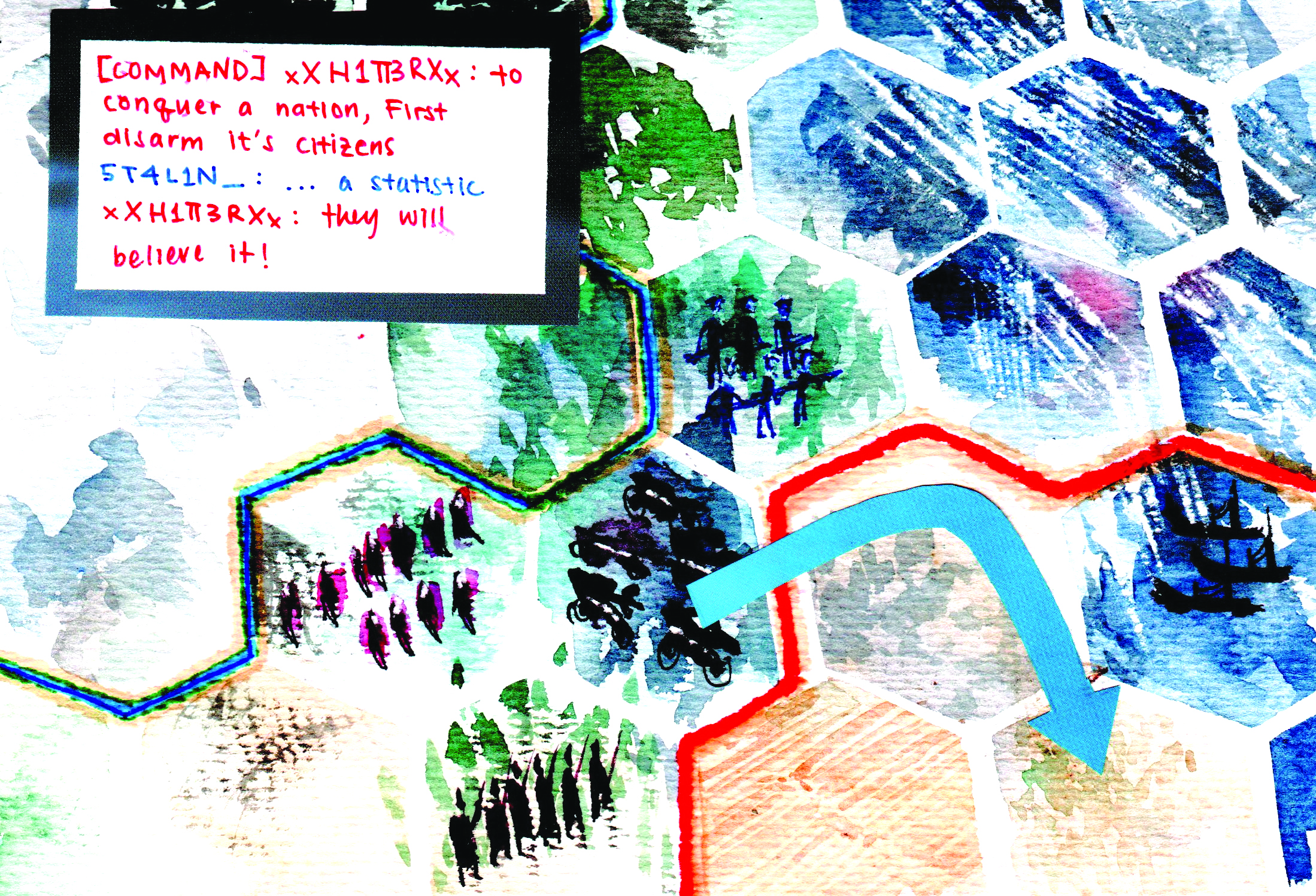
In an article on Futurismic.com, “Seeing Like A State, Why Strategy Games Make Us Think and Behave Like Brutal Psychopaths,” Jonathan McCalmont adds his opinion to the raging debate on the psychological impact of video games. He links strategy video games with political psychopaths such as Hitler: the former causes the latter. McCalmont argues that strategy games turn liberal-minded people into “brutal tyrants” because they shift their worldviews from humanistic to state-centered.

This argument is farfetched.

McCalmont’s article overgeneralizes the impact of strategy games as he ignores the fact that most players of these games can distinguish reality from fantasy.

He believes that the escapism of strategy games is no different than the escapism of corrupt politicians into a state-centered view of the world where there is little concern for the human consequences of actions.

Yet, this comparison is erroneous simply because the players know they are playing a game. Such games, after all, involve actions that are impossible for an average person to accomplish, mainly the conquest of countries in different time periods and places. These time periods can involve the far off past or future as in Civilization or Starcraft, as well as worlds of fantasy like in The World of Warcraft.

McCalmont thinks that strategy games are all “politically savage.” They’re really not.

McCalmont’s simplification of the impact of strategy games is also apparent in his use of historical examples to support his case. In one example, he goes so far as to argue that the major genocides of the 20th century were caused by the state-centered views of tyrants, the same views that are prevalent in players of strategy games.

However, the psychopathy of leaders such as Hitler, Stalin, and Mao must have had some incentives that are unrelated to video games, being that these games did not exist.

Not only is McCalmont exaggerating the negative effects of strategy games, but he is also ignorant about the games themselves. He thinks that they are all “politically savage.” They’re really not. A case in point is the game Civilization. It is complex, demanding that the player use many strategies other than shedding blood to win the game, such as via cultural conquest or winning the space race.

There are also different political systems to choose from in Civilization based on the level of your civilization’s knowledge or circumstances at a particular point in time, as well as democratic elements within the game, such as the happiness level of cities. In addition, there are political, economic, and scientific advisors.

Civilization is a strategy game that is not just a lesson in psychopathic tyranny but rather in political diversity. This can help the player exercise his or her democratic rights and gain a broader perspective of the world.

McCalmont’s belief that players of strategy are psychopathic tyrants or dictators with worldviews that exclude social realities shows that he takes these games too seriously. Any mature gamer will tell you that to play a game, you have to distinguish fantasy from reality.

Satellite Signals

0

WEB-woodward

Woodward’s

The premiere of Victoria composer Christopher Butterfield’s fall for string quartet was performed by Montreal’s Bozzini Quartet last Thursday at SFU Woodward’s; attendees were invited to experience Butterfield’s latest composition. The Bozzini Quartet consider themselves to be “radically contemporary,” and so provided a perfect partnership for Butterfield’s “eclectic approach to composition.” 

surreySurrey

The Sikh Student Associations at SFU, UBC, and UFV hosted “Reflections on the 1984 Sikh Genocide: Why does it matter?” The session addressed the specifics of what went on, as well as what can be done now. Special guest Harinder Singh, an interdisciplinary researcher and global orator on Sikh and Punjabi heritages, led the interactive, dialogic event on the ever-lasting consequences of the 1984 Sikh Genocide.


vancouver

Vancouver

The 8th International Gender and Language Association conference took place at Harbour Centre from June 5 to 7. The conference aimed to promote an awareness of how language affects differently gendered students in learning environments. Findings from co-chair Allyson Jule showed that teachers will generally encourage male students to speak more so than females. This could potentially have long-term effects on girls, making them less vocal in certain situations, such as in the workplace.  

I’m rooting for the Rangers

0

7140964333_26418cc4b8_b

The Montreal Canadiens are out of the playoffs. That’s a bummer, as I guess the Bettman conspiracy will last at least one more year. (While it’s hard to believe, the last time a Canadian team won the cup was in 1993, just after Bettman began his reign as commissioner.)

On the plus side, this means the Canucks could be the first Canadian team to win the cup in 20 years.

You may be surprised, however, to hear who I am cheering for in the finals: the New York Rangers. This may sound like sacrilege, as the Rangers not only beat my previous bandwagon team, the Canadiens, but also beat the Canucks in the 1994 finals. (Note: I don’t think you will ever see me cheering for the Boston Bruins.)

However, before the playoffs (after the Canucks were out), I chose three teams. I know three teams is a lot, but these were the three teams I could stomach contending for the Stanley Cup.

My first choice, well ahead of the other two, was the Montreal Canadiens. First off, they were the only Canadian team left, and I think that is enough of a reason to cheer for them (although Toronto and Calgary would be exceptions for me). Not only that, but they are a fun team to watch, and with small players like Brendan Gallagher defying the odds, they went against the grain of what a playoff team is supposed to be.

My second choice would have been equally, if not more shocking: the Chicago Blackhawks. Although they beat the Canucks numerous times in heartbreaking playoff matchups, I always respected them; they played a good game, and unfortunately, they deserved to win.

Alain Vigneault was probably Vancouver’s best coach, and really should have had a cup ring here.

Not only that, but they play a game based heavily on skill. Although they are big and mean, their offensive game is something to watch, something that can’t really be said of the Kings.

Now, that just leaves the New York Rangers. My reason can be summed up in two words: Alain Vigneault.

Although some would rather see him crash and burn, and justify the Canucks firing him, I have always liked him. He was probably Vancouver’s best coach, and really should have had a cup ring here.

That is not to say his firing was unwarranted. I still believe that the Canucks needed a shake-up in coaching at the time, just for a change. But that’s why I am still cheering for him, I think his firing was justified, not because he was a bad coach, but because things were stale.

I certainly would have rather seen Vigneault get his ring in Vancouver, but I will cheer for him to get one on another team (providing that team does not rhyme with “the ruins”). It should also be noted that New York’s crimes against Vancouver were a bit before my time, so I don’t hold that grudge strongly against them.

A smaller factor in my choosing the Rangers is that, in the Western Conference, the Blackhawks and the Kings are almost guaranteed a spot at the conference finals (though hopefully not for long, if you know what I mean). They seem to have a stranglehold on playoff success in the West. However, in the East, there is constant turnaround. It would be nice to see a team that is not a playoff juggernaut win the cup.

And really, who wants to see the Kings win?