Home Blog Page 1090

Student provides support for language revival

0

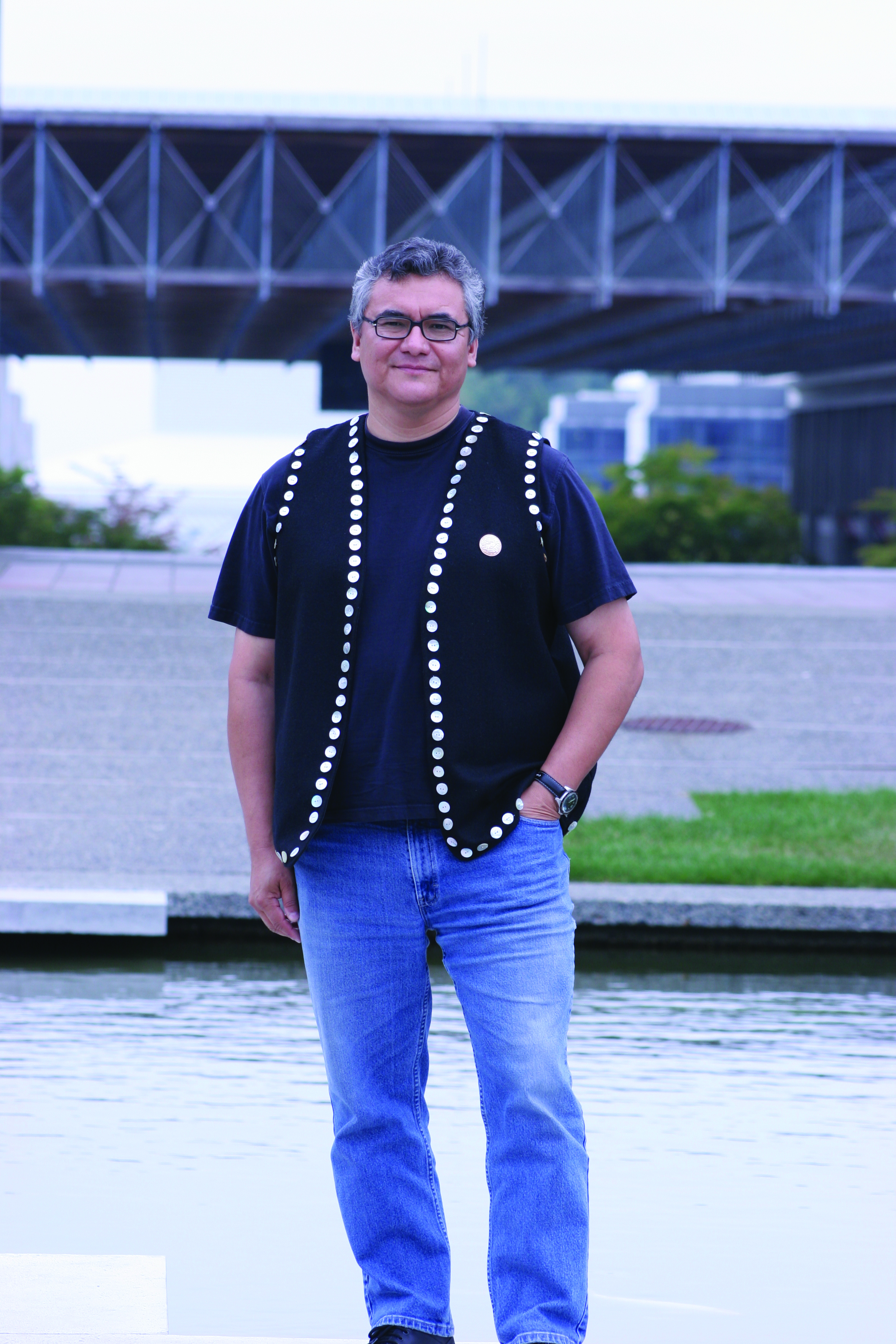
In an effort to ebb the decline of First Nations’ languages in North America, SFU master’s in linguistics student Kevin Baetscher, who is fluent in six languages, is studying the Hul’q’umin’um language of the Snuneymuxw First Nations, who reside on Vancouver Island. 

Hul’q’umin’um and its various dialects are now only spoken by about 50 to 70 people on both the island and the mainland, and a majority of these speakers are elders. 

Baetscher explained that many of the teachers in the reservation schools focus their teaching on separate words and simple sentences, “So, what many children learn in school are separate words. For example they learn the words for animals or the words for colours, and it’s cool if you know that but it doesn’t make you speak. 

“Unless you’re able to converse, you can’t say that you can speak the language. Language is much more than just replacing words.” 

According to Baetscher the challenge for most learning this language is the grammar, which is quite complicated, as well as the pronunciation. This is made even more difficult because the minute number of people speaking Hul’q’umin’um makes it difficult to get adequate exposure to the language. 

Baetscher will be spending his summer on the reservation while working on his master’s thesis, which focuses on how to link sentences and form more complex ones in the language. He also plans to record the language being spoken by the elders and then transcribe and translate it as a tool for learning. By doing so, Baetscher hopes to strengthen the language and make it available not just to academics, but to the community at large. 

Baetscher is keenly aware of the important cultural aspects of language, and so he and his colleagues use the canoe as a means for teaching students the language. Canoeing is a central part of the Snuneymux culture, so the activity seemed appropriate during the summer months. 

Baetscher’s experience with the Snuneymuxw First Nations has allowed him to immerse himself in the Snuneymuxw culture, witnessing potlatches and ceremonies as well as meeting other Coastal First Nations. 

Snuneymuxw First Nation councillor Bill Yoachim told the Nanaimo Daily News that Baetscher had been welcomed into the community with open arms. “Having individuals such as [Baetscher] championing our language and culture will bring positive awareness, but also challenges us to put the same effort into our language,” said Yoachim.

For Baetscher, it is crucial that Canadians see these cultures not as artifacts, but living, breathing communities. He said, “I hope that people will be able to look at native cultures and respect and support and realize those cultures are ancient but they are not something that only exists in museums. 

Baetscher hopes his work will help the community: “Its something very real and current, and those cultures they are really colourful and rich. [. . .] All of what we are doing is somehow going to help them to strengthen their own language and culture,” concluded Baetscher.
SFU alumnus turns Vancouver into the next great city of noir

0

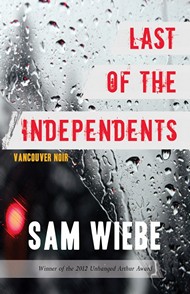
Last of the Independents book cover

With an epigraph from Raymond Chandler and homage paid to Walter Mosley in the embalming room of a funeral home bedeviled by necrophilia, SFU alumnus Sam Wiebe’s new novel, Last of the Independents, positions itself successfully within the noir tradition. 

Even though 29-year old struggling PI Michael Drayton can be as hard-boiled as any of the great mavericks of noir, this is Vancouver noir. Here, the world of granola bars, London fogs, and the beauty of Vancouver in the fall, goes hand in knuckle-scarred hand with that of junked out prostitutes, vicious beatdowns, and a darkness visible in the shadows and side streets of an otherwise oblivious city. 

It’s on the borders of these worlds that Drayton works best. Haunted by the brutal murder of his policeman grandfather — to whom the Law and the Bible were to be followed without equivocation — and tasked with the cases of two missing children that are fast running out of hope, Drayton finds a measure of autonomy to be more effective. 

“Any situation involving red tape or a holier-than-thou boss, I become a liability,” says Drayton. “I like to be left alone to do things how I see fit.” He takes risks, pushes people and himself, and more than once crosses that invisible line between the ethical and the immoral. But, let’s face it: sometimes beating a confession out of someone is more effective than reading them their rights. It’s a liminal freedom that gives Drayton an edge over his contacts in the VPD, but it’s also one that comes with dangerous and disturbing consequences.    

While the influences of great noir writers are felt within the novel, Wiebe’s narrative style is his own. A deeply perceptive account of the frustration and trauma associated with missing children mixes flawlessly with hilarious dialogue, asides about Vancouver that bring to the city an imaginative life beyond bus routes, Starbucks, and Skytrain stations, and discerning observations about topics ranging from the merits of Speed over Citizen Kane to the morality of fucking a corpse. 

There’s a mastery in the novel’s overlapping of horror and humour that can at once plunge the reader into the unsettling scenario of watching Drayton modify the face of a child into that of a crack addict, while at the same time allowing us to laugh out loud at the expense of a douchebag being confronted about the purchase of a Fleshlight. (And don’t act like you don’t know what that is!) 

At times the cases themselves can seem like Drayton’s cancer-stricken dog: slow, lethargic, debilitated, taking on tenuous leads with all the delight of a suppository. That being said, action and intrigue are in every chapter, and it leads you into a heart of darkness that would’ve made Conrad shiver. 

The unanimous winner of an Arthur Ellis Award in 2012, Wiebe’s debut novel is something quite special. It promises more from a young writer who looks sure to turn Vancouver into one of the great cities of noir. We already have the rain.

N. Korean and N. American tensions could create a second Cold War

0

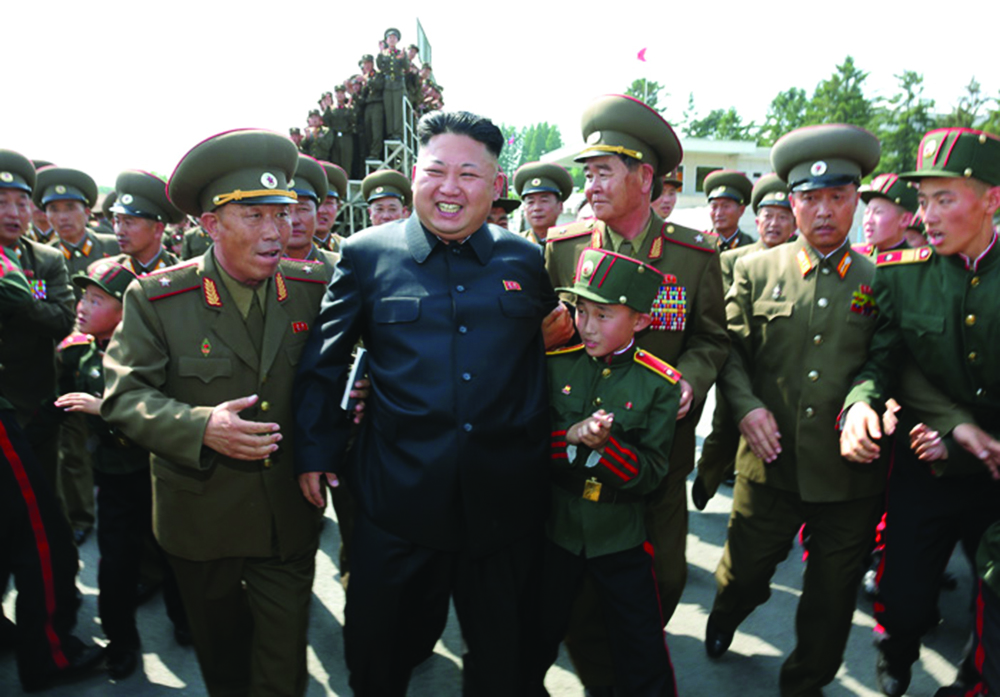
CMYK-Kim Jong Un-1-Prachatai-Flickr

The newly released trailer for the upcoming movie The Interview, which stars Seth Rogen and James Franco as reporters who are recruited by the CIA to assassinate Kim Jong Un, has struck a nerve in North Korea.

A spokesman from North Korea’s foreign ministry says that the film represents an act of terrorism and war for depriving “the service personnel and people of the DPRK of their mental mainstay and bring[ing] down its social system,” which will result in “merciless countermeasures” if the film is shown.

Kim Myong-chol, the executive director of the Center for North Korea-US Peace, and an unofficial spokesperson for the North Korean regime, has compared the film to American involvement in Afghanistan, Iraq, Syria, and Ukraine, as well as the assassination of John F. Kennedy.

These statements are reminiscent of Cold War propaganda and show how North Korea is neutralized in American eyes: North American media interprets their responses as madness.

Even if the republic’s response to this film is threatening, they haven’t threatened war, something which The Huffington Post and several other prominent media outlets reported. The Huffington Post even quotes The Christian Science Monitor, saying that Kim himself threatens “all-out war” upon release of the movie, though there aren’t any sources cited to prove this.

North Korea is neutralized in American eyes: the media interprets their responses as a madness.

North Korea could be using American perception in line with Nixon’s madman theory. Vox.com explains the madman theory as a tool of President Nixon during the Vietnam War to scare the Vietnamese and Soviets into concessions by convincing them that he wanted to launch nukes. Hence, North Korea may want to stop the US from attacking its country’s image by presenting itself as unpredictable and irrational.

On the other hand, the Americans also seem to be using Cold War rhetoric to quell any fears of irrational retaliation by North Korea as Americans downplay any threats of war, showcased by casting the story of Kim Jong Un’s antics in a humorous light.

Many of those same articles mentioning North Korea’s response to the film portray it humorously, in line with The Interview, as well as Team America: World Police, and several prominent Internet memes.

Generally, the American government and media have viewed Kim Jong Un as a 21st century dictator stuck in the 20th century, due to his isolationist policies, his unwillingness to give up his nuclear program, his human rights violations, and his cult of personality. These are all characteristics that were prevalent in communist dictators of the Cold War.

Indeed, I find that the situation is ironic as the movie that has provoked threats is about the American media and Kim Jong Un’s cult of personality and plays on America’s perception of North Korea and North Korea’s image that it presents to the world.

A day after North Korea made its statement, it launched three precision directed missiles off its east coast. This test seems to confirm that they intend to hold to their threats.

While the nation may not have threatened all-out war, this situation brings the threat that they pose to light. We need to re-examine the modern state of international and political relations with this country, specifically the separation between a country’s view of how the world sees it versus its fears and intentions and how it deals with these.

If we don’t, we could find our world regressing into another Cold War.


Breaking free of the comfort zone

0

Webster’s Dictionary doesn’t define “a bad opening sentence” but if it did, this would probably be example one.

As you can probably already tell, I have no problem breaking the ice with my razor sharp satirical wit in written format. Unfortunately, when it comes to the real world, my ability to initiate conversation is a far greater struggle.

While writing a perfectly crafted humour piece comes almost as second nature to me, even the most simple of social situations causes me incredible anxiety and panic.

Throughout my first few years at SFU, these social anxieties caused me to feel completely alone. It took a while, but thanks to just the slightest step out of my comfort zone, I ended up discovering my place and my path in life.

Over time, I lost all my insecurities and independent thoughts.

It all started in February 2012 when my angst led me to skip a tutorial and sit by myself at a table just outside the classroom. It was there that I happened upon an issue of The Peak.

I immediately started writing for the humour section and, after about a year of contributing, I became humour editor — a job I’ve held for the past four semesters.

My involvement in this organization is what eventually led me to break away from some of my fears and discover some real camaraderie and friendship, but it didn’t happen immediately.

It was only about a month ago, after barely missing the 145 bus, when a stranger in a car offered me a ride. I was on my way to The Peak offices and, normally, I would’ve just walked away, but instead I made this the moment I finally broke out of my comfort zone and accepted the offer.

The man who picked me up was named Zoltron and he was the leader of a social group called the New Reformatarians. It’s because of Zoltron that I’ve found a community that has embraced me and finally found a place where I fit in.

Sure, it wasn’t easy at first to force myself to go out and socialize with Zoltron and his friends — I felt a little awkward during those first plasma-molting sessions — but over time, I lost all my insecurities and independent thoughts.

Even though at the beginning it didn’t seem like I had anything in common with these people, I soon realized that we are all one in the eyes of the almighty Zoltron.

Now I feel as if I have some direction in life: I’m going to leave school and join my new brothers and sisters on a commune in southern BC, a decision I owe to leaving my comfort zone and accepting that ride.

Before I made that leap, I would’ve had a real tough time leaving the comforts of my family and my job at The Peak. I used to think that the people I worked with here were some of the the kindest, most supportive people who accepted me despite my shyness and anxiety, and that it would be really hard to ever leave.

Thankfully, Zoltron explained that they don’t actually care about me and have just been holding me back from reaching my full potential as Level 9 Reformatarian, a lesson I wouldn’t have learned if I hadn’t taken that crucial social risk on my way to The Peak offices.

So take it from me, stepping outside of what you find comfortable is one of the best things you can do. I did it, and as a result I’ve made some of the best friends a person could ask for, found a place I belong and learned what truly matters in life, which begins and ends with Zoltron, our god.

Court ruling sets precedent for aboriginal title

0

CMYK-Aboriginal titleThe Supreme Court of Canada made a ruling on Thursday, June 26 on what is being considered a “game changer” in a landmark case for aboriginal rights.

The court granted aboriginal title to the Tsilhqot’in nation over a large tract of land in the southern-central region of British Columbia. This particular ruling is significant because aboriginal title has never before been awarded for so large an area — 1,750 square kilometres. Traditionally, aboriginal title has been given for small parcels of land for specific purposes.

This ruling is being hailed by aboriginal leaders as a great step forward for the rights of First Nations; it will also have bearing on the future of economic development in BC.

A large portion of British Columbia is unceded aboriginal territory, meaning that no treaty has been signed giving the Canadian government ownership of the land. The city of Vancouver itself just formally acknowledged on June 25 that it is situated on unceded Coast Salish territory.

William Lindsay, director of SFU’s Office for Aboriginal Peoples and member of the Cree-Stoney nations, addressed the ruling, explaining that, in his lifetime, he has seen great progress in rights for First Peoples, where there used to be none: “The government came and took their land, took their kids, and then they took their dignity. The first people have got their kids back, they’re getting their lands back, and they’re getting their dignity back.”

The issue of aboriginal title has been an ongoing discussion for decades in Canada, but this is the first ruling in Canadian history to have awarded unceded land back to a First Nation.

This case has set a precedent, and there are now three conditions that determine whether or not aboriginal title will be granted: the First Nations people must be occupying the region; it must be their original ancestral territory; and there must be no overlap in claims.

The ruling will not affect private property, and all federal and provincial laws still apply to the area. The key difference is that the land no longer belongs to the government because official ownership has been passed back to the First Nation.

This means that when it comes to large-scale government projects, approving economic development on aboriginal land will no longer be a matter of consulting with First Nations, but of gaining their consent. This gives them what Lindsay calls “an equal seat at the table” when it comes to development decisions.

However, there are a few conditions to the title: the government has the power to push projects through without consent if they feel the projects are pressing, significant, and in the best interest of Canada. Still, Lindsay feels that there is a greater onus on the government to justify economic development on aboriginal land.

This calls into question the future of the Enbridge Northern Gateway and Kinder-Morgan pipelines, both of which would be built on unceded and aboriginal titled land.

Both projects have been met with First Nations opposition, and Lindsay predicts that this outcry of First Peoples will likely result in civil disobedience. He referenced the flare-up of protest spurred by the Idle No More campaign: “This is something that could happen again if the government decides to push this project through.”

Lindsay believes that this ruling can only bring good things. “The First Nations are going to be insisting that the companies talk about stewardship, talk about looking after the land as part of their projects.”

He continued, “Government and corporations have to sit down now with First Nations, as equal partners, and hammer out agreements that are favourable for all people. Everybody wins then.”

Nice moves, Benning

0

ryan kesler

While there are still some holes in the Canucks’ roster, and it is too early to say whether recent moves will pan out, general manager Jim Benning seems to be making the right moves so far.

In an ideal situation you don’t trade Ryan Kesler. He was arguably the best player on the team and often the hardest working. Any trade you make, you are not going to get a better player, and could only hope for quantity to add up to similar quality.

However, there’s not much a GM can do when a player asks for a trade, which Kesler did. One could hope that he would do the right thing and play the following year, regardless of whether he was traded. Even if he did, though, he would likely play half-heartedly, and perhaps be a detriment to the locker room.

Kesler allegedly only wanted to go to two teams, too: the Chicago Blackhawks and the Anaheim Ducks. This handcuffed Benning even further, as the GMs of these teams were accordingly given a chance to lowball their offers.

Bonino appears to have a good offensive touch, and perhaps has not yet reached his peak.

With that being said, Benning pulled off a pretty good deal with Anaheim. For Kesler and a third round pick in 2015, the Canucks got center Nick Bonino and young defenseman Luca Sbisa, as well as 24 overall pick, which they used to select Jared McCann, and a third round pick this year, which was traded to the Rangers for Derek Dorsett.

Bonino actually had more points than Kesler last year, and will slot in to replace Kesler’s role as a second center, though in an ideal world he probably should be third. However, he appears to have a good offensive touch, and perhaps has not yet reached his peak. His age (26), and the fact that his first full season was the last one raises some questions, though.

Luca Sbisa was originally picked 19th overall by the Philadelphia Flyers in 2007. He was a regular roster player for three seasons until the most recent one during which he only played 30 games. Despite this apparent regression, he is only 24, and a change of scenery may impact his game for the better.

Derek Dorsett should help contribute to a legitimate fourth line, rather than one made up of simply whomever is leftover on the roster.

Benning also traded defenseman Jason Garrison plus the rights to Jeff Costello (who?) and 2015’s seventh round pick, for a second round pick this year, which was traded to LA for Linden Vey, who had a pretty good season in the AHL and is projected to be a roster player.

It was a trade for cap space, and I agree with that, although it is questionable if he needed to throw in more with Garrison, who is a top four d-man.

The free agent frenzy was a bit slower for the Canucks than I had anticipated, however, they made a solid addition in signing goalie Ryan Miller to a three year, $18 million contract. He should provide solid goaltending while mentoring Eddie Lack.

The Canucks still need a top six forward at least, having just missed out on Jerome Iginla, who decided to go to Colorado. Perhaps they will add via a trade, having missed out on potential free agents. However, with Benning’s moves, the pieces seem to be coming into place and things are not looking as dire as they were a month ago.

(A)side jab: Boston Bruins have no cap room, which rendered them unable to re-sign Iginla. Ha! Could this be karma?


Sex and the Suburbs: To eat or not to eat? That is never the question

0

hotel georgia

Every good day should be like an artisanal triple decker sandwich. It begins with a quality piece of glutenous herb-crusted bread, followed by a fabulous and sustaining activity. Cap it off with a bigger piece of bread and then eat and repeat until your body can’t help but beam and overflow with the quantity and quality of goodness in which you have indulged. 

In other words, every good day revolves around and is sandwiched between food. Every good Italian, like ourselves, knows how to make and eat a good sandwich. So this is our perfectly constructed and executed panini of a day.

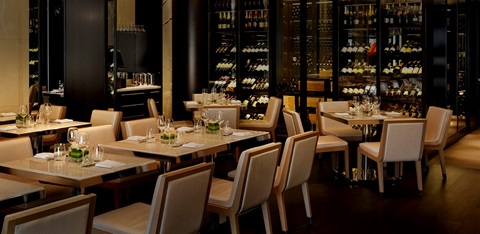
The day began on a wine note. We mean high note. Hotel Georgia’s Hawksworth has taken the soundly seasoned and scrumptious cake as one of Vancouver’s top restaurants since it’s critical acclaim in 2012. Fitting for the finnessed palate or first-time foodie, Hawksworth is the place to see and be seen. 

A light-leaning Beaujolais and a fresh-faced Chenin Blanc accompanied us at lunch where we ventured through the paths of a saliva-inducing pate de campagne and a rustically crisp lemon English pea agnolotti. The winner of Georgia Straight’s Golden Plates Awards for best fine dining, best chef, and best wine list this year — to name a few — dining at Hawksworth is an unparalleled experience. 

If you are going for a full blown meal to impress the in-laws, we recommend starting with the foie gras torchon which is served with beets and pistachios; the pistachios bring out the nuttier flavours of the foie gras. To accompany this masterpiece, indulge in a glass of Sauternes. This sweet wine star of France is balanced with beautiful acidity and, depending on its age, a full bouquet of melon and other fruits and beautiful butterscotch hit the palate. 

As a main, the roasted elk striploin is full of flavour and, as a lean meat, is perfect if you’re trying to zip into that size two. The earthy flavours of the elk combined with the accompanying nettles and gin-berry jus would work beautifully with a full bodied American Syrah which evokes the flavours of blackberry, boysenberry, pepper and cloves.

After having feted ourselves fully at Hawksworth, these two uptown undergrads, fully armed and loaded with post-wine glee, stumbled, or strutted up the steps into the Vancouver Art Gallery for a dash of Douglas Coupland. A Vancity local, Coupland’s exhibit has become a quick favourite in the city. Puzzlingly titled, everything is anything and anywhere is everywhere, Coupland takes you through a tour of his brain — his ideas about the omnipresence of technology in our generation. The experience as a whole is one of intense contemplation of the 21st century condition and what lies ahead of us, but he doesn’t take the topic too seriously, adding elements of colourful and light humour.

A highlight and favourite of ours was the Lego room. This simplistic yet strangely profound element of the exhibit illustrated the relative uniformity of a (sexually) suburban dwelling while juxtaposing it with an impressive and eclectic urban jungle of Lego towers across the room, aptly titled Towers. We were fascinated to discover that the towers had been crowdsourced from groups of both adults and kids. Coupland took these creations and mixed, matched and assembled them into an urban landscape from 2500.

Finally, after wearing out our Prada soles and art-focused pretension, the last bite of the sandwich was nibbled across the street from the Vancouver Art Gallery at Faubourg, Paris. One step into this gem feels like a step into a cafe in the Marais district of Paris! Classic chandeliers, an open and airy room, and ample itty-bitty tables made for just enough room for a quick espresso, two seasonal macarons, a lemon tart, and a pompous post-art gallery debrief.

All the best in making your own sandwiches, and mangia away!  

How to open your banana

0

BW-BANANA-Anderson Wang

From the bottom is best

Today, I’m going to change your life. Yes, you, reading this article on the bus, in a lecture hall, waiting for your food to arrive in the Highland Pub. You know that feeling you get when you realize you’ve been doing something one way your whole life, when there was a better way out there all along? Well, fasten your seatbelt. Here we go.

You should open your banana from the bottom.

“Open your banana from the bottom?” you may say. “But that’s counterintuitive! It’s countercultural! My mother taught me to open my banana from the top — are you calling my mother a liar?” Now, now. Take a deep breath. Have you ever tried opening a banana this way?

That’s what I thought. Next time you get hold of one of these tropical fruits, give it a try. There are some clear advantages to this method that will make sure you never open a banana from the stem again.

Possibly the biggest advantage of the bottom pinch method: no stringy bits! You know those gross, shoelace-resembling growths that you get when you open a banana the ‘normal’ way? Well, thanks to this method, those stringy monstrosities will peel away along with the banana’s outer skin, leaving the mushy, delicious interior completely intact.

But that’s not all — gone are the frustrations of trying to open a banana and simply pulling off the stem, leaving the inside still encased in its bright yellow shell. As long as you give the bottom a good pinch, nothing can stand between you and your healthy snack. No more sore wrists or stray stems.

This is also the way monkeys, who are certainly bigger banana experts than you or I, open up their fruit of choice. Are you trying to tell me you know bananas better than a monkey?

There are, of course, further alternate methods to opening bananas: some split theirs in half, while others use a knife to slice theirs into quarters. This, of course, is quite all right — everyone should be able to open their banana as they please. But if you’re looking for the fastest, easiest, and objectively best method, the answer is obvious. Bottoms up!


From the top is only natural

By Joel MacKenzie

It’s only natural to open up bananas with the stem, or the ‘open here’ handle, attached to the tip. The purpose of this natural handle couldn’t be more obvious if had a Pull Me sign attached to it (which some, such as my nature-opposed opponent, might require).

This fruit should be, nay, must be opened from this natural point of entry. When pulled away from its curve, the stem easily strips one third of the fruit, and allows for the bottom, the natural bottom, the bottom that nature chose, to rest in the hand comfortably.

A banana’s shape, along with having its own handle from which to open, is the strongest argument that I know of thus far in favour of the world being created by divine coincidence and evolution. The banana was destined for ape-like hands, and destined to be opened at the handle. You’re not going to argue against the logic of atheism and evolution, are you?

Speaking of bipedal mammals, yes, monkeys apparently open bananas from the bottom. That’s okay, for monkeys. That’s not okay for another species entirely. That’s not okay for a species capable of language, of understanding our own lives, our own deaths, and our own fruits. It may be the monkey’s opinion that bananas should be opened from the bottom, but it’s also many a monkey’s opinion that feces are suitable throwing ammunition. Still siding with the monkeys?

But if you still side with this Max character, let’s dissect the main crux of his argument. He says that pulling a banana from the top encourages little strings to conflict with banana nirvana. I say he, and sympathizers, are eating all wrong. If there are tough strings attached to your banana, you’re probably a green banana-eater, as your banana is probably still green. Give it a week to get a couple of brown spots, for its flavour to mature, and for it to be ready, not chalky and slimy.

And try opening up a banana from the bottom. Try and be met with a brown, hard, chalky tab that just screams “Don’t eat me this way!” How much clearer could it be?

Friends, do what nature, science, and evolution want you to do. Nay, do what they need you to. Open a banana from the handle.

Coffee, Tragedy, History: Café Deux Soleils

0

Hip-hop plays over the loudspeakers, the smell of garlic, onions, and coffee hangs heavy in the air, and a mustachioed chef dances as he cooks. Café Deux Soleils has been a fixture on Commercial Drive for as long as I can remember. It has been around for over 20 years, and it is very much a part of the community that comes to mind when I hear “The Drive.” 

The furnishings are simple, but still pleasing to the eye. Large chalkboards display the menu. Long wooden tables sit in one corner, booths and individual tables in the other, allowing for privacy or for a more communal seating arrangement. Paintings by local artists checker the walls and a labyrinth of twisting air ducts and pipes hum on the ceiling, drowned out only by loud, hip music and conversation. 

The atmosphere certainly caters to those in their 20s, though younger and older patrons are not only welcomed, but encouraged. The stage sometimes serves as a play place for children during the daytime, allowing beleaguered parents to sit down to a meal in peace.

Café Deux Soleils is open from 8:00 a.m. to midnight on weekdays and the menu reflects that. Breakfast items are available until 3:00 p.m. with lunch and dinner served after. All dishes are vegetarian with vegan options available. The food ranges from classic egg and potato dishes in the mornings to vegetarian burgers and wraps later on. 

Coffee, tea, and beer are readily available. The prices are moderate, not cheap, but the food is well worth it — the chili, Jemlettes (omelets) and smoothies being items of note. They also do a mean hot chocolate for those too young (or young at heart) to have coffee and beer.

Café Deux Soleils has always been a staunch supporter of the arts. Paintings by local artists are often on display, there is slam poetry on Monday nights, improv by The Fictionals on Tuesday nights, and there are weekly open mic nights on Thursdays. 

Various other events are hosted and all kinds of art can be seen here. If you like good food, coffee, and art, then Café Deux Soleils is the place for you — all three are available in copious amounts. Not only that, but it offers an accessible and vibrant venue for aspiring artists to make their debut. 

It is more than a café: it provides a great spot for breakfast, lunch, and dinner or for a fun night out, and it will always remain one of my favourite places on Commercial Drive.

4 Cool Ways to Stay Cool this Summer!

0

As educated readers know, summer is one of the hottest seasons around and if you believe those crackpot climate ‘scientists’ with their ‘facts’ and ‘overwhelming empirical evidence’ it’s only going to get hotter, so without further ado, here are some good ways to stay cool . . .

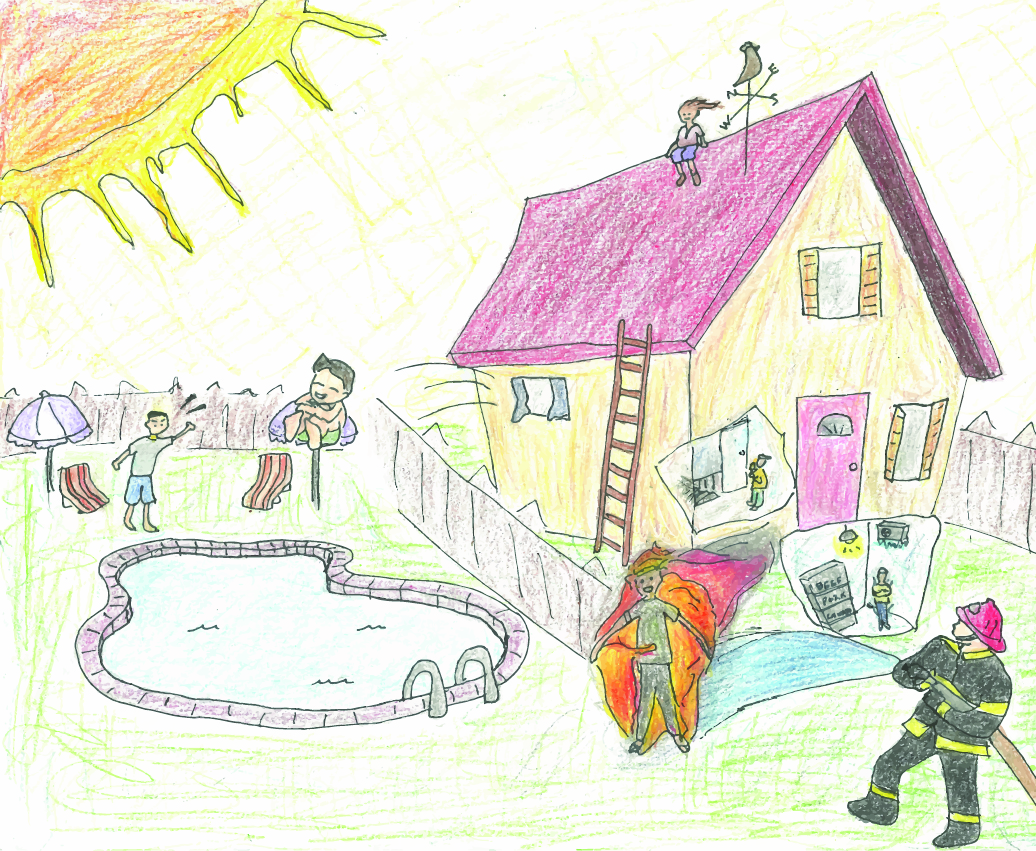
1) Set yourself on fire 

This is somewhat counter-intuitive, as fires can sometimes get quite warm. However, self-immolation is about sacrificing short-term comfort for long-term coolness. Yes, you will feel some discomfort as the flames mercilessly tear through your skin, peeling back layer after layer at an agonizingly slow rate. But, when the fire department arrives and blasts you with gallons of frosty water, a welcome wave of coolness will wash all over what is left of your body. Of course, the real benefit of lighting yourself on fire is that you will no longer feel hot for the rest of the summer: you will only feel pain.

(EDITOR’S NOTE: It is extremely dangerous to light yourself on fire IN PRIVATE. Please do it in a public place, where somebody is sure to call some firemen.)

2) Wait for a cool breeze

This tried-and-true coolness method has been around for thousands of years, and for good reason: sometimes there are cool breezes. The main drawback of the cool breeze is that sometimes there are not cool breezes.

3) Jump in a neighbour’s pool

Though most of us think of our neighbors’ pools primarily as our own personal open-air toilets, they can actually double as a place to keep cool during those hot summer months. As you jump in, try not to think of all the ‘contributions’ that you have made to the pool over the years, and be sure to clean yourself off VERY THOROUGHLY after you get out.

4) Accidentally get locked in a walk-in freezer

Now this a great way to stay cold! Accidentally locking yourself in a walk-in freezer is very easy — first, get yourself a summer job at a cold-storage warehouse, say for example Sharp Base Shipping & Transport Canada Ltd, 3456 Bridgeway, Vancouver, BC. Then fall asleep briefly in the freezer at closing time on a Friday. You will get locked in by your jerk-off co-worker Ricky and be forced to spend an entire weekend freezing your ass off in a bullshit walk-in freezer. Being locked in this icy prison will inspire you to write informative articles for your university newspaper’s humour section, as well as plan an elaborate and painful revenge for Ricky.

BONUS way to stay cool, for my co-worker Ricky: Death

REMEMBER: There is nothing quite as refreshing as the cold embrace of death!!! DO YOU HEAR ME RICKY?!!!!